
Twins Sign Chris Paddack To Extension
On Wednesday evening, the Twins announced a three-year contract with right-hander Chris Paddack. The deal covers his final two seasons of arbitration eligibility and buys out what would’ve been his first free agent season in 2025. Paddack reportedly receives a $2.5MM salary for the coming season. He’ll be guaranteed $2.525MM in 2024 and $7.5MM during the ’25 campaign. The Boras Corporation client would earn an additional $500K for reaching both 140 and 150 innings in 2025, with another $750K available at the 160 and 170-inning thresholds.
Paddack, who turned 27 earlier this month, was acquired by the Twins last April in a deal with the Padres that also saw Taylor Rogers and Emilio Pagan change uniforms. Unfortunately for the Twins, Paddack managed just 22 1/3 innings with the club before he landed on the injured list with an elbow issue. Paddack later underwent Tommy John surgery in May, with August 2023 as the reported target for his return to big league play.
Paddack was an instant success in his 2019 debut season with the Padres, posting a 3.33 ERA (126 ERA+) with a 3.95 FIP across 26 starts and racked up 153 strikeouts in just 140 2/3 innings of work. The shortened 2020 season saw him struggle mightily, however, as his ERA ballooned to 4.73 (89 ERA+) and his FIP similarly rose to 5.02 across 59 innings. One factor in this was his ghastly HR/FB rate of 25.0%, nearly double his 14.6% rate from 2019.
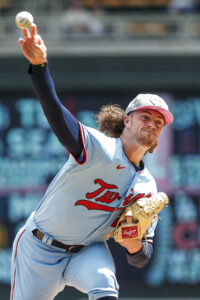
His home run rate returned to normal in 2021, but Paddack continued to struggle. In 108 1/3 innings in 2021, Paddack posted an ERA of 5.07 (77 ERA+), the worst of his career. Paddack’s 3.72 FIP in 2021 indicates that there may have been some bad luck built into those results, but there was reason for concern nonetheless: his strikeout rate had plummeted. After striking out 9.8 batters per 9 in his debut 2019 season, that rate dipped to 8.8 in 2020 and then dipped again in 2021, all the way down to 8.2, good for a strikeout rate in just the 35th percentile that year.
Of course, it should be noted that Paddack struggled with injuries throughout the 2021 season, which certainly could have impacted his performance. Paddack spent over two months on the injured list in 2021 across three separate IL stints, suggesting he may not have been fully healthy even when he was on the mound that season. Between his youth and injury history, there’s reason to believe Paddack could return to a form more in line with his 2019 debut once he’s fully healthy, an outcome the Twins are betting on with this deal.
In extending Paddack, the Twins provide the right-hander with some security during his rehab process and return to the pitcher’s mound, while buying themselves an extra year of team control for a pitcher with substantial upside. Should Paddack return to the mound late in the season, he will join a somewhat full rotation mix that currently includes Sonny Gray, Tyler Mahle, Joe Ryan, Kenta Maeda, and Bailey Ober. With that being said, Gray, Mahle, and Maeda are all set to hit the free agent market following the 2023, leaving Paddack as a likely key cog in Minnesota’s 2024 rotation.
With four years of service time, Paddack was set to be eligible for arbitration both this offseason and next, with MLBTR contributor Matt Schwartz having projected him for $2.4MM during this round of arbitration. With this deal, Paddack forgoes a potential raise through the arbitration process next year in addition to a year of free agency, though he is still set hit the market at age 30 following the 2025 campaign. A cost-controlled starter like Paddack is a huge boon to Minnesota’s payroll flexibility going forward- while their projected payroll for the 2024 season is just $65MM per RosterResource (prior to the inclusion of arb-eligible players on the roster), the Twins are, as previously mentioned, set to lose three members of their rotation this offseason, potentially in addition to two starting outfielders in Joey Gallo and Max Kepler. While youngsters like Alex Kirilloff and Trevor Larnach could step up in the outfield, it seems almost certain that the Twins will have to supplement their core in free agency next year. Cost certainty with Paddack could help them be more aggressive in making those additions and maximizing the early years of Carlos Correa‘s new six-year deal with the club.
Matt Braun of Twins Daily was first to report the Twins and Paddack had agreed to a three-year contract. Dan Hayes of the Athletic was first with the $12.5MM guarantee. Jon Heyman of the New York Post reported the salary breakdown. The Associated Press was first with the specifics of the incentives.
Royals Sought Josh Winder For Michael A. Taylor In Trade Talks With Twins
The Twins have contacted the Royals this offseason about the possibility of acquiring center fielder Michael A. Taylor, reports Dan Hayes of the Athletic. However, Hayes adds that Minnesota was “discouraged” by Kansas City’s ask for right-hander Josh Winder in return. There’s no indication conversations between the clubs are still ongoing.
The Athletic’s Ken Rosenthal reported last month that Kansas City was making Taylor available in trade. Minnesota is the first known team to have checked in with Royals GM J.J. Picollo and his staff regarding the defense-first outfielder. Even if talks didn’t advance especially far, Kansas City’s ask for Winder suggests they’re at least opening conversations regarding Taylor with a lofty goal. That might be especially true for an intra-divisional opponent like the Twins.
Winder, 26, is one of the more highly-regarded pitchers in the Minnesota organization. While he entered pro ball with little fanfare as a 7th-round pick out of VMI, he put himself firmly on the radar coming out of the canceled 2020 minor league season. Winder pushed his average fastball velocity up a few ticks into the mid-90s over the lost year and excelled over 10 starts at Double-A Wichita to start the 2021 campaign. He struggled in a four-start look with Triple-A St. Paul to end that season but nevertheless entered 2022 as one of the better prospects in the Twins’ system.
Baseball America slotted the 6’5″ hurler sixth in the Minnesota system heading into last season, calling him a potential mid-rotation starter. Winder broke camp with the MLB club and made his first 15 big league appearances. He made 11 starts and came out of the bullpen four times, working to a 4.70 ERA through 67 innings. His 16.4% strikeout rate and 35% grounder percentage were each markedly below average, though he continued his career-long track record of pounding the strike zone.
While it wasn’t a resoundingly successful debut effort, Winder showed enough promise to believe he could still play a long-term rotation role in the Twin Cities. He mixed four pitches with regularity, led by a 94 MPH fastball and mid-80s slider. Winder has long had above-average or better control and held his own against left-handed batters last season. Even if he never misses enough bats to reach the mid-rotation upside some prospect evaluators had forecasted, he’s an upper-level depth arm who could carve out a back-of-the-rotation spot as soon as this year.
Minnesota optioned Winder on a couple occasions last year. That exhausted his first of three option years but also means he fell shy of accruing a full year of service time. He’s controllable for at least another six seasons and additional assignments back to St. Paul could push his free agent trajectory back further. He won’t qualify for arbitration until after the 2024 season at the earliest.
It’s not surprising the Twins wouldn’t relinquish six-plus years of Winder’s services for Taylor, who is only under contract for the 2023 campaign. Minnesota could see each of Sonny Gray, Tyler Mahle and Kenta Maeda depart via free agency next offseason. That’d leave them with Joe Ryan, Bailey Ober, Chris Paddack and unproven younger arms like Winder, Simeon Woods Richardson and Louie Varland to vie for rotation spots as things stand. The long-term uncertainty has led the Twins to entertain trade possibilities with the Marlins about potentially adding a controllable starter like Pablo López to the mix.
While one season of Taylor’s services isn’t likely to bring back Winder, he should have a decent amount of appeal on the trade market. The veteran outfielder has had a productive two-year run in K.C. after spending the bulk of his career with the Nationals. Taylor has long been a below-average offensive player thanks to swing-and-miss concerns, but he’s one of the sport’s preeminent outfield defenders.
The 31-year-old (32 in March) has played upwards of 1000 innings in center field in each of the last two years. He’s been a stellar fit for spacious Kauffman Stadium, with Defensive Runs Saved estimating he’s been 19 runs better than an average center fielder in both seasons. His cumulative +38 DRS is head and shoulders above the rest of the league at the position, with Myles Straw checking in second at +21 runs. Statcast has been a little more conservative but still pegged Taylor as +19 runs over the past two seasons, tied with Harrison Bader for second behind Straw.
While whether Taylor’s truly the league’s best defensive outfielder or “merely” in the top handful is debatable, it’s clear he’s an elite gloveman. That drives his value, as he carries a modest .249/.304/.357 line in just under 1000 plate appearances as a Royal. To his credit, Taylor has tamped down on the massive strikeout rates of his time in Washington, with last season’s 23.9% strikeout percentage only a couple points worse than the league average. He’s had to sacrifice some hard contact to put the ball in play more frequently, posting the two lowest isolated power marks of his career the last couple seasons.
Even as a bottom-of-the-lineup type, Taylor’s a valuable player. He’s also making just $4.5MM in 2023, meaning he should be able to fit on virtually any club’s payroll ledger. Minnesota eyed him as a fourth outfielder as potential injury insurance behind Byron Buxton and a right-handed bat to integrate into an outfield that skews very left-handed. Yet he could appeal to other clubs as more of an everyday center field option, particularly given the market scarcity at the position. The free agent center field market is barren enough the Red Sox agreed to terms with Adam Duvall — who’s 34 and has been mostly a corner player throughout his career — to play up the middle. Trade possibilities are similarly sparse, particularly since the Pirates have remained firm on their ask for Bryan Reynolds.
That all makes Taylor a potentially interesting trade candidate. The Royals’ discussions with the Twins suggest they’re not prepared to move him without getting a strong return. That seems unlikely to come from Minnesota, though teams like the Marlins, Dodgers, Rangers and Rockies could check in as they continue to seek out help at the position.
Post-Tommy John Players That Could Impact 2023
News items about Tommy John surgeries are fairly commonplace in baseball circles, but there’s no doubting it’s a significant event for the impacted player. It usually takes over a year to return to form, with a multi-stage rehabilitation process required to regain functionality.
Once a player gets back into game shape, there’s no guarantee the results will be the same. Justin Verlander looked just as good as ever in 2022, but Mike Clevinger didn’t get his velocity all the way back and saw his strikeout rate dip. He could still take another step forward in 2023 now that he’s another year removed from the procedure, but it goes to show that there are no guarantees about what happens in the aftermath.
Here are some players who went under the knife over the past year or so and who will be looking for good progress in 2023, both for their teams and themselves. Huge shoutout to the Tommy John Surgery list for having these details and so much more.
Forrest Whitley, Astros — Surgery Date: March 2021
Whitley, 25, was once considered one of the best pitching prospects in baseball, but his progress has been stalled by various factors. He missed 50 games in 2018 due to a drug suspension, and injuries have hampered him in the years since. He returned from his layoff late last year and tossed 40 innings in the minors but walked 14.5% of batters faced. The Astros already have a great rotation without him, but if Whitley could get back to the form that made him such a hyped prospect, they would be even more loaded.
Kirby Yates, Braves — March 2021
Yates, 36 in March, was one of the best relievers in the league in 2018 and 2019, arguably the best. He posted a 1.67 ERA over 125 games, striking out 38.7% of batters faced, walking just 6.1% of them and getting grounders on 45.2% of balls in play. Since then, however, he’s thrown just 11 1/3 innings. Seven of those came late in the 2022 season, though Yates gave up four runs on six hits and five walks in seven innings. This will be his first full season back. The Braves have a strong bullpen even if Yates can’t get back to peak form, but they’ll likely be in a tight division race and that kind of elite stuff would provide a nice boost.
José Leclerc and Jonathan Hernández, Rangers — March and April 2021, respectively
Leclerc, 29, seemed to be establishing himself as an excellent reliever in 2018. He got into 59 games for the Rangers and posted a 1.56 ERA, getting 12 saves and 15 holds in the process. A .211 BABIP surely helped, but there was a lot to like. He took a step back in 2019 with a 4.33 ERA and then missed most of the following two years. Leclerc returned in June of last year and struggled at first before posting a 2.01 ERA from July onwards. Hernández had a 2.90 ERA in 2020 before missing the 2021 campaign. He returned last year and posted a 2.97 ERA, but with concerning peripherals. His 6.4% walk rate from the former campaign jumped to 13% while his strikeout rate fell from 24.8% to 20.6%. On the more encouraging side, his ground ball rate went from 45.7% to 62.4%. The Rangers totally overhauled their rotation without doing much to the bullpen, but they could potentially get a boost from within if Leclerc and/or Hernández look good this year.
Adrián Morejón, Padres — April 2021
Once considered a top pitching prospect, Morejón, 24 next month, has been slowed by various injuries. He returned in 2022 but worked only in relief, tossing 34 innings in the majors and 13 1/3 in the minors. The Padres have some uncertainty in the back of their rotation that Morejón could help with if he stays healthy, but he’ll likely have workload concerns after so much missed time.
James Paxton, Red Sox — April 2021
Paxton, 34, had a great four-year run with the Mariners and Yankees from 2016 to 2019. However, he’s hardly pitched over the last three years due to various arm issues. He got back on the mound last summer while attempting to come back from Tommy John but then suffered a lat tear that halted his comeback effort. The Red Sox then had the choice to trigger a two-year option on the lefty worth $26MM, which they turned down based on his uncertain health outlook. He then had a $4MM player option that he triggered and will be with the Sox for 2023. He and Chris Sale would have made for a formidable one-two punch at the top of a rotation a few years ago, but neither has been healthy and effective for quite some time. Their status this year figures to have a huge impact on the fortunes of the Sox for the upcoming campaign.
Dustin May, Dodgers — May 2021
May, 25, returned late last year and was able to make six starts for the Dodgers. He posted a 4.50 ERA in that time and struck out 22.8% of batters faced, with both of those numbers paling in comparison to his pre-surgery form. The Dodgers let Tyler Anderson and Andrew Heaney depart from their 2022 rotation, while bringing in Noah Syndergaard. The quiet offseason will be easier to accept if May can post results like he did over 2019-2021: 2.93 ERA, 24.2% strikeout rate, 5.9% walk rate, 51.6% ground ball rate.
Joey Lucchesi, Mets — June 2021
Lucchesi, 30 in June, made 56 starts for the Padres in 2018 and 2019 with a 4.14 ERA. He didn’t get much of an opportunity in 2020 and was flipped to the Mets as part of the Joe Musgrove trade. He isn’t one of the club’s five best starters right now, but their rotation features four veterans who are 34 or older in Verlander, Max Scherzer, Carlos Carrasco and José Quintana. Also, Kodai Senga is making the transition from Japan, where starters frequently only pitch once a week. The club will surely need to rely on its depth this year at some point, making Lucchesi a key part of the equation.
Spencer Turnbull, Tigers — July 2021
Turnbull, 30, was seeming to make progress towards being a quality starter for the Tigers. He posted a 4.61 ERA in 2019 but got that down to 3.97 in 2020. He pushed it down even more in 2021, registering a 2.88 ERA over nine starts before getting shut down and requiring surgery. The Tigers seem likely to be without Casey Mize and Tarik Skubal to start the year as those pitchers deal with their own injuries. That could leave a path for Turnbull to get back on track.
Tyler Glasnow, Rays — August 2021
Glasnow, 29, didn’t live up to expectations with the Pirates but made good on his prospect pedigree after getting traded to the Rays. From 2019 to 2021, he had a 2.80 ERA while striking out 35.9% of batters faced and walking just 7.8% of them. Tommy John surgery put him out of action for a while but he was able to return late last year, making two starts in the regular season and one in the postseason. Glasnow has looked like an ace at times but still hasn’t maintained it over an extended stretch, still never reaching 115 innings in a major league season. The Rays have been fairly quiet this winter, but a healthy Glasnow is arguably a bigger upgrade to their roster than any move they could have made.
Tejay Antone, Reds — August 2021
Antone, 29, debuted in 2020 and was excellent out of the Reds’ bullpen. Over that year and 2021, he tossed 69 innings with a 2.48 ERA, 32.3% strikeout rate and 48% ground ball rate. The walks were a little high at 10.8% but he was still able to be incredibly effective regardless. He isn’t slated to reach free agency until after 2025, but the rebuilding Reds might have to consider a deadline deal if Antone is healthy and pitching well this summer.
Garrett Crochet, White Sox — April 2022
Crochet, 24 in June, was selected 11th overall in the 2020 draft and made his MLB debut later that year. Between his five appearances in 2020 and 54 more the following year, he has a 2.54 ERA and 29% strikeout rate. He’ll likely miss at least part of the upcoming campaign but the club is planning on keeping him in a relief role, which could help him return quicker.
Luke Jackson, Giants — April 2022
Jackson, 31, had a huge breakout with the Braves in 2021. He tossed 63 2/3 innings with a 1.98 ERA, striking out 26.8% of batters faced while getting grounders at a healthy 52.5% clip. He wasn’t as effective in the playoffs but nonetheless was part of the club’s World Series victory that year. He reached free agency and signed with the Giants, who are taking a shot on a return to form, though Jackson might miss the first couple of months of the 2023 season.
John Means, Orioles — April 2022
Means, 30 in April, was one of the few highlights for the Orioles during their leanest rebuilding years. He has a 3.81 ERA in 356 2/3 career innings, keeping his walks down to an excellent 5% rate. The Orioles took a huge step forward last year, graduating many of their top prospects and actually flirting with postseason contention. They’ll be looking to make more progress this year, but the rotation is still lacking in proven options. Getting Means back into the mix would be a big help if some of the younger guys struggle.
Chris Paddack, Twins — May 2022
Paddack, 27, had a great debut with the Padres in 2019, making 26 starts with a 3.33 ERA. His results fell off in the next two seasons, and he dealt with an elbow strain late in the 2021 season, but the Twins still liked him enough to acquire him as part of their return for Taylor Rogers. He was only able to make five starts before landing on the shelf. Their faith doesn’t seem to have wavered, as they recently signed him to a three-year extension. The Twins have a solid rotation on paper, but nearly the entire group landed on the injured list at some point in 2022. Kenta Maeda missed the whole season while rehabbing from an internal brace procedure, a modification of Tommy John surgery. Since injuries were the big story for the Twins in 2022, better health and/or better depth will be important in 2023.
Chad Green, Free Agent — June 2022
Green, 32 in May, spent the past seven seasons pitching for the Yankees. He tossed 383 2/3 innings in that time with a 3.17 ERA, striking out 32.5% of batters faced against a 6.3% walk rate. Unfortunately, he required Tommy John just a few months away from qualifying for free agency. He has yet to sign with a club, but players in this position often sign two-year deals that cover their rehab and give the team an extra year of control. If Green can find himself a deal like that, he could be a wild card down the stretch.
Casey Mize, Tigers — June 2022
Mize, 26 in May, was selected first overall by the Tigers in 2018. He posted a solid 3.71 ERA in 2021, but with disappointing underlying metrics. He only struck out 19.3% of batters faced and had a much higher 4.92 xERA, 4.71 FIP and 4.45 SIERA. After a dreadful 2022 season, the Tigers need to see how Turnbull, Mize, Skubal and Manning look this year before deciding how to proceed for the future.
Hyun Jin Ryu, Blue Jays — June 2022
Ryu, 36 in March, has oscillated between being injured and dominant for much of his career. He signed a four-year deal with the Blue Jays prior to 2020 and posted a 2.69 ERA that year, coming in third in the AL Cy Young voting. His ERA ticked up to 4.37 in 2021, and Ryu struggled even more last year before going under the knife. The Jays have a solid front four in their rotation but uncertainty at the back. Ryu is targeting a July return, and his health at that time could impact how the Jays approach the trade deadline.
Andrew Kittredge, Rays — June 2022
Kittredge, 33 in March, dominated in 2021 by posting a 1.88 ERA over 71 2/3 innings. He struck out 27.3% of batters he faced while walking just 5.3% of them and also got grounders on 53.5% of balls in play. He took a step back last year but made multiple trips to the injured list and likely wasn’t 100%. He’ll surely miss the first several months of the season but could jump into Tampa’s bullpen down the stretch.
Walker Buehler, Dodgers — August 2022
Buehler, 28, has an excellent track record for the Dodgers, having posted a 3.02 ERA in 638 1/3 innings. He’s struck out 27% of opponents while giving out free passes to just 6.3% of them. The Dodgers will have to get by without him for the majority of 2023, though there’s a chance he could be a late addition to the roster if all goes well. His August surgery makes him roughly one year behind Glasnow, who was able to return late in 2022. However, Glasnow’s procedure was August 4th of 2021 while Buehler’s was on the 23rd of last year. Still, if the Dodgers make a deep postseason run, that could give Buehler the runway he needs to make a landing this year.
September 2022 Or Later: Shane Baz, Anthony Gose, Scott Effross, Tyler Matzek, Bryce Harper
These players face longer odds of making an impact since their surgeries were so late in the year. The major exception is Harper, since position players require less recovery time than pitchers. Harper is hoped to be able to return to the Phillies around the All-Star break as a designated hitter, with a chance of returning to the field later in the campaign.
Twins Outright Kyle Garlick, Oliver Ortega
Twins outfielder Kyle Garlick and reliever Oliver Ortega each went unclaimed on waivers, according to an announcement from the club’s communications director Dustin Morse (Twitter link). Both players have been outrighted to Triple-A St. Paul and will receive non-roster invitations to MLB Spring Training.
Garlick was designated for assignment last Wednesday as the corresponding move to accommodate Carlos Correa’s return. It’s the second outright of his career, which would’ve given him the right to test minor league free agency. The club announcement that he’ll be in big league camp suggests he’s instead chosen to accept the assignment.
That’s not too surprising a call, as the righty-hitting outfielder had signed a $750K contract to avoid arbitration earlier in the offseason. That’s barely above the MLB minimum salary but quite likely locked in more money than he’d have received if he landed a minor league contract with another organization. Refusing the outright assignment to test free agency would’ve required Garlick to relinquish that agreed-upon salary, so he’ll instead try to work his way back onto the roster in Spring Training or during the regular season.
Garlick, 31 next week, is a platoon outfielder. He’s played for the Dodgers, Phillies and Twins over parts of four big league campaigns, the last two of which have been spent in Minnesota. He’s connected on 13 home runs while slugging .538 through 186 MLB plate appearances against left-handed pitching, with that power more than offsetting a modest .301 on-base percentage. Productive as he’s been with the platoon advantage, the California native owns just a .203/.258/.324 line in 159 trips against right-handed pitching.
Ortega has never pitched for the Twins. He just landed with the organization two weeks ago via waiver claim from the Angels. Minnesota DFA him a few days thereafter upon acquiring A.J. Alexy from the Nationals, and they succeeded in running him through waivers. Ortega has never before been outrighted and has less than three years of big league service time, meaning he did not have the ability to test free agency.
The right-hander has appeared at the MLB level in each of the past two seasons with the Halos. Ortega has thrown 43 1/3 innings over 35 career appearances, pitching to a 3.95 ERA. He’s paired that with a modest 19.8% strikeout rate and elevated 10.7% walk percentage, although he’s racked up grounders on nearly 56% of batted balls.
Ortega has also logged 37 2/3 Triple-A innings over the last couple years. He’s only managed a 5.37 ERA at the top minor league level, while his 24% strikeout rate is better than that of his MLB work. Ortega averages roughly 96 MPH on his fastball and still has a pair of option years remaining. If he reclaims his spot on the 40-man roster at any point during the season, the Twins can freely move him between Minneapolis and St. Paul as a depth reliever.
Marlins, Twins Continue To Discuss Trade Possibilities Involving Luis Arraez, Pablo Lopez
The Marlins and Twins continue to explore trade possibilities involving Minnesota infielder Luis Arraez and Miami’s surplus of starting pitching, reports Dan Hayes of the Athletic. Jon Heyman of the New York Post first wrote last week that Arraez’s name had come up in discussions involving Marlins righty Pablo López but suggested the Twins were uninterested in parting with the infielder.
Hayes similarly hears that Minnesota isn’t willing to pull the trigger on a one-for-one swap of Arraez and López. However, Hayes characterizes Minnesota as willing to entertain larger possibilities involving Arraez and controllable starting pitching targets. While the Twins aren’t actively shopping him, they’re apparently keeping an open mind to broader trade permutations. There’s no indication anything is imminent, and Hayes notes that the sides haven’t directly spoken in several days even as a general line of communication between the clubs seemingly remains open.
The Marlins’ willingness to dealing from the rotation has dated back at least as far as the 2021-22 offseason. Miami has yet to make a major trade but is still generally expected to subtract a starter for an offensive addition between now and Opening Day.
Reports have suggested the Fish were amenable to offers on any of López, Jesús Luzardo, Trevor Rogers and Edward Cabrera. While there’s no indication that’s officially changed, it seems talks are focusing in on the most experienced member of the group. Barry Jackson and Craig Mish of the Miami Herald wrote this afternoon that López has moved the forefront of Miami’s trade discussions around the league. According to the Herald, discussions on Rogers and Cabrera have “cooled” of late.
That’s not an especially surprising development. López is down to two seasons of remaining club control. Rogers and Luzardo are each controllable for four years, while Cabrera can be retained for another six seasons. That has made López the most straightforward trade candidate in the Miami rotation all along, although early reports this winter suggested the Fish might instead look towards a Rogers deal while keeping López in the fold.
Even with the comparatively lesser control window, López is a highly appealing trade chip for Miami general manager Kim Ng and her staff. The Venezuelan-born righty has posted a sub-4.00 ERA in each of the last three seasons. He hasn’t walked more than 7.5% of batters faced in any of those campaigns and has posted at least a 23.6% strikeout rate in all three seasons. López sits in the 93-94 MPH range with his fastball and owns one of the game’s better changeups. He misses bats and keeps the ball on the ground at an above-average clip and generally manages solid results against right and left-handed hitters alike.
He’ll play the 2023 campaign on a $5.45MM salary after avoiding arbitration last week. The 26-year-old will be due one more raise the following year before hitting free agency over the 2024-25 offseason.
Acquiring a starter who’s controllable beyond next season is apparently on the wishlist for a Minnesota club that could see a notable chunk of its rotation depart next winter. Tyler Mahle, Sonny Gray and Kenta Maeda are all slated for free agency after the 2023 campaign. Of their current starting five, only Joe Ryan and Bailey Ober are controllable beyond next season. Minnesota extended their window of control over righty Chris Paddack by an extra season last week, signing him through the end of 2025. He’ll likely get another rotation opportunity at some point but is currently on the mend from the second Tommy John procedure of his career. Young pitchers like Simeon Woods Richardson, Josh Winder and Louie Varland could play their way into the mix at some point but are far from established.
While it’s easy to see the appeal of adding a quality pitcher like López who’d stick around through 2024, Minnesota remains unwilling to do so in a straight swap for Arraez. The left-handed hitter is arbitration eligible for one season longer than López, controllable through 2025. His 2023 salary remains undefined — he and the club look to be headed for an arbitration hearing after not reaching an agreement last week — but will check in between $5MM and $6.1MM.
Arraez is fresh off his first All-Star campaign. He claimed the American League batting title by hitting .316 and reached base at a .375 clip overall. The 25-year-old only hit eight home runs in 603 plate appearances but is among the sport’s best pure hitters. No qualified hitter struck out less often than Arraez, who went down on strikes in only 7.1% of his trips. He was one of six qualified batters with more walks than strikeouts, drawing free passes at a decent 8.3% rate.
A second base prospect throughout his time in the minors, Arraez has assumed more of a bat-first utility role in recent years. Public defensive metrics have given him mixed reviews for his work at the keystone, and Minnesota turned to him more often at first base in deference to Jorge Polanco last season. Arraez can also play some third base and rotate through designated hitter. Miami has Jazz Chisholm Jr. and Jean Segura to play second and third base, respectively. There’d be room for Arraez to join right-handed power bats Garrett Cooper and Jorge Soler in the first base/DH mix, and he’s the archetype of the high-contact bat the Miami front office has reportedly sought.
If Miami and the Twins can’t bridge the gap in their trade discussions, the Marlins would find no shortage of interest in López elsewhere. The Padres and Cardinals have also been linked to the hurler this offseason while a number of others checked in at last summer’s trade deadline. Derrick Goold of the St. Louis Post-Dispatch implied this afternoon (on Twitter) there wasn’t much momentum between the Fish and Cardinals on López right now, though, suggesting that Miami’s interest in St. Louis outfielder Lars Nootbaar has been rebuffed.
Scott Boras Discusses Carlos Correa’s Free Agency Saga
The league’s biggest story over the past month has been the winding saga involving Carlos Correa’s free agency. The two-time All-Star had agreements with the Giants and Mets each fall through after the teams raised concerns about the status of his right ankle during their physical examinations. After weeks of twists and turns, Correa returned to the Twins — where he’d spent the 2022 campaign.
Correa’s agent, Scott Boras, addressed the situation in an interview with Bob Nightengale of USA Today over the weekend. The agent expressed frustration with the Mets, telling Nightengale the New York club relied upon the same doctor who had raised concerns with Correa’s ankle while consulting for the Giants. The shortstop himself said the same last week in an interview with Ken Rosenthal of the Athletic. Both USA Today and Dan Martin/Jon Heyman of the New York Post each wrote over the weekend that Dr. Robert Anderson — a Wisconsin-based foot/ankle specialist who also has ample experience working with NFL players — was the orthopedist who consulted with team physicians for both San Francisco and New York.
“I don’t understand the Mets,” Boras told Nightengale. “I gave them all of the information. We had them talk to four doctors. They knew the issue the Giants had. And yet, they still call the same doctor the Giants used for his opinion. There was no new information. So why negotiate a contract if you were going to rely on the same doctor? It was different with the Giants because a doctor had an opinion they didn’t know about. But the Mets had notice of this. They knew the opinion of the Giants. So why did you negotiate when you know this thing in advance?”
Correa’s camp pivoted quickly to the Mets after the agreement with the Giants fell through. That wasn’t the case when New York expressed concerns with the physical. Boras and the Mets spent nearly two weeks in exclusive negotiations, with the team seeking drastic modification of the original 12-year, $315MM agreement.
As Heyman first reported last week, the Mets’ new proposal involved a guaranteed $157.5MM over six years, exactly slicing the initial agreement in half. The deal would’ve come with an additional six years and $157.5MM thereafter in conditional money, with Nightengale writing the Mets wanted Correa to take a physical at the conclusion of each of the final six seasons. Nightengale reports that Correa’s camp offered language that would’ve allowed the Mets to reduce their commitment in the event of a right ankle issue that cost him two months of action and a provision that would’ve allowed the team to void the deal if Correa missed 120+ days over a two-year span because of an ankle injury. Whatever the specifics under discussion, the sides clearly couldn’t settle upon a satisfactory compromise.
With talks having reached a stalemate, Boras opened up lines of communications with other teams in early January. Correa’s camp reached agreement with the Twins late last Monday on a six-year, $200MM guarantee that contains another four club/vesting options that could max the contract out at $270MM over ten years. Correa passed his physical with Minnesota, and the team made the deal official on Wednesday morning.
Neither the Giants nor the Mets have been able to offer much publicly on their reasons behind stepping away from their agreements. Officials with both clubs have noted that HIPAA privacy protections prevent them from revealing many specifics about player health. Both teams released brief statements after their deals fell through noting they were unable to come to agreements and wishing Correa the best. However, Andy Martino of SNY reported shortly before talks with the Mets collapsed that team officials had become “very frustrated” with the status of negotiations.
In the end, it all makes for little more than an historical footnote. Correa will be a Twin for at least the better part of the 2020’s, with Minnesota betting on the long-term stability of his ankle. The Giants and Mets will roll with Brandon Crawford and Francisco Lindor, respectively, at shortstop while sticking with previous in-house options around the infield.
Boras: Blue Jays, Cubs, Twins “Were Really After” Xander Bogaerts
Xander Bogaerts‘ first visit to free agency resulted in an 11-year, $280MM deal with the Padres that greatly exceeded projections, even for a player who was expected to land one of the offseason’s biggest contracts. Agent Scott Boras discussed some of the twists and turns of Bogaerts’ free agent trip with USA Today’s Bob Nightengale, and Boras identified that Bogaerts was San Diego’s second choice, once Trea Turner rejected a reported $342MM offer from the Padres.
Once Turner turned down the Padres’ offer to sign with the Phillies, “we kind of knew the Padres’ guy was Bogaerts,” Boras said. “They wanted that personality, that leadership in that locker room.” Left unspoken by Boras was the fact that the Padres were clearly itching to land a big target of some kind, even to the point of considering a $400MM bid for Aaron Judge. With Judge and Turner off the board, the Padres may have been more willing to go above and beyond to sign Bogaerts, and ensure that their offseason endeavors would include at least one superstar name.
The Red Sox reportedly made a last-ditch effort to sign Bogaerts in the hours preceding his deal with San Diego, though Sox chief baseball officer Chaim Bloom later downplayed the chances that a reunion between Bogaerts and the Red Sox was becoming a possibility. There were mixed signals from Boston’s ownership and front office all season long about the franchise’s willingness to retain Bogaerts, and from Boras’ perspective, the Red Sox weren’t ever a major bidder.
“It was just really clear to us there was a separation where Boston was going to go for Bogaerts, compared to where the market was,” Boras said. “They probably made a decision they were going to sign [Rafael] Devers, and were going to pay only one of them. So we knew at the forefront that Bogey would be somewhere besides Boston.”
Sure enough, the Red Sox indeed ended up extending Devers, while Bogaerts landed in San Diego. As for other teams in the hunt, such teams as the Phillies, Diamondbacks, Orioles, Mariners, Dodgers, and Giants were all linked to Bogaerts at various points in the offseason, even if some of these pursuits were perhaps more cursory than others. Boras implied that three teams in particular (beyond the Padres) separated themselves from the pack, saying that “Minnesota, the Cubs, the Blue Jays, they were really after” Bogaerts’ services.
The Cubs and Twins were already known to be Bogaerts’ suitors, and as both clubs were monitoring the high-end shortstop market and eventually came away with two of the winter’s top options at the position — Chicago signed Dansby Swanson, while Minnesota (eventually) reunited with Carlos Correa. The Twins’ interest in Bogaerts was framed as a backup plan if Correa signed elsewhere, though Bogaerts ended up signing with the Padres before Correa agreed to his initial deal with the Giants. As for the Cubs, MLB.com’s Mark Feinsand wrote that the team gave some consideration to the idea of signing both Bogaerts and Swanson, with Bogaerts playing third base in that blockbuster scenario.
It makes for some fascinating “what-if” material, since neither the Twins or the Cubs were previously considered top candidates to sign Bogaerts. However, the Blue Jays’ involvement is perhaps the most interesting, as Toronto hadn’t previously been linked to Bogaerts or any of the top shortstops whatsoever. While the aggressive Jays are known to be a team that routinely checks in on most free agents as a matter of due diligence, Toronto’s focus was known to be on the club’s greater needs in the outfield and in the rotation. Such names as Justin Verlander, Brandon Nimmo, and Kodai Senga were among the many players linked to the Blue Jays, and Toronto has thus far signed Chris Bassitt, Kevin Kiermaier, and Brandon Belt, while Daulton Varsho and Erik Swanson were respectively acquired in major trades with the Diamondbacks and Mariners that saw Gabriel Moreno, Lourdes Gurriel Jr., and Teoscar Hernandez change uniforms.
These moves have sent the Jays’ payroll to franchise-record heights, and set the team up to exceed the luxury tax threshold for the first time. So in that sense, making a splash to sign Bogaerts wouldn’t have been out of line with the Blue Jays’ spending habits, even if obviously landing Bogaerts would have entirely changed the scope of Toronto’s offseason.
First and foremost, the Blue Jays already have a star shortstop in Bo Bichette, who is only entering his age-25 season and already amassed two top-12 finishes in AL MVP voting, an All-Star nod, and 9.6 fWAR in 2021-22. (For comparison, Bogaerts had 10.4 fWAR in 2021-22.) Bichette’s success at the plate, however, was tempered by a rather drastic defensive decline in 2022, as public metrics placed Bichette among the league’s worst defensive players. Ironically, Bogaerts’ glovework had long been a source of controversy, but he quelled some doubts over his viability as a shortstop by delivering the best defensive season of his career in 2022.
Had the Jays signed Bogaerts, they could’ve installed him at shortstop and moved Bichette to second base, and then used the current collection of second-base options (i.e. Santiago Espinal, Cavan Biggio, Whit Merrifield) either purely as depth options or as trade chips. Since Matt Chapman is a free agent after the 2023 season, the Blue Jays might’ve considered moving Bogaerts to third base at that point and returning Bichette to shortstop, if Chapman wasn’t retained. Or, if signing Bogaerts would’ve taken up much or all of Toronto’s payroll space, the Blue Jays might have been considered trading Bichette in order to address other needs. If the Jays hadn’t had the money to sign a Bassitt-level starter, for instance, Bichette could have been shopped to land a front-of-the-rotation arm.
Notable International Signings: 1/15/2023
Major League Baseball’s international signing period for 2023 has officially opened up today, with many of the big names signing almost immediately. Teams have long since agreed to verbal agreements with newly eligible teenage players, and today’s signings largely represent confirmation of what was anticipated. Still, it’s a day of no small moment, particularly for the young men embarking upon the start of their professional careers.
As previously mentioned, most of the agreements have been known for a while, with Baseball America‘s Ben Badler and MLB.com‘s Jesse Sanchez having listed each player’s expected landing spot. You can find each team’s total bonus pool and other information on the process right here. Here are a few key deals:
- Ethan Salas, C, Venezuela — Padres ($5.6MM): Ranked as the top prospect by both Baseball America and MLB Pipeline, the 16-year-old is considered by MLB Pipeline as “one of the best catching prospects in recent history” and is lauded for his strike zone control, power, and defense. Scouts have specifically highlighted his swing and soft hands. Born in June 2006, the backstop is the youngest player in MLB Pipeline’s Top 10 International Prospect Rankings. The young switch-hitter is no stranger to high-level baseball, with his grandfather, father, and uncle all playing professionally, and his older brother Jose Salas signed by the Marlins in 2019. Salas’ $5.6MM deal will comprise almost all of the Padres’ base signing pool of $5.825,000.
- Felnin Celesten, SS, Dominican Republic — Mariners ($4.7MM): MLB Pipeline’s second-best prospect and Baseball America’s third-best, Celesten has been heralded as having “the highest ceiling of any international shortstop prospect in a decade” by MLB Pipeline. Scouts have noted the switch-hitter’s plus speed, arm, and raw power. However, Baseball America reports that Celesten has “an aggressive approach” and “might need to become a more selective hitter.“
- Brando Mayea, OF, Cuba — Yankees ($4.4MM): Baseball America’s second-best prospect and MLB Pipeline’s ninth-best, Mayea has drawn praise for his bat speed, power, and approach to the plate, with one scout going as far as to describe the 17-year-old as a “mini Gary Sheffield.” Scouts have praised the righty’s strong arm, with some expecting an eventual move to a corner outfield position.
- Alfredo Duno, C, Venezuela — Reds (Unknown): MLB Pipeline’s fourth-best prospect and Baseball America’s seventh-best, Duno is a 17-year-old catcher that boasts three above-average tools — his fielding, arm, and power. Scouts have praised his “elite bat speed” and defensive ability. MLB Pipeline and Baseball America both predict that Duno will remain behind the plate, but both also cite his swing-and-miss tendencies as a result of his aggressive approach.
- Emmanuel Bonilla, OF, Dominican Republic — Blue Jays ($4.1MM): Baseball America’s fourth-best prospect and MLB Pipeline’s seventh-best, Bonilla profiles as a slugging outfielder that has a chance to remain in centerfield but will likely move to a corner position as the 16-year-old matures. Scouts have praised the righty’s bat speed and swing, with Baseball America reporting that some scouts believe Bonilla has “one of the best combinations of hitting ability and power in the class.”
- Luis Morales, RHP, Cuba — Athletics (Unknown): MLB Pipeline’s fifth-best prospect and Baseball America’s ninth-best, Morales is a hard-throwing righty with a fastball that sits between 94-97 MPH with a slider, changeup, and curveball as secondary pitches. Born in Cuba, Morales was considered the best U-18 pitcher on the island, setting a record for strikeouts (161) in 82 2/3 innings between 2019 and 2020. He defected in 2021 while playing for Cuba’s U-23 team in Mexico. Morales, 20, is one of the oldest high-profile international prospects and thus may be potentially fast-tracked through the A’s system.
- Sebastian Walcott, SS, Bahamas — Rangers (Unknown): Baseball America’s sixth-best prospect and MLB Pipeline’s eighth-best, Walcott is a 6’3, 170 lbs (6’4, 190 lbs, per Baseball America) 16-year-old that has impressed scouts with high raw power and bat speed. Despite being 6’3, Walcott has drawn praise for his contact skills, hand-eye coordination, and his fluid swing. Baseball America projects that as Walcott matures, he will outgrow the shortstop position and transition to third base.
Several other well-regarded prospects also secured bonuses of $2M or more, with the specifics provided by Sanchez:
- Brailer Guerrero, OF, D.R., Rays ($3.7MM) [MLB Pipeline #12, BA #5]
- Jesus Caba, SS, D.R., Phillies ($3MM) [MLB Pipeline #11, BA #8]
- Ariel Castro, OF, Cuba, Twins ($2.5MM) [MLB Pipeline #11, BA#13]
- Rayner Arias, OF, D.R., Giants ($2.8MM) [MLB Pipeline #15, BA #8]
- Camilo Diaz, OF, D.R., Astros ($2.25MM) [MLB Pipeline #17, BA #19]
- Luis Almeyda, SS, D.R., Orioles ($2.3MM) [MLB Pipeline #20, BA #17]
- Roberto Calaz, OF, D.R., Rockies ($2.5MM) [MLB Pipeline #24, BA #14]
Twins Sign Ryan LaMarre, Chance Sisco, Grayson Greiner To Minor League Deals
The Twins announced a slate of non-roster invitees to Major League Spring Training on Friday, with new additions including outfielder Ryan LaMarre, catchers Chance Sisco and Grayson Greiner, and righty Brock Stewart.
LaMarre, 34, has appeared in parts of six big league seasons, including a 14-game stint with the Twins back in 2019. He’s been a reserve outfielder for most of that time, hitting .232/.286/.350 over the life of 270 Major League plate appearances. Most recently, LaMarre had a strong showing with the Yankees’ Triple-A affiliate in 2022, batting .297/.409/.458 in 186 plate appearances. That was a continuation of a lengthy track record of strong performance at the top minor league level, as LaMarre is now a career .282/.359/.432 hitter in parts of nine Triple-A seasons.
The Twins are deep in left-handed-hitting outfielders but are lacking in righty-swinging options such as LaMarre — particularly after this week’s DFA of Kyle Garlick. Center fielder Byron Buxton and backup outfielder Gilberto Celestino are the only right-handed-hitting outfielders on the 40-man roster, while Minnesota has five lefty-hitting outfielders in the form of Max Kepler, Alex Kirilloff, Trevor Larnach, Matt Wallner and offseason signee Joey Gallo. LaMarre will give the Twins a potential right-handed-hitting option off the bench to complement that group.
Sisco, 28 next month, returns for a second straight season in the Twins organization. He’ll join recently signed veteran Tony Wolters to give the organization some experienced catching options in Triple-A. Sisco signed a minor league deal with the Twins last offseason and began the year in St. Paul, but a knee injury sustained in late April wound up limiting him to only 10 games, during which he batted .194/.297/.355 in 37 plate appearances.
Sisco once rated as one of the top catching prospects in baseball but, with the exception of a brilliant 10-game debut late in the 2017 season (.333/.455/.778), Sisco hasn’t had much extended success at the plate. He’s a career .197/.317/.337 hitter in 608 big league plate appearances but has a more solid .253/.343/.418 batting line in 964 plate appearances at the Triple-A level.
Greiner spent several seasons with the division-rival Tigers but was with the D-backs organization in 2022. The 30-year-old is a career .201/.275/.307 hitter in the Majors (485 plate appearances). A third-round pick in 2014, Greiner has a career .233/.315/.360 line in Triple-A and will give the Twins some further catching depth.
Stewart, 31, hasn’t pitched in the Majors since 2019. He’s tallied 105 2/3 innings at the big league level but struggled to a 6.05 ERA. Like Sisco, he was with the Twins in 2022 but hampered by injuries, which limited him to only 14 minor league innings. Coincidentally, he and fellow Twins non-roster invitee Jose De Leon were both once well-regarded pitching prospects in the Dodgers organization. The Twins reportedly targeted both De Leon and Stewart when discussing a trade of Brian Dozier with the Dodgers in the 2016-17 offseason. That deal never came to fruition, but Dozier wound up going to the Dodgers in a midseason trade a year and a half later.
Twins Outright Blayne Enlow
The Twins announced to reporters, including Dan Hayes of The Athletic, that right-hander Blayne Enlow cleared waivers and has been outrighted to Double-A. He had been designated for assignment last week when the club claimed Oliver Ortega off waivers from the Angels.
Enlow, 24 in March, he was selected by the Twins in the third round of the 2017 draft. He quickly jumped into the top 10 among the club’s prospects in the eyes of Baseball America, coming in at #9 on the 2018 list. He continued performing well for the next couple of years but has had his development stalled recently. The pandemic took out his 2020 and Tommy John surgery wiped out the subsequent campaign after just three starts.
Despite the two frustrating years, the Twins still believed in Enlow enough that they added him to their roster in November of 2021, to protect him from being selected in the Rule 5 draft. He got back on the hill last year and tossed 57 1/3 innings at the Double-A level with a 4.40 ERA, striking out 24.8% of batters faced while walking 11.6% of them.
Despite Enlow’s prospect pedigree, the other 29 clubs have taken a pass on him and he will stick with the Twins, giving them some pitching depth that won’t require a spot on the 40-man roster.