
MLBTR Originals
Recapping MLBTR’s original content from the past week:
- Tim Dierkes released his annual Top 50 Free Agents rankings based on potential earning power for each player. With help from MLBTR writers Steve Adams, Jeff Todd and Jason Martinez, Tim also predicted signing destinations for all of those players – two of whom (No. 5 Masahiro Tanaka and No. 26 Michael Brantley) quickly came off the board and will remain with their current teams. For more on this winter’s rankings, check out the chat transcript between Tim and MLBTR readers.
- The MLBTR Offseason Outlook series continued with in-depth looks at what moves the Indians, Blue Jays, Cardinals, Rangers and World Series-winning Astros could make in the coming months.
Offseason Outlook: Houston Astros
MLBTR is publishing Offseason Outlooks for all 30 teams. Click here for the other entries in this series.
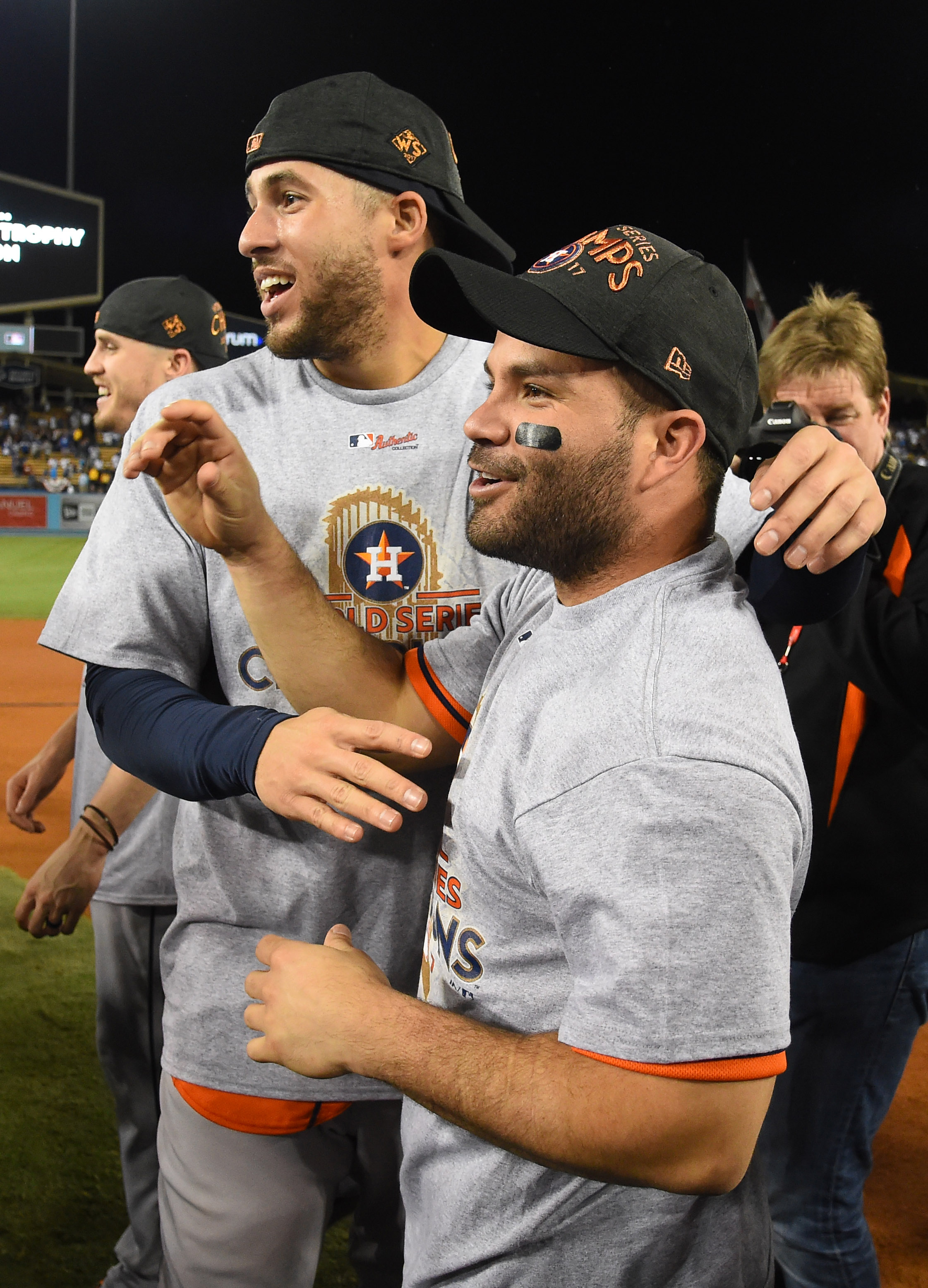
On the heels of their seven-game World Series triumph over the Dodgers, the Astros have finally entered an offseason with the rest of Major League Baseball aspiring to surpass them. It took until the 55th year of the franchise’s existence to win a championship, but the team and its fans might not have to wait much longer to celebrate another title.
Thanks largely to general manager Jeff Luhnow, whom Houston hired in December 2011 and who executed an arduous rebuilding effort to perfection, the Astros have the makings of a club that will contend for more World Series in the near future. And while professional sports teams that win titles often see key players defect in free agency in the ensuing offseason, the Astros are in the luxurious position of having all of their top contributors under control for at least another year. Luhnow won’t face much pressure to make improvements this winter, then, but he’ll nonetheless look to upgrade a roster that finished the regular season with the American’s League’s second-best record (101-61) and third-ranked run differential (plus-196).
Guaranteed Contracts
- Justin Verlander, SP: $40MM through 2019
- Josh Reddick, OF: $39MM through 2020
- Yuli Gurriel, 1B: $30MM through 2020
- Brian McCann, C: $11.5MM through 2018 (club option for 2019)
- Charlie Morton, SP: $7MM through 2018
- Tony Sipp, RP: $6MM through 2018
- Will Harris, RP: $2.8MM through 2018 (club option for 2019)
- Jon Singleton, 1B: $2MM through 2018 (club option for 2019)
Contract Options
- Jose Altuve, 2B: Exercised $6MM club option
- Marwin Gonzalez, UTIL: Exercised $5.125MM club option
Arbitration-Eligible Players (service time in parentheses; projections via MLBTR contributor Matt Swartz)
- Dallas Keuchel (5.089) – $12.6MM
- Evan Gattis (5.000) – $6.6MM
- Mike Fiers (4.085) – $5.7MM
- Collin McHugh (4.085) – $4.8MM
- George Springer (3.166) – $8.9MM
- Brad Peacock (3.165) – $2.9MM
- Jake Marisnick (3.145) – $2.0MM
- Ken Giles (3.113) – $5.0MM
- Lance McCullers (2.140) – $2.6MM
- Non-tender candidate: Fiers
Free Agents
[Astros Depth Chart; Astros Payroll Information]
As you’d expect, not much went haywire for the Astros during a successful postseason run that saw them upend the Red Sox, Yankees and Dodgers. One glaring exception was their bullpen, whose struggles forced manager A.J. Hinch into some unconventional maneuverings this fall. Ken Giles, Chris Devenski and Joe Musgrove offered elite-caliber production across a combined 172 1/3 innings during the regular campaign, but they were anything but reliable in the postseason. As a result, Hinch turned to three members of his regular-season rotation – Lance McCullers, Brad Peacock (who functioned solely as a reliever in the playoffs) and Charlie Morton – for multi-inning, win-preserving appearances during the Astros’ series against the Yankees and Dodgers.
Although Giles was one of baseball’s premier closers in 2017, he was dreadful on the sport’s biggest stage, and his Game 4 blowup against LA went down as the last time he took the mound this year. While Giles’ track record indicates he should remain the club’s closer in 2018, it’s worth noting that the Astros zeroed in on a couple other established late-game options – the Orioles’ Zach Britton and then-Tiger Justin Wilson – in advance of this past summer’s trade deadline. The fact that Houston tried to significantly fortify its bullpen even before Giles’ issues cropped up suggests its relief corps may be an area of focus this offseason. MLBTR colleagues Tim Dierkes, Steve Adams, Jeff Todd and Jason Martinez expect that to be the case, evidenced by their prediction that the Astros will sign free agent closer Wade Davis to a four-year, $60MM contract.
Davis is one of many proven relievers the Astros might go after in free agency (Greg Holland and Addison Reed are other high-end possibilities), or they could subtract from their rich farm system to make a splash on the trade market by landing someone like Britton (he’s likely to stay put, however), Brad Hand (Padres) or Raisel Iglesias (Reds). Britton, Hand or a free agent such as Jake McGee or Mike Minor would give the Astros a southpaw reliever who’s capable of handling both lefty- and righty-swingers, which is something they currently lack. The Astros’ lone left-handed reliever is Tony Sipp, who has been a bust during his two-year tenure with the club and wasn’t even on its playoff roster. The only lefty in the Astros’ bullpen during the postseason was longtime starter Francisco Liriano, a July trade pickup who made five playoff appearances and is now headed for free agency.
Luke Gregerson and late-season addition Tyler Clippard are the other two 2017 Astros relievers without contracts. Gregerson was third among Astros bullpen options in innings in 2017 (61), but his regular-season output was uncharacteristically mediocre and he was barely a factor in the playoffs (3 2/3 frames). Clippard, meanwhile, failed to pitch his way into Houston’s postseason plans after coming over in an August deal with the White Sox.
Liriano, Gregerson and Clippard may be on the way out, but the Astros still have Giles, Devenski, Musgrove, Will Harris, James Hoyt and Sipp (barring a release or trade) as locks or strong bets for their bullpen next year. Like most of those hurlers, Michael Feliz and Francis Martes had substantial relief roles in 2017. Feliz was somewhat of a disappointment, though, and Martes figures to open 2018 in Triple-A Fresno’s rotation.
Given his experience as a reliever, Peacock may return to the bullpen if the Astros don’t trade Collin McHugh, who has worked exclusively as a starter during his four-year tenure with the club and may slot in behind Justin Verlander, Dallas Keuchel, McCullers and Morton at the outset of next season. Alternatively, the Astros could shift Peacock to the bullpen, trade McHugh, jettison Mike Fiers and use a large portion of their available payroll space on one of the two front-end starters on the open market. Yu Darvish, whom the Astros tormented in the World Series, and Jake Arrieta will easily collect the largest deals among starters this year. The Astros don’t need either of those two, though the idea of adding one of them to an already strong rotation is enticing. Plus, as good as Houston’s starters look on paper, Keuchel, McCullers and Morton have each had their share of injury issues during their careers, and Morton is only under contract for another season.
No matter which pitchers comprise the Astros’ staff in 2018, their hurlers will again have the benefit of working with a group of all-world position players. The foundational trio of AL MVP front-runner Jose Altuve, World Series MVP George Springer and Carlos Correa will be back, as will a supporting cast that consists of budding star Alex Bregman, Yuli Gurriel, Josh Reddick, Marwin Gonzalez, Brian McCann and Evan Gattis. That group of nine did nearly all of the damage for an Astros offense that laid waste to the opposition in 2017, topping the majors in position player fWAR (33.0), runs (896), wRC+ (121) and strikeout rate (17.3 percent).
The sole regular who was a weak link for the Astros was potential Hall of Famer Carlos Beltran, who was among the worst designated hitters in the league during a season in which he raked in a pricey $16MM. While Beltran didn’t live up to his deal from a statistical standpoint, Astros management, coaches and players would likely argue that the revered 40-year-old justified the pact behind the scenes. Either way, the impending free agent’s second tenure with the Astros is probably over. As such, finding a new DH figures to be on the agenda for the Astros, whose free agent targets could include two-way Japanese sensation Shohei Otani (who would also beef up Houston’s rotation), Carlos Santana, Jay Bruce, Logan Morrison, Carlos Gonzalez and Lucas Duda, to name several. Any of those six would add a lefty-capable bat to a lineup whose only left-handed regulars are Reddick, McCann and the switch-hitting Gonzalez. Santana, in particular, would give the Astros yet another hard-to-strike out offensive weapon.
As for Marwin Gonzalez, it’s unclear whether he’ll be the Astros’ regular left fielder, which he was in the playoffs, or revert to a super-utility role next year. It’s also up in the air just what Houston will get from Gonzalez, whose .303/.377/.530 line in 515 regular-season PAs may not be a harbinger of what’s to come. According to Statcast (via Baseball Savant), Gonzalez’s actual weighted on-base average (.387) far outdid his expected wOBA (.320), which suggests that his career season was largely the product of good batted-ball fortune. If the Astros agree with that, and if they allow August acquisition Cameron Maybin to leave in free agency, it could put them in the market for outfield help (though free agency won’t offer many clear solutions).
If Luhnow is in an especially bold mood, he could try to swing a trade for on-the-block Marlins right fielder Giancarlo Stanton, who would make the Astros’ offense all the more video game-like. Granted, the $295MM remaining on Stanton’s contract through 2028 – not to mention his right to opt out of the deal after 2020 – may render that idea wholly unrealistic. Teammates Marcell Ozuna and Christian Yelich would be more pragmatic possibilities for the Astros, but the Marlins reportedly aren’t looking to part with either. The Pirates’ Andrew McCutchen, with a year and $14.5MM left on his contract, seems like a more practical target. The 31-year-old would be a solid stopgap for a Houston club with two touted young outfielders, Kyle Tucker and Derek Fisher, waiting in the wings.
After constructing a championship-winning roster in 2017, Luhnow could make any number of headline-grabbing transactions this offseason to better the Astros’ chances of repeating next year. However, considering the overwhelming amount of talent in the fold and the paucity of integral free agents set to leave Houston, no one would blame Luhnow for taking a modest approach this winter. In the end, his most important moves may come in the form of extensions for core players such as Altuve, Springer and Keuchel, who each have three or fewer years of team control remaining.
Photo courtesy of USA Today Sports Images.
Offseason Outlook: Texas Rangers
MLBTR is publishing Offseason Outlooks for all 30 teams. Click here for the other entries in this series.
The 2017 season was borderline disastrous for the Rangers, who fell from a 95-67 record in 2016 to a 78-84 mark and a third place finish in the division. Texas dramatically outperformed its projected record in that AL West-winning ’16 campaign, so some regression was expected, but the team fell further than most would’ve figured and now faces some heavy offseason lifting.
Guaranteed Contracts
- Elvis Andrus, SS: $73MM through 2022 (can opt out of remaining four years, $58MM after 2018 season)
- Shin-Soo Choo, OF/DH: $62MM through 2020
- Rougned Odor, 2B: $48.5MM through 2022
- Cole Hamels, LHP: $28.5MM through 2018 (includes $6MM buyout of $20MM option for 2019)
- Adrian Beltre, 3B: $18MM through 2018
Arbitration-Eligible Players (service time in parentheses; projections via MLBTR contributor Matt Swartz)
- Jake Diekman (5.050) – $2.8MM
- A.J. Griffin (5.034) – $3.0MM
- Jurickson Profar (3.161) – $1.1MM
- Keone Kela (2.168) – $1.2MM
- Nick Martinez (2.149) – $2.0MM
- Ryan Rua (2.126) – $900K
- Non-tender candidates: Griffin, Martinez
Option Decisions
- Mike Napoli, 1B: $11MM club option with $2.5MM buyout; team has reportedly informed Napoli the option will be declined
- Martin Perez, LHP: $6MM club option with a $2.45MM buyout
- Tony Barnette, RHP: $4MM club option with a $250K buyout
Free Agents
- Carlos Gomez, Andrew Cashner, Mike Napoli, Miguel Gonzalez, Jason Grilli
[Texas Rangers Depth Chart | Texas Rangers Payroll Outlook]
More than half of the Rangers’ Opening Day roster struggled through some form of injury or unforeseen downturn in performance in 2017. Yu Darvish posted solid but unspectacular numbers for much of the first half, while Cole Hamels was sidelined more than two months with an oblique issue (to say nothing of his curiously evaporating strikeout rate). Jonathan Lucroy‘s power was nowhere to be found, and Rougned Odor batted .204 with a ghastly .252 OBP in the first season of a six-year contract extension that now looks questionable. The Rangers also lost Adrian Beltre and Carlos Gomez for prolonged stretches due to injury. The bullpen was an unmitigated disaster.
And yet, the Rangers clung to hope in the Wild Card race for much of the season, riding a breakout season from Elvis Andrus, a 41-homer campaign for Joey Gallo and quality results from Andrew Cashner for much of the season.
The Rangers’ foundation began showing some cracks — a particularly troubling development in Arlington considering the fact that the cross-state-rival Astros’ own young core elevated its game to a new level. The simultaneous nature of the Rangers’ decline and the Astros’ ascension has put Texas behind the eight ball as it looks to get back into contention in 2018 and beyond. While there have been many Rangers fans suggesting that the team needs to retool, if not all-out rebuild, GM Jon Daniels has been blunt in stating that his team is not rebuilding. So then, where do the Rangers turn to right the ship?
The most pressing need is on the pitching staff — specifically in the rotation. Hamels will return to lead the 2018 rotation but has just one guaranteed year remaining on his deal and looked more like a back-of-the-rotation arm than his usual self in 2017. His 6.4 K/9 rate was easily a career low, and his 9.7 percent swinging-strike rate was two points lower than his previous career-worst mark. He’ll be joined by Martin Perez, whose $6MM club option is a no-brainer even if his production looked like that of a fifth starter (4.82 ERA, 5.6 K/9, 3.1 BB/9, 47.3 percent ground-ball rate in 185 innings).
Beyond that pair, the Rangers’ options are … uninspiring, to say the least. Cashner and trade acquisition Miguel Gonzalez are free agents, leaving the Rangers with Nick Martinez, A.J. Griffin, Clayton Blackburn and prospect Yohander Mendez as 2018 options. (Former first-round pick Chi Chi Gonzalez is recovering from Tommy John surgery and may not be ready early in the season.) If the Rangers have any hope of contending, they’ll need to add at least one more established arm to the mix, and quite possibly two.
A pursuit of a Darvish reunion, to some extent, could conceivably be explored. The decision to trade him was a reluctant one from Daniels and his staff, and Hamels’ potential departure after the 2018 season leaves the team with virtually no certainty in the rotation after next year. However, the Rangers didn’t extend him when they had the chance, and the team’s financial outlook is ungainly enough that it seems like a genuine long shot that Darvish will be re-signed.
Texas has a significant amount of money on the books through 2020 thanks largely to Shin-Soo Choo’s albatross deal, and Daniels has suggested that the payroll will step back a bit from this past year’s Opening Day mark of $165MM — perhaps in the $155MM range, per Jeff Wilson of the Fort Worth Star-Telegram. They’ll be off the hook for some of Prince Fielder‘s salary after reaching an agreement with the insurers of his contract, and the club currently projects to about a $118MM payroll including Fielder and some non-tender/trade candidates. A backloaded Darvish deal shouldn’t be entirely written off as a possibility, but it’s tough to align Daniels’ stated desire to scale back payroll with a five- or six-year free-agent deal for Darvish that could check in with an annual value in the $23-26MM range.
The Rangers will also be prominently linked to Japanese star Shohei Otani, though they’ll face competition from 29 other teams if and when he’s posted. Daniels acknowledged that the Rangers would be one of many in the mix if Otani becomes available this winter — a reality that looks less likely with the new revelation that the posting system agreement between MLB and NPB has expired — but reports have connected Texas to the young right-hander/slugger much more prominently over the summer. Speculating on any sort of “favorite”to land Otani seems futile right now, especially since his earning power is capped by MLB’s international signing guidelines, but Texas will be involved.
If not Darvish or Otani, the Rangers will have the money to invest elsewhere. Signing a big-ticket arm such as Jake Arrieta will present the same long-term payroll complications as Darvish. Second-tier names like Lance Lynn and Alex Cobb will be available but will very likely come with draft compensation attached, as each is a strong qualifying offer candidate. Texas could also look at more affordable overseas options, with Miles Mikolas and Hideaki Wakui each eyeing MLB jobs after strong showings in Japan. Mikolas, in particular, has been loosely linked to Texas (where he last pitched before going to the NPB).
It’s a similar, albeit not quite as grave situation in the bullpen. Lefties Alex Claudio and Jake Diekman will be back in 2018, as will righties Keone Kela and Matt Bush (though Bush will be coming off shoulder surgery and has been suggested as a potential rotation candidate). Hard-throwing Jose Leclerc is an option after averaging nearly 12 strikeouts per nine innings in 45 2/3 frames this year, but he also averaged a jaw-dropping 7.9 walks per nine. Austin Bibens-Dirkx, Ricardo Rodriguez and Nick Gardewine are all on the 40-man as well, but none impressed much as a big league reliever.
With no clear ninth-inning solution, Texas could conceivably take a run at a top-tier closer like Wade Davis or Greg Holland. But, again, with numerous needs up and down the roster — we’re not even to the position players yet — it seems likelier that Daniels & Co. will pursue quality assets in the second and third tier of the market. Brandon Morrow, Addison Reed and Mike Minor will probably have the most buzz on the second tier, while other options coming off strong seasons include Pat Neshek, Anthony Swarzak and old friend Tommy Hunter.
Turning to the lineup, the Rangers seem likely to let Robinson Chirinos shoulder the bulk of the load behind the dish. If they wish to push him back into a backup role, Welington Castillo and Alex Avila are options to serve as the primary receiver in Arlington next year. Both should command multi-year deals. Chris Iannetta and Nick Hundley are among the veteran backups if Chirinos is the first choice.
Most, if not all of the infield is set. Andrus performed so well in 2017 that the notion of him opting out of his contract after the 2018 season is now perfectly plausible — if not likely. Future Hall of Famer Adrian Beltre will be back at the hot corner, and for better or worse, second base will go to Odor as he looks to rebound from that aforementioned .252 OBP. First base looks likely to go to Joey Gallo, though the team could also elect to play Gallo in an outfield corner or at DH if the decision is made to pursue a free-agent first baseman. Eric Hosmer is almost certainly going to be out of the Rangers’ comfort zone, but Logan Morrison, Carlos Santana and Yonder Alonso are all conceivable possibilities on the market.
In the outfield, there’s less certainty. Willie Calhoun, the centerpiece from the Darvish trade with the Dodgers, could split his time between left field and DH if the Rangers want to go with an intriguing, bat-first option. He lacks experience, but Calhoun obliterated upper minors pitching in 2017 and is a consensus top 100 prospect. Otherwise, the Rangers have Nomar Mazara, Delino Deshields and Choo as options in the outfield (and, in Choo’s case, at designated hitter).
That’s not a very inspiring unit, unless Mazara bounces back and makes good on his longtime elite prospect status. Given that he won’t turn 23 until April and nonetheless has two full big league years under his belt, that shouldn’t come as a shock if it happens. But, that’s a lot to bank on, and the Rangers could be well served by at least adding a veteran outfielder that can handle center field or a corner. A reunion with Carlos Gomez certainly makes sense, with Jon Jay and Jarrod Dyson also representing viable free-agent alternatives.
The elephant in the room for the Rangers is Jurickson Profar. The former No. 1 overall prospect missed two seasons with shoulder injuries and was reportedly unhappy that he wasn’t traded prior to the non-waiver deadline. Texas simply doesn’t have at-bats to give him, having inked Andrus and Odor to long-term commitments at the middle infield positions. Profar didn’t hit much in a limited opportunity as a utilityman, but he did hit .287/.383/.428 in 383 Triple-A plate appearances this year.
That the Rangers elected not to give Profar a September call-up was notable for two reasons. First and foremost, it served as an even stronger indicator that his time with the organization is quite likely running out. A second, less obvious benefit to casual onlookers is that it prevented Profar from reaching four full years of MLB service time. Because he stayed in the minors, the Rangers will be able to market three years of Profar’s arbitration eligibility rather than two when shopping him this winter. Any team with regular middle-infield bats could plausibly be considered a suitor. The Padres, Royals, Angels, Mets, Blue Jays and Brewers all strike me as speculative landing spots.
Profar’s trade value will be a fraction of what it was at its apex, though one can hardly fault the Rangers for not moving him when he was the game’s top-rated prospect. The team got extremely unlucky when it came to Profar’s health, but that doesn’t mean it can’t salvage some decent value here. While Profar won’t command a massive return, the Rangers could get a similar reclamation project for the rotation or possibly an MLB-caliber bullpen arm, among other lesser pieces.
If a payroll in the $155MM range is indeed the target, the Rangers may only have $35-40MM worth of open payroll capacity in 2018, depending on non-tender and trade scenarios. While that’s certainly enough space to fill multiple needs, it’s a fairly modest amount for a club that needs multiple starters, at least one reliever (likely more) and some outfield and/or first base help. Texas can always try to dump some of the remaining three years and $62MM of Choo’s contract on another American League club with DH at-bats open (e.g. the White Sox), but doing so would require paying down some of the commitment and providing prospect value to the acquiring team. Alternatively, they could try to facilitate some kind of bad contract exchange, taking on a similarly undesirable contract that at least filled a team need (e.g. Ian Kennedy).
Regardless of which route the Rangers actually take, they’ll need to add several pieces with a relatively limited cache of resources if the team truly does not intend to embark on any kind of significant rebuild this offseason. With a stacked Astros roster looming over the AL West, the Rangers face an uphill battle in returning to contention for a division title. But, it’s also difficult to fault any AL team for eschewing a full rebuild when only five American League clubs finished with a .500 record this season..
Top 50 Free Agents Chat Transcript
MLBTR’s Top 50 Free Agents list is out, and people have questions. Many questions. Click here to read a transcript of me, Tim Dierkes, trying to answer some of them.
Offseason Outlook: Toronto Blue Jays
MLBTR is publishing Offseason Outlooks for all 30 teams. Click here to read the other entries in this series.
After an injury-riddled season, the Blue Jays are looking to rebound back into the AL East race. With Josh Donaldson and several other key veterans only under contract through 2018, however, it remains to be seen if the Jays will acquire upgrades that will only help them next season, or if they’ll aim for longer-term assets.
Guaranteed Contracts
- Troy Tulowitzki, SS: $54MM through 2020 ($15MM club option for 2021, $4MM buyout)
- Russell Martin, C: $40MM through 2019
- Kendrys Morales, DH: $23MM through 2019
- Lourdes Gurriel, IF/OF: $18.4MM through 2023
- Marco Estrada, SP: $13MM through 2018
- J.A. Happ, SP: $13MM through 2018
- Steve Pearce, OF/1B: $6.25MM through 2018
- Justin Smoak, 1B: $4.125MM through 2018 ($6MM club option for 2019, $250K buyout)
Arbitration Eligible Players (service time in parentheses; projections via MLB Trade Rumors)
- Josh Donaldson (5.158) – $20.7MM
- Aaron Loup (5.040) – $1.8MM
- Tom Koehler (4.090) – $6.0MM
- Ezequiel Carrera (4.039) – $1.9MM
- Marcus Stroman (3.148) – $7.2MM
- Kevin Pillar (3.113) – $4.0MM
- Ryan Goins (3.106) – $1.8MM
- Aaron Sanchez (3.069) – $1.9MM
- Devon Travis (3.000) – $1.7MM
- Roberto Osuna (3.000) – $5.6MM
- Dominic Leone (2.123) – $1.2MM
- Non-tender candidate: Koehler
Free Agents
[Toronto Blue Jays Depth Chart; Blue Jays Payroll Overview]
One major bit of offseason business has already been handled, as Marco Estrada agreed to a one-year, $13MM extension to return to the Jays next season. 2017 was easily the worst of Estrada’s three seasons in Toronto, though much of the damage was came during a midseason slump that Estrada has said was partially caused by off-the-field issues. Given that Estrada looked closer to his old form during the second half of the season, he’ll give the Jays another solid arm to slot in behind Marcus Stroman, J.A. Happ and Aaron Sanchez in the rotation.
Of course, that’s assuming Sanchez is able to recover from the blister and fingernail problems that kept him on the disabled list for much of the season. A full offseason of recovery time would theoretically have Sanchez ready to go for Spring Training, though given the unpredictable nature of his recurring injury, re-signing Estrada was particularly important for the Jays.
Sanchez’s blister was essentially a metaphor for the entire 2017 Blue Jays season. The team was simply never able to get rolling due to a swath of injuries and a lack of performance from most of the players who were able to stay healthy. The starting rotation couldn’t duplicate its 2016 success, and the lineup delivered some of the poorest offensive numbers of any team in baseball. A 2-11 start put the Jays behind the eight ball from the very beginning, and the club wasn’t able to achieve as much as a .500 record at any point during the year.
Better health will only go so far in solving the Jays’ problems. The team can reasonably count on Donaldson, Happ, and Russell Martin delivering closer to full seasons, though Martin turns 35 in February. Sanchez’s status is yet to be determined, and the substantial injury histories of Troy Tulowitzki, Devon Travis and Steve Pearce make them question marks rather than reliable regulars for next year’s lineup.
As one might expect in the wake of such a season, GM Ross Atkins has stated that adding roster depth is a big priority for the club. The challenge will be in deciding where to acquire that depth, since the Jays are thin at several positions and don’t have much in the way of MLB-ready talent at the upper levels of the minors.
One such area is starting pitching, as the Blue Jays don’t have a fifth starter lined up. Joe Biagini is the current favorite for the job but was inconsistent as a starter last season. Tom Koehler (if he isn’t non-tendered) or prospect Ryan Borucki could be candidates, while other internal options like Chris Rowley seem more like minor league depth options. The case could also be made that Biagini and Koehler are better utilized as relievers.
Between the fifth starter opening and Sanchez’s blister concerns, the Blue Jays could have cause to add a veteran starter on a short-term deal. Jason Vargas, CC Sabathia, Jaime Garcia, Doug Fister, and familiar face Brett Anderson are a few of the experienced arms available in free agency, though with Estrada and Happ both under contract for just one more year, I’d argue that Toronto could make a bigger splash for a front-of-the-rotation type. Yu Darvish or Jake Arrieta seem like long shots, but the Jays have already been cited as a likely suitor for Alex Cobb, and Lance Lynn is another second-tier rotation arm who would require a substantial, but not a bank-breaking multi-year contract.
Of course, Shohei Otani would be a great fit for Toronto, as he would in the rotation of every other MLB team. The Jays’ interest in Otani is known, though it doesn’t seem like they are frontrunners for his services, if he is even made available to MLB teams at all this winter (which is looking less clear than ever). If Otani did sign with the Jays, one would think the team would look to trade Kendrys Morales (even while eating some money in a deal) to free up the DH spot for Otani to get at-bats.
Even without an Otani signing, the idea of dealing Morales or another veteran regular may still have to be explored. Morales and Tulowitzki have little to no trade value given their poor 2017 seasons and the money remaining on their contracts; Martin is also owed $40MM through the next two years, and there aren’t many contenders in need of catching help.
Atkins has said that the Jays aren’t looking to trade from their MLB roster, though that may be a necessity given their lack of minor league trade chips (and obviously top prospects Vladimir Guerrero Jr. and Bo Bichette aren’t going anywhere). A rebuilding team could have interest in Travis given his youth and the potential he’s shown when he has been able to play. Justin Smoak’s breakout year turned his contract into a bargain, and Toronto could look to sell high on him, though teams could prefer to just sign a free agent first baseman rather than make a trade. Teams could be interested in Kevin Pillar’s elite center field glove, and the Jays could conceivably replace Pillar in center field with Teoscar Hernandez or Anthony Alford.
The biggest trade chip, of course, is Donaldson, though he reportedly isn’t on the table as a trade candidate since the Jays plan to contend next year. The star third baseman has expressed interest in an extension that would keep him in Toronto beyond 2018, though if contract talks fail to materialize over the winter, trade speculation will only increase. The Cardinals are known to be one of several teams interested in Donaldson’s services, and they’re a particularly interesting potential trade partner since they can offer outfielders and multi-positional infielders. Even if Donaldson isn’t up for discussion, I’d imagine the Jays will have some talks with the Cards this winter.
These may seem like bold moves for a team that doesn’t seem to be planning any sort of huge shakeup. That said, if the Jays intend to add (in the words of president/CEO Mark Shapiro) “Durability. Athleticism. Flexibility,” to the roster, one way to achieve those goals is to move some of the players that don’t fit those categories. Trading Travis, for instance, would make it easier for the Jays to sign a multi-position infielder like Eduardo Nunez, as Toronto could then offer Nunez regular time at second base and then have the option of bouncing him around the diamond as the situation warrants. As mentioned, Morales couldn’t be dealt without eating a big chunk of the $23MM remaining on his contract, though moving a DH-only player who posted below-average hitting numbers last year would go a long way to giving the Blue Jays a more well-rounded roster.
If Toronto eschews bigger moves in search of pure depth additions, someone like Stephen Drew stands out as a left-handed hitting utility infield option. Backup catcher is a notable area of need, as Jays backup catchers combined for -1.5 fWAR last year — a particular issue given that Martin played in just 91 games. Miguel Montero struggled badly after joining the Jays last summer and isn’t likely to be re-signed.
The corner outfield positions are the most obvious areas to add much-needed speed and left-handed hitting into the mix. The team has already confirmed that it won’t be picking up its end of Jose Bautista’s mutual option, ending the franchise icon’s tenure in Toronto on a sour (-0.5 fWAR) note. This leaves Pearce as the top option in left field and Hernandez as the current favorite in right field after his impressive September performance. Alford and Ezequiel Carrera are also in the mix as platoon or backup options, with former top prospect Dalton Pompey slated for Triple-A after missing almost all of 2017 due to a concussion and a knee injury.
There is clearly room for improvement here, as Pearce and the youngsters could be slated for left field and a new face could play right. Jay Bruce has been a Blue Jays target in the past and would bring some much-needed left-handed pop to right field, so Toronto is likely to check in on his availability in free agency. Left-handed bats like Curtis Granderson or Jon Jay aren’t quite ideal for everyday roles, though the Jays can use Pearce and Hernandez as their corner outfielders when a southpaw is on the mound. If the Indians decided to decline their club option on Michael Brantley in the wake of Brantley’s recent ankle surgery, you’d expect Atkins and Shapiro to be all over Brantley given their past Cleveland ties.
Beyond free agents, teams like the Marlins, Indians, White Sox and (as mentioned) the Cardinals all could have outfielders for sale this winter. Jays fans may cringe at the idea of another big trade with the Marlins, but since Toronto had some interest in Dee Gordon last summer, Miami fits as a trade partner that could address the Jays’ needs at both second base and in the outfield in a single blockbuster. This is just my speculation, however — the Blue Jays may not have the prospects necessary to attract the Marlins’ attention on their star outfielders, and the Jays reportedly balked at Gordon’s remaining salary ($38MM through 2020).
Speaking of salary, the Jays have approximately $142.5 MM tied up in 19 players (eight guaranteed salaries and their 11-player arbitration class) for next season. This gives them some room to spend if they approach their $163.3MM payroll from last Opening Day, though even with Bautista off the books, big arb raises for Donaldson, Pillar, Stroman, Koehler, and Roberto Osuna will wipe out a lot of those savings. Koehler’s $6MM arbitration price tag is probably too high for the Jays’ liking, though they could look to re-sign him at a lower salary given his potential value as a swingman, multi-inning reliever, or fifth starter candidate.
Now that Osuna’s strong numbers no longer come with the benefit of a pre-arbitration salary, there will likely be some trade talk surrounding the 22-year-old closer. Osuna had a career-high 3.38 ERA and ten blown saves in 2017 while also dealing with some anxiety issues. S everal advanced metrics, though, indicate that the young closer was as dominant as ever last season and just ran into some bad luck (only a 59.5% strand rate) and perhaps some complications from increased usage of a cutter rather than his normal fastball-heavy arsenal. While teams will surely approach the Blue Jays with offers, it would be a surprise to see Osuna dealt given that his salary is still quite reasonable for a closer with his track record.
The Jays also need Osuna to anchor a bullpen that posted some decent numbers last year despite being heavily overworked; Jays relievers pitched 596 2/3 innings, the third-most of any club in baseball. Beyond Osuna, Toronto has some solid options on hand (Danny Barnes, Dominic Leone, Ryan Tepera, Carlos Ramirez) and could be further bolstered depending on what happens with Biagini or Koehler. Aaron Loup is the only southpaw in the pen, so expect the Jays to check in on left-handed relievers this winter. The club could look to replicate its low-cost signings of Joe Smith and J.P. Howell from last offseason, hoping for a better than their .500 return — Smith pitched well and was flipped at the trade deadline, while Howell battled injuries and was released in August.
The Atkins/Shapiro regime hasn’t made many big splashes in its two offseasons running the front office, though more is required this winter in the wake of the Jays’ disappointing 2017 campaign. Counting on better health to fix the problems is a big risk, especially since the club’s roster is old enough that decline is just as big a concern as injuries at this point. As intent as the Blue Jays are on contending, the AL East is competitive enough that another slow start could quickly turn the Jays into deadline sellers. Some significant roster shuffling is needed for the Jays to make 2017 into an aberration, rather than the first sign that their contention window is closing.
2017-18 Top 50 MLB Free Agents With Predictions
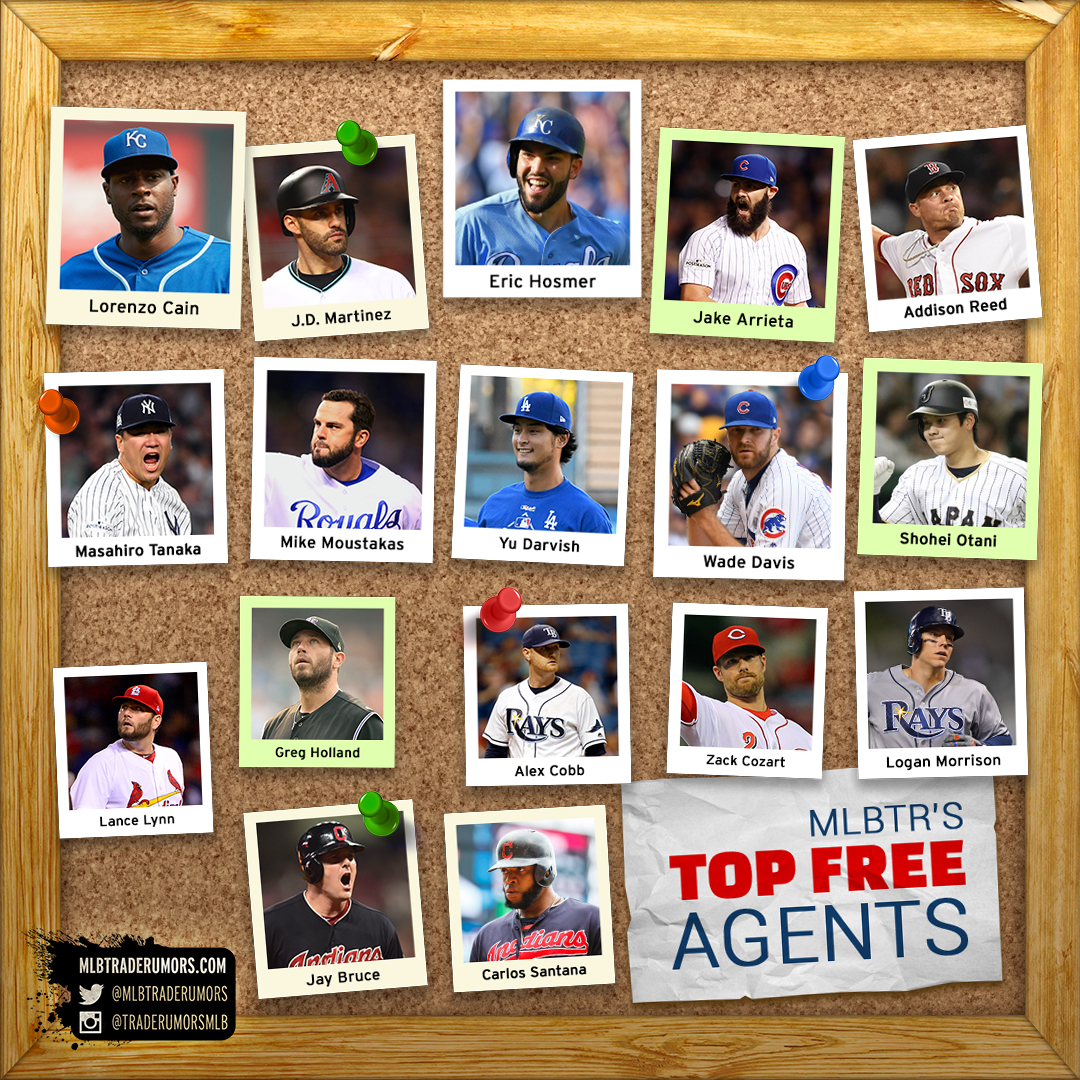
MLB Trade Rumors is proud to present our 12th annual Top 50 Free Agents list! The entire list of available free agents can be found here, and you can filter by position, signing team, and qualifying offer status with our mobile-friendly free agent tracker here.
New to MLBTR? You can follow us on Twitter, like us on Facebook, follow us on Instagram, and download our free app for iOS and Android.
MLBTR writers Steve Adams, Jeff Todd, and Jason Martinez joined me in this collaboration, debating free agent contracts and destinations for many hours. We vetted these as much as possible, but with 50 predictions and a volatile free agent and trade marketplace, we know we’ll be off on some. Let us know what you think in the comment section!
Looking for Shohei Otani? Scroll to the bottom of the post for information on Japan’s Babe Ruth, whose free agency is a special case. On to our Top 50 free agents:
1. Yu Darvish – Cubs. Six years, $160MM. Let’s start by addressing the elephant in the room. Darvish recorded a mere ten outs in his two brutal World Series starts for the Dodgers. With those ugly outings fresh in our minds, projecting him to receive the winter’s largest contract creates cognitive dissonance. However, Darvish remains what he was a week ago: a very good starting pitcher and the best in this free agent class.
Darvish spent the first seven years of his career in Japan starring for the Nippon Ham Fighters. The Fighters made Darvish available to MLB teams in December 2011, at a time when there was no limit on bidding for the exclusive right to negotiate with the player. The Rangers beat out the Blue Jays, Yankees, and Cubs with a $51.7MM bid and signed Darvish to a six-year, $56MM deal on top of that. Darvish’s fine Rangers career included 782 2/3 innings of 3.42 ERA ball with a 11.0 K/9, plus four All-Star appearances and a second-place Cy Young finish. He was traded to the Dodgers in July, making him ineligible for a $17.4MM qualifying offer. While with the Rangers, Darvish went about 22 months between starts due to Tommy John surgery. He’s been injury-free this year and nudged his way past the 200-inning plateau in his brief start last night. The 31-year-old righty should have no problem setting a new free agent record for a Tommy John survivor, passing Jordan Zimmermann’s five-year, $110MM deal. Seven-year contracts have historically been reserved for slightly younger pitchers without elbow surgery on their resume, so we’re expecting six years for Darvish. Free agent starters have exceeded a $25MM salary four different times, and we’re projecting Darvish to become the fifth. If the Dodgers decide to move on, the Cubs, Phillies, Nationals, Cardinals, Astros, and Twins could be potential suitors. There’s a shortage of obvious big-market players here, allowing for dark horses to enter the mix.
Signed with Cubs for six years, $126MM. Deal includes opt-out clause after second year.
2. J.D. Martinez – Red Sox. Six years, $150MM. Martinez came up through the Astros’ farm system but struggled through 975 plate appearances in the Majors and was released in March 2014. The Astros didn’t understand the impact of his recently-overhauled swing. The Tigers scooped Martinez up on a minor league deal, and he went on to rake at a .300/.361/.551 pace with 99 home runs in 1,886 plate appearances for them from 2014-17. A trade to the Diamondbacks this past July removed the possibility of a qualifying offer and boosted Martinez’s stock further as he went nuts with 29 home runs in 62 games. He finished with a career-high 45 bombs on the season. The biggest knock on Martinez is his right field defense, which has been a clear negative for the last two years. He also missed significant time with an elbow fracture in 2016 and a foot sprain to begin this year. Still, Martinez’s right-handed power will make him the most coveted bat on the market, enough that teams without corner outfield openings could trade someone to create a spot. The Diamondbacks may not have the payroll space to retain Martinez, leaving the Cardinals, Red Sox, and Giants as top suitors.
Signed with Red Sox for five years, $110MM. Deal includes opt-out clauses after second, third, and fourth years.
3. Eric Hosmer – Royals. Six years, $132MM. Every year one free agent is particularly polarizing, and this winter it’s Hosmer. The first baseman did solid work for the Royals over seven seasons, with a well-timed career-best batting line of .318/.385/.498 in 671 plate appearances this year. He just turned 28 and will be looking for at least six years — quite likely more. However, defensive metrics rate his glove poorly (a 2017 Gold Glove nomination notwithstanding), and off years with the bat resulted in replacement level seasons in 2014 and ’16. A case will be made for a $200MM contract, but it’s not a very good case. Teams seeking a first baseman have free-agent alternatives such as Carlos Santana, Logan Morrison, and Yonder Alonso, as well as trade candidate Jose Abreu. If Hosmer gets a huge contract, it probably won’t be from the game’s more analytical teams. The Royals seem likely to make a spirited effort to retain Hosmer as the face of their franchise, while the Red Sox, Cardinals, Mariners, and Rockies could enter the market to varying degrees. Hosmer is a lock to receive and reject a qualifying offer.
Signed with Padres for eight years, $144MM. Deal includes opt-out clause after fifth year.
4. Jake Arrieta – Brewers. Four years, $100MM. A July 2013 trade from the Orioles to the Cubs rebooted Arrieta’s career, which peaked with the NL Cy Young Award in 2015. Arrieta’s star has dimmed since then, as he’s become more prone to walks, home runs, and hits and stopped pitching deep into games. He still provided value to the 2017 Cubs, with 30 starts of 3.53 ERA ball. Though he turns 32 in March, Arrieta’s case for a long-term deal is boosted by excellent physical conditioning. We expect him to come out looking for a six-year deal, but land at four or five. Arrieta appears likely to move on from the Cubs, with whom he was unable to agree to an extension in the past few years. However, it’s possible Arrieta could circle back to the Cubs later in the offseason if his market disappoints. We don’t see a clear favorite to sign him, so we’ve chosen a dark horse pick in the Brewers. The Cardinals, Nationals, Astros, Rangers, Phillies, Yankees, Angels, Mariners, Braves, Twins, and Dodgers could be in the mix depending on the price.
Signed with Phillies for three years, $75MM. Deal includes opt-out clause after second year, which Phillies can void with two-year extension.
5. Masahiro Tanaka – Phillies. Five years, $100MM. Tanaka, 29 this month, is coming off his fourth and perhaps worst MLB season. He posted a 4.74 ERA in 30 regular season starts, with a ridiculous 21.2% of his flyballs allowed becoming home runs. It wasn’t a Yankee Stadium problem, as Tanaka was even more homer-prone on the road. On the bright side, Tanaka put up a career-best strikeout rate, a 3.77 ERA in the second half, and three excellent, homer-free postseason starts. Back in January 2014, Tanaka joined the Yankees via the Japanese baseball posting system after pitching seven years for the Rakuten Golden Eagles. With the posting fee capped at $20MM, the Yankees won the bidding over the Cubs, White Sox, Dodgers, and Diamondbacks with a seven-year, $155MM deal that included an opt-out that comes due at midnight on Saturday. The biggest wrinkle in Tanaka’s long-term prospects may be the partially torn UCL in his right elbow, which surfaced more than three years ago. Tanaka went the rehab route instead of undergoing Tommy John surgery. In 2015 Tanaka missed time with a forearm strain and had arthroscopic elbow surgery in the offseason. This year, he had a DL stint for shoulder fatigue. If Tanaka opts out, he will be walking away from three years and $67MM left on his Yankees contract. Ervin Santana was able to land a four-year deal with a rehabbed and healed UCL, and it seems that opting out is the right call for Tanaka. The Yankees could be in a position to lower their luxury tax hit by adding a year or two and reducing the average annual value of his contract. If Tanaka moves on from the Yankees, the Cubs, Nationals, Astros, Cardinals, Dodgers, Angels, Phillies, Twins, Mariners, Rangers, and Brewers could be possibilities. If he does opt out, the Yankees will assuredly issue a qualifying offer in order to collect draft-pick compensation.
Elected to remain with Yankees, forgoing opt-out clause and free agency.
6. Mike Moustakas – Braves. Five years, $85MM. Moustakas, 29, set a Royals franchise record with 38 home runs this year. The second overall draft pick in 2007, Moustakas didn’t click as a hitter until 2015. The third baseman suffered an ACL tear in May 2016, ending that season early, but exhibited no health problems in his return this year. The biggest flaw in Moose’s game is his low 5.7% walk rate this year, resulting in a .314 OBP that drove down his overall value as a hitter despite the power. Defensive metrics were also down on his once well-regarded glovework this year, though teams may be willing to chalk that up to rust coming off his knee injury. Regardless, he should do well in free agency. If the Royals move on, the Angels, Braves, and Cardinals could be options. Like Hosmer, Moustakas is going to receive and reject a qualifying offer.
Re-signed with Royals for one year, $6.5MM.
7. Lorenzo Cain – Giants. Four years, $70MM. Yet another Royals free agent, Cain adds value with his hitting, baserunning, and glove as a center fielder. He’s a speedy, well-rounded player who was worth more than four wins above replacement this year. Dexter Fowler’s five-year, $82.5MM deal with the Cardinals will be a likely model, though Cain is a year older than Fowler was. Cain is the only plus defensive center fielder on the market who also carries an above-average bat, which should create plenty of demand. If the Royals don’t retain him, the Giants, Mariners, Blue Jays, and Rangers could be matches. The Royals have reportedly yet to decide on a qualifying offer for Cain, but it’d be a big surprise if he doesn’t get one.
Signed with Brewers for five years, $80MM.
8. Wade Davis – Astros. Four years, $60MM. Davis, 32, came up as a starter in the Rays system and was traded with James Shields to the Royals in a December 2012 blockbuster. 2013 was a tumultuous year for Davis – his wife had a baby, he lost his stepbrother unexpectedly, and he pitched his way out of the rotation by August. He began 2014 as the Royals’ setup man and never looked back, garnering Cy Young votes in a dominant season. He moved into the team’s closer role when Greg Holland got hurt the following year and will forever be remembered flinging his glove into the air after punching out Wilmer Flores looking to end the 2015 World Series. Davis missed time late in 2016 with a flexor strain in his pitching elbow, but the Cubs were not deterred in deftly trading Jorge Soler for him last offseason. Davis had a fine year as the Cubs’ closer, though he walked more than five batters per nine innings in the second half and that trend continued as manager Joe Maddon pushed him into multi-inning postseason stints. Despite a few warts, Davis is the best closer available and will likely be targeting Mark Melancon’s four-year, $62MM deal from last winter. The Cubs shied away from big-money closers last winter, but it’s still possible they could pony up for Davis. If the Cubs look elsewhere, the Astros, Cardinals, Rangers, Nationals, Twins, Braves, and Rockies could be fits. Davis is another slam-dunk recipient of the qualifying offer and will reject in search of a long-term deal.
Signed with Rockies for three years, $51MM.
9. Lance Lynn – Rangers. Four years, $56MM. Lynn, a 30-year-old righty, kicks off the second tier of free-agent starting pitching. He made 161 starts for the Cardinals in his career, regularly topping 30 per year. Lynn went under the knife for Tommy John surgery in November 2015. He missed all of 2016, as expected, but was one of only 12 pitchers to reach 33 regular season starts in 2017. While Lynn was never a big control guy, his 3.8 walks per nine innings was the second-worst mark of all qualified MLB starters. His strikeout and home run rates were also career worsts, so his 3.43 ERA can be attributed largely to a .241 batting average on balls in play. If Lynn’s BABIP regresses and other rates hold steady, his ERA could easily jump past the mid-4.00s. Still, Lynn takes the ball every fifth day and has had a lot of big league success since 2012. The righty’s reported asking price of $100MM+ over five years seems unattainable, but half of baseball is seeking rotation help. That includes the Rangers, Orioles, Twins, Mariners, Phillies, Cubs, and Brewers. Given the expected demand for Lynn, the Cardinals are likely to make a qualifying offer, and he’s likely to reject.
Signed with Twins for one year, $12MM.
10. Greg Holland – Cardinals. Four years, $50MM. Holland ascended to the Royals’ closer job when they traded Jonathan Broxton at the 2012 trade deadline. He established his dominance in 2013-14 with a 1.32 ERA and 13.4 K/9 in 129 1/3 regular season innings, earning Cy Young Votes and All-Star nods in each season. Holland apparently tore his elbow ligament late in the 2014 season, pitching through the injury in 2015 before succumbing to Tommy John surgery shortly before his team began its World Series run. He spent 2016 as a rehabbing free agent and landed a one-year contract with the Rockies in January of this year. A $15MM player option for 2018 vested in that contract, which he will reportedly decline in search of a multiyear deal. Holland was healthy in 2017 and was one of the best relievers in baseball for the first two months of the season. He endured a brutal eight-game stretch in August before rebounding with a strong finish in his final 11 regular-season appearances. Holland will have a market similar to that of his former setup man, Wade Davis. Considering the fact that he’s turning down a $15MM player option, Holland is a lock to also reject a one-year, $17.4MM qualifying offer.
Signed with Cardinals for one year, $14MM.
Offseason Outlook: St. Louis Cardinals
MLBTR is publishing Offseason Outlooks for all 30 teams. Click here for the other entries in this series.
With an extra-inning loss to the division rival Cubs on September 28th, the St. Louis Cardinals were eliminated from postseason contention, marking the first time the club has missed the playoffs in back-to-back seasons since 2007-2008. However, the future of the organization looks bright. An invasion of talent from the minor leagues came up this season to support a core of proven veterans, and the continued development of that fresh crop of talent alone will probably help the team take a step forward. The Cardinals have a deep roster and a bit of wiggle room in their payroll to fill in the gaps, including a potential big one in the rotation should free agent starter Lance Lynn decide to sign elsewhere.
Guaranteed Contracts
- Adam Wainwright, SP: $19MM through 2018
- Dexter Fowler, OF: $66MM through 2021
- Yadier Molina, C: $60MM through 2020
- Matt Carpenter, 1B: $28.5MM through 2019 ($18.5MM option for 2020, $2MM buyout)
- Brett Cecil, RP: $22.75MM through 2020
- Jedd Gyorko, 3B: $22MM through 2019 ($13MM option for 2020, $1MM buyout)
- Carlos Martinez, SP: $46MM through 2021 ($17MM option for 2022, $500k buyout/$18MM option for 2023, $500k buyout)
- Kolten Wong, 2B: $20.75MM through 2020 ($12.5MM option for 2021, $1MM buyout)
- Stephen Piscotty, OF: $29.5MM through 2022 ($12.5MM option for 2023, $1MM buyout
Arbitration-Eligible Players (service time in parentheses; projections via MLBTR & Matt Swartz)
- Trevor Rosenthal (5.058) – $7.9MM
- Michael Wacha (4.062) – $5.9MM
- Tyler Lyons (3.070) – $1.3MM
- Randal Grichuk (3.034) – $2.8MM
- Non-tender candidates: Rosenthal
Free Agents
[Cardinals Depth Chart; Cardinals Payroll Information]
While many were surprised at the Cardinals’ pessimistic preseason PECOTA projection, the club ended up finishing 83-79, good for third in the NL Central. But the team scored 761 runs while allowing 705, putting their pythagorean record at 87-75. If this record is a better reflection of the club’s true talent, then it’s easy to imagine that the Cardinals only need a little retooling to make it back to the playoffs in 2018. They have an astonishingly deep MLB roster, and equally impressive vertical depth in the upper minors.
That’s good news for manager Mike Matheny and the Cardinals’ front office… the club hasn’t missed the playoffs in three straight seasons since before the turn of the century. The expectations of St. Louis fans are always high, and there’s probably at least some pressure not to disappoint them for a third consecutive year.
After firing pitching coach Derek Lilliquist and bullpen coach Blake Ilsley, the Cardinals hired Mike Maddux to be their new pitching coach. The Redbirds were said to be seeking a “more modern approach to starter usage and bullpen deployment“, and ultimately landed on Maddux after considering many potential candidates. They’ll hope his 15 years of experience can help get the most out of their young set of hurlers.
One question facing the Cardinals is whether or not they ought to bring back Lance Lynn. They’ll first need to decide whether or not to give him a qualifying offer, which is set at $17.4MM this year. Lynn’s 4.82 FIP and 10.1% walk rate in 2017 were both career highs, while his 19.7% strikeout rate was a career low. Part of that could possibly be attributed to Lynn losing a full mile per hour on his fastball after missing all of 2016 due to a torn UCL and resulting Tommy John surgery. However, his actual results (3.43 ERA across 186 1/3 innings) were typically strong, and Lynn has a great track record of success in the majors. From 2012 through 2015, the right-hander posted a 60-38 record and was worth 13 fWAR, never pitching fewer than 175 innings.
Since the Cardinals did not receive revenue sharing in 2017, they wouldn’t be eligible to receive a compensatory pick after the first round under MLB’s new qualifying offer system if Lynn declines a QO. Instead, they’d receive a pick after Competitive Balance Round B, which takes place after the draft’s second round. Regardless, Lynn’s earning power is likely to be far more than $17.4MM in total guarantees, so the likelihood that he’ll decline a QO should be incentive enough for the Cards to offer him one and acquire the draft pick (and corresponding bonus pool money).
Beyond that, it doesn’t seem as though the Cardinals have all that much interest in bringing Lynn back. He’s rumored to be seeking a Jordan Zimmerman-sized deal, which seems a bit outlandish and certainly more than the Cardinals are willing to pay for him. Carlos Martinez, Michael Wacha and Adam Wainwright will occupy three spots in the rotation, and beyond that the Cardinals would probably like to see what they have in Luke Weaver and Jack Flaherty rather than take a risk on a 30 year-old who’s only a year removed from Tommy John surgery. Speaking of which, highly regarded young rightyAlex Reyes will return from his own Tommy John surgery at some point in 2018. The likelihood that he’ll return early in the year will be a factor the Cards take into consideration when addressing their rotation this offseason.
Wainwright, the longtime franchise icon, hasn’t been the same since missing most of the 2015 season due to a ruptured Achilles tendon. 2017 was his worst season ever, though his peripherals suggest he wasn’t quite as bad as his 5.11 ERA would indicate. Still, he missed significant time with elbow and back injuries. The four-time Cy Young vote-earner seems to no longer be a reliable rotation option, and while the club doesn’t seem interested in spending money to back Lynn, they could potentially look to dole out a one-year deal to a veteran swingman type who could pitch out of the bullpen while Wainwright is healthy. Mike Minor, Francisco Liriano and Wade Miley are potential options in that arena. It’s also possible that the Cards could sign a more reliable starter on a short-term deal, and have Weaver or Flaherty begin the season at Triple-A. However, with three high-upside arms (including Reyes) itching to prove themselves at the major league level, it’s somewhat difficult — albeit hardly impossible — to imagine the Cardinals shelling out significant dollars on a long-term contract for a top-tier or even second-tier free agent starter. If anything, they have enough prospect depth to attempt a trade for Gerrit Cole or Michael Fulmer. Still, they have the payroll space to go after Yu Darvish or Jake Arrieta, for example, and over the course of the offseason there are many scenarios that could leave them wanting to inquire on those names.
With Seung Hwan Oh and Juan Nicasio set to become free agents, and Trevor Rosenthal a good bet to be non-tendered after undergoing Tommy John surgery, the Cardinals bullpen will require some attention this offseason. Oh was mostly ineffective in 2017, but the club might seriously consider a reunion with Nicasio, who served as their closer during the final days of the season after joining the team in September. Tyler Lyons, John Brebbia, Brett Cecil, Matt Bowman, Sam Tuivailala and the hard-throwing Sandy Alcantara all pitched well during this past season and are all under contract for 2018; that group alone is a great start.
Whether the club brings back Nicasio or not, they might be interested in a free agent relief ace to close out games. They’re likely to at least inquire on Greg Holland, Addison Reed and Wade Davis. Spending big on top-tier relievers isn’t something the Cardinals have done historically, however. It’s arguably more likely they’ll give out a cheaper multi-year deal to a proven, high-upside reliever without the marquee closer price tag, like they did when they signed Brett Cecil last year. I’d expect them to be in on Bryan Shaw in particular, especially if they bring Nicasio back. Joe Smith, Anthony Swarzak and Pat Neshek are some other relievers they’ll probably be in on. There are plenty of late-inning options on the trade market as well. A while back, MLBTR’s own Jeff Todd took a look at the Cardinals’ late-inning reliever situation, and explored all potential options in an in-depth MLBTR original.
The Cardinals’ position player depth chart is as deep as any you’ll see in the major leagues. Seven different St. Louis hitters accumulated at least 2 WAR in 2017, which ties the Dodgers for most in the majors. The one area that was lacking in production for the Cardinals was right field. Stephen Piscotty and Randal Grichuk were both below-average hitters in 2017 by wRC+. It’s too soon to give up on either one, especially considering they’re both just 26 and were both above-average players last season. It’s also worth noting that Piscotty is signed through 2022, so the club is committed to him in a sense.
That being said, the Cards need more overall production and could enter the offseason willing to part with some depth in favor of quality. Their right field situation could put the Cardinals in the mix for Marcell Ozuna or Giancarlo Stanton of the Marlins. It’s been rumored that Miami could try and get out from under the remaining ten years and $295MM on Stanton’s contract, and St. Louis is one of very few teams with both the prospect depth and financial resources to pay up for last year’s home run champ. I wouldn’t expect them to overpay in terms of prospects, but if Stanton does get traded, St. Louis is as good a landing spot as any. And for a contending team, he could be willing to waive his no-trade clause.
As for Ozuna, he’d come with just two years of team control, but would cost a lot more in terms of prospects. The Cardinals have two Triple-A outfielders who rank within MLB pipeline’s top 100 prospects (Tyler O’Neill and Harrison Bader) and are seemingly blocked at the major league level for the near future. But neither seems to have the type of upside needed to bring back a hitter of Ozuna’s caliber. Their more valuable prospects (Reyes, Flaherty and catcher Carson Kelly) will all be relied upon at the major league level this season. I’d imagine that St. Louis will inquire on Ozuna, but that a trade is unlikely to materialize.
Any trade for a right fielder would make Grichuk an obvious trade candidate. Indeed, even if they don’t acquire an outside player, it would seem that the Cardinals don’t really have a need for Grichuk. Piscotty is under contract for at least the next four years, Tommy Pham was the team’s best player by WAR in 2017, while Dexter Fowler is owed $66MM through 2021. Grichuk is projected to make $2.8MM in his first trip through arbitration, and although those dollars won’t force the Cards’ hand, Bader or Magneuris Sierra would fill a fourth outfielder role at the league minimum salary. O’Neill is close to major-league ready as well.
Grichuk has solid power; he’s hit 66 home runs across 1,386 major league plate appearances. His plate discipline, however, has been the cause of multiple demotions since his first call-up in 2014. With a 30% strikeout rate for his career against just a 6% walk rate, Grichuk has mustered just a .297 OBP during his time in the majors. Still, with his power upside and impressive work with the glove, there are plenty of teams could be willing to take a chance on him.
Trading Grichuk is just one of a few routes the Cardinals could go in order to make use of a surplus of talent on their 40-man roster. The Redbirds have a surprisingly deep collection of solid talent on their expanded roster, but they might consider a number of moves aimed at consolidating that solid talent into elite talent. Though they have four players set to become free agents, they have a number of factors they’ll need to take into consideration in regards to their roster this winter.
Reyes will need to be re-added to the 40-man when he comes off the 60-day DL. While that might not seem like a big deal in and of itself, things get far more complicated when one considers that the Rule 5 Draft is fast approaching. In recent years, the Cardinals have lost high-upside players like Luis Perdomo and Allen Cordoba to the Padres. This season, they have another three players who rank within their top 20 prospects that will become vulnerable to being plucked away by another club, on the condition that they be kept on that new club’s 25-man roster for the entire 2018 season. No. 86 overall prospect O’Neill is a sure bet to claim a spot, while lefty Austin Gomber and outfielder Oscar Mercado might be deemed worthy of protection as well.
So St. Louis faces a tough set of questions in regards to their expanded roster. If they add all four of the above youngsters to the 40-man, those players would take the roster spots of all four of their outgoing free agents. At that point, they’d need to begin designating a player for assignment with each free agent signing they make this winter. If they don’t add Gomber or Mercado, they risk losing either or both for a paltry $50K apiece. So we certainly shouldn’t be surprised if the Cardinals end up trading multiple prospects for a single talented major league player early in the offseason, or even if they end up trading someone like Grichuk or Aledmys Diaz for minor league talent.
In recent seasons, the Cardinals have given out long-term contract extensions to young core players. Before the 2017 season, they extended both Martinez and Piscotty. The year prior, they gave second baseman Kolten Wong a contract extension. Going into 2018, there aren’t many players that fit the bill for this type of deal. Tommy Pham would seem like an obvious candidate at first glance, but he’s already 29, so the club might be better served to ride his contract out through arbitration. Paul DeJong and Jose Martinez performed well in 2017, but both have less than a full season’s worth of MLB experience; there’s no rush to lock either player up. The best extension candidate for St. Louis might be right-handed starter Michael Wacha, if they think he has turned a corner, although it’s worth noting that Tyler Lyons could get a consideration as a breakout lefty reliever.
The offseason path for the Cardinals will be one of the most difficult to predict in all of Major League Baseball. They don’t have any glaring holes on their roster, but they’re in need of some upgrades overall. They could make those upgrades in a number of different places and have the resources in payroll space, prospect depth and major league talent necessary to get something done. Count on a busy winter for the front office in St. Louis.
Offseason Outlook: Cleveland Indians
MLBTR is publishing Offseason Outlooks for all 30 teams. Click here for the other entries in this series.
A 102-win season for the Tribe included a record-setting 22-game win streak that defied injuries and mathematical odds. But an early exit in the postseason left players (and fans) reeling, and they’ll head into the offseason with a few key players set to become free agents. With most of the 2016-2017 AL Central champion core still in place, the Indians will probably only need some minor retooling to be considered favorites for a third consecutive division title.
Guaranteed Contracts
- Edwin Encarnacion, DH: $37MM through 2019 ($20MM option for 2020, $5MM buyout)
- Jason Kipnis, 2B/OF: $28MM through 2019 ($16.5MM option for 2020, $2.5MM buyout)
- Andrew Miller, RP: $9MM through 2018
- Corey Kluber, SP: $23.5MM through 2019 ($13.5MM option for 2020/$14MM option for 2021, $1MM buyout)
- Carlos Carrasco, SP: $8MM through 2018 ($9MM option for 2019/$9.5MM option for 2020, $662.5K in total buyouts)
- Yan Gomes, C: $12.95MM through 2019 ($9MM option for 2020, $1MM buyout/$11MM option for 2021, $1MM buyout)
- Brandon Guyer, OF: $2.75MM through 2018 ($3MM option for 2019, $250k buyout)
- Jose Ramirez, INF: $21.4MM through 2021 ($11MM option for 2022, $2MM buyout/$13MM option for 2023)
- Roberto Perez, C: $7.5MM through 2020 ($5.5MM option for 2021, $450K buyout/$7MM option for 2022, $450K buyout)
Contract Options
- Michael Brantley, OF: $12MM club option ($1MM buyout)
- Boone Logan, RP: $7MM club option ($1MM buyout)
- Josh Tomlin, SP: $3MM club option ($750K buyout)
Arbitration-Eligible Players (service time in parentheses; projections via MLBTR & Matt Swartz)
- Lonnie Chisenhall (5.158) – $5.8MM
- Zach McAllister (5.077) – $2.4MM
- Cody Allen (5.076) – $10.8MM
- Dan Otero (4.124) – $1.4MM
- Danny Salazar (3.162) – $5.2MM
- Trevor Bauer (3.158) – $7.7MM
- Abraham Almonte (3.052) – $1.1MM
Free Agents
[Cleveland Indians Depth Chart; Cleveland Indians Payroll]
Cleveland’s roster is in good shape headed into the offseason. But for the first time in many years, the Indians will see several talented players become too expensive to retain. The Tribe’s guaranteed payroll plus projected arbitration salaries is already set to top $111MM in 2018, and that’s after setting a franchise record with a 2017 payroll close to $134MM. It’s unlikely that the small market Indians will significantly exceed that total, leaving them with some tough decisions to make this winter.
One of the first (and easiest) questions to answer will be whether or not to extend long-time first baseman Carlos Santana a qualifying offer. The switch-hitter has made at least 600 plate appearances in each of his seven full seasons with the Indians, averaging 3 WAR and 24 home runs across that span while leading the entire American League with 689 walks. While he’s been prone to slumps and is susceptible to extreme pull shifts, those weaknesses will definitely not be enough to dissuade the Indians issuing him a one-year QO at $17.4MM. He’ll almost certainly reject that offer, netting the organization a draft pick at the end of the first round should he sign elsewhere for at least $50MM in guarantees (or after Comp Round B, if the contract is less than $50MM). In the highly unlikely event he accepts the offer, they’d certainly be glad to have him back on a one-year deal during a contending season.
Beyond that, it would be atypical for the Indians to shell out big money and bring back Santana. Because he’s younger, he could seek more in terms of years than fellow first base/DH type Edwin Encarnacion did last winter. The average annual value of a new deal for Santana would tie up much of the remaining space in the Tribe’s 2018 payroll unless it were heavily backloaded, and such a contract could even approach or exceed the $60MM total promised to Encarnacion last winter. Perhaps there’s still some room to imagine a reunion, though. MLBTR’s Connor Byrne explored Santana’s market in-depth just last week, pointing out that another rich free agent first base crop could hurt his earning power. There were rumors back in April of a dialogue between the Indians and Santana’s camp, but at this point, teams like the Red Sox or Rangers will probably be able to offer the Octagon client more money.
Should Santana depart, the Indians could explore a reunion with Mike Napoli or Mark Reynolds. They might also have interest in Lucas Duda or any of the many other first base/DH candidates hitting the open market in a few days. The club has myriad internal options as well. Encarnacion could play first base, albeit with subpar defense. Such a move would allow the injury-riddled Michael Brantley to take over DH duties and stay off the field, if the Indians decide to pick up his option (more on that later). Outfielder Lonnie Chisenhall has some experience at first base, though he’s usually kept out of the lineup against left-handed pitching. Yandy Diaz might be a candidate to get a look at the position as well. It’s worth noting that the Indians have a high-upside first base prospect in Bobby Bradley, but he’s never played above the Double-A level and would therefore be unlikely to win the job out of spring training.
Thanks to some data-driven improvements to his swing, outfielder Jay Bruce enjoyed a strong 2017 season, clubbing 36 homers with a .254/.324/.508 slash line across 617 plate appearances between the Mets and Indians. He became a fan favorite after a trade to Cleveland in August, smacking the walk-off hit that extended Cleveland’s record winning streak to 22 games and crushing two clutch home runs in the ALDS. Like Santana, however, he’d require significant money to bring back. The Indians have a large crowd of left-handed outfield options already, including Brantley, Chisenhall, Jason Kipnis, Bradley Zimmer and Tyler Naquin. The club will probably end up choosing among those options rather than try to retain Bruce. The 30 year-old slugger is ineligible to receive a qualifying offer because he was traded mid-season.
Brantley, a former MVP candidate, has missed most of the past two seasons with ankle and shoulder injuries. For the third straight year, he’ll enter spring training coming off a significant surgery. While Brantley has been healthy, he’s been above average with the bat, hitting .292/.349/.427 with a typically low 13.4% strikeout rate. But although it seemed almost certain back in July that Cleveland would pick up his $11MM option for 2018, that decision may be one of the most difficult the Indians face this offseason. (The majority of MLBTR readers said they expect the team to decline the option in a recent poll.) Brantley’s health is a risk for sure, and the Indians will have to factor that in when trying to fit the payroll puzzle pieces together.
If the Indians do pick up Brantley’s option (with intentions of utilizing him in the outfield), Chisenhall could potentially become a trade candidate. Although his 129 wRC+ when healthy ranked fourth among Indians hitters, Lonnie Baseball’s $5.8MM projected arbitration salary might be more than the Indians care to pay for an injury-prone platoon player. The club could instead opt to have Naquin fill his role at the league minimum salary in order to open up payroll space to use in other ways. Then again, the club seems to have passed over Naquin in favor of other options this year, so he might not be someone they’re willing to rely on. Chisenhall will more likely than not be on the opening day roster for 2018, but I expect they’ll at least explore the trade market for him.
Austin Jackson is another player the Indians will have to make a decision on. With health questions surrounding Brandon Guyer, Cleveland would probably like to have another right-handed outfielder on the roster. The 30 year-old has a great track record outside of a poor 2016 season, and is coming off a year in which he had great (albeit BABIP-driven) success at the plate. Of all their free agents, Jackson is probably the most likely candidate to be brought back, but even he might cost more than the Indians are willing to pay with the speedy switch-hitter Greg Allen waiting in the wings.
Kipnis’ role with the club will be a big factor in the Tribe’s offseason plans. He’s coming off a poor offensive season wherein he had multiple stints on the DL, and the two positions he played for the club in 2017 seem tabbed for All-Star Jose Ramirez (second base) and Zimmer (center field). Ramirez could shift back over to third to make room for Kipnis at second, but the club might want to get long looks at Diaz and top prospect Francisco Mejia, the latter of whom is being tested at third in the Arizona Fall League. And Giovanny Urshela remains on hand as well; he struggled badly at the plate but carried the bulk of the load at third down the stretch. Depending on what happens with Brantley and Chisenhall this offseason, it seems like Kipnis could slide to a corner outfield spot — if he’s not traded, which also appears possible.
So, if the Indians decide to play Encarnacion at first base with Brantley as the main DH, the outfield pieces would fall into place somewhat conveniently, with Zimmer in center and Chisenhall, Kipnis, Allen, Guyer and Abraham Almonte as the other main outfield options. The club could then explore inking Jackson to a new deal or exploring a free agent crop that includes Melky Cabrera, Cameron Maybin and Carlos Gomez as reasonably-priced options.
If the club declines Brantley’s option and opts not to sign a free agent first baseman, they’ll probably at least inquire on J.D. Martinez and Justin Upton, whose right-handed power would be a welcome addition to a lefty-heavy outfield. However, those outfielders are likely to be well out of their price range; each would command even more money than a new contract for Santana. Given the commitment to Encarnacion, it’s not altogether clear that kind of investment is really plausible. Jose Bautista could be another free agent they consider as a bounceback option, at a much lower price.
Another option would be to fill the potential hole in the lineup via trade. The Indians have two blue chip prospects in Mejia and strikeout wizard Triston McKenzie, and a good number of upside prospects beyond them. If they opt to decline Brantley’s option, the Tribe could target right-handed hitting outfielders Marcell Ozuna of the Marlins or Andrew McCutchen of the Pirates. Matt Adams of the Braves could be available at a lower cost and would fill the first base opening nicely.
On the pitching side, the Indians might have the payroll space to bring back one of Joe Smith or Bryan Shaw, but it’s highly unlikely that both will return. If both depart, the Tribe’s bullpen might be able to succeed on internal options alone. With Cody Allen and Andrew Miller at the back end, they’ll once again be well off in close games. Zach McAllister, Nick Goody, Tyler Olson and Dan Otero will all be back, and the Indians could rely on Shawn Armstrong or Kyle Crockett to fill the remaining opening. I expect the Indians to decline lefty Boone Logan‘s option and sign at least one free agent bullpen arm from the middle or lower tier, but there’s a good chance they’ll rely on internal options and waiver claims as well, provided they can’t retain Smith or Shaw. It’s worth noting that the Indians will open 2018 with a surplus of starters if they pick up Josh Tomlin‘s $3MM option, so it’s possible that he, Danny Salazar or Mike Clevinger could pitch in a relief role as well.
A brilliant starting rotation has become Cleveland’s signature, and the whole group is coming back once again. Corey Kluber, Carlos Carrasco, Trevor Bauer, Salazar and Clevinger are all under control through 2019. I anticipate the club will pick up Tomlin’s option for 2018. Cody Anderson will be able to serve as vertical depth when he returns from Tommy John recovery at some point this season, while Ryan Merritt and Shawn Morimando will be available for spot starts as well.
No Indians offseason outlook would be complete without a mention of former Platinum Glove-winning shortstop and MVP candidate Francisco Lindor. The 23-year old posted another phenomenal season, slugging 33 homers and posting good defensive marks across 1,377 innings at shortstop. He posted an 8.3% walk rate and 12.9% strikeout rate exactly identical to his 2016 season while leading the entire American League with 723 plate appearances. After reportedly offering their young phenom an extension close to $100MM this past spring, they’ll no doubt make another attempt to lock him up before the 2018 season begins. After another 6-WAR season, he’ll probably cost even more in terms of guaranteed dollars, but with Lindor quickly establishing himself as one of the Tribe’s all-time great shortstops — and arbitration beckoning in the fall of 2018 — this might be the last reasonable chance they have to keep him in Cleveland beyond his age 27 season.
Although Cleveland typically makes an attempt to extend as many young players as they can, there aren’t many extension candidates in the organization outside of Lindor. Bauer showed major improvements in the second half, and with three arbitration years remaining he’s probably the next best candidate with whom to explore a long-term deal. But the occasionally offbeat righty has had his ups and downs and is at best a questionable target for a new contract. Clevinger could be worth a conversation as well; he’s shown promise in his limited service time.
The Indians already took care of one notable item on the docket when they found a pitching coach to replace Mickey Callaway, who was recently hired as the Mets’ new manager. The loss of Callaway comes as a sting to the Indians, whose pitching staff has been the best in baseball by WAR since he became the pitching coach in 2013, in addition to being the only staff during that time to average over a strikeout per inning across the board. He’ll be replaced by Carl Willis, who previously held the position in Cleveland and (more recently) with the Red Sox.
The Indians have a lot of flexible pieces to try and connect in a creative roster mosaic this offseason. The amount of possible combinations will be both an advantage an a headache, but whatever path they take, they’re likely to enter 2018 as favorites to return to the postseason once again.
Photo courtesy of USA Today Sports Images
MLBTR Originals
Here is the MLBTR writing staff’s original content from the past week…
- The MLBTR Offseason Outlook series continued with in-depth looks at what the Rays, Marlins, and Angels are looking to do this winter.
- Kyle Downing examined the top names in the free agent first base and corner outfield markets by ranking each player by a variety of skills (power, plate discipline, baserunning, quality of contact, and more).
- The pollsters were out in full force, asking the MLBTR readership’s opinion on a variety of subjects. Jeff Todd inquired about what the Yankees will do at third base next season, with just under 70% of respondents saying that New York will stick with a mix of veteran Chase Headley and its various young infielders.
- Kyle explored various options for what the Indians may do with Jason Kipnis, with just under 50% of respondents believing that Cleveland will look to trade Kipnis this offseason. In another Tribe-related question, Connor Byrne wondered what Cleveland will do with its $12MM club option on Michael Brantley, with a slim 55.6% majority feeling the option will be declined.
- With the Fall Classic dominating headlines this week, Mark Polishuk simply asked who will win the World Series. “Dodgers in six” standing as the most popular answer, with 33.15% of the vote. No matter the result, readers were correct in forecasting a close series, as a whopping 81.35% of respondents predicted the Series would go at least six games.
Poll: Michael Brantley’s Option
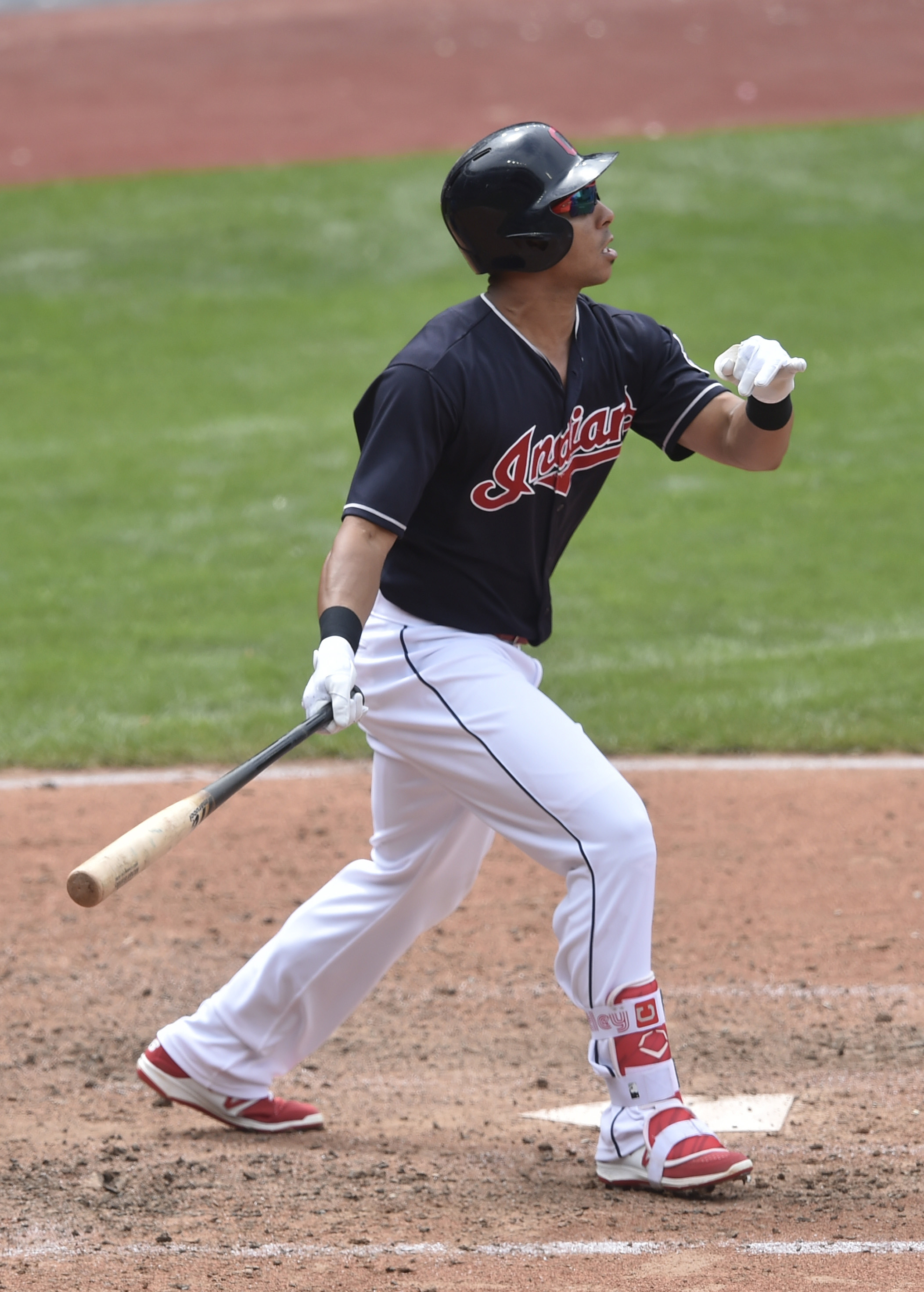 With free agency around the corner, the American League Central-winning Indians could be on the verge of losing a few notable contributors to their 2017 offense. Carlos Santana, Jay Bruce and Austin Jackson – who each posted above-average production over a combined 1,100-plus plate appearances this year – are slated to hit the open market, and it’s possible outfielder Michael Brantley will join them.
Unlike his three teammates, Brantley is controllable through 2018 (with a $12MM club option), but Cleveland brass has not indicated whether it’s going to bring him back. As of Oct. 19, the Indians were “working through” what to do with Brantley, president of baseball operations Chris Antonetti told reporters.
Antonetti & Co. have until three days after the World Series to make a call on Brantley’s option, which comes with a $1MM buyout. If the Indians are confident Brantley will be consistently available in 2018, keeping him in the fold should be a no-brainer. The 30-year-old has been a quality regular over the past several seasons, after all, especially when he combined to slash a superb .319/.382/.494 with 38 home runs and 35 stolen bases across 1,272 PAs from 2014-15. Unfortunately, injuries have somewhat derailed Brantley’s career since that star-caliber two-year stretch, thus complicating the Indians’ decision.
The Tribe won an AL pennant and came within a victory of a World Series title in 2016, but the team did it without Brantley, who took just 41 trips to the plate and didn’t play past May 9. Shoulder problems troubled Brantley then, though his offseason recovery from surgery went well enough that he was able to make it back for the start of 2017.
In terms of production, this season represented a successful return for Brantley, who hit a respectable .299/.357/.444 with nine homers and 11 steals in 383 PAs. Availability was an issue again, though, as Brantley endured multiple stints on the disabled list with a right ankle sprain. Brantley’s second DL placement, on Aug. 9, brought an end to his regular season with nearly two months remaining in the campaign. Encouragingly, Brantley returned for the Indians’ ALDS loss to the Yankees and totaled 12 PAs in the series, yet his comeback didn’t mean his ankle woes were completely behind him. Shortly after Cleveland’s elimination, Brantley underwent ankle surgery, and he’s now in the early stages of a four- to five-month recovery.
With this year’s World Series set to wrap up Wednesday at the latest, the Indians have less than a week to determine whether an on-the-mend Brantley will be worth keeping around at a fairly high price. Ideally, retaining Brantley would help the Tribe’s offense overcome the potential departures of Santana, Bruce and Jackson. However, considering the Indians are entering the offseason without a lot of payroll space to work with, allocating $12MM to a player with injury questions may be a risk they elect not to take.
Will the Indians pick up Michael Brantley's option?
-
No 56% (3,185)
-
Yes 44% (2,517)
Total votes: 5,702
Photo courtesy of USA Today Sports Images.