
Poll: Who Should The Astros Take With The First Pick?
We’re less than two weeks away from the June amateur draft, and there still isn’t consensus about who the Astros will take with the first overall pick. That’s not surprising, since there isn’t a clear No. 1 overall talent. “There’s not a [Gerrit] Cole, in our minds. There’s not a [Stephen] Strasburg, in our minds,” as Pirates GM Neal Huntington put it yesterday. John Manuel of Baseball America recently quoted an executive saying, “It just seems like there isn’t a $6 million player in this draft,” which means the Astros’ task will be a tricky one.
It’s always better to have an earlier pick than a later one, of course. But compared to, say, 2010, when the Nationals took Bryce Harper first overall, 2014 seems to be a worse year to have the top pick, and a better year to have a lower pick.
Many recent mock drafts have suggested the Astros will take either California high school lefty Brady Aiken or NC State lefty Carlos Rodon first overall, but the Astros also invited Texas high school righty Tyler Kolek to a pre-draft workout.
Aiken has added velocity and now throws in the mid-90s. He also has an outstanding curveball and could have excellent control, and he has an easy delivery. Kolek can throw 100 MPH and potentially has a good slider, although his command lags behind Aiken’s. In the cases of both Aiken and Kolek, stock disclaimers about high school pitchers apply.
Rodon entered the college season as the clear favorite to be the No. 1 pick, but he has not been as dominant as expected this season for NC State. Manuel quotes an executive even wondering whether Rodon will be a starter in the long term. There is, perhaps, a comparison to be made to Cole, who also failed to dominate in the season before he was drafted No. 1 overall, but Manuel points out that Cole’s stuff was outstanding that year, whereas Rodon’s hasn’t been consistent. Rodon does, however, still have an outstanding slider.
Earlier today, Peter Gammons quoted an executive guessing that the Astros could also consider California high school C/OF Alex Jackson. “Many of the Astros’ people believe that picking a pitcher at the top is a gamble because of the historical predictability of pitchers,” the executive said. Gammons notes that the Astros did pick Mark Appel with the top spot last year. But if there’s ever a year to question gambling on pitchers, this might be it — not only is there not a consensus No. 1, but it’s also been a rough year for big-league pitchers and for former top draftees in the minors, like Appel and Jameson Taillon. Jackson is the consensus top hitting prospect in the draft.
In a draft where little is certain, LSU righty Aaron Nola could represent another possibility. Unlike some of the other top pitching prospects, he doesn’t look like a prototypical ace — he’s just a little bit undersized, and his stuff isn’t as outstanding. But he’s performed very well this year and he should get to the majors relatively quickly, and he might be a good candidate to take first overall if the Astros decide to save a bit of money against their bonus pool to spend on later picks. That’s what they did in 2012, when Appel and Byron Buxton were the consensus top picks, and the Astros instead took Carlos Correa, then used the savings to sign Lance McCullers Jr. and Rio Ruiz later in the draft.
With all that in mind, who do you think the Astros should take with the first overall pick?
MLBTR Originals
A look back at the original reporting and analysis found on MLBTR this past week:
- Tim Dierkes updated MLBTR’s 2015 Free Agent Power Rankings and there has been a change at the top with Max Scherzer replacing Hanley Ramirez.
- Steve Adams relaunched the MLBTR series Draft Prospect Q&A by interviewing University of San Francisco center fielder Bradley Zimmer. Among the topics the consensus top-15 pick discussed with Steve: how his brother Kyle being selected fifth overall by the Royals in 2012 “was definitely a leap in the right direction for me, as far as getting to experience the process of being looked at and being a high prospect” and why he decided to attend college rather than sign with the Cubs, who made him their 23rd-round pick in the 2011 draft.
- Rangers GM Jon Daniels told Zach Links he is not currently looking outside the organization to replace Prince Fielder. “I think that our focus right now is on the group of guys [including the injured Jurickson Profar and Dan Robertson] that are going to come back,” Daniels said. “There’s a group of guys that are up here in the big leagues that have put together a few good games this week, and we want to see if we can build on that and then evaluate where we are and adjust if that time comes.”
- Red Sox GM Ben Cherington provided Zach his rationale for re-signing shortstop Stephen Drew. “He did a great job for us last year and he’s a very good Major League shortstop and a good teammate and does a lot of good things that we value,” said Cherington. “We have a high degree of respect for Stephen, what he can do on the field, and what he can do for our team.“
- Steve charts how hard the 2015 free agent starting pitchers throw and notes their fortunes on the open market could be dictated by whether their velocity is increasing or decreasing.
- Zach broke the news right-handed reliever Frank Francisco elected free agency rather than accept an outright assignment to the White Sox’s Triple-A affiliate.
- Jeff Todd asked MLBTR readers which free agent third baseman they would prefer to sign: Chase Headley or Pablo Sandoval. More than 53% of you favor Headley.
- Steve hosted this week’s live chat.
- Zach assembled the best of the baseball blogosphere for you in Baseball Blogs Weigh In.
Draft Prospect Q&A: Bradley Zimmer
MLBTR is re-launching its Draft Prospect Q&A series this season in order to give our readers a look at some of the top names on the board in this year’s draft. MLBTR will be chatting with some of the draft’s most well-regarded prospects over the next couple of weeks as they prepare for the 2014 draft on June 5-7.
University of San Francisco center fielder Bradley Zimmer is considered by some to be the best college position player in this year’s draft. The brother of Royals prospect and 2012 No. 5 overall pick, Kyle Zimmer, Bradley is ranked as the fifth-best prospect in this draft class by ESPN’s Keith Law (ESPN Insider subscription required and recommended). Baseball America has Zimmer ranked 14th, and MLB.com currently ranks him No. 10.
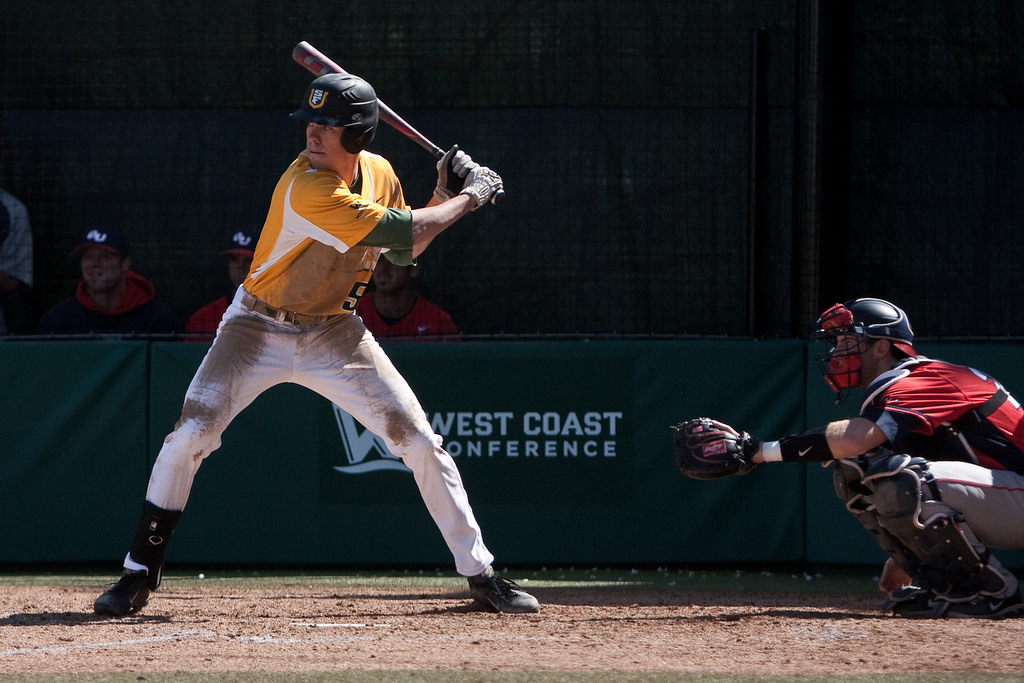
The 6’5″, 205-pound Zimmer put himself on the prospect map with an outstanding sophomore season in 2013 when he slashed .320/.437/.512 with 29 walks with seven home runs against just 31 strikeouts in 58 games.
He’s followed up that breakout campaign with an even more impressive .368/.461/.573 batting line to go along with seven homers, seven triples and 10 doubles. Once again, he’s walking (31 times) almost as often as he strikes out (34), and he’s swiped 21 bases in 32 tries in 2014. Bradley was kind enough to take some time out of his busy schedule to talk with MLBTR last week:
Rangers GM Jon Daniels On Injuries To Fielder, Profar
Earlier today we learned that Rangers first baseman Prince Fielder was “seriously considering” season-ending surgery to fix a herniated disc in his neck. Later, an afternoon conference call with Rangers GM Jon Daniels confirmed that the five-time All-Star will go ahead with that plan. Naturally, the injury to Fielder raised speculation from many that the Rangers could consider free agent Kendrys Morales. While Daniels didn’t refer to the former Mariners slugger directly, I asked him if he might consider making a notable out-of-house pickup to fill the void in the batting order.
“Not today, not right now,” Daniels said. “I think that our focus right now is on the group of guys [including the injured Jurickson Profar and Dan Robertson] that are going to come back…There’s a group of guys that are up here in the big leagues that have put together a few good games this week, and we want to see if we can build on that and then evaluate where we are and adjust if that time comes.”
The Rangers received $30MM from the Tigers to help cover part of Fielder’s deal, but with an Opening Day payroll north of $136MM, one might wonder if the owners are feeling tapped out. When I asked Daniels if he might be afforded some financial flexibility to make a significant out-of-house addition, he simply said that he’s not willing to divulge one way or another.
In addition to losing Fielder, the Rangers also got some bad news concerning Profar, who will be sidelined another 8 to 12 weeks thanks to the Grade 2 strain in his right arm. That’s similar to the timeline we initially heard on Profar in late March, but the clock has been reset and this time around his rehab process will be “even more conservative.” With the rash of injuries that the Rangers have had to deal with, Daniels had a hard time concealing his frustration.
“My reaction to the news unfortunately wasn’t surprise just because from talking to [Prince] and seeing him, we knew that this was serious. We were hoping the injection could keep him comfortable and get him through the season. Sometimes you have that response. His response was initially positive,” Daniels said. “The upside is that I’ve been told that this particular surgery has a high success rate. It doesn’t have the same level of risk that a lumbar [problem] of the lower back has in terms of how you use those two parts of the body and the weight you have to support. I’m looking forward to seeing this guy healthy and what he can do, but that’s more of a 2015 and beyond thing.”
The other silver lining, if there is one, is that Profar is not ticketed for surgery at this time. For Fielder, he’ll have to have a cervical fusion on his c5 and c6 vertebrae on Tuesday. One might wonder if the problem could have been caught if the Rangers had Fielder undergo a full physical after acquiring him, but Daniels says that a cervical MRI wouldn’t have been conducted anyway since there was no prior issue there.
It remains to be seen whether the Rangers will make a splashy move to help bolster their weakened lineup, but there’s no doubt that they’ll miss Fielder in 2014.
Red Sox GM Cherington On Drew Signing
If the offseason felt long to you, imagine how Stephen Drew must have felt. Today, the shortstop’s extended spring officially came to a close when the Red Sox announced that they signed him to a one-year deal, reportedly worth the prorated portion of the $14.1MM qualifying offer ($10.1MM). The Red Sox, who had a significant need on the left side of the infield and didn’t have to forfeit a pick to sign their own free agent, have been regarded as a frontrunner for months, but there wasn’t a lot of foreshadowing in recent days. On a conference call this afternoon, I asked General Manager Ben Cherington when the talks got more serious between him and agent Scott Boras.
“I would say that talks picked up over the weekend and into the early part of the week,” the GM said. “We know Stephen well. He did a great job for us last year and he’s a very good Major League shortstop and a good teammate and does a lot of good things that we value…We have a high degree of respect for Stephen, what he can do on the field, and what he can do for our team. We’re happy to have him back on the team.”
The signing of Drew will have a reverb effect for other Red Sox players. Xander Bogaerts, who was charged with manning shortstop in 2014, will shift over to third base, bumping the injured Will Middlebrooks out of the starting lineup. Drew’s arrival also backs things up for well-regarded third base prospect Garin Cecchini. When it comes to Bogaerts, Cherington says that after this season, his future could still very well be at shortstop.
“We believe that he can play shortstop well, things have stabilized there. I know he made a couple of errors last night but we believed last year and during Spring Training that he can play shortstop, we still believe that. This move with Stephen is not in any way about a lack of belief that Xander can play short,” Cherington said. “Xander’s ability to play short and third base allowed us to consider different options and alternatives. Stephen just happened to be the one we pursued.”
When asked if Drew’s arrival could signal some sort of position change for Middlebrooks, Cherington was non-committal and said that his main focus was getting the 25-year-old healthy.
As for Drew himself, Cherington confirmed that he’ll be on the Major League roster tonight but won’t be in the lineup against the Blue Jays. Drew will ultimately have a stint in the minors to warm up to big league action, but because of “administrative steps” that need to take place, there’s not an exact timetable for that just yet.
Presumably, Cherington is referring to the fact that Drew needs to pass through optional waivers, which take 48 hours, as the Boston Globe’s Nick Cafardo reported earlier this afternoon (Twitter link). Cafardo noted that Drew has consented to head to the minors to pick up 25 at-bats before playing with the big league club.
Velocity Changes Among Free Agent Starters
With more than six weeks behind us, nearly every team has completed a quarter of its games this season. Impending free agents have a significant amount of their platform years in the books, though it’s certainly not too late to change the opinions of potential offseason suitors.
One way in which free agent pitchers can raise their stock is to up their velocity, although the opposite of that can hold true as well. A resurgence in velocity helped to save Scott Kazmir‘s career last season and took him from a minor league contract to a two-year, $22MM guarantee. On the other side of the spectrum, a rapid decline in velocity dropped Tim Lincecum from a lock to receive $100MM+ to a two-year, $35MM contract that looks to be a questionable investment.
A look at the coming free agent crop of starters shows that several arms could be improving their stock by turning up the heat on their fastballs, while several free-agents-to-be have seen troubling declines in their velocity that have contributed to poor results. Some will be quick to point out that many starters’ velocity increases over the course of a season. Because of this, I’ve included a comparison of each pitcher’s 2013 and 2014 April velocities as well. This should give a rough indicator of where each pitcher is right now compared to this point in the 2013 season.
I’ve included any pitcher who is working as a starter and has a chance at free agency next season, even if it’s a virtual lock that their club option will be exercised (e.g. Johnny Cueto). Additionally, potential starters who are working out of the bullpen (e.g. Chris Capuano) have been omitted, as their velocity spikes are likely due to a change in role (pitchers typically see increased velocity when switching to a relief role). Here’s the list, sorted by the most positive change to most negative change from 2013 to 2014:
As J.A. Happ is a testament to, a noticeable velocity increase doesn’t guarantee improved performance. Though his ERA is down, his command has suffered greatly, making his 3.57 mark unsustainable without improvement in that area. However, most starters with a positive change have demonstrated improvements in their swinging-strike rate and overall strikeout percentage. Ryan Vogelsong has cut his ERA by more than two full runs. Brandon McCarthy and Jorge De La Rosa, while they haven’t seen their ERAs dip, have seen notable improvements in sabermetric ERA estimators such as xFIP and SIERA.
A dip in velocity, on the other hand, is often a precursor to an arm-related injury, and could ultimately serve as a red flag for interested teams on the free agent market if paired with declining results. There is, of course, still time for each pitcher on this list to see his velocity change in one direction or the other, but the above velocity changes are something to keep an eye on as it relates to the free agent stock of each. Names like Justin Masterson, who currently ranks sixth on MLBTR’s Free Agent Power Rankings but has seen the largest decline of any free agent, will be of particular interest as the season wears on.
*=Velocity data from May 2014 was used, as Floyd did not pitch this April.
**=Velocity data from April 2012 was used, as Lewis didn’t pitch in the Majors last season.
***=Velocity data from May 2013 was used, as Liriano didn’t pitch in the Majors last April.
****=Velocity data from May 2012 was used, as Paulino didn’t pitch in the Majors in either of the past two Aprils.
Data from Fangraphs was critical to the creation of this post.
MLBTR Originals
A look back at the original reporting and analysis found on MLBTR this past week:
- Steve Adams issued a Free Agent Stock Watch on Nick Markakis and believes the Orioles outfielder could be well-positioned for a multi-year contract, if he, as expected, hits the open market this winter.
- Charlie Wilmoth asked MLBTR readers to rate the top 2015 free agent starting pitchers. More than 75% of you ranked Max Scherzer number one with Jon Lester a distant second.
- Tim Dierkes was the first to report left-hander Mike Zagurski has a June 1 opt-out date in his minor league deal with the Indians.
- Zach Links broke the news the minor league contract Greg Dobbs signed with the Nationals contained an early June opt-out date. The opt-out became moot when the Nats added Dobbs to the 25-man roster Friday.
- MLBTR was the first to learn left-hander Brian Burres, currently pitching for the Southern Maryland Blue Crabs of the independent Atlantic League, has received interest from a few MLB teams.
- Zach reminisced about the brief four-game tenure as a Met for Yogi Berra, who was released by the club 49 years ago this week.
- Steve hosted this week’s live chat.
-
Zach assembled the best of the baseball blogosphere for you in Baseball Blogs Weigh In.
MLBTR Originals
A look back at the original reporting and analysis found on MLBTR the last seven days:
- Steve Adams was the first to report right-hander David Aardsma has a May 15 opt-out date in his minor league deal with the Cardinals.
- Zach Links confirmed the retirement of catcher Matt Treanor, who decided to call it a career with the impending birth of his first child and after suffering a setback in his rehab from a hamstring injury.
- Zach revisited the trade made 24 years ago today in which the Yankees dealt Dave Winfield to the Angels for right-hander Mike Witt.
- Steve hosted the weekly live chat.
- Zach gathered the best the baseball corner of the web had to offer in Baseball Blogs Weigh In.
MLBTR Originals
A look back at the original reporting and analysis found on MLBTR this past week:
- Tim Dierkes was the first to report the Braves and third baseman Chris Johnson were nearing a contract extension.
- Steve Adams researched waiver claims over the past calendar year using MLBTR’s Transaction Tracker and discovered the Rangers’ Jon Daniels was the most active general manager being involved in nearly 18% of those claims. Steve also noted fewer players had been claimed multiple times than the year before.
- Joel Hanrahan, who signed a one-year, incentive-laden MLB contract on Friday, told Zach Links he isn’t surprised by his quick recovery from Tommy John surgery. “I put in the hard work while everyone else was playing this summer. I was going to rehab every day five times a week at 8:00 in the morning. That was my season.”
- MLBTR’s 2013-2014 Offseason In Review series concluded with Steve’s recap of the Mariners.
- Zach was the first to learn catcher J.R. Towles, off to a torrid start for the Brigdeport Bluefish of the independent Atlantic League, is receiving interest from MLB teams.
- Steve hosted the MLBTR live chat this week.
- Zach put together the best of the baseball blogosphere in Baseball Blogs Weigh In.
- ICYMI, Charlie Wilmoth asked MLBTR readers whether the Astros promoted George Springer at the right time. Only 37.67% of you thought the team should have waited to start the 24-year-old’s service clock.
Examining Waiver Activity Over The Past Year
Last April, I used MLBTR’s Transaction Tracker to take a look at the players who had the somewhat unfortunate distinction of having been claimed on waivers multiple times. Examples of this type of player are formerly well-regarded prospects with some upside left, relievers with a flaw, or utility players that are good enough to be on a 25-man roster but not so good that they are deemed irreplaceable. My look at the players who had been claimed three and even four times in a span of 365 days prompted another question in my mind: Which general managers have been the most active on the waiver wire?
The exercise was interesting enough that I made a point to do so again in 2014. Upon looking back I was a bit surprised to see that not one player was claimed off waivers four times, as last year three players — Russ Canzler, Sandy Rosario and Chris Schwinden — found themselves packing their bags and moving on four different occasions. Not only were there no four-claim players, but this season presented a smaller amount of three-claim players, when the 2012-13 sample I studied had produced five three-claim players. My first glimpse came from studying April 17, 2012 to April 17, 2013; with that in mind, before I continue further, here are the players who were claimed multiple times from the date of that post to April 17, 2014:
- Liam Hendriks: Hendriks was originally designated for assignment by the Twins to make room for Phil Hughes, and he was quickly claimed by the Cubs. Chicago wasted little time in trying to sneak him through waivers, only to lose him to the Orioles, who eventually lost him to the Blue Jays when Hendriks was the DFA casualty to make room for Ubaldo Jimenez. Still just 25, Hendriks has looked great in five Triple-A appearances (three starts) for Toronto thus far.
- Adam Rosales: Rosales may be the most interesting case, as all of his team changes occurred between the division-rival A’s and Rangers. Originally DFA’ed by Oakland, Texas claimed him and designated him after just one weekend. When Oakland claimed him back and was again forced to DFA him, Texas was awarded the winning claim. The versatile utility infielder is hitting very well at Triple-A Round Rock, slashing .240/.380/.467 with four homers.
- Jimmy Paredes: Paredes jumped from the Astros to the Marlins to the Orioles to the Royals. Jeff Baker‘s signing in Miami and the addition of Suk-Min Yoon in Baltimore led to his final two departures from a 40-man roster. He hit .319/.319/.447 in 11 Triple-A games before being called up to Kansas City’s big league roster, though he’s yet to start a game or even have a plate appearance as a Royal (he has appeared in three games as a pinch-runner).
In addition to that trio, each of Pedro Beato, Alex Castellanos, Maikel Cleto, Pedro Figueroa, Chris Gimenez, Brett Marshall, Brent Morel, Rafael Ortega, Andy Parrino and Matt Tuiasosopo were claimed off waivers twice.
The reason behind the lack of three- and four-claim players could be a very simple one: From April 17, 2012 to April 17, 2013, there were 133 waiver claims processed in Major League Baseball which resulted in a player changing teams (excluding the Rule 5 Draft, which is technically a waiver claim). From April 17, 2013 to April 17, 2014, there were 96 waiver claims processed that led to a player switching teams.
Particularly absent from the waiver market were the previously highly active Blue Jays and Yankees. In the 2012-13 period I examined, Alex Anthopoulos made an incredible 22 waiver claims, while his New York counterpart, Brian Cashman, claimed 14 players. Those same two GMs combined for just eight waiver claims in the 2013-14 period, with Toronto claiming six players and New York claiming just two. Here’s a look at the breakdown of each team/GM’s activity on the waiver wire, sorted by the change in their activity:
| Team | General Manager | 2012-13 Claims | 2013-14 Claims | Net Change |
| Rangers | Jon Daniels | 5 | 13 | 8 |
| White Sox | Rick Hahn | 2 | 5 | 3 |
| Angels | Jerry Dipoto | 2 | 5 | 3 |
| Dodgers | Ned Colletti | 0 | 3 | 3 |
| Reds | Walt Jocketty | 0 | 2 | 2 |
| Nationals | Mike Rizzo | 1 | 3 | 2 |
| Royals | Dayton Moore | 5 | 6 | 1 |
| Cardinals | John Mozeliak | 1 | 2 | 1 |
| Diamondbacks | Kevin Towers | 5 | 5 | 0 |
| Braves | Frank Wren | 2 | 2 | 0 |
| Tigers | Dave Dombrowski | 1 | 1 | 0 |
| Astros | Jeff Luhnow | 7 | 7 | 0 |
| Mariners | Jack Zduriencik | 1 | 1 | 0 |
| Rays | Andrew Friedman | 2 | 2 | 0 |
| Rockies | Dan O’Dowd | 0 | 0 | 0 |
| Marlins | Larry Beinfest/Dan Jennings | 3 | 2 | -1 |
| Brewers | Doug Melvin | 4 | 3 | -1 |
| Twins | Terry Ryan | 3 | 2 | -1 |
| Mets | Sandy Alderson | 2 | 1 | -1 |
| Phillies | Ruben Amaro Jr. | 2 | 1 | -1 |
| Giants | Brian Sabean | 3 | 1 | -2 |
| Cubs | Jed Hoyer | 10 | 8 | -2 |
| Red Sox | Ben Cherington | 2 | 0 | -2 |
| Athletics | Billy Beane | 8 | 5 | -3 |
| Padres | Josh Byrnes | 5 | 2 | -3 |
| Orioles | Dan Duquette | 8 | 4 | -4 |
| Pirates | Neal Huntington | 5 | 1 | -4 |
| Indians | Chris Antonetti | 8 | 2 | -6 |
| Yankees | Brian Cashman | 14 | 2 | -12 |
| Blue Jays | Alex Anthopoulos | 22 | 6 | -16 |
On the flip side, it makes some sense to see fairly active teams such as the Pirates and Indians experience a decrease in the number of claims they were awarded. Pittsburgh finished the 2013 season by ending 21-year playoff drought, meaning they had one of baseball’s best records for the first time in years. Cleveland improved its record by 24 games from 2012 to 2013, meaning their improved record likely prevented them from acquiring some players. (Their improved roster also had fewer holes that needed to be filled.)As you can see, the Rangers experienced the largest jump in waiver activity despite maintaining a strong record throughout the season, perhaps indicating that Daniels and his staff were more aggressive in placing claims. Of the 96 waiver claims that were processed, 12.5 percent of the claims were awarded to the Rangers. Factoring in the five players –Rosales, Castellanos, Ortega, Joey Butler and Julio Borbon — that Texas also lost on waivers to another organization, the Rangers were involved in 17.7 percent of all waiver claims over the one-year span from my last examination to this year’s.
Perhaps the most curious trend continues to be the Rockies’ lack of activity on the waiver wire. As the Transaction Tracker shows, the last successful claim the Rockies made was more than two years ago when they claimed right-hander Adam Ottavino off waivers from the Cardinals on April 3, 2012.
Note: This post does include the Rangers’ claim of Charlie Leesman off release waivers from the White Sox last April, as Leesman rejected the assignment and elected free agency. Additionally, though some have reported the Rays’ acquisition of Wesley Wright last August as a waiver claim, the Astros announced that they received cash considerations in exchange for Wright in their press release. That transaction was considered a trade and is not included in these results.