
Marlins, Twins Continue To Discuss Trade Possibilities Involving Luis Arraez, Pablo Lopez
The Marlins and Twins continue to explore trade possibilities involving Minnesota infielder Luis Arraez and Miami’s surplus of starting pitching, reports Dan Hayes of the Athletic. Jon Heyman of the New York Post first wrote last week that Arraez’s name had come up in discussions involving Marlins righty Pablo López but suggested the Twins were uninterested in parting with the infielder.
Hayes similarly hears that Minnesota isn’t willing to pull the trigger on a one-for-one swap of Arraez and López. However, Hayes characterizes Minnesota as willing to entertain larger possibilities involving Arraez and controllable starting pitching targets. While the Twins aren’t actively shopping him, they’re apparently keeping an open mind to broader trade permutations. There’s no indication anything is imminent, and Hayes notes that the sides haven’t directly spoken in several days even as a general line of communication between the clubs seemingly remains open.
The Marlins’ willingness to dealing from the rotation has dated back at least as far as the 2021-22 offseason. Miami has yet to make a major trade but is still generally expected to subtract a starter for an offensive addition between now and Opening Day.
Reports have suggested the Fish were amenable to offers on any of López, Jesús Luzardo, Trevor Rogers and Edward Cabrera. While there’s no indication that’s officially changed, it seems talks are focusing in on the most experienced member of the group. Barry Jackson and Craig Mish of the Miami Herald wrote this afternoon that López has moved the forefront of Miami’s trade discussions around the league. According to the Herald, discussions on Rogers and Cabrera have “cooled” of late.
That’s not an especially surprising development. López is down to two seasons of remaining club control. Rogers and Luzardo are each controllable for four years, while Cabrera can be retained for another six seasons. That has made López the most straightforward trade candidate in the Miami rotation all along, although early reports this winter suggested the Fish might instead look towards a Rogers deal while keeping López in the fold.
Even with the comparatively lesser control window, López is a highly appealing trade chip for Miami general manager Kim Ng and her staff. The Venezuelan-born righty has posted a sub-4.00 ERA in each of the last three seasons. He hasn’t walked more than 7.5% of batters faced in any of those campaigns and has posted at least a 23.6% strikeout rate in all three seasons. López sits in the 93-94 MPH range with his fastball and owns one of the game’s better changeups. He misses bats and keeps the ball on the ground at an above-average clip and generally manages solid results against right and left-handed hitters alike.
He’ll play the 2023 campaign on a $5.45MM salary after avoiding arbitration last week. The 26-year-old will be due one more raise the following year before hitting free agency over the 2024-25 offseason.
Acquiring a starter who’s controllable beyond next season is apparently on the wishlist for a Minnesota club that could see a notable chunk of its rotation depart next winter. Tyler Mahle, Sonny Gray and Kenta Maeda are all slated for free agency after the 2023 campaign. Of their current starting five, only Joe Ryan and Bailey Ober are controllable beyond next season. Minnesota extended their window of control over righty Chris Paddack by an extra season last week, signing him through the end of 2025. He’ll likely get another rotation opportunity at some point but is currently on the mend from the second Tommy John procedure of his career. Young pitchers like Simeon Woods Richardson, Josh Winder and Louie Varland could play their way into the mix at some point but are far from established.
While it’s easy to see the appeal of adding a quality pitcher like López who’d stick around through 2024, Minnesota remains unwilling to do so in a straight swap for Arraez. The left-handed hitter is arbitration eligible for one season longer than López, controllable through 2025. His 2023 salary remains undefined — he and the club look to be headed for an arbitration hearing after not reaching an agreement last week — but will check in between $5MM and $6.1MM.
Arraez is fresh off his first All-Star campaign. He claimed the American League batting title by hitting .316 and reached base at a .375 clip overall. The 25-year-old only hit eight home runs in 603 plate appearances but is among the sport’s best pure hitters. No qualified hitter struck out less often than Arraez, who went down on strikes in only 7.1% of his trips. He was one of six qualified batters with more walks than strikeouts, drawing free passes at a decent 8.3% rate.
A second base prospect throughout his time in the minors, Arraez has assumed more of a bat-first utility role in recent years. Public defensive metrics have given him mixed reviews for his work at the keystone, and Minnesota turned to him more often at first base in deference to Jorge Polanco last season. Arraez can also play some third base and rotate through designated hitter. Miami has Jazz Chisholm Jr. and Jean Segura to play second and third base, respectively. There’d be room for Arraez to join right-handed power bats Garrett Cooper and Jorge Soler in the first base/DH mix, and he’s the archetype of the high-contact bat the Miami front office has reportedly sought.
If Miami and the Twins can’t bridge the gap in their trade discussions, the Marlins would find no shortage of interest in López elsewhere. The Padres and Cardinals have also been linked to the hurler this offseason while a number of others checked in at last summer’s trade deadline. Derrick Goold of the St. Louis Post-Dispatch implied this afternoon (on Twitter) there wasn’t much momentum between the Fish and Cardinals on López right now, though, suggesting that Miami’s interest in St. Louis outfielder Lars Nootbaar has been rebuffed.
Cubs To Sign Trey Mancini
The Cubs have agreed to sign Trey Mancini to a two-year contract, according to ESPN’s Jesse Rogers (Twitter link). Mancini, a client of the Frontline agency, can opt out of the deal following the 2023 season if he amasses at least 350 plate appearances in the first year of the contract, 670 The Score’s Bruce Levine reports (via Twitter). Also from Levine, Mancini will earn $14MM in guaranteed money over the two years of the deal, and another $7MM is available in bonus clauses related to plate appearances.
Reports linking Mancini to the Cubs first surfaced in December, and even though Chicago addressed its first base need by signing Eric Hosmer just over a week ago, the Wrigleyville club maintained its interest in Mancini’s services. Of course, Mancini can also play both corner outfield spots in addition to first base, and Mancini’s right-handed bat provides a nice complement to lefty-swingers Hosmer and Matt Mervis in the first base/DH mix.
As Rogers indicated in a follow-up tweet, Mervis might now be slated to begin 2023 in Triple-A, rather than immediately step into a regular role in the Cubs lineup in his first taste of MLB action. Mervis is entering only his third season of affiliated baseball, and while Mervis more or less came out of nowhere to shred minor league pitching in 2022, it looks like the Cubs would prefer to ease Mervis into the big leagues, and rely more on established veterans like Mancini and Hosmer at least in the early part of the 2023 campaign.
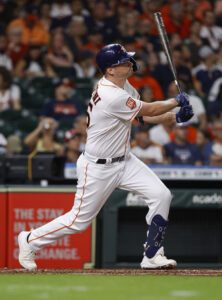
After spending his entire career with the Orioles, Mancini is now playing for his third organization in less than six months, following the trade deadline move that sent Mancini from Baltimore to Houston. Mancini’s time with the Astros paid off in the biggest form possible once Houston captured the World Series, though Mancini himself wasn’t a big part of that push to the championship. Mancini hit only .176/.258/.364 over 186 plate appearances with the Astros during the regular season, and then had only a single hit over 24 PA in the playoffs.
With this underwhelming finish in mind, it isn’t surprising that Mancini and his representatives sought out an opt-out clause, as a more impressive platform year could set Mancini up nicely for a pricier contract next winter. Mancini turns 31 in March, but even if he re-enters the market next winter in advance of his age-32 season, the veteran should still be in position to land a solid multi-year commitment if he returns to his old form. Mancini hasn’t been in that top form since 2019, though obviously some very difficult circumstances have interfered in his career path.
After missing the entire 2020 season due to a battle with Stage 3 colon cancer, Mancini played in 147 games with the Orioles in 2021, winning AL Comeback Player Of The Year honors for his inspirational return. Mancini got off to a strong start at the plate that year before fading down the stretch, as he had to get re-acclimated after missing a full season. Mancini’s traditionally strong production at Camden Yards took a dip, as the right-handed hitter was naturally impacted by the Orioles’ decision to move back the left-field fences prior to the 2022 season. The result was a modest .283/.338/.411 slash line over 198 PA at Camden Yards last year, well below his career norms.
All in all, Mancini has hit .247/.323/.412 over 1203 PA since the start of the 2021 campaign, translating to a 104 wRC+ that is only slightly above the league average. Between the new dimensions in Baltimore and the midseason adjustment to playing in Houston, Mancini’s bat could re-awaken simply by playing his home games in the Friendly Confines of Wrigley Field. In addition, Mancini has now had a full and normal offseason, as even last winter’s preparations were interrupted by the lockout.
It has been a busy offseason for Cubs president of baseball operations Jed Hoyer, who has aggressively added veteran talent in order to turn the Cubs back towards contention after most of the last two seasons were spent in a rebuild. Like Mancini’s deal, most of the contracts have been shorter-term arrangements, such as a one-year deal with Cody Bellinger, or the Hosmer signing for a minimum salary (since the Padres are still on the hook for the remainder of Hosmer’s contract).
Beyond these shorter deals, Chicago also splurged in inking Dansby Swanson to a seven-year, $177MM contract and Jameson Taillon to a four-year deal worth $68MM. Roster Resource projected the Cubs for roughly a $176.6MM payroll before Mancini’s $7MM average annual value was added to the mix, so there could be more spending capacity for further moves considering the Cubs spent well over the $200MM mark as recently as 2019.
Photo courtesy of USA Today Sports Images
2023 MLB Arbitration Tracker
Today is the deadline for players and teams to exchange figures in arbitration — an annual deadline that leads to a slew of one-year deals and, typically, a handful of multi-year deals. In all likelihood, more than 100 players will agree to their salary for the 2023 season within the next few hours. MLBTR is planning to make improvements on our old Arbitration Tracker tool, but that’s a goal for next year. For 2023, we’ll put all of the agreements in this post.
Each player’s service time is in parentheses, and you can of course check back to see each player’s projected salary from MLBTR contributor Matt Swartz. We’ll keep this updated throughout the day — refresh for updates — and break off some of the larger, more prominent agreements in separate entries.
Angels (9)
- Hunter Renfroe (5.165): No agreement reached, will exchange figures
- Shohei Ohtani (5.000): $30MM agreement in October
- Gio Urshela (5.127): No agreement reached, will exchange figures
- Griffin Canning (3.075): $850K agreement
- Luis Rengifo (3.043): No agreement reached, will exchange figures
- Jaime Barria (3.035): $1.05MM agreement
- Jared Walsh (3.010): $2.65MM agreement
- Taylor Ward (2.164): $2.75MM agreement
- Patrick Sandoval (2.149): $2.75MM agreement
Astros (8)
- Phil Maton (5.047): $2.55MM agreement
- Ryne Stanek (5.038): $3.6MM agreement
- Framber Valdez (3.163): $6.8MM agreement
- Kyle Tucker (3.079) No agreement reached, will exchange figures
- Jose Urquidy (3.049): $3.025MM agreement
- Cristian Javier (3.000): No agreement reached, will exchange figures
- Blake Taylor (3.000): $830K agreement
- Mauricio Dubon (2.162): $1.4MM agreement
Athletics (3)
- Tony Kemp (5.098): $3.725MM agreement
- Ramon Laureano (3.165): $3.55MM agreement
- Paul Blackburn (3.018): $1.9MM agreement
Blue Jays (12)
- Adam Cimber (4.156): $3.15MM agreement
- Trevor Richards (4.084): $1.5MM agreement
- Danny Jansen (4.050): $3.5MM agreement
- Vladimir Guerrero Jr. (3.157) $14.5MM agreement
- Tim Mayza (3.156): $2.1MM agreement
- Cavan Biggio (3.129): $2.8MM agreement
- Erik Swanson (3.096) $1.25MM agreement
- Trent Thornton (3.073): $1MM agreement
- Bo Bichette (3.063) No agreement reached, will exchange figures
- Jordan Romano (3.051): $4.5375MM agreement
- Santiago Espinal (2.149): $2.1MM agreement
- Daulton Varsho (2.128): $3.05MM agreement
Braves (8)
- Joe Jimenez (5.061): $2.765MM agreement
- A.J. Minter (4.154): $4.2875MM agreement
- Max Fried (4.148) No agreement reached, will exchange figures
- Mike Soroka (4.122): $2.8MM agreement in November
- Tyler Matzek (4.019): two-year, $3.1MM deal in November
- Lucas Luetge (4.015): $1.55MM agreement
- Dennis Santana (3.095): $1MM agreement
- Sean Murphy (3.029): six-year, $73MM extension earlier this month
Brewers (14)
- Victor Caratini (5.051): $2.8MM agreement yesterday
- Brandon Woodruff (4.161): $10.8MM agreement
- Matt Bush (4.132): $1.85MM agreement in November
- Willy Adames (4.105): $8.7MM agreement
- Corbin Burnes (4.049) No agreement reached, will exchange figures
- Eric Lauer (4.033): $5.075MM agreement
- Adrian Houser (4.010): $3.6MM agreement in November
- Rowdy Tellez (4.004): $4.95MM agreement
- Luis Urias (3.120): $4.7MM agreement
- Hoby Milner (3.068): $1.025MM agreement yesterday
- Devin Williams (3.056): $3.35MM agreement
- Mike Brosseau (3.031): $1.4MM agreement in December
- Keston Hiura (3.009): $2.2MM agreement
- Abraham Toro (2.149): $1.25MM agreement
Cardinals (10)
- Jordan Montgomery (5.153): $10MM agreement
- Chris Stratton (5.100): $2.8MM agreement in November
- Jack Flaherty (5.006): $5.4MM agreement
- Jordan Hicks (5.000): $1.8375MM agreement
- Dakota Hudson (4.062): $2.65MM agreement
- Tyler O’Neill (4.059): $4.95MM agreement
- Tommy Edman (3.114): $4.2MM agreement
- Ryan Helsley (3.105): No agreement reached, will exchange figures
- Andrew Knizner (3.021): $1.1MM agreement
- Genesis Cabrera (3.011): No agreement reached, will exchange figures
Cubs (6)
- Ian Happ (5.036): $10.85MM agreement
- Rowan Wick (3.114): $1.55MM agreement in November
- Nico Hoerner (3.014): $2.525MM agreement
- Codi Heuer (3.000): $785K agreement
- Nick Madrigal (2.164): $1.225MM agreement
- Adrian Sampson (2.117): $1.9MM agreement in November
Diamondbacks (6)
- Carson Kelly (4.161): $4.275MM agreement
- Christian Walker (4.124): $6.5MM agreement
- Zac Gallen (3.100): $5.6MM agreement
- Cole Sulser (3.028): $825K agreement in November
- Josh Rojas (2.152) No agreement reached, will exchange figures
- Kyle Lewis (2.146): $1.61MM agreement
Dodgers (10)
- Julio Urias (5.117): $14.25MM agreement
- Walker Buehler (4.168): $8.025MM agreement
- Caleb Ferguson (4.088): $1.1MM agreement
- Yency Almonte (3.143) $1.5MM agreement
- Will Smith (3.090): $5.25MM agreement
- Dustin May (3.059): $1.675MM agreement
- Trayce Thompson (3.010): $1.45MM agreement
- Brusdar Graterol (2.167): $1.225MM agreement
- Tony Gonsolin (2.152) No agreement reached, will exchange figures
- Evan Phillips (2.136): $1.3MM agreement
Giants (10)
- Scott Alexander (5.080): $1.15MM agreement in November
- John Brebbia (5.078): $2.3MM agreement
- Jakob Junis (5.002): $2.8MM agreement
- Austin Slater (4.147): $3.2MM agreement
- J.D. Davis (4.137) $4.21MM agreement
- Mike Yastrzemski (3.128): $6.1MM agreement in November
- Logan Webb (3.044): $4.6MM agreement
- LaMonte Wade Jr. (3.035): $1.375MM agreement
- Tyler Rogers (3.034): $1.675MM agreement
- Thairo Estrada (2.169): $2.25MM agreement
Guardians (7)
- Amed Rosario (5.062): $7.8MM agreement
- Shane Bieber (4.097): $10.01MM agreement
- Cal Quantrill (3.132): $5.55MM agreement
- Josh Naylor (3.127): $3.35MM agreement
- Zach Plesac (3.086): $2.95MM agreement
- Aaron Civale (3.058): $2.6MM agreement
- James Karinchak (2.169) $1.5MM agreement
Marlins (9)
- Joey Wendle (5.088): $6MM agreement
- Garrett Cooper (5.053): $4.2MM agreement
- Dylan Floro (5.053): $3.9MM agreement in November
- Jacob Stallings (4.149): $3.35MM agreement
- Pablo Lopez (4.093): $5.45MM agreement
- Tanner Scott (4.059): $2.825MM agreement
- Jon Berti (3.168): Did not reach agreement, will exchange figures
- JT Chargois (3.101): Reportedly reached one-year agreement
- Jesus Luzardo (2.165): Did not reach agreement, will exchange figures
Mariners (6)
- Teoscar Hernandez (5.097): Did not reach agreement, will exchange figures
- Tom Murphy (5.092): $1.625MM agreement
- Diego Castillo (4.118): Did not reach agreement, will exchange figures
- Paul Sewald (4.072): $4.1MM agreement
- Dylan Moore (4.000): Did not reach agreement, will exchange figures
- Ty France (3.089): $4.1MM agreement
Mets (8)
- Tomas Nido (4.089): Reportedly reached one-year agreement
- Jeff McNeil (4.069): Did not reach agreement, will exchange figures
- Joey Lucchesi (4.067) $1.15MM agreement in December
- Elieser Hernandez (4.051): Reportedly reached one-year agreement
- Drew Smith (4.034): $1.3MM agreement
- Pete Alonso (4.000): $14.5MM agreement
- Luis Guillorme (3.167): Reportedly reached one-year agreement
- Jeff Brigham (3.010): Reportedly reached one-year agreement
Nationals (8)
- Carl Edwards Jr. (5.169): $2.25MM agreement
- Victor Robles (4.033) No agreement reached, will exchange figures
- Tanner Rainey (3.127): $1.5MM agreement in December
- Hunter Harvey (3.047): Agreed to one-year deal, per team.
- Victor Arano (3.022): $925K agreement
- Lane Thomas (3.014): $2.2MM agreement
- Ildemaro Vargas (3.007): One-year, $975K deal in November
- Kyle Finnegan (3.000): $2.325MM agreement
Orioles (6)
- Anthony Santander (4.162): $7.4MM agreement
- Austin Voth (3.127): Did not reach an agreement, will exchange figures
- Cedric Mullins (3.078) : $4.1MM agreement
- Austin Hays (3.057): $3.2MM agreement
- Dillon Tate (3.048): $1.5MM agreement
- Jorge Mateo (3.000): $2MM agreement
Padres (8)
- Josh Hader (5.115): $14.1MM agreement
- Juan Soto (4.134): $23MM agreement
- Tim Hill (4.112): $1.85MM agreement
- Jose Castillo (3.125): $730K agreement in November
- Austin Nola (3.106): $2.35MM agreement
- Trent Grisham (3.060): $3.175MM agreement
- Adrian Morejon (3.013): $800K agreement
- Jake Cronenworth (3.000): $4.225MM agreement
Phillies (8)
- Jose Alvarado (5.082) No agreement reached, will exchange figures
- Rhys Hoskins (5.053): $12MM agreement
- Seranthony Dominguez (4.131): Did not reach agreement, will exchange figures
- Jake Cave (3.137): $950K agreement in November (then with the Orioles)
- Ranger Suarez (3.112): $2.95MM agreement
- Gregory Soto (3.102): $3.925MM agreement
- Sam Coonrod (3.078): $775K agreement in November
- Edmundo Sosa (2.140): $950K agreement
Pirates (6)
- Ji-Man Choi (5.076) No agreement reached, will exchange figures
- Robert Stephenson (5.049): $1.75MM agreement
- Miguel Andujar (4.002): $1.525MM agreement in November
- Duane Underwood Jr. (3.044): $1.025MM agreement
- Mitch Keller (3.026): $2.4375MM agreement
- JT Brubaker (3.000): $2.275MM agreement
Rangers (5)
- Mitch Garver (5.045) $3.9MM agreement
- Brett Martin (3.151): $1.275MM agreement
- Taylor Hearn (3.125): $1.4625MM agreement
- Jonathan Hernandez (3.041): $995K agreement
- Nathaniel Lowe (2.145): $4.05MM agreement
Rays (14)
- Yonny Chirinos (4.125): $1.275MM agreement
- Yandy Diaz (4.122) No agreement reached, will exchange figures
- Shawn Armstrong (4.113): $1.2MM agreement
- Jalen Beeks (4.070): $1.375MM agreement
- Andrew Kittredge (4.070): $2.075MM agreement
- Francisco Mejia (4.062): $2.155MM agreement
- Jeffrey Springs (4.055) No agreement reached, will exchange figures
- Harold Ramirez (3.124) No agreement reached, will exchange figures
- Colin Poche (3.109) No agreement reached, will exchange figures
- Pete Fairbanks (3.057) No agreement reached, will exchange figures
- Christian Bethancourt (3.038): $1.35MM agreement
- Ryan Thompson (3.000) No agreement reached, will exchange figures
- Jason Adam (2.132) No agreement reached, will exchange figures
- Randy Arozarena (2.129): $4.15MM agreement
Red Sox (8)
- Ryan Brasier (5.109): $2MM agreement
- Rafael Devers (5.070): $17.5MM agreement earlier this month (followed by 10-year, $313MM extension)
- Nick Pivetta (4.166): $5.35MM agreement
- Alex Verdugo (4.078): $6.3MM agreement
- Rob Refsnyder (4.048): $1.2MM agreement in November
- Christian Arroyo (4.036): $2MM agreement
- Josh Taylor (3.121): $1.025MM agreement earlier this week
- Reese McGuire (3.027): $1.225MM agreement
Reds (7)
- Buck Farmer (5.140): $1.75MM agreement in November
- Luis Cessa (5.131): $2.65MM agreement
- Kevin Newman (4.046): $2.662MM agreement
- Lucas Sims (4.014): $1.2675MM agreement
- Nick Senzel (3.150): $1.95MM agreement
- Justin Dunn (3.016): $900K agreement
- Tejay Antone (3.000): $770K agreement
Rockies (5)
- Brent Suter (5.161): $3MM agreement in November
- Dinelson Lamet (5.070): $5MM agreement in November
- Tyler Kinley (4.014): three-year, $6.25MM deal in November
- Austin Gomber (3.111): $1.65MM agreement earlier this week
- Brendan Rodgers (3.075): $2.7MM agreement
Royals (9)
- Amir Garrett (5.099): $2.65MM agreement
- Adalberto Mondesi (5.088): $3.045MM agreement in December
- Brad Keller (5.000): $5.775MM agreement
- Scott Barlow (4.030): $5.3MM agreement
- Nicky Lopez (3.139): $3.7MM agreement
- Taylor Clarke (3.120): $1.15MM agreement
- Josh Staumont (3.072): $1.025MM agreement
- Brady Singer (2.156) No agreement reached, will exchange figures
- Kris Bubic (2.135): $2.2MM agreement
Tigers (4)
- Jose Cisnero (5.020): $2.2875MM agreement
- Austin Meadows (4.074): $4.3MM agreement in November
- Tyler Alexander (3.058): $1.875MM agreement in November
- Rony Garcia (2.138): Agreed to one-year deal, per team.
Twins (8)
- Emilio Pagan (5.091): $3.5MM agreement
- Tyler Mahle (5.018): $7.5MM agreement
- Caleb Thielbar (4.131): $2.4MM agreement
- Kyle Farmer (4.129): $5.585MM agreement
- Jorge Lopez (4.102): $3.525MM agreement
- Chris Paddack (4.000): $2.4MM agreement
- Luis Arraez (3.121) No agreement reached, will exchange figures
- Jorge Alcala (3.014): $790K agreement
- Kyle Garlick (2.163): $750K agreement in November (Garlick is currently in DFA limbo)
White Sox (5)
- Lucas Giolito (5.080): $10.4MM agreement
- Reynaldo Lopez (5.004): Agreed to one-year deal
- Dylan Cease (3.089): $5.7MM agreement
- Jose Ruiz (3.048): $925K agreement
- Michael Kopech (3.041): $2.05MM agreement
Yankees (12)
- Wandy Peralta (5.168) $3.35MM agreement
- Frankie Montas (5.015): $7.5MM agreement
- Isiah Kiner-Falefa (5.000): $6MM agreement in November
- Lou Trivino (4.163): $4.1MM agreement in November
- Gleyber Torres (4.162) No agreement reached, will exchange figures
- Clay Holmes (4.031): $3.3MM agreement
- Jonathan Loaisiga (4.022) $2.26MM agreement
- Domingo German (4.017) $2.6MM agreement
- Kyle Higashioka (4.005): $1.4625MM agreement
- Nestor Cortes (3.094): $3.2MM agreement
- Jose Trevino (3.063): $2.36MM agreement
- Michael King (3.004) $1.3MM agreement
Athletics Sign Shintaro Fujinami
The Athletics announced the signing of right-hander Shintaro Fujinami to a one-year deal on Friday evening. The Japanese hurler reportedly receives a $3.25MM guarantee and can earn up to $1MM more in potential incentives. That deal also come with a 20% posting fee of $650K to be paid out to Fujinami’s former team, the Hanshin Tigers of Nippon Professional Baseball, which brings the Athletics’ total expenditure on the deal to $3.9MM. Oakland would also owe a 20% fee to the Tigers on any money Fujinami unlocks via incentives.
Fujinami, a hard-throwing 28-year-old, was posted by the Tigers back on December 1. A high school phenom from the same draft class as Shohei Ohtani, incredibly stepping right from high school ball into the Tigers’ rotation and as a 19-year-old rookie and pitching to a 2.75 ERA in 137 2/3 innings as a starter. For several years, he delivered standout results, pitching to a sub-3.00 ERA through his first four seasons as a professional and making the Central League All-Star team in each of those first four campaigns.
However, as Yakyu Cosmopolitan lays out in a video recap of Fujinami’s career that fans will want to check out (YouTube link, video in English), Fujinami was left on the mound to toss 161 pitches — far and away a career high — during his age-22 season in an outing that began with him yielding five runs in three innings. He’d already begun to display some worrying command issues prior to that outing, and the extent to which that outing might have impacted him can’t be known, but Fujinami began to oscillate between the Tigers’ first team (i.e. their Major League club) and their farm system beginning in 2017. Further struggles from 2017-21 caused his stock to fade substantially.
The 2022 season, though, has brought about something of a renaissance for Fujinami. The hard-throwing righty made 10 starts and six relief appearances with the Tigers’ top team, pitching to a 3.38 ERA in 66 2/3 innings. He fanned 23.6% of his opponents and, most crucially, turned in a career-low 7.6% walk rate. That was not only the best mark of Fujinami’s career but the first time since 2016 he’s posted a walk rate under 10%.
As a 6’6″ righty with an upper-90s heater that has reached triple digits and a slider that’s been a plus pitch in the past, Fujinami offers tantalizing potential. The recent struggles and repeated inability to locate the ball with any real consistency obviously limit his earning power, but big league scouts have had Fujinami on their radar since his high school days. The A’s make for a sensible team to roll the dice on catching lightning in a bottle with Fujinami’s impressive raw arsenal, given their spacious home park and status as a non-contender, which will afford them additional patience if the righty struggles to acclimate to North American ball early on.
With the A’s, Fujinami will step into a starting staff that includes Cole Irvin, Paul Blackburn and a host of fellow unproven options. Oakland signed journeyman right-hander Drew Rucinski to a one-year, $3MM deal on the heels of a terrific run in the Korea Baseball Organization, so it’s likely he and Fujinami will slot in behind Irvin and Blackburn. Candidates for the fifth spot on the staff will include out-of-options righty James Kaprielian and prospects Ken Waldichuk, Kyle Muller, JP Sears and Adrian Martinez. It’s at least possible the A’s will use a six-man group early in the season, though their exact plans will be dependent on both the health and performance of this group during Spring Training.
The NPB/MLB posting system allows a posted player to negotiate with all 30 MLB clubs; the player’s former team is subsequently entitled to a posting/release fee that’s equal to 20% of the first $25MM on a contract, 17.5% of the next $25MM and 15% of any dollars thereafter. Given that it’s a one-year deal, the A’s are on the hook for a release fee that’s 20% of the $3.25MM guaranteed to Fujinami. That fee will be paid to the team and is separate from the value of the contract paid to Fujinami himself.
Jon Morosi of MLB.com first reported the A’s and Fujinami were in ongoing contract discussions. Jeff Passan of ESPN first reported the A’s were signing Fujinami to a one-year deal. Bob Nightengale of USA Today was first to report the $3.25MM guarantee. Jon Heyman of the New York Post first reported the $1MM in incentives.
Reds Sign Luke Weaver
The Reds announced they’ve signed right-hander Luke Weaver to a one-year contract. Infielder Matt Reynolds was designated for assignment in a corresponding 40-man roster move. The Boras Corporation client will receive a $2MM base salary, tweets Mark Sheldon of MLB.com.
Weaver joins the fifth organization of his professional career. A first-round selection of the Cardinals in 2014, he broke into the majors with St. Louis two years later. After struggling through nine outings as a rookie, the former top prospect put up a 3.88 ERA through 60 1/3 innings in 2017. Weaver looked as if he might carve out a long-term rotation role for the Redbirds, but he stumbled to a 4.95 ERA across a career-high 136 1/3 frames the next season.
The following offseason, St. Louis packaged Weaver alongside Carson Kelly and Andrew Young to the Diamondbacks for Paul Goldschmidt. The move and subsequent five-year extension turned out brilliantly for St. Louis but didn’t pay off for the Snakes. That’s in large part because Weaver never cemented himself in the Arizona rotation.
Things started off encouragingly enough, as Weaver pitched to a 2.94 ERA in 12 starts in 2019. He posted strong peripherals but missed an extended chunk of time with forearm tightness. Arm injuries would unfortunately become a recurring theme for the Florida State product, who has lost notable portions of three of the last four seasons. The only recent fully healthy campaign came in 2020 with the shortened schedule. He took a full slate of 12 turns through the rotation that year but was bombed for a 6.58 ERA through 52 innings. He was limited to 13 starts in 2021 by a strained shoulder and lost a couple months early last season with inflammation in his throwing elbow.
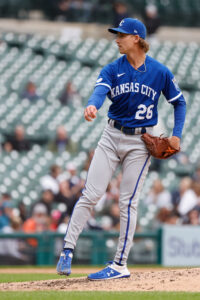
Over three-plus seasons in the desert, Weaver pitched to a 4.72 ERA in just fewer than 200 innings. At last summer’s trade deadline, the Snakes flipped him to the Royals for infielder Emmanuel Rivera. Kansas City’s buy-low attempt didn’t go as hoped. Working exclusively in relief, Weaver allowed 15 runs in 19 2/3 innings. The Royals took him off the roster after the season. He briefly landed with the Mariners via waivers but Seattle non-tendered him within a couple weeks. That sent him to free agency for the first time, where he’ll try to right the ship in Cincinnati.
Over parts of seven MLB seasons, Weaver owns a 4.79 ERA in 450 2/3 innings. He’s struck out a solid 23.5% of opposing hitters against a manageable 7.5% walk percentage. That strikeout/walk profile has led to more favorable views from ERA estimators like FIP (3.96) and SIERA (4.08) than his bottom line ERA might suggest. An elevated .328 batting average on balls in play has plagued Weaver, though it’d be overly simplistic to attribute that entirely to poor luck. The 6’2″ hurler has given up plenty of hard contact throughout his career. Opponents have hit more than 40% of their batted balls hard (with an exit velocity of 95 MPH or greater) in each of the last four seasons.
Primarily a fastball-changeup pitcher, Weaver has unsuccessfully tinkered with various breaking pitches over the years. He’s mixed in each of a slider, cutter and curveball throughout his MLB tenure but never seemed entirely comfortable with any of those offerings. Working almost exclusively out of the bullpen last season, he turned to his fastball or changeup roughly 90% of the time while occasionally deploying a slider as a third pitch against right-handed batters.
Weaver started just one of his 26 outings last season. He’d started 80 of 89 big league appearances before last year, though, and it seems the Reds will give him another shot at a rotation role. Cincinnati has Nick Lodolo, Hunter Greene and Graham Ashcraft — each of whom showed upside to varying degrees as rookies last season — penciled into three rotation spots. The final two are firmly up for grabs, with players like Luis Cessa, Justin Dunn and Connor Overton battling for rotation jobs as well. Weaver figures to have the inside track at one of the available spots, with Cessa having primarily been a reliever throughout his career and Dunn and Overton still having minor league options remaining.
The 29-year-old Weaver has over five years of major league service time. He can’t be optioned without his consent, so he’s a virtual lock to open the season on the MLB roster in some capacity. He’ll return to the free agent market again at year’s end, and the one-year term makes him an obvious midseason trade candidate if things click early in his Cincinnati tenure. The Reds are unlikely to hang around the playoff picture in 2023, making it likely they’d field offers on short-term veterans like Weaver and fellow free agent signee Wil Myers if those players perform well enough to draw interest from contenders.
Tacking on Weaver’s modest salary brings Cincinnati’s projected payroll up around $81MM, as calculated by Roster Resource. That’s well below last year’s $114MM approximate Opening Day figure. General manager Nick Krall has spoken on multiple occasions about the payroll constraints facing the front office. It’s possible Cincinnati rolls the dice on another low-cost upside play or two with Spring Training a month away, but they’re unlikely to make any particularly noteworthy free agent additions. The bullpen and center field stand out as areas where Cincinnati could continue searching for smaller upgrades.
Reynolds, displaced by Weaver’s addition, landed in Cincinnati last April off waivers from the Mets. The out-of-options infielder held his roster spot all season, appearing in 92 games with Cincinnati. He tallied a new career high with 272 plate appearances, hitting .246/.320/.332 with a trio of home runs. Reynolds walked in nearly 10% of his plate appearances but went down on strikes roughly 29% of the time. While he made a fair amount of hard contact, a lofty 50.9% grounder rate muted his overall power impact.
The Reds will now have a week to trade the 32-year-old infielder or place him on waivers. Reynolds has cleared outright waivers twice previously in his career. That’d give him the right to refuse an outright assignment and test minor league free agency if he goes unclaimed again.
Image courtesy of USA Today Sports.
Padres Avoid Arbitration With Juan Soto, Josh Hader
The Padres have avoided arbitration with two stars. San Diego and Juan Soto agreed to a $23MM contract, while they inked Josh Hader to a $14.1MM deal.
Aside from Shohei Ohtani — who agreed to a $30MM deal with the Angels at the end of last season — Soto is the highest-profile player in this year’s arbitration class. MLBTR contributor Matt Swartz projected him for the highest salary of any arb-eligible player, forecasting him to land at $21.5MM. Soto comes in a bit above that and secures a little more than a $6MM raise on last season’s $17.1MM salary.
Acquired from Washington in one of the biggest deadline trades in MLB history, Soto posted a .236/.388/.390 line through his first 228 plate appearances with the Friars. That was below his usual otherworldly standards but still excellent output thanks to a massive 19.3% walk percentage and just a 14.9% strikeout rate. Including his first-half numbers in Washington, he hit .242/.401/.452 with 27 homers over 664 plate appearances.
The Friars will be able to control Soto for one additional season before he’d hit free agency after the 2024 campaign. He’s on track to reach the open market in advance of his age-26 season and trending towards a potential record-setting deal. San Diego surely has interest in working out a long-term agreement with the Boras Corporation client. Soto declined a 15-year, $440MM extension offer from Washington before being traded, ostensibly setting the floor in any negotiations with the Friars.
Hader landed with the Padres in a massive deadline deal as well. Acquired from the Brewers in a surprising swap, he struggled to a 7.31 ERA through his first 16 innings in San Diego. A spike in walks played a role in those anomalous struggles, though Hader was also plagued by an unsustainably high .372 batting average on balls in play against him. He’d only managed a 4.24 ERA over 34 innings with Milwaukee before the trade but struck out an eye-popping 41.8% of his opponents for the Brew Crew.
The lanky southpaw has an established multi-year track record as one of the sport’s most dominant late-game arms. He owns a career 2.71 ERA with a 43.2% strikeout percentage over 332 1/3 big league innings. Hader has collected 132 saves along the way and been selected to the All-Star Game four times. He’s rewarded with one of the largest arbitration deals of the winter himself, narrowly topping his $13.6MM projection.
With over five years of MLB service, Hader avoids arbitration for the final time. He’s on track to hit free agency next winter, when he’ll be headed into his age-30 season. With a typically dominant showing in 2023, Hader would have a chance at topping the reliever record $102MM free agent contract signed by Edwin Díaz this offseason.
Jeff Passan of ESPN reported the Soto agreement. Robert Murray of FanSided reported the Hader deal.
Dodgers Release Trevor Bauer
The Dodgers announced Thursday that they’ve given right-hander Trevor Bauer his unconditional release. Los Angeles designated Bauer for assignment last week and explored trade possibilities for the right-hander but was unable to find a match. He’ll now become a free agent who can sign with a new team for the league minimum. The Dodgers will remain on the hook for the rest of the $22.5MM still left on Bauer’s deal.
Bauer’s release marks the conclusion of the Dodgers’ relationship with the righty, whom they signed to a three-year, $102MM contract in the 2020-21 offseason. Bauer, then heading into his age-30 season, had just been named the National League Cy Young winner in the shortened 2020 season, when he pitched 73 innings of 1.73 ERA ball for the Reds. The contract contained opt-out opportunities for Bauer after each season — similar (but greater in scope) to prior free-agent deals seen between the Dodgers and Scott Kazmir (three years, $48MM) and the Mets and Yoenis Cespedes (three years, $75MM).
Bauer was effective through 17 starts with Los Angeles, pitching to a 2.59 ERA in 107 2/3 innings to begin the 2021 season. That summer, it came to light that a woman in California had filed a restraining order against Bauer and accused him of sexual assault, which prompted a tumultuous investigation by both Major League Baseball and the Los Angeles County District Attorney’s office. He spent the remainder of the season on paid administrative leave — a mutually agreed-upon placement that is common practice when players are being examined for alleged violations of the league’s joint domestic violence, sexual assault and child abuse policy. Two other women, both in Ohio, eventually came forth with similar allegations against Bauer.
The California plaintiff’s request for a long-term restraining order was denied in Aug. 2021, with a judge ruling that Bauer did not pose an ongoing threat to his accuser. The L.A. district attorney declined to pursue criminal charges, stating that: “After a thorough review of the available evidence, including the civil restraining order proceedings, witness statements and the physical evidence, the People are unable to prove the relevant charges beyond a reasonable doubt.”
Despite the lack of criminal charges, MLB commissioner Rob Manfred opined that Bauer had indeed violated the league’s policy, implementing a record 324-game suspension back in April. Bauer appealed the suspension, and after sitting out the entire 2022 season, his ban was reduced to 194 games — which had already been served in full. Bauer was reinstated and is eligible to return to the mound immediately for any team that wishes to sign him.
The Yankees and Mets have no plans to pursue Bauer, per Jon Heyman of the New York Post. The Padres are also uninterested, per Bryce Miller of the San Diego Union-Tribune, and the same goes for the Guardians, per Paul Hoynes of the Cleveland Plain Dealer. Dan Hayes of The Athletic tweets that the Twins also have no plans to speak with Bauer.
Matt Holliday Resigns As Cardinals’ Bench Coach; Joe McEwing Hired As Replacement
The Cardinals announced Thursday that Matt Holliday has resigned from his position as the team’s bench coach. He’ll be replaced by Joe McEwing, who’s spent the past 15 years on the White Sox’ coaching staff. It’s a surprising announcement, given that Holliday was only hired to the post back in early November. Both Bob Nightengale of USA Today and Katie Woo of The Athletic suggest that Holliday’s decision came down to a matter of wanting to spend more time with his family (Twitter links).
Holliday, 43 this weekend, played in the big leagues from 2004 to 2018, donning a Cardinals uniform for much of that time. It thus made for an exciting return to the franchise when it was reported in November that he would take over the bench coach job that was left vacant when Skip Schumaker left to become manager of the Marlins.
However, with Spring Training now just over the horizon, it appears that Holliday has had a change of heart. Instead of returning to the MLB life of constantly being on the move from roughly January/February through October/November, he will choose a less-nomadic path and spend more time with his family. Holliday has four children with the eldest of those four, Jackson Holliday, having just been selected by the Orioles with the first overall pick in the 2022 draft.
As for McEwing, 50, he spent some time with the Cardinals as a player back in 1998 and 1999. He went on to suit up for the Mets, Royals and Astros. He’s since transitioned into coaching, starting in the minor leagues of the White Sox system in 2008. He jumped up to the big league team for the 2012 season, spending time as third base coach and bench coach through 2022.
Mariners Sign AJ Pollock
The Mariners added a right-handed bat to their outfield mix Thursday, formally announcing their previously reported one-year signing of veteran AJ Pollock. The Excel Sports Management client will be guaranteed $7MM on the deal and can earn an additional $3MM via incentives.
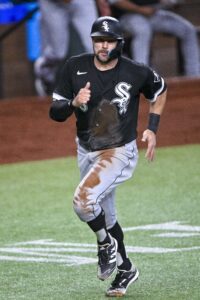
The Twins and Rangers were also known to have interest in Pollock, whose entry into the offseason market was at least somewhat unexpected. Pollock batted a disappointing .245/.292/.389 over 527 plate appearances with the White Sox in 2022, yet he still opted to decline his $13MM player option for the 2023 season. That option contained a hefty $5MM buyout, so between that money and the $7MM salary Pollock is receiving on his new deal with Seattle, the 35-year-old’s opt-out decision left $1MM in guaranteed money on the table. With enough playing time to reach his contract’s incentives, however, he could match or even surpass that sum.
Pollock catches on with an intriguing Mariners team that reached the ALDS last season and is hopeful of taking more steps forward into World Series contention. Seattle president of baseball operations Jerry Dipoto is no stranger to Pollock, as Dipoto was working in the Diamondbacks’ front office when Arizona drafted Pollock with the 17th overall pick of the 2009 draft.
With center fielder Julio Rodriguez established as the bedrock of the Seattle outfield, the M’s have spent a lot of their offseason business on reinforcing and sorting out the corner outfield positions. Mitch Haniger departed in free agency and Kyle Lewis and Jesse Winker were traded, while the Mariners acquired Teoscar Hernandez from the Blue Jays to act as the new everyday right fielder (and probable part-time DH). Signing Pollock puts another right-handed bat into left field, with Jarred Kelenic and Taylor Trammell adding left-handed depth as platoon partners for Pollock or as bench options.
Some level of platoon shielding might be necessary given how Pollock’s numbers against right-handed pitching drastically fell off in 2022. Always a solid bat against righty pitching in the past, Pollock hit only .231/.284/.309 over 394 plate appearances against righties last year. This was the root of Pollock’s offensive struggles, as he continued to mash lefties to the tune of a .286/.316/.619 slash line and 11 homers over 133 trips to the plate.
In terms of overall Statcast metrics, Pollock’s 2022 performance didn’t differ all that greatly from previous seasons, though his hard-contract rate took a notable drop from 2021. His speed and baserunning also took a hit, perhaps due to hamstring injuries in each of the last two seasons. The biggest issue was a lack of power, as after posting a .227 Isolated Power number from 2017-21, Pollock dropped to only .143 in 2022.
Playing at spacious T-Mobile Park might not help Pollock regain all of that power stroke, though there are some reasons the Mariners can be hopeful about a rebound. If Pollock is “only” a lefty-masher again, the M’s theoretically have enough left-handed outfield candidates to pick up the slack. Moving back from less than a full-time role might be helpful for Pollock, as his 138 games played last season represented the second-highest total of his 11 MLB seasons — it could be that staying relatively healthy last year actually hampered Pollock or wore him down to some extent. A normal offseason and Spring Training routine heading into 2023 would be just what the 35-year-old needs to produce a bounce-back year.
Just yesterday on MLBTR, Steve Adams wrote about the Mariners’ search for a right-handed hitting outfielder, and the broader sense that the M’s were having a strangely quiet offseason for a team that seemed poised to make some splashy final touches to a contender. Adding Pollock for $7MM won’t quell speculation that ownership isn’t stretching the budget as much as expected, and yet the signing can also be viewed as a relatively inexpensive but smart investment. Pollock was posting big numbers as recently as 2021, he has been a solid performer for most of his career, and he brings some more veteran experience and championship pedigree (Pollock was a big part of the Dodgers’ 2020 title team) to the young Mariners.
ESPN’s Jeff Passan first reported the agreement and the base terms (Twitter link). USA Today’s Bob Nightengale reported the additional incentives.
Dodgers Acquire Miguel Rojas
The Dodgers bolstered their infield depth Wednesday evening, announcing agreement with the Marlins on a deal that brings in veteran infielder Miguel Rojas. Miami receives infield prospect Jacob Amaya in a one-for-one swap.
Rojas, 34 in February, actually made his MLB debut for the Dodgers in 2014 but was one of the seven players involved in a trade that December that saw him head to Miami. He served in a utility role for a few years but gradually took over the everyday shortstop job for the Marlins.
He hasn’t hit much in the majors, having only gone over the fence 39 times in his nine seasons. However, he has proven tough to strike out, only going down on strikes in 12.6% of his career plate appearances. For reference, the league average last year was 22.4%, so Rojas has been punched out at a rate barely half of that. The overall result is a career batting line of .260/.314/.358 and a wRC+ of 85, indicating he’s been about 15% below league average.
What really makes Rojas appealing is his glove. Last year, he got strong marks from all three of Defensive Runs Saved, Ultimate Zone Rating and Outs Above Average. His 15 DRS was second among shortstops last year with only Jeremy Peña ahead of him. His 4.9 UZR was fourth-best in the league and his 10 OAA had him tied for fifth. He also finished second at the position in the Fielding Bible voting, trailing only Jorge Mateo. His sprint speed is only in the 29th percentile but he was still able to swipe 22 bags over the past two seasons. Despite the subpar batting, he’s been worth 1.2 wins above replacement or higher in each of the past six seasons, according to the calculations of FanGraphs.
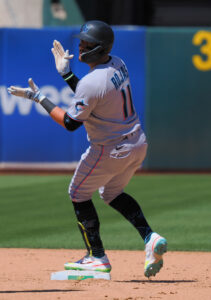
Rojas had previously been connected to the Red Sox in the offseason but instead returns to Los Angeles. The Dodgers lost their incumbent shortstop when Trea Turner reached free agency and signed with the Phillies earlier this offseason. The club is expected to give Gavin Lux a chance to move from second to short and become the long-term solution there, but having Rojas on hand gives them a veteran fallback who can also potentially impart his veteran wisdom to the younger player.
Despite the attributes of Rojas, the Marlins have moved on. They’ve been known to be looking for more offense for quite some time given their struggles in that department. The team-wide batting line last year was .230/.294/.363 for a wRC+ of 88, placing them ahead of just five other teams in the league in that regard. The Fish tried to add a bit more pop to the lineup recently when they signed Jean Segura. It was speculated by some at that point that they would then move Jazz Chisholm Jr. to shortstop and install Segura at the keystone. Subsequent reports suggest the club actually planned to have Segura at third, while it appears Joey Wendle will get first crack at shortstop.
It’s possible the other player in this deal will be a factor at the shortstop position in Miami before long. Amaya, 24, was drafted by the Dodgers in 2017 and has been considered one of their more interesting prospects since then. Prospect evaluators have generally considered him to be an excellent defender but there are questions about his bat. In 2021, he spent the year in Double-A, getting into 113 games at that level. While he walked in 10.9% of his plate appearances, he hit just .216/.303/.343 for a wRC+ of 75. Despite that tepid showing, he was added to the club’s 40-man roster in November of that year to protect him from selection in the Rule 5 draft.
Last year, seemed to get the hang of Double-A, hitting .264/.370/.500 for a wRC+ of 120 in 49 games. He was sent up to Triple-A but hit another speed bump. He walked in 14.9% of his trips to the plate but his .259/.368/.381 line was only good enough for a 94 wRC+ in the hitter-friendly Pacific Coast League. He still has a couple of option years remaining, which would allow the Marlins to keep him in the minors to continue developing as a hitter. But since he’s already played in 84 games at the Triple-A level, it doesn’t seem like a major league audition should be too far off.
It seems the win-now Dodgers have placed a higher value on the immediate impact of Rojas than the future value of Amaya. The Marlins, meanwhile, have a longer path towards contention and would appear to have a stronger interest in Amaya’s ability to help them for years to come.
The Dodgers are reportedly assuming the entirety of Rojas’ $5MM contract for the 2023 season. They’re tacking on a matching number to their competitive balance tax calculation with Rojas in the final season of his two-year deal. That latter point is more important, since the payroll is well below the club’s spending over the past few years.
There has been some suggestion the Dodgers would like to get under the tax threshold this year in order to reset their status. The CBT features escalating penalties for paying it in consecutive seasons but the Dodgers could theoretically stay under the $233MM line this year and go into 2024 as “first-time” payors. They have been right around that border of late, at least per the unofficial calculations of Roster Resource. They’re now firmly over the line, projected around $237MM. If the club is indeed hoping to duck under the line, they would likely have to subtract another contract from their ledger between now and season’s end.
Fabian Ardaya of the Athletic was first to report the Dodgers were “deep in talks” with Miami about a Rojas deal. Craig Mish of SportsGrid was first to report the Marlins would receive Amaya in return. Jon Heyman of the New York Post confirmed the sides were in agreement. Daniel Álvarez-Montes of El Extrabase was first to report Los Angeles was taking on Rojas’ entire $5MM salary.
Image courtesy of USA Today Sports.