
Fernando Tatis Jr. Suspended 80 Games For Performance-Enhancing Drug Violation
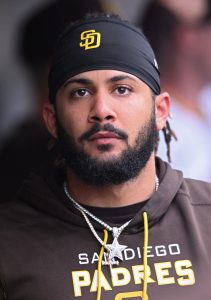
Fernando Tatis Jr.’s 2022 season is over. In a stunning development, Major League Baseball announced Friday afternoon that the Padres star has tested positive for Clostebol, a banned performance-enhancing substance. He’s been suspended for 80 games without pay, effective immediately. Tatis, who confirmed he’s already dropped an appeal he’d initially filed, goes on the restricted list.
Tatis released a statement via the MLB Players Association (Twitter link):
“I have been informed by Major League Baseball that a test sample I submitted returned a positive result for Clostebol, a banned substance. It turns out that I inadvertently took a medication to treat ringworm that contained Clostebol. I should have used the resources available to me in order to ensure that no banned substances were in what I took. I failed to do so.
I want to apologize to (owner Peter Seidler), (president of baseball operations A.J. Preller), the entire Padres organization, my teammates, Major League Baseball, and fans everywhere for my mistake. I have no excuse for my error, and I would never do anything to cheat or disrespect this game I love. … I am completely devastated. There is nowhere else in the world I would rather be than on the field competing with my teammates. … I look forward to rejoining my teammates on the field in 2023.”
The Padres released a briefer statement of their own on the news:
“We were surprised and extremely disappointed to learn today that Fernando Tatis Jr. tested positive for a performance-enhancing substance in violation of Major League Baseball’s Joint Prevention and Treatment Program and subsequently received an 80-game suspension without pay. We fully support the Program and are hopeful that Fernando will learn from this experience.”
Preller confirmed to reporters (including Kevin Acee of the San Diego Union-Tribune and Dennis Lin of the Athletic) that the organization learned about the suspension this afternoon, around two hours before it was made public. The Padres baseball ops leader was forthright about his frustration, suggesting that “over the course of the last six or seven months, I think (trust has) been something that we haven’t really been able to have.” That’s presumably in reference to the motorcycle accident that fractured Tatis’ wrist. Preller continued, “I think we’re hoping that from the offseason to now, that there would be some maturity. And obviously with the news today, it’s more of a pattern and something we’ve got to dig a little bit more into. I’m sure he’s very disappointed, but at the end of the day, it’s one thing to say it. You have to start by showing it with your actions.”
Tatis will go the entire 2022 season without appearing in a major league game. (Bob Nightengale of USA Today tweets that he’ll also be barred from representing the Dominican Republic in next spring’s World Baseball Classic). The star shortstop sustained a fracture in his left wrist in an offseason motorcycle accident, an injury that was revealed when he reported to the team in Spring Training. He underwent surgery and was out of action for months. There was finally light at the end of the tunnel, with Tatis sent to Double-A on a rehab assignment last week. He’d played in four minor league games and was set to rejoin the big league club within a couple weeks. That’ll no longer be the case.
The Padres have 48 more games on the regular season schedule. That’ll leave him in position to miss as many as the first 32 games of the 2023 season as well, although Tatis’ suspension would be reduced for any playoff games he misses (if the Padres reach the postseason this year).
It’s a crushing blow to a San Diego team that enters play Friday night in possession of the National League’s final Wild Card spot. They’re just a game clear of the Brewers, setting the stage for a tightly contested pennant race. If they’re to get to the postseason, the Friars will have to do it without the elite midseason reinforcement on whom they’d been counting.
That’s not to say the Padres are doomed. They’ve been without the two-time Silver Slugger winner all season, and they’re nevertheless 12 games above .500 with a +40 run differential. The deadline blockbuster to add Juan Soto and Josh Bell looms larger than ever now. San Diego still has a fearsome middle of the order anchored by Soto, Bell and Manny Machado, while Jake Cronenworth and Jurickson Profar have each hit at above-average levels.
There’s no way to replace a player who owns a .292/.369/.596 slash line through his first three big league seasons, but the Padres are in as good a position as a team can reasonably be to weather Tatis’ absence. They’ve gotten strong play from Ha-Seong Kim at shortstop in his second MLB season. The former KBO star is hitting .247/.324/.371 through 392 plate appearances, exactly league average offense by measure of wRC+. Public metrics have pegged Kim as one of the sport’s top defensive shortstops, making him a more than adequate fill-in for the remainder of the season.
Perhaps the greater roster ramification is that San Diego now has little recourse to replace scuffling center fielder Trent Grisham. Tatis had been slated to play both shortstop and center field on his rehab assignment, and he may well have gotten more time in the outfield down the stretch. While Kim has held down shortstop effectively all year, Grisham owns a .195/.292/.357 line over 411 trips to the plate. He has continued on as the primary center fielder, although Wil Myers has gotten the nod the past three times the Friars have faced a left-handed opposing starter. Skipper Bob Melvin figures to stick with at least a soft platoon arrangement for the stretch run.
While the team will feel the strongest repercussions down the stretch this year, Tatis’ lack of availability in 2022 has to be alarming to the organization over the long term. He’s under contract for another 12 seasons beyond this one under the extension he signed in February 2021. That $340MM deal is the fourth-largest in MLB history, and there’s arguably no one more important to the franchise’s long-term future.
That deal is backloaded. Tatis’ forfeited salary during the suspension, while substantial, isn’t nearly as significant as it would have been had he tested positive a couple years from now. He’ll lose the remainder of this year’s $5MM salary (approximately $1.5MM) as well as around a month’s worth of next year’s $7MM salary. The extent of his salary forfeiture is dependent on how many games he loses next season, which is subject to how far into the playoffs the Friars get this year. He’s likely to miss around 20% of the schedule, which would translate to around $1.3MM in lost salary next year.
Jeff Passan of ESPN first reported that Tatis had failed a PED test and was facing a suspension.
Image courtesy of USA Today Sports.
Tarik Skubal Visiting Specialist With Elbow Issue; Expected To Miss Remainder Of Season
4:32pm: Skubal is set to visit orthopedic surgeon Dr. Neal ElAttrache next week, reports Chris McCosky of the Detroit News (Twitter link). The 25-year-old is alarmingly dealing with some form of elbow injury, although Hinch declined to speculate as to whether surgery was a possibility until the results of next week’s testing became apparent. McCosky adds that Skubal will not return to the mound in 2022 in any event.
3:03pm: The Tigers announced Friday that they’ve transferred lefty Tarik Skubal from the 15-day injured list to the 60-day injured list. The move opens a spot on the roster for lefty Daniel Norris, whose contract has been formally selected from Triple-A Toledo (as previously reported). It also casts doubt on whether Skubal will return at all in the 2022 season. Since he was placed on the 15-day IL on Aug. 2, there’s still technically time for him to get back for the final week of games in early October — but today’s move makes that look fairly unlikely.
It’s a fairly surprising shift for Skubal, who was placed on the injured list due to general arm fatigue. Skubal was lifted from his final start of the season after five efficient innings and downplayed any severity, telling the Tigers beat that he anticipated making his next start. Instead, it’s now possible that he won’t pitch in a game until next season. The Tigers didn’t provide any further updates on Skubal’s health beyond the move to the 60-day IL, though manager AJ Hinch will presumably divulge some additional context prior to tonight’s game.
If Skubal’s season is indeed over, it was a strong breakout year for the former top prospect. The 25-year-old will fall shy of last year’s 149 2/3 innings, but in the 117 2/3 frames he managed during the 2022 campaign, Skubal worked to a 3.52 ERA with a 24.5% strikeout rate, a strong 6.7% walk rate and a solid 45.7% grounder rate. Most importantly, he maintained the generally sharp strikeout and walk rates he’d displayed in 2021 while dramatically scaling back his home-run rate (2.11 HR/9 in 2021; 0.69 HR/9 in 2022). If Skubal can continue to miss bats, limit walks, keep the ball on the ground and limit home runs in this capacity, there’s room for even greater improvement (as evidenced by his hearty 2.97 FIP).
Whether there’s another gear for Skubal or this is roughly his peak output, he’s solidified himself as at least a quality mid-rotation option for Hinch in the coming years. Though there was talk of the Tigers being willing to at least listen to offers on the lefty before the Aug. 2 trade deadline, the Tigers would’ve required an exorbitant haul to part with him given that he’s still under team control for another four seasons beyond the current campaign. Given the current uncertainty regarding his arm, it’s difficult to imagine those talks being revisited this winter, as the Tigers — who’ll be operating under a new general manager after firing Al Avila yesterday — would be selling low on the heels of a lengthy IL stay.
As for what the Tigers’ rotation will look like moving forward, it’s practically anyone’s guess. Skubal joins Casey Mize and Spencer Turnbull (Tommy John surgery in both cases) as key rotation pieces on the 60-day injured list. The Tigers are currently also without Michael Pineda, Beau Brieske and Rony Garcia (injured list) and lefty Eduardo Rodriguez (rehabbing following a lengthy stay on the restricted list while dealing with a reported marital issue). That’s left the Tigers with Norris, Matt Manning, Tyler Alexander, journeyman Drew Hutchison and rookie Garrett Hill as options for the time being. With little certainty among that quintet, there figures to be additional rotation tumult in the final weeks of the year.
Mariners Designate Ken Giles For Assignment
The Mariners announced they’ve designated reliever Ken Giles for assignment. The move drops Seattle’s 40-man roster tally to 38.
It’s a surprising development, as the M’s didn’t have a pressing need for a spot on the 40-man roster. Giles also hadn’t been occupying a spot on the active roster, as he’s spent the past week and a half on a minor league rehab assignment while working his way back from shoulder tightness. The right-hander has tossed two scoreless innings with Triple-A Tacoma this week, but the organization apparently wasn’t bullish about his chances of fulfilling a key role in the bullpen down the stretch.
The move more or less closes the books on a two-year free agent deal that didn’t pan out as the club had hoped. The M’s signed Giles to a $7MM guarantee over the 2020-21 offseason. He’d undergone Tommy John surgery the previous October, but the organization agreed to pay him $1.5MM while rehabbing from the injury last year. In exchange, they got a potentially elite reliever who’d posted a 1.87 ERA while striking out almost 40% of opponents over 53 innings in 2019. The deal came with a 2022 salary of just $5MM, which would be massive bargain if Giles recaptured his pre-surgery form, along with a $9.5MM club option for the 2023 season.
Giles wound up making just five MLB appearances within the course of that deal. He missed all of last season, as expected. While the hope had been he’d been ready to go for Opening Day this year, he suffered a finger injury in Spring Training that cost him more than two months. Giles made his Mariners debut on June 21 and spent a little more than two weeks on the active roster. He worked 4 1/3 scoreless frames, allowing just one hit but walking four batters against six strikeouts. In that brief look, Giles’ fastball averaged 94.8 MPH and his slider checked in at 84.1 MPH. That’s solid velocity, but down from the respective 96.9 MPH and 86.4 MPH averages from his 2019 work.
After five outings, Giles went down with the shoulder issue from which he’s been trying to work his way back. Between the diminished velocity and the shoulder tightness, the Mariners decided to move on from the 31-year-old.
The trade deadline has already passed, so Seattle will have to place Giles on outright or release waivers in the coming days. There’s no real difference between the two in this case, as he has well over five years of major league service time. That gives him the right to refuse a minor league assignment while still collecting the remainder of his guaranteed salary even if he clears waivers. The league’s 29 other teams will have an opportunity to add Giles for the stretch run. If they all pass, he’s almost certain to test free agency.
Any team that claims Giles would be responsible for the remainder of this year’s salary (around $1.5MM). A claiming team would get the right to the club option, but they’d also be on the hook for the $500K buyout if they declined the option. Given Giles’ lack of recent experience, it seems likely he’ll go unclaimed on waivers, although that’d be a more than reasonable price to pay if another team thought he could recapture something like his 2019 form.
If Giles clears waivers and hits free agency, the Mariners would remain on the hook for essentially all of that tab. They’d have to pay the buyout on next year’s option as well as all of his remaining 2022 salary, except for the prorated portion of the $700K league minimum for any time he spends on another team’s MLB roster (which would be paid by the signing club). Should Giles go unclaimed and sign elsewhere, he’d be a free agent after this season; the ’23 team option would not carry over to another team unless he’s claimed off waivers.
Michael Brantley Undergoes Season-Ending Shoulder Surgery
The Astros announced Friday that outfielder Michael Brantley, who has been out since June due to a shoulder issue, underwent an arthroscopic procedure to repair a torn labrum in his right shoulder. The surgery will end his season.
Since Brantley was placed on the injured list, the Astros have been vague regarding the nature of Brantley’s injury. General manager James Click said in July that there were no updates on Brantley other than that the team was waiting for inflammation in his shoulder to subside. Acting manager Joe Espada (filling in while Dusty Baker was out due to Covid-19) said earlier this week that Brantley was seeking a second opinion.
Today’s announcement is the first indication of structural damage within the shoulder. This is the second time in Brantley’s career that he’s required surgery on this shoulder; he also suffered a small tear in his labrum late in the 2015 campaign and eventually underwent surgery that November.
Brantley, 35, is the second season of a two-year, $32MM contract with the Astros. It’s the second consecutive two-year, $32MM deal he’s signed with Houston, where he’s now played since the 2019 campaign. He’s appeared in 64 games and taken 277 plate appearances this season, batting .288/.370/.418 with five homers, 14 doubles and a triple. In all, Brantley has batted a combined .306/.368/.464 in just over 1600 regular-season plate appearances as an Astro, plus an additional 211 plate appearances of .314/.376/.408 production in the postseason.
If that’s the end of Brantley’s run with the Houston franchise, he’ll go down as an immensely successful veteran signing. There’s no option on Brantley’s contract, so he’s set to become a free agent in a couple months’ time. The Astros did not provide a timetable for when he might return to playing. The Astros’ announcement added that Click will speak to reporters in a couple hours, so further updates could be provided at that time.
The ‘Stros have been dealing with Brantley’s absence for some time already, most regularly turning to Chas McCormick, Yordan Alvarez and Aledmys Diaz in his absence. Houston acquired Trey Mancini from the Orioles prior to the Aug. 2 trade deadline, but Baker has voiced a reluctance to play him in the outfield, given Mancini’s limited outfield work in recent seasons. (More broadly, he’s opted to sit Mancini nearly as often as start him since the trade, much to the chagrin of Astros fans.)
Subtracting Brantley from the outfield mix entirely puts a damper on the potential postseason roster, as players like McCormick and Diaz — generally viewed as depth/bench options — will now be pressed into more full-time duty. Add in the ongoing struggles of center fielder Jake Meyers, who’s batting just .218/.260/.328 this season (and .147/.205/.221 over his past 23 games), and the outfield is at least a potential area of concern for the remainder of the year. It also stands out as a natural area of focus for Click and his staff in the coming offseason, whether they pursue a Brantley reunion or look for alternatives on the free-agent and/or trade markets.
Tigers Fire General Manager Al Avila
The Tigers announced that they have parted ways with executive vice president and general manager Al Avila, effective immediately, per a press release from the team. Sam Menzin, vice president and assistant general manager, will continue as the day-to-day contact for the team, per the release. The club’s chairman and CEO Christopher Ilitch says that he will oversee the search for Avila’s replacement.
“Once I decided to make a change, I sat down with Al and thanked him for his nearly 22 years of service to our organization,” Ilitch says in the press release. “Al’s loyalty and dedication has served as an example to all during his time as a leader in our baseball operations department. I will oversee the search process for our next baseball operations leader, in collaboration with several members of our baseball and business operations executive teams.”
Avila is also quoted in the release: “For nearly 22 years, I have given my heart and soul to this franchise, and I want to thank Mr. and Mrs. Ilitch, along with Chris, for the opportunity and treating me and my family as their own,” he says. “We’ve celebrated successes and enjoyed great moments, and I’m proud to have worked with so many talented people in baseball operations and throughout the organization. I’ll cherish our friendships and the successes we all celebrated together. To Tigers fans, you’re the best and you deserve a winner. I wish the results would have been better this season but know there is a lot to look forward to in the coming years.”
Avila, 64, has been the club’s general manager for a few years now, taking over in late 2015 when Dave Dombrowski departed. The club has effectively been in a deep rebuild for the entirety of his tenure, registering a winning percentage below .400 for four straight seasons from 2017 to 2020. They showed some signs of promise last year and then acted aggressively this winter, hoping to return to contention this season. However, they’ve instead suffered a dismal campaign, compounded by various injuries, resulting in a club sporting a record of 43-68, ahead of only the A’s among American League teams. With the rebuild struggling to bear fruit, it seems the club has decided to change course and will begin looking for a new front office arrangement for the upcoming offseason.
Though Avila’s been the key front office person in Detroit for seven years now, his time with the club actually goes back much farther. He was first hired in 2002, having already accrued a decade of experience in baseball, first with the Marlins and then the Pirates. His first role with the Tigers was assistant general manager and vice president, until his promotion, which made him the first Cuban-born general manager in baseball history.
When he took over as general manager in August of 2015, the rebuild had essentially already begun, as the club traded David Price, Yoenis Cespedes and Joakim Soria prior to the trade deadline, while Dombrowski was still at the helm. The club managed to put up a winning record in 2016 but was dismal in the seasons after that. They bottomed out in 2019, going 47-114 for a winning percentage of just .292.
Of course, one benefit of poor seasons is the ability to restock the farm system, with the Tigers having a number of high profile first round draft picks in recent years. Matt Manning, Alex Faedo, Casey Mize, Riley Greene, Spencer Torkelson, Jackson Jobe and Jace Jung have been the club’s first round picks since Avila took over, with both Mize and Torkelson having been selected first overall.
With some of that group reaching the majors in recent years, the club had a decent showing in 2021. Their 77-85 record was much more palatable than previous seasons, leading the team to believe it was time to act aggressively and be done with the tanking process. The Tigers followed through by spending big, giving a $140MM contract to Javier Baez, $77MM to Eduardo Rodriguez, $13MM to Andrew Chafin and $5.5MM to Michael Pineda. The club also turned to the trade market, acquiring Tucker Barnhart from the Reds and Austin Meadows from the Rays.
Unfortunately, all of those moves have failed to work out for various reasons, which only compounded other issues on the roster. The mercurial Baez is hitting .220/.262/.372 on the season for a wRC+ of 77. Rodriguez has only made eight starts for the team due to injuries and personal issues. Chafin has pitched well but he can opt-out of the second year of his deal, which he seems likely to do. Pineda has only made ten starts due to injuries and has a 5.27 ERA on the year. Barnhart has hit .198/.258/.228 for a wRC+ of 41, while Meadows has only played 36 games due to various injuries.
In addition to the struggles of the new additions, the club’s core pieces also failed to deliver in different ways. Former first overall pick Spencer Torkelson made the Opening Day roster but struggled enough to get optioned down to the minors last month. Riley Greene missed the start of the season due to injury and has hit at a below-average level since joining the team. Matt Manning has been limited to just four starts on the year due to injuries, while Mize made just two appearances before Tommy John surgery ended his season.
Not all of that can be placed at Avila’s feet, of course, certainly not the injuries. Still, after years and years of agonizing rebuilding, the club and its fans were surely hoping for more signs of good things to come over the horizon and have found little to none of it this year.
Ilitch and the Tigers will now try to find a new leader to guide the team into its next stage. Given the club’s struggles this year, the organization will be looking ahead to another strong draft position next summer, in order to add to the talent youngsters who, despite their struggles in 2022, could still be key players in seasons to come. There’s also another important pivot point coming up over the horizon, as the last guaranteed season of Miguel Cabrera‘s massive contract is 2023, which will free up both a roster spot and plenty of payroll space. The person who decides how to handle those situations in the future will be determined in the months to come.
Matt Carpenter Expected To Miss 6-8 Weeks With Foot Fracture
Aug. 10: Carpenter will not require surgery, tweets Marly Rivera of ESPN. He’ll be reevaluated in a month, with the club hopeful he could be back to action in six-to-eight weeks. That gives Carpenter a shot of returning for the stretch run and/or postseason play.
Aug. 9: The Yankees placed Carpenter on the 10-day injured list today, recalling Miguel Andujar to take his spot on the active roster.
Aug. 8: Yankees utilityman Matt Carpenter fractured his left foot during tonight’s game against the Mariners, the club announced. He fouled a ball off his foot in the third inning and was immediately replaced by Tim Locastro.
The club will provide more specifics and a timetable for his recovery in the coming days. He’ll certainly require an injured list stint, and whether his season is in jeopardy should be known shortly. Braves second baseman Ozzie Albies fractured his foot in mid-June and has yet to embark on a rehab assignment, with the club estimating his recovery in the two-to-three month range. Dodgers outfielder Chris Taylor suffered a less devastating fracture in early July and returned to action over the weekend, missing exactly one month of action. That’s not to say either player offers a definite comparison point for Carpenter. His recovery timeline surely depends on the placement and severity of the fracture.
The injury interrupts what has been one of the more remarkable stories of the 2022 season. A three-time All-Star, Carpenter seemed to be nearing the end of his career after three years of well below-average play to close out his tenure with the Cardinals. The 36-year-old overhauled his swing path over the offseason but was still limited to minor league offers. He signed a non-roster pact with his hometown Rangers, and while he played well in Triple-A, he didn’t have a path to playing time in Texas.
After being granted his release from his minor league deal with the Rangers, Carpenter received an immediate MLB opportunity with the Yankees. Brought on as a bench bat, he’s played his way into an increasingly larger role with an unbelievable bounceback season. Carpenter has connected on 15 home runs in 154 plate appearances, posting an otherworldly .305/.412/.727 line. He’s forced his way into the lineup, with manager Aaron Boone rotating him between designated hitter and all four corner positions.
New York is already without primary DH Giancarlo Stanton, who has been on the shelf for a couple weeks due to Achilles tendinitis. First baseman Anthony Rizzo has dealt with a nagging back issue in recent days, although he’s not required a stint on the injured list to this point.
Braves Select Top Prospect Vaughn Grissom, Activate Kirby Yates
The Braves announced Wednesday that they’ve selected the contract of top infield prospect Vaughn Grissom from Double-A Mississippi and activated right-hander Kirby Yates from the 60-day injured list.
To open space on the 40-man roster, Atlanta activated first baseman Mike Ford from the 10-day IL and designated him for assignment and also transferred outfielder Adam Duvall from the 10-day IL to the 60-day IL. Atlanta also announced that infielder Orlando Arcia is headed to the 10-day IL with a hamstring strain and that righty Huascar Ynoa has been optioned to Triple-A. That frees up a pair of spots on the 26-man roster for Grissom and Yates.
Still just 21 years old, Grissom was an 11th-round pick in 2019 who has skyrocketed through the minors, culminating in a .363/.408/.516 slash through his first 98 plate appearances in Double-A. That’s his only experience above A-ball, though this year’s .312/.404/.487 output in 344 plate appearances at High-A bear mention as well. It’s the second time this season that the Braves have aggressively promoted a top prospect directly from the Double-A ranks, and it’s easy to imagine that the major success of Michael Harris II may have emboldened the front office to go back to the well a second time.
Despite that humble draft status, Grissom has ascended to the No. 77 spot on Baseball America’s latest top-100 prospect ranking and No. 98 over at MLB.com. He’s cracked 14 home run, 20 doubles and two triples across those two minor league levels this season, all while going 27-for-32 in stolen base attempts. Grissom doesn’t walk much (8.1% on the season but just four walks in 98 Double-A plate appearances), but he’s also fanned in only 12.2% of his plate appearances this season.
Grissom has been primarily a shortstop this season and throughout his minor league career, but the Braves have given him seven starts at second base and six at third base so far in the minors this year. Scouting reports at BA. MLB.com and FanGraphs question his ability to remain at shortstop in the long run, but his bat is thought to be solid enough to profile at second, third or even in the outfield (though he’s played infield exclusively to this point in his pro career). In the short term, with Arcia headed to the IL and Ozzie Albies still mending a broken foot, it seems likely that Grissom will be ticketed for work at second base.
Starting Grissom’s service clock now sets him up for a potential trip to free agency in the 2028-29 offseason, although plenty can change that trajectory along the way. Albies and third baseman Austin Riley are signed long-term in the infield, and it’s not yet known whether the Braves will be able to retain free-agent-to-be Dansby Swanson beyond the current season. Even if Swanson were to depart, Grissom wouldn’t be a lock to step right into the fray. He’s largely untested above Class-A, and while Harris’ success story is encouraging, it’s more common for players — even top prospects — to struggle following such aggressive promotions. Regardless, he’ll earn some big league service time this season, and his placement on the 40-man roster a year sooner than was required will accelerate his minor league option schedule.
Turning to the veteran Yates, he’ll add yet another high-profile, potentially dominant arm to an Atlanta bullpen that is hardly short on such commodities. The 35-year-old inked a two-year, $8.25MM deal this winter — a backloaded contract that pays him just $1MM in 2022 due to the fact that Yates has been shelved for the entire season to this point while rehabbing from last year’s Tommy John surgery. When healthy most recently, in 2018-19, he was an All-Star closer with the Padres, pitching to a combined 1.67 ERA with 53 saves, a huge 38.7% strikeout rate and a tiny 6.1% walk rate.
It remains to be seen whether Yates can recapture that form, but his work on a minor league rehab assignment thus far certainly creates some optimism. Across three Braves affiliates, Yates logged a combined 8 1/3 innings of one-run ball with just four hits allowed and a 10-to-2 K/BB ratio. He’ll join Kenley Jansen, Raisel Iglesias, A.J. Minter, Tyler Matzek and Collin McHugh near the back of an outstanding bullpen.
As for the 30-year-old Ford, he’s gone hitless in eight big league plate appearances with the Braves this season and logged a combined .150/.320/.175 batting line in 50 plate appearances between Atlanta, Seattle and San Francisco. The former Yankees minor leaguer was never considered among the top prospects in the New York organization but does carry a .258/.355/.481 batting line and 61 homers through 1294 career plate appearances in Triple-A. With trades of players who’ve been on Major League rosters this season now prohibited after the Aug. 2 deadline, Ford will be placed on waivers within the next week and be made available to all 29 other clubs.
2022-23 MLB Free Agent Power Rankings: August Edition
A lot has changed since the last edition of MLBTR’s Free Agent Power Rankings. Joe Musgrove, formerly the No. 5 entrant on the list, has since signed a five-year extension with his hometown Padres, keeping him from reaching the market. Willson Contreras, the No. 9 entrant on that edition of the list, was somewhat stunningly not traded at the deadline, meaning he’ll be subject to draft-pick compensation. Jacob deGrom had yet to pitch at that point in the season but has now made a dominant pair of outings in his 2022 debut. More broadly, several players on the list or on the “honorable mention” portion of the list have altered their stock with strong play or faded.
Here’s a look at where things stand, with a reminder that this list is based on what the MLBTR team believes to be each player’s earning power in free agency — not necessarily a ranking of the “best” free agents or who’ll hold up the best over the life of a major free-agent contract.
1. Aaron Judge, OF, Yankees (Last ranked: 1): While plenty has changed since the May 25 version of these rankings, it’s business as usual for Judge, who boldly turned down a seven-year, $213.5MM extension offer back in Spring Training and now looks prescient for doing so. Judge was hitting .314/.386/.692 at the time of our last rankings and has followed that with a remarkably consistent .292/.390/.654 line in 64 games since. Judge is on pace to top Roger Maris’ 61 home runs from the 1961 season, leading the Majors not only in long balls (44) but also runs scored (93), RBIs (98), slugging percentage (.677), OPS (1.068) and wRC+ (196). He’s leading the AL with 122 hits and has even stolen a career-high 11 bases (without being caught).
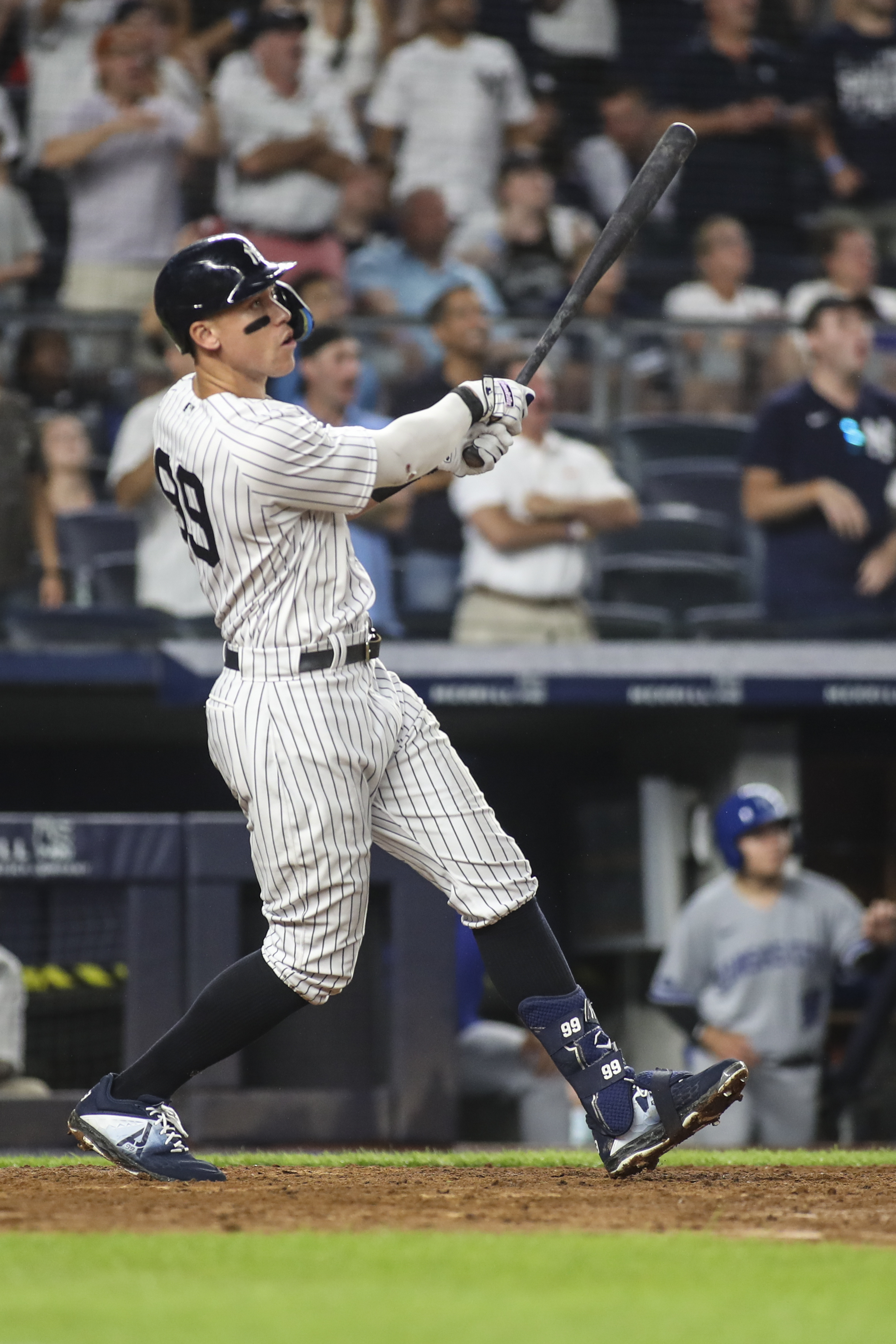
Judge has been the best hitter on the planet since Opening Day, and as things currently stand, the only person who could conceivably stand in his way of winning his first AL MVP trophy would be Angels sensation Shohei Ohtani. However, great as Ohtani has been again in 2022, his offense isn’t quite what it was last year (and isn’t anywhere close to Judge’s league-leading dominance). From a pure WAR perspective, Judge has been so good this year that his value with the bat has eclipsed Ohtani’s combined value at the plate and on the mound.
Regardless, Judge is now poised to reach free agency on the heels of the finest season of his already brilliant big league career. He’ll play the 2023 season at age 31, which is about the only strike against him in free agency. Judge will receive and reject a qualifying offer from the Yankees, and even though he’d be 38 by the end of an eight-year deal, that seems plenty plausible. He could very well command the largest annual salary any position player has ever received, too, and a $300MM overall contract doesn’t seem out of the question. This is what it looks like to bet on yourself and win — in resounding, overwhelming fashion, no less.
2. Trea Turner, SS, Dodgers (LR: 3): There’s not much on the baseball field that Turner doesn’t do well. The 29-year-old is the sport’s fastest player, by measure of Statcast’s Average Sprint Speed, and he’s hitting .305/.345/.499 as of this writing. The 28 home runs he popped in 2021 might very well go down as a career-high, but Turner should finish this year around 25 dingers and has twice in the past hit 19 long balls (including in a 2019 season where he played in just 122 games).
That injury shortened ’19 campaign was the only one in the past half decade in which Turner spent significant time on the shelf. Over the past five years, he’s a .303/.358/.493 hitter who’s made a pair of All-Star teams, won a batting title and taken home a World Series ring.
By the end of a long-term deal, Turner will probably move off shortstop, but he’s a solid option there for now who’d be plenty capable of sliding over to second base at some point. Over the past three seasons, he’s been 43% better than league-average with the bat, by measure of wRC+, and this will be his fourth season of at least four wins above replacement in the past five years — with the 60-game 2020 season, when he boasted 2.8 fWAR and bWAR alike, being the lone exception.
If Turner had been born a day later, next year would technically be considered his age-29 season, but he’ll be 30 on June 30, and the July 1 cutoff is (for whatever reason) generally seen as the arbitrary turning point for a player’s age in a given year. A seven-year deal for Turner would run through age-37, and an eight-year deal through age-38. He’ll have to contend with a qualifying offer and another deep class of shortstops, but Turner is one of baseball’s most well-rounded players and figures to be compensated in line with the game’s 10 to 20 best position players.
3. Nolan Arenado, 3B, Cardinals (LR: 6): It’s difficult to directly compare Arenado’s 2022 season and the 2019 season that propelled Anthony Rendon to a seven-year, $245MM contract, given that Rendon’s Herculean ’19 effort came during the juiced-ball season. Offense is down league-wide now, yet Arenado stacks up favorably in terms of batting average, on-base percentage and slugging percentage. Metrics like wRC+ and OPS+, which weight for both home park and league environment, feel that Arenado’s 2022 production at the plate has actually been slightly better.
Defensively, Arenado is nearly peerless at his position. Since making his MLB debut in 2013, Arenado ranks second among all players, regardless of position, with 151 Defensive Runs Saved, trailing only Andrelton Simmons. He’s third to Francisco Lindor and Nick Ahmed in Statcast’s Outs Above Average, which tracks defensive data dating back to 2016. Arenado’s numbers aren’t inflated by early-career marks, either. He remains elite this season, ranking third in all of MLB in DRS and second in OAA. Defensive metrics and the eye test agree, as Arenado has been a human highlight reel at the hot corner for his decade-long career.
The age gap between 2022 Arenado (31) and 2019 Rendon (29) can’t be ignored. However, that should be more reflected in the length of a theoretical Arenado contract than in the annual value. It’s also, of course, worth noting that Arenado is technically under contract through 2027. He’s guaranteed $144MM in that time but has the right to opt out of the contract after the current season. Arenado forwent an opt-out clause after the 2021 season, but his 2022 campaign is the best of his career.
Even if he’s capped at a five-year deal in free agency, he should be able to trounce the current $28.8MM annual value remaining on his deal by as much as $5-7MM — and a six-year deal doesn’t seem impossible to imagine coming off such a brilliant effort. (Freddie Freeman scored a six-year deal beginning with his age-32 season, so there’s recent precedent.) Perhaps Arenado and the Cardinals will work out a compromise, and it’s always possible he decides he’s happy in St. Louis and just passes on the opt-out entirely. If he does want to test the market again, however, there could be another $20-60MM in earning power for him on top of his current deal.
4. Carlos Correa, SS, Twins (LR: 2): The 2022 season might not have gone quite as well as either Correa or the Twins hoped, but he’s still enjoying a sound all-around year, hitting .265/.343/.433 (22% better than league average, by measure of wRC+). He got out to a slow start in April and has slumped following the All-Star break, but for a three-month stretch from late April to late July, Correa hit .308/.375/.509. Provided the current slump doesn’t last too long, Correa stands a decent chance to be around 30% better than average at the plate for the second straight season and third time in four years.
Last year’s all-world defensive ratings have taken a dip thus far in 2022 — surprising for a player who has generally been a consistent source of elite glovework. He’s made five throwing errors this season, tied for his most since 2016, but Correa has been plenty sure-handed, booting just two balls hit to him. He’s spent the year throwing to Miguel Sano and a pair of makeshift first baseman who’ve converted from other positions (Luis Arraez, Jose Miranda), so perhaps some of the throwing miscues can be forgiven by a team with a better defensive outlook at first base.
If those first couple paragraphs feel like they’re filled with caveats — well, they are. The simple fact is that Correa hasn’t had as strong a season as he did in 2021 and probably shouldn’t be expected to command the type of contract many (MLBTR included) thought to be possible last offseason. That said, Correa still hasn’t even turned 28 — the age at which he’ll play nearly all of the 2023 season. His youth alone gives him the chance to command the longest contract of any free agent this winter; even a 10-year deal would run through age-37.
That type of contract may not be on the table without a huge finish, but Correa is still a plus defender and well above-average hitter with age on his side. It’s perhaps narrowly more plausible that he could opt into a second year with the Twins, take another $35.1MM salary and hope to hit free agency on the heels of a stronger platform in 2023, but his current earning power is still among the best in this year’s free-agent class.
5. Xander Bogaerts, SS, Red Sox (LR: 4): When the last version of our list was published, Bogaerts had homered just four times in 174 plate appearances while posting a below-average .135 ISO (slugging minus batting average). It was easy enough to overlook as little more than small-sample noise at the time, but Bogaerts has hit just five home runs in 267 plate appearances since that time and now has nine long balls and a tepid .141 ISO in 441 trips to the plate. That’s the worst power output we’ve seen from Bogaerts since 2017 by an overwhelming margin. From 2018-21, he belted 90 homers in 2106 plate appearances while turning in a stout .224 ISO.
Bogaerts is still hitting .311/.383/.452 on the season, but he’s also sporting a career-high .382 average on balls in play that he’s not going to sustain — particularly not when his average exit velocity, barrel rate and hard-hit rate are at their lowest or near-lowest levels since 2017.
There’s still no doubt that Bogaerts will opt out of the remaining three years and $60MM on his contract, but he’d be higher on this list if not for his power stroke going MIA. Couple that with ongoing questions about his defense — some teams are surely going to see Bogaerts as a player who needs to move off shortstop, perhaps as soon as 2023 — and the current free-agent outlook is a bit murkier than expected.
Nevertheless, Bogaerts has a long track record of excellent offense and well above-average power output. With a strong finish to the season, particularly in the power department, he should have no problem commanding a notable nine-figure deal — and something in excess of $200MM can’t be ruled out.
6. Jacob deGrom, RHP, Mets (LR: 7): The No. 6 ranking here for deGrom factors in something of a best-case scenario, but this list is based on earning power, after all. If deGrom gets hurt again or struggles down the stretch, it’s possible he’ll drop off the list entirely. The latter of those two scenarios seems unlikely, though, as deGrom hasn’t “struggled” since 2017. He’s been dominant through his first two starts of the 2022 season, averaging 99.2 mph with his fastball and holding opponents to three runs on four hits and a walk with 18 punchouts through 10 2/3 innings.
Dating back to 2018, deGrom has a comical 1.95 ERA in 591 2/3 innings with a 34.9% strikeout rate against a 5.3% walk rate. When healthy, deGrom is simply unmatched in terms of starting pitching dominance over that period. He ranks second among all Major League pitchers with 24 wins above replacement dating back to 2018, per FanGraphs, despite the fact that he’s made only 93 starts in that time. Max Scherzer tops the list but has started 24 more games and logged 143 2/3 more innings — about an extra 75% of a season’s worth of work.
If deGrom finishes the season with no red flags, the bidding should be furious. He’ll turn 35 next June, making him nearly three full years younger than Scherzer was when he secured his record-setting three-year, $130MM deal from the Mets. DeGrom could justifiably look to top that AAV on a multi-year deal, and he’s too good for the bidding to stop at two years. The biggest question surrounding deGrom is just how many years someone will be willing to guarantee. A three-year pact in excess of Scherzer’s seems doable, and a fourth year ought to be on the table as well.
7. Dansby Swanson, SS, Braves (LR: Not Ranked): Long a plus defender at shortstop, Swanson is having another strong year with the glove and a career year with the bat. He’s followed up a career-high 27 home runs in 2021 with a .292/.348/.461 showing through 463 trips to the plate. He’s been the beneficiary of a .375 average on balls in play that he surely won’t sustain over a larger sample, but Swanson is also making hard contact at a career-best 44.7% clip and elevating the ball more than he has in years past.
A greater walk rate than his current 7.3% clip or lower strikeout rate than his 26.3% mark would raise Swanson’s floor, but his glove alone will make him an above-average regular and he’s well on his way to his second straight 25-homer season. Add in that Swanson will play all of next season at 29 years old, and a nine-figure deal seems likely. Both Trevor Story and Javier Baez landed six-year, $140MM pacts last winter at the same age. Swanson will have to contend with a qualifying offer and with some more decorated shortstop options ahead of him on the market, but he’ll be in high demand all the same.
8. Carlos Rodon, LHP, Giants (LR: 8): Rodon was the best pitcher in baseball through late July in 2021, but he was capped to five innings per appearance (at most) down the stretch as he battled shoulder fatigue and diminished velocity. For a pitcher with Rodon’s injury history, that limited interest in him to the point that he took a two-year, $44MM deal with a chance to opt out following the 2022 season — provided he reached 110 frames.
Rodon has not only reached 110 innings — he’s shot past it with career-best velocity (95.8 mph average fastball) and another sub-3.00 ERA (2.95 through 128 1/3 frames thus far). Rodon is averaging just shy of six innings per outing and boasts a 31.2% strikeout rate against a 7.6% walk rate. He’s reached double-digit strikeouts in six of his 22 starts and held opponents to three or fewer runs in 18 of 22 tries.
Rodon’s fastball in his past eight starts is down about one mile per hour over his average from his first 14 starts, but it’s still been a healthy 95.1 mph in that stretch. That said, he threw a complete game on July 9, worked seven shutout innings on July 31, and averaged a resurgent 96 mph with his heater in his most recent outing. At least so far, Rodon doesn’t appear to be fading at all. If he can avoid the type of late swoon he experienced in 2021, he ought to find four- and five-year offers at superior annual values to this contract’s $22MM AAV. He’ll receive a qualifying offer and surely reject it, which isn’t ideal, but he has the best combination of age (30 all of next season) and 2022 performance of any starter on this year’s market.
9. Justin Verlander, RHP, Astros (LR: Not Ranked): Simply returning to make a full season’s worth of starts would’ve been a feat for a 39-year-old who had pitched just six innings since the end of the 2019 season due to Tommy John surgery. Verlander, of course, is no ordinary 39-year-old, and he’s not only returned but positioned himself as a front-runner for the AL Cy Young Award.
It’s a jaw-dropping feat, even for one of this generation’s best. Verlander has a 1.73 ERA with a 25.5% strikeout rate against a minuscule 4.6% walk rate. He’s averaging nearly 6 2/3 innings per start, sitting 95.1 mph with his heater — his second-best mark since way back in 2011 — and has thrown a quality start in 16 of his 20 appearances this year. Verlander hasn’t yielded more than one earned run in a start since June 18 and has held opponents to one or zero earned runs in a stunning 15 of 20 starts.
He’ll turn 40 in February, but Verlander has a legitimate case to break Max Scherzer’s $43.33MM AAV, particularly if he’s looking at a two-year deal. He’s said he wants to pitch into his mid-40s and looks as good as ever, though, so we shouldn’t discount the possibility that a team shrugs and goes to three guaranteed years for this generation’s most prolific workhorse. Verlander unlocked a $25MM player option when he reached 130 innings pitched, but he should be able to crush that in free agency even if he prefers to work out an extension with Houston.
10. Edwin Diaz, RHP, Mets (LR: Not Ranked): It’s been six years since Mark Melancon (four years, $62MM), Kenley Jansen (five years, $80MM) and Aroldis Chapman (five years, $85MM) each set new records for relief contracts in the same offseason. Diaz, the most dominant reliever in baseball this season, will have a chance to topple that Chapman record when he heads into free agency in advance of his age-29 season.
After a nightmarish first season in Queens, Diaz has righted the ship and become a spectacle in the best kind of way. He’s averaging 99.1 mph on his heater this season, has punched out 52.9% of his opponents and has an entrance more befitting of a professional wrestler than a Major League closer.
Diaz’s Baseball Savant profile looks like a video game cheat code. He’s leading the Majors in expected ERA, expected wOBA, expected batting average, expected slugging percentage, strikeout rate, whiff rate and ranks in the 99th percentile in average exit velocity, opponents’ chase rate, opponents’ barrel rate and fastball velocity. Diaz last allowed an earned run on June 18, and in 18 innings since that time he’s posted a 38-to-1 K/BB ratio while yielding just seven hits.
The 2022 version of Edwin Diaz might be the best reliever we’ve seen since Mariano Rivera. He’ll be hit with a qualifying offer, but it’s doubtful the teams pursuing him are going to even care about that. It’d be a surprise if Diaz doesn’t set a new contract record for relief pitchers this winter, and he could be baseball’s first nine-figure reliever.
Honorable Mentions: Brandon Nimmo, Willson Contreras, Jose Abreu, Josh Bell, Chris Bassitt, Nathan Eovaldi, Andrew Benintendi
Tim Anderson Out 4-6 Weeks Due To Torn Ligament In Hand
5:50pm: The White Sox officially placed Anderson on the 10-day IL between games, as expected, with Reynaldo Lopez coming off the IL to take his roster spot, per a team announcement relayed by Van Schouwen.
Their wording of Anderson’s injury states that he has “a sagittal band tear on the middle finger of his left hand,” which is “causing a dislocation of the exterior tendon of his finger.” It goes on to state the Anderson will undergo surgery on Thursday and is expected to miss approximately six week.
1:35pm: White Sox shortstop Tim Anderson is going to be out of action for 4-6 weeks due to a torn ligament in his hand, reports Russell Dorsey of Bally Sports and Stadium. Dorsey says that surgery is a possibility. Anderson last played on Saturday and then began a two-game suspension for making contact with an umpire during an argument in late July. Daryl Van Schouwen of the Chicago Sun-Times reports that, while serving the first game of that suspension on Sunday, Anderson traveled to have his hand examined. The Sox had an off-day on Monday and are playing a doubleheader today, the first game of which will be the second game of Anderson’s suspension. That means that they might not make a roster move until between games of the twin bill, but Anderson seems destined to land on the injured list at that point.
This news is obviously terrible for the White Sox as they are in the thick of a playoff race. The club is currently 55-53, two games behind the Twins and one game behind the Guardians in the American League Central, and 2 1/2 behind the Mariners for the final AL Wild Card spot. The club has dealt with myriad injuries all year long but have recently gotten the roster to a healthier position, relatively speaking. Outfielder Luis Robert was activated from the injured list last week, while outfielders Eloy Jimenez and Adam Engel, catcher Yasmani Grandal and closer Liam Hendriks all returned from IL stints in July. Now, unfortunately, their star shortstop is going to be out of commission for an extended stretch.
Anderson, 29, struggled in his first few MLB seasons but broke out in 2019 and has been excellent since. From the beginning of that campaign to the present, he’s hit 51 home runs, stolen 53 bases and has a batting line of .318/.347/.473. He has a wRC+ of 124, indicating his offense has been 24% better than league average in that time. He’s accrued 13.9 wins above replacement, according to FanGraphs, in that four-year stretch. This year, he already missed three weeks earlier in the season due to a strained groin, only getting into 79 games for the campaign so far. He’s hit six homers, swiped 13 bags and is hitting .301/.339/.395 for a wRC+ of 111. That’s a slight dip from his previous seasons but he’s still produced 2.2 fWAR on the year, production which will surely be missed.
Given that 4-6 window for his absence, he likely won’t return until mid- to late-September. This year’s schedule was pushed back slightly due to the lockout in the offseason, meaning the final day of the regular season isn’t until October 5. Regardless, there won’t be a lot of time left whenever Anderson is able to return.
Perhaps compounding the severity of this injury, the member of the White Sox to play shortstop the most this year apart from Anderson is Danny Mendick, who is himself on the injured list, out for the season after tearing his ACL in June. When Mendick went on the shelf, the club promoted 22-year-old prospect Lenyn Sosa, who was primarily a shortstop in the minors but has played second base in his four MLB games thus far. With Anderson and Mendick both out, he might have to step into an everyday role. He’s hit .331/.384/.549 in 62 Double-A games this year, .275/.316/.407 in 23 Triple-A games and .083/.154/.167 in those four MLB contests. Utility player Leury Garcia could be an option, though he’s never played more than 19 games at short in any given season, spending more time at second base and in the outfield. He’s hitting .216/.240/.282 on the year for a wRC+ of 46. Romy Gonzalez is on the 40-man roster, currently in the minors, but he’s hit just .219/.318/.354 in Triple-A this year, wRC+ of 83.
With none of the options on the roster inspiring much confidence, the club might look outside for additions to help them at short, though that will be difficult at this time of year. With the trade deadline in the rearview mirror, they can’t acquire any player that’s been on a 40-man roster this year via trade. As MLBTR’s Steve Adams recently outlined, trades are still possible for players that haven’t been on a 40-man roster this season, but that will obviously limit the Sox to options that are themselves fairly unexciting. Perhaps the club’s best option would be to look for a veteran recently cut loose from another team. Speculatively speaking, Didi Gregorius, recently released by the Phillies, could get a call from Chicago. With the Phillies on the hook for the remainder of his salary, the White Sox could bring him aboard and only pay him the prorated league minimum, with that amount being subtracted from what the Phillies pay. Regardless of how they choose to respond, there’s no question the White Sox are the lesser without Anderson, with less than two months remaining in a tight playoff race.
Blue Jays Sign Jackie Bradley Jr., Designate Matt Peacock
2:55pm: The Blue Jays have announced the signing, optioning utility player Otto Lopez to make space on the active roster and designating righty Matt Peacock for assignment to create space on the 40-man. Peacock was claimed off waivers from the Royals in July and has thrown ten innings for the Jays this year with a 5.40 ERA.
2:20pm: The Blue Jays are signing outfielder Jackie Bradley Jr., reports Ezekiel Telemaco of WEEI. Chris Cotillo of MassLive confirmed the deal on Twitter, reporting that it’s a major league deal. The Blue Jays have a full 40-man roster, meaning a corresponding move will be required.
Bradley, 32, was just released by the Red Sox last week and will now land with their division rivals in Toronto. The defensive specialist is having yet another down season at the plate, hitting .210/.257/.321 on the year. That production is 42% below league average, by measure of wRC+. The Red Sox let rookie Jarren Duran take over the center field position in recent months, with Bradley kicked to a corner. He was further nudged out of the outfield mix when they acquired Tommy Pham at the deadline, leading to Bradley’s release.
Despite that tepid offensive production, Bradley can still provide value with his glove. Defensive Runs Saved has given him a five on the year, a drop from last year’s 12 but still quite good. Ultimate Zone Rating has given him a 4.9 on the campaign so far after a 10.7 last year. Outs Above Average has given him three on the year already, after accruing four last year. That puts him in the 84th percentile among fielders across the league this season.
The Blue Jays recently put George Springer on the injured list, but acquired Whit Merrifield at the deadline for some extra outfield depth. That gives them a current outfield rotation of Merrifield, Lourdes Gurriel Jr., Teoscar Hernandez, Raimel Tapia and Bradley Zimmer. It seems unlikely that Bradley would get regular playing time over those first four, given his struggles with the bat. Zimmer, however, has been used primarily as a defensive replacement and pinch runner, hitting a meager .107/.212/.240 when in the lineup this year for a wRC+ of just 28. Perhaps the Blue Jays view Bradley as a better option for that defensive replacement and pinch runner position.
Bradley has shown more promise with the bat in the past, putting up a batting line of .283/.364/.450 as recently as 2020, producing a wRC+ of 119 in the shortened season. It was on the heels on that strong campaign that the Brewers signed him to a two-year, $24MM deal. However, Bradley struggled in his first year outside of Boston, hitting just .163/.236/.261. He was traded back to the Red Sox in the offseason, along with two prospects, while Hunter Renfroe went to Milwaukee. Though Bradley hasn’t been as bad as he was last year, it was still enough to get released. The Red Sox will still be on the hook for the bulk of his contract, with the Blue Jays only having to pay the prorated league minimum, which be subtracted from what Boston pays.