
Adalberto Mondesi Diagnosed With Torn ACL; Brady Singer Optioned To Triple-A
11:19am: Royals general manager Dayton Moore announced that Mondesi has been diagnosed with a torn ACL (Twitter link via Lewis). That’ll quite likely end his season and, depending on his recovery, perhaps even his tenure with the team. Mondesi will be arbitration-eligible for the final time this winter. He’d likely command a salary similar to this year’s affordable $3MM rate, but coming off a major knee injury, it’s not a lock that he’ll be tendered a contract. The Royals will have the entire season to evaluate him and monitor his recovery before making that call. If he’s progressing well, it’s an eminently reasonable price, but only time will tell how the rehab process goes.
As for Singer, he will indeed be built back up as a starting pitcher in Omaha, Moore added. That could point to a quick turnaround and return to the Majors, assuming all goes well. Singer last pitched on April 26 and threw two innings. It’s feasible that he could make a start in the next few days.
11:15am: The Royals announced a series of roster moves Thursday, most notably optioning right-hander Brady Singer to Triple-A Omaha and placing shortstop Adalberto Mondesi on the 10-day injured list. Outfielder Kyle Isbel and infielder Emmanuel Rivera are up from Omaha in pair of corresponding moves. Mondesi is dealing with a knee injury, and tests last night revealed some structural damage, per Alec Lewis of The Athletic (Twitter link).
Outside of a brief rehab assignment in 2021, it’ll be the first minor league stint for Singer since 2019, when he was only a year removed from being the No. 18 overall selection in the 2018 draft. Singer made the Royals’ Opening Day roster in 2020 and has been on the big league roster (or injured list) since that time. He looked like a potential fixture in the rotation after a solid rookie showing in 2020, when he pitched to a 4.06 ERA with league-average strikeout and walk rates plus an excellent 53.1% grounder rate in 64 1/3 innings.
The 2021 season didn’t go as smoothly, however. Singer had an up-and-down first half but was generally serviceable prior to the All-Star break, logging a 4.52 ERA in 85 2/3 innings. He was averaging under five innings per appearance, however, and by mid-July his velocity had dipped a bit from its early-season average. Singer was clobbered by the Orioles for seven runs in just two innings on July 17, and the Royals put him on the injured list with shoulder fatigue a couple days later. Singer returned in just under a month, but he didn’t make it through the remainder of the season, as he went back on the injured list in late September with a biceps strain.
Kansas City somewhat surprisingly moved Singer from the rotation to the bullpen this year — a new role for a pitcher who’d started all 39 of his prior big league appearances. The results so far haven’t been great; Singer yielded four runs on seven hits and a walk with six strikeouts in 6 2/3 innings. Manager Mike Matheny said at the time the Royals set their Opening Day rotation that the organization still viewed Singer as a starting pitcher in the long term. It’s possible, then, that Singer will get the opportunity to stretch back out and return to the Majors as a starting pitcher. Kansas City has gotten poor results from both Kris Bubic and Carlos Hernandez, which could open the door for Singer or some of the organization’s other young arms to seize a starting job.
Optioning Singer carries implications beyond the right-hander’s immediate role or even beyond the team’s current rotation mix, however. Because Singer broke camp with the Royals in 2020 and was on the roster all last season, he entered the year with exactly two years of MLB service time. He’d need to spend 172 days on the roster in 2022 to reach three years of service and remain on track for free agency following the 2025 season. If Singer spends more than two weeks in the minors, it’ll push that free-agent eligibility back to the 2026-27 offseason. He’d likely still qualify for arbitration as a Super Two player — barring a particularly lengthy stint in Omaha — but the amount of time he spends in the minors will nonetheless be worth monitoring closely.
As for Mondesi, the knee injury is the latest in a long line of ailments that have kept the talented but increasingly fragile infielder out of the lineup. Mondesi has missed time over the past few seasons with oblique, hamstring, groin and, most notably, shoulder injuries. The shoulder issue proved to be particularly costly, as Mondesi twice suffered a subluxation before undergoing surgery that came with a six-month recovery timeline.
Mondesi played in 59 of the Royals’ 60 games in 2020, but overall from 2019-21, he appeared in just 196 of 384 possible games (51%). There’s no clear timetable for just when Mondesi might rejoin the Royals, but the very mention of structural damage portends a potentially significant time away from the lineup.
In the interim, the Royals are deep in middle-infield options. Bobby Witt Jr. has been playing third base with Nicky Lopez at second base, but both are experienced and more than capable shortstops. Whit Merrifield has been lining up in the outfield more often than not this season but could certainly shift back to second base, with Lopez sliding over to shortstop. That setup could open the door for Isbel — an accomplished minor league hitter who’s yet to solidify himself in the big leagues — to get a larger look in the outfield.
Padres Select Trayce Thompson, Place Wil Myers On Injured List
The Padres announced Thursday that they’ve selected the contract of outfielder Trayce Thompson from Triple-A El Paso and placed fellow outfielder Wil Myers on the 10-day IL due to a left thumb injury. Righty Austin Adams was moved from the 10-day IL to the 60-day IL in order to open a 40-man roster spot for Thompson.
Thompson, 31, is a former second-round pick (White Sox, 2009) and the younger brother of Golden State Warriors guard Klay Thompson. He’s appeared in parts of five big league seasons, most recently logging 15 games and 35 plate appearances with the Cubs in 2021. Thompson impressed in that small sample of work, hitting .250/.400/.714 with four homers and a pair of steals — flashing the tools that once made him a lofty draft pick and a well-regarded prospect.
Of course, those tools haven’t translated into production at the big league level regularly enough. Thompson has tallied 624 plate appearances in the Majors but has just a .208/.283/.405 batting line to show for it. He’s homered 26 times and swiped 11 bags (in 13 tries) as a big leaguer, but Thompson has also been far too prone to strikeouts. He’s whiffed in 28.2% of his plate appearances, and his penchant for punchouts has worsened over the years; after posting a strong rookie season with the ChiSox back in 2015, Thompson has fanned in nearly 31% of his trips to the plate while hitting .184/.260/.370.
That said, it’s hard to argue that he hasn’t earned an opportunity with his early-season work. In his first 16 games and 65 plate appearances with the Chihuahuas, Thompson has batted .316/.385/.860 with a jaw-dropping nine home runs. He’s added four doubles and a stolen base for good measure. Those numbers overwhelmingly outpace Thompson’s career .233/.303/.447 output in parts of seven Triple-A seasons, but there’s no denying the intrigue surrounding that blistering start.
As for Myers, he’ll head to the 10-day IL after opening the season in a .218/.254/.273 funk at the plate. That sloth-like start comes on the heels of a solid 2020-21 run at the plate, and it’s fair to say the thumb injury has contributed to his struggles. Myers originally incurred the injury during an at-bat two weeks ago and has been held out of the lineup on multiple occasions in an effort to let it heal. His placement on the injured list is retroactive to yesterday, so he’ll be eligible to return a week from Saturday.
Adams, meanwhile, is dealing with a forearm strain and was recently shut down from throwing for six weeks. It’s generally unsurprising to see him now transferred to the 60-day IL. That 60-day window begins with the day he was originally placed on the IL, not with today’s transfer, meaning he’s eligible to return in 50 days’ time. The 30-year-old righty has a 3.97 ERA and a very strong 31.8% strikeout rate in 59 innings with San Diego dating back to 2020, but he’s also walked 15% of his opponents in that time.
Reds Place Nick Lodolo On Injured List
The Reds are losing another starter to the injured list, as the team announced this morning that rookie left-hander Nick Lodolo is headed to the 10-day IL. He’s dealing with a lower back strain, per Charlie Goldsmith of the Cincinnati Enquirer (Twitter link). Infielder Mike Moustakas was reinstated from the 10-day IL in a corresponding move, and he’s back in the Reds’ lineup as the designated hitter for Thursday’s game.
Cincinnati hasn’t given any indication as to whether this will be a brief stint on the IL for Lodolo, or whether their touted young lefty could be facing a more protracted absence. Regardless, he’s joining both Luis Castillo and Mike Minor on the injured list, leaving an already floundering Reds team with a question mark in the rotation. Tyler Mahle, Hunter Greene, Vladimir Gutierrez and Reiver Sanmartin are all healthy options at the moment, although Greene’s 5.27 ERA is the best of that bunch through four turns in the rotation.
Castillo set out on a rehab assignment this past weekend and threw 48 pitches (2 1/3 innings), so he’s at least on pace to rejoin the rotation sooner than later. The Reds had been planning on giving him two more rehab appearances before activating him in perhaps the second week of May, so we’ll see if the injury to Lodolo prompts a more accelerated timetable for the team’s top starter. Cincinnati could simply go with a bullpen game or two while waiting on Castillo’s return, or it’s possible that they’ll take a look at righty Graham Ashcraft, who’s out to a strong start in Triple-A. If the preference is for a shorter-term veteran option, right-hander Zack Godley is also on the roster down in Louisville. Either would need to be selected to the 40-man roster.
Lodolo, 24, was the No. 7 overall draft pick back in 2019 and entered the season ranked among the sport’s top pitching prospects. He’s gotten out to a rough start, however, surrendering a 5.52 ERA through 14 2/3 innings over his first three big league starts. He’s punched out an impressive 27.5% of his opponents thus far, but Lodolo has yielded a whopping 18 hits — three of them home runs. He’s also walked five hitters and plunked a pair, further crowding the basepaths. Certainly, a rocky stretch of three starts to begin his career isn’t going to dramatically alter the perception of Lodolo or dampen his long-term outlook, but the struggles are magnified, given the injuries and struggles that are permeating the remainder of the Reds’ pitching staff.
As for the 33-year-old Moustakas, he wound up missing a minimal 10 days with a right biceps strain. The three-time All-Star is in dire need of a rebound at the dish, as he opened the year with a .129/.125/.129 slash and is batting just .196/.261/.336 in 238 plate appearances dating back to 2021. Moustakas is in the third season of a four-year, $64MM contract with the Reds.
Jon Jay Announces Retirement
Veteran outfielder Jon Jay took to Twitter earlier today to announce his retirement after over a decade in the big leagues.
“As a kid I remember watching SportsCenter highlights and imitating my favorite MLB players,” Jay wrote. “It is still surreal to me that I played Major League Baseball. As I officially retire from the game that changed my life, I want to thank everyone who has played a role in getting me here.”
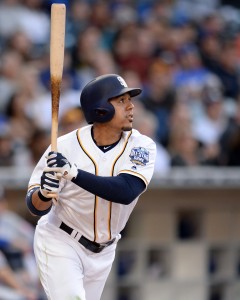 Jay, 37, was a second round pick of the Cardinals in 2006 and then made his MLB debut in 2010. He immediately hit the ground running with the contact-oriented approach that would be a trademark of his career. He hit .300/.359/.422, walking in 7.4% of his plate appearances and striking out just 15.5% of the time. That production amounted to a 116 wRC+, or 16% above league average. The next year, he put up a similar line of .297/.344/.424, 115 wRC+, helping the Cardinals qualify for the postseason and eventually win the 2011 World Series.
Jay stuck with the Cardinals for the next four seasons, with the team making the postseason in each of them. His production stayed largely consistent until wrist issues started hampering him in 2015. He underwent surgery prior to that season and then struggled at the plate, hitting .210/.306/.257. After that campaign, he was traded to the Padres for Jedd Gyorko.
He was able to bounce back somewhat in 2016, hitting .291/.339/.389 as a Padre, good enough for a wRC+ of 99. He signed with the Cubs for the 2017 season and had another solid season, hitting .296/.374/.375, 101 wRC+. He went into journeyman mode for the next few years, spending time with the Royals, Diamondbacks, White Sox, D-Backs again, and then the Angels last year, with none of those stints lasting more than 84 games.
In all, Jay played in 1201 games in 12 MLB seasons from 2010 to 2021. He will head into retirement with a lifetime .283/.348/.373 batting line, 37 home runs, 185 doubles, 25 triples, 1,087 total hits, 532 runs scored, 341 runs batted in and 55 stolen bases. He was a solid contributor to an excellent run of Cardinals baseball, earning a World Series ring in the process. MLBTR congratulates him on a fine career and wishes him all the best in his future endeavors.
Giants Claim Darien Nunez From Dodgers
The Giants announced to various reporters, including Susan Slusser of The San Francisco Chronicle, that they have claimed left-hander Darien Nunez off waivers from the Dodgers. (Reporter Francys Romero relayed the Giants-Nunez connection earlier today.) The Giants don’t need to make a corresponding 40-man roster move at the moment, as a couple of players have recently hit the Covid-related injured list and won’t take up roster spots until reinstated.
It was reported a few days ago that the 29-year-old would require Tommy John surgery, thus keeping him out of action for the remainder of this season and at least part of next year as well. The next day, he was designated for assignment by the Dodgers in order to open up a roster spot for Reyes Moronta. Nunez was in the minors at the time of his injury, meaning that the Dodgers could have merely placed him on the minor league injured list. However, in that scenario, he would continue to occupy a spot on the 40-man roster. They also had the option of placing Nunez on the major league 60-day injured list. Doing so would have opened up a roster spot, but also would have meant Nunez would earn an MLB salary and service time over the remainder of the year. In the end, they opted merely to cut him loose. Injured players cannot be placed on outright waivers, meaning Nunez was on release waivers, before being claimed.
For the Giants, this is situation has many parallels with their acquisition of outfielder Luis Gonzalez. Last year, Gonzalez was injured while in the minor leagues with the White Sox. The Sox opted to designate him for assignment and place him on waivers. The Giants put in a claim and placed him on their major league injured list, thus earning him MLB pay and service time. The club non-tendered him after the season but were able to re-sign him on a minor league deal, with Gonzalez presumably appreciating the treatment he received from the team. He recently had his contract selected and has been playing well in his first few games as a Giant.
With Nunez, the Giants announced that he has been optioned to Triple-A for now. However, it seems likely that, whenever they need to open up a spot on the 40-man roster, they will move Nunez to the 60-day IL. He currently has 30 days of MLB service time, a number that will start climb once he’s on the 60-day IL.
An amateur signing out of Cuba in 2018, Nunez worked his way up the ranks and made his MLB debut last year, throwing 7 2/3 innings with an 8.22 ERA. In Triple-A, however, his ERA was a much nicer 2.42 over 52 innings, along with a 39.8% strikeout rate and 10% walk rate. The Giants will surely be hoping that he can get back to that kind of production once he recovers from the surgery, and then carry it from the minors into the majors.
Nationals, Zack Burdi Agree To Minor League Deal
The Nationals recently signed reliever Zack Burdi to a minor league contract, according to his transactions log at MLB.com. He has been assigned to the team’s complex in Florida.
Burdi was released by the Diamondbacks in Spring Training. Arizona had claimed him off waivers from the Orioles last fall but elected not to keep him on the 40-man roster heading into the season. After passing through release waivers unclaimed, the 27-year-old will try to pitch his way back to the big league level with the Nats.
A first-round pick of the White Sox in 2016, Burdi was an elite college closer at the University of Louisville. The hope had been that he’d carry that success through the minors quickly and emerge as an immediate late-game weapon for the South Siders, but injuries have thrown him off course. The right-hander had run his fastball as high as 102 MPH in college, but he suffered a 2017 UCL tear that required Tommy John surgery and kept him out for all of 2018. Upon returning, Burdi’s velocity had fallen into the low-mid 90s. He’d rediscovered his arm speed by 2020 and made his MLB debut that year, but he’s struggled with both free passes and longballs over the past couple seasons.
Burdi owns a 7.79 ERA in 17 1/3 innings over 15 big league appearances with the White Sox and Orioles between 2020-21. He worked 28 2/3 innings of 6.59 ERA ball with those teams’ respective Triple-A affiliates last season, punching out an excellent 34.5% of batters faced but allowing nine home runs with an elevated 13% walk rate. He’ll look to bounce back from that rough 2021 showing and carve out a spot in a Washington bullpen that has posted below-average marks in both ERA (3.94) and SIERA (3.62) over the season’s first few weeks.
Offseason In Review: Minnesota Twins
The Twins stunned the baseball world with one of the largest annual-value contracts ever given by any team but took a patchwork approach to bolstering a rotation that needed quite a bit of help.
Major League Contracts
- Carlos Correa, SS: Three years, $105.3MM
- Dylan Bundy, RHP: One year, $5MM (includes $1MM buyout of $11MM club option for 2023)
- Chris Archer, RHP: One year, $3.5MM (includes $750K buyout of $10MM mutual option for 2023)
- Joe Smith, RHP: One year, $2.5MM
- Total 2022 spending: $46.1MM
- Total overall spending: $116.3MM
Option Decisions
- Declined $5.5MM mutual option on RHP Alex Colome (paid $1.25MM buyout)
Trades and Claims
- Acquired RHP Sonny Gray and minor league RHP Francis Peguero from the Reds for minor league RHP Chase Petty
- Acquired SS Isiah Kiner-Falefa and minor league RHP Ronny Henriquez from the Rangers for C Mitch Garver
- Acquired 3B Gio Urshela and C Gary Sanchez from the Yankees for SS Isiah Kiner-Falefa, 3B Josh Donaldson and C Ben Rortvedt
- Acquired RHPs Chris Paddack and Emilio Pagan and a PTBNL from the Padres for LHP Taylor Rogers, LF Brent Rooker and cash
- Claimed RHP Trevor Megill off waivers from the Cubs (later non-tendered, re-signed to minor league deal)
- Claimed RHP Jharel Cotton off waivers from the Rangers (since outrighted to Triple-A)
- Claimed C Jose Godoy off waivers from the Giants (since outrighted to Triple-A)
- Claimed RHP Jhon Romero off waivers from the Nationals
Extensions
- Signed CF Byron Buxton to a seven-year, $100MM extension with significant annual incentives
Notable Minor League Signings
- Tim Beckham, Daniel Robertson, Derek Fisher, Chance Sisco, Curtis Terry, JC Ramirez, Jake Faria, Daniel Gossett, Jake Petricka, Dereck Rodriguez, Chi Chi Gonzalez
The most pressing order of business for the Twins this winter began months before the offseason commenced. July extension talks with Byron Buxton didn’t bear fruit, and the Twins seriously entertained the idea of trading their uber-talented but injury-prone center fielder. Minnesota hung onto Buxton in the end, and those summer talks ultimately served as groundwork for a seven-year, $100MM extension that comes with substantial upside for both parties.
Even a partial season of Buxton is often worth the $14.28MM annual base value on the deal, but Buxton can earn up to $8MM annually based on MVP voting and $2.5MM annually based on plate appearances. It’s a fitting middle ground between a homegrown player who stands out as one of baseball’s best raw talents and a mid-market team that has been perennially vexed by Buxton’s durability woes.
Buxton will earn $10MM this year and $15MM annually from 2023-28, enjoying full no-trade protection from 2023-26 before his 10-and-5 rights kick in and grant him veto power over any trade for the remainder of the deal. In essence, the deal locks the 28-year-old Buxton in as a Twin through age 35. Whether he’ll ever remain healthy enough to reach those MVP-based incentives is anyone’s guess, but the Twins’ payroll bar only figures to increase from this year’s $138MM mark over the life of the contract. It stands to reason that they’ll eventually be staking under 10% of their annual payroll on Buxton’s upside. Viewed through that lens, it’s a reasonable gamble to take.
Buxton negotiations aside, starting pitching was the Twins’ clearest need. Their only locks for the 2022 rotation were right-handers Bailey Ober, who quietly posted solid results as a rookie last season, and Joe Ryan, whom they acquired from the Rays in last summer’s Nelson Cruz trade. With a deep crop of free-agent starters available and several high-profile names on the trade market, it was a good offseason to be on the hunt for pitching.
If you’d told Twins fans in November that they’d spend a total of $116MM in free agency, most would’ve assumed nearly the entire slate would’ve been dedicated to pitching. Instead, the Twins gave the fourth-ever largest annual value to a position player and didn’t sign a free-agent pitcher for more than $5MM.
That $5MM sum went to right-hander Dylan Bundy — their lone pre-lockout addition. It’s a roll of the dice that might not have excited many Twins fans, but it was sensible enough. Bundy’s 2020 was outstanding, and he got out to a strong start with the Halos in ’21 as well before a series of ineffective performances cost him his rotation spot. Eventually, a shoulder strain ended Bundy’s season in August.
The extent to which his struggles can be attributed to that balky shoulder isn’t certain, but his time with the Angels was split evenly between good and bad. In 17 starts from Opening Day 2020 to early May 2021, Bundy totaled 101 2/3 innings of 3.54 ERA ball with a 27% strikeout rate and 6.3% walk rate. In 17 appearances from May 8 through his season-ending IL stint, Bundy logged 54 2/3 innings of 6.72 ERA ball with greatly inferior strikeout (17.6%) and walk (10%) rates.
It’ll be a bargain if Bundy pitches well — to their credit, so far so good on that front — and the fact that there’s an affordable $11MM club option for 2023 sweetens the pot. Still, it was nevertheless a notable surprise that the Twins didn’t do more pre-lockout. Adding Bundy to serve as a fourth or fifth starter is fine, but the Twins more or less idled as nearly every big name pitcher — Max Scherzer, Justin Verlander, Robbie Ray, Kevin Gausman, Marcus Stroman, Eduardo Rodriguez — signed elsewhere before the lockout.
That seemed to portend a focus on the trade market, which did indeed happen — but only to an extent. Minnesota struck quickly after the transaction freeze lifted, adding Sonny Gray and minor league righty Francis Peguero in a deal that sent 2021 first-rounder Chase Petty to the Reds. Gray looked like a solid next step after Bundy. Getting two years of him (plus a live-armed lottery ticket) in return for a high-risk high school righty who might be four to five years from MLB readiness made some sense for both the Twins and Reds, given the two teams’ trajectories.
However, the Twins didn’t match the Giants’ two-year offer for lefty Carlos Rodon, never had a chance on Clayton Kershaw, and were spurned by Zack Greinke, who took a similar offer from the Royals because he preferred to return to his origins in Kansas City. Eventually, they agreed to an incentive-laden deal with talented but oft-injured righty Chris Archer. As with Bundy, it’s a reasonable price in a vacuum. Archer’s $3.5MM guarantee is a drop in the bucket for most MLB franchises, and if he unlocks any significant portion of the hefty $9.5MM of incentives baked into the deal, it’ll be because he’s pitching well enough to justify that cost.
At the same time the Twins were closing that deal, the trade market was beginning to dry up. Reds GM Nick Krall all but announced that neither Tyler Mahle nor Luis Castillo would be traded, leaving the Twins (and others) to focus primarily on Athletics hurlers Sean Manaea and Frankie Montas. The latter understandably proved more alluring, given his extra year of team control, but Twins fans (and many others) still raised an eyebrow when Manaea, a free agent at season’s end, was traded to the Padres for what was widely considered to be a light package.
That trade perhaps partially paved the way for the Twins to buy low on former top prospect and Rookie of the Year candidate Chris Paddack, whom they acquired from San Diego alongside Emilio Pagan and a player to be named later (later revealed as pitching prospect Brayan Medina) on Opening Day. That swap sent All-Star closer Taylor Rogers, who ended last year on the shelf with a ligament injury in his pitching hand, and corner outfielder Brent Rooker back to the Padres.
Rogers is a free agent at season’s end, whereas the Twins can control Paddack through 2024 and Pagan through 2023. Minnesota had a surplus of controllable corner outfielders, likely making it easier to part with Rooker. Viewed through that lens, it’s easy enough to see why the Twins would prefer three years of a buy-low rotation candidate with upside and two years of a reliever with an inconsistent track record to one of Rogers — no matter how excellent he may have become in recent years. The swap isn’t without risk, though, and some fans will justifiably wonder why the Twins didn’t make a stronger push for Manaea. Paddack’s 2021 season ended when he was diagnosed with a minor ligament tear in his elbow, which creates some clear downside moving forward. His overall performance has also fallen off since an outstanding rookie season in 2019.
If the Twins can get Paddack back to his 2019 levels, the trade could go down as a steal. But that’s three pitchers the Twins are hoping to rehabilitate in a season they have designs on competing: Paddack, Archer and Bundy. Gray, the most established name added, has had stints on the injured list for back, groin and rib-cage strains since Opening Day 2020, and he’s currently shelved with a minor hamstring strain. He doesn’t have a long history of arm troubles, but Gray also isn’t a 180- to 200-inning workhorse on whom the Twins can bank. Given that their other two rotation members — Ober and Ryan — came into the 2022 season with a combined 25 big league starts, it felt like an underwhelming slate of additions on the pitching side.
Part of that surely stems from the fact the Twins are deep in promising upper-level arms. Right-handers Jordan Balazovic and Josh Winder are among the sport’s best pitching prospects, and Winder cracked the Opening Day roster in a long relief role. Simeon Woods Richardson, Cole Sands, Louie Varland and Ronny Henriquez (more on him in a bit) have all reached the Double-A level at least. Flamethrowing top prospect Jhoan Duran made the bullpen and might stay there this year after an injury-shortened 2021 season, but he could get rotation consideration down the line.
That Duran and Winder are arguably the most notable bullpen additions for the Twins is another perplexing outcome — particularly given the trade of Rogers. Minnesota’s lone bullpen pickup in free agency was veteran righty Joe Smith. He’ll help, particularly against right-handed opponents, but there was ample room for multiple additions of note. The Twins, however, have generally been risk-averse when it comes to free-agent deals for pitching under president Derek Falvey and GM Thad Levine, and that continued this winter.
That’s not to say the Twins were inactive on the whole, of course. Quite to the contrary. When looking to the position-player side of things, the Twins had one of the most frenzied and chaotic offseasons of any team in the Majors — and certainly the most shocking and unexpected winter in their franchise’s history.
Waiting this long to address the elephant in the room is burying the lede, but maybe that’s emblematic of the Twins’ offseason as a whole. In a winter that virtually everyone expected to center around pitching help, the Twins’ biggest acquisition was a jaw-dropping, 1:00 am stunner that saw them sign Carlos Correa to a three-year, $105.3MM contract that gave Correa — who perhaps not coincidentally is wearing No. 4 in Minnesota — the fourth-largest annual value in Major League history at $35.1MM.
It took a rather unlikely series of events to make that match possible. Pre-lockout, Correa sought a 10-year deal that would top Francisco Lindor‘s $341MM total, reportedly spurning a $275MM offer from the Tigers that included multiple opt-out opportunities. That both Corey Seager and Marcus Semien signed with the same team — rather than filling multiple shortstop voids around the league — and that Seager received a $325MM guarantee likely only emboldened Correa, even as he entered the lockout unsigned. What Correa did not count on, however, was that the Yankees would essentially sit out the free agent market entirely and that the Astros would not budge from their maximum offer length of five years.
Other potential suitors had their own reasons for balking. The Mariners are committed to J.P. Crawford at shortstop and president Jerry Dipoto stressed that he planned to target free agents willing to play multiple positions. The Tigers, rather than reengaging, simply pivoted and signed Javier Baez for half of their reported offer to Correa. The Red Sox opted not to move Xander Bogaerts from shortstop, defensive shortcomings notwithstanding, and may never have been willing to offer ten years to any player. The Cubs spent most of their money elsewhere and were content to give Andrelton Simmons a cheap one-year deal. The Dodgers’ focus was Freddie Freeman. The Cardinals stuck with Paul DeJong. The Phillies, despite an obvious need at shortstop, embarked on a great experiment to prove that defense doesn’t matter.
Even amid all that market context, the Twins wouldn’t have been a fit were it not been for another stunning sequence of moves. Recognizing their need for a shortstop, the Twins flipped catcher Mitch Garver to the Rangers in exchange for two years of Isiah Kiner-Falefa and aforementioned pitching prospect Ronny Henriquez. The trade netted a glove-first bridge to prospects Royce Lewis and Austin Martin, plus a near-MLB pitcher who now ranks ninth in their system at FanGraphs and 14th at MLB.com.
That trade was a mild surprise but hardly a stunner. Falvey said shortly after the deal that the Twins felt they couldn’t pass up the opportunity to add a durable, Gold Glove-caliber defender at a position of need, even if it cost them Garver. But just hours after lauding Kiner-Falefa and his fit with the Twins, Falvey traded him to the Yankees alongside Josh Donaldson and catcher Ben Rortvedt in a headline-grabbing deal that saw New York eat the entirety of Donaldson’s contract while sending both Gio Urshela and Gary Sanchez back to Minnesota.
It’s uncommon to see any player pinballed around the trade market as Kiner-Falefa was, let alone by a Twins organization that for so many years was so conservative in its transactions. The trade of Donaldson and Kiner-Falefa left the Twins with a net gain of more than $40MM in long-term payroll flexibility. It also added a solid replacement for Donaldson (Urshela) and a catcher (Sanchez) to split time with former top prospect Ryan Jeffers, who’ll play a larger role following the trade of Garver. Between Sanchez and Miguel Sano, the Twins could challenge some strikeout records, but there’s prodigious right-handed power up and down the lineup.
That net $40MM gain, of course, proved vital in making Correa a feasible option. He, however, was not the Twins’ immediate focus in the aftermath of the Donaldson swap. Rather, the team set their sights on fellow top free-agent shortstop Trevor Story, reportedly expressing willingness to commit a four-year deal worth more than $100MM (via Dan Hayes and Ken Rosenthal of The Athletic). The Twins likely felt good about their chances until the Red Sox upped their efforts and showed a willingness to not only go to six years but include an opt-out opportunity. At that point, as Falvey and Correa explained at his introductory press conference, the agreement with the Twins came together in a matter of hours. Agent Scott Boras, hired by Correa during the lockout, reached out to the Twins’ front office and expressed an openness to a short-term deal. Twins owner Jim Pohlad supported the general framework.
Barring injury, it’s effectively a one-year deal for Correa, an All-Star shortstop with an MVP ceiling who’ll slot into the Twins’ lineup alongside the player selected immediately behind him with the No. 2 overall pick in 2012: Byron Buxton. Slow start notwithstanding, Correa substantially raises the ceiling of this Twins team. He’s arguably the best defensive shortstop in baseball and an All-Star caliber hitter. It’s at least of some note that Correa just this week publicly expressed openness to a long-term deal, though it’s hard to call that anything other than a long shot.
It’s the first time we’ve ever seen the Twins land a player of this caliber in free agency, and even if Correa goes the route of a one-year mercenary, as expected, his signing unequivocally alters the manner in which the Twins will be perceived in free agency. They still won’t be seen as favorites to shell out decade-long deals of $300MM or more, but the mere fact that they made a commitment of this nature will make them more credible threats for high-AAV, short-term veterans. The Twins had never topped a $23MM annual salary prior to this deal, so going to $35MM+ for Correa shows a whole new level of willingness to spend.
Whether the quiet pre-lockout period for the Twins was due to strong belief in the in-house group of arms, a desire to see whether the playoff field would expand, or some combination of factors, the end result is that they’re banking on internal development more than most would’ve expected. That Joe Ryan’s sixth-ever big league appearance came on Opening Day symbolizes that bet.
There’s no chance Correa was seen as a realistic target for the Twins early in the offseason, so kudos to their front office and ownership for adapting and taking the plunge when a unique opportunity presented itself. Only time will tell whether the decision to put so many of their eggs in that basket while eschewing more reliable rotation help can yield a return to the playoffs. But at the very least, the 2022 Twins have a postseason-caliber ceiling and will provide their fans with a look at the pitching staff’s future.
COVID Reinstatements: Sewald, Pinder
A pair of AL West teams announced reinstatements from the COVID-19 injured list this afternoon.
- The Mariners activated reliever Paul Sewald from the IL. Penn Murfee, who had been selected to take his place last week, was removed from the 40-man roster and returned to Triple-A Tacoma. Interestingly, that the M’s were able to return Murfee as opposed to outrighting him off the 40-man indicates they’d received permission from the commissioner’s office to designate him as a COVID “substitute.” That seemingly wasn’t the case for first baseman Mike Ford, who’d been called up to replace Luis Torrens a day prior and was designated for assignment when Torrens was activated earlier this week. That suggests that Sewald’s contracting the virus, which made him the third Seattle player in fairly short order to do so, was enough for the league to determine the M’s ability to field a competitive team was impacted. Murfee didn’t make an appearance with the big league club. Mitch Haniger remains on the COVID list but is expected to be back within a few days.
- The Athletics announced that utilityman Chad Pinder has been activated from the IL. Infielder Christian Lopes was returned to their top affiliate in Las Vegas in a corresponding 40-man roster move. Lopes, who was selected as a designated COVID substitute himself, appeared in his first four MLB games. He went hitless in nine at-bats, although he did draw a walk. Jed Lowrie, Lou Trivino and Drew Jackson remain on Oakland’s virus-related IL.
MLBTR Chat Transcript
Click here to view the transcript of today’s chat with MLBTR’s Anthony Franco.
Kevin Newman Expected To Miss 3-5 Weeks With Groin Strain
Pirates shortstop Kevin Newman left last night’s game due to left groin soreness, and the team’s director of sports medicine Todd Tomcyzk told reporters (including Jason Mackey of the Pittsburgh Post-Gazette) this afternoon he’s been diagnosed with a strain. The issue is expected to keep him out for three-to-five weeks.
Newman will certainly be placed on the 10-day injured list, leaving the Bucs needing to fill in at shortstop. Newman has started 13 of the first 17 games there, with Hoy Park, Diego Castillo and Cole Tucker accounting for the other four outings. Tucker is on the COVID-19 injured list, so Park and Castillo figure to be in line for the bulk of playing time over the coming weeks. Manager Derek Shelton said it’ll be Castillo who gets the nod for tonight’s game against the Brewers (via Mike Persak of the Post-Gazette).
Castillo and Park both went to Pittsburgh from the Yankees in last summer’s Clay Holmes trade. Both players had solid numbers in the high minors last year, but they’re each already in their mid-20’s. Most public prospect evaluators don’t regard either as a long-term regular, although Castillo checked in 16th at Baseball America and 17th at FanGraphs during those outlets’ respective write-ups of the Bucs’ farm system this winter. Both noted that Castillo isn’t likely to be a long-term fit defensively at shortstop but praised his bat-to-ball skills and suggested he could be a useful bat-first utility type.
While a Castillo – Park pairing seems the likeliest outcome, the Pirates could look elsewhere to hold down shortstop in Newman’s absence. Ke’Bryan Hayes moved to the position from his customary third base spot for the final few innings last night, his first career action there. Hayes, widely regarded as a Gold Glove-caliber player at the hot corner, could probably hold his own at shortstop. It seems, however, the Bucs would rather leave him at third base, where they’re certain he can be a plus defender.
The Pirates also have top shortstop prospect Oneil Cruz on optional assignment to Triple-A Indianapolis. The 23-year-old made a brief big league cameo at the end of last year, but he was optioned to start this season. That seemed to be motivated, at least in part, by service time considerations. Cruz has now spent enough time in the minors that he wouldn’t automatically reach a full year of MLB service in 2022 even if he were called up for good today.
However, the new collective bargaining agreement grants a full season of service to top prospects who finish among their respective league’s top two in Rookie of the Year balloting. On the one hand, that’s a player-friendly provision; yet it can also disincentivize a team like the Pirates — amidst a full rebuild and not in position to compete in 2022 regardless — from calling up a player of Cruz’s talent level until deeper into the season to diminish the chances he compiles Rookie of the Year-caliber numbers to earn that bonus service year.
There’s also the simple matter of Cruz’s early performance in Indianapolis, which has not been good. He’s hitting .203/.288/.339 with just one homer through his first 66 plate appearances. It’s thus unsurprising Shelton didn’t sound as if the team were planning to bring Cruz up at this time. Asked if Cruz was an option to replace Newman, the skipper noted that “everybody in our system who’s on the roster at the upper levels will be given consideration” but added that “there’s still work (for Cruz) to be done. We’re focusing on what that work is” (Mackey links).
In other Pirates’ news, Shelton informed reporters that star outfielder Bryan Reynolds will be back on the roster tonight (via Persak). He hit the COVID list alongside Tucker yesterday, but it would appear he never tested positive and is currently asymptomatic.