
Minor MLB Transactions: 10/30/18
We’ll use this post to catch up on some recent minor moves and track any more that pop up today:
- The Brewers announced that they’ve inked infielder Jake Hager to a minors pact that includes an invitation to MLB camp. With the news, Hager will again factor on the Milwaukee infield depth chart as camp gets underway. He had his most impressive showing at any level to open the 2018 season, slashing .292/.371/.521 with ten home runs in 257 plate appearances at Double-A Biloxi last year. But Hager’s output slowed after he was bumped up to Triple-A to finish out the year. The 25-year-old has spent most of his time in the minors at shortstop and also has experience at second and third base.
- First baseman Joey Meneses was released by the Phillies in order to pursue an opportunity in Japan, the club announced. He’ll be signing with the Orix Buffaloes. Meneses, 26, was not on the Philadelphia organization’s 40-man roster and obviously did not factor in its plans. But that doesn’t mean he hasn’t shown some impressive skill. After joining the Phillies on a minors pact for the 2018 season, the long-time Braves farmhand picked up International League MVP honors for turning in a stellar campaign in which he slashed .311/.360/.510 with 23 home runs in 536 plate appearances at Triple-A Lehigh Valley.
Offseason Outlook: Detroit Tigers
MLBTR is publishing Offseason Outlooks for all 30 teams. Click here to read the other entries in this series.
The rebuild process continues for the Tigers, who will likely use the winter to seek more young talent while plugging a few roster holes, but they do have spending power to work with if they wish.
Guaranteed Contracts
- Miguel Cabrera, 1B: $162MM through 2023 (includes $8MM buyout of $30MM club option for 2024)
- Jordan Zimmermann, SP: $50MM through 2020
Arbitration Eligible Players (projections via MLBTR contributor Matt Swartz)
- Nick Castellanos – $11.3MM
- Shane Greene – $4.8MM
- James McCann – $3.5MM
- Michael Fulmer – $3.0MM
- Matthew Boyd – $3.0MM
- Alex Wilson – $2.8MM
- Daniel Norris — $1.4MM
- Blaine Hardy – $1.2MM
- Drew VerHagen – $900K
- Non-tender candidates: McCann
Other Financial Obligations
- $8MM to the Astros in 2019 for Justin Verlander
- $6MM to the Rangers in 2019-20 for Prince Fielder
Free Agents
[Detroit Tigers Depth Chart | Detroit Tigers Payroll Outlook]
The Tigers head into the offseason knowing that their 2019 lineup will consist of Jeimer Candelario at third base, super-utilityman Niko Goodrum at one of a variety of positions, future Hall-of-Famer Miguel Cabrera at either first base or DH (with John Hicks supplementing him), and likely power-hitting prospect Christin Stewart in left field. Beyond these spots, however, the team has a lot of flexibility to work with as the Tigers continue to figure out who will be part of their long-term future.
At both center field and catcher, for instance, Detroit has to decide how it will best fill positions until some notable minor leaguers make their arrival. JaCoby Jones and Mikie Mahtook are the top in-house choices in center field, though it isn’t an ideal platoon since both are right-handed bats and neither delivered much at the plate last season. The Tigers could choose to augment the position with a veteran signing, as they did with Leonys Martin last winter, or just stick with Jones and Mahtook until top prospect Daz Cameron is ready (perhaps later in the season). Cameron has shown solid on-base skills over his four pro seasons, including a .285/.367/.470 slash line over 226 Double-A plate appearances last season, though he’ll need some more seasoning after playing just 15 games at Triple-A last year.
Catching prospect Jake Rogers could also enter the big league picture once he debuts at Triple-A and shows more consistency at the plate, as scouts and observers are already very impressed by his defense. That leaves the Tigers with the option of sticking with James McCann, Hicks, and Grayson Greiner until Rogers is ready, or perhaps trading or even non-tendering McCann to instead go with a combo of Greiner and Hicks behind the plate. McCann is coming off a sub-replacement level season both offensively and in terms of pitch-blocking and framing, though he did provide decent value (1.6 fWAR, 95 wRC+) in 2017. McCann is projected for a $3.5MM salary via arbitration, though that sum is modest enough that the team’s decision will just come down to whether or not it feels McCann is the best choice for the pitching staff going forward.
The most obvious hole in the lineup is at shortstop, as the Tigers were unable to move Jose Iglesias after months of trade rumors and will now allow the sparkling defender to reach free agency. Iglesias will get some attention from other teams looking for a defensive upgrade up the middle, though four straight seasons of below-average offensive production will limit his market. While Iglesias has already publicly said his goodbyes to the Detroit fans, he might very well end up fitting the team’s need for a relatively inexpensive veteran shortstop. Sticking with a known quantity like Iglesias might be preferable to signing another veteran in free agency (e.g. Jordy Mercer, Freddy Galvis, Alcides Escobar), though if the Tigers are thinking about flipping their veteran acquisition at the trade deadline, they could aim slightly higher with someone like Asdrubal Cabrera, who offers more at the plate.
An experienced shortstop would go a long way towards bolstering the infield situation for the first part of the season, as the Tigers surely hope that more than one of their best infield prospects (Dawel Lugo, Willi Castro, Isaac Paredes) can force a promotion to the big league roster later in the year. Lugo already made his MLB debut in 2018, so he and rookie Ronny Rodriguez are favorites as utility infield depth while Goodrum is probably the top choice at second base. Alternatively, the Tigers could use Goodrum and Rodriguez at shortstop while adding a regular second baseman. Someone like Galvis, Mercer, or Cabrera could fit either middle infield spot, of course, while free agent second basemen like Josh Harrison or Logan Forsythe would also offer a bit of versatility at third base. Perhaps the club could strike if it sees good value in a free agent who falls through the cracks a bit, with DJ LeMahieu seemingly an interesting hypothetical possibility as the market gets underway.
Goodrum did spend the bulk of his time at second base last year and the Tigers are likelier to just stick with him at the position, though his versatility makes him a nice asset for Detroit to utilize as they figure out the remainder of their roster. For instance, Goodrum could see some more time in right field should the Tigers take the leap on dealing Nicholas Castellanos. After three years of .285/.336/.495 production, Castellanos offers a lot of hitting prowess to any team looking for some short-term pop, as Castellanos is only under contract through the 2018 season. On the down side, the 26-year-old is due for a big raise in his final year of arbitration (a projected $11.3MM), and Castellanos hasn’t provided any defensive value whatsoever, either as a right fielder or at his old third base spot. Unsurprisingly, his poor glovework has reputedly limited his trade value before and will continue to do so.
The Tigers have resisted the idea of using Castellanos as a first baseman in the past, due in large part to other roster considerations. Now that Victor Martinez‘s retirement has opened up the designated hitter spot, it might be time for Detroit to consider deploying Castellanos and Miguel Cabrera in a timeshare between the first base and DH spots. (Anthony Fenech recently explored the possibility in a piece for the Detroit Free Press.) Castellanos has never played first base as a pro ballplayer, though it would help his trade value — and perhaps also his future free agent value — if he could demonstrate at least passable glovework at even the least-demanding position on the field, rather than being a major negative in right field.
Stewart also isn’t much of a defender, so it would be a big help to Detroit’s pitching staff if the spacious Comerica Park outfield didn’t have Stewart and Castellanos both regularly manning the corner positions. Granted, the Tigers aren’t prioritizing winning in 2019, but it doesn’t help a young pitcher’s development if flyouts and singles are being turned into singles or extra-base hits due to poor outfield defense. While the Tigers have talked to Castellanos about an extension in the past, such a contract might only happen if the team is really intent on sticking with him as a right fielder. A move to first base might signal that Castellanos’ time in Detroit is nearing an end, as the Tigers certainly don’t want to clog up both the first base and DH spots with he and Cabrera for the foreseeable future.
Cabrera, of course, is still set to earn at least $162MM through the 2023 season, making him one of more untradeable players in baseball due to his age (36 in April) and an increasing number of injuries over the last two seasons. Jordan Zimmermann‘s contract also makes him too hefty to be dealt, even if he did slightly rebound to post the best of his three seasons in Detroit.
With those two veterans unlikely to be discussed in any realistic trade discussions, that leaves Castellanos, Michael Fulmer, Shane Greene and Alex Wilson as possible candidates to be dealt before Opening Day. Greene had a brief DL stint in July that may have scuttled his chances at a midseason trade, and while the Tigers would be selling low in the wake of an inconsistent season from the closer, his peripherals indicated a much more solid performance than Greene’s 5.12 ERA would indicate.
The Tigers received a lot of calls Fulmer last winter and even throughout the year, and the 2016 AL Rookie Of The Year will still get interest given his four remaining years of team control as a Super Two player. Fulmer didn’t do much to help his value, however, after posting a 4.69 ERA over 132 1/3 innings and allowing a lot of hard contact along with spikes in his home run and walk rates. Barring a blow-away offer from another team, I wouldn’t expect Fulmer to be traded this offseason while his stock is at its lowest, as it makes more sense for Detroit to hope for a bounce-back performance in 2019.
Besides Fulmer and Zimmermann, the Tigers project to have Matthew Boyd, Daniel Norris, and Blaine Hardy rounding out their starting five. It wouldn’t be a surprise to see teams ask about the latter three in trade discussions, and could at least be considered as trade pieces by the Detroit brass. Boyd was solid last year and could draw some interest from teams looking for controllable starting pitching, though he hasn’t yet shown a lofty ceiling in the big leagues. Norris has long been seen as a talented pitcher, but has yet to harness his promise. Hardy, meanwhile, is already 31 and did show some unexpected potential as a starting pitcher last year. It’s arguable he’s the likeliest trade candidate of the bunch, though interest isn’t likely to be too intense. He could be a versatile piece for the right organization, but the Tigers might simply prefer to keep him themselves.
Whether or not any existing options are removed from the mix, there’ll be a need for some innings. The Tigers signed Mike Fiers and Francisco Liriano as low-cost rotation help last offseason, with Fiers eventually netting Detroit two pitching prospects after the right-hander was dealt to the A’s in August. Expect the Tigers to make at least a couple of veteran signings for the rotation and bullpen in this same vein, and a reunion with Liriano wouldn’t be out of the question, even if he seems more like a LOOGY at this point than a starting pitcher. Getting through games may require some creativity for skipper Ron Gardenhire. Using an opener for at least one of the rotation spots would be an interesting way of keeping Norris and Hardy fresh, and of breaking prospects Beau Burrows and Matt Manning into the majors if they’re ready for a late-season promotion.
All things considered, despite having some obvious needs, it’s hard to know whether the Tigers will fulfill them with significant MLB acquisitions. The payroll is well below its recent high-point, when it sat just below $200MM to open the 2017 season. But the club hardly seems ready to begin adding veteran pieces for the future, so any larger expenditures would likely occur only if there’s a sterling opportunity to achieve value. On the potential sell side, Fulmer, Greene, and perhaps Castellanos all may be better candidates to be dealt after (hopefully) building up value during the course of the season. Suffice to say, it could end up being another relatively quiet offseason in the Motor City.
Brewers Select Contract Of Tyrone Taylor
The Brewers announced today that they have selected the contract of outfielder Tyrone Taylor. With that move, and the departure of three free agents from the 40-man roster, the club has two roster spots to work with at present.
Once considered one of the Milwaukee organization’s very best prospects, owing primarily to his defensive profile, Taylor fell largely off the map as he struggled to reach base or hit for power with any real consistency. The 24-year-old was a second-round selection in the 2012 draft, so he has been eligible for the Rule 5 draft quite a few times, but has never drawn outside interest.
Taylor would have qualified for minor-league free agency in a few days had it not been for this move. Whether or not he’ll remain a part of the picture in Milwaukee isn’t clear, as Taylor could conceivably be utilized as trade bait, but the club obviously felt he had shown enough in 2018 to have real value.
Despite first reaching the Double-A level (albeit briefly) in 2014, Taylor did not touch the highest level of the minors until the just-completed campaign. Once there, he followed through on the burst of life he had shown in an injury-shortened 2017 effort, turning in 481 plate appearances of .278/.321/.504 hitting along with twenty long balls — his first double-digit homer tally.
Giants Exercise Options Over Madison Bumgarner, Pablo Sandoval
The Giants announced today that they have exercised club options over lefty Madison Bumgarner and third baseman Pablo Sandoval. With players returning from the 60-day DL, the club adds, it’ll have four open 40-man roster spots at the outset of the offseason.
Needless to say, there was never any question that the San Francisco organization would hang on to Bumgarner. While he has certainly not been his usual, ironclad self in the past two seasons, Bumgarner is a clear bargain at $12MM (rather than a $1.5MM buyout).
Bumgarner’s deal, which expires after the 2019 season, included a $35MM guarantee over five seasons. As it turns out, with both option years being exercised, he’ll have earned $56MM in a seven-season term. That has clearly been a big win for the Giants.
As for Sandoval, his second stint with the organization will continue for the time being, though he’ll still need to earn a roster spot in camp. When he re-joined the club in the middle of the 2017 season, he inked a deal that included successive club options at the league-minimum salary. The Red Sox are still responsible for his $18MM salary in 2019, less the$555K minimum, along with a $5MM buyout for a 2020 club option.
While the 32-year-old Sandoval has not exactly thrived of late, he was reasonably productive in 2018 before suffering a season-ending injury. Over 252 plate appearances, he posted a .248/.310/.417 slash. That’s a roughly league-average level of offensive output, which the veteran had not even approached since his original run with the Giants ended in 2014.
Mets Hire Brodie Van Wagenen As General Manager
TODAY: The club has now announced the move. Chairman of the board & CEO Fred Wilpon says Van Wagenen brings a “high character, blend of analytics, scouting and development ideas” with him to the job, while COO Jeff Wilpon noted that he’s “excited for our fans to hear and see the direction Brodie outlined for us.”
The deal is for four years, Jon Heyman of Fancred tweets.
YESTERDAY: The Mets’ general manager search has come to a surprising end, as the team has agreed to terms with player agent Brodie Van Wagenen as its new front office head. The hiring is expected to be officially announced after the World Series is over, with Joel Sherman of the New York Post tweeting that Van Wagenen’s introductory press conference is tentatively slated for Tuesday, should the Red Sox clinch the Series tonight.
After Sandy Alderson took a leave of absence in June to deal with a recurrence of cancer, it became apparent that the Mets were going to be hiring a new name to run its baseball operations department. The search became cast as a battle between the old school and the new school of front office thought processes, with owner Fred Wilpon looking for an experienced executive with a traditional scouting and player development background, while COO Jeff Wilpon was intrigued by the idea of hiring a more analytically-based general manager.
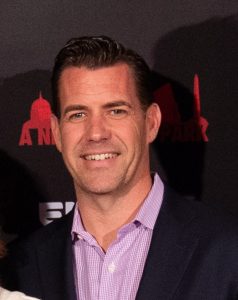 Instead, the team stunned the baseball world by adopting neither approach, instead hiring one of the game’s most prominent agents. Several very prominent Mets — including Jacob deGrom, Yoenis Cespedes, Noah Syndergaard, Jason Vargas, and Todd Frazier — were represented by Van Wagenen, making him a familiar figure to the Wilpons over the last several years. There was enough mutual respect between the two sides that Jeff Wilpon reportedly turned to Van Wagenen for advice about the GM search this summer, according to MLB.com’s Anthony DiComo, and these initial talks eventually grew into the idea of Van Wagenen becoming the general manager himself.
It isn’t a stretch to call this the most impactful front office hiring in quite some time, in terms of the ripple effect it will have on business throughout the game. The 44-year-old Van Wagenen was the co-head of CAA Sports’ baseball division, with a client list that includes names on every team’s roster. Now that he is a member of a team’s front office, the MLBPA is keeping an eye on the situation in regards to any possible conflicts of interest, and its members’ rights to confidentiality. Agents Jeff Berry and Naz Balelo are reportedly set to take over from Van Wagenen at CAA, as per DiComo, though it certainly wouldn’t be surprising to see other agencies try to woo players represented by CAA in the wake of the news. One would expect agencies to specifically target deGrom, Cespedes, and company, as those players now face the unusual situation of having their former representative now taking the other side in negotiations.
This isn’t the first time that an agent has joined a front office, as Dave Stewart and Joe Garagiola Jr. are two recent examples of former player agents who became general managers (both with the Diamondbacks). Those two had front office experience outside of their agency backgrounds, however, whereas Van Wagenen has never worked for any team in any sort of scouting or player developmental capacity. Van Wagenen also doesn’t have the traditional analytical background of most recent GM hires, though it’s safe to assume that CAA used analytical evaluations to gauge (and, of course, promote) its clients’ abilities.
With this lack of a track record, it will be fascinating to see how Van Wagenen chooses to operate a baseball operations department, particularly one with as many question marks about its present and future direction. Injuries, a lack of offense and (it bears mentioning) a constant stream of behind-the-scenes controversy have plagued the Mets over the last two seasons. While the Mets have some prime talent on the roster, including arguably baseball’s best pitcher in deGrom plus other impressive controllable players like Syndergaard, Michael Conforto, and Brandon Nimmo, there are also a lot of problem areas in the starting lineup, and a lack of blue chip talent coming up in the minor league pipeline.
Between these factors and the Wilpons’ traditional reluctance to spend in the manner befitting a big-market team, Van Wagenen faces a tall order in getting the Mets back into contention in 2019, even as the Wilpons expect the team to be competitive. Van Wagenen will have a familiar braintrust surrounding him in New York, as Mets assistant GM John Ricco and special assistants Omar Minaya and J.P. Ricciardi are “expected” to remain in their posts, per Mike Puma of the New York Post.
Rays senior VP of baseball operations Chaim Bloom was the other finalist for the Mets job, with former Rangers and Brewers GM Doug Melvin the third-place candidate. Former Dodgers and Yankees assistant GM Kim Ng and Casey Close (another prominent player agent) rounded out the “final five” candidates, with other names such as former Pirates GM Dave Littlefield, Cardinals director of player development Gary LaRocque, Nationals special assistant De Jon Watson also interviewing for the position. Several other notable baseball figures also declined interviews with the Mets, including Indians GM Mike Chernoff, Twins GM Thad Levine, and former Red Sox GM Ben Cherington.
Joel Sherman of the New York Post reported on Saturday that Van Wagenen and the Mets had agreed to terms, though the deal wasn’t fully finalized until today. SNY’s Andy Martino and The Athletic’s Ken Rosenthal both reported that Van Wagenen was looking like the Mets’ preferred choice over Bloom, once Fancred’s Jon Heyman tweeted that Melvin was no longer in contention for the job. Yahoo Sports’ Jeff Passan reported that Van Wagenen was “a significant favorite” for the position, with MLB.com’s Mark Feinsand noting that Van Wagenen was taking the weekend to handle his departure from CAA, including informing clients of the news.
Diamondbacks Exercise Club Option Over Paul Goldschmidt
In news that will come as no surprise, the Diamondbacks have exercised their club option over first baseman Paul Goldschmidt, per Steve Gilbert of MLB.com (via Twitter). He’ll earn $14.5MM in lieu of a $2MM buyout.
Though the Snakes will be more than pleased to control Goldschmidt at this price tag, it’s a bit of a bittersweet moment. 2019 is the final season contemplated under the extension Goldschmidt signed back in March of 2013.
With the deal winding down, many have wondered whether Goldschmidt could be dealt this winter. The D-Backs are facing several roster needs and arguably lack the resources to address them, at least within their typical payroll levels. Cashing in on the final year of the contract might offer the organization an opportunity to recoup significant young talent (or, perhaps, to shed other unwanted salary commitments).
Expectations remain lofty for Goldschmidt as he begins to prepare for his age-31 season. He posted a .290/.389/.533 slash with 33 home runs in 2018. That’s good for a 144 wRC+, which matches his average output over a stellar career.
Among the game’s steadiest bats, Goldschmidt ought to draw quite a bit of interest if he’s dangled. While the market has tended not to reward defensively limited sluggers, Goldschmidt looks like an exception. Not only is he regarded as a high-end defender at first, but he’s an excellent baserunner. And, most importantly, his output at the plate is matched or exceeded by only a few other players in the entirety of the sport.
Cardinals Re-Sign Adam Wainwright
OCTOBER 29: Wainwright receives a $2MM guarantee, per Jon Heyman of Fancred (via Twitter). Ken Rosenthal of The Athletic (Twitter link) has details on the extensive list of incentives. Wainwright can earn the following salary boosts:
- For games started, he’ll earn $500K upon his fifth start, $1MM upon his tenth and 15th, $1.5MM for his twentieth, and $2MM apiece for his 25th and 30th. Maxing out this run of bonuses would add $8MM of salary.
- For relief appearances, Wainwright can earn $500K apiece for every fifth appearance, beginning at #35 and ending at #60. That provides an avenue to $3MM in extra money.
- For games finished, Wainwright will receive $500K for the 25th and 30th game in which he records the final out and $600K for every fifth game finished beginning at #35 and ending at #55. If Wainwright serves as the Cards’ closer and meets all of those thresholds, he’d tack on another $4MM, meaning he could in total earn up to an additional $7MM in a relief capacity.
OCTOBER 11, 2:18pm: Wainwright’s contract includes incentives based on both starting and relieving, Derrick Goold of the St. Louis Post-Dispatch reports (on Twitter). The contract’s base salary remains unknown.
12:24pm: The Cardinals announced Thursday that they’ve re-signed right-hander Adam Wainwright to a one-year contract for the 2019 season. Wainwright, who recently turned 37, had been slated to hit free agency. He’s a client of Aegis Sports Management.
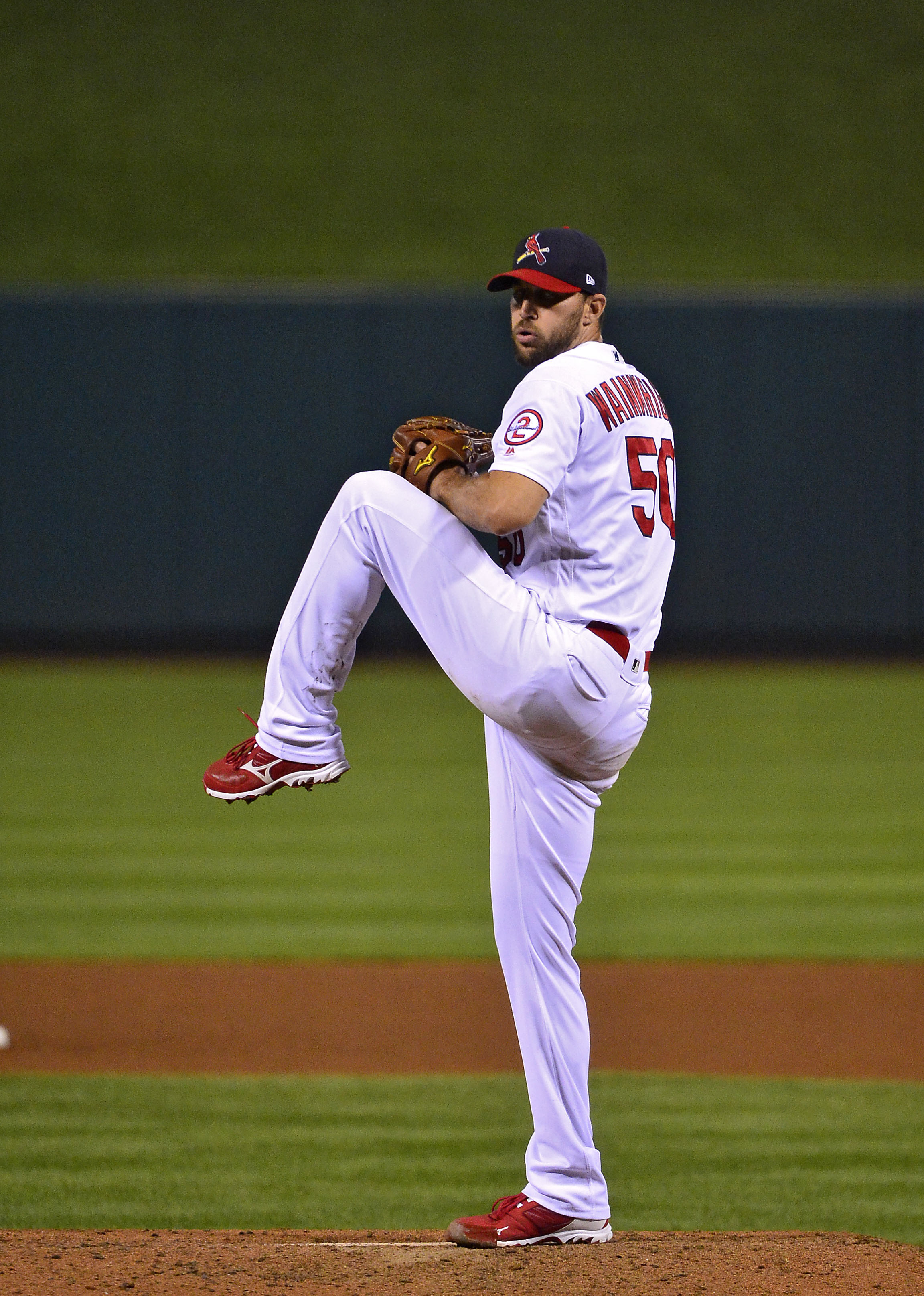
The 2019 season will mark the 15th Major League season of Wainwright’s illustrious career — each of which has come as a member of the Cardinals. A two-time NL Cy Young runner up and four-time top-three finisher in that voting, Wainwright has now tied righty Bob Forsch for the third-most seasons as a Cardinals pitcher in team history.
This past season was an injury-plagued campaign for Wainwright, who pitched just 15 1/3 innings in April before hitting the disabled list due to elbow inflammation. He returned after a few weeks only to land on the disabled list after just 2 1/3 innings. That second DL stint, which was also initially due to elbow inflammation lasted nearly four months.
Once healthy enough to return to the mound, Wainwright reeled off 17 shutout innings on a minor league rehab assignment and returned to the Cards to make four starts in September. He was tagged for four runs in three of those four starts and turned in an unsightly 4.84 ERA in 22 1/3 innings, but he also notched an impressive 25-to-4 K/BB ratio in that time and saw his fastball jump back up to the same levels at which it sat in 2016-17.
The question for St. Louis now is one of just how Wainwright will factor into the 2019 staff. The Cards weren’t lacking rotation options even without Wainwright, with Carlos Martinez, Jack Flaherty, Miles Mikolas, Michael Wacha, Alex Reyes (if healthy), Luke Weaver, Dakota Hudson, John Gant, Daniel Poncedeleon and Austin Gomber all on the roster. It’s not clear that he’ll be promised a rotation spot at this point, but perhaps a return to the bullpen shouldn’t be entirely discounted. The Cardinals’ relief corps was somewhat jumbled late in the season after a massive overhaul prior to the non-waiver trade deadline in which Greg Holland, Sam Tuivailala and Tyler Lyons were all sent packing.
Bud Norris, who spent much of the season closing in St. Louis before ceding that role to Martinez in the latter’s return from the disabled list, is a free agent and isn’t any sort of lock to return. August addition Tyson Ross is bound for the open market, too. Meanwhile, 2017-18 offseason pickups Luke Gregerson (two-year, $11MM free-agent deal) and Dominic Leone (acquired from the Blue Jays for Randal Grichuk) combined for just 36 2/3 innings due to injury.
The 2018 season wasn’t all bad for the Cards in terms of bullpen developments, though. Flamethrowing young righty Jordan Hicks arrived on the scene and established himself as a potential long-term piece, while righty John Brebbia somewhat quietly turned in an excellent sophomore season. Wainwright could certainly be penciled in to join that pair, along with some of the rotation candidates who don’t ultimately secure starting jobs, though perhaps the team will simply wait until Spring Training to see how the staff comes together. The Cards, after all, figure to have a busy offseason ahead of them as they look to rework a flawed roster, and it’s possible that some of those younger pitching options could land elsewhere via the trade market.
Regardless of his role, Wainwright will return to serve as a leader on a staff of considerably younger arms, and his new contract will give him one more year with Yadier Molina — one of the most iconic pairings in franchise history.
Nationals Exercise Sean Doolittle’s 2019 Option
4:08pm: The Nationals have formally announced the move.
3:15pm: The Nationals have exercised their $6MM club option on left-hander Sean Doolittle, tweets Chelsea Janes of the Washington Post. No official announcement has been made just yet, though as Janes notes, it was an obvious call for the Nationals that was never in any doubt.
The 32-year-old Doolittle enjoyed one what was very arguably the finest season of his career in 2018, tossing 45 innings with a minuscule 1.60 ERA as the Nationals’ primary closer. He saved 25 games and notched an absurd 60-to-6 K/BB ratio in that time, with the only real blemish on his season being a left foot injury that sidelined him for nearly two months. Beyond that, Doolittle was one of the best relievers in all of Major League Baseball this past season, making it an absolute no-brainer for the Nats to pick up his option.
As a bonus for the Nationals, they also hold a 2020 club option over the lefty — one that comes with a similarly affordable $6.5MM base salary. Doolittle has had some durability issues in the past, but he’s consistently dominant when healthy and should continue to serve as a key piece in the Nats’ bullpen for the next two years.
White Sox Exercise Option On Nate Jones, Decline Option On James Shields
The White Sox announced Monday that they’ve exercised their $4.65MM club option on right-hander Nate Jones and declined a $16MM option on righty James Shields in favor of a $2MM buyout. The Sox also reinstated Michael Kopech from the 60-day disabled list, filling a 40-man spot for the bulk of the offseason. Kopech underwent Tommy John surgery late in the season. Chicago’s 40-man roster now contains 34 players.
It’s the first of three club options that the White Sox hold over Jones, who turns 33 in January. His contract also comes with a $5.15MM option for the 2020 season and a $6MM option for the 2021 campaign. Both come with $1.25MM buyout figures attached to them.
Jones missed nearly three months of the 2018 season with a pronator strain in his right arm but was, as usual, a high-quality bullpen option for the Sox when healthy. In 30 innings of relief this season, he pitched to an even 3.00 ERA with a 32-to-15 K/BB ratio, four homers allowed and a 39.5 percent ground-ball rate. Control was a bit more of an issue for Jones than in a typical season, but he’s averaged a manageable 3.3 walks per nine innings in his career, making the recent blip a bit less concerning. Jones also maintained his premium velocity, averaging 97.2 mph on his fastball, which no doubt contributed to his strong 13.6 percent swinging-strike rate.
The veteran Shields has become synonymous with the ill-fated deal that brought him to Chicago in the first place (wherein then-unheralded but now-elite prospect Fernando Tatis Jr. went to the Padres), but the 36-year-old had somewhat of a rebound season in 2018. While his 4.53 ERA won’t do much to impress anyone, Shields started 33 games and pitched in 34 overall, racking up 204 2/3 innings while averaging 6.8 K/9 against 3.4 BB/9. He’ll turn 37 in December and may be a far cry from his peak seasons as “Big Game James,” but he displayed in 2018 that he’s still plenty durable and can provide some serviceable innings at the back of a thin rotation — likely at a highly affordable rate on a one-year deal.
Elvis Andrus Will Not Exercise Opt-Out Clause
Elvis Andrus is forgoing the first of two opt-out clauses in his eight-year contract with the Rangers, tweets Fancred’s Jon Heyman. Andrus has four years and $58MM remaining on his contract and will earn $15MM in 2019 before again being having the opportunity to opt out of his contract and explore free agency.
Andrus had already told reporters that he planned to be back with Texas in 2019, making the decision largely a formality for the Scott Boras client. This was the logical route for the shortstop, who sustained a broken elbow upon being hit by a pitch early in the season and never really rounded into form after a roughly two-month absence. Andrus, who turned 30 in August, was batting .327/.426/.500 through his first 61 plate appearances of the season when he was hit on the elbow. The injury ultimately him to 97 games, and he was clearly still feeling the effects of the injury upon return, as he batted just .256/.308/.367 when all was said and done.
That’s an enormous departure from the combined .299/.348/.457 batting line that Andrus posted in 2016-17. Paired with well above-average baserunning and a reputation as a quality defender at shortstop, that 2016-17 level of offensive output would’ve created a legitimate case opting out had Andrus managed to sustain it. Instead, he’ll hope to return to form in 2019, at which point he’ll have to consider whether he can top three years and $43MM in free agency as he heads into his age-31 season.