
MLBTR Podcast: Jose Quintana, Luis Gil’s Injury, The Nats’ TV Situation, Salary Floor Talk, And More!
The latest episode of the MLB Trade Rumors Podcast is now live on Spotify, Apple Podcasts, and wherever you get your podcasts! Make sure you subscribe as well! You can also use the player at this link to listen, if you don’t use Spotify or Apple for podcasts.
This week, host Darragh McDonald is joined by Anthony Franco of MLB Trade Rumors to discuss…
- The Brewers having an agreement with Jose Quintana (1:20)
- Luis Gil of the Yankees to be shut down for at least six weeks (5:15)
Plus, we answer your questions, including…
- With MASN now solved and stadium naming rights and jersey patches on the way do you see the Nationals making the leap into big spenders sooner than later? (12:30)
- Do you see the MLBPA pushing for a salary floor? (22:05)
- Will the White Sox trade Luis Robert Jr. before the start of the regular season? (25:20)
- While neither is particularly likely, is it more probable that the Pirates extend Paul Skenes or the Reds extend Elly De La Cruz? (27:40)
- What is your opinion of the White Sox upper management and will they lose 100 games this year? (30:45)
- The Mets are loaded with infield prospects. Do they trade Jeff McNeil to make room? (37:30)
- With the Tigers’ outfield injuries, do they go get a right-handed bat? And who is available? (42:00)
- With the Mariners bringing back most of their position players, what are the chances they get better production from them in 2025? (44:30)
- Does David Bote have a legitimate shot to make the Dodgers’ roster? (50:35)
- Why doesn’t MLB expand to 36 teams instead of just 32? (51:35)
Check out our past episodes!
- Atlanta’s Pitching Depth, Iglesias, Jobe, Castillo, And More! – listen here
- Alex Bregman, The Padres Add Players, And No Extension For Vlad Jr. – listen here
- Pete Alonso’s Deal, And Potential Landing Spots For Bregman and Arenado – listen here
The podcast intro and outro song “So Long” is provided courtesy of the band Showoff. Check out their Facebook page here!
Brewers Sign Jose Quintana
March 5: The Brewers made it official today, announcing that they have signed Quintana to a one-year deal with a mutual option for 2026. DL Hall was placed on the 60-day IL to open a roster spot. Per Jon Heyman of The New York Post, it’s a $2MM salary in 2025 with a deferred $2MM buyout on a $15MM mutual option for 2026 and a $250K roster bonus. The incentives are $125K each for 16, 18, 20, 22 and 24 games started, as well as $100K for 110, 120, 130 and 140 innings pitched.
March 3: The Brewers are making a veteran addition to their rotation. Milwaukee is reportedly in agreement with Jose Quintana on a one-year, $4.25MM deal. That takes the form of a $250K roster bonus and a $4MM base salary for the ACES client. The signing, which has not been made official by the team, also includes incentives. The Brewers have a full 40-man roster and will need to make a corresponding move once the deal is finalized.
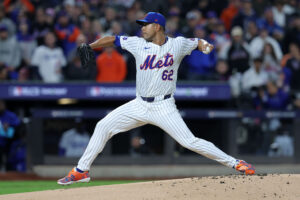
Quintana, 36, is one of the top unsigned free agents as the regular season is just over three weeks away at this point. He just finished a two-year, $26MM deal with the Mets that saw him post solid surface-level results, though with the numbers under the hood a bit less impressive.
In 2023, a left rib fracture put him on the injured list at the start of the season and kept him there until the middle of July. He returned in time to make 13 starts down the stretch, allowing 3.57 earned runs per nine innings, though his strikeout rate fell to 18.8%. Last year, he stayed healthy enough to take the ball 31 times for the Mets and logged 170 1/3 innings with a 3.75 ERA. But his strikeout was again a tepid 18.8% and he benefited from .263 batting average on balls in play. His 4.56 FIP and 4.57 SIERA on the year both pointed to him deserving worse results than he actually posted.
Prior to signing with the Mets, Quintana had engineered a strong bounceback season. After struggling with injuries and underperformance in 2020 and 2021, the lefty posted a 2.93 ERA over 32 starts in 2022. In that bounceback year, he had a 20.2% strikeout rate, 6.9% walk rate and 46.4% ground ball rate. Since then, he has a 3.70 ERA over 246 innings but with his 18.8% strikeout rate, 8.4% walk rate and 45.6% ground ball rate each moving slightly in the wrong direction.
Quintana’s isn’t the most exciting profile, but even getting some boring back-of-the-rotation innings could be good for the Brewers, especially for the price. At the start of the winter, MLBTR predicted the lefty to secure a two-year, $20MM contract, alongside other mid-rotation or back-end guys like Frankie Montas, Andrew Heaney or Matthew Boyd.
The pitching market was very aggressive early on, with Montas able to get a two-year, $34MM guarantee plus an opt-out from the Mets. Boyd got two years and $29MM from the Cubs. But the heat died down more recently, which seems to have squeezed out certain guys. Heaney had to settle for a $5.25MM guarantee from the Pirates on a one-year deal. Quintana reportedly turned down a better offer than that Heaney deal from the Bucs but is now joining Milwaukee on a fairly similar arrangement.
The Brewers have clearly been operating with no financial wiggle room this winter. Prior to signing Quintana, their biggest free agent signing was giving a $1MM guarantee to Tyler Alexander. They did add Nestor Cortes in a trade with the Yankees, but that deal was fairly revenue-neutral, with Devin Williams going the other way.
Their rotation mix has a few question marks in it. Robert Gasser required Tommy John surgery in June of last year and will be out of action until the second half of 2025. Brandon Woodruff is working his way back from shoulder surgery which wiped out his 2024 campaign and it’s unclear when he will be a viable option. DL Hall suffered a lat strain a few weeks ago and will start the season on the injured list.
As of now, Freddy Peralta and Cortes have spots alongside Aaron Civale and Tobias Myers. Civale tossed 161 innings last year but that was a personal best for him, having never hit 125 frames in a big league season before. Myers posted an ERA of 3.00 in his first big league action but was a nomadic former prospect prior to that, so it remains to be seen if he can maintain his results or if his 2024 was a fluke.
Other options in the mix include Alexander and Aaron Ashby. Alexander has a 4.55 ERA in his career but mostly in a swing role, oscillating between starting and relieving. This Quintana deal should push him more firmly into that position again. Ashby, who left today’s Spring Training appearance with an oblique injury, has some starting experience but struggled through much of 2024 before finishing strong in a relief role. He is still a starting candidate but he could eventually end up back in the bullpen and also has an option year remaining, which could push him to the Triple-A rotation.
Even if Quintana’s results in 2024 were a bit of a mirage and he ends up with an ERA in the mid-4.00s this year, a steady veteran presence at this price is a logical add for a club with so many rotation question marks and little spending capacity.
For clubs still looking to add starting pitching at this late stage of the offseason, there are still a few unsigned options, including Kyle Gibson, Lance Lynn and Spencer Turnbull. The trade market could feature Jordan Montgomery and Taijuan Walker, though their salaries are much larger than what free agents have been settling for in recent weeks.
Robert Murray of FanSided first reported that the Brewers were signing Quintana to a one-year deal. Francys Romero reported that the salary would land in the $4-5MM range and the presence of incentives. Mark Feinsand of MLB.com had the specific $4.25MM guarantee and salary structure.
Brewers Place DL Hall On 60-Day Injured List
The Brewers announced that left-hander DL Hall has been placed on the 60-day injured list. Adam McCalvy of MLB.com was among those to relay the news. That means Hall has been officially ruled out until late May at the earliest. That’s the corresponding move to open a roster spot for lefty Jose Quintana, who has now been officially signed.
Back on February 12th, it was reported that Hall had a lat strain and was going to be shut down for at least the next two weeks. It has now been three weeks since that reporting with little information coming out about his progress. About a week ago, McCalvy relayed that Hall had not even been cleared to start playing catch. Manager Pat Murphy tells McCalvy today that Hall is expected to resume playing catch at the end of this week.
Given the sluggish progress and this transaction, it seems the Brewers don’t expect Hall to return anytime soon. Players can be placed on the 60-day IL once pitchers and catchers report to camp but the clock doesn’t start ticking until Opening Day, so Hall won’t be eligible for reinstatement until late May even in a best-case scenario.
It’s an unfortunate development for Hall, who hasn’t been able to build a decent workload. He still doesn’t have a 100-inning season on his track record as a professional. With the Orioles in 2022 and 2023, they shuttled him between the majors and minors as well as the rotation and the bullpen. He was traded to the Brewers as part of the Corbin Burnes deal ahead of the 2024 season and Milwaukee mostly deployed him as a starter last year, but a knee sprain capped him at 84 frames, majors and minors combined.
The Brewers still have hope of Hall becoming a viable starter one day, given that he’s a former top 100 prospect and was a key part of the Burnes deal. He could still have a nice season in 2025 but starting it with a lengthy IL stint isn’t ideal.
For the Brewers, they will have some rotation question marks to start the season, though the Quintana signing helps to solidify the group. Alongside Quintana will be Freddy Peralta, Tobias Myers, Aaron Civale and Nestor Cortes. They will add Brandon Woodruff in there at some point, though his timeline is unclear after he spent 2024 recovering from shoulder surgery. Aaron Ashby has an oblique strain and is still getting tested, per Curt Hogg of the Milwaukee Journal Sentinel, but seems likely to start the season on the IL. Robert Gasser is already on the 60-day IL as he recovers from last year’s Tommy John surgery.
Behind the front five, the Brewers currently have Logan Henderson, Carlos Rodríguez, Chad Patrick and Elvin Rodríguez as healthy options on the 40-man roster. However, Henderson and Patrick have no major league experience while the Rodríguezes have just 45 1/3 big league innings combined. Jacob Misiorowski is one of the top prospects in baseball but isn’t on the 40-man and walked 14.4% of batters faced last year.
Mets Not Planning To Add A Starter
The Mets’ rotation suffered a blow barely a week into camp when free agent acquisition Frankie Montas felt discomfort in his first bullpen session of camp. After a healthy offseason, Montas was diagnosed with a lat strain that has prompted the Mets to shut him down from throwing entirely. The team announced a no-throw period of six to eight weeks. Montas is taking a more optimistic tack, suggesting it’ll be four to six weeks. Regardless, he won’t throw at all for the majority of spring training, at which point he’ll need to build up from scratch. An absence extending into at least mid-May seems likely.
Even with that loss and a handful of notable starters still on the market, the Mets aren’t planning to add another arm to their rotation, Will Sammon of The Athletic reports. While further injuries could of course change that thinking, for now the Mets plan to rely on their in-house depth while weathering their first injury of note. Additionally, the previously planned six-man rotation will now likely drop to five, manager Carlos Mendoza tells Joel Sherman of the New York Post.
Locks for the Opening Day rotation, health permitting, include Kodai Senga, Sean Manaea, David Peterson and reliever-turned-starter Clay Holmes. Righties Tylor Megill, Griffin Canning and Paul Blackburn will vie for the fifth spot. Megill has a minor league option remaining. Canning and Blackburn do not, and both are earning more than $4MM this season, so it’s unlikely they’d be cut loose. (That’s especially true of Canning, who signed as a free agent over the winter.) Top prospect Brandon Sproat will be in the running at some point, but he still has only 116 1/3 professional innings under his belt, with only 28 2/3 of those coming in Triple-A.
Sammon’s report dovetails with recent suggestions that the Mets aren’t likely to pursue a reunion with Jose Quintana, despite the veteran left-hander’s openness to returning to Queens. Quintana declined an offer worth more than $5.25MM from the Pirates before Pittsburgh agreed to terms with fellow left-handed veteran Andrew Heaney. While it’s not clear that decision was made in hopes of the Mets coming through with an offer of their own, it does appear to shut the door on opportunities for Quintana with either club. Beyond Quintana, veterans like Kyle Gibson, Lance Lynn and Spencer Turnbull are all still seeking homes.
For the Mets, any additions to the major league roster will be doubly cost prohibitive. They’re again a CBT payor in the top penalty tier, meaning any subsequent additions come with a 110% luxury tax. Signing Quintana in the $5-6MM range, for instance, would cost the team $10.5MM to $12.6MM. The Mets are already running a $331MM cash payroll, per RosterResource, which comes with nearly $67MM worth of luxury taxes.
In essence, the Mets are already paying close to $400MM total for the current roster. On the one hand, fans could argue “what’s another $10-12MM at that point?” On the other, even the sport’s wealthiest owner, Steve Cohen, surely has his limits. Plus, if things go according to plan in 2025, the Mets will be deadline buyers, presumably adding even further to that massive financial outlay. Time will tell whether the rest of the rotation group holds up through the remainder of camp — injuries abound in spring training every year — but for now, Mets fans shouldn’t hold out hope for a Quintana reunion or any other guaranteed deal to deepen the starting staff.
Quintana Declined Offer From Pirates Before Heaney Deal
The Pirates added to the back of their rotation this evening with the $5.25MM agreement with Andrew Heaney. Robert Murray of FanSided writes that the Bucs pivoted to Heaney after first making an unsuccessful push to bring Jose Quintana back.
According to Murray, the Pirates offered Quintana a stronger guarantee than the sum which they eventually agreed to pay Heaney. Quintana declined the offer. It’s not clear what kind of contract the 36-year-old southpaw is seeking. It’s unlikely that Pittsburgh would circle back after landing Heaney. Quintana and Kyle Gibson are the top two unsigned starting pitchers.
Quintana spent the first half of the 2022 season in Pittsburgh. He’d signed a $2MM deal as a buy-low free agent with a then-rebuilding Bucs club. The Pirates hit on the common hope for rebuilding teams of turning a low-cost free agent pickup into a midseason trade chip. Quintana turned in a 3.50 ERA across 20 starts in black and gold. The Bucs flipped him to the Cardinals alongside reliever Chris Stratton for righty Johan Oviedo and minor league first baseman Malcom Nuñez. Oviedo lost last season to Tommy John surgery but could find himself at the back of Derek Shelton’s starting staff this year.
A strong finish in St. Louis positioned Quintana much more strongly for his return to the market. He landed a two-year, $26MM guarantee from the Mets over the 2022-23 offseason. It turned out to be a good investment on New York’s part. While he missed a good chunk of the ’23 season, Quintana was a key rotation piece last year. He fired 170 1/3 frames of 3.75 ERA ball. He chipped in another 14 1/3 innings of 3.14 ERA ball in the postseason — including six scoreless in a winner-take-all Game 3 against Milwaukee in the Wild Card series.
Effective as Quintana was last year, the Mets haven’t seemed eager to bring him back. The New York Post’s Mike Puma reported shortly after the Frankie Montas injury that the Mets hadn’t reciprocated the veteran lefty’s eagerness for a reunion. Francys Romero suggested yesterday that the Mets, Padres and Rangers could show interest. The Padres have already added Nick Pivetta and Kyle Hart to the back of their rotation. The Rangers seem unlikely to seriously pursue Quintana unless they first offload salary in a trade, as they’re projected within $6MM of the luxury tax threshold. The Post’s Jon Heyman wrote this evening that the Mets have “limited” interest in Quintana because of concerns about his underlying numbers.
That’s presumably mostly about his lack of swing-and-miss. Quintana posted an 18.8% strikeout rate in consecutive seasons. He generated swinging strikes on only 8.5% of his offerings last year. It’s the third consecutive year in which Quintana succeeded despite middling whiff rates. He’s a quality strike-thrower who got grounders at a solid 47.4% clip and has rattled off a trio of consecutive sub-4.00 ERA showings.
Steve Cohen Discusses Mets’ Long-Term Spending Plans
Mets owner Steve Cohen spoke with reporters on Tuesday morning, discussing the organization’s spending outlook after another huge offseason. Cohen acknowledged that a winter involving a record-setting Juan Soto contract and retaining Sean Manaea and Pete Alonso pushed spending beyond his initial expectations.
“It always seems like ballplayers are more expensive than you think,” the owner told reporters (including Newsday’s Tim Healey and Jorge Castillo of ESPN). “Listen, I have the ability to spend if I have to. I want to win. And I want to put the best team I can on the field. But free agency is expensive. … Even this year, I had a thought of where I wanted to be, and I’ve already blown through it. And I really wanted to be there. And just circumstances created, ‘all right, I have to adapt my thinking.'”
Landing Soto required an eye-popping $51MM average annual value that handily shattered previous precedent. They successfully waited out Alonso’s market to avoid a long-term commitment, getting him on a two-year deal with an opt-out after the first season. That comes with a lofty $27MM AAV and a $30MM figure for the upcoming season, so it’s still a huge investment in 2025. Manaea landed three years and $75MM (albeit with deferrals), while Frankie Montas, Clay Holmes and A.J. Minter all secured multi-year contracts with eight-figure salaries.
RosterResource projects New York’s raw payroll around $331MM. Their competitive balance tax estimate is slightly lower at $325MM. Those seem to be within the ballpark, as Cohen told reporters that he expects to finish the season with a payroll in the $340MM range after accounting for in-season pickups (i.e. waiver claims and trade deadline acquisitions).
That could theoretically also include a Spring Training free agent move. There’s been some thought that the Mets could try to add to the rotation after the recent revelation that Montas will be out for an extended stretch because of a lat injury. Jose Quintana is arguably the best unsigned starting pitcher, but it seems the Mets aren’t circling back to the veteran southpaw. Mike Puma of The New York Post reported this morning that while Quintana has expressed interest in returning to Queens, the Mets haven’t been involved in his market.
The Mets will enter the year with the second-highest payroll in MLB behind the Dodgers. It’ll be the fourth straight season in which they not only pay the luxury tax but find themselves in the highest penalization tier. That’s $60MM above the base threshold. It was implemented in the 2022 collective bargaining agreement largely in response to other owners’ concerns that Cohen would blow the rest of the league away in spending. Teams that land in the top tax bracket and have paid the CBT in three or more consecutive seasons are charged a 110% tax on spending beyond that number, which lands at $301MM this year.
While the Mets are going to be firmly in that tier in ’25, Cohen said he’s hopeful of ducking below that line in future seasons. “I’d like to get below the Cohen Tax,” he said, alluding to the informal name for the highest tax bracket. “We sure it’s about me? There’s a lot of Cohens out there.” To that end, he somewhat downplayed the possibility of signing another extended megadeal next offseason. “You really can’t have too many long-term contracts, because then you lose your roster flexibility, so you need to be really careful,” he said. “But I’ll let my baseball people make that decision.”
This isn’t the first time that Cohen has spoken broadly about wanting to cut back spending over the long term. That hasn’t really happened. They ended last year with a tax number around $348MM, so this season is likely to represent a slight spending cut. RosterResource estimates their CBT number for 2026 around $206MM. Starling Marte’s four-year deal wraps up after the season, as do the one-year signings of Jesse Winker, Griffin Canning and Ryne Stanek. Alonso, Montas, Minter and Edwin Díaz all have opt-out chances.
Of that group, Alonso is most likely to retest the market. The star slugger didn’t find the long-term interest he’d expected, leading to the pillow deal. Alonso acknowledged that it represented “a bridge thing just to get to the next contract” (link via Tim Healey of Newsday). He conceded that his past two seasons have been below his peak standards, which contributed to a shorter deal. Alonso declined a three-year proposal from the Mets in order to take a more frontloaded two-year guarantee. Jon Heyman of the New York Post wrote over the weekend that the Mets and Blue Jays had each made proposals earlier in the offseason in the $85MM range which included some amount of deferred money.
Alonso also said that the qualifying offer had a greater impact on his market than he’d anticipated. Any team other than the Mets would have forfeited a draft choice and/or international bonus pool space to sign him. The Mets merely relinquished the right to a fourth-round compensation pick to retain their own free agent. Players can only receive the QO once in their careers, so Alonso is positioned to hit the market unencumbered next offseason. He indicated he has no hard feelings with the Mets about how this winter played out and said it’d be “fantastic” if the sides eventually work out a longer-term contract.
Poll: Who’s The Best Starting Pitcher Remaining?
The top remaining free agent starter came off the board last night, when right-hander Nick Pivetta agreed with the Padres on a backloaded four-year deal that includes opt-outs after the second and third seasons. It’s a major shift from last winter, when top-of-the-market lefties Blake Snell and Jordan Montgomery both lingered on the market deep into March and ultimately missed the start of the season while making up for lost Spring Training reps in the minor leagues. This winter, almost all of the top free agents have already landed somewhere as teams begin their first official workouts, with just five of MLBTR’s Top 50 free agents of the offseason (and zero of the top 20) still unsigned.
Four of the five remaining free agents in our Top 50 are starting pitchers. None of them compare to Snell and Montgomery’s stature as free agents last winter, or even Pivetta’s stature as the last mid-market arm available in this year’s market. Even so, each is a clearly useful arm who would help the majority of pitching staffs around baseball this year if signed. Which one should pitching-hungry teams be most interested in, however? A look at all four, in the order they appear on the Top 50:
Heaney is entering his age-34 campaign in 2025 in a different position than his previous trips through free agency. He signed with the Dodgers prior to the 2022 season as a bounce-back candidate coming off a disastrous 2021 campaign, and after delivering excellent results for L.A. in 72 2/3 innings he signed a fresh deal with the Rangers as a risky but high-upside mid-rotation addition. His performance over two years in Texas didn’t play to that high-risk, high-reward narrative that surrounded his free agency, however, as he performed as a fairly run-of-the-mill back of the rotation arm.
In 307 1/3 innings of work for Texas over the past two years, Heaney pitched to a 4.22 ERA (98 ERA+) with a 4.34 FIP. His 23.2% strikeout rate during that time is a far cry from not only the incredible 35.5% rate he flashed with the Dodgers, but also 26% clip he struck out opponents at from 2016 to 2021. Heaney has emerged from years of injury questions to serve as a fairly steady source of innings, with his 160 frames in 2024 being the most he’s posted in a season since 2018. There’s some room for upside in the veteran’s profile as well, with gains in walk rate (5.9%) and barrel rate (8.3%) last year suggesting he may be able to improve upon last year’s results.
Entering his age-36 season, Quintana has the most impressive resume of the pitchers discussed here. He’s a former All-Star who delivered front-of-the-rotation production at his peak with the White Sox. While those days are long behind him, he’s remained effective into his mid-30s. The southpaw signed with the Mets on the heels of a terrific 2022 with the Pirates and Cardinals where he posted a 2.93 ERA with a 2.99 FIP in 32 starts. The results in New York weren’t quite that good, but he was still capable of delivering solid mid- to back-of-the-rotation production in Queens with a 3.70 ERA (109 ERA+) and a 4.24 FIP in 246 innings of work.
Those results would be valuable in the No. 4 or 5 spot of most rotations, but a look under the hood reveals a somewhat more worrying profile. Quintana has struck out just 18.8% of opponents in each of the past two campaigns. His typically sharp command waned a bit in 2024, with an 8.8% walk rate that clocked in slightly north of average. That left him with the third-worst K-BB% among 58 qualified starters in the majors last year, ahead of only Tyler Anderson and Griffin Canning. On the other hand, his 47.4% groundball rate was tenth-best, and only six qualified starters allowed line drives at a lower clip. If he can continue those levels of contact management, it’s easy to imagine him having success in front of a strong defense.
Gibson is the prototypical innings eater, a back-of-the-rotation arm who has posted an ERA below 4.00 just three times in his entire career who makes up for that with volume. Besides his half-season as a rookie back in 2013 and the pandemic-shortened 2020 campaign, Gibson has made at least 25 starts with at least 147 1/3 innings of work in every single season of his career. He’s averaged just over 30 starts and approximately 175 innings per season in those years. It’s a level of volume that’s hard to find in the the current era of pitching, and any team with instability in their rotation would stand to benefit from plugging Gibson into the mix.
However, Gibson’s status as one of the league’s more reliable arms comes with very limited upside. In 12 years as a big league pitcher, the right-hander has eclipsed 3.0 fWAR just once. He’s also begun to show some minor signs of decline that can’t be entirely ignored headed into his age-37 campaign; his 9.4% walk rate was elevated relative to his career norms, but more concerning was the 9.2% barrel rate he allowed that was tenth-worst among all qualified starters last year. Last year’s 13 quality starts were also the fewest he’s posted in a full season since 2019.
Turnbull stands out among this crowd of veterans as the youngest arm, entering his age-32 campaign this year. The righty also has by far the shortest track record of the four arms discussed here, with just 356 2/3 total innings in the majors under his belt across parts of six big league seasons. Once a promising young rotation prospect with the Tigers, Turnbull’s career was turned upside down by injuries. He hasn’t thrown more than 56 2/3 innings in a single season since 2019.
For all his lack of volume, Turnbull was excellent when healthy for the Phillies last year. He struck out 26.1% of opponents en route to a 2.65 ERA in a swing role, and while his 3.85 FIP and 3.67 SIERA are both less impressive they still paint him as a well above-average pitcher when healthy. Of all the pitchers listed here, Turnbull has the largest injury track record, but he’s also perhaps the best on a rate basis and the likeliest to deliver results that could put him in line for meaningful playoff innings.
__________________________________________________________
While the four pitchers discussed were the ones who made the cut for MLBTR’s Top 50 back in November, other interesting starters also remain available. Lance Lynn has flashed front-of-the-rotation production at points in his career and had a solid 3.84 ERA in 23 starts last year, but has also struggled badly at times and will pitch his age-38 season this year. Jakob Junis has pitched more out of the bullpen than the rotation in recent years but sports a strong 3.35 ERA in the past two seasons and started 17 games for the Giants in 2022. John Means is clearly quite talented but has only pitched 52 innings across the past three seasons due to multiple arm surgeries. He’ll be sidelined into the summer after UCL surgery last June.
Which of free agency’s remaining starters do MLBTR readers think is the best bet for success in 2025? Have your say in the poll below:
Who's the best starting pitcher still on the market?
-
Jose Quintana 38% (1,481)
-
Spencer Turnbull 23% (888)
-
Andrew Heaney 21% (816)
-
Kyle Gibson 15% (587)
-
Other (Specify In Comments) 4% (152)
Total votes: 3,924
Free Agent Faceoff: Jose Quintana vs Andrew Heaney
The starting pitching options available in free agency have begun to dwindle with the start of Spring Training less than a month away, but a few interesting options still remain available. Jack Flaherty and Nick Pivetta are the top names still available in free agency at this point, though they figure to come with a high annual salary in the case of Flaherty and cost their new club draft capital as a qualified free agent in the case of Pivetta. Meanwhile, future Hall of Famer Max Scherzer stands alone at the top of the market for veterans likely to accept one year deals after Walker Buehler, Charlie Morton, and Justin Verlander all found homes earlier this winter.
Overlooked in this free agent class, however, is a pair of solid mid-rotation lefties. Veterans Andrew Heaney and Jose Quintana have garnered little if any buzz in the rumor mill to this point, but at this late stage in the offseason they stand out among the remaining crop of starters as some of the more reliable options still available. Ranked #25 and #31 on MLBTR’s annual Top 50 MLB Free Agents list, Heaney and Quintana figure to be among the best arms available for clubs looking to bolster their rotation that don’t have room in the budget for a player like Flaherty or Pivetta. Even Scherzer could land a higher annual salary.
Quintana and Heaney have a number of striking similarities. From 2019 to 2021, both players posted an ERA north of 5.00 in less than 300 innings of work as they struggled to stay healthy and effective. Both players then appeared to take a major step forward in 2022, however, and since then have proven to be a reliable mid-rotation option despite occasional injury issues persisting. In Heaney’s case, his 2021 breakout came as a member of the Dodgers. While he was limited to just 72 2/3 innings of work due to injuries that year, he was dominant when healthy enough to pitch with a 3.10 ERA (130 ERA+) and an incredible 35.5% strikeout rate.
That breakout led Heaney to sign a two-year deal with the Rangers in free agency and, though he hasn’t quite reached that level of elite production since then, he’s managed to stay healthy and provide solid results to Texas. In 307 1/3 innings for the Rangers over the past two years, the lefty has pitched to a roughly league average 4.22 ERA (98 ERA+) with a 4.34 FIP. His strikeout rate has dipped to just 23.2% during his time in Dallas, but even in spite of that, he’s shown positive signs for the future. That’s particularly true of the 2024 season, when he cut his walk rate from 9.4% to a career-best 5.9% while his barrel rate dipped from 10.2% down to just 8.3%. Those improvements in batted ball results and walk rate allowed Heaney to post a 3.95 SIERA last year, good for 32nd among starters with 160 innings of work last year and sandwiched between Seth Lugo and Sean Manaea on the leaderboard.
By contrast, Quintana continued to get above average results this year with a 3.75 ERA (105 ERA+) in 31 starts for the Mets but started to show troubling signs in terms of peripherals. Quintana struck out just 18.8% of opponents for the second year in a row in 2024, but saw his walk rate climb to 8.8% while his barrel rate crept up to 6.7%. All that left Quintana with a 4.57 SIERA that ranks just 53rd among qualified starters. Father Time is also on Heaney’s side, as he’s roughly two-and-a-half years younger than Quintana, who will celebrate his 36th birthday later this month. Of course, that aforementioned barrel rate is still better than Heaney’s figure from 2024 and his career-best 47.4% groundball rate suggests he may be able to continue limiting damage and outperforming his peripherals going forward.
It’s also worth noting that Quintana has the stronger overall track record than Heaney. Although he experienced a blip in productiveness from 2019 to 2021, he had seven above-average seasons under his belt prior to that and since then has posted an excellent 3.39 ERA (118 ERA+) with a 3.74 FIP in 411 2/3 innings of work. Though he’s struck out just 19.4% of opponents in that time, that ERA is tied for 22nd among qualified starters since the start of the 2022 campaign, on par with the likes of Dylan Cease and George Kirby. While it seems unlikely that Quintana would be able to replicate that elite production going forward without improving on his strikeout and walk numbers, it’s possible his grounder-heavy profile could work quite well in front of a strong defense.
If your club was looking to add a veteran southpaw to its rotation, which would you prefer? Would you value Heaney’s relative youth and stronger peripherals in his platform campaign? Or would you overlook Quintana’s age and concerning peripherals in favor of his more consistent track record and knack for keeping the ball on the ground? Have your say in the poll below:
Which Would You Rather Have For 2025?
-
Jose Quintana 62% (2,027)
-
Andrew Heaney 38% (1,242)
Total votes: 3,269
Stearns: Mets Need To Add Multiple Starting Pitchers
The Mets had a good run in 2024 but came up just short of the final goal, getting eliminated by the Dodgers in the NLCS a few days ago. President of baseball operations David Stearns met with members of the media today to discuss the season that was and the offseason ahead, with SNYtv relaying the entire half-hour press conference on X.
Stearns discussed a number of topics but a major theme was the club’s high number of departing free agents. Each of Pete Alonso, Jose Quintana, Luis Severino, Harrison Bader, J.D. Martinez, Jesse Winker are Jose Iglesias headed to the open market, along with a number of relievers. Sean Manaea is also going to be added to that list eventually, once he officially declines his $13.5MM player option.
That leaves a lot of holes on the roster but also means a lot of money is coming off the books. The Mets also ate money in facilitating trades in previous years, sending out players like Max Scherzer, Justin Verlander and James McCann. Those contracts are also expiring now, freeing up even more cash. RosterResource projects the Mets for about $161MM for next year’s roster, well below this year’s $336MM. A few non-tenders and Manaea opting out will widen that gap even farther.
“We’ve got financial flexibility,” Stearns said when asked about that subject. “It means that pretty much the entirety of the player universe is potentially accessible to us. That’s an enormous opportunity. I envision us taking advantage of that opportunity and being aggressive in certain spaces.”
Since Steve Cohen has purchased the club, the Mets have been one of the top clubs in terms of spending, often at the very top of payroll lists. Stearns was only hired a year ago and an unknown factor in the Mets’ future is how he will operate with that spending capacity, after spending most of his career with a lower-spending club in Milwaukee.
His first offseason running the Mets saw the club spread the money around to various players but without any long-term commitments. He signed nine players to one-year deals with Manaea the only player to get even a second season, and even that came with an opt-out after one year. That offseason came after a disappointing 2023 campaign that turned the Mets into sellers, which included the aforementioned Scherzer and Verlander deals, but still with lots of money tied up. What remains to be seen is if Stearns will now act differently on the heels of a more successful season and with much more powder dry.
“We also have to recognize,” Stearns continued, “that we want to set up our organizational pattern so that we can invest in free agency, invest where we think we need to to complement the club on an annual basis. So, you’re right. We have a lot of money coming off the books. I would expect us to spend some of that, a good portion of that, to complement our team, to improve our team heading into next year. We’re also not going to do anything that hamstrings us in future years and prevents us from continually adding, supplementing to our core.”
Those comments could be interpreted in many ways. Even the highest payroll clubs want to spend their money as wisely as possible, which is naturally part of what he’s referencing here. While that could perhaps be a suggestion that the club will have some restraint with their new spending capacity, he also wouldn’t be doing himself any favors by coming out and baldly declaring that he was planning on spending his winter throwing money out the back of a train. Simply for leverage in contract talks, it makes sense for him to play his cards close to the vest when discussing plans like this.
Time will tell whether this offseason will see the Mets signing a bunch of superstars or making more measured additions, but Stearns didn’t shy away from the rotation question. As mentioned, the club is set to lose a bunch of players, including three starting pitchers in Manaea, Severino and Quintana. Each of those guys topped 170 innings in 2024, so the combined subtraction of that trio will be significant. Christian Scott also underwent UCL surgery in September and will likely miss all of 2025.
Next year’s rotation currently projects to include Kodai Senga, David Peterson and Tylor Megill. Senga missed most of 2024 due to various injuries while Peterson and Megill are a tier below fully established starters, as the Mets have moved each to the minors or the bullpen on occasion. Stearns was asked about Peterson, Megill and José Buttó but wouldn’t commit on whether any of those guys would be more likely to be in the rotation or bullpen in 2025. The club can retain Paul Blackburn via arbitration but he has battled multiple injuries in his career and recently underwent a spinal procedure that’s going to take months to recover from, which could lead to a non-tender.
“We faced a similar task last offseason. We’re going to have to replace innings,” Stearns said when asked about the rotation. “Certainly, part of that could potentially be from some of those guys returning or we may look elsewhere. But we’re going to have to add starting pitching. We’re going to have to add multiple starters. We understand that. We went into last offseason with the same need and I think we’ll be able to do it.”
Last winter, the rotation was without Verlander and Scherzer after those trades while Carlos Carrasco had also become a free agent. As mentioned, Stearns gave a one-year deal to Severino while Manaea got two years with an opt-out, and the club also acquired Adrian Houser from Milwaukee.
The Severino and Manaea deals both worked out well, which is why Manaea is now slated to opt-out and is also likely to receive a qualifying offer. Severino could get one as well but is perhaps more of a borderline case, as explored by MLBTR’s Anthony Franco yesterday.
The Mets could look to bring those guys back, as Stearns said, but the market will have other options. Corbin Burnes, Blake Snell, Max Fried and Jack Flaherty will be the top free agents this winter and could command nine-figure deals. Stearns never spent on pitching in that way with the Brewers but was also working with far less spending capacity. He continued to invest somewhat modestly last winter but perhaps could pivot now that the Mets are in a different position than they were a year ago.
If he and the Mets prefer to stick to a lower level of free agency, Manaea, Severino and Quintana will be there alongside guys like Yusei Kikuchi, Michael Wacha, Nick Pivetta, Nathan Eovaldi and others. Despite all the available payroll space, Stearns said he still planned to explore the trade market, which would be another path to upgrading the rotation. Garrett Crochet, Sonny Gray, Zack Littell and just some of the names that could speculatively available in that space.
Along somewhat similar lines, there is the Pete Alonso question. Stearns never spent big money on first basemen during his time in Milwaukee, with the three-year, $15MM deal for Eric Thames being his largest investment in that position. Alonso will certainly command more than that and reportedly already turned down an extension offer of $158MM from the Mets in June of 2023, before Stearns was hired.
The merits of spending that kind of money on a first baseman whose contributions are mostly in the power department can be debated, but Alonso is also a franchise icon at this point, thanks to his homegrown status as well as his crowd-pleasing performances in home run derbies and playoff games. Stearns said the club would love to have the Polar Bear back but that Alonso deserves to explore the free agent market.
“All of that is important,” Stearns said, when asked about weighing Alonso as a player but also as a staple of the franchise. “Who Pete is as a person is important. What he means to this franchise is important. Who he is as a player is also important and what he contributes on the field. There’s no magic formula to this. There’s no equation that spits out what all of that is for us. And so, there’s judgment involved. There’s evaluating the market involved. And we’ll see how this process goes throughout the offseason.”
Stearns was also asked about hiring a general manager, which he didn’t seem in a rush to do. Billy Eppler was going to work in that role under Stearns until he stepped down a year ago after it was revealed he was under investigation for the club misusing the injured list. Stearns said he is happy with the current front office makeup and doesn’t plan to do any kind of GM search, though he would consider making a hire if someone intriguing became available.
There’s still plenty to be determined in exactly how the Mets will operate this winter, but given the number of openings on the roster and the club’s spending capacity, it doesn’t seem like anything is off the table at this point.
Mets Notes: JDM, Quintana, Manaea
A season filled with OMGs and Grimace memes came to an end this weekend when the Dodgers toppled the Mets in a 10-5 win that propelled L.A. to a World Series showdown and left the Mets looking ahead to the 2025 campaign. New York’s roster is teeming with veteran free agents, and president of baseball operations David Stearns and his staff will have their work cut out for them in reshaping the roster this offseason. Several outgoing Mets free agents made clear they’d have interest in returning, including some aging vets who are getting into the latter stages of their career.
Designated hitter J.D. Martinez joked “pickleball” when asked what the future held for him (video link via SNY). The 37-year-old slugger said first and foremost, his future includes heading home to be with his new daughter, who he has barely seen since she was born in September. Beyond the family time, Martinez made clear that he hopes to continue his playing career but only if teams take the initiative. “I’m not going to come back because I’m begging to come back,” said Martinez. “I’m going to come back because it makes sense. At the end of the day, time is the most valuable thing.”
Presumably, that means there’s a price point at which Martinez won’t feel compelled to commit to further time away from his growing young family. But the slugger also recently appeared on the Baseball Isn’t Boring podcast and told host Rob Bradford that frustration over a general lack of interest last offseason led him to ponder retirement.
“I felt like it was just an awkward year,” said Martinez (video link). “Here I am, the team’s breaking in five days, and I don’t even have a team yet. Your brain goes into a weird mode, where you’re like ‘Am I playing? Am I not? Am I playing? Am I not? Is this it? Am I retired? … We weren’t asking for anything that, at the time, I feel like other players hadn’t gotten.”
Martinez went on to say that he waited all offseason for offers to materialize and “100%” considered retiring, even telling his best friend: “I think this it. I’m staying home. This is dumb. I’m begging for a job, and I had a .900 OPS last year.”
Heading into the 2024-25 offseason, Martinez won’t be coming off the same type of campaign he enjoyed with the Dodgers in 2023. During his lone year in L.A., he bashed 33 homers and hit .271/.321/.572 in 479 plate appearances. Martinez was still a clearly above-average bat this past season, but a sluggish start after signing late (March 23) and a dismal finish to the season left him with a .235/.320/.406 batting line. That was about eight percent better than average, by measure of wRC+ (108).
An optimist could toss out a slow two weeks to start the season and overlook that finish to see that from mid-May through late August, Martinez hit .251/.336/.459 with 16 homers in 387 plate appearances, but teams won’t be so charitable as to just write those struggles off and focus only on his peak in-season production. Martinez did note that he’s encouraged by his batted-ball metrics even though the ultimate production wasn’t in line with his best work, and to his credit, he maintained excellent marks in terms of exit velocity, barrel rate and hard-hit rate. He also cut back on his career-worst 2023 strikeout rate and improved his walk rate to its highest level since 2019.
Teammate Jose Quintana was more direct and more straightforward in his intentions to return next year. The 35-year-old lefty told reporters (link via ESPN’s Jesse Rogers): “I’m healthy. I feel good. I want to try one more time to win a championship. This was the closest I’ve been in my career. One day I’m going to get the opportunity.”
Quintana, 36 in January, pitched 170 1/3 innings of 3.75 ERA ball for the Mets in 2024 — the second season of a two-year, $26MM free agent deal. His 18.8% strikeout rate and 8.8% walk rate don’t necessarily support that level of success, but Quintana was a reliable source of innings and has a lengthy track record of quality rotation work in the majors. Starting pitching is always in demand, and he has a good chance at commanding another eight-figure salary on a one-year deal — if not potential to find a similar two-year deal to the one he just completed.
Age considerations aren’t as prominent for 32-year-old Sean Manaea, who’s all but a lock to decline a $13.5MM player option in search of a multi-year deal in free agency. Manaea has signed back-to-back “prove it” deals, so to speak, signing consecutive two-year deals with opt-out opportunities. He opted out of his deal with the Giants following the 2023 season, will opt out of his Mets deal next month, and is now finally in position to command the type of lengthier multi-year deal that’s eluded him to this point in free agency. The Mets will very likely make him a qualifying offer, but even with draft compensation attached to his name, Manaea could command a three-year pact this time around.
The left-hander pitched a career-high 181 2/3 innings, plus another 19 in the postseason. His regular season ended with a 3.47 ERA, 24.9% strikeout rate and 8.5% walk rate. He was hit hard in his final start — the one that ended the Mets’ season — but held opponents to five runs in 17 innings across his first three postseason starts (2.65 ERA).
Time will tell whether Manaea is back in New York, but the southpaw emphasized how much he loved his time with the organization and called the 2024 campaign the best season of his career (link via Christina De Nicola of MLB.com). “I love my time here,” said Manaea. “I love New York. I love the organization. I love all the people here. Definitely give it a couple of days, let the body rest and then we’ll go from there.”
In addition to the trio of Martinez, Manaea and Quintana, the Mets will also see Pete Alonso, Luis Severino, Harrison Bader, Brooks Raley, Adam Ottavino, Jesse Winker, Jose Iglesias, Drew Smith and Ryne Stanek all become free agents after the World Series.