Offseason In Review Rumors
Offseason In Review Series
Last month I finished up my Offseason In Review series, a labor of love that unfortunately took two months to complete. I am especially proud of the series this year because I was able to talk to executives from more than a dozen teams, which often added angles I had not considered. Next year we'll aim for an even 30 and also try to wrap it up before Opening Day. Each article discussing the 2010-11 offseason is linked below. Special thanks to Ben Nicholson-Smith for editing all of them.
AL East
AL Central
AL West
NL East
NL Central
NL West
Offseason In Review: San Francisco Giants
The World Champion Giants conclude our Offseason In Review series.
Major League Signings
- Aubrey Huff, 1B/RF: two years, $22MM. Includes $10MM club option for 2013 with a $2MM buyout.
- Miguel Tejada, SS: one year, $6.5MM.
- Pat Burrell, LF: one year, $1MM.
- Total spend: $29.5MM.
International Signings
- Simon Mercedes, Adalberto Mejia
Notable Minor League Signings
Extensions
- Freddy Sanchez, 2B: one year, $6MM.
Trades and Claims: None
Notable Losses
Summary
Brian Sabean, the longest-tenured GM in the game, bought himself some offseason leeway by winning the World Series. It's harder to question the guy who put together the team that won it all, but I'll give it a shot.
In Sabean's defense, the Dodgers seemingly offered Huff something close to the two-year, $22MM deal he ultimately signed. That doesn't make it a good signing though. This was a risky move, with concerns about Huff's defense and uncertainty trying to project his next two seasons. There's also the presence of top prospect Brandon Belt, who might be able to approximate Huff's offensive production at four percent of his salary. The Braves took a different approach, installing Freddie Freeman at first base and ignoring the free agent market.
The Dodgers did steal away Uribe, though I don't blame Sabean for not offering that magnitude of a contract. Sabean had to put someone at shortstop, though, so he signed Tejada for $6.5MM. I would have estimated a contract about half that size for Tejada. Pursuing J.J. Hardy would have been preferable, but failing that I can understand adding a stopgap - just not a $6.5MM one. Hopefully the Giants will be in the mix for Jose Reyes this summer, as he'd represent a significant upgrade.
It's hard not to like the Burrell signing, as the veteran signed for a million bucks despite being the only free agent left fielder to hit 20 home runs. This was similar to the Kerry Wood deal, where a player dictated his team by taking a pay cut. The Sanchez extension, on the other hand, was acceptable but didn't represent a bargain.
Sabean's offseason was very quiet otherwise; I think he was the only GM not to make a trade or claim. The Giants did have quite a few arbitration cases, and I can't fault them for tendering contracts to everyone but Ray. Cody Ross was a borderline case, but the decision had to be made before Burrell was signed or Mark DeRosa's health was fully assessed. If DeRosa bounces back to his 2007-08 levels for a few months, Sabean might be able to shed his salary midseason and gain extra payroll flexibility.
The Giants' offense should be a little better this year, and they've got the same excellent rotation. That doesn't necessarily put them in the playoffs again, so hopefully Sabean will be active this summer in seeking an upgrade at shortstop.
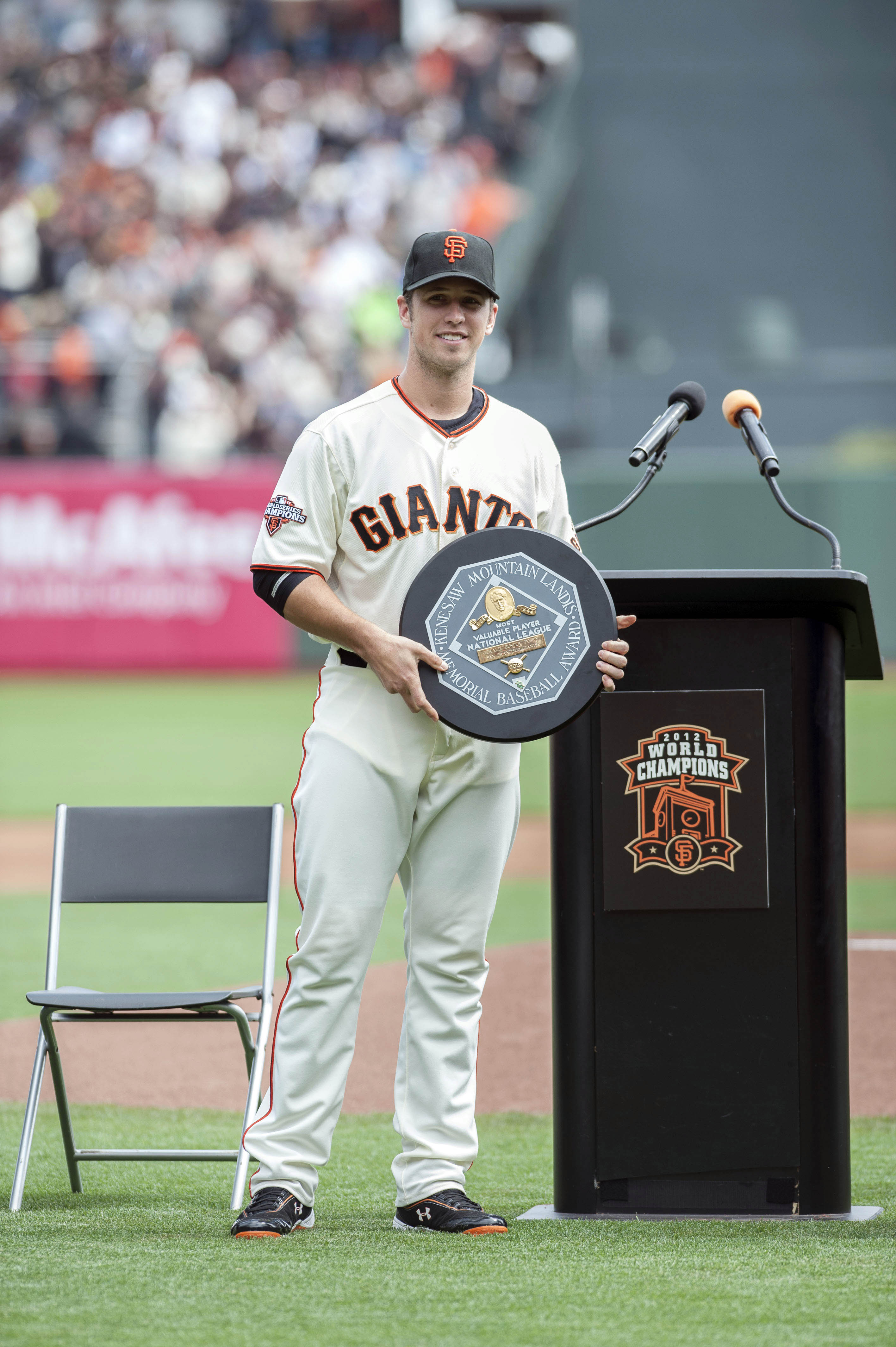
Photo courtesy of Icon SMI.
Offseason In Review: Milwaukee Brewers
The Brewers are next in our Offseason In Review series.
Major League Signings
- Takashi Saito, RP: one year, $1.75MM.
- Craig Counsell, IF: one year, $1.4MM.
- Mark Kotsay, OF/1B: one year, $800K.
- Wil Nieves, C: one year, $775K. Arbitration eligible for 2012.
- Total spend: $4.725MM.
International Signings
- Elvis Rubio, Estervin Matos
Notable Minor League Signings
- Mike Rivera, Zack Segovia, Shawn Riggans, Sean Green, Brandon Jones, Eulogio de la Cruz, Jeremy Reed
Extensions
- Rickie Weeks, 2B: four years, $38.5MM. Includes $11.5MM vesting option for 2015.
Trades and Claims
- Claimed RP Justin James off waivers from Athletics
- Acquired cash considerations from Blue Jays for RP Carlos Villanueva
- Acquired SP Shaun Marcum from Blue Jays for 3B Brett Lawrie
- Acquired SP Zack Greinke, SS Yuniesky Betancourt, and $2MM from Royals for CF Lorenzo Cain, SS Alcides Escobar, RP Jeremy Jeffress, and SP Jake Odorizzi
- Claimed RP Roque Mercedes off waivers from Diamondbacks
- Acquired OF Brett Carroll from Royals for cash considerations
- Acquired P Sergio Mitre from Yankees for OF Chris Dickerson
- Acquired CF Nyjer Morgan from Nationals for IF/OF Cutter Dykstra and $50K
Notable Losses
- Carlos Villanueva, Brett Lawrie, Lorenzo Cain, Alcides Escobar, Jeremy Jeffress, Jake Odorizzi, Chris Dickerson, Cutter Dykstra, Joe Inglett, Gregg Zaun, Dave Bush, Chris Capuano, Todd Coffey, Trevor Hoffman, Doug Davis
Summary
In recent years, Doug Melvin's attempts to bolster the Brewers' rotation with free agents have fallen short, and the 2010-11 market didn't offer much front-end pitching anyway. So Melvin pulled off a near-impossible feat: he traded for a pair of high quality starters, including two years of control for each. He also hired Ron Roenicke as the team's new manager and extended Weeks one year shy of free agency.
First Melvin dealt for Marcum, giving up only one player in Lawrie. Lawrie's bat makes him a top 40 prospect in the eyes of most experts, so the price was significant. Melvin again showed a willingness to move one of his recent first-round draft picks, as he did with Matt LaPorta in the '08 trade for C.C. Sabathia. This time, the Brewers got more than a rental.
Melvin wasn't done; he aimed to take his rotation from good to great by acquiring Greinke. As I mentioned in the Royals offseason in review, it was surprising to see the Brewers acquire Greinke without sending a top 50 prospect or equivalent young Major Leaguer. Sure, the two trades gutted the Brewers' farm system, but I'm a big supporter of trading prospects in the name of winning now. If you're a team that can't afford to bid on Cliff Lee, this strategy is a strong alternative. The Brewers have a strong rotation, and the entire group will be back for the 2012 season.
The Brewers' offense ranked fourth in the NL last year, and the only change was swapping out one offensively-challenged shortstop for another. When Corey Hart returns the team should have enough offense, though in keeping with his "all-in" mindset it'd be great to see Melvin go after Jose Reyes this summer. Center field was another potential weakness, but the Brewers commendably bought low on Morgan to provide Carlos Gomez with some competition.
Melvin opted not to spend money on the bullpen, instead importing Saito, Mitre, and Green. The pen could be a weakness, especially if closer John Axford continues to falter. On the plus side, LaTroy Hawkins is close to returning. The one questionable trade Melvin made this winter was shipping Villanueva to the Blue Jays for cash. Unless this trade was unofficially part of the Marcum deal, I don't understand why Melvin would move a decent reliever for cash.
One day before an arbitration hearing, the Brewers agreed to a four-year extension with Weeks. The Brewers added three free agent years at $10-11MM salaries, plus a 2015 option that vests based on Weeks' health. On one hand, this is a scary investment for a player coming off his first fully healthy season. He's endured surgeries on both wrists as well as a thumb and knee. On the other hand, the Brewers know Weeks' health better than anyone, and if he repeated his 2010 season they wouldn't have been able to sign him for three years and $31MM.
The Brewers are currently one of four NL Central teams sporting an 8-8 record. My pick for the NL pennant, they'll get a big boost when Greinke and Hart come off the DL. Hopefully Melvin continues to be aggressive this year, because even with a strong rotation in 2012 the club will likely be without Fielder.
Photo courtesy of Icon SMI.
Offseason In Review: Boston Red Sox
The Red Sox are next in our Offseason In Review series.
Major League Signings
- Carl Crawford, LF: seven years, $142MM.
- David Ortiz, DH: one year, $12.5MM. Club option exercised.
- Bobby Jenks, RP: two years, $12MM.
- Dan Wheeler, RP: one year, $3MM. Includes $3MM+ vesting/club option for 2012
- Jason Varitek, C: one year, $2MM.
- Hideki Okajima, RP: one year, $1.75MM.
- Matt Albers, RP: one year, $875K. Arbitration eligible after 2011 season.
- Alfredo Aceves, SP: one year, $650K. Arbitration eligible after 2011 season.
- Total spend: $174.775MM.
Notable Minor League Signings
- Andrew Miller, Randy Williams, Dennys Reyes, Brandon Duckworth, Nate Spears, Rich Hill, Tony Pena, Paul Hoover, Matt Fox
Extensions
- Clay Buchholz, SP: four years, $29.945MM. Includes $13MM club option for 2016 with a $245K buyout and $13.5MM club option for 2017 with a $500K buyout.
- Adrian Gonzalez, 1B: seven years, $154MM.
Trades and Claims
- Acquired SS Brent Dlugach from Tigers for RP Pedro Perez
- Acquired P Andrew Miller from Marlins for RP Dustin Richardson. Miller was later non-tendered and re-signed to a minor league deal.
- Acquired 1B Adrian Gonzalez from Padres for SP Casey Kelly, 1B Anthony Rizzo, CF Reymond Fuentes, and OF/2B Eric Patterson
- Acquired 2B Tony Thomas from Cubs for P Robert Coello
- Acquired cash considerations from Indians for OF Bubba Bell
- Acquired C Mike McKenry from Rockies for RP Daniel Turpen
Notable Losses
- Adrian Beltre, Victor Martinez, Bill Hall, Mike Lowell, Pedro Perez, Dustin Richardson, Casey Kelly, Anthony Rizzo, Reymond Fuentes, Eric Patterson, Robert Coello, Bubba Bell, Daniel Turpen
Summary
This offseason the Red Sox lost a couple of key contributors in Beltre and Martinez, compensating by committing to Crawford and Gonzalez through 2017 and '18, respectively. Otherwise, GM Theo Epstein retained Ortiz, tinkered with the bullpen, and locked up Buchholz to a flexible contract.
Beltre and Martinez were huge losses for the Red Sox, who did not seem aggressive about retaining either player. The team was able to maintain great corner infield offense, while improved left field production should make up for a downgrade at catcher. The draft pick results: the Sox lost #24 to sign Crawford, but gained #19, 26, 36, and 40 for Beltre and Martinez. The Red Sox once again demonstrated that it's better to sign someone else's Type A and let yours leave rather than re-sign your own.
The Red Sox flexed their financial muscle with the Crawford signing, agreeing to a contract in the range of what most people expected for the left fielder. His first 58 plate appearances of 2011 notwithstanding, Crawford adds offensive value with his bat and a little more with his basestealing. Still, Corey Hart and Nick Swisher offer similar offensive production, and they wouldn't have gotten seven-year deals or $20MM salaries as free agents. Instead, the Crawford signing appears to be the biggest investment in defense we've ever seen.
Only a few teams could afford to pay Crawford over $100MM, but the battle to obtain Gonzalez was a level playing field. The superstar first baseman earns just $6.3MM this year, about a quarter of his market value. Acquiring him for the 2011 season meant luxury tax savings and no draft pick cost. Gonzalez instead cost three significant young players. Kelly is a consensus top 50 prospect, and Rizzo fits into the top 75. Fuentes is also highly regarded.
Even dealing with the GM who knows Boston's farm system best, Jed Hoyer, Epstein made a good win-now move in acquiring Gonzalez. A trade like this makes more sense for the Red Sox than waiting for the prospects to develop. Another benefit: Gonzalez was willing to sign a below-market contract and didn't require the 2011 salary to be overwritten.
The Buchholz extension was of a different type; the Red Sox guaranteed him almost $30MM in the name of three free agent years and possible arbitration savings. This has been an effective strategy for Boston, but as it gains in popularity the prices rise and the deals become less team-friendly. Though Buchholz's 2.33 ERA earned him a sixth-place Cy Young finish last year, Baseball Prospectus' SIERA put him at 4.29. The top-notch ERA estimator placed Kevin Slowey and Luke Hochevar in the same ballpark, so Buchholz isn't an ace yet. Like Jon Lester after '08, the Sox need Buchholz to take another step forward to make this contract a big win.
Epstein's bullpen tinkering brought in Jenks, Wheeler, Okajima, Albers, Aceves, plus several lefties on minor league deals. The Red Sox could have purchased a more established southpaw, looking at the free agent market.
I agree with the decision to exercise Ortiz's option, even if $12.5MM seems steep compared to certain DH signings. Victor Martinez and Adam Dunn required at least that much, plus four-year commitments, to essentially serve as DHs. The trio is a cut above players like Vladimir Guerrero, Hideki Matsui, and Jack Cust.
Waiting until the Gonzalez extension became official allows me to talk about Boston's slow start; they're 5-10 at the time of this writing. This is a concern. If you pegged them as a 95 win team back in March and consider the first 15 games a fluke, they're projected now to win 91 games. Unless the team balances their start by reeling off a winning streak, I think they'll be aggressive in seeking trade deadline upgrades.
Photo courtesy of Icon SMI.
Offseason In Review: Philadelphia Phillies
The Phillies are next in our Offseason In Review series.
Major League Signings
- Cliff Lee, SP: five years, $120MM. Includes $27.5MM vesting option for 2016 with a $12.5MM buyout.
- Jose Contreras, RP: two years, $5.5MM. Includes $2.5MM club option for 2013 with a $500K buyout.
- J.C. Romero, RP: one year, $1.35MM.
- Total spend: $126.85MM.
Notable Minor League Signings
Trades and Claims
- Claimed IF/OF Michael Martinez from Nationals in Rule 5 draft
- Acquired 2B Albert Cartwright from Astros for RP Sergio Escalona
- Claimed RP Brian Schlitter off waivers from Yankees
Notable Losses
Summary
The Phillies pulled off the surprise of the offseason, righting a past wrong and adding Cliff Lee to an already-strong rotation. GM Ruben Amaro Jr. stretched his payroll to accommodate Lee, so the signing sums up most of the team's offseason. Given all of their recent success, the Phillies extended Amaro in March, just after he'd extended manager Charlie Manuel.
The Phillies made an attempt to re-sign Werth, reportedly offering three years and $48MM plus a vesting option. With Werth ultimately landing a seven-year, $126MM deal, the Phillies' offer appears half-hearted. Still, plenty of people pegged Werth for something like four years and $65MM heading into the offseason, and with that in mind the player's biggest concession to the Phillies would have been accepting a fourth-year vesting option.
No one predicted the Phillies would sign Lee, and reports of a Mystery Team in the mix in December were initially scoffed at. Technically Lee left a guaranteed $28MM on the table to sign with his preferred team, though this wasn't Andre Dawson giving the Cubs a blank check. Lee's $24MM a year salary is higher than it would have been had he taken a seven-year offer from the Yankees or six years from the Rangers, and it's a record for pitchers.
The Phillies checked the "bill me later" box on the Lee contract, designing it to pay him only $11MM in 2011 before his salary jumps past $20MM thereafter. They also potentially left the biggest bill for 2016, the lefty's age 37 season. A $27.5MM option for 2016 vests if Lee is not on the disabled list at end of 2015 season with injury to left elbow or left shoulder, and has 200 innings pitched in 2015 or 400 innings pitched in 2014-15. If the option does not vest, the Phillies will presumably take the buyout, which at $12.5MM is the biggest I've even seen. Hopefully those numbers won't look as scary entering the 2016 season.
Prior to the Lee deal, the Phillies re-signed Contreras to a two-year deal. Even at his age the contract doesn't look bad now, in light of the ten eight-figure contracts given to free agent relievers later in the offseason.
The Phillies appear light at second base, right field, and the bullpen this point, though the injuries to Chase Utley, Domonic Brown, and Brad Lidge didn't happen until Spring Training. I don't see much Amaro should have done differently during the offseason. Adding a Jerry Hairston Jr. or Willie Bloomquist just to be safe wouldn't have made much difference. Perhaps Amaro could've dabbled a little on the low end of the relief market, nabbing a Jon Rauch, Dan Wheeler, or Chad Qualls in the $3MM range. I liked that Amaro held onto Joe Blanton rather than doing some kind of salary dump deal.
Amaro put all his eggs in the Cliff Lee basket this offseason, and it's hard to find fault with that. The Phillies' rotation appears historically good. It's possible all the big salaries will limit flexibility this year and in the near future, though Amaro always seems to find a few million bucks in the couch cushions when needed.
Photo courtesy of Icon SMI.
Offseason In Review: Detroit Tigers
The Tigers are next in our Offseason In Review series.
Major League Signings
- Victor Martinez, DH/C: four years, $50MM.
- Joaquin Benoit, RP: three years, $16.5MM.
- Brandon Inge, 3B: two years, $11.5MM. Includes $6MM club option for 2013 with a $500K buyout.
- Jhonny Peralta, SS: two years, $11.25MM. Includes $6MM club option for 2013 with a $500K buyout.
- Magglio Ordonez, RF: one year, $10MM.
- Brad Penny, SP: one year, $3MM.
- Total spend: $102.25MM.
Notable Minor League Signings
Extensions
- Ryan Raburn, LF: two years, $3.4MM.
Trades and Claims
- Acquired RP Pedro Perez from Red Sox for IF Brent Dlugach
- Acquired SP Kevin Eichhorn and RP Ryan Robowski from Diamondbacks for SP Armando Galarraga
Notable Losses
Summary
The Tigers' offseason was all about being aggressive early, as they locked up Inge, Peralta, Benoit, and Martinez before the end of November. GM Dave Dombrowski was able to land his top targets, but often had to overpay in the process.
Dombrowski's commitment to Benoit shook the relief market. The contrast was stark for a reliever whose previous contract was a minor league deal. Explained the GM, "When you want to get the best players at certain positions, you have to be aggressive and prepared to do things." The Tigers should be commended for signing the reliever they felt was the best available, going the extra mile to get it done. Like most eight-figure relief contracts, this one is risky - Benoit is a 33-year-old who had rotator cuff surgery in January of '09.
The early push to sign Inge and Peralta is more difficult to understand. Despite being known as an offensive-minded infielder, Peralta hasn't hit much since '08. And while Inge might make up for Peralta's lack of range, he's a negative with the bat as well. The free agent market typically doesn't reward defense-first players with the kind of contract Inge received. The Tigers' goal here seemed to be to secure the left side of their infield and have cost certainty before moving on to bigger fish.
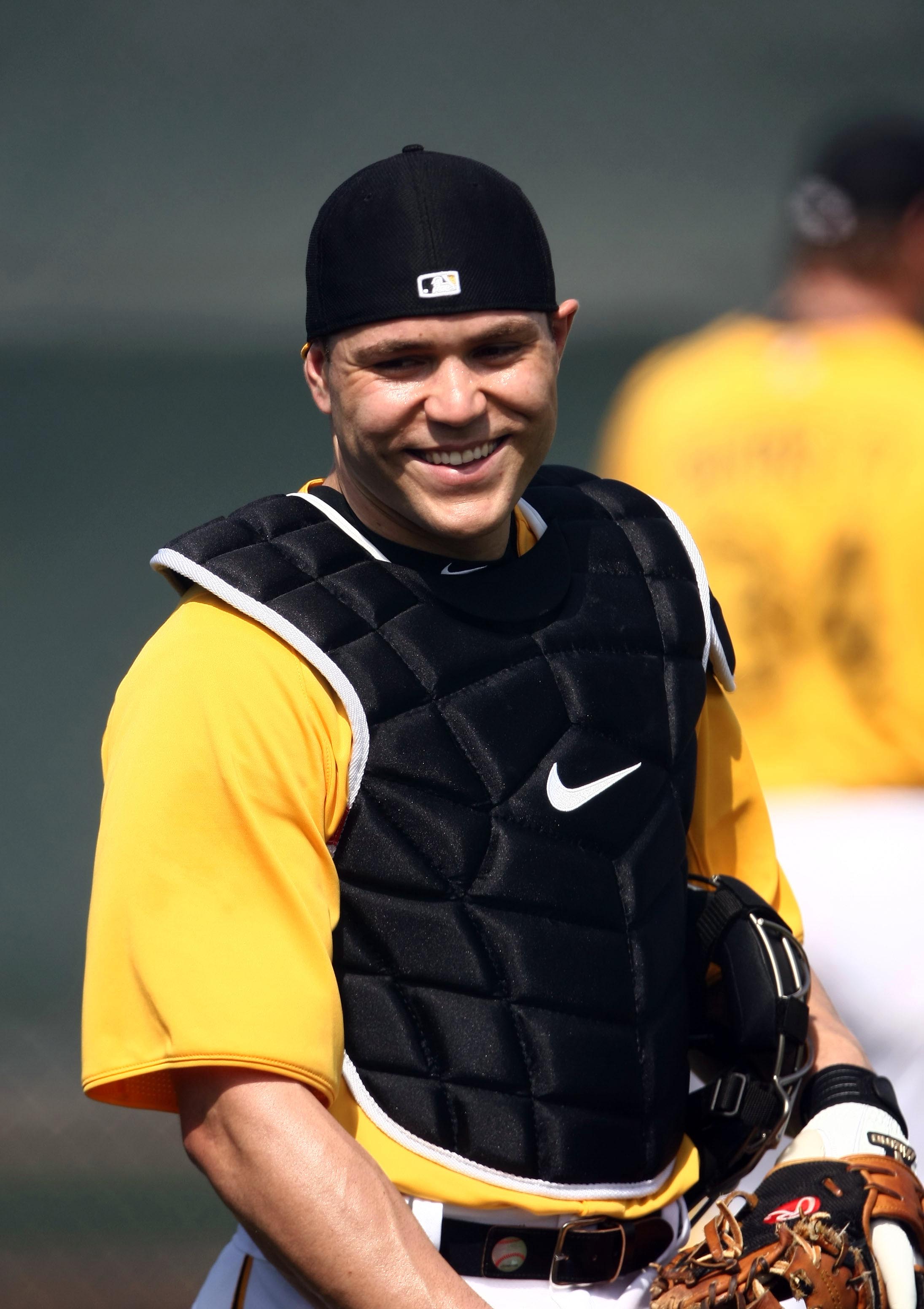
That big fish was Martinez (pictured). The popularity of Martinez and Adam Dunn on the free agent market showed that teams are willing to make large commitments to players with little defensive value. Martinez has more than Dunn, in that the former can don the tools of ignorance without embarrassing himself. I would have liked the V-Mart signing more if it didn't require giving the Red Sox the best unprotected draft pick at #19. Now, the Tigers won't have a pick in the 2011 draft until #76. Still, the team got the capable middle of the order bat they sought from the outset of the offseason.
Dombrowski was able to further bolster the offense by signing Ordonez, who chose the popular Scott Boras "pillow contract" as he attempts to rebuild value after a fractured ankle ended his season in July. Unlike Carlos Pena, Ordonez was at least coming off a strong season. However, at age 37, Ordonez's durability will be a huge question mark - especially with Martinez claiming the DH spot most of the time.
Converted reliever Phil Coke filled one rotation spot, while Dombrowski took a $3MM flier on Penny for the other. Sooner or later teams will stop guaranteeing Penny millions of dollars on the hope that he will have another 2007. To be fair, Penny only needs to provide 100 solid innings to be worth the $3MM guarantee. The bigger question is where the Tigers will turn when they inevitably need a sixth or seventh starter. Andy Oliver is big league ready, though top prospect Jacob Turner is only 19 years old. Lefties Casey Crosby, Duane Below, Charlie Furbush, and Adam Wilk could factor in depending on the magnitude of the Tigers' need. MLBTR's Ben Nicholson-Smith addressed the Tigers' rotation depth last month in a piece at FanGraphs.
The Tigers had significant money come off the books after the '10 season, and despite their numerous free agent commitments the Opening Day payroll still appears to be down about $27MM. I wasn't a fan of all of Dombrowski's choices, but I respect his aggressive pursuit of primary targets. If the 2011 Tigers fail, it won't be because the market got away from them and they had to go to Plan B or C.
Photo courtesy of Icon SMI.
Offseason In Review: Houston Astros
The Astros are next in our Offseason In Review series.
Major League Signings
- Bill Hall, 2B: one year, $3.25MM. Includes $4MM mutual option for 2012 with a $250K buyout.
- Jason Michaels, OF: one year, $900K. Club option exercised.
- Total spend: $4.15MM.
Notable Minor League Signings
- Ryan Rowland-Smith (re-signed to minor league deal), Fernando Nieve, Oswaldo Navarro, Anderson Hernandez, Casey Fien, Carlos Corporan, Brian Dopirak, Sammy Gervacio, Gustavo Chacin, Robinson Cancel
Extensions
Trades and Claims
- Claimed RP Aneury Rodriguez from Rays in Rule 5 draft
- Acquired SS Clint Barmes from Rockies for P Felipe Paulino
- Acquired P Jonnathan Aristil and SP Wes Musick from Rockies for RP Matt Lindstrom
- Acquired RP Sergio Escalona from Phillies for 2B Albert Cartwright
- Acquired IF/OF Joe Inglett from Rays for player to be named later or cash considerations
Notable Losses
- Felipe Paulino, Matt Lindstrom, Albert Cartwright, Geoff Blum, Brian Moehler, Tim Byrdak, Chris Sampson
Summary
It was a quiet offseason for Astros GM Ed Wade, who added some middle infield pop, extended Wandy Rodriguez, and acquired a few arms via trades and claims.
For about $7MM, Wade revamped his middle infield with Hall and Barmes. Not many teams considered these players middle infield regulars, which might be a red flag. Wade is taking an offensive-minded approach to second base and shortstop, and both players have 20 home run ability. Of course, they both have .300 OBP ability too, so I'm not sure that the lineup will benefit much. Once again, this appears to be an Astros lineup littered with easy outs. Barmes, who broke a bone in his hand in March, is in line for a late April debut.
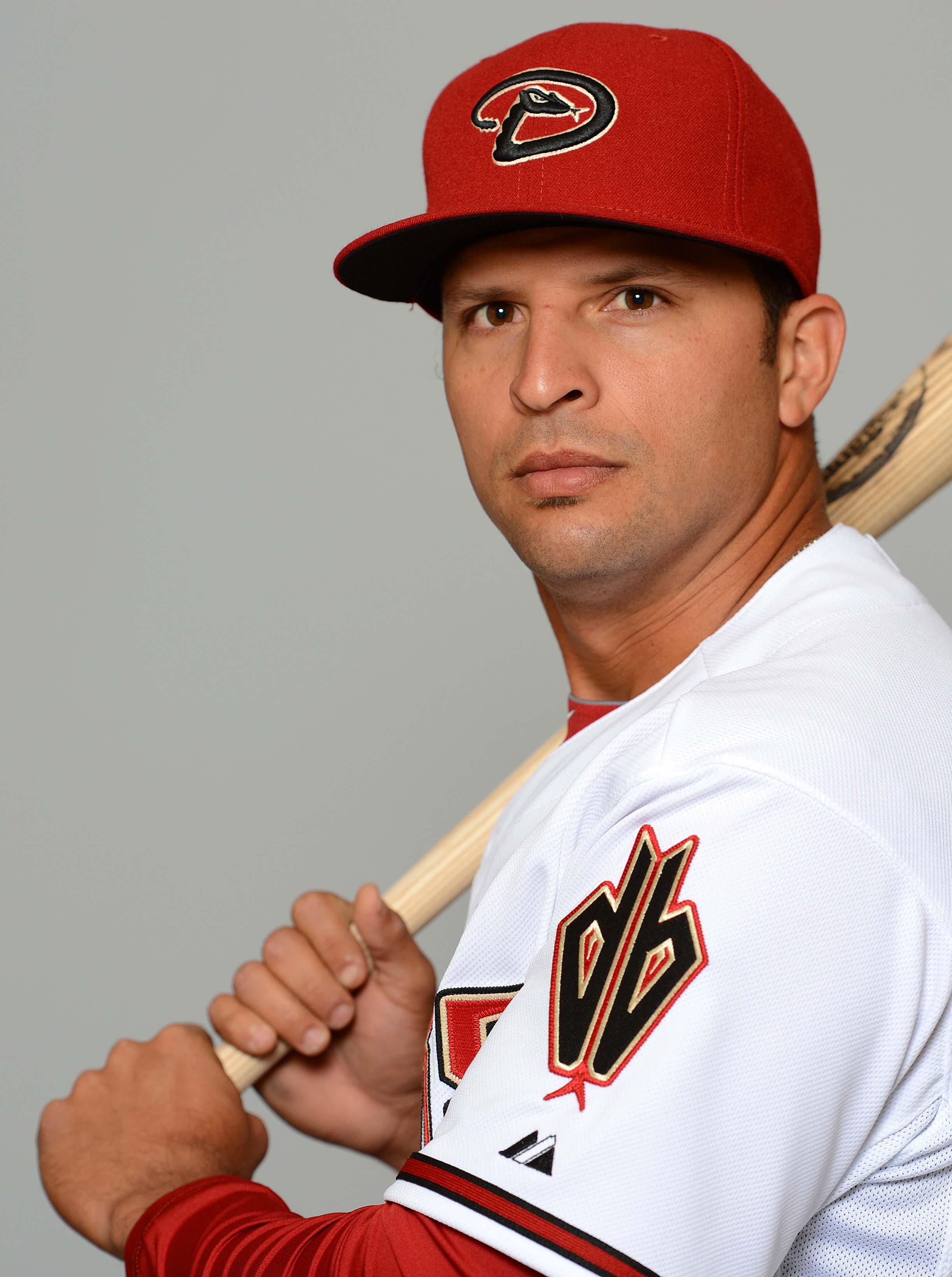
I can't complain too much about the Hall and Barmes pickups, as they're not blocking anyone. Still, the Rockies got the better end of the Barmes-Paulino swap. Why would the Astros rid themselves of a 27-year-old with a 96 mile per hour fastball and 8.1 career K/9? Barmes (pictured) was a non-tender candidate for Colorado.
The Astros' barren offense is a shame, because their rotation has the potential to be solid (early returns aside). Myers and Rodriguez form a strong one-two punch, J.A. Happ and Bud Norris have flashed 4.00 ERA skills, and Jordan Lyles is one of the 50 best prospects in baseball.
Extending Rodriguez was a win for Wade, as Wandy would have been one of the better free agent starters available after the season. The price was reasonable, though I'm not sure what conditions cause his $13MM option for 2014 to vest. In the cases of Rodriguez and Brett Myers, the extensions could improve their trade value for certain suitors should Wade look to improve his farm system this summer.
The Astros have a consensus bottom-five farm system, which must be improved if the team is to return to prominence. Grabbing a couple of arms to try in the Rule 5 draft made sense. Lindstrom was traded for prospects, though his salary might have been the Astros' motivation in trading him. I don't mind a non-contender having an unproven bullpen, but I hope Lindstrom's potential $3MM salary didn't force Wade to settle for less in trade.
The Astros finally committed to a rebuild last summer, trading two of their best-known players in Roy Oswalt and Lance Berkman (though neither had much trade value). This summer Wade will face tougher decisions on whether to move Rodriguez, Myers, Hunter Pence, and Michael Bourn, making the team even worse in the short term for the greater good.
Photo courtesy of Icon SMI.
Offseason In Review: Texas Rangers
The Rangers are next in our Offseason In Review series.
Major League Signings
- Adrian Beltre, 3B: five years, $80MM. Includes $16MM voidable option for 2016. Rangers gave #26 overall draft pick to Red Sox as compensation.
- Yorvit Torrealba, C: two years, $6.25MM.
- Arthur Rhodes, RP: one year, $3.9MM. Includes $4MM vesting option for 2012.
- Brandon Webb, SP: one year, $3MM.
- Total spend: $93.15MM.
International Signings
- Rougned Odor, Alberto Triunfel
Notable Minor League Signings
- Barret Loux, Esteban German, Yhency Brazoban, Brian Barden, Endy Chavez, Omar Quintanilla, Robinzon Diaz, David Bush, Brett Tomko, Luis Cruz, Seth McClung, Yoshinori Tateyama
Extensions
Trades and Claims
- Claimed P Ryan Tucker off waivers from Marlins
- Acquired SP Mason Tobin from Cubs after taken in Rule 5 draft from Angels
- Acquired RP Ryan Kelly from Athletics for SP Guillermo Moscoso
- Acquired C/1B Mike Napoli from Blue Jays for RP Frank Francisco and cash
- Acquired a player to be named later from Royals for 1B/3B John Whittleman
- Acquired cash considerations from Royals for C Matt Treanor
- Acquired a player to be named later from Braves for IF/OF Marcus Lemon
Notable Losses
- Cliff Lee (Rangers received #33 pick from Phillies and also get #37 pick), Vladimir Guerrero, Matt Treanor, Bengie Molina, Max Ramirez, Jeff Francoeur, Cristian Guzman, Rich Harden, Dustin Nippert, Frank Francisco, Doug Mathis, John Whittleman, Marcus Lemon, Guillermo Moscoso
Summary
The Rangers didn't sign Cliff Lee, Jim Thome, or Vladimir Guerrero, trade Michael Young, acquire Zack Greinke or Matt Garza, or move Neftali Feliz to the rotation, though those topics provided plenty of fodder for MLBTR this offseason. Instead, GM Jon Daniels gave Beltre a huge contract and tinkered at a few positions, capping his winter by signing an extension himself. For an added dose of drama, managing partner and CEO Chuck Greenberg was ousted for reasons unknown.
The Rangers were Lee's second choice, and they extended themselves to a reported six-year, $138MM offer that included major deferrals. Lee's eventual contract with the Phillies includes big-time deferrals in its own right, with a low first-year salary and a $12.5MM buyout at the end. Based on the information we have, the Rangers' offer appears better, and it was fair for Texas to balk at a seventh year.
Regarding alternatives to Lee, Daniels continued big-game hunting. We didn't hear about the Rangers bidding on the Carl Pavanos of the world; instead, they inquired on Greinke, Garza, Francisco Liriano, and even Bobby Jenks as a starter. We don't know the prices for Greinke and Garza exactly, though Derek Holland and Engel Beltre would have been involved. Holland might be close enough to his own big league success that abstaining was the right move. The Rangers ultimately signed a pitcher with ace potential in Webb, but I liked the move more when I thought 30 starts was a possibility. Now we're left wondering if he can provide half that, a reminder that Webb is nothing more than a $3MM wild card for Texas.
The Rangers seriously considered putting Feliz in the rotation, a move I supported. Better foresight might have involved signing Jenks or J.J. Putz to close early in the offseason, protecting against the possible need to use Feliz as a starter. Daniels shipped out a closer candidate in Frank Francisco, but betting against his health seems like the right move for the team that knows his medical records best.
After failing to sign Lee, Daniels shifted to another top free agent in Adrian Beltre. Beltre (pictured) and Young are both solid hitters, though Beltre has a touch more power. The bigger upgrade is defensively, where replacing Young with Beltre should net the team at least a couple of additional wins. The contract for Beltre was bigger than I expected, especially since signing him came with the significant cost of a first-round draft pick. The argument is that the Rangers received two good picks when Lee signed with the Phillies, but that doesn't nullify giving up #26 for Beltre. Daniels' other free agent touches - Torrealba and Rhodes - just filled a couple of needs at market prices.
Young must have an amazing P.R. team, having twice created a distraction in recent years by demanding a trade but still being generally regarded as the ultimate professional. This time he was "misled and manipulated" by Daniels, perhaps because the Rangers tried to trade him after telling him they wouldn't. The Rangers seemingly did their due diligence after Young's request, but the attempt to move him was half-hearted if their reported demand for top prospects was accurate. Young is paid about double what he'd get on the open market, and the Rangers are best-served using him at DH and other spots rather than agreeing to a lopsided trade favoring the other team.
The Rangers pondered multiple DH options aside from Young, making the best offer to Jim Thome but getting turned down. Once Napoli was acquired, further improvement of the offense became a luxury. If healthy, this team can hit.
The Rangers' rotation remains questionable on paper, though it was a year ago as well. If C.J. Wilson and Colby Lewis can approximate last year's performance and Holland takes a step forward, they'll have enough to win the division. If the rotation looks suspect in June, expect the Rangers to once again battle the Yankees to acquire anything resembling a front-end starter.
Photo courtesy Icon SMI.
Offseason In Review: Washington Nationals
The Nationals are next in our Offseason In Review series.
Major League Signings
- Jayson Werth, RF: seven years, $126MM.
- Adam LaRoche, 1B: two years, $16MM. Includes $10MM mutual option for 2013 with a $1MM buyout.
- Jerry Hairston Jr., IF/OF: one year, $2MM.
- Rick Ankiel, CF: one year, $1.5MM.
- Todd Coffey, RP: one year, $1.35MM.
- Chien-Ming Wang, SP: one year, $1MM.
- Total spend: $147.85MM.
International Signings
- Click here to view
Notable Minor League Signings
- Matt Stairs, Jonathan Van Every, Matt Antonelli, Chad Gaudin, Brian Bixler, Michael Aubrey, Alex Cora, Cla Meredith, Laynce Nix, Alex Cintron, Ron Villone, Oliver Perez
Extensions
Trades and Claims
- Acquired RP Henry Rodriguez and OF Corey Brown from Athletics for LF Josh Willingham
- Claimed RP Elvin Ramirez from Mets and SP Brian Broderick from the Cardinals in Rule 5 draft
- Acquired SP Tom Gorzelanny from Cubs for SP Graham Hicks, P A.J. Morris, and OF Michael Burgess
- Acquired RP Adam Olbrychowski from Yankees for OF Justin Maxwell
- Claimed RP Lee Hyde off waivers from Braves
- Acquired 3B/OF Cutter Dykstra and $50K from Brewers for CF Nyjer Morgan
- Acquired SP Erik Davis and cash considerations from Padres for IF Alberto Gonzalez
Notable Losses
- Adam Dunn, Nyjer Morgan, Josh Willingham, Graham Hicks, A.J. Morris, Michael Burgess, Justin Maxwell, Alberto Gonzalez, Adam Kennedy, Willie Harris, Miguel Batista, Scott Olsen, Joel Peralta, J.D. Martin
Summary
After the 2009-10 offseason, I wrote that I'd have liked Nationals GM Mike Rizzo's offseason if we could eliminate the top two signings, the $21MM given to Jason Marquis and Ivan Rodriguez. A year later, it's much harder to excuse the $142MM spent on Werth and LaRoche.
With any seven-year free agent contract, the team is really just paying for the first three seasons and hoping the player doesn't become a complete albatross in the final four. The players can provide value at the tail end of these megadeals, but it's more of a bonus than an expectation. I can see Werth remaining an elite player through his age 34 season, and as he hasn't missed significant time since '07 I can see him remaining healthy too. Though Werth's seven-year term shocked the baseball world, I could justify the signing for a team on the cusp of contention.
My beef with the Werth signing is the Nationals' timing. They don't have the rotation to contend in 2011, and while the 2012 team should be better I'm not confident they'll be ready then either. Assuming the team's top young players will really start to come together after the '12 season, why not make your huge free agent strike then? The Nationals actually tried to make their free agent splash earlier, with big offers to Mark Teixeira and Torii Hunter in past offseasons. I don't have a problem with accelerating the timetable, for example if the Nationals signed Werth and went on to add Zack Greinke and Shaun Marcum. But win-now moves have to come as a package deal for a team like the Nats.
Did the Nationals "have to overpay" to get Werth and make the team more appealing for future free agents? I agree with ESPN's Keith Law that the concept is nonsense. Not because players rarely take discounts, but because they don't do so because they liked the team's crazy free agent expenditure. Were players lured to the Rockies, Astros, Giants, and Cubs because those teams went overboard for Mike Hampton, Carlos Lee, Barry Zito, and Alfonso Soriano? Many bad teams have turned things around without the luxury of a signature, excessive free agent signing.
The LaRoche contract pales in comparison to Werth's, but I still don't consider it money well spent. The Nationals went well beyond LaRoche's previous contract, despite his 2010 decline in walk rate and increase in strikeout rate. Similar to Marquis, these are not interesting players at ten-figure prices.
Rizzo's other free agent signings were acceptable purchases for a rebuilding club, with a little bit of upside sprinkled in.
I expected the Nationals to bring in a credible starter for Willingham, but Rodriguez does have the potential to develop into a premium late-inning reliever. The Morgan trade struck me as selling low, and if the center field alternatives are Ankiel and Hairston, why not give him a chance to rebuild value? I understand the Gorzelanny trade, as the lefty can chew up big league innings and has mild upside. However, Morris might have been able to help the Nationals' bullpen this year, and I'm not sure why a rebuilding team gave up on Burgess.
The Nationals would not agree that their window for contention is likely to open in 2013. I respect that, but if the plan is to win now I expect the team to be aggressive in improving its pitching staff at the trade deadline and during the 2011-12 offseason after failing to do so this winter.
Photo courtesy of Icon SMI.
Offseason In Review: Kansas City Royals
The Royals are next in our Offseason In Review series.
Major League Signings
- Jeff Francoeur, RF: one year, $2.5MM.
- Bruce Chen, SP: one year, $2MM.
- Jeff Francis, SP: one year, $2MM.
- Melky Cabrera, OF: one year, $1.25MM. Can be retained for 2012 as an arbitration eligible player.
- Total spend: $7.75MM.
International Signings
- Darwin Castillo, Igor Feliz
Notable Minor League Signings
Extensions
- Billy Butler, DH/1B: four years, $30MM. Includes $12.5MM club option for 2015 with a $1MM buyout.
Trades and Claims
- Claimed IF Joaquin Arias off waivers from Mets
- Claimed IF Lance Zawadzki off waivers from Padres
- Acquired SP Vin Mazzaro and SP Justin Marks from Athletics for OF David DeJesus
- Claimed SP Nathan Adcock in Rule 5 draft from Pirates
- Acquired CF Lorenzo Cain, SS Alcides Escobar, RP Jeremy Jeffress, and SP Jake Odorizzi from Brewers for SP Zack Greinke, SS Yuniesky Betancourt, and $2MM
- Acquired 1B/3B John Whittleman from Rangers for player to be named later
- Acquired C Matt Treanor from Rangers for cash considerations
Notable Losses
- Zack Greinke, Yuniesky Betancourt, David DeJesus, Josh Fields, Brian Bannister, Gil Meche, Dusty Hughes, Bryan Bulllington, Anthony Lerew, Philip Humber
Summary
Once again Royals GM Dayton Moore spent the offseason focusing on the long-term health of the organization. Moore accommodated Greinke's trade demand, moved Royals mainstay DeJesus, locked up Butler, and dabbled with a few stopgap free agents.
There is a sense that Greinke forced the Royals' hand with his trade demand, but as ESPN's Keith Law points out, they weren't obligated to do anything. Law felt the package received from Milwaukee was more about "bulk and fit, but not impact." Granted, Law likes Jeffress and Odorizzi less than other prospect gurus, but it was surprising to see the Royals trade two years of an ace starter and not receive one top 50 prospect in return. Perhaps the Royals felt that Greinke's desire to move on would adversely affect his 2011 performance and reduce his trade value, and that their backs were up against the wall due to the pitcher's no-trade clause. He'd already rejected a trade to the Nationals that might have been superior.
Law was also down on the DeJesus return, as Mazzaro does not project as even a "medium-impact pitcher" in his mind. Baseball Prospectus' Kevin Goldstein profiled Mazzaro as "a solid fourth starter who can eat up innings," ranking him tenth among the organization's strong group of 25-and-under players. Ten Royals prospects appeared on a top 100 prospect list compiled by Law, Goldstein, or Baseball America, so the Royals can be forgiven for not shooting for the moon for one year of DeJesus, who was coming off thumb surgery. Not that a team can ever acquire too much upside, but innings guys are needed too.
Meche made the classy decision to forfeit the $12MM remaining on his contract, preferring not to have the Royals pay him to rehab from shoulder surgery. Moore did not spend the found money on pointless free agent signings, though on January 18th there wasn't much out there anyway. Moore's free agent strategy was to commit the paltry sum of $7.75MM to Francoeur, Chen, Francis, and Cabrera. These four aren't going to take playing time from top prospects, and Francis could even have trade value if he stays healthy. Moore has been knocked for finally signing his boy Francoeur, but at that price there's little harm in seeing if he has another 2007 in him.
Unlike many extensions, I don't believe the Butler contract was about arbitration savings. The deal pays Butler (pictured) $19MM for his three arbitration years, which represents minimal savings over what he might have gotten year-to-year assuming campaigns in the .300, 20 home run, 80 RBI range. Instead, the contract is about projection: the arbitration years become a bargain if Butler develops more power, which seems possible since he turns 25 this month. Plus, the Royals have a free agent season for $8MM and a club option for another at $12.5MM. At worst the contract provides mild savings and a free agent year, but there is potential here for big savings. And if Kila Ka'aihue and Eric Hosmer both prove big-league capable soon, that's a good problem to have.
The Royals have the consensus top farm system in baseball by a wide margin. Moore has earned the opportunity to build a competitive club around his top young players as they graduate to the Majors beginning this year. The Royals have lost consistently since Moore took over in 2006 and while they're a lousy team again this year, their farm system should catalyze a turnaround in the near future.
Ben Nicholson-Smith contributed to this post. Photo courtesy of Icon SMI.