
Injury Notes: Lowe, Paddack, Thompson, Suarez
The Rays placed second baseman Brandon Lowe on the 10-day injured list earlier this week. While the club initially announced his injury as lower back inflammation, Marc Topkin of the Tampa Bay Times tweets that Lowe has a disc herniation. Manager Kevin Cash said before tonight’s game Lowe will be shut down from all baseball activities for two to three weeks.
It’ll clearly be more than a minimal stay for the power-hitting infielder. Lowe will need some time to ramp up once he can again begin working out, and the absence is significant enough he’ll probably require a minor league rehab assignment. Given that timeline, it doesn’t seem out of the question Lowe is out of MLB action through the All-Star Break. It’s the second straight season in which his back has given him problems. Lowe’s 2022 campaign was cut short by a lower back issue in mid-September.
The Rays figure to rotate a number of players through the keystone in his absence. Vidal Bruján started the first two games there after Lowe’s IL placement. The Rays kicked Taylor Walls over from third base tonight, penciling Isaac Paredes in at the hot corner.
A few other health updates from around the game:
- The Twins have been without Chris Paddack since he underwent a second career Tommy John procedure last May. The right-hander has maintained a goal of returning for the stretch run this season. That still seems to be on track, as Paddack began throwing off a mound last week (relayed by Do-Hyoung Park of MLB.com). He’s shooting for a big league return in September, though it’s possible that’ll have to be in relief to accelerate his build-up. Acquired from the Padres on the eve of Opening Day last year, Paddack has made just five starts as a Twin. Nevertheless, the organization guaranteed him $12.25MM to buy out his first year of would-be free agency (2025) over the offseason.
- Dodgers outfielder Trayce Thompson landed on the 10-day injured list with a left oblique strain over the weekend. Manager Dave Roberts initially pegged his expected absence around a month, though it seems that was a bit optimistic. Roberts told reporters this evening that Thompson is likely to miss beyond 30 days (via Jack Harris of the Los Angeles Times). It’s not expected to be a season-ending injury but there wasn’t any further clarity on the timeline. It seems possible he’ll wind up on the 60-day injured list if L.A. needs a 40-man roster spot in the coming weeks. The Dodgers called up rookie Jonny DeLuca to take Thompson’s spot on the MLB roster.
- The Angels have been without starter José Suarez for a month on account of a strain in his throwing shoulder. It doesn’t seem the southpaw is particularly close to a return, as Sam Blum of the Athletic wrote yesterday that Suarez had yet to begin throwing. There’s not a clear timetable for when he might start working off a mound, although Blum adds that he has been working out at the team’s Arizona complex. A reliable #4 starter for the past few years, Suarez has had a nightmarish 2023. He was tagged for a 9.62 ERA over six appearances before he landed on the shelf.
Best Deadline Rental Returns In Recent History, #10: Mets Get A Bullpen Fixture For Duda
Yesterday we introduced a new series here at MLBTR where we’ll be running through the top returns teams have extracted when selling rental pieces at the summer trade deadline. It’s not an all-time list, but rather looking at recent history — specifically the 2017-21 deadlines — in an effort to contextualize just what sort of returns fans might be able to expect for their own teams this summer when marketing impending free agents to other clubs. Yesterday’s series intro included three honorable mentions as well as a handful of 2022 deadline swaps to keep an eye on in the coming years. (Broadly speaking, it’s too soon to gauge just which ’22 deals will yield the greatest dividends, hence their omission from the main list and highlighting in the Honorable Mentions portion.)
Kicking things off at No. 10 is a straight-up, one-for-one exchange between the Mets and Rays dating back to the 2017 deadline. On July 27, when this swap was formally announced, the Mets sat at 47-53 — six games below .500 and a hefty 14 games out of the race for the NL East title. The powerhouse NL West looked like a veritable lock to send three teams to the playoffs that year, with the Dodgers (71-31), D-backs (59-43) and Rockies (58-45) all holding commanding postseason odds. There were only two Wild Card spots at that point, leaving second- and third-place teams in other NL divisions with only one path to the playoffs. Given the Mets’ 14-game deficit behind the Nationals, they were clear candidates to sell.
And sell they did. While they made one forward-looking move by acquiring closer AJ Ramos from the Marlins in what ultimately amounted to a salary dump, the Mets traded off a pair of notable veterans and promoted then-top prospect Amed Rosario for his MLB debut. Shortly to follow Rosario would be fellow top prospect Dominic Smith, whose path to the Majors was carved out when the Mets sent slugger Lucas Duda to the Rays in exchange for a near-MLB-ready bullpen arm: right-hander Drew Smith.
After a disappointing and injury-marred 2016 season, Duda was in the midst of a strong 2017 campaign. In very Duda-esque fashion, he’d shown some platoon concerns and hit for a low average while sporting impressive on-base and slugging totals. In 291 trips to the plate, he was sitting on a .246/.347/.532 batting line with 17 home runs, 21 doubles, a 25.1% strikeout rate and a 12.7% walk rate. The Rays ate the remaining $2.6MM or so on Duda’s $7.25MM salary, perhaps hoping to lessen the cost of acquisition in the process.
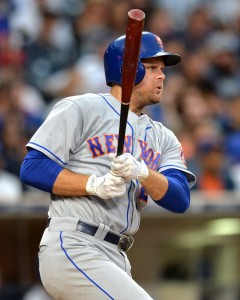
Things didn’t pan out that way, however — for multiple reasons. First and foremost, the Rays simply didn’t get the production they’d hoped out of Duda. At 31 years old, he seemed to still be in his prime, but the slugger mustered just a .175/.285/.444 slash down the stretch. Duda quite clearly still hit for power (13 homers, .269 ISO), but his strikeout rate soared to 31% with his new club.
Had he been a low-average slugger with plenty of pop and walks that slugged some key postseason homers, the Rays would probably have taken that outcome. But Tampa Bay played sub-.500 ball the rest of the way, finishing out the year at 80-82 and missing the playoffs entirely. Duda wouldn’t have been a likely qualifying offer candidate even if the Rays had been able to make one, but the midseason trade rendered him ineligible for a QO, so the Rays simply let him walk for no compensation following the season. Duda signed with the Royals that offseason. His stint with the Rays lasted all of 200 plate appearances.
As far as the Mets’ return goes, things have played out quite nicely. The hope at the time of the swap was surely that Smith would be a quick-to-the-Majors arm. He’d somewhat surprisingly been traded twice in a span of three months, first going from the Tigers — who’d selected him in the third round of the 2015 draft — to the Rays in exchange for Mikie Mahtook. The trade to the Mets came after Smith had climbed to Triple-A in the Rays’ system.
At the time of the deal, Smith was sporting a 1.60 ERA with a 40-to-9 K/BB ratio in 45 innings split between the High-A, Double-A and Triple-A affiliates between his two prior organizations. Baseball America ranked him 24th among Tigers farmhands entering that season, praising a fastball that could reach 97 mph and an impressive 12-to-6 curveball. With his strong start in ’17, he’d clearly bolstered his stock over the course of the season.
Just as the Mets hoped, Smith was in the Majors by 2018. He debuted in late June, less than a year after being acquired, on the heels of a sub-3.00 ERA in Triple-A, and went on to pitch 28 innings of 3.54 ERA ball out of the bullpen. Smith’s rookie season didn’t feature much swing-and-miss, but he walked just five percent of his opponents, kept the ball in the yard and sat at 96.3 mph with his heater. It was a promising start — at least, until injury struck.
One of the knocks on Smith as a prospect had been some injury concern, and he indeed fell to one of the most common and severe injuries that plague all professional pitchers: a torn ulnar collateral ligament in his pitching elbow. Smith missed the entire 2019 season after undergoing Tommy John surgery and was limited to just seven innings in the shortened 2020 season. His efforts to quickly establish himself as a long-term piece in the Mets’ bullpen were delayed — but ultimately not derailed.
Smith returned in 2021 with a slightly diminished fastball (95.3 mph average) but far more bat-missing abilities. He pitched 41 1/3 innings of 2.40 ERA ball in his first season back from Tommy John surgery, striking out 24.8% of his opponents — a major increase from his rookie season’s mark of 15%. His swinging-strike rate jumped from 9.4% in 2018 to a hearty 13.3% in 2021. Smith’s command wasn’t as sharp (9.7%), but that’s hardly uncommon for a pitcher returning from major elbow surgery and a year-long layoff.
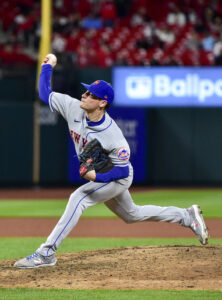
Little has changed in the two years since. Smith remains a fixture in the Mets’ stable of high-leverage options. He’s already picked up seven holds and two saves in 2023, and dating back to Opening Day 2021, he’s pitched 108 innings with an even 3.00 ERA, a 27% strikeout rate and a 9.3% walk rate. This year’s two saves are the first two of his career, and he’s now picked up 21 holds dating back to Opening Day 2022 (after spending much of ’21 in middle relief).
Smith isn’t a superstar by any stretch of the imagination, and he lost nearly two full seasons due to that Tommy John procedure. But he’s a consistent, steady presence in the Mets’ bullpen and is now up to 143 innings in his career, during which time he’s recorded a tidy 3.27 ERA. The Mets are using him in high-leverage spots more often, in part due to closer Edwin Diaz‘s knee injury, but regardless of the reason for it, Smith is answering the call nicely.
Smith is already in his second-to-last season of club control, but as it stands, the Mets look as though they’ll end up with about four and a half seasons worth of a quality middle relief/setup arm. Setting aside the 6.43 ERA he yielded in just seven innings during the shortened 2020 season in the immediate aftermath of his Tommy John procedure, Smith has posted a 3.54 ERA or better in all four of his years as a member of the Mets’ bullpen. He’s come largely as advertised, though he’s dropped that aforementioned curveball in favor of a slider as his favored secondary offering. Since being acquired, Smith ranks fifth among Mets relievers in total innings, fifth in RA9-WAR and eighth in ERA.
Getting several years of a quality reliever in exchange for two months of a defensively limited slugger with platoon issues isn’t the type of heist that fans will be talking about for generations to come, but it’s the sort of underappreciated move that has compounding value. Every year that the Mets entrust Smith with a spot in the bullpen is a year they don’t have to go out and pay free-agent prices to sign someone to do the same job. Free-agent middle relievers and setup men can range from $4-10MM in terms of average annual value, and the results are scattershot at best. And, if a veteran struggles after signing the type of two-year deal in the $12-18MM price range that’s common for free-agent relievers, said team may well have to further dip into the farm to solidify the bullpen come deadline season. Then-Mets GM Sandy Alderson and his staff have to be quite pleased with how things have played out, as does the current Billy Eppler-led baseball operations staff.
Braves Acquire Ben Heller, Designate Nick Solak
The Braves have acquired right-hander Ben Heller from the Rays in exchange for international bonus pool space and optioned him to Triple-A Gwinnett, per a team announcement. Outfielder Nick Solak was designated for assignment in a corresponding roster move.
Heller, 31, was just designated for assignment by the Rays last week. Signed to a minor league deal in the winter, he had his contract selected in late May but was optioned back to the minors before getting into a game. In 18 games at the Triple-A level for the year, he’s logged 27 1/3 innings with a 3.95 ERA, 26% strikeout rate, 6.1% walk rate and 49.4% ground ball rate.
He has a bit of major league experience, getting into 31 games with the Yankees from 2016 to 2020 with a 2.59 ERA in that time. Unfortunately, he then spent much of 2021 and 2022 injured before landing with the Rays this year. Tampa frequently cycles pitchers on and off their roster throughout the season but it seems that Heller drew enough interest from clubs around the league that Tampa will get a little bit of extra money to spend on international amateurs.
For Atlanta, they’ve dealt with some challenges to their pitching staff, especially with starters Max Fried and Kyle Wright on the injured list and facing significant absences. They also have relievers Dylan Lee and Michael Tonkin on the IL, alongside Tyler Matzek who underwent Tommy John surgery last year. They will add Heller to their Triple-A club and have a bit of extra depth on hand for when they need a fresh arm. Heller is in his final option year and will be out of options next year. He has over three years of service time and will be eligible for arbitration this winter.
In addition to giving up a bit of bonus pool money, the club is also risking losing Solak. The 28-year-old once seemed like a potential building block for the Rangers when he debuted in 2019 and hit .293/.393/.491 in his first 33 games. He had always hit well in the minors and there was little reason to doubt he would continue to do so. Unfortunately, he slashed just .246/.317/.354 from 2020 to 2022. He was also pushed off second base both due to his subpar work there and the club signing Marcus Semien. He’s since spent more time in left field, which put more pressure on his bat to provide value.
In November, the club finally decided to cut bait and flipped Solak to the Reds for cash. He lasted on the Reds’ roster through the winter but was designated for assignment at the end of Spring Training. He then went to the Mariners in another cash deal but got the DFA treatment again just 10 days later. A couple of waiver claims then took him to the White Sox and Braves in the middle of April. Solak hit .272/.364/.444 for a 106 wRC+ in 173 plate appearances for Gwinnett. He struck out in just 15.6% of his plate appearances while walking at a 9.8% rate.
Now Solak has been given the DFA treatment yet again and might soon find himself in a sixth organization in less than a year. Despite the struggles at the major league level, he continues to hit in the minors. He’s in his final option year so some club could put in a claim and stash him in the minors. He’s been limited to left field this year but perhaps some club would give him another chance at the keystone. If he were to clear waivers, he would stick with the Braves since he has less than three years of service time and does not have a previous outright.
Best Deadline Rental Returns In Recent History: Honorable Mentions
The calendar has flipped to June, and more than one-third of the season is in the rearview mirror. While there’s still plenty of time for the standings to change in dramatic fashion — just ask the 2022 Phillies or 2019 Nationals — the “early” portion of the season is a bit behind us. As the weather heats up and playoff pictures begin to take a more definitive shape, the baseball world inherently turns its focus to a few things: the looming All-Star Game, the upcoming amateur draft and, of course, the annual trade deadline.
June trades of note are admittedly rare — particularly over the past ten years or so — but we’re fast approaching the portion of the season where trade needs, potential trade candidates and many other deadline-adjacent minutiae begin to crystallize. It’s common for fans of rebuilding and/or underperforming clubs to begin to wonder just what sort of returns their favorite team might be able to eke out for veteran players with dwindling club control.
Some of the most common questions we’re asked in chats at MLBTR these days center around what a team might be able to get for a certain player — rentals in particular. Names like Lucas Giolito, Cody Bellinger, Jordan Montgomery and Jeimer Candelario were just a few readers asked me about this past week. To be clear, it’s not a given that all or even any of those specific names will change hands in two months’ time (or sooner), but it’s obviously a hot topic that’s on people’s minds.
As such, it only seemed natural to take a look back through recent history and look at some high-profile trades of rental players and see which panned out the best for the team selling off the veteran player in question. Over the next couple weeks, we’ll roll out a look at the ten “best” returns for rental players in recent trade deadline history.
A few caveats of note! At times, it can take three, four, five years or even longer for a team to begin reaping the benefits from such a deal. An immediate return isn’t always apparent, particularly when you’re only selling two months of a player or players. As such, we’re not considering trades completed at last year’s deadline for our top ten, even though they could well prove excellent as soon as 2024 or 2025. It’s simply too soon to evaluate those swaps. Also, these rankings are subjective; they’re not based on a hard-and-fast WAR criteria or anything of the sort. If you think we should’ve ranked No. 7 higher and No. 4 lower, let us know. It’s all part of the fun.
While I said we’re omitting last year’s deadline from our top ten, that doesn’t mean we’ll completely ignore the results of the 2022 deadline. To kick off the series, here’s a quick look at three honorable mentions from 2017-21 as well as a handful of 2022 trades that will be worth keeping an eye on in the years to come. Present-day impact of these 2022 trades has either been minimal or nonexistent, but each brought the “selling” team some nearly MLB-ready help that could be impactful as soon as this season. These honorable mentions and 2022 swaps aren’t ranked — they’re just sorted alphabetically by the last name of the player who was traded.
Let’s begin!
Honorable Mentions
Orioles acquire RHPs Dillon Tate, Cody Carroll and LHP Josh Rogers from the Yankees in exchange for LHP Zack Britton (7/24/18)
Two-thirds of this return for Baltimore wound up making little to no impact, but the acquisition of Tate, a former No. 4 overall draft pick, wound up paying dividends. Though Tate isn’t the rotation piece the Rangers hoped for when drafting him or the Yankees envisioned when acquiring him for Carlos Beltran, he’s emerged as a quality setup man at Camden Yards. The O’s gave Tate just ten starts after the trade before moving him to the bullpen, and while his rookie effort in 2019 left plenty to be desired, he’s since pitched quite well.
Dating back to 2020, Tate has a 3.65 ERA in 158 innings of relief, adding 25 holds and eight saves along the way. Tate’s 19.1% strikeout rate is below-average, but his 6.8% walk rate is better than average and his 57.9% grounder rate is outstanding. In 2022, he pitched to a pristine 3.05 ERA through 73 2/3 frames, tallying five of those saves and 16 of those holds. A forearm strain has kept Tate out of action this year, however.
Tate isn’t peak Britton and likely never will be, but trading two months of an elite reliever and winding up with six years of club control over an above-average reliever isn’t a bad outcome for Baltimore. As for the Yankees, they got the tail end of Britton’s prime. He notched a 2.88 ERA in 25 innings down the stretch and re-signed on a three-year deal with a fourth year option (that had to be exercised after the contract’s second season to prevent a Britton opt-out). Britton posted a sub-2.00 ERA in both 2019 and 2020, but he pitched just 19 innings over his final two years in New York due to injuries.
Rays acquire LHP Jalen Beeks from the Red Sox in exchange for RHP Nathan Eovaldi (7/25/18)
Few could’ve predicted what an impactful trade this would end up being at the time it was made. At the time of the swap, Eovaldi was in his first season back from Tommy John surgery and had pitched 57 innings of 4.26 ERA ball for Tampa Bay. He’d long intrigued teams with his power arsenal but was inconsistent and carried a career ERA that more or less matched that season total.
Eovaldi took off in Boston, however, tossing 54 frames of 3.33 ERA ball as the Sox marched to the postseason, where he cemented his status in Red Sox lore. Eovaldi was a star that October, tossing 22 1/3 innings of 1.61 ERA ball with a 16-to-3 K/BB ratio. Those are impressive numbers on their own, but they only tell part of the tale. Eovaldi won his first two starts of the playoffs before moving to the bullpen and picking up a pair of holds. But it was Game 3 of the World Series, where Eovaldi gutted out six innings of relief in an 18-inning marathon and finished out the game, that many will remember. The Dodgers wound up winning when Eovaldi’s 97th (!) pitch out of the bullpen was deposited in the seats by Max Muncy, but he saved the Boston bullpen with six innings of one-run ball that night. The Sox went on to win the World Series in five games.
As for the Rays, they came away with a lefty who’d come up through Boston’s system as a starter but would be used in a jack-of-all-trades role in St. Petersburg. Beeks has served as a long reliever, a setup man and an opener in parts of five seasons with Tampa Bay, totaling 258 innings of 4.12 ERA ball along the way. He’s been the type of versatile arm whose value can’t be neatly encapsulated in what looks like an otherwise modest WAR total. Beeks has handled just about any role the Rays could ask, and he’s generally been effective in doing so. He’s not a star, but he’s been an important member of their pitching staff for a half decade now and is still under team control through the 2024 season.
Tigers acquire RHP Reese Olson from the Brewers in exchange for LHP Daniel Norris (7/30/21)
The 23-year-old Olson made his big league debut on Friday when he stepped into the Detroit rotation to take the spot of the injured Eduardo Rodriguez. As far as debuts go, it was nearly as good as a young pitcher could ask for. Olson carried a no-hitter into the sixth inning before being tagged for a pair of runs and departing five frames of two-run ball in the books.
Olson isn’t regarded among the sport’s top 100 prospects and isn’t even universally considered to be among the Tigers’ top 10 prospects, but he’s missed bats consistently in the upper minors and is regarded as a potential long-term rotation piece if he can improve upon the command of his fastball. Scouting reports at Baseball America, FanGraphs, The Athletic and MLB.com praise Olson’s secondary pitches, particularly his changeup, which he’s begun using effectively even in right-on-right situations.
Detroit has seen a lot of turnover in the baseball operations department since this trade, but former GM Al Avila, AGM David Chadd and others will be in line for some praise if the Tigers get a viable big leaguer in exchange for two months of the veteran Norris, who was sitting on a 5.38 ERA in 36 2/3 innings at the time of the deal. Norris had been tough on lefties, and the Brewers surely felt they could coax a higher level of performance out of him with some tweaks. That didn’t happen, however, as Norris was rocked for a 6.64 ERA in Milwaukee, walking 15 of the 63 batters he faced (23.8%) and serving up five homers in 20 1/3 frames (2.2 HR/9).
2022 Deadline Swaps to Watch
Pirates acquire RHP Johan Oviedo, INF Malcom Nunez from the Cardinals in exchange for LHP Jose Quintana, RHP Chris Stratton (8/2/22)
Yes, technically this isn’t a pure rental. Stratton had an additional year of club control, and that surely factored into the return. But he was also sitting on a 5.09 ERA at the time of the deal, and this was largely a trade centered around getting Quintana to land some much-needed rotation help in St. Louis.
The Cardinals got just what they wanted out of this deal — and then some. Quintana stepped into the rotation and not only solidified the staff but pitched to a brilliant 2.01 ERA in 62 2/3 frames down the stretch. The lefty was so excellent that St. Louis wound up tabbing him as the Game 1 starter in last year’s National League Division Series. Quintana had signed a one-year, $2MM deal in the offseason and was acquired as a back-end starter but pitched like an ace. The script doesn’t get much better for the acquiring team.
That said, this trade also has the makings of a winner for Pittsburgh. The 25-year-old Oviedo has been inconsistent but shown flashes of brilliance with the Bucs. He’s throwing fewer fastballs and more breaking pitches — particularly more curveballs, which has been an extremely effective offering for him through 11 starts. Oviedo’s 4.50 ERA in 58 innings looks pretty pedestrian, but he’s upped his ground-ball rate and improved his velocity even in a rotation role. He’s allowed one or zero runs in six of his 11 starts this year. The Pirates can control Oviedo for four more years beyond the current season, and if he’s a legitimate starter or even a multi-inning relief piece, that’ll be a fine return for their modest Quintana flier. Nunez, meanwhile, hit .286/.381/.476 in Double-A following the trade and is at .255/.338/.369 in 160 Triple-A plate appearances this year.
Cubs acquire RHP Ben Brown from the Phillies in exchange for RHP David Robertson (8/2/22)
Robertson was one of the most in-demand relievers — or trade candidates in general — at last year’s deadline, and the rebuilding/retooling Cubs needed to get their return right. So far, it looks like they’ve done just that. Brown is out to a sensational start in the upper minors this year, pitching to a combined 2.63 ERA with a 35.5% strikeout rate against a less-appealing 11.7% walk rate. Baseball America ranked him sixth among Cubs prospects heading into the season, and The Athletic’s Keith Law called him a “heck of a get for two months of a 37-year-old reliever.” FanGraphs currently has him ranked 87th on their top-100 prospect list, and MLB.com moved him into its top-100 just this morning.
Despite Brown’s wide-reaching acclaim, the Phillies might not even regret making the swap. Robertson struggled with his command following the trade but still posted 22 1/3 innings of 2.70 ERA ball and saved six games for Philadelphia down the stretch in a tight Wild Card race that saw them edge out the Brewers by exactly one win. The Phillies needed every single victory, and if they’d held onto Brown and targeted a different reliever(s), who knows whether they’d have reached the playoffs? Were it not for Robertson — who pitched 7 2/3 innings of one-run ball in the playoffs — the Phils may never have experienced J.T. Realmuto‘s NLDS inside-the-parker, Rhys Hoskins‘ four-homer NLCS, or Bryce Harper‘s iconic NLCS-clinching bomb.
Angels acquire OFs Mickey Moniak, Jadiel Sanchez from the Phillies in exchange for RHP Noah Syndergaard (8/2/22)
This trade might not have gone as well as the Phillies hoped. Syndergaard was decent down the stretch, pitching to a 4.12 ERA in 10 appearances, nine of them starts. He started just twice in the postseason and made one relief appearance. Syndergaard pitched like a fourth or fifth starter but saw his already diminished velocity and strikeout rate step even further back following the trade. Again, the Phils needed every last win to get to the playoffs, though, so it’s hard to say they’d definitively have done anything different. They won six of Syndergaard’s nine starts and also picked up the victory in the lone game they used him out of the bullpen, when he tossed two scoreless frames.
At least thus far, Angels fans can’t complain about the return. Moniak isn’t going to sustain a .429 batting average on balls in play, but he’s hitting .327/.340/.694 in 50 plate appearances. The BABIP and a 34% strikeout rate scream for regression, but the former 1-1 pick has already hit as many homers through 50 trips to the plate with the Halos (four) as he did in 167 with the Phillies. He’s played good defense, run well and given some hope that he can carve out a role moving forward.
Red Sox acquire INF Enmanuel Valdez, OF Wilyer Abreu from the Astros in exchange for C Christian Vazquez (8/1/22)
Trading Vazquez was part of a disjointed Red Sox trade deadline that saw Boston trade away their longtime catcher and lefty reliever Jake Diekman while also acquiring Eric Hosmer and Tommy Pham. It wasn’t clear that their 2023 roster was improved, and the decision to hold onto other trade targets while adding Pham’s salary left them just over the luxury tax line (thereby reducing their compensation for qualifying offers extended to Xander Bogaerts and Nathan Eovaldi).
Digression aside, the swap might prove beneficial to the Sox in the long run. Valdez has already made his big league debut, and although his bat faded after a hot start, he’s still sporting a passable .244/.292/.422 batting line (91 wRC+) in his first 97 big league plate appearances. He’s picked up four homers, four doubles and three steals (in four tries) while subbing in at second base in the wake of a slew of middle-infield injuries. Valdez posted absolutely massive numbers in 205 Double-A plate appearances last year (.357/.463/.649) before moving up to Triple-A and hitting .265/.327/.488.
Abreu, meanwhile, was added to the 40-man roster over the winter and is hitting .264/.379/.479 in 40 Triple-A games so far. He’s regarded as a potential plus outfield defender, and his success in Triple-A and status on the 40-man roster mean the Red Sox could possibly have two MLB contributors within a year or so of trading Vazquez.
It’s hard to say anything moves the 2022 Astros made “didn’t work out,” as the team won the World Series in the end. But Vazquez took a backseat to Martin Maldonado both in the regular season and the playoffs, hitting just .250/.278/.308 in 108 regular-season plate appearances following the swap (plus .235/.316/.235 in just 19 playoff plate appearances).
Rays Place Brandon Lowe On Injured List
The Rays have placed infielder Brandon Lowe on the 10-day injured list due to inflammation in his lower back, per a team announcement. The move is retroactive to June 4. Infielder/outfielder Vidal Brujan has been recalled from Triple-A Durham to take Lowe’s spot on the roster.
Lowe, 28, sprinted out of the gates with an impressive power display early in the season, slashing .257/.368/.581 with seven homers through his first 87 trips to the plate. His OPS has plummeted by more than 250 points since that time, however, as he’s fallen into a dismal slump. Over his past 114 plate appearances, Lowe is slashing just .157/.237/.255 with a huge 30.7% strikeout rate.
The Rays held Lowe out of yesterday’s lineup with what was initially termed discomfort in his lower leg, but Lowe told reporters not long before the game that he’d also been experiencing discomfort in his back following a recent slide into third base. That issue, it seems, has proved problematic enough that he’ll be shelved for at least the next nine days. The team has not yet provided any sort of timetable for his return to the roster.
Brujan, 25, was long rated as one of the game’s top overall prospects but has yet to find any success in the big leagues. He’s seen time in each of the past three seasons but managed only a .161/.215/.233 output in 209 plate appearances. That includes a .250/.286/.250 slash in 21 trips to the plate this season. He’s been far better in Triple-A, where he sports a .268/.355/.435 batting line, 22 home runs and 79 steals in 198 games (883 plate appearances).
With Lowe sidelined, the ever-versatile Rays will have plenty of options to step into the lineup in his place. Each of Taylor Walls, Isaac Paredes and the newly recalled Brujan is plenty familiar with Lowe’s customary second base. The switch-hitting Walls and the righty-swinging Paredes are both much better against left-handed pitching than against righties. Brujan, also a switch-hitter, has typically been better from the left side of the plate, and that’s especially true in 2023: .286/.380/.484 versus righties, .167/.297/.241 versus lefties. For today, with the Rays taking on Red Sox righty Brayan Bello, it’ll be Brujan drawing the start and batting eighth.
Rays Activate Shawn Armstrong, Designate Joe La Sorsa
The Rays have made some moves in between games of their double-header with the Red Sox today, as reported by Marc Topkin of the Tampa Bay Times (via Twitter). Left-hander Joe La Sorsa was designated for assignment and righty Trevor Kelley was optioned to Triple-A. Taking their places in the bullpen are the newly-acquired Robert Stephenson, as well as another right-hander in Shawn Armstrong. For Armstrong, he is set to make his 2023 debut after being activated from the 60-day injured list, as he has been sidelined due to a neck injury.
Armstrong’s neck problem surfaced in early March, so he missed quite a bit of Spring Training and thus needed a good amount of ramp-up time once he was healthy enough to pitch. The veteran reliever made seven appearances with Triple-A Durham and performed well, with a 2.00 ERA over his even nine innings of work.
Tampa Bay’s bullpen has always been something of a revolving door due to the team’s penchant for shuttling fresh arms up and down from Triple-A, but injuries and an overall so-so performance from the relief corps (who rank 22nd in bullpen ERA) has led to a bit more shuffling than usual. The Rays hope that Armstrong and Stephenson can help provide some stability, as the bullpen has been basically the only relative weak link on a team that otherwise looks like a World Series contender.
That said, injuries within the rotation are also a major concern, with Drew Rasmussen out until around August and Jeffrey Springs done for the season due to Tommy John surgery. In addition to those sidelined pitchers, Josh Fleming is now also set to miss “at least several weeks,” Topkin writes, due to an elbow problem. Fleming said he felt “discomfort on the outside of the elbow and near his triceps,” and is undergoing an MRI and CT scan today to determine the nature of the injury.
Fleming has a 4.62 ERA over 48 2/3 innings this season, starting three of his 11 games. While the results have been inconsistent for the groundball specialist, Fleming’s ability to work as a swingman has been helpful to the Rays as they navigate these injuries, though now Fleming himself is looking at a lengthy absence. Topkin suggests that Tampa might call up Yonny Chirinos to work as a regular starter, and of course Tampa Bay could conceivably turn to their past strategy of openers and bulk pitchers rather than a traditional starter.
La Sorsa’s contract was selected last week, and the southpaw’s brief stint in the big leagues resulted in his MLB debut — two scoreless innings in the Rays’ 1-0 loss to the Cubs on May 29. The 25-year-old La Sorsa also pitched at the Triple-A level for the first time in 2023, posting a 3.86 ERA over 21 innings in Durham. La Sorsa has some decent but not standout numbers over his four career minor league seasons, so it’s possible the Rays might be able to sneak him through the waiver wire before outrighting him back to Triple-A.
Rays Designate Ben Heller For Assignment
The Rays announced that they have designated right-hander Ben Heller for assignment. His 40-man roster spot will go to Robert Stephenson, who was acquired in a trade today. The club will also need to open an active roster spot for Stephenson whenever he reports to the team.
Heller, 31, signed a minor league deal with the Rays this winter. He had his contract selected a little over a week ago but was optioned back to Triple-A before getting into a game. He’s tossed 27 1/3 innings over 18 appearances for the Bulls this year with a 3.95 ERA, 26% strikeout rate, 6.1% walk rate and 49.4% ground ball rate.
The right-hander has 31 games of major league experience, all of which came with the Yankees. Those were scattered across the 2016 to 2020 time frame, with Heller never topping 10 appearances in any individual campaign. He has a career 2.59 ERA, though with a .253 batting average on balls in play and 98.4% strand rate, both of which are unsustainably lucky. He was cut loose prior to the 2021 season then signed a minor league deal with the Diamondbacks but a stress reaction in his elbow cost him that entire season. He was with the Twins on a minor league deal last year but was only able to make seven appearances.
The Rays will now have one week to trade Heller or try to pass him through waivers. He is in his final option season and has been getting decent results in Durham. Given the number of pitching injuries around the league, it wouldn’t be a shock if some clubs were interested in nabbing Heller for some extra bullpen depth. Since he has over three years of major league service time, he would have the right to reject an outright assignment and elect free agency in the event he clears waivers.
Rays Acquire Robert Stephenson From Pirates
1:05pm: The Pirates have now announced the deal and that Williams has been assigned to Triple-A Indianapolis. Infielder Mark Mathias has been recalled to take Stephenson’s spot on the active roster.
12:20pm: The Rays have acquired right-hander Robert Stephenson from the Pirates, reports Rob Biertempfel of The Athletic. Minor league shortstop Alika Williams is heading the other way.
Stephenson, 30, came up as a starting pitcher for the Reds but has been converted to relief work over the past few years. The initial results of the bullpen move were positive, as he posted a 3.76 ERA over 57 appearances in 2019. Things took a downturn in the shortened 2020 season, however, with his ERA shooting up to 9.26 in 10 appearances that year. Prior to 2021, the Reds flipped him to the Rockies in exchange for Jeff Hoffman.
He then bounced back with a solid season in Denver, putting up a 3.13 ERA in 2021. He struggled again in 2022, running up a 6.04 ERA through August before he was designated for assignment and landed with the Pirates. He was able to finish on a high note with a 3.38 ERA in ten appearances for the Bucs down the stretch.
Here in 2023, he began the season on the injured list due to elbow inflammation but was able to return in the middle of April. He’s since made 18 appearances but has a 5.14 ERA in those. He’s still getting punchouts at a similar rate but his control seems to have fallen off this year. He struck out 26.8% of opponents from 2019 to 2022 and walked 7.9% but those figures are 27.9% and 13.1% this year.
That’s a small sample size but Stephenson has shown himself to be fairly inconsistent in his career, with notable swings in his effectiveness. Nonetheless, the Rays will take a shot on helping him harness his stuff. Given their track record of helping flawed pitchers get the best of their arsenals, it wouldn’t be a total shock to see Stephenson get back on track in Tampa.
Despite their reputation for producing an endless stream of quality relievers, they have had some bullpen struggles this year. They have five relievers currently on the injured list, which is putting a strain on their depth. The relief group as a whole has a collective 4.32 ERA on the season, a mark that places them 22nd out of the 30 clubs in the league. They have been looking in various places for reinforcements, including calling up several arms from their own system as well signing Jake Diekman after he was released by the White Sox. Now they will add Stephenson as well to see if he can be part of the solution as they try to hold onto the top spot in the cutthroat AL East. He will just be a short-term piece, however, since he’s slated for free agency this winter.
As for Williams, 24, he was the 38th overall selection in the 2020 draft. He has generally been considered one of Tampa’s top 30 prospects in the past few years, with his speed and defense standing out as his best qualities. The key question has been whether or not his bat would allow him to complement those skills. So far, the results there have been somewhat tepid. He hit .267/.312/.375 in 2021 across three different levels, producing a wRC+ of 86. Last year, he got his line up to .249/.353/.377 for a wRC+ of 104, spending most of his time in High-A. He’s been in Double-A this year, hitting .237/.314/.417 for a wRC+ of 101.
Williams isn’t a star prospect but he comes with a solid floor given his athletic abilities. Any offensive development would be a nice bonus for the Bucs, not a bad outcome for a struggling reliever that they grabbed off waivers less than a year ago.
MLBTR Trade Rumors Podcast: The Wide-Open NL Wild Card Race, Returning Pitchers and Cast-Off Veterans
Episode 9 of the MLB Trade Rumors Podcast is now live on Spotify, Apple Podcasts, and wherever you get your podcasts! Make sure you subscribe as well! You can also use the player at this link to listen, if you don’t use Spotify or Apple for podcasts.
This week, host Darragh McDonald is joined by Anthony Franco of MLB Trade Rumors to discuss:
- The National League Wild Card race (1:50)
- Will the lack of sellers change how the trade deadline looks? (3:00)
- The returns of Michael Soroka and Tyler Glasnow (4:55)
- Recently-cut veterans like Aaron Hicks, Eric Hosmer, Hunter Dozier and Jesus Aguilar (11:10) (Note: podcast was recorded prior to Hicks signing with the Orioles)
Plus, we answer your questions, including:
- Will the Giants impact the National League West race? (13:20)
- What do the Padres do with Juan Soto if they fall out of the race? (16:20)
- What will the Twins do before the trade deadline? (18:20)
- What can the Angels do with their rotation? (22:00)
Check out our past episodes!
- The Mets are turning things around, and how serious are the Mariners, Marlins and Diamondbacks? – listen here
- The Cardinals’ U-Turn on Willson Contreras, Mitch Keller’s breakout, and the state of the Padres – listen here
- Willson Contreras, the Rays’ success, what’s happening with the Astros – listen here
Nine Veterans With Upcoming Minor League Opt-Out Opportunities
As part of last year’s collective bargaining agreement, MLB and the Players Association agreed to a few automatic opt-out dates for some veteran players on minor league contracts. Article XX(B) free agents — players with over six years of MLB service who finished the preceding season on a big league roster — who sign minor league contracts more than ten days before Opening Day now receive three uniform chances to retest free agency if they’re not added to the majors.
The first comes five days before the start of the season. For players who pass on that initial opt-out, they have additional windows to explore the open market on both May 1 and June 1 if they’ve yet to secure a spot on the 40-man roster. The second of those dates spurred some roster movement this year. Chris Devenski, Jeff Hoffman and Billy Hamilton were all called up to keep them from testing the market. Chase Anderson and Gary Sánchez found MLB opportunities with other organizations after leaving the Reds and Giants, respectively.
As that third opt-out date nears, it’s worth checking in on a few players with opt-outs under the CBA (as well as one player whose minor league contract contained a June 1 opt-out provision).
- Red Sox C Jorge Alfaro
Alfaro is not an Article XX(B) free agent, as he hit the open market via non-tender from the Padres last fall. However, the minor league deal he signed with Boston reportedly afforded him opt-out chances on both June 1 and July 1.
There’s certainly an argument for the 29-year-old catcher to trigger that provision. Alfaro has had an excellent year with the Red Sox’s top affiliate in Worcester. Through 187 plate appearances, he’s hitting .320/.364/.523 and has connected on six home runs. His 4.8% walk rate is modest but he’s kept his strikeouts to a near-average 23% clip while hitting for power.
Alfaro has had an inconsistent big league career, flashing power potential and big arm strength but struggling with his plate discipline and receiving work. He’s a .256/.305/.396 hitter in over 1600 major league plate appearances.
The Red Sox have used Connor Wong and Reese McGuire as their catching tandem. They’ve combined for a decent .272/.309/.440 line, with Wong supplying some power while McGuire has done a serviceable job reaching base. Neither Wong nor McGuire stands as an obvious roadblock to an addition behind the plate but their cumulative production has been solid. Manager Alex Cora was noncommittal on bringing Alfaro up, telling reporters today the club is “very comfortable with Reese and Wong” (relayed by Chris Cotillo of MassLive). Cora expressed his hope that Alfaro would stick in the organization even if the Sox don’t call him up this week, though it remains to be seen if he’ll find a better immediate opportunity elsewhere.
- Nationals LHP Sean Doolittle
Doolittle’s return stint in Washington last year was cut short by a UCL internal brace procedure. He returned on a minor league deal but has been behind schedule as he works back to game shape. The 36-year-old has been on the injured list all season. He began a rehab stint a few days ago and has thrown two innings between Low-A and High-A. It seems likely he’ll remain with Washington and make it back to Triple-A Rochester before much longer.
- Rangers LHP Danny Duffy
Duffy has spent the entire season on the injured list. He’s working back from forearm issues that have prevented him from throwing a major league pitch since July 2021. It’s unclear when he’ll be ready to return to game action.
- Rays OF Ben Gamel
Gamel has had a solid showing in Triple-A since signing a non-roster pact in Spring Training. The left-handed hitting corner outfielder has a .257/.387/.436 line over 124 plate appearances for the Rays’ top affiliate in Durham. He’s walking at a stellar 17.7% rate against a manageable 24.2% strikeout percentage. He spent a couple weeks on the injured list earlier this month but returned to the Bulls’ lineup a week ago.
Unfortunately for the veteran, he could find it hard to crack a quality Tampa Bay outfield. Randy Arozarena has left field secured and the lefty-swinging Josh Lowe has had a breakout year to claim most of the right field reps. Luke Raley and Manuel Margot — neither of whom can be optioned to the minor leagues — are also in the outfield mix; Raley, in particular, has played very well this season. Gamel passed on his CBA opt-out dates in March and May.
- Brewers OF Tyler Naquin
Naquin was an Article XX(B) free agent who didn’t break camp with the big league club. He split the 2022 campaign between the Reds and Mets, combining to hit .229/.282/.423 over 334 trips to the plate. The left-handed hitting outfielder has only played 13 games with Triple-A Nashville after signing with the Brewers, hitting .250/.294/.375 with a pair of homers. He’s been on the minor league injured list since April 28.
- Tigers RHP Trevor Rosenthal
Rosenthal has had his last couple seasons washed away by injury. He lost 2021 to thoracic outlet syndrome and hip surgery, while his ’22 campaign was wiped out by hamstring and lat strains. The Tigers took a look at the one-time star closer in Spring Training and kept him in the organization with their highest affiliate in Toledo. Rosenthal pitched twice in the season’s first week before being placed on the minor league IL with a sprained throwing elbow.
- Giants RHP Joe Ross
Ross is recovering from last June’s Tommy John surgery and will spend most of the year on the injured list. He bypassed his first two opt-out chances and seems likely to do so again.
- Twins RHP Aaron Sanchez
Sanchez served a depth role for Minnesota last season, logging 60 innings over 15 outings (ten starts). He was tagged for a 6.60 ERA at the MLB level but performed well enough in Triple-A the organization brought him back. The former ERA champ has started ten games with their top affiliate in St. Paul this year. He has a 4.17 ERA over 41 frames. His 49.2% ground-ball rate is solid but he’s walked nearly 16% of batters faced while punching hitters out at just an 18.8% clip. Even with injuries to Tyler Mahle and Kenta Maeda, the Twins have had one of the game’s best rotations through two months.
- Padres RHP Craig Stammen
Stammen suffered a capsule tear in his shoulder in Spring Training. The 39-year-old has spent the year on the injured list and has admitted the injury might unfortunately end his career.