
Russell Martin Reflects On Last Year’s Free Agency Process
Russell Martin could have gone just about anywhere last offseason, but when all was said and done, he went home. The Toronto-born catcher inked a lucrative five-year, $82MM contract with the Blue Jays, turning down a field of suitors headlined by two large market teams. As one of the winter’s top prizes on the open market, Martin says that he was at ease knowing that he would wind up with a quality contract from a desirable team. 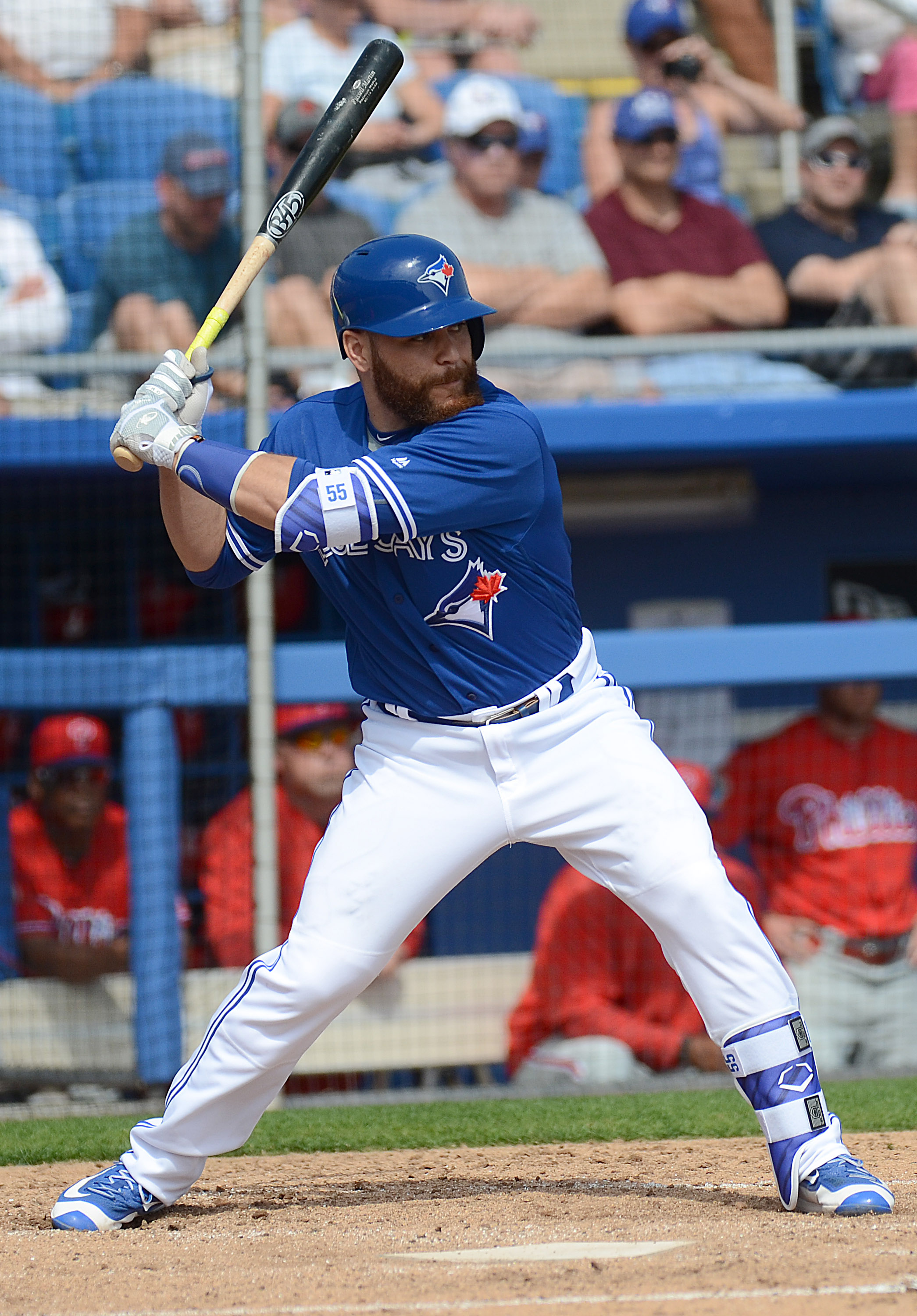
“It wasn’t stressful or anything. [Free agency] has never really been a stressful process for me,” Martin told MLBTR at the Blue Jays’ Spring Training complex in Dunedin, Florida. “I don’t have any kids or anything like that. I don’t have any family, so there’s nothing for me to answer to. The ability for me to play at home, for the team I grew up cheering for, that always had a good ring to it for me. The other options were [the Dodgers] and the Cubs, and those are really good places to play, so it was all positive for me. I really enjoyed the process this time.”
In addition to the Dodgers and Cubs, the Pirates made an effort to retain the catcher and the Mariners also got into the mix. For some, free agency is nerve-wracking, but Martin had no reason to get worked up given that several teams were anxious to give him eight figures per year. Martin was, perhaps, less plugged into talks than your average player on the open market, telling MLBTR that he only instructed his agent to reach out to him when there were major developments.
At this stage, Martin is obviously settled in and well-acclimated with his Blue Jays club. Last spring, Martin’s No. 1 task was to get acquainted with a completely new set of pitchers. This spring, the Blue Jays have a few new arms (including J.A. Happ) but Martin was happy not to have to start from scratch.
“Things are easier this year because I had a whole new pitching staff when I first got here. This year, I only had to focus on a few guys instead of like 20 guys. This year is a lot easier and things are a lot smoother. I can spend time with the new guys but still continue to build relationships with the guys that were here last year,” Martin explained.
Thanks to his long-term pact with Toronto, Martin shouldn’t have to think about the prospect of free agency again until after the 2019 season, at the earliest.
Photo courtesy of USA Today Sports Images.
MLBTR Originals
A look back at the original reporting and analysis found on MLBTR the last seven days:
- MLBTR caught up with Blue Jays pitcher Marco Estrada in the Blue Jays’ Spring Training clubhouse. In a one-on-one chat, Estrada opened up about his offseason negotiations with Toronto, which culminated with a two-year deal. “We tried to get a third or fourth year. I don’t think it was ever going to be close on their part. Obviously, I tried. I wanted less money for more years, but they didn’t want to do it. It’s fine. I like the deal I got now. I guess the AAV went up and it was only two years but, it’s good, you know, I can’t complain,” Estrada said.
- In Clearwater, Florida, Phillies pitcher Jeremy Hellickson spoke about the November trade that brought him to Philly. Within the chat with MLBTR, Hellickson confessed that it’s a little awkward being one of the rotation’s “veterans” at 28 years of age. “It is a little bit weird being one of the veteran guys on this rotation,” said Hellickson. “It was kind of the same situation alst year [in Arizona] but the game is getting younger. There are guys getting called up at 21 or 22 years old. I don’t feel old at 28, but 28 is kind of old in this game right now.”
- C. Trent Rosencrans of the Cincinnati Enquirer joined host Jeff Todd on this week’s edition of the MLB Trade Rumors podcast to discuss the Reds’ offseason moves, their crop of young pitchers, and proper beard care. That last one might not be true. A new episode of the podcast is released every Thursday and can be accessed on iTunes, SoundCloud, and Stitcher.
- The Cardinals will be without Jhonny Peralta for an extended period of time and they’ll need to replace his production somehow. MLBTR’s Steve Adams took a detailed look at some potential replacements for the shortstop (?). The free agent market doesn’t have many exciting names left, but Steve pointed out several interesting players that could be available via trade.
- Charlie Wilmoth kicked off MLBTR’s Offseason In Review series with a look back on the moves made by the Reds.
- Steve, a native Minnesotan, penned a detailed review of the Twins’ offseason moves. The Twins’ deal of note, Steve writes, was a surprising one, as Minnesota won the bidding on first baseman Byung Ho Park.
- Many expected the Rockies to sell this offseason, but that’s not exactly how things played out. Jeff looked back on Colorado’s somewhat surprising winter.
- MLBTR’s Tim Dierkes tipped his cap to White Sox GM Rick Hahn for an offseason in which the club improved its 2016 prospects without mortgaging its future.
- Steve reflected on the Indians’ offseason and the moves made by the club’s revamped front office. On the whole, Steve isn’t so sure that the Tribe did enough to build around the team’s terrific pitching.
- The Brewers aren’t positioned to be world-beaters in 2016, but they do have a promising future, as Charlie writes.
Offseason In Review: Minnesota Twins
Six months after a surprise pursuit of a Wild Card spot that lasted until the final weekend of the 2015 season, the Twins enter Spring Training with heightened expectations as the long-anticipated arrival of many prospects is now upon Minneapolis.
Major League Signings
- Byung Ho Park, 1B/DH: Four years, $12MM (plus $12.85MM posting fee)
Notable Minor League Signings
- Fernando Abad, Carlos Quentin, Ryan Sweeney, Brandon Kintzler, Darin Mastroianni, Aaron Thompson, Joe Benson
Trades and Claims
- Acquired C John Ryan Murphy from Yankees in exchange for CF Aaron Hicks
- Acquired 1B/OF Daniel Palka from D-backs in exchange for C/OF Chris Herrmann
- Claimed C John Hicks off waivers from Mariners
- Claimed LHP Mike Strong off waivers from Brewers
Extensions
- None
Notable Losses
- Torii Hunter (retired), Mike Pelfrey, Aaron Hicks, Blaine Boyer, Neal Cotts, Brian Duensing, Shane Robinson, Chris Herrmann, Josmil Pinto
Needs Addressed
Entering the offseason, the Twins’ most glaring need was behind the plate. Kurt Suzuki‘s initial one-year deal with the club was a solid enough short-term investment at the time, but rather than flip Suzuki at the trade deadline in 2014, the Twins rewarded a BABIP-fueled first half surge with a two-year, $12MM extension. Since that time, Suzuki’s offense has returned to its normal levels, as he’s batted just .242/.295/.327 with six homers in 634 plate appearances. That production is about 30 percent worse than that of a league-average hitter (70 wRC+), and it’s particularly problematic given Suzuki’s questionable defensive skills. Suzuki halted just 15 percent of attempted base-stealers last season, and he rated as the game’s fifth-worst defensive catcher in combining his framing, blocking and throwing efforts, per Baseball Prospectus’ Adjusted Fielding Runs Above Average.
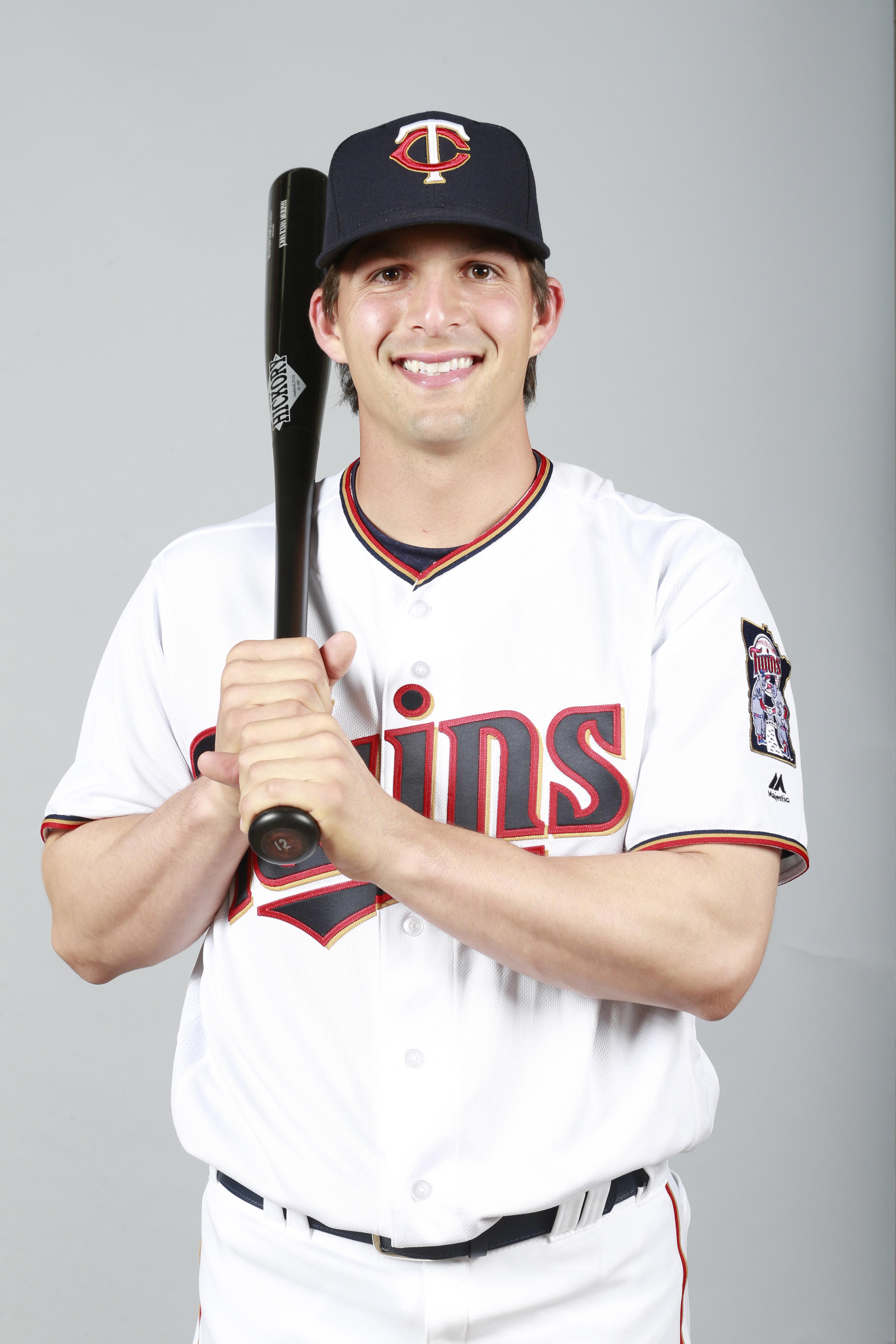
Despite a strong farm, the Twins lacked an MLB-ready catching prospect, and they heightened the need for catching help by trading last year’s primary backup, Chris Herrmann, to the Diamondbacks. With a dearth of catching talent and a glut of MLB-ready outfielders, the Twins parted with former first-round pick Aaron Hicks in order to land a controllable young backstop in the form of John Ryan Murphy (pictured left).
Hicks, a rangy switch-hitting outfielder with a huge arm but longstanding struggles against right-handed pitching, enjoyed his first full, productive season with the Twins last year, batting .256/.323/.398 with 11 homers and 13 steals. Surrendering four years of Hicks was probably difficult, but the Twins obtained a younger catcher with five years of club control in return. Murphy hasn’t tapped into his full offensive potential just yet — or at least the Twins hope he hasn’t — but produced a solid .277/.327/.406 batting line in 172 PAs last season. In his brief MLB career, Murphy has caught 28 percent of opposing thieves and rated as roughly average in terms of pitch framing and pitch blocking, so he represents a defensive upgrade over Suzuki. He’ll probably be eased in behind the plate, but Suzuki’s vesting option triggers at 485 PAs, so it’s in the Twins’ interest to slowly increase Murphy’s playing time. While Suzuki has only averaged 491 PAs over the past two seasons, the Twins would probably prefer to avoid a Marlon Byrd-esque situation, in which the Giants sat Byrd over the season’s final weekend, leaving him just six PAs shy of his option vesting and creating an uncomfortable situation all around.
Twins executives, coaches and players will emphatically state that there’s no replacing Torii Hunter’s impact on the clubhouse, but the front office did add what it hopes will be a more productive right-handed bat by making a surprise play for Korean slugger Byung Ho Park. The 28-year-old Park has blasted 105 home runs over the past two seasons with the KBO’s Nexen Heroes, and while it’d be foolish to expect that he will replicate the .343/.436/.714 batting line and 53 homers he contributed in his final KBO campaign, the Twins would probably consider it a disappointment if he didn’t exceed Hunter’s .240/.293/.409 line and 22 home runs.
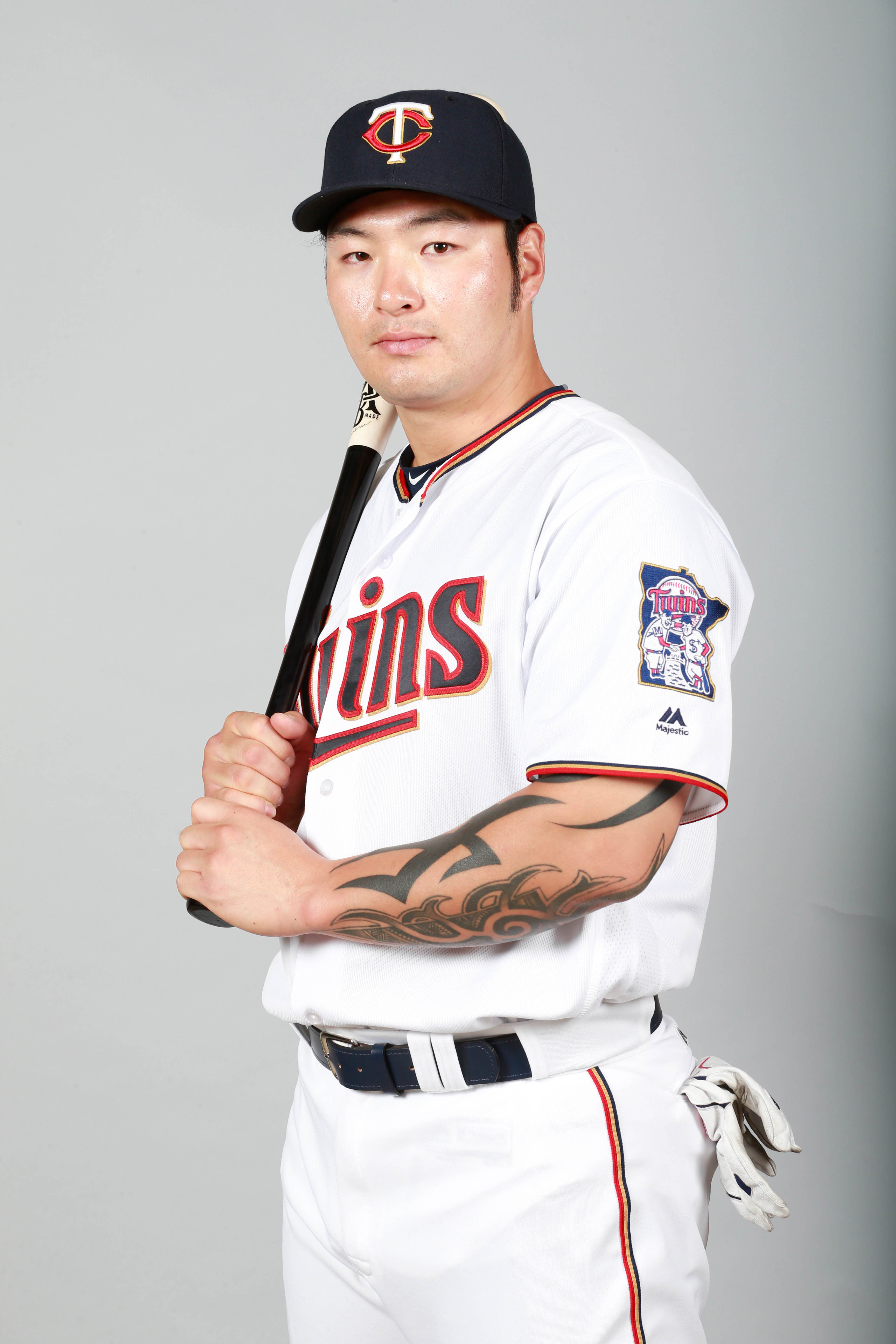
With Park in the fold, many pundits expected the Twins to deal Trevor Plouffe, opening third base for Miguel Sano and clearing the DH spot for Park. Insteadof trading Plouffe, though, the Twins shifted Sano to right field, which was vacated by the Hicks swap. The Twins, on paper, look to have plenty of right-handed pop, but it remains to be seen how Sano can handle his time in the outfield from a defensive standpoint.
The rest of the Twins’ offseason was largely uneventful. While there was long talk of adding a left-handed reliever, either via free agency or trade, the Twins instead added Fernando Abad on a minor league deal. Another lefty option was added via waivers when the team picked up Minnesota native Mike Strong from the Brewers.
Minnesota will turn to its farm system for the rest of the needs it would like to see addressed. In an ideal world, Byron Buxton will see a full season in center field, Tyler Duffey will repeat his late-season success, Jose Berrios will eventually surface in the Majors and push for a rotation spot, and utilityman-turned-starter Eduardo Escobar will thrive in a season as the new everyday shortstop.
Questions Remaining
That final paragraph of the preceding section sounds nice and rosy for the Twins, but it’s unlikely that each of those outcomes will come to be. Buxton floundered in his initial taste of big league action. Optimists, though, will note that he has endured early struggles upon each promotion to a new level. Buxton did rake at a .305/.367/.500 clip in 327 Triple-A PAs last season, so he has little left to prove in the minors.
While catcher was the club’s biggest offseason need, there’s been no greater revolving door in the Twins organization than shortstop over the past decade, as evidenced by the fact that Escobar will become Minnesota’s 10th Opening Day shortstop in 11 seasons. (Trivia: who was the only repeat starter? If you answered Pedro Florimon, you’re correct! You also probably cheated.) The 27-year-old Escobar has delivered consecutive seasons of slightly above-average production at the plate but hasn’t topped 465 PAs. If he falters, 2015 Opening Day starter Danny Santana, top prospect Jorge Polanco and utilityman Eduardo Nunez represent alternatives.
The Twins’ rotation was their primary downfall during the 2011-14 stretch of last-place finishes, but the club actually has some depth at in its starting staff now. Right-handers Kyle Gibson, Phil Hughes and Ervin Santana are locks for the rotation, and while none of the three will be mistaken for a No. 1 type of starter, each is a reasonable mid-rotation option. Hughes and Santana have displayed flashes of greater performance in their respective 2014 and 2013 seasons. Health for Hughes will be crucial, as the right-hander lost 1.4 mph off his heater from 2014 to 2015 and eventually missed a month with lower back inflammation. The aforementioned Duffey isn’t quite a lock for a spot, but manager Paul Molitor strongly implied that he’ll open the year on the starting staff. Long projected as a back-end starter, Duffey instead burst onto the scene with 58 innings of 3.10 ERA ball with a 3.24 FIP and 3.64 xFIP. His 8.5 K/9, 3.1 BB/9 and 49.7 percent ground-ball rate all impressed as well.
The biggest rotation question for the Twins is what to do with Ricky Nolasco. The right-hander is guaranteed $25MM through 2017 but has been a bust thus far, due partially to injuries. The Twins showed last spring that they weren’t afraid to put a fairly sizable contract in the ‘pen when they initially tabbed Mike Pelfrey for relief work, but a $12MM long reliever isn’t ideal, and recent comments from Nolasco’s agent suggest that such a decision could lead to drama.
Trevor May seems likely to return to a setup role, though there’s a case that he should be in the rotation. He was, admittedly, excellent in 31 1/3 relief innings last season, logging a 2.87 ERA with a 37-to-8 K/BB ratio. However, he also posted a 4.37 ERA, 3.25 FIP and 3.93 xFIP with a 77-to-18 K/BB ratio across 15 starts (80 1/3 innings) out of the rotation to begin the year. The out-of-options Milone, meanwhile, has a notable $4.5MM salary after avoiding arbitration this winter and is the sole lefty in the mix. Coming off a 3.92 ERA of his own in 128 2/3 innings, he too has staked a claim to a rotation spot. And despite all of the aforementioned options, Berrios has the highest ceiling of any option the Twins have, earning a top-30 ranking on the top 100 lists of Baseball Prospectus (17), MLB.com (19), ESPN (26) and Baseball America (28). He’s probably bound for Triple-A, though, which figures to buy the Twins another year of control down the line, even if he debuts later in the season.
The bullpen will be anchored by Glen Perkins, Kevin Jepsen and (probably) May. That trio figures to give the Twins three solid late-inning arms, but the Twins could’ve added extra relief help. Minnesota’s system is loaded with power arms in the form of righties Alex Meyer, Nick Burdi, J.T. Chargois and Jake Reed, but incumbent MLB options like Casey Fien, Michael Tonkin and J.R. Graham don’t inspire over-the-top confidence. Ryan Pressly was enjoying a sound season before a lat injury ended his 2015 campaign, so he’ll be back in the mix as well. But, left-handed options on the 40-man roster are few and far between. Abad figures to make the club and could be joined in the ‘pen by starter-turned-reliever Taylor Rogers, but dealing for a more proven arm like Milwaukee’s Will Smith or signing a veteran on a one-year deal to provide more stability certainly carried some merit.
It’s also worth noting that the Twins made a curious decision last offseason (in my mind, anyhow) to leave lefty Sean Gilmartin unprotected in the Rule 5 Draft while the likes of Aaron Thompson, Chris Herrmann and Chris Parmelee remained on the 40-man roster. Selected in the Rule 5 by the Mets, Gilmartin went on to enjoy an excellent rookie season in their bullpen and would be a welcome addition to the Twins’ current relief corps.
Last but not least, the Twins will face decisions on some players that once looked like potential core pieces. Danny Santana and Oswaldo Arcia are both out of options, and neither has developed into the regular that the Twins had hoped. Santana will presumably enter the season as the club’s backup center fielder (if not the starter, should it be deemed that Buxton needs more Triple-A time), but at a certain point, he’ll have to produce more than the woeful .215/.241/.291 line to which he struggled last year. Arcia, meanwhile, has already displayed 20-homer pop in the Majors, but he’s a poor defender who is limited to the outfield corners and posted a surprisingly meek .199/.257/.372 line at Triple-A last season. With Sano and Eddie Rosario entrenched in the outfield corners, Arcia is now looking for a bench spot, at best, but he could be exposed to waivers late in spring. The hard-throwing Tonkin also finds himself in the out-of-options boat, and he’ll need to earn a bullpen spot this spring to avoid that same waiver fate.
Deal of Note
MLBTR’s Tim Dierkes and I joked earlier this winter that if submissions for our Free Agent Prediction Contest had locked prior to the announcement of the Twins winning the bidding on Park, well under one percent of participants would’ve pegged the Twins as his landing spot. Minnesota’s $12.85MM posting fee topped a pair of clubs that reportedly exceeded $11MM with their bids, though, leaving the club with a month to negotiate.
The Pirates signed Park’s former teammate, Jung Ho Kang, for four years and $11MM after submitting a winning bid of $5MM. That the Twins were able to lock up Park for just $1MM more than Kang despite the fact that their bid was more than 2.5 times greater than Kang’s winning bid suggests that the team landed something of a bargain. A yearly investment of $3MM (or $6MM, if you prefer to pro-rate the posting fee) is a virtually negligible sum in today’s contractual landscape, and Park can essentially justify that investment simply by checking in above replacement level. Landing a potentially above-average everyday bat for the same price that other clubs dedicated to setup men (Ryan Madson, Joakim Soria) and fourth starters (Yovani Gallardo, Marco Estrada) over a shorter term looks like a win, on paper.
Overview
The Twins made a pair of potentially impactful moves in the offseason’s early stages but were largely inactive in the subsequent four months. The fate of the 2016 iteration of the team will be largely decided by the readiness of a crop of emergent talent whose assembly has been nearly half a decade in the making. Few would call the Twins favorites in the American League Central, but there’s enough talent on the roster to play meaningful games for a second consecutive September. Whether that culminates with another miss or the team’s first postseason berth since 2010 will be determined by whether Sano, Duffey and Rosario can repeat their 2015 rookie success and whether some combination of Buxton, Berrios, Park and the team’s collection of flamethrowing relief prospects can solidify themselves as Major Leaguers. Improved second-half results from Brian Dozier or any kind of rebound from former superstar Joe Mauer would further boost the team’s hopes, but more than anything, the Twins have invested in youth to lead the way. In that regard, the team’s fairly quiet offseason was the product of more than four years of rebuilding.
With that long-winded rundown out of the way, it’s your turn to grade on Minnesota’s offseason (link to poll for MLBTR app users)…
How would you grade the Twins' offseason?
-
C 43% (1,817)
-
B 30% (1,243)
-
D 17% (693)
-
F 6% (260)
-
A 4% (168)
Total votes: 4,181
Photos courtesy of USA Today Sports Images.
Offseason In Review: Milwaukee Brewers
David Stearns took the Brewers’ GM job in September and acted decisively to continue the organization’s rebuilding plan. The team won’t be very good in 2016, but its future suddenly looks bright.
Major League Signings
- 1B Chris Carter: one year, $2.5MM
Notable Minor League Signings
- Franklin Morales, Blaine Boyer, Chris Capuano, Cesar Jimenez, Eric Young Jr., Will Middlebrooks, Alex Presley, Jake Elmore
Trades And Claims
- Acquired SP Chase Anderson, SS Isan Diaz and IF Aaron Hill from Diamondbacks for SS Jean Segura and P Tyler Wagner
- Acquired C Jacob Nottingham and P Bubba Derby from Athletics for OF Khris Davis
- Acquired P Carlos Herrera, P Daniel Missaki and P Freddy Peralta from Mariners for 1B Adam Lind
- Acquired 2B Javier Betancourt and C Manny Pina from Tigers for P Francisco Rodriguez
- Acquired OF Rymer Liriano from Padres for P Trevor Seidenberger
- Acquired OF Keon Broxton and P Trey Supak from Pirates for 1B Jason Rogers
- Acquired OF Ramon Flores from Mariners for IF Luis Sardinas
- Acquired IF Jonathan Villar from Astros for P Cy Sneed
- Acquired 3B Garin Cecchini from Red Sox for cash
- Claimed SP Sean Nolin from Athletics
- Claimed C Josmil Pinto from Padres
- Claimed 1B Andy Wilkins from Rangers
- Claimed OF Kirk Nieuwenhuis from Mets
- Claimed P Junior Guerra from White Sox
- Selected 2B Colin Walsh from Athletics and P Zack Jones from Twins in the Rule 5 Draft
Extensions
- None
Notable Losses
Needs Addressed
This time last year, the Brewers were in a holding pattern. Their core was getting older and more expensive, and they were coming off an 82-80 2014 season and a second-half collapse. But their decent collection of veteran talent (Carlos Gomez, Jonathan Lucroy, Ryan Braun, and so on) and weak farm system meant that initiating a rebuilding process right away might have been more painful than just hoping for the team to be competitive in the short term and waiting to rebuild.
Their 2014-15 offseason was, accordingly, a tepid one. They traded Yovani Gallardo and Marco Estrada, but actually returned a veteran (Adam Lind) rather than young talent in the Estrada trade and generally didn’t make any dynamic moves to change the direction of their franchise.
That changed quickly when the 2015 season began and the Brewers found themselves in a 5-18 hole by May 1. The terrible start perhaps provided the organization with clarity it needed, and the team quickly replaced manager Ron Roenicke with Craig Counsell and began shipping out veterans (including Gomez, Mike Fiers, Gerardo Parra, Aramis Ramirez, Jonathan Broxton and Neal Cotts). They also hired the youthful David Stearns (who recently appeared on the MLBTR Podcast) to be their new GM, with Doug Melvin moving into an advisory role.
Stearns had already been part of one aggressive rebuilding project as assistant GM of the Astros, and at least at this early point, it looks like he at least has the fortitude to lead one in Milwaukee. His first offseason was a busy one, as he continued dealing veterans and adding to an increasingly impressive base of young talent while reshaping the organization to fit his vision.
It’s hard to tell what the Brewers’ Opening Day roster might look like. Holdovers Lucroy, Braun and Scooter Gennett will occupy familiar spots, but the rest of the lineup is in flux. First base will likely be occupied, at least in part, by Chris Carter, the only big-league free agent the Brewers signed this winter. Carter has tremendous raw power but strikes out constantly and is a defensive liability. He’s also 29 and doesn’t seem likely to age well. He should, however, bat closer to .220 or .230 than the .199 he hit last year. If he can get his average any higher than that, he might be a tempting trade-deadline acquisition for a contender. The Brewers could also take him to arbitration and keep him through 2018 if he’s successful. Given Carter’s power and the Brewers’ ability to control him beyond 2016, $2.5MM seems like a very reasonable price to have paid, particularly with the Orioles paying more than twice as much for Pedro Alvarez, who is in many ways a similar player.
Carter replaces Adam Lind and (to a lesser extent) Jason Rogers, who both headed elsewhere in trades. For one year of Lind, the Brewers got a trio of very young arms in Carlos Herrera, Daniel Missaki and Freddy Peralta. None of them have yet turned 20, but all have posted impressive peripheral numbers in the very low minors. None are yet highly rated, but it wouldn’t be a shock to see one of them emerge as a serious prospect within a year or two. For Rogers, they got Keon Broxton (a young outfielder who lacks offensive upside but has blazing speed, strong defensive ability and a fresh service-time clock) and Trey Supak, a 2014 second-round pick who will join Herrera, Missaki and Peralta among the Brewers’ growing group of interesting lottery-ticket arms.
2015 shortstop Jean Segura is also gone after a clever trade to the Diamondbacks. For their willingness to eat $5.5MM of the remaining contract of veteran infielder Aaron Hill (who Counsell says will get the first shot at the Brewers’ open third base job), the Brewers arguably got not only the best current big-leaguer in the deal (Chase Anderson, a fourth starter type who should help Milwaukee’s rotation get through the team’s rebuilding period) but also the highest-upside player (infielder Isan Diaz, who’s far from the Majors but hit brilliantly for both average and power last year as a 19-year-old in the Pioneer League). Segura, meanwhile, has not developed since his 2013 breakout, and his 93 strikeouts and 13 walks in 2015 suggest he has plenty of improving to do if he’s going to be an asset. The Brewers also gave up starting pitcher Tyler Wagner, who posted a good ERA last season at Double-A Biloxi but was somewhat old for the level and was not particularly impressive, either in terms of his stuff or his results, in a brief trial in the big leagues. Wagner’s ability to get ground balls could lead to a career as a back-of-the-rotation type in the Majors, and Segura is young and could perhaps turn his career around, but it doesn’t look like the Brewers gave up much.
Stearns also made two other trades involving potential utility infielders. First, he sent pitcher and 2014 third-round pick Cy Sneed to Houston for Jonathan Villar. Sneed hasn’t yet pitched at Double-A, although his numbers were promising in his first pro season. Villar, meanwhile, has never really hit much (his .284 average in a small sample in the big leagues in 2015 notwithstanding). He runs the bases well and can play multiple positions, though, and he has five years of service time remaining before free agency. The deal was Stearns’ only trade of a minor-leaguer for a big-leaguer this offseason and appears to run counter to much of what the Brewers tried to achieve this offseason, although that isn’t necessarily a big deal — Sneed is less than two years younger than Villar and isn’t a top prospect.
Stearns then shipped 2B/SS Luis Sardinas to Seattle. Sardinas had been in the Brewers organization for less than a year and is still just 22, but his recent track record (and especially his .282/.319/.359 line last season at hitter-friendly Triple-A Colorado Springs) raises questions about whether he’ll hit even as well as Villar currently does. In return, the Brewers received Ramon Flores, a young left-handed hitter with some on-base ability and offensive upside who could become a fourth outfielder. He could get that chance as soon as this year, since he’s out of options and is fully recovered from an ankle injury he suffered last August.
Questions Remaining
There are many, which isn’t surprising, given that the Brewers don’t figure to contend this year. Villar seems likely to win the shortstop job, but he could move to second once top prospect Orlando Arcia is promoted. That could bump default second baseman Gennett, who’s coming off a disappointing 2015 season, to the bench. At third, it’s hard to believe the Brewers will remain satisfied with Hill if he continues to perform as he has the last two seasons. If he falters, minor-league signee Will Middlebrooks or trade acquisition Garin Cecchini could take over; those players have been disappointing in recent years as well, but at least they’re younger. (Since none of those options look particularly inspiring, it might have been interesting to see the Brewers sign free agent third baseman David Freese, who could help out at the position and potentially return a prospect at the deadline.)
Left field and right field appear set with Braun and Domingo Santana, but what will happen in center is unclear. Brett Phillips, who was part of the Carlos Gomez trade package along with Santana, could be the long-term answer at the position. He has limited experience in the high minors (and is currently dealing with an oblique strain), however, so he’s unlikely to start the season in the bigs. That leaves a variety of potential center field options to start the season, including Kirk Nieuwenhuis, Broxton and perhaps Shane Peterson or Flores. One of the more interesting possibilities is Rymer Liriano, a former top prospect the Brewers acquired in a minor deal in January after the Padres designated him for assignment. Liriano hasn’t performed to expectations since he missed the 2013 season due to an elbow injury, but he’s still just 24, appears to have a bit of offensive ability and hit fairly well last year, albeit in a hitter-friendly environment at Triple-A El Paso. Getting Liriano for minor-league reliever Trevor Seidenberger could prove to be a small coup for the Brewers.
The Brewers’ rotation, in contrast, is relatively set, with Jimmy Nelson, Wily Peralta, Taylor Jungmann, Matt Garza and Anderson. (Zach Davies, one of last year’s trade acquisitions, did enough down the stretch to warrant consideration for a rotation spot, but could end up at Triple-A unless the Brewers clear space by, say, unloading a portion of Garza’s contract in a deal.) There will be competition in the bullpen, though, including at the closer spot. In November, the Brewers sent veteran fireman Francisco Rodriguez to Detroit for infielder Javier Betancourt and a player to be named, later revealed to be journeyman catcher Manny Pina. Betancourt is a tough player to evaluate — he didn’t hit much in 2015, but some of that is likely due to the fact that he was barely 20 and playing against older competition in the Florida State League. He could eventually become an everyday second baseman, but he doesn’t figure to contribute this season.
In K-Rod’s absence, Jeremy Jeffress and Will Smith will battle for the closer spot. There will be competition for bullpen spots elsewhere, but Michael Blazek and Corey Knebel appear likely to win jobs after having solid 2015 seasons.
In the meantime, the Brewers have only a handful of veterans left who might be tradable. Chief among them is Lucroy, whose terrific contract (which contains a cheap 2017 option) and strong track record make him a significant asset despite a disappointing and injury-shortened 2015 season. It’s still possible the Brewers could deal him before they break camp, and the timing of such a deal might make sense. Lucroy is now catching in Spring Training games, so any interested teams can confirm he’s healthy, and some teams might be slightly reluctant to trade for a starting catcher once a season has begun. (Lucroy has a limited no-trade clause that allows him to block deals to eight teams, although given his recent comments about preferring to play for a winning team, that might not be an obstacle.)
Braun could eventually be dealt, too, although the Brewers might have to pay some of the $95MM remaining on his contract. Now might not be right time to trade him, since had back surgery in October, but if he gets off to a good start this season, it wouldn’t be surprising to see him on the market this summer. Relievers like Jeffress, Tyler Thornburg and especially Smith could also attract interest, and Peralta could be a possibility as well if he pitches well for a few months.
Deal Of Note
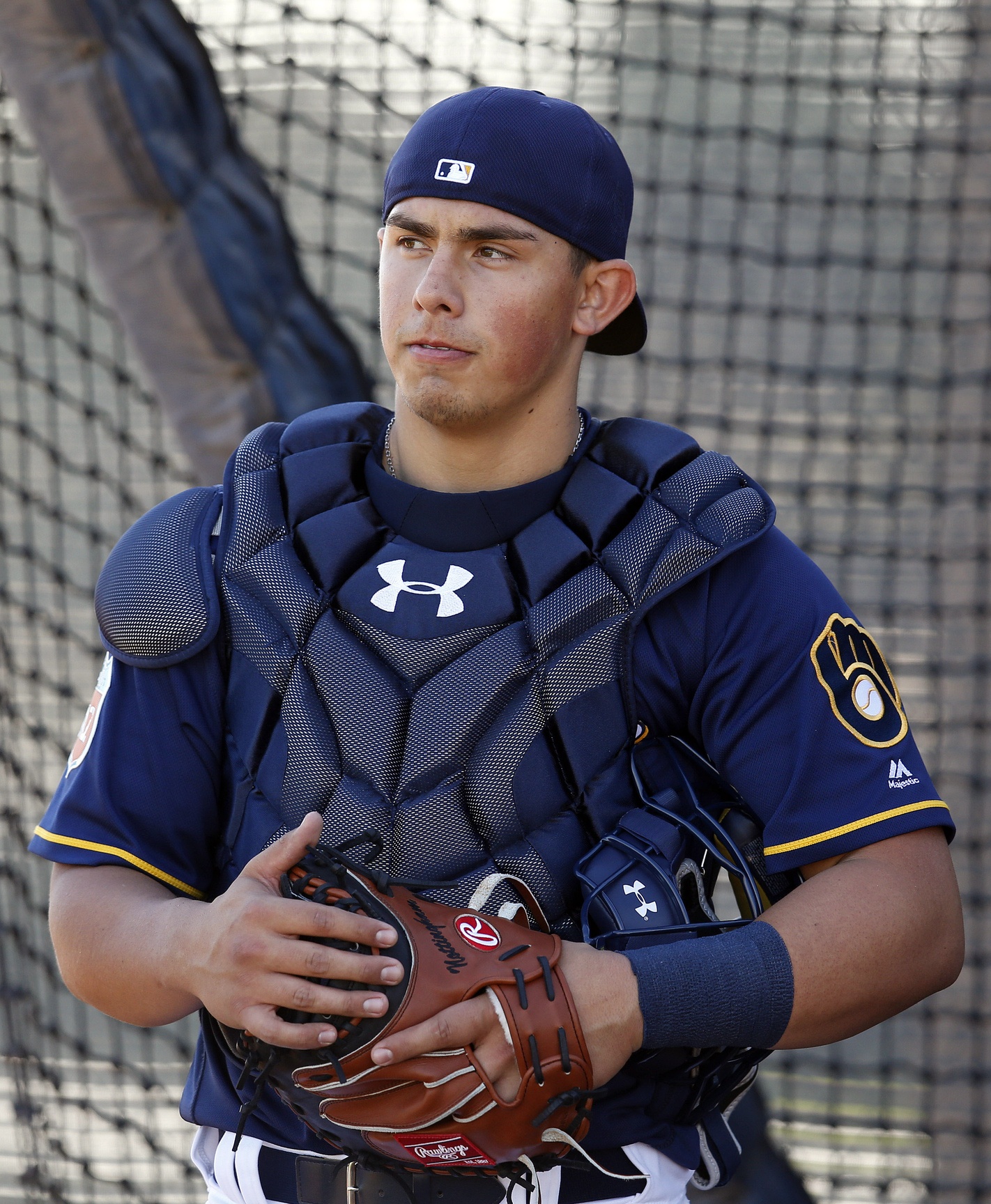 The offseason trade that netted the Brewers their most significant return was the deal that sent Khris Davis to Oakland for Jacob Nottingham and Bubba Derby. Davis has four years of control remaining and has significant raw power, belting 49 home runs in the past two seasons. He is, however, 28, and has obvious weaknesses, including generally weak on-base percentages and limited defensive value. It’s possible his increased walk total in only his second full season in the league last year indicates a promising future, but given his age, it’s more likely that the Brewers traded him somewhere near the peak of his value.
In return, they received Bubba Derby — a righty sixth-round pick from the 2015 draft who carved up short-season ball in his pro debut — and catcher Jacob Nottingham (pictured). Nottingham (who had already been traded once, going from Houston to Oakland in the Scott Kazmir deal) is currently the more valuable of the two pieces. He broke out in 2015 at Classes A and A+, posting a .316/.372/.505 line as a 20-year-old. If he can stick at catcher, his offensive ability could make him very valuable, although reports on his defense are mixed. Even if he has to move to another position, he has the chance to contribute, perhaps even as a first baseman if he can continue developing the power that helped him hit 17 home runs this season.
Overview
When Stearns arrived, the Brewers’ rebuild was already in progress, and he’s spent the offseason continuing what Melvin had already started. More than that, though, Stearns began to reconfigure the organization to suit his preferences. That was clear in his acquisition of former Astros players like Carter, Nottingham, Villar and minor-league signees Alex Presley and Jake Elmore, as well as Stearns’ plentiful waiver claims and Rule 5 selections this winter.
Time will tell how many of these acquisitions turn out to be important ones, but it’s clear that Stearns improved a farm system that was already getting better. In 2014, Baseball America ranked the Brewers’ farm system the second worst of any organization. This year, the Brewers ranked ninth best. That improvement is primarily due to prospects like Arcia, Phillips and Trent Clark, all of whom were acquired under Melvin.
Then again, most of Milwaukee’s best trade assets (like Gomez, who Melvin dealt to get a package that included Phillips) had already been dealt by the time Stearns arrived. Much of the talent Stearns had available to trade this offseason didn’t appear likely to return top-100-type prospects, so Stearns instead sought potential role players with a bit of upside (like Anderson, Liriano, Flores and Broxton) and interesting players from the low minors (like Diaz, Derby, Herrera, Misaki, Peralta and Supak). That approach wasn’t glamorous, but it seems likely to yield a couple competent complementary players in the short term, and in the long term, it wouldn’t be surprising if one or two of the very young players the Brewers acquired emerged as top prospects.
In the meantime, the Brewers will attempt to piece together which of their new players might be parts of their next competitive team. Given the talent they have on the way — with Arcia, Phillips, and righty Jorge Lopez all sticking in the big leagues this year or next and a raft of interesting players below them — they could become fun to watch reasonably quickly, even if it takes a few years for them to become competitive in a tough NL Central division.
Let’s turn it over to MLBTR readers with a poll (link to poll for mobile app users)…
How would you grade Milwaukee's offseason?
-
B 32% (1,151)
-
A 28% (1,000)
-
C 18% (630)
-
D 13% (463)
-
F 9% (310)
Total votes: 3,554
Photo courtesy of USA Today Sports Images.
Offseason In Review: Cleveland Indians
This is the fourth entry in the Offseason In Review series. You can also read our Reds, Rockies and White Sox entries. The full index of Offseason In Review posts can be found here.
The Indians saw longtime execs Mark Shapiro and Ross Atkins depart to head up the Blue Jays’ baseball operations department, leaving the subsequently promoted president of baseball operations Chris Antonetti and GM Mike Chernoff to fill out the roster around one of baseball’s best pitching staffs.
Major League Signings
- Mike Napoli, 1B: One year, $7MM
- Rajai Davis, OF: One year, $5.25MM
- Juan Uribe, 3B: One year, $4MM
- Tommy Hunter, RP: One year, $2MM
- Total Spend: $18.25MM
Notable Minor League Signings
- Will Venable, Craig Stammen, Ross Detwiler, Joe Thatcher, Tom Gorzelanny, Joba Chamberlain, Felipe Paulino, Robbie Grossman, Shane Robinson, Anthony Recker, Adam Moore, Michael Martinez
Trades
- Acquired OF Collin Cowgill from Angels in exchange for cash considerations
- Acquired RHP Dan Otero from Phillies in exchange for cash considerations
Waiver Claims
- Claimed OF Joey Butler off waivers from the Rays
Extensions
- Josh Tomlin, SP: Two years, $5.5MM plus $3MM club option ($750K buyout)
Notable Losses
- Chris Johnson (released), Mike Aviles (option declined), Ryan Raburn (option declined), Jerry Sands, Nick Hagadone, Gavin Floyd
Needs Addressed
Unlike most clubs entering the offseason, Cleveland didn’t feel an overwhelming need to search for pitching, as the club has three top-tier starters under control for the foreseeable future in the form of Corey Kluber, Carlos Carrasco and Danny Salazar (to say nothing of a high-ceiling fourth starter in Trevor Bauer and a pair of quality options for the fifth spot in Josh Tomlin and Cody Anderson). Rather, the question was whether the club would deal from its potential pitching surplus to address other needs around the diamond. With room for upgrades at both infield corners and a pair of outfield spots, there were a number of routes that the Tribe could take to improve an offense that finished 11th in the American League in runs scored.
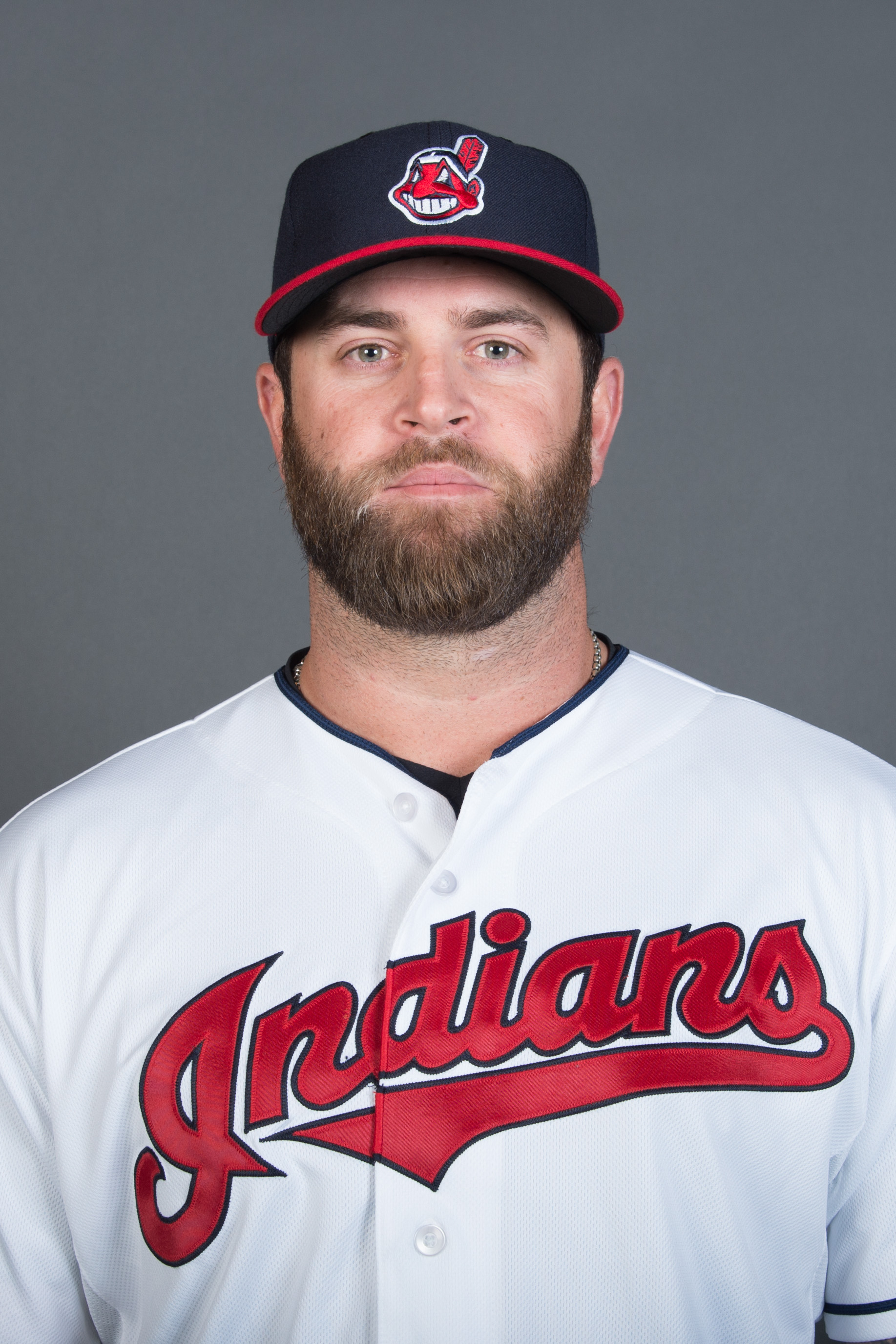
Mike Napoli was brought in to serve as an upgrade at first base, and he’ll provide the club with a strong glove there, pushing Carlos Santana to DH duty. Napoli didn’t hit much in Boston last season, but he batted .295/.396/.513 upon being acquired by the Rangers late in the year. The catcher-turned-first-baseman still crushed left-handed pitching last season, but at $7MM — a fairly notable sum that represents nearly 40 percent of the free-agent spending by the Indians — they’ll be expecting him to produce even against same-handed pitching.
The need across the diamond at third base was certainly more palpable than the need at first, and while the Indians waited awhile to address the position, the club’s late signing of Juan Uribe should serve as an upgrade. Though he’ll turn 37 later this month, Uribe continues to grade out well defensively at third base. While he might not yield the level of defensive value that a platoon of Jose Ramirez and Giovanny Urshela could have produced, Uribe should be average or better with the glove with a markedly superior bat. This past season, Uribe slashed .253/.320/.417 with 14 home runs in 397 plate appearances, thereby continuing a resurgence that began in 2013 with his age-34 campaign. Uribe almost certainly won’t return to his ways as a 20- to 25-homer threat, but a collective .281/.329/.432 batting line across three prior seasons suggests that there’s still life in his bat, and his personality should be a boon to the clubhouse.
Left-handed relief was perhaps the one area in which the Indians have some uncertainty on the pitching staff, and the front office added a number of veteran arms on minor league deals in the hopes of parlaying one or two into solid production. Lefties Joe Thatcher, Ross Detwiler and Tom Gorzelanny have all had success in the Majors within the past two seasons, and any could emerge as a complement to incumbent options like Kyle Crockett and Giovanni Soto. Alternatively, upper-level minor leaguers Shawn Morimando and Ryan Merritt could emerge as lefty relief candidates, and former fifth starter T.J. House remains on the 40-man roster (though he missed most of 2015 with shoulder injuries and struggled in a return to action in last year’s Arizona Fall League).
Questions Remaining
The outfield was already the Indians’ largest question mark heading into the offseason, and that uncertainty only became more pronounced with the news that Michael Brantley would require surgery to repair his ailing shoulder. However, despite a glaring need, the club’s only big league acquisition was veteran speedster Rajai Davis. While the fleet-footed Davis remained a productive player throughout his two most recent seasons with the division-rival Tigers, he’s a right-handed hitter that comes with a notable platoon split, making him best-suited for part-time work.
Losing Brantley was a sizable enough blow to the team, but the club lost projected center fielder Abraham Almonte to an 80-game PED suspension in the first week of Spring Training. That Cleveland was relying on the journeyman Almonte, a career .244/.297/.378 hitter that batted an improved .264/.321/.455 in 196 PAs with the Indians last year, was a questionable decision in the first place, as I noted in previewing the team’s offseason back in early October.
With Almonte and Brantley out of action, Cleveland will look to some combination of Davis, Lonnie Chisenhall, Collin Cowgill, Joey Butler and minor league signees like Will Venable and Robbie Grossman in the outfield. Prospect Tyler Naquin, too, could factor into the mix with a strong spring after a solid minor league showing in 2015. None of those options come with much certainty, though a few patchwork platoons could be forged. Davis has long handled left-handed pitching quite well, so he could be paired with newly converted outfielder Chisenhall (who posted brilliant defensive marks in a small sample last year) in right field or with Venable in center field. However, Venable has suffered through two dismal seasons, and at 33 years of age, it’s fair to wonder if there’s been some deterioration of his skills.
Cowgill and Butler are, like Davis, right-handed bats best-suited for part-time work; Cowgill comes with a more defensive-minded approach, whereas Butler provides more with the bat but less with the glove.
It should be pointed out that Austin Jackson remained available on the free agent market even after the Almonte suspension, but the Indians watched him sign a one-year, $5MM deal with the division-rival White Sox instead of bringing him into the fold. Cleveland reportedly showed interest in Jackson, but the payroll was long said to be tapped out. This is, of course, speaking with the glaring benefit of hindsight, but given the need in the outfield, the $7MM allocated to Napoli with the hopes that he can still hit right-handed pitching (which he failed to do in 2015) could arguably have been better spent helping to bolster Cleveland’s offer to Jackson. When Napoli signed, no one knew that Jackson would languish in free agency for this long, nor that Almonte would be suspended. But relying on Almonte was always a risk, and given the number of first base/DH types that signed late (or, in Justin Morneau‘s case, have yet to sign), there’s a good case to be made that prioritizing the outfield and pursuing a cheaper first base/DH option should have been Plan A all along.
All of this outfield uncertainty raises the question of whether the Indians should’ve dealt from their stockpile of controllable arms to add a bat into the mix. Top prospects Bradley Zimmer and Clint Frazier are both rising through the minor league ranks, so it’s understandable if the club feels that reinforcements are on the way. That, however, does little to improve the short-term outlook for a club that is otherwise well-positioned to contend within its division. The Indians were oft-connected to Marlins outfielder Marcell Ozuna, and we saw the Rockies part with a controllable corner option in Corey Dickerson without even securing a Major League ready starting pitcher. The D-backs, too, saw fit to part with five years of Ender Inciarte (and another pair of highly touted prospects) to add Shelby Miller to their rotation, and it can be argued that Cleveland has multiple arms that are superior to Miller. Other financially affordable names like Charlie Blackmon were said to be on the market, and there was even talk of the Astros being willing to entertain the thought of moving George Springer for a sizable enough return.
Cleveland boasts a rotation that would still look appealing even with one member subtracted, a solid bullpen and quality bench pieces in Jose Ramirez and Roberto Perez. (Any of the previously listed Butler, Cowgill or Venable would also make for a quality big league bench piece.) Relying on this outfield mix while also banking on returns to form from Napoli and Yan Gomes could very well create difficulty when it comes to scoring runs.
Deal of Note
Tomlin’s extension, while not the biggest headline-grabber, was one of the more peculiar multi-year deals in recent memory. Tomlin had already agreed to a one-year, $2.25MM contract to avoid arbitration, and he received the added perk of the Indians making that sum fully guaranteed (which is not the norm for arb salaries). His contract, however, guarantees him $5.5MM in total, including the upcoming season, meaning that Tomlin surrendered what would have been his first free-agent season for a total of $3.25MM. Beyond that, he gave the Indians control of his second free-agent season by virtue of a club option valued at $3MM (with a $750K buyout). If the option is picked up, Tomlin will receive $5.5MM for his first two free-agent years.
While he doesn’t come with a huge track record in the Majors, Tomlin showed promising gains in the strikeout department across the past two seasons, and we’ve seen teams throw around $5.5MM and more on one-year gambles (e.g. Rich Hill) with based on very small samples of success. The flipside, of course, is that he’s guaranteed himself some meaningful salary — something that was clearly important to Tomlin, as evidenced by the fact that his agents pushed for a fully guaranteed arb agreement. Still, if Tomlin enjoys even a reasonably healthy, successful season, his earning power would have vastly outpaced the extension’s modest guarantee.
Overview
At the outset of free agency, I wouldn’t have disagreed with the notion that the Indians didn’t need to do much to contend for the AL Central in 2016. I doubt, however, that I’d have anticipated such a strict adherence to that line of thinking on the team’s behalf. The Indians will once again have one of baseball’s best pitching staffs, but they’ll need plenty to go right in order to score enough runs to support those arms. An accelerated return for Brantley — which is the direction he’s reportedly heading — and contributions from a prospect such as Naquin or even Zimmer would go a long ways toward improving the team’s chances. That’s quite a bit to bank on, though, especially considering the other rebounds that will be hoped for around the rest of the roster (Napoli, Gomes, possibly Venable).
Questions aside, I’ll be surprised if the Indians aren’t in the mix in the AL Central this season. Beyond the team’s pitching depth, the pairing of Francisco Lindor (whom I felt should’ve landed Rookie of the Year honors over the also-excellent Carlos Correa) and Jason Kipnis creates one of baseball’s best double-play tandems, and a healthy Brantley is among baseball’s best outfielders. Nevertheless, many of the same offense-oriented questions that surrounded the team in 2015 figure to recur in 2016, and it’s not hard to envision them seeking a bat or two come July.
MLBTR readers that want to give their own take on the Indians’ offseason can weigh in with their grade in the following poll (link to poll for mobile app users)…
How would you grade the Indians' offseason?
-
C 44% (1,574)
-
D 22% (792)
-
B 22% (785)
-
F 8% (266)
-
A 4% (124)
Total votes: 3,541
Photo courtesy of USA Today Sports Images.
Offseason In Review: Chicago White Sox
This is the third entry in the Offseason In Review series. You can also read our Reds and Rockies entries.
The White Sox addressed many different offseason needs without making big sacrifices to the team’s future.
Major League Signings
- Alex Avila, C: one year, $2.5MM
- Jacob Turner, P: one year, $1.5MM
- Dioner Navarro, C: one year, $4MM
- Matt Albers, RP: one year, $2.25MM. Includes $3MM club option for 2017 with a $250K buyout.
- Mat Latos, SP: one year, $3MM
- Austin Jackson, CF: one year, $5MM
- Total spend: $18.25MM
Notable Minor League Signings
- Jimmy Rollins, Travis Ishikawa, Kameron Loe, Steve Lombardozzi, Scott Hairston, Phillippe Aumont, Andy Parrino, Matt Purke, Hector Sanchez, Josh Wall, Maikel Cleto, Vinny Rottino
Trades And Claims
- Claimed P Jacob Turner off waivers from Cubs
- Acquired RP Tommy Kahnle from Rockies for SP Yency Almonte
- Acquired RP Will Lamb from Rangers for SP Myles Jaye
- Acquired 2B Brett Lawrie from Athletics for P Zack Erwin and RP Jeffrey Wendelken
- Acquired 3B Todd Frazier in three-team deal, giving up SP Frankie Montas, OF Trayce Thompson, and 2B Micah Johnson
- Claimed OF Jerry Sands off waivers from Indians
- Claimed OF Daniel Fields off waivers from Dodgers
Extensions
- Nate Jones, RP: three years, $8MM. Includes $4.65MM club option for 2019, $5.15MM club option for 2020, and $6MM mutual option for 2021, assuming Jones does not require right elbow surgery by end of 2018 season
Notable Losses
- Alexei Ramirez, Tyler Flowers, Gordon Beckham, Geovany Soto, Emilio Bonifacio, Jeff Samardzija, Hector Noesi, Yency Almonte, Myles Jaye, Zack Erwin, Jeffrey Wendelken, Frankie Montas, Trayce Thompson, Micah Johnson, Junior Guerra, Adrian Nieto
Needs Addressed
As explained in our October Offseason Outlook for the White Sox, the team had rampant needs this winter. Let’s begin by examining how GM Rick Hahn upgraded baseball’s worst collection of position players.
Given all the work the White Sox had to do around the diamond, I didn’t feel the team had to make a change at catcher. Hahn disagreed, and proceeded to sign Alex Avila, non-tender incumbent Tyler Flowers, and sign Dioner Navarro. Is the new Avila-Navarro tandem better than Flowers and Geovany Soto? White Sox catchers hit .230/.293/.376 last year, and Avila and Navarro should provide an offensive upgrade. It seems likely that Flowers and Soto are better at pitch framing, however. This change mostly looks like a wash. The Sox also have out of options catcher Rob Brantly on the 40-man; he could wind up with another team.
 Alexei Ramirez served as Chicago’s starting shortstop for seven years. That era ended when the White Sox declined his club option. Tyler Saladino may still act as the bridge to top prospect Tim Anderson, but the White Sox smartly added veteran Jimmy Rollins on a minor league deal as insurance. The Sox acquired Brett Lawrie from Oakland to play second base, giving up a pair of arms ranked 18th and 23rd in their farm system by Baseball America. The price was relatively meager, but it also reflects Lawrie’s failure to live up to expectations thus far in his Major League career. The 26-year-old finally stayed healthy in 2015, but was barely above replacement level. If Lawrie is able to bounce back defensively and remain healthy, I think there’s a 2-3 win player in there. It was a reasonable gamble for Hahn, and Lawrie is under team control for 2017.
For the team’s third base vacancy, the White Sox landed the best available option in Todd Frazier. I was surprised the Hahn was able to acquire two years of Frazier for Montas, Thompson, and Johnson. Each of those young players has promise, of course, but the Sox didn’t have to surrender a blue-chip prospect or anyone they’d miss in 2016. Over the last two years, Frazier has been one of the five best third basemen in the game. He fits well with the team’s core of Chris Sale, Jose Quintana, Carlos Rodon, Jose Abreu, and Eaton.
I felt that the White Sox should acquire two starting outfielders, pushing Melky Cabrera to the DH spot and Adam LaRoche and Avisail Garcia potentially off the roster. The Sox showed December interest in Alex Gordon and Yoenis Cespedes, but they reportedly did not want to exceed a three-year deal. Cespedes ultimately did sign for three years, but at a hefty $25MM average annual value. The Sox reportedly had interest in Justin Upton and Dexter Fowler once the calendar turned to 2016, offering Fowler a two-year deal worth more than $17MM. In the end, Austin Jackson was signed just this week on an affordable one-year deal. The Jackson signing wasn’t an exciting way to address the team’s outfield, but it does protect against the possible effects of Adam Eaton’s offseason shoulder surgery. Eaton is not yet ready to play in the field, and has an injury history that suggests relying on him for 153 games again would be unwise. The team also weakened its outfield depth by including Trayce Thompson in the Todd Frazier deal, so Jackson was sorely needed. If Eaton, Adam LaRoche, Jose Abreu, Melky Cabrera, and Jackson are healthy at the same time, it seems that Avisail Garcia will lose the most playing time, and that makes the team better.
As expected, the Sox let Jeff Samardzija leave via free agency, collecting a draft pick in the process. In getting Mat Latos for just $3MM, Hahn signed the winter’s best pitching reclamation project at a small fraction of the projected cost. The 28-year-old Latos was brilliant from 2010-13, and with good health he could return to form under pitching coach Don Cooper.
The Sox will return a similar bullpen for 2016, having re-signed Albers. The bullpen will again by led by veterans David Robertson and Zach Duke, but will benefit from a full season from the newly-extended Nate Jones. Turner was claimed off waivers in October, non-tendered in December, and re-signed a few days later. Turner and Dan Jennings are out of minor league options, so they’ll either make the 25-man roster out of camp or be off the 40-man somehow. Maybe the White Sox were simply content with their bullpen, or maybe their hands were tied financially given the $16MM they’ll be paying Robertson and Duke this year.
Questions Remaining
The outfield/designated hitter situation is the biggest remaining question for the White Sox. The addition of Jackson is balanced by the loss of Thompson, so nothing was really done to address a group of players that provided very little value in 2015. Melky Cabrera, Adam LaRoche, and Avisail Garcia were each below replacement level last year, and the team still needs to give a lot of playing time to at least two of them. One more significant outfield addition would have gone a long way.
Latos helps the team’s rotation depth, but it’s difficult to guess how many good innings he’ll provide. The White Sox have John Danks, Erik Johnson, and Jacob Turner as starters five through seven, all of whom project for ERAs around 5.00. It’s unclear when top pitching prospect Carson Fulmer will be ready. Further down the depth chart it might be Chris Beck and Scott Carroll. Most teams aren’t thrilled about their eighth starter, but the Sox are thin after Sale, Quintana, and Rodon.
In general, a cautious yet active offseason will draw praise. However, the flip side to bargain shopping is that you get less reliable players. Yes, the White Sox addressed their middle infield situation, but Rollins and Lawrie were actually pretty bad in 2015. Ian Desmond would have been a safer bet than Rollins. Avila, Latos, and Lawrie can’t be replied upon to stay healthy; that’s part of the reason they came cheap.
Latos and Lawrie may have come cheap for another reason: both have had questions raised about their attitudes. The White Sox have a long history of success bringing in some of the game’s bad boys, a point referenced by Hahn when MLB.com’s Anthony Castrovince asked about Latos. Still, Robin Ventura’s clubhouse this year will be worth monitoring.
Deal Of Note
In early November, I pegged Austin Jackson for a one-year, $12MM deal. Maybe I was just wrong from the start, but signing him for less than half of that amount is an excellent deal for the team. Jackson hasn’t been an above average hitter since 2013, but he played a capable center field last year and could certainly be worth two wins again. That’s easily worth $5MM. Jackson will be in center field when he starts, pushing Adam Eaton to a corner spot and improving Chicago’s defense. As an added bonus, the signing kept Jackson away from the division-rival Indians, who still lack outfield depth. I don’t think the White Sox entered the offseason planning to wait until March for an outfield bargain, given their interest in other free agents and trade targets. Staying disciplined on free agents is risky in its own way as the supply dries up. If another team had signed Jackson this month, the White Sox outfield would be in a really bad place.
Overview
Rick Hahn must be applauded for his offseason, as he did so much without transferring a burden onto the team’s long-term future. It’s fair to say Hahn helped get the White Sox into this mess through some of last winter’s free agent spending, but he has positioned them to be within spitting distance of a playoff spot for 2016. With players like Lawrie, Rollins, Jackson, Cabrera, LaRoche, and Latos, you might think a lot of things need to go right for the White Sox to contend. I don’t think that’s true, however. Hahn’s veteran acquisitions raised the team’s floor considerably, and they shouldn’t have the dead roster spots they did last year. Hopefully, the White Sox will take an aggressive approach toward the trade deadline, as the team could well be one player away.
Now, it’s your turn to grade the team’s offseason (click here if you’re using our app):
How Would You Grade The White Sox Offseason?
-
B 54% (3,662)
-
C 21% (1,439)
-
A 17% (1,158)
-
D 5% (332)
-
F 3% (212)
Total votes: 6,803
Offseason In Review: Colorado Rockies
Last summer’s Troy Tulowitzki deal seemed to promise the launch of a rebuilding effort, but the Rockies didn’t act as a seller this winter.
Major League Signings
- Gerardo Parra, OF: Three years, $27.5MM
- Jason Motte, RHP: Two years, $10MM
- Chad Qualls, RHP: Two years, $6MM
- Mark Reynolds, 1B: One year, $2.6MM
- Total spend: $46.1MM
Trades and Claims
- Acquired LHP Jake McGee, RHP German Marquez from Rays in exchange for OF Corey Dickerson, 3B Kevin Padlo
- Acquired LHP Wander Cabrera from Cubs in exchange for LHP Rex Brothers
- Acquired RHP Yency Almonte from White Sox in exchange for RHP Tommy Kahnle
- Claimed IF/C Tony Wolters off waivers from Indians
Extensions
- Adam Ottavino, RHP: Three years, $10.4MM
- DJ LeMahieu, 2B: Two years, $7.8MM (arb-only)
Notable Minor League Signings
- Yohan Flande (re-signed), Brock Huntzinger, Ryan Raburn, Brian Schlitter, Jackson Williams, Rafael Ynoa (re-signed)
Notable Losses
- John Axford (non-tendered), Rafael Betancourt (retired), Brothers, Brooks Brown, Dickerson, Christian Friedrich, Kahnle, Kyle Kendrick, Michael McKenry, Justin Morneau (declined option), Wilin Rosario (non-tendered)
Needs Addressed
GM Jeff Bridich and his front office surely feel they’ve significantly upgraded the team’s bullpen with a series of veteran additions. Jason Motte and Chad Qualls — whose signings were announced in tandem — were added to bolster the back of the pen from the right side, while Jake McGee delivers premium K:BB rates from the left. They are the key new arms that will help to gobble up relief frames, hopefully in a more productive fashion than many of the outgoing arms. While last year’s overall unit was probably more below-average than terrible, Colorado bid adieu this winter to John Axford (55 2/3 innings in 2015), Christian Friedrich (58 1/3), Rafael Betancourt (39 1/3), Tommy Kahnle (33 1/3), Brooks Brown (33), and LaTroy Hawkins (22 1/3 before his summer trade and eventual retirement).
With righty Justin Miller and lefty Boone Logan also providing late-inning options, there’s certainly hope for improvement — though it doesn’t help that the club just lost Jairo Diaz, a fairly interesting power arm, to Tommy John surgery. The question, though, is whether the price was right. Spending $16MM in total for two years apiece of Motte and Qualls isn’t a huge investment, at least for most of the league, but both come with real questions (including age) and neither deal seems to represent a screaming value. The real eye-opener was McGee, who is a legitimately excellent reliever but who comes with some injury questions and required the sacrifice of four years of Corey Dickerson and his rather impressive bat.
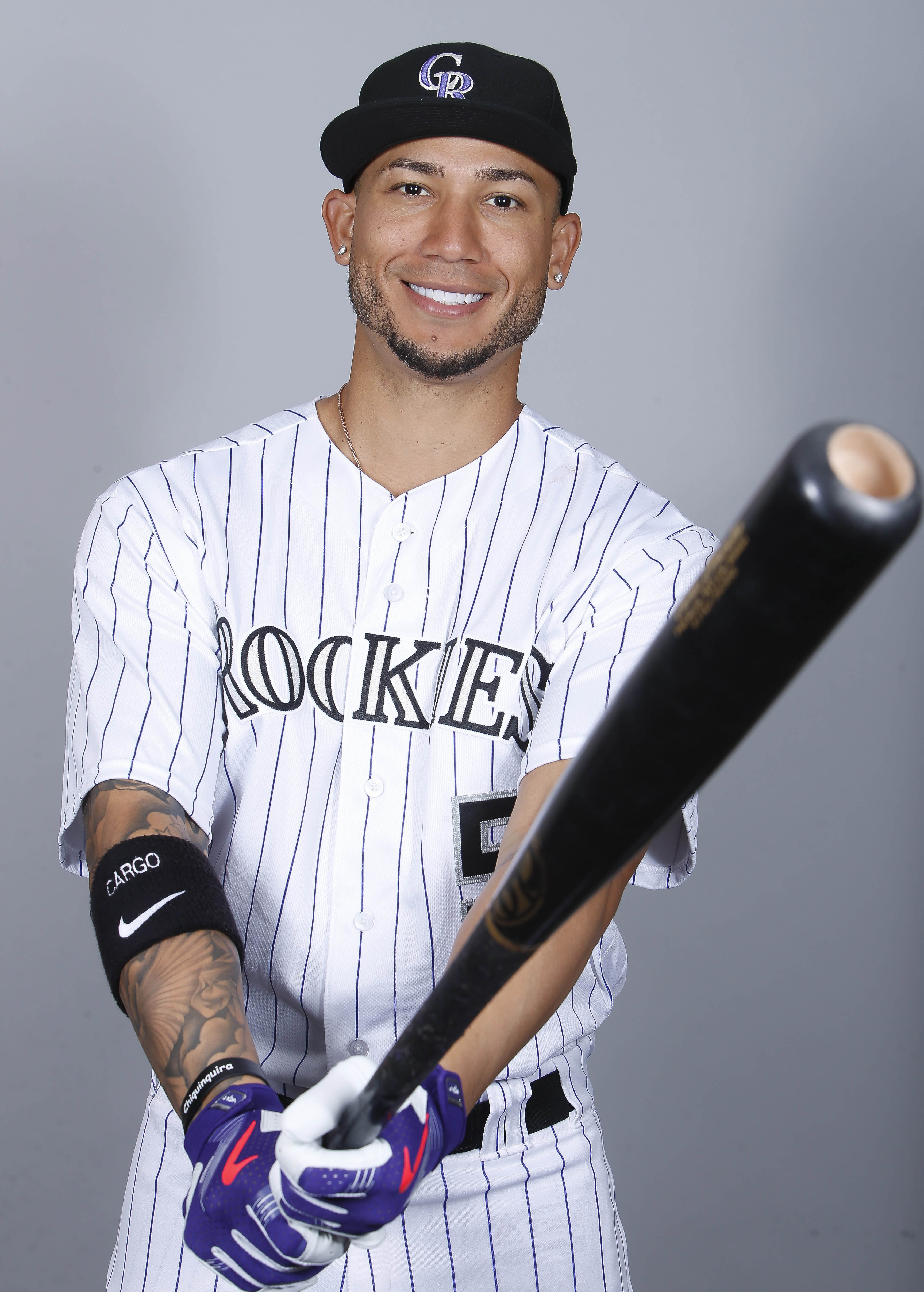 Of course, Dickerson was only shipped out after the Rox added Gerardo Parra. He unquestionably represents an upgrade defensively, though he doesn’t seem to possess near the offensive upside of the younger and cheaper player he’s replacing. The everyday outfield alignment — also including Carlos Gonzalez and Charlie Blackmon, either one of whom could also have been traded — is entirely left-handed, which obviously creates some questions. But Colorado tendered Brandon Barnes and added Ryan Raburn on a minors deal, so there will be some options against opposing southpaws.
The only other significant major league acquisition was slugger Mark Reynolds, whose power will be a sight to behold in Coors Field even if his on-base percentage isn’t. He’s a low-cost add who figures to split time with the southpaw-swinging Ben Paulsen at first while contributing some pop off of the bench. That pairing will step in for Justin Morneau, who missed much of last season and received a $750K buyout when the club declined its end of a $9MM mutual option.
Questions Remaining
The questions in Colorado always seem to begin with the rotation, and at first glance it’s hard to fathom that the organization did not add any MLB-level starters over the winter. After all, last year’s revolving-door staff threw less innings than any other and produced at a level rivaled only by the Phillies.
To be fair, though, the Rockies figure to welcome back several pitchers who missed all or most of 2015, and as I posited at the offseason’s outset, it never made much sense to plow money into marginal free agent hurlers to convince them to come to Coors. Injury rehabbers Jordan Lyles and Tyler Chatwood figure to slot directly into a rotation led by last year’s two best performers: veteran lefty Jorge De La Rosa and surprisingly productive righty Chad Bettis. There’s ample uncertainty not only within, but also behind that foursome, but there are plenty of options floating around. Certainly, Colorado will hope that at least one of its advanced younger arms — among them, Jon Gray, Eddie Butler, Jeff Hoffman, Tyler Anderson, and Tyler Matzek (if he can overcome his anxiety issues) — will make some real strides in 2016.
While the pen has been bolstered with the three aforementioned additions, that doesn’t mean it’s an unquestioned strength. There are plenty of arms in camp, but not many of the depth pieces have demonstrated MLB track records. Beyond the core five noted above, the most experienced pitchers on hand are righties Christian Bergman and Gonzalez Germen and southpaw Chris Rusin (who has mostly worked as a starter). Scott Oberg threw nearly sixty frames in the majors last year, though the results were not promising, and Miguel Castro — a big part of the Tulo deal — could force his way into the picture. Of course, the club will be looking forward to the return of quality righty Adam Ottavino, who signed a multi-year pact while rehabbing from a UCL replacement and could make his way back by the middle of the year.
The biggest single uncertainty in the Colorado organization, though, may be shortstop Jose Reyes, who is set to stand trial after being charged with assaulting his wife over the offseason. There’s a real prospect of jail time, if not also immigration consequences, not to mention the near-certainty of a significant suspension. (Yankees reliever Aroldis Chapman just took a thirty-game ban for an incident in which he was neither arrested nor charged.) Reyes has already been placed on administrative leave by commissioner Rob Manfred.
While the matter obviously carries far broader import than a typical player-contract issue, it has also created something of an odd situation from the team’s perspective. It’s an unquestioned loss on the field, as the 32-year-old had been a solid 3-WAR type of player in recent years before a tough 2015. Certainly, Reyes is much more established than potential replacements Cristhian Adames and Trevor Story, and if nothing else could in theory have generated some trade value. But from a broader perspective, it could well be that an extended absence will actually be a net positive for the Rockies. After all, he’s still owed $48MM — for the next two seasons and a buyout on his option — and the club will pocket any amount that he doesn’t earn due to his reprehensible alleged crimes.
Players like Adames and Story — and the above-mentioned Paulsen — are among the newer names that are likely to receive at least a look at some point in 2016. Behind the dish, relative newcomers like Dustin Garneau and Tom Murphy will fight for opportunities to back up (and, perhaps, eventually supplant) veteran Nick Hundley. But the real excitement on the young position player front — represented by outfielders David Dahl and Raimel Tapia, as well as third baseman Ryan McMahon — may be another year or so away.
Deal Of Note
Dealing away hitters for arms has long seemed an intriguing strategy for an organization that has had trouble not only in attracting free agent pitching, but in developing its own. (Indeed, Bridich discussed just that in his appearance on the MLBTR Podcast.) In that sense, then, the decision to sign Parra and ship out an incumbent option (Dickerson) for a pitcher (McGee) holds immediate interest.
Dickerson represents an intriguing but hardly flawless asset as a player. He’s a lightly-regarded fielder and was limited to just 65 games last season due to plantar fasciitis. There’s no question his value is lower than his batting line would suggest due to those considerations. That being said, the 26-year-old has done nothing but hit since cracking the bigs. Over 925 plate appearances, he owns a .299/.345/.534 slash with 39 home runs. While that obviously must be adjusted to account for Coors, it still works out to an excellent 125 OPS+ and 124 wRC+. The Rays will get four years of control over Dickerson, including one at the league minimum.
To be sure, the 29-year-old McGee is a top-tier reliever who has consistently turned in premium results. Since his first full season in 2012, he has provided 226 2/3 innings of 2.58 ERA pitching with an outstanding 11.4 K/9 against 2.3 BB/9. Like Dickerson, he has some limitations — most notably, the simple fact that he works from the pen rather than the rotation. McGee is controlled for just two more seasons — not at super-cheap rates (beginning with $4.8MM this year) — and carries a somewhat risky Tommy John profile given his time missed last year (and other factors).
Ultimately, perhaps, the main concern with the deal isn’t so much the overall value proposition as it is the side of the equation taken by the Rockies. McGee is one of the best pen southpaws in the game, but it’s unclear how many winnable games he’ll be handed by an underwhelming Colorado starting staff. And while he could certainly be flipped for even greater value than the Rox gave up to get him — assuming the team will be willing to entertain a mid-year sell-off — a half season at Coors Field probably isn’t an optimal platform for a trade.
All that being said, the decision on Dickerson can’t be understood in isolation. In a perfect world, a Colorado bat-for-arms scenario would probably involve sending out a few relatively expensive years of a hitter in exchange for a controllable starter. The 30-year-old Gonzalez (who is owed $37MM for two more seasons) represented a plausible centerpiece in such a swap, particularly after he finished with a huge second half. His uneven recent performance and concerning injury history make him a fairly risky asset for a club like the Rockies, despite his evident ability, and there seemed to be a decent bit of plausible demand.
But the club decided to hold onto CarGo rather than pursuing a strategy like that taken with regard to Tulowitzki. Of course, adding a strong young rotation piece for the veteran may or may not have been an achievable goal this winter, but in many respects his non-trade is an even more notable event than was the move to get McGee for Dickerson.
Overview
It’s certainly still possible that Gonzalez could change hands at the trade deadline, and he will be a closely-watched name if Colorado isn’t keeping up in the NL West come July. (The same holds true of McGee.) CarGo’s health will go a long way toward determining the club’s competitiveness as well as his trade value, of course, but the overall complexion of this offseason could change if there’s a future fallback plan in place.
The overall situation poses a difficult and ongoing balancing act for Bridich, who is trying to build for the future while maintaining some near-term competitiveness with a bottom-third payroll. It is ultimately difficult to criticize the Rockies too harshly for trying to put some pieces around players like Gonzalez and rising superstar Nolan Arenado, who along with solid regulars such as D.J. LeMahieu and Charlie Blackmon make for a nice core on the position-player side of the equation. Of course, the same rationale could have led the organization to hold onto Tulowitzki, who was instead cashed in for prospects and cost savings. And it’s fair to wonder if Colorado would have been better off taking bolder action this winter in one direction or the other after parting with its homegrown star.
At the end of the day, the bottom line seems the same as ever: unless and until the organization can entrench some quality starters at the major league level — whether or not a fully-committed rebuild is undertaken to make that possible — it may continue to confront the same kinds of hard-to-win dilemmas with regard to its best players.
With all of this said, we’ll open up critique of the club’s offseason to readers via poll (link to poll for mobile app users)…
How Would You Grade the Rockies' Offseason?
-
D 38% (1,291)
-
C 32% (1,089)
-
F 21% (714)
-
B 8% (254)
-
A 1% (34)
Total votes: 3,382
Offseason In Review: Cincinnati Reds
We’ll be reviewing the offseason moves of all thirty teams over the next several weeks. First up: the Cincinnati Reds.
After winning just 64 games in 2015, the Reds spent the winter continuing their rebuild, with what appear to be tepid results.
Major League Signings
- RP Blake Wood: one year, $600K
Notable Minor League Signings
- J.C. Ramirez, Carlos Triunfel, Ryan Mattheus (re-signed), Pedro Villarreal (re-signed), Jordan Pacheco, Jonathan Sanchez
Trades And Claims
- Acquired 3B Eric Jagielo, 2B Tony Renda, P Caleb Cotham and P Rookie Davis from Yankees for RP Aroldis Chapman
- Acquired 2B Jose Peraza, 2B/OF Brandon Dixon and OF Scott Schebler as part of a three-team trade for 3B Todd Frazier
- Selected P Chris O’Grady from Angels in the Rule 5 Draft
- Selected OF Jake Cave from Yankees in the Rule 5 Draft
Extensions
- None
Notable Losses
Needs Addressed
After an ugly 2015 campaign, the Reds faced the likelihood of another bleak year in the tough NL Central, so with a negligible chance of contending, they opted to continue trading veterans. They had already dealt Mat Latos and Alfredo Simon prior to the 2015 season and Johnny Cueto, Mike Leake and Marlon Byrd after they fell out of contention, so their efforts this winter hardly were new territory.
In filling out their 2016 team, then, the Reds mostly focused on acquiring ready or nearly-ready youngsters, as well as a handful of cheaper veterans. Of the players acquired in their two significant trades this winter, Jose Peraza, Scott Schebler and Caleb Cotham appear likely to contribute in 2016, with others potentially entering the picture near the end of the season.
The Reds also grabbed a variety of low-cost arms to fill out a bullpen that will be without star closer Aroldis Chapman and 2015 contributors Burke Badenhop and Manny Parra — they re-signed low-wattage arms Ryan Mattheus and Pedro Villarreal, and added Blake Wood on their only big-league deal of the offseason. Wood pitched the 2015 season in the Pirates’ Triple-A bullpen and hasn’t appeared in the Majors since April 2014, but he might be more interesting than his modest pedigree suggests. He’s a very hard thrower who took a step forward with his control last year, with a 3.8 BB/9 that was better than his career marks in that category in the Majors or Triple-A. In any case, with Chapman gone, the Reds will go forward with a weakened bullpen built around J.J. Hoover, Jumbo Diaz and Tony Cingrani.
Questions Remaining
There’s plenty for the Reds to sort out in their rotation. Homer Bailey (elbow) and John Lamb (back) won’t be ready to start the season, but manager Bryan Price still recently named nine potential rotation candidates — Anthony DeSclafani, Raisel Iglesias, Jon Moscot, Michael Lorenzen, Cody Reed, Robert Stephenson, Brandon Finnegan, Tim Melville and Jonathan Sanchez. DeSclafani and Iglesias appear very likely to win spots, but that still leaves three more. Of the remaining contenders, top prospect Stephenson is the most interesting, although he walked 27 batters in his first 55 2/3 innings at Triple-A last season, so there’s little reason for the Reds to rush him to the big leagues. The same goes for Reed, who pitched well at Double-A Pensacola after arriving in the Cueto trade last summer but hasn’t even appeared at Triple-A yet. Finnegan, a key to the Cueto trade, is perhaps a more realistic bet to win a spot (although he could also wind up in the bullpen).
Aside from Finnegan and Iglesias, who’s a strikeout pitcher who quietly had a strong rookie season in 2015 and could take a step forward this year, the Reds’ likely April rotation doesn’t look like anything special. (Perhaps one could include DeSclafani with Finnegan and Iglesias, since DeSclafani notched a remarkable 65 strikeouts and nine walks from the beginning of last August through the end of the season.) In fact, one could argue that the Reds should have added a starting pitcher on a one-year deal to fill a rotation spot for a few months and hopefully land a prospect at the deadline. But the Reds’ starting pitching could get downright interesting by the summer, with the returns of Bailey and Lamb and the potential promotions of Stephenson and/or Reed.
It is, unfortunately, harder to see similar upside among the Reds’ young position players (although it’s possible top prospect Jesse Winker could join the team’s outfield late in the season). The Reds’ offense will again be anchored by Joey Votto, one of the best in the game at controlling the strike zone. Votto, though, appears likely to take a step back after a monster 7.4 fWAR season in 2015, and the Reds are also subtracting Todd Frazier from a collection of position players that finished 20th in the Majors in fWAR last season.
Some of Frazier’s loss could be balanced by the return of catcher Devin Mesoraco, who missed most of last season. Brayan Pena and Tucker Barnhart were capable, but little more, in Mesoraco’s absence, and Mesoraco’s bat could be a big help. His ability to return to health and productivity behind the plate could be a key factor in the team’s contention timeline.
The problem is that the position players now slated to join the Reds’ once-mighty lineup — Schebler, Adam Duvall, Peraza — appear to have limited upside. Schebler had two very good years in the minors in 2013 and 2014 but had a pedestrian 2015 at Triple-A; he looks like he’ll have enough power to stick in the big leagues, but he might be a little stretched as a regular. Duvall could have 30-homer power, but with plenty of strikeouts and a low batting average, and he’s already 27. And Peraza possesses obvious tools but is very hard to get a read on — he has plenty of baserunning and defensive ability, but his complete lack of power figures to hold him back offensively.
These are, perhaps, glass-half-empty evaluations of these players, but it wasn’t long ago that the Reds had a fair number of valuable veterans, and so far, it appears they haven’t gotten much for them (with the possible exception of their return in the Cueto trade). They’ll now spend the next couple years giving tryouts to various players acquired in those underwhelming deals.
Some of that state of affairs isn’t really the club’s fault. Chapman’s domestic violence allegations reduced his trade value to pennies on the dollar, and the Reds also had offseason trades scuttled when Brandon Phillips refused to waive his no-trade rights and when medical issues derailed a deal that would have sent Jay Bruce to Toronto.
The real victim of Chapman’s alleged actions, of course, was his girlfriend. But looking at the matter from a team perspective, the situation had to have been frustrating for the Reds. They had previously had a deal in place that would have sent Chapman to the Dodgers for two top prospects. Reports indicated that neither of those were among the Dodgers’ best, but Peraza’s name repeatedly came up. Peraza, despite his flaws, is clearly a more interesting prospect than any of the four the Reds ultimately acquired for Chapman, and getting Peraza in the Chapman deal would have allowed the Reds to try to acquire other talent in return for Frazier. Instead, the Reds got Caleb Cotham, Rookie Davis, Eric Jagielo and Tony Renda in return for Chapman, getting only a ready-now reliever (Cotham), a mid-grade starting pitching prospect (Davis) and two somewhat fringy position players in return for perhaps the game’s most dominant closer. There are scenarios in which the deal turns out well for the Reds — maybe Davis will improve his command and blossom into a good starter, or maybe Jagielo’s above-average power will translate better than expected against advanced pitching. Overall, though, it looks like the Reds came up far short of what might have been expected heading to the offseason.
Deal Of Note
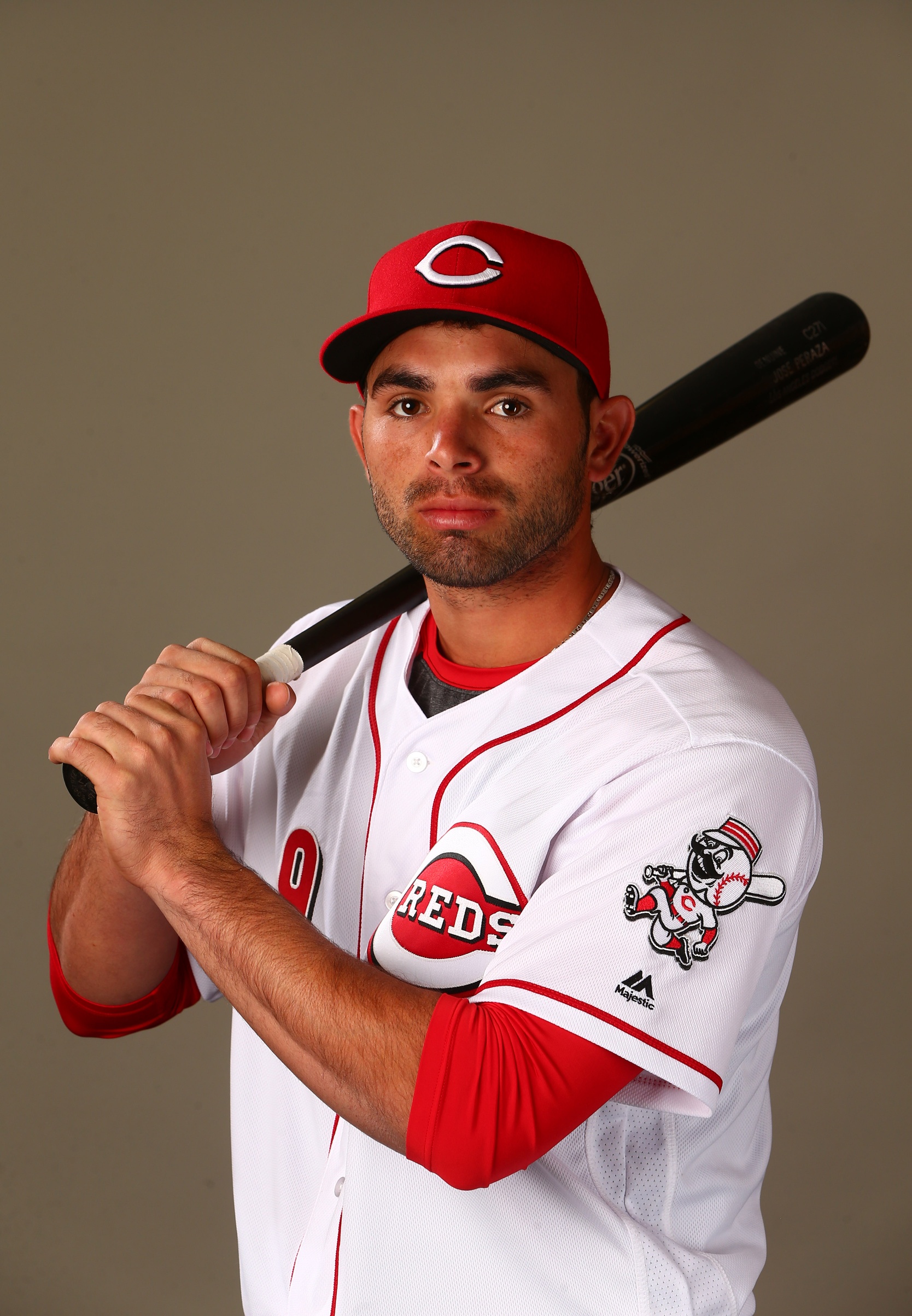 Perhaps the Reds’ most disappointing deal, though, was the three-team trade that sent Frazier to the White Sox. This time, there were no obstacles standing in the way of the Reds trading their star, and unlike Chapman (who will, even with his recent suspension, still be eligible for free agency after 2016), Frazier still has two years of control remaining. Given his plus power, strong defense and reasonable contract situation, there was no reason for the Reds not to get good value for Frazier. It appears, however, that they didn’t. Peraza (pictured) is certainly a strong prospect and could ultimately become a fixture at second base once Phillips departs, but he’s limited by his extreme lack of power and inability to draw walks. There is precedent for a player like Peraza having lots of success — perhaps he could become the next Dee Gordon. But that outcome, or anything close to it, may be optimistic.
It’s the other two players in the deal, though, who are the head-scratchers. Schebler’s future likely is in left field, but the evidence of whether he can hit enough to stick at that position is mixed. And Brandon Dixon’s inclusion in the trade was strange, since he’s been unimpressive at every minor-league stop other than a brief outburst at Class A+ Rancho Cucamonga early last season, and he turned 24 shortly after the deal. Strangely, the Dodgers, who essentially sent three of their own young players to Cincinnati in exchange for three more youngsters from the White Sox, appear to have done significantly better than the Reds did, getting a hard-throwing and advanced starting pitching prospect in Frankie Montas (although Montas is now set to miss the beginning of the season after having rib surgery), plus young second baseman Micah Johnson (who has better power and plate discipline than Peraza, though he doesn’t profile as well defensively) and outfielder Trayce Thompson (who has struggled to make headway in the high minors but had a good big-league debut last year and looks like a much better talent than Dixon). Time will tell whether the Reds got the right players, but the consensus seems to have been that their return was underwhelming, and that they might have done better by cutting out the Dodgers and dealing with the White Sox directly.
Overview
The Reds didn’t figure to contend in 2016, and they’ll spend it as rebuilding teams traditionally do — sorting through young talent, enjoying the rights to a plum draft pick (No. 2 overall), and setting their sights on the future. Given that they were built around an aging and increasingly expensive core, it’s hard to argue with that plan. What is debatable is whether they’re implementing it well, and as enthusiastically as they should. The returns from their trades so far are likely to produce some solid contributors, but perhaps not as much value as Reds fans might have hoped, given Chapman and Frazier’s obvious value on the field. The Reds have, to some degree, been victims of circumstance, and it’s not easy to get teams to give up top prospects these days. Still, they probably haven’t gotten enough.
Meanwhile, there will still be several key veterans left on the 2016 team. The Reds could hardly have been expected to trade Bailey while he was injured, and Phillips and Bruce, even if their deals had gone through, probably would not have returned significant talent anyway. But there’s been virtually no discussion of a trade involving Votto. In fact, prior to a brief update on Votto in late February, there hadn’t been an update at MLBTR in over four years regarding the possibility of a Votto trade.
If the Reds are rebuilding, perhaps a deal involving Votto shouldn’t be taken off of the table. Votto is now inarguably the face of their franchise, and he’s under team control through 2024, so they might be planning on him still contributing when they’re ready to compete again. Given that Votto is already 32, though, that seems like an overly ambitious plan. After Votto’s monster 2015, he ought to have considerable trade value, despite his huge contract. There’s also the possibility that the back end of that deal (which guarantees Votto $25MM per season through 2023, when he will be 39) could hamper the Reds’ ability to compete in the future.
Of course, it’s easy for an outsider to say that a rebuilding team should trade its superstar. The value Votto could bring to the 2016 Reds in terms of their marketability and watchability is much harder to quantify than his on-field value. But the Reds’ situation with regard to Votto is typical of the plight many rebuilding teams face. The quickest path forward seems to be to turn their backs on the past, but refusing to turn around can be painful.
What do MLBTR readers think of the club’s offseason? Weigh in on the poll below (link to poll for mobile app users)…
How Would You Grade the Reds' Offseason?
-
D 35% (1,117)
-
F 31% (994)
-
C 25% (790)
-
B 8% (241)
-
A 1% (40)
Total votes: 3,182
Speculative Jhonny Peralta Replacements For The Cardinals
The Cardinals are still reeling from the loss of Jhonny Peralta, perhaps for as long as three months, due to what is believed to be a torn ligament in his left thumb. While the book isn’t closed on Peralta’s recovery timeline just yet — he’s still headed to St. Louis to receive a second opinion on the injured digit — it would appear that Jedd Gyorko will step into the vacancy. Acquired in an offseason swap with the Padres that was made in part to keep Peralta fresh and in part to subtract Jon Jay (and his remaining salary) from a crowded outfield picture, Gyorko is the favorite to absorb Peralta’s at-bats, with Greg Garcia and Aledmys Diaz also representing internal options.
The problem with that scenario, of course, is that Gyorko isn’t a shortstop. He played some short out of necessity for the Padres last year after their widely panned platoon of Alexi Amarista and Clint Barmes failed to yield dividends. Gyorko was about three to four runs below average in 220 innings at the position in the estimation of Ultimate Zone Rating and Defensive Runs Saved, and UZR pro-rated his defensive contributions to -17.6 runs over a 150-game spell. Clearly, there’s danger in extrapolating a small sample of 220 innings in that manner and treating it as fact, but Gyorko wasn’t even perceived as a plus defender at his more natural positions of second and third base, so it shouldn’t be a surprise that he graded out very poorly at the most difficult infield position on the defensive spectrum.
Over at Fangraphs, Dave Cameron provided a quick glimpse at the injury and listed Erick Aybar as perhaps the most logical stopgap the Cardinals could pursue in an effort to upgrade. Aybar is a free agent at season’s end on a rebuilding Braves club, so the fit certainly stands out as logical. Cameron also noted that the Mets have a potential infield surplus with both Wilmer Flores and Ruben Tejada slated to fill reserve roles (the latter of those two is rumored to be on the bubble when it comes to the 25-man roster, anyhow), though he aptly notes that the Mets may not want to help strengthen another National League contender.
As MLB.com’s Jenifer Langosch writes, GM John Mozeliak acknowledged that, depending on the severity of the issue, the club could pursue outside help at the shortstop position. Each of the names suggested by Cameron is indeed a logical fit for the Cardinals. Here’s a look at a few names from around the league that could potentially be looked at if the Cardinals wish to address the unexpected void with a player from outside the organization…
Trade Possibilities
- Erick Aybar, Braves: As noted above, Aybar is one year from free agency on a rebuilding club that has shown a willingness to trade virtually any veteran piece it has (Freddie Freeman excluded). Atlanta has internal options that it could consider long-term pieces (Dansby Swanson, Ozhaino Albies), and while they’re not particularly close to the Majors, the Braves could slot someone like Daniel Castro or a minor pickup of their own in at short in the event of an Aybar trade.
- Ruben Tejada/Wilmer Flores, Mets: Tejada was recently awarded an extra day of service time, making him a free agent following the season. He’s said to be on the fringe of New York’s 25-man roster this spring, and Flores could serve as the club’s primary backup all over the infield even if Tejada were to be traded. It seems far less likely that the Mets would move Flores, who has a fairly productive season last year and offers more offense in a reserve capacity with multiple years of club control remaining, but the team was famously open to trading him last summer.
- Nick Ahmed/Chris Owings, D-backs: As recently as last spring, this combination looked like a potential long-term alignment for the Diamondbacks, but that’s less the case this spring. For one, Arizona went out and acquired Jean Segura to field one of the spots — likely shortstop — thus displacing the defensively gifted Ahmed from an everyday role. Beyond that, Brandon Drury had a strong season and worked his way onto multiple top 100 prospect rankings, giving the D-backs another potential option at second. Drury could play third base as well, though Arizona has Jake Lamb as a big-league-ready option at third base — one that could handle the spot long-term. With Segura, Ahmed, Owings, Drury and Lamb, the Snakes seemingly have five infielders for three spots.
- Eduardo Nunez/Danny Santana, Twins: While Nunez isn’t known for his glovework himself, he’s more experienced than Gyorko at the position and is coming off a solid season with the bat, having slashed .282/.327/.431 in 204 plate appearances with Minnesota. Santana is out options and has yet to proven himself in the field or at the plate. After a BABIP-fueled rookie season, Santana cratered in 2015 and now looks like a utility player for the Twins. Neither player is a definitive upgrade, but both would deepen the club’s infield mix and provide greater shortstop experience than the Cards’ incumbent options. Minnesota wouldn’t be anxious to shed either player, but doing so could create a utility role for top prospect Jorge Polanco. Their preference, though, could be to get him everyday at-bats in the minors.
- Chris Taylor/Luis Sardinas, Mariners: Both infielders are competing for the right to back up Ketel Marte at shortstop. Taylor, a career .313/.394/.460 hitter at Triple-A, struggled badly in the Majors this past season but offers more offensive upside than Sardinas. On the other hand, Sardinas is probably a more sure-handed defensive option despite his own big league struggles at the plate and a more pedestrian .285/.315/.365 batting line in his Triple-A career.
- Freddy Galvis, Phillies: Galvis doesn’t bring much to the table from an offensive standpoint, and the returns on his defensive work at shortstop are mixed. Ultimate Zone Rating feels that Galvis has been about average over the life of his 1567 career innings there, whereas Defensive Runs Saved feels he’s cost his team 10 runs there. If Cardinals scouts feel that Galvis is a passable shortstop, then perhaps they’ll overlook last year’s .263/.302/.343 batting line, which rated more than 20 percent worse than the league average after adjusting for his home park (76 wRC+, 77 OPS+). For what it’s worth, he did homer seven times and swipe 10 bases in his 603 plate appearances.
- Nick Franklin, Rays: Considering how long Franklin’s name has been bounced around, it almost feels like he should be in his late 20s. That comes with the territory for a player who made his big league debut and played a whole season before he even turned 23 years old, though. Franklin only turned 25 last week, and while he hasn’t developed into the everyday infielder that he was projected to, he hit .266/.353/.500 in 221 PAs at Triple-A Durham last year. The presence of Brad Miller and Tim Beckham could effectively block Franklin in Tampa Bay.
Free Agents
- Everth Cabrera: The former NL stolen base champ barely played in 2015, hitting .208/.250/.229 in 105 plate appearances with the Orioles. He wasn’t much better in the minors, batting just .230/.302/.259 in 150 PAs between the Orioles and Giants. Cabrera is nearly three years and a PED suspension removed from providing value at the Major League level, but the Cards could take a look on a minor league deal and hope to benefit from a resurgence.
- Willie Bloomquist: At 38 years old with a .238/.262/.287 batting line across his previous two seasons in Seattle, Bloomquist probably isn’t on radars as anything more than a veteran on which to take a minor league flier with a utility role in mind.
Suffice it to say, there aren’t any enticing options currently on the free agent market, though the Cardinals could find some options late in camp as veterans on minor league deals with out clauses begin to exercise those provisions.
Jeremy Hellickson On Offseason Trade
As a part of the Diamondbacks’ efforts to remold themselves into a contender, they sent one of their starters off to a rebuilding club. In November, the D-backs shipped Jeremy Hellickson to the Phillies in exchange for 20-year-old righty Sam McWilliams. Hellickson, unlike McWilliams, comes with a lengthy track record at the big league level — something that could theoretically have appealed to the win-now Diamondbacks — but he’s struggled in recent seasons, logging a 4.73 ERA over the past three seasons after an outstanding start to his career. The Diamondbacks decided to use his relatively sizable projected salary elsewhere.
Leading up to the deal, Hellickson says that he didn’t get a phone call from anyone in the organization indicating that a move might be coming down. However, he sensed that he could be traded at any moment. “I didn’t have any indication [that a deal could happen], you just kind of get a feeling with the direction that they’re going in,” Hellickson said in Clearwater, Fla. late last week. “I didn’t know that they were going to sign guys for that much money after trading me, but I just got the feeling that was going to happen.”
After Hellickson’s departure, the Diamondbacks spent $206.5MM on Zack Greinke; paid a hefty premium in terms of player personnel to acquire Shelby Miller (Ender Inciarte, Dansby Swanson and Aaron Blair); signed Tyler Clippard to a two-year, $12.25MM deal; and acquired Jean Segura and righty Tyler Wagner from the Brewers for Chase Anderson, Isan Diaz and Aaron Hill. Now, after winning 79 games in 2015, the D-backs could very well contend for the NL West crown. Even though the Phillies seem more likely to wind up in the cellar of the NL East than at the top, Hellickson says that he isn’t bothering to concern himself with his former club’s dealings.
At the age of 28, Hellickson is one of the team’s “veteran” starters, along with 32-year-old Charlie Morton (a fellow offseason trade acquisition). Hellickson admits that it’s an odd role to play for someone who is on the right side of 30.
“It is a little bit weird being one of the veteran guys on this rotation,” said Hellickson. “It was kind of the same situation alst year [in Arizona] but the game is getting younger. There are guys getting called up at 21 or 22 years old. I don’t feel old at 28, but 28 is kind of old in this game right now.”
Hellickson and the Phillies avoided arbitration back in January with the right-hander getting $7MM instead of his projected $6.6MM salary. After this season, the Scott Boras client is headed towards free agency. Hellickson may or may not rack up wins this season, but the former American League Rookie of the Year could position himself for a nice payday with a rebound campaign in 2016.
Photo courtesy of USA Today Sports Images.