
MLBTR Originals
A look back at the original reporting and analysis found on MLBTR the last seven days:
- MLB Trade Rumors is now on Instagram! Follow us today – @traderumorsmlb.
- It’s often dangerous to read too much into a hot streak, but several shortstops who will be free agents this offseason are turning it on at the right time, Steve Adams writes. Ian Desmond and Asdrubal Cabrera are amongst those who could cash in this winter.
- Jeff Todd checked in on the free agent stock of Orioles lefty Wei-Yin Chen. Ultimately, Chen is likely to earn quite a bit more money than we might have anticipated coming into the 2015 season, though he’ll be entering a robust market of mid-tier pitching types.
- If Brett Anderson can stay healthy, he’ll be highly valued this offseason, as Charlie Wilmoth writes. Thus far, he has a 3.48 ERA, 6.0 K/9 and 2.5 BB/9 through 134 2/3 innings and hasn’t missed a start all year.
- If you missed out on Steve’s weekly chat, click here to get caught up with the transcript.
Free Agent Stock Watch: Brett Anderson
Dodgers starter Brett Anderson appears set to enter the 2015-16 offseason as one of the winter’s most unusual free agents. Injuries have limited him to 622 2/3 career big-league innings. 2015 has been his first full season in the big leagues since his rookie year in 2009. He is, in the grand scheme of things, still unproven. And yet he’ll still be highly sought after.
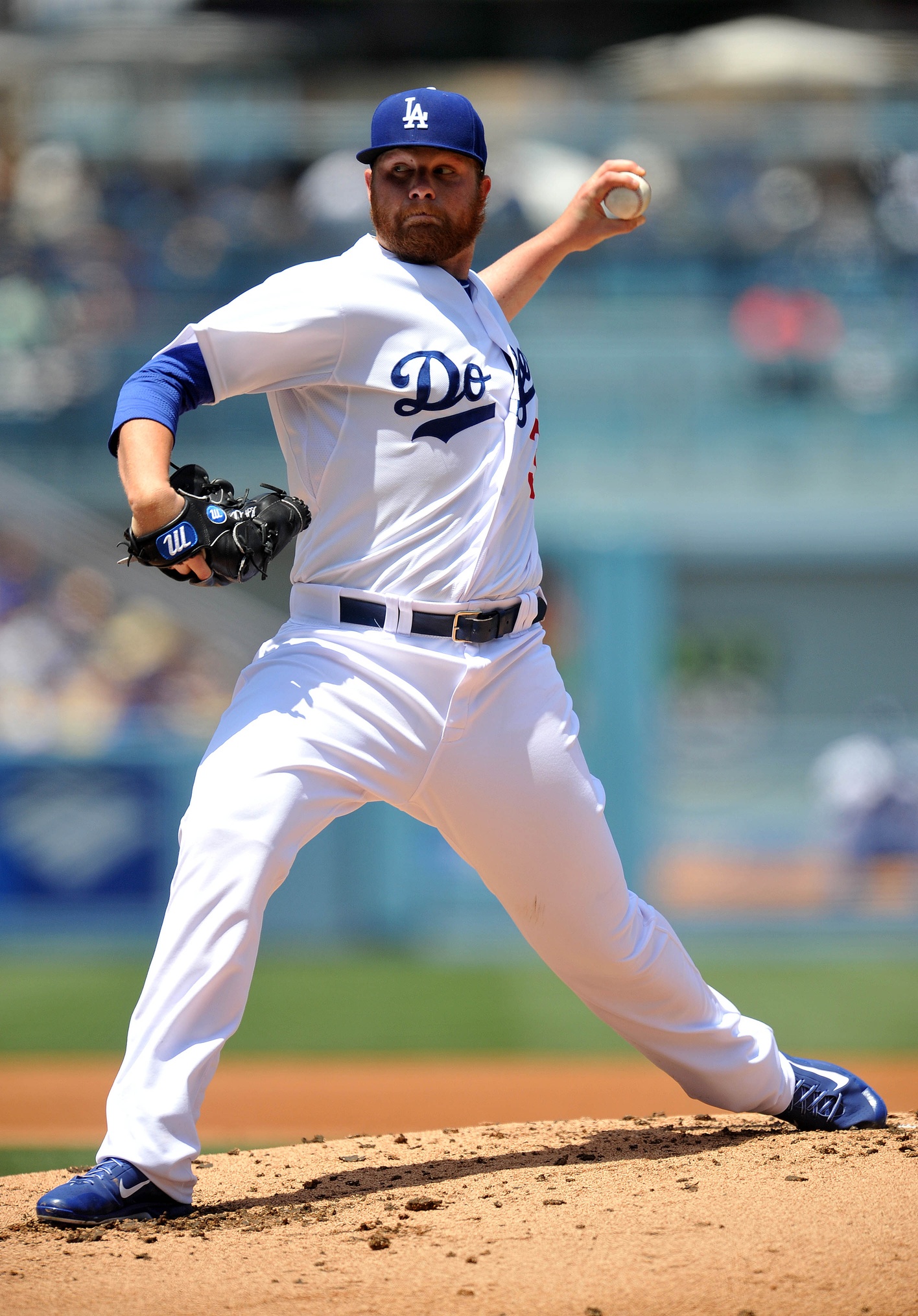 First, the injury record: Since 2011, Anderson has missed significant time with elbow issues resulting in Tommy John surgery; an oblique strain; a stress fracture in his foot; a broken finger; and a herniated disc in his lower back. Many of those injuries haven’t been arm problems, at least, and it’s possible Anderson has partially been the victim of flukes, but that long list is still a scary one.
Despite Anderson’s history, the Dodgers signed him to a one-year, $10MM contract before the season. When signing players with track records as sketchy as Anderson’s, teams frequently secure an option of some kind as a way of guarding against future injury. Anderson’s contract contained relatively little hedging, however, other than a series of $300K-$400K bonuses for innings pitched (many of which Anderson looks likely to achieve). Also, Anderson’s $10MM guarantee looked like a lot for a pitcher who hadn’t thrown even 100 innings in a season since 2010.
Anderson has, nonetheless, proven to be a bargain for the Dodgers. Thus far, he has a 3.43 ERA, 6.1 K/9 and 2.5 BB/9. He’s also pitched 128 2/3 innings. If someone had told you before the season that the Dodgers would have an injury-riddled rotation, you probably would have assumed Anderson would be one of the culprits, but he hasn’t missed a start all season (although he left one July outing early with a minor Achilles injury).
Even better, Anderson has posted an exceptional 65.8 percent ground ball rate, a ridiculously high number that makes him very likely to have at least modest success as long as he’s healthy and has a competent infield defense behind him. Anderson’s ground ball rate is the best among qualified MLB starters, with Dallas Keuchel, Tyson Ross, Gio Gonzalez and Felix Hernandez following him in the top five. That’s strong company, even if Anderson doesn’t strike out as many batters as those other four do.
So how might Anderson fare in the market next winter? He will, of course, be on a lower tier than big-name starting pitchers like David Price, Johnny Cueto, Jordan Zimmermann, Scott Kazmir and Zack Greinke (assuming Greinke opts out of his current contract). There will also be a strong secondary starting pitching market, with Jeff Samardzija, Mike Leake, Hisashi Iwakuma, Mat Latos, Yovani Gallardo and others potentially available.
Still, if Anderson can stay healthy, he will be highly valued. Teams have lately proven willing to gamble on talented starting pitchers, even when they have obvious question marks. For example, Anderson’s current teammate Brandon McCarthy, another ground-ball-prone starter, got a four-year, $48MM deal last offseason after a brilliant 2014 stretch run with the Yankees. McCarthy had previously suffered through periods of inconsistency and injury.
Of course, McCarthy had Tommy John surgery in April, although that injury mostly appeared unrelated to his previous troubles. A more positive recent precedent, though, might be that of the Pirates’ Francisco Liriano, who earned a three-year, $39MM deal after strong 2013 and 2014 campaigns in Pittsburgh, even though he had posted ERAs above 5.00 in the two years before that and had pitched more than 163 innings in a season only once in his career. Liriano is in the midst of a third straight strong season with the Bucs.
Every case is different, of course, and Anderson might not quite have the upside McCarthy or Liriano appeared to, since he doesn’t have the strikeout rate those pitchers had. Anderson also (perhaps sensibly, given his history) hasn’t worked particularly deep into games this year, averaging just 5.8 innings per start.
Health permitting, though, Anderson’s ground ball rate gives him a reasonably high floor (no pun intended), and his age (he won’t be 28 until February) will also work in his favor. Other than Trevor Cahill, there aren’t currently any significant 2016 starting pitching free agents younger than Anderson, and only Latos and Leake even come all that close.
Anderson looks like a strong candidate for a qualifying offer, which might affect his market somewhat — the Dodgers gave Anderson a significant percentage of the value of a qualifying offer when they signed him for 2015, so extending one after what’s been a strong and healthy season looks like a no-brainer. Every player (including starting pitchers like Liriano and Ervin Santana) who rejected a qualifying offer last year got a multiyear deal, however, so it seems likely that Anderson will also be able to land one.
Photo courtesy of USA Today Sports Images.
Free Agent Stock Watch: Shortstops
It’s often dangerous to read too much into a hot streak, as the endpoints of the streak will often be arbitrary, and shrinking the sample size makes the data more susceptible to randomness. Though it’s dangerous to use them as a predictive tool, hot streaks can hold some significance for upcoming free agents — particularly ones that have struggled for much of the season. A well-timed hot streak can take a player’s numbers from good to great or from terrible to passable. A huge second half following a disastrous first half can demonstrate that a player hasn’t suddenly lost all of his skill, giving offseason suitors hope for more consistent production in the season(s) to follow.
The overall numbers on the following players may not quite look appealing, but here are three that could be in the midst of bolstering their offseason earning power after dreadful starts to the year (coincidentally — they’re all shortstops!)…
- Ian Desmond, Nationals: Perhaps no player looked to be costing himself as much money as Desmond entering the All-Star break. Heading into his contract season, there was a legitimate case to be made for Desmond as the game’s most productive shortstop over the past three seasons, but he slumped to a .211/.255/.334 batting line in the first half and endured an awful error-prone stretch in the field early on. He’s tightened up the errors after those first few weeks, though, and is finally showing signs of life at the plate. Over his past 21 games, Desmond is hitting .312/.376/.636 with seven homers and four steals. The question for him will become whether or not a huge second half can make his first half simply look like an anomaly and convince a team to invest more than $100MM.
- Asdrubal Cabrera, Rays: Cabrera settled for a one-year deal this winter, and through the first eight to 10 weeks of the season, he looked like a player that didn’t deserve anything more. However, since mid-June, Cabrera’s hitting .357/.393/.579 with four homers, 13 doubles and a triple. It’s easy enough to see that his .418 BABIP in that stretch is inflating his numbers, but there’s been some improvement as well. Cabrera struck out at a 23.1 percent clip through June 18, but since that night he’s at a more palatable 18.4 percent. He’s also hitting the ball with more authority, as evidenced not only by his spike in power but by his decrease in soft contact and increase in medium and hard contact (per Fangraphs). Surprisingly, Cabrera grades out as a plus defender at shortstop in 2015 as well, though it may take more than a few hundred innings to overturn his previous reputation as a poor defender. At the very least, he’s positioning himself to land the multi-year deal that eluded him this past winter.
- Jimmy Rollins, Dodgers: Suffice it to say, the 2015 season hasn’t gone as the Dodgers or Rollins had hoped. In his first season sans Phillies pinstripes, Rollins has flirted with the Mendoza Line and carried a sub-.600 OPS for much of the year. His current line is about 20 percent worse than the league-average hitter (80 wRC+, 78 OPS+), but a good deal of his struggles have also been BABIP-related, and his fortunes have begun to turn. Dating back to July 1, Rollins is hitting a much-improved .256/.315/.453, including hits in 15 of his past 18 games. Though his steals are well down, he’s already sporting a double-digit home run total. Rollins has not drawn strong ratings on his defense this year, but he does have a lengthy track record of high-quality glove work on which he can fall back. If he can continue his late surge at the plate and continue to make the first half look more like a blip, he should draw plenty of interest from teams looking for a sturdy veteran option up the middle.
- Alexei Ramirez, White Sox: Not long ago, Ramirez’s $10MM club option looked like a no-brainer to be bought out. Glancing at his overall numbers, that’d still be the case, but like the others on this list, he’s looked like a different player over the past month-plus. Ramirez was hitting .212/.235/.281 on June 30, but he’s hitting .291/.321/.480 with five homers and six steals in 34 games since. He’s not walking much (4.4%), but he’s also not striking out (7.4%), so his solid production comes with a very sustainable .283 BABIP. Ramirez can’t erase his ugly numbers through June 30, but if he sustains this production through season’s end, the White Sox or another team could easily be convinced that a .234 average on balls in play was responsible for his poor first half than a total collapse of his skill set.
Clearly, these four can’t all sustain their recent production (especially in the case of Desmond and Cabrera). However, it’s worth keeping an eye on each player’s production over the final seven weeks of the season, as none of the four looks as lost as he did even six weeks ago. In Desmond’s case in particular, that could mean the difference of tens of millions of dollars.
Free Agent Stock Watch: Wei-Yin Chen
Barring a significant late-season collapse, Orioles lefty Wei-Yin Chen will enter free agency this winter with some of the market’s best recent run prevention numbers. Of course, as we’ll explore below, there’s more to it than that.
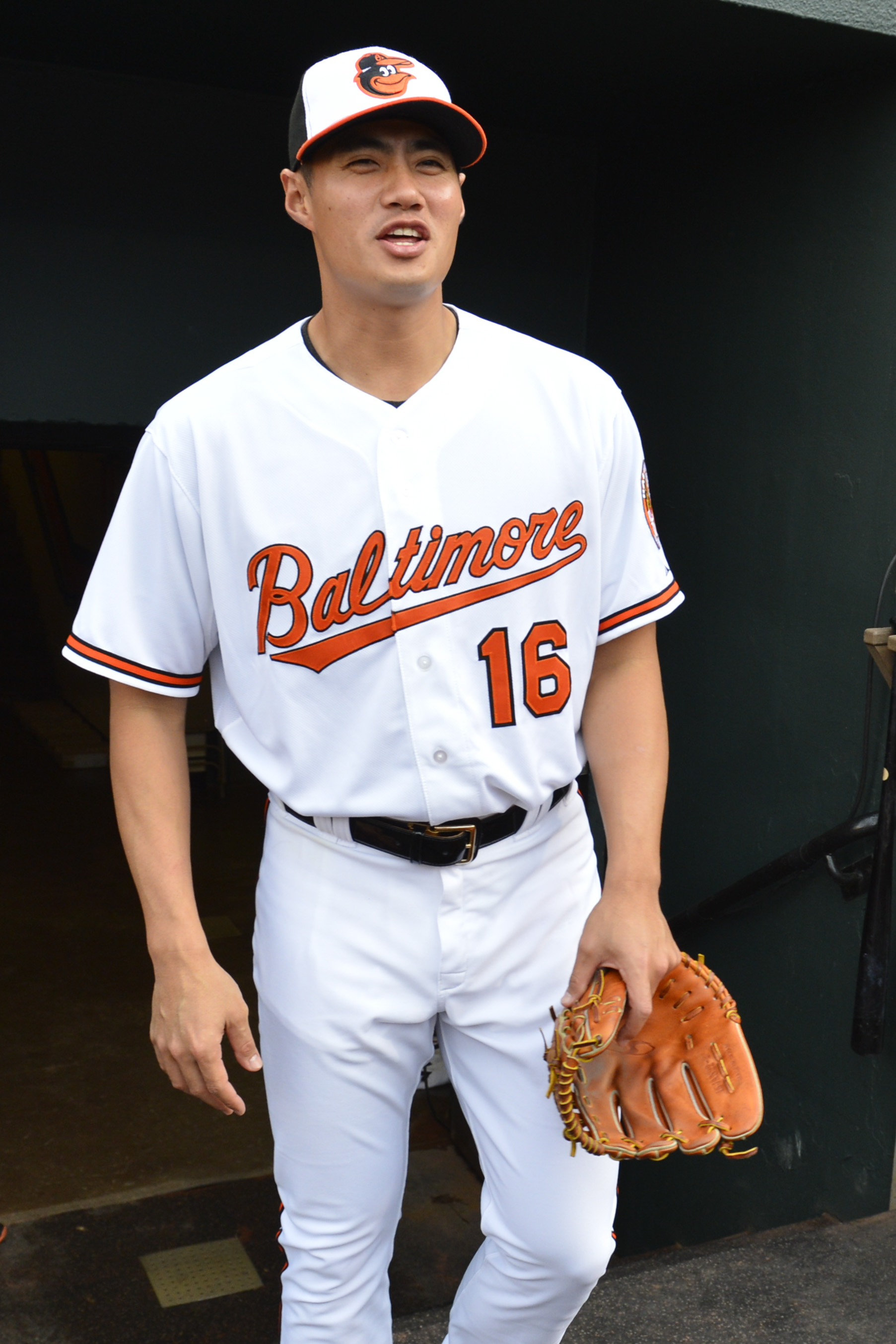
But bottom-line results do matter, especially as they continue to compile over more and more innings. And since the start of 2014, Chen has put up 315 2/3 frames of 3.45 ERA pitching.
Those figures put him in pretty solid company. The two most comparable pending free agents, perhaps, are Mike Leake and Yovani Gallardo. The three are probably more similar than you realize. It’s at least somewhat notable that Chen has not had the benefit of facing opposing pitchers, as the other two have. And while he’s a bit back in the innings department, much of that can be chalked up to the fact that he’s simply made three less starts than have Leake and Gallardo.
Check out these numbers (since the start of last year):
Leake: 357 1/3 IP, 3.63 ERA, 6.5 K/9, 2.2 BB/9
Gallardo: 324 2/3 IP, 3.49 ERA, 6.5 K/9, 2.9 BB/9
Chen: 315 2/3 IP, 3.45 ERA, 6.9 K/9, 1.9 BB/9
Those strikeout-to-walk splits look even better when you consider that Chen easily paces the group with a 13.5% K%-BB%, the figure that some believe to be the best overall way to measure those two true pitching outcomes. True, Chen has outperformed his peripherals. But the same is all the more true of Gallardo. And depending upon which elixir you prefer, you might not see all that much daylight between Chen and Leake.
Leake: 3.90 FIP/3.57 xFIP/3.68 SIERA
Gallardo: 3.97 FIP/3.91 xFIP/4.08 SIERA
Chen: 4.12 FIP/3.84 xFIP/3.86 SIERA
In making comparisons, of course, it’s important to considering everything. His earlier-career results weren’t quite as good (4.04 ERA), though Chen jumped straight from Japan to the big leagues and has always at least been a solid starter. He is about seven months older than Gallardo, while Leake is significantly younger than both. But the southpaw only just turned thirty, so he’s not exactly over the hill. And while he’s never been a big velocity pitcher, Chen has held steady in the 91+ mph range on his heater for his entire career.
The point here is not to make fine distinctions, as much will come down to factors such as scouting reports, players’ and teams’ preferences, market timing, and the like. Qualifying offers could weigh in as well: Leake won’t be eligible after being traded mid-year, while both the Rangers and Orioles have given indication that they intend to extend QOs to their eligible hurlers.
Ultimately, though, Chen is likely to earn quite a bit more money than we might have anticipated coming into the 2015 season. His surest path to a major guarantee may be to seek a lesser average annual value over a longer term, in the way that Jason Vargas (four years, $32MM) was able to do two years back. It may be time for an update on that deal in the AAV department, though, with the much older Bronson Arroyo recently landing two years and $23.5MM and Ricky Nolasco scoring $49MM over four campaigns.
Of course, age alone means that Chen won’t best Leake. And then there’s the matter of the qualifying offer. The impact of the QO could be tested as Chen faces a robust mid-tier pitching market that includes a number of different risk/reward profiles (take, for instance, pitchers like Mat Latos, Brett Anderson, and Scott Kazmir) and many hurlers that won’t be weighed down by draft compensation.
Photo courtesy of USA Today Sports Images.
MLBTR Originals
A look back at the original reporting and analysis found on MLBTR the last seven days:
- Rather than MLBTR’s usual Thursday afternoon episode, host Jeff Todd released three different episodes with just-traded young players. First up was Brett Phillips, the rising center fielder who was shipped from the Astros to the Brewers as a major piece in the Carlos Gomez/Mike Fiers deal. Then, Jeff spoke with prized lefty Daniel Norris, who was sent from the Blue Jays to the Tigers in the David Price deal. Jeff completed his early August trilogy by chatting with pitching prospect Zach Davies, who went from the Orioles to the Brewers. A new episode of the MLB Trade Rumors Podcast will be released every Thursday and can be accessed on iTunes, SoundCloud, and Stitcher.
- Late last week, Tim Dierkes rolled out his latest edition of the MLBTR Free Agent Power Rankings. David Price tops the list, followed by Jason Heyward and Justin Upton. Interestingly, several of the players in Tim’s top ten were traded prior to the deadline.
- MLB Trade Rumors is now on Instagram! Follow us today: @traderumorsMLB.
- Steve Adams reflected on notable August trades from the past three years.
- Earlier today we rounded up the best from the baseball blogosphere in our weekly feature, Baseball Blogs Weigh In.
2016 MLB Free Agent Power Rankings
The non-waiver trade deadline has passed, and many players’ free agent prospects were affected. So far, the following free agents are among those no longer eligible for a qualifying offer due to a trade: David Price, Johnny Cueto, Ben Zobrist, Scott Kazmir, Mat Latos, Mike Leake, Gerardo Parra, and Dan Haren. Yoenis Cespedes was already ineligible for a QO.
As a reminder, these rankings represent earning power in terms of total contract size, assuming everyone reaches the open market after this season and goes to the highest bidder. Here’s MLBTR’s full list of 2015-16 free agents.
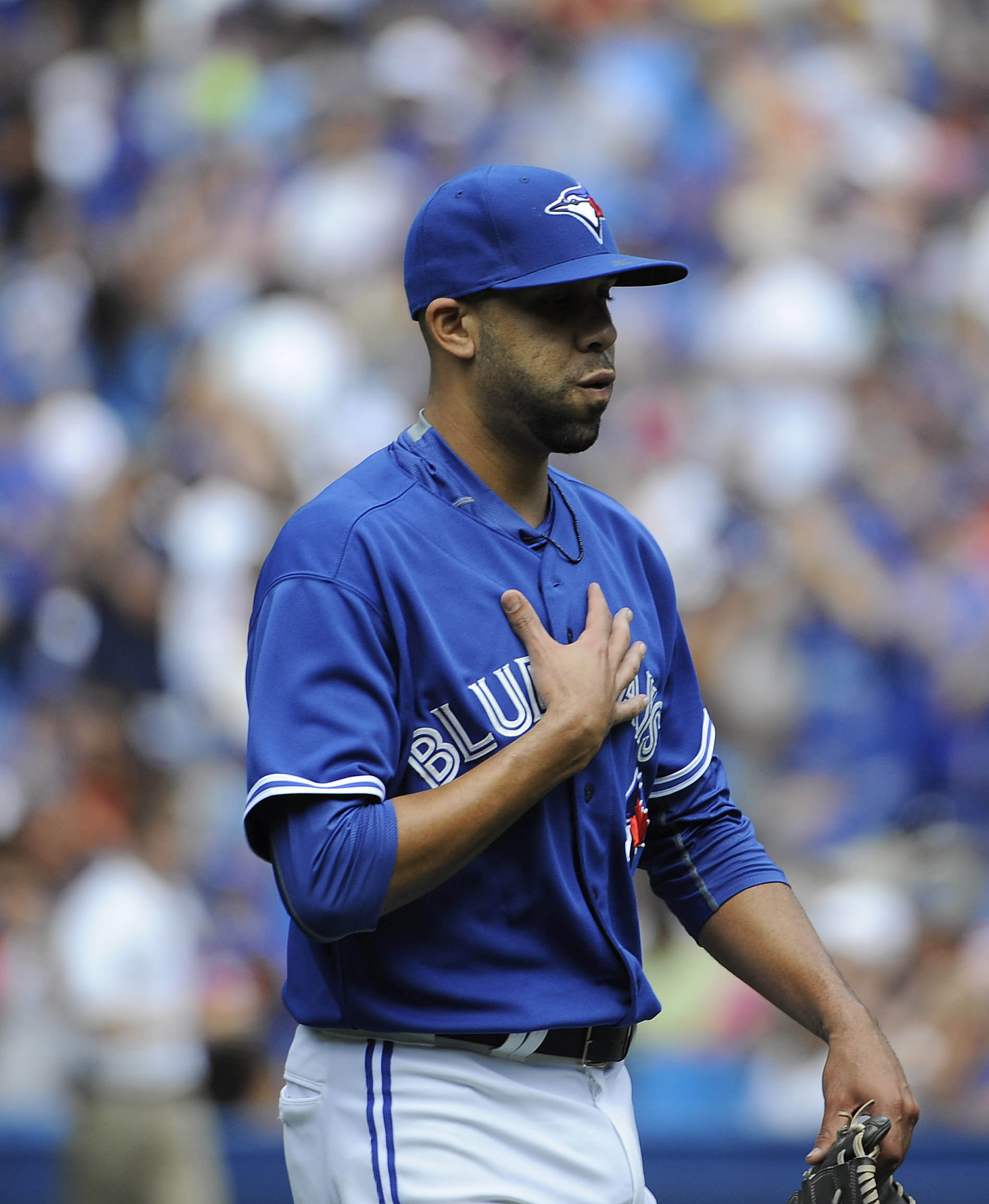 1. David Price. Price landed with the Blue Jays last week in a blockbuster trade, and has ascended to the top spot in these rankings. His 2.45 ERA ranks fourth in the American League, and agent Bo McKinnis will have a case to exceed Max Scherzer‘s seven-year, $210MM deal from last offseason. The present-day value of that deal was reported to be under $192MM due to deferred money. Price represents a true ace at the top of his game, entering his age 30 season. He might be the only free agent to top $200MM this winter.
2. Jason Heyward. Heyward’s last 1500 plate appearances have established that he’s good for about 15 home runs per year. He adds value in a lot of different ways, though, and a more analytical team might be more inclined to appreciate and pay for that. While he might not be better than all the players listed below him, keep in mind Heyward turns 26 years old on Sunday. Because of his age, Heyward is the player on this list with the best shot at an eight-year contract, which could still push him into the $180MM range.
3. Justin Upton. Upton is the other free agent outfielder who figures to command a premium partly because of his youth. Still, he’s hitting .189/.275/.311 since June, and he will require draft pick forfeiture unless the Padres trade him this month. Upton has been hampered by oblique and thumb injuries since July 19th, and his contract year has not gone as planned. He still may approach 30 home runs, though, and may be able to get a seven-year deal.
4. Johnny Cueto. As expected, Cueto was traded, and now he’ll try to lead the Royals to a championship. Cueto’s ace-level talent is undeniable, but with a few blips on his health record, can he push into seven-year deal territory? A seventh year could result in Cueto getting this winter’s second-biggest contract. A strong finish will go a long way.
5. Zack Greinke. Since we last checked in on June 25th, Greinke has given up four earned runs. He leads all of baseball with a 1.41 ERA, and no one else is under 2.00. Greinke’s timing is fantastic, and even though he turns 32 in October, a six-year deal is looking more and more plausible. Opting out of the three years and $71MM remaining on his Dodgers contract seems a mere formality.
6. Yoenis Cespedes. The Mets made a trade deadline splash by acquiring Cespedes. He may threaten his career-high of 26 home runs, and he turns 30 in October. With Shin-Soo Choo and Jacoby Ellsbury, there is precedent for Cespedes to get a seven-year deal. Though he’s known for his power, Cespedes’ agent could try to push him as an elite defender as well based on his metrics this year.
7. Alex Gordon. Gordon went down on July 8th with a groin injury, but he’s on the road to recovery. I don’t believe the injury will affect his value much. However, as a player who turns 32 in February, he seems limited to a six-year deal. Given his strong on-base percentage and defense, there will be teams with Gordon atop their free agent outfielder rankings.
8. Jordan Zimmermann. Zimmermann has been solid, with a 3.54 ERA in 22 starts. He’s not a big strikeout guy, and for the first time it looks like he’ll allow more than a hit per inning in a full season. He’ll still be a great addition for a team with a strong defense. The question is whether a team will commit a sixth year.
9. Chris Davis. Davis has bounced back from 2014 and has a reasonable shot at hitting 40 home runs this year. Davis has 28 home runs now, with Upton, Cespedes, and Marlon Byrd next among free agents at 18. Davis isn’t showing a platoon split in 2015, and he doesn’t turn 30 until March. He’s again starting to look like a player who could exceed $100MM.
10. Mike Leake. Leake is a new entrant on this list. Just 28 in November, Leake has a 2.61 ERA since June. With the trade to the Giants, he’s ineligible for a qualifying offer. Leake is a durable, young mid-rotation arm, and I’m starting to wonder if he can snag a five-year deal in free agency. For now, his durability holds off Scott Kazmir in terms of earning power.
Kazmir leads the American League in ERA right now, and won’t be getting a qualifying offer. The southpaw, 32 in January, could find his way into our top ten if his success continues and his health holds up. Still, it’s hard to crack the list without an expectation of a five-year deal, and I can’t picture that for Kazmir right now.
Jeff Samardzija, once seen as the list’s most likely trade candidate, has fallen out of our top ten. His results continue to be middling for the White Sox, and now a qualifying offer seems likely. Shark remains a durable, quality arm, but he might not be a lock for five years.
Nationals’ shortstop Ian Desmond also drops off the list. His struggles have continued, and he may prefer to try to rebuild value with a one-year deal. Those haven’t been en vogue lately, but can you picture any team giving Desmond four-plus years at a decent salary?
Other impending free agents to watch include Matt Wieters, Ben Zobrist, Yovani Gallardo, Gerardo Parra, Denard Span, Wei-Yin Chen, and Mat Latos.
Photo courtesy of USA Today Sports Images.
Notable August Trades: 2012-14
The July 31 non-waiver trade deadline has come and gone, but as we explained earlier today, that in no way means that trading is over. Working out trades is now quite a bit more complicated, but if history is any indication, we’ll still see our fair share of notable names exchanged and possibly some under-the-radar swaps that will look like coups with the benefit of hindsight in a few years.
Here’s a look back at some of the more notable deals from the past three Augusts (with a helping hand from MLBTR’s Transaction Tracker)…
2012 (Transaction Tracker link)
- Dodgers acquire Adrian Gonzalez, Carl Crawford, Josh Beckett, Nick Punto and cash considerations from Red Sox in exchange for Allen Webster, James Loney, Jerry Sands, Ivan De Jesus and Rubby De La Rosa: One of the most significant trades in recent history (August or otherwise), this trade saw the Red Sox shed more than $250MM in future payroll commitments, positioning GM Ben Cherington for an aggressive offseason on the free agent market that netted Mike Napoli, Shane Victorino, Koji Uehara, Stephen Drew and Jonny Gomes — each of whom played a role (some more significant than others) in fueling the Red Sox’ 2013 World Series run. As for the Dodgers, Gonzalez has returned to elite status, while Crawford has quietly rebounded (to some extent) and Beckett delivered 115 2/3 innings of 2.88 ERA ball in 2014 — his final season.
- Athletics acquire Jesse Chavez from Blue Jays for cash considerations, and also acquire Pat Neshek from Orioles for cash considerations: Neither of these deals looked to be of much consequence at the time, but Neshek jumped right into the Oakland bullpen and delivered a 1.37 ERA in 19 2/3 innings. That stretch kicked off a career renaissance of sorts for the side-armer, who is now an integral part of the Houston bullpen. As for Chavez, he’s still with Oakland and has turned in a 3.57 ERA in 318 innings from 2013-15. He’s also controllable through 2016.
2013 (Transaction Tracker link)
- Pirates acquire Marlon Byrd, John Buck from Mets in exchange for Dilson Herrera, Vic Black: Byrd took a minor league deal with the Mets prior to the season, while Buck was viewed as a throw-in in the offseason blockbuster with the Blue Jays, but both put up big numbers with the Mets and netted the team a pair of significant prospects from Pittsburgh. Byrd and Buck helped the Pirates to the playoffs, ending a 21-year playoff drought, and Herrera is now seen as the Mets’ second baseman of the future. Black, too, could play a part on the team for years to come as a setup man if health permits.
- Rangers acquire Alex Rios from White Sox in exchange for Leury Garcia: Rios was one of the biggest names traded in August 2013 (though Chicago’s acquisition of him from the Blue Jays in 2009 may be the more notable August move), and he batted .280/.315/.457 for Texas down the stretch. He’d go on to struggle in 2014 and take a one-year deal with the Royals. Garcia, meanwhile, could eventually make for a nice utility piece in Chicago, but to this point the Rangers have received more from the deal than they gave up.
2014 (Transaction Tracker link)
- Athletics acquire Adam Dunn from White Sox for Nolan Sanburn: An Aug. 31 trade sent the Big Donkey to Oakland, where he caught a fleeting glimpse of playoff baseball before retiring this offseason. Dunn memorably homered in his first at-bat with Oakland.
- Nationals acquire Matt Thornton from Yankees via waiver claim: The Nationals placed a claim on Thornton and, somewhat surprisingly, the Yankees imply elected to pass the remaining tab on his two-year, $7MM contract along to the Nats. No one in D.C. is complaining; Thornton fired 11 1/3 shutout innings for the Nats down the stretch in 2014 and has a 2.19 ERA this sason.
- Orioles acquire Alejandro De Aza from White Sox for Miguel Chalas and Mark Blackmar: De Aza didn’t hit much for the White Sox in his final year with the team, but he exploded in Baltimore, slashing .293/.341/.537 down the stretch and going 7-for-21 with three doubles in the playoffs. His second year in Baltimore didn’t go as well; the O’s designated him for assignment and flipped him to the Red Sox earlier this year, and Boston has enjoyed nice production from the 31-year-old. De Aza’s hitting .305/.353/.500 with Boston and is once again an August trade candidate.
There were, of course, many more trades made over the past three Augusts (check out the accompanying Transaction Tracker links above for the full lists), and there figure to be many more this season. I doubt we’ll see a nine-player blockbuster in which more than a quarter-billion dollars worth of salary changes hands again, but there are plenty of big names with significant salary owed to them that didn’t move last month. James Shields, Joaquin Benoit, Ryan Howard, Chase Utley, Marlon Byrd, Kyle Lohse, Matt Garza, Mike Napoli, Alex Avila, Rajai Davis and many others could find their names floating around on the rumor mill this month.
Royals GM Dayton Moore Talks Zobrist Trade
Dayton Moore pulled off a major acquisition when he landed ace Johnny Cueto from the Reds on Sunday, but he didn’t rest on his laurels after that trade. Today, he finalized another major deal when he acquired versatile veteran Ben Zobrist from the A’s. Earlier today, I asked the Royals GM if he was under a mandate from ownership to go for broke this summer and make major moves.
“We always have a mandate to put the best team on the field,” Moore told reporters on the conference call. “Certainly the play of our team and how our players have responded gives us more motivation to make moves, but we’ve always tried to do whatever could at the deadline to make our team better for the second half, even when we weren’t competing.”
While Cueto came to K.C. before Zobrist, the GM explained that talks with Oakland actually started before the discussions with Cincinnati. There are still a few days to go until the trade deadline but Moore doesn’t expect to make another blockbuster deal between now and Friday. Like a responsible Christmas shopper, it appears that Moore has avoided the rush to get the top shelf prizes. Interestingly, however, he says the timing of it all was happenstance.
“You’ll have to speak with [Reds GM] Walt [Jocketty] and [A’s GM] Billy [Beane], but for me, they were just satisfied with the package that was offered,” said Moore. “I don’t think anybody is gonna execute a deal unless they’re as satisfied as they can be. When we enter into these types of discussions for a player we want we are very aggressive. We have a good idea of what we want and what we want to provide as far as the package goes and what they desire…No sense in stringing things out and creating unnecessary tension. If you know at the end of the day that you’re going to get to a certain place, you might as well get there.”
Zobrist is expected to join his new teammates “in a day or two,” and when he gets in the mix, he’ll be slotted in left field rather than second base, where he’ll be filling in for the currently injured Alex Gordon. There’s plenty of work ahead for Zobrist, Cueto, and the Royals, but it sounds like their GM is done with the heavy lifting for the week.
Trade Market For Starting Pitchers
“You can never have enough starting pitching.” It’s a refrain we hear often this time of year, and it leads to a lot of deadline deals — even for clubs that don’t strictly “need” to add a starter. We’ve already seen the Royals (acquiring Johnny Cueto) and Astros (acquiring Scott Kazmir) strike deals for highly-rated arms, and they’ll likely be joined by teams such as the Dodgers, Cubs and Blue Jays among others. Making things even more interesting, we’ve heard a variety of rumors involving more controllable pitching — which could re-frame clubs that have fallen back in the standings (such as the Red Sox, Rangers, and Diamondbacks) as future-oriented buyers.
Cueto and Kazmir are taken, but there’s plenty left to choose from:
Aces
David Price (Tigers), Cole Hamels (Phillies)
- If Price is made available — and reports on whether or not that will happen have been conflicting — he’s the prize of the rental market. With all due respect to the excellent Cueto, Price hasn’t had any health scares this year, and he’s simply outperformed all of the other rentals, as one would expect. Price is on nearly any fan or evaluator’s short list of the five to 10 best pitchers in baseball. His latest eight-inning gem dropped his ERA to 2.31 to go along with 8.6 K/9 and 1.7 BB/9. He’s earning an enormous (relative to other arbitration prices, that is) $19.8MM in 2015, of which about $8MM or so remains. That’s a big amount to add midway through a season, so if traded, Price will likely go to a team with both the financial wherewithal to take on a sizable sum and a deep farm system or cache of MLB-ready talent to entice Detroit to part ways with its ace.
- Hamels answered skeptics who questioned his abilities following a pair of ugly starts by turning the best start of his career on Saturday — a 13-strikeout no-hitter against the Cubs. It’d be a storybook ending for one of the greatest pitchers in Phillies history… if he’s moved. Some have questioned whether the Phillies will move him now or move him at the Winter Meetings, once president-to-be Andy MacPhail is running the show and is more acclimated to his new organization. That’d be a risky play, as the winter market could be saturated with arms, though the $73.5MM he’s guaranteed from 2016-18 would be below market value for an arm of Hamels’ caliber at that point.
The Second Tier
Jeff Samardzija (White Sox), James Shields (Padres), Andrew Cashner (Padres), Tyson Ross (Padres), Hisashi Iwakuma (Mariners), Mat Latos (Marlins)
- Samardzija hasn’t been as good with the White Sox as he was in 2014 with the Cubs and A’s, but some of that can be pinned on a brutal defense playing behind him. He’s been very good as of late, posting a 2.55 ERA and a 45-to-11 K/BB ratio in 60 innings over his past eight starts. A free agent at season’s end, Samardzija has turned in somewhat of a mixed skill set. His 6.9 K/9 rate is the lowest of his career as a starter, and his ground-ball rate is down nearly 10 percent from its 2014 levels. However, he’s also walking fewer batters than he ever has (1.7 BB/9) and is still averaging better than 94 mph on his fastball.
- The Padres are apparently pushing hard to move Shields and his backloaded contract just five months after signing him to a four-year, $75MM contract. That’s probably a tall order, considering Shields is owed $64MM from 2016-18 and has the power to opt out of his deal following the 2016 season. In other words, if a team pays any kind of premium in terms of talent, they may be sacrificing that talent for just a year and a half of production. But, if Shields declines, they’ve assumed the risk of that weighty contract and could be stuck with an overpriced asset. Recently, though, Shields looks excellent.
- Cashner and Ross are perhaps more desirable than Shields due to their youth, although each is having somewhat of a down season. Cashner’s been more homer-prone than usual and is stranding fewer runners, though in terms of strikeout rate, control and ground-ball rate, he’s largely the same pitcher he was in 2014. He’s a free agent following the 2016 season. Ross is controlled through 2017, and his strikeout and ground-ball rates are both way up in 2015. However, his old control woes look to have resurfaced to some extent (4.2 BB/9).
- Iwakuma’s spent a good chunk of the year on the DL and is a pure rental, but he’s been great over his past three starts and is distancing himself from the bizarre and uncharacteristic homer problems that plagued him upon his return. Iwakuma has a 4.50 ERA, but both xFIP and SIERA feel his skills are more indicative of a 3.50ish ERA. He’s earning $7MM this season, making him very affordable.
- As I noted in profiling Latos earlier this month, he’s been a different pitcher since coming off the DL with a nagging knee injury that likely ties back to the surgery he had in 2014. Latos’ fastball velocity is up more than two miles per hour since coming off the DL, and he’s striking people out in bunches. Since I last examined his stock, he’s allowed four runs in 20 innings with a 19-to-3 K/BB ratio. Overall, he has a 2.96 ERA with 8.5 K/9, 1.8 BB/9 and a 45.2 percent ground-ball rate in 45 2/3 innings since getting healthy. The Mat Latos of old is back, and he might be the most underrated rental on the market.
Mid-Rotation Arms/Innings Eaters/Back-End Starters
Mike Leake (Reds), Dan Haren (Marlins), Yovani Gallardo (Rangers), Ian Kennedy (Padres), Jesse Chavez (Athletics), C.J. Wilson (Angels), Jeremy Hellickson (D-Backs), Colby Lewis (Rangers), Wandy Rodriguez (Rangers), J.A. Happ (Mariners), Kyle Lohse (Brewers), Aaron Harang (Phillies), Jerome Williams (Phillies), Justin Masterson (Red Sox), Mike Pelfrey (Twins), Bud Norris (Orioles), Kyle Kendrick (Rockies), Matt Garza (Brewers), John Danks (White Sox), Jorge De La Rosa (Rockies)
- Leake, Gallardo, Haren, Kennedy and Happ are the top rentals of this group. No one from that group is overpowering. In fact, Kennedy, who strikes out the most batter os the bunch, is having a down season (like the rest of San Diego’s starters, for the most part). Still, any from this group could conceivably be plugged into the middle of most rotations in the Majors. Leake’s probably the best bet to be moved in the next few days.
- Chavez and Wilson can both be controlled through 2016, though Wilson’s $20MM salary for 2016 will probably be roughly four times greater than what Chavez will earn in his final trip through arbitration. Both can help a rotation, but Wilson would probably need to be moved along with some cash or in exchange for another player with an expensive salary. Hellickson, too, is controlled through 2016, though the former top prospect and AL Rookie of the Year has regressed quite a bit in recent seasons. He got off to a poor start with the Snake but has been great over his past four starts.
- Harang probably won’t be moved until August due to an injury, but he joins the likes of Masterson, Pelfrey, Norris, Williams, Kendrick, Lohse, Garza and Danks in the “struggling veteran” category. Pelfrey has decent numbers but he’s been dreadful of late and was never as good as his peripherals indicated this season. All of these arms, with the exception of Danks and Garza, would be rentals. Danks and Garza are both owed sizable commitments beyond 2015.
Controllable Arms With MLB Experience
Carlos Carrasco (Indians), Jon Niese (Mets), Julio Teheran (Braves), Mike Fiers (Brewers), Vance Worley (Pirates), Jeff Locke (Pirates) Tom Koehler (Marlins), David Phelps (Marlins), Dan Straily (Astros)
- Carrasco is probably the most desirable of this bunch, as the strikeout machine is in the first season of an affordable four-year, $22MM extension that contains a pair of club options valued at $9MM and $9.5MM. As such, Carrasco would require an enormous haul. The Blue Jays have expressed interest, and others figure to do so as well. Jeff Todd and I discussed how the Indians could potentially free themselves of the Michael Bourn and/or Nick Swisher contracts by way of a Carrasco trade.
- Niese’s name keeps popping up in trade rumors, but the latest say the Mets don’t want to move him. He’s pitched well and can be controlled for another two years beyond 2015.
- Teheran has surfaced as a surprise trade candidate after struggling with his control in 2015. He’s owed $29.6MM from 2016-19, including a $1MM buyout of a $12MM 2020 option. Struggles aside, it’s difficult to envision the Braves selling too low. They’d likely value him highly due to that control, though plenty of teams would love to get the opportunity to try to turn Teheran around.
- The Blue Jays like Fiers, but the pre-arbitration 30-year-old isn’t someone the Brewers feel inclined to move. He’d require a relatively notable return, though probably not one on par with Carrasco and Teheran.
- Worley and Locke have had their ups and downs as members of the Pittsburgh rotation over the past two seasons. They’re fourth starters at best — probably closer to fifth starters — but either could be on the move if the Bucs make a more substantial roation upgrade.
- Koehler seems unlikely to be moved by Miami, as he’s a usable fourth/fifth starter option that won’t be arb eligible until this offseason. He’s controlled through 2018 and has a career 3.89 ERA with 6.6 K/9 and 3.3 BB/9 in 458 2/3 innings. Phelps is a swingman that has been useful in both the bullpen and rotation for the Yankees and Marlins. His contract status and his overall numbers are similar to Koehler.
- Straily’s been excellent at Triple-A this year but has bounced from the A’s to the Cubs to the Astros without getting an extended look in a rotation. He might make sense for a rebuilding team with little upper-level pitching depth that could afford to give him a chance (e.g. Phillies, Rockies).
—
For a look around the rest of the trade market, check out MLBTR’s rundowns of the market for catchers, first basemen, second basemen, shortstops, third basemen, corner outfielders, center fielders and relief pitchers.
Ben Cherington On Shane Victorino, Rusney Castillo
Earlier this evening, the Red Sox and the Angels reached agreement on a deal to send Shane Victorino and cash considerations out west in exchange for infielder Josh Rutledge. In a conference call with reporters, Red Sox Executive Vice President/GM Ben Cherington explained that the talks started only in the last few days.
“The deal kind of came together over the weekend,” Cherington said. “I talked to Shane this afternoon during batting practice about it…He’s been a part of a lot of great moments, not just for the Red Sox, but throughout his career.”
The deal was not an easy one for Cherington to make and it has brought about some mixed emotions for the Flyin’ Hawaiian. Victorino expressed to Cherington that he’s happy to have an opportunity to join up with a contender and play meaningful games down the stretch. On the other hand, the veteran feels that his time in Boston marked a very important part of his career and he is sad to leave his Red Sox teammates behind.
Baseball-wise, the deal opens up space on the Red Sox’s roster, allowing them to get a good look at international signee Rusney Castillo. While Cherington wouldn’t quantify how much that played a role in the Victorino trade, he said that it was “certainly” a consideration. However, there aren’t any immediate plans to make a similar move to accommodate Jackie Bradley Jr.
“Jackie is doing well. There’s merit and consideration in trying to get some opportunities for him too, but today it’s Castillo. We’ll see where it goes after that,” said the GM.
As for Rutledge, Cherington confessed that he has had interest in the infielder “going back to his Colorado days.” With Dustin Pedroia on the DL, the 26-year-old figures to see a good amount of playing time the rest of the way. If he does well, Cherington says he can envision him “being a part of the team going forward.”
Outside of today’s transaction, Cherington kept mum about other possible dealings this week. When asked about the level of interest he’s received in Mike Napoli, he effectively gave a no comment. When another reporter inquired on what’s next, Cherington tersely replied, “[There’s] nothing to announce and nothing is particularly close.”