
When Agents Get Played
Baseball players jumping from one agency to another is nothing new. In fact, it seems there are some who will change affiliations more frequently than they change their underwear. When agents and baseball executives talk about an instance of that happening, they often use a phrase that conjures up images of evildoers chasing ivory-rich elephants in sub-Saharan Africa: “player poaching.” That terminology focuses on the unscrupulous agents who make it common practice to steal players out from under their colleagues and while that certainly takes place, not every case is exactly alike and things are never that cut and dry in the agency world. Sometimes, it’s the players who are acting unscrupulously. In the case of some minor leaguers, they’re employing two, three, or four agents at once in an effort to rack up as many gifts and favors as possible.
Plenty of stories have been written about individual cases of players being lured from one agency to another, but there hasn’t been much discussion about players employing several agencies simultaneously. There’s no way to quantify how many minor leaguers are engaging in this practice, but upwards of a dozen agents speaking on the condition of anonymity acknowledged that it’s quite commonplace.
A few years ago, one agent called a club to discuss the terms of his minor league client’s release. The exec, in turn, informed the agent that he had already spoken to the player’s representative just hours ago. The agent was shocked, but not surprised. His client had been stringing him along while actually working with a different agent.
“You see this a lot with guys from the Dominican Republic and in the Latin markets,” the agent said, echoing a sentiment shared by many in the field. “They don’t understand that there are rules and limits as to what an agent can give you. So they’ll employ two or three agents and they all have regular contact with the player. You have one giving them money, one giving them equipment…I’ve seen cases of guys having three or four agents at one time. There’s really no one policing it.”
Lower-caliber minor leaguers can juggle multiple agents without oversight because they do not have to fill out an agent designation form with the MLBPA until they reach the 40-man roster. Nearly every agent that spoke with MLBTR had a story of a player using multiple agents, whether it happened to them, a partner within their agency, or someone else in the field. As one might imagine, the victimized agents tend to find out about these things in strange ways.
One agent visited his client’s minor league clubhouse only to find a Foot Locker stock room’s worth of free shoes crammed into the player’s tiny locker. The abundance of free swag was the baseball equivalent of a woman finding a lipstick stain in an unfamiliar shade of red on her husband’s collar. That agent’s suspicions were confirmed soon after – his client had been taking advantage of multiple player reps.
Another veteran agent told MLBTR’s Steve Adams that he saw a little-known Single-A player who already had representation sign on with another agency because he was given an endorsement deal from Easton. When his original agent asked the player what had happened, the player replied that there was nothing in writing or even a check, just a $10K cash payment. Major equipment companies typically don’t dole out lucrative deals to unheralded minor leaguers and they certainly don’t do it with a burlap sack of money. It’s more than likely that the player’s allegiance was simply paid for by the rival agent.
Nearly every agent that spoke with MLBTR made two generalizations on the topic at hand. First, the players doing this, more often than not, are international prospects. Secondly, even though plenty of savvy veterans have been fooled, the greener agents are more susceptible to getting played.
“I don’t want to say that it’s a B.S. excuse for agents, but I feel that anytime a guy is working you for equipment and other crap, that should send up a red flag for you,” said one experienced agent.
Even though the MLBPA doesn’t oversee the non 40-man players, there are multiple ways that agents can protect themselves. Five veteran agents told MLBTR that they require all of their clients to fill out agent designation forms, regardless of their status. Agents can still submit these forms to the union and if a player is registered with more than one representative, all parties involved are notified. From that point, the union will step in and mediate. Of course, at that point, an agent might not even bother putting up a a fight.
“I believe it takes a certain kind of makeup to succeed. I don’t care how good you are, it just doesn’t matter. I’ve seen all kinds of ridiculous talent in this game but if they’ve got a ten cent head, it’s probably not going to work out,” one agent said. “That doesn’t mean they have to be smart, but with certain kind of guy you can tell he ain’t gonna make it if he’s playing these games and worrying about [gifts].”
Agents say they’ll only engage in business with players that are of high character. The aforementioned player who asks for a pair of spikes and $200 before forming a partnership? He’s probably not a guy you want to be involved with. It could also be a bad sign when you’re talking with handlers rather than the player himself.
“The further you get away from dealing directly with a player by dealing with a chain of people around him, the more likely there is to be abuse,” longtime agent Barry Meister said. “When you’re recruiting a young player, and talking to his family, you have to be sure the person you’re speaking with is the person who is making the decision. I suspect that you’ll have far more luck going directly to the player than talking to a handler or someone in the entourage or the guy’s brother.”
The end game of staffing multiple agents is almost always to rack up as much money and as many gifts as possible. Agents who want to avoid being turned into a walking Amazon wishlist can protect themselves by complying with MLBPA regulations. The union stipulates that an agent cannot spend more than $2K on any single player within a year, a mechanism designed to help cut back on player poaching. Staying inside of that dollar figure also leaves agents less susceptible to getting worked over or, at the very least, lessens some of the sting if their minor leaguer does get into bed with other agents.
Newer player reps would be wise to take that advice because the consensus amongst agents is that the union won’t be cracking down on guys simultaneously rostering multiple agents. While agents appreciate their voices being heard on matters with the MLBPA – something widely attributed to the late Michael Weiner – the union, they say, has bigger fish to fry and probably doesn’t have the resources to police every instance of a minor leaguer acting unethically. Also, in many cases, the players are staffing multiple agents in part because they’re new to playing the game at a professional level and don’t really have a grasp on how a player-agent partnership works. At the end of the day, the importance of pre-screening goes both ways for players and agents who are looking for a productive and honest business relationship.
MLBTR Originals
A look back at the original reporting and analysis found on MLBTR the last seven days:
- Tim Dierkes revised MLBTR’s 2015 Free Agent Power Rankings and Max Scherzer and Jon Lester remain atop the leaderboard, but seven of the eight other positions changed hands.
- Zach Links examined the practice of players employing multiple agents. “You see this a lot with guys from the Dominican Republic and in the Latin markets,” an agent, speaking on the condition of anonymity, told Zach. “They don’t understand that there are rules and limits as to what an agent can give you. So they’ll employ two or three agents and they all have regular contact with the player. You have one giving them money, one giving them equipment…I’ve seen cases of guys having three or four agents at one time. There’s really no one policing it.”
- Jeff Todd issued a Free Agent Stock Watch on the upcoming class of closers scheduled to hit the market this winter.
- Steve Adams listed the notable September contract extensions signed over the past three seasons.
- Brad Johnson asked MLBTR readers whether the Mets will retain manager Terry Collins. Approximately 56% of you believe the club should find a new field boss for 2015.
- Jeff asked MLBTR readers to name the best August acquisition. Nearly one-third of you chose the A’s obtaining Adam Dunn.
- Steve hosted the weekly live chat.
- Zach gathered the best the baseball corner of the web had to offer in Baseball Blogs Weigh In.
Free Agent Stock Watch: Closers
Over the winter, MLBTR’s Charlie Wilmoth took a look at the changing closer market, documenting the dwindling dollars and years available for 9th-inning relievers. As we approach now approach a new offseason, a different type of market change — related only in part to the broader trend — has taken hold. Namely, the actual group of soon-to-be free agents with closing experience has seen many individual stock drops.
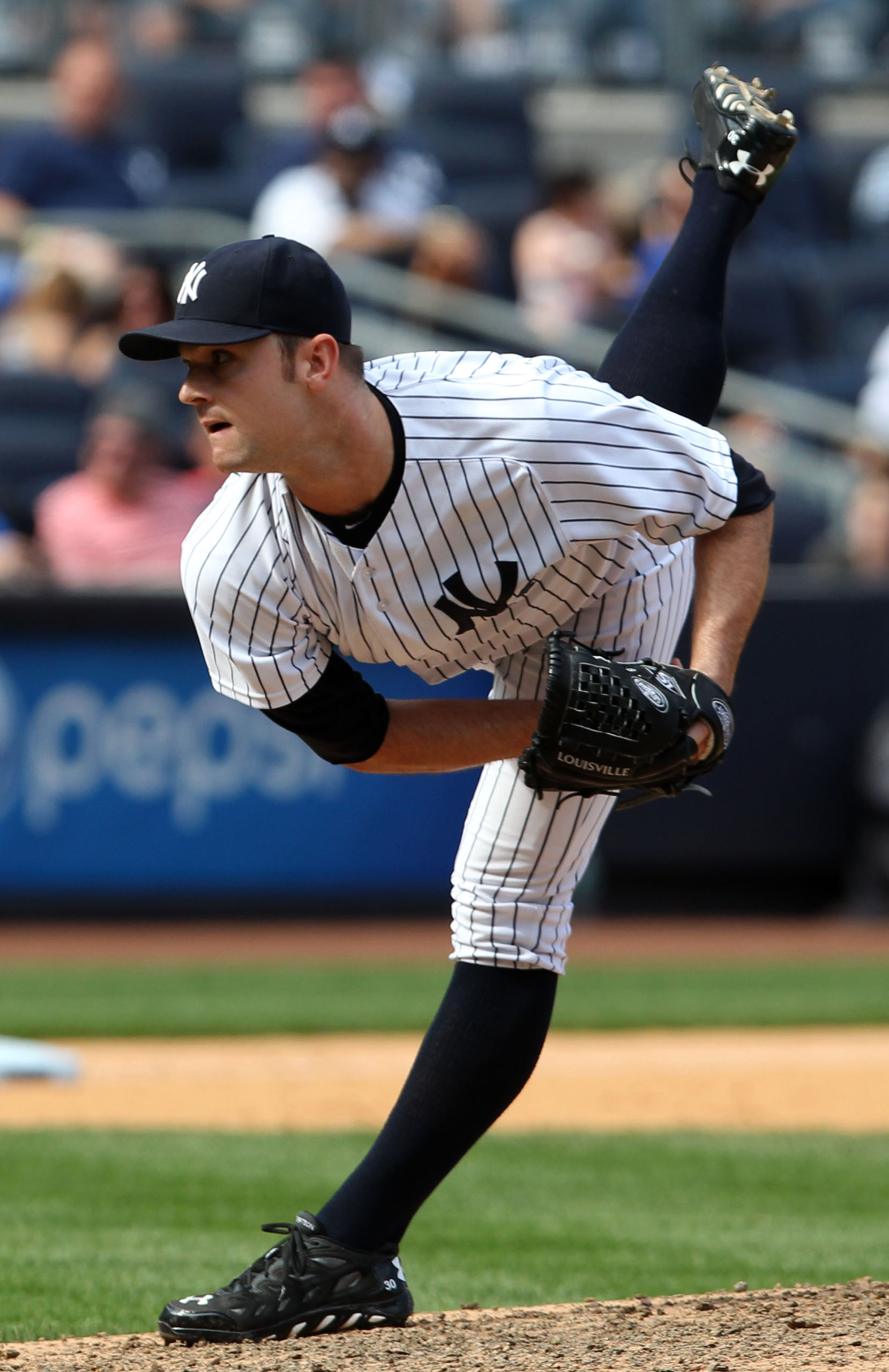
Let’s have a look at the “closer” portion of MLBTR’s 2015 MLB free agent list (including only those players who, in my opinion, are likely to become free agents): Jason Grilli, Casey Janssen, David Robertson, Francisco Rodriguez, Sergio Romo, Rafael Soriano, and Koji Uehara. Listed under right-handed relievers are a few other names with significant closing experience: Heath Bell, Jim Johnson, J.J. Putz, and Jose Veras.
Heading into the year, this looked like a pretty strong group of late-inning arms. Among them were some of the more established closers — and, indeed, better relief pitchers, role aside — in the game. But the group has seen some pretty significant shifts in value that make it look much less impactful on the whole.
Here are my assessments of the value movement on these players:
Trending Down
Grilli: coming off 2.70 ERA, 33-save year, lost Pirates closer job and was traded to Angels; has performed well since in set-up role
Janssen: missed significant portion of early year with injury, ended with 3.72 ERA and will cede time to younger players in September; has never really seemed to fit traditional closer model, and now features a plummeting strikeout rate (5.4 K/9)
Romo: after four-straight lights out years, was relieved of end-of-game duties and owns 3.98 ERA on season
Uehara: typically dominant year took dramatic, late-season downturn at inopportune time for 39-year-old
Bell, Johnson, Putz, Veras: look, there’s a reason that these guys fell off of the (admittedly subjective) “closer” list, which is that they all struggled mightily for lengthy stretches
Holding Steady
Robertson: on the one hand, Robertson has proven that he can handle closing in New York after taking over for a legend; on the other, his peripherals are in line with his career numbers but his ERA (2.92) is higher than in recent years
Soriano: there’s an argument to be made that he has raised his stock with his strikeouts back on the rise, but an offsetting jump in free passes has kept his K:BB ratio the same, and on the whole he has not done much to change the fact that he is a good-but-not-great reliever
Rising Up
Rodriguez: after surprisingly jumping into the closer’s role in the season’s early days, Rodriguez has locked down 39 saves and worked to a 3.00 ERA with 10.2 K/9 and 2.1 BB/9; since signing a minor league deal before 2013, K-Rod owns a 2.87 ERA
—
So what does this all mean? It seems to me that the major beneficiary of the market shake-out is Robertson, who is by far the youngest of these closers and is the only one who (as things stand) will enter free agency with both an impeccable recent track record and few real questions moving forward. Though Uehara has the most dominant recent record of this group, his well-documented recent struggles and advanced age should significantly dampen his market.
Those dynamics put the Yankees in an interesting spot. On the one hand, the club should now face greater competition to bring back its Mariano Rivera replacement. On the other, it might justifiably utilize the qualifying offer to buy back some leverage. The team has already shown a willingness to do just that with a closer (Soriano), and would up the ante for other teams that might consider a run at Robertson.
The possibility that Robertson’s market will itself be suppressed by a QO paints an even more sobering picture of the overall expectations. It is worth wondering whether any of the other above-listed players will be able to command a significant, multi-year guarantee. The one player who is clearly rising, Rodriguez, could certainly land a reasonable salary over two years (he is, somehow, still only 32), but it is hard to see a bidding war emerging there. No doubt some of the others will take smaller average annual values to get a second year, but pillow contracts could abound.
Remember, last year’s upper-middle closer market settled in the range of two years and between $9.5MM and $15.5MM. And that was for pitchers like Edward Mujica, Grant Balfour, Fernando Rodney, and Joaquin Benoit who had much stronger cases than this year’s crop. Notably, even those pitchers were not able to beat the earnings of high-performing non-closers. And, if anything, the high-profile struggles of players like Balfour and Johnson have further eroded the notion of paying big dollars for relievers whose primary calling card is 9th-inning experience.
This year’s market could have looked similar: a few strong performances from familiar players, a few emerging/rebounding names. Instead, we’ve seen mostly steps in the wrong direction from pitchers with closing time on their resume. And that is even before considering demand. Many of the clubs that could have open closing positions — for instance, the Orioles, White Sox, Rangers, Nationals, Brewers, Cubs, Giants, and Rockies — seem more likely to stick with veterans, elevate internal options, or avoid spending big dollars on an older reliever.
Now may be a good time to find out whether teams will place any significant premium at all on that experience going forward.
Recent September Extensions
September is historically a down month on the trade front, as players acquired after Aug. 31 are not eligible to join an acquiring club’s postseason roster. However, if recent history is any indicator, we can expect a few extensions to be hammered out over the next four weeks. Here’s a look back at some notable September extensions over the past three seasons…
2013
- Padres sign Will Venable to a two-year, $8.5MM extension. — Venable had a breakout season in terms of his power production last year, so the Padres likely felt fortunate to lock in his remaining arbitration salaries, as further 20-homer/20-steal seasons would cause the price to soar. Unfortunately for the team, Venable’s decision to opt for security looks wise, in hindsight, as he’s batted just .220/.282/.319 in the first year of the deal — surprisingly low production from a player who had posted a wRC+ mark of 99 or better in each year of his career.
- Marlins sign Greg Dobbs to a one-year, $1.75MM extension. — This extension drew plenty of public scrutiny, as Dobbs’ on-field performance in 2013 (.228/.303/.300) didn’t warrant the deal. It was eventually reported that owner Jeffrey Loria negotiated the deal without consulting former president of baseball operations Larry Beinfest. The Dobbs extension would be one of many stories that were referenced when describing the rift between Loria and Beinfest at the time of Beinfest’s dismissal.
- Giants sign Hunter Pence to a five-year, $90MM extension. — The most notable of any extension in this post, Pence was positioned to be one of the top free agents in the 2013-14 class, but he took what looked to be market value at the time to remain in San Francisco. As it turns out, the market for outfield bats was more aggressive than many had thought, with Jacoby Ellsbury and Shin-Soo Choo landing seven-year deals worth $153MM and $131MM, respectively. Based on that context and Pence’s brilliant 2014 campaign — he’s hitting .296/.348/.482 with 19 homers and a hefty 5.4 fWAR/4.0 rWAR — the contract looks good after about one year.
2012
- Padres sign Chris Denorfia to a two-year, $4.25MM extension. — Denorfia’s strong season led former GM Josh Byrnes to lock in his final arb years with this modest extension, and Denorfia made the deal look like a good one in 2013 by hitting a solid .279/.337/.395 with a career-high 10 homers and excellent numbers against lefties. His production fell off in the contract’s second year, but the Padres’ triumvirate of interim GMs were still able to flip him to Seattle for outfielder Abraham Almonte and minor league righty Stephen Kohlscheen.
- Rangers sign Colby Lewis to a one-year, $2MM extension. — Lewis went down for the season in mid-July back in 2012, but he’d been enjoying a strong season and was expected to return for the 2013 campaign, making a $2MM salary a potential bargain for Texas. Unfortunately for the Rangers, Lewis had multiple setbacks and wasn’t able to take the hill the following season, but it’s not hard to see why they were interested in the low-risk deal; Lewis had turned in a 3.93 ERA over his previous 506 1/3 innings with the Rangers.
2011
- Cardinals sign Chris Carpenter to a two-year, $21MM extension. — Carpenter led the league in innings pitched in 2011 and had been generally excellent over the previous three seasons, prompting quite a bit of praise for this deal. He, in fact, restructured his contract and took what most expected to be less money in the long run, giving up a $15MM club option in favor of this two-year deal. Of course, Carpenter would sadly throw just 17 more innings in his career before injuries forced him to retire. While it looked good at the time, this deal didn’t pan out.
- Mets sign Tim Byrdak to a one-year, $1MM extension. — While the extension wasn’t particularly memorable and didn’t have a large impact on the 2012 Mets, Byrdak fired 30 2/3 innings of 4.40 ERA ball and was a strong weapon against lefties, making him worth his modest salary.
- Cardinals sign Lance Berkman to a one-year, $12MM extension. — After a huge rebound campaign in 2011, Big Puma was rewarded with this contract, but he totaled just 97 plate appearances the following season due to knee injuries. He wasn’t able to recover with the Rangers in 2013 and retired following that season, putting an end to an excellent career.
- Marlins sign Omar Infante to a two-year, $8MM extension. — This contract paid dividends in the sense that Infante was largely excellent for the Marlins over the next half-season before being dealt to the Tigers along with Anibal Sanchez. That trade netted former top prospect Jacob Turner, catcher Rob Brantly and lefty Brian Flynn — a respectable haul at the time but one that now looks lackluster. Miami dealt Turner to the Cubs for a pair of low-level relievers this season, and Brantly has been passed over in favor of Jarrod Saltalamacchia.
- White Sox sign Sergio Santos to a three-year, $8.25MM extension. — Signed at the end of a breakout season as the White Sox closer, Santos found himself traded to the Blue Jays for pitching prospect Nestor Molina that offseason. Molina hasn’t done much and was recently outrighted by the ChiSox, but they probably feel fortunate not to have had to pay Santos the money he was guaranteed, as shoulder injuries led to a 5.23 ERA and just 51 innings pitched over the life of his three guaranteed years with Toronto.
2015 Free Agent Power Rankings
Less than one month remains in the 2014 regular season, so our 2015 Free Agent Power Rankings are starting to resemble the beginning of the Top 50 Free Agents list, which will come out in early November after teams make qualifying offers. Click here for the previous edition of the power rankings, and click here for the full list of 2015 free agents.
1. Max Scherzer. Scherzer has a 3.07 ERA in eight starts since the power rankings were last published. The 30-year-old ranks second in the AL with 220 strikeouts, fifth with 187 2/3 innings, 13th with a 3.26 ERA, and 5th with a 2.84 SIERA. His Tigers are a good bet for the playoffs, which would mark Scherzer’s fourth consecutive postseason. Scherzer could secure the largest free agent contract ever signed by a pitcher, a record currently held by C.C. Sabathia‘s seven-year, $161MM deal from six years ago. More recently, free agent Masahiro Tanaka required a $175MM commitment, but $20MM of that was paid to his former team. Both of those pitchers received opt-out clauses, a likely goal for Scherzer.
2. Jon Lester. Lester ranks fourth in the AL with a 2.55 ERA, fifth with 186 strikeouts, sixth with 183 2/3 innings, and eighth with a 3.06 SIERA. He hasn’t missed a beat since being traded to the Athletics at the July deadline. Because of the trade, Lester boasts a free agency advantage of not being eligible for a qualifying offer after the season. He’s headed to the playoffs for the fifth time in his career. Lester is only six months older than Scherzer, and some teams shopping in the high-end of the free agent pitching market may prefer him. The Red Sox told Lester they’ll be aggressive in trying to sign him as a free agent, and the lefty says he’s prioritizing his family’s happiness over money.
3. James Shields. Shields currently leads all free agent starters with 192 innings, but Scherzer could temporarily overtake him Thursday with a decent outing. At 33 years old in December, Shields belongs slightly below the Scherzer/Lester tier in what is shaping up to be the best trio of free agent starters since this website began nine years ago. Shields is looking to reach the playoffs for the fourth time in his career with a Royals club that hasn’t been there since 1985. ESPN’s Buster Olney and WEEI’s Rob Bradford have suggested the Red Sox could make a play for Shields. A four-year deal for Shields would be easier to stomach than six or seven years for Scherzer or Lester, although a strong finish could give Big Game James a case for five years.
4. Hanley Ramirez. Ramirez spent a few weeks on the DL in August for an oblique strain. It was his first DL stint of the year, though he missed around 15 games previously due to various ailments. The 30-year-old is beginning to look injury-prone, and his bat will be less impressive if he doesn’t stick at shortstop for most of his next contract. The game is flush with cash, but is this a $100MM player?
5. Pablo Sandoval. Sandoval has proven to be a useful player who hits for average with slightly above-average pop and surprisingly solid defense given his physique. He’s a better hitter than Chase Headley and is much younger than Aramis Ramirez, so Sandoval is the best third baseman available. The Giants seem likely to make a play to re-sign him.
6. Victor Martinez. Martinez has been on fire since our last set of power rankings, hitting .344/.433/.526 in 180 plate appearances. He’s been among the best hitters in all of baseball this year, and no other free agent comes close to his 2014 production. Martinez is mostly a designated hitter at this point, and he’ll turn 36 in December. He’ll probably find a team willing to take their chances on a three-year deal, possibly in excess of the $45MM Carlos Beltran received.
7. Yasmani Tomas. Last month, Rusney Castillo set a Cuban free agent record in signing a seven-year, $72.5MM contract with the Red Sox. Tomas is a different type of outfielder, a corner guy with middle of the order power. He’s also younger, at 24 years old in November. The Phillies have been linked to Tomas in the early going, but he still has to be cleared by the Office of Foreign Assets Control before becoming a free agent. Once that happens, Tomas could have the widest market of anyone on this list given his age.
8. Melky Cabrera. Cabrera’s solid campaign continues, as he’s hitting .305/.355/.464 in 605 plate appearances. He recently turned 30 and figures to aim for a five-year deal. He may only achieve three or four, owing to subpar defense, a potential qualifying offer, and his 2012 suspension for using performance-enhancing drugs.
9. Russell Martin. By measure of Fangraphs wins above replacement, Martin has been roughly as valuable as Jose Bautista this year while playing in 70% as many games. Martin has been one of the best catchers in all of baseball, with an uncharacteristic .414 OBP and his typical excellent defensive work. It’s hard to find even a surefire starter among the other free agent catchers, so the 31-year-old Martin is about to cash in. A four-year deal north of $50MM seems possible.
10. Nelson Cruz. Cruz leads MLB with 36 home runs, yet he’s tumbled from sixth to tenth on this list. The 34-year-old’s success amounts to two good months to start the season, after which he’s hitting .214/.282/.406 in 340 plate appearances. He could still reach 40 home runs, which can’t be ignored, but with another qualifying offer Cruz might find free agency disappointing again. Cruz said recently he’d like to work out an extension with the Orioles before the end of the season, but talks to date have been casual.
26-year-old Japanese righty Kenta Maeda remains worth watching; he has a 2.73 ERA in 142 innings. Ervin Santana has been excellent in eight starts since our last power rankings and seems primed for a multiyear deal. Jason Hammel has settled in in Oakland, pitching quite well in four of his last five starts. Jake Peavy and Brandon McCarthy have excelled following trades, while Justin Masterson‘s stock has plummeted and he’s been moved to the Cardinals’ bullpen. Francisco Liriano and Jorge De La Rosa also warrant mention as multiyear deal candidates, though De La Rosa may end up with a qualifying offer attached to his name. Josh Beckett may be lost for the season with a hip injury, muddying his free agent picture.
On the position player side, Aramis Ramirez continues putting up strong numbers, and Mike Morse has remained useful in recent weeks. Asdrubal Cabrera has hit well in his new role as the Nationals’ second baseman. J.J. Hardy didn’t hit a home run until June 21, but he’s gone deep nine times since while playing his typical brand of elite defense at shortstop and should secure a nice multi-year deal. Nick Markakis has been steady and productive for most of the season. Late signees Stephen Drew and Kendrys Morales have continued to struggle after being traded, calling their offseason strategy into question.
MLBTR Originals
A look back at the original reporting and analysis found on MLBTR this past week:
- Agent Eric Izen of the Legacy Agency told MLBTR a showcase would be held in Florida for a pair of his Cuban clients: first baseman Jozzen Cuesta and left-hander Misael Siverio.
- MLBTR was the first to learn Siverio held a workout in June with the Yankees, Cubs, and Astros among those in attendance.
- Steve Adams hosted the MLBTR live chat this week.
- Zach Links put together the best of the baseball blogosphere in Baseball Blogs Weigh In.
MLBTR Originals
A look back at the original reporting and analysis found on MLBTR the last seven days:
- Charlie Wilmoth opines a pre-free agency contract extension might represent the best chance for Kole Calhoun to land a big payday, due to his age. Charlie envisions a five-year deal, plus a team option, guaranteeing slightly more than $21MM ($27-30MM, if Calhoun qualifies for Super Two status) as working for both sides.
- Jeff Todd asked MLBTR readers to pick the winner of the Rusney Castillo sweepstakes. Just 19.5% of you correctly predicted the Red Sox landing the Cuban outfielder/infielder.
- Zach Links was the first to report right-hander Wirfin Obispo was outrighted by the Pirates to Triple-A Indianapolis.
- Zach also broke the news left-hander Clay Rapada will take some time to let his injured ankle heal before pursuing his next contract.
- This past week marked the anniversary of two recent transactions by the Cubs, so Jeff revisited the 2013 trade of David DeJesus to the Nationals and Starlin Castro‘s seven-year, $60MM extension in 2012.
- Steve Adams hosted this week’s chat.
- Zach compiled the latest edition of Baseball Blogs Weigh In.
Extension Candidate: Kole Calhoun
The Angels’ farm system hasn’t won much praise recently, but it seems to have produced a hit in Kole Calhoun. The outfielder sped through the minors despite a relatively modest pedigree (he was an eighth-round pick as a college senior in 2010), skipping Double-A and making it to the big leagues in two years. Last season, in his first extended shot in the Majors, he hit .282/.347/.462 in 222 plate appearances, and this year he’s proven that was no fluke, hitting .294/.349/.485 so far. Offensively, Calhoun combines high batting averages with good power, and he also provides reasonable baserunning and corner outfield defense.
Since he’s already nearly 27, Calhoun’s opportunities to cash in on his early-career success might be somewhat limited. He can’t become a free agent until the 2019-2020 offseason, by which point he’ll be 32. With so much time remaining before free agency, and after receiving a very modest $36K signing bonus out of college, it would probably behoove Calhoun to consider the security of a long-term deal. A pre-free agency extension might represent the best chance for Calhoun and his agent, Page Odle, to land a big contract.
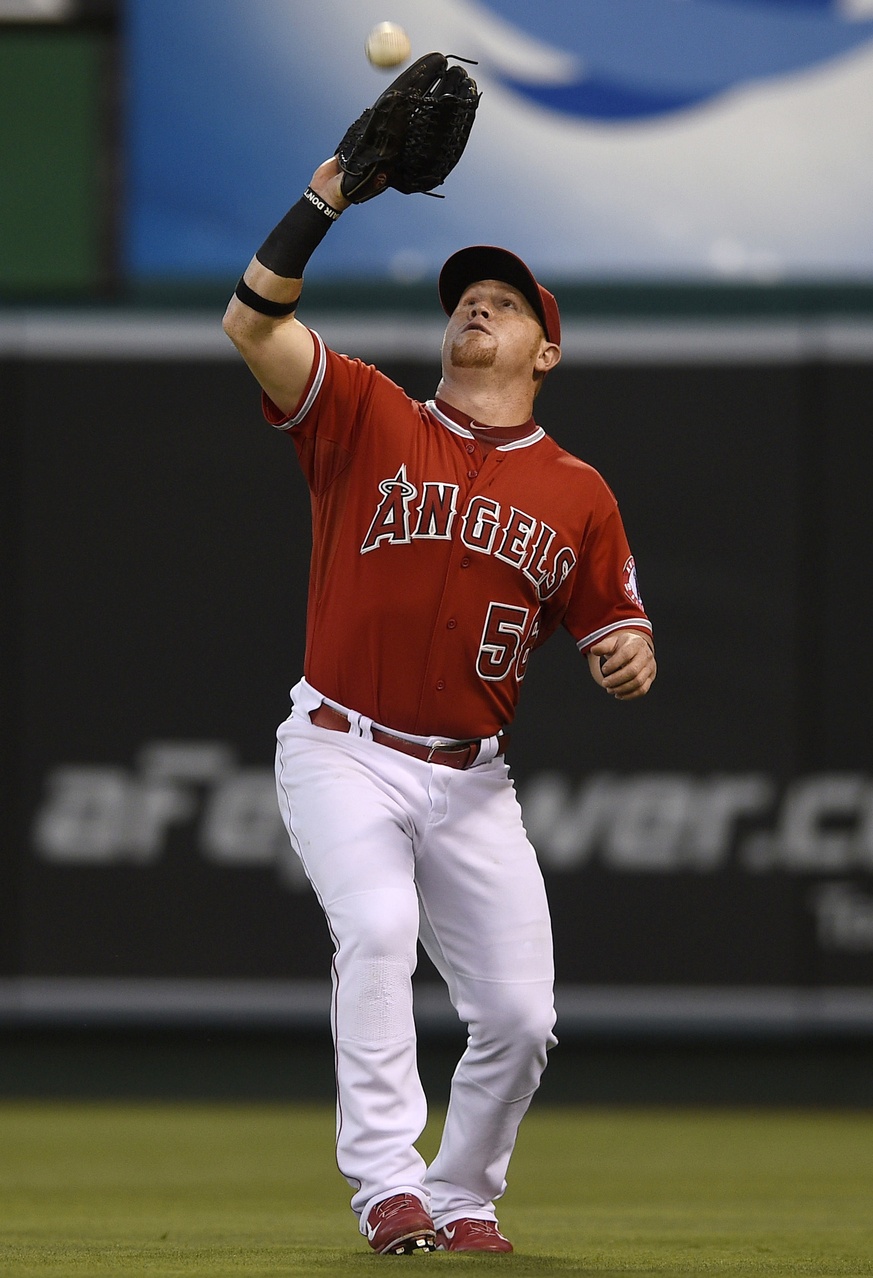 Given that the Angels already control what are likely to be Calhoun’s prime years, an extension need not be such a priority for them. And since he isn’t exceptionally athletic and already plays corner outfield, betting on him continuing to be productive well into his thirties seems excessive, from the Angels’ perspective. Signing Calhoun to an extension would, however, have the benefit of controlling his arbitration salaries while possibly also giving the Angels options to control a year or two more than they do now.
Extensions for players with between one and two years of service time used to be somewhat rare, but they’ve become increasingly common since Paul Goldschmidt and Anthony Rizzo signed deals in Spring 2013. Via MLBTR’s Extension Tracker, seven players with between one and two years of service have agreed to extensions this year: Julio Teheran, Andrelton Simmons, Jose Quintana, Starling Marte, Yan Gomes, Jedd Gyorko and Sean Doolittle.
Since Marte is an outfielder, his six-year, $31MM deal (which also includes two options) is the most obvious precedent that might guide a long-term deal for Calhoun. Before that, the last extensions for outfielders with between one and two years of service time were those of Jose Tabata (2011) and Denard Span (2010). Both contracts are now too ancient to really matter, with contracts for players like Simmons and Freddie Freeman reshaping the extension landscape since then.
The problem with using Marte’s deal as a precedent, though, is that a Calhoun contract would have a slightly different purpose. Marte was a toolsy, high-upside 25-year-old at the time of his deal, so for the Pirates, his contract was about retaining him long term. Calhoun is older and may have already reached his upside. On the other hand, his offense-heavy profile is more likely than Marte’s was to get him paid in arbitration. Therefore, we might expect a Calhoun contract to be a bit shorter than Marte’s, and perhaps a bit less option-heavy. We might also expect Calhoun to make more than Marte in his seasons of arbitration eligibility.
The possibility of Calhoun becoming a Super Two player following the 2015 season is also a factor. Calhoun entered the 2014 season with 130 days of service. This year’s projected Super Two threshold is two years and 128 days of service time, which means Calhoun could end up on either side of the line. Quintana had one year and 133 days of service when he signed his extension before the season, and his contract with the White Sox contains a clause that pays him an extra $5.5MM if he becomes Super Two eligible. Perhaps a Calhoun extension could include a similar clause.
Of course, Super Two eligibility would not affect Calhoun’s free agency timeline. A five-year deal (beginning in 2015) with one team option might make sense for both Calhoun and the Angels — such a deal would buy out all of Calhoun’s pre-free-agency seasons while giving the Angels the rights to his first season of free agency eligibility. Calhoun would become eligible for free agency as a 33-year-old at the latest, potentially giving him another shot at a multi-year deal if he continued to hit.
Given that the Angels already control one or perhaps two of those five years at the league minimum, the total guaranteed figure for a Calhoun extension need not be huge. Marte will make $21MM over the course of his contract if one leaves aside the last guaranteed year (including his signing bonus and a $2MM buyout on his option in 2020). Calhoun might get a little more than that guaranteed over a five-year deal if he is not Super Two eligible (including a buyout on the Angels’ option for a sixth year), perhaps with a clause bumping his contract to $27MM-$30MM if it turns out he is.
Photo courtesy of USA Today Sports Images.
MLBTR Originals
A look back at the original reporting and analysis found on MLBTR this past week:
- Charlie Wilmoth is bullish on the prospects of Russell Martin in the latest Free Agent Stock Watch. Charlie sees a three-year deal worth $12-13MM per season or a four-year contract worth slightly less per annum as the market for the Pirates catcher.
- Jeff Todd tabbed Indians right-hander Corey Kluber as an extension candidate presuming the club’s main motivation for negotiating an extension would be achieving cost control rather than extending team control.
- Steve Adams asked MLBTR readers whether Rob Manfred was the right choice to become baseball’s 10th commissioner. Just over 46% of you agree with the owners’ selection to replace the retiring Bud Selig, but more than 29% of you didn’t like any of the three finalists.
- Steve hosted this week’s live chat.
- Zach Links assembled the best of the baseball blogosphere for you in Baseball Blogs Weigh In.
Free Agent Stock Watch: Russell Martin
Russell Martin‘s current two-year, $17MM deal, which remains the largest free-agent contract in Pirates history, received mixed reviews when it was signed. Now, though, it’s clear the deal was a coup for the Bucs, and Martin’s impending free agency raises fascinating questions about how to balance his unusual skill set and the lack of impact catchers on next offseason’s free agent market against the worrisome aging patterns of backstops in their thirties.
Martin was a key to the Pirates’ breakout 94-win season in 2013. He hit a modest .226/.327/.377, but he still contributed 4.1 fWAR thanks to his exceptional defense, and he may have added a bit of value even beyond that thanks to his well regarded pitch framing. This season, he might be even more helpful despite missing time with a hamstring strain — his .417 OBP so far this season is an amazing 107 points above league average, and his defense again grades very well, with 9 Defensive Runs Saved above average so far.
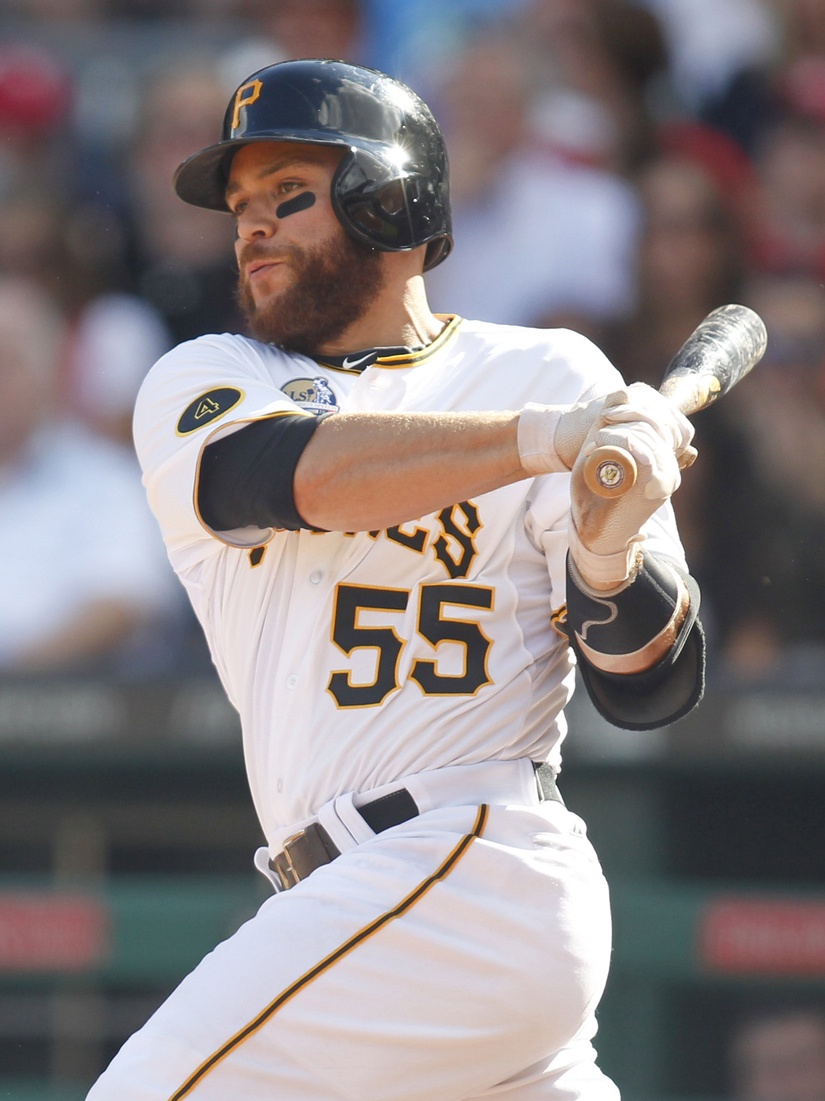 Martin’s excellent performance in 2014 couldn’t be better timed. Now that Kurt Suzuki has signed an extension with the Twins, there won’t really be any other starting catchers on the free agent market, unless one counts players like Geovany Soto or A.J. Pierzynski. Teams like the Dodgers, Rockies and possibly Blue Jays or Cubs would all make some degree of sense as potential suitors for Martin, and the Pirates would surely love to have him back at the right price, so the market for him should be robust.
Dollar figure and contract length are always important considerations for free agents, but in Martin’s case they’re even more crucial than usual. Neal Huntington has already implied that the cost-conscious Bucs aren’t likely to be serious bidders, even though it’s a steep drop from Martin to presumptive 2015 starting catcher Tony Sanchez. A team like the Rangers might be unwilling to block a terrific catching prospect in Jorge Alfaro by signing Martin to a lengthy contract, and therefore could simply settle on Robinson Chirinos until Alfaro is ready. The same goes for the Red Sox, who have Christian Vazquez at the big-league level and Blake Swihart on the way.
Then there’s the more general problem of how to value an aging catcher. Martin will be 32 in February, and aging patterns for catchers that age are brutal, to put it mildly. Recent history is full of good starting catchers who struggled to maintain their value into their thirties, like Kenji Johjima, Ramon Hernandez and former Pirate Jason Kendall. Others, like Charles Johnson and Michael Barrett, fell off the table at an even younger age than Martin is now. Brian McCann, who’s signed to a five-year contract and who’s even younger than Martin, might end up providing another cautionary tale. Martin is a unique player with good conditioning habits, and his defense should give him value even if his offense falters, but history isn’t on his side.
On top of that, Martin’s remarkable .290/.417/.391 2014 season likely wouldn’t be sustainable even if he were younger. After five straight years of a BABIP of .287 or lower, his BABIP is .354 this season. Martin’s excellent plate discipline is legitimate, but his batting average is more likely to be something like .240 or .250, rather than .290, going forward.
These warning signs will be perfectly clear to most teams, and it’s likely that whoever signs Martin will be hoping to get good value at the start of the contract, with that value declining sharply as the contract progresses. It’s tough to find precedents for a Martin deal, since few catchers sign long free-agent deals, but he should be able to receive at least three years, and perhaps four, at north of $10MM per season. Barring an injury down the stretch, he’ll surely be in line for more than the three years and $26MM Carlos Ruiz received from the Phillies last year, but far less than the five years and $85MM McCann got.
The Ruiz contract suggests Martin will get a hefty payday, although Jarrod Saltalamacchia‘s recent deal points in the other direction. Saltalamacchia posted 3.6 WAR last season before hitting the market as a 28-year-old and only got $21MM over three years, even though the Red Sox didn’t extend him a qualifying offer. For Martin, a three-year deal in the range of $12MM-13MM per season might make sense, or possibly a four-year contract worth slightly less per season. Martin could also try for a higher average annual value by taking a two-year deal, although, given his age, he probably has incentive to prefer more seasons and more guaranteed money, since he’s not likely to get another big contract after this offseason.
One can see, then, why a return to the Pirates appears so unlikely — the Bucs were unwilling to extend a $14.1MM qualifying offer to A.J. Burnett last season, explaining that their budget made it difficult to build a competitive team while committing so heavily to one player. It’s difficult, then, to see them committing to pay a similar annual salary to a player for three or four years, particularly when getting little from that player at the end of the contract could be disastrous for them. The Burnett situation also raises questions about whether the Pirates will extend Martin a qualifying offer after the season, potentially affecting his market. They will probably have a stronger incentive to do so with Martin than they did with Burnett, given that there’s less of a chance Martin would accept.
Less thrifty teams would likely have fewer concerns than the Pirates would, and might also be more inclined to pursue Martin because of his perceived value even beyond his peripherals — he’s widely regarded as a thoughtful player and leader who’s helpful with pitchers. The most likely outcome (although it’s far from certain at this point) is that Martin winds up with a three-year deal from a bigger-payroll team.
Photo courtesy of USA Today Sports Images.