
Warren Schaeffer To Return As Rockies’ Manager In 2026
The Rockies have a new president of baseball operations (Paul DePodesta), but they’ll welcome back the same dugout leader for the 2026 season. The club announced that Warren Schaeffer, who served as interim manager after Bud Black’s firing back in May, will return as the skipper for the 2026 campaign. Patrick Saunders of the Denver Post reports reported the news prior to the team announcement. Saunders adds that it’ll be a multi-year deal for Schaeffer, though it’s unclear exactly how many years he is signed for.

Though changes are coming to Colorado, the club is going for a bit of continuity by keeping Schaeffer around. The Rockies have been free falling lately. 2025 was their seventh straight losing season, fourth straight in last place in the National League West and third straight with at least 101 losses. In that time, they developed a reputation for being loyal and insular to a fault, as well as resistant to adapting to the modernization of the game.
It seems that the historically bad 2025 season, which led to 119 losses, has prompted a shake-up. As mentioned, Black was fired in May. The Rockies and general manager Bill Schmidt parted ways at the end of the season, with DePodesta later hired to take over the front office. Owner Dick Monfort appears to be ceding some of his duties to his son Walker, who is the club’s executive vice president.
Schaeffer is also a new manager, in a sense, but he has been with the Rockies for years. As a player, the Rockies drafted him back in 2007 and he played for them as a minor leaguer through 2012. When his playing career was done, he stuck with the Rockies as he pivoted to coaching. He managed High-A Ashville from 2015 to 2017, then Double-A Hartford in 2018 and 2019. He then got bumped to the manager’s chair at Triple-A Albuquerque. The 2020 season was canceled by the pandemic but Schaeffer held that job through the 2022 campaign.
He then got the bump to the major league coaching staff in 2023, becoming the third base and infield coach for Colorado. He held that job until Black was fired in May of 2025, when Schaeffer became the interim manager. The Rockies went 36-86 the rest of the way, a winning percentage of just .295, but no one really places that at Schaeffer’s feet. The manager doesn’t get to pick the players and the roster has obviously been flawed for a long time.
With the Rockies likely a few years away from contention, in-game decisions and results are probably not the focus right now. It would make sense to prioritize things like player relationships and development. Since the Rockies have a young roster and Schaeffer was climbing through the farm as a coach until a few years ago, he will have relationships with many of the players going back to their early minor league days. Per Saunders, many players complimented Schaeffer for his communication skills and attention to detail as interim manager last year.
Time will tell how aggressive DePodesta will be in making moves to send out current players and/or bring in external options. As he makes those decisions, Schaeffer will stick around as a throughline from the previous era to the new one. It’s the kind of insular move that has led to criticism being pointed at the Rockies in the past, though it’s understandable why they would want the stability of keeping Schaeffer around as they make other changes elsewhere.
For the near term, Schaeffer’s job will be focused on getting the most of young players who are still trying to reach their potential. Eventually, the target will turn towards winning. Time will tell whether Schaeffer will stick around beyond that inflection point, whenever it arrives.
Photo courtesy of Kelley L Cox, Isaiah J. Downing, Imagn Images
Rangers Trade Marcus Semien To Mets For Brandon Nimmo
Nov. 24: The two teams have formally announced the swap.
Nov. 23: In an intriguing one-for-one swap of prominent veterans, the Mets and Rangers have agreed to a trade that will send second baseman Marcus Semien to Queens in exchange for outfielder Brandon Nimmo. New York is also sending $5MM to help Texas offset some of the difference between the two players’ remaining salaries.
Reports emerged earlier this week that the Mets were open to moving Nimmo, though as of Thursday, trade talks reportedly hadn’t developed to the point that the Mets had approached Nimmo about waiving his contract’s no-trade clause. Mike Puma of the New York Post wrote today that the team raised the subject of the Texas trade with Nimmo on Friday. After a day’s consideration and a chat with Rangers ace (and his former Mets teammate) Jacob deGrom, Nimmo agreed to approve the deal.
Given the trade buzz this week, it isn’t entirely shocking to see the veteran outfielder’s time in New York come to an end. That said, a straight-up swap for Semien is eye-opening, given how Semien is coming off a dismal year at the plate and comes with a significant future price tag in his own right.
Semien has $72MM and three seasons remaining on the seven-year, $175MM free agent deal he signed with Texas during the 2021-22 offseason. Nimmo is owed $101.25MM through the 2030 season, as he has completed three years of the eight-year, $162MM free agent he signed to remain with the Mets in December 2022. Since luxury tax figures are re-calculated to account for just remaining money owed in the wake of trades, Semien’s tax number is $24MM, and Nimmo has a $19.25MM figure (when factoring in the $5MM Texas is getting from New York).
 The Mets are therefore taking on a slightly bigger tax hit while reducing the amount of overall dollars owed, while the Rangers are reducing their tax number but adding more overall money to their books. That adds an interesting wrinkle for a Texas club that was expected to reduce payroll this winter, though it is worth noting that the Rangers cleared a good chunk of money off the books (a projected $21.1MM) on Friday with four non-tenders.
While the financial elements can’t be overlooked, the trade is also something of an old-school, need-for-need “baseball deal” that allows both the Mets and Rangers to address needs. Beginning with Texas, the team was prioritizing a different offensive approach based around contact hitting and getting on base.
Nimmo’s strikeout rates have been overall middling throughout his career, though his chase and whiff rates have been consistently above average. His walk rates had also been strong before suddenly dropping to 7.7% in 2025, in a career-low for the outfielder over a full season. Still, Nimmo hit .262/.324/.436 with 25 homers over 652 plate appearances, translating to a 114 wRC+ over 652 plate appearances as New York’s everyday left fielder. Public defensive metrics have also looked a lot more fondly on Nimmo’s glovework since he moved to left field from center field.
Since Adolis Garcia has now been non-tendered, Nimmo can slide into the left field position in Arlington, with Evan Carter or (probably more likely) Wyatt Langford moving into Garcia’s old spot in right field. Second base is now opened up for Josh Smith or Ezequiel Duran in the short term, and top prospect Sebastian Walcott could also potentially find a home at the keystone depending on how long Corey Seager remains at shortstop. The Rangers could also now explore the market for trade or free agent options at second base, with Semien no longer in the picture.
Selected 13th overall by the Mets in the 2011 draft, Nimmo has spent his entire career with the Amazins, becoming a fan favorite due to his consistent offense. Injuries were a major hindrance for Nimmo earlier in his career and he is entering his age-32 season, but he has played in at least 151 games in each of his last four seasons.
In short, it seems like the Rangers feel more comfortable about paying Nimmo a bit of extra money over a longer term than they were paying Semien over his age 35-37 seasons. A picture of durability throughout his career, Semien suffered a rare serious injury in 2025, as he was limited to 127 games by a Lisfranc sprain and a small fracture in his left foot. Beyond just the health issue, Texas was perhaps more concerned about Semien’s dropoff at the plate over the last three seasons.
 2023 was Semien’s last year as a premium hitter, as he hit .276/.348/.478 with 29 homers over 753 PA for the Rangers’ World Series team. Semien delivered a 128 wRC+ that year, and his key role in Texas’ first championship will forever make him a beloved figure in Arlington. After that dream season, however, Semien dropped to a 101 wRC+ in 2024, and then a subpar 89 wRC+ in 2025. A .251 BABIP over the last two seasons is a partial explanation, yet the bigger culprit is a sizeable decline in power.
A change of scenery could perhaps get Semien’s bat going, even if Citi Field is known as a pitcher-friendly ballpark. Semien does bring a right-handed hitting element to a Mets lineup that leaned left, and has now subtracted an everyday lefty swinger in Nimmo. Beyond just Semien’s offense and his reputation as a clubhouse leader, he remains an outstanding defensive second baseman who just won his second career Gold Glove.
Mets president of baseball operations David Stearns stated that run prevention was a chief area of improvement for his team, so installing Semien at second base is a big defensive upgrade. Removing a solid defender like Nimmo from left field is a hit unto itself, yet Jeff McNeil could make up some of the difference since left field now looks to be McNeil’s primary position with Semien locked into second base. McNeil could also get part-time work in center field, or it is possible he might also end up on another roster, as rival teams have been discussing McNeil in trade talks.
It is a little surprising to see New York make such a prominent move to address second base, given how first and third base were the far more unsettled infield positions heading into the winter. Pete Alonso‘s free agency leaves first base open, and Brett Baty now looks to be staying at third base with Semien on board. Top prospect Jett Williams is expected to make his MLB debut in 2026, and the outfield could now be Williams’ future position since Semien and Francisco Lindor have accounted for the middle infield. Semien’s addition also brings fresh questions about how the Mets will incorporate Mark Vientos, Luisangel Acuna, and Ronny Mauricio into the infield mix, or if any of these players (or Baty) could now be trade chips.
Nimmo’s departure also means that the Mets could make a larger move to address their outfield. The club was already expected to be looking for center field help, and Juan Soto could possibly be shifted over to left field if the Mets wanted to acquire a new right fielder. This will probably spark some inevitable Kyle Tucker speculation, but Cody Bellinger is already known to be a player on the Amazins’ radar.
ESPN’s Jeff Passan was the first to report that the two teams were in the final stages of a deal involving Semien and Nimmo, and the New York Post’s Jon Heyman had the additional detail about the $5MM heading to Arlington. The Athletic’s Will Sammon reported that Nimmo has agreed to waive his no-trade clause.
Inset pictures courtesy of Jerome Miron (Semien) and Vincent Carchicetta (Nimmo) — Imagn Images
Tigers Among Teams Interested In Ryan Helsley As Starting Pitcher
Ryan Helsley is drawing interest from clubs as a starting pitcher, and the Tigers are among the teams who have spoken to him about a possible move to the rotation according to a report from Ken Rosenthal, Cody Stavenhagen, and Katie Woo of The Athletic.
It’s become a trend for relievers with starting experience to garner interest for rotation jobs around the league. For players like Reynaldo Lopez, Seth Lugo, and Michael King, the move has gone incredibly well and ended in them garnering attention in Cy Young conversations. For others, like Helsley’s former teammate Jordan Hicks, the move doesn’t go quite so swimmingly. Since signing with the Giants as a starter during the 2023-24 offseason, Hicks has a 5.19 ERA across 177 innings and ultimately had his contract dumped in a trade with the Red Sox, where he served as a salary offset in the Rafael Devers deal.
The risk of an outcome like Hicks had comes with substantial reward for both player and team. For teams, signing a reliever and giving them the opportunity to start affords them a chance at a top-shelf arm at a steep bargain compared to the nine-figure contracts routinely commanded by the league’s established front-end arms. For the player, meanwhile, the chance to return to starting could mean that a team is willing to invest in a more substantial contract than they would be for a less-than-elite reliever and could mean an even more substantial contract if they find success and return to free agency with an established track record of starting at a high level.
Common as the trend has been in recent years, Helsley is an unusual candidate for a move to the rotation. Most players that move to the rotation have starting experience in the majors, a pitch mix that lends itself towards starting, and lack a track record as an established closer in the majors. While there are some pitchers in this free agent class that all applies to (and Brad Keller is notably already garnering interest for a potential move back to the rotation himself), none of it is true of Helsley. Rosenthal notes that more than 90% of his pitches thrown last year were either his four-seamer or his slider, though he does also have a cutter and a curveball in his repertoire. Helsley also has zero starts at the big league level with 105 saves picked up across his time as a closer for the Cardinals.
Since he took over that role in 2022, the two-time All-Star has a 2.49 ERA with a 2.80 FIP and a 31.9% strikeout rate across 210 appearances. He’s overwhelmingly been used as a one-inning arm as well, with just three outings that lasted longer than three outs over the past two seasons. Taken together, it all makes him an odd fit for a move to the rotation. Rosenthal suggests that the idea could have something to do with the state of the market this winter.
After a host of rotation arms expected to be available this winter (Jack Flaherty, Shane Bieber, Shota Imanaga, and Brandon Woodruff) either exercised player options with their current clubs or accepted a qualifying offer, there’s fewer quality starters available than once seemed likely. That relative shortage in conjunction with the fact that this winter’s market lacks a slam-dunk ace on the level of Yoshinobu Yamamoto or Corbin Burnes could leave teams a bit more willing than usual to get creative with their pitching additions this winter. From Helsley’s perspective, meanwhile, he’s coming off the worst season he’s had since becoming a closer as he posted an ERA of 4.50 with a 4.14 FIP across 56 innings with the Cardinals and Mets.
That could put a damper on his market in a winter with plenty of closing options available. Edwin Diaz, Devin Williams, Robert Suarez, Luke Weaver, Emilio Pagan, Pete Fairbanks, Kyle Finnegan and Kenley Jansen are all quality relievers with ninth-inning experience coming off stronger seasons than Helsley, not to mention other arms like Keller who lack that closing experience but still figure to command significant dollars this winter. With such a deep group of late-inning relievers, perhaps Helsley can separate himself from the crowd by leaving the door to starting a game for the first time since he made his major league debut on the table.
Turning to the Tigers’ interest in Helsley more specifically, it’s not hard to see why Detroit might want more help for its rotation. Even as a trade of ace Tarik Skubal seems unlikely and Flaherty unexpectedly decided to stick around for another year, there’s not much certainty in the Tigers rotation outside of that duo and Casey Mize. Reese Olson is sure to be in rotation when healthy but made just 13 starts this year due to injuries. Troy Melton impressed in his rookie season but made just four starts for the Tigers in the majors this year. Even Mize and Flaherty will both join Skubal in free agency next winter, meaning that Detroit faces a major exodus of talent that could make signing a long-term starter with possible front-of-the-rotation upside this winter quite attractive.
Of course, it must be noted that Detroit surely isn’t the only team with interest in Helsley, even as a starter, and that the Tigers themselves could ultimately prefer a more established arm to serve as the bridge between their current rotation and the one they’ll need to build for 2027 and beyond. While the possibility of Helsley becoming the next King or Lopez is certainly enticing, if the Tigers are willing to go out and sign a more proven arm like Ranger Suarez or Dylan Cease that would offer a lot more certainty.
Rangers Non-Tender Adolis Garcia, Jonah Heim
The Rangers announced Friday that they have chosen not to tender 2026 contracts to outfielder Adolis Garcia, catcher Jonah Heim, and relievers Josh Sborz and Jacob Webb. All four were arbitration-eligible for the final time and were set to enter their final year of club control. They will instead immediately become a free agent without needing to pass through waivers. Both Garcia and Heim were being shopped by the Rangers throughout the early stages of the offseason. Clearly, no takers manifested at their arbitration prices. MLBTR contributor Matt Swartz projected a $12.1MM salary for Garcia and a $6MM salary for Heim. Webb was projected at $2MM and Sborz at $1.1MM.
Garcia’s hold on his roster spot has appeared tenuous for months. While he was a focal point of the offense that helped the Rangers capture their first World Series title in 2023, the slugging right fielder’s bat has cratered over the past two seasons. He’s also become emblematic of the type of undisciplined, boom-or-bust offensive approach that the Rangers have openly voiced a desire to change since the season ended.
Back in 2023, Garcia bashed 39 homers while hitting .245/.328/.508 with plus defense in right field. That alone made him one of the shrewdest DFA pickups in recent memory, but it didn’t set the stage for him to emerge as a core piece like many expected at the time. His 2024 numbers took a major step back (.224/.284/.400), and in 2025 he slashed just .227/.271/.394.
Garcia, 33 in March, still makes thunderous contact when he connects with the ball, averaging 92.1 mph off the bat and logging a stout 46.7% hard-hit rate. However, his chase rate on pitches off the plate has spiked from 29.5% in 2023 to 35.1% in 2025. His overall contact rate in ’25 sat about five percentage points shy of league-average, and his 79.5% contact rate on pitches within the zone is six percentage points shy of average. Swinging through a bit more than one of every five offerings within the strike zone is nothing new for Garcia, but that flaw has been compounded by the manner in which he has increasingly expanded the percentage of pitches at which he’s willing to swing since that peak season.
Heim, who’ll turn 31 next June, broke out with a .258/.317/.438 line (107 wRC+) and career-best 18 home runs back in ’23. For a catcher who already boasted some of the strongest defensive grades in the game, that offensive performance was enough to earn him a spot on the 2023 All-Star team. In 924 plate appearances since, Heim’s bat has evaporated. He’s hitting .217/.269/.334 since Opening Day 2024.
Heim has also gone from an elite pitch framer and thrower behind the dish to more of an average framer and poor thrower. He nabbed 29.3% of thieves in ’23 but has just a 13.7% caught-stealing rate since. His average pop time has crept north of two seconds, and the average velocity on his throws to second base has fallen from 81.1 mph in 2023 (21st among 67 catchers) to 79.5 mph in 2025 (33rd among 63 catchers).
Webb, 32, is a somewhat surprising non-tender. He pitched 66 innings of 3.00 ERA ball and fanned 21.7% of his opponents against a 7.1% walk rate. In 176 1/3 innings between the Rangers and Orioles, dating back to 2023, he’s pitched to a combined 3.22 earned run average with 33 holds and four saves.
Sborz, 31, didn’t pitch this season due to shoulder troubles. The right-hander had a bizarre campaign in 2023, pitching well for much of the season (3.83 ERA through mid-August) before being torched for 13 runs in 7 2/3 frames down the stretch, thereby ballooning his ERA to 5.50. Sborz then bounced all the way back — and then some — in the playoffs, serving as one of then-manager Bruce Bochy’s most trusted relievers. He pitched a dozen innings and allowed only one run (0.75 ERA) on four hits and four walks. He fanned 13.
The following season, Sborz got out to a nice start, logging a 3.86 ERA through 16 1/3 innings before landing on the injured list. He never returned. Sborz wound up undergoing shoulder surgery in the offseason. Originally, the Rangers suggested he’d miss the first two to three months of the 2025 season. Instead, Sborz pitched only 12 minor league innings in 2025, including a 5.79 ERA in 9 1/3 frames of Triple-A work.
Jesse Rogers of ESPN first reported that Garcia was being non-tendered.
KBO’s Kiwoom Heroes Post Infielder Sung-mun Song
The Kiwoom Heroes of the Korea Baseball Organization have agreed to post infielder Sung-mun Song, reports Jeeho Yoo of Yonhap News. The KBO posting window is 30 days (unlike the 45-day period for players coming over from Japan’s NPB). MLB teams will officially be able to negotiate with Song, whom Yoo adds has hired ISE Baseball to represent him, on Saturday morning. He’ll need to sign by 5:00 pm Eastern on December 21 or remain with the Heroes.
Song, 29, is a left-handed hitter who has played all nine seasons of his career with that club. He posted a sub-.700 OPS every year between 2021-23 but has taken a leap forward at the plate over the past two years. Song hit .340/.409/.518 last year and is coming off an equally impressive ’25 campaign. He popped a career-best 26 home runs with a .315/.387/.530 slash across 646 plate appearances.
Among 30 KBO hitters with 500+ trips to the dish, Song finished sixth in both average and on-base percentage and was third in slugging. He also finished third in home runs (albeit well behind former MLB first baseman Lewin Díaz’s league-best 50 longballs). Song walked at a 10.5% rate while striking out 14.9% of the time. The strikeout rate would be excellent against big league pitching but is only a little better than average in Korea, where the velocity is lower and hitters put far more balls in play.
Eric Longenhagen of FanGraphs gave Song a 45 FV grade, which is commensurate with a mid-level prospect from the typical organization’s top 30 list. Longenhagen credited him with plus power to the pull side and a plus arm at third base, where he has spent most of his KBO career. He’s a good athlete who stole 25 bases this year and has gone 46-48 in stolen base attempts over the past two seasons.
The biggest question is his pure hitting ability. Longenhagen writes that Song has shown a bit of a propensity to chase outside the strike zone and has an uphill swing path that can leave him vulnerable to pitches up in the zone, especially those on the outer half. Readers are encouraged to check out FanGraphs’ full scouting report for more details. Will Sammon and Cody Stavenhagen of The Athletic wrote earlier this month that evaluators with whom they spoke viewed Song more as a utility player than a regular.
Song has some defensive flexibility, but an inability to play shortstop limits his value as a utility piece. He’s primarily a corner infielder who also has almost 1300 innings at second base. The Angels need a third baseman and are looking for a left-handed bat to balance a righty-heavy lineup. The Astros also want to bring in a lefty-hitting infielder, though they’d need to feel comfortable playing Song regularly at second base unless they trade one of Isaac Paredes or Christian Walker. The A’s are in the second and third base markets, while the Mariners could be as well depending on whether they re-sign their own free agents. The White Sox, Pirates, Marlins, Rangers, Diamondbacks, Tigers and Royals (with Maikel Garcia capable of playing second) could all be in the mix for a third baseman.
A signing team would owe a posting fee to the Heroes on top of whatever is guaranteed to Song. That’s proportional to the contract value: 20% of the first $25MM, 17.5% of the next $25MM, and 15% thereafter. It’d be surprising if Song tops $25MM, so the likeliest outcome is that the release fee will be 20% of the guarantee.
Song is the only KBO player known to be on the posting radar this offseason. First baseman Baek-Ho Kang was reportedly considering an MLB move, but he signed a four-year contract with the KBO’s Hanwha Eagles this week. While Cody Ponce is expected to return to MLB after a dominant KBO season, he’ll do so as a free agent rather than via the posting system. There are three much higher-profile NPB players making the jump via the posting system: Tatsuya Imai, Munetaka Murakami and Kazuma Okamoto. Japanese righty Kona Takahashi is also being posted but will command a far lower contract than the other three.
Latest On Kyle Tucker’s Market
We’re still in the nascent stages of the MLB offseason, with only a handful of notable free-agent signings and trades thus far. Still, with the GM Meetings now in the rearview mirror, teams have laid a fair bit of groundwork for the weeks and months ahead, both on the free agent and trade markets. Kyle Tucker stands as the offseason’s top free agent, and while there’s no indication he’s close to signing, there are also some hints falling into place about his potential market.
ESPN’s Jeff Passan wrote this week that some rival teams feel the Blue Jays are the likeliest landing spot for the four-time All-Star. They’ve been a popular speculative pick early on after a deep World Series run and with only one other major long-term commitment (Vladimir Guerrero Jr.) on the books. Of course, Bo Bichette could be the priority, and it’s rare for any team to sign two free agents of that magnitude in a single offseason.
Tucker is a prominent enough star that some unexpected suitors figure to jump into the fray. Ken Rosenthal of The Athletic wrote this morning that while the Orioles are prioritizing pitching this winter, they haven’t ruled out a run at Tucker. Having already acquired Taylor Ward from the Angels, the addition of Tucker would free Baltimore to dangle young outfielders Colton Cowser and Dylan Beavers on the trade market in hopes of securing some controllable arms. There are quite a few pitchers of note who could be on the block this winter, and both Cowser and Beavers would intrigue clubs looking to move arms. Both are former first-round picks. Cowser has four more seasons of club control, while Beavers only debuted late in 2025 and thus has a full slate of six years of club control remaining.
Baltimore stands as a fascinating fit. President of baseball operations Mike Elias was the Astros’ scouting director when Tucker was selected with the No. 5 overall pick. The O’s don’t have anything on the books long-term, other than Samuel Basallo‘s eight-year, $67MM extension. That $8.375MM annual value isn’t going to be stand in the way of any other long-term deals. Beyond Basallo, Tyler O’Neill is the only other player signed to a guaranteed deal beyond the 2026 season. His three-year, $49.5MM contract runs through 2027.
The Orioles’ long-term financial outlook is so clean that there’s no true impediment to them signing Tucker and a notable a free agent starter. That’s not to say such a scenario is likely, of course, but Baltimore’s 2026 payroll currently projects for about $105MM, per RosterResource, and that’s before potential non-tenders or trades of Ryan Mountcastle ($7.8MM projected salary), Keegan Akin ($3MM projection), Yennier Cano ($1.8MM projection) and/or Alex Jackson ($1.8MM projection) prior to tomorrow’s 5pm ET non-tender deadline.
Depending on what happens with the Orioles’ arbitration class, they could realistically see next year’s projected payroll drop into the $93-100MM range by tomorrow evening. The opened the 2025 season with a payroll around $164.5MM. We’re certainly not accustomed to seeing Baltimore spend like this, but this is also only the second offseason under new owner David Rubenstein. Elias has already publicly stated that he is “fully prepared” to sacrifice draft picks by signing free agents who rejected qualifying offers, and for all the focus on pitching, it was reported more than a month ago that the O’s also covet an impact bat — likely in the outfield.
None of this is intended to frame the Orioles as any sort of favorite to sign Tucker, to be clear. Far from it. However, the fit and logic behind it are probably more sensible than one might think at first glance.
Other clubs will still loom in the market. Passan cites the Phillies as a possible landing spot, should Kyle Schwarber sign elsewhere. The Yankees have been linked to both Tucker and a Cody Bellinger reunion. GM Brian Cashman indicated this week that Trent Grisham‘s decision to accept his qualifying offer will not impact the team’s pursuit of Bellinger. Presumably, then, that thinking extends to Tucker as well. The Dodgers have also been linked to Tucker, though Passan doubles down on his prior reporting that their interest would “likely” be on a shorter-term but high-AAV deal — the type we rarely see taken by the consensus top free agent in a given offseason.
2025 Non-Tender Candidates
The non-tender deadline is Friday evening. Teams need to decide whether they want to offer contracts to their arbitration-eligible (and pre-arbitration) players. Those who are not tendered contracts are sent directly into free agency without exposing them to waivers.
As is the case each winter, MLBTR contributor Matt Swartz has projected salaries for the arbitration class. Some of those players have already been dropped from the roster. A few of the most obvious cuts were dropped within the first five days of the offseason as teams needed to get their offseason roster counts back to 40 without the benefit of the injured list.
Some more were designated for assignment on Tuesday as teams opened space for prospects whom they wanted to keep out of the Rule 5 draft. Those players remain in DFA limbo and are marked below with an asterisk. There’s still a scenario in which they’re tendered a contract. The club that DFA them could trade them before Friday to a team that is fine with the projected arbitration price and keeps them around. While that might happen for a player or two, the vast majority of them will just be non-tendered.
Not everyone who is tendered a contract will know their salary this week. Some players will sign “pre-tender” deals that lock in guaranteed money. Many of them are borderline non-tender candidates who will take salaries below their projection to ensure they stay on the roster at all. (A’s catcher Austin Wynns has already taken this kind of deal.) Those who don’t sign but are tendered a contract could have a few months of uncertainty. They’re free to continue negotiating with their clubs to find a mutually agreeable salary until the date of their arbitration hearing.
The collective bargaining agreement incentivizes borderline roster players to settle without a hearing even if they’re tendered a contract. Arbitration settlements are fully guaranteed. Salaries determined at a hearing (regardless of whether the arbitrator chose the club’s or player’s filing figure) are not locked in until the beginning of the regular season. If a player whose salary was determined at a hearing is released during the offseason or in Spring Training, they’re only entitled to termination pay. That’d be 30 days at their prorated salary if the release occurs more than 15 days before Opening Day and 45 days of termination pay if the release happens within 15 days of the start of the season.
As we do each offseason, we’ll take a look at arb-eligible players we believe have a realistic shot at being let go. To be clear, this is not a list of players we think are likelier than not to be non-tendered. These are players we consider to have at least a 10-20% chance of being cut — a broad group who wouldn’t strike us as completely surprising. We’re only looking at players who are eligible for arbitration. There’ll be plenty of pre-arbitration players from the back of teams’ rosters who are dropped (often to immediately re-sign on minor league deals), but those are outside the scope of this post.
Onto the list, with Matt’s projected salaries:
Catchers
- Riley Adams (Nationals): $1.5MM
- Luis Campusano (Padres): $1MM
- Jonah Heim (Rangers): $6MM
- Alex Jackson (Orioles): $1.8MM
- Andrew Knizner (Giants): $1.3MM
- Reese McGuire (Cubs): $1.9MM
- Garrett Stubbs (Phillies): $925K
- Connor Wong (Red Sox): $1.6MM
First Basemen
- Jake Bauers (Brewers): $2MM
- Jake Burger (Rangers): $3.5MM
- Nathaniel Lowe (Red Sox): $13.5MM*
- Ryan Mountcastle (Orioles): $7.8MM
- Pavin Smith (Diamondbacks): $2.4MM
Second Basemen
- Vidal Bruján (Braves): $800K
- Mauricio Dubón (Astros): $5.8MM^
- Luis García Jr. (Nationals): $7MM
- Jonathan India (Royals): $7.4MM
- Gavin Lux (Reds): $5MM
- Michael Massey (Royals): $2MM
Third Basemen
- Alec Bohm (Phillies): $10.3MM
- Oswaldo Cabrera (Yankees): $1.2MM
- Ezequiel Duran (Rangers): $1.4MM
- Andy Ibáñez (Tigers): $1.8MM
- Ramón Urías (Astros): $4.4MM*
Shortstops
- Nick Allen (Braves): $1.5MM^
Center Fielders
- JJ Bleday (Athletics): $2.2MM*
- Derek Hill (White Sox): $1MM
- Jake McCarthy (Diamondbacks): $1.9MM
- Jack Suwinski (Pirates): $1.7MM
- Matt Vierling (Tigers): $3.1MM
Corner Outfielders
- Will Benson (Reds): $1.7MM
- Will Brennan (Guardians): $900K
- Jake Fraley (Rays): $3.6MM*
- Tyler Freeman (Rockies): $1.8MM
- Adolis García (Rangers): $12.1MM
- Sam Haggerty (Rangers): $1.4MM
- Nolan Jones (Guardians): $2MM
- Trevor Larnach (Twins): $4.7MM
- MJ Melendez (Royals): $2.65MM
- Christopher Morel (Rays): $2.6MM*
- Luke Raley (Mariners): $1.8MM
- Jesús Sánchez (Astros): $6.5MM
- Mike Tauchman (White Sox): $3.4MM
- Taylor Trammell (Astros): $900K
- Eli White (Braves): $1.2MM
Designated Hitters
- David Fry (Guardians): $1.2MM
Starting Pitchers
- Bailey Falter (Royals): $3.3MM
- Ryan Feltner (Rockies): $2.3MM
- Jake Irvin (Nationals): $3.3MM
- Alek Manoah (Braves): $2.2MM
- Luis Medina (Athletics): $900K
- Andre Pallante (Cardinals): $3.4MM
- JP Sears (Padres): $3.5MM
- José Suarez (Braves): $1.5MM
- Ken Waldichuk (Athletics): $900K
- Joey Wentz (Braves): $1.1MM
Right-Handed Relievers
- Jason Adam (Padres): $6.8MM
- Jorge Alcala (Cardinals): $2.1MM*
- Anthony Bender (Marlins): $2.3MM
- Jake Bird (Yankees): $1MM
- Beau Brieske (Tigers): $1.3MM
- JT Brubaker (Giants): $2.1MM
- Yennier Cano (Orioles): $1.8MM
- Jake Cousins (Yankees): $841K
- Enyel De Los Santos (Astros): $2.1MM
- Camilo Doval (Yankees): $6.6MM
- Scott Effross (Yankees): $800K
- Matt Festa (Guardians): $1MM
- Jason Foley (Tigers): $3.15MM*
- Reed Garrett (Mets): $1.4MM
- Kevin Ginkel (Diamondbacks): $3MM
- Ian Hamilton (Yankees): $941K
- Colin Holderman (Pirates): $1.7MM*
- Kevin Kelly (Rays): $1MM
- Jackson Kowar (Mariners): $800K
- Max Kranick (Mets): $1MM
- Mark Leiter Jr. (Yankees): $3MM
- James McArthur (Royals): $800K
- Nick Mears (Brewers): $1.6MM
- Dauri Moreta (Pirates): $800K*
- Eli Morgan (Cubs): $1.1MM
- Evan Phillips (Dodgers): $6.1MM — expected to miss most or all of 2026 after undergoing elbow surgery in June
- Tanner Rainey (Tigers): $1.6MM*
- Yohan Ramírez (Pirates): $1.2MM
- Gregory Santos (Mariners): $800K
- Josh Sborz (Rangers): $1.1MM
- Brock Stewart (Dodgers): $1.4MM
- Albert Suárez (Orioles): $900K
- Cole Sulser (Rays): $1.2MM
- Ryan Thompson (Diamondbacks): $3.9MM
- Trent Thornton (Mariners): $2.5MM
- Justin Topa (Twins): $1.7MM
- Josh Winckowski (Red Sox): $800K*
Left-Handed Relievers
- Keegan Akin (Orioles): $3MM
- Anthony Banda (Dodgers): $1.7MM
- José Castillo (Mets): $1.7MM
- Sam Hentges (Guardians): $1.3375MM
- John King (Cardinals): $2.1MM
- Joey Lucchesi (Giants): $2MM
- Sam Moll (Reds): $1.2MM
- Andrew Nardi (Marlins): $800K
- A.J. Puk (Diamondbacks): $3.3MM — expected to miss most of 2026 after undergoing elbow surgery in June
- Tayler Saucedo (Mariners): $1.1MM*
* Indicates player is currently in DFA limbo
^ Traded for one another since the list was published
Braves, Astros Swap Mauricio Dubón For Nick Allen
The Astros and Braves announced a one-for-one swap of middle infielders. Utility player Mauricio Dubón is headed to Atlanta with defensive specialist Nick Allen on his way to Houston.
Atlanta takes on a few million dollars to upgrade their infield. Dubón, 31, spent nearly four seasons in Houston. The Astros acquired him from the Giants in a minor trade early in 2022. It was a nice pickup, as he developed into a versatile and generally reliable piece off the bench. Dubón won two utility Gold Glove awards while playing all three infield positions to the left of first base and a decent amount of center and left field.

The righty-swinging Dubón was a league average hitter a couple seasons ago, batting .278/.309/.411 with 10 homers in nearly 500 trips to the dish. His offense has declined in each of the past two years. He’s coming off a .241/.289/.355 showing with seven longballs through 398 plate appearances and carries a .256/.293/.358 line over the past two seasons. He’s very difficult to strike out but rarely walks and has well below-average power.
Still, that light bat is a significant upgrade over what Allen brings to the table offensively. The 27-year-old Allen didn’t hit a single home run in 416 trips to the dish this year. He turned in a .211/.284/.251 line that made him easily the worst hitter to take 400+ plate appearances. Allen ranked in the bottom 20 hitters in on-base percentage, while his slugging mark was more than .040 points lower than the second-lowest in MLB (.296 by Victor Scott II). He owns a .213/.265/.272 slash in nearly 1200 plate appearances over parts of four seasons.
Allen has continued to get playing time because of his superlative glove. He has been touted as an excellent infielder dating back to his high school days. Allen has posted fantastic defensive marks in every season of his career. Defensive Runs Saved graded him as the third-best shortstop in MLB this year behind Mookie Betts and Zach Neto. Statcast’s Outs Above Average also had him third, albeit behind Bobby Witt Jr. and Masyn Winn.
Dubón is unlikely to be that caliber of defender if he were pressed into everyday shortstop work. Statcast has graded him as a plus defender in his 721 career innings at the position though. Defensive Runs Saved has him right around league average. Dubón should be capable of playing there every day, and he’s not a complete zero offensively. That’s particularly true in favorable platoon matchups, as he’s a .288/.329/.417 hitter versus left-handed pitching over the past three years.
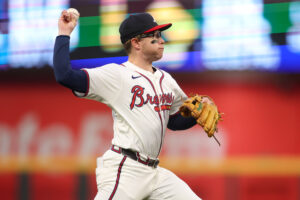
The Braves couldn’t afford to enter next season with Allen atop the shortstop depth chart. Dubón would be a low-end regular but provides a higher floor. This shouldn’t detract from Atlanta’s interest in re-signing Ha-Seong Kim. Dubón has the versatility to provide cover behind Ozzie Albies and Austin Riley at second and third base while complementing lefty-hitting Michael Harris II in center field. Still, he’s at least a reasonable one-year fallback if Kim signs elsewhere in a market devoid of shortstop alternatives in free agency or trade.
Dubón is entering his final season of arbitration eligibility. He’s projected by MLBTR contributor Matt Swartz for a $5.8MM salary. Allen is eligible for arbitration for the first time as a Super Two player and under control for four years. He’s projected at $1.5MM. Houston cuts a little more than $4MM from the books while downgrading in the utility role.
Allen isn’t going to play shortstop barring an injury to Jeremy Peña, but he can offer a glove-only option at second base. Jose Altuve is the primary starter there for now, but the Astros hope to continue splitting his playing time between the keystone, left field, and designated hitter. They’ve been tied to Brendan Donovan in trade conversations and could consider other possibilities (e.g. a Brandon Lowe trade, Jorge Polanco in free agency) if the Cardinals deal Donovan elsewhere. They’ll ideally add a left-handed bat to balance a righty-heavy lineup. Allen is out of minor league options, so he’ll need to be on the active roster or designated for assignment.
Brian McTaggart of MLB.com reported that Dubón had been traded to the Braves just before the announcements. Respective images courtesy of Jerome Miron and Brett Davis, Imagn Images.
Braves Re-Sign Raisel Iglesias
The Braves announced they’ve re-signed free agent closer Raisel Iglesias to a one-year, $16MM deal. The PRIME client returns for what’ll be a fifth season in Atlanta on the same salary he made in 2025.
As is often the case with Braves moves, the signing comes out of the blue. President of baseball operations Alex Anthopoulos suggested at the GM Meetings the team was more focused on addressing shortstop and upgrading the starting rotation while keeping the bullpen on the back burner. That apparently changed with the opportunity to keep Iglesias, who remains a high-end reliever as he enters his age-36 season.
The 11-year veteran carries a 2.35 earned run average in 218 2/3 innings since the Braves acquired him from the Angels at the 2022 trade deadline. He’s fourth in MLB with 113 saves since the start of that season. Iglesias posted a sub-3.00 ERA each season between 2020-24 as one of the steadier closers in the league.
Things seemed as if they might come off the rails early in 2025. Iglesias gave up an early-season home run barrage, including five longballs in April alone. He surrendered seven round-trippers before the end of May and carried an ugly 5.91 ERA through the first two months. The switch flipped over the summer, as Iglesias was one of the league’s best late-game arms from the beginning of June onward. He reeled off 46 frames of 1.96 ERA ball while striking out 29.3% of opponents over the season’s final four months. Iglesias only gave up one home run in that time despite a massive 54.5% fly-ball rate.
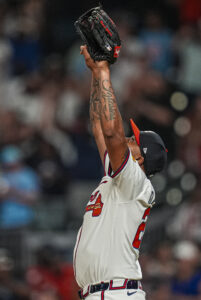
The truth certainly lies somewhere between those two extremes. Iglesias wasn’t going to continue giving up homers on a quarter of fly-balls, as he did early in the year, nor will he maintain the sub-2% homer/fly rate he posted later in the season. That’ll be the main concern moving forward, but his strikeout and walk profile remains strong. Iglesias punched out 27.4% of opponents against a tidy 6% walk rate. He turned in a 3.21 ERA overall while going 29-34 in save chances — coming up just shy of the sixth 30-save showing of his career.
MLBTR ranked Iglesias as our #32 free agent and the #5 reliever in the class in predicting a two-year, $26MM contract. He did not command the second year for what would have been his age-37 campaign. The Braves were apparently one of at least two teams that offered a sizable one-year deal. Francys Romero reports that the Dodgers also made an offer around $16MM but Iglesias declined to remain in Atlanta. L.A. and the Blue Jays were the only other teams publicly linked to Iglesias in what turned out to be a brief stay on the open market.
Toronto and Los Angeles are two of a number of teams that remain in the market for a late-inning reliever. Edwin Díaz is almost certainly going to command the largest contract in the class despite rejecting a qualifying offer from the Mets. Devin Williams has gotten a lot of attention in the first few weeks of the offseason. Robert Suarez should command a multi-year deal at a hefty salary. Ryan Helsley, Kyle Finnegan, Emilio Pagán and Kenley Jansen are among the many other unsigned closers.
Iglesias returns at the back of an Atlanta bullpen that still needs a lot of work. They’re getting Joe Jiménez back after he missed the entire ’25 season recovering from knee surgery. Dylan Lee is a high-end option from the left side. Atlanta dropped right-handed setup arms Pierce Johnson and Tyler Kinley at the beginning of the winter, so another righty alongside Jiménez in the late innings is a must. They’ll balance that against the yet to be addressed starting pitching and shortstop holes.
The Braves now have 13 players on guaranteed contracts that’ll combine for $192.5MM next season. They’re operating with a very light arbitration class that features a number of non-tender candidates. That group is unlikely to add more than $4-8MM to the books. The Braves opened last season with a player payroll around $208MM. They’d likely need to go beyond that mark to address the rotation and shortstop, especially if they fill the latter position by re-signing Ha-Seong Kim. RosterResource projects them for roughly $208MM in luxury tax commitments, putting them well shy of the $244MM base threshold. The Braves are believed to have stayed below the CBT line this year but had paid the tax in 2023 and ’24.
Image courtesy of Dale Zanine, Imagn Images.
Mets Release Frankie Montas, Select Nick Morabito
November 19th: Montas has now been released, per Anthony DiComo of MLB.com.
November 18th: The Mets announced that they have designated Frankie Montas for assignment, and the team has requested unconditional release waivers on the right-hander. The transaction removes Montas from the 40-man roster, allowing the team to select the contract of outfield prospect Nick Morabito in advance of today’s Rule 5 deadline. The Athletic’s Will Sammon reported on Morabito’s selection earlier today. Reporter Michael Marino was the first to pass on the news that Montas would be designated for assignment, with SNY’s Andy Martino providing the later update that Montas was being released.
The DFA period is essentially irrelevant since no team will claim or make a trade offer for Montas, who is owed $17MM in 2026 and will miss all or most of the season while recovering from a torn UCL. As such, today’s move closes the book on Montas’ Queens tenure after less than a year, as he signed his two-year, $34MM free agent deal with the Mets last December.
Montas ended up tossing just 38 2/3 innings over nine appearances in a Mets uniform. Montas suffered a lat strain in Spring Training and didn’t make his Mets debut until June, and he then struggled to a 6.28 ERA and lost his rotation job. Even worse injury news emerged in late August, as Montas underwent UCL surgery. It wasn’t known if Montas had a Tommy John surgery or a brace procedure, but either way, 2026 is going to be another lost year for the veteran righty.
Unsurprisingly, Montas didn’t trigger the opt-out clause after the first year of his contract, and thus he remains on the Mets’ books for a $17MM salary in 2026. Montas probably won’t land his next contract until next winter, and a minor league deal seems like the next step for a pitcher with such a shaky recent track record. Beyond his disastrous 2025 season, Montas also appeared in just one game in 2023 due to shoulder surgery, stemming from shoulder issues that led to a rough end to his 2022 campaign.
He recovered to toss 150 2/3 innings of 4.84 ERA ball with the Reds and Brewers in 2024, which was enough to convince the Mets that Montas might be close to regaining his early-career form as a staple of the Athletics rotation. Instead, the signing will go down as a total bust for David Stearns’ front office, and one of several ill-advised pitching moves that contributed to New York’s disappointing 83-win season.
Morabito was a second-round pick for the Mets in the 2022 draft, and his selection to the 40-man roster means that rival teams won’t be able to select the 22-year-old in December’s Rule 5 Draft. Known for his excellent speed, Morabito has stolen 130 bases in 160 attempts during his pro career, including 49 swipes for Double-A Binghamton in 2025. This was Morabito’s first time playing Double-A ball and he hit .273/.348/.385 with six homers and 27 doubles to go along with his impressive stolen-base total.
MLB Pipeline ranks Morabito 16th amongst all Mets prospects, and the scouting report notes that Morabito’s offensive potential is held back by his tendency to hit too many grounders. His speed can turn some of those grounders into singles, of course, but “elevating on contact will be a big goal…if he is going to have a chance to be more than a speedy, high-contact fourth outfielder.” Defensively, Morabito is seen as a decent outfielder who can handle all three positions, though his modest throwing arm probably makes right field his least-effective spot on the grass.