
Padres Acquire Taylor Williams
4:55pm: The Mariners will receive righty Matt Brash in return, per Dennis Lin of The Athletic. The 22-year-old Brash went in the fourth round of the 2019 draft and then threw 5 1/3 scoreless innings between rookie ball and Single-A last season.
3:34pm: The Padres have made yet another trade, this time acquiring right-hander Taylor Williams from the Mariners for a player to be named later, AJ Cassavell of MLB.com tweets.
This is the second trade in as many days between the Padres and Mariners, who previously swung a seven-player deal Sunday that saw Austin Nola, Austin Adams and Dan Altavilla go from Seattle to San Diego. As was the case in landing Adams and Altavilla, the idea behind acquiring Williams is to improve a Padres bullpen that has struggled with injuries and underperformance in 2020. It’s anyone’s guess whether the 29-year-old Williams will end up as part of the solution, though, considering he has only put up a 5.34 ERA across 86 major league innings with the Brewers and Mariners. Williams has however, averaged 95 mph on his fastball and posted a 3.80 FIP during his time in the bigs. He also won’t be eligible for arbitration until after 2021, so Williams could be a valuable piece for the Padres over multiple seasons if he turns around his career.
Regardless of whether Williams rights the ship as a Padre, his pickup is yet another sign that they’re going for it in 2020. At 21-15 and trying to break a long playoff drought, the A.J. Preller-led Padres have made a series of notable trades since the weekend.
Latest On Lance Lynn Trade Talks
The Rangers have already shipped out starter Mike Minor to the A’s, so now all eyes are on righty Lance Lynn. The 33-year-old righty sports a 3.33 ERA in 41 starts for the Rangers since they signed him prior to the 2019 season, and he’s under contract for just $8MM in 2021. Joel Sherman of the New York Post hears that the Rangers may be motivated to avoid repeating the mistake they made with Minor, holding him last summer when he was at peak value with control remaining.
- The Braves, who picked up lefty Tommy Milone in a deal with the Orioles yesterday, have been in contact with the Rangers regarding Lynn within the last 48 hours, according to Jon Morosi of MLB Network.
- The Yankees have also been involved in Lynn’s market during that time, tweets Morosi. Lynn’s resurgence began with his two-month stint with the Yankees back in 2018. MLB.com’s T.R. Sullivan notes that the Rangers “would love RHP Deivi Garcia from the Yankees but he is likely out of reach.” On a similar note, Sherman hears the Yankees don’t have an appetite to move Garcia, to date.
- The Padres “explored separate trades” with the Rangers for Lynn and outfielder Joey Gallo before acquiring Mike Clevinger from the Indians, according to Ken Rosenthal of The Athletic. I would speculate that with Clevinger tow, it’s (relatively) safe to assume the Padres are out on Lynn. Similarly, the A’s were previously connected to Lynn but have since landed Minor.
- Previous connections to Lynn have been made for the Twins, Blue Jays, and White Sox, so those teams may still be in play. According to Ben Nicholson-Smith of Sportsnet.ca, the Jays had been linked to Minor before he was dealt to Oakland, and the Rangers “are intrigued by [the] Jays’ young catching.”
Padres Acquire Mike Clevinger, Greg Allen In Nine-Player Trade With Indians
Four trades in 48 hours wasn’t enough for Padres general manager A.J. Preller. The Padres announced Monday the acquisition of right-hander Mike Clevinger, outfielder Greg Allen and a player to be named later from the Indians in exchange for a six-player package of outfielder/first baseman Josh Naylor, catcher Austin Hedges, right-hander Cal Quantrill, minor league shortstop Gabriel Arias, minor league left-hands Joey Cantillo and minor league infielder Owen Miller.
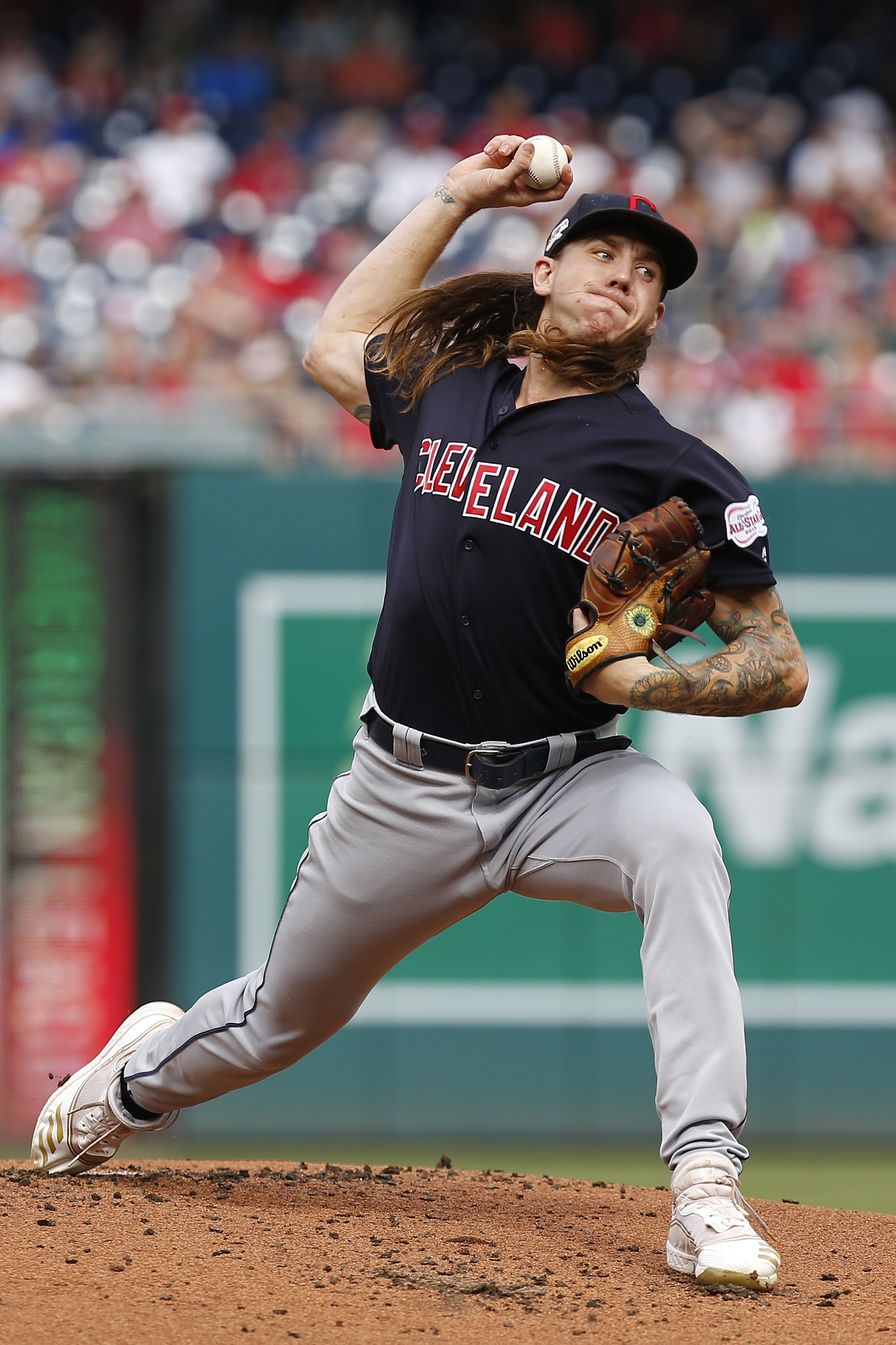
When Summer Camp was booting back up, a trade sending Clevinger out of Cleveland at a time when the Indians sat atop the AL Central standings would’ve seemed far-fetched. The club had already dealt away Trevor Bauer and Corey Kluber in the past 12 months, setting Clevinger up as a front-of-the-rotation workhorse.
Much has changed since that time, however. Clevinger drew ire from organizational higher-ups not only for breaking Covid-19 protocols but then taking a flight with the team rather than being forthcoming about his actions. That led to Clevinger being optioned to team’s alternate training site alongside Zach Plesac, who also violated protocols but was found to have done so before traveling with the club. Reports after the pair was optioned indicated that some teammates were so furious with the pair that they threatened to opt out of the season if Clevinger and Plesac were permitted to rejoin the club right away.
All the while, the Indians were receiving better-than-expected performances from other arms. Shane Bieber had already established himself as an above-average starter, but he’s ascended to bona fide Cy Young and MVP-caliber performance in the first month of play. Righty Aaron Civale has become the latest Cleveland pitching prospect to rise from obscurity to what looks like a high-end arm (3.72 ERA, 3.07 FIP in 46 innings). Carlos Carrasco is rounding back into form after last year’s frightening battle with leukemia. Triston McKenzie punched out 10 hitters in an electric MLB debut. And the aforementioned Plesac turned heads himself prior to being optioned (1.29 ERA, 24-to-2 K/BB ratio in 21 innings).
That hardly makes Clevinger expendable, but the Indians do seemingly have the depth to field a strong rotation even when subtracting one of the most talented pieces. And while Clevinger may have fallen out of favor a bit with the organization and/or teammates, there’s little denying that he is indeed among the game’s more talented arms. Dating back to 2017, the 29-year-old has compiled a 2.97 ERA and 3.43 FIP with averages of 10.2 strikeouts, 3.4 walks and 0.94 home runs allowed per nine innings pitched.
Beyond Clevinger’s high-end performance on the mound, his remaining club control only added to his allure among other clubs. He’s earning $4.1MM in 2020 — which prorates to about $1.48MM (with $617K yet to be paid) — and is controlled for an additional two seasons beyond the current campaign. For the Padres, that means that their rotation over the next two-plus seasons will feature a blend of Clevinger, Chris Paddack, Dinelson Lamet, MacKenzie Gore, Luis Patino and Zach Davies (though Davies is controlled only through 2021). It’s an enviable stockpile of arms — one that doesn’t even acknowledge the likes of Joey Lucchesi, Michel Baez and Adrian Morejon. Of course, some from that trio could yet be shipped out in trades to address other areas of need.
While Clevinger is the clear headliner of this deal — and perhaps of the entire 2020 trade deadline — he’s not the only piece going to San Diego. The Friars will also pick up four-plus years of control over the 27-year-old Allen. He’s out to a rough start in 2020 and has yet to really hit much in parts of four big league seasons, but Allen is a switch-hitting speedster with an above-average glove and experience at all three outfield spots.
He’s unlikely to push for a starting job, but Allen is a nice bench piece who can provide a late-inning jolt on the basepaths, a defensive upgrade or a more advantageous platoon matchup. He’ll need to improve upon a tepid .239/.295/.344 career slash if he’s to stick with the club into his arbitration years, but he won’t be arb-eligible until after the 2021 season, so he can be a solid reserve option next year at just north of the league minimum.
If Waldron is indeed the third piece headed to San Diego in the deal, he’s more of a long-term play than anything else. The 23-year-old was the Indians’ 18th-round pick in 2019 and posted a strong 2.96 ERA with a 57-to-4 K/BB ratio in 45 2/3 innings last year in his lone pro season. However, he did so as a college arm pitching at Rookie ball and Short-Season Class-A, where he was comfortably older than the majority of his competition. It’ll be much more telling to see how he performs against more advanced competition in 2021, but the early results are still of some note. Waldron wasn’t in the Indians’ pool, hence his inclusion as a PTBNL.
Turning to the Indians, they’ll get a high-volume return — but one that does not contain any of the Padres’ top-ranked prospects. It always seemed likely that for the Indians to move Clevinger, they’d need to acquire MLB-ready talent that can step right onto the roster. They’ll receive just that in Naylor, Hedges and Quantrill at the very least, and Miller probably isn’t too far behind.
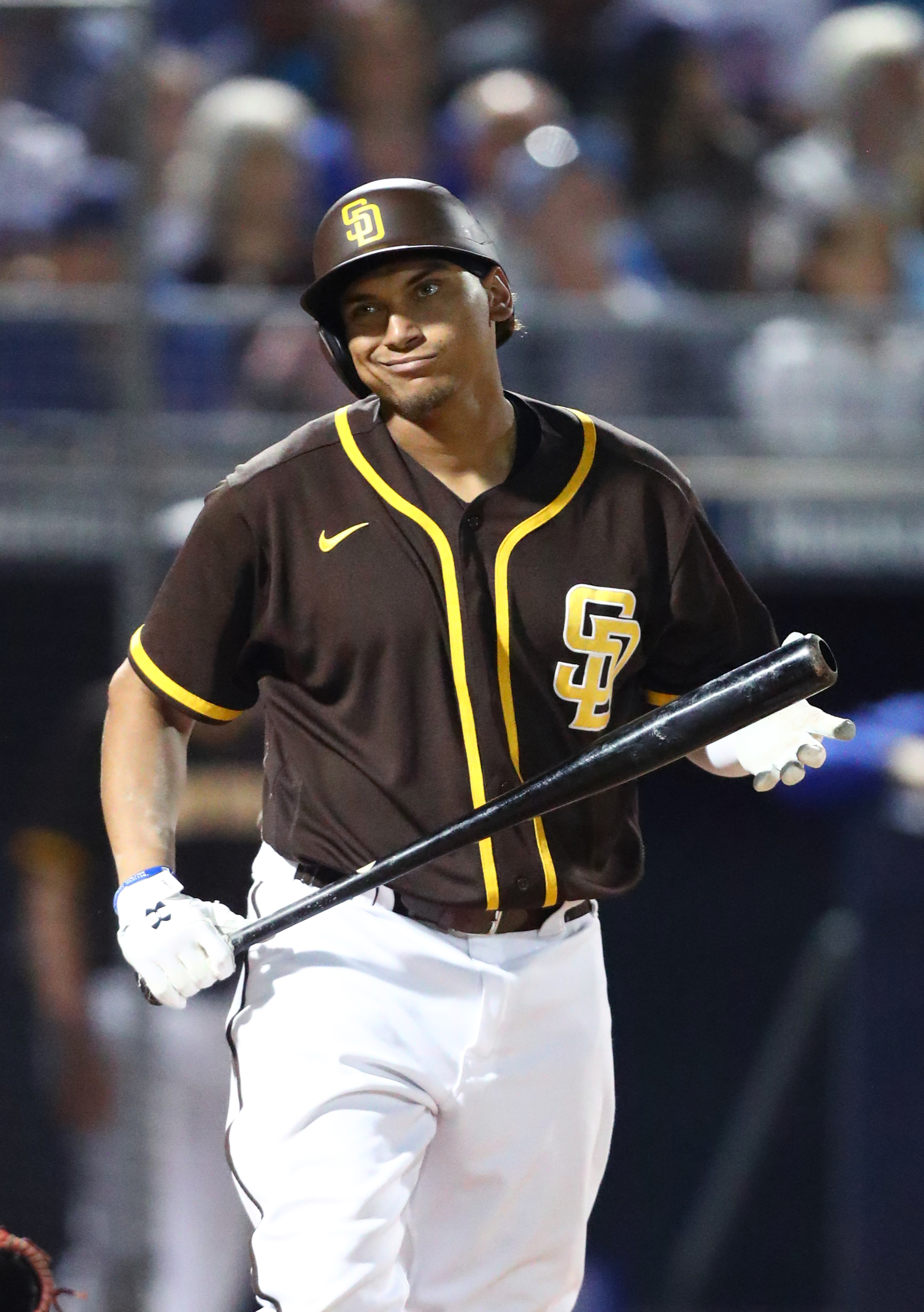
The 23-year-old Naylor was the No. 12 overall pick by the Marlins back in 2015 and was already traded once in the deal that sent Andrew Cashner from San Diego to Miami. He’s yet to cement himself as a big league regular but has fared quite well in the upper minors. The Padres haven’t exactly given Naylor an extended audition, but he’ll now presumably receive that in Cleveland. To this point in his career, Naylor is a .253/.315/.405 hitter in 317 MLB plate appearances. That’s not eye-catching production, but scouting reports have in the past credited him with plus-plus raw power and a potentially above-average hit tool. He hit .314/.389/.547 in Triple-A last year and .297/.383/.444 in a pitcher-friendly Double-A setting a year prior.
Naylor’s long-term home on defense could be either left field or first base, but with Carlos Santana and Franmil Reyes currently occupying first and the DH slot, respectively, Naylor seems likely ticketed for left field. In some ways, this is reminiscent of Cleveland’s bet on first baseman/outfielder Jake Bauers, but the club will hope for better results out of Naylor than they’ve received from Bauers so far. There’s certainly everyday upside present with Naylor, who can be controlled all the way through 2025, but it does seem a bit surprising that Cleveland brass didn’t focus on a more established young hitter.
Also going to Cleveland is Hedges, a 28-year-old defensive standout who has never provided much offense in the big leagues. The former top prospect has shown a bit of pop — career-high 18 homers in 2018 — but in total owns just a .199/.257/.359 slash through 1339 trips to the plate with San Diego. He’s obviously not a clear upgrade over Roberto Perez, but the Indians now possess two of the game’s very best defenders behind the dish.
Hedges, in fact, is widely regarded as MLB’s premier defensive catcher. Hedges was MLB’s best pitch framer in 2019, per Statcast, and has graded out at elite levels in that regard in each season of his career. He’s also thwarted 32 percent of stolen-base attempts against him while consistently drawing above-average marks for his pitch blocking abilities at Baseball Prospectus. Hedges is controlled through the 2022 season.
Quantrill, 25, brings another former first-round pick (eighth in 2016) and top prospect to the Indians organization. He’s shined in 17 1/3 frames as a multi-inning reliever in 2020 (five runs, 18-to-6 K/BB ratio), but he also struggled in a rotation role a year ago.
Quantrill has a low-spinning sinker (which is good for a sinker, as opposed to a four-seamer, where high spin is preferred) and has generally limited hard contact well, per Statcast. He may not have found his groove yet in the big leagues, but the Indians develop more quality arms than the vast majority of teams in the league. Getting their hands on a former top pick who was once a rather well-regarded prospect could yet yield some strong results, and Quantrill, like Naylor, is controllable through 2025.
Among the pure prospects headed to the Indians in this deal, Cantillo and Arias are regarded a bit more highly than Miller, though all three rank firmly in the middle ranks of an absolutely stacked farm system. Cantillo, 20, was a 16th-round pick in 2017 who has elevated his stock with a strong showing to this point in his pro career. He split last season between Class-A and Class-A Advanced, working to a combined 2.26 ERA with 11.6 K/9 against 2.7 BB/9. FanGraphs’ Eric Longenhagen writes that he’s currently tracking as a back-end starter but has a projectable frame that could allow for further growth and add some extra life to his pitches.
Arias, also 20, is regarded as an elite defender at short with some questions about his abilities at the plate. Baseball America ranked him ninth in the deep Padres system, praising his surprising raw power but noting that his current inability to lay off breaking balls out of the strike zone leads to untenable strikeout numbers. Arias is young, though, and he hit .302/.339/.470 in Class-A Advanced last year, so the tools are clearly there. Depending on how the bat progresses, he has everyday upside at shortstop.
Miller, 23, plays second base, shortstop and third base, and he turned in a solid .290/.355/.430 showing in a very tough Double-A setting last year. Miller has hit at every minor league stop and struck out at just a 15.4 percent rate in Double-A last season. MLB.com tabs him as a potential regular at second base, citing an arm that doesn’t quite play as a regular shortstop, or a utility man who can play three infield spots with a quality bat. He’s yet to make his big league debut, but Miller is the closest of the three minor leaguers in this deal.
We might not see a more franchise-altering deal than this at the 2020 deadline. For the Indians, it’s the type of trade fans are used to, painful as it might be. They’ll shed a player whose arbitration salary is on the rise and replace him with a bevy of young talent — a luxury that was possible due to the team’s superlative record in terms of developing starting pitching. They’re still in the driver’s seat as far as a potential postseason berth goes, but the club is quite likely weaker for the balance of the 2020 campaign. The long-term benefits should help the club sustain its long run of contending seasons in the AL Central, but that’ll be more of a challenge in and of itself as each of the White Sox, Tigers and Royals near the end of arduous rebuilding efforts.
The addition of Clevinger to an already formidable Padres rotation mix only further solidifies them as a win-now club for the foreseeable future, and they’re now a clear-cut postseason favorite in the NL. And unlike the last time the Padres went on an aggressive win-now tear, the Padres have the young foundation necessary — fronted by superstar Fernando Tatis Jr. — to support their recent wave of high-profile veteran acquisitions. They’ve completed a dizzying five trades since the weekend began — including a seven-player swap with Seattle last night — to remake an already strong club. The “Rock Star” GM is back, it seems, and the Padres certainly appear to be positioned better than they have been at any time in Preller’s tenure.
Ryan Spaeder reported last night that a deal sending Clevinger to Padres was in the works, though as of last evening he’d heard of some potential holdups in the deal. Robert Murray first reported that the deal was done (via Twitter). MLB Network’s Jon Heyman, ESPN’s Jeff Passan, The Athletic’s Ken Rosenthal and Bleacher Report’s Scott Miller all broke varying elements of the other players involved in the deal (all links to Twitter).
Latest On Mike Clevinger
AUG. 31: The Blue Jays “don’t seem to be heavily involved on Clevinger,” according to Heyman, who lists the Padres, Braves and perhaps the White Sox as teams that appear to be in the mix.
AUG. 30, 9:48PM: The Blue Jays also have interest in Clevinger, Heyman tweets, but it isn’t known if Toronto is the “mystery team.”
8:07PM: Speculation continues to swirl about a possible Mike Clevinger trade, with multiple reports surfacing earlier tonight that the Padres had seemingly moved into the driver’s seat for the Indians righty. The most recent word, however, is that other teams may have pulled ahead of San Diego, as USA Today’s Bob Nightengale (Twitter links) reports that the Tribe “have requested players’ physicals from at least two teams” but haven’t asked the Padres to submit such information.
A mystery team has made a better offer for Clevinger than the Padres, Nightengale writes. MLB.com’s Mark Feinsand (Twitter links) reported earlier tonight that the Braves were still in the Clevinger sweepstakes even though the Padres were the “frontrunners” at the time, and two rival executives told Feinsand that Atlanta could very well be the team “making an aggressive play” to now top San Diego’s offer. Top outfield prospect Drew Waters was reportedly part of the Indians’ trade ask from the Braves, according to MLB Network’s Jon Morosi (via Twitter).
The Padres don’t seem to be willing to move either Trent Grisham or Jake Cronenworth, MLB Network’s Jon Heyman (Twitter links), which could be a roadblock in a potential Clevinger trade. Also from Heyman, the Yankees don’t appear to be the mystery team in the Clevinger hunt, as there is “no belief anything’s close” between New York and Cleveland.
The White Sox and Dodgers were also rumored to be interested in Clevinger earlier today, and with this much buzz around the right-hander, one wonders how close Cleveland might get to someone meeting its reportedly “ridiculous” asking price in any Clevinger trade.
Padres, Mariners Complete Seven-Player Trade
The Padres continued their busy deadline activities with a trade large in both numbers and long-term scope. The Padres and Mariners combined on a seven-player deal that will see catcher/utilityman Austin Nola and right-handers Austin Adams and Dan Altavilla go to San Diego, while Seattle will receive top outfield prospect Taylor Trammell, infielder Ty France, catcher Luis Torrens, and right-hander Andres Munoz.
After already picking up Jason Castro from the Angels in another trade earlier today, the Padres will further bolster themselves behind the plate with Nola, though Nola brings extra versatility to the table. While Nola has primarily worked as a catcher this season, he has a lot of experience at first base and second base, plus a handful of games as a third baseman and corner outfield.
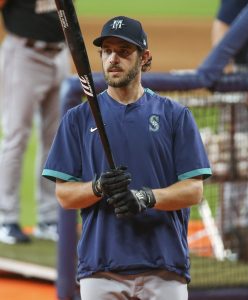 Since Nola might be considered more of a super-utility piece than as a pure catcher, he will essentially replace both backup infielder France and backup catcher Torrens on San Diego’s roster. The Padres are likely to use Nola all around the diamond while perhaps still going with Castro and Austin Hedges as their primary catching tandem, though Nola will surely also see some time at catcher.
As Ken Rosenthal speculated, the Padres did move a catcher to Seattle as part of the deal, though it was Torrens rather than Hedges or (the currently injured) Francisco Mejia. It isn’t out of the question that one of that duo could be traded elsewhere in another future swap for the aggressive Padres. Besides Castro, San Diego has also added Mitch Moreland and Trevor Rosenthal in deals with the Red Sox and Royals over the last two days, and the Padres remain in the hunt for such big-name pitchers as Mike Clevinger and Lance Lynn.
Originally a fifth-round pick for the Marlins in the 2012 draft, Nola plugged away in the minors before finally making his MLB debut last season at age 29. Since reaching the bigs, Nola has done nothing but produce for the Mariners, hitting .280/.351/.476 with 15 homers over 377 career plate appearances heading into today’s action. He is also controlled through the 2025 season, though San Diego might not necessarily view Nola as a long-term asset given that he turns 31 in December.
Altavilla has been a somewhat inconsistent contributor during his five years out of the Mariners bullpen, amassing a solid career 4.08 ERA over 106 innings and missing a lot (9.9 K/9) of bats. He only pitched 14 2/3 innings in 2019 and had a 7.71 ERA through his first 11 2/3 frames this season. As a hard-throwing righty, Altavilla will basically fill the bullpen depth spot left behind Gerardo Reyes, who was moved to the Angels in the Castro trade.
Adams could potentially factor into the Padres’ plans in 2020, as the right-hander has been rehabbing in the hopes of a late-season return after undergoing knee surgery in September 2019. Over 38 career innings with the Nationals and Mariners since the start of the 2017 season, Adams has a 3.79 ERA, 2.33 K/BB rate, and a whopping 14.9 K/9. MLBTR’s Steve Adams examined the righty’s hidden-gem potential back in April and, as always, the pitcher now going to San Diego is not to be confused with the other right-handed Austin Adams, who is currently with the Twins.
 Turning to the Mariners’ end of the trade, Trammell is the clear centerpiece, and this is the second time in two years that Trammell has been part of a major deadline swap. The outfielder was part of the prospect package going to San Diego last July in the seven-player, three-team swap that sent Trevor Bauer to the Reds and Franmil Reyes and Yasiel Puig to the Indians. Trammell will now become part of a loaded young outfield core in Seattle that includes Rookie Of The Year favorite Kyle Lewis and top prospects Julio Rodriguez and Jarred Kelenic.
Being dealt twice in 13 months’ time, however, could be an indication that Trammell’s star has somewhat dimmed. He didn’t perform overly well at the Double-A level last year, hitting a combined .234/.340/.349 in 514 combined PA with the Reds’ and Padres’ affiliates. MLB.com ranked Trammell as the 16th-best prospect in baseball prior to the 2019 season but dropped him to 57th in their pre-2020 listing, citing “a pull-heavy approach” that didn’t serve him well at Double-A. Overall, however, the scouting report was still impressed by Trammell’s speed, and his “impressive combination of athleticism, hitting ability and power potential even when he struggled.”
France has been an under-the-radar contributor for the Padres, hitting .314/.375/.510 in his first 56 plate appearances. The 26-year-old was something of an unheralded 34th round pick out of San Diego State in 2015, but France did nothing but hit in the minors and has acquitted himself well at the plate in the big leagues. France has played mostly corner infield positions during his career, though he also has experience at second base, so his right-handed bat could spell both the left-handed hitting Shed Long Jr. and even Kyle Seager when a southpaw is on the mound.
Though Torrens only has 70 big league games (including seven this season) to his name, he is now the most experienced receiver in a Seattle catching corps that consists of rookie Joseph Odom and Joe Hudson. Tom Murphy is currently on the 45-day injured list recovering from a fractured metatarsal in his left foot, leaving the door open for the Mariners’ other backstops to make an impression. A veteran of seven pro seasons with the Yankees and Padres, Torrens has a solid .272/.343/.404 slash line in 1584 career minor league PA, though just a .479 OPS over 168 PA with San Diego at the big league level.
Munoz is a longer-term asset for the Mariners, as the 21-year-old underwent Tommy John surgery last March. With a fastball that sits just a hair below 100mph, Munoz made his MLB debut last season, posting a 3.91 ERA, 2.73 K/BB, and 11.7 K/9 over 23 innings for the Padres. Control has been a slight issue for Munoz (5.5 BB/9) over 106 career minor league innings, but there is definitely closer-of-the-future potential if he can fully harness his heater.
The Athletic’s Ken Rosenthal was the first to report that the Mariners and Padres were “in active talks” about a Nola trade, and also later reported Torrens’ inclusion and that players on both sides were being informed of their involvement. ESPN.com’s Jeff Passan reported that the trade had been completed, and that it was a seven-player swap that included Trammell and Adams. As for the other players in the trade, Ryan Divish of the Seattle Times was first on Altavilla, The Athletic’s Jim Bowden was first on France, and The Athletic’s Dennis Lin was first on Munoz.
Photographs courtesy of USA Today Sports Images
Padres Acquire Jason Castro From Angels
11:06PM: The trade has been officially announced by both teams.
5:21PM: Right-hander Gerardo Reyes is going to Los Angeles as the return for Castro, MLB.com’s AJ Cassavell reports (Twitter link). The hard-throwing Reyes has 26 MLB innings on his resume, posting a 7.62 ERA, 13.2 K/9, and 3.45 K/BB over 26 innings for San Diego in 2019. Advanced metrics painted a much more favorable picture of Reyes’ performance, however, as he was hurt by a stunningly low 47.3% strand rate.
3:27PM: The Padres have acquired catcher Jason Castro from the Angels, confirms Ken Rosenthal of The Athletic. The 33-year-old veteran had been scratched from today’s game due to mounting trade interest, as first reported by Jon Heyman of MLB Network.
The return headed to the Angels in the deal is not yet known. More than likely, it won’t be a significant haul for the Halos, given that Castro is due to hit free agency at season’s end, making him essentially a one-month rental.
Castro will head to San Diego to complement Austin Hedges in the Padres’ catching mix. The move represent more win-now aggression on San Diego’s part; they’ve been busy this trade season, already making deals for reliever Trevor Rosenthal and first baseman Mitch Moreland this weekend.
The former Astro enjoyed something of a revitalizing season with the Twins last year, with his .767 OPS representing his highest single-season mark since 2013. That was fueled by a nice power surge, as Castro slugged 13 home runs in just 275 plate appearances.
That production hasn’t quite been there this season, as Castro’s batting average has slumped below .200 and his OPS is down to .707, but we ought to be careful not to rush to conclusions given that he’s made just 62 plate appearances. He’s hitting the ball just as hard as last year while getting on base at a solid clip thanks to a 16.1% walk rate. Interestingly, he’s hitting the ball in the air more than ever, so the jury’s still out on the merits of that development.
As a result, the Angels rewarded Castro with a one-year, $6.85MM contract in the winter. Unfortunately, he only wound up playing 18 games for the Halos before being shipped out. He’ll be owed just a bit more than $1MM for the remainder of the season.
In San Diego, he’ll offer a nice alternative to the defensive-minded Hedges, who’s working with a mere .614 OPS for the year. He’s probably more capable offensively than both Hedges and incumbent backup Francisco Mejia, who’s currently on the injured list. Needless to say, there will be a bit of a defensive drop-off from Hedges to Castro, the latter of whom logged above-average framing numbers a season ago but is getting somewhat negative returns thus far in 2020.
Castro’s presence will likely squeeze the young Mejia out of some at-bats, but the Padres will be happy to bring aboard a veteran of Castro’s ilk as they gear up for a postseason run in 2020, shifting their focus away from development and towards winning.
Rangers “Discussing” Joey Gallo In Trades
7:23PM: The Rays and Padres are two of the clubs with interest in Gallo, according to Ken Rosenthal of The Athletic.
2:25PM: As speculation about ace Lance Lynn abounds, the Rangers are also floating another star in trade talks: Texas is “discussing” Joey Gallo in potential trades, reports ESPN’s Jeff Passan. As with Lynn, expect the asking price for Gallo to be quite high, so we’ll have to wait to see just how motivated Texas is to deal its slugging outfielder.
Gallo turned a corner last season, blossoming into more than merely a homer-happy strikeout machine. Make no mistake, the dingers and strikeouts were still there in abundance, but his offensive game took an overall step forward, with Gallo looking like a more well-rounded slugger. His batting average climbed to a respectable .253, OBP up to .389, and accordingly his OPS elevated into elite territory, finishing the year at .986. Granted, a hamate injury limited Gallo to just 70 games played, but there were plenty of indications that production of that caliber was the new normal for the 26-year-old.
Gallo has shown himself to be a solid defender, having played all three outfield positions in the past and settling into right field this year. He’s an all-around athlete, with speed and ample arm strength making him more than a one-dimensional slugger. Those things, along with his age and remaining team control—he’s got two years of controllability left, first eligible to reach free agency after the 2022 season—will lead the Rangers to demand a significant return for their best offensive player.
Alas, Gallo has stumbled out of the gates in 2020, managing an unspectacular .774 OPS, though there has been no shortage of homers, walks, and strikeouts. But if Gallo has struggled this year, the surrounding lineup hasn’t offered much help. Texas has scored the third-fewest runs in baseball, with only the Marlins and Cardinals (who’ve played just 24 games) trailing them. That’s led to a 12-20 record, leaving them with slim chances to crack even an expanded postseason bracket.
Interested teams will note that Gallo is represented by Scott Boras, whose clients don’t often go for extensions. Of course, the Rangers are consider that factor as well, and they’d be remiss not to listen to offers for a player who might not stick around for the next contending Rangers team. To be sure, there’s no pressure to pull the trigger on a deal right now, but Texas will have to weigh its confidence in working out an extension with Gallo if they intend to hang on to him.
There’s no word on specific teams that have inquired about Gallo, but one figures there’d be widespread interest in a controllable, athletic outfielder who brings value both at the plate and in the field.
Of course, trading Gallo would seemingly signify the Rangers’ intent to launch a full-scale rebuild, something they haven’t committed to over the last few years as they mire in a sort of baseball purgatory. They’ve struggled to build a cohesive position player group, with players like Rougned Odor and Nomar Mazara displaying wild inconsistency interspersed with massive potential. Mazara, of course, is in Chicago while Odor has floundered this year. Texas is hampered by a hefty contract for shortstop Elvis Andrus, whose OPS has plummeted to just .494 on the season.
The Rangers fluttered around .500 with Gallo in the lineup last year, which surely informed their decision to spend the following winter strengthening the Major League roster, trading for Corey Kluber and inking contributors like Todd Frazier, Kyle Gibson, and Jordan Lyles. Evidently, those moves haven’t panned out, and it may be time for the Rangers to reverse course.
With Lynn and Gallo in their possession—arguably the best pitcher and position player on the trade market—the Rangers have the power to shape this year’s trade deadline, which is shaping up to be a seller’s market. Both Lynn and Gallo could be critical pieces for contending teams, the type of trade that pushes a contending team over the top. Right now, they look like the team to watch.
A’s, Twins, Padres, Blue Jays Interested In Lance Lynn
4:55PM: The Athletics are “potentially” also interested in Lynn, Morosi notes in an on-air report (Twitter link).
TODAY, 11:30AM: The Twins are also in on Lynn, hears Jon Morosi of MLB Network (via Twitter). Morosi adds that Lynn is “increasingly likely” to be moved before tomorrow’s deadline.
AUGUST 29: Count the Padres and Blue Jays among the teams to have expressed interest in Rangers starter Lance Lynn, reports Ken Rosenthal of The Athletic. With the White Sox also cited as a suitor for Lynn earlier today, the Rangers appear to have a robust market forming for their top starter, for whom they’re said to be “entertaining offers,” though that’s no guarantee that they’re determined to deal Lynn prior to Monday’s trading deadline.
Beyond the three teams named above, it seems likely that almost every pitching-needy team will inquire about Lynn, who is coveted not only because of his elite production, but because he’s not just a rental: the 33-year-old will remain under contract through next season, when he’ll be paid $8MM—by no means a steep cost for a pitcher of his caliber. Those factors could make Lynn a hotly contested name during what might otherwise be a quiet trade season.
We’ll have to see just how much the Rangers are willing to part with Lynn, but there’s no doubt they’ll command a pretty high asking price for their top arm. Still, if there are teams who can meet such an asking price, San Diego, Chicago, and Toronto are among them. All three of those teams have substantial prospect capital to pry Lynn from Texas, assuming they’re .
And one might think of that trio in similar terms: all three teams are finally seeing on-field results following years of speculative “potential.” They rely on a core of young, blossoming position players but largely lack veteran pitchers to match. As those clubs look to enter win-now mode (perhaps the Blue Jays to a lesser degree than the White Sox or Padres), Lynn would be a sensible addition to any pitching staff.
White Sox, Indians Reportedly Discussing Mike Clevinger Trade
The White Sox and Indians are “actively involved” in trade talks surrounding Cleveland right-hander Mike Clevinger, reports Bob Nightengale of USA Today. Jon Heyman of MLB Network adds the Braves, Yankees, Padres and Dodgers among Clevinger’s pursuers, adding that the right-hander has a “good chance” to be dealt.
As recently as Friday, it seemed unlikely Clevinger would go anywhere, with Cleveland apparently setting an extremely high price tag on him. The price tag seemingly remains high. Heyman hears that Cleveland would want big league talent in return (Twitter link), while Robert Murray reports that the initial ask was “four quality prospects.”
Clevinger’s violation of the Indians’ coronavirus protocols and subsequent demotion are well-known at this point and have made him an interesting trade candidate, although there’s no urgency (at least from an on-field perspective) for Cleveland to move him. Clevinger is controlled through 2022 via arbitration and has offered front-end production for most of the past four years.
The Braves and Yankees have been known to be targeting starting pitching, and Heyman adds that the Padres are seeking another starter. The Dodgers, meanwhile, are targeting players with multiple years of control, manager Dave Roberts told reporters (including Bill Punkett of the Orange County Register), so Clevinger fits the bill.
The White Sox are also in the market for starters (even more so with Gio González hitting the injured list this afternoon), although a Clevinger deal would be extremely surprising. Players of his caliber with multiple years of control are seldom traded within the division, even less often between two immediate contenders.
Padres Acquire Mitch Moreland
The Padres have acquired first baseman Mitch Moreland from the Red Sox. Prospects Hudson Potts and Jeisson Rosario are headed to Boston in return.
Moreland, 34, has been in Boston since the start of 2017. On the whole, he’s been a little better than average at the plate, combining for a .251/.332/.471 line (108 wRC+). He has been on an absolute tear this season, though, blasting eight home runs in 79 plate appearances en route to a .328/.430/.746 slash. Moreland has always hit the ball hard, generally avoided strikeouts and drawn his fair share of walks.
Like incumbent Padres first baseman Eric Hosmer, Moreland’s a left-handed bat, but he could complement right-handed hitting DH Ty France. Thanks in part to strong contributions from Hosmer and France, San Diego’s lineup has been among the best in baseball this season. Moreland is owed the balance of his $925K prorated salary and comes with an affordable $3MM club option for 2021.
In exchange, Boston picks up a pair of well-regarded prospects. Both Potts and Rosario were included among Baseball America’s top 30 Padre farmhands midseason. Potts, a 21-year-old third baseman, draws praise for his big-time raw power and comes with a first-round pedigree, but some scouts question his bat-to-ball skills. He performed well in the low minors, but scuffled a bit last season, when he hit .227/.290/.406 with a 28.6% strikeout rate in Double-A. In fairness, Potts was very young for that level, and the Texas League’s an extremely pitcher-friendly environment regardless.
Rosario, 20, was a high-priced international signee from the Pads’ vaunted 2016 J2 class. He draws ample praise for his athleticism and center field defense, although it’s up in the air how much impact he’ll make offensively despite seemingly exceptional plate discipline. Rosario has topped out at the High-A level, where he hit .242/.372/.314 with three home runs in 525 plate appearances.
All told, it’s a pretty strong haul for Boston, especially since Moreland’s fantastic start hadn’t helped propel them past an 11-22 record. That said, roster rules help explain why the Padres were willing to part with both players. Each needs to be added to the 40-man this offseason or else be exposed to the Rule V draft. The Pads, who continue to progress their swath of strong prospects to the high minors and above, have a seeming roster crunch incoming. The Red Sox, on the other hand, don’t have a particularly well-regarded farm system and can more easily find roster space for Potts and Rosario this offseason.
To clear immediate space for the prospects in their 60-man player pool, Boston released infielder Marco Hernández. The 27-year-old amassed a .265/.300/.342 line in parts of three seasons in Boston.
Robert Murray first reported that Moreland had been traded to San Diego (Twitter link). Dennis Lin of the Athletic first reported the return (via Twitter).