
Read The Transcript Of Our Chat With Mariners Reliever Paul Sewald
Righty reliever Paul Sewald signed a minor league deal with the Mariners about a year ago. On May 13th, when his contract was selected by the club, the promotions of Jarred Kelenic and Logan Gilbert got all the headlines. Little did we know, Sewald would become one of the year’s best stories. From the point of Sewald’s season debut on May 16th, he’d go on to lead all MLB relievers in strikeouts by a wide margin, with 104 in 64 2/3 innings. Among relievers with at least 60 innings on the season, Sewald’s 39.4 K% ranked second in baseball.
Born in Las Vegas, Sewald was drafted in the 10th round by the Mets out of the University of San Diego in 2012. He made his big league debut against the Marlins at Citi Field on April 8th, 2017. Sewald logged 147 1/3 relief innings for the Mets before landing with the Mariners.
Deploying a sweeping slider, elevated fastballs, and a deceptive delivery, Sewald ascended to the top of the pecking order in the Mariners’ bullpen by August. Sewald pitched in 19 of the Mariners’ last 32 games as they pushed for a playoff spot, always in the highest-leverage situations. Sewald’s breakout 2021 season included 10 wins, a 3.06 ERA, 104 strikeouts, 11 saves, and 16 holds. He’s slated to hold a prominent role in Seattle’s pen again in ’22.
Sewald is currently locked out by MLB, but he agreed to come chat with MLBTR readers today! Click here to read the transcript. And be sure to follow Paul on Twitter @ItsPaulSewald.
If there’s been one good thing for this website to come out of the lockout, it’s been these live chats with MLB players. If you’re a current or former MLB player with some stories to tell, contact us here to set up a chat! It’s fun and easy, and you get to choose which questions you answer.
Cameron Maybin Announces Retirement
Longtime major league outfielder Cameron Maybin announced his retirement this evening. The 34-year-old appeared in fifteen major league seasons, suiting up with ten different clubs between 2007-21. He spent the bulk of that time — four seasons apiece — with the Padres and Marlins.
“I’ve played this game since I was 4 years old,” Maybin wrote as part of his announcement, the full text of which is available on Twitter. “Three decades later, my love for baseball is only matched by the love I have for the family that’s supported me every step of the way. … Although my journey as a professional baseball player ends here with the announcement of my retirement, my work in this game is just getting started. I’m excited for what lies ahead, including my work with the Players Alliance in our effort to provide access and opportunity for the next generation of Black ballplayers.”
Maybin was a first-round pick back in 2005, selected tenth overall by the Detroit Tigers. At just 19 years old, Maybin made quick work of his minor league competition and drew praise from a number of publications. Baseball America regularly ranked the speedy outfielder among the top ten prospects in the game, doing so from 2007 until he exhausted prospect eligibility in 2009.
Though he made his Major League debut for the Tigers in 2007, a franchise-altering trade sent Maybin, along with a young Andrew Miller and others, to the Marlins for Miguel Cabrera and Dontrelle Willis. Irregular playing time but continued minor league dominance made Maybin a target of another trade just a few years later, when the Padres acquired him to be their starting center fielder for relievers Ryan Webb and Edward Mujica.
San Diego took well to their new center fielder, as Maybin broke out with a 40-steal, 103 OPS+ showing in his first year on the West Coast. That performance, combined with Maybin’s stellar glove up the middle, resulted in a 5-year $25MM extension before the 2012 season. Before the contract’s expiration, Maybin was dealt in yet another high-profile trade. In this deal, new Padres general manager A.J. Preller made his presence felt by acquiring closer Craig Kimbrel in an Opening Day-beating deal with the Braves.
After a year in Atlanta, Maybin bounced around between eight teams, providing clubs with speed and modest offense in the outfield and off the bench. During this stretch, Maybin had a resurgent year when he reunited with the Tigers in 2016, sporting a 118 OPS+ in 94 games. He pushed his offense to new heights in 2019, with a strong .285/.364/.494 (127 OPS+) showing in 82 games for an injury-ravaged Yankees team.
Maybin was set to look for 2022 opportunities as a veteran depth option for clubs. Instead, he’ll eschew a complicated free agent market and retire a career .254/.323/.374 hitter with 187 steals.
MLBTR congratulates Maybin on an excellent career, and wishes him the best of luck with his Players Alliance endeavors and elsewhere.
Kyle Seager Announces Retirement
Kyle Seager has announced his retirement, according to a statement relayed by his wife on Twitter. He had the rare honor of spending his entire career with one organization, having been drafted by the Seattle Mariners and staying with them until reaching free agency at the end of the 2021 season.
Seager, 34, began his career as a third-round pick of the Mariners in 2009, climbing through the minors to make his MLB debut in 2011, getting into 53 games that year. In 2012, he had a breakout year that saw him hit 20 home runs in 155 games, slashing .259/.316/.423. In combination with his solid third base defense, he was worth 3.8 fWAR that year.
From that point on, he essentially took over and made himself a fixture at the hot corner in Seattle, playing at least 154 games for the Mariners for seven straight seasons from 2012 to 2018. A hand injury limited him to 106 games in 2019, but that would prove to be his only significant absence, as he played all 60 games in the pandemic-shortened 2020 campaign and then 159 games in 2021.
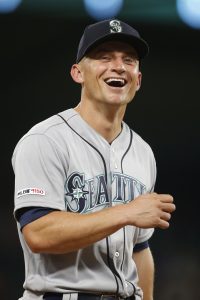 After a 2014 season in which Seager hit 25 homers, was selected to the All-Star game and won a Gold Glove, he and the Mariners agreed to a contract extension worth $100MM over seven years. That contract, which just concluded a few months ago, kept him a Mariner for life.
Over his 11 seasons, Seager played 1,480 games, notching 1,395 hits, 309 doubles and 242 home runs. His overall career slash line was .251/.321/.442. He was worth 34.8 wins above replacement in the estimation of FanGraphs, with Baseball Reference putting him at 36.9. A model of consistency, Seager produced at least 1.5 fWAR for ten straight seasons, from 2012 to 2021, hitting at least 20 home runs in each of those seasons, except for the shortened 2020 campaign. Despite his reliable durability, power production and defense, the Mariners were never able to build a postseason-worthy team around him, having not been to the postseason since 2001.
In 2021, the final year of his career, Seager set career highs in home runs and runs batted in, with 35 and 101, respectively. His slash line on the year was .212/.285/.438. Going into the offseason, MLBTR predicted that he could have earned himself a new contract worth $24MM over two years. Instead, he will hang up his spikes and enter the next chapter of his life.
Seager addressed his retirement with Ryan Divish of the Seattle Times this afternoon. The third baseman said he’d decided to retire by the end of the season, a year that ended with an emotional farewell from the fans at T-Mobile Park after the Mariners had been eliminated from playoff contention. “I knew if we got eliminated that would be the last time I played baseball. I knew it was my last at-bats, I knew it was my last ground balls, my last innings,” Seager texted Divish. “All those thoughts were in my head. I had so many emotions going on that day. My family being out for the pregame pitch was magical. I got very emotional very early in the day!”
Seager went on to tell Divish he’d been contemplating retirement as far back as Spring Training and said the ongoing lockout and labor uncertainty played no role in his decision. “It honestly was an easy decision. As much as I love baseball, it was time. I’m ready to be home with my family. I’ll miss a lot of people and aspects of the game, but I am ready to start the next chapter of my life.” Mariners fans in particular will want to check out Divish’s full piece, which also contains quotes from Seager on his appreciation for the Seattle fanbase as well as interest he’d received from other teams this winter after the M’s bought out his club option for 2022.
The MLBTR team would like to extend a heartfelt congratulations to Kyle for an incredible career and wish him the best of luck in whatever comes next.
Infield Notes: Harrison, White, Santana
Free agent utilityman Josh Harrison fielded multiple offers from teams before the institution of the lockout, tweets Ben Nicholson-Smith of Sportsnet. As is to be expected given Harrison’s skillset, Nicholson-Smith suggests different clubs have indicated they’d deploy the 34-year-old in different roles depending on team need. This past season, he started games at six positions — second base, shortstop, third base and all three outfield spots, with the bulk of that work coming at second and third base.
Harrison is coming off a decent season split between the Nationals and A’s. The right-handed hitter posted a .279/.341/.400 line with eight home runs across 558 plate appearances, numbers that check in a touch above the league average by measure of wRC+. While he didn’t draw many walks or hit for much power, Harrison’s minuscule 13.4% strikeout rate enabled him to hit for a solid batting average. It’s worth noting, though, that the two-time All-Star’s production tailed off following the midseason trade that sent him to Oakland. After starting at a strong .294/.366/.434 clip across 359 plate appearances in Washington, Harrison hit only .254/.296/.341 over 199 trips to the dish in the Bay Area.
Some notes on other infield situations around the game:
- Mariners first baseman Evan White has fully recovered from the season-ending left hip surgery he underwent in mid-July and has begun some baseball activities, writes Ryan Divish of the Seattle Times. While a return to full health is an unequivocal positive, there’s still plenty of question about how productive White will be in 2022. After all, he’s already been supplanted on the depth chart by Ty France, who looks cemented as the regular first baseman following a .291/.368/.445 showing in 2021. White, who’s under contract through at least 2025 thanks to the pre-debut extension he signed in November 2019, owns only a .165/.235/.308 line across 306 career MLB plate appearances. The 25-year-old did win a Gold Glove award in 2020, but he’ll obviously need to be far more productive offensively to earn everyday playing time. Divish writes that some within the organization feel White could benefit from more time at Triple-A, and he does still have all three minor league option years remaining. He’s expected to see some outfield time in Spring Training to broaden his defensive versatility, although the bigger question figures to be his form at the plate once gameplay resumes.
- As part of a reader mailbag, Alec Lewis of the Athletic suggests the Royals could attempt to find a taker for Carlos Santana coming out of the lockout. That’d assuredly require some creativity — including cash, taking back an undesirable contract as part of the trade, including a prospect of note, etc. — given how Santana performed in 2021. The generally reliable veteran hit only .214/.319/.342 over 659 plate appearances, easily the worst production of his career. The switch-hitter continued to avoid strikeouts (15.5%) and draw plenty of walks (13.1%), but his results on contact cratered. Santana is guaranteed $10.5MM in 2022, the final season of a two-year deal. Kansas City has first base prospect Nick Pratto on the doorstep of the majors after combining for a .265/.385/.602 line between the minors’ top two levels. It wouldn’t be a surprise if Pratto eventually starts to see playing time at Santana’s expense even if Kansas City doesn’t find a way to pull off a trade this winter.
Which 2022 Draft Picks Have Teams Gained And Lost From Qualifying Offer Free Agents
Of the 14 free agents to receive qualifying offers this winter, nine have already figured out where they will be playing next season, leading to some noteworthy adjustments to the 2022 draft order. For a refresher on the QO rules, you can check this list of what signing a qualifying offer-rejecting free agent would cost each team, or this list of what teams receive as compensation for losing a QO-rejecting free agent.
Or, for simplicity’s sake, you could just read this post right here as a quick summary of the extra picks gained and lost due to these signings. First of all, four of the nine signed players don’t factor into the discussion, since they are back with their former teams — Brandon Belt accepted the Giants’ qualifying offer in the first place, while Raisel Iglesias re-signed with the Angels, Chris Taylor re-signed with the Dodgers, and Justin Verlander re-signed with the Astros.
For the five other signed QO free agents and the five unsigned QO free agents, here is the breakdown of what their former teams would receive as compensatory picks. The specific order of the compensatory picks is based on the previous year’s record, so the team with the fewer wins would get the superior pick.
- Extra pick after Round 1 of the draft: This is awarded to a team that receives revenue-sharing funds, and whose QO-rejecting free agent signs with another team for more than $50MM in guaranteed salary. The Rockies and Reds would therefore each qualify if Trevor Story (Colorado) or Nick Castellanos (Cincinnati) signed for $50MM+. Since the Reds had the better record between the two teams, the Rockies would pick 32nd overall and the Reds 33rd overall if both clubs indeed ended up in this same category. If Story and/or Castellanos signed for less than $50MM, Colorado and/or Cincinnati would be in the next group…
- Extra pick between Competitive Balance Round B and Round 3: Four picks have already been allotted within this group, comprised of teams who don’t receive revenue sharing funds. The Mets received an extra selection when Noah Syndergaard signed with the Angels, the Blue Jays received two picks when Marcus Semien signed with the Rangers and Robbie Ray signed with the Mariners, and the Red Sox got a pick when Eduardo Rodriguez signed with the Tigers. Like Toronto, the Mets could also receive a second pick if Michael Conforto signed elsewhere. The Braves (Freddie Freeman) and Astros (Carlos Correa) would also land in this category if their respective QO free agents left town. The draft order of this sandwich round based on 2021 record would line up as Mets (77 wins), Braves (88 wins), Blue Jays (91 wins), Red Sox (92 wins), and Astros (95 wins). For the moment, the four picks in this group represent the 75th-79th overall selections in the draft, though that specific order will be altered based on where the other QO players sign, or what other second-round picks might be surrendered as penalties for signing those free agents.
- Extra pick after Round 4: For teams that lose a QO free agent but exceeded the luxury tax threshold in 2021, their compensatory pick is pushed back to beyond the fourth round. Therefore, this is where the Dodgers will make their extra pick in the wake of Corey Seager‘s deal with the Rangers.
Moving on, here is what the four teams who have signed QO free agents had to give up in draft capital…
- Second-highest 2022 draft pick, $500K in international signing pool money: The Angels didn’t receive revenue sharing funds, and didn’t exceed the luxury tax in 2021. As a result, signing Syndergaard will cost the Angels their second-round draft selection and a chunk of their funds for the next international signing period.
- Third-highest 2022 draft pick: The Mariners and Tigers fall into this category, as teams who received revenue sharing payments in 2021. For Seattle, this is simply their third-round selection. For Detroit, their “third-highest pick” won’t be determined until MLB establishes the order for this year’s Competitive Balance Draft. Depending on which of the two CBD rounds the Tigers are drawn into, their cost for the Rodriguez contract could either be their second-rounder or their pick in Competitive Balance Round B.
- Both their second AND third-highest 2022 draft picks, and $500K in international signing pool money: The Rangers splurged by signing both Seager and Semien, and thus faced twice the draft penalty (both their second-round and third-round picks) for landing a pair of QO free agents. Texas would have faced the same penalty as the Angels if it had signed just one of Seager or Semien.
- Second- and fifth-highest 2022 draft picks, $1MM in international signing pool money: The stiffest penalty is reserved for teams who exceeded the luxury tax threshold last season. Therefore, only the Dodgers and Padres would have to give up multiple picks to sign a single QO free agent, which would surely influence any efforts on their part to pursue Correa, Freeman, Conforto, Story, or Castellanos.
Mariners Expected To Pursue More Rotation Help After Lockout
The Mariners have made one of the biggest rotation pickups of the offseason already, signing Robbie Ray to a five-year, $115MM guarantee shortly before the lockout. Even after landing the reigning AL Cy Young award winner, Seattle is expected to pursue additional rotation help whenever the transactions freeze is lifted, writes Corey Brock of the Athletic.
The group behind Ray already looks pretty solid. Chris Flexen had a nice 2021 campaign in his return from a stint in South Korea. Marco Gonzales had some uncharacteristic home run struggles this past season, but he’s a reliable mid-rotation arm. Logan Gilbert posted a 4.68 ERA as a rookie, but his peripherals were more impressive and he’s one of the most highly-regarded young arms around the league.
A top four of Ray, Flexen, Gonzales and Gilbert is a solid start, and it seems there’s only one season-opening spot left up for grabs. While the Mariners ran a six-man rotation at points last season, president of baseball operations Jerry Dipoto suggested earlier this offseason that’s not the plan in 2022. Dipoto noted that last season’s six-man starting staff was primarily a function of the club’s concern about a drastic pitcher workload spike on the heels of a 60-game schedule in 2020. “Now that we are a full season removed from the truncated 2020 season, we feel the five-man rotation is a perfectly reasonable way to go,” Dipoto said (via Brock).
Seattle has a few in-house options for the final spot, albeit none with a whole lot of certainty. Justin Dunn and Justus Sheffield were each well-regarded prospects coming up, but they’ve been up-and-down as big leaguers. Dunn had a 3.75 ERA over 11 starts last season, but neither he nor Sheffield had especially promising peripherals. Nick Margevicius remains on the 40-man roster, but he missed most of last season after being diagnosed with thoracic outlet syndrome.
Each of Dunn, Sheffield or Margevicius could conceivably hold down a rotation role until one of the Mariners’ top young arms is ready for a call-up. Matt Brash was selected to the active roster during the final week of the regular season, but he didn’t see any major league action. Both Brash and fellow top prospect George Kirby topped out at Double-A in 2021, so it’s possible both righties are in line for a bit of Triple-A time to start next season. That’s also true of southpaw Brandon Williamson, a well-regarded young arm himself who has posted monster strikeout numbers in the minors.
Given the volume of near-MLB options already in the organization, it’s arguable that starting pitching needn’t really be a priority for Seattle. Yet the AL West is seemingly shaping up to be a competitive race, and the Mariners may not be content relying on a breakout from one of Sheffield or Dunn or on immediate success from their top prospects. Acquiring another starter could also kick Sheffield and/or Dunn to the bullpen and give the club some extra depth in the event of injuries that typically affect pitching staffs around the league.
Brock suggests the Mariners could look into either free agency or trade in pursuit of another hurler. The top of the free agent rotation market has already mostly come off the board. Aside from Carlos Rodón and Clayton Kershaw, most of the remaining free agent starters are back-end types. It’s possible Seattle targets a lower-cost veteran stabilizer — speculatively speaking, a reunion with midseason trade acquisition Tyler Anderson could be under consideration — but the trade market presents a broader array of higher-impact options.
Reds’ hurlers Luis Castillo, Tyler Mahle and Sonny Gray have been the subject of trade rumors over the offseason, with Gray seemingly most likely to wind up on the move among that trio. The division-rival A’s could make any of Frankie Montas, Chris Bassitt and/or Sean Manaea available. The Marlins are reportedly willing to trade from their surplus of quality young arms. Landing a pitcher of Castillo’s or Mahle’s caliber and remaining club control would likely require surrendering a top prospect, something Dipoto has already suggested Seattle’s not willing to do. Acquiring a rental like Bassitt or Manaea likely wouldn’t require surrendering that kind of young talent, though.
Even after signing Ray, the Mariners’ payroll outlook is fairly clear. Jason Martinez of Roster Resource estimates Seattle’s 2022 player commitments at just under $87MM, including projected salaries for arbitration-eligible players. That’s well shy of the club’s franchise-record outlays in the $155MM range (via Cot’s Baseball Contracts). Dipoto and his staff should have plenty of leeway to pursue multiple upgrades whenever the offseason resumes. In addition to the desire to bolster the rotation, the Mariners are on the hunt for another infielder, a search that has already seen them tied to players like Trevor Story and Kris Bryant.
Latest On Mariners’ Infield Targets
The Mariners’ desire to add a bat has been no secret, with the team linked thus far in the offseason to the likes of Kris Bryant, Seiya Suzuki, Trevor Story and the since-signed Javier Báez (Tigers) and Marcus Semien (Rangers). Though Seattle has already acquired left-handed-hitting infielder/outfielder Adam Frazier in a deal with the Padres, president of baseball operations Jerry Dipoto figures to come out of the lockout intent on further deepening his lineup.
MLB Network’s Jon Heyman indicated recently on his Big Time Baseball podcast that Seattle indeed made an offer to Story prior to the lockout — presumably with the idea that Story would move off of shortstop in deference to incumbent J.P. Crawford. Dipoto plainly stated earlier in the winter that the organization’s plan was to keep Crawford at that position, and reports since that time suggested the team’s interest in Story would likely be predicated on a move to second base.
In his latest mailbag column Ryan Divish of the Seattle Times expands on some of the Mariners’ free-agent targets, reporting that the team never had a one-on-one meeting with Semien — seemingly due to a lack of interest on Semien’s end. Regarding the potential of an infielder changing positions to come to Seattle, he further notes that Crawford himself has never expressed that he’s unwilling to change positions, but the Mariners aren’t keen on moving a player they believe to be a high-end defender at a time when he’s making strides offensively.
Regarding Story, a move to the keystone might be preferable even independent of Crawford’s presence at shortstop. Divish hears from some scouts who suggest Story’s arm might play better at second base than it does at shortstop long-term. The former Rockie is coming off a season in which he ranked fourth among shortstops with 11 throwing errors, his fourth straight season ranking among the top ten at the position in that category.
Story’s strong durability and range paradoxically contribute to those error marks — a player can only commit a throwing error on balls he’s able to field in the first place — but inconsistency with his arm likely played into mixed reviews from public defensive metrics. While Defensive Runs Saved has continually pegged Story as a plus gloveman over the years, Statcast’s Outs Above Average tabbed him at six plays below par at shortstop in 2021.
While Story has never played an inning outside of shortstop as a big leaguer, it’s generally expected he’d acclimate well to second base if needed. That’s a less strenuous position on the defensive spectrum, and one need look no further than the aforementioned Semien (who won a Gold Glove at second base with the Blue Jays this past season) as an example of a player successfully bouncing from the left side of the diamond to the right. If the M’s were to land Story, his pairing with Crawford would make for one of the stronger all-around middle infields in the game.
After acquiring Frazier, the Mariners arguably don’t need another infielder. Yet adding a player like Story or Bryant would raise the team’s overall offensive ability while freeing up Frazier and/or Abraham Toro to assume a multi-positional role. That’d give manager Scott Servais far more with which to work than he had in 2021, when Seattle hitters combined for an underwhelming .226/.303/.386 slash line (pitchers excluded). Even after accounting for the club’s pitcher-friendly home ballpark, that offensive output ranked just 21st among the league’s 30 teams by measure of wRC+.
Andrew Romine Announces Retirement
Andrew Romine has announced his retirement from baseball with a post on Instagram.
Romine was a fifth round pick out of Arizona State University by the Angels back in 2007. The 34-year-old infielder played 11 years in the Majors, appearing in 609 big league games for the Angels, Tigers, Mariners, Rangers, and Cubs. His most prolific period came in Detroit, where he was a regular from 2014 to 2017.
Romine wasn’t exactly a thunderbolt at the plate, but he was a capable defender and a plus on the base paths. Defensively, Romine can claim the rare distinction of having literally done it all. He appeared in at least one game at all nine defensive positions, though he was primarily an infielder. He took the mound eight times, and for one third of an inning back in 2017, he even suited up behind the plate for the Tigers.
This past season, Andrew appeared in 26 games, slashing .183/.234/.267 in 64 plate appearances with the Cubs. Never known as a slugger, Romine put his stamp on the season back on August 6th, hitting a 3-run, game-tying home run off Craig Kimbrel in the bottom of the ninth inning. Though the Cubs ultimately lost that game, it was just Kimbrel’s third appearance on the south side and the beginning of a difficult half season with the White Sox. It was just Romine’s 11th career home run across a total 1,391 career plate appearances.
For Romine, the blast was a thrilling moment in an eventful final season in the bigs. Romine got to play alongside his younger brother, Austin Romine, in Chicago. The brothers played alongside one another for the first time in their professional lives.
The MLBTR staff would like to extend a heartfelt congratulations to Andrew for a successful pro career and wish him the best of luck in whatever comes next.
Mariners Interested In Trevor Story
Per Robert Murray of Fansided, the Mariners have expressed interest in free agent shortstop Trevor Story. This comes in addition to earlier reports that Kris Bryant had also drawn their attention. Evidently, their recent acquisitions of second baseman Adam Frazier (from the Padres) and 2021 AL Cy Young winner Robbie Ray (who they gave a five-year, $115MM deal) hasn’t slaked Seattle’s interest in acquiring a big-ticket bat to anchor a lineup set to lose longtime third baseman Kyle Seager.
The M’s had previously been linked to Story, though Ryan Divish of the Seattle Times suggested a few weeks ago they’d have preferred to utilize him as a second baseman (where he’d have paired with incumbent shortstop J.P. Crawford, one of a small handful of shortstop with defensive chops that compare to Story’s) in an effort to keep his throwing arm healthy. With the arrival of Frazier, this option is presumably off the table, though it’s possible that the Mariners could also ask him to play third. Buster Olney of ESPN reported last night that he’d also heard buzz regarding Seattle hoping to sign a third baseman, listing Story, Bryant, and Carlos Correa (another stellar defender who’d have to move off short) as possibilities.
With a lockout almost certainly only a few hours away, it’s looking increasingly likely that Story will have to wait until the labor dispute is resolved before signing, though that would hardly rule the Mariners out. They headed into the offseason with only $14.65MM in guaranteed 2022 contracts on the books (a number expected to reach only about $40MM after accounting for arbitration salaries) and a young squad that had playoff aspirations headed into the season’s final week. Though the signing of Ray obviously sends their payroll number northward, they should have room for at least one more major signing — and quite possibly more.
Indeed, with money to spend and a talented squad, the future is likely bright in Seattle. Beyond Seager and starter Yusei Kikuchi, the Mariners will return all of their major contributors from 2021. They should also be able to count on a greater contribution from 2020 Rookie of the Year Kyle Lewis — who was limited to 36 games after a deep bone bruise suffered in Spring Training held him out for the season’s first month and a meniscus tear ended his season a bit over a month later — and will look forward to the graduation of several members of their stacked farm system (No. 2 in the bigs, per MLB Pipeline), including outfielder Julio Rodriguez (behind only Adley Rutschman in MLB Pipeline’s Top 100).
Though he’ll fall well short of the $325MM commitment the Rangers gave to Corey Seager, Story would still cost the Mariners a pretty penny. MLBTR predicts he’ll get a six-year deal with a $126MM guarantee, which would make him and Ray the Mariners’ highest-paid players on an annual basis by more than $15MM each.
As with any player who’s spent his career at Coors Field, Story’s home/road splits are an essential evaluative caveat. His career OPS at Coors Field (.972) dwarfs his OPS on the road (.752). Story’s park-adjusted OPS+ numbers — 103 in 2021, 112 for his career — suggest a strong hitter, but they don’t quite match a player with a career line of .272/.340/.523. He’s also entering his age-29 season and coming off an elbow injury that cut into his power numbers in 2021, so decline is likely to be a serious concern to any team considering handing Story a long-term deal.
Mariners Extend Andres Munoz
TODAY: The Mariners officially announced Munoz’s extension.
NOVEMBER 30: The Mariners are finalizing agreement on a four-year extension with reliever Andrés Muñoz that guarantees at least $7.5MM, report Daniel Kramer and Jesse Sanchez of MLB.com (Twitter link). The deal contains three club options, reports Jon Morosi of MLB.com (on Twitter).
Muñoz, a client of Hector Gomez, had been controllable via arbitration through 2025. The deal buys out his final pre-arb season in 2022, as well as all three arb years. The Mariners extend their window of control by three seasons via the club options.
It’s a fascinating agreement, as Muñoz has made exactly one appearance in a Seattle uniform. He recorded two outs during the M’s season finale against the Angels, his first big league work since his time with the Padres in 2019. Those two seasons mark the entirety of Muñoz’s big league career, as he has just 23 2/3 innings of 3.80 ERA ball under his belt at the highest level.
That limited track record is on account of both youth and injury. The Mexico native is still just 22 years old (23 in January), having reached the big leagues at age-20. He blew out his elbow in Spring Training with San Diego in 2020, requiring a Tommy John procedure. While he was rehabbing, Seattle acquired him as part of the seven-player Austin Nola deal. He spent the next year recovering under the eyes of Mariners’ medical personnel before returning to health in time for the season’s final game.
That lack of track record makes Muñoz a rather atypical extension candidate, but it’s also easy to understand why the Seattle front office jumped at the opportunity to lock in some eminently affordable rates over the coming seasons. Muñoz possesses electric stuff, including one of the game’s hardest fastballs. He averaged triple digits on the pitch during his 2019 rookie campaign. Upon his return from injury, that average heater had “dipped” to 99.6 MPH. Were Muñoz to emerge as a potential closer or even simply a high-leverage relief arm, he’d stand to earn far greater than a cumulative $7.5MM through arbitration. And that’s before considering the most appealing part of the deal from a team perspective — the opportunity to extend their window of control an additional three seasons.
From Muñoz’s perspective, the deal affords him the opportunity for up-front financial security. It’s possible he’ll wind up underpaid, if he lives up to his immense upside. Yet it’s difficult to fault a player his age for locking in this kind of money, particularly given that he’s yet to establish himself within a big league bullpen. Even independent of injury concerns, Muñoz comes with questions about his strike-throwing ability. He routinely walked upwards of 11% of opponents in the minors until 2019, and there’s a chance he never develops adequate command to match his power arsenal.
While the team can shoulder that kind of risk with relatively minor cost, Muñoz struggling early in his career could have had a significant impact on his earnings. He’ll forfeit a fair bit of ceiling in order to avoid that downside. All told, it’s a fascinating gambit for Seattle — one that, while unconventional, has the opportunity to pay off handsomely if Muñoz emerges as a late-game weapon.