
NPB/KBO Notes: Uehara, Kelly
Things are quiet in the majors as we await Game 5 of the World Series, so here’s the latest from a pair of Asian leagues…
- Reliever Koji Uehara saw his major league career end after the 2017 season, when he headed back to his native Japan to pitch for the Yomiuri Giants of Nippon Professional Baseball. Now, after a season in which Uehara pitched to a 3.63 ERA with 6.2 K/9 and 1.3 BB/9 over 34 2/3 innings, the Giants are considering releasing the 43-year-old, according to the Japan Times. Uehara underwent left knee surgery on Tuesday, and if he’s able to bounce back from that, the Giants could re-sign him, per the report. Otherwise, considering his age, it’s possible the eight-time NPB All-Star has thrown his last pitch as a professional – even though the report indicates he’d like to continue playing. Uehara enjoyed an excellent major league career from 2009-17 as a member of a few teams – including the Red Sox, with whom he won a World Series in 2013 – posting a 2.66 ERA with 10.71 K/9, 1.46 BB/9, 95 saves and 81 holds in 480 2/3 frames. Those numbers are actually better than the stats Uehara has compiled with Yomiuri, the only Japanese team for which he has pitched. Across 11 seasons and 1,583 2/3 frames with the Giants, Uehara has notched a 3.02 ERA with 8.0 K/9 against 1.2 BB/9.
- Merrill Kelly, a righty for SK Wyverns of the Korea Baseball Organization, has “been talked about as a possible MLB arm” for 2019, Sung Min Kim of The Athletic and River Ave Blues tweets. Kelly has been pitching in the KBO since 2015, but he did garner some minor league experience from 2010-14 as a member of the Rays, who chose him in the eighth round of the 2010 draft. At the time of Kelly’s selection, Baseball America (subscription required) wrote that he gets by “with a lot of funk and deception,” adding that he “profiles better as a reliever in pro ball.” Now 30, Kelly has parlayed his fastball-changeup-curveball repertoire into a solid career as a starter in the hitter-friendly KBO, where he has amassed at least 180 frames in three seasons and combined for a 3.86 ERA with 7.9 K/9 and 2.5 BB/9.
Heyman’s Latest: Hamels, Smoak, Nunez, Bregman, Padres
The Cubs seem likely to pick up left-hander Cole Hamels‘ $20MM option for 2019, Jon Heyman of Fancred writes. The club could instead buy out Hamels for $6MM, a sum his previous team – the Rangers – would cover, though that would be a surprise in the wake of his second-half performance. After the Cubs acquired Hamels in late July, he pitched to a 2.36 ERA with 8.7 K/9 and 2.7 BB/9 over 76 1/3 innings. Thanks in part to Hamels’ excellent results over the final couple months of the season, Cubs president Theo Epstein recently called the 34-year-old a “breath of fresh air.”
Here’s more from Heyman’s latest column:
- Surprisingly, despite his quality production from 2017-18 and his reasonable price tag for next season, the Blue Jays aren’t certain to exercise first baseman Justin Smoak‘s option, according to Heyman. Toronto must decide whether to bring back Smoak for $8MM or cut him loose and pay $250K. But if the team’s uninterested in retaining Smoak, perhaps it’ll pick up the soon-to-be 32-year-old’s option and shop him to first base needy-clubs. MLBTR’s Mark Polishuk recently took a look at several teams that could pursue a deal for the switch-hitting Smoak, who slashed .242/.350/.457 (121 wRC+) with 25 home runs in 594 PA this year.
- Red Sox infielder Eduardo Nunez is “likely” to exercise his $5MM player option, per Heyman. Nunez could otherwise opt out and receive $2MM, but he’d be doing so on the heels of a rough campaign (heroics in Game 1 of the World Series notwithstanding). The 31-year-old hit a meek .265/.289/.388 (78 wRC+) in 502 regular-season plate appearances and accounted for minus-0.4 fWAR – the sixth-worst mark among those who totaled at least 500 PA. Notably, Nunez had a much better campaign in 2017, but he was still unable to secure a large guarantee as a free agent last winter.
- Mets catcher Travis d’Arnaud is a non-tender candidate, Heyman relays. The oft-injured d’Arnaud is projected to earn $3.7MM in 2019, his last year of arbitration, but the Mets could deem that too pricey in the wake of another injury-shortened season. D’Arnaud, 29, suffered a partial UCL tear in early April, limiting him to four games. With d’Arnaud unavailable, the Mets ended up relying on Devin Mesoraco and Kevin Plawecki behind the plate. There’s also uncertainty with Mesoraco heading into the offseason, given that he’s a pending free agent.
- Astros superstar Alex Bregman is among those sticking with agent Brodie Scoffield, who recently left Legacy to start Tidal Sports Group, Heyman writes. The 24-year-old third baseman is coming off a tremendous season in which he hit .284/394/.532 (157 wRC+) with 31 home runs, more walks (96) than strikeouts (85) and 7.6 fWAR across 705 trips to the plate. Bregman’s in line to play his final pre-arb season in 2019.
- Some manager-needy teams recently requested interviews with Padres executive Moises Alou, but the 52-year-old spurned those overtures, Heyman reports. Alou, a big league outfielder from 1990-2008, joined San Diego’s front office in 2015. He doesn’t have any managerial experience, though it does run in his family. His father, Felipe Alou, managed the Expos (1992-2001) and Giants (2003-06) to a combined 1,033-1,021 record, and he took home NL Manager of the Year honors during the strike-shortened ’94 season.
Baseball Blogs Weigh In: Free Agency, Nats, Yanks, Phils, Bucs, Marlins
This week in baseball blogs…
- The Point of Pittsburgh doesn’t expect the upcoming free-agent market to unfold the way it did last winter.
- District on Deck spends a week in Nationals GM Mike Rizzo’s shoes and makes seven big moves to get the team back atop the NL East.
- Know Hitter proposes eight offseason trades the Diamondbacks could make if they elect to rebuild.
- Call to the Pen (links: 1, 2) lists eight potential offseason moves for the Yankees, and advises Phillies fans not to underestimate general manager Matt Klentak.
- ProspectsLive ranks the Pirates’ top 30 prospects.
- Fish Stripes explains where the Mesa brothers fit on the Marlins organizational depth chart and what their signings mean to the South Florida community overall.
- Twins Daily points out similarities between new manager Rocco Baldelli and the team’s center fielder, Byron Buxton.
- Sox on 35th has a list of the five players the White Sox are most likely to trade in 2019.
- Reviewing the Brew wants Milwaukee to extend Travis Shaw.
- Friars On Base identifies the Orioles’ Dylan Bundy as someone the Padres could pursue via trade.
- Good Fundies, Mets Critic and Mets Daddy each have pieces on the Mets’ GM search.
- Motor City Bengals names three shortstops the Tigers could pursue in free agency.
- Bronx To Bushville shares a post-mortem on the Brewers’ season.
- Rox Pile suggests some changes to Coors Field’s dimensions.
- The 3rd Man In ranks the top 10 prospects in next year’s draft.
- Rotisserie Duck highlights the top clutch hitters of 2018.
- The Runner Sports profiles Joc Pederson.
- Everything Bluebirds reacts to the Blue Jays’ hiring of Charlie Montoyo as their new manager.
- MLB & Fantasy Baseball Analyzed focuses on the role of psychology in baseball.
- Baseball Rabbi (podcast) discusses Dave Roberts, the Brewers’ roster and more.
- Pinstriped Prospects (links: 1, 2, 3) has pieces on a few of the Yankees’ Rule 5-eligible farmhands.
- Rising Apple wants the Mets to play with an edge in 2019.
Submissions: ZachBBWI @gmail.com
AL Notes: G. Sanchez, Tribe, Chisenhall, Orioles
Yankees catcher Gary Sanchez is coming off a disappointing season in which he endured plenty of criticism for both his underwhelming offensive performance and his subpar pitch blocking behind the plate. Nevertheless, New York will again rely on Sanchez as its starting backstop in 2019, general manager Brian Cashman recently told ESPN Radio’s Michael Kay (hat tip to Mike Axisa of River Ave Blues). “We know what he’s capable of doing,” Cashman said. “And I’m already getting phone calls to be honest from clubs trying to knock on our door to see if he’s available. And he’s not … He will be our catcher.” Sanchez was the game’s best hitting catcher from 2016-17, a 754-plate appearance span in which he batted .284/.354/.568 with 53 home runs, but dropped to .186/.291/.406 with 18 HRs in 374 PA in 2018. A .197 batting average of balls in play (down from .308 the previous two seasons) played a part in that, though, and Statcast suggests Sanchez deserved much better offensive numbers than his bottom-line results. Perhaps thanks in part to that data, not to mention his past production, it appears the Yankees are counting on a return to form in 2019 from the soon-to-be 26-year-old. Sanchez is slated to play his final pre-arb season next year, meaning he’ll earn a bargain salary. That only adds to Sanchez’s appeal for the Yankees and the teams that have inquired about him.
More from the American League…
- There’s almost no chance the Indians will re-sign pending free-agent outfielder Lonnie Chisenhall, Jordan Bastian of MLB.com writes. The 30-year-old’s coming off his second straight injury-plagued season (he played just 82 games in 2017 and only 29 in ’18), and the Indians seem to have a cheaper in-house replacement in Tyler Naquin, Bastian observes. Chisenhall, to his credit, was a strong offensive contributor during his limited playing time over the past couple years. He has also been a member of the Cleveland organization since it drafted him 29th overall in 2008, so a parting of ways would mean the end of a long union between the two sides.
- The Orioles came in second in the race for Cuban pitching prospect Sandy Gaston, whom the Rays reeled in earlier this week, according to Roch Kubatko of MASNsports.com. Meanwhile, the Mesa brothers – two other Orioles targets who joined the Marlins last weekend – were essentially a package deal, despite earlier reports to the contrary, per Kubatko. Although Baltimore had the most international pool space available, it lost out on all three prospects, leading to questions as to what went wrong for the beleaguered franchise.
Extension Candidate: Aaron Hicks
In shortstop Didi Gregorius and center fielder Aaron Hicks, the Yankees entered the offseason with two obvious extension candidates among their position players. But since the Yankees’ season ended Oct. 9, when the Red Sox bounced them from the ALDS, Gregorius underwent Tommy John surgery on his right elbow. Consequently, Gregorius will miss a large chunk of next season – his contract year – which could make him a more logical non-tender candidate than someone who’s up for an extension. That leaves Hicks, who’s also set to become a free agent a year from now. Considering Hicks’ production over the past couple seasons, perhaps the Yankees will work to prevent him from reaching the open market any time soon.
New York bought fairly low on Hicks in 2015, seven years after he went 14th overall in the 2008 draft, when it acquired him from Minnesota for backup catcher John Ryan Murphy. MLBTR’s Jeff Todd noted at the time that it was a surprise the Twins gave up on Hicks on the heels of an encouraging season. After Hicks was essentially a non-factor in a combined 150 games from 2013-14, he managed 2.0 fWAR in 97 contests and 390 plate appearances in his final season as a Twin. Along the way, the switch-hitter mixed approximately league-average offensive production (.256/.323/.398 with 11 home runs – good for a 96 wRC+) with quality base running (13 steals on 16 attempts) and plus defense in center field (two DRS, 6.9 UZR).
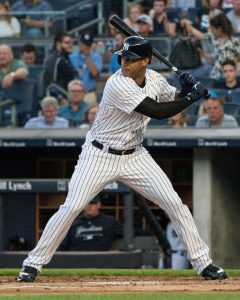
Upon landing Hicks – who was then 26 years old – Yankees general manager Brian Cashman declared, “We think Aaron Hicks is an everyday player.”
Cashman’s assessment looked wildly optimistic in Hicks’ first season in the Bronx, though, as he endured a horrid campaign in which he managed minus-0.2 fWAR in 361 PA. While Hicks was fine in the field, his offensive production plummeted. Among MLB hitters who racked up at least 350 PA, Hicks logged the eighth-worst wRC+ (64), batting a weak .217/.281/.336. And when he did get on base, Hicks swiped just three bags on seven tries.
To Hicks’ credit, he put 2016 way behind him in the ensuing season, even though he wasn’t a regular at the outset of the campaign. All told, Hicks slashed an outstanding .266/.372/.475 (126 wRC+) and offered easily above-average production against both right- and left-handed pitchers. He also registered solid power numbers (15 homers, .209 ISO) with appealing walk and strikeout rates (14.1 percent BB, 18.6 percent K), and chipped in 10 steals on 15 attempts. With another season of high-end defense factored in, the big-armed Hicks was worth 3.3 fWAR over 361 PA. The only problem? He went on the disabled list with an oblique strain on two occasions, thus limiting him to 88 games.
Until 2018, Hicks only had one 100-game season on his resume. However, Hicks is now coming off a career-best 137-game, 581-PA campaign in which he truly emerged as the full-time player Cashman thought the Yankees were getting when they landed him. Hicks essentially matched his 2017 rates and continued to fare nicely against both righties and lefties, but he did so over a much larger sample en route to a 4.9-fWAR showing. While Hicks’ slash line dropped a tad to .248/.366/.467, his wRC+ increased to 127. Statcast data backs up that production, as there was little difference between Hicks’ weighted on-base average (.360) and his xwOBA (.365). The 29-year-old helped the Yankees’ cause by mashing 27 homers with a .219 ISO, putting up terrific K/BB numbers (15.5 percent and 19.1 percent, respectively), stealing 11 of 13 bags and, per FanGraphs, contributing elite base running in general.
If there’s one statistical gripe with Hicks’ season, it’s that the advanced metrics didn’t particularly like his defense. After he totaled a whopping 15 DRS – including 12 in center – in 2017, he fell to minus-3 this past season. UZR (0.7) and Outs Above Average (minus-3) weren’t all that bullish on Hicks’ work, either. No matter, Hicks was still one of the game’s most valuable outfielders in 2018, and if the Yankees expect that to continue, they may try to lock him up in the coming months.
The question: How much might it cost New York to extend Hicks? Although several outfielders have signed extensions over the past couple years, none are that comparable to Hicks in production and/or his closeness to free agency. One possible exception is Charlie Blackmon, who – like Hicks now – had five-plus years of service time and was only a season away from free agency at this time a year ago. Blackmon ended up inking a five-year, $94MM guarantee to stay in Colorado last spring, when he had just begun his age-31/32 season. While Blackmon garnered that contract as a player who was a couple years older than Hicks is now, the former also offered a more accomplished track record. Blackmon was a two-time All-Star, a two-time Silver Slugger recipient, an NL batting champion and a past MVP candidate when the Rockies ponied up for him. Hicks doesn’t have any such honors on his resume.
If Blackmon’s deal is out of reach for Hicks, perhaps one of the recent big-money contracts given to a center fielder in free agency would be more realistic. A pair of center fielders – the Cardinals’ Dexter Fowler and the Brewers’ Lorenzo Cain – scored five-year contracts worth $82.5MM and $85MM, respectively, on the open market over the previous two winters. Fowler inked his pact on the brink of his age-31 season, while Cain signed his as a soon-to-be 32-year-old. Age is on Hicks’ side in both cases, then; however, like Blackmon, both Fowler and Cain had more established track records than Hicks when they signed, and it helped that they had multiple teams bidding on them in free agency.
While the comparisons are imperfect, Hicks’ reps at CAA Sports likely wouldn’t be out of their depth to push for an extension in the neighborhood of the contracts Fowler and Cain received. He still has another full season to play before he turns 30, after all, and is fresh off back-to-back years in which he was among the game’s premier center fielders. Whether the Yankees will consider an extension for Hicks this offseason is unclear, especially considering fellow outfielders Aaron Judge, Giancarlo Stanton and Clint Frazier are under long-term control, and they may pursue Bryce Harper in free agency. For now, Hicks is projected to play 2019 for $6.2MM – a bargain in light of what he brought to the table from 2017-18.
Photo courtesy of USA Today Sports Images.
Red Sox Notes: Betts, JDM, Wright, Kimbrel
The latest on the American League champions:
- When the Red Sox go on the road to face the Dodgers in the World Series, they could feature an interesting defensive alignment. Speaking with reporters (including Jason Mastrodonato of the Boston Herald) on Saturday, Cora revealed that the Red Sox are considering deploying right fielder Mookie Betts at second base in Los Angeles, where they won’t have the luxury of using a designated hitter. In doing so, the Red Sox would keep DH/outfielder J.D. Martinez‘s elite bat in the lineup. No matter what, Martinez is going to play, though the team’s not giving any thought to putting him at first base, Mastrodonato reports. Martinez has next to no experience at first, whereas Betts played plenty of second base as a prospect and most recently lined up at the keystone 14 times as a major league rookie in 2014.
- Left knee issues have shelved Red Sox right-hander Steven Wright since Sept. 29, but the knuckleballer hasn’t ruled out a World Series return, per Mastrodonato. Although the Red Sox had to remove him from their ALDS roster when the playoffs began two weeks ago, Wright has been throwing since then, and he issued a fairly encouraging update Saturday. “My arm and body feels really good, just a matter of can my knee withstand the pressure of throwing off a mound consistently?” Wright said. He’ll “go through a few tests” before the Red Sox decide whether to include him on their World Series roster, according to Cora. Wright threw a short simulated game Sunday to help determine the status of his knee, Pete Abraham of the Boston Globe tweets. The 34-year-old was an asset out of the Red Sox’s bullpen during the regular season, when he notched a 1.52 ERA and held opposing hitters to a .191/.303/.314 line.
- It hasn’t been a banner postseason for all-world Red Sox closer Craig Kimbrel, who has allowed at least one earned run in four of five appearances. However, Kimbrel may have begun a turnaround in his most recent outing Thursday, when he threw a scoreless, hitless frame with two strikeouts and a walk to close out the Astros in the ALCS. Kimbrel revealed afterward that he had been tipping his pitches – something former closer Eric Gagne first noticed while watching from home, Ben Harris of The Athletic writes (subscription required). “There’s quite a few people, but actually Eric Gagne texted me last night,” Kimbrel said. “He’s good friends with AC (Alex Cora), and he texted me and gave me some advice.” As part of an interesting piece that’s worth checking out, Harris goes on to break down what Kimbrel was doing wrong and how he fixed it.
Joe Girardi Out Of Running For Rangers’ Managerial Job
12:49pm: The Rangers actually informed Girardi that “they were going in another direction,” Heyman tweets.
9:54am: Joe Girardi has withdrawn from the Rangers’ managerial search, as Jon Heyman of Fancred reports and as Jeff Wilson of the Star-Telgram first suggested. As of now, it appears Girardi will work as a television analyst for the second straight season in 2019.
Girardi previously exited the derby to become the Reds’ next manager, which helped lead to David Bell’s hiring on Sunday. Bell was also a candidate with the Rangers, who are likely now down to six choices for their managerial job, per TR Sullivan of MLB.com. Aside from Girardi and Bell, the Rangers have reportedly discussed the position with Rocco Baldelli, Don Wakamatsu, Jayce Tingler, Brandon Hyde, Dusty Wathan and Joe Espada.
On paper, Girardi would have been an odd fit for either Cincinnati or Texas, given that neither team looks like a short-term contender. The 54-year-old most recently managed the Yankees from 2008-17, a decade-long span in which they went 910-710 in the regular season, earned eight playoff berths and won a World Series title (2009).
Angels Hire Brad Ausmus As Manager
12:29pm: Ausmus received a three-year contract, according to Maria Guardado of MLB.com.
12:02pm: The Angels announced that they’ve named Brad Ausmus their new manager. Ausmus spent the 2018 season working as a special assistant to Angels general manager Billy Eppler.
“Over the past few weeks, our baseball operations personnel sat down with numerous highly-qualified and impressive candidates for our managerial role. We are thankful to all of them for their time and effort throughout the process,” Eppler stated. “Ultimately, Brad’s balance of connectivity, communication and leadership skills as well as his understanding of evolving strategies and probabilistic approach to decision making led us to him. We believe his knowledge, drive and growth-mindset will allow him to integrate seamlessly with our players and staff and will be pivotal in advancing our culture and moving us toward our goals as an organization.”
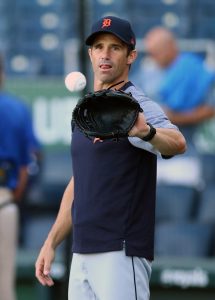
The 49-year-old Ausmus – a former major league catcher – is taking over for another ex-MLB backstop, Mike Scioscia. Now an Angels icon, Scioscia took the helm in 2000 and finally ended his reign when he stepped down less than a month ago.
In the wake of Scioscia’s exit, the Angels reportedly interviewed 10 managerial candidates; at one point in the process, it appeared the job would go to their Triple-A skipper, Eric Chavez. In the end, though, the Angels opted for someone with major league managerial experience in Ausmus, who oversaw Detroit’s dugout from 2014-17. The Tigers went 314-332 with one playoff berth and two seasons of at least 86 wins during that period.
In shifting from the Angels’ front office to their dugout, Ausmus will hope to turn around a disappointing situation in Anaheim. Even though the Angels have the game’s best player, center fielder Mike Trout, they’ve finished under .500 three years in a row and haven’t gone to the playoffs since 2014. The club hasn’t even won a postseason game since Trout’s remarkable career began in 2011. A rash of injuries helped undermine the Angels’ efforts in 2018, of course, though it still would’ve been a tall task for a healthy LA team to make the postseason in the AL West – a division which included two playoff teams (the Astros and the Athletics) and the 89-win Mariners.
At 80-82, the Angels ultimately finished 23 games behind the Astros and 17 back of the A’s, giving them plenty of ground to make up during the offseason. With Trout, Andrelton Simmons, Shohei Ohtani and Justin Upton leading their offense, it seems the Angels will mostly focus on improving their pitching staff over the winter. The starting staff is in desperate need of help, especially considering Ohtani underwent Tommy John surgery on Oct. 1 and probably won’t pitch next season.
Photo courtesy of USA Today Sports Images.
Reds Hire David Bell As Manager
The Reds have hired Giants vice president of player development David Bell as their manager, per a team announcement. Cincinnati awarded Bell a three-year contract with a club option for 2022.
The move represents a homecoming for the 46-year-old Bell, a Cincinnati native with deep ties to the organization. Bell’s grandfather (Gus Bell), father (Buddy Bell) and brother (Mike Bell) all played for the Reds, and Buddy is a former Reds coach who now works in their front office. David Bell didn’t play for the club during his long career as a major league infielder, but he did manage in its minor league system from 2008-12, running its Double-A team for three years and its Triple-A squad for one.
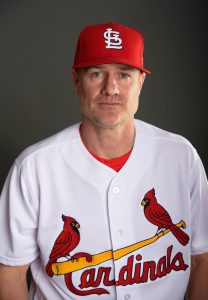
Bell hasn’t garnered any managerial experience at the big league level, though he did work in multiple capacities with a few organizations in between his Reds stints. He was a third base coach with the Cubs in 2012 before serving on then-manager Mike Matheny’s staff in St. Louis from 2013-17. Bell first worked as the Cardinals’ assistant hitting coach before becoming Matheny’s bench coach. He left last fall to join the Giants, whose farm system he wanted to modernize.
“There’s incredible information, and it has to factor into everything we do,” Bell explained to Henry Schulman of the San Francisco Chronicle last March. “It’s there. If we don’t access, utilize and implement that information, we’re going to fall behind.”
While it’s unclear how beneficial Bell was to the Giants’ farm system during his brief time with them, his modern outlook helped him land on other teams’ radars this month before the Reds hired him. Bell interviewed for both the Blue Jays’ and Rangers’ vacant managerial posts prior to joining the Reds, who counted him among roughly a dozen candidates for their job. Bell quickly emerged as the favorite for the position, beating out other serious candidates in Brad Ausmus and Rocco Baldelli. It helped Bell’s cause that Joe Girardi withdrew from contention Friday in a move that “surprised” Cincinnati, Jon Heyman of Fancred tweets.
As he begins the next phase of his life in baseball, Bell will be tasked with helping to turn around a Reds team that hasn’t earned a playoff berth or even finished .500 since 2013. While the Reds showed flashes in 2018 under interim manager Jim Riggleman, who took over for the fired Bryan Price, they still ended up with fewer than 70 victories (67) for the fifth consecutive season. There is some enviable position player talent on hand, though, especially in the infield – where the Reds boast first baseman/franchise cornerstone Joey Votto, second baseman Scooter Gennett, shortstop Jose Peraza and third baseman Eugenio Suarez. The club’s pitching staff is a problem, on the other hand, but there are at least a few potential building blocks in the fold in starters Luis Castillo and Anthony DeSclafani and closer Raisel Iglesias.
It’s likely the Reds, who plan to increase payroll in 2019, will spend the offseason trying to improve their pitching staff. Regardless, the Bell-led Reds will be in for another tough test next year in the NL Central, which featured four plus-.500 clubs and two playoff teams in 2018.
Photo courtesy of USA Today Sports Images.
Poll: Who Will Win The World Series?
As sports fans know, Los Angeles and Boston have battled for NBA supremacy on several occasions. The two cities will square off again beginning Tuesday, but instead of the Lakers and Celtics fighting for a championship, it’ll be the Dodgers and Red Sox vying for a World Series title. At the outset of the 2018 MLB season, it wouldn’t have been a surprise to see either of these teams in this position. Nearly seven months later, however, it’s fair to say the clubs took wildly different paths to arrive at this point.
The Red Sox were dominant from the jump, winning 17 of their first 19 games, and they didn’t let up much en route to a league-best 108-54 record. The club finished with the sport’s second-best run differential in the process (plus-229), thanks largely to a Mookie Betts– and J.D. Martinez-led attack which crossed home plate more than any other offense. Despite being an AL MVP front-runner, Betts’ production has fallen flat this postseason (.578 OPS in 44 plate appearances), making it all the more impressive that the Red Sox went 7-2 against the majors’ only other 100-win teams – the Yankees and Astros – in the first two rounds of the playoffs.
Earning a playoff berth was never in doubt for the Red Sox, but the Dodgers were in peril at multiple points during the regular season. The team was supposed to roll after winning an NL pennant last year and losing a seven-game classic to the Astros in the World Series. Instead, the Dodgers began the season in catastrophic fashion, winning just 16 of their first 42 games – a stretch in which they saw star shortstop Corey Seager undergo season-ending Tommy John surgery. Things were so dire for the club in mid-May that I polled MLBTR readers on whether the Dodgers would even make the playoffs. Nearly 65 percent of voters said they wouldn’t. But manager Dave Roberts never wavered during the Dodgers’ horrific start, declaring: “When it’s all said and done, the Dodgers will be at the top of the division.”
The Dodgers ultimately did rally to win the NL West for a sixth straight year, but they were in third place in the division as late as September. They also needed to win a Game 163 versus the Rockies to settle it, and after cruising past the Braves in a four-game NLDS, they went the distance against the Brewers in a seven-game NLCS. To this point, the Dodgers own a 99-75 record (92-71 during the regular season), which pales in comparison to the Red Sox’s mark. But they did run away with the NL’s regular-season run differential title (plus-194), giving them a 102-61 Pythagorean record which is right in line with Boston’s (103-59). They also led the majors in position player fWAR and wRC+, and topped the NL in pitcher fWAR and runs scored. All of those numbers help illustrate that the Dodgers are where they belong, despite their trying regular season.
Looking beyond the stats, this series has no shortage of interesting storylines. It begins in the dugout, with Roberts (an ex-Boston player) versus rookie manager Alex Cora, a third-round draft pick of the Dodgers in 1996 who was a member of the team from ’98-2004. Both managers had signature moments in those teams’ uniforms – Roberts served as a playoff hero for the curse-breaking Red Sox in 2004, the same year Cora capped off an 18-pitch at-bat with a home run.
On the field, a pair of the most dominant lefties ever – Boston’s Chris Sale and LA’s Clayton Kershaw – could match up on multiple occasions, and they’re supported by bullpens that feature all-time great closers (the Red Sox’s Craig Kimbrel and the Dodgers’ Kenley Jansen). Those pitchers will contend with offenses which possess transcendent hitters, including Betts and Martinez on the Boston side and LA’s Justin Turner and Manny Machado – a longtime Oriole who has spent almost all of his career in the Red Sox’s division. Machado, whom the Dodgers acquired over the summer in response to Seager’s injury, hasn’t hidden his disdain for the Red Sox in the past.
With Machado on the verge of becoming one of the most sought-after free agents ever, this series may be his last in a Dodgers uniform. As his Dodgers tenure potentially winds down, perhaps Machado will help deliver the franchise’s first World Series title since 1988. On the other side, the Red Sox will attempt to take home their fourth championship since Roberts contributed to their cause a decade and a half ago. Which team do you expect to end up as the last one standing in 2018?
(poll link for app users)
Who will win the World Series?
-
Red Sox 67% (9,445)
-
Dodgers 33% (4,609)
Total votes: 14,054