
Offseason Outlook: Oakland Athletics
MLBTR is publishing Offseason Outlooks for all 30 teams. Click here to read the other entries in this series.
The 2018 season was a resounding success for the Athletics, who entered the campaign as underdogs but ended it as one of the majors’ premier teams. Despite opening the season with baseball’s lowest payroll, the Athletics notched the sport’s fourth-most wins (97) and earned their first playoff berth since 2014. The postseason was a one-off for the Athletics, whom the Yankees bounced in the American League wild-card game, but it’s obvious the franchise came a long way this past year. Now, with the A’s looking to build an even better club for 2019, they’re set to increase payroll, as just-extended executive vice president Billy Beane announced this week. Of course, with the A’s still at least a few years away from potentially opening a new ballpark in Oakland, it may be unrealistic to expect their payroll to make a substantial near-term jump.
Guaranteed Contracts
- Stephen Piscotty, OF: $29.5MM through 2022 (includes buyout of 2023 club option)
- Yusmeiro Petit, RP: $6.5MM through 2019 (includes buyout of 2020 club option)
Arbitration-Eligible Players (projections via MLBTR contributor Matt Swartz)
- Khris Davis – $18.1MM
- Mike Fiers – $9.7MM
- Marcus Semien – $6.6MM
- Blake Treinen – $5.8MM
- Sean Manaea – $3.8MM
- Kendall Graveman – $2.5MM
- Cory Gearrin – $2.4MM
- Liam Hendriks – $2.1MM
- Mark Canha – $2.1MM
- Chris Bassitt – $1.6MM
- Ryan Buchter – $1.3MM
- Josh Phegley – $1.2MM
- Ryan Dull – $900K
- Non-tender candidates: Graveman, Gearrin, Hendriks, Phegley, Dull
Contract Options
- Fernando Rodney, RP: Exercised $5.25MM club option for 2019
Free Agents
- Jonathan Lucroy, Jed Lowrie, Matt Joyce, Trevor Cahill, Jeurys Familia, Shawn Kelley, Brett Anderson, Edwin Jackson
[Athletics Offseason Depth Chart | Athletics Payroll Information]
Here’s a statement which would have seemed believable in, say, 2010 instead of 2018: A team which saw Trevor Cahill, Brett Anderson and Edwin Jackson total at least 17 starts apiece made the playoffs. Amazingly, Oakland accomplished that this past season after grabbing Cahill, Anderson and Jackson off the scrapheap. All three of those pitchers’ halcyon days were supposedly long gone, but each paid dividends for an A’s team whose starting staff dealt with a horrific rash of injuries, including to No. 1 option Sean Manaea and promising youngsters A.J. Puk and Jharel Cotton, among many others. Manaea easily led the A’s in innings (160 2/3) and ERA (3.59), but his season ended Aug. 24 because of a shoulder injury/surgery that could keep him out for all of 2019. Meanwhile, both Puk and Cotton missed the entire season after undergoing Tommy John surgery, and they’re also likely to sit out some portion of next year.
Because of the injuries to Manaea, Puk and Cotton, not to mention the fact that Cahill, Anderson and Jackson are now free agents, questions abound in the A’s rotation. Unsurprisingly, it’s a major area of concern for Beane, who said this week that he and general manager David Forst – who, along with manager Bob Melvin, also just received an extension – want to “create a starting pitching group that Bob can rely on every day.”
Piecing together a reliable starting group was an extremely difficult task for the A’s in 2018, which led them to deploy the “opener” on several occasions, including in their playoff loss to the Yankees. Veteran reliever Liam Hendriks was the main pick in such situations, totaling eight “starts” in September. With the exception of a subpar playoff showing, Hendriks pitched brilliantly in those short outings, thereby salvaging his season just a couple months after the A’s cut him from their 40-man roster. The 29-year-old is now among the A’s arbitration-eligible players, and it’s unclear whether they’ll retain him or how they’ll utilize Hendriks if they keep him. Whether it’s Hendriks or another pitcher(s), Oakland could take a page out of the 2018 Rays’ playbook and use an opener on a regular basis for the majority of the season, which would slightly lessen the need to acquire traditional starting pitchers over the winter.
Of course, even if the A’s do continue rolling with that unorthodox strategy next season, they’d still need more help. After all, the unspectacular Mike Fiers – acquired from Detroit in August – looks like the most proven healthy starter they have. The 33-year-old did good work during his two-month stint in Oakland in 2018, but he’s more of a mid- to back-end arm than a front-line type. Fiers also won’t be cheap in 2019, but given the uncertainty throughout the A’s rotation, he seems more likely than not to stick with the club.
Beyond Fiers, Oakland’s top healthy options look to be Daniel Mengden, Frankie Montas and Chris Bassitt. All three were reasonably effective last season, but each carry limited track records in the majors. Lefty Jesus Luzardo has never appeared in the bigs, on the other hand, but the 21-year-old is one of Oakland’s best hopes to find an ace from within. While Luzardo has only combined for 94 2/3 innings above the Single-A level, he’s regarded as a stud prospect, and Forst recently suggested he could vie for a starting spot with the A’s as soon as spring training.
No matter what happens with Luzardo in camp, it’s clear the A’s will have to augment their rotation from the outside prior to then. The question is whether they have the financial flexibility to make headline-grabbing moves. Including arbitration projections, the A’s are already looking at an Opening Day payroll of more than $86MM, Jason Martinez of MLBTR and Roster Resource estimates. They began last season just under $66MM, and they’ve only gone past $86MM once (in 2016). The A’s could create spending room by non-tendering some players and perhaps extending expensive designated hitter Khris Davis in order to lower his 2019 salary. However, even if those scenarios come to fruition, it’s tough to envision them being in position to splurge on anyone.
The good news is that Beane and Forst proved they could bargain hunt on the starting pitching market recently with the additions of Cahill, Anderson and Jackson (plus Rich Hill in 2016). And looking at this year’s class of free-agent starters, there’s no shortage of available veterans who a.) have been successful and b.) won’t break the bank. A few of the many names include CC Sabathia (a Bay Area native), Lance Lynn, Derek Holland (Bay Area ties from spending 2018 with the Giants), Ervin Santana, Clay Buchholz and former Athletics Gio Gonzalez, Drew Pomeranz and Tyson Ross. On paper, nobody from that group is all that exciting, but they could be effective, affordable options for Oakland to pursue in free agency. Alternatively, the A’s may seek higher-upside types via trade.
Even though he bombed as a member of the Yankees, who acquired him from the Athletics in July 2017, a reunion with Sonny Gray could make sense. The Yankees are all but guaranteed to sell low on the soon-to-be 29-year-old Gray, who pitched well outside of New York in 2018 and who’s projected to earn $9.1MM next season. If the A’s want to go bigger than Gray, perhaps they’ll make a push for a member of the Indians’ stellar trio of Corey Kluber, Carlos Carrasco and Trevor Bauer. Cleveland will reportedly listen to offers for each of those hurlers, but because all three are fantastic and relatively inexpensive, the Tribe would demand bounties for any of them. With that in mind, it’s worth noting the A’s farm system sits a middle-of-the-pack 15th in Baseball America’s latest rankings. They probably wouldn’t be in the catbird seat with regard to acquiring any of the Indians’ aces, then.
There are fewer pressing issues elsewhere on the A’s roster, but they aren’t devoid of concerns. While most of the A’s terrific, Blake Treinen-led bullpen remains intact, they could lose two important pieces from it in Jeurys Familia and Shawn Kelley, who are now free agents. Meantime, on the position player side, their biggest questions are at catcher and second base, where their 2018 starters are also free agents.
At the keystone, Jed Lowrie has been an extension target for the A’s since at least the summer. Oakland wasn’t able to lock the 34-year-old up before the market opened, but it still seems to want him back. Considering Lowrie was among the majors’ most valuable second basemen from 2017-18, that’s not surprising. But the A’s will have to consider his age and injury history, not to mention the presence of intriguing youngster Franklin Barreto, when determining how much they’re willing to pay Lowrie. In the event Lowrie walks, Oakland could simply turn second over to the soon-to-be 23-year-old Barreto – who, despite posting palatable production in the majors and minors, struck out and walked at untenable rates from 2017-18 – or add one of the many veteran stopgaps available in free agency as a fallback.
The A’s took the veteran stopgap route behind the plate an offseason ago, signing Jonathan Lucroy to a one-year, $6.5MM deal. Lucroy’s a free agent again as a result, and it’s possible the A’s will bring him back on another short-term agreement. Lucroy, 32, is nowhere near the player he used to be, though he seemed to fit in nicely with the Athletics in 2018. Aside from Yasmani Grandal and Wilson Ramos, each of whom should be out of the A’s price range, free agency’s lacking in game-changing backstops. That could lead the A’s to at least kick the tires on baseball’s best catcher from 2018, J.T. Realmuto, whom the Marlins figure to trade this winter. However, as is the case with the aforementioned Indians starters, acquiring Realmuto would mean surrendering a haul. As such, the A’s may be more inclined to go with a Lucroy type and continue waiting for 24-year-old catching prospect Sean Murphy, who could arrive in the majors sometime next season.
While catcher and second base are clearly the A’s biggest problem areas among their position players, there’s an argument that they should also add to their outfield. However, they’re already crowded out there, and most of the returnees acquitted themselves well in 2018.
The A’s most established outfielder is right fielder Stephen Piscotty, one of their shrewdest acquisitions from last winter. Center fielder Ramon Laureano was also an impact pickup from an offseason ago, but his addition came with much less fanfare than Piscotty’s. Laureano joined the A’s via waivers from the division-rival Astros in November, and he surprisingly went on to emerge as a standout during a 176-plate appearance campaign. Along with playing tremendous defense, the righty-swinger held his own against same-handed pitchers and lefties alike, creating hope that he can be an everyday starter for the long haul. The unheralded trio of Mark Canha, Chad Pinder and Nick Martini also proved to be tough outs, and the A’s may be confident they’ll deftly hold down left field in 2019. There’s also Dustin Fowler, whom the A’s acquired in the Gray deal. Fowler, 23, had a difficult rookie year, though in fairness, it was his first action since he suffered a brutal knee injury while with the Yankees in 2017.
Evidenced in part by their outfield, there should once again be plenty to like about the A’s cast of position players in 2019. Superstar third baseman Matt Chapman – whom the A’s may try to extend – will continue to be their franchise player, while Davis, first baseman Matt Olson, shortstop Marcus Semien and at least a couple outfielders represent quality complements who remain on hand. The bullpen also continues to look formidable, leaving the A’s shaky starting rotation as their most significant issue this offseason. Between the unit’s injuries, its potential free-agent departures and the A’s payroll constraints, Beane and Forst have serious work ahead to turn the staff into a strength prior to next season. If they’re able to achieve that feat, it would go a long way toward helping the A’s stay among baseball’s elite in 2019.
Poll: Bryce Harper Vs. Manny Machado
With free agency now open across Major League Baseball, it’s only a matter of time before we see a pair of players receive the richest contracts in the history of the sport. Outfielder Bryce Harper and shortstop/third baseman Manny Machado, two in-their-prime, Hall of Fame-level talents, figure to dominate headlines as long as they’re unsigned. It seems inevitable that both players will reel in contracts in excess of $300MM, and that may be a conservative estimate. Indeed, MLBTR’s Tim Dierkes, Steve Adams and Jeff Todd project Harper to land a 14-year, $420MM pact and Machado to sign a 13-year, $390MM deal. There would be substantial risk in either of those contracts, needless to say, but it’s not every winter that a couple 26-year-old superstars reach free agency.
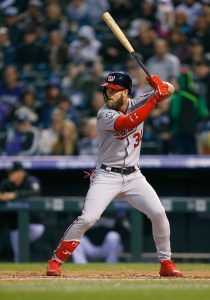
For a little while longer, the richest free-agent contract in major league history will belong to now-retired third baseman Alex Rodriguez, whom the Yankees re-signed to a 10-year, $275MM accord after the 2007 season. However, a current Yankee, outfielder Giancarlo Stanton, owns the largest deal ever. He signed that contract – a 13-year, $325MM extension – in 2014 as a member of the typically small-spending Marlins, whose new ownership group felt it had no choice but to get Stanton’s money off the books last winter on the heels of an NL MVP-winning season.
It’s now conceivable that the Yankees will sign at least one of Harper or Machado to join Stanton in their lineup, but their interest in/need for either is unclear. Even if the Yankees do chase one or both of those players, they’ll face quite a bit of competition from other teams capable of handing out mega-deals.
Like Stanton, Harper already has an NL MVP on his resume, having won the award in 2015. That still easily ranks as Harper’s best season, but the longtime National has starred in nearly every campaign since he made his much-anticipated debut as a 19-year-old in 2012. Dating back to then, the lefty-swinging Harper ranks 10th in the majors in wRC+ (140, meaning he has been 40 percent better than the average offensive player) and 12th in position player fWAR (30.7, good for 4.6 per 600 plate appearance).
If there are any legitimate knocks on Harper, they may be his defense and injury history. Regarding the former, Harper ranked second to last among all major leaguers this past season in both Defensive Runs Saved (minus-26) and Ultimate Zone Rating (minus-14.4). The defensive struggles he displayed in 2018 may be a reason to worry or simply a fluke, as the metrics viewed Harper as a competent outfielder during his previous seasons. Although Harper didn’t hold his own with the glove in ’18, he did appear in a career-high 159 games. The durability he showed off last season couldn’t have come at a better time for Harper, who missed 51 games in 2017 and whom injuries have limited to fewer than 120 contests two other times.
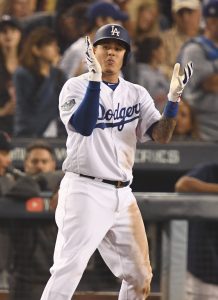
With the exception of 2014, in which he only played 82 games, availability hasn’t been a problem for Machado. Since 2013, his first full season, Machado has racked up at least 156 appearances on five occasions. He played 162 games this past year, which he divided between the lowly Orioles and the NL-winning Dodgers, and turned in his third campaign with at least 6.0 fWAR.
Going back to ’13, Machado sits seventh among position players in fWAR (29.0, which equals 4.5 per 600 PA), though he hasn’t achieved his value in quite the same way as Harper. From 2013-18, 47 players combined for a higher wRC+ than the righty-hitting Machado’s 121, though that’s still an outstanding number. Furthermore, he happens to be coming off a personal-best offensive campaign (141 wRC+) in which he belted 30-plus home runs (37) for the fourth straight year.
There’s little doubt Machado will continue to be a formidable offensive player in the coming years, but whether he’ll serve as a defensive force could hinge on his position. Machado has been an all-world third baseman throughout his career, yet he prefers shortstop – his primary position in 2018, when he logged minus-13 DRS and minus-6.5 UZR.
The biggest concern with Machado, though, may come down to character. He didn’t leave teams or fans with the best impression during this fall’s postseason, in which he was accused of being a dirty player. He also came under fire in the playoffs for a lack of hustle, including during the Dodgers’ World Series loss to the Red Sox, and admitted to Ken Rosenthal of The Athletic in mid-October: “Obviously I’m not going to change, I’m not the type of player that’s going to be ‘Johnny Hustle,’ and run down the line and slide to first base and … you know, whatever can happen. That’s just not my personality, that’s not my cup of tea, that’s not who I am.”
That’s not the mindset a team wants from any of its players, let alone a face-of-the-franchise type. Nevertheless, it’s unlikely to deter some club from awarding the incredibly gifted Machado one of the two biggest pacts in baseball history. For better or worse, he and Harper are primed to occupy a massive chunk of their next teams’ payrolls for several years to come. The question is: Which of the two do you believe has a better chance to live up to his next contract?
Who has a better chance to live up to his next deal?
-
Bryce Harper 63% (14,575)
-
Manny Machado 37% (8,668)
Total votes: 23,243
Photos courtesy of USA Today Sports Images.
Cubs Still Deciding Addison Russell’s Fate
Shortstop Addison Russell received a 40-game suspension last month for a violation of Major League Baseball’s domestic violence policy, but that won’t necessarily conclude his tenure with the Cubs. While it appeared last month that the Cubs would indeed cut ties with Russell, they haven’t yet made a decision on his future, Patrick Mooney of The Athletic reports (subscription required).
According to Mooney, Chicago’s currently doing its “own due diligence, outreach and additional research” on Russell, who earned a suspension a couple weeks after his ex-wife, Melisa Reidy, alleged that he abused her verbally, emotionally and physically during their marriage. Even though Russell called the allegations “completely false” when they were leveled against him in late September, he opted against appealing MLB’s punishment. As a result of that 40-game ban, which began Sept. 21, he’ll sit out the first month of the 2019 season.
In the wake of his suspension, the 24-year-old Russell looked like either a trade or a non-tender candidate for the Cubs this offseason. That may not end up being the case, but if Chicago does non-tender him, it would need to do so by the Nov. 30 deadline. As of now, Russell’s projected to earn $4.3MM via arbitration for 2019. Considering Russell has been a capable starter for most of his career and the Cubs are dealing with a lack of financial flexibility, that price tag looks palatable from the team’s perspective.
Regardless of his salary, retaining Russell would understandably open the Cubs up to harsh criticism – especially after president Theo Epstein offered his support to the victim last month and said that “we all have an obligation to be part of the solution” with respect to domestic violence issues. For the Cubs, being part of the solution in this case could mean keeping Russell and trying to help rehabilitate him, as Mooney writes that he may benefit from the team’s “overall structure” – which includes a mental skills department and the “progressive” Epstein.
Baseball Blogs Weigh In: Trout, Arenado, Marwin, Realmuto
This week in baseball blogs…
- The 3rd Man In argues that the Angels must trade Mike Trout this offseason.
- Rox Pile comes up with a few trades centering on Nolan Arenado.
- Chin Music Baseball notes that Marwin Gonzalez‘s trip to free agency will be an intriguing one.
- NatsGM (podcast) talks with agent Joshua Kusnick, discussing Brodie Van Wagenen and other topics.
- The Point of Pittsburgh looks at how free agency relates to behavioral economics.
- Call to the Pen (links: 1, 2) asks who will acquire J.T. Realmuto, and takes a look at closers the Phillies could acquire.
- Reviewing the Brew wonders if the Brewers could land Realmuto.
- The Sports Tank pays tribute to the world champion Red Sox.
- Jays From the Couch is encouraged by superstar prospect Vladimir Guerrero Jr.’s defensive progress.
- Angels Avenue analyzes the 2018 performance of the Halos’ rotation and looks ahead to 2019.
- MLB & Fantasy Baseball Analyzed has an offseason plan for the Yankees.
- Motor City Bengals offers an early projection of the Tigers’ 25-man roster.
- Tomahawk Take lists five free agents the Braves should pursue.
- Sox On 35th lists a few reasons for optimism regarding Chicago’s rebuild.
- Everything Bluebirds believes the Blue Jays did right by Steve Pearce.
- Stats Swipe argues that the Mets are the most dysfunctional franchise in MLB.
- East Village Times wants the Padres to go after Blue Jays righty Aaron Sanchez.
- PhilliesNation examines Chase Utley‘s Hall of Fame case.
- The Giants Cove explains that San Francisco’s next head of baseball operations will walk into a difficult situation.
- Mets Daddy names the worst free-agent signings in club history.
- Notes from the Sally previews the 2019 Asheville Tourists, the Rockies’ South Atlantic League club.
- The Runner Sports (links: 1, 2) evaluates Joe Mauer‘s playoff legacy, and profiles top Astros pitching prospect Forrest Whitley.
- Friars On Base lists players the Padres could jettison from their 40-man roster this offseason.
- The K Zone delves into Gabe Kapler‘s history.
- Foul Territory (podcast) discusses the World Series, Brett Gardner and Realmuto, among other topics.
Submissions: ZachBBWI @gmail.com
Quick Hits: Arenado, White Sox, Moncada, Rangers
Speaking Friday with reporters – including Kyle Newman of the Denver Post – general manager Jeff Bridich revealed that the Rockies and Nolan Arenado have had “honest” discussions about a contract extension over the past couple years. Bridich added that he expects the two sides to continue talking in the coming months, and suggested the team’s unlikely to trade the superstar third baseman this offseason. “There’s not a perfect timeline or a specific timeline, but we’d love to have him here, and he knows that,” Bridich said. “We’ll see what happens … We expect him to be on our team next year.” Arenado has been a speculative trade candidate because he’s facing his last year of team control in 2019, when he’s projected to rake in a whopping $26.1MM via arbitration. But the 27-year-old is integral to the Rockies, who have earned two straight playoff berths and, with Arenado’s help in 2019, figure to aim for another postseason trip in what could be his last hurrah with the club.
Here’s more from around the majors:
- Yoan Moncada has called second base home since the White Sox acquired him from the Red Sox in 2016, but it’s possible he’ll head to a new position next season. General manager Rick Hahn said Friday (via Daryl Van Schouwen of the Chicag Sun-Times) that Moncada’s open to switching spots, “but we’re going to wait to see how this offseason plays out before we fully commit to any reconfiguring of the infield. It’s a possibility and if it were to happen we’d likely firm that up before we head to spring training.” Shortstop, third base and even center field have come up in the past as potential long-term landing spots for Moncada, whose athleticism has been a key selling point since his days as a star prospect. Now, if Chicago’s truly considering moving the 23-year-old Moncada off second, it could help inform its offseason plans.
- In addition to discussing Moncada’s status, Hahn highlighted which areas the White Sox will try to upgrade this winter. “We need to augment both the starting rotation and the bullpen,” he said (per Van Schouwen), though he cautioned that the White Sox must keep their “long-term focus” in mind. At the moment, Chicago has the payroll room to make substantial upgrades, but it’s also coming off a 62-win season – its sixth straight sub-.500 campaign. As such, it’s unclear just how aggressive the White Sox will be this winter, but Hahn noted that he hasn’t ruled out pushing for contention in 2019. “It’s not unintentional having the flexibility we enjoy going forward,’’ Hahn said. “That was a secondary goal of the rebuild, to make sure we had flexibility and economic strength when the time was right to spend and add on to what we’ve accumulated. Whether we use it this offseason or next we’ll see.’’
- The Rangers addressed their rotation Friday by acquiring left-hander Drew Smyly from the Cubs, though Texas still has plenty of work remaining to bolster its starting staff for 2019 and beyond. With that in mind, Evan Grant of the Dallas Morning News examines a dozen free-agent pitchers the Rangers could target this offseason. Among the candidates, longtime Angels right-hander Garrett Richards stands out as a “perfect fit,” opines Grant, who argues the Rangers should offer him a two- or three-year contract with incentives. Given that Richards underwent Tommy John surgery in July, he might not be able to contribute at all in 2019. However, that’s not necessarily a problem for the Rangers because they’re unlikely to win next season, Grant notes, adding that Richards may be able to help them in 2020 – when they could be closer to contention.
NL Notes: Reds, Braves, Teheran, Markakis
Reds minor league right-hander Jairo Capellan died in a car crash in the Dominican Republic on Saturday, the team announced. He was 19 years old. Two other Reds minor leaguers – righty Raul Hernandez and outfielder Emilio Garcia (both of whom are 19) – were also in the car, and each player suffered injuries. Hernandez is currently in critical condition, while Garcia is in stable condition. “We received this terrible news and send our condolences and support to the families, friends and teammates of Jaro, Raul and Emilio,” said Reds CEO Bob Castellini. “Our Dominican operations are an integral part of the Reds organization, and this tragedy affects us all. We will remain closely involved to help everyone through this difficult time.” MLBTR joins the Reds in extending our condolences to the families, friends and teammates of all three players.
Here’s lighter news on another National League club:
- Although Julio Teheran has long been a workhorse in Atlanta, where he has totaled 30-plus starts in six straight seasons, his status with the team is “in limbo,” per Mark Bowman of MLB.com. Even if the Braves are unable to find a trade partner for Teheran this offseason, they may not guarantee him a rotation spot in 2019, when he’s due $11MM, Bowman adds. Next season’s the last guaranteed year of the $32.4MM extension Teheran signed in 2014. At that point, the Braves were hoping Teheran would emerge as a front-line starter for the long haul. That hasn’t really happened, but Teheran has nonetheless been a competent major league starter. The right-hander is also still relatively youthful, as he’s coming off an age-27 season in which he logged 175 2/3 innings of 3.94 ERA ball. Teheran’s peripherals were less impressive than his run prevention (as has been the case throughout his career), however, and his already unimposing velocity trended downward.
- More on the Braves, who haven’t officially closed the door on the Nick Markakis era, Bowman relays. Markakis is currently a free agent, though, and Bowman reports that the Braves will see if they can acquire a more powerful outfielder before potentially circling back to him. Set to turn 35 on Nov. 17, Markakis just wrapped up a four-year, $44MM contract, over which he offered slightly above-average offensive production (103 wRC+) in 2,745 plate appearances. Markakis, to his credit, was exceptionally durable as a Brave, as he missed just 12 games over the span of his just-expired deal. He took the field for all 162 games this past season and put up his best numbers as a Brave, hitting .297/.366/.440 (114 wRC+) with 14 home runs and 2.6 fWAR.
AL East Notes: Rays, Cron, O’s, Beckham
Rumblings on a pair of American League East clubs…
- It seems the Rays’ main offseason objective is to acquire a right-handed power hitter they can pencil into the middle of their order, suggests the Tampa Bay Times’ Marc Topkin, who names Nelson Cruz, Andrew McCutchen, Josh Donaldson and ex-Ray Wilson Ramos as free agents who would qualify. Topkin adds that it continues to appear as if Tampa Bay will move on without righty-swinging first baseman C.J. Cron, who belted 30 home runs in 2018. The Rays could trade Cron prior to the Nov. 30 non-tender deadline, Topkin observes. Even though Cron performed well this past season and will be affordable in 2019 (MLBTR contributor Matt Swartz projects a $5.2MM salary), the Rays want a more “feared” hitter, according to Topkin.
- More from Topkin, who also lists a righty-hitting catcher, a reliever to replace free agent Sergio Romo and “possibly a starter” on the Rays’ offseason wish list. Topkin wonders if the Rays will pursue free-agent catcher Robinson Chirinos, whom the Rangers surprisingly cut ties with Friday. The 34-year-old already has one stint with the Rays under his belt, as they acquired him from the Cubs in a 2011 blockbuster which saw Matt Garza and Chris Archer, among others, change teams. Chirinos ultimately racked up just 60 PAs with the Rays, who dealt him to Texas in 2013. It was an unheralded move at the time, but Chirinos turned into a quality offensive backstop as a Ranger, posting a .768 OPS in 1,546 PAs with the club.
- Orioles infielder Tim Beckham and catcher Caleb Joseph are “at risk” of being non-tendered before the deadline, Roch Kubatko of MASNsports.com writes. Swartz projects Beckham to rake in $4.3MM via arbitration, and that would’ve been a reasonable sum had the 28-year-old looked something like his 2017 self this past season. Beckham instead took several steps backward, hitting .230/.287/.374 (79 wRC+) with minus-0.5 fWAR in 402 plate appearances. Joseph, who’s projected to earn $1.7MM, was also ineffective, evidenced by a meager .219/.254/.321 line (54 wRC+) in 280 trips to the plate. Moreover, the 32-year-old was among the majors’ worst defensive catchers in 2018, per Baseball Prospectus.
Free Agency Notes: Harper, McCutchen, Yanks, D. Holland, Giants
Agent Scott Boras told Michael Kay and Don La Greca of 98.7 FM ESPN New York earlier this week that Nationals outfielder and pending free agent Bryce Harper has already picked his team for 2019, which drew plenty of attention on social media Sunday. “We know who the team is. It’s already completed and done, but Bryce has told me that he wanted to tell you personally,” Boras said (video via the YES Network). However, if you’re of the belief Boras was being facetious, you’re correct. Chelsea Janes of the Washington Post reports (Twitter links) that Boras was indeed joking. Anything else would’ve been a major surprise, as the 26-year-old Harper won’t even be allowed to discuss money with anyone but the Nationals until five days after the end of the World Series. Whether Harper ultimately re-signs with the Nats or heads elsewhere during the coming months, there’s no doubt he’ll land one of the richest contracts in baseball history.
Here’s more on a couple other players who are on the brink of reaching the open market:
- Outfielder Andrew McCutchen was highly productive for the Yankees after they acquired him from San Francisco in August, but it doesn’t appear he’ll return to the Bronx next season. The Yankees aren’t expected to re-sign McCutchen, per George A. King III of the New York Post. Even without McCutchen, New York would still have several other high-profile outfielders in Aaron Judge, Giancarlo Stanton, Aaron Hicks, Clint Frazier and Jacoby Ellsbury. The Bombers could also pursue Harper, and they’ll have to make a decision on Brett Gardner‘s $12.5MM club option.
- With left-hander Derek Holland hoping to return to the Giants in 2019, it “could make a lot of sense” for the club to offer him a two-year contract, Alex Pavlovic of NBC Sports California writes. Holland was unable to secure a guaranteed contract last winter, when the Giants inked him to a minors deal in a move that worked out beautifully for the team. The 32-year-old Holland ended up pitching to a 3.57 ERA/3.87 FIP across a San Francisco-leading 171 1/3 innings, likely setting himself up for a better payday than the $2MM he raked in this season.
Reactions To Mets’ GM Decision
The Mets have found their new general manager, soon-to-be former player agent Brodie Van Wagenen, whom no one would have expected them to hire at the outset of their search. Here are a few reactions to the decision:
- New York made a mistake selecting Van Wagenen, who’s no more qualified to be the team’s GM than to serve as its first baseman, Buster Olney of ESPN opines (subscription required). Because of Van Wagenen’s tenure as an agent, there are conflict-of-interest concerns from Major League Baseball, the MLBPA and club management – all of which regard the hiring as “bizarre and inevitably problematic,” Olney writes. For instance, considering Van Wagenen has acted as the agent for the Mets’ two aces – Jacob deGrom and Noah Syndergaard – Olney wonders if he’ll be able to represent the team’s interests instead of his ex-clients’. Further, Olney cites one club exec who’s wary of Van Wagenen because of the strong comments he made during last winter’s free-agent freeze, when he suggested teams were colluding against the players. Beyond that, one talent evaluator tells Olney the Mets made a “very strange” choice, in part because Van Wagenen won’t get the necessary time to adjust to being a GM, and that banking on this move to work is “like expecting the impossible.” The Mets should have made a safer selection and gone with one of the many qualified front office execs in the majors, Olney argues, pointing out that Van Wagenen now has to learn on the job while dealing with the Mets’ much-maligned ownership.
- Joel Sherman of the New York Post echoes Olney in reporting that league officials and the union have issues with Van Wagenen’s hiring. Interestingly, both sides agree Van Wagenen should not be involved in arbitration cases for deGrom or Syndergaard during the upcoming winter, according to Sherman.
- While there are clearly strong opinions regarding the Mets’ pick, it’s anyone’s guess how it’ll actually work out. Van Wagenen’s not the first agent to take over as a major league GM – both Joe Garagiola Jr. and Dave Stewart did so in the past (each with the Diamondbacks), and Sherman discussed the transition with the two earlier this weekend. Garagiola admitted his background as an agent led to “skepticism” from his GM colleagues, saying: “Those first few GM meetings I went to, I was not greeted with open arms.” Stewart offered a similar sentiment regarding GMs, saying, “They look at agents as the dark side and agents look at them as the dark side.” Of course, as Sherman notes, both Garagiola and Stewart did have previous front office experience when they became GMs. That’s not the case for Van Wagenen, which could make his new career all the more difficult. On the other hand, Garagiola did name an advantage to going from a player representative to a GM: “Without question the biggest asset [brought to the GM job] is in dealing with agents in terms of contracts and negotiating for free agents. Many of the agents were contemporaries. My awareness of what the job entails gave me credibility with them.” For more from Garagiola and Stewart, check out Sherman’s full piece.
Poll: Clayton Kershaw’s Future
With Los Angeles staring at a 3-1 deficit against Boston in the World Series, not only will the Dodgers’ season end if they lose Game 5 on Sunday, but it could also mark left-hander Clayton Kershaw‘s final outing with the club. The three-time National League Cy Young Award winner will take the ball hoping to keep the Dodgers’ season alive, but if the team loses, he’ll face questions about his future immediately after the game.
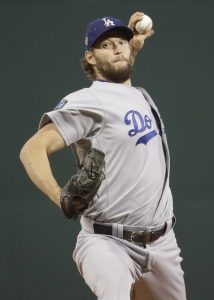
While Kershaw’s contract – the franchise-record seven-year, $215MM extension he signed in 2014 – includes another two guaranteed seasons and $65MM, it also features an opt-out clause he could trigger in the coming days. Should he take advantage of that, the 30-year-old would easily become the most accomplished pitcher without a deal for 2019.
However, in the event Kershaw reaches free agency, he would be doing so off three straight injury-shortened seasons, during which he averaged 162 innings per year. That’s a far cry from the 215-inning mean he established from 2010-15. This past regular season, Kershaw spun 161 1/3 frames of high-quality work, logging a 2.73 ERA/3.19 FIP, though there were some alarming signs along the way.
Although just about every starter would be thrilled with the production Kershaw has offered this year, his regular-season ERA was his highest since 2010, while he has only managed a worse FIP once (as a rookie in 2008). Moreover, Kershaw has battled through a decline in velocity, perhaps thanks in part to injuries. Kershaw went to the disabled list one time each for back problems – which have been a significant issue for him in recent seasons – and biceps tendinitis.
Even though we know Kershaw is in fact mortal, he’s still in position to forgo the remaining $65MM on his contract. Expectations are that Kershaw will indeed vacate what’s left of the pact, at which point it would be up to the Dodgers and the seven-time All-Star’s reps at Excel Sports Management to find common ground. For what it’s worth, both Kershaw and the Dodgers have publicly expressed a reverence for one another.
“[Kershaw] should be a Dodger for life,” owner Mark Walter said in March.
There’s certainly a chance that will come to fruition. But it’s worth keeping in mind that, in spite of their deep pockets, the Dodgers haven’t handed out a single nine-figure guarantee since president Andrew Friedman and general manager Farhan Zaidi took the reins in October 2014. They may need to fork over that rich of a contract to keep Kershaw in the fold. As great as Kershaw has been, and as iconic as he is, that would mean splurging on a 30-something pitcher with upward of 2,200 major league innings under his belt (playoffs included) and a growing injury history.
While Kershaw is currently focused on helping spur a World Series comeback for the Dodgers, it’s clear he’ll end up as one of the game’s most fascinating storylines after the Fall Classic concludes. Either Kershaw will continue his remarkable career with the only franchise he has ever known, or the the future Hall of Famer will stun the baseball world by leaving the Dodgers behind in free agency. What do you expect to happen?
Will Clayton Kershaw be a Dodger in 2019?
-
Yes 67% (14,372)
-
No 33% (6,958)
Total votes: 21,330
Photo courtesy of USA Today Sports Images.