
Notable Trades In The Month Of June
This post was adapted and updated from a previous post last May.
It’ll soon be June, so let’s look back at a few recent transactions in the month before primary deadline season. Most major swaps occur in July, of course, and most of those occur toward the end of the month.
The biggest “early” deadline deal of recent memory — the 2014 swap that sent Jeff Samardzija and Jason Hammel from the Cubs to the Athletics in exchange for Addison Russell, Billy McKinney, and Dan Straily — didn’t go through until the 4th of July. Likewise, the equally important deal from the year prior — in which the Cubs nabbed Jake Arrieta and Pedro Strop from the Orioles for Scott Feldman and Steve Clevenger — was reached on July 2nd.
But that doesn’t mean that nothing of consequence occurs in June. Those deals could easily have come a few days sooner, and baseball’s increasingly free-wheeling player market could lead to some surprises. This year, for instance, we’ve heard suggestions that the Padres could look to make an early move involving quality left-handed reliever Brad Hand.
What kinds of swaps might be anticipated over the thirty days to come? Here are some of the most notable deals that were actually completed in the month of June over the last five seasons:
2016
- The first and most significant deal in June of 2016 is a good place to point friends when they ask, “why don’t teams make big trades earlier in the season?” With the White Sox fading after a hot start, they took a chance on struggling veteran James Shields, absorbing about $27MM of his remaining salary obligations while also sending righty Erik Johnson and young infield prospect Fernando Tatis Jr. to the Padres. Shields continued to decline, the Sox crashed, and Tatis blossomed into one of the better prospects in a loaded San Diego system. (Johnson is working back from Tommy John surgery or the deal could look even worse — and may yet.) Shields did turn in three good starts to open the 2017 season, but he’s now on the DL at 35 years of age and has plenty to show before the now-rebuilding White Sox can try to get something back.
- In a reprisal of a deal from the prior July, the Mets picked up utilityman Kelly Johnson from the Braves. New York had a need for a veteran lefty bat capable of moving around, and Johnson fit the bill, hitting quite well and helping the Mets eke into the postseason. That came at a cost, though, as the return — relief prospect Akeel Morris — has thrown fairy well for his new organization.
- A similar deal went down shortly thereafter, as the Cubs brought back Chris Coghlan after a brief stint with the Athletics. Like Johnson, he showed new life once back in his old uniform. Outfielder Arismendy Alcantara went to Oakland in the deal, but was later lost on waivers.
- In a swap of former prospects who had fallen on hard times, the Dodgers added infielder Chris Taylor from the Mariners in exchange for righty Zach Lee. The immediate impact was minimal, but Taylor has broken out with 123 plate appearances of .321/.415/.557 hitting for Los Angeles in 2017. Lee, like Alcantara, was lost on the waiver wire over the ensuing offseason.
- The Dodgers also made another trade right at June’s end, adding righty Bud Norris along with outfielder Dian Toscano from the Braves in exchange for righty Caleb Dirks and lefty Phil Pfeifer. Norris fell flat in Los Angeles in 2016, though he’s pitching well there now — albeit with the Angels. Dirks may end up being a nice pick-up for Atlanta, as he’s carrying a 2.93 ERA with 10.7 K/9 and 2.9 BB/9 through 27 2/3 Triple-A innings thus far in 2017.
2015
- The month started with an interest arrangement that saw slugger Mark Trumbo head from the D-Backs to the Mariners along with lefty Vidal Nuno. That seemed mostly motivated by salary from Arizona’s perspective, but the team has received compelling production from backstop Welington Castillo. The team also picked up righty Dominic Leone and prospects Gabby Guerrero and Jack Reinheimer from Seattle.
- One day later, the Orioles sent veteran outfielder Alejandro De Aza to the Red Sox after designating him for assignment, receiving minor league righty Joe Gunkel in return. De Aza performed well in Boston, which took on about $1MM of his remaining salary, but couldn’t turn around a sinking ship, and was eventually passed along to the Giants.
- Later that June, the D-Backs struck another interesting deal. In exchange for taking over about $10MM of salary obligations to injured veteran Bronson Arroyo, and sending over infielder Philip Gosselin, the Braves earned the rights to high-upside pitching prospect Touki Toussaint.
2014
- In another agreement involving prospect assets, the Pirates got the 39th overall pick in the 2014 draft from the Marlins on June 1. Miami picked up righty Bryan Morris, who’s been a sturdy reliever who’s still controlled for two more years, while Pittsburgh ultimately turned that selection into first baseman Connor Joe, who has largely scuffled in the low minors since.
- Later that month, the Pirates and Angels made a change-of-scenery swap that sent Jason Grilli out west in exchange for Ernesto Frieri. While Grilli provided some solid innings, Frieri faded, though both organizations ended up making the post-season.
2013
- DFA swaps are often fruitful in the middle of the year, and the Brewers managed to land a useful piece from the Braves out of limbo. Third baseman Juan Francisco went to Milwaukee for lefty Tom Keeling, and ultimately gave the Brew Crew a league-average bat with some pop while the club dealt with an injury to veteran Aramis Ramirez.
- A middle-of-the-month trade of seemingly limited consequence was reached between the Mets and Rockies. New York added speedy but limited outfielder Eric Young Jr., while Colorado picked up righty Collin McHugh. The latter didn’t find success at Coors Field, but turned into quite a useful starter for the Astros in the season that followed.
2012
- The month of June started with a quiet transfer of cash considerations from the Orioles to the division-rival Yankees. The return? A first baseman by the name of Steve Pearce, who had joined New York on a minor league deal. He showed a bit of a spark that year, filled in usefully in 2013, and then exploded in the following season, when the O’s trounced the Yankees and the rest of the AL East.
- Kevin Youkilis traded color schemes, going from the Red Sox to the White Sox on June 24th. A struggling Youk headed to Chicago along with a stack of salary-offsetting cash for righty Zach Stewart and utilityman Brent Lillibridge. The 33-year-old provided a jolt for the South Siders, though the club ultimately fell shy of the playoffs.
- And at month’s end, the Orioles picked up veteran slugger Jim Thome from the Phillies in exchange for a pair of prospects (Kyle Simon and Gabriel Lino). The 41-year-old Thome wasn’t an impact bat for Baltimore, but neither of the players dealt has been of much consequence since.
Trade Candidate: Howie Kendrick
Howie Kendrick‘s strong start to his Phillies tenure was cut short by an oblique strain, so the veteran will be playing in his just 11th game of the 2017 campaign when the Phils activate him from the disabled list tomorrow as expected. His return should provide some on-field help to a Phillies team that now owns the worst record in baseball (17-31 after today’s loss), though Kendrick’s greatest value to the team may come as a trade chip before the July 31 deadline.
Of course, any interested teams will need to assure themselves that Kendrick (who turns 34 in July) is healthy before entering into trade talks. Kendrick’s .333/.395/.487 start to the year can almost surely be chalked up to the small sample size of 43 plate appearances, though Kendrick will naturally need to produce at the plate to show teams that he still swings a dangerous bat, particularly after his disappointing 2016 season.
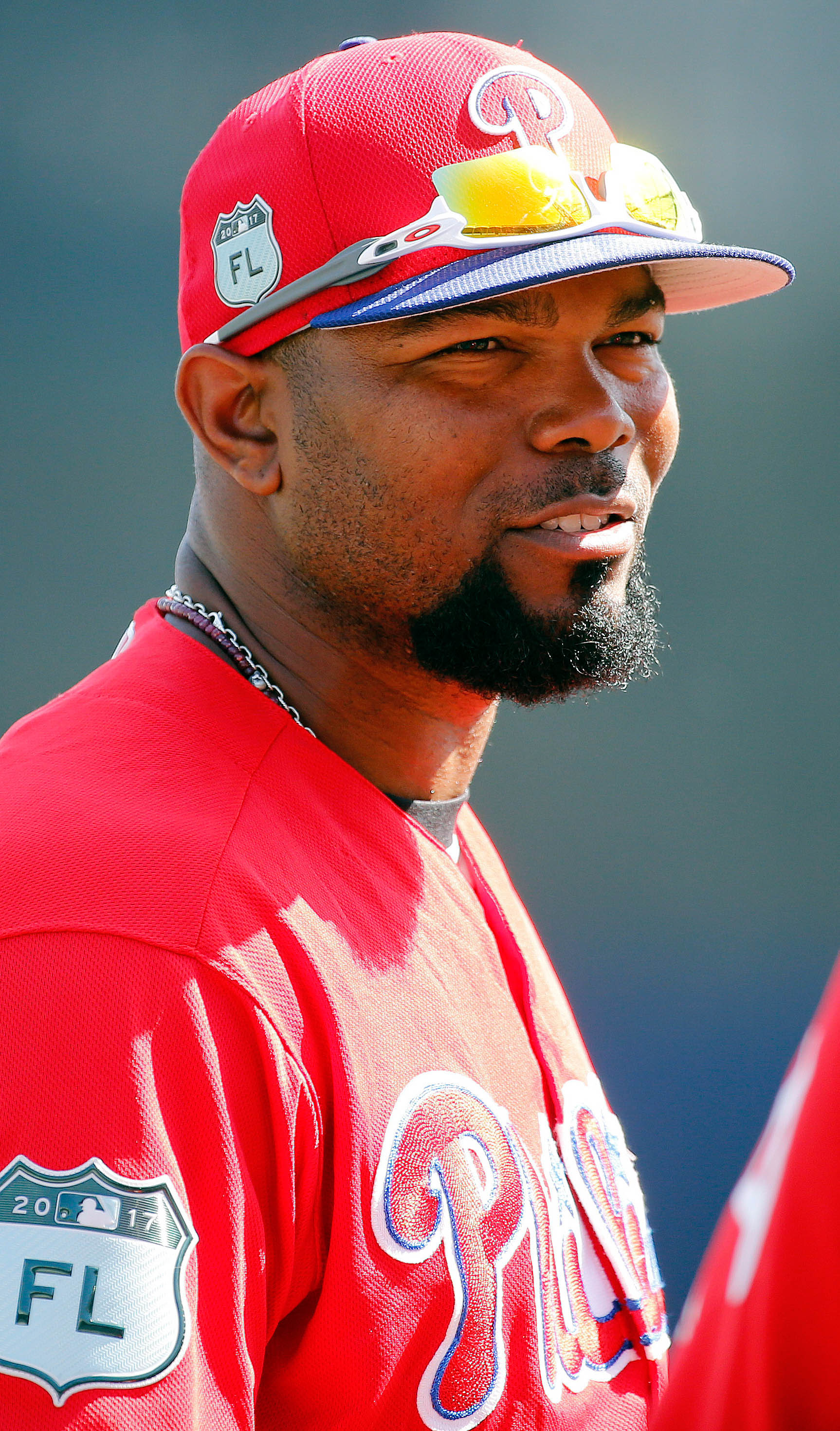 Over 543 PA with the Dodgers last season, Kendrick hit .255/.326/.366, with his average and slugging percentage counting as new career lows. A lack of batted-ball luck played a part, as Kendrick only managed a slightly above-average .301 BABIP last season, well below his .338 career mark. The rest of his advanced metrics, however, were largely in line with his career norms, so it could be that Kendrick simply had a bit of an off-year. In fact, on the positive side, Kendrick’s 9.2% walk rate was a new career high, and he was maintaining that same patience early in 2017 (with the small sample size caveat).
Beyond what Kendrick can bring to a lineup, the veteran’s ability to play multiple positions will also draw him some attention at the deadline. After years as an everyday second baseman and occasional outfielder, Kendrick made 79 starts for the Dodgers in left field last year, 23 starts at second, 14 starts at third base and seven starts at first base. While he is likely somewhat of a defensive liability as a regular second baseman at this point in his career, Kendrick did a solid job in left last year and can likely at least hold his own at third or first in limited action.
Though Kendrick will get his fair share of playing time by moving around the diamond, the Phillies since they have a young player at all of his positions. Aaron Altherr has blossomed since taking over as the regular left fielder in Kendrick’s absence, and Tommy Joseph, Cesar Hernandez, and Maikel Franco are all still potential infield building blocks (though Franco is off to a rough start). Altherr could be shifted over to right to supplant Michael Saunders, though one figures prospect Roman Quinn will also eventually figure into the outfield mix.
Using the top 30 trade deadline power rankings from MLBTR’s Jeff Todd as reference, it’s a pretty pitching-heavy list of trade candidates likely to be available this July. Of the position players that could be on the market, few have Kendrick’s defensive versatility, or reasonable price tag both in prospect cost and salary owed (roughly $6.7MM between now and season’s end).
It is quite possible Philadelphia could even eat some of that remaining salary since the team will be motivated to get something back at midseason. As recently noted by Matt Gelb of the Philadelphia Inquirer, Pat Neshek is the only one of the veterans acquired by the Phillies last winter who has performed well this year; Kendrick has been on the DL, Clay Buchholz is out for the season, and Saunders and Joaquin Benoit have struggled. Beyond that group, Jeremy Hellickson (who accepted a qualifying offer to remain with the Phillies) has also not pitched well, leaving the Phillies with a pretty bare cupboard of trade chips unless someone besides Neshek starts producing. Kendrick, in a way, has done less damage to his trade value simply by missing time with a not-too-serious injury than Hellickson, Saunders and Benoit have by playing poorly.
The Phillies didn’t give up too much to acquire Kendrick from L.A. (Darin Ruf and Darnell Sweeney, neither of whom is still in the Dodgers organization), but they will likely be motivated sellers in order to get some return from their veteran investments. Kendrick keeping up the .883 OPS would be great for all parties, though simply a return to “the old Howie Kendrick” would be good enough to make him a sought-after trade piece for teams in need of position depth.
Photo courtesy of Kim Klement/USA Today Sports Images
MLBTR Originals
Here is the past week’s original content from MLB Trade Rumors…
- Five officials working for Major League teams in an international scouting capacity provided MLBTR contributor Chuck Wasserstrom with a wide-ranging and comprehensive scouting report on Japanese superstar Shohei Otani. Widely rumored to be pursuing a move to North American baseball this winter, Otani’s two-way abilities drew heavy praise from the five evaluators. Names like Yu Darvish, Justin Verlander, Curtis Granderson and Paul O’Neill were mentioned as possible comps for Otani’s pitching and hitting abilities, though there was a general feeling that Otani has a better chance at elite status as a pitcher.
- Also from Chuck, the latest installment of his Inside The Draft Room series features an interview with Mike Trout, as the Angels superstar re-lives the experience of being picked 25th overall in the 2009 draft.
- MLBTR is happy to welcome Twins right-hander Trevor May to our roster of contributors. Trevor’s first entry focuses on why he is available to write for MLBTR in the first place — the torn UCL he suffered during Spring Training that required Tommy John surgery and a year-long rehab.
- The 2017-18 free agent class could get a boost from several notable players who can exercise opt-out clauses in their contracts after the season. MLBTR’s Steve Adams looks at Justin Upton, Masahiro Tanaka, Johnny Cueto and others who will have to decide whether to forego their current guaranteed deals in search of more money and more years on the open market.
- Lorenzo Cain is having another good year for the Royals, providing his customary strong defense and baserunning while increasing his walk totals. On the flip side, as MLBTR’s Jeff Todd notes in his Free Agent Stock Watch profile of Cain, the Royals outfielder has seen a big dropoff in power department. This could have implications on Cain’s next contract, as Jeff considers what Cain could earn in free agency this offseason with or without some solid power numbers on his resume.
- Also from Jeff, he looks at 10 relievers who were forced to settle for minor league deals last winter but are providing their teams with strong results this season.
- Which New York outfielder would you rather have as a long-term cornerstone — the Mets‘ Michael Conforto or the Yankees‘ Aaron Judge? Connor Byrne put the question to the MLBTR audience, with just under 56.5% of readers polled preferring Judge.
Better Building Block: Aaron Judge Or Michael Conforto?
If the first couple months of the major league season are any indication, two of baseball’s best hitters are emerging in New York. In the Bronx, there’s Yankees right fielder and American League Rookie of the Year front-runner Aaron Judge; in Queens, Mets outfielder Michael Conforto has rebounded from an underwhelming 2016 to fare even better than he did during his sensational rookie campaign in 2015.
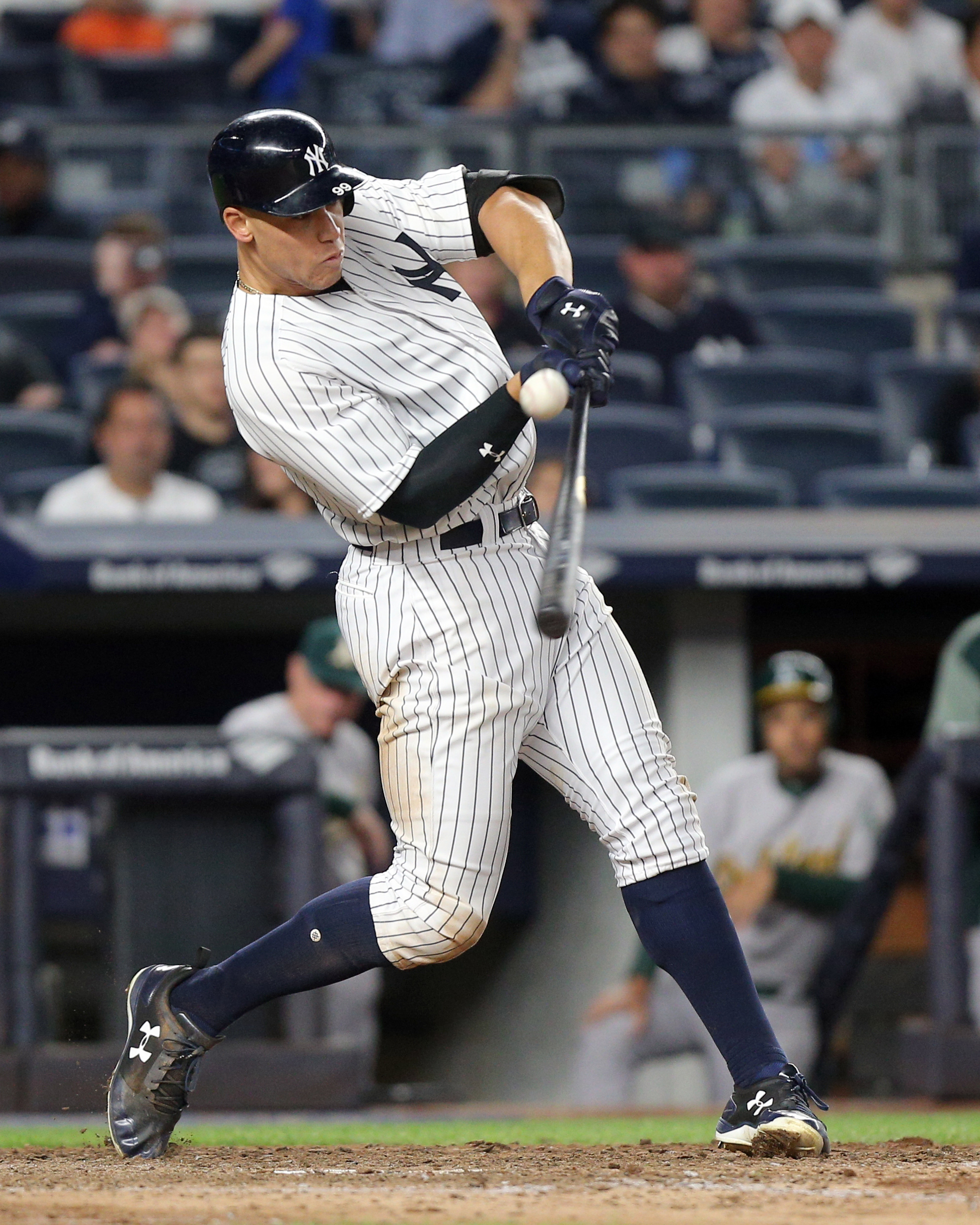
Given that Judge looked lost during his first big league stint last season, his success this year has come as a bigger surprise than Conforto’s. The 6-foot-7, 275-pound behemoth did notch four home runs in only 95 plate appearances, but that came with an alarming strikeout rate (44.2 percent) and a horrid .179/.263/.345 batting line. To his credit, though, the 25-year-old Judge worked prior to the season on cutting down his strikeouts and making more contact, as FanGraphs’ Travis Sawchik detailed earlier this month, and the results have been excellent. Everything is trending right for Judge – his strikeout rate is down to a manageable 29 percent; his contact rate has shot up exactly 10 points (from 60.2 percent to 70.2 percent); his walk rate has climbed from 9.8 percent to a terrific 14.2 percent; his out-of-strike zone swing rate has fallen from 33.6 percent to 25.5 percent; and his swinging-strike rate is at 12.4 percent after sitting at 18.1 percent last year.
All of Judge’s gains have helped lead to a .316/.421/.665 line in 183 PAs – not to mention a first-place start for the Yankees – and he currently ranks third in the majors in both wRC+ (192, trailing only Mike Trout and Freddie Freeman) and isolated power (.348, again behind only Trout and Freeman), and second in home runs (15, one behind Trout and tied for second with Bryce Harper). While an unsustainable .391 batting average on balls in play has propped up Judge’s numbers, his production still looks legitimate when factoring in the degree to which he has punished baseballs. Judge’s expected weighted on-base average, which uses exit velocity and launch angle to gauge a hitter’s performance, is sitting at .427 – not far below his actual wOBA of .450 – per Baseball Savant. As great as Judge has been offensively, he has also held his own with the glove, ranking fifth among outfielders in Defensive Runs Saved (seven, behind well-known defensive wizards Jackie Bradley Jr., Mookie Betts, Kevin Kiermaier and Byron Buxton) and a respectable 34th among 70 qualifiers in UZR/150 (2.7).
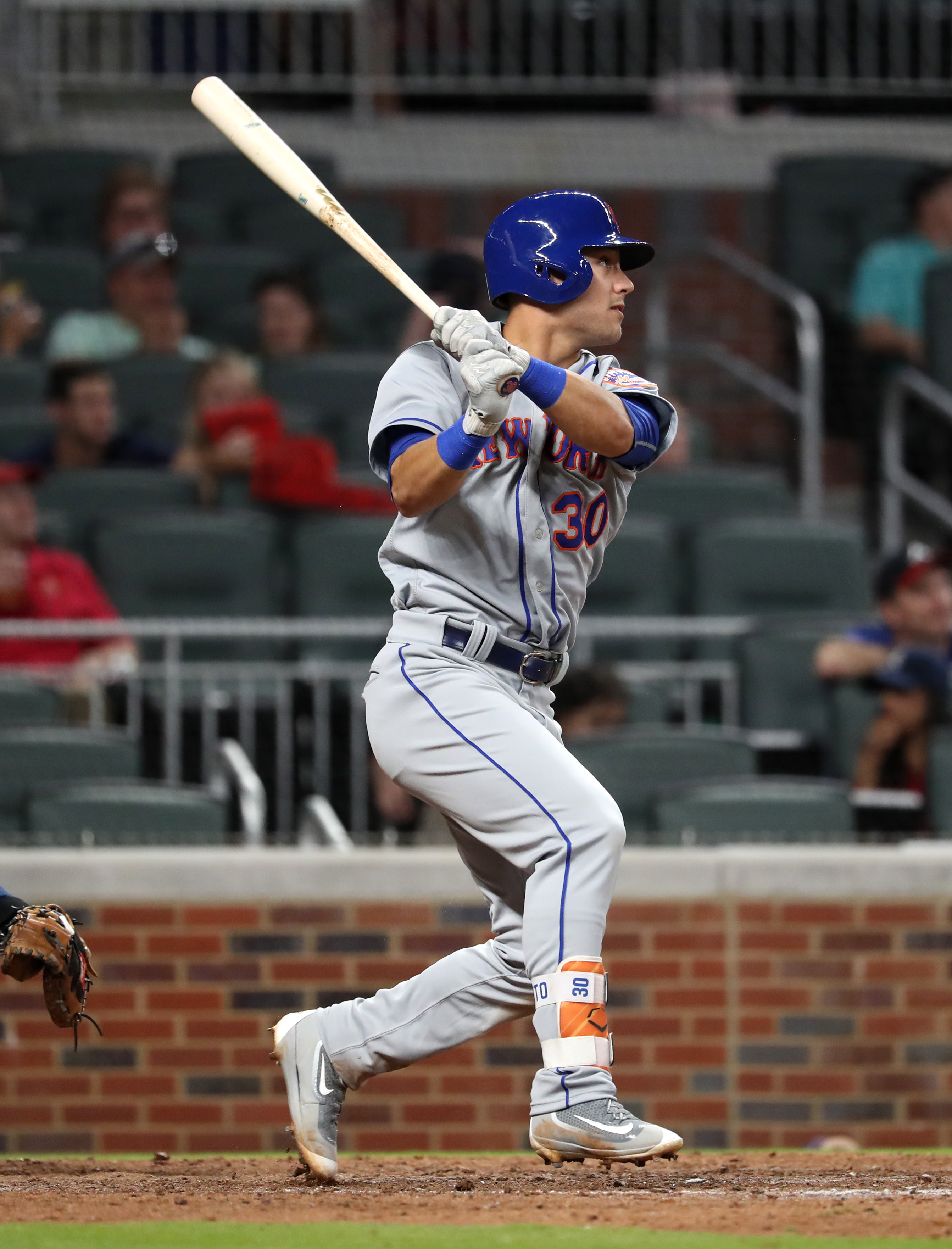
Conforto, meanwhile, hasn’t been on Judge’s level defensively (a combined minus-one DRS and minus-5.2 UZR/150 at all three outfield positions); however, as Judge has been this season, Conforto was outstanding with the glove during his rookie year (nine DRS, 26.5 UZR/150), so there’s reason for hope going forward. Regardless, the bulk of the 24-year-old Conforto’s value will always come from his bat, and the lefty-swinger has done his best to match the right-handed Judge and keep the woebegone Mets afloat this season. Conforto, after hitting a so-so .220/.310/.414 in 348 major league PAs last season and even earning a minor league demotion, is now sitting at .322/.416/.658 with 13 homers and a 13.3 percent walk rate (against a strikeout percentage of 24.9) in 173 trips to the plate this year. He ranks fifth in the majors in ISO (.336) and sixth in wRC+ (178), and while he’s also running a BABIP (.370) that won’t last, his .391 xwOBA (down from a .440 wOBA) is indicative of a superstar-caliber hitter.
While Judge and Conforto have torn apart major league pitching this year, the fact that the two are thriving isn’t completely shocking, as each cracked various top 100 lists as prospects. Now, both sluggers are more than living up to the hype they generated before their major league tenures began. With Judge and Conforto potentially in the midst of becoming franchise cornerstones, I’ll ask you the same question Joel Sherman of the New York Post presented to major league scouts and front office executives earlier this week: Who’s the better long-term piece?
Who's the better building block?
-
Aaron Judge 60% (4,843)
-
Michael Conforto 40% (3,168)
Total votes: 8,011
Photos courtesy of USA Today Sports Images.
Tommy John Surgery Sucks, But Maybe Not As Much As You Think
After nearly a decade of climbing up professional baseball’s totem pole, the 14-hour bus rides, the exceptionally poor minor-league shower water pressure, a MLB debut, a pennant race, I have finally reached the pinnacle…. you’re looking at MLB Trade Rumors’ newest employee! Don’t let your dreams be dreams, kids.
My name is Trevor May, and I am thrilled to have the opportunity to share my thoughts/stories with you every few weeks. They say that every negative situation has a silver lining; that we have to find the positives after a setback. Well, I had a professional setback, and finding new ways to connect with fans over the last few months has been one heck of a silver lining. Let me take a quick step back and tell you how I got here:
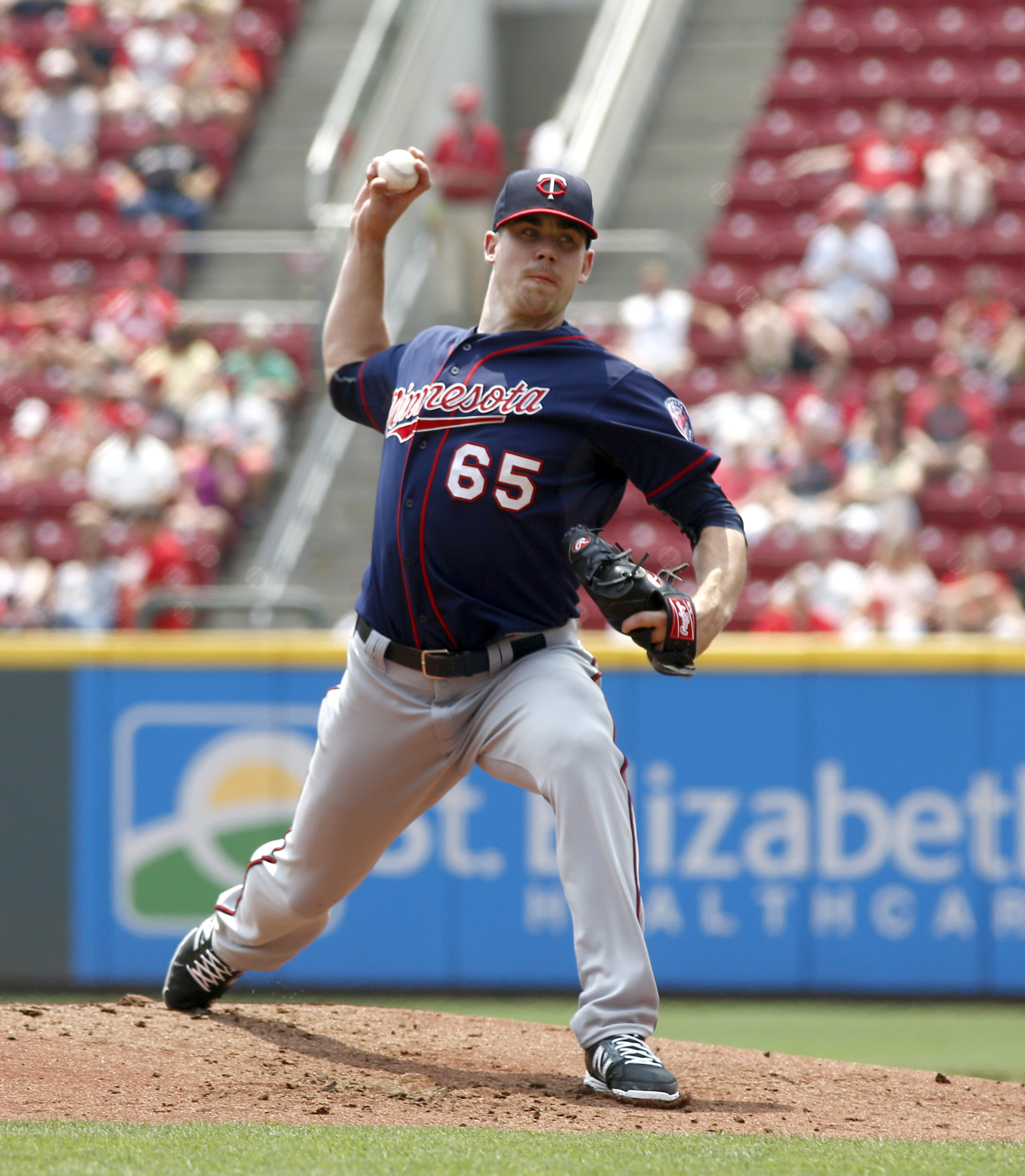
On March 8th, I started the Twins’ exhibition game against Team USA before they went off to compete at the World Baseball Classic. I felt an abnormal tweak in my forearm muscle on a 0-2 curveball to Andrew McCutchen. What was that? I took a step off the mound, gathered myself, and proceeded to throw three consecutive balls for my first walk of the day.
I got the ball back from the catcher, gripped it tightly and told myself, “You have two options: come out of this game or gut it out.” I threw the next 40 pitches with everything I had, and left the game with a very real sense of accomplishment — I made it through the outing. After spending more than three months the previous year on the DL with a mysterious back issue, seeing my offseason work pay off was a damn good feeling. My elbow though? Not so much. Torn UCL.
I knew it was torn two days later when routine soreness was replaced with consistent, jolting pain. Imagine hitting your funny bone, and that feeling just not going away. This meant it was time for my favorite activity: cram into a tube most certainly not designed for a 6’5″, 240-pound frame and lay on my arm for 45 minutes until it goes to sleep, all the while enjoying consistent, ear-shattering noise. Wait, I meant getting an MRI. Pro Tip: just, like, avoid MRIs.
“A complete tear, surgery is recommended.”
Well, damn.
Injuries suck, guys. There’s nothing in the world that I want more than to be on that field with my teammates. But sometimes, life wants to punch you square in the jaw, and all you can do is wear it, bring your gloves back up and throw one right back. Mike Tyson Punchout style. Fix it, move on. I can’t live my dream on the field this year, but I can still live it off the field. And, I’m already amazing at rehab, so this is cake.
Silver linings, friends.
I’m a professional baseball player rehabbing his elbow, a partnered Twitch Streamer, a DJ, a Social Media connoisseur, an E-Sports Entrepreneur, a gaming tournament organizer and commentator, and obviously an exceptional writer. I am Trevor May, and this is my year after Tommy John surgery.
To be continued…
Free Agent Stock Watch: Lorenzo Cain
It’s tempting to look in on pending free agents when they are clearly trending up or down. Sometimes, though, the news is mixed, and that’s the case for Royals center fielder Lorenzo Cain.
Cain, 31, emerged as a force in 2014 and fully broke out in the following season. Helping to drive the Royals to a World Series title, Cain slashed .307/.361/.477 with 16 home runs and 28 steals. With top-end grades on his glovework and overall baserunning, he ended the ’15 campaign with 6.4 fWAR and 7.2 rWAR on the ledger.
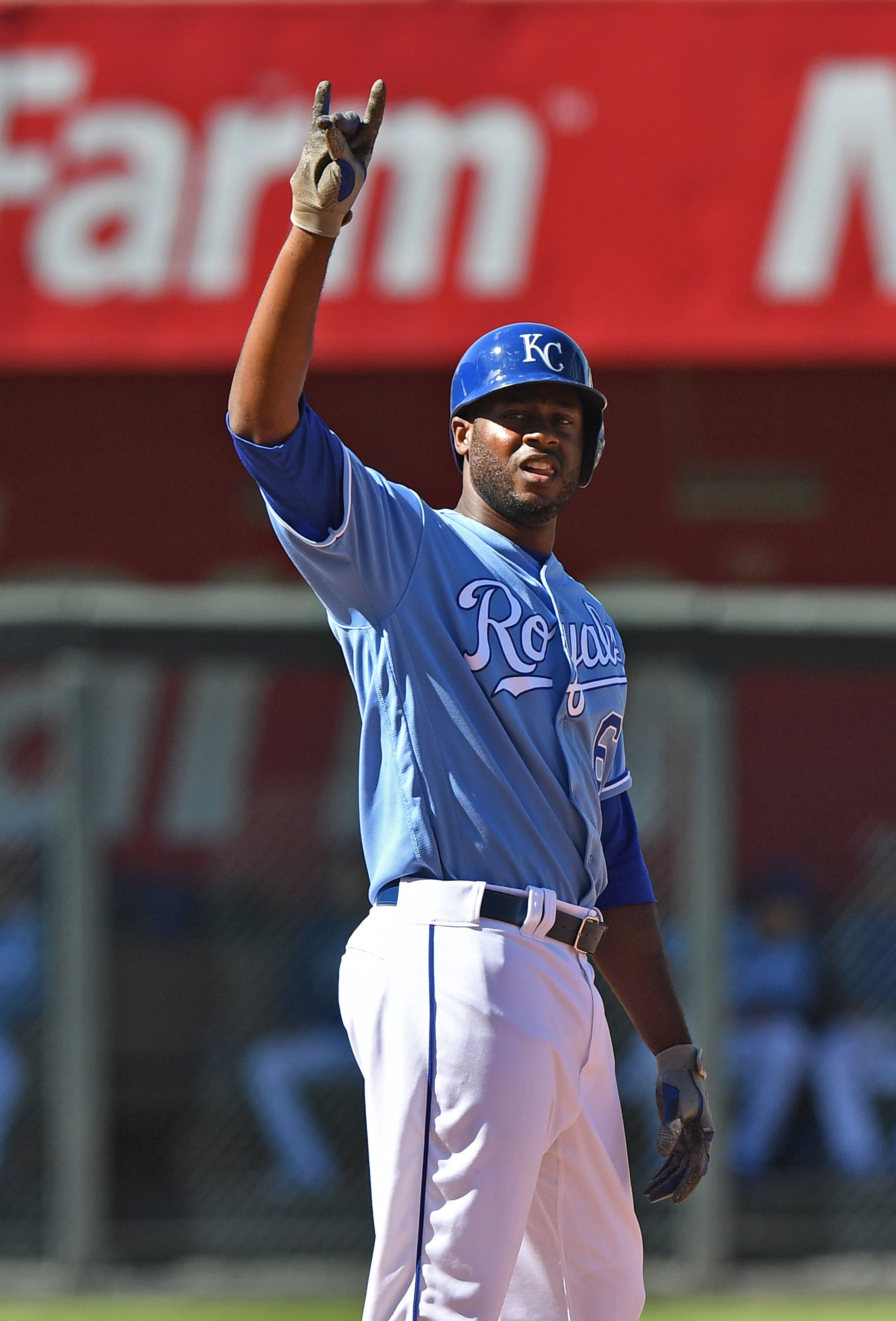
Then came an injury-plagued 2016 campaign. Cain and K.C. came crashing back to earth. His power dipped back below league average (.121 isolated slugging) while his ailing hamstring perhaps contributed to slight dips in the field and on the bases. With one more year of arb control to go, that set the stage for a critical 2017 season.
So far, there are signs both of progress and of continued concern. Cain has been in the lineup and has certainly been a quality performer, but he’s lagging again in the power department. Through 183 plate appearances, he has managed only a pair of long balls and carries a meager .101 ISO that rates 19th from the bottom among qualifying hitters. While his batted-ball mix remains at typical levels, and he’s producing a roughly league-average exit velocity, Cain has made soft contact at a 24.8% rate, representing a substantial increase over that peak 2015 campaign (13.8%). Conversely, his hard-hit rate has dipped from 32.2% that year to 26.4% in 2017.
On the positive side, Cain’s walk rate has jumped all the way to 12.0% — a significant boost over his 6.6% career average. He has been more selective and made more frequent contact than in recent years, and if his BABIP (.315) moves back toward his lifetime mark (.343) there’ll be an added boost in the on-base department. Cain is already getting aboard at the same clip (.361) that he did in that excellent 2015 effort. And while there are less extra bases coming from his bat, Cain is back to taking them with his legs. He has already swiped a dozen bags, already nearing last year’s output of 14, and is again grading out as one of the game’s best baserunners.
Cain’s baserunning exploits could be seen as a sign of improved health and continued athleticism. And the same holds true in the field, where he has already compiled five defensive runs saved and 4.2 runs by measure of UZR through 381 1/3 innings — putting him on pace to approach his best seasons in the majors.
What we’re seeing, then, is that Cain continues to deliver a strong baseline of performance even without the pop. If he can begin driving and elevating the ball once more, then the ceiling will surely head northward — both for his anticipated on-field contributions and his potential earnings in the coming winter. The same holds of Cain’s trade value over the summer, when he could well be the best-available outfielder on the market.
Cain’s appeal in free agency will surely be limited by his age — he’ll turn 32 just after the start of his next deal. And the track record of big paydays for glove-first outfielders is limited. It seems a bit of a stretch to imagine him reaching five guaranteed years. Teammate Alex Gordon only got four at the same age, and players like Curtis Granderson, Angel Pagan, and Nick Markakis have all failed to find a fifth year. But it’s perhaps equally difficult to imagine him landing only three, barring an injury like that suffered by Denard Span before he hit the open market.
Ultimately, the question of earnings may hinge upon whether some of that missing power comes back over the summer. Cain’s two closest comps are instructive. If you view him as primarily a speed-and-defense asset, then you could argue that he’ll likely be looking to build off of the somewhat-out-of-date, four-year, $48MM Michael Bourn contract. Bourn was actually significantly younger than Cain will be when he signed that contract, and was coming off of quite a strong season, though of course he couldn’t match Cain’s track record of hitting.
If Cain can rediscover his power stroke, though, then there’d be a good argument that he should match or exceed the $16.5MM average annual value achieved by Dexter Fowler this past winter. (Fowler achieved that AAV over five years, but he’s the same age as Cain and hit the market a season earlier.) After all, Cain was the better all-around player at their respective peaks. And, if he is indeed traded this summer, he’d hit the open market without the same qualifying-offer burden that impacted both Bourn and Fowler.
Indeed, it’s even possible that Cain could challenge for Gordon’s deal ($72MM over four years) if he really turns it on in the second half and the supply-and-demand calculus ends up being favorable. A glance at the still-developing market shows that Cain’s top competition might come from players like Carlos Gomez, Jarrod Dyson, and Jon Jay. With several big-budget organizations potentially in need of a center fielder this winter, there’s some upside left for Cain to pursue over the next 117 games.
Photo courtesy of USA Today Sports Images
Inside The Draft Studio: A Conversation With Mike Trout
The date was June 9, 2009 – the first day of the annual MLB Draft.
As we all know, while the buildup to the baseball draft gets a lot of play, the actual draft itself doesn’t have the same fanfare as its counterparts in football and basketball. So this particular date wouldn’t normally stand out – other than the fact that the draft was being televised live from the MLB Network studios in Secaucus, NJ.
But this didn’t turn out to be an ordinary draft day.
Stephen Strasburg was the surefire No. 1 overall selection; that was pretty much a universal given. What wasn’t a given was what would transpire after Strasburg’s name was called.
With TV eyes on Secaucus, only one draftable player was in attendance for the prime-time event. As has been well documented – heck, there’s even a documentary about it – Millville (NJ) Senior High School centerfielder Mike Trout and his family made the two-plus hour drive north to witness his selection.
Trout had to wait … and wait … and wait … as the draft moved from the Top 10 through the teens and past the early 20s. It wasn’t until pick No. 25 when Commissioner Bud Selig stood at the podium and announced the name Michael Trout.
Two teams had a pair of first-round picks before the Angels were on the clock. The Nationals used their selections on Strasburg and reliever Drew Storen at No. 10. The Diamondbacks picked back-to-back at 16-17; you can click here to read about their ’09 draft.
Trout kept watching other players get drafted before landing on the Los Angeles Angels’ doorstep. You can click here to read then-scouting director Eddie Bane’s account of the Angels’ draft.
So … what was it like to be Mike Trout that evening? Trout, who has homered in eight of his last 14 games, took a few minutes to share his memories of that event with MLBTR. Special thanks to Tim Mead and Eric Kay of the Angels’ communications department for their assistance in coordinating the conversation.
– – –
Chuck Wasserstrom: Hi Mike. Thank you very much for taking the time to speak with me for MLB Trade Rumors. You were the only player there the night of the 2009 draft, so I’m looking for your recollections from that evening. What was that night like for you?
Mike Trout: “It was crazy. It was unbelievable. There was a lot of stuff going through my mind. You’re anxious, you’re excited, you’re obviously nervous. You want to get picked. You know … hopefully be selected in the top three rounds. But being picked, well … if you’re up there on the first day, it obviously means something.”
You had a two-hour drive from 45 miles south of Philadelphia to the New York City area. Who was in the car with you?
“My mom and dad, my brother, my sister, my sister’s husband, and my girlfriend – who’s now my fiancée, Jessica.”
With that many people in the car, you probably didn’t have a lot of time just to be deep in your own thoughts, right?
“No, it wasn’t quiet. But it was a special moment for me, obviously, for Jess, and for my family. It was pretty special.”
At the draft itself, I’m envisioning being back on the school yard in elementary school. You know, one kid’s picked and then the next and the next. You probably weren’t used to being the one falling; you were used to being one of the first kids chosen.
“Yeah … it was different. Every pick that went by, you think you’re going to get picked there. Then 24 picks later, your name gets called. So, 25th – it was a little different. It was nerve-racking, but as soon as Angels picked me, it felt a lot better.”
Did your heart leap a little bit when you heard Commissioner Selig announce the Atlanta Braves select Mike – but it was Mike Minor – and the Cincinnati Reds select Mike, and it was Leake?
“Yeah, a lot of Mikes in that draft, so it was pretty nerve-racking. It made your heart drop a little bit and you’re anxious. You know, when the Angels had their selections, it was a little bit better when (the commissioner) said my full name.”
So you found out when the commissioner called your name? You weren’t tipped off at all that the Angels were selecting you?
“No, I didn’t know.”
Your dad played minor league ball with (former Angels scout) Greg Morhardt. I know you and your parents had dinner with (former scouting director) Eddie Bane. So now it’s the Angels’ pick at No. 24 – and the commissioner announces Randal Grichuk. What were you thinking?
“I knew the Angels were high on me, but when they picked Grichuk – an outfielder – everything was going through my head. For me, I didn’t think they were going to pick two outfielders.
“I was definitely relieved when they called my name with the next pick. It’s a feeling you can’t explain. You’re so happy, and you think about all the work you put in to get to that point. As a kid, you want to be a professional baseball player. As soon as you hear your name – obviously, you’ve still got to sign – but instantly you know you have a chance to play professional baseball, and it’s a dream come true.”
Growing up, you were a Phillies fan – and you knew the Phillies didn’t have a first-round pick. You knew that the Mets didn’t have one and that the Yankees had a real late one, so you probably weren’t going to be staying in the region. Were you curious to find out what part of the country you were going to?
“I was just happy I got picked. I didn’t care where I was going. With all the travel ball and travel tournaments I went to across the country, I liked playing everywhere. Obviously, the East Coast would have been cool with family and friends, but I love it on the West Coast – so it’s nice.”
The day of the draft, you were still in high school. What was it like going back to school the next day – now that you were a drafted baseball player?
“It was great. Everybody was coming up and congratulating me. The teachers, the principal, everybody, my friends. It was just a special feeling, you know? All the hard work you put in. Obviously, school came first, but you put a lot of time and effort into becoming a baseball player. Having that opportunity to play professionally, it means a lot to me.”
Last question … I’ve heard all the excuses about why you fell because of New Jersey, and I’m not talking about that; I’m going the other way. How important was it for you to grow up in New Jersey playing seasonal sports all the way through high school?
“I loved playing on the East Coast. When it was football season, I was playing football. Basketball season, I was playing basketball. And obviously baseball season, playing baseball. That’s how I grew up. That’s how I was raised. You know, now that I’m up here playing baseball every day, it’s great, but I wouldn’t trade anything. I had a great childhood playing in Millville and on the East Coast in Jersey. I wouldn’t trade it for anything.”
– – –
Chuck Wasserstrom spent 25 years in the Chicago Cubs’ front office – 16 in Media Relations and nine in Baseball Operations. Now a freelance writer, his behind-the-scenes stories of his time in a big league front office can be found on www.chuckblogerstrom.com.
Scouting Shohei Otani
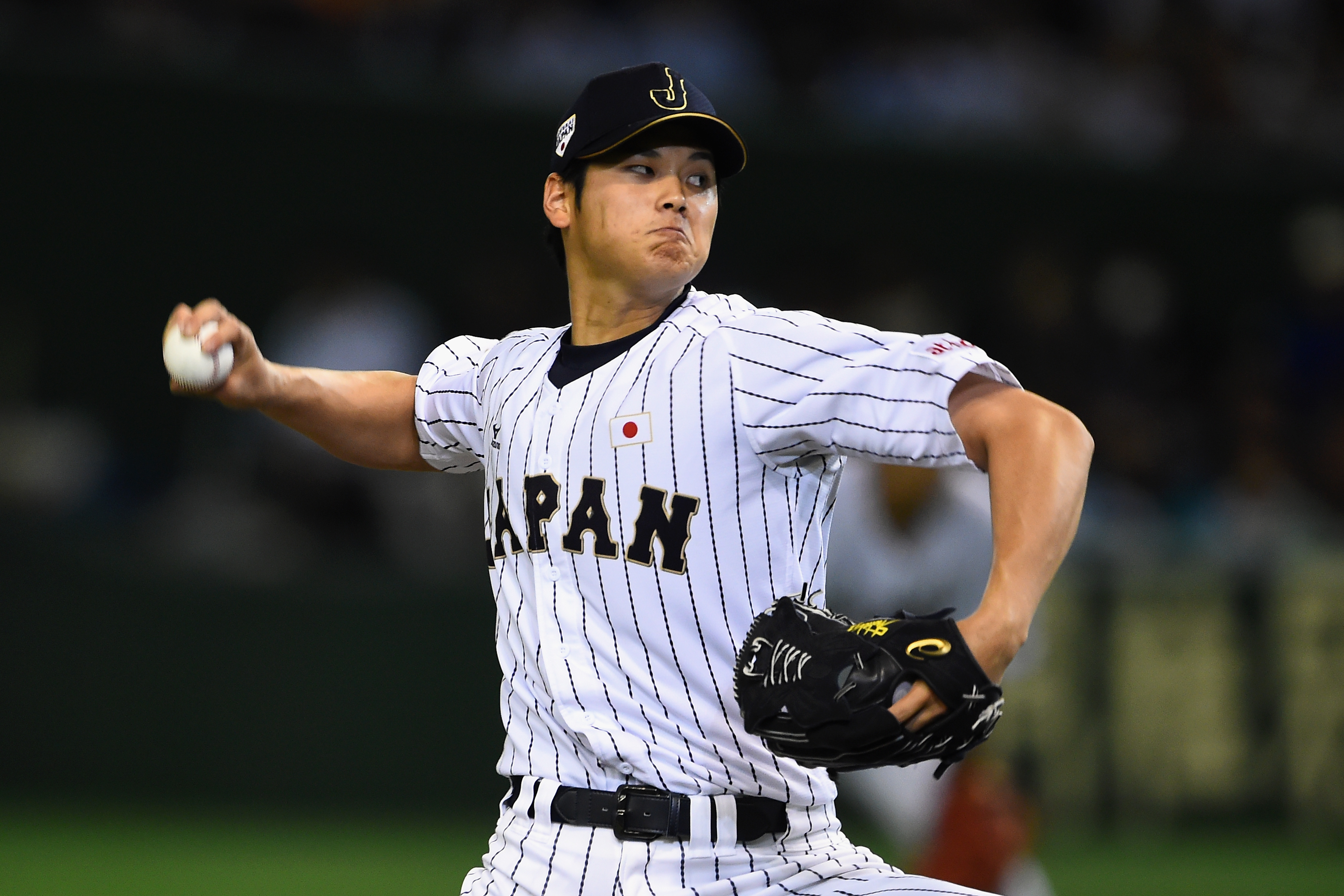
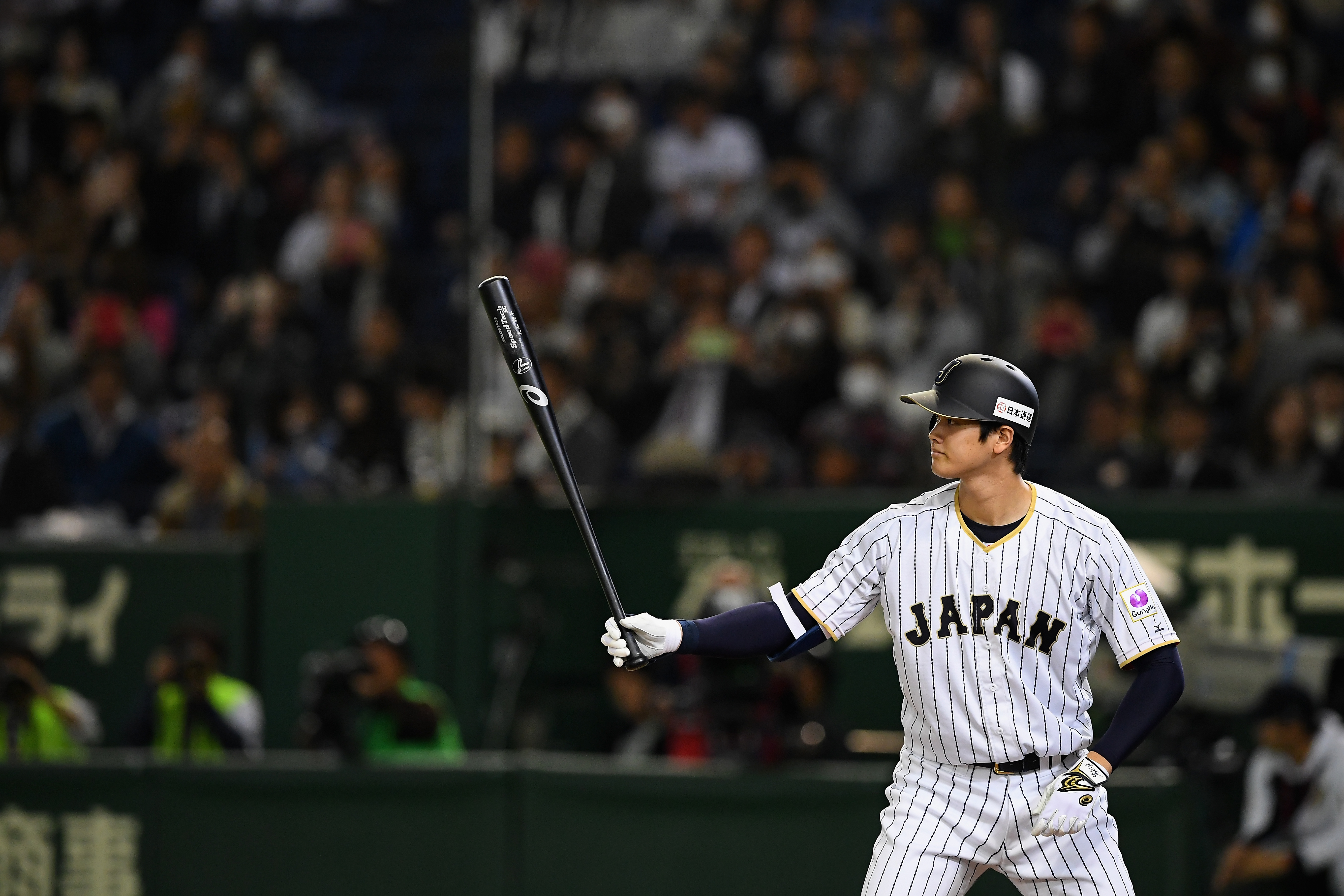
The assignment: Write a scouting report on Shohei Otani. Paint a very clear picture of Otani’s pitching repertoire – including pitch grades and major league comparisons. And that’s just on the mound; gather similar information about his hitting (and perhaps even fielding) capabilities.
The reality: I haven’t seen Otani pitch or hit, other than on highlight videos.
The solution: Reach out directly to those who have.
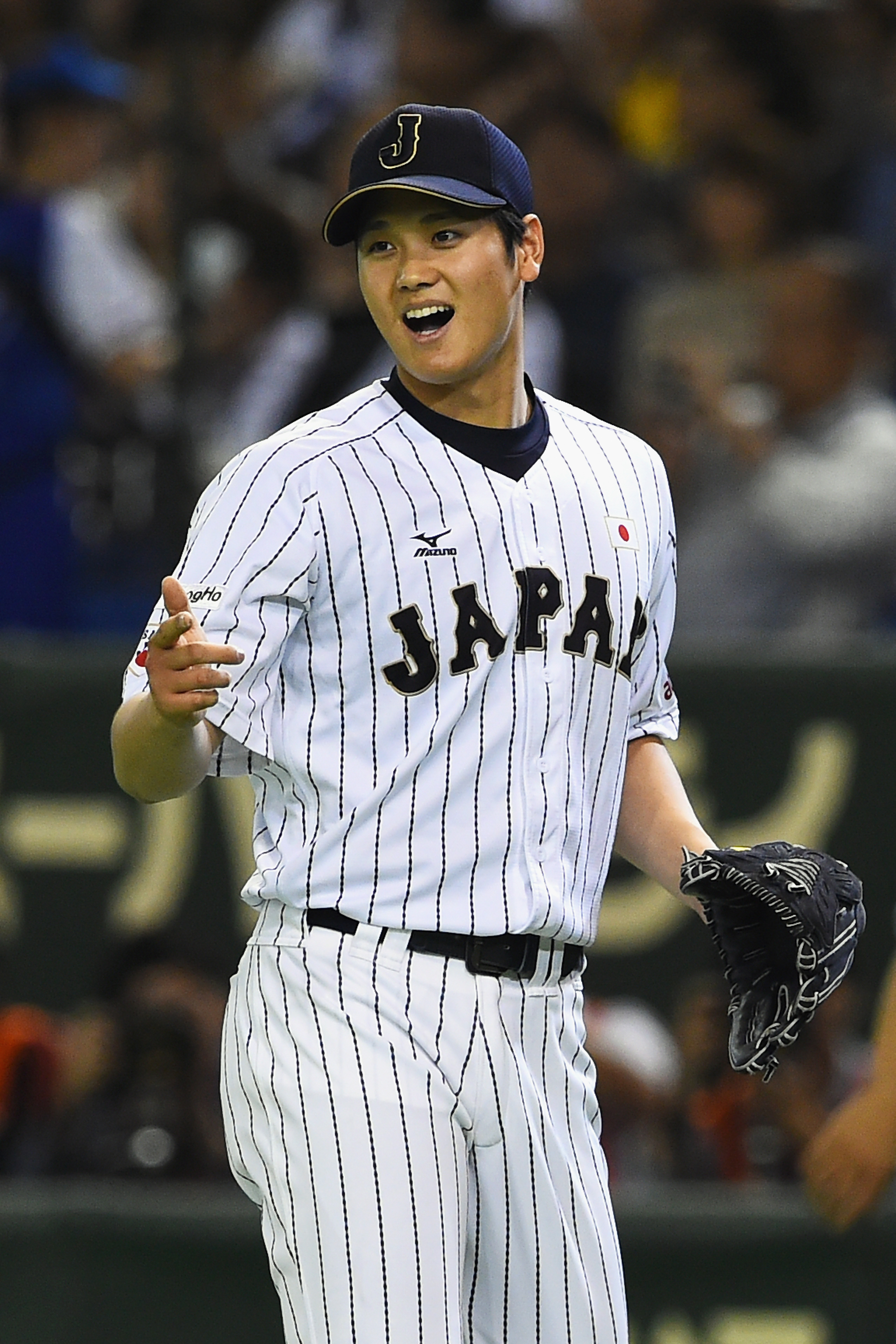
Rumors continue to swirl that the Hokkaido Nippon Ham Fighters in the Japanese Pacific League could post Otani – their star 22-year-old two-way player – as soon as this off-season. As MLBTR’s Jeff Todd wrote in early April, “It has long been wondered just when he’ll make it over to the majors, but rule changes have conspired to gum up that possible transition. First came the application of a $20MM cap on posting fees, which reduces the incentive for NPB clubs to make players available before their control rights are set to expire. Then, the latest iteration of the CBA put hard caps on teams’ capacity to spend on international players who are under 25 years of age, thus precluding the possibility of Otani commanding a bonus befitting his ability until the 2019 season.”
What is the right-hander’s arsenal? What kind of power does the left-handed batter possess? Can Otani be a two-way player in the majors?
Over the past month, I spoke with five high-level officials with international scouting-related positions who work for MLB clubs – promising all of them anonymity – to talk about Otani, the 2016 Pacific League MVP. I vowed there would be no tipping off their identities; for example, you will not read a phrase even somewhat specific such as “a scout for an American League club” or “a scout with 15-plus years observing Japanese players.” Another parameter was established: money was not going to be part of our discussion. At the end of the day, those decisions are not made by the scouts; therefore, let’s just stick to a scouting report-related conversation.
In return, I received their thoughts on the player. And the overall consensus: They haven’t seen a guy like Otani in all of their combined years of scouting.
10 Minor-League Free Agent Relievers Off To Strong Starts
There’s no more fickle existence in Major League Baseball than that of a relief pitcher. Teams are generally more willing to tinker with their bullpens than their benches, and often need to make changes to account for overworked staffs.
But the tumult also brings opportunity. Relievers who are throwing well at the right moment can find themselves right back in the majors. And there are often wide-open Spring Training battles to be joined and won.
Plenty of relievers signed minor-league deals last winter. And a solid number of them ended up on MLB rosters within the first two months of the season. Despite failing to receive MLB guarantees on the free-agent market, these ten hurlers have provided quite a bit of value in the early going:
Matt Albers, Nationals: With the Nats’ pen struggling badly, Albers has been a desperately need source of reliable frames: 16 2/3 innings of 1.62 ERA ball. A strong 57.8% groundball rate and meager 1.6 BB/9 walk rate tend to support the results, though Albers isn’t getting enough whiffs (7.6 K/9) to keep up quite this level of pitching.
Craig Breslow, Twins: The lefty specialist has been everything the Minnesota front office hoped for when it bought into his new-look delivery over the winter. Like Albers, a minimal BABIP (.217 in this case) helps explain the sub-2.00 ERA, though in both cases the solid early work is enough to entrench these pitchers in their respective pens for the time being.
Jorge De La Rosa, Diamondbacks: A long-time starter, De La Rosa has averaged less than one inning per relief appearance in Arizona. But the results of that change in focus have been quite promising. It’s good enough that De La Rosa carries a 50% groundball rate with 8.8 K/9 and 3.5 BB/9, supporting a 2.35 ERA through 15 1/3 frames. But there could be more in the tank, as he’s also averaging a career-high 94.1 mph with his fastball and generating a huge 19.5% swinging-strike rate.
David Hernandez, Angels: Though he has completed just 11 innings thus far, after making his debut later than most of the names on this list, Hernandez has impressed. He’s showing the same kind of velocity and swinging-strike rates that made him a buy-low option last year for the Phillies, but the real question is whether he can continue to avoid the long balls that have plagued him in recent years.
J.J. Hoover, Diamondbacks: It was anyone’s guess whether the former Reds’ late-inning stalwart would rebound, but he’s showing well through fifteen frames in Arizona. Hoover is walking more than five batters per nine, but has also racked up 12.6 K/9 (on a career-high 12.6% swinging-strike rate) and owns a 3.00 ERA. So far, a new pitch mix (more two-seamers and sliders) seems to be working.
Jason Motte, Braves: After beating out Hernandez to become the next veteran reclamation project in Atlanta, Motte has ascended to the majors and helped stabilize the pen. His peripherals aren’t terribly inspiring — 6.4 K/9, 3.2 BB/9, 53.1% groundball rate — but the results (1.59 ERA) have been there through 11 1/3 innings.
Bud Norris, Angels: The crown jewel of the Halos’ impressive slate of finds, Norris has thrived in the closer’s role that he took over out of necessity. Through 23 2/3 innings, he carries a 2.66 ERA with 11.8 K/9, 3.4 BB/9, and a 44.2% groundball rate. Norris is bringing more velocity (94.1 mph fastball) and swinging strikes (13.2%) than ever before.
Yusmeiro Petit, Angels: The veteran long man has been stellar, delivering 28 1/3 staff-preserving innings of 2.54 ERA ball through 16 appearances. Petit is carrying 9.5 K/9 against 3.2 BB/9 on the year. (As if the trio of arms on this list weren’t enough, the Halos have also benefited from the strong work of Blake Parker, who had been outrighted off the 40-man roster over the winter.)
Anthony Swarzak, White Sox: There are some very strong performers on this list, but perhaps none has been quite as impressive as Swarzak. He has given the South Siders 19 2/3 breakout innings of 1.37 ERA ball, with 10.1 K/9 and just 0.9 BB/9 in that span. At present, he’s working at a 19.8% swinging-strike rate — about double what he carried over the prior two campaigns — making him quite an interesting potential trade candidate this summer.
Jacob Turner, Nationals: Though he isn’t carrying sparkly numbers, Turner has been an important contributor in D.C. He’s functioning in the swingman role that Petit occupied last year, providing 21 2/3 innings (over two starts and six relief appearances) of 3.74 ERA pitching thus far. While Turner is averaging only 5.8 strikeouts and 3.3 walks per nine, he is continuing to carry the velocity boost he showed last year. Interestingly, he is now working in the zone far more than ever before (50.2% versus 42.1% career average) — though it’s also important to note that his swings and misses are way down (4.8%).
2017 Opt-Out Clause Update
Recently, I took a quick look at all of the players with vesting options for the 2018 season, noting that many of the outcomes within will have significant ramifications for both the upcoming free-agent market and the future of those players’ respective teams. The implications are even greater for the eight players that have opt-out provisions of some type at the end of the current season. In some cases, the opt-out in question could either liberate that player’s team from more than $80MM in future commitments or saddle them with that same burdensome amount. (And, in most cases, if the player isn’t opting out, the remaining salary is indeed a burden, as the player either performed too poorly to opt out and/or got hurt.)
Here’s a look at the opt-out decisions that are looming at season’s end…
- Justin Upton, Tigers: The disastrous start to Upton’s six-year, $132.5MM contract now looks like a distant memory. After struggling to a .228/.286/.369 batting line through his first three months in the Motor City, Upton has surged with a .255/.342/.535 slash and 31 home runs over his past 471 big league plate appearances. Strikeouts are still an issue for Upton, but he’s also walking more than ever (15 percent in 2017). He’s on pace to finish the season right around the 30-homer mark, and if he can do so with an OBP in the mid-.300s and respectable marks in left field — he’s currently at +4 DRS and +3.4 UZR — then the remaining four years and $88.5MM on his contract will pose an interesting decision for Upton, who is currently playing out his age-29 season.
- Johnny Cueto, Giants: Cueto looked like an ace in his first year with San Francisco but has stumbled to a 4.50 ERA through his first 58 innings with the Giants in 2017. He’s still averaging better than eight punchouts per nine innings to go along with solid (but diminished) control. However, he’s seen his ground-ball rate plummet from 50 percent to 39 percent, and paired with the increase in walk rate (1.8 BB/9 to 2.5 BB/9), that has led to some issues. There’s still plenty of time for Cueto to get back on track, but the remaining four years and $84MM on his contract doesn’t look quite as easy to walk away from as it did just seven weeks ago. He’ll be 32 next season.
- Masahiro Tanaka, Yankees: Cueto’s slow start looks Cy Young-worthy when juxtaposed with Tanaka, who has logged a ghastly 6.56 ERA through 48 innings in 2017. Like Cueto, Tanaka has seen his control take a step back, though his strikeout and ground-ball rates are consistent, and his velocity is fine. Tanaka’s average on balls in play is up, however, and his homer-to-flyball rate has skyrocketed from 12 percent to 24.5 percent. Given his age (29 in November), Tanaka would be a virtual lock to opt out of the remaining three years and $67MM on his contract with a good season. If he can’t overcome his home-run woes, however, he may instead opt for the substantial amount of guaranteed cash remaining on his deal.
- Wei-Yin Chen, Marlins: Chen’s opt-out is perhaps the easiest to determine of any player on this list. Unfortunately for the Marlins, that’s due to the fact that he’s currently sidelined indefinitely due to arm troubles. Chen is on the disabled list with arm fatigue, though it’s been reported previously that he’d been pitching through a slight tear in his ulnar collateral ligament, which was sustained in 2016. Chen hasn’t pitched well as a Marlin even when healthy, and at this point it would take a quick recovery and a dominant finish for him to even consider opting out of the remaining three years and $52MM on his contract.
- Ian Kennedy, Royals: Kennedy has logged a solid 3.74 ERA in 233 1/3 innings since signing a five-year deal with Kansas City, but he’s already in his age-32 season. His strikeout rate and control have taken a step back in 2017 as well, and he’s remained homer-prone despite pitching half his games at the spacious Kauffman Stadium. Kennedy turned in a very strong final four months in his last contract season — which helped him land this surprising contract in the first place — but it doesn’t seem likely that he’ll opt out of the remaining three years and $49MM on his current contract.
- Greg Holland, Rockies: To be clear, Holland cannot technically opt out of his contract just yet. The one-year, $7MM contract that he signed with the Rox contained a $10MM mutual option that can vest as a $15MM player option if Holland finishes 30 games. At this juncture, though, it seems as if an injury is all that can stop Holland’s player option from vesting. He’s already finished 20 of the 30 games he needs, and he’s currently boasting a preposterous 0.96 ERA with a 26-to-6 K/BB ratio through 18 2/3 innings. Apparently, pitching at Coors Field suits Holland just fine, though if he keeps this up, it’s a foregone conclusion that he’ll turn down the one year and $15MM he’d receive for a second season at Coors and hit the market in search of a lucrative three- or four-year contract.
- Matt Wieters, Nationals: The stagnant offseason market for Wieters’ services culminated in a two-year, $21MM contract with the Nats that offers Wieters the opportunity to test free agency once again next winter, if he wishes. To this point, it’s looking likely that Wieters will pass on that player option. His walks, hard-hit rate and BABIP are up, none of which has come at the expense of his strikeout rate. Wieters is hitting a solid .283/.358/.442 with four homers on the year. His caught-stealing rate is down (23 percent), and his framing remains questionable, but the improved offense makes it seem likely that, even if Wieters again struggles to find the strong multi-year deal he craves, a contract comparable to the one year and $10.5MM he can opt out of will once again be available on the open market.
- Welington Castillo, Orioles: Castillo’s two-year, $13MM contract with the Orioles was a pleasant surprise for a player who had previously been locked into arbitration in Arizona before surprisingly being non-tendered. He’s off to a torrid .348/.375/.543 start to the season with four homers and six doubles through 96 plate appearances. There’s a fair bit of luck involved in that production, as evidenced by the 30-year-old’s .418 BABIP. But his strikeouts are down this season, and he’s thrown out a career-best 41 percent of attempted base thieves. His framing marks, while still below average, have improved on a per-pitch basis as well. His glove may prevent him from fully cashing in, but Castillo’s bat could make the remaining one year and $7MM on his contract easy enough to walk away from, assuming he’s healthy.