
Taking Inventory: Pittsburgh Pirates
MLBTR is launching a new summer series entitled Taking Inventory, in which we’ll preview the potential trade chips that could become available on a number of likely and borderline selling clubs throughout the league.
Heading into the 2017 season, the Pirates looked like a potential contender, as it wasn’t hard to imagine scenarios in which Andrew McCutchen and Gerrit Cole bounced back, Jameson Taillon built on a strong rookie season, Josh Bell and Tyler Glasnow emerged as solid contributors and an offensive core built around McCutchen, Starling Marte and Gregory Polanco gave pitchers fits. Not much of that has happened, though, and the Bucs have also dealt with Jung Ho Kang‘s visa limbo, Taillon’s unexpected testicular cancer diagnosis and Marte’s PED suspension. They’re now 26-35. While there might still be an outside shot they’ll contend, since no other club has yet run away with the NL Central, it looks increasingly likely they’ll consider selling as the summer progresses. If they do, here’s what they’ll have to offer.
Rentals
Tony Watson, LHP (reliever) | Salary: $5.6MM
Watson at one point might have been a good trade chip, but the Pirates recently bumped him from the closer role, and he’s posted a 6.00 ERA since the start of May. Watson is still left-handed, can touch the mid-90s, and has a good overall track record, however, so there’s still a chance a team could part with a real prospect to get him, particularly if he can reemerge over the next six weeks. He did pitch a scoreless inning yesterday against the Marlins, which is perhaps a good sign.
Juan Nicasio, RHP (reliever) | Salary: $3.65MM
The hard-throwing Nicasio appears to have finally settled in as a key contributor to the Pirates’ bullpen this season, posting a 1.35 ERA, 8.4 K/9 and 2.7 BB/9. That low ERA probably unsustainable, but he’s a good bet to continue to be successful. A team could also conceivably use him as a starter, but since he’s almost completely scrapped his changeup and tends to fare better as a reliever, it’s likely teams will pursue him as a bullpen asset. He could further boost his stock by pitching well in any save chances he gets in the wake of Watson’s demotion from the closer role.
Antonio Bastardo, LHP (reliever) | Salary: $6.5MM
Bastardo is currently on the DL with a quad strain (though he’s close to a return) and pitched miserably in April (allowing 12 runs and six walks in 6 2/3 innings). One team, the Mets, has already essentially dumped his contract when they shipped him to Pittsburgh for Jon Niese at last August’s non-waiver deadline. It’s unlikely Bastardo will have much value this summer, although he’s perhaps worth watching as a possible addition to the lefty reliever trade market if he returns and pitches reasonably before then.
John Jaso, 1B/OF | Salary: $4MM
Jaso boasts a good eye at the plate and has gamely attempted to be versatile in the field. Unfortunately, his abilities to hit for contact and power seem to be fading (he’s batting just .236 this season and has only three homers in 140 plate appearances), and he isn’t really an outfielder. He might attract limited interest from a team interested in a veteran left-handed bat off the bench.
Controlled Through 2018
Andrew McCutchen, OF | Salary: $14MM
McCutchen has a team option for 2018 worth $14.5MM, with a $1M buyout. The former MVP once appeared to be a significant trade asset, of course; even after a down 2017 season, the Pirates appeared last winter to be on the verge of trading him to the Nationals for a package that included Lucas Giolito and Dane Dunning. McCutchen’s even worse hitting performance in 2017 (.237/.319/.411), though, makes his mediocre 2016 season look like less of an anomaly, leading to questions about whether the Pirates would even exercise his option if they were to keep him beyond this summer. McCutchen seems to have gotten back on the right track in the past few weeks, batting .350/.449/.525 over the past 14 days. Another month or so of that kind of hitting would go a long way toward solidifying his market.
Daniel Hudson, RHP (reliever) | Salary: $5.5MM
Hudson is also under contract for 2018 at $5.5MM. He has not pitched well in 2017 (5.33 ERA, 8.2 K/9, 3.9 BB/9, although he’s fared decently since a five-run blowup against Miami in late April), and the Pirates, who believe in their ability to boost the stock of struggling pitchers, might be inclined to keep him and hope he benefits from their coaching.
Wade LeBlanc, LHP (reliever) | Salary: $750K
LeBlanc has a $1.25MM option or a $50K buyout for 2018. He has fared reasonably well this year (3.89 ERA, 7.5 K/9, 1.7 BB/9 over 37 innings), although he wouldn’t be an exciting pickup, given his modest pedigree and limited velocity. He could still attract interest from a team in need of a reliever capable of pitching multiple-inning stretches, although he would continue to be useful for the Pirates thanks to that ability, particularly if they were to trade other pitchers.
Jordy Mercer, SS | Salary: $4.325MM
Mercer has been a steady but unspectacular regular shortstop throughout his career and would have only modest trade value despite a solid .347 OBP this season. Particularly with Kang still on the restricted list, the Pirates don’t yet have an obvious replacement for Mercer. They might therefore be inclined to keep him.
Chris Stewart, C | Salary: $1.4MM
Stewart also has a $1.5MM option or a $250K buyout for 2018. The backup is currently on the DL and would have very limited trade value even if he were healthy.
Longer-Term Assets
Righty Gerrit Cole is controllable through 2019 through the arbitration process. Connor Byrne recently examined Cole’s trade candidacy, noting that the problem with Cole as a trade asset is that he hasn’t pitched well recently — he’s given up a total of 23 runs over his last four starts. The Astros have reportedly had interest in Cole, and they’d surely join a long list of teams making calls about Cole should be the Bucs make him available (which they reportedly haven’t). The Pirates, though, might be reluctant to part with him given the years of control they have remaining and the possibility that they could be selling low. Of course, teams might be willing to pay high prices for him anyway, given his stuff, solid peripherals (7.8 K/9, 2.0 BB/9, 45.7 GB%) and unsustainably high home-run rate. Cole could be an interesting player to watch as the summer unfolds.
Other longer-term assets who could potentially come up in trade discussions include Ivan Nova (controllable through 2019), Francisco Cervelli (2019), David Freese (2019) and Josh Harrison (2020). None of those players seem terribly likely to be traded, although it’s possible to imagine Cervelli or Freese heading elsewhere under certain circumstances. Cervelli is currently on the 7-day concussion DL, and youngster Elias Diaz has hit well in limited opportunities. Perhaps Cervelli could be dealt should the Pirates choose to rebuild more aggressively than it currently appears they will. Freese has batted .273/.376/.432 this season and would undoubtedly be an attractive trade candidate, although with Kang out, the Bucs can certainly still use him.
Taking Inventory: Philadelphia Phillies
MLBTR is launching a new summer series entitled ‘Taking Inventory,’ in which we’ll preview the potential trade chips that could become available on a number of likely and borderline selling clubs throughout the league.
Entering the season, the Phillies would’ve been on the short list of clubs that were near universally expected to be deadline sellers in 2017. Philadelphia’s rebuilding efforts have been well documented, and while there was plenty of promise thanks to young pieces such as Odubel Herrera, Maikel Franco, Aaron Nola, Vince Velasquez, Jerad Eickhoff and Zach Eflin, that rebuilding effort was all but certain to continue.
Fast forward two months, and things in Philadelphia are more dire than nearly anyone could have predicted. At 21-37, Philadelphia has baseball’s worst record. They went 6-22 in the month of May. Their collective ERA is an MLB-worst 5.02, and they rank 26th in both runs scored and OBP. Suffice it to say, the 2017 season isn’t going well, and for a rebuilding team, that can only mean more trades to stockpile young talent. With that in mind, here’s a look at what the Phillies have to offer other clubs…
Rentals
Pat Neshek, RHP (reliever) | Salary: $6.5MM
Acquired in what amounted to a salary dump this offseason, Neshek has been the Phillies’ best reliever in 2017. Through 22 innings, he’s pitched to a pristine 0.82 ERA with 8.6 K/9, 1.6 BB/9 and a 35.8 percent ground-ball rate. He’s always been a buzzsaw against right-handed opponents, but lefties have posted a woeful .143/.194/.176 batting line against the 36-year-old Neshek in 37 plate appearances this season. That’s obviously a small sample, but Neshek’s control against both lefties and righties has been markedly better in 2017 than in previous seasons, so some of the improvements against lefties could be legitimate.
Joaquin Benoit, RHP (reliever) | Salary: $7.5MM
Another bullpen stopgap, Benoit has pitched reasonably well when healthy enough to toe the rubber. He’s been on the disabled list since June 1 due to a knee sprain, but there’s no indication that the injury is serious in nature. Assuming he returns and demonstrates his health, Benoit should draw some interest for teams in need of middle relief and/or setup help. The 39-year-old veteran has totaled 22 innings of 3.68 ERA ball, averaging 7.8 K/9 against 4.9 BB/9 with a 30.9 percent ground-ball rate. Those numbers, of course, aren’t exactly outstanding, but virtually all of the damage against Benoit has been confined to two outings in 2017. He served up five runs in an epic meltdown on May 10 and another three on April 16. Benoit had tossed eight scoreless innings prior to his injury.
Jeanmar Gomez, RHP (reliever) | Salary: $4.2MM
The Phillies couldn’t drum up much interest in Gomez at last year’s trade deadline despite the fact that he was sporting a 2.77 ERA and 27 saves at the time of the trade deadline. Given his dismal 7.13 ERA and the loss of nearly one full mile per hour off his fastball through his first 17 2/3 innings this year, it’s not likely that Gomez will generate much intrigue. He’s posted a more encouraging 17-to-6 K/BB ratio (two of the walks being intentional) and a solid 52.8 percent ground-ball rate, though, so there’s at least some hope of a turnaround.
Jeremy Hellickson, RHP (starter) | Salary: $17.2MM
Like Neshek, Hellickson was acquired more or less as a salary dump — just one offseason prior. The former Rays top prospect had a rebound campaign with Philadelphia last year, tossing 189 innings with a 3.71 ERA, 7.3 K/9, 2.1 BB/9 and a 40.7 percent ground-ball rate. However, Hellickson was somewhat surprisingly not traded at last year’s deadline and, in another surprise, accepted a $17.2MM qualifying offer rather than seeking a larger guarantee on a multi-year deal in a weak market for starters. His strikeout rate has absolutely plummeted, as he’s punched out just 28 hitters in 66 innings (3.8 K/9). Hellickson is still showing good control, and his 4.50 ERA is at least respectable, but metrics like FIP (5.82), xFIP (5.88) and SIERA (5.77) all scream regression.
Howie Kendrick, LF/RF/2B/1B | Salary: $10MM
Yet another low-cost pickup for GM Matt Klentak, Kendrick has been on an all-out tear since returning from a DL stint for an abdominal strain. The versatile 33-year-old (34 next month) is hitting .333/.378/.522 on the season. That production comes with a ridiculous and unsustainable .422 average on balls in play, but Kendrick has a pair of homers, five doubles and a triple on the season thus far to go along with three steals. With his versatility and experience, he could appeal to a vast number of contenders if he can sustain some of this production.
Michael Saunders, RF/LF | Salary: $9MM
With a .213/.262/.377 batting line through his first 195 plate appearances on the season, Saunders looks more like a release candidate than a trade candidate. But he’s not far removed from an outrageously good first half in 2016, and if he can rebound at the plate, the Phils could find a taker to absorb a bit of his salary. There’s an $11MM club option with a $1MM buyout attached to Saunders’ deal, but it’d take a remarkable turnaround for the Phillies or any other team to consider exercising it.
Daniel Nava, RF/LF/1B | Salary: $1.35MM
A minor league signee that has paid dividends thus far, Nava is sporting a high-quality .306/.429/.452 triple slash through a modest sample of 77 plate appearances. Nava’s not going to command much of a return even if he continues to hit well, but the veteran switch-hitter could be a nice bench piece for a contending club.
Andres Blanco, SS/2B/3B/1B | Salary: $3MM
Blanco was a quietly productive bench piece for the Phils from 2015-16, but he’s not going to draw much interest with a .180/.268/.260 line. He’s tallied just 56 plate appearances this year, so he can turn things around in a hurry. The switch-hitter crushed lefties in 2015 and hit righties well in 2016. If he turns it on before July 31, he, like Nava, could be a bench piece elsewhere.
Controlled Through 2018
Freddy Galvis, SS | Salary: $4.4MM
Galvis posted the worst OBP in baseball in 2016 (.274) and was still worth better than two wins above replacement due to sensational defense at shortstop and a surprise 20-homer season. The 27-year-old switch-hitter is showing some power once again and playing good defense as well. With a .245/.297/.420 batting line, he’s not an elite shortstop, but that triple slash paired with his glove and baserunning could help a club both this year and next. Unfortunately for the Phillies, there aren’t many contenders in need of a starting shortstop. However, injuries can change the marketplace in a hurry, and some clubs may like the idea of Galvis as a defensive-minded bench piece with some pop.
Longer-Term Assets
Cameron Rupp, C; Tommy Joseph, 1B ; Cesar Hernandez, 2B ; Hector Neris, RHP (reliever) | All pre-arbitration
None of this bunch stands out as especially likely to be moved, but the Phillies do have promising alternatives in the minors that could take their place if a rival club makes an enticing offer. Andrew Knapp and Jorge Alfaro both represent potential long-term options at catcher. Rhys Hoskins has 52 minor league homers dating back to Opening Day 2016 and could step in for Joseph at first base. Second base prospect Scott Kingery is having a monster season in Double-A. The Phils have a number of enticing young arms that could slot into the ninth inning, with Edubray Ramos already in the Majors and several promising arms in the upper minors.
Rupp and Hernandez are controlled through the 2020 season, while Neris is controlled through 2021 and Joseph all the way through 2022.
Trade Candidate: Christian Yelich
The Marlins signed outfielder Christian Yelich to a seven-year, $49.57MM contract extension in 2015 with the idea that he’d be a long-term cornerstone in Miami, and that could still end up as the case. However, after rejecting other teams’ overtures for Yelich in the past, the Marlins will reportedly listen to offers for the 25-year-old if they’re not in the playoff hunt near next month’s trade deadline.
At 25-33 and 12 games back of the NL East-leading Nationals, Miami is all but out of its division race already, which leaves a wild-card berth as its only hope. The Marlins are a lofty 9.5 games back of the NL’s last playoff spot, though, and their minus-26 run differential isn’t indicative of a sleeper team whose record is particularly unlucky.
Barring a major turnaround in the coming weeks, the Marlins are probably going to sell in an effort to strengthen their farm system. The Fish clearly need to replenish their prospect pool, which ESPN’s Keith Law (subscription required and recommended) ranked 29th in the majors entering the season and could see promising left-hander Braxton Garrett undergo Tommy John surgery. As arguably Miami’s best trade chip, dealing Yelich would add much-needed talent to the organization’s pipeline, though it would obviously further weaken whatever chances it has to compete in the near future.
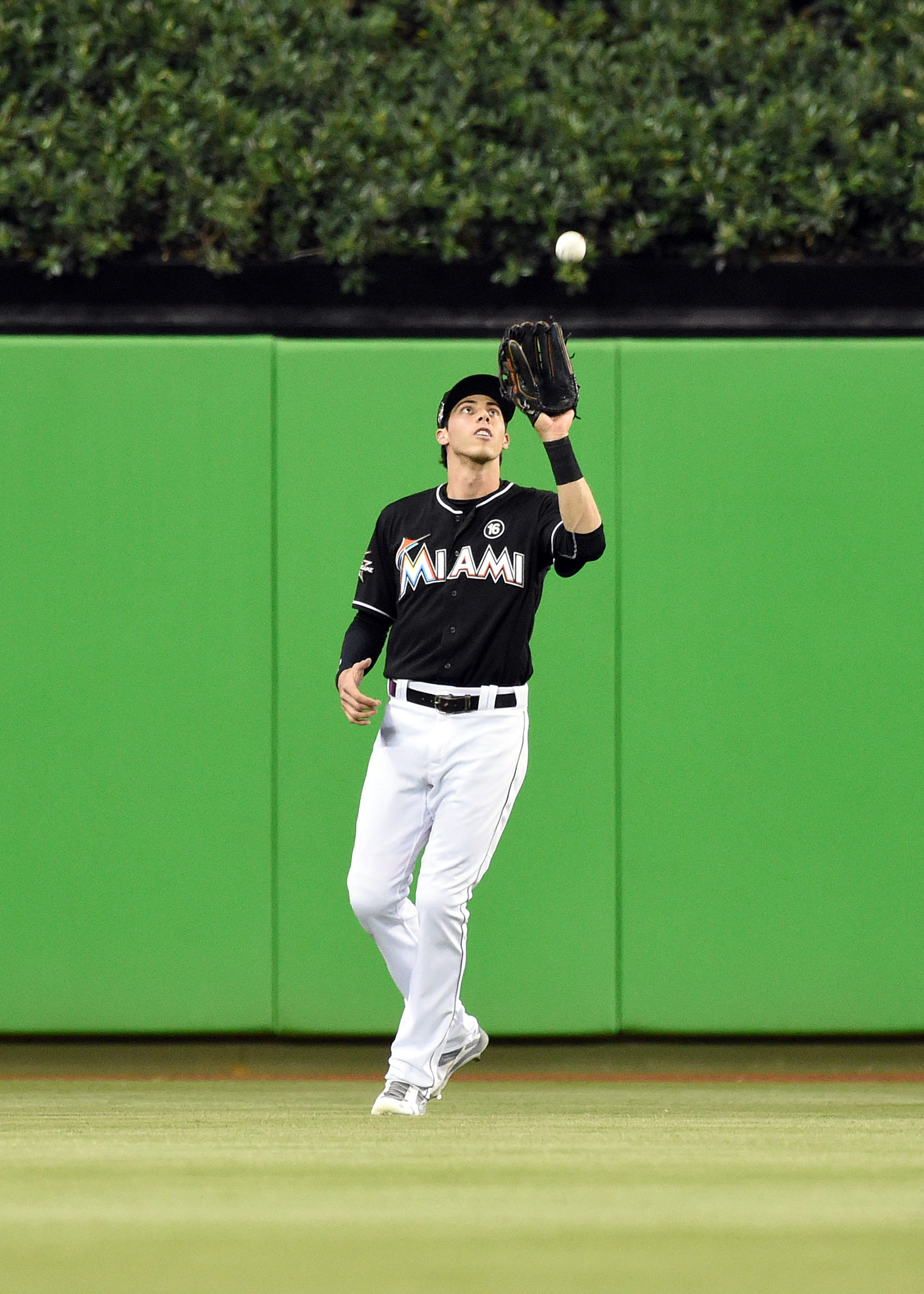
Yelich, a 2010 first-round pick who made his big league debut in 2013, established himself as a high-average, high-OBP hitter who could steal double-digit bases and play a quality left field during his first two-plus years in the league. While that blend of skills made Yelich quite valuable, the lefty-swinger didn’t complement it with much power, hitting only 20 home runs and posting a .116 ISO in 1,458 plate appearances. Last year was a different story, though, as Yelich swatted 21 homers and recorded a .185 ISO (league average was .162) in 659 PAs en route to a career-best .298/.376/.483 line and his second 4-fWAR season.
Now, Yelich is again on pace for a respectable campaign (he has accrued 1.3 fWAR in 246 plate trips), but the terrific offensive production he registered from 2013-16 hasn’t been present. At .259/.343/.392, Yelich has logged a league-average OPS+ (100) and a slightly below-average wRC+ (97). With a .132 ISO, the grounder-hitting Yelich has also lost much of the power he showed last season. One obvious problem has been a lack of line drives, as Yelich’s 17.1 percent mark is both a career worst and a 6.3 percent decline from last season.
Even if Yelich’s batted-ball profile stays the same, there are reasons to expect positive regression in his production. Yelich’s batting average on balls in play (.286) is 68 points lower than his career figure (.354), for one, and his .342 xwOBA (via Baseball Savant) indicates he deserves better than his actual wOBA (.319). Plus, Yelich has continued to walk at a solid clip (10.6 percent, compared to a career 10.4 percent), and has not contributed to the league’s growing strikeout trend. Yelich has struck out just 16.7 percent of the time, which is far better than both his lifetime mark (20.4) and the league average (21.6).
While Yelich’s offensive game is the main reason he’s so highly regarded, defense has also been a strength. Yelich combined for 32 Defensive Runs Saved and a 12.3 Ultimate Zone Rating in left field from 2013-16, leading the Marlins to shift him to the outfield’s most important position – center – during the offseason. The returns have been encouraging so far, albeit over a small sample, with Yelich having saved a pair of runs and contributed a 7.5 UZR/150.
Affordable, well-rounded players – especially those who can handle a premium position – obviously carry major value, evidenced by the prospect haul the Nationals sent to the White Sox for Adam Eaton over the winter. Washington parted with two of MLB.com’s top 40 prospects, right-handers Lucas Giolito (No. 3) and Reynaldo Lopez (No. 38), as well as 2016 first-round righty Dane Dunning to acquire up to five years and $38.4MM of Eaton. Yelich is three years younger than Eaton and also comes at a very reasonable cost. He’s due around $45MM through 2021 and either a $15MM club option or a $1.25MM buyout in 2022. Yelich has already outperformed the worth of his contract, per FanGraphs, which values his production at $64.5MM dating back to 2015.
If the Marlins do market the remainder of Yelich’s 20s prior to the deadline, plenty of potential suitors are likely to emerge. Thanks to Yelich’s age and team control, even clubs that aren’t in the playoff hunt this season (but view themselves as near-future contenders) could attempt to acquire him. As such, the Marlins would probably be in position to add multiple high-end youngsters to a system that, in Baseball America’s view, only has one top 100 prospect. That prospect, Garrett, falls toward the low end of BA’s list (No. 80) and is now facing a rather uncertain future on account of his elbow injury.
Photo courtesy of USA Today Sports Images.
The Glass Is Always Half-Full: A Conversation With Jayson Stark
There once was a day-and-age when, if your services were no longer needed, you could keep it quiet.
And there once was a day-and-age when, if you were a baseball writer and had a scoop, you would have to do everything you could to keep it under wraps until that revelation appeared in the next day’s newspaper.
In today’s world, though, it’s nearly impossible to keep a secret.
“When I first started, newspapers were king … and we lived in a tomorrow morning world. If you got a story, you had to try to protect it all day and all night,” said Jayson Stark, who has been a fixture on the MLB scene since 1979.
“It’s crazy to think about that, compared to what goes on now – where you hear it and you just tweet it … fire it out there … it’s on your site … you blog it. It’s so amusing to think about the stuff that we had to do to try to guard our stories for hours and hours and hours back in the day.”
In late April, Stark – who was used to breaking baseball news – suddenly was about to become news. The word was going to get out that he was no longer working for ESPN, so he provided his own scoop on Twitter: “For 17 yrs I’ve had a dream job covering baseball for ESPN. Today is my last day. Thanks to all the great people at ESPN, MLB & all of you!”
Stark had joined ESPN as a senior baseball writer in 2000, and his Rumblings and Grumblings column was a must-read. Before his time there, he had worked for The Philadelphia Inquirer since 1979 – first, as a Phillies beat writer and later as a national baseball writer and columnist. He became a household name in the baseball community thanks to his syndicated weekly baseball roundup, where he loved to share the stories behind the stories and the humorous side of the sport.
His mantra: “I have always felt that the challenge is to tell the best stories, get the best information, get the best quotes, and find the best nuggets,” he said.
As a “free agent,” Stark is mulling his next career move. When a decision is made, his 535,000-plus Twitter followers (@jaysonst, for those who don’t) will be among the first to know.
Stark is accustomed to calling around in search of information or guidance. This time, the table was turned; he was the one answering the questions during his first extended interview since his departure from ESPN.
– – –
Chuck Wasserstrom: Thank you for taking the time to talk with MLB Trade Rumors. I’m going to start out by asking … what has this past month been like for you? There had to be that weird sensation where it’s almost like you’re being eulogized and you’re clearly still around. Kind of walk me through these last few weeks.
Jayson Stark: “There was a period where it felt like every five minutes, someone in baseball or the media universe was calling me and telling me the most incredible stuff I’d ever heard about myself. That was just overwhelming. It was amazing. At one point, my wife told me, ‘You should make a list of everybody who has checked in.’ So I did. And in just the first few days there were way over a hundred people just from inside baseball. That didn’t even count all my fellow baseball writers, people in the media, people I just befriended and met along the way who have helped me with all kinds of cool stuff, and readers and viewers and listeners. If I counted all them, it would be in the thousands.
“I don’t know how everybody reacts when that happens to them, but I’m so grateful. I really spent weeks trying to return every message, every phone call, every email, every tweet that I could, every Facebook post, every text. It was incredible and gratifying and it was fuel to keep going.
“The second part I think is … all right, how do you handle an event like this? For me, I’m Mr. Positivity anyway, so I’m just looking for that next cool thing to do. I’m taking my time and trying to find that thing.
“The third part of it is … I’ve been busier than you would think I would be. Part of that is just because I thought it was important to wake up every single day with a purpose. My routine is not that different than it’s always been. Pretty much every day, I watch video of the day before in baseball, and I keep my daily books of stuff that I find cool and fun and strange and interesting. I keep my day-by-day books because I want to stay engaged in a sport that I love.
“ESPN’s been kind enough to let me continue to do all the local radio hits on ESPN affiliates around the country that I was doing every week. So I still do them and that’s been fun. I’ve put a lot of energy into that because I enjoy it. One thing that I think has always been clear is this was a labor of love for me. It was a dream job for me. I wanted to make clear by the way I went about life after ESPN that I still love it and I will continue to love it. Whatever I do next, I’ll love that. That’s been a big part of it.
“Then, of course, the last thing is … people like us – we don’t get to breathe in and breathe out during the baseball season. I really want to make sure that I do that – and spend time with my wife and my family and my friends. There’s going to be some opportunities to do things that I haven’t been able to do in the summer, and I’m going to make sure I do that. I’m going to go to Cooperstown for induction weekend. It’s been hard to do that in recent years because it’s right around the trading deadline.
“To me, this time has been strange, but my glass is always half full – and it’s been half full every day through all of it.”
Inside The Draft Room: The 2002-2003 Dodgers
All Logan White could do was laugh when I shared my story.
The 2008 Cubs – the winningest team in the National League that season at 97-64 – were taking on the 84-78 Dodgers in the Division Series. At the time, I was a member of the Cubs’ Baseball Operations department.
It was expected to be a quick series, and it was – for Los Angeles. Sure, Manny Ramirez had a thing or two to do with the Dodgers’ three-game sweep, but the big blow in Game 1 was a James Loney grand slam. For good measure, Russell Martin also went deep later in the contest. In Game 2, Chad Billingsley stifled Cubs bats, allowing one run in 6.2 innings while fanning seven. In Game 3, Jonathan Broxton had his third scoreless appearance of the NLDS in picking up the save and completing the sweep.
“That was a lot of fun,” said White, who is now in his third year with the Padres after spending 13 years up the coast in Los Angeles. In his first two Dodgers drafts in 2002 and 2003, White’s combined haul included Loney, Martin, Billingsley, Broxton, Matt Kemp and A.J. Ellis, along with nine others who spent time in the Majors. “What wasn’t fun is we could never get to the big dance. And you know how hard that is, obviously. It’s tough to get to the big game, and that was my only regret when I was in L.A. – never getting to the World Series.
“That’s what keeps us going. That’s what we’re trying to do in San Diego now. We’re trying to rebuild the farm and everything. Hopefully, at some point, we’ll have some young players like you saw in those Dodgers days.”
– – –
Going back to the early years of the draft – heck, you can really go back to their Brooklyn days and Branch Rickey – the Dodgers have had a reputation for player development and scouting.
Baseball America still calls the Dodgers’ class of 1968 “the best in draft annals,” as the team selected Ron Cey, Steve Garvey, Davey Lopes, Bill Buckner, Doyle Alexander, Geoff Zahn, Joe Ferguson, Tom Paciorek and Bobby Valentine.
But after years of draft success, Los Angeles then had a dry spell. While the 1993 draft brought a couple solid longtime Dodgers in Darren Dreifort and Paul Lo Duca, there was very little cause to pat themselves on the back from 1994-2001. Granted, there were a few solid hits – Paul Konerko (1994), Ted Lilly (1996) and Shane Victorino (1999) – but those three made their biggest impact with other organizations.
In November 2001, the Dodgers turned to Logan White to return their scouting department to its glory days.
A former relief pitcher in Seattle’s farm system, White began his scouting career in 1988 as an associate scout with the Mariners. He had stints as the West Coast supervisor for San Diego (1993-1995) and Baltimore (1996-2001) en route to Los Angeles.
Upon joining the Dodgers’ organization, White brought with him a very high school-centric draft philosophy.
“I think my approach developed from watching others,” he said. “Having been around Don Welke – who was a mentor of mine and worked for Toronto for a long time, and being around Pat Gillick, and in watching the Atlanta Braves during that period of time … when you look at them, they drafted a lot of high-ceiling players and high school players. What I found out was … if you’re picking in the top 10 of the draft, there’s a lot of good scouts and evaluators out there, so teams generally will take the good college player up there.
“We were picking 19th in 2002 and 24th in 2003. My research showed that you’d better know the high school player there because the quality college players that everyone knows have already been taken. Now, there are exceptions to that rule, of course. Mike Mussina went 20th for the Orioles when I was there (in 1990), that type of thing. But there was some philosophy behind it; I didn’t look at it as analytics at the time, but I did research on it.
“The other thing … there was a dynamic that happened in 2002 and 2003. That was the beginning of the ‘Moneyball’ years where teams – it wasn’t just Oakland – were drafting heavily from college. That was their philosophy and a lot of teams did well at it. So maybe 10 or 15 of them weren’t drafting from the high school pool. It just left a bigger pool of talent for us at the high school level in those years. So it was kind of by design and by circumstance, if that makes sense.
“At the same time, we were just trying to draft the best available player who we thought had the highest ceiling. For example, let’s say there would be a college player we liked. We mixed our high school and college players together on the draft board. The college player would be pushed down a little further. Well, now you take another team and they’re only ranking college players. The college player gets ranked higher on their board. Say there’s a college player we would have liked to take in round three. But shoot, he went in round two or at the end of the first round to one of the teams selecting only from the college pool.
“It left us more high school players. It’s really how the draft fell because we liked a number of college guys. Heck, we liked Nick Swisher, but Swisher went before we picked.”
Swisher, who had attended Ohio State, was taken at No. 16 in the 2002 draft by Oakland.
“That’s kind of how those drafts unfolded,” White said. “But we did focus on the high school player. That was definitely by design.”
The 2002 and 2003 drafts were very different for the Dodgers in terms of volume of picks – in ’02, the team gained two additional selections as compensation for the loss of free agent Chan Ho Park to Texas; in ’03, the club only had one pick in the top 60 – but not in terms of a common theme. In his first year as a scouting director, White didn’t select a four-year college player until his ninth pick. In his second year, his first eight picks – and 13 of his first 15 – were high school players.Read more
Knocking Down The Door: Adams, Blackburn, Fisher, Meadows, Therrien
This week’s installation of “Knocking Down The Door” includes two highly-touted center field prospects, a reliever who had been doing his best Kenley Jansen impression in Double-A before a recent promotion to Triple-A, and a pair of starting pitchers who can’t be too far off from making their MLB debuts after dominating in their last outings.
Chance Adams, SP, New York Yankees (Triple-A Scranton/Wilkes-Barre)
If the Yankees, one of three teams in baseball to have only used five starting pitchers this season, need to dip into their farm system for rotation help, they appear to be in good shape with Chance Adams waiting in the wings.
The 22-year-old right-hander has risen up the ladder swiftly without much of a struggle in 220 2/3 minor league innings. After posting a 1.03 ERA in six Double-A starts to begin the season, he hasn’t slowed him down one bit since a promotion to Triple-A. He recently lowered his ERA to 1.57 after tossing one-hit ball over six shutout innings with two walks and a season-high 12 strikeouts in his fourth start with Scranton/Wilkes-Barre.
There doesn’t appear to be an immediate opening in the Yankees’ rotation, although Masahiro Tanaka‘s recent performance—21 earned runs and 30 hits over his last 17 2/3 innings—might be an indication that he’s not completely healthy and could use a stint on the disabled list.
—
Paul Blackburn, SP, Oakland Athletics (Triple-A Nashville)
Acquired from the Mariners this past offseason for Danny Valencia, Blackburn has not wasted time in impressing his new organization. After not allowing a run in three of his last four starts, including seven shutout innings on Sunday, the 23-year-old has his ERA down to 3.26 with a 2.4 BB/9 and 6.7 K/9.
With Jharel Cotton‘s demotion to Triple-A last month lasting only two starts due to injuries to Kendall Graveman and Jesse Hahn, Blackburn’s emergence could afford the A’s the opportunity to get him back down to there to work on things for an extended period this time around.
—
Derek Fisher, OF, Houston Astros (Triple-A Fresno)
It’s clear that Fisher’s overall game needs some work—50 strikeouts in 53 games; caught stealing 10 times in 19 attempts—and the powerful Astros lineup doesn’t appear to need any help right now. But it’s hard to ignore the rest of his numbers (.338/.397/.606; 14 HR, 16 2B, 19 BB) and not wonder how much more firepower he could add to the bottom of the Astros’ lineup in place of left fielder Nori Aoki, who isn’t doing much out of the No. 9 spot (.624 OPS).
Prior to a hitless game on Sunday, the 23-year-old Fisher had been on a nine-game hitting streak in which he had a .486 batting average (18-for-37), four doubles and four homers. It would likely benefit him to continue working on his game down in Triple-A, but he could also learn on the job in a low-pressure environment while giving the Astros much more production than they’re currently getting out of left field.
—
Austin Meadows, OF, Pittsburgh Pirates (Triple-A Indianapolis)
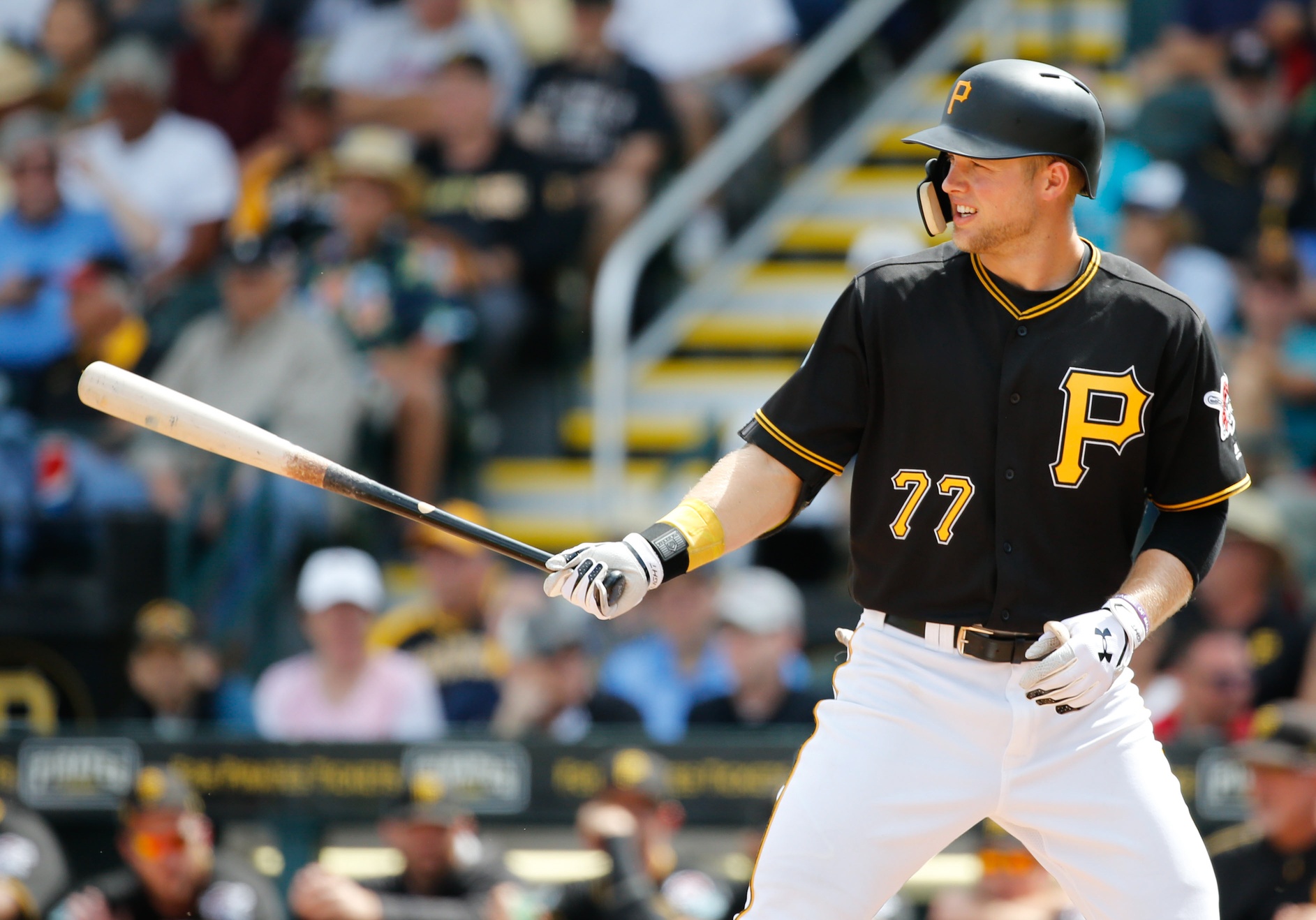
When the Pirates were in need of an outfielder in mid-April after the 80-game suspension of Starling Marte was announced, Meadows was in a deep slump and not deserving of his first MLB call-up. With Marte’s return still more than a month away, however, it’s not too late for the Pirates to get a look at their top prospect, who has turned things around and has the potential to give a struggling team a much-needed shot in the arm.
Since posting a .503 OPS with five walks and 20 strikeouts in April, the 22-year-old has hit .302 with two homers, 12 doubles, 11 walks, 20 strikeouts and six stolen bases over his last 31 games. Adam Frazier, who is currently getting most of the starts in left field, has been one of the few bright spots for the Pirates. His ability to play multiple positions, however, makes him valuable as a super-utility man, which will be his role if Meadows gets the call.
—
Jesen Therrien, RP, Philadelphia Phillies (Triple-A Lehigh Valley)
Therrien is only one scoreless appearance into his first Triple-A stint, but if his numbers at Double-A are any indication—1.26 ERA, 28 2/3 innings, 14 hits, three walks, 39 strikeouts—the 24-year-old right-hander shouldn’t be far away from helping a beleaguered Phillies bullpen.
With Joaquin Benoit on the disabled list, Jeanmar Gomez demoted to the bottom of the depth chart and Edubray Ramos not having the impact the team was hoping for, the rebuilding Phillies could not only use some reinforcements, they could also start looking towards the future and finding out which young arms will be able to help them in 2018 and beyond.
—
“Knocking Down the Door” is a weekly feature that identifies minor leaguers who are making a case for a big league promotion.
Photos courtesy of USA Today Sports Images.
MLBTR Originals
Here’s the past week’s original content from the MLB Trade Rumors writing staff…
- As potential buyers and sellers prepare for the trade deadline, MLBTR will be previewing some potential names who could be changing uniforms on or before July 31 in our Trade Candidate series. First up, Mark Polishuk looked at the Phillies‘ Howie Kendrick and Connor Byrne examined Pirates right-hander Gerrit Cole.
- While most of the deadline dealing will come in July, it isn’t too unusual to see a big trade swung in June. Jeff Todd looks back at some notable June trades from the last five seasons.
- Also from Jeff, he listed nine veteran players who are putting up big numbers after signing low-cost one-year contracts.
- Logan Morrison is another player who took a modest contract (one year, $2.5MM) last winter and is now positioning himself for a much bigger free agent payday this coming offseason. “LoMo” entered today’s action with 16 homers and a .243/.347/.551 slash line in 219 plate appearances for the Rays. Jeff breaks down Morrison’s season and looks at his open market earning potential in our latest Free Agent Stock Watch piece.
Trade Candidate: Gerrit Cole
Major league teams are always on the lookout for established, affordable pitching. That fact could make right-hander Gerrit Cole, he of the $3.75MM salary, among the most appealing players available if the Pirates shop him prior to the trade deadline.
While Cole has drawn interest, there’s no indication Pittsburgh will place him on the block in the next couple months. However, the Pirates are just 25-31 – four games behind the NL Central-leading Brewers and eight games out of a wild-card spot – so it looks likely they’ll end up selling. As such, it could behoove the Bucs to at least listen to offers for Cole, especially if they’re unconvinced they’ll be able to return to their playoff-caliber ways of 2013-15 in the near future. The Pirates’ window with Cole is running out (he’s controllable via arbitration through 2019), and as a low-payroll outfit, odds are the team won’t be able to keep the Scott Boras client from hitting free agency if it elects against trading him in the coming years.
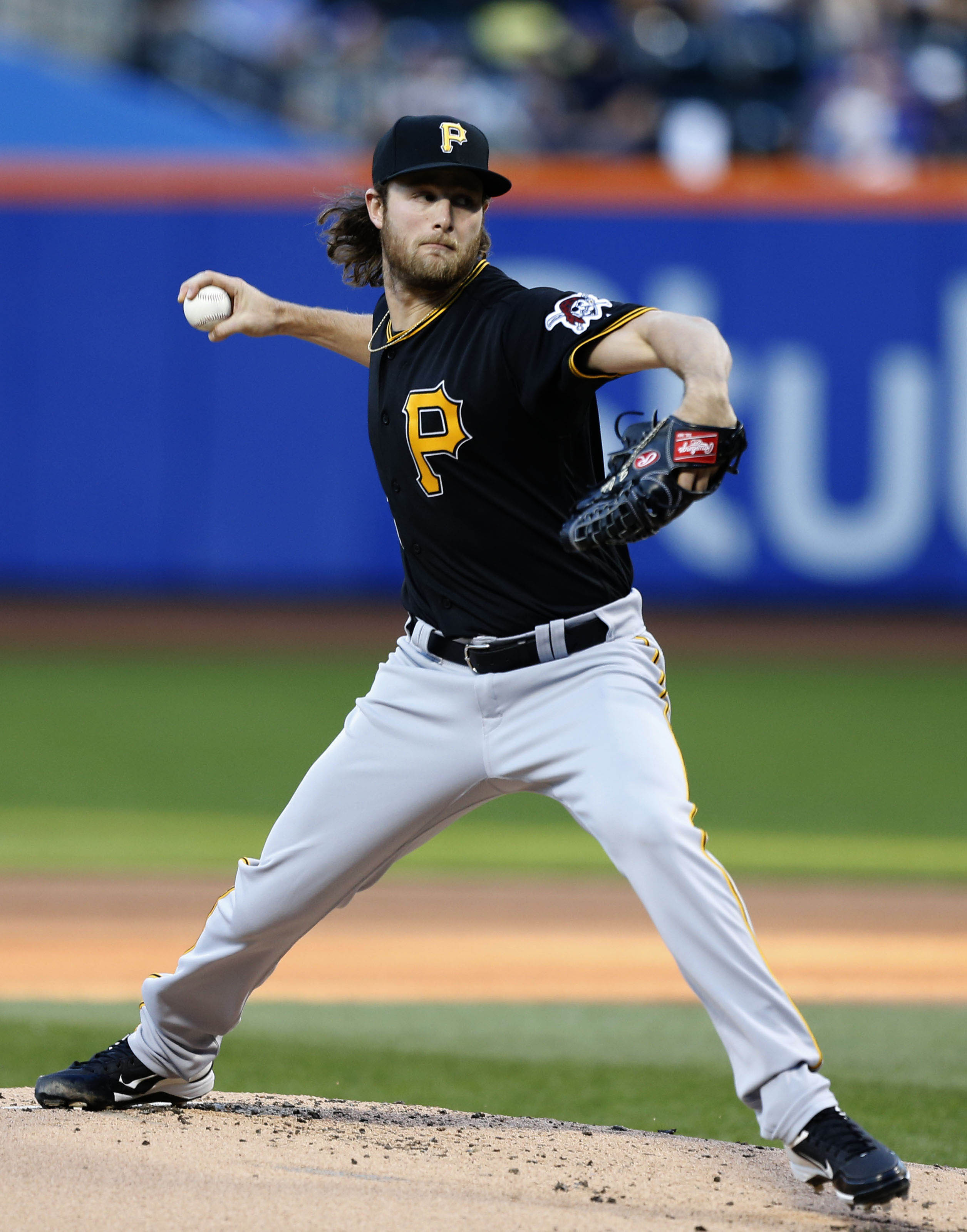
The problem for the Pirates, both from a contending standpoint and for Cole’s trade value, is that the 26-year-old has taken steps backward since his earlier days in the league. During his best season, 2015, Cole was a bona fide ace who notched 208 innings of 2.60 ERA ball (with a 2.66 FIP) and helped his cause with strong strikeout, walk and ground-ball rates. Cole’s ERA went up nearly a run and a half last year (3.88, with a still-impressive 3.33 FIP) as his strikeout rate sunk, but injuries may have played a part in that. Pittsburgh shut down Cole in early September after just 116 innings and multiple stints on the disabled list – one for a strained triceps and another for elbow inflammation.
Fortunately, Cole has stayed healthy this year and already amassed 71 2/3 frames, but the results haven’t been great. While Cole has continued to limit walks (2.01 per nine) and generate grounders (46 percent), he ranks middle of the pack or worse among FanGraphs’ 89 qualifying starters in ERA (4.27, 55th), FIP (4.77, 67th), K/9 (7.66, 50th) and strikeout percentage (20.3, 47th). The main culprit for Cole’s run prevention issues is a bloated home run-to-fly ball ratio (19.7 percent), up from a career 9.3 percent. With 15 homers allowed, Cole has already established a career worst and yielded eight more long balls than he did during his truncated 2016.
Cole’s history indicates he’ll positively regress in the home run department, but it’s not a sure thing if his fastball doesn’t regain its effectiveness. Although Cole sits second among starters in average sinker velocity (96.15) and third in four-seam velo (96.73), according to Baseball Prospectus, he hasn’t exactly dominated with those pitches. Back in 2015, Cole had the second-most valuable fastball among starters, per FanGraphs, but it has been the ninth-worst pitch of its kind so far this year. Hitters have posted a .947 OPS against Cole’s four-seamer and a .945 mark versus his sinker, the two pitches he has leaned on the most, while his third, fourth and fifth offerings (his slider, changeup and knuckle-curve) have yielded an OPS of .644, .645 and .697, respectively.
Left-handed hitters have been especially tough on Cole, having slashed .276/.308/.572 with 10 homers and held their own against nearly all of his pitches, primarily his four-seamer. That certainly wasn’t the case when Cole’s four-seamer stymied lefties in 2015, and heat maps courtesy of FanGraphs (click to view: 2015, 2017) indicate he’s not locating the pitch as precisely as he did then. Meanwhile, with the exception of his sinker, Cole’s repertoire has limited same-handed batters, who have hit .244/.304/.314 against him. Four of righties’ five HRs off Cole have come against his sinker, which was tough to square up during his career year. As Brooks Baseball’s heat maps show (click to view: 2015, 2017), Cole’s not coming inside against righties with his sinker to nearly the extent that he did in the past, and the pitch has too often found the middle of the plate.
In fairness to Cole, his struggles this year largely boil down to his most recent three starts, a 14 2/3-inning stretch in which he gave up a combined 16 earned runs on 28 hits and eight homers. As recently as May 21, Cole was running a sub-3.00 ERA, and eight of his first nine outings were quality starts. If that version of Cole resurfaces and the Pirates do shop him by the end of July, they’d be within reason to request a prospect bounty in return. On the other hand, should the Cole who has shown up over the past two weeks stick around, Pittsburgh might be better served to keep the fifth-year man through season’s end and market him over the winter or during the 2018 campaign. After all, if Cole’s woes against opposite-handed batters continue, starter-needy contenders like the Astros, Yankees and Rockies – all of whom play in hitter-friendly parks – may not be keen on parting with multiple high-end prospects for someone generating so-so results.
Photo courtesy of USA Today Sports Images.
9 Budget Free Agent Hitters Off To Strong Starts
Mining the free agent ranks for good value remains an art, with the potential for rather significant rewards. While it’s unusual for a team to find a true gem — think Justin Turner — there is quite a lot of potential for adding impact in part-time roles.
We already looked at some minor-league signees who have impacted their organizations’ bullpens. Now, let’s check in on some hitters who signed for little but have been rather useful through about two months of action:
- Alexi Amarista, INF, Rockies — The 28-year-old has helped cover for the injured Trevor Story, and he’s doing more than just keeping the team afloat. Through 69 trips to the plate, he’s hitting .338/.348/.515. There’s obviously quite a lot of room for regression baked in — Amarista has drawn just one walk and carries a .412 BABIP — but he’s been a big help for the emerging Rockies team at the meager cost of $1.25MM.
- Daniel Descalso, INF, Diamondbacks — After Colorado let the utilityman go over the winter, Descalso landed only $1.5MM despite a solid 2016 season. That has worked out just fine for Arizona, which has received 92 plate appearances of .218/.337/.410 hitting from the veteran, who is walking at a 13.0% clip and succeeding despite a .250 BABIP.
- Chris Iannetta, C, Diamondbacks — Also earning a meager $1.5MM, Iannetta has helped the DBacks feel better about the decision to allow Welington Castillo to walk. Though the typically patient Iannetta is walking at about half of his career rate, he’s driving the ball like never before. Over eighty plate appearances, Iannetta has smacked six long balls and owns a .288 isolated slugging mark.
- Franklin Gutierrez, OF, Dodgers — Taking home a modest $2.6MM salary, Gutierrez has been quite productive when healthy. While Los Angeles will only ask him to play a limited role, the team will be thrilled if he can keep producing at a .257/.350/.429 rate the rest of the way.
- Austin Jackson, OF, Indians — After settling for a minor-league deal over the winter, Jackson came with low expectations. But he made the Opening Day roster and owns a .273/.327/.523 batting line that points back to his days as one of the game’s more promising young players.
- Adam Lind, 1B, Nationals — Lind languished on the market along with a variety of other sluggers, eventually scoring just $1.5MM to function as a lefty complement to Ryan Zimmerman at first base. While the Nats have received plenty of production from Zimmerman, the team is also enjoying Lind’s robust output off the bench. He owns a .340/.400/.604 slash over sixty plate appearances, with as many walks as strikeouts (10.0% apiece).
- Mark Reynolds, 1B, Rockies — Expected to land on the bench after returning to Colorado on a minors deal, Reynolds was thrown into a more significant role when Ian Desmond opened the year on the DL. He has responded with outstanding production: .313/.388/.555 with 13 home runs in 206 plate appearances.
- Kurt Suzuki, C, Braves — At just $1.5MM, Suzuki has been quite the bargain. He’s outhitting most of the league’s catchers in his 88 plate appearances, with a .257/.379/.457 slash. Interestingly, Suzuki is walking 11.4% of the time — nearly double his typical levels — while also hitting for good power (.200 ISO).
- Chase Utley, INF, Dodgers — The former star took home just $2MM in exchange for his services this year, and seemed ready to take a smaller role on the Dodgers’ bench. After a slow start, though, he has begun to deliver. 125 plate appearances into the season, he’s batting .252/.347/.430 with three dingers and three steals — the type of production not seen since back in 2013, when he was still with the Phillies.
Free Agent Stock Watch: Logan Morrison
As with several other players profiled in this series, Logan Morrison of the Rays is worth watching both as a pending free agent and as a potential trade piece. While Tampa Bay is currently one game over .500, a dip in the standings could leave Morrison and others on the block.
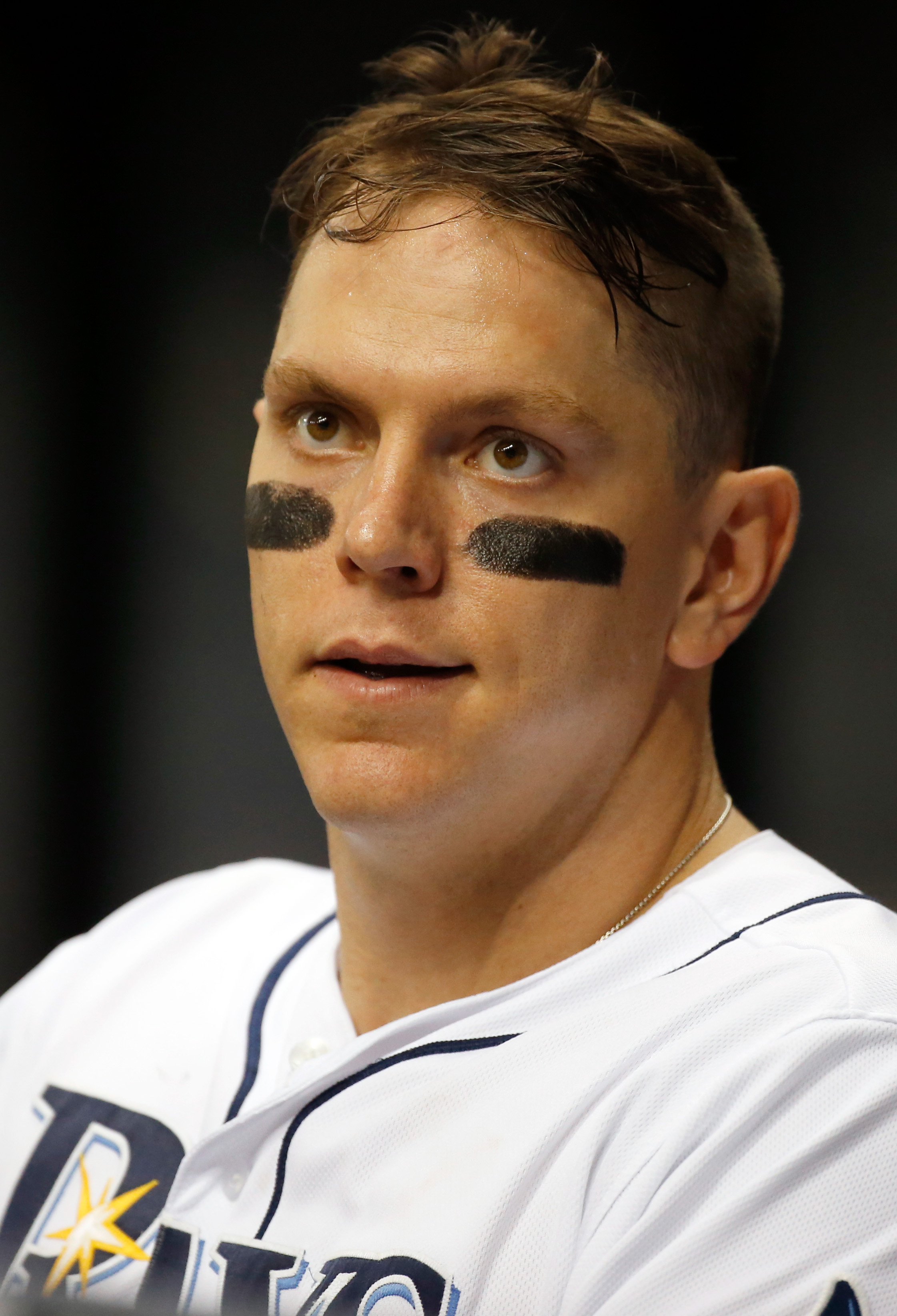
Regardless of his trade availability, LoMo is an interesting player to watch from a hot stove perspective. While Yonder Alonso has garnered more attention — we profiled him recently right here — Morrison has been quite impressive in his own right.
On the heels of a middling 2016 season for both team and player, the Rays gave Morrison $2.5MM on a one-year deal over the winter. That decision has been rewarded quite handsomely through two months of the season.
Morrison, 29, has already matched his home run tally (14) from a season ago in just over half the plate appearances. Through 206 trips to the dish, he’s slashing .241/.345/.534 — despite carrying only a .243 batting average on balls in play.
There’s more to like here than just the pop, though Morrison’s .293 isolated slugging mark is plenty impressive. While continuing to swing and miss more frequently than he had before arriving in Tampa Bay (23.3% on the season), that aggression has obviously paid off in the results. Importantly, too, Morrison is drawing walks at an impressive 13.6% clip.
If he can maintain that boost in the walk department while his BABIP creeps back toward the mean, Morrison might keep up his overall productivity with the bat even if he doesn’t maintain his current home run pace. His 23.7% HR/FB rate is nearly double his career average, and seems likely to regress somewhat. That said, there are signs that the jump in power may be real in its own right. Morrison is hitting fly balls much more frequently than ever before (45.7%), carries a hefty average launch angle (17.28 degrees), and has shown huge strides in his hard-hit rate (42.6%).
So, it seems that Morrison may be taking part in the flyball revolution that is spreading around the game. It’ll be interesting, though, to see what that means for his market — in trade this summer, potentially, and in free agency over the winter.
There are, after all, plenty of other defensively limited sluggers who are making similar strides. And the 2017-18 free agent market seems increasingly like to be chock full of power bats. In addition to Alonso, left-handed-hitting first basemen that will be available include Eric Hosmer, Lucas Duda, Mitch Moreland, Adam Lind, and the switch-hitting Carlos Santana. They’ll also be competing with righty corner infielders such as Todd Frazier, Mike Napoli, Mark Reynolds, and Chris Carter — not to mention outfield/DH candidates like J.D. Martinez, Carlos Gonzalez, Jay Bruce, Matt Holliday, and possibly Justin Upton.
That’s quite a lot of thump. As was the case last year, the sheer volume of power bats could work to the disadvantage of all — and, perhaps, to the benefit of those teams that play the market well. Beyond that, there’s still quite a lot left for Morrison to show over the rest of the year. He has been quite good against lefties this year, but has struggled historically. And though he’s drawing average reviews for his glovework in 2017, his deeper history suggests he’s a slightly below-average fielder. And most generally, while Morrison has had productive seasons in the past, he has also had his share of duds and has never maintained this kind of output for an entire campaign. At this stage, though, the arrow is pointed up.
Photo courtesy of USA Today Sports Images.