
Yokohama BayStars Post Yoshitomo Tsutsugo
November 18: The posting formally occurred today, meaning the deadline to reach a deal is December 19th, per Joel Sherman of the New York Post (via Twitter).
November 15: The Yokohama DeNA BayStars of Japan’s Nippon Professional Baseball announced Friday that they have posted slugging left fielder/first baseman Yoshitomo Tsutsugo for Major League teams (link via the Japan Times). He now has 30 days to negotiate with MLB teams willing to pay the BayStars a release fee that is dependent on the size of the contract he signs.
Tsutsugo, who turns 28 on Nov. 26, has been one of Japan’s most prominent sluggers for the past four seasons, hitting a combined .293/.402/.574 with 139 home runs, 116 doubles, five triples, a 15.1 percent walk rate and a 20.4 percent strikeout rate. His best season came back in 2016, when he launched a career-high 44 home runs and slashed .322/.430/.680. It’s worth noting that Tsutsugo’s 2019 season was his weakest of the past four (.272/.388/.511, 29 home runs) and saw his strikeout rate climb to 25.3 percent.
There’s little doubting Tsutsugo’s raw power, but his ability to handle increased velocity, make consistent contact and contribute on the defensive side of the ball in MLB are less certain. Listed at 6’0″ and 209 pounds, Tsutsugo doesn’t run particularly well, and although he’s spent some time at third base in his career, most scouting reports on him agree that he’s limited to an outfield corner or first base at this point. FanGraphs’ Eric Longenhagen recently wrote of Tsutsugo that he’s a potential everyday player but one with “no margin for error because of defensive limitations,” noting that has questionable hands could make him a liability at first base. Sports Info Solutions’ Will Hoefer wrote in September that Tsutsugo has a plus throwing arm and “could be hidden in right field with strong positioning.”
The extent to which MLB clubs are sold on Tsutsugo’s defense will determine the interest in him. It’s easy to envision some NL clubs shying away — particularly those who already have a set first baseman locked into place. But Toronto general manager Ross Atkins has already acknowledged some interest in Tsutsugo, and the White Sox stand out as an obvious potential fit with both corner outfield and DH openings. Speculating a bit further, any of the Mariners, Tigers, Royals or Rangers could find a way to work him into a first base/DH/corner outfield rotation. The Marlins, with uncertainty at first base and in the outfield corners, are an on-paper fit in the NL. There’s certainly a case to be made that any rebuilding club could give Tsutsugo a look and hope to land a relatively affordable piece who can help turn things around or emerge as a trade asset.
Under the current posting system, a Major League team interested in Tsutsugo would owe the BayStars 20 percent of the first $25MM guaranteed to him, plus 17.5 percent of the next $25MM, plus 15 percent of any dollars spent north of $50MM. That release fee is on top of the guarantee itself. Contract options and performance incentives, once unlocked or triggered, are subject to a supplemental 15 percent release fee. For minor league deals, MLB clubs pay out 25 percent of the player’s signing bonus, and the player’s salary upon being added to the 25-man roster is subject to a supplemental posting fee.
Tsutsugo, who is being represented by Wasserman, has a finite free-agent window due to the 30-day nature of the posting system, so within a few days of the conclusion of next month’s Winter Meetings (from Dec. 8-12), we’ll know if he’s coming to MLB and where he’ll be playing.
Pirates Name Ben Cherington General Manager
Nov. 18: The Pirates have formally announced the hiring of Cherington as general manager.
“This is an important step forward for our organization,” owner Bob Nutting said in a press release. “Ben has an incredible track record of success having been a part of three World Championship teams in Boston, one as General Manager, and setting the table for a fourth. His passion and ability to identify, infuse and develop talent at every level, including at the Major League level, is exactly what we need to be successful in Pittsburgh.”
Nov. 15: Former Red Sox general manager and current Blue Jays senior vice president of baseball operations Ben Cherington has accepted an offer to become the next GM of the Pirates, Jason Mackey of the Pittsburgh Post-Gazette reports (via Twitter). Mackey reported last night that Cherington had been offered the position but had yet to accept or reach an agreement. Once officially announced as the replacement for the recently fired Neal Huntington, Cherington will quickly turn his attention to finding a replacement for manager Clint Hurdle, who was also fired following the 2019 season.
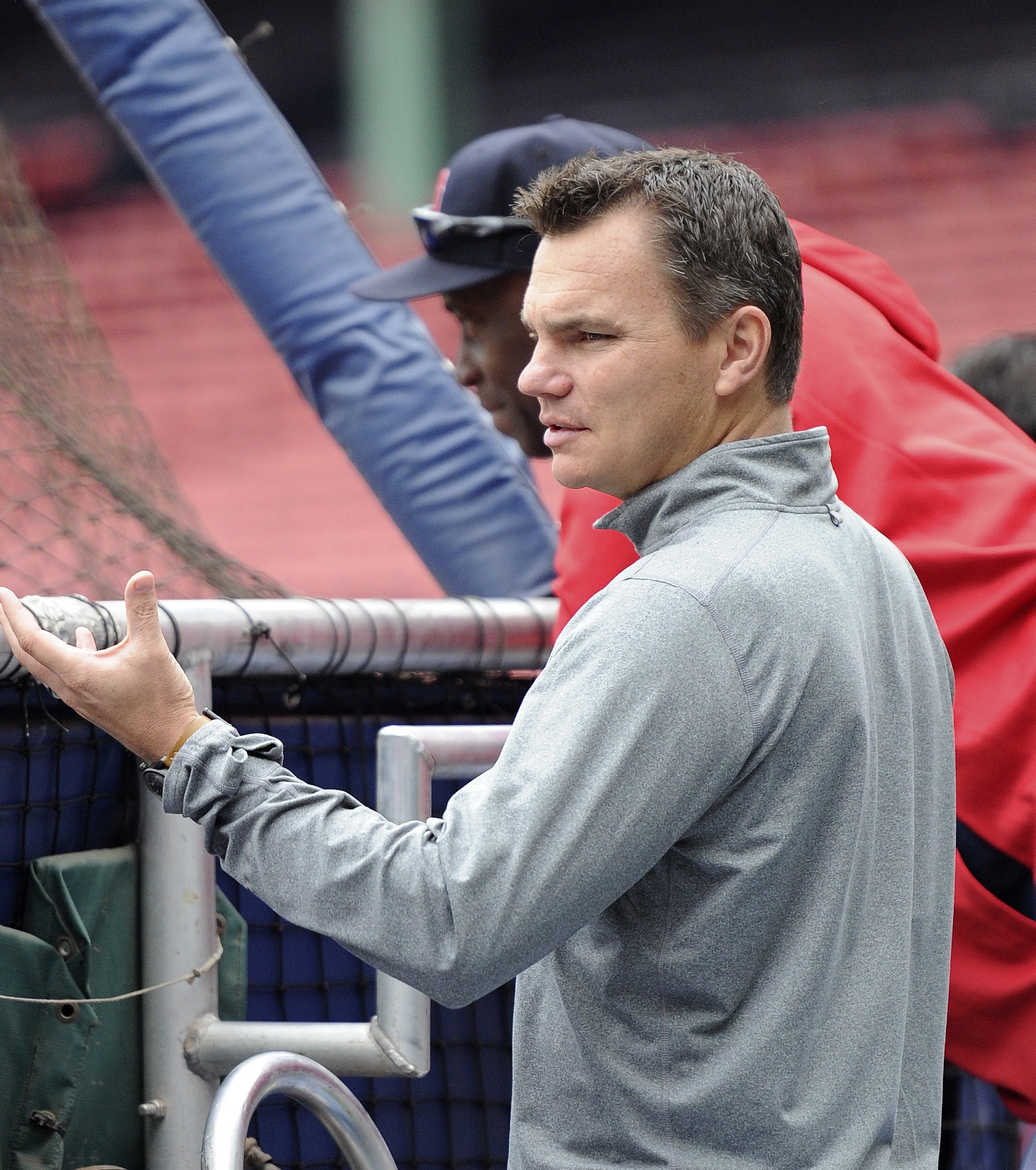
It’s been more than four years since Cherington resigned as general manager in Boston. Cherington was under contract for at least one more season when the Red Sox brought Dave Dombrowski aboard as the new president of baseball operations, and although he was offered the opportunity to retain his GM role, he instead opted to leave the organization. A year later he signed on with the Blue Jays to work in the role he held until accepting this new challenge.
Cherington is best remembered for serving as the key architect of the Red Sox’ 2013 World Series-winning roster. That season was preceded by whirlwind of free-agent additionsS that nearly all panned out; in the 2012-13 offseason, Boston signed Shane Victorino, Mike Napoli, Stephen Drew, Koji Uehara, Jonny Gomes, David Ross and Ryan Dempster. That flurry of moves was made possible when Cherington put together one of the most memorable blockbusters in recent history, trading Carl Crawford, Adrian Gonzalez, Josh Beckett and Nick Punto to the Dodgers in perhaps the most prolific salary dump of all time. In making that swap, Cherington freed up a stunning $258MM of long-term payroll commitments (none of which had been issued during his time as GM).
Of course, one can’t discuss Cherington’s run in Boston without acknowledging the ill-fated moves that ultimately led the organization to bring in Dombrowski and install him at a higher rank. The Red Sox have only recently been liberated from the last vestiges of the five-year, $95MM Pablo Sandoval contract and the four-year, $88MM commitment to Hanley Ramirez that were issued in the 2014-15 offseason. Rick Porcello won a Cy Young Award in the middle of the first year of the four-year, $82.5MM extension he signed under Cherington’s watch (which didn’t take effect until the season after Cherington left the team), but in the three subsequent years he worked to a collective 4.79 ERA in 569 innings.
Suffice it to say, as is the case for any GM/president of baseball operations whose ownership provides him substantial resources, Cherington’s track record in terms of free-agent pickups and pricey contract extensions is rather hit or miss.
Where Cherington arguably excelled most, however, was in cultivating an enviable stockpile of prospect depth that helped fuel Boston’s eventual 2018 World Series title. Rafael Devers, Andrew Benintendi and Eduardo Rodriguez were acquired during Cherington’s time as GM, as were then-prospects Yoan Moncada and Michael Kopech, who headlined the return sent to the White Sox in the Chris Sale trade. Several key graduations to the Majors and trades by the Dombrowski regime have thinned out the Red Sox’ minor league depth, but Boston was considered to have an elite farm system at the time of Cherington’s departure.
More recently, with the Jays, Cherington has worked with a particular focus on the club’s player development efforts. And while a farm system is always a product of a group effort, it’s nonetheless notable that the Jays have churned out notable prospects like Bo Bichette, Vladimir Guerrero Jr., Cavan Biggio and Danny Jansen while continuing to cultivate an increasingly impressive amount of depth. That may have been one of the most appealing aspects of Cherington’s track record to the Pirates, who currently possess what is considered at best a middle-of-the road farm system (No. 15 at MLB.com and No. 20 at Baseball America).
Continued success in that area will be crucial to Cherington’s success or failure in Pittsburgh, as he’ll have only a fraction of the player personnel budget to which he was accustomed during his time as GM in Boston. The Pirates are perennially among the league’s lowest-spending clubs under owner Bob Nutting, meaning Cherington will need a deep reserve of cost-controlled talent from which to draw as he navigates the financial obstacles that accompany any low-payroll GM’s job.
The biggest offseason questions on Cherington’s roster, once the field staff is set, will be how to proceed with center fielder Starling Marte and right-hander Chris Archer. Both are controlled for another two seasons, and Archer is coming off perhaps the worst season of his career. Marte figures to be an in-demand trade asset given his consistent production and the dearth of quality center-field options on the free-agent market, while Archer could yet have considerable trade value given his raw stuff, affordable contract and a similar lack of high-end pitching targets on the trade market. Determining the right time to pull the trigger on that type of deal will become the norm for Cherington in the years to come, barring an unexpected hike in payroll from ownership.
7 Players Reject Qualifying Offers
The 4pm CT deadline has passed for free agents to accept or reject qualifying offers, and seven of the 10 players issued offers have officially turned them down. An eighth free agent, Will Smith, rejected the Giants’ qualifying offer and left the free agent market even before the deadline passed, signing a three-year, $40MM deal with the Braves. Jake Odorizzi of the Twins and Jose Abreu of the White Sox each accepted their team’s qualifying offers, and will now earn $17.8MM for the 2020 season.
Here are the seven players who rejected their former team’s one-year, $17.8MM qualifying offer….
- Madison Bumgarner (Giants)
- Gerrit Cole (Astros)
- Josh Donaldson (Braves)
- Marcell Ozuna (Cardinals)
- Anthony Rendon (Nationals)
- Stephen Strasburg (Nationals)
- Zack Wheeler (Mets)
There aren’t any surprises in that list, as there wasn’t doubt that Bumgarner, Cole, Donaldson, Rendon, Strasburg, and Wheeler would forego the one-year offer in search of a much richer, multi-year commitment. There was perhaps a bit more uncertainty surrounding Ozuna and Smith, given that Ozuna was coming off a pair of good but unspectacular years in St. Louis and Smith could perhaps have been wary of how the QO would impact his market, given what happened to another closer in Craig Kimbrel last winter.
If anything, the only real surprise occurred on the acceptance side, as Odorizzi was seen as a candidate to receive a multi-year offer before he opted to remain in Minnesota in 2020. Abreu, on the other hand, was widely expected to remain with the White Sox in some fashion, either via the QO or perhaps a multi-year extension. It should be noted that Odorizzi and Abreu are still free to negotiate longer-term deals with their respective teams even after accepting the qualifying offer.
Teams that sign a QO-rejecting free agent will have to give up at least one draft pick and some amount of international bonus pool money as compensation. (Click here for the list of what each individual team would have to forfeit to sign a QO free agent). The Astros, Nationals, Giants, Mets, Cardinals, and Braves are each in the same tier of compensation pool, so if any of their QO free agents signs elsewhere, the six teams will receive a compensatory draft pick between Competitive Balance Round B and the third round of the 2020 draft, or roughly in the range of the 75th to 85th overall pick. Atlanta, for instance, probably didn’t mind giving up their third-highest selection in the 2020 draft to sign Smith since the Braves have another pick coming back to their if Donaldson leaves for another club.
A total of 90 players have been issued qualifying offers since the QO system was introduced during the 2012-13 offseason, and Odorizzi and Abreu become the seventh and eighth players to accept the one-year pact. Odorizzi and Abreu are now ineligible to receive a qualifying offer in any future trips into free agency, so both players won’t be tied to draft/international pool penalties if they hit the open market following the 2020 season.
MLB.com’s Mark Feinsand was the first to report that Donaldson turned down his QO, while ESPN.com’s Jeff Passan was the first to report on the other six names.
Jose Abreu Accepts Qualifying Offer From White Sox
Jose Abreu will stay with the White Sox rather than test the free agent market, as ESPN.com’s Jeff Passan reports (Twitter link) that the first baseman has accepted the team’s one-year, $17.8MM qualifying offer. The team has since announced that Abreu is indeed returning after accepting the QO.
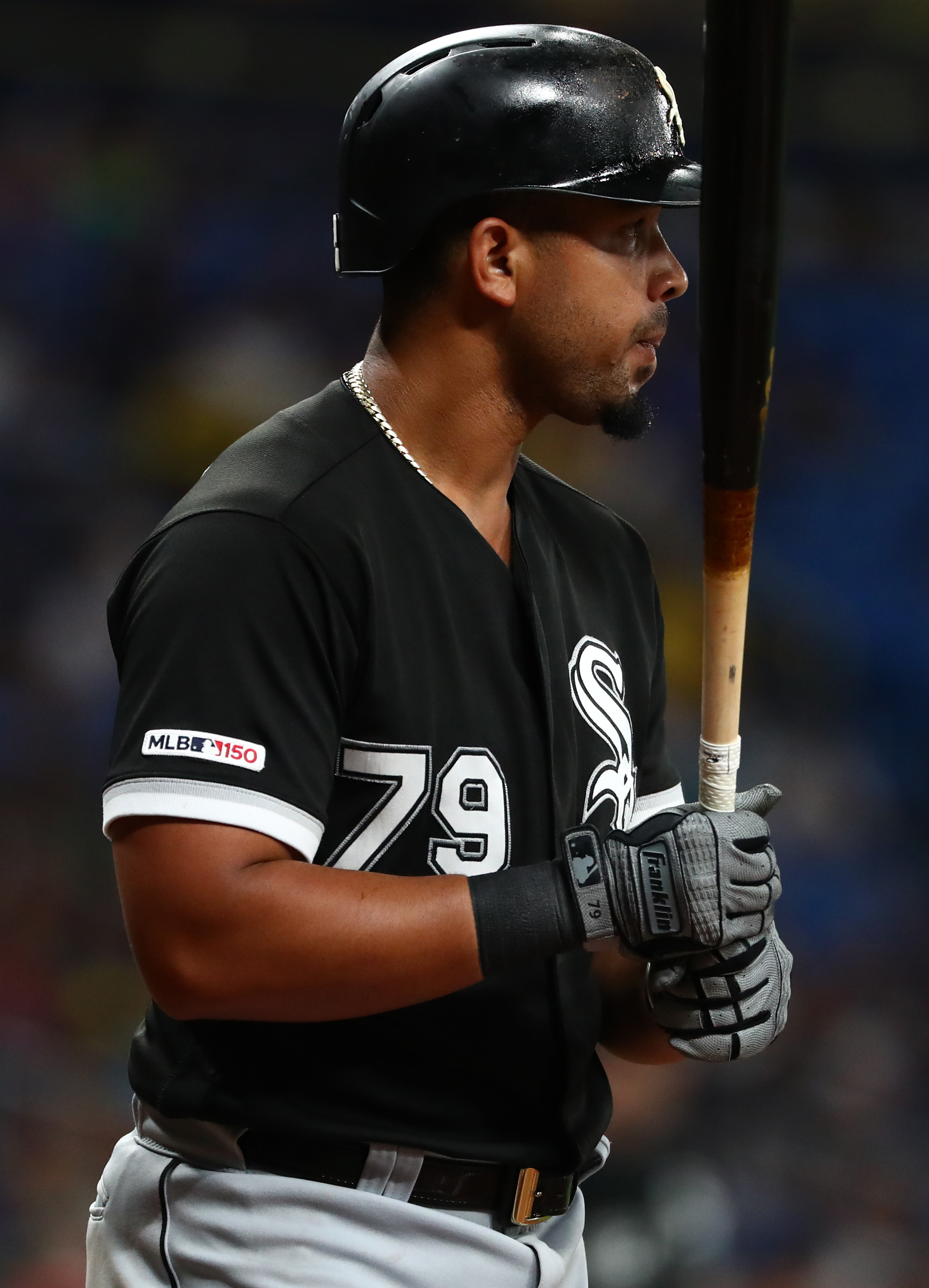
Abreu stood out as the likeliest player to accept a qualifying offer given his age (33 in January), lack of defensive value and longstanding vocal desire to remain with the White Sox. The market for strict first base/DH type sluggers has deteriorated in recent years, and while some elite hitters (e.g. J.D. Martinez) have managed to take home lucrative multi-year deals in spite of that reality, Abreu is on the old side for a free agent and isn’t quite in that Martinez echelon of offensive output. There’s also a fairly limited number of contending clubs that could be reasonably expected to make competitive bids on a first baseman or designated hitter, which wouldn’t have done the veteran slugger any favors in seeking out a new organization.
That’s not to say that Abreu isn’t a decidedly above-average hitter. He’s fresh off a strong .284/.330/.503 batting line and 33 home runs in 2019. The ChiSox likely feel they can pencil him in for another strong average and 25-plus home runs, as he’s only failed to reach that mark in an injury-shortened 2018 campaign (when he still launched 22 long balls in just 128 games). Abreu has spent six seasons in the big leagues and been an above-average hitter in each of them.
Of course, it should be noted that those 2019 numbers from Abreu came at a time when offensive numbers were at a record high throughout the league. His batting line is clearly stout — but perhaps not to the extent many would think of upon hearing “33 home runs.” By measures like OPS+ and wRC+ which are adjusted based on a hitter’s home park and leaguewide context, Abreu’s 2019 checked in at 17 to 19 percent better output than that of a league-average hitter (117 wRC+, 119 OPS+). That’s a stark contract to Abreu’s utterly dominant rookie season, when he hit .317/.383/.581 and tied Mike Trout for the second-highest wRC+ in all of Major League Baseball.
But for the South Siders, Abreu’s value transcends his pure statistical output on the field. White Sox brass, like Abreu himself, has been vocal about its desire to keep the slugger for the long run due to the fact that he’s emerged as a clear leader in the team’s clubhouse and a integral part of the community on the south side of Chicago. The ChiSox surely valued him more than an outside organization would, and the club surely hopes that Abreu will remain woven into the fabric of the organization for years to come.
The question now, for both Abreu and the organization, is whether they’ll simply head into the 2020 season with the current one-year, $17.8MM arrangement or whether they’ll work out a multi-year deal that’ll keep Abreu around for a longer period while likely lowering his 2020 salary. Abreu was reported to be mulling a three-year offer just hours before the final decision on his qualifying offer was due, but it seems that he and his representatives at ISE Baseball didn’t feel the annual salary on that proposed contract was to their liking. USA Today’s Bob Nightengale tweets that the two sides are expected to continue discussing two- and three-year scenarios, so it’s certainly possible that today’s one-year agreement is torn up in favor of a lengthier pact at some point between now and Opening Day.
Braves Sign Will Smith
The Braves have signed closer Will Smith to a three-year contract, the team announced. The three guaranteed years will pay Smith $39MM, and Atlanta has a $13MM club option for 2023. That option contains a $1MM buyout, as per The Athletic’s Ken Rosenthal (Twitter link), bringing the total value of the deal to $40MM. Smith will earn $13MM in each year of the contract, which doesn’t include any no-trade protection, MLB Network’s Jon Heyman reports (Twitter links). Smith is represented by CAA Sports.
The Braves’ early splash into the free agent pool gives them the top closer on the market this offseason, and the 13th-ranked player on MLBTR’s list of the winter’s top 50 free agents. Smith’s contract fell just a touch short of our prediction of a three-year, $42MM deal, though he stands to soundly beat that projected number if the Braves exercise their club option in three years’ time. Smith will also now get to suit up for his hometown team, as the Georgia native still lives in Atlanta.
 Though there hadn’t yet been any official word about Smith’s rejection of the Giants’ qualifying offer, he turned down the one-year, $17.8MM QO for the longer-term pact with the Braves. Rosenthal reports that Jeff Berry, Smith’s agent, told interested teams that Smith would accept the qualifying offer and remain in San Francisco unless an acceptable multi-year proposal came together.
2019 marked Smith’s first season as a full-time closer, and the left-hander responded with one of his finest seasons. Smith posted a 2.76 ERA, 4.57 K/BB rate, and 13.2 K/9 over 65 1/3 innings for San Francisco, recording 34 saves in the process. That 13.2 K/9 marks a new single-season best for Smith, who has a healthy 10.8 K/9 over 410 2/3 career innings. The 30-year-old had previously established himself as a quality setup man with the Brewers and Giants, and came back strong with a big 2018 season after missing all of 2017 due to Tommy John surgery.
While Smith was one of the sport’s better closers last season, he might not continue in that role, as David O’Brien of the Atlanta Journal-Constitution tweets that the Braves are temporarily still planning to use Mark Melancon as their primary closer. Ironically, Smith’s elevation to closer in 2018 came as a result of Melancon’s injury-related struggles when the two relievers were teammates in San Francisco. Melancon did look good during a healthy 2019, however, both with the Giants and after he was dealt to Atlanta at the trade deadline.
However the Braves choose to deploy their relievers, Smith represents a major addition to an Atlanta bullpen that generally posted middle-of-the-pack numbers amidst an inconsistent season. Braves GM Alex Anthopoulos added Melancon, Chris Martin, and Shane Greene at the trade deadline in an attempt to bolster his pen for both 2019 and the future (Melancon and Greene are still under team control), though more reinforcements were needed with Martin, Anthony Swarzak, and Jerry Blevins headed for free agency.
Smith fills a particular need for left-handed relief for the Braves, who have already checked off several boxes off their winter to-do list though the offseason only officially began less than two weeks ago. Nick Markakis, Tyler Flowers, and Darren O’Day have all been re-signed on one-year deals for a total of $10.25MM, allowing Anthopoulos the payroll space for a bigger strike to sign Smith.
There was widespread speculation that Smith was going to be changing teams last July, though the Giants’ surprising surge into wild card contention inspired president of baseball operations Farhan Zaidi to hold onto some of his most prized trade assets. While Melancon and Sam Dyson were dealt, such players as Smith, Madison Bumgarner, and Tony Watson were all retained, leaving Zaidi in line for some criticism when the Giants faded to a 77-85 record.
San Francisco will still receive some compensation for Smith, however, as his rejection of the qualifying offer will net the club a bonus draft pick that will fall between Competitive Balance Round B and the third round of the 2020 draft. The Giants will get a pick in that same area should Bumgarner (who also declined the QO) sign elsewhere. The extra draft capital could make Zaidi more open to surrendering a draft pick to sign a QO free agent himself, though it remains to be seen if the Giants will be big spenders this winter.
As a revenue-sharing recipient, the Braves will only have to give their third-highest pick in the 2020 draft as compensation for signing Smith. This is currently Atlanta’s third-round selection, though it could end up being the team’s own compensatory pick (between Comp Balance Round B and the third round) if the qualifying offer-declining Josh Donaldson signs with a team besides Atlanta.
Photo courtesy of USA Today Sports Images
Jake Odorizzi To Accept Qualifying Offer
Right-hander Jake Odorizzi will accept a qualifying offer from the Twins, reports Ken Rosenthal of The Athletic (via Twitter). He’ll now be signed for the 2020 season at a rate of $17.8MM.
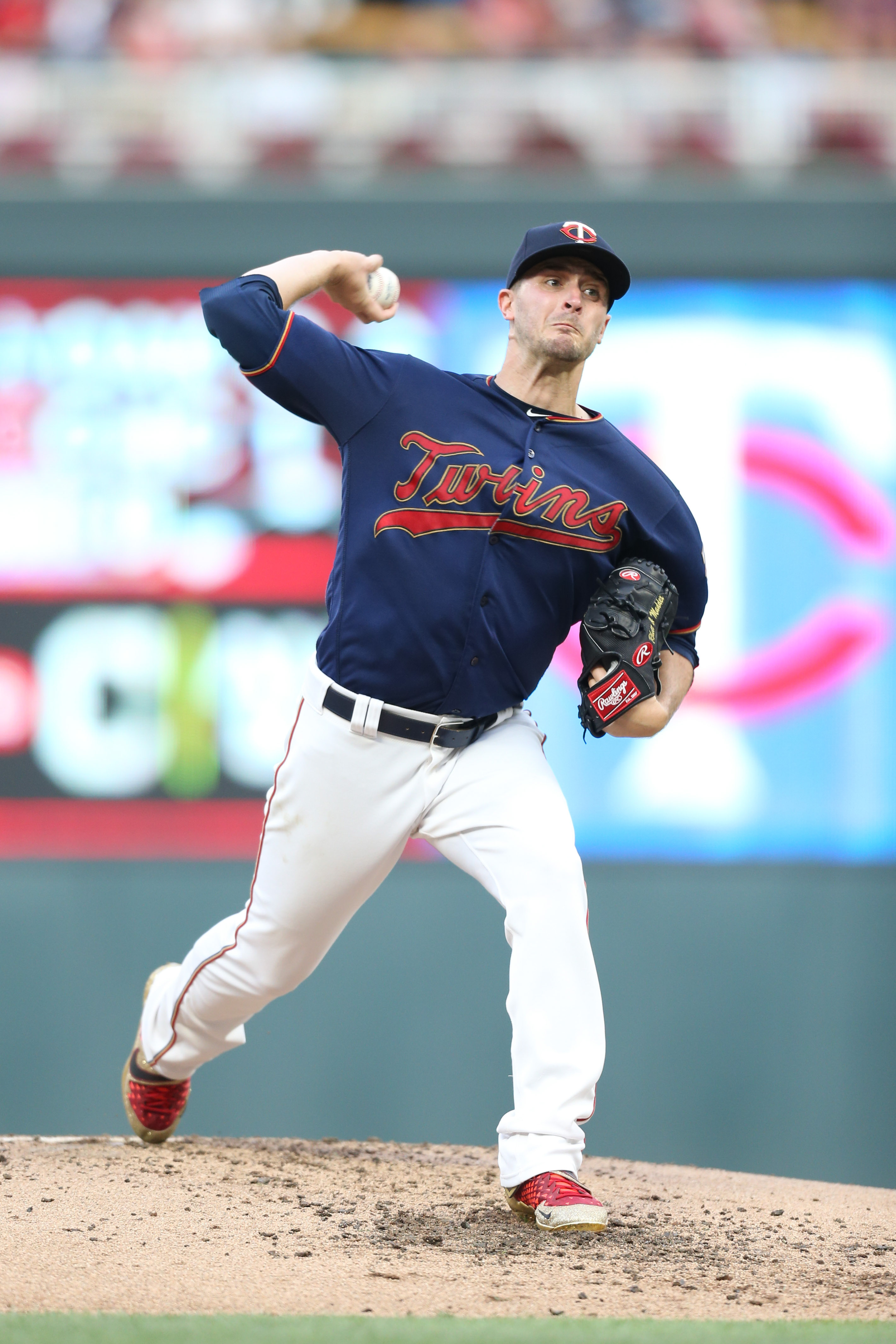
It’s a bit of a surprise move but likely a welcome development for a Twins club that previously stood to see 80 percent of its starting rotation hit free agency. Odorizzi, Kyle Gibson, Michael Pineda and Martin Perez (whose $7.5MM club option was bought out) were all slated to hit the open market.
Instead, the 29-year-old Odorizzi will return on a one-year deal at a strong annual rate with an eye toward testing the market in earnest next season when he wont’t have a qualifying offer attached to his name. The collective bargaining agreement stipulates that a player can only receive one qualifying offer in his career, so Odorizzi won’t cost any teams any draft or international forfeitures when he hits free agency again next winter.
The 2019 season proved to be either a rebound or a breakout for Odorizzi, depending on how one views it. He looked like a pitcher on the rise from 2014-16 with the Rays before posting a pair of solid but unremarkable seasons with Tampa Bay and Minnesota in 2017 and 2018, respectively.
Last winter, Odorizzi embarked on a new offseason training regimen with a focus on biomechaics and did similar work with newly hired Twins pitching coach during Spring Training, which led to an uptick in velocity and career-best marks in terms of K/9, overall strikeout percentage and swinging-strike rate. The results spoke for themselves, as Odorizzi turned in 159 innings of 3.51 ERA ball with 10.1 K/9 (a 27.1 percent overall strikeout rate), 3.0 BB/9, 0.91 HR/9 and a 35 percent ground-ball rate.
While most pegged Odorizzi as a candidate to secure a multi-year pact in free agency — he landed 10th on our ranking of the Top 50 free agents — he and his representatives at Excel Sports Management clearly weren’t enthused by their early talks with teams throughout the league. Once a player receives a qualifying offer, he has up to 10 days to accept or reject it, and he’s free to explore the open market during that time. Odorizzi’s decision largely came down to the wire, and he’ll now have another year to further build his case. If he can repeat his 2019 success next season and return to the open market in advance of his age-31 campaign, he’ll presumably fare quite well in free agency. Of course, as is always the case, he now runs the risk of damaging his stock with a poor performance or a notable injury.
For the Twins, Odorizzi’s return adds a notable salary to the books, but that’s of little concern given the enormous amount of payroll space the club has available. Even with Odorizzi back at $17.8MM, the Twins have a total of just $48.9MM in guaranteed contracts on the books, plus another $40.8MM worth of projected arbitration salaries. (That number could drop to $33.1MM if C.J. Cron is non-tendered.) That puts the Twins in the $82-89MM range, depending on Cron’s fate. Even after accounting for pre-arbitration players to round out the roster, Minnesota checks in under $100MM and vastly below the organization’s club-record payroll of $130MM from the 2018 season.
That’s good news for the Twins given the club’s need to address the rest of the rotation. While in-house candidates like Randy Dobnak, Devin Smeltzer, Brusdar Graterol and, eventually, prospect Jordan Balazovic all present intriguing 2020 options, the Twins still need to add at least one more proven arm — if not two proven arms to the mix. President of baseball operations Derek Falvey and GM Thad Levine have been candid about the team’s plan to pursue “impact” starting pitching, making that remaining payroll capacity all the more pivotal. For now, however, Minnesota surely feels better about its rotation outlook, knowing that one major piece of the puzzle was filled in less than two weeks into the offseason.
Astros Accused Of Illegal Use Of Technology To Steal Signs
Nov. 14: Major League Baseball is planning to talk to Red Sox manager Alex Cora and newly minted Mets skipper Carlos Beltran about the issue, Rosenthal and Drellich further report (subscription required). Both were on the 2017 Astros — Cora as bench coach and Beltran in the final season of his playing career. Beltran firmly denied any knowledge of the system in a statement to Joel Sherman of the New York Post.
ESPN’s Jeff Passan adds that the league has already interviewed former Astros bullpen coach Craig Bjornson, who joined Cora with the Red Sox. MLB is making its best effort to gather “tangible evidence,” Passan writes, and will “consider levying long suspensions” to those who are found to have lied during the interview process.
Nov. 12: The Astros have come under scrutiny once again, this time on the heels of an in-depth report by Ken Rosenthal and Evan Drellich of The Athletic (subscription required), wherein four former employees, including right-hander Mike Fiers, detailed an extensive sign-stealing operation enacted by the team during the 2017 season. Stealing signs in a traditional sense — such as a runner on second base watching the catcher and attempting to discern the pitch that has been called — is generally accepted as part of the game. Utilizing technology to aid in that effort, however, is expressly forbidden by the league.
The Astros, per the report, would utilize a center-field camera fixated on the catcher and a television monitor placed in the clubhouse tunnel near the dugout steps to try to decode an opponent’s signs. An Astros employee or player would then at times signal the type of pitch that was coming with a loud sound — typically banging on a trash can to alert the hitter of an offspeed or breaking pitch. Fiers, who was non-tendered by Houston following the 2017 season, confirmed that setup when interviewed by The Athletic. He added that upon leaving the organization, he warned his future Tigers and Athletics teammates of the practice.
“I just want the game to be cleaned up a little bit because there are guys who are losing their jobs because they’re going in there not knowing,” Fiers explained to The Athletic. “Young guys getting hit around in the first couple of innings starting a game, and then they get sent down. It’s (B.S.) on that end. It’s ruining jobs for younger guys.”
Fiers may have been in the Houston dugout during that 2017 season, but opponents on the pitcher’s mound weren’t totally in the dark. Recently retired reliever Danny Farquhar detailed a late-2017 appearance during which he caught wind of what was taking place, telling The Athletic: “There was a banging from the dugout, almost like a bat hitting the bat rack every time a changeup signal got put down. After the third one, I stepped off. I was throwing some really good changeups and they were getting fouled off. After the third bang, I stepped off.”
As one might expect in 2019, it didn’t take long for someone to find video footage of the incident in question. Lucas Apostoleris of Baseball Prospectus quickly found the appearance referenced by Farquhar (Twitter link), and the sound of the banging detailed by Farquhar can be heard quite clearly in the included video link.
It’s worth emphasizing that electronic sign stealing is widely believed to extend beyond the walls of Houston’s Minute Maid Park. As Rosenthal and Drellich explore, concerns surrounding the potential stealing of signs via technology aren’t necessarily unique to the Houston organization. Teams are increasingly wary that other clubs are utilizing technology to gain a competitive edge and steal signs, with one anonymous MLB manager telling The Athletic that such habits “permeate” the league and that MLB has done a “very poor job” policing the issue.
The league did fine the Red Sox during the 2017 season for illegal use of an Apple Watch in their home dugout, though there have not been any other publicized instances of league-issued discipline regarding technology-driven sign stealing. The investigation that led to the sanction of the Red Sox stemmed from a complaint filed by the Yankees, which the Red Sox countered with their own complaint alleging that the Yankees had utilized a YES Network camera to steal signs from Boston. Distrust between other organizations is surely prevalent throughout the league.
After the Red Sox were fined in 2017, commissioner Rob Manfred intimated that stricter punishments would be levied for future violations of this nature (link via the Associated Press): “All 30 clubs have been notified that future violations of this type will be subject to more serious sanctions, including the possible loss of draft picks.”
This isn’t the first time that the Astros, specifically, have been accused of stealing signs; a man with ties to the Astros organization, Kyle McLaughlin, was caught taking pictures near the Indians and Red Sox dugouts during the 2018 postseason. At the time, the Astros claimed that they were trying to ensure that those clubs weren’t utilizing illegal and/or unethical measures to gain an advantage. They were cleared of any rule violations by the league. A year later, during the 2019 ALCS, Houston manager A.J. Hinch scoffed at the notion that their players were whistling to call out the Yankees’ signs, calling any such accusations “a joke.” General manager Jeff Lunnow, at the time, told Chandler Rome of the Houston Chronicle:
“We haven’t done anything wrong. If people want to make their own conclusions based on what little evidence there is out there — really just rumors, speculations and accusations without any names behind it — that’s their prerogative. I’m not concerned because I know how we behave and how we act. We’re not doing anything wrong.”
Today, the Astros offered the following statement in reference to the report from Rosenthal and Drellich:
“Regarding the story posted by The Athletic earlier today, the Houston Astros organization has begun an investigation in cooperation with Major League Baseball. It would not be appropriate to comment further on this matter at this time.”
Asked to personally comment on the matter today at the GM Meetings, Luhnow told a large contingent of reporters that the organization will cooperate with any investigations but declined further comment (Twitter link via Paul Sullivan of the Chicago Tribune).
Cardinals Re-Sign Adam Wainwright
Nov. 13: Wainwright will receive $1.5MM upon making his 20th and 25th starts, MLB Network’s Jon Heyman reports (via Twitter). He’ll unlock an additional $2MM for making his 28th start.
Interestingly, the contract also contains incentives based on relief appearances. Wainwright would earn $500K upon making his 35th relief outing and another $500K for every fifth appearance moving forward — up through 60 total appearances. He’ll also receive $500K for finishing 25 and 30 games, plus an additional $600K for 35, 40, 45, 50 and 55 games finished.
Nov. 12: 3:05pm: Wainwright’s new contract guarantees him $5MM and includes an additional $5MM in possible incentives, Ken Rosenthal of The Athletic tweets.
10:08am: The Cardinals have agreed to re-sign righty Adam Wainwright, per a club announcement. It’s a one-year deal of unknown value for the Aegis Sports Management client.
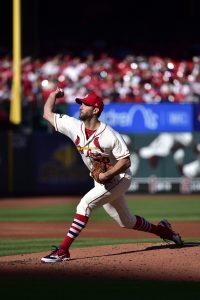
This is the second consecutive year the veteran hurler has re-upped with the Cards after a brief free agency. But the conversation was rather different this time than it was when Wainwright took an incentive-laden pact nearly one year ago to the day.
Wainwright ended up maxing out his bonuses, turning a $2MM guarantee into $10MM of earnings. The venerable rotation stalwart earned every penny, spinning 171 2/3 frames of 4.19 ERA ball with 8.0 K/9 and 3.4 BB/9.
This was surely the most predictable of this year’s free agent outcomes, with the team stating frankly just days ago that talks were already well underway. Wainwright obviously isn’t capable of dominating as he once did, but the Cardinals would gladly take a repeat of his 2019 effort. And it goes without saying that both sides enjoy a relationship that will enter its 15th MLB campaign.
Originally drafted by the Braves way back in 2000, the now-38-year-old Wainwright landed in St. Louis via trade in the 2003-04 offseason. He hasn’t left the organization since. There were a few lost years — all of 2011, most of 2015 and 2018 — but on balance it has been quite a success.
Wainwright passed two thousand career innings during the 2019 campaign. He has a lifetime 3.39 ERA along with three All-Star appearances and a trio of top-three Cy Young finishes. Wainwright has also topped the century mark in postseason frames and excelled all the more on the biggest stage. He owns a lifetime 2.81 ERA in the playoffs, with 9.8 K/9 against 1.5 BB/9, including three exceptional appearances just weeks ago.
While this move comes as expected, it does make for a key part of the Cardinals offseason. With Wainwright now slotted in along with Jack Flaherty, Miles Mikolas, and Dakota Hudson, the Cards can probably rest easy in the rotation. Carlos Martinez and Alex Reyes are high-ceiling possibilities for the fifth starter’s job, with Austin Gomber and Genesis Cabrera among the other possibilities. With limited available space under the team’s preferred payroll levels, it may be that the remaining funds will be allocated to other areas of need.
Photo courtesy of USA Today Sports Images.
Rangers Reportedly Making “Aggressive” Push For Josh Donaldson
The Rangers are making “an aggressive push” to strike an early deal with free-agent third baseman Josh Donaldson, Bob Nightengale of USA Today reports (on Twitter). Donaldson still hasn’t even had to give the Braves a formal decision on his $17.8MM qualifying offer — though he’ll surely reject it by tomorrow’s deadline. A deal of this significance in mid-November is of the utmost rarity in today’s free-agent climate. However, it’s worth pointing out that Donaldson signed his one-year deal with the Braves in late November last year, so there’s some precedent for him preferring a rather short stay on the open market.
Third base is a clear area of need for the Rangers, as young Nick Solak is likely the top option at the hot corner as things are currently constructed in Arlington. Texas certainly has the funds to reel in a free agent of Donaldson’s caliber after scaling back on payroll last winter; the Rangers have previously seen their payroll climb as high as $165MM on Opening Day 2017, but they currently project to check in around $115MM. As MLBTR’s Jeff Todd pointed out in previewing the Rangers’ offseason, a match between Donaldson and Texas seems perfectly plausible and would bear some similarity to the Rangers’ run with Adrian Beltre in his mid- to late-30s.
As we detailed at MLBTR this week, signing Donaldson on the heels of a qualifying offer would cost the Rangers their second-highest draft selection next summer as well as $500K of their 2020-21 international signing bonus. Donaldson, who hit .259/.371/.521 with 37 home runs and plus defense at third base with the Braves in 2019, ranked fifth on MLBTR’s list of the offseason’s Top 50 free agents (where we predicted a three-year, $75MM deal with Texas).
The Rangers flirted with Wild Card contention in 2019 before fading late in the season and have given every indication to this point that they plan to act aggressively in advance of their move into a new stadium in 2020. General manager and president of baseball operations Jon Daniels plainly stated this week that he intended to look into top-tier free agents, so an earnest pursuit of Donaldson could be the first of many such free-agent endeavors for Texas over the next several months.
Donaldson has already drawn interest from the Dodgers, Phillies, Nationals (who likely view him as a fallback to Anthony Rendon) and Braves in the early stages of free agency. The Braves, per MLB Network’s Jon Heyman (Twitter link), have been allowing Donaldson to shop around with other clubs before engaging in their own discussion of a multi-year pact.
Twins To Extend Derek Falvey, Thad Levine
3:48pm: In addition to the extension, Falvey’s title has been updated to president of baseball operations, Hayes tweets. Falvey was already the top decision-maker in the organization, but the nomenclature of his previous title, “chief baseball officer,” was rather atypical. This more closely aligns with industry norms and marks a clearer definition of his status both within the Twins organization and in relation to other executives throughout the league.
2:08pm: The Twins have agreed to contract extensions with the top two members of their baseball operations department, Dan Hayes of The Athletic reports (via Twitter). Chief baseball officer Derek Falvey and general manager Thad Levine are set to sign new deals that’ll keep them in the organization through the 2024 season. Both were already under contract through 2021. The news comes less than a week after the organization announced another series of front office promotions.
It’s now been three years since Falvey was brought in to take over Minnesota’s baseball operations department and quickly hired Levine to serve as his top lieutenant. The Twins’ new-look front office duo made some small-scale changes in the 2016-17 offseason, and the 2017 Twins exceeded expectations with a surprise Wild Card berth. The 2018 campaign was a disaster that led to an overhaul of the coaching staff and a series of new additions on one- and two-year deals in the 2018-19 offseason.
The Twins, under Falvey and Levine, hired eventual Manager of the Year Rocco Baldelli to replace Paul Molitor last winter before signing Nelson Cruz, Marwin Gonzalez and Jonathan Schoop, claiming C.J. Cron off waivers and extending potential cornerstones Max Kepler and Jorge Polanco. Short-term deals for Martin Perez and Blake Parker proved less fruitful, but the majority of Minnesota’s moves paid off in spades as the Twins spent the bulk of the season in first place and ultimately won the American League Central by a margin of eight games.
The 2019-20 offseason will now bring increased pressure for the team to make impactful additions with an eye toward finally breaking through a near-unthinkable run of postseason futility over the past 15 years. Pitching will be of particular importance, as Jose Berrios is the only rotation member who is under team control; Jake Odorizzi, Michael Pineda, Kyle Gibson and the aforementioned Perez are all free agents. Minnesota’s front office duo spoke last winter of being aggressive once it becomes clear that the team’s window is open, and they’ve already stated that they intend to pursue “impact” pitching this offseason. With extremely minimal payroll commitments on the books in 2020 and 2021 and a fairly modest arbitration class, the Twins are currently more than $50MM south of their club-record payroll (set in 2018), so they certainly have the resources to make good on those intentions.