
2026-27 Club Options: AL East
A couple weeks ago, MLBTR’s Darragh McDonald highlighted the players who could choose to return to the free agent market via opt-out clauses. We’ll now take a division by division look at those whose contracts contain club, mutual or vesting options. That kicks off tonight with the AL East.
Although it’s early in the season, a lot of these provisions are fairly easy to predict. The mutual options are almost certain to be declined by either the player or team (usually the latter). They’re accounting measures, essentially an unofficial deferral within the term of the contract itself. The player agrees to push back a percentage of the guaranteed money to the end of the deal in the form of an option buyout — which is paid after the end of the World Series rather than evenly distributed during the regular season as salary.
Baltimore Orioles
- RHP Zach Eflin: $25MM mutual option ($2MM buyout)
Eflin’s return to the Orioles was dashed by yet another injury: an elbow ligament that required Tommy John surgery. The O’s probably weren’t signing up for a $25MM salary even if he’d stayed healthy this year, but this is as obvious a buyout as these decisions get.
- LHP Dietrich Enns: $3.5MM club option ($125K buyout)
Enns pitched well for the O’s down the stretch after a deadline trade from Detroit. The 34-year-old southpaw worked to a 3.14 ERA while striking out 28% of batters faced across 28 2/3 innings. Although he’s nowhere close to six years of MLB service time, his contract contained a 2026 club option that presumably had a clause ensuring he’d become a free agent if the team declined. That’s fairly common for players like Enns who had spent the preceding couple seasons pitching in Asia.
The O’s restructured Enns’ contract to pay him a $2.5MM salary and guarantee a $125K buyout on a $3.5MM team option for the ’27 season. He has walked five batters over 4 1/3 innings to begin this season. Enns landed on the injured list a couple weeks ago with a foot infection. He began a rehab assignment in Triple-A on Saturday. This one is too early to judge.
- 1B Ryan Mountcastle: $7.5MM club option
Mountcastle agreed to tack on a $7.5MM option to avoid going to an arbitration hearing last offseason. Speculatively, that’s probably due to the CBA provision which doesn’t fully guarantee salaries determined at an arbitration hearing until Opening Day. Had Mountcastle not settled, the O’s might’ve released him for termination pay during Spring Training after making a splash on Pete Alonso earlier in the winter.
Although the O’s were surely happy to get the extra year of club control, it probably won’t be of much benefit. Mountcastle broke a bone in his left foot last week and will miss at least two months. It’s his second straight year with a significant injury. He lost a couple months to a hamstring strain in 2025. Mountcastle was already an odd roster fit who’d make more sense as a trade chip. Maybe he’ll return in the second half and hit well enough that the O’s feel the option price is too good to pass up, but it’s likelier this is getting declined.
Boston Red Sox
- LHP Aroldis Chapman: $13MM mutual option ($300K buyout); vests at $13MM at 40 innings pitched
Chapman’s option vests if he reaches 40 innings pitched this season and passes an end of year physical. He has surpassed 40 frames in three straight seasons. He’s at 7 2/3 innings thus far. It’d take at least one injured list stint — probably an absence of 6-8 weeks — for him to fall short of 40 innings.
In any case, the Sox would be happy to have him back at that price if he’s healthy. Chapman was probably the best reliever in MLB last season, firing 61 1/3 innings of 1.17 ERA ball with a 37% strikeout rate. The punchouts are down early this year in an exceedingly tiny sample, yet he has only allowed one run and is 4-4 in save opportunities. He remains at the top of his game at age 38.
- RHP Sonny Gray: $30MM mutual option ($10MM buyout)
Gray restructured his contract as a condition of the offseason trade that sent him from St. Louis to Boston. The deal initially came with a $35MM salary for this year and a $5MM option buyout. Gray agreed to move $4MM of salary back to the buyout while picking up an extra $1MM as a condition for waiving his no-trade clause. He’ll be a free agent.
- RHP Garrett Whitlock: $8.25MM club option ($1MM buyout)
Whitlock’s contract comes with an $8.25MM team option that includes $4MM in unspecified escalators. There’s also a $10.5MM club option for the ’28 season. Whitlock has been one of the best setup arms in MLB throughout his career. He rebounded from an injury-plagued ’24 season to fire 72 frames of 2.25 ERA ball with a 31% strikeout rate last year.
The righty’s command has been a little wobbly this year and his sinker velocity is down a couple ticks. Still, he’s only allowed two earned runs while striking out 11 through his first nine innings. No other Boston reliever is getting higher-leverage assignments on average. This is one of the likelier options to be exercised.
New York Yankees
- None.
Tampa Bay Rays
- 1B Yandy Díaz: $10MM club option; converts to $13MM option which automatically vests at 500 plate appearances
Tampa Bay preemptively locked in Díaz’s $12MM club option for the 2026 season during Spring Training ’25. In exchange, the first baseman gave the team a $10MM option for ’27 that would vest at $13MM as long as he stayed healthy enough to reach 500 plate appearances. Díaz is a little over 20% of the way there. Even if he suffers an injury that takes the vesting provision off the table, he’s been such a good hitter that Tampa Bay would probably be happy to exercise the $10MM option.
- RHP Nick Martinez: $20MM mutual option ($4MM buyout)
The mutual option in the Martinez contract was purely one of the aforementioned accounting mechanisms. The Rays aren’t paying him a $20MM salary even if he pitches to their expectations. He’ll be bought out.
- CF Cedric Mullins: $10MM mutual option ($500K buyout)
The same is very likely true for Mullins. A $10MM option price is rich for Tampa Bay unless the former All-Star outfielder has a resurgent season — in which case, he’d decline his end and look for a multi-year deal. The early returns aren’t encouraging, as Mullins is hitting .156 with two homers through his first 21 games. Over the past calendar year, he’s a .194/.257/.336 hitter.
- RHP Drew Rasmussen: $8MM club option ($500K buyout); option could escalate up to $20MM depending upon Rasmussen’s health and innings total
Before the 2025 season, the Rays signed Rasmussen to a two-year deal that bought out his final arbitration years. It included a complex club option for 2027 that was heavily dependent on his health. The option comes with an $8MM base value but includes up to $12MM in escalators based on starts and time spent on the injured list.
Rasmussen had only once topped 80 MLB innings at the time of his extension. He has undergone multiple elbow procedures and broke into the league as a reliever because of durability concerns. Rasmussen has stayed healthy over the past year-plus. He pitched a career-high 150 innings en route to a top 10 Cy Young placement in 2025. He’s out to a similarly excellent start to the ’26 campaign, allowing just four earned runs through his first 19 2/3 innings.
The option value will begin to climb before long. It’ll jump to $8.5MM once he reaches eight starts and includes additional escalators for every fourth start up through 28 appearances. If he makes 28+ starts, it’d jump to a minimum of $14MM. That’s just the beginning, as the number climbs if he avoids a long-term injured list stint. It’d get up to $20MM if he goes the entire season without an arm injury.
At $8MM, Rasmussen is an unmitigated bargain even for a low-payroll Rays club. The escalators will probably climb quickly enough that he’ll be a trade candidate. That could happen midseason if the team isn’t in the playoff hunt or early next offseason if they hold him at the deadline. If Rasmussen repeats last year’s production, he’s not going to be in any danger of being bought out — as closer Pete Fairbanks was when escalators pushed his option value from $7MM to $11MM.
Note: The Rays hold a $3.1MM club option on INF Taylor Walls. He’d remain eligible for arbitration if the team declines.
Toronto Blue Jays
- CF Myles Straw: $8MM club option ($1.75MM buyout); Guardians paying Toronto $1.75MM at season’s end as part of 2025 trade
The Blue Jays acquired Straw in a salary dump trade with the Guardians over the 2024-25 offseason. Toronto agreed to cover $11MM of the remaining two years and $14.75MM on Straw’s underwater contract. (He’d gone unclaimed on waivers that same offseason and was no longer on Cleveland’s 40-man roster.) In exchange, the Guards sent the Jays international bonus pool space. Toronto could then increase their offer to Roki Sasaki by an extra $2MM in a late, ultimately unsuccessful effort to sway the star NPB pitcher away from signing with the Dodgers.
Sasaki’s decision to join L.A. made this initially look like a complete bust for Toronto. To his credit, Straw has salvaged the move. He made the team in 2025 and did a nice job in a fourth outfield role, hitting .262/.313/.367 while playing his typically excellent outfield defense. He’s out to a good start this season as well and provides a high-floor depth option if Daulton Varsho misses any time.
Will that be enough to convince the Jays to keep Straw around? They certainly didn’t anticipate exercising an $8MM option at the time of the trade. That’s made clear enough by the teams’ agreement for the Guardians to send Toronto a $1.75MM payment — which matches the buyout value — at the end of the ’26 season. Cleveland is sending the money either way, though, so it’d amount to a $6.25MM call if the Jays want to bring Straw back.
That’s a little rich for a fourth outfielder, which is what Straw has been for the last few seasons. Varsho is an impending free agent and the Jays don’t have anyone waiting in the wings from the farm system. Straw’s play and the possibility of Varsho walking has made this a tougher call than even the Jays’ front office would have anticipated.
Rays To Place Ryan Pepiot On Injured List; Carson Williams To Break Camp At Shortstop
The Rays will place right-hander Ryan Pepiot on the 15-day injured list due to inflammation in his right hip, per Marc Topkin of the Tampa Bay Times. He’s not expected to be out long. With Pepiot sidelined, fellow righty Joe Boyle will be brought back after previously being optioned to Triple-A Durham. Boyle will begin the year in the rotation. Topkin adds that top shortstop prospect Carson Williams, who’d previously been optioned, will now open the season as the Rays’ shortstop after Taylor Walls hit the injured list. That was the expected outcome, though the Rays were at least open to the idea of bringing in some outside help.
Pepiot, 28, has been a solid mid-rotation arm for Tampa Bay for the past two seasons after coming to the Rays in the trade that sent Tyler Glasnow to Los Angeles. He’s pitched a total of 297 2/3 innings with a 3.75 ERA, a 25.4% strikeout rate and an 8.9% walk rate. Pepiot missed time in 2024 after taking a comebacker off his leg and later developing an infection in his right knee — the two weren’t related — but tossed a career-high 167 2/3 innings in a career-high 31 starts in 2025. Since all IL stints can be backdated up to three days (if the player hasn’t been in a game in those three days), Pepiot is only guaranteed to miss the first 12 days of the season.
Boyle, 26, is one of the game’s tallest and hardest-throwing pitchers. Listed at a massive 6’8″ and 250 pounds, he averaged 98.5 mph on his heater last season even while working primarily as a starter. He joined the Rays as part of the return in the trade sending Jeffrey Springs to the Athletics. In 52 innings last year, Boyle logged a 4.67 ERA, 25.7% strikeout rate and 12.4% walk rate. He was dominant in the minors, yielding only a 1.88 ERA in 86 Triple-A frames. This spring, Boyle turned in a solid 3.72 ERA with a huge 34% strikeout rate but a troublesome 17% walk rate. Boyle will now start the second game of the Rays’ season, Topkin notes; righty Nick Martinez, who signed a one-year deal worth $13MM this winter, will be pushed back a couple games to a minor hamstring issue.
As for Williams, he’ll hope to take this unexpected opportunity and run with it. There’s little doubt about the former first-round pick’s defensive acumen or raw power. Scouts laud him as a plus defender at shortstop, and he belted 28 home runs in 557 plate appearances between Triple-A and a brief major league debut last year. He’s generally considered one of the sport’s top 100 prospects, due in no small part to the relatively high floor created by his glove and plus power.
The question regarding Williams is whether he’ll make enough contact to emerge as an above-average starter or be more of a low-end regular or even a power-and-defense utility option. He fanned in a massive 41.5% of his 106 major league plate appearances last year. That alone wouldn’t be terribly alarming for a small-sample set of plate appearances by a 22-year-old, but Williams also went down on strikes in 34% of his Triple-A plate appearances. He punched out at a 28.5% clip in Double-A in 2024 and a 31.4% clip across three levels in 2023.
Williams has taken a total of 2217 professional plate appearances since being drafted 28th overall in 2021 and has struck out in 32% of them. He’s highly unlikely to ever hit for a high average, but Williams has also walked in 11.4% of his professional plate appearances. If he can continue to walk in more than 10% of his plate appearances, hit for power and play defense, than a batting average in the .210 to .230 range won’t necessarily be a dealbreaker. With Walls down for several weeks due to an oblique strain, Williams will get the chance to solidify himself in manager Kevin Cash‘s infield.
Tampa Bay also finalized its bullpen, per Topkin. Right-hander Hunter Bigge was optioned to Triple-A, leaving lefty Ian Seymour and righties Mason Englert, Yoendrys Gómez, Kevin Kelly and Cole Sulser to claim the final five spots behind veterans Griffin Jax, Bryan Baker and Garrett Cleavinger. Righty Edwin Uceta is already known to be starting the season on the injured list due to shoulder troubles.
Meanwhile, righty Jake Woodford triggered the upward mobility clause in his minor league deal with Tampa Bay. It’s not yet clear whether he’ll be added by another club or if the Rays will keep him as depth to keep on hand in Durham. Woodford had a strong spring (one run, 5-to-2 K/BB ratio, 45.5% grounder rate in 7 1/3 innings) and has pitched in each of the past six big league seasons. He has a 5.10 ERA inn 256 big league frames and has worked as both a starter and long reliever in his career.
Rays Sign Nick Martinez
The Rays announced the signing of righty Nick Martinez to a one-year deal with a mutual option. It’s reportedly a $13MM guarantee for the Boras Corporation client that takes the form of a $9MM base salary and a $4MM buyout on the option, which is valued at $20MM. Reliever Manuel Rodríguez was placed on the 60-day injured list in a corresponding move. He’s working back from elbow surgery that was performed last July.
Martinez is the second free agent swingman whom the Rays have added this offseason. They signed lefty Steven Matz to a two-year, $15MM deal at the Winter Meetings. Matz was already expected to win a job at the back of the rotation. Tampa Bay subsequently traded Shane Baz to the Orioles, leaving another rotation spot available.
The 35-year-old Martinez enters camp as the favorite to work as Kevin Cash’s fifth starter. He lands behind Drew Rasmussen, Ryan Pepiot, Shane McClanahan and Matz on the depth chart. That could push Ian Seymour and Joe Boyle back to Triple-A Durham while keeping the out-of-options Yoendrys Gómez in a long relief role for which he’s better suited. They’ll need way more than five starters to navigate the season given the injury histories for Rasmussen and McClanahan — the latter of whom hasn’t thrown an MLB pitch since August 2023 and will be on some kind of innings count.
Matz and Martinez each have ample experience working out of the bullpen. Either could transition to relief if Seymour or top prospect Brody Hopkins force their way into the rotation. The versatility has been a huge selling point for Martinez, in particular. He can start, work multiple innings out of the bullpen, or pitch short relief in high-leverage situations as needed.
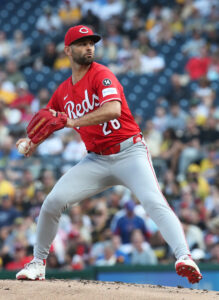
Martinez has found a strong second act in his 30s after spending four seasons in Japan. This will be his fifth season since he returned to MLB on a deal with the Padres over the 2021-22 offseason. He posted a sub-4.00 earned run average in each of the first three years, working mostly out of the bullpen. Martinez spent the first two seasons in San Diego before signing a two-year free agent contract with Cincinnati. He had the best year of his career in 2024, firing 142 1/3 innings of 3.10 ERA ball while starting 16 of 42 appearances.
The righty triggered an opt-out but returned to Cincinnati after the Reds surprisingly extended a $21.05MM qualifying offer. That’s probably a move the Reds wished they had back. Martinez did pick up a career-high 165 2/3 innings while starting 26 of 40 games, but his production was that of a back-end starter. He allowed 4.45 earned runs per nine while striking out just 17% of opposing hitters, his lowest strikeout rate since he returned from Japan.
Although Martinez has never had huge swing-and-miss stuff, his strikeout rates between 2022-24 hovered around league average. He had a more difficult time getting hitters to chase pitches off the plate last year. His stuff wasn’t that much different than it had been, however, and Martinez’s biggest strength has been his ability to command a legitimate six-pitch mix. He uses each of his cutter, four-seam, sinker, changeup, curveball and slider at least 10% of the time. He’s able to attack the strike zone with any of those offerings, but the changeup is the only plus pitch in his arsenal.
The diverse repertoire has allowed Martinez to avoid any kind of platoon splits. He hasn’t been great at turning lineups over a third time but should be a capable five-inning starter. Martinez gets a decent number of weak fly-balls, an approach that might play more favorably at Tropicana Field than at Cincinnati’s Great American Ball Park. He did a solid job avoiding the longball overall, but his two worst months last season (June and August) were driven largely by home run spikes.
RosterResource estimated the Rays payroll around $79MM before the signing. The option buyout delays some of the payout but the $13MM guarantee will very likely make Martinez their highest-paid player in 2026. It’ll push their payroll estimate into the low-$90MM range after they opened the ’25 season just north of $79MM.
Jon Heyman and Joel Sherman of The New York Post first reported Martinez and the Rays had an agreement. Marc Topkin of The Tampa Bay Times reported that it was for one year with a mutual option and had the salary breakdown. Mark Feinsand of MLB.com had the $13MM guarantee. Image courtesy of Charles LeClaire, Imagn Images.
Yankees Interested In Paul Goldschmidt, Nick Martinez, Austin Slater
TODAY: The Yankees’ interest in Slater extended to the point that New York offered Slater a big league deal earlier this offseason, The Athletic’s Brendan Kuty reports. It isn’t known when the Yankees made the offer or if it’s still on the table, though Slater remains unsigned.
JANUARY 30: The Yankees have made some notable moves this month, re-signing Cody Bellinger and acquiring Ryan Weathers from the Marlins. They still have more work to do. Jon Heyman of The New York Post reports that they have shown some interest in various free agents, including right-hander Nick Martinez and Michael Kopech, as well as outfielders Austin Slater and Randal Grichuk. Heyman also mentions that first baseman Paul Goldschmidt seems willing to return to the Yankees even if that’s in a part-time role. Jack Curry of Yes Network mentioned the club’s interest in a Goldschmidt reunion on Yankees Hot Stove earlier this week.
Goldschmidt signed a one-year, $12.5MM deal to join the Yankees a year ago and was set to be their everyday first baseman. He should have less earning power now and would likely be looking at a lesser role as well. He finished the year with ten home runs and a .274/.328/.403 line. The resulting 103 wRC+ was just barely above league average, his second straight season of offense around league par. As the season wore on, Ben Rice took over some of his playing time at first base.
Though the season was only about average overall, Goldschmidt was excellent in a platoon capacity, hitting .336/.411/.570 against southpaws for a 169 wRC+. Perhaps there’s a path for him to return to the Yankees in a short-side platoon capacity. The Yanks have a pretty lefty-heavy lineup. In addition to Rice at first, they have Bellinger, Trent Grisham, Jazz Chisholm Jr., Ryan McMahon and Austin Wells slated for regular duty. There should be opportunities to play matchups with righty bats like Amed Rosario and someone like Goldschmidt.
Heyman writes that Goldschmidt is open to the reduced role but it would reduce the club’s flexibility a little bit. They have one bench spot going to backup catcher J.C. Escarra and another to Rosario. Putting Goldschmidt in there would only leave one spot for either Jasson Domínguez or Oswaldo Cabrera. Once Anthony Volpe is healthy, that could bump José Caballero to the bench and knock someone else out, though that’s all assuming the roster is completely healthy.
On the financial side, it’s unclear if the two sides would be able to meet up on a fair price for Goldy. The Yankees are going to be paying the competitive balance tax for at least a third consecutive year and are above the top tier. They face a 110% tax on anything they add at this point, so signing any player means they are paying out more than twice as much as the player will actually receive.
Goldschmidt has also been connected to another former club, with the Diamondbacks reportedly interested in a reunion as well. That would also likely be a platoon situation, with Arizona having Pavin Smith lined up to play first base against righties.
Martinez, 35, has arguably been baseball’s top swingman in recent years. Since the start of 2022, he has posted a 3.67 earned run average in 524 2/3 innings. He has been better out of the bullpen, with a 2.94 ERA as a reliever compared to a 4.10 mark as a starter, but the flexibility is valuable to teams as they navigate a long season.
For the Yankees, their short-term rotation picture is very different than the long-term outlook. They are slated to start the campaign with Max Fried, Cam Schlittler, Luis Gil, Will Warren and Weathers in five spots. Gerrit Cole and Carlos Rodón are going to begin the year on the injured list but will eventually jump in there when they get healthy. Clarke Schmidt will miss at least the first half recovering from Tommy John surgery but could perhaps make a late-season appearance.
Even in the projected season-opening five, there are some question marks. Schlittler had a great debut but still has just 14 regular season starts on his résumé. Gil missed a lot of 2025 due to a lat strain and his results weren’t great when he returned. Weathers has had plenty of injury issues over the years and still hasn’t hit 90 innings in a season.
Presumably due to the uncertainty in that group, the Yankees have added a couple of swing options already, signing Paul Blackburn and Ryan Yarbrough. Blackburn got a $2MM guarantee and Yarbrough $2.5MM. Those two could step up and make starts if needed, depending on what happens with everyone else, or they could be in the bullpen.
Martinez should be a more expensive version of the same idea. Two years ago, he got a two-year, $26MM deal from the Reds. He pitched well enough in the first year to trigger an opt-out, then received a $21.05MM qualifying offer, which he accepted.
He will presumably have to settle for something lower than that now that he’s a bit older and posted a 4.45 ERA in 2025, but his 2.61 ERA as a reliever should be worth a few million alone, never mind the flexibility of being able to make competent starts. As mentioned with Goldschmidt, the Yankees would effectively be paying double whatever Martinez is able to earn. Martinez was connected to the Tigers in rumors last week.
Kopech, 30 in April, has some starting experience but will presumably be a straight bullpen add. He has been used strictly in relief for two years running now and was also hurt for most of 2025, so it’s unlikely any club would plan to stretch him out now. He showed his upside in 2024, split between the White Sox and Dodgers. He posted a 3.46 ERA over 67 appearances. His 12.2% walk rate was quite high but he punched out a huge 31.5% of batters faced.
He will be a buy-low opportunity for someone. Last year, he only made 11 appearances. He made trips to the injured list due to a shoulder impingement and a torn meniscus in his right knee. He was connected to the Giants last month but remains unsigned.
As for Slater and Grichuk, they are right-hitting outfielders. As mentioned earlier, the Yankees project to have a lefty-heavy lineup. That includes Grisham and Bellinger in the outfield. Domínguez is a switch-hitter who struggles against lefties.
The Yanks acquired Slater at last year’s deadline but he didn’t play much due to a left hamstring strain suffered shortly after the trade. But in his career, he has been a strong outfield defender who hits well with the platoon advantage. He has a .267/.357/.430 line and 119 wRC+ against lefties in his career. Grichuk is fairly comparable, with a .268/.318/.500 line and 118 wRC+ against southpaws in his career.
Photo courtesy of Tim Heitman, Imagn Images
Tigers Have Shown Interest In Nick Martinez, Jose Quintana
The Tigers remain interested in adding a starting pitcher this offseason, writes Jon Heyman of The New York Post. Detroit was tied to Chris Bassitt and Lucas Giolito a few weeks back. While both pitchers remain available, the Tigers have also expressed interest in Nick Martinez and Jose Quintana, reports Evan Petzold of The Detroit Free-Press.
It seems they’re casting a wide net but clearly looking to add a mid-tier starter. They’ve made one rotation pickup this offseason, signing KBO returnee Drew Anderson to a $7MM deal. They also got Jack Flaherty back on a $20MM player option. They’re each penciled into the rotation behind Tarik Skubal, Reese Olson and Casey Mize. Anderson’s hold on a rotation spot seems less secure, as Troy Melton or Keider Montero could push him for that job in camp. Jackson Jobe could return from Tommy John surgery in the second half.
It’s a relatively thin group after MLB’s best pitcher. Olson missed most of the second half with a shoulder injury. Mize had an All-Star first half but was up-and-down later in the season. While Flaherty’s strikeout and walk profile remained strong, he’s coming off his second upper-4.00s ERA in three seasons. Anderson has started two MLB games and hasn’t pitched in the majors in five years. Melton has mid-rotation upside but worked mostly out of the bullpen as a rookie.
They’d be in better position if they add a low-variance veteran arm whom they can trust to provide league average innings. Bassitt and Giolito are at the higher end of that tier and would be locked into rotation spots. Martinez and Quintana could pitch at the back of the rotation or work out of the bullpen in a multi-inning role.
Martinez is especially familiar with the swing role, making him a natural fit for a Detroit team that highly values that kind of flexibility on the pitching staff. The 35-year-old righty has made a career out of seamlessly bouncing between the rotation and bullpen midseason. He worked more frequently in relief with the Padres from 2022-23 but was most often in the Cincinnati rotation over the past two years. Martinez posted a sub-4.00 ERA in each season between 2022-24. That climbed to a more pedestrian 4.45 mark last season, albeit across a career-high 165 2/3 innings.
The veteran righty doesn’t have huge stuff, and his strikeout rate has dropped in three straight seasons. Martinez’s game is built around excellent control and a multi-year track record of avoiding hard contact. He made $21.05MM last season after accepting a qualifying offer from the Reds. He’s certainly not going to match that salary this year but could command an eight-figure deal.
Quintana would be cheaper, as he played last season on a $4.25MM contract with Milwaukee. The 36-year-old southpaw (37 this weekend) took the ball 24 times and logged 131 2/3 innings. He struck out a below-average 16% of opponents but managed a 3.96 ERA — his third straight sub-4.00 showing. Quintana sits around 90 MPH and missed bats on a career-low 6.9% of his offerings last year.
Reds Acquire Zack Littell In Three-Team Trade
The Reds announced the acquisition of starting pitcher Zack Littell from the Rays in what’ll reportedly be a three-team trade. Righty Brian Van Belle is headed from Cincinnati to Tampa Bay. The Reds are reportedly sending pitching prospect Adam Serwinowski to the Dodgers, who’ll trade catcher Hunter Feduccia to Tampa Bay. Reliever Paul Gervase and minor league catcher Ben Rortvedt are headed from the Rays to the Dodgers. As of Wednesday night, only the Littell for Van Belle/Serwinowski portion of the trade has been finalized.
Littell tossed five scoreless innings tonight against the Yankees in his final appearance with the Rays. That lowered his earned run average to an impressive 3.58 mark across 22 starts. Littell turned in a very similar 3.63 ERA in 29 appearances a season ago. He has led the Rays in innings in each of the past two seasons while putting together steady mid-rotation results.
It’s excellent work for a player whom the Rays snagged off waivers from the Red Sox a little over two years ago. Littell had bounced around the league mostly as a middle reliever before Tampa Bay built him up as a starter. His fantastic control played well in a rotation role. Throwing strikes is the 29-year-old’s standout trait. Littell has walked fewer than 5% of opposing hitters in consecutive seasons. He issued four free passes tonight in the Bronx, but that’s only the second time he has done so in the past two years.
Littell doesn’t have eye-popping stuff. He sits in the 91-92 MPH range with both his four-seam fastball and sinker. Neither his slider nor splitter are huge swing-and-miss offerings. Littell had roughly average strikeout and whiff rates a season ago. This year’s 16.6% strikeout rate and 9.1% swinging strike percentage are each subpar. Littell surrenders a lot of hard contact and has had issues with the home run ball throughout his career. That includes an MLB-high 26 longballs allowed this season.
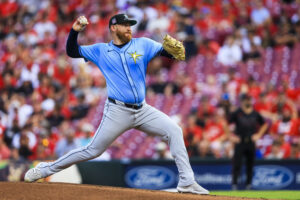
That profile seems a suboptimal fit for a pitcher who’ll now call the extremely hitter-friendly Great American Ball Park home. Littell’s consistency was clearly a plus for Cincinnati. He has worked at least five innings in all but one start this year. He has allowed three or fewer runs in 18 of 22 appearances. Littell has had a better season than Nick Martinez and Brady Singer have managed. Rookie Chase Burns has also been up and down over his first six starts.
Adding Littell will push Martinez to the bullpen. Ace Hunter Greene is on a rehab assignment as he works back from a groin strain. That’ll presumably push Burns back to Triple-A. Cincinnati would have a starting five of Greene, Nick Lodolo, Andrew Abbott, Littell and Singer at that point.
Littell is playing on a $5.72MM salary for his final year of arbitration. The Reds are taking on a little more than $1.8MM for the final two months. He’ll be a free agent at season’s end. Tampa Bay wasn’t going to make him a qualifying offer. They’ve played terribly this month and dropped below .500 with tonight’s loss. Their 3.5 game deficit in the Wild Card race isn’t insurmountable, but the team’s performance coming out of the All-Star Break discouraged the front office enough that they’re at least soft sellers.
Trading Littell, their only true impending free agent, is the obvious starting point. Closer Pete Fairbanks and second baseman Brandon Lowe are controllable for next season via club options. Shortstop Ha-Seong Kim has a $16MM player option. Yandy Díaz and Drew Rasmussen are each signed through 2026 with team options covering the ’27 campaign. Lefty reliever Garrett Cleavinger is arbitration controlled through 2027. It remains to be seen how aggressively they’ll shop players whom they control beyond this season, but the Rays have the potential to make a significant impact on the deadline.
The Reds part with a couple controllable players to land Littell. Serwinowski, a 6’5″ left-hander, is the more significant loss. The Reds drafted him out of high school in 2022. He has developed into one of their more intriguing low minors pitchers. Serwinowski ranked 10th in the Cincinnati system at MLB Pipeline and 12th at Baseball America. Eric Longenhagen of FanGraphs had him as high as sixth in the organization in May. Scouting reports praise his plus fastball-slider combination, crediting him with a mid-90s heater that can touch 97. Like many tall young pitchers, he has below-average command. Serwinowski also doesn’t have a great third pitch, raising questions about his ability to turn a lineup over multiple times.
There’s a decent chance the 21-year-old will end up as a reliever, but it’s easy to see the appeal of a pitcher with this kind of stuff and physical projection. Serwinowski has spent the season in High-A, allowing a 4.84 ERA across 74 1/3 innings. He has punched out an above-average 27.7% of batters faced while walking nearly 12% of opponents. He’s the headliner of the return from the Dodgers’ perspective as a low minors development flier.
Van Belle, 28, has yet to make his MLB debut. The Red Sox called him up in June but designated him for assignment a few days later without getting him into a game. Cincinnati added him on a cash deal and has kept him on optional assignment to Triple-A Louisville. A former undrafted free agent out of the University of Miami, Van Belle has combined for 81 1/3 innings of 3.21 ERA ball at the top minor league level this year. That comes with a below-average 20.2% strikeout rate but a sterling 3.2% walk percentage. His fastball barely scrapes 90 MPH, but he’s a fantastic strike-thrower who relies mostly on a mid-80s changeup to stay off barrels. He’ll provide the Rays a depth starter or long relief type who is in his first of three minor league option seasons.
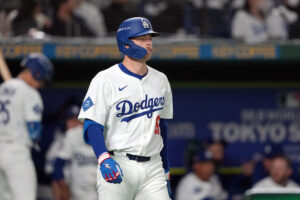
Feduccia is the bigger get from Tampa Bay’s perspective. He’s a 28-year-old catcher who had a limited path to playing time behind Will Smith and Dalton Rushing in L.A. Feduccia has held a spot on the 40-man roster for two seasons but has only gotten into seven MLB games. He has been forced to bide his time in Triple-A, where he owns a .277/.387/.450 batting line in more than 1200 plate appearances. A left-handed hitter, he takes plenty of walks and has decent contact skills with minimal power.
Eric Longenhagen of FanGraphs slotted Feduccia 31st among Dodger prospects in his writeup of the farm system in April. Longenhagen wrote that he struggles to control the running game but is a plus receiving catcher. Tampa Bay has cycled through catchers for years. They swapped out Danny Jansen for Nick Fortes in separate trades with Milwaukee and Miami earlier this week. Feduccia could push the out-of-options Matt Thaiss for the backup job immediately. He’s in his second of three option years and could be assigned to Triple-A Durham if the Rays don’t want to risk losing Thaiss on waivers.
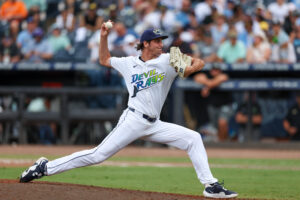
Landing him required sending the 25-year-old Gervase to Los Angeles. A 6’10” righty reliever, Gervase was acquired from the Mets last July. Tampa Bay promoted him a few weeks ago. He has made five appearances, giving up three runs across 6 1/3 innings. He has posted monster strikeout numbers in Durham, fanning nearly 40% of opponents while pitching to a 3.12 ERA across 28 appearances. Gervase has paired that with a 7.5% walk rate that represents dramatically improved control relative to his early minor league work. The LSU product leans mostly on a 93-94 MPH fastball and mixes in a slider and cutter. He’s in his first option year and will begin his Dodger career as middle relief depth.
Rortvedt, who is not on the 40-man roster, backfills L.A.’s lost catching depth at Triple-A. At age 27, he’s actually younger than Feduccia but has far more MLB experience. He’s a .186/.276/.265 hitter in 209 big league contests. Rortvedt hit .095 in 26 big league games this year before Tampa Bay ran him through waivers. He is hitting .183 in 19 Triple-A games. He’ll be a minor league free agent at the end of the season if the Dodgers don’t call him up before then.
Jeff Passan of ESPN first reported that the Reds were closing in on a deal for Littell. Gordon Wittenmyer of The Cincinnati Enquirer reported that Cincinnati was giving up Van Belle and Serwinowski. USA Today’s Bob Nightengale first mentioned the three-team trade, with C. Trent Rosecrans of The Athletic relaying that the Rays were flipping Serwinowski elsewhere. Passan had the Dodgers’ involvement and the full breakdown.
Images courtesy of Imagn Images.
Reds Notes: Martinez, Offseason, De La Cruz
Nick Martinez accepted the Reds’ $21.05MM qualifying offer this week, making him the lone player of the 13 who received a QO to accept that one-year deal. The two parties talked about a potential multi-year deal before the 34-year-old righty accepted, and while talks on a multi-year deal are reportedly on hold for now, Martinez suggested that he’s still open to such an arrangement and has received no indication from the club that talks won’t pick up down the line (links via Mark Sheldon of MLB.com and C. Trent Rosecrans of The Athletic).
“Accepting the qualifying offer doesn’t limit us from talking, so I’m definitely still open to it if that helps mitigate costs for this year or sign more guys,” Martinez said yesterday (via Rosecrans). Via Sheldon (on BlueSky), he added: “To my understanding, [discussing a multi-year deal] is still on the table.”
Martinez’s $21.05MM salary puts the Reds right back at their 2024 payroll level, per RosterResource’s projections. Reds COO Doug Healy said last week that the 2025 payroll would be “at or above” last year’s roughly $100MM level. A $21MM salary for Martinez doesn’t leave tons of wiggle room, and the Reds haven’t divulged just how far “above” that $100MM level they’d be comfortable spending. Working out a two- or three-year deal with Martinez that might reduce his 2025 salary would give the Reds more flexibility and also allow them to further extend their control over a player who president of baseball ops Nick Krall called a “great team guy” and a “lead-by-example guy.”
Prior to the Reds’ surprise decision to tender a QO to Martinez, MLBTR had penciled Martinez in for a three-year, $39MM contract on our annual Top 50 Free Agent rankings. The Athletic’s Tim Britton offered a very similar three-year, $40MM prediction. A deal in that range could allow the Reds to trim several million off Martinez’s 2025 salary — perhaps even more, if the team is willing to backload the deal so Martinez’s salaries are greater in 2026-27, when other contracts will be coming off the books. Emilio Pagán is earning $8MM in 2025 but is a free agent at season’s end. Jeimer Candelario is signed for two more years and earning more in ’25 ($15MM) than in ’26 ($12MM).
Among the Reds’ other goals in free agency are adding a bat to the lineup, deepening the bullpen and, per Sheldon, improving the team’s overall defense. Landing a corner outfield bat has long seemed like a viable target for the Reds, with Anthony Santander, Teoscar Hernández, Tyler O’Neill, Jurickson Profar, Michael Conforto and Max Kepler among the non-Soto tier of free agent possibilities. Again, bringing Martinez back at a weighty price point complicates the pursuit of such hitters, but all should sign contracts that are within reasonable proximity to the Reds’ prior free agent thresholds. Cincinnati has in the past signed both Nick Castellanos and Mike Moustakas to four-year, $64MM free agent deals, for instance. Santander will very likely command a larger guarantee than that, but the others should come in at or below (well below, for Conforto and Kepler) that type of total commitment and/or annual value.
One other area of focus for the Reds this winter will be making incremental improvements to Elly De La Cruz‘s already impressive game, per Gordon Wittenmyer of the Cincinnati Enquirer. One of the game’s most dynamic talents and still just 22 years old, the 6’5″ De La Cruz wowed with 25 homers, 67 steals and a .259/.339/.471 batting line while playing 160 games and spending every inning he was in the lineup at shortstop. Krall specifically voiced a desire to work with De La Cruz on whittling away at his 31.3% strikeout rate — a mark that’s already down a bit from his 33.7% rate as a 21-year-old in 2023.
Interestingly, Krall noted that “a lot of our guys” are in that same boat, perhaps foreshadowing one of the traits he’ll look for as he looks to bolster his lineup this winter. With regard to De La Cruz, however, both Krall and GM Brad Meador emphasized to Wittenmyer that even with a crowded infield mix and prospect Edwin Arroyo on the rise, De La Cruz is the team’s shortstop for the foreseeable future. Krall and Meador spoke of working with De La Cruz to tighten up his defense on routine plays and scale back outs made on the basepaths, though the team is surely thrilled with the overall quality of their budding star shortstop’s performance. De La Cruz is under club control for at least five more seasons and likely won’t be eligible for arbitration until the 2026-27 offseason.
Nick Martinez Accepts Qualifying Offer From Reds
Nov. 18: Martinez has now formally accepted the QO, reports Gordon Wittenmyer of the Cincinnati Enquirer. He adds an update to a prior report, adding that talks on a multi-year deal are not expected to continue.
Nov. 17: Veteran right-hander Nick Martinez is planning to accept the qualifying offer from the Reds, according to a report from Francys Romero. Martinez will remain with Cincinnati for the 2025 season on a one-year, $21.05MM deal.
Martinez, 34, was a somewhat surprising recipient of the QO after a strong inaugural season with the Reds. The right-hander joined the club on a two-year, $26MM guarantee last winter after both he and the Padres opted out of their simultaneous options for the 2024 campaign, making him a free agent. The deal with Cincinnati proved to be something of a coup for the Reds, as Martinez turned in an excellent 3.10 ERA and 3.21 FIP over 142 1/3 innings of work in a season that saw him split his time between the starting rotation and the bullpen.
While the righty posted utterly dominant numbers in relief, sporting a 1.86 ERA in 53 1/3 frames out of the bullpen, his 3.84 ERA across 16 starts saw him flash the ability to be a quality rotation piece. A closer look at Martinez’s work this season reveals that he struggled badly out of the rotation early in the year, with a 5.46 ERA through the end of April. He ended the year on a dominant note after returning to the rotation in early August, however, with a 2.42 ERA in 63 1/3 innings across 11 starts down the stretch. That excellent late-season performance could inspire more confidence in Martinez’s abilities as a rotation piece looking ahead to 2025, although it’s worth noting that his strikeout rate (22.5% vs 19.1%) and groundball rate (42.8% vs 33.7%) were both better out of the bullpen than the rotation this year.
Of course, part of Martinez’s value since returning to MLB following a four-year sojourn to Japan (where he posted a 3.02 ERA in 378 1/3 NPB innings) is his ability to shift from the rotation to the bullpen based on the needs of his team. The right-hander has worked as a swingman in each of the last three seasons, logging 184 innings across 35 starts in the rotation and and 175 innings over 117 relief outings. On the heels of a season that saw Hunter Greene, Nick Lodolo, and Andrew Abbott all miss time due to injury, it’s easy to imagine the Reds placing additional value on Martinez’s flexibility as they attempt to map out a plan for their young rotation arms. That’s especially valuable given the presence of top prospect Rhett Lowder, who looked dominant in a late-season call-up but may not be ready to jump straight into a wire-to-wire big league season in 2025.
That combination of production and versatility convinced the Reds to extend Martinez the QO, even though $21.05MM constitutes a raise of more than $7MM over his 2024 salary. The sides reportedly discussed a multi-year extension in the days leading up to the QO deadline earlier this month, but did not ultimately come together on a deal. Given Martinez’s age, it’s likely that his earning power on the open market would be tamped down in any multi-year pact. That reality surely made accepting the QO an attractive option for Martinez, and that’s exactly what MLBTR predicted he would do in our annual Top 50 MLB Free Agents list.
While adding Martinez to the club’s pitching staff for 2025 is sure to improve the team, that hefty raise might cause some complications for the club’s budget. RosterResource estimates the club’s current payroll for 2025 to be just under $81MM. While the Reds are committed to a payroll “at or above” their 2024 level, the club spent just $100MM on payroll last year and the addition of Martinez’s $21.05MM salary would push the Reds to $102MM, just over that mark. Potential non-tender candidates like Santiago Espinal and Jake Fraley could help the club save a few million dollars here and there, but it seems as though Cincinnati will need to exceed their 2024 payroll by a notable amount in order to make further additions this winter.
As for the free agent market overall, this winter’s market remains deep in interesting mid-to-back of the rotation options even with Martinez off the board. Yusei Kikuchi, Nathan Eovaldi, and Nick Pivetta are among the mid-rotation arms expected to pursue multi-year deals in free agency this winter, while bounce-back candidates like Walker Buehler and Max Scherzer could provide significant upside as they look to re-establish themselves on one-year, high-AAV deals similar to Martinez’s.
13 Players Receive Qualifying Offers
Today is the deadline for teams to decide whether or not to issue qualifying offers to eligible players. Per Jeff Passan of ESPN on X, 13 players have received the QO and they are:
- Juan Soto (Yankees)
- Corbin Burnes (Orioles)
- Alex Bregman (Astros)
- Max Fried (Braves)
- Willy Adames (Brewers)
- Pete Alonso (Mets)
- Anthony Santander (Orioles)
- Teoscar Hernández (Dodgers)
- Nick Pivetta (Red Sox)
- Christian Walker (Diamondbacks)
- Sean Manaea (Mets)
- Luis Severino (Mets)
- Nick Martinez (Reds)
As a recap, the qualifying offer system was created in the name of competitive balance, allowing clubs to receive compensation if key players depart via free agency. The value changes from year to year as it is the average of the salaries of the 125 highest-paid players in the league. This year’s QO is valued at $21.05MM.
If the player rejects the QO and signs elsewhere, his previous team receives draft compensation while his new club is subject to draft pick forfeiture and sometimes international bonus penalties as well. MLBTR has previously covered what each team’s compensation and penalties would be.
Players have until 3pm Central on November 19 to decide whether to accept or not. In that time, they are free to negotiate with other clubs just like all other free agents, assessing their options before making a decision.
Most of the players on this list are not surprising. Many of them have enough earning power where it was obvious that they would receive a QO and they have an easy decision to reject it while going on to pursue larger guarantees on multi-year deals. Some of the decisions were a bit more borderline and MLBTR took closer looks at those in separate posts, including Martinez, Pivetta and Severino/Manaea.
There were also some notable players who were candidates to receive a QO but ultimately didn’t. MLBTR recently took a look at the pitchers and position players with a chance at receiving a QO. Michael Wacha was listed as a possibility but that came off the table when he and the Royals agreed to a new deal yesterday. Shane Bieber of the Guardians, Jeff Hoffman of the Phillies, Paul Goldschmidt of the Cardinals, Tyler O’Neill of the Red Sox, Gleyber Torres of the Yankees, as well as Ha-Seong Kim and Jurickson Profar of the Padres were all identified as long shots to receive a QO and ultimately none of them did.
Clubs generally don’t want to lose draft picks or be subject to the other associated penalties. As such, receiving a QO can sometimes have a negative impact on a player’s prospects in free agency, though it won’t be a significant factor for the top guys.
Reds Issue Qualifying Offer To Nick Martinez
The Reds have issued a qualifying offer to Nick Martinez, reports Gordon Wittenmyer of the Cincinnati Enquirer. The QO is valued at $21.05MM. The right-hander declined a $12MM player option over the weekend to hit free agency for a fourth straight winter.
Wittenmyer reports that the Reds and Martinez have discussed a multi-year extension but haven’t gained much traction. Rather than risk losing him for nothing, Cincinnati made the surprising call to issue the QO. Martinez and his representatives at the Boras Corporation have until November 19 to explore the market before deciding whether to lock in what would easily be the highest salary of his career.
Martinez had an excellent first season in Cincinnati. The Reds signed him to a two-year, $26MM free agent deal. Martinez had pitched well over two seasons in a swing role with the Padres. He pitched in the same capacity for the Reds, starting 16 of 42 appearances. He logged a career-best 142 1/3 innings with a 3.10 earned run average. He has allowed fewer than 3.50 earned runs per nine in all three seasons since returning from Japan during the 2021-22 offseason. Martinez showed pristine control (3.2% walk percentage) and did a fantastic job avoiding hard contact. That mitigated concerns about how he’d adjust to hitter-friendly Great American Ball Park.

Strong as that production was, the QO is a gamble for a team that doesn’t run huge payrolls. Martinez is headed into his age-34 season and would likely be limited to a three-year deal even if he weren’t attached to draft compensation. There looks to be a good chance he accepts the offer. The Reds spent around $90MM on player payroll this past season. If they end up a similar range in 2025, Martinez’s salary would account for upwards of a fifth of their spending.
That’s a lot to commit to a swingman, though it’d be more reasonable if the Reds wanted to give Martinez a full-time rotation job. He has been better out of the bullpen, as one would expect, though he was quite good in either role. Martinez posted a 3.84 ERA with a 19.1% strikeout rate out of the rotation. He turned in a sparkling 1.86 mark while fanning 22.5% of opponents across 53 1/3 relief innings.
The QO qualifies as a major league free agent contract. Article XX(b) free agents like Martinez gain full no-trade rights until June 15 of the following season, so the Reds couldn’t deal him this offseason without his consent if he accepts the offer. Cincinnati wouldn’t have made the offer if they weren’t prepared to welcome him back at that price.
If Martinez finds a robust market and is still able to land a notable multi-year contract, the Reds position themselves to land draft compensation. In the unexpected event that Martinez lands a $50MM+ deal elsewhere, Cincinnati would get a pick after the end of the first round in 2025. The likelier outcome is that a contract would be for less than $50MM, entitling the Reds to a pick between the end of Competitive Balance Round B and the start of the third round. Another team would forfeit draft pick(s) and potentially international signing bonus space to add Martinez. The penalties vary depending on the signing team’s revenue sharing status.
Image courtesy of Imagn.