
Checking In On 2024’s Reliever-To-Rotation Experiments: July Edition
About a quarter of the way through the 2024 season, I took a look at how the most prominent examples of teams’ attempts to turn an established reliever into a starter had progressed. At the time, the majority of these experiments were going well, by and large. At that mid-May juncture, most of the relievers making the switch had yet to reach their innings workloads from the season prior. Now that we’re at the season’s halfway point, that’s no longer the case. Many of the pitchers striving to make this jump are now approaching or have already eclipsed their 2023 innings totals — if not their career-high workloads — so it seems a good time to check back on how they’re faring.
As a reminder, the focus here is pitchers who pitched exclusively or near-exclusively out of the bullpen last season. Someone like the Rays’ Zack Littell or Red Sox’ Kutter Crawford, who moved into the rotation last summer and continued that move this year, isn’t the focus.
Garrett Crochet, LHP, White Sox
Stats at quarter mark: 9 games started, 46 2/3 innings, 4.63 ERA (2.47 SIERA), 34.2 K%, 4.8 BB%, 43.8 GB%
Stats since: 9 GS, 54 2/3 innings, 1.65 ERA (2.27 SIERA), 36.3 K%, 5.2 BB%, 45.5 GB%
At the 25% mark of the season, Crochet sat on a pedestrian ERA but elite K-BB profile. His production had been skewed by a series of three straight rough outings: five runs versus the Reds, seven in Philadelphia and another five in Minnesota.
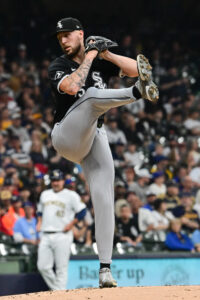
Those three starts still stand as the worst three of his season. Crochet hasn’t yielded more than three runs in a single outing since that time. He’s not only maintained his elite K-BB profile but improved upon it, slightly upping his strikeout rate while sustaining his exceptional command. No starter in baseball is striking out hitters at a higher rate than Crochet, and only 12 are limiting their walks more effectively.
At last check, Crochet had ace-like rate stats but pedestrian run-prevention numbers overall. That’s no longer the case. The only question as to whether Crochet is a bona fide No. 1 starter is one of durability. All of the pieces are there, but Crochet has never pitched a full season in the rotation. In fact, this year’s combined 101 1/3 innings not only stand as a career-high, they eclipse his combined total of professional innings pitched — majors and minors combined — since being selected in the first round of the 2020 draft.
With two and a half years of team control left, a bottom-of-the-barrel $800K salary and the worst team in baseball behind him, Crochet stands as a clear-cut trade candidate. The Sox reportedly broached the possibility of an extension with him but are now expecting to trade him after contract talks failed to progress. A new team will have to worry about how Crochet will hold up down the stretch, but there’s little doubting that he’s a front-of-the-rotation talent.
Jordan Hicks, RHP, Giants
Stats at quarter mark: 9 GS, 48 innings, 2.44 ERA (3.99 SIERA), 19.9 K%, 8.2 BB%, 56.2 GB%
Stats since: 8 GS, 37 2/3 innings, 4.54 ERA (4.29 SIERA), 22.2 K%, 10.2 BB%, 45.8 GB%
Early on, Hicks was thriving in terms of run-prevention in spite of a pedestrian strikeout rate. He’s picked up the strikeout rate a bit since that time but has seen his command, ground-ball rate and velocity all drop. After averaging 5 1/3 innings through his first nine starts, Hicks is averaging about 4 2/3 innings per outing and has seen his average sinker velocity drop by nearly two miles per hour. Since mid-May, his sinker is averaging 93.5 mph — down from the 95.5 mph at last check and even further from the 100.2 mph Hicks averaged in his time as a reliever.
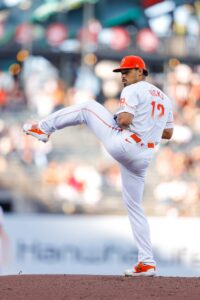
Hicks has struggled to turn the lineup over multiple times. Opponents own an awful .196/.268/.348 slash when facing him the first time in a game. Unlike many pitchers, who experience a stark drop when facing opponents a third time, Hicks’ troubles begin the second trip through the order. Opponents in those settings carry a .267/.373/.382 slash. He’s only faced a hitter for the third time on a given day 57 times this season, but opponents have batted .283/.333/.434 in that small sample.
Back in May, I noted that opponents had posted an embarrassing .079/.167/.105 slash in the 42 plate appearances Hicks had finished off with a splitter. They’ve fared better against the pitch since that time, though it’d be hard to have performed much worse. And, with opponents still slashing only .160/.244/.272 against the pitch (which Statcast credits with a .270 expected wOBA), that newly implemented offering still has the look of a plus pitch.
Hicks has remained reasonably effective but hasn’t been the roaring success he was through the first quarter of the season. San Francisco signed the 27-year-old flamethrower to a four-year, $44MM deal and did so with an eye toward Hicks starting, so it’s clear this is a multi-year undertaking. Nothing Hicks has done to date suggests he decidedly can’t handle being a starter, but he’s faded from his early-season production, which is perhaps to be expected for a pitcher whose 85 2/3 innings are already a career-high mark.
The manner in which Hicks has begun to fade only further underscores the remarkable nature of Crochet’s performance to date as he navigates uncharted workload territory. That said, Hicks has an overall 3.36 ERA with a nearly average strikeout rate, a manageable walk rate and a plus ground-ball rate. There have been some roadblocks of late, but this year could serve as a launching pad to a better performance in 2025-27, when he’s more accustomed to his current workload.
Reynaldo Lopez, RHP, Braves
Stats at quarter mark: 7 GS, 40 1/3 innings, 1.34 ERA (4.00 SIERA), 25.2 K%, 10.1 BB%, 40.2 GB%
Stats since: 7 GS, 39 innings, 2.08 ERA (3.58 SIERA), 26.1 K%, 7.0 BB%, 32.7 GB%
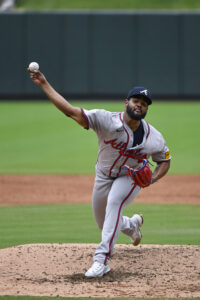
The Braves have been judicious with Lopez’s start-by-start workload thus far. He hasn’t topped 94 pitches in a single appearance and has only recorded four outs after the sixth inning all season. So far, that level of caution has paid off. Since last check, Lopez hasn’t lost any life of his heater and has actually tacked on 0.4 mph on average, per Statcast.
Atlanta doesn’t often give Lopez the opportunity to turn the lineup over a third time, and the opportunities he’s had haven’t gone well. Lopez has yielded a mid-.500s OPS to opponents the first or second time through the order but has been tagged for a .245/.359/.396 batting line the third time through. It’s not egregious, but it’s far less dominant than his first couple trips through a lineup.
Lopez is still running a plus strikeout rate, and he’s improved his command and his velocity as the season has worn on. As the only member of this list who’s previously worked multiple full seasons as a starter, he might have been the best-equipped to handle this transition, and so far it doesn’t appear he’s slowing down much at all.
Lopez entered the season with a career 71.1% strand rate, and he’s currently stranding 86.3% of his baserunners. His .279 average on balls in play is lower than league average but right in line with his career .281 mark. He’s allowed only 0.45 homers per nine frames, thanks in large part to a paltry 4.7% homer-to-flyball ratio that sits well shy of his career 11.3% mark. There’s some correlation there; it’s easier to strand runners if you’re almost never allowing a ball to clear the outfield fence, after all. In all likelihood, both that HR/FB and strand rate will trend toward his career marks as the season (and, more broadly, his three-year contract) wears on, but the outside-the-box bet on Lopez as a starter looks like one that will pay off for Atlanta.
Jose Soriano, RHP, Angels
Stats at quarter mark: 7 GS, 38 2/3 innings, 3.72 ERA (4.03 SIERA), 20.3 K%, 9.5 BB%, 61.5 GB%
Stats since: 5 GS, 33 2/3 innings, 3.21 ERA (3.97 SIERA), 16.9 K%, 6.2 BB%, 58.6 GB%
Soriano was continuing his sharp start to the season when he was scratched from a mid-June start due to abdominal pain. The Halos discovered an infection in the young righty’s abdomen that required a trip to the injured list and was expected to sideline him a few weeks. That’s thrown a bit of a wrench into his rotation breakout, though there’s no indication it’s a serious issue and the Halos can take solace in the fact that there’s no arm issue at play. And, after pitching just 65 1/3 innings last season, Soriano is already at 72 1/3 frames this year, so perhaps it can serve as a well-timed breather for his right arm.
The 25-year-old Soriano’s first run as a starter in the big leagues this season looked promising through mid-May and continues to do so. Impressively, he hasn’t lost any life on his four-seamer or sinker despite the shift from short relief to starting work. Statcast measured his average four-seamer at 98.9 mph in both 2023 and 2024, while his sinker clocked in at an average of 97.7 mph in 2023 and is actually marginally better in 2024 at 97.8 mph.
That sinker has helped Soriano run up an elite ground-ball rate; his 60.1% grounder rate ranks third among the 145 big league pitchers with at least 50 innings pitched this year, trailing only Framber Valdez (61.4%) and Cristopher Sanchez (60.3%). That uptick in grounder rate over last year’s 51% mark correlates with a huge spike in Soriano’s sinker usage (13.3% in ’23, 40% in ’24). The extra sinker usage has come at the expense of some four-seamers (25.8% in ’23, 17.8% in ’24) and particularly Soriano’s knuckle curve (41.2% in ’23, 27.5% in ’24).
The tweak in repertoire could come down to a pursuit of efficiency as Soriano looks to work deeper into games. The right-hander fanned 30.3% of opponents last season and registered a hearty 14.8% swinging-strike rate but also required 16.6 pitches per inning pitched, on average. In 2024, his strikeout rate is down to 20.3% with a 10.2% swinging-strike rate. But he’s significantly upped his grounder rate and is now averaging just 15.1 pitches per frame. Soriano averaged 6 2/3 innings per start in the five appearances between our last check and this one, so it seems clear he’s placing an emphasis on being able to work deeper into games in his new role. Opponents are hitting .313/.421/.521 in 58 plate appearances when facing him a third time, so the results aren’t there so far, however.
Bryse Wilson, RHP, Brewers
Stats at quarter mark: 11 G (5 GS), 34 innings, 2.65 ERA (4.60 SIERA), 20.4 K%, 10.9 BB%, 39.1 GB%
Stats since: 9 G (4 GS), 44 innings, 5.52 ERA (4.27 SIERA), 17.6 K%, 6.7 BB%, 41.3 GB%
Wilson hasn’t technically “started” each of his past nine appearances, but he’s averaged five innings per outing while working as a starter and bulk reliever (on the heels of an opener). Effectively, the Brewers are using him as a starter — they’re just shielding him from the top-third of some lineups on occasion, when the matchup dictates.
This wasn’t a planned move to a longer role. The former Braves top prospect and Pirates hurler entered the season slated for a second straight season as Milwaukee’s long man, but injuries to Wade Miley, Joe Ross, Robert Gasser and DL Hall combined to not only push Wilson into this rotation-ish role but to keep him there. After pitching 76 2/3 innings of pure long relief in 2023, Wilson is already at 78 frames and counting.
As one would typically expect, Wilson’s fastball has taken a slight dip as he’s stretched out for longer stints. He averaged 94 mph through the season’s first quarter, but several of those earlier appearances were still in short relief. He’s averaging 93.2 mph since mid-May and has seen his strikeout rate drop but also seen his walk rate improve. As he’s been tasked with facing more lefties, Wilson has upped his changeup and cutter usage a bit, doing so at the expense of his four-seamer and curveball.
Wilson has been far too homer-prone this season (1.62 HR/9) and is giving up too much hard contact (45.8%, per Statcast). More so than any pitcher on this list, he’s run into troubles the third time through the order; in 45 such plate appearances, they’ve posted a Herculean .400/.467/.650 slash. Those plate appearances account for just 13.6% of Wilson’s batters faced this season but have resulted in 21.5% of his home runs allowed. Wilson seems best suited for a long relief role or a five-inning start/bulk role, but he’s pitched more than five innings six times this season and is giving Milwaukee some desperately needed innings when their rotation is in tatters.
A.J. Puk, LHP, Marlins
Stats at quarter mark: 4 GS, 13 2/3 innings, 9.22 ERA (7.13 SIERA), 15.6 K%, 22.1 BB%, 31.9 GB%
Stats since: 0 GS, 21 1/3 innings, 2.95 ERA (3.36 SIERA), 21.4 K%, 4.8 BB%, 44.3 GB%
The Marlins quickly pulled the plug on the Puk rotation experiment, and it’s worked out for all parties. The former No. 6 overall pick (A’s, 2016) turned heads as a starter in spring training but was shelled in what currently stand as the only four starts of his big league career (though Puk was a starter both for the University of Florida and in the minor leagues).
It’s unlikely that Puk would’ve continued to struggle quite so substantially had Miami continued using him as a starter, but the left-hander certainly looks more comfortable in the short relief role in which he thrived from 2022-23 (123 innings, 3.51 ERA, 19 saves, 22 holds, 29.4 K%, 6.9 BB%). He’s performing far better in his old role, and he required a three-week stint on the injured list for shoulder fatigue following his early start in the rotation.
There’s no reason to fault the Marlins for trying to stretch out a clearly talented reliever who has a track record in the rotation, but Puk is back in the bullpen and figures to draw attention over the next month from teams seeking left-handed bullpen help. He’s controllable through the 2026 season.
Tyler Alexander, LHP, Rays
Stats at quarter mark: 7 G (5 GS), 39 2/3 innings, 5.45 ERA (4.44 SIERA), 19.1 K%, 6.9 BB%, 30.4 GB%
Stats since: 3 G (1 GS), 17 innings, 7.94 ERA (3.68 SIERA), 20.3 K%, 1.4 BB%, 27.8 GB%
Alexander entered the season in the same type of role Wilson currently holds with the Brewers: occasional starter and frequent bulk reliever behind an opener. He made a handful of solid appearances early on, though the value of those was offset by some particularly rough outings versus the Yankees (six runs in seven innings) and the Royals (eight runs in five innings).
Following our last check-in, Alexander made three appearances before being optioned to Triple-A Durham, where he’s worked quite effectively out of the Bulls’ rotation: five starts, 29 2/3 innings, 3.64 ERA, 24.2% strikeout rate, 2.4% walk rate. That should position him as a depth option in the event of a big league injury and/or trade. Tampa Bay reportedly has considered fielding offers on current members of its big league rotation — Zack Littell and Aaron Civale, most notably. Part of that is due to the looming returns of Shane Baz and Jeffrey Springs, but Alexander gives them another rotation candidate who’s performed well recently in Durham.
The Rays haven’t abandoned the Alexander starting experiment, but for the time being he’s not in their big league rotation plans. Speculatively, that could make Alexander himself a trade option for teams seeking back-of-the-rotation depth, though if the Rays do ultimately move Littell, Civale or a more expensive arm like Zach Eflin, they may not want to deplete the rotation depth much further.
Orlando Cepeda Passes Away
Hall of Famer Orlando Cepeda has passed away at age 86, the Giants announced. Cepeda played nine of his 17 MLB campaigns in San Francisco and won the 1967 National League MVP award as a member of the Cardinals.
A native of Ponce, Puerto Rico, Cepeda secured a minor league contract with the Giants in 1955. He hit 22 home runs as a 17-year-old in his first minor league season, hinting at the power he’d eventually show in the big leagues. Cepeda quickly hit his way up the ladder, reaching the majors midway through April in 1958. His arrival coincided with the franchise’s move to San Francisco.
The first baseman wasted no time in cementing himself as one of the faces of the organization. He raked at a .312/.342/.512 clip with 25 homers and a National League-high 38 doubles at age 20. Cepeda was a unanimous choice as the Senior Circuit’s Rookie of the Year and finished ninth in MVP balloting. While he didn’t earn an All-Star selection in his first season, Cepeda would earn trips to the Midsummer Classic in the six seasons thereafter.
The 6’2″ slugger reached 35 doubles and topped 20 homers in his second and third years. He took his already excellent form to another level in his fourth season. Cepeda blasted a career-high 46 longballs to top the National League. He drove in a staggering 142 runs while hitting .311/.362/.609 over 152 contests. Cepeda led the majors in RBI and finished runner-up to Frank Robinson in MVP balloting.
While he didn’t quite match those numbers in 1962, Cepeda popped another 35 homers and drove in 114 runs. He finished 15th in MVP voting and helped the Giants capture the pennant. He didn’t have a great World Series as the Yankees dropped the Giants in a seven-game set, but he’d get another couple cracks at the Fall Classic later in the decade.
Those didn’t come in San Francisco. Cepeda remained a productive hitter for the next couple seasons, topping 30 homers while hitting over .300 in each of the next two years. He lost most of the ’65 campaign to injury, though, putting something of a sour end on an illustrious run with the organization. The Giants traded Cepeda to the Cardinals for left-hander Ray Sadecki in May 1966. While Sadecki was a solid starting pitcher for the next couple seasons, that blockbuster turned out squarely in the Cards’ favor.
Cepeda hit .303/.362/.469 in his first year with the Cardinals. He paced the NL with 111 RBI the following season, running a .325/.399/.524 line over 644 plate appearances. Cepeda helped the Cardinals to 101 wins and a trip to the World Series. He topped teammate Tim McCarver to win the MVP. While Cepeda only had three hits in the Series, the Cards triumphed over the Red Sox in seven games to claim the eighth title in franchise history.
The Cardinals won a second straight pennant the following season, though they fell to the Tigers in the ’68 World Series. St. Louis traded Cepeda to the Braves the following Spring Training in a one-for-one swap for Joe Torre. The star catcher and future Hall of Fame manager would win the ’71 MVP in St. Louis, so the Cardinals netted a future MVP on both ends of their respective Cepeda trades.
Cepeda was a key contributor for Atlanta over three and a half seasons in his own right. He remained a well above-average hitter, running a .281/.343/.486 line in 401 games as a Brave. Atlanta traded him to the A’s in 1972 for Denny McLain, a deal that didn’t work out for either team. Cepeda signed with the Red Sox as a full-time designated hitter in 1973 and hit .289/.350/.444 to earn a few more down-ballot MVP votes. He retired after a brief stint with the Royals the year after.
Over a career that spanned parts of 17 seasons, Cepeda hit .297/.350/.499 in more than 2100 games. He finished his playing days with 379 home runs, 2351 hits and 1365 runs batted in. He’s 74th on the all-time leaderboard in homers and tied with Garret Anderson for 87th in RBI. Cepeda spent 15 years on the Hall of Fame ballot, falling just shy of induction with 73.5% of the vote share in his final year (1994). Five years later, he was enshrined by the Veterans Committee.
While Cepeda had an accomplished run for three franchises, he’ll always be best remembered for his time with the Giants. He hit .308/.352/.535 in more than 4500 plate appearances in a San Francisco uniform. The franchise retired his #30 and unveiled a statue in his honor outside of Oracle Park back in 2008. His passing unfortunately comes only 10 days after the death of his longtime teammate and fellow Giants/MLB icon Willie Mays. MLBTR joins others throughout the sport in sending condolences to Cepeda’s family, loved ones, former teammates and the countless fans whose lives he touched over his excellent career.
MLBTR Podcast: Injured Trade Candidates, The Cristopher Sánchez Extension And Blue Jays’ Woes
The latest episode of the MLB Trade Rumors Podcast is now live on Spotify, Apple Podcasts, and wherever you get your podcasts! Make sure you subscribe as well! You can also use the player at this link to listen, if you don’t use Spotify or Apple for podcasts.
This week, host Darragh McDonald is joined by Steve Adams of MLB Trade Rumors to discuss…
- The injuries to Patrick Sandoval of the Angels as well as Jesús Luzardo and Braxton Garrett of the Marlins, and the potential impacts on the trade deadline (2:30)
- The Phillies and Cristopher Sánchez sign an extension (11:45)
- The Blue Jays lose Orelvis Martínez to a PED suspension, on top of other struggles (18:45)
Plus, we answer your questions, including…
- “What would it take for the Rockies to consider trading some young assets like Ryan McMahon or Brendan Rodgers?” (23:55)
- “The Astros are clearly out of it, so why isn’t Ryan Pressly a top target of teams with bad bullpens?” (30:35)
- “Would the Marlins or Nationals trade with the Mets, Phillies or Braves, with Jazz Chisholm Jr. and Lane Thomas being good fits?” (39:25)
- “Will T.J. McFarland of the Athletics be traded to the Cubs or another contender?” (47:45)
Check out our past episodes!
- José Abreu’s Release, Mookie Betts and Yoshinobu Yamamoto Hit The IL And Even More Injuries – listen here
- Injured Astros, The Chances Of Bad Teams Rebounding In 2025 And More – listen here
- Gambling Scandal, The State Of The Blue Jays And The Orioles’ Rotation Depth – listen here
The podcast intro and outro song “So Long” is provided courtesy of the band Showoff. Check out their Facebook page here!
Braves’ Ray Kerr To Undergo Tommy John Surgery
Braves left-hander Ray Kerr will need to undergo Tommy John surgery, manager Brian Sntiker told reporters this evening (video on X via Bally Sports South). Atlanta had optioned the hard-throwing southpaw to Triple-A Gwinnett on June 15. The Braves rescinded that option this evening and placed him on the MLB injured list with the UCL issue.
Kerr will spend the rest of the year on the injured list. (The small consolation is that he’ll be paid at the prorated $740K MLB minimum rate because the injury evidently occurred before he was sent down.) Atlanta can move him to the 60-day injured list whenever they need to open a spot on the 40-man roster. They’ll either need to reinstate him onto the 40-man or put him on waivers at the start of next offseason.
The latter outcome would be particularly frustrating, but it’s possible the Braves don’t want to carry Kerr on their 40-man roster all winter. He’ll certainly be out into the second half of next year and could miss the entire ’25 campaign.
Atlanta liked Kerr enough to eat $4MM of Matt Carpenter’s $5.5MM salary in a trade with the Padres last offseason. The Braves immediately designated Carpenter for assignment and released him, so the trade was entirely about “purchasing” Kerr’s contractual rights. Atlanta even dabbled with moving Kerr to the rotation, giving him a pair of starts in late May.
Those outings didn’t go particularly well, as the 29-year-old allowed seven runs across 7 1/3 innings from the rotation. Kerr had more success in his typical bullpen role, tossing 14 2/3 innings of six-run ball. He punched out 27 hitters while issuing seven walks overall. Kerr is up to 54 1/3 frames of 5.30 ERA ball over parts of three seasons in the big leagues. He likely wouldn’t reach arbitration until the 2027 season, so the Braves could keep him around at little financial cost if they’re willing to carry him on the roster.
MLBTR Podcast: José Abreu’s Release, Betts and Yamamoto Hit The IL And Even More Injuries
The latest episode of the MLB Trade Rumors Podcast is now live on Spotify, Apple Podcasts, and wherever you get your podcasts! Make sure you subscribe as well! You can also use the player at this link to listen, if you don’t use Spotify or Apple for podcasts.
This week, host Darragh McDonald is joined by Steve Adams of MLB Trade Rumors to discuss…
- The Astros releasing José Abreu (2:25)
- The Dodgers dealing with injuries to Mookie Betts and Yoshinobu Yamamoto (12:30)
- The Yankees are getting Gerrit Cole back but lost Anthony Rizzo (18:25)
- The Braves lose another outfielder with Michael Harris II hitting the injured list (26:55)
- The sad news of Willie Mays passing came out during recording (30:10)
Plus, we answer your questions, including…
- Do the Giants have a chance of getting Pete Alonso? Or will the Mets make additions if they carry the power of Grimace into the deadline? (32:15)
- How should the Nationals address their outfield surplus? And where did all these good pitchers come from? (42:35)
- What are the chances the White Sox package Luis Robert Jr. and Garrett Crochet at the deadline? And if they trade Crochet and Erick Fedde, how will they fill the rotation after? (49:55)
Check out our past episodes!
- Injured Astros, The Chances Of Bad Teams Rebounding In 2025 And More – listen here
- Gambling Scandal, The State Of The Blue Jays And The Orioles’ Rotation Depth – listen here
- Ángel Hernández Retires, Ronald Acuña Jr. Out For The Season And Roki Sasaki’s Potential Posting – listen here
The podcast intro and outro song “So Long” is provided courtesy of the band Showoff. Check out their Facebook page here!
Braves Place Hurston Waldrep On Injured List
The Braves sustained yet another injury within their starting staff, as young right-hander Hurston Waldrep has been placed on the 15-day injured list due to elbow inflammation, per a team announcement. Righty Daysbel Hernandez is up from Triple-A Gwinnett in his place. Atlanta has also optioned outfielder J.P. Martinez to Gwinnett and recalled fellow outfielder Forrest Wall in his place.
Manager Brian Snitker indicated last night that Waldrep would be optioned to Gwinnnett. However, Mark Bowman of MLB.com tweets that the 22-year-old Waldrep subsequently informed the team’s training staff that his elbow was more sore than usual following his recent start. He’ll now join Spencer Strider, AJ Smith-Shawver and Huascar Ynoa on the injured list.
Waldrep, the team’s first-round pick just last year, made his MLB debut earlier this month. He’s taken the mound twice since being promoted to the big leagues but been hit quite hard, yielding 13 runs on nine hits and eight walks with only three strikeouts through seven innings. The former Florida Gator standout hasn’t completed four innings in either of his two starts and issued four free passes in each.
Tough as his debut has been, Waldrep excelled in the upper minors prior to his promotion. Through 49 1/3 Double-A frames, he pitched to an excellent 2.92 ERA with a 22.4% strikeout rate and 7.9% walk rate. The Braves promoted him to Triple-A after that start, where he pitched six innings and allowed three runs — but only on five hits and one walk with a terrific 11 strikeouts.
Since he was set to be optioned anyhow, Waldrep’s injury won’t necessarily subtract from the immediate MLB rotation. Atlanta will still lean on Reynaldo Lopez, Chris Sale, Max Fried, Charlie Morton and rookie Spencer Schwellenbach for the time being, and there are still quality options in Gwinnett — Bryce Elder most notably. But any elbow issue for a promising young arm is troubling, and Waldrep’s injury does further deplete the team’s depth for the time being.
As for the outfield shuffle, Martinez will head down to Gwinnett after going hitless in 10 plate appearances with the big league squad. Wall will get a look after batting .287/.393/.415 with four homers and 11 steals for the Stripers. He’ll replace Martinez as a left-handed bat in the outfield mix, giving Snitker some additional speed off the bench. Given Adam Duvall‘s woeful .084/.126/.108 slash against fellow righties — he’s hitting .275/.393/.565 against southpaws — Wall could see some action against right-handed pitching as well.
Mike Brumley Passes Away
Former big league player and coach Mike Brumley passed away yesterday in a car accident, as initially reported by MLB.com’s Mark Bowman (X link). Brumley was 61 years old.
A second-round pick for the Red Sox in the 1983 draft, Brumley played in 295 big league games over parts of eight seasons from 1987-1995. The early years of his pro career were defined by his inclusion in a pair of trades involving future Hall-of-Famers — the Red Sox traded Brumley and Dennis Eckersley to the Cubs for Bill Buckner in May 1984, which led to Brumley making his MLB debut in a Chicago uniform in 1987. The Cubbies then dealt Brumley and Keith Moreland to the Padres in February 1988 in the swap that brought Goose Gossage and Ray Hayward to Chicago.
Overall, Brumley was traded four different times as part of his journeyman career. He saw action with six different teams at the Major League level, and his 92 games with the Tigers in 1989 marked the most playing time he received in a season. Besides the Cubs and Tigers, Brumley also played with the Mariners, Red Sox, Astros, and Athletics, and he was a member of four other organizations (Padres, Orioles, Angels, Marlins) without ever appearing with any of those teams in a big league game. He hit .206/.261/.272 over 697 plate appearances while playing mostly shortstop, and also bouncing around the diamond as a second baseman, third baseman, and all three outfield positions.
Brumley moved into a long coaching career after his playing days ended, including stints as a minor league manager with Angels and Dodgers affiliates, while also working as a roving instructor for the Dodgers and as a field coordinator in the Rangers’ organization. His work in a big league dugout came with two of his former teams — Brumley was a third and first coach with the Mariners from 2010-13, and then an assistant hitting coach with the Cubs during the 2014 season.
Brumley went on to work as a minor league hitting coordinator with the Braves in 2021, and built some lasting bonds with several members of Atlanta’s organization that lasted well beyond his lone season in the role. Austin Riley today spoke at length about his friendship with Brumley, crediting him behind only Riley’s father as his greatest “role models in my baseball career.”
We at MLB Trade Rumors send our condolences to Brumley’s family, friends, and colleagues.
Braves Select Grant Holmes
The Braves announced this morning that they’ve selected the contract of right-hander Grant Holmes. Left-hander Ray Kerr was optioned to Triple-A in order to make room for Holmes on the active roster, while Holmes will take the 40-man roster spot of right-hander Huascar Ynoa, who was recalled from the minors and placed on the 60-day injured list with a stress reaction in his right elbow.
Holmes, 28, was a first-round pick by the Dodgers back in 2014 and quickly rose to be a consensus top-100 prospect in the sport. Holmes was swapped alongside Frankie Montas and Jharel Cotton from L.A. to Oakland in the trade that sent Josh Reddick to the Dodgers just before the 2016 trade deadline, and at the time Holmes appeared to be the headliner of the return headed to the A’s. Unfortunately, shoulder problems and ineffectiveness at the upper levels of the minors prevented Holmes from impacting the A’s during his time with the organization, and he was outrighted off the club’s 40-man roster in early 2022.
The right-hander joined the Braves on a minor league deal for the 2023 season and generally pitched well in a relief role with the club’s Triple-A affiliate in Gwinnett. In 61 innings of work, Holmes posted a 3.54 ERA with a 28.7% strikeout rate. That was enough for the Braves to re-sign him to a fresh minor league deal ahead of the 2024 season, and he’s once again found success with the club at the Triple-A level, this time in a swing role: in 18 appearances (3 starts) spanning 41 innings, Holmes has dominated to the tune of a 2.63 ERA with an excellent 30.4% strikeout rate in that time. That was clearly enough for the Braves to decide to give Holmes a shot at the big league level, and he’s now poised to make his MLB debut after a decade working his way through the minor leagues.
Headed down to Triple-A in place of Holmes is Kerr, who Atlanta acquired from the Padres alongside Matt Carpenter in a deal over the offseason. The southpaw’s time with the Braves hasn’t gone as the club was surely hoping when they took on Carpenter’s contract to acquire him. In 22 1/3 innings of multi-inning relief work, Kerr has struggled to a 5.64 ERA and 4.40 FIP across ten appearances in the majors. The lefty has appeared to be more effective in shorter bursts, as he has allowed just two runs on nine hits and three walks while striking out eight across nine innings of work when throwing 40 pitches or less in an outing. For now, Kerr figures to head back to Triple-A and wait for his next opportunity to impact the big league bullpen in Atlanta.
As for Ynoa, the talented right-hander flashed exciting upside during the 2021 season with the Braves, when he pitched to a 4.05 ERA in 91 innings of work and struck out 26.9% of batters faced. Unfortunately, the right-hander has pitched just 6 2/3 innings of work in the majors since then and last appeared at the highest level in 2022 due to a number of injuries, including Tommy John surgery. Now it appears Ynoa is headed back to the shelf for what figures to be another extended absence, as the stress reaction in his right elbow will sideline him for at least the next two months.
Braves Place Michael Harris On IL With Grade 2 Hamstring Strain, Select Ramon Laureano
6:15pm: Harris has been diagnosed with a Grade 2 strain in his hamstring, Snitker told reporters (including MLB.com’s Mark Bowman) this afternoon. Snitker noted that there is no clear timeline for Harris’s return to action beyond the fact that he will be out for “a long time.”
JUNE 15, 9:26am: The Braves officially placed Harris on the 10-day IL, with the injury termed a left hamstring strain. Laureano’s contract was selected to the 26-man roster, and Strider was moved to the 60-day IL to open up a 40-man roster spot.
JUNE 14: The Braves will place Michael Harris II on the 10-day injured list tomorrow, manager Brian Snitker told reporters (X link via Gabe Burns of the Atlanta Journal-Constitution). Atlanta’s center fielder came up lame while running the bases in tonight’s win over the Rays. He left the game with what the team called left hamstring tightness.
Harris will go for an MRI on Saturday to determine the extent of the injury. It is evidently serious enough for the Braves to rule Harris out for at least 10 days before the imaging. It seems likely he’ll be diagnosed with a strain of some degree, though that’ll be clearer over the weekend.
The former Rookie of the Year has started all 67 games in center field. J.P. Martínez came off the bench to handle the position tonight, the first time anyone other than Harris has played a single center field inning for Atlanta this year. Harris hasn’t had a great third MLB season, turning in a .250/.295/.358 batting line through 278 trips to the plate. He’d been an above-average hitter in each of his first two campaigns, rebounding from a slow start last season with a massive .325/.356/.522 showing in the second half.
Even with Harris struggling at the plate, he’s a tough player to replace. He’s an anchor in the outfield as one of the sport’s top defensive center fielders. The Braves don’t have a clear option to step into center field in his stead. Martínez will probably get the first crack at it, but he’s a 28-year-old rookie with 53 MLB plate appearances under his belt. Atlanta acquired the Cuban-born outfielder in a minor trade with the Rangers over the winter. Martínez has spent the bulk of the season at Triple-A Gwinnett, hitting .265/.337/.394 with a 25.8% strikeout rate across 190 plate appearances.
Snitker didn’t announce who would replace Harris on the roster. David O’Brien of the Athletic observes (on X) that Ramón Laureano was pulled midway through tonight’s game for Gwinnett. Laureano signed a minor league deal a couple weeks ago, shortly after he was released by the Guardians. He has plenty of center field experience and could see some action there, but he has primarily been a corner outfielder over the last three seasons.
Laureano didn’t hit at all for Cleveland early in the season. The right-handed hitter fanned in 38.6% of his plate appearances en route to a .143/.265/.229 slash line over 31 games. Laureano has been on a tear in Gwinnett, carrying a .333/.403/.593 line with a trio of homers into tonight’s action. Atlanta would need to add him to the 40-man roster to bring him up. That’s not much of an issue, as the Braves can move Spencer Strider to the 60-day injured list whenever they need to open a 40-man spot.
If Harris is out for an extended stretch, that would only increase the urgency for the Braves to acquire outfield help at the deadline. That already looked like a priority once Atlanta lost Ronald Acuña Jr. to another ACL tear. They’ve been forced to rely on both Adam Duvall and Jarred Kelenic as everyday players (instead of their planned left field platoon) since Acuña went down.
NL East Notes: Dombrowski, Phillies, Gallo, Minter
Three unnamed teams have offered catching help to the Phillies since the news broke earlier this week about J.T. Realmuto‘s knee surgery, as president of baseball operations Dave Dombrowski told The Athletic’s Matt Gelb. While Philadelphia is expected to look for some kind of short-term depth in Realmuto’s absence, Dombrowski didn’t sound too enamored by the options available thus far, noting that the three clubs approached the Phillies about the available catchers: “That’s usually probably not a good sign, that they’re trying to get rid of them. Rather than the opposite way where you’re pursuing them.” Since Realmuto is slated to miss roughly a month, Dombrowski seems content to “take a look at our young guys” like backup catcher Rafael Marchan in the interim, so the Phils don’t necessarily feel much pressure to make a trade.
Philadelphia’s outstanding 47-22 record also provides a bit more breathing room, as the Phillies have the National League’s best record and look like a lock to return to the playoffs. Dombrowski naturally expected his team to be good, but admitted that a .681 win percentage even exceeded his expectations, especially considering that the Phils have been without Trea Turner for the majority of the season. Turner’s impending return is an upgrade on its own, and in terms of other possible trade deadline additions, Dombrowski said it’s “way, way, way, way, way too early” to start accessing how the market might take shape. Dombrowski cited bullpen depth as one possible area to explore, and doesn’t seem to think the Phillies will pursue a “we’re going to trade three top prospects” type of blockbuster trade. The PBO is also cognizant of how adding and subtracting from the roster might impact team chemistry, as obviously Dombrowski doesn’t want to disrupt what has been a winning formula for the Phillies to date.
More from around the NL East…
- The Nationals placed Joey Gallo on the 10-day IL earlier this week, and manager Davey Martinez provided reporters (including Spencer Nusbaum of the Washington Post) yesterday with some unfortunate context, as Gallo’s left hamstring strain is “significant.” No more specifics were given about the severity of the strain or how long exactly the Nats expect Gallo to be sidelined, yet it would seem unlikely that he would be back in action before the All-Star break. Gallo already missed three weeks earlier this season recovering from an AC joint sprain his left shoulder, and this latest injury compounds what has been a miserable 2024 campaign for the veteran. After signing a one-year, $5MM free agent deal with Washington this past winter, Gallo has hit only .164/.285/.321 over 165 plate appearances, and striking out 71 times.
- A.J. Minter is likely to throw a bullpen session soon, Braves manager Brian Snitker told MLB.com and other media, as the left-hander continues to recover from inflammation in his left hip. It would appear that Minter is just about on track with the one-month timeline initially projected for his recovery, as he has started throwing side sessions to warm up his arm. A longtime staple of the Atlanta bullpen, Minter had a 2.95 ERA in 21 1/3 innings this season before hitting the IL.