
Cubs Acquire David Phelps
The Cubs have added another fresh face to the bullpen, announced Tuesday that they’ve acquired right-handed reliever David Phelps and cash from the Blue Jays in exchange for minor league right-hander Thomas Hatch. Chicago moved Xavier Cedeno to the 60-day injured list to open a 40-man roster spot for Phelps. There are other changes afoot in the Chicago bullpen as well, as ESPN 1000’s David Kaplan reports that righty Pedro Strop is headed to the IL and will be replaced by right-hander Duane Underwood, who is being recalled from Triple-A Iowa (Twitter link).
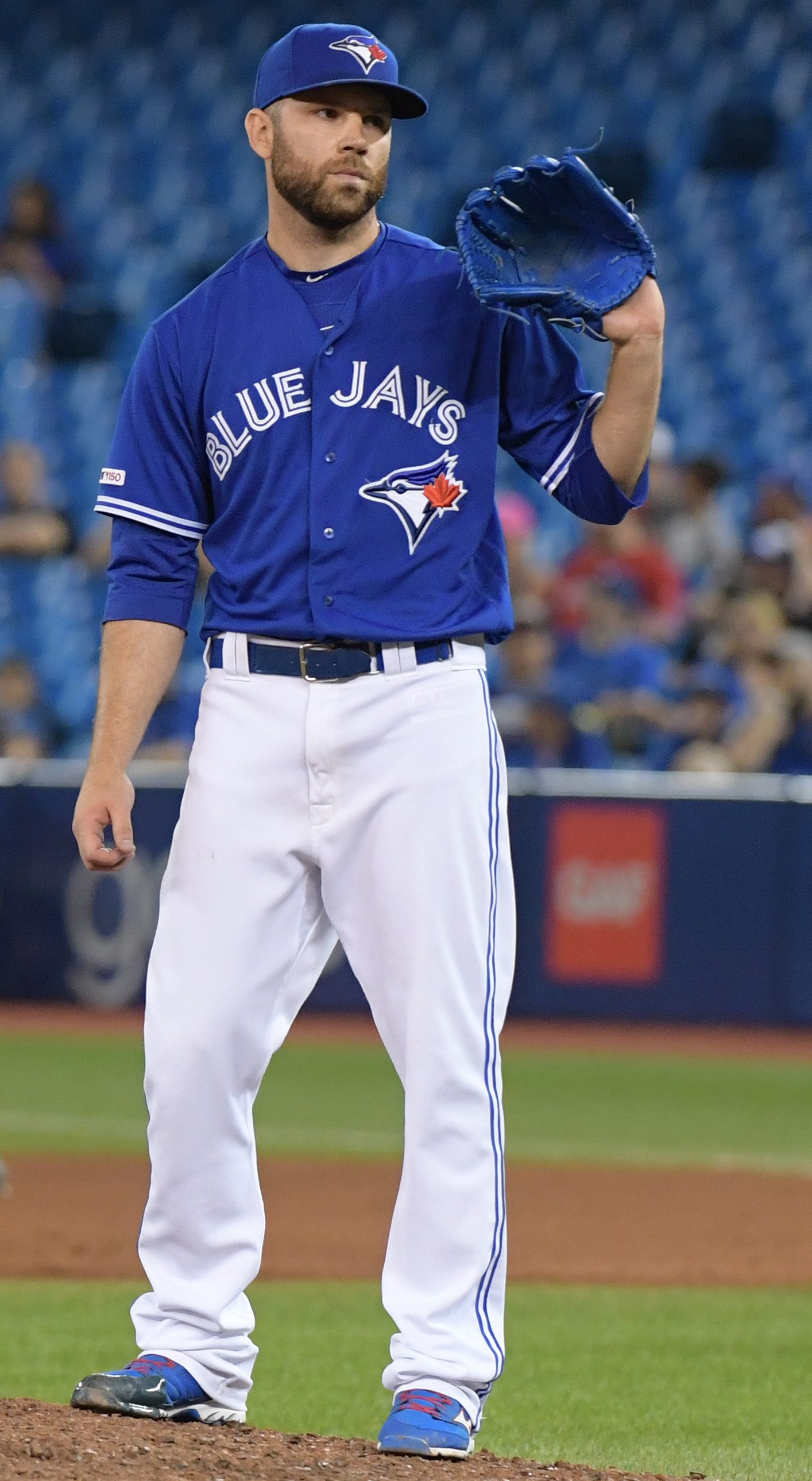
Phelps, 32, was a high-quality setup piece for the Marlins and Mariners in 2016-17 but missed the 2018 season due to Tommy John surgery. He hit the open market last winter and latched on with the Blue Jays on an incentive-laden one-year contract that promised him a $2.5MM base salary. Toronto quite likely made the deal with this very type of scenario in mind, as Phelps has returned to post solid numbers through his first 17 1/3 innings of action: a 3.63 ERA with an 18-to-7 K/BB ratio.
A swingman with the Yankees from 2012-14, Phelps broke out with the Marlins in the bullpen and has now logged an impressive 2.82 ERA with 10.9 K/9 against 4.0 BB/9 in his past 159 2/3 innings at the MLB level (129 relief appearances, six starts). He’s only appeared in 17 games this season but will see a $250K bump in salary upon reaching each of his 25th, 30th and 35th games pitched. He’ll also earn an extra $350K upon 40, 45, 50, 55 and 70 appearances on the year.
Phelps’ club option came with a tiny $1MM base salary but will jump to $3MM if he reaches 30 appearances, $5MM if he appears in 40 games and $7MM for appearing in 50 games. Obviously, he’s not likely to reach the top tier of his incentives and option escalators after missing the first two and a half months of the season, but it’s certainly plausible that he could push that 40-game threshold in 2019.
Phelps gives the Cubs an immediate boost in the ‘pen — even if he’s not a dramatic upgrade — and also presents them with a relatively affordable option in 2020 due to that floating club option. Payroll constraints have been an ongoing obstacle for the Cubs’ front office dating back to the winter, but they’ll have a huge slate of free agents off the books this winter (Cole Hamels, Brandon Morrow, Strop, Steve Cishek, Brandon Kintzler and Brad Brach among them), which will render any decision on Phelps’ option a fairly small-scale consideration.
Hatch, 24, was the Cubs’ third-round pick back in 2016 and has spent the 2019 season in his second trip through the Double-A level. He’s tossed 100 innings of 4.59 ERA ball over the life of 21 starts, averaging 8.4 K/9, 3.3 BB/9 and 1.17 HR/9 to go along with a 35.2 percent ground-ball rate. He didn’t crack the Cubs’ top 30 on Baseball America’s recent re-ranking of their system, but he landed at No. 26 on Fangraphs’ summer update of Chicago’s farm system. There, Kiley McDaniel and Eric Longenhagen noted that he hasn’t developed the control one would want to see to keep him in the rotation but could find success in the ‘pen. Entering the season, MLB.com ranked him 29th in the Cubs’ system and actually gave him the potential for three average or better offerings while expressing similar concerns about his control. The Jays may well see if Hatch has the ability to start in the short-term, as there’s little harm for a rebuilding club to try it out.
Shi Davidi of Sportsnet first broke the news of the Phelps deal (via Twitter). Joel Sherman of the New York Post added that the Jays were sending cash in the deal (Twitter link).
Cubs, Orioles Have Discussed Jonathan Villar
The Cubs have discussed a Jonathan Villar trade with the Orioles, reports Roch Kubatko of MASNsports.com, though he adds that a match between the two teams appears unlikely at this time.
Chicago was tied to Eric Sogard before he was traded from Toronto to Tampa Bay, and Addison Russell‘s recent demotion to Triple-A Iowa further illustrates that the Cubs could be in the mix for a second baseman. The potential return of Ben Zobrist, who is slated to head out on a minor league rehab assignment, could lessen any urgency to make an outside addition, though.
Villar has split the 2019 season between shortstop and second base in Baltimore, drawing negative reviews at second base from both Defensive Runs Saved and Ultimate Zone Rating a year after rating quite well in both categories. His familiarity with shortstop would also be a welcome addition for the Cubs, given that Russell’s demotion left the MLB roster without a true backup to Javier Baez there.
The 28-year-old Villar is hitting .262/.326/.421 with 13 home runs, 22 doubles, two triples and 22 stolen bases (in 28 attempts). Villar’s speed is an element the Cubs’ roster currently lacks. His 22 steals are only seven fewer than the Cubs have totaled as a team. Villar’s wheels likely hold some interest to the Cubs — they’ve also been connected to fleet-footed D-backs outfielder Jarrod Dyson — but Villar’s 24.1 percent strikeout rate (26.7 percent for his career) don’t align with Chicago’s reported interest in adding hitter with plus contact skills (e.g. Sogard, Dyson).
From a contractual standpoint, Villar is affordable. He’s being paid $4.825MM in 2019 (with about $1.66MM yet to be paid out) and is controllable via arbitration for the 2020 season as well. The Orioles were also willing to include some cash in the trade that sent Andrew Cashner to Boston, providing reason to believe they’d be willing to do so with their other trade assets as a means of sweetening the prospect return. Given his relative proximity to free agency and the Orioles’ aggressive tear-down, Villar is a logical trade candidate in the next three days. However, the demand for pitching help throughout the league is far greater than the demand for middle infielders, and the Orioles don’t necessarily need to move Villar if no appealing offer materializes.
Cubs Shopping Martin Maldonado
The Cubs acquired catcher Martin Maldonado from the Royals just two weeks ago, though Chicago is already exploring the possibility of flipping Maldonado elsewhere, The Athletic’s Robert Murray reports (subscription required). The veteran backstop “has been marketed in trade discussions….with the Houston Astros emerging as a particular team of interest,” The Athletic’s Patrick Mooney writes.
Willson Contreras hit the injured list at roughly the same time as the original Maldonado trade, and since Contreras is now back in action, Maldonado is something of an expendable piece on a Cubs catching depth chart that also includes Victor Caratini. Maldonado has seen barely any action since coming to Wrigleyville, and is hitless (0-for-11) over 13 plate appearances in four games for the Cubs.
If Maldonado is dealt, it will be interesting to see what the Cubbies will net in return, given that they sent a fairly interesting asset in swingman Mike Montgomery to Kansas City for Maldonado in the first place. Montgomery has struggled in 2019, though he has posted good results in the past and is under control through the 2021 season.
It isn’t any surprise that Houston is again linked to Maldonado, as the Astros were had interest in obtaining him from the Royals before he was dealt to Chicago. If a deal was completed, it would mark the second straight year that the Astros picked Maldonado up in a trade deadline move; Houston nabbed him from the Angels last July.
Cubs Acquire Derek Holland, Designate Tim Collins
The Cubs announced today that they have acquired lefty Derek Holland from the Giants. To create roster space, fellow southpaw Tim Collins was designated for assignment.
Holland had recently been designated himself by the San Francisco organization. He was playing on a deal that promises him $6.5MM this year and a $500K buyout on a $7MM club option (which also includes some escalators). Today’s trade, humorously, involves “a cash consideration” heading in both directions. Precisely how the sides have sorted the financials isn’t yet clear, but it seems fair to presume that the Cubs will pick up a small portion of the two-and-a-half million or so remaining on the tab.
The Chicago organization continues to cycle through lefty relievers. When Collins signed his modest, $850K deal, the club dropped Brian Duensing from its 40-man despite a $3.5MM salary. Now, the team will give Holland a look in a relief capacity.
It’s not surprising to see Holland land on his feet despite his struggles this year. The 32-year-old washed out of the San Francisco rotation after seven starts, as he failed to follow up a quality 2018 season. His ability to throw multiple innings as a long man or starter is still of appeal, particularly for a Cubs team that recently parted with Mike Montgomery.
The real appeal here, though, is the possibility of using Holland as a situational reliever. While his overall results were hardly exceptional — 5.03 ERA in 34 innings with 29 strikeouts and 15 walks — Holland has shown a velocity boost in the bullpen. Better still, he’s pummeling opposing left-handed batters, who carry a meager .182/.276/.195 batting line in 89 trips to the plate against him this season. Holland has not only induced lots of poor contact, but has drawn grounders from southpaw hitters on more than three of every four balls they put in play.
As for Collins, the 29-year-old hasn’t been tasked with much of a workload in the majors. His swinging-strike rate has dropped from a promising 11.6% rate last year to just 7.5% in his nine appearances in 2019. He has spent most of the year pitching at Triple-A, where he carries a 4.67 ERA with 12.3 K/9 against 5.3 BB/9 with seven long balls marring his stat line.
Quick Hits: Hamels, Jeimer, A’s, Lucroy, Rays, Brewers
Cubs left-hander Cole Hamels will “likely” return from the injured list Aug. 2 or 3 if he gets through one more rehab start unscathed, Gordon Wittenmyer of the Chicago Sun-Times tweets. Having suffered a left oblique strain June 28, it appears the 35-year-old will end up missing just over a month. The Cubs have tread water without Hamels, going 11-10 since he incurred his injury, which has been enough to stay atop the NL Central. They’re leading the division thanks in no small part to Hamels, who has recorded a 2.98 ERA/3.59 FIP with 8.76 K/9, 3.16 BB/9 and a 51.1 percent groundball rate in 99 2/3 innings.
More from around baseball…
- Tigers third baseman Jeimer Candelario has begun getting reps at first base at the urging of general manager Al Avila and assistant GM David Chadd, Chris McCosky of the Detroit News explains. The decision comes with Triple-A third baseman Dawel Lugo “likely” on his way back to the majors soon, infield prospect Isaac Paredes soaring through the Tigers’ system and right fielder Nicholas Castellanos a strong bet to leave before the trade deadline, McCosky notes. Once Castellanos is out of the picture, the Tigers figure to use at least one of their current first base options – Harold Castro and Brandon Dixon – in right. Candelario has only played one major league game at first, though the 25-year-old has lined up there 35 times in the minors. Regardless of position, this has been a disappointing season for Candelario – who, along with Paredes – joined the Tigers in a trade with the Cubs in July 2017. Candelario was a top 100 prospect who was immediately successful in the majors, but he has batted just .213/.309/.360 (79 wRC+) with seven home runs in 272 plate appearances this year. To his credit, though, Candelario has hit far better since the Tigers demoted him to Toledo on May 15 and then recalled him June 26.
- Athletics southpaw Sean Manaea – out since he underwent shoulder surgery last September – survived a 76-pitch rehab start with Triple-A Las Vegas on Wednesday, per Martin Gallegos of MLB.com. Manaea struggled over 4 1/3 innings, allowing five earned runs and three HRs, but the A’s are encouraged that he remains on track to return to the majors by the second week of August. In the meantime, Manaea’s scheduled for two more Triple-A starts. He’ll progress to 90 pitches in his next outing and then 100 in what should be his final minors start of the year. In further good news for Oakland, outfielder Stephen Piscotty is slated to begin a rehab stint over the weekend. A sprained right MCL has shelved Piscotty since June 30.
- Angels catcher Jonathan Lucroy will start a rehab assignment at the High-A level Friday, Rhett Bollinger of MLB.com relays. The Angels plan to re-evaluate Lucroy after he plays two games. The 33-year-old has been out since he bore the brunt of a brutal home plate collision with Astros outfielder Jake Marisnick on July 7. The league issued Marisnick a two-game suspension for plowing into Lucroy, who suffered a concussion and a broken nose. Lucroy also had to undergo surgery on his nasal fracture.
- Baseball America released its latest organizational talent rankings on Thursday (subscription required). Led by shortstop Wander Franco, whom BA ranks as the game’s best prospect, the Rays check in at No. 1. However, even without Franco, BA contends the Rays would still have baseball’s premier farm system. Beyond Franco, the club boasts eight other top 100 prospects. The Brewers don’t have any, on the other hand, making them the outlet’s last-ranked org. As BA points out, though, superb rookie second baseman Keston Hiura did just graduate from Milwaukee’s system.
Royals Rumors: Merrifield, Diekman
Royals utilityman Whit Merrifield is unsurprisingly drawing interest from contenders with the trade deadline just a few days away. The Cubs, Braves and Phillies are among the teams eyeing Merrifield, but it appears they’ll have to look elsewhere. The Royals are telling teams they’re not going to deal him, Jon Morosi of MLB.com reports.
Even though the Royals are just 39-64 this season and will have trouble pushing for a playoff spot in the near future, the 30-year-old Merrifield has never looked like an especially realistic trade candidate. Royals general manager Dayton Moore hasn’t made it any secret he has an affinity for Merrifield, who he said in June is “one of the best players in all of baseball right now.” Moore also stated then it would take a “crazy” offer for Kansas City to move Merrifield, whom it signed to a four-year, $16.25MM extension in the offseason.
On a KC team with few major bright spots, Merrifield has continued his run as an eminently valuable performer this year. He has slashed .306/.357/.495 (122 wRC+) with 49 extra-base hits (28 doubles, 12 home runs, nine triples) and 15 steals on 23 attempts in 470 plate appearances. Merrifield has also chipped in 4 Defensive Runs Saved and a 1.3 Ultimate Zone Rating between second base and the outfield. The entire package has been worth 2.9 bWAR/2.7 fWAR. Between Merrifield’s affordability and his on-field excellence, there’s a case the rebuilding Royals should trade him – they’d surely net an exorbitant return – but it doesn’t look as if it’s going to happen.
Meanwhile, reliever Jake Diekman seems almost guaranteed to change uniforms by the end of the month. In addition to the already reported Phillies, Dodgers and Nationals, Diekman has drawn interest from the Cubs, Cardinals and Braves, per Morosi. Diekman, 32, is on a $2.75MM guarantee and has a $5.75MM mutual option for 2020. The hard-throwing left-hander has pitched to a pedestrian 4.75 ERA in 41 2/3 innings this season. But he has logged a far better 3.36 FIP with 13.61 K/9, 4.97 BB/9 and a 48.4 percent groundball rate.
Cubs To Recall Ian Happ
The Cubs will recall infielder/outfielder Ian Happ from Triple-A Iowa for this weekend’s series against the Brewers, reports Tommy Birch of the Des Moines Register.
It’ll be the first big league action of the season for Happ, a former first-round pick and top prospect who has spent the entire season with the Cubs’ Iowa affiliate. Strikeout issues have long plagued Happ, and this year’s 26.3 percent in Triple-A is a bit high. The 24-year-old Happ is hitting .242/.364/.432 overall, which is a roughly league-average line (by measure of wRC+), but he’s been on an absolute tear this month. In his past 19 games (86 plate appearances), Happ has hit at a superlative .348/.477/.652 with five homers, four doubles and a triple. He’s punched out 18 times in that span (20.8 percent).
A corresponding roster move for Happ’s return isn’t yet known, although Kris Bryant did depart yesterday’s game with some knee discomfort. It’s possible that he needs a few days or even an IL stint, although the Cubs also have an underperforming veteran in Daniel Descalso. He’s playing in the first season of a two-year contract, which may impact any decisions the team makes on his roster status.
Quick Hits: Dodgers, Giants, Cubs, Sogard, Yanks, White Sox
As was the case a couple weeks ago, the Dodgers are “quite interested” in multiple Giants relievers, Henry Schulman of the San Francisco Chronicle tweets. Jon Morosi of MLB.com reported July 10 that Will Smith, Sam Dyson, Tony Watson and Reyes Moronta were on the Dodgers’ radar. At that point, San Francisco owned a 41-48 record and looked as if it was sure to sell prior to the trade deadline. However, the Giants were in the early stages of an out-of-nowhere tear that has continued, putting them at 52-51 and calling into question whether they’ll trade any of their top chips in the next week. Even if they do, there’s no guarantee the Giants will deal with the archrival Dodgers, despite the connection between SF president of baseball operations Farhan Zaidi and LA president Andrew Friedman. Zaidi was Friedman’s top lieutenant with the Dodgers from 2014-18.
More from around the game…
- The Blue Jays’ Eric Sogard is on the Cubs’ radar with the deadline approaching, but it’s not the first time Chicago has eyed the infielder. The Cubs’ interest in Sogard dates back to the offseason, Jesse Rogers of ESPNChicago.com reports. Back then, the 33-year-old Sogard had to settle for a minor league contract with Toronto after a rough season in Milwaukee. It’ll go down as an excellent low-risk pickup by the Blue Jays, who will almost surely flip Sogard for some kind of return by July 31. With a .299/.363/.480 line and 10 home runs in 317 plate appearances, Sogard’s enjoying a career year. His production’s probably not sustainable, but that won’t stop the Jays from finding a trade partner.
- Injured Yankees outfielder Cameron Maybin began a rehab assignment with Triple-A Scranton/Wilkes-Barre on Tuesday, per George A. King III of the New York Post. Barring setbacks, Maybin could return from his month-plus absence next week. The 32-year-old journeyman had been amid a dream season before suffering a left calf strain June 21. His .314/.391/.500 slash with five homers in 133 PA helped make up for injuries to big-hitting Yankees outfielders Aaron Judge and Giancarlo Stanton. Judge returned just as Maybin went down, while Stanton headed back to the shelf after briefly gracing the Yankees’ lineup last month. Assuming Maybin does come off the IL soon, the optionable Mike Tauchman seems likely to go back to the minors. That would be a tough break for Tauchman, who has joined Maybin in posting surprisingly impressive numbers this year.
- The White Sox have shifted Nick Hostetler from amateur scouting director to special assistant to GM Rick Hahn, the team announced (via Lamond Pope of the Chicago Tribune). Hostetler will focus on pro scouting in his new role. He had been in his prior job since August 2015, meaning he was influential in the drafting of recent first-round picks and current top 100 prospects Nick Madrigal and Andrew Vaughn. As Pope points out, 12 of the White Sox’s preseason top 20 prospects at MLB.com entered the organization during Hostetler’s amateur scouting reign. They’re now looking for someone to fill his former position.
Cubs Option Addison Russell To Triple-A
The Cubs have optioned infielder Addison Russell to Triple-A Iowa and activated catcher Willson Contreras from the injured list, the team announced to reporters (Twitter link via ESPN Chicago’s Jesse Rogers).
Russell, 25, began the season on the restricted list while he served out a 40-game suspension under the league’s domestic abuse policy. His return to the lineup has been underwhelming — not surprising for a player who has never posted a league-average offensive season by measure of OPS+ or wRC+ — as he’s posted a .247/.329/.404 line in 158 plate appearances. Much of Russell’s career-high 10.7 percent walk rate has been a function of batting seventh or eighth in front of the pitcher.
In recent weeks, Russell has begun to cede time at second base and in the lineup to rookie Robel Garcia, who now stands to receive additional starts at the keystone. Russell’s demotion could also open up some time for David Bote at second base, although he’s been used exclusively at third base since late June. Still, he’ll be a depth option there and perhaps at shortstop as well, given that Russell had been the primary fallback option should Javier Baez ever need to come out of a game.
The Cubs have been tied to Eric Sogard on the rumor mill recently, and it stands to reason that they’re also exploring the possibility of adding another cost-efficient option at second base while waiting to see whether Ben Zobrist returns to the lineup in 2019. Speculatively, that could include players such as Jonathan Villar, Tim Beckham, Adeiny Hechavarria or Neil Walker, though a move isn’t a foregone conclusion.
Clearly, the demotion only further calls into question Russell’s future with the club. That’s been the case since the time of his suspension, although the Cubs chose to stand by Russell, with president of baseball operations Theo Epstein speaking of second chances and supporting Russell in “stabilizing his life” and “growing.” That said, Epstein was also candid that the club would be prepared to move on from Russell if need be. His lackluster performance at the plate, recent defensive miscues — he dropped a pair of pop-ups over the weekend — and recent, eye-opening acknowledgment that he “need[s] to become more familiar with the signs” (via Rogers) in the wake of a baserunning gaffe certainly don’t paint a favorable outlook.
Cubs Select Tim Collins
The Cubs announced that they’ve selected the contract of lefty reliever Tim Collins from Triple-A Iowa. Right-hander Alec Mills was optioned down to make room on the active roster. Chicago had an open spot on its 40-man roster.
Collins, 29, was with the Cubs earlier this season and tossed 7 2/3 frames. He surrendered three runs on nine hits and three walks with four strikeouts in that time before being designated for assignment last month and returning to the team’s Triple-A upon clearing outright waivers. In 27 innings with Iowa this year, Collins has a 4.67 ERA with 37 strikeouts against 16 walks. Opposing lefties have batted just .167/.268/.333 against him in 2019, althought right-handers have tagged him for a .256/.347/.537 line.
The Cubs are known to be on the hunt for additional left-handed bullpen help, and if they’re able to find an upgrade on the trade market, Collins’ latest stay with the big league club could be similarly brief. For now, he’ll at the very least give manager Joe Maddon a matchup specialist to use late in games.