
White Sox Option Michael Kopech
The White Sox have optioned right-hander Michael Kopech to Triple-A Charlotte, the team announced. Whenever the season gets underway, he’ll open on the minor league side of things.
That’s long seemed like a formality. The 23-year-old Kopech is one of baseball’s premier pitching prospects but underwent Tommy John surgery late in 2018, shortly after making his big league debut. He returned to game activity during Cactus League play prior to MLB’s shutdown but worked just one inning. It was an impressive frame, as Kopech topped 100 mph regularly with his heater and set down all three hitters he faced — one via strikeout.
The White Sox will surely want to proceed slowly with Kopech as they build him back up to a starter’s workload. The rebuilt South Siders are aiming for a return to competitiveness in the AL Central beginning in 2020 — as evidenced by their winter additions of Yasmani Grandal, Dallas Keuchel, Edwin Encarnacion and Gio Gonzalez — but Kopech’s health is of greater importance on a long-term scale.
The 2020 rotation will be comprised primarily of Keuchel, Gonzalez, Lucas Giolito, Dylan Cease and a combination of Carlos Rodon (also rehabbing from Tommy John) and Reynaldo Lopez. But it’s hard for Sox fans not to dream on an eventual rotation that includes healthy versions of Giolito, Kopech and Cease leading what could be one of the game’s more talented collections of arms. Of course, that assumes both Cease and Kopech make good on their lofty prospect rankings, and as highlighted by Lopez’s own struggles to date, there are no such guarantees. Still, it’s only logical to see Kopech head to Charlotte for a bit as he ramps back up in a more controlled setting.
Rookie Radar: AL Central
The delayed start to the 2020 season will obviously have a wide range of massive effects on Major League Baseball. Among them: a totally different promotional timeline for some of the game’s most exciting young players. We will never know how things would’ve unfolded. And we don’t yet even know what the parameters are for an altered season. But there’s no doubting the impact.
Typically, opportunities open as rosters evolve over the course of a grueling, 162-game season. Some top prospects force their way up to the majors; others are called upon because a need arises. In a shorter campaign, there’ll be less attrition … though we may also see relaxed roster rules and changes to allocation of service time that could create opportunities.
Still, with more time to examine rosters and think about the state of the game, there’s an opportunity to stop and appreciate the young talent on the cusp of the majors. We’ll run through the most interesting prospects pressing for near-term MLB action. Having already looked at the American League West, let’s head to the AL Central:
Indians
Third baseman Nolan Jones won’t be tasked with a big league job out of the gates, but could be an option if there’s a need and/or he develops as hoped. Soon to turn 22, Jones has done nothing but produce in the minors. He’s due for a bit more seasoning at Triple-A but is close to ready.
Otherwise, most of the best-regarded Cleveland farmhands are further off. But there are some other prospects of note who are immediate factors. Relievers Emmanuel Clase and James Karinchak could hold key bullpen roles, though the former will first need to get to full health. Southpaw Logan Allen is a swingman option. First baseman Bobby Bradley and outfielder Daniel Johnson are both on the 40-man roster and ready for MLB chances after strong seasons in the upper minors. (Bradley also made a brief 2019 debut but struggled in the bigs.)
Royals
The rebuilding Royals need not be in any rush, but top pitching prospects Brady Singer and Jackson Kowar could force the organization’s hand. The former sprinted to Double-A in his first professional season; the latter in his second. They both looked plenty comfortable at the penultimate level of the minors and will likely dictate their own timelines.
Otherwise, there are only a few players with significant “prospect” billing who seem likely to be near-term options. Outfielder Nick Heath and third baseman Kelvin Gutierrez are both on the 40-man roster, so could be called upon to fill any injury gaps. Outfielder Khalil Lee is considered a higher-upside young player, though he’ll need to polish some things up if he’s to force his way onto the MLB roster in 2020. The pitching staff could call upon inexperienced arms including Scott Blewett, Chance Adams, and Richard Lovelady.
Twins
The Minnesota organization just keeps getting more intriguing. Depending upon the development of some top prospects and needs at the MLB level, it could be another year for interesting graduations … or one to watch and wait.
Top prospects Royce Lewis and Alex Kirilloff both have the ability and the positioning to press for the majors in the near term. But will they force the issue … or will there be an opening? The Twins aren’t in need of help at shortstop or in the outfield, at least on paper, but both have star-level upside and will get their chance when the time is right.
Outfielder/first baseman Brent Rooker doesn’t have a clear path to the bigs just yet but could get a look if a need arises. Though he is no longer considered an elite prospect, infielder Nick Gordon is also a near-term option. His situation is helped by the fact he already has a 40-man roster spot. Likewise, having already debuted, lefty Lewis Thorpe is perhaps the best-regarded Minnesota pitching prospect who’s an immediate possibility for the majors, though we’ll surely see fellow lefty Devin Smeltzer and right-hander Randy Dobnak in 2020 as well. Both impressed in their 2019 debuts. Flamethrowing righty Jorge Alcala allowed two runs in 20 innings between Double-A, Triple-A and the Majors after moving to the ‘pen in late July.
Tigers
The Detroit organization is banking on its pitching factory. We’ll begin to see the results in the immediate future. Top starting prospects Matt Manning, Casey Mize, Beau Burrows, and Alex Faedo are all nearing readiness. And the team also has some promising relievers on tap, including Bryan Garcia, Anthony Castro, and perhaps Rule 5 choice Rony Garcia. Precisely when and how these arms will be slotted into the MLB staff remains to be seen. In the starting staff, especially, the organization has others in line first. But mid-season movement is highly possible (depending, in no small part, upon what shape the 2020 season takes).
Though the position-player side of the farm isn’t as loaded, there are quite a few near-term candidates for MLB roles. Infielders Isaac Paredes, Willi Castro, and Sergio Alcantara all have 40-man spots and can be called upon as soon as there’s a need or desire to do so. Ditto outfielder Daz Cameron, a player who has had ups and downs in the minors but still possesses a fairly lofty ceiling. Catcher Jake Rogers had an abysmal debut with the bat but hit well in the upper minors last year and is considered a quality defender.
White Sox
Last but certainly not least … the South Siders are stacked with young players who’ll be given MLB trials in the near term. Recently extended center fielder Luis Robert leads the charge as one of the game’s most touted prospects. But there are other blue-chippers as well. Given the delay in the season, high-upside righty Michael Kopech will have a chance to finish rehabbing from Tommy John surgery. And recent first-rounder Nick Madrigal has little left to show in the upper minors. He could take over at second base and push Leury Garcia into a utility role.
Those are the big names, but there are others as well. Infielder Danny Mendick had a nice cup of coffee last year and could also be a platoon option at second base or take on a utility job. With a 26th roster spot to work with, bat-first catchers Zack Collins and Seby Zavala could play interesting roles. Righties Zack Burdi and Ian Hamilton will have to overcome health troubles but could end up playing significant roles in the bullpen if they’re able.
Minor MLB Transactions: 3/22/20
Catching up on a minor move from last month…
- The White Sox signed left-hander Christian Friedrich to a minors contract, as reflected in the MLB.com transactions page. The move slipped through the cracks at MLBTR at the time. Friedrich, a former Rockies first-rounder, has a 5.37 ERA in parts of four MLB seasons (and 296 2/3 career innings) with Colorado and San Diego. He hasn’t pitched at the highest level since 2016, but as Jeff Todd of MLBTR noted last October, Friedrich performed well for the Korea Baseball Organization’s NC Dinos in 2019.
Recently Optioned Players Of Note
In case you haven’t noticed, transactions aren’t exactly plentiful since the league shut down Spring Training. There have still been a few batches of moves in the past few days, however, with a trio of Central Division clubs sending some players to their minor league ranks.
- The Brewers optioned corner infielder Ryon Healy to Triple-A, per the MLB.com transactions log. The 28-year-old slugger’s 2019 season with the Mariners came to an end when he underwent August hip surgery, and he opted for free agency in the winter when Seattle removed him from its 40-man roster (as was his right as a player with three-plus years of service time). Healy signed a one-year deal with the Brewers and, assuming he’s healthy, should factor into Milwaukee’s mix at both corner-infield slots and as a right-handed bench bat. He notched a .282/.313/.475 slash through 888 plate appearances with the A’s in his first two big league seasons but never matched that production in Seattle (.236/.280/.423 in 711 plate appearances). Healy was healthy enough to play in 10 spring games, but he went 4-for-23 with a walk and seven strikeouts in 24 trips to the dish, which didn’t exactly help him stand out from a crowded group of infield options. Milwaukee also optioned catcher David Freitas and infielders Mark Mathias and Ronny Rodriguez.
- Catcher Zack Collins was optioned to Triple-A Charlotte by the White Sox. The former No. 10 overall pick out of Miami, Collins is now blocked long-term by Yasmani Grandal at catcher. James McCann‘s presence on the roster eliminates the possibility of Collins serving as a backup, and the organization would surely prefer him to get everyday at-bats rather than toiling away on the bench anyhow. Collins could potentially see some increased reps at first base down the road, particularly if Jose Abreu transitions to more of a DH role in 2021 and beyond. Collins struggled with a .186/.307/.349 slash in 102 MLB plate appearances in his debut last season, also striking out at an alarming 38.2 percent clip. But he ripped Triple-A pitching apart with a .282/.403/.548 slash, 19 home runs and a massive 17 percent walk rate in 367 trips to the plate with Charlotte. Chicago also optioned fellow catcher Yermin Mercedes and right-handed reliever Jose Ruiz to Triple-A.
- The Tigers announced this week that catcher Jake Rogers was optioned to Triple-A Toledo. That move shouldn’t come as a surprise, particularly after Detroit signed longtime Yankees backstop Austin Romine earlier this winter. The Tigers hope that Rogers can be the catcher of the future, but he floundered in 128 big league plate appearances upon debuting last year. Rogers is only 24 and only had 191 career plate appearances in Triple-A when he was summoned to the Majors last year, so there’s still plenty of hope — particularly considering the manner in which he ripped through Double-A competition last year (.302/.429/.535 — 179 wRC+). Tigers general manager Al Avila suggested this winter that Rogers needs some more seasoning in Triple-A, though, so he’ll get that while Romine and Grayson Greiner comprise the catching tandem at the MLB level.
How Much Would It Cost The White Sox To Extend Lucas Giolito?
The White Sox have already reached new agreements with a host of players of late, with Yoan Moncada recently joining Aaron Bummer, Luis Robert, and Jose Abreu just this winter. Tim Anderson and Eloy Jimenez inked deals previously. So … what’s one more?
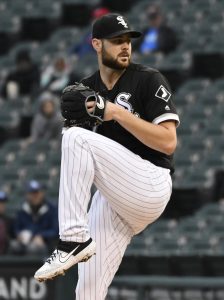
The starting rotation is noticeably underrepresented from the ranks of the extended core. While a few hurlers could become candidates in short order, there’s probably only one who’s really primed for a deal: Lucas Giolito.
Giolito’s path is remarkably similar to that of Moncada. They both came over in back-to-back trades in the 2016-17 offseason — each of which, somewhat ironically, involved White Sox stars (Chris Sale and Adam Eaton) who had loads of trade value thanks to their own early-career extensions. There were some growing pains and moments of doubt for the long-hyped Giolito and Moncada. Then came 2019 …
While the White Sox weren’t all that competitive as a team last year, they had some exceedingly promising outcomes from individual players. On the pitching side, nobody came close to Giolito, who was one of the top dozen or so starters leaguewide. He completely reversed a miserable 2018 season, vaulting to new personal highs in velocity (94.6 mph average fastball), swinging-strike rate (15.0%), and K%-BB% (24.2%).
There’s not much to dislike about Giolito’s effort. He didn’t excel at limiting the long ball, but was slightly better than the league mean in homers allowed (1.22) and homers-per-flyball rate (13.6%). Statcast indicated that Giolito largely deserved the outcomes, crediting opposing hitters with a meager .275 wOBA and .280 xwOBA. Giolito dominated opposing lefties in 2019. There were health concerns when Giolito was drafted, but he already got Tommy John surgery out of the way and has mostly been healthy since. (He ended 2019 with a mild lat injury and is now dealing with a pec issue, but both seem rather minor.)
The question, really, is one of faith. Giolito is only 25 years of age and has a top-shelf pedigree. The results finally matched. So do the White Sox let things play out through arbitration — like Moncada, Giolito is still a full season shy of arb qualification and four campaigns removed from free agency — or chase yet further upside with yet another extension?
That may depend upon the cost. While Giolito was a first-round pick, he fell to the 16th pick of the 2012 draft. He still got a big signing bonus, but at just under $3MM it was less than a tenth of what Moncada commanded. For a pitcher that has already dealt with some health issues, and hasn’t yet reached that first big payday, there’s definitely greater sense in selling away some earning ceiling in exchange for security.
Giolito wouldn’t be the first starting pitcher to do so. In fact, this stage of a career — just before arbitration — is quite the popular time for hurler and team to line up on a deal. Jon Lester‘s 2009 pact with the Red Sox — five years, $30MM plus an option — proved a market-setting contract. The total guarantee has crept up a bit in some cases in recent years and we’ve seen various ways of tweaking the model, but that’s still the core structure of many such contracts.
In this case, the White Sox would probably be thrilled to slot Giolito into that five-year, mid-thirty plus option(s) sort of a deal. There’s really not all that much risk. Sure, you’d always rather pay less for more, but even one more elite season or a couple of good-but-not-great efforts would justify that sort of cost. And there are loads of scenarios where the organization could clean up. The team just promised Bummer, a non-closing (for now) reliever, $16MM. Doubling that (plus change) for a high-end starter is more or less a no-brainer unless the club has some inside cause for concern.
All that points to an argument that Giolito really shouldn’t be slotted into the classic form of Lester and progeny. After all, lower-ceiling lefty Marco Gonzales just got a $30MM guarantee over four years with a single option. Giolito looks more like German Marquez, who recently commanded $42MM+ on a four-year term while giving up one option year.
Then again, perhaps Giolito can present a case for something more akin to the deal inked between Blake Snell and the Rays. That accord included over $49MM of new money and only required Snell to hand over control over one would-be free agent season — one less than the other two deals just discussed — thus leaving him more future earning upside. Snell’s Cy Young Award gave him a boost, to be sure, but his pact also came together on the heels of a weak market for free agent pitchers. We just saw Gerrit Cole and Stephen Strasburg blow the top off of the rotation market.
It’ll be interesting to see how this one shakes out, if indeed serious talks occur. Maybe Giolito will get a Snell-like agreement but fall a bit short in terms of guaranteed cash. Or perhaps he’ll look to build upon the Marquez deal, giving up that extra season of control (in Giolito’s case, his age-30 season) to boost the up-front cash promise. Regardless, I’ll go ahead and guess that a contract would land in the realm of a $45MM guarantee.
Photo courtey of USA Today Sports Images.
White Sox Extend Yoan Moncada
Yoan Moncada was viewed as a potential building block from the moment the White Sox acquired him, and he’s officially been elevated to that status. The White Sox on Friday announced that they’ve signed Moncada to a five-year, $70MM extension that runs through the 2024 season and includes a club option for the 2025 season.
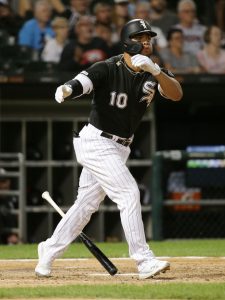
The White Sox, one of the only teams in baseball that discloses financial terms, announced the breakdown of the contract: a $4MM signing bonus, $1MM in 2020, $6MM in 2021, $13MM in 2022, $17MM in 2023 and $24MM in 2024. The $25MM option for 2025 comes with a $5MM buyout. Moncada is represented by the Movement Management Group.
Of players who signed extensions when they had between two and three years of Major League service time, only Mike Trout, Alex Bregman, and Buster Posey received a higher annual average value than the $14MM Moncada will earn over the next five seasons. In a recent look at what a possible Moncada extension could cost, MLBTR’s Jeff Todd set Bregman’s deal (a five-year, $100MM extension from last spring) as a possible comp, and Moncada will fall short of that dollar figure even if his 2025 option is exercised. That said, Bregman was also more established at the big league level and his deal didn’t cover his remaining pre-arbitration season.
Reports surfaced last week about negotiations between the two sides, and the agreement makes Moncada the latest member of Chicago’s young core to ink a long-term deal. The White Sox have signed Eloy Jimenez, Luis Robert, Aaron Bummer to extensions within the last year, and also extended veteran leader Jose Abreu through the 2022 season after Abreu initially accepted the team’s qualifying offer last fall. Between these extensions and the offseason acquisitions of Yasmani Grandal, Edwin Encarnacion, Dallas Keuchel, Gio Gonzalez, and Nomar Mazara, the Sox are clearly ready to put their rebuild behind them as they pursue (at the very least) their first winning season since 2012.
Moncada became one of the cornerstones of that rebuild process when he was acquired as part of the four-prospect package the White Sox received from the Red Sox for Chris Sale in December 2016. At the time of the deal, many considered Moncada to be arguably baseball’s top prospect, and he showed glimpses of that potential during two decent but inconsistent seasons with the White Sox in 2017-18. Last year, however, Moncada broke out to hit .,315/.367/.548 with 25 homers over 559 plate appearance, while also displaying some solid third base defense in the opinion of the Statcast (+5 infield outs above average) and UZR/150 (+4.9) metrics.
It wasn’t all good news for Moncada in 2019, as he posted the lowest walk rate (7.2%) of his three seasons in Chicago and also benefited from a .406 BABIP. While Moncada’s strong baserunning will tend to give him a higher BABIP than most players, a .406 mark (over 100 points above average) indicates some level of good fortune. Still, there’s an awful lot to like from Moncada’s performance, especially for a player who doesn’t turn 25 until May.
2020 was Moncada’s final pre-arbitration season, so his extension will cover that pre-arb year, his three arbitration seasons, and at least his first free agent season. If the White Sox exercise the 2025 option, Moncada will be eligible for free agency as he enters his age-31 season, so there’s still an opportunity at another big payday beyond this contract. It should be noted that Moncada already gained financial security before appearing even in the minor leagues, as he received a $31.5MM bonus upon signing with the Red Sox as an international free agent in February 2015.
The Athletic’s Ken Rosenthal first reported the agreement (Twitter link). USA Today’s Bob Nightengale reported the financial terms. Rosenthal, ESPN’s Jeff Passan and ESPN’s Kiley McDaniel each tweeted additional financial details.
Photo courtesy of USA Today Sports Images
MLBTR Poll: Eloy’s Second Season
The White Sox made a significant investment in Eloy Jimenez before he ever played a major league game, signing the outfielder to a six-year, $43MM extension last March, and it already looks like a wise decision. The deal Jimenez inked was then a record pact for a prospect with no major league service time, but teammate and fellow outfielder Luis Robert eclipsed that mark when he landed a six-year, $50MM guarantee this past winter.
In signing Jimenez, the White Sox obviated the need to manipulate his service time, clearing the way for the then-consensus top prospect to spend all of the 2019 campaign in the majors. Jimenez didn’t get off to a great start in the first few months of his age-22 season, but his production trended way upward in the second half, leading to an above-average batting line of .267/.315/.513 (116 wRC+) with 31 home runs over 504 plate appearances. And Statcast backed up that production, crediting Jimenez with a .349 expected weighted on-base average (compared to a real wOBA of .343), a hard-hit percentage in the majors’ 92nd percentile and an average exit velocity that ranked in the 87th percentile.
If you want red flags from Jimenez’s rookie season, a couple stand out. For one, even during his second-half surge, he didn’t draw many free passes. His 6 percent walk rate sat well below the league-average mark of 8.5. On the defensive side, Jimenez wasn’t exactly a Gold Glover in left field. Despite finishing in the game’s 70th percentile in Statcast’s Sprint Speed metric, he ended with minus-11 Defensive Runs Saved, minus-11 Outs Above Average and a minus-5.1 Ultimate Zone Rating in the grass. Jimenez’s defensive struggles helped limit him to 1.9 fWAR and 1.4 bWAR during his initial campaign, essentially rendering him an average performer.
The long-suffering White Sox now have designs on being much better than average, considering how active they were in upgrading their roster during the offseason. A sizable leap in overall output from Jimenez in Year 2 of his career could go a long way in helping the team accomplish that in 2020. The question is: How productive do you think he’ll be this season? (Poll links for app users)
Predict Jimenez's OPS
-
.830-859 30% (1,248)
-
.860-899 28% (1,143)
-
.800-.829 18% (747)
-
.900 or better 17% (688)
-
Under .800 7% (294)
Total votes: 4,120
Predict Jimenez's WAR
-
2.0-2.9 42% (1,649)
-
3.0-3.9 32% (1,248)
-
4.0 or better 13% (503)
-
1.0-1.9 11% (423)
-
Under 1.0 3% (109)
Total votes: 3,932
White Sox Sign Zach Putnam
The White Sox have inked righty Zach Putnam to a minor-league pact, the club informed reporters including Daryl Van Schouwen of the Chicago Sun-Times (via Twitter). He’ll head to the minors side of camp.
It has been a while since we’ve heard from Putnam. The 32-year-old was sidelined in 2018 while recovering from Tommy John surgery. His attempted return last year was thwarted by a hamstring injury.
Putnam was quite an effective relief pitcher for the South Siders before the injuries intervened. Over 139 1/3 frames with the organization, accumulated between 2014 and 2017, he worked to a 2.71 ERA while carrying 9.6 K/9 against 3.6 BB/9 along with a 47.6% groundball rate.
How Much Could Yoan Moncada Command In An Extension?
There have been some rumblings of possible extension talks between the White Sox and young star Yoan Moncada. He didn’t validate the reports but did say he’d be interested in a long-term stay.
This all tracks on paper. The White Sox have long been one of the game’s most aggressive teams when it comes to early-career extensions. Long before recently-inked deals with Eloy Jimenez, Luis Robert, and Aaron Bummer, the team reached agreements with Chris Sale and Adam Eaton that paid huge dividends.
And Moncada? He’s still just 24 years of age and is one season shy of arbitration. The switch-hitting infielder just turned in a monster 2019 campaign, launching 25 long balls and slashing .315/.367/.548 over 559 plate appearances. He relied upon a .406 BABIP to get there, but that reflected Moncada’s tantalizing combination of pop (97th percentile exit velocity) and wheels (72nd percentile sprint speed).
It’d probably be wise to anticipate some regression, but there’s little denying the validity of the breakout. Moncada just plain stings the baseball and has now proven he can deliver that consistently against big-league pitching. He will probably always swing and miss more than you’d prefer, but he drove down his strikeout rate from about one-third to a much-more-palatable 27.5%. Moncada doesn’t attempt a ton of steals but still clearly grades as a positive on the bases. Metrics have not been consistent on his glovework as he has moved between second and third base, but it seems clear that the tools are there for an average or above-average fielder.
Moncada has always had a thrilling skillset. Now he has shown he knows how to use it against the best pitchers in the game. He’s not yet a top-shelf superstar, but he’s a bona fide franchise building block who could easily become one of the faces of the game.
So … what’s his future worth?
This is a question often faced by teams contemplating how best to capitalize on the presence of high-grade young talent. Worst case, the White Sox will enjoy the rights to control Moncada for four more seasons — beginning with a league-minimum+ 2020 salary with his salary increasing thereafter through the arbitration process. If he sinks, the obligations will go down or even go away if the team decides to cut ties. If he rises, the Sox will pay more but will still enjoy a discount. Should Moncada continue to star but end up missing time due to injury, the club will have to weather his absence but could still recoup some value through reduced future costs.
That’s just how the (collectively bargained) arbitration system works. Players bear quite a lot of risk and their earning upside is tempered, which in many cases provides leverage to teams. Want to capitalize on your talent and early-career production to ensure you’ll earn tens of millions of dollars? Better sign an extension.
This is where things get interesting in the case of Moncada. Only a few players near arbitration eligibility while already sitting on a huge pile of cash. Even the very top draft picks don’t earn eight-figure bonuses. And with international spending caps now in place, young players from abroad no longer command the kinds of huge bonuses that … well, the kind that Moncada himself received back in 2015 when he inked a $31MM deal with the Red Sox (and that actually cost the team twice that amount due to penalties).
Aha. Moncada has already earned quite a lot of money. And he’s now only a season from turning that spigot back on through arbitration. There’s still risk for him. Arbitration places a heavy reliance upon a player’s platform season, so it’s still possible Moncada won’t earn all that much in 2021. And who knows just how things could play out from there. But unlike virtually all of the other players that find themselves in his position at this stage of their careers — even the few that have something like his resume — Moncada already has made one great haul of cash. That removes a major bit of leverage for the White Sox.
This matters more than you might think at first glance. How else do you explain the fact that (as I explained in writing about it at the time) Aaron Nola gave up so much career earnings upside to lock in a $45MM guarantee? (He even had leverage as a former seventh overall pick who had already reached arbitration.) Those that lack substantial bargaining power can go for shockingly cheap prices, as the Braves proved last year when they squeezed excellent young infielder Ozzie Albies. (Yep, I’m kicking a hornet’s nest, but we don’t need to re-litigate this one here.)
Odds are, Moncada won’t be taken to the cleaners. But where might his price tag land?
The White Sox have already charted somewhat new ground with their exceedingly early, reasonably robust promises to Jimenez ($43MM guarantee) and Robert ($50MM). So, they aren’t afraid of being somewhat bold. Moncada obviously has much better bargaining power than did his teammates, making those payouts an easy floor. As for a ceiling … well, it’d be tough to argue that Moncada ought to top Mike Trout‘s $144MM deal. That original Trout extension still stands as the highest-ever contract for a non-Super Two player with two or more years of MLB service.
In between those marks, you have nearly $100MM of conceivable negotiating space. Clearly, they’re of limited value as comps, though it’s still useful to start with those kinds of limits. Finding a place in between can be challenging. Other 2+ service-class players have approached that nine figure mark. Carlos Gonzalez was promised $80MM by the Rockies; Hanley Ramirez took a $70MM guarantee from the Marlins. Those are stale comparables, though. In this case, though, there is at least one clear recent market marker that would surely loom large.
This time last year, the Astros locked in Alex Bregman with a $100MM guarantee. The deal paid him for all of his arbitration eligibility and added two seasons of control over would-be free agent campaigns. The Houston organization wasn’t able to add any additional control via options, which is reflective of Bregman’s excellence.
Moncada’s track record falls shy of Bregman’s at the time of the latter’s signing, so you might think the former would be valued at a somewhat lower rate. But we’ve also just seen a big crop of free agent contracts revive player expectations. (Bregman’s deal came on the heels a weak open market.) And Moncada’s aforementioned bonus earnings could help him hold out for that kind of money (if not even more).
All things considered, the Bregman contract seems like a solid target for Moncada’s reps. Whether or Should the White Sox wish to gain the rights to one or more options, they’ll likely have to promise more for the guaranteed seasons.
White Sox, Yoan Moncada Have Reportedly Held Preliminary Extension Talks
The White Sox have opened negotiations on a contract extension with third baseman Yoan Moncada‘s newly hired representatives at the Movement Management Group, as first reported by James Fox of FutureSox.com (Twitter link). Bruce Levine of 670 The Score writes that the two sides have had only “initial” talks but cautions that no deal is close at this time. Asked directly about the rumored talks, Moncada himself said he was not aware of any current talks but voiced a desire to stay with the White Sox “for a very long time” (link via Daryl Van Schouwen of the Chicago Sun-Times).
Moncada, 24, is already under club control through the 2023 season and won’t be eligible for arbitration until next winter. Both Fox and Levine note that a potential extension would likely be the largest in White Sox franchise history. Currently, Yasmani Grandal‘s four-year, $73MM deal is the largest the Sox have ever issued.
The switch-hitting Moncada was one of the highest-profile international free agents in history and agreed to a $31.5MM signing bonus with the Red Sox back in 2015. He was arguably the game’s top overall prospect when Boston sent him to Chicago as the headliner in the Chris Sale blockbuster, and while it took some time, Moncada broke out in a big way this past season.
In 559 plate appearances in 2019, Moncada hit .315/.367/.548 with 25 home runs, 34 doubles, five triples and 10 stolen bases — all while cutting his strikeout rate by nearly six percent (from 33.4 to 27.5). Reviews of his glovework were a bit mixed; Defensive Runs Saved pegged him at -7 runs, but Ultimate Zone Rating (4.3) and Outs Above Average (5) both graded Moncada as an above-average defender.
As for what to expect from the extension itself, the number of recent comparables aren’t exactly plentiful. Alex Bregman secured a five-year, $100MM deal a year ago when he was in the same service class that Moncada finds himself right now. That deal technically begins in 2020 and bought out Bregman’s three arbitration years and two would-be free-agent campaigns. Moncada’s 2019 season wasn’t as strong as Bregman’s 2018 platform, but his power numbers and counting stats will play similarly well in arbitration, giving him strong earning potential from 2021-23 (his would-be arb seasons). If the Sox are comfortable offering a term of six or more seasons, then a Moncada extension could well approach or even exceed that $100MM plateau.
From a broad perspective, an extension for Moncada would represent the continuation of the White Sox’ efforts to keep the young core they spent years trying to acquire for the long haul. Chicago signed outfielders Eloy Jimenez and Luis Robert to long-term deals before either played his first MLB game. Shortstop Tim Anderson was signed to a six-year deal with a pair of club options prior to the 2017 season, and just this past weekend, left-hander Aaron Bummer was signed to a five-year contract.