
Carlton Fisk: Sox Changed, Thanks To Postal Snafu
Even in this modern era, with MLBTR tracking the prospects of any conceivable free agent and setting a clock to the service time of every top prospect this side of Sidd Finch, the story still astounds:
A future Hall-of-Famer freed by … postal laxity?
Thirty-six years ago, the biggest gaffe in baseball postmarking history—a case made for Contract Law 101—freed Carlton Fisk from the Red Sox. Boston GM/owner Haywood Sullivan mailed out contract renewals to two players in their option year, Fisk and Fred Lynn, past the mandated Dec. 20 deadline.
The flub freed up Fisk—ironically, an unyielding New Englander who never sought to leave the Red Sox—as an unrestricted free agent.
Let’s dig deeper into one of the odder offseason occurrences in baseball history.
—
Carlton Fisk: Let me make one thing perfectly clear: I never planned to leave Boston.
Honestly, it broke my heart to leave New England. I grew up there, in a little town in New Hampshire called Charlestown. It was one of those towns, look right, look left, and you’ve seen everything. No movie theater. No swimming pool. No traffic lights. It was a thousand people. My graduating class was the biggest ever: 32 kids! It was in me—still is. And as kids, we all dreamed of wearing a Red Sox uniform or a Celtics jersey.
So, why’d I leave? Well, I was 33 years old. I’d made money in the game, sure, but ownership wasn’t exactly giving it away. I had my family to think of, and my own pride. I wanted to be paid fairly—and the plain fact is that from the moment I was drafted [1967] I’d been underpaid by the Red Sox. That’s how it was in those days.
Also, Boston was in a sort of transition. Honestly, it didn’t seem clear to me that the front office was dedicated to our core group of guys, or to winning.
Indeed, the two baseball Soxes seemed to be working in opposite directions in 1981.
Boston was just five seasons removed from the thrill of the 1975 World Series, which it lost in dramatic fashion in seven games to the Cincinnati Reds, and a few years past its historic, regular-season AL East division race collapse, culminating in Bucky F’ing Dent’s tiebreaker game-winning home run in 1978.
Meanwhile, in Chicago, excitement greeted the 1981 season after Jerry Reinsdorf and Eddie Einhorn purchased the club from Bill Veeck and signaled that the days of Veeck’s hamstrung purse strings were over. With a promising young pitching staff already in place and a solid base of position players, the team felt it was just one key offensive acquisition away from contention.
Jerry Reinsdorf: We didn’t come in with an agenda to make a “splash,” but looking around at the state of things, we wanted to make it clear to fans that things would change. We tripled the promotional budget. We made efforts to upgrade Comiskey Park. And we were willing to look into any way we could help the club, be it by trading for a player or signing one.
Eddie Einhorn*: We were excited to get our hands dirty and improve the ballclub. We kept Roland Hemond, the GM who built our first great White Sox team, and we had some money to spend if an opportunity came along. [Note: Einhorn died in 2016; the interview referenced in this article was conducted during Spring Training 2011.]
Roland Hemond: Bill Veeck had already spent some of Edward DeBartolo’s money after DeBartolo agreed to buy the White Sox. Not many people remember this, but Bill never was supposed to leave the White Sox. He sold the White Sox to DeBartolo for $20 million and the promise of staying on with the team as President. But American League owners had it out for him, and rejected the sale two different times.
But initially, Bill was excited to have some financial freedom, which he hadn’t enjoyed for the five years he’d owned the team in the 1970s. We picked up Ronnie LeFlore from Montreal. We signed a catcher, Jim Essian, to some big money.
Reinsdorf: Those deals were made under a prospective DeBartolo ownership, but once the owners rejected DeBartolo and voted for us, we were on the hook for the contracts.
More than the roster, we honestly thought we had a bigger issue with the off-field things like improving an aging ballpark, and increasing attendance. We knew the White Sox were an up-and-coming team, and figured its natural development in 1981 would be a step forward, without any other acquisitions.
Einhorn: But then we heard Carlton Fisk was a free agent.
When the Red Sox missed their deadline to renew the Fisk and Lynn contracts in December 1980, an unprecedented situation arose. Never before in the free agency era had a player been freed from his contract because of a clerical error. With no precedent from which to base a decision, an arbitration date was set in January 1981 to determine Fisk’s fate.
Fisk: The easiest solution would have been for the Red Sox to rip up my old contract and make me a fair market offer. I generally knew what I was worth. People talk. It wouldn’t have been complicated. Treat me fairly, and I’m right back in Florida with the Red Sox in spring training, with a few more dollars in my pocket. But the Red Sox never made a fair market offer. Their offer was so low it wasn’t even worth considering.
Lynn, who received his 1981 contract even later than Fisk, bailed out on the arbitration process early on by agreeing to a deal that would send him to his hometown California Angels along with pitcher Steve Renko for Joe Rudi and Frank Tanana. The center fielder also received a contract from Angels owner Gene Autry for $5 million over four years.
Fisk, on the other hand, didn’t have a trump card in negotiations like driving a trade to his hometown—the New Hampshire native was already there, with the Red Sox. But without an offer worth considering from Boston, the veteran was driven by principle to see the arbitration process through.
Fisk: I didn’t have any doubt we’d win in arbitration. It was very simple: Haywood Sullivan did not tender me a contract. The Red Sox sort of admitted, ‘Well, we forgot.’ One of their defenses was that they didn’t understand the agreements with the Players’ Association. I thought, ‘Hey, wait a minute, we’re talking about the uniform player’s contract that they’ve been using for 100 years!’ That’s when I knew for sure we’d win, and we did.
It was reported that Boston had offered Fisk a three-year, $1.5 million deal, but some felt it was merely a face-saving pitch, made after the fact.
Fisk: I can say that offer is definitely not true, because if I was offered that, I may have taken it—at least we would have been close, and negotiated from there. The Red Sox weren’t even in the ballpark with the money or the years they offered, believe me.
Even still, they had a chance to sign me. Make a fair offer—I’m an unrestricted free agent now, so you’re going to compete against other teams, and the offer needs to be competitive—and I’ll stay.
But while I was still waiting to hear something concrete from Boston, Chicago called and made an offer I couldn’t turn down.
Because of the unique and late nature of the contract infraction, and the somewhat protracted arbitration process, Fisk was declared a free agent late in the offseason, after teams had already reported to spring training. The entire process generated a sort of Fisk Watch: Would he leave the Red Sox? Where would he go?
Reinsdorf: We had Essian, and we’d signed another catcher, Marc Hill, but when Fisk became available, you had to consider him. Remember, this was late in the offseason, way late. Signing Carlton had the potential to be disruptive. But we had to pick up the phone and call.
Einhorn: We were still so new to everything. I was doing all sorts of things to put our stamp on the team, like staffing up the front office, even choosing a new mascot. Jerry was trying to improve ticket sales and fix up the ballpark. The initial reaction to us in Chicago had been a little lackluster; the White Sox hadn’t won in a while, and fans were tired of five-year plans. So getting a chance to reach out to Carlton was a timely opportunity.
After some protracted negotiation and last-minute twists, Fisk signed with the White Sox for five years and $3 million, almost tripling his 1980 salary. Getting Fisk to change his Sox wasn’t as universally lauded as hindsight might lead us to think today—at the time, the veteran backstop was 33 years old, and many thought his best days were behind him.
Fisk: Yeah, I’d hear that from some people. It’s a little trick management plays on you. When you’re younger and outproducing your salary, the team talks about how young you are, you’re still unproven, there’s a pecking order with salaries, don’t breed dissent with the veterans. When you get older, teams say that you’re over the hill, even if you’re still producing. You think, wait, do I even get one season to be paid fairly?
But the White Sox were upfront with me. They played up the opportunity there, with a young pitching staff and a mix of younger players and veterans, a changing of the guard in ownership. They looked to me for leadership and encouraged that, without it sounding like a burden. They pointed out there were opportunities with advertisers that I might not get in Boston. Jerry and Eddie were enthusiastic guys. They seemed fair. It was a really difficult decision, but in the end, my gut said it would be a good move for me and my family.
Later on, Haywood Sullivan was talking about how the White Sox pressured me and gave me a take-it-or-leave-it deal. Do I look like a guy who’s going to let himself get strongarmed?
For catcher Jim Essian—who had signed a club record four-year, $1 million contract just a couple of months earlier—the Fisk signing was a mixed bag.
Essian: Of course, I wanted to get my 400 at-bats that year. That’s why I came back to Chicago. The White Sox had made me a priority. It’s easy to forget today, but a million-dollar contract, even over several years, was a big deal in 1981. I was really proud. It was a validation of a lot of hard work I’d put in to be a major leaguer.
Well, in comes Fisk, and there goes my chance to start. For a while [manager] Tony [La Russa] was talking like me and Carlton would split the catching duties. But even if that was the plan, I knew that if Fisk started hitting, he’d be playing every day. He was an All-Star. He wasn’t the kind of guy who begged out of games, even if he was in a rough stretch. But Fisk was a class guy, and a leader, and we needed that.
While Essian played little in 1981 and was dealt to the Seattle Mariners after the season, the Fisk signing also had an unintended, negative impact on Chicago’s key superstar. Center fielder Chet Lemon, a two-time All-Star and by far the most valuable position player on the club in 1980 (notching 4.2 WAR in his age 25 season), took notice of the deal—and wasn’t digging it.
Lemon: I was very comfortable in Chicago. I loved the team, and playing for the White Sox fans. The new ownership and Roland Hemond sat down with me in spring training in 1981 and laid out a five-year contract extension [1983-87] that would have made me the highest-paid on the team. Everything went smoothly, but I never got around to signing the deal.
While the contract was just sitting on the table, a couple of weeks later they signed Carlton Fisk. For the team, that was great. For me, suddenly I wouldn’t be the highest-paid player on the club. I thought I’d done a lot for the White Sox in my five seasons, and it hurt a little bit that a new guy, even Carlton Fisk, would sweep right in like that.
I can look back now and see that it’s a little childish to be caught up in who makes the most money, but I was still a young kid and it mattered to me. I decided I wouldn’t sign the contract, and that we’d talk again after the season.
After the 1981 season, pressure was mounting on the White Sox to get a return for Lemon in case he bolted as a free agent after the 1982 season. At the end of November, and without significant extension discussions, Chicago dealt Lemon to the Detroit Tigers for Steve Kemp—ironically, a player also in the last year of his contract who was a risk to bolt the White Sox after the season. (Kemp indeed signed elsewhere, with the New York Yankees, in 1983.) Meanwhile, Lemon signed a 10-year deal—the longest in the majors at the time—with Detroit and produced 23.0 WAR over the five seasons that his unsigned extension with the White Sox would have covered.
Lemon: Things worked out great for me in Detroit [the Tigers won the World Series in 1984]. But I’ve always loved the White Sox fans. Things could have been different.
At the time of the Fisk signing, everyone in baseball felt the clock was ticking on the catcher’s career—even the White Sox, who despite shelling out millions weren’t certain the catcher would finish out his contract (two mutual option years at the end of the deal were understood to be fulfilling a future front office position, not a roster spot).
Yet somewhat amazingly, Fisk ended up playing far beyond his five-year contract, and 343 more games for the White Sox than he played in Boston. He remained a catcher his entire career (97% of Fisk’s games were at catcher), retiring after being released in mid-season in 1993, at age 45. With Fisk’s final game, he broke Bob Boone’s record for games caught, with 2,226—a record he held for 16 years, until it was broken by Ivan Rodriguez.
Ozzie Guillen [who spent the most games as Fisk’s White Sox teammate]: We loved to give Fisk s— about his age, and he gave it right back. We had a great, young pitching staff in the early 1990s and they didn’t want to put up with his old man bulls— [imitates all of Fisk’s mannerisms]: adjusting his chest protector, his cup, his mask, walking out to the mound every other pitch and barking instructions to the infield. Remember when Joe Mauer was catching for Minnesota, walking out to the mound every other pitch? That was Fisk. We had an aggressive staff: Black Jack [McDowell], [Alex] Fernandez, [Jason] Bere, [Wilson] Alvarez. They wanted to attack guys but Fisk was like a human stop sign.
Don’t get me wrong. Carlton Fisk was a great player and a great teammate. Best catcher I ever played with on the Sox. But it was time. No player wants to admit it—I f—— didn’t, for sure. But it was his time.
Of everyone involved in Fisk changing Sox, no one suffered more than Sullivan. The GM/owner was already under heavy criticism after the 1978 collapse, as he dealt away or released many of the team’s assets (including Luis Tiant, Bill Lee, Bernie Carbo, Reggie Cleveland, Ferguson Jenkins, and Jim Willoughby) and drafting poorly (most notably picking his own son, non-prospect Marc, in the second round in 1979). In 1983, Sullivan’s last year as GM, he watched Fisk’s move to No. 2 in the batting order spur the White Sox to an AL West title and 99 wins, while overseeing a 78-84 season in Boston.
Sullivan always had maintained the reason that the Fisk and Lynn contracts weren’t mailed promptly was the fact that, due to mutually agreed-upon clauses, the two players were already under contract for 1981.
Fisk: Haywood claimed he offered me more money, more years, more everything. Again, there’s an easy answer to that: If he had, I would have taken it and stayed in Boston my entire career.
It’s funny, at the time people were talking about me betraying the Boston Red Sox. Everyone made a big deal about December 20, like it was some fluke, and the Red Sox got cheated because of [the deadline]. What no one talks about is the Red Sox had seven months to offer me a contract—they never did. Even during the hearing, the Red Sox could have made it all go away with a fair offer. They didn’t. I wasn’t interested in beating the Red Sox—but I did want what’s fair.
Once his White Sox career began, Fisk would take particular relish in sticking it to the Red Sox—especially at Fenway. A career .300 hitter in Boston, Fisk upped that average to .314 as a member of the White Sox. Fisk hit homers in 3.8% of his career plate appearances and 4.4% of his Fenway appearances, but as a member of the White Sox visiting Fenway upped his longball rate to 6.9%. In the end, over 107 career games vs. the Red Sox Fisk hit .310, with 27 homers and 68 RBI.
And there was never a more dramatic a moment for Fisk as a visitor to Fenway Park than in his first game there, on Opening Day 1981, when he hit the an eventual game-winning, three-run homer in the top of the eighth to spur a 5-3 White Sox win.
With the White Sox, Fisk would produce another 28.8 WAR, ending his career with 68.3. At age 37 in 1985, he put up career numbers of 37 home runs and 107 RBI.
Yet in spite of an acrimonious divorce and more time logged in White Sox than Red, Fisk was inducted into the Baseball Hall of Fame in 2000 as a member of the Red Sox.
Fisk: There was nothing hard about the decision to go into the Hall of Fame as a member of the Red Sox. Boston is my hometown and my home team. There’s no way I can ever divorce myself from that home run—not a day goes by when I don’t hear about it from someone. With all respect to the White Sox and my long career there, that particular decision wasn’t difficult at all.
Brett Ballantini has been a sportswriter for two decades, drawing on hundreds of interviews over the years to compile oral histories of great moments in major league baseball, basketball, and hockey. Follow him on Twitter @PoetryinPros.
White Sox Acquire Ryan Burr From D-Backs For International Bonus Money
The White Sox announced that they’ve acquired minor league right-hander Ryan Burr from the Diamondbacks for international signing bonus pool money.
The 23-year-old Burr had been with the Diamondbacks since they used a fifth-round pick on him in 2015. At the time, Baseball America (subscription required and recommended) lauded the ex-Arizona State closer’s “very live fastball,” though it was unimpressed with his offspeed pitches. Since then, Burr hasn’t ascended beyond the Single-A level, nor did he rank among Arizona’s top 30 prospects, per MLB.com. He has generated excellent minor league results, however, including a .72 ERA with 10.44 K/9, 2.16 BB/9 and an absurd 73.1 percent ground-ball rate in 25 High-A innings this season.
In picking up Burr, the White Sox have subtracted from their remaining $4.75MM in international money. However, they’re barred from spending more than $300K on an individual player because of the signing of Luis Robert during the previous international period. The Diamondbacks had $5.75MM to work with as of July 2, tying them with a slew of other teams at the top, and immediately made several signings. Their most expensive acquisition has been $2.5MM outfielder Kristian Robinson, a 16-year-old from the Bahamas.
Heyman’s Latest: Yanks, Mets, Darvish, Astros, Twins, Bucs
The Yankees showed interest in Mets second baseman Neil Walker before the July 31 non-waiver trade deadline, according to FanRag’s Jon Heyman. The crosstown rivals actually had a deal for Walker in place, tweets Mike Puma of Newsday, but it fell through over medical concerns. Walker suffered a partially torn hamstring in mid-June and returned shortly before the deadline. At that point, the Yankees had recently lost second baseman Starlin Castro to a hamstring injury of his own, but he’s now nearing a rehab assignment, per Bryan Hoch of MLB.com (Twitter link). As for Walker, the impending free agent has already cleared revocable waivers this month, making him eligible for a trade, though he’s owed sizable sum (around $6MM) through season’s end.
More from Heyman via a trio of columns, all of which are worth reading in full:
- The Rangers don’t expect to reunite with Yu Darvish in free agency, suggests Heyman, who adds that they decided a couple days before the non-waiver deadline that they were going to trade the ace. Texas ended up dealing Darvish to the Dodgers right before the clock ran out. The Astros were a rumored Darvish suitor leading up to then, but they didn’t make a real effort to land him, reports Heyman.
- Speaking of the Astros, their talks with the Tigers regarding Justin Verlander are all but dead, per Heyman, which jibes with a report from USA Today’s Bob Nightengale. “It never got close,” a personal familiar with the discussions told Heyman, and that source expects Verlander to still be in a Tigers uniform when the 2018 season begins. Houston was unwilling to deal any of its best prospects for the expensive, aging Verlander (or any of its other deadline targets), but a Tigers official told Heyman, “You’re trading an icon, you’ve got to get something back.” The Astros have been conservative in terms of making acquisitions this summer, surely because a 71-42 team doesn’t need a ton of help, but GM Jeff Luhnow’s lack of bold moves has led to frustration within the organization, writes Heyman. Ace Dallas Keuchel voiced some displeasure immediately after the club’s quiet deadline (only scuffling lefty Francisco Liriano came aboard), and outfielder Josh Reddick followed suit Thursday in an interview with MLB Network Radio (Twitter link). Astros players were “down in the dumps” after the deadline, Reddick revealed.
- The Twins reportedly listened to offers for righty Ervin Santana in advance of the deadline, but their interest in dealing the solid mid-rotation starter was minimal, relays Heyman. Santana is under control through next season on fair $13.5MM salaries (his deal also features a $14MM club option for 2019), making it unlikely he’d go unclaimed on waivers this month, notes Heyman.
- Although GM Sandy Alderson is in the last year of his contract, people around the Mets expect him to return in 2018. There’s less certainty surrounding manager Terry Collins, who’s also in a contract year. Heyman lists Mets bench coach Dickie Scott, Dodgers bench coach Bob Geren (who previously held that post with the Mets) and Athletics third base coach Chip Hale as potential replacements for Collins if he’s not back next year.
- Meanwhile, both Pirates GM Neal Huntington and skipper Clint Hurdle appear safe. As long as the two want to return in 2018, the Pirates will exercise their options.
- The White Sox would like to deal veteran hurlers Derek Holland, Miguel Gonzalez and Tyler Clippard, which isn’t surprising considering they’re impending free agents on a rebuilding team. Given the seasons they’re having, Holland and Gonzalez probably won’t carry much appeal to rotation-needy contenders, though Clippard has put up six straight scoreless appearances out of Chicago’s bullpen. Across that seven-inning span, Clippard allowed three hits and three walks, with nine strikeouts. MLBTR’s Steve Adams noted Wednesday that Clippard’s a prime August trade candidate.
- The Diamondbacks were in on reliever Joe Smith before the Blue Jays dealt him to the Indians, but David Hernandez “seemed to be” Arizona’s top target, Heyman writes. The D-backs ended up acquiring Hernandez from the Angels, making this his second stint in Arizona. Hernandez has only thrown 2 2/3 innings in his return to the club, but they’ve been spotless (no runs, hits or walks allowed).
White Sox To Promote Reynaldo Lopez
The White Sox announced today that touted pitching prospect Reynaldo Lopez will make his 2017 debut on Friday. The 23-year-old right-hander will step into the rotation spot of veteran righty Mike Pelfrey, who is being moved to the bullpen.
[Related: Updated Chicago White Sox depth chart]
Chicago acquired Lopez alongside right-handers Lucas Giolito and Dane Dunning in the offseason trade that sent center fielder Adam Eaton and his highly favorable contract to the Nationals. Of the three righties acquired in that swap, Lopez has separated himself from the pack as the most impressive of the bunch thus far.
In 121 innings with Triple-A Charlotte this season, he’s averaged 9.7 K/9 against 3.6 BB/9 with a 36.3 percent ground-ball rate en route to a 3.79 ERA. However, Lopez has been utterly dominant as of late, working to a collective 2.70 ERA with a 63-to-15 K/BB ratio in his past 46 2/3 innings (12.2 K/9, 2.9 BB/9). Both Baseball America and MLB.com listed Lopez as the game’s No. 59 overall prospect on their midseason rankings of baseball’s top 100 prospects.
Friday won’t mark the MLB debut for Lopez, as he first surfaced in the Majors as a 22-year-old with the Nats last season. However, in six starts, he struggled to a 4.91 ERA, issuing 22 walks and reeling off five wild pitches in his 44 innings of work. Lopez picked up 44 days of service time last year, and he’ll have the opportunity to accrue another 52 days of service in 2017 if he sticks on Chicago’s roster. That best-case scenario of 96 days of MLB service will leave him shy of Super Two projection, so Lopez presently would not be eligible for arbitration until after the 2020 season. As it stands now, the earliest he could become a free agent would be upon completion of the 2023 season.
White Sox Claim D.J. Peterson
The White Sox have claimed infielder D.J. Peterson off waivers from the Mariners, according to an announcement from Seattle. The Mariners designated Peterson for assignment on July 30.
The 25-year-old Peterson had been with the Mariners since they used the 12th overall pick on him in the 2013 draft. Peterson was a fixture on top 100 prospects lists in the early going, but since holding his own at the Single-A and Double-A levels from 2013-14, his bat has cooled. Peterson hasn’t been able to conquer Triple-A pitching, as he batted .260/.316/.418 in 627 plate appearances with the Mariners’ affiliate in Tacoma. He hit just .264/.323/.414 there this year, good for 12 percent worse than the Pacific Coast League average, according to wRC+.
Peterson has three options remaining, per Roster Resource, and could get a shot in the majors at some point with the rebuilding White Sox. For now, he’ll head to Triple-A Charlotte.
Players That Have Cleared Revocable Waivers
We’ll use this post to keep track of players that have reportedly cleared revocable waivers. Before diving into the names, a few items bear repeating. The majority of Major League players will be placed on trade waivers this month, with most instances going unreported. There are undoubtedly players (quite a few of them, most likely) who have already cleared waivers but have not been reported to have done so. Players can be traded into September, as well, but only those traded on or before Aug. 31 will be eligible for the postseason with their new teams, so there’s some urgency for contending clubs to complete deals by month’s end. And, of course, for those who aren’t familiar with the inner-workings of waiver trades, MLBTR published a full explanation of how August trades work earlier this month.
Here’s the current list (last updated Aug. 29):
- Jeff Samardzija, SP, Giants (link): While he hasn’t produced great results this year and is owed another $54MM over the following three seasons, Samardzija has put up compelling peripherals and has long been a scout’s favorite. Still, the Giants may not be all that inclined to move him and Samardzija has broad no-trade protection, so a deal seems unlikely.
- Nicholas Castellanos, 3B, Tigers (link): The 25-year-old hasn’t produced at the plate this year after a quality 2016 season. But he is still hitting the ball hard and could be an interesting bounceback target for other organizations — with an offseason deal seeming more likely than a late-August swap. Castellanos is playing this year on a $3MM salary and can be controlled for two more campaigns via arbitration.
- R.A. Dickey, RHP, Braves (link): Dickey has been just what Atlanta thought it was getting: a solid innings eater with plenty of durability but limited upside. He could fill in the fifth slot in a contender’s rotation, but teams might be reluctant to force one of their catchers to learn to catch a knuckleball this late in the year. He’s averaging six innings per start, and Atlanta may just keep him around in 2018.
- Brad Ziegler, RHP, Marlins (link): Ziegler has been stellar since returning from the disabled list and could certainly help a contending club’s bullpen. However, he’s owed $9MM in 2018, and the Marlins now find themselves back in Wild Card contention — both of which make a trade before the end of August unlikely. He could be an offseason trade candidate.
- Miguel Gonzalez, RHP, White Sox (link): Gonzalez is earning $5.9MM in 2017 and has been a serviceable, if unspectacular source of innings for the ChiSox. He won’t be a part of a contending club’s playoff rotation, but a team with a big division lead that is looking to rest its rotation (or allow some of its injured rotation members to mend) could turn to Gonzalez for some stability. The asking price won’t be much.
- Derek Holland, LHP, White Sox (link): Like Gonzalez, Holland could be a rotation stabilizer for a team with a comfortable division lead. He’s also shut down opposing lefties (.216/.279/.333) in 2017, so perhaps a club would look at him as a potential relief specialist with expanded September rosters on the horizon.
- James Shields, RHP, White Sox (link): The Sox still owe Shields the balance of a $10MM commitment this season (the Padres are on the hook for the rest), plus $12MM in 2018. Given his enormous struggles over the past two seasons, he’s not going anywhere unless the ChiSox simply cut bait and release him.
- Victor Martinez, DH, Tigers (link): Martinez has been a decidedly below-average contributor at the plate in 2017 and is owed the balance of this year’s $18MM salary plus an identical $18MM salary in 2018. The Tigers won’t find any takers here.
- Miguel Cabrera, 1B, Tigers (link): Cabrera is 34 years old and has been a roughly league-average hitter in 2017. He’s owed a ridiculous $192MM from 2018-23 and has full no-trade protection as well. That last point is largely moot, though, as his enormous contract makes him all but impossible to move anyhow.
- Jordan Zimmermann, RHP, Tigers (link): With a 5.29 ERA in his nearly two seasons as a Tiger and $74MM owed to him from 2018-20, Zimmermann is effectively an immovable asset for the Tigers.
- Giancarlo Stanton, OF, Marlins (link): Stanton is owed $295MM over the next decade, so an attempt at acquiring him wouldn’t exactly make for a casual undertaking. He has more than made up for a relatively disappointing 2016 season thus far with a monster 2017, boosting his value, but structuring a deal would be complicated by a variety of factors — including the Miami organization’s still-pending sale.
- Brandon Phillips, 2B, Braves (link): The 36-year-old isn’t the exciting option he once was, but Phillips still brings acceptable and affordable production to the table. Combining those factors with his impending free agency, Phillips seems like someone the Braves could realistically trade this month.
- Brandon Crawford, SS, Giants (link): Crawford emerged as a two-way star over the previous couple seasons, pairing good offense with otherworldly defense. His glovework remains strong, but the 30-year-old’s production at the plate has fallen off dramatically this season. The Giants reportedly still have little interest in dealing him, and doing so would be difficult in any event. Crawford, who’s making $8MM this year, will rake in $15MM each season from 2018-21. He also has a full no-trade clause.
- Felix Hernandez, SP, Mariners (link): Unfortunately, King Felix’s days as an ace appear long gone, which is all the more troubling for the Mariners when taking his contract into consideration. Hernandez, 31, is collecting a $26MM salary this year and will make $53MM more from 2018-19. He also has a full no-trade clause, making him even less movable.
- Yoenis Cespedes, OF, Mets (link): Unlike fellow Mets outfielders Bruce and Granderson, Cespedes doesn’t seem like a logical trade candidate. Cespedes is in the first season of a four-year, $110MM deal, and the Mets gave the franchise cornerstone a full no-trade clause when they re-signed him.
- Asdrubal Cabrera, INF, Mets (link): Cabrera, who’s making $8.25MM this season and has either an $8.5MM club option or a $2MM buyout for 2018, drew trade interest in July. However, recent indications are that the Mets are leaning toward keeping him in the fold for next year.
- AJ Ramos, RP, Mets (link): Ramos was a popular name in trade rumors before the Mets acquired him from the Marlins in late July. Plenty of teams showed interest in Ramos, so perhaps the Mets would be able to find a taker for the longtime closer. However, New York acquired Ramos knowing it wasn’t in contention this season, so keeping him into 2018 – his final season of arbitration eligibility – looks more likely.
- Bryce Harper, RF, Nationals (link): Harper isn’t going anywhere. Putting the superstar through waivers was purely a procedural move by the Nationals.
- Chris Davis, 1B, Orioles (link): Davis, 31, no longer resembles the force of nature he was at the plate before the Orioles handed him a seven-year, $161MM contract leading up to the 2016 campaign. They included a partial no-trade clause in the accord, but the contract itself has essentially become a full NTC thanks to Davis’ decline. Realistically, Baltimore’s stuck with him.
- Joey Votto, 1B, Reds (link): The Reds haven’t shown any interest in moving Votto, nor has he expressed a willingness to leave Cincinnati. Considering those factors, the remaining money on Votto’s enormous contract (a guaranteed $171MM through 2024) and his full no-trade clause, the hitting savant will stay where he is.
- Justin Verlander, SP, Tigers (link): With plenty of cash still owed this year and $56MM more promised through 2019, Verlander is not a guy who’ll casually be acquired. Things are complicated by Detroit’s inclination to try to achieve real value for a cornerstone player, not to mention Verlander’s full no-trade rights — though he seems willing to entertain a move. While a deal still seems less than likely, Verlander could be a fascinating player to watch if he throws well and one or more contenders see a need for his services.
- Justin Upton, LF, Tigers (link): As is the case with Verlander, moving Upton would be a major challenge for Detroit. Not only does Upton have a 20-team no-trade clause, but his contract includes an opt-out clause for after the season, when he’ll have to decide whether to play out his deal or leave four years and roughly $88MM on the table. The tricky financial situation has apparently overshadowed the great season Upton’s having, as nobody has shown real interest in acquiring him.
Additionally, Curtis Granderson, Jay Bruce and Neil Walker cleared waivers before their respective trades to the Dodgers, Indians and the Brewers.
White Sox Sign Al Alburquerque
The White Sox have signed righty Al Alburquerque to a minors deal, Dan Hayes of CSN Chicago reports on Twitter. He’ll report to Triple-A Charlotte.
Alburquerque, 31, becomes the latest veteran reliever to join a Chicago organization that is stockpiling arms after a flurry of deadline activity. He’ll join veterans such as Mark Lowe, Jean Machi, and Danny Farquhar as recent additions to the depth chart.
Most recently, Alburquerque pitched with the Royals. He took his free agency after losing his roster spot following ten innings of 3.60 ERA ball. He’s still throwing 94 and getting swings and misses, though his career-long walk problems were also still evident. That said, Alburquerque did manage to allow only 1.7 BB/9 in his 26 Triple-A frames on the year, over which he also recorded 9.7 K/9 while carrying a 2.08 ERA.
Central Notes: Twins, Lopez, Winker, Reds
A pair of Twins pitchers are set to resume throwing tomorrow, according to statements from each via Twitter. Righty Trevor May, who is contributing at MLBTR while working back from Tommy John surgery, says he will begin his march back in earnest. That drew a reply from southpaw Hector Santiago, who says he’ll do the same; he has been out for nearly a month with what the team called upper thoracic back pain and discomfort. There’s no expectation that May will return during the 2017 season, as his procedure took place this March. But Santiago conceivably could. The 29-year-old has every incentive to do just that, as he’s slated to hit the market this fall and would surely like a chance to improve upon the subpar results he has produced during his time in Minnesota.
More from the game’s Central divisions…
- While the Twins had some other possible trade chips to move, the team never came close to making any deals beyond those it completed, assistant GM Rob Antony tells Darren Wolfson of 1500 ESPN (Twitter link). There was little in the way of rumors surrounding shorter-term assets like Ervin Santana, Brian Dozier or Eduardo Escobar prior to the deadline, so perhaps the team’s preference was simply to engage with other clubs on impending free agents such as Jaime Garcia and Brandon Kintzler. Speculatively speaking, righty Matt Belisle could be a name to watch in August. He’s playing on an eminently affordable one-year, $2.05MM deal and rebounded from an awful month of May with a solid June and a scoreless 12 2/3 frames (with a 13-to-2 K/BB ratio) in July.
- White Sox prospect Reynaldo Lopez, acquired in the offseason Adam Eaton trade, is forcing his way into the team’s big league plans, general manager Rick Hahn tells Dan Hayes of CSN Chicago. “He’s forcing the issue,” said Hahn. “He’s had several starts in a row that have been very impressive.” Indeed, Lopez has turned in a 2.16 ERA with a 54-to-11 K/BB ratio in his past 41 2/3 innings. Hahn also offered praise for Lucas Giolito‘s recent work, though those numbers are skewed by a pair of drubbings in an otherwise solid run of 11 starts. Lopez recently appeared on the latest installment of Jason Martinez’s “Knocking Down the Door” series here at MLBTR and seems to be nearing his first Major League look with the ChiSox.
- Reds outfield prospect Jesse Winker, who was recalled from Triple-A this week, is in line for regular playing time in the Majors now, per Zach Buchanan of the Cincinnati Enquirer (Twitter link). The Reds tabbed Winker with the 49th overall pick in the 2012 draft, and he’s been considered among the game’s top 100 or so prospects for much of the past three years. Winker had a cup of coffee earlier this season but returned to Triple-A in short order, where he ultimately put together a .314/.395/.408 showing. Wrist injuries have led to a power outage for Winker over the past two seasons, but he looks to be regaining some of the pop he showed from 2013-15, as he’s homered in consecutive games for the Reds (including tonight).
- Buchanan also provides some updates on a trio of injured Reds players in a full column. Outfielder Scott Schebler, whose absence has helped create an opening for Winker, was diagnosed with a bruised rotator cuff following an MRI exam. He’s out for at least the next two to three weeks, per Buchanan. Injured righty Scott Feldman, meanwhile, threw a three-inning simulated game today, though the timeline on his return to the Majors isn’t yet clear. And second base prospect Dilson Herrera, who had a bone spur removed from his shoulder recently, will be cleared to begin throwing in three to four months. Buchanan’s column has more quotes and context from manager Bryan Price and Reds team doctor Timothy Kremchek, so Reds fans should take a look for more details.
Knocking Down The Door: Honeywell, Kemp, Lopez, McMahon, Smith
“Knocking Down the Door” is a regular feature that identifies minor leaguers who are making a case for a big league promotion.
Brent Honeywell, SP, Tampa Bay Rays (Triple-A Durham) | Rays Depth Chart
While the Rays were busy adding first baseman Lucas Duda and a trio of relief pitchers prior to the non-waiver trade deadline, they didn’t make the splash that they were probably capable of making based on the depth and quality of their prospect talent. The team’s likely unwillingness to include the 22-year-old Honeywell in a deal is probably among the top reasons.
Not only is Honeywell one of the top pitching prospects in baseball, there’s also a chance that he can help the Rays down the stretch in the same way that rookie David Price did in 2008 when he pitched 14 innings in September and another 5 2/3 frames in the playoffs for the AL Champs. Since being named the Futures Game MVP, the right-hander has continued to look more and more comfortable in Triple-A, allowing only three runs and 12 hits over his past 16 innings while striking out 22.
—
Tony Kemp, OF/2B, Houston Astros (Triple-A Fresno) | Astros Depth Chart
The window could close quickly depending on how quickly George Springer returns from the disabled list, but the recent trade of Nori Aoki could allow the Astros to give Kemp a rare chance for semi-regular playing time in the big leagues.
Kemp is doing his best Jose Altuve impersonation down in Triple-A, and it’s not just because he’s a 5’6″ second baseman. The 25-year-old is slashing .324/.376/.465 with 19 stolen bases, 31 walks and 32 strikeouts in 90 games. His ability to play left field—he started 24 games there for the Astros in 2016—and left-handed bat should give him plenty of value on the Astros’ roster down the road, even if he’s destined to be a bench player. But it’s probably a good time to find out if he can be more than that.
—
Reynaldo Lopez, SP, Chicago White Sox (Triple-A Charlotte) | White Sox Depth Chart
Somewhat surprisingly, the White Sox did not trade free agents-to-be Miguel Gonzalez and Derek Holland prior to the deadline, which would’ve cleared a path to the big league rotation for Lopez — one of several elite prospects that the team has acquired since the offseason.
The 23-year-old Lopez, who came to the ChiSox in the Adam Eaton trade, could be forcing the team’s hand anyhow, though. In his past six starts, he has a 1.97 ERA with 26 hits allowed, eight walks and 49 strikeouts over 36 2/3 innings. He hasn’t allowed more than two runs over that span and has three 10+ strikeout games. It will be a surprise if he makes more than two more starts in Triple-A.
—
Ryan McMahon, INF, Colorado Rockies (Triple-A Albuquerque) | Rockies Depth Chart
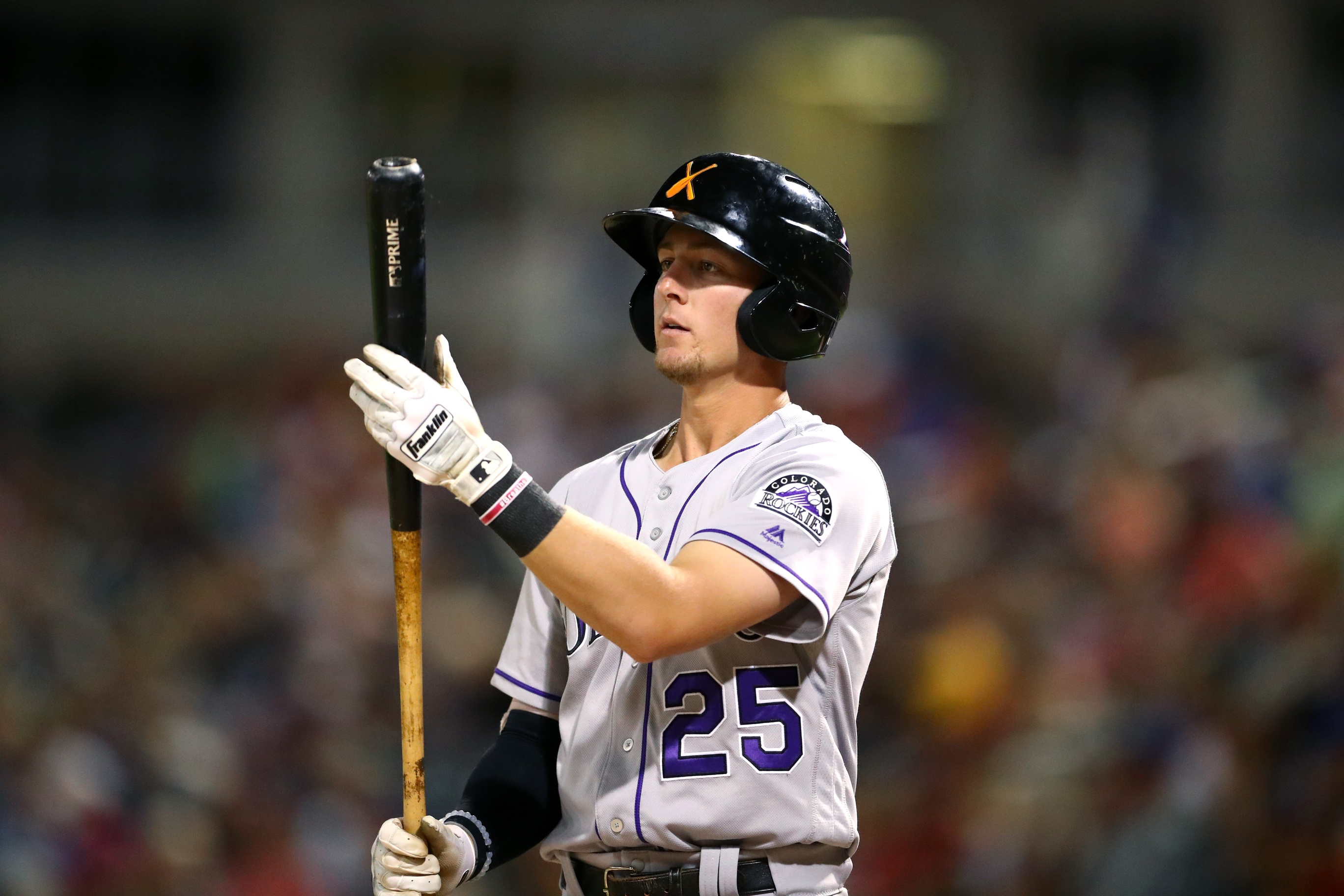
Mark Reynolds has been productive enough in 2017 that a less-than-stellar month of July (.229/.319/.410) won’t cause him to lose his starting job, especially to a rookie with zero Major League at-bats. But it’s getting to the point in the season where it makes sense for the Rockies to at least give the 22-year-old McMahon, the No. 1 ranked player in Roster Resource’s MiLB Power Rankings, some occasional starts at first base while utilizing him occasionally at other spots on the diamond.
McMahon, who has played a good amount of games at first base, second base and third base this season, is 19 for his last 34 to push his Triple-A batting average to .396 (86-for-217). Overall, he’s slashing .364/.406/.598 between Double-A and Triple-A with 36 doubles and 17 homers. It’s safe to say that he has very little left to prove in the minors.
—
Dominic Smith, 1B, New York Mets (Triple-A Las Vegas) | Mets Depth Chart
Despite hitting only 10 homers in the low minors over his first three professional seasons, Smith was a highly-touted prospect who many experts believed would develop power at some point. They were right. And it didn’t really take that long. Since reaching the upper minors as a 20-year-old in 2016, the left-handed hitting first baseman has 30 homers and 62 doubles while hitting over .300 and maintaining a disciplined approach at the plate.
Even after trading Duda, the Mets are holding off on calling up the 22-year-old Smith for some reason. That’s difficult to do after he slashed .385/.437/.725 in July, but this is the organization that called up Amed Rosario, arguably, two months after he was making it clear that he was ready for the Major Leagues. GM Sandy Alderson has suggested that they won’t wait much longer on Smith, though. He should settle in as the team’s first baseman before the end of the month.
Photos courtesy of USA Today Sports Images.
Minor MLB Transactions: 8/1/17
Here are the latest minor moves from around the game:
- The Twins have called up veteran righty Dillon Gee, as LaVelle E. Neal III of the Star Tribune first reported (via Twitter). Gee will re-join the roster after the club dealt away a pair of pitchers in recent days. The 31-year-old logged four outings with the Rangers earlier this year and briefly appeared on the Twins’ active roster, though he did not see any game action. He has pitched to a 3.23 ERA with 7.3 K/9 against 1.8 BB/9 through 78 Triple-A innings on the year and will offer a swingman option for Minnesota.
- With outfielder Willy Garcia going to the 7-day concussion DL after a scary collision yesterday, the White Sox have selected the contract of infielder/outfielder Nicky Delmonico, per a club announcement. Chicago has ample 40-man space after a bevy of deadline moves. Delmonico was a solid prospect when he was dealt from the Orioles to the Brewers in the 2013 deal that sent Francisco Rodriguez to Baltimore, but things did not work out in Milwaukee and he caught on with the South Siders as a minor-league free agent. He has spent the season at Triple-A, posting a .262/.347/.421 slash with a dozen home runs.
- The Nationals released corner infielder Matt Skole after he cleared waivers following a recent DFA, Mark Zuckerman of MASNsports.com (via Twitter). The 27-year-old lost his 40-man spot when the Nats acquired Howie Kendrick and evidently was not seen as being a part of the team’s future plans. A left-handed hitter, Skole has launched twenty or more home runs in several minor-league campaigns, including last year at Triple-A, and has consistently maintained a walk rate in the vicinity of 12% in the high minors. He also once rated as one of the Nats’ better prospects. But injuries have limited the Georgia Tech product quite a bit as a professional and he has spent more time at first base than at third in recent years.