
Make Or Break Year: Avisail Garcia
MLBTR is rebooting its “make or break year” series, in which we analyze players who enter the season with up-and-down track records but also an opportunity to stake a claim to significant future earnings.
As you may have heard, the White Sox are entering a rebuilding phase. For 25-year-old Avisail Garcia, that may be a good thing. Otherwise, he might already have been pushed out of his current spot atop the South Siders’ depth chart in right field.
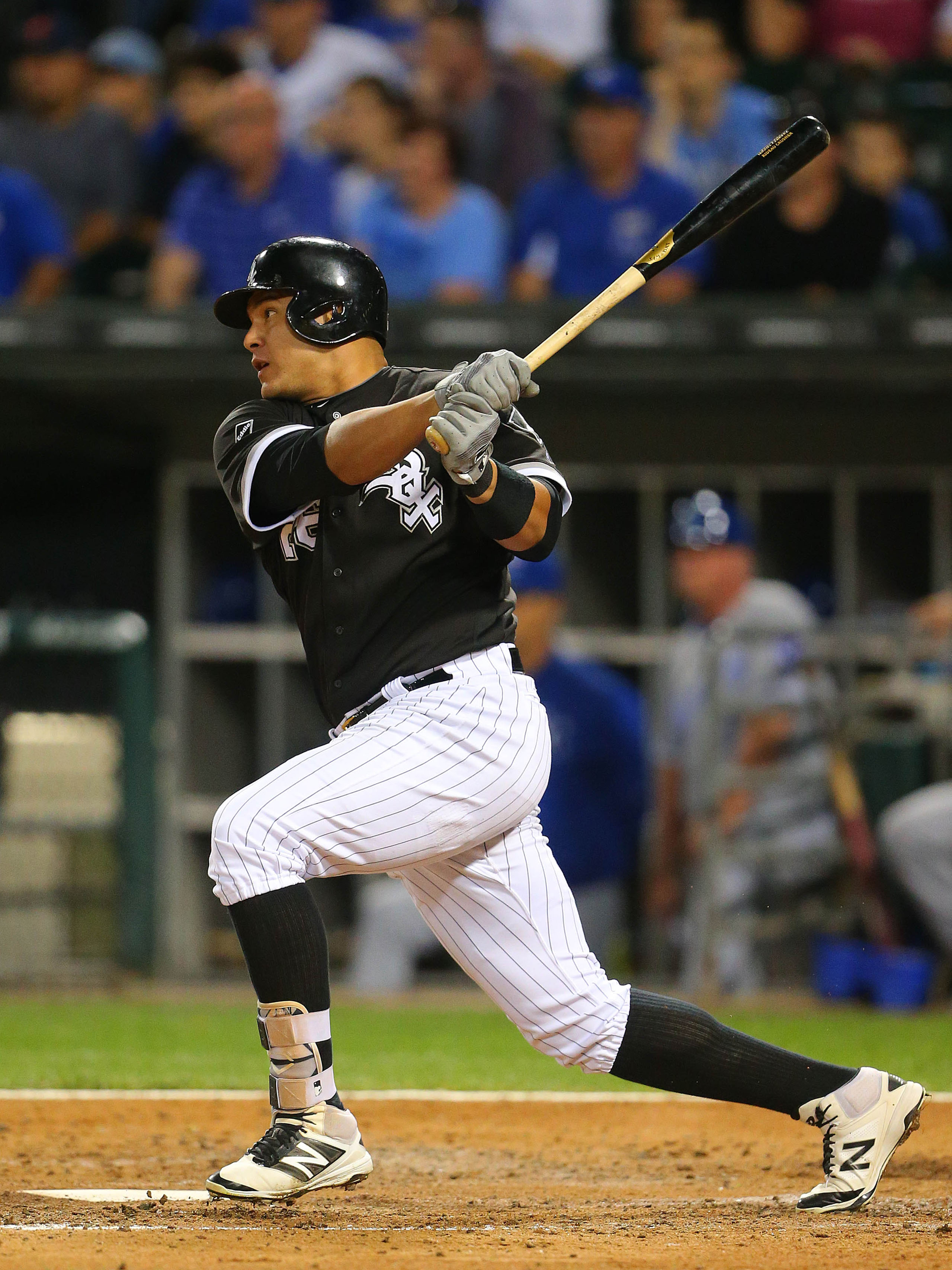
Before this winter, the Chicago front office’s last significant selling move came at the 2013 trade deadline, when the team landed Garcia and three other prospects in the swap that sent Jake Peavy to the Red Sox and Jose Iglesias to the Tigers. The hope at the time was that Garcia would step right into the MLB lineup and make himself a fixture.
Despite his evident tools, Garcia has thus far fallen well shy of hopes. There has been no shortage of opportunity — he has taken over 1,500 trips to the plate in the majors — but the results just haven’t been there.
In the aggregate, Garcia has slashed a modest .258/.310/.385 while striking out at a 23.8% clip and walking just 6.2% of the time. Though he carries a solid 14.4% HR/FB rate, Garcia has put the ball on the ground quite a bit, carrying a 53.2% goundball rate. Despite the power potential, and a healthy .320 career BABIP, Garcia just hasn’t reached base enough or hit for enough power to rate as even an average corner outfielder.
Adding to the concern is the fact that Garcia has never shown polish in the other aspects of his game. Over his career, he has rated as a well-below-average baserunner and fielder. In the aggregate, Garcia has posted -1.4 fWAR and 0.1 rWAR for his career — anemic tallies considering the amount of time he has received.
If there’s a ray of hope, perhaps it can be found in the improvements Garcia did make in 2016. He drew positive metrics for both his glovework and baserunning for the first time; if that can be maintained, it would significantly boost his floor. Of course, the offensive work — .245/.307/.385 — hardly gave added cause for optimism. But Garcia has long been valued most for the upside in his bat, and he has yet even to reach his 26th birthday.
As noted, that background likely wouldn’t be sufficient for Garcia to enter the season with a regular job were it not for the fact that the White Sox already committed to a rebuild. With little in the way of roster pressure, he ought to receive a fair bit of rope to establish himself.
But there could well come a point where the White Sox decide to cut bait, particularly if they feel other, yet younger players are more deserving of an opportunity. Garcia’s contractual upside is limited, after all, and not just because he’s owed $3MM this year. Much like former top prospect Jurickson Profar, another younger player who isn’t fully established in the bigs, Garcia will enter the 2017 season with just two more years of club control remaining thereafter.
It’s not altogether clear whether Garcia has much of a future with the White Sox, whether or not he can pull himself out of his malaise. Perhaps the best-case scenario for Chicago is one in which Garcia plays well enough to turn himself into a solid trade candidate, freeing the organization to move him either this summer or next winter. For Garcia, though, there’s still plenty of opportunity both to build off of a nice platform arb salary and to develop a case for a free-agent payday after the 2019 campaign, which he’ll play at just 28 years of age.
Photo courtesy of USA Today Sports Images.
Make Or Break Year: Travis d’Arnaud
MLBTR is rebooting its “make or break year” series, in which we analyze players who enter the season with up-and-down track records but also an opportunity to stake a claim to significant future earnings.
This time last year, Mets catcher Travis d’Arnaud was looking to build off of a 2015 season in which he established himself as an offensive force, but also continued to deal with a troubling run of injuries. Now, he’s not only still facing the critique that he can’t stay healthy, but also needs to restore his trajectory as a high-quality option behind the dish.
Injuries remain the major question mark. Over his professional career, d’Arnaud has suffered a series of concussions that are all the more concerning given his position of choice. And that’s not all. The hard-working backstop’s health read-out sounds like a game of Operation, as he has racked up problems high, low, and in-between. Hand and elbow, foot and knee, and back injuries were all on the list even before the 2016 season.

There’s no denying the trouble that d’Arnaud had last year, both before and after a rotator cuff strain sent him to the DL and further clogged his medical rap sheet. He ended the year with a .247/.307/.323 batting line and just four home runs over 276 plate appearances. While his 6.9% walk rate and 18.1% strikeout rate aren’t out of line with career norms, the anemic .076 isolated slugging mark represents a big step back.
The defensive side of the equation brings yet more questions. While he continued to rate well in the pitch-framing department, d’Arnaud cut down just 17 of the 61 baserunners who attempted to steal against him — though certainly the Mets’ staff deserves a hefty share of the blame there. Despite d’Arnaud’s stalling bat, which he hopes to fix with improved swing mechanics, Mets manager Terry Collins says that “the defensive side” is “where we’ve got to really focus.” As John Harper of the New York Daily News recently reported, the young backstop’s pitch calling may have compromised his standing with the Mets’ talented pitching staff.
Given those struggles, there’s a lot for d’Arnaud to prove to an organization that has designs on contending in 2017. That’s not to say that the club doesn’t have confidence in a rebound, as it did decide to pass on potential upgrades behind the dish this winter. Light-hitting veteran Rene Rivera isn’t really suited for more than reserve duty, while Kevin Plawecki has yet to translate his offensive success in the upper minors to the game’s highest level. As Harper writes, the organization could change tack and seek an alternative — as soon as this year’s trade deadline — if d’Arnaud fails to recover his standing.
All that said, there are reasons to hope that the former first-round draft pick can make good on his obvious talent. After a solid 2014 season, d’Arnaud turned in a big (albeit injury-shortened) 2015 campaign at 26 years of age. In his 268 plate appearances that year, d’Arnaud slashed a robust .268/.340/.485 and swatted a dozen long balls, leading some to expect he’d soon establish himself as one of the game’s premier offensive threats from behind the plate. Defensively, the metrics love d’Arnaud’s pitch presentation, which many organizations have adopted as a critical element in assessing catching value. And he only just turned 28 years of age, so it’s not as if there aren’t prime seasons remaining.
While he’s still young, d’Arnaud’s future direction will be determined on the field this year — so long as he can stay in uniform and avoid yet more trips to the DL. His limited playing time has also tamped down his earnings, so he’s only set to take home $1.875MM in his first season of arbitration eligibility; cost pressures, then, won’t likely play much of a role. But as the Mets plot a course for the three further years over which they control d’Arnaud, which coincide with the team’s contract rights over several other core players, they’ll no doubt be assessing carefully the extent to which d’Arnaud is capable of providing the offensive production and defensive work that the organization needs at the catching position.
Photo courtesy of USA Today Sports Images.
Make Or Break Year: Tim Lincecum
Critics have long believed that Tim Lincecum's unconventional mechanics wouldn't stand the test of time in the Major Leagues, but the Giants right-hander could retire tomorrow having more than proved his worth. Lincecum has two NL Cy Young Awards and two World Series titles to go along with his career 3.31 ERA, 9.8 K/9 rate and three NL strikeout crowns over just six seasons in the bigs.
Though Lincecum ended the year with another championship ring, he spent his postseason in the unfamiliar position of relief pitcher. Lincecum was relegated to the bullpen following a troubling 2012 season that saw him post a 5.18 ERA, 4.4 BB/9 rate and 1.1 HR/9 rate (all career worsts), plus a league-leading 17 wild pitches and 107 earned runs allowed. 
While Lincecum had a few very rough patches during the 2010 and 2011 campaigns, nobody expected him to completely lose his form. The advanced metrics paint a less-grim picture of his 2012 performance (Lincecum posted a 4.18 FIP, 3.82 xFIP, 3.97 SIERA) but he also lost almost two miles off his fastball. Lincecum dropped to career-low average speed of 90.4 mph, down from 92.2 mph in 2011.
Lincecum looked sharp out of the bullpen during the postseason and, combined with those decent advanced metric numbers, there is some reason to believe that he can bounce back and become "the Freak" once again in 2013. If he doesn't, however, he will leave millions of dollars on the table in free agency, as Lincecum is set to hit the open market next winter.
Lincecum resisted signing a long-term extension with San Francisco, opting instead to take shorter contracts that he said kept him more focused. The tactic didn't cost Lincecum in the short term, as he signed a pair of two-year deals with the Giants that covered his four arbitration-eligible years (Lincecum was a Super Two) and earned $63.5MM over the 2010-13 seasons. Lincecum reportedly turned down a five-year, $100MM extension from the Giants last winter, a move that he could regret if he struggles against in 2013 and faces a drastically lowered price tag in free agency.
If nothing else, Lincecum's poor 2012 cost him a chance at a mega-deal akin to the contracts signed by Felix Hernandez ($175MM), Zack Greinke ($147MM) or Cole Hamels ($144MM) within the last year. Even a vintage Lincecum season wouldn't earn him quite as much as the $112.5MM extension teammate Matt Cain signed with the Giants last April. Though Lincecum will be just 29 years old by season's end, those persistent whispers about his durability will surface again and keep him from cashing in to his fullest extent, perhaps even keeping him under $100MM in guaranteed money.
Still, a ceiling of "under $100MM" is nothing to sneeze at, so Lincecum can regain a lot of value with another big year. A repeat of 2012, however, would put Lincecum in line for a short-term deal whether he liked it or not. His track record would only get him so far, and Lincecum would likely have to settle for an incentive-filled one- or two-year contract (or maybe two years plus an option).
There's also the chance the Giants could make Lincecum a qualifying offer if he has another poor season. Such a one-year pact would be worth between $13.5-$14MM and make sense for both sides — Lincecum would get another chance to prove himself in a familiar environment and the Giants would see if they could salvage a final good season from their former ace at a relative bargain price. Even if Lincecum rebounded and subsequently left after 2014, the Giants would now be in position to reap draft pick compensation for Lincecum if he turned down another qualifying offer and signed elsewhere. That would get the Giants something for a Lincecum departure, aside from some relief that he passed on that big extension.
The 2013-14 offseason could be something of a transformative one for the Giants, as they'll have around $56MM coming off the books due to the expiring contracts of Lincecum, Barry Zito and Hunter Pence. Some of that money could be spent on extensions for Buster Posey or Pablo Sandoval, or GM Brian Sabean could look to make a splash in the free agent market. Lincecum has been a huge part of the Giants' recent past, and his 2013 season will likely determine if he is part of the team's future.
Photo courtesy of Rick Osentoski/USA Today Sports Images
Make Or Break Year: Josh Johnson
Despite ranking third on Tim Dierkes' 2014 Free Agent Power Rankings, Josh Johnson's next big contract is far from a sure thing. Poised to hit free agency for the first time at age 30 next season, the upcoming season will be critical to Johnson as he looks to shed his "injury-prone" label and cash in on a five- or even six-year free agent deal. 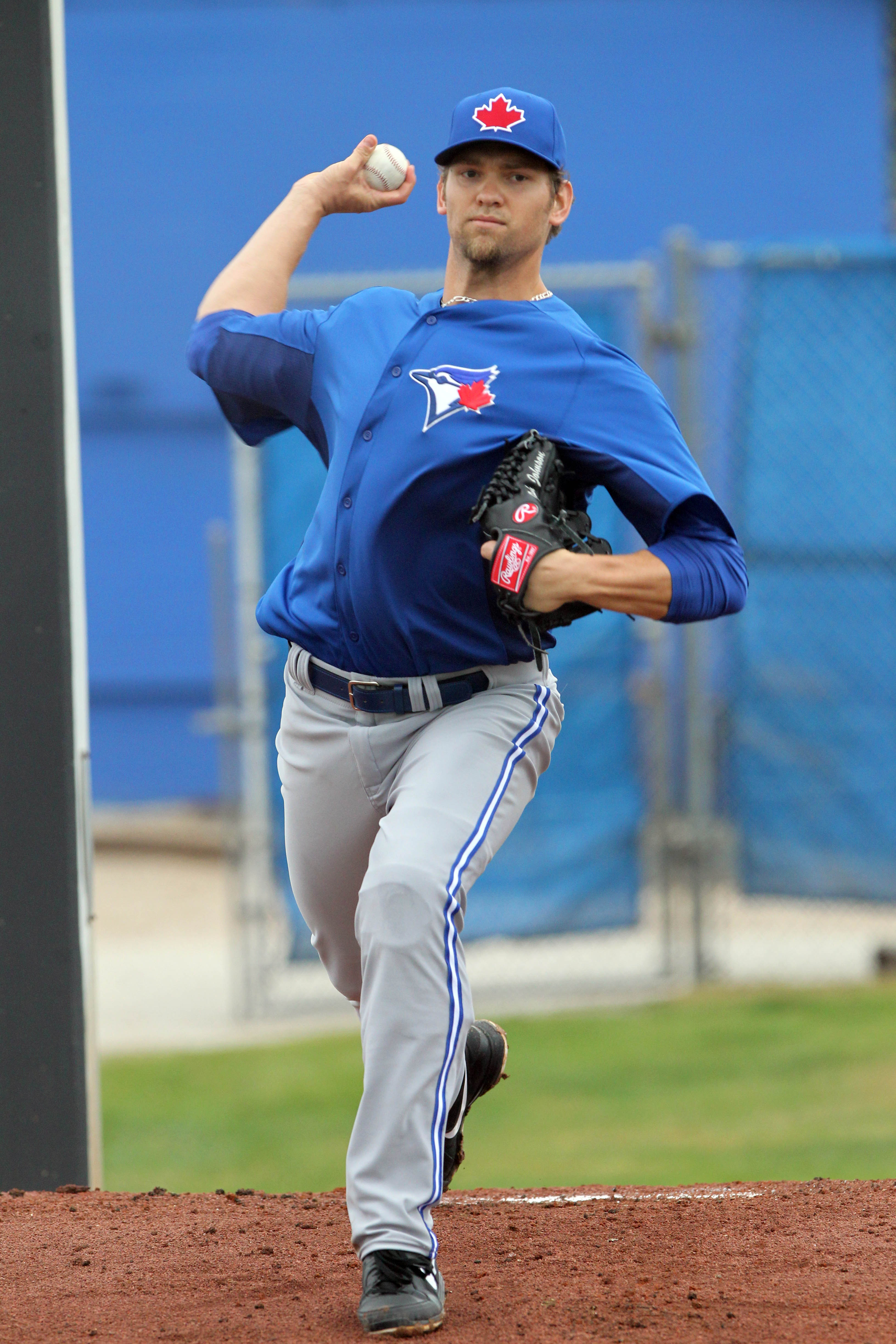
Johnson pitched a respectable 191 1/3 innings last season — the third time in four seasons in which he's surpassed the 180-inning mark. However, Johnson also has a lengthy injury history, having spent time on the 60-day DL for shoulder issues, elbow problems and recovery from Tommy John surgery. His innings totals from 2007 (15 2/3), 2008 (87 1/3) and 2011 (60 1/3) are likely enough to give teams serious pause should Johnson miss significant time in 2013.
This will also be Johnson's first venture into American League pitching, as he spent his entire career with the Marlins prior to this November's blockbuster with Toronto. Pitching in the hitter-friendly confines of the Rogers Centre in Toronto and against the powerful lineups of the AL East will undoubtedly serve as a challenge for the right-hander.
However, when Johnson is healthy he has the talent to be one of the game's most dominant arms. Over his past four seasons (644 1/3 innings), the 6'7" hurler has a 2.99 ERA, 8.4 K/9, 2.7 BB/9 and 47.8 percent ground-ball rate. Another 180-200 inning season in the powerful AL East could position Johnson to eclipse former teammate Anibal Sanchez's five-year, $80MM contract with the Tigers. A recurrence of the injury bug could force Johnson to settle for a short-term deal — perhaps even a one-year pact to demonstrate his health.
Johnson is set to earn $13.75MM this season — the final salary of the four-year, $39MM extension he signed prior to the 2010 season. That's hardly chump change, but this is likely his best shot at a massive free agent contract. If Johnson is injured this season, even a 200-inning effort in 2014 might not be enough to convince a team to guarantee four, five or six years to the power right-hander. Despite being part of a free agent class that could include Adam Wainwright, Roy Halladay and Tim Lincecum, Johnson could parlay a dominant 2013 season into a hefty pay raise, and possibly the biggest free agent contract for a pitcher next winter.
Photo courtesy of USA Today Sports Images.
Make Or Break Year: How Are They Doing?
Before the season, we identified 11 players who were entering "make or break" years. These guys had experienced ups and downs in their respective careers and were positioned to re-establish themselves as difference makers at the Major League level and set themselves up for nice paydays in the future. Now that we're into August, let's take a second to check in each player (all links go to MLBTR posts)…
- Scott Baker, Twins — Baker, 30, had elbow surgery in April and will miss the entire season. Minnesota will likely decline his $9.25MM option for 2013 (no buyout).
- Phil Hughes, Yankees — The 26-year-old right-hander owns a 4.10 ERA in 131 2/3 innings this year, including a 3.40 ERA since mid-May. He's a safe bet to be tendered a contract for 2014, his final year as a arbitration-eligible player.
- Jair Jurrjens, Braves — Jurrjens, 26, pitched so poorly earlier in the season that he had to be sent to the minors. He's since resurfaced and owns 6.89 ERA in 48 1/3 innings, cementing his status as a non-tender candidate.
- Adam Lind, Blue Jays — Lind has battled back problems and also been demoted to Triple-A this season, and he's hit .227/.298/.394 while with the big league team. The 29-year-old continues to disappoint since signing his four-year, $18MM extension prior to 2010.
- Francisco Liriano, White Sox — It's been another up and down season for the 28-year-old southpaw, who owns a 5.03 ERA in 111 innings. The Twins traded Liriano to the ChiSox at the deadline.
- James Loney, Dodgers — Loney, now 28, hasn't helped himself at all this season, hitting just .251/.301/.330 in 327 plate appearances. He might have to settle for a minor league contract this coming offseason.
- Kendrys Morales, Angels — The 29-year-old is hitting .282/.327/.455 with 14 homers on the year, well below the level he established prior to his leg injury in 2010. Morales figures to be both a trade and non-tender candidate after the season.
- Mike Pelfrey, Mets — Pelfrey pitched to a 2.29 ERA in three starts before needing Tommy John surgery. The Mets are expected to non-tender the 28-year-old after the season.
- Geovany Soto, Rangers — The 29-year-old backstop has continued to deal with injuries in 2012 and is hitting just .201/.289/.356. Soto is an obvious non-tender candidate.
- Kevin Youkilis, White Sox — Youkilis lost his starting job with the Red Sox and was traded to the White Sox, who are likely to decline his $13MM option after the season. The 33-year-old has dealt with nagging injuries and is hitting .238/.339/.427 overall.
- Delmon Young, Tigers — Young, 26, has had a below-average season at the plate (.266/.298/.402) and has dealt with some off-field problems. He hasn't helped his free agent stock any.
Make Or Break Year: Kevin Youkilis
The Red Sox are among baseball's most disappointing teams so far this season, due in part to injury. Closer Andrew Bailey, outfielders Carl Crawford and Jacoby Ellsbury, and starters John Lackey and Daisuke Matsuzaka are among the players the team has lost for a significant length of time already in 2012. Boston also lost Kevin Youkilis, an important right-handed bat in their lefty heavy lineup.
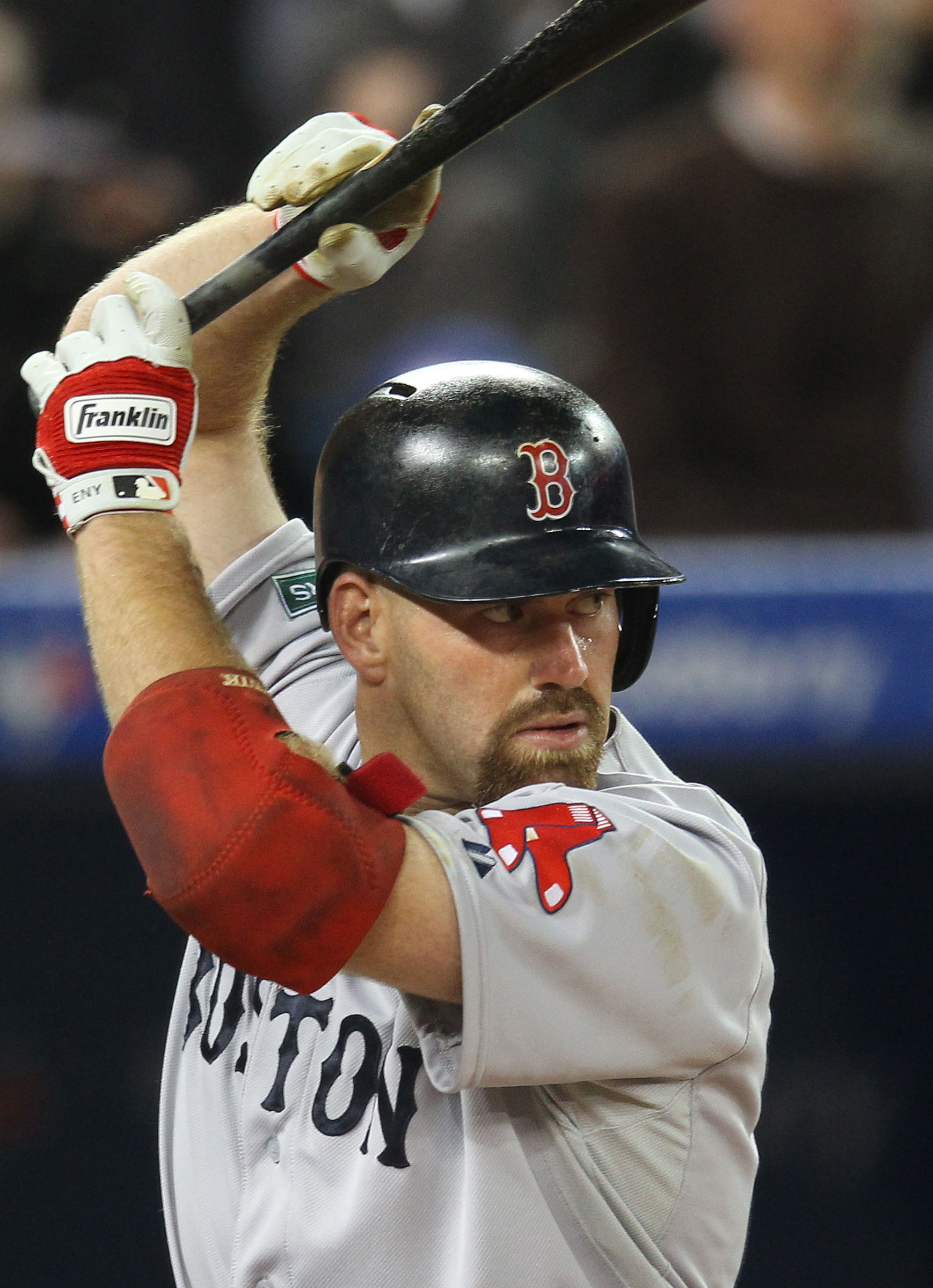 Youkilis, 33, is currently on the disabled list with a lower back strain. It's his fifth trip to the DL in the last four years, part of a laundry list of injuries that includes an oblique strain (2009), thumb surgery (2010), back tightness (2011), and a sports hernia (2011). Since the start of the 2010 season, Youkilis has played in just 240 of 352 possible games (68.2%).
Prior to being placed on the DL, Youkilis had a .219/.292/.344 batting line in 72 plate appearances. Dating back to last year's All-Star break, he's produced a .205/.307/.345 batting line in 231 plate appearances. His performance during his peak years – .308/.404/.560 from 2008-2010 – appears to be very much a thing of the past right now. A player with injury concerns and declining performance as he approaches his mid-30s usually isn't someone a team tries to keep around.
To make matters worse for Youkilis, the Red Sox have a ready-made third base replacement already in-house. Top prospect Will Middlebrooks has burst onto the scene with three homers and four doubles in his six games with Boston, continuing the hot streak that saw him hit nine homers in 24 games in Triple-A games before being recalled. Baseball America ranked Middlebrooks as the 51st best prospect in the game before the season, and the 23-year-old is doing his best to show the team he deserves to play the hot corner on the full-time basis.
The Red Sox owe Youkilis $12MM this season and hold a $13MM club option for his services next year ($1MM buyout). It's seems very unlikely that they'll exercise the option at this point, though the decision still isn't due for another seven months or so. A lot can change between now and then. Youkilis is in a difficult position as an injury-prone and declining player with a young hotshot rookie ready to take his job. If the Red Sox decline to bring him back in 2013, his stock as a free agent will be poor without a strong return from this latest back ailment.
Photo courtesy of US Presswire.
Make Or Break Year: Geovany Soto
In the aftermath of Geovany Soto's big 2010 season, the catcher was being looked at as extension candidate, in line for a healthy multiyear contract. The Cubs held off extending Soto and instead chose to go year-to-year in arbitration, which may have proven to be a wise decision. Soto followed up his .280/.393/.497 performance in 2010 with a disappointing .228/.310/.411 slash line in 2011, and has thus far gotten off to a slow start this season, with just a .526 OPS entering tonight's play. (Though, in fairness, Soto's .157 BABIP indicates he's been very unlucky.)
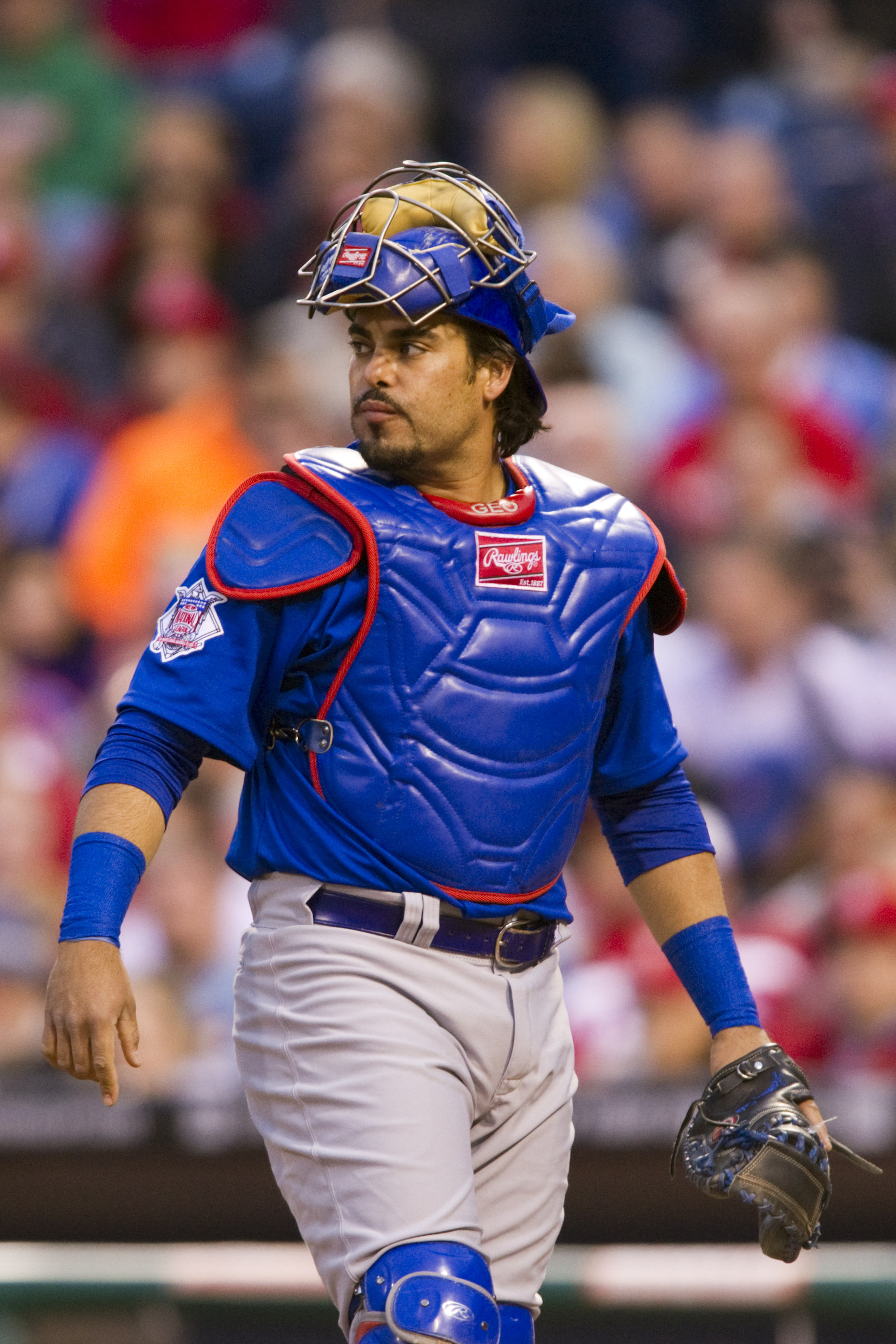 Soto earned $3MM in 2011 and $4.3MM this season during his first two arb-eligible years and is due for one more trip through the arb process before hitting free agency after the 2013 campaign. We can tentatively predict Soto to earn around $5.5MM next year since even if he continues to hit poorly, I think the Cubs will still tender him a contract. Soto's big 2010 season and his Rookie Of The Year campaign in 2008 are still too fresh in everyone's memory, and since solid-hitting catchers are such a commodity in the game, the Cubs will likely give Soto another chance to regain his past form.
"Likely," however, is not a certainty. Soto is a middling-to-below average defender, so unless his bat heats up, he has little value. Chicago has another catching prospect in 25-year-old Welington Castillo, who has posted an .852 OPS in 590 Triple-A plate appearances and is currently serving as the Cubs' backup with Steve Clevenger on the DL. Jed Hoyer could go in a different direction next year, using Castillo and Clevenger (who also has some good minor league numbers) in a righty-lefty platoon, possibly with a veteran brought into the mix during Spring Training to add depth.
If the Cubs do give up on Soto, it's more likely that they would try to deal him at the trade deadline rather than non-tendering him for nothing in return. The Rays are the most notable contender with a clear need at catcher, though a number of other teams could develop a hole behind the plate by the end of July. If Soto can't get his bat going, expect him to be dealt for a low-level prospect to a team in need of a backup catcher. If Soto does hit, however, he'll keep his job in Chicago for at least one more season, though the Cubs will still be right to hold off on an extension until they see what Soto does in 2013.
Photo courtesy of Howard Smith/US Presswire
Make Or Break Year: Jair Jurrjens
The Braves boast an enviable collection of young pitchers, enough that they were able to trade Derek Lowe this offseason, lose Tim Hudson to injury, and still go 10-7 early on. Mike Minor, Brandon Beachy, and Tommy Hanson have carried the bulk of the workload while Randall Delgado cuts his teeth as the fifth starter and Julio Teheran bides his time in Triple-A. One guy who has not carried his weight so far is right-hander Jair Jurrjens.
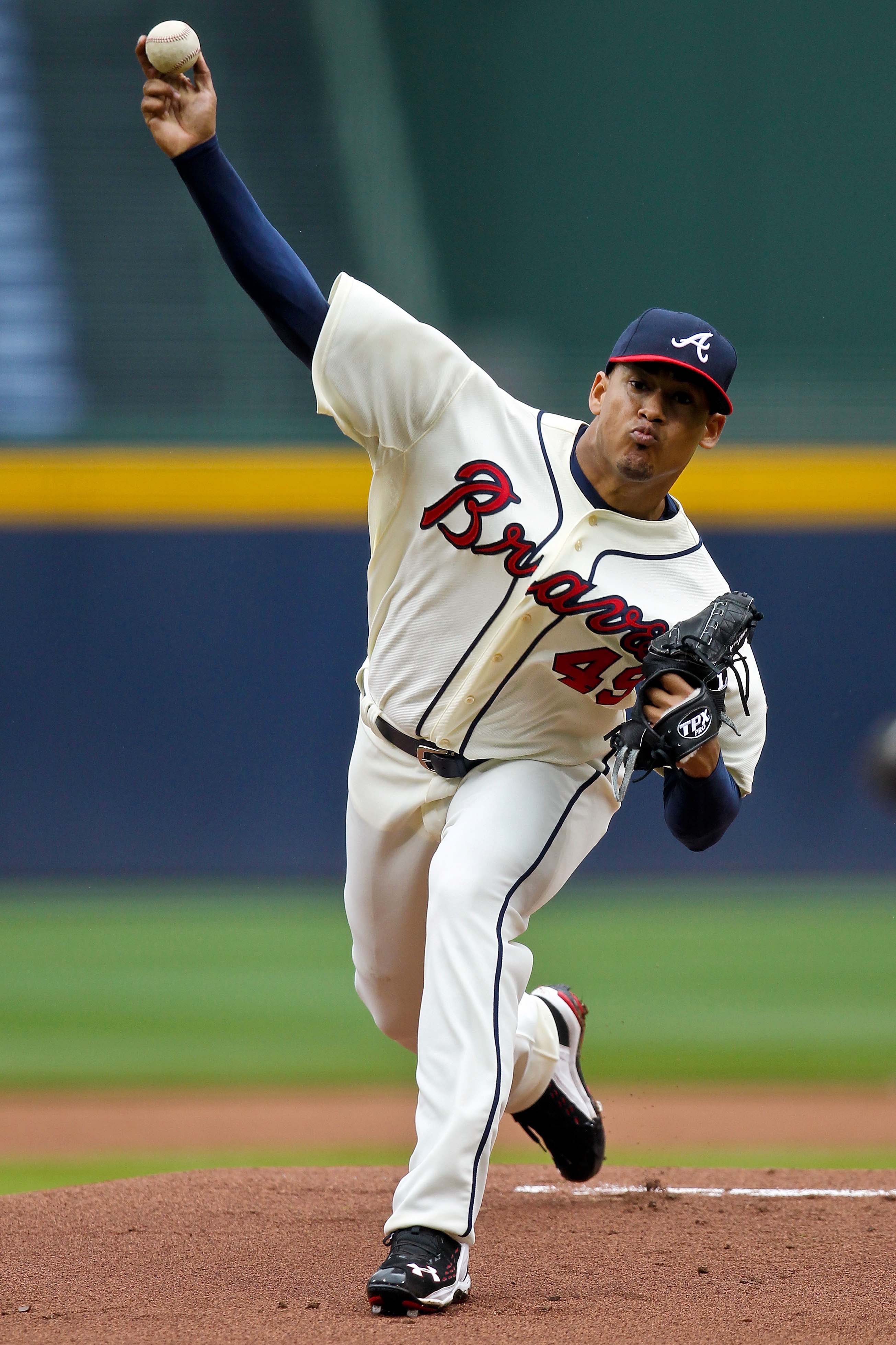 Jurrjens, 26, made a fourth straight disaster start last night – five runs in three innings to the Dodgers – and was demoted to Triple-A after the game. He's allowed 17 runs and put 38 men on base in 16 1/3 innings across those four starts after posting a 2.96 ERA and being named to the NL All-Star Team last year. Jurrjens did finish last season on the disabled list though, missing a total of 44 games with right knee inflammation. He had surgery on the same knee after the 2010 season and has made a total of five trips to the disabled list since his debut in 2007.
The biggest physical concern with Jurrjens is not necessarily his knee, but his declining fastball velocity. PitchFX data says he averaged between 91.2 and 91.9 mph every year from 2007-2010 before dropping off to 89.1 mph last season and 88.4 mph in the early going this season. The start-by-start plot of his fastball velocity range is troubling, especially since he had shoulder problems in 2007 (inflammation) and 2010 (stiffness). Only once in his four years had Jurrjens topped 200 innings (2009) and only twice has he topped 160 innings (2008 and 2009).
Although his ERA has fluctuated through the years, Jurrjens has maintained a steady walk (3.2 BB/9) and strikeout (6.1 K/9) rate through his career. He started his time in the big leagues by getting a healthy amount of ground balls (49.6% from 2007-2008), though he's become more susceptible to fly balls in recent years (41.7% from 2009-2012). After producing 3.7 and 3.9 wins above replacement in 2008 and 2009 according to FanGraphs, respectively, he's produced just 2.2 WAR total in the two years and three weeks since.
Jurrjens will make $5.5MM this season, his second year of arbitration eligibility as a Super Two. The Braves made no secret of their willingness to trade him this past offseason, most notably offering him to the Orioles as part of a package for Adam Jones. They also had talks with the Rockies, Red Sox, Royals, Orioles, Blue Jays, Tigers, and Reds. Given his relatively high salary, two more years of arbitration eligibility, his injury problems, and all the young arms in the rotation around him, Jurrjens suddenly looks like a potential non-tender candidate if he can't right the ship in Triple-A and contribute to the big league club this season.
Photo courtesy of US Presswire.
Make Or Break Year: James Loney
Matt Kemp and Clayton Kershaw are arguably the best player and the best pitcher in baseball, respectively, and both came up through the Dodgers' farm system. Los Angeles has also produced an All-Star closer (Jonathan Broxton), an All-Star catcher (Russell Martin), another All-Star starting pitcher (Chad Billingsley), and numerous other pieces in recent years. One player who has not developed as expected is first baseman James Loney.
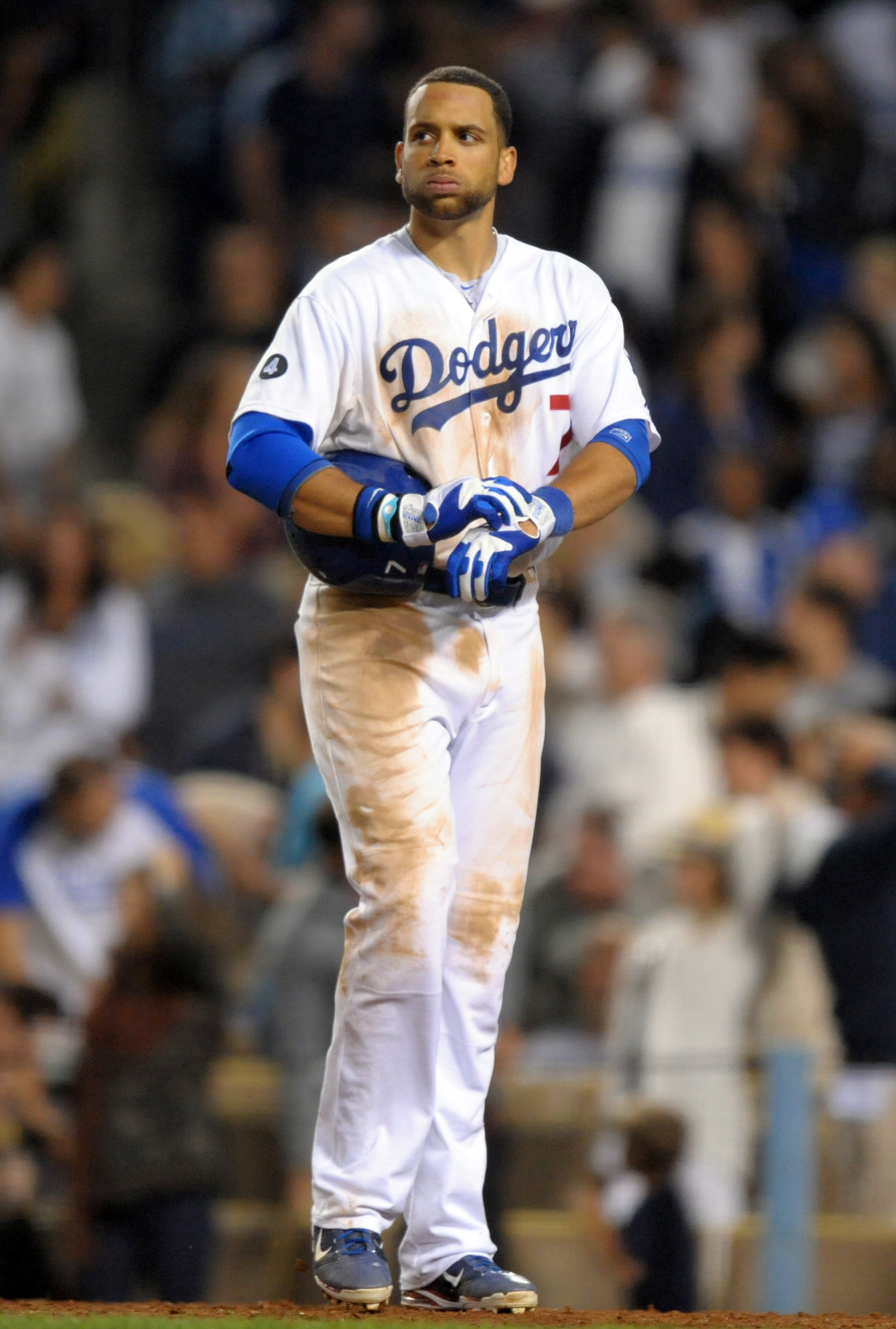 One year ago, the 27-year-old Loney was a non-tender candidate after hitting .267/.329/.395 with ten homers in 648 plate appearances in 2010. He started slowly last season, hitting just .254/.305/.327 through his first 434 plate appearances before turning it on in the second half and hitting .388/.438/.679 in his final 148 trips to the plate. That late-season hot streak likely saved Loney's job, as the Dodgers tendered him a contract and will pay him $6.375MM in 2012.
The Dodgers have been using the left-handed hitting Loney as part of a first base platoon with the right-handed Juan Rivera so far this year, and he's hitting just .194/.306/.258 in the early going. He's a career .299/.359/.453 hitter against righties and .250/.307/.365 against lefties. Other than seven innings of right field experience much earlier in his career, he's limited to first base and doesn't offer any versatility.
Loney will be a free agent after the season and first basemen with minimal power usually aren't hot commodities on the open market. His career high is 15 homers back in 2007, which he did in just 96 games. Since then he's hit no more than 13 homers while playing no less than 158 games in a season. A player Loney's age is just entering his prime, but his performance has declined in recent years and now he might hit the open market with his value at its nadir.
Photo courtesy of US Presswire.
Make Or Break Year: Francisco Liriano
In 2006, Baseball America's sixth-ranked prospect took the American League by storm after the Twins moved him from the bullpen into the rotation. Francisco Liriano was every bit as dominant as fellow ace Johan Santana, and Minnesota looked to have a pair of dynamic left-handers that would be as formidable as any one-two punch in baseball. 
Tommy John surgery that summer derailed that tandem, and set Liriano on the shelf for the entirety of the 2007 season. After 118 innings of work at Triple-A in 2008, Liriano rejoined the Twins' rotation to mixed success, and his dreadful 2009 was forgettable, to put it lightly (5.80 ERA in 136 2/3 innings).
Liriano exploded in 2010 to show that he wasn't done yet, though, winning the American League Comeback Player of the Year Award with 191 2/3 innings of 3.62 ERA ball. As is often the case, the ERA didn't tell the whole tale. Fangraphs pegged Liriano's worth at a whopping six wins above replacement. He struck out 9.4 hitters per nine innings pitched, while walking just 2.7 per nine. His SIERA was 3.02, while FIP liked him for a full run lower than his ERA — 2.66.
Those days seem like a distant memory however, following yet another disappointing season in 2011. Liriano avoided arbitration this winter by settling on a one-year deal worth $5.5MM. After a fantastic Spring Training in which he posted a 33:5 K:BB ratio in 27 innings while featuring a fastball above 93mph, Liriano is looking like his 2011 self. His first two starts have left him with an ERA of 10.00, and he's walked five hitters in nine innings while striking out just six. There's certainly time to turn it around, but it's in his best financial interest to do so sooner rather than later.
Liriano is a free agent following this season, and while he has the talent to be one of the game's most dominant southpaws, his consistency will limit his free agent earnings. A return to his 2010 ways would be enough to entice suitors to pony up on a multiyear deal, perhaps similar to the three-year, $32MM deal signed by Jorge De La Rosa following the 2010 season. With enough interested parties, larger offers wouldn't be out of the question for a 29-year-old lefty with ace-caliber stuff.
A repeat of his 2011 numbers, however, would likely relegate Liriano to a one-year deal in which he'd be seeking to prove that he can still pitch at this level. The next six months could very well mean tens of millions of dollars to the enigmatic lefty.
Photo courtesy of Kyle Terada/US Presswire.