
MLBTR Originals
MLBTR’s original content from Winter Meetings week:
- In a fascinating discussion between a former major league reliever and a current one, MLBTR contributor Burke Badenhop spoke with Tyler Thornburg after the Brewers traded him to the Red Sox on Tuesday. Badenhop, who also pitched for those two teams, was teammates with Thornburg in Milwaukee in 2013.
- With Aroldis Chapman and Mark Melancon off the board, Jason Martinez broke down the remaining free agent closers and those who could be on the trading block. He also highlighted which teams could still be in the market for a ninth-inning solution.
- Charlie Wilmoth polled readers on which big-money free agent signing that happened during the meetings will work out the best. The choices: Chapman (Yankees; five years, $86MM), Dexter Fowler (Cardinals; five years, $82.5MM), Ian Desmond (Rockies; five years, $70MM) and Melancon (Giants; four years, $62MM).
Poll: Which Big Winter Meetings Signing Was The Best?
The Winter Meetings saw a pair of high-profile trades, but also four free agent signings in excess of $60MM. Of the four teams to open their checkbooks, which made the best move?
Aroldis Chapman, five years, $86MM, Yankees. The Yankees brought back their former closer to rejoin Dellin Betances to form perhaps the best setup/closer tandems in baseball. There’s no questioning Chapman’s dominance, and a lefty with three-digit heat and a 15.5 K/9 is a unique asset indeed. But the Yankees also gave Chapman an opt-out after three years, one that presumably won’t require him to forgo his $11MM signing bonus. And they gave him a no-trade clause through the first three seasons as well, plus a limited no-trade through the last two. As Mike Axisa of River Ave Blues pointed out after the deal, it’s possible the opt-out will arrive just as the Yankees have assembled their best team in years. Then there’s also Chapman’s troubling personal history.
Dexter Fowler, five years, $82.5MM, Cardinals. The Cardinals filled their center field vacancy with Fowler, who batted .276/.393/.447 last season with the Cubs. In so doing, the Cardinals also avoided a trade market that’s been ugly for buyers, as the Nationals’ trade for Adam Eaton perhaps demonstrated. The Cards are buying Fowler’s age-31 through -35 seasons, years in which an athletic player might well remain productive. They did give up the 19th overall pick in the draft with the signing, though, and even the Cardinals have characterized the dollar figure required to land Fowler as “over the top.”
Ian Desmond, five years, $70MM, Rockies. In what was surely the most surprising of the four signings, the Rockies landed a veteran leader who reinvented himself as an outfielder in an excellent comeback season in Texas. Desmond’s defensive flexibility will give the Rockies options as they build their team for the years ahead, and his 20-homer offense should benefit from Coors Field. The Rockies did, however, give up the first protected pick of the draft — No. 11 overall — to make the signing, costing the team eight-figure value not already included in the contract. And the team didn’t look like a contender in 2016 and might or might not be one in 2017, raising questions about whether now was the right time for them to pursue this kind of veteran talent.
Mark Melancon, four years, $62MM, Giants. The Giants were expected to pursue a closer, and they dodged higher-dollar targets like Chapman or Kenley Jansen (and the loss of a draft pick Jansen would require) to sign the 31-year-old Melancon. Melancon’s results in the last four seasons are indisputably terrific — the highest ERA he’s had in that time has been 2.23. He also has terrific control (with a 1.5 BB/9 last season) and routinely posts great ground-ball numbers (54.2% last year). He doesn’t have a typical profile for a dominant closer, however, with only modest velocity (91.8 MPH average fastball velocity last year, down about a mile from 2013) and a strikeout rate that’s only a bit more than half of Chapman’s. Long-term reliever contracts have historically been dicey propositions, and it remains to be seen if Melancon can dodge the trends. Melancon’s deal also contains considerable value not included in the $62MM total in the form of a no-trade clause and an opt-out after the first two years.
What do you think? Which team’s new contract is the best of the four?
Offseason Closer Market Update
It’s been clear for weeks that a game of musical chairs this offseason could leave at least one playoff hopeful without a reliable closer option. With the Winter Meetings behind us, a few options are off the board, but several teams still have voids to fill.
Here’s an update on teams who came into the offseason looking for a closer upgrade and the best remaining options to land one of the jobs.
*Click on the team name to view an updated depth chart
Arizona Diamondbacks – FILLED
Fernando Rodney, one of the best closers in baseball during the 1st half of 2016 and one of the worst after the Padres traded him to the Marlins, agreed to a one-year, $2.75MM deal. He’ll enter his age-40 season as the D’backs closer. If the can return to his pre-Marlins form, and if the Diamondbacks drop out of the playoff hunt, he could find himself back on the trade block.
Chicago Cubs – FILLED
Instead of setting their sights on one of the three pitchers who would eventually become the highest paid closers in MLB history, the Cubs used one of their many trade chips, outfielder Jorge Soler, to acquire Wade Davis from the Royals. The 31-year-old Davis, who has a 1.18 ERA and 0.892 WHIP over the past three seasons, is set to earn $10MM in his final year before reaching free agency.
There shouldn’t be much concern with Adam Ottavino as a late-inning option after posting solid numbers across the board while returning from Tommy John surgery in 2016. But with Jake McGee failing to impress during his first season with the Rockies, they would be wise to look for another reliable option to either close or serve as Ottavino’s primary setup man. The team had contacted Colorado native Mark Melancon, who was reportedly willing to take less money to pitch for the Rockies, but they apparently weren’t willing to compete with the Giants or other teams who offered him at least $60MM. They’ve shown interest in Brad Ziegler, who has decent numbers in 17.1 career innings at Coors Field.
They’re still one of the favorites to land Kenley Jansen, who is also being courted by the Marlins and Nationals. For a team that has so much money invested throughout their roster, it would be a huge disappointment if they missed out on retaining Jansen or adding another elite closer. If Jansen bolts, they’d likely turn to the trade market.
After losing out on the Aroldis Chapman sweepstakes, the Marlins will have one more chance to land the type of closer who could make their bullpen the clear strength of their team. Jansen’s former manager Don Mattingly and teammates Dee Gordon and A.J. Ellis would be familiar faces is he signs with Miami.
The trio of A.J. Ramos, Kyle Barraclough and David Phelps are capable of shutting the door in the late innings, but adding Jansen would further help to offset a rotation that is unlikely to pitch deep into games very often. Neftali Feliz and Ziegler are potential fallback options, although neither is a sure bet to supplant Ramos in the closer’s role.
There hasn’t been a lot of buzz surrounding the Twins and who will be their closer in 2017. Glen Perkins made just two appearances last season before being shut down with a shoulder injury. With his status up in the air for early in the season as he recovers from surgery to repair a torn labrum in June, the Twins will need a good Plan B until he’s ready to resume closing duties. Brandon Kintzler did a fine job in that role last season, although a very shaky finish (7.82 ERA in last 12 appearances) makes him far from a sure thing.
New York Yankees – FILLED
The Yankees landed the big prize on the relief market, agreeing with Chapman on a five-year, $86MM deal on Wednesday night. He’ll return to the closer’s role he held during his two-and-a-half month stint with the Yankees in 2016 with Dellin Betances moving back into a setup role.
Philadelphia Phillies – FILLED
Despite having a couple of internal options, last year’s closer Jeanmar Gomez and Hector Neris, who had a breakout season in a setup role, the Phillies signed Joaquin Benoit to a one-year, $7.5MM deal. While Neris will likely have a chance to beat out the 39-year-old Benoit, the Phillies will quietly root for the veteran to win the job and pitch effectively up until they can flip him to a contender in July.
Tony Watson, who had been one of the best setup men in baseball for years, was given a well-deserved promotion to the closer’s role when Melancon was traded to the Nationals in late July. While Watson wasn’t bad, he wasn’t nearly as effective in that role. There has been little buzz, however, about how the Pirates will improve their roster this offseason. In fact, Watson is said to be available on the trade market.
San Francisco Giants – FILLED
Melancon to the Giants was one of the most popular offseason predictions. A seemingly perfect fit doesn’t always come to fruition, however, and the Giants weren’t the only team with heavy interest in the three-time All-Star. But in this instance, the rumors became reality when the 31-year-old Melancon agreed to a four-year, $62MM deal on the first day of the Winter Meetings.
Shawn Kelley isn’t a bad option to replace Melancon. Given a chance to close while Jonathan Papelbon was on the disabled list, he was 6-for-8 in save opportunities and had a ridiculous 30 strikeouts and two walks in 16.2 innings. The bigger question might be whether Blake Treinen can capably replace Kelley as the primary setup man.
Regardless, adding one more reliable late-inning arm to the mix can only help. Like the Dodgers, the Nationals have a lot of money invested throughout their roster and extremely high expectations. Failing to solidify their bullpen this offseason could be disastrous.
Free Agent Options
Kenley Jansen: The Marlins are expected to be the most aggressive bidder. If that’s the case, the Dodgers and Nationals won’t have a chance unless Jansen will take less to play for the better team.
Greg Holland: Despite missing all of 2016 recovering from Tommy John surgery, Holland is in a good position with so many teams looking for a closer. His velocity was down in a recent showcase, but he appeared healthy and teams certainly remember how dominant he was prior to his injury. Ideally, he’d be eased in as a setup man. Certain teams might not have that luxury, though.
Neftali Feliz: At age 22, Feliz was an All-Star closer and the AL Rookie of the Year with the Rangers back in 2010. His career was derailed by injuries, however, and he wasn’t close to the same pitcher after returning to health. Until 2016, that is. Not surprisingly, the Pirates were able to bring out the best in the 28-year-old, who posted a 3.52 ERA with excellent peripheral stats (6.7 H/9, 3.5 BB/9, 10.2 K/9) in a setup role.
Brad Ziegler: The 37-year-old sidearmer isn’t the prototypical closer. He gets the job done, though, with an array of deceptive pitches, including an 83-MPH sinker. Last season, he posted a career high 7.7 K/9 with only two homers allowed in 68 innings.
Santiago Casilla: Things didn’t end well with the Giants as Casilla imploded down the stretch. But his long track record of success is difficult to ignore. He’s had a 2.42 ERA and 1.160 WHIP in seven seasons with San Francisco.
Sergio Romo: Romo dominates right-handed hitters and can be vulnerable against lefties, making him a better fit as a setup man. He did have success as a closer, however, from 2012-14 and has a ton of playoff experience.
Jonathan Papelbon: For close to four months in 2016, Papelbon’s performance wasn’t a problem for the first-place Nationals. He had a 2.56 ERA and 19 saves in 21 chances through 32 appearances. But after giving up eight runs over his next five appearances, he was released. While he had interest from other teams later in the season, he chose not to sign due to “his own personal reasons”. It’s unlikely he’ll get anything more than a minor league deal with a contender. It wouldn’t be a huge surprise, though, if he were given a chance to win a closer’s job with a non-contender who can flip him prior to the trade deadline.
Trade Options
David Robertson, White Sox: It’s clear that the White Sox are selling off any player with value and Robertson, despite being owed $25MM over the next two seasons, is a hot name on the trade market. He’s blown seven saves in each of the past two seasons. His walk rate skyrocketed last season while his strikeout rate dipped. Still, he’s got a long track record of success and his numbers, while not nearly as dominant as they’ve been in the past, were still solid.
Alex Colome, Rays: Selling high on Colome after his breakout season isn’t a bad idea in this market. They’ll be smart to find out how desperate the Dodgers and/or Nationals will become if they’re unable to sign Jansen.
Zach Britton, Orioles: It’s unlikely that Orioles executive VP of baseball operations Dan Duquette is actively shopping Britton, one of the most dominant closer’s in baseball. But he’s admitted that there’s a lot of interest, which comes as no surprise. He should set the price extremely high and not come down. In this market, there’s a chance that a team will be desperate enough to meet his demands.
Brandon Maurer, Padres: Maurer hasn’t been involved in rumors, but all indications are that the Padres are willing to listen on any player. In Maurer’s case, he has three years left of team control, an electric arm and did an effective job as the team’s closer after Rodney was traded.
Nate Jones, White Sox: Robertson has the experience and reputation, but it’s very likely that teams looking for late-inning bullpen help are just as interested, if not more, in Jones. Not only did he have an excellent season (2.29 ERA, 6.1 H/9, 1.9 BB/9, 10.2 K/9), he also has a very team-friendly contract that runs through 2021.
Sean Doolittle and Ryan Madson, Athletics: As unpredictable as the A’s can be, they don’t appear to be in position to make big improvements to a team that lost 93 games in 2016. Both Doolittle and Madson should draw interest and the A’s should be willing to move them.
Sam Dyson or Jeremy Jeffress, Rangers: Most playoff contenders aren’t likely to subtract a good arm from their bullpen. But in the Rangers’ case, they have more than one good closer and multiple holes to fill on their roster. It wouldn’t be a huge surprise if they shopped Dyson or Jeffress in order to add a starting pitcher or a hitter.
Free Agent Profile: Mark Melancon
After making three All-Star teams in the past four years and posting a sub-2.00 ERA along the way, Mark Melancon is improbably playing third fiddle on the closer market as he hits free agency for the first time in his career. Despite the competition he faces, he should be in line for a very lucrative contract.
Pros/Strengths
Melancon doesn’t flash the gaudy velocity of fellow free-agent closer Aroldis Chapman, nor does he boast Kenley Jansen‘s ludicrous strikeout totals, but he’s turned in a better ERA than either one of them since the start of the 2013 season (1.80) and has also pitched the highest number of innings of any of the three in that time (290).
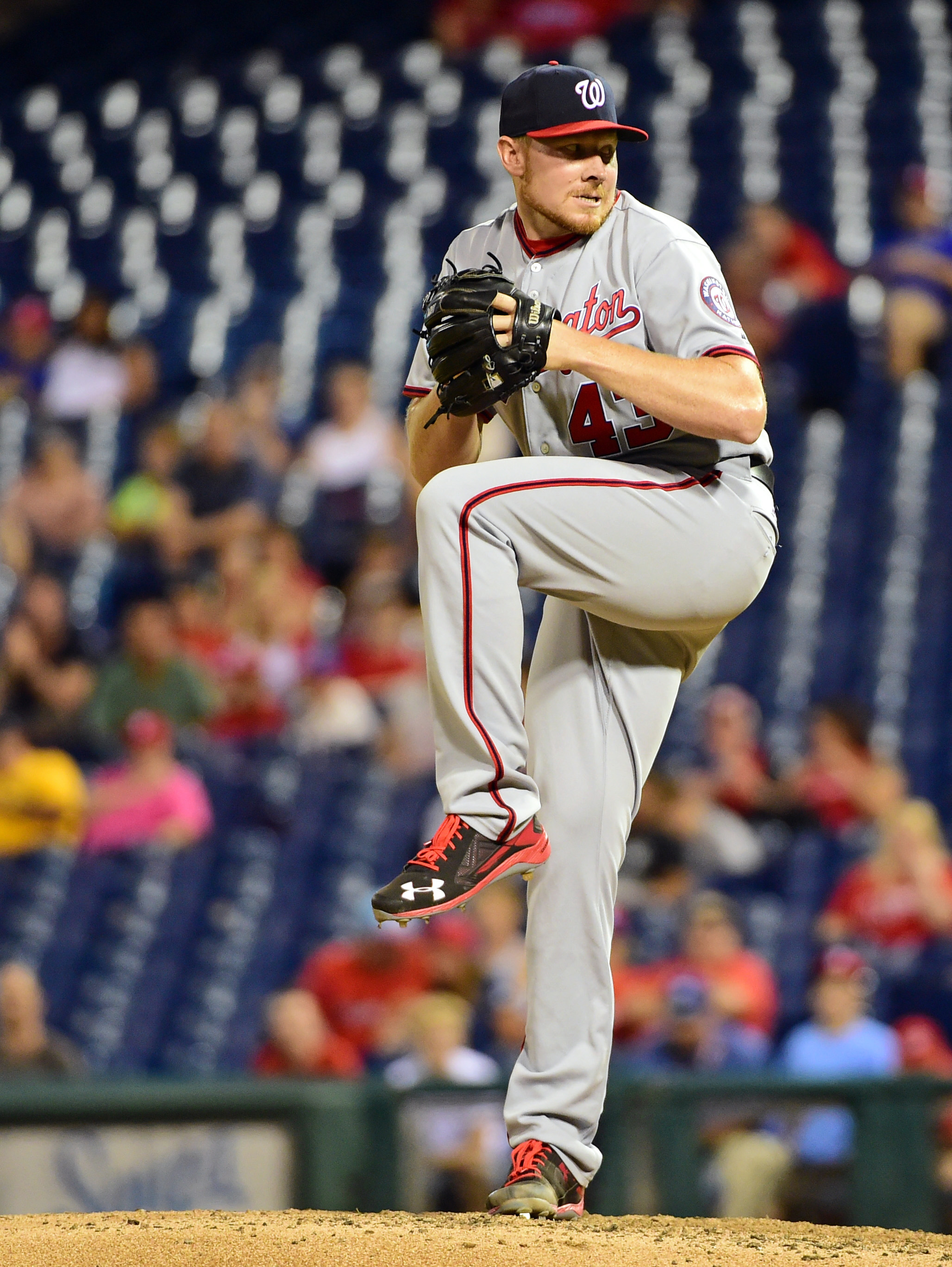
In addition to that 1.80 ERA, Melancon has averaged 8.3 K/9 against a minuscule 1.4 BB/9 rate in that four-year stretch. Melancon uses his cutter to rack up grounders at an enormous rate; he’s 22nd of 222 qualified relievers with a 57.4 percent ground-ball rate dating back to 2013 and has actually been more effective against lefties than righties due to that pitch, so he doesn’t come with platoon worries. Those ground-ball tendencies and his excellence even when hitters hold the platoon advantage are among the reasons that it’s so difficult to leave the yard against Melancon. Since 2013, his 0.31 HR/9 rate trails only Wade Davis among qualified relievers. He’s given up just 10 homers in those 290 innings.
It’s true that relief pitching is a highly volatile commodity, but Melancon’s consistency goes beyond his on-field performance. He’s never been on the disabled list in either the Major Leagues or in the minors, and he’s averaged 74 appearances and 72 innings per season over the past four years. He’s also chipped in 10 playoff innings with a 3.60 ERA and has been pitching in pennant races and in the postseason since that breakout season in 2013, so he’s no stranger to the highest levels of pressure a reliever would face.
Like Chapman, Melancon was traded prior to the non-waiver deadline, meaning he was ineligible to receive a qualifying offer and thus will not require the forfeiture of a draft pick upon signing with a team.
Weaknesses/Cons
Melancon will turn 32 years old next March, making him the oldest of the “big three” closers on the free-agent market this year. His consistency and durability mitigate some of the concern that stems from his age, but the fact that a long-term deal could run through his age-35 season isn’t something that’ll be lost on teams as they negotiate with his representatives.
It hasn’t shown up much yet in his bottom-line results, but Melancon’s contact rate and swinging-strike rate have trended in the wrong direction in each of the past two seasons, and he’s also seen the rate at which hitters chase out-of-zone pitches against him decline in that time. He’s down from averaging a strikeout per inning in 2013-14 to averaging 7.7 K/9 in the past two seasons. His K-rate did bounce back a bit in 2016, but this past season represented the lowest swinging-strike rate and chase rate as well as the highest contact rate that Melancon has allowed since 2013.
As one might expect for a pitcher that recently entered his 30s, Melancon’s velocity isn’t quite what it once was. He averaged 91.9 mph on his oft-used cutter and 92.7 on a more seldom-used four-seam fastball in his first season with the Bucs, but those marks sat at 90.9 and 91.8, respectively, in 2016.
This isn’t necessarily his fault, but Melancon hasn’t proven much in terms of pitching multi-inning stints recently, and the 2016 postseason showed a perhaps-increasing trend in that direction. Melancon has just nine multi-inning appearances over the past four years, with his longest 2016 outing being a two-inning stint late in the season. Certainly, it’s not up to him to determine how managers Clint Hurdle and Dusty Baker have deployed him, but some lengthier outings might’ve done his stock a small favor.
Background
A ninth-round pick by the Yankees back in 2006, Melancon never carried all that much fanfare as a prospect. He debuted with the Yankees in 2009 but was traded to Houston alongside Jimmy Paredes to acquire Lance Berkman the following summer. The Astros flipped him to the Red Sox a year later as part of their package to acquire Jed Lowrie, and after one dismal season in Boston, the Pirates bought low on Melancon and made him one of the focal points of the trade that sent Joel Hanrahan to the Red Sox. The rest is history, as Melancon (like so many other pitchers) blossomed under pitching gurus Ray Searage and Jim Benedict while spending three and a half seasons in a Pirates uniform.
Off the field, Melancon has done work as a global ambassador for MLB in both New Zealand and South Africa, per the Pirates’ 2016 media guide. He also participated in the MLB All-Star Series in Japan back in Nov. 2014. In the community, Melancon and former college teammates Nick Hundley and Chris Woodward have run “Training with the Pros” camps for children.
Market
The Nationals are known to want Melancon back in 2017, and it’s been reported that they could deem Chapman and Jansen to be too expensive. That could indicate that he’s their preferred option in the ninth inning, and as a team that’s familiar with him and “loved” him in the clubhouse, the Nationals should be one of the top clubs in the mix for Melancon in free agency. They’re far from alone, however, as Giants GM Bobby Evans candidly second-guessed not making a larger push to acquire Melancon as he watched his bullpen falter late in the 2016 season. The Giants have met with the representatives for each of the top three closers, and securing a top-tier bullpen arm is reportedly a priority for them.
The Cubs, Dodgers and Yankees are the other three big-market teams that have the means and potential need, and any of the three could make a play for Melancon (though the Cubs are said to be trying to unearth a new elite reliever rather than pay top dollar for a known commodity). The Rangers saw some instability in their bullpen last year and released their Opening Day closer, Shawn Tolleson, earlier this offseason. The Marlins have been linked to bullpen help, specifically to Jansen, but it’s easy to see him being too expensive and Melancon being a bit more in their wheelhouse.
Melancon is a Colorado native, and Rockies GM Jeff Bridich confirmed this week that he’s spoken to Melancon’s representatives at ISE Baseball about bringing the three-time All-Star to his hometown state. That match seems like a bit of a long shot given the expected price tag (more on that below), but the Rockies could certainly use a ninth-inning upgrade. The same could be said of the division-rival Diamondbacks, who have little certainty in the ‘pen and have already bolstered their rotation this winter. New GM Mike Hazen knows a bit about Melancon, though the one season Melancon spent in Boston came prior to his breakout and was something of a disaster. The Mets, too, make some degree of sense, though reports indicate that they’re not pursuing the top relief arms, so they’d need to decide to change course in order to be more than an on-paper fit.
Expected Contract
Were it not for Jansen and Chapman, Melancon would be entering the open market with the best numbers that we’ve seen out of a free-agent reliever since David Robertson hit the open market two winters ago. Robertson was two years younger at the time but also came with the burden of a qualifying offer and had posted consistently higher ERAs. He ultimately fell just shy of Jonathan Papelbon‘s record $50MM deal when he agreed to a four-year, $46MM pact with the White Sox.
Papelbon’s record has stood longer than anyone might’ve reasonably predicted, but there’s virtually no chance that it survives this winter. And while most pundits have pegged Chapman and Jansen to shatter the record, I’m of the belief that Melancon will join them as a third reliever to break that $50MM benchmark. While I don’t think he’ll do it in as grand of fashion, I’m pegging Melancon for a four-year deal worth $56MM — a slight bump over the $52MM that he was predicted to receive in on MLBTR’s list of Top 50 free agents.
Photo courtesy of USA Today Sports Images.
Free Agent Profile: Matt Wieters
Matt Wieters‘ last few seasons haven’t been exceptional, but on a thin free agent market, he stands out as an average catcher with, perhaps, the potential to be something more. Here’s a look at how the offseason could work for him.
 Pros/Strengths
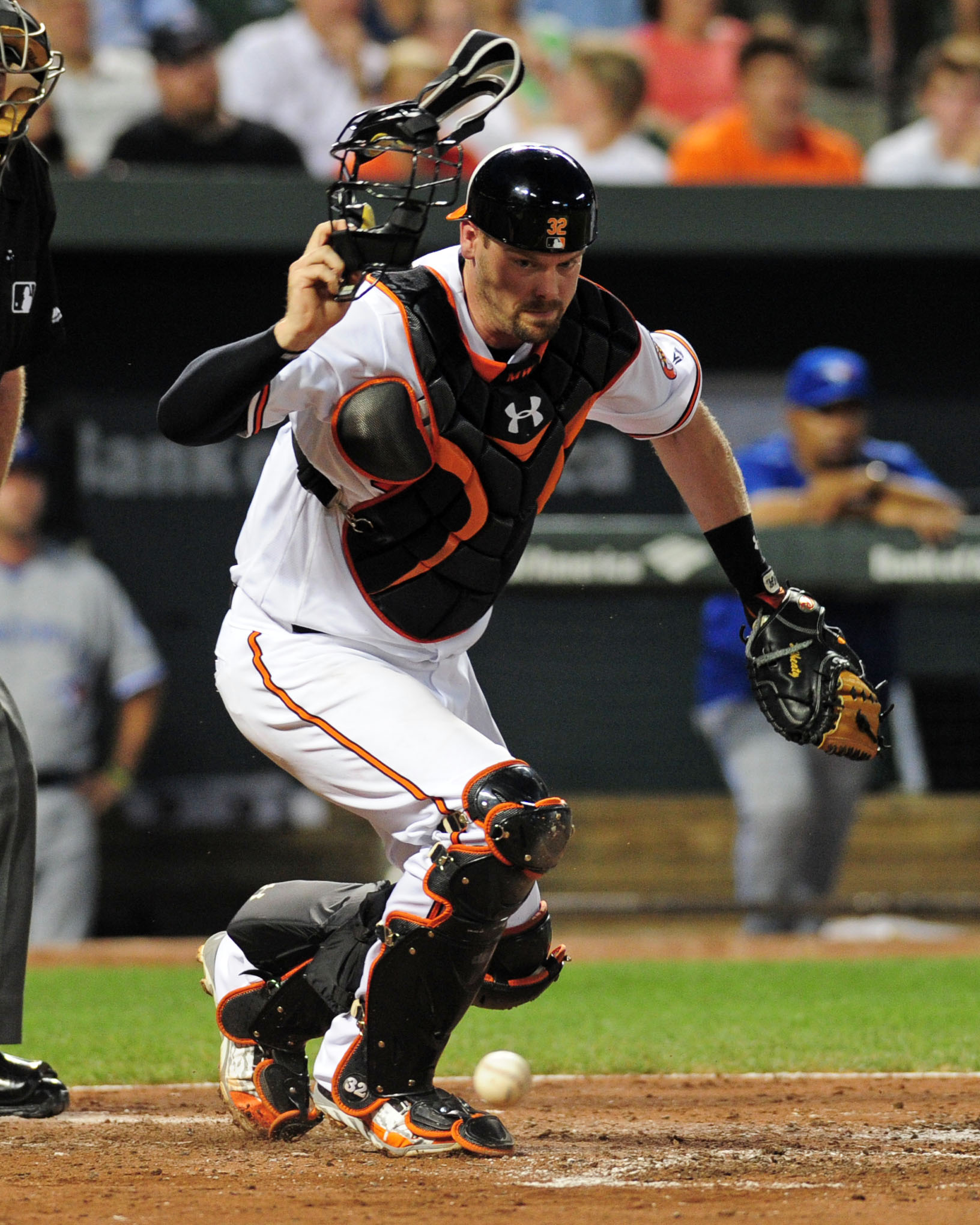
Wieters’ value stems mostly from the fact that he’s a competent defensive catcher with offensive ability. Though his defense behind the dish no longer rates as outstanding (as it did early in his career, when he won two Gold Gloves), DRS currently pegs him as roughly average, which itself gives his value a high baseline. Per Baseball Prospectus (subscription-only link), Wieters still throws well and is solid in the pitch-blocking department.
Wieters also no longer has the bat he did earlier in his career, when he hit either 22 or 23 homers in three straight seasons from 2011 through 2013. His power, however, remains respectable for a catcher. Last season, he hit 17 home runs, ranking ninth in the Majors among backstops.
Plus, he’s just thirty years of age and does have a solid, established offensive ceiling. Over the 2011-12 seasons, Wieters posted a composite .255/.329/.442 slash line across 1,144 plate appearances. While that may have been somewhat BABIP driven, he has posted career-best line-drive rates of late and has made hard contact at the same rates he did in his most productive seasons. Despite a down 2016, he was a league-average hitter as recently as the campaign prior, so it wouldn’t be terribly surprising if he could return to that level or perhaps even provide a bit more at the plate.
Wieters also showed in 2016 that he could stay healthy, picking up 464 plate appearances after two injury-shortened seasons. Perhaps there’s a speculative case to be made that, two years removed from an elbow injury that required Tommy John surgery, he might have more upside than a 30-year-old catcher typically does, in the same way a pitcher who’s had Tommy John might be expected to pitch better the further he gets from the surgery.
Cons/Weaknesses
Wieters’ framing numbers have been underwhelming, with StatCorner pegging his framing at 15.9 runs below average over the past two seasons. As ESPN’s Buster Olney recently pointed out, framing is increasingly a key metric by which teams evaluate catchers, which is why Jason Castro was able to land a three-year, $24.5MM guarantee despite modest offensive numbers. Wieters’ framing issues could put a serious dent in his market, unless teams see reason to believe he could return to posting the solid figures in that arena that he featured earlier in his career.
Beyond that, Wieters’ career overall has been modestly disappointing, and it doesn’t look likely to trend upwards now that he’s 30. Wieters entered the league as a mega-prospect — a catcher with the potential to play high-quality defense while hitting for average, power and patience. He never quite achieved that potential, and he has struggled offensively since returning from Tommy John.
The cliche that catcher performance falls off a cliff in a player’s early 30s appears to be overstated, but Wieters, due to his age, might have already entered the decline phase of his career. He has produced just 2.7 fWAR total over the past two years (the first of which was truncated by his return from Tommy John), and 2017 will be his age-31 season. Wieters has a big frame for a backstop and has already dealt with significant injuries (though that has primarily been to his elbow). Depending upon one’s perspective, there may not be much reason to be optimistic he’ll be much more than an average catcher going forward.
Background
Wieters was born and raised in South Carolina and played high school ball alongside another future Major Leaguer, Blue Jays first baseman Justin Smoak. Wieters then headed to Georgia Tech, where he earned All-America honors twice, batting .349/.477/.594 while serving as the Yellow Jackets’ catcher (and also their closer). The Orioles took him with the fifth overall pick in 2007, awarding him a $6MM bonus. He quickly emerged as a highly touted prospect — expectations for him were so high that fans created a humorous website, Matt Wieters Facts, to celebrate his skill set. (Sample skill: “Matt Wieters sometimes impatiently homers from the on-deck circle.”) Wieters and his wife Maria have two sons.
Market
Wieters’ agent, Scott Boras, likes to allow the market to unfold unless he gets a contract he loves, so it wouldn’t be a surprise if Wieters lingered as a free agent for awhile. Unlike last season, he won’t have the burden of a qualifying offer, as the Orioles elected not to give him one this time around after he accepted a one-year, $15.8MM deal for 2016.
When Wieters finally does sign, the Braves seem like an obvious possibility, due to Wieters’ local roots, the Braves’ lack of an established catcher, and the opening of their new stadium. The Braves also recently hired former Orioles pitching coach Dave Wallace and bullpen coach Dom Chiti. The Braves, however, are said to be “lukewarm” on Wieters, according to FOX Sports’ Ken Rosenthal, who writes that some in the Orioles organization while Wallace and Chiti were there questioned Wieters’ work behind the plate.
A return to the Orioles (who have a big hole at catcher, with Caleb Joseph and his .174/.216/.197 2016 batting line topping their depth chart) would also make sense, although with a variety of large commitments and key pending arbitration cases, the team’s budget could be a problem. It’s also unclear how willing the O’s would be to make a big commitment after declining to extend Wieters a qualifying offer. Near the end of the season, Wieters and the Orioles were reportedly very far apart in their estimations of what sort of extension he should receive. The Orioles also have a good catching prospect in Chance Sisco who could be ready in 2018, and they might be somewhat reluctant to block him by signing Wieters to a multi-year deal.
The Nationals, Angels and Rockies could also be fits. Two weeks ago, the Twins and Astros also might have been possibilities, but those teams have since filled their vacancies with Castro (to Minnesota) and Brian McCann (to Houston).
Still, there are plenty of potential suitors, and the lack of obvious starting catching available could help Wieters. The only other catchers left on the market from MLBTR’s list of the offseason top 50 are Wilson Ramos and Nick Hundley, and Ramos is dealing with an ACL and meniscus injury that figures to carry over into the season. Wieters, despite his faults, has a compelling case that he’s the best healthy catcher available on the free agent market.
Expected Contract
MLBTR predicts Wieters will seek a four-year deal, but will ultimately settle for a three-year, $39MM pact that covers his age-31 through age-33 seasons.
Photo courtesy of USA Today Sports Images.
Free Agent Profile: Dexter Fowler
Like a few other free agents, Dexter Fowler finds himself back on the market after failing to land the long-term pact he sought last winter. He can expect to do much better this time around.
Pros/Strengths
Fowler, 30, has never really been thought of as a premium hitter, and in truth he isn’t. But he is a somewhat under-rated, consistently above-average batsman who features a seemingly sustainable skillset at the plate. And he’s coming off of a career year.
Since the start of the 2011 season, Fowler has taken 3,331 plate appearances in the majors. His .271/.371/.428 batting line in that span works out to a 113 OPS+, and he has landed within 13 percentage points of that mark in every one of those seasons. If there was a swing, it may have occurred last year, when he posted a personal-best .276/.393/.447 slash.
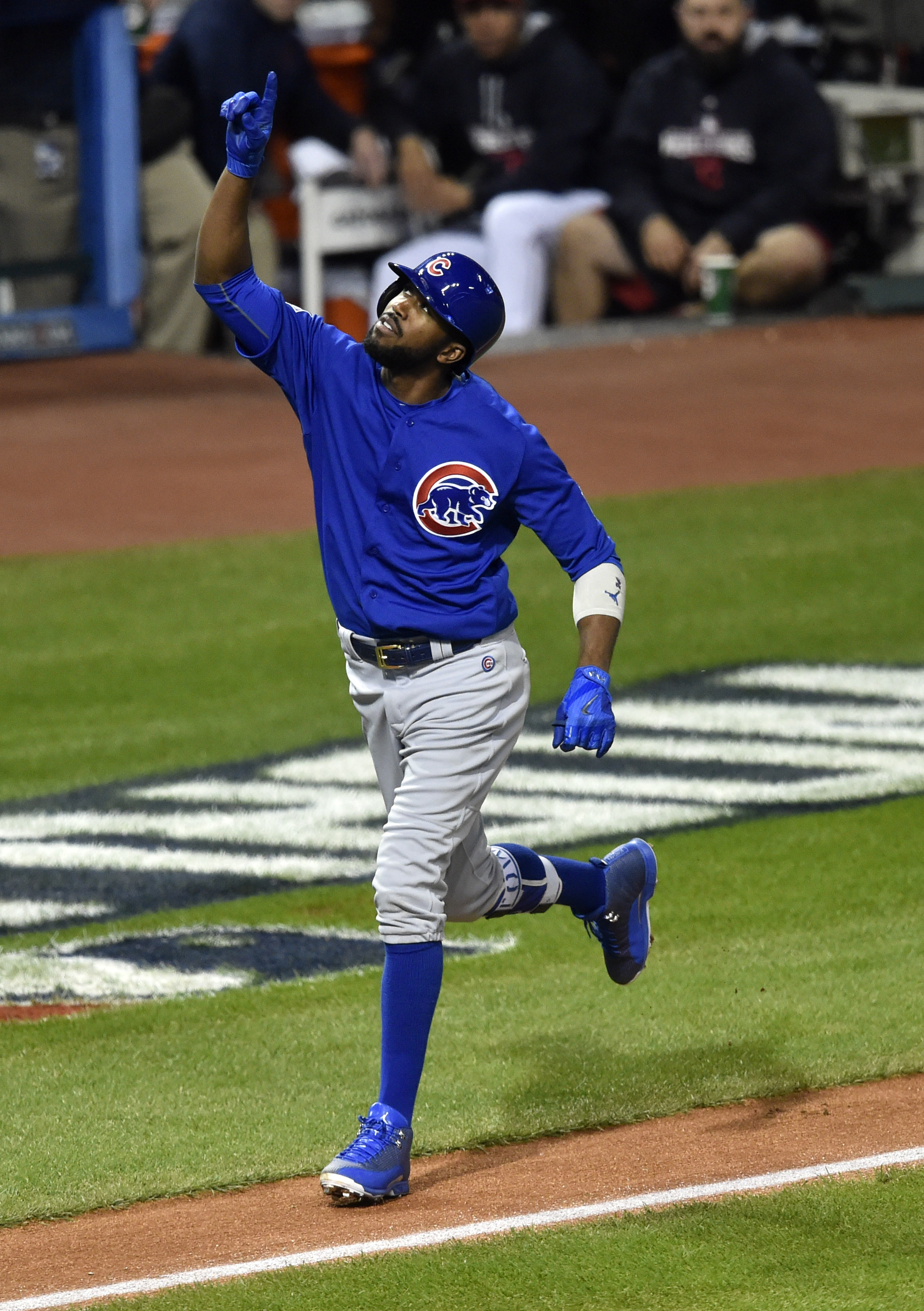
That consistency is reflected all the more in Fowler’s plate discipline. He has struck out at around the league-average rate for his career (22.2%), but drawn quite a few walks (12.6%), and has never wavered much in either regard. Again, last year was arguably his best in this arena, as he walked in a career-best 14.3% of his plate appearances.
Though his power has bounced around somewhat, and his 2016 output was driven in part by a .350 BABIP (not an atypical mark in his case), Fowler’s overall track record with the bat suggests he’s an excellent bet to continue trucking along as a productive hitter. He knows how to take a free pass; his batted-ball profile is remarkably steady; and he’s coming off of a year in which he both chased pitches out of the zone and swung and missed at the lowest rates of his career.
There’s some recent good news on the defensive side, too. Long rated as a below-average performer in center, Fowler drew solidly average marks from both Defensive Runs Saved and Ultimate Zone Rating in 2016. While nobody will buy into him as a difference-maker up the middle, it’s certainly possible that teams will still believe they can get a few seasons of plausible glovework in center.
Indeed, Fowler has shown no signs of a general drop in athleticism. He has typically drawn strong reviews on the bases, and that was never more true than in 2016. As usual, he wasn’t a huge stolen-base threat — he swiped 13 bags last year — but nevertheless ranked eighth among qualifying hitters in overall baserunning value, by measure of Fangraphs’ BsR.
In the aggregate, Fowler was worth between four and five wins above replacement in 2016, amply justifying his first All-Star selection.
Cons/Weaknesses
Of course, qualifying for the mid-summer classic is driven by first-half production, and Fowler’s power did fall off somewhat down the stretch, as he slugged .408 over his final 61 games. That ties into one of the largest questions facing his free agent case: is he, or is he not, a center fielder capable of delivering average-or-better power for at least a reasonable portion of a new contract?
In terms of pop, Fowler has never been much of a home run threat, and his 13 dingers from a year ago seem to represent a reasonable expectation moving forward. He delivered a .171 isolated slugging mark in 2016, and landed right at league average the prior year (.161), but posted sub-par marks in the two preceding campaigns (.122 in 2014 with the Astros and .145 in 2013 with the Rockies). Any erosion in that arena, or a drop in his lofty career .342 BABIP, could significantly reduce Fowler’s value even if he can largely maintain his healthy walk totals.
That’s all the more relevant given the questions over Fowler’s efficacy up the middle. Both DRS and UZR have largely panned his glovework over his career, excepting 2016. Though he isn’t particularly error-prone, Fowler has typically rated poorly in terms of range and throwing ability. While it’s arguable that he faced tough defensive assignments in Coors Field and Minute Maid Park, there are certainly questions as to whether and how long Fowler can passably roam the middle of the outfield.
If you take the pessimistic view, then, Fowler could be seen as a marginal power source that is limited to left field — a position he has never played in the majors. Plus, there are at least some durability questions. Fowler has never missed huge swaths of time, but has averaged only 131 games annually since breaking in as a regular in 2009. And he has only once topped 600 plate appearances (in 2015, his first year with the Cubs).
An additional factor worth considering is that the switch-hitting Fowler has typically fared better against left-handed pitching, the short side of the platoon split. He has been just fine against righties — compiling a lifetime .255/.356/.413 lifetime batting line — but any drop in overall productivity at the plate could leave him as a sub-optimal roster piece.
Personal
Fowler and his wife, Darya, have one daughter. A Georgia native, Fowler signed with the Rockies out of high school after being taken in the 14th round of the 2004 draft.
Fowler appeared in the 2008 Olympics for the U.S. national team and broke into the majors that same year. He was ultimately dealt to the Astros (in exchange for Jordan Lyles and Brandon Barnes) and then on to the Cubs (for Luis Valbuena and Dan Straily). Fowler reportedly nearly signed with the Orioles last winter before returning to Chicago.
Market
While he comes with draft compensation attached once again, Fowler appears to have a wide array of possible suitors. That likely won’t include the Cubs — even if they aren’t ruling it out — now that the team has added Jon Jay to the fold.
Several organizations are in need of help up the middle, including the Cardinals, Nationals, Rangers, and Indians. Any could make good fits, possibly planning to utilize him in center for part of the deal before eventually shifting him to left. The Mets, too, potentially still have a need in center, though that would be contingent upon a lot of other moving parts with Yoenis Cespedes re-signing.
There are other teams that might like the idea of installing Fowler’s high-OBP bat in the lineup while trying out his glove in left. That Fowler is capable of playing center also makes him a possible part-time option there — a scenario that might make particular sense for the Giants, Mariners, and even the Dodgers, who could spell Denard Span, Leonys Martin, and Joc Pederson (respectively) at least on occasion against left-handed pitching. A similar arrangement could make sense for the Blue Jays, who utilize light-hitting defensive stalwart Kevin Pillar up the middle, though he hits from the right side.
There are a few additional organizations that could conceivably get involved. The Athletics have a hole in center, though Fowler figures to be too expensive; likewise, the White Sox would make sense, but that is heavily dependent upon what course their offseason takes. The Orioles need another corner piece. And the Phillies might still utilize Howie Kendrick at second if they trade Cesar Hernandez.
It is important to bear in mind that there are alternatives, even with Jay somewhat surprisingly snapped up by the Cubs. Several notable players could be had via trade, and the open market still includes Ian Desmond and Carlos Gomez as center field options.
Expected Contract
While he is hardly a flawless player, that’s not necessary to strike it rich in free agency. Fowler profiles as a solid regular, and certainly seems to have a better case than did Josh Reddick — who just signed with the Astros for $52MM over four years. We’re predicting a four-year, $64MM contract for Fowler.
Photo courtesy of USA Today Sports Images.
5 Ways The Dodgers Can Save Money & Stay Competitive In 2017
With a debt reportedly in the hundreds of millions, the Dodgers are trying to cut costs in order to stay in compliance with MLB’s debt service rule, as Bill Shaikin of the Los Angeles Times reported earlier today. Obviously a debt of that size means that cutting player payroll is only one step the Dodgers will need to take to become more financially stable, yet given how the Dodgers ended last season paying over $291MM to its 40-man roster and have just under $172MM committed to 15 players (only 11 of whom are still in the organization) in 2017, payroll seems like a natural starting point.
The catch, of course, is that the Dodgers wholly plan on contending in 2017, so any type of a fire sale is out of the question. (So no, there’s no chance of your favorite team trading for Clayton Kershaw.) In fact, the phrase “too big to fail” comes to mind — the Dodgers have invested so much in their on-field product that they essentially can’t afford to fall out of contention, as drops in attendance or TV ratings would make their financial situation even more severe.
While Dodgers fans may be automatically fearing a return to the Frank McCourt era, there are plenty of reasons not to worry. Andrew Friedman’s front office has plenty of ways to save money while still reloading the roster for another run at the postseason, some of which they’re already exploring. For example…
1. Backloaded contracts for beyond 2018. Kershaw, Kenta Maeda and Yaisel Sierra are the only Dodgers under contract past the 2018 season, and Kershaw can exercise an opt-out clause following the 2018 World Series. Corey Seager, Joc Pederson and several other important players will be arbitration-eligible by that point and making well beyond their current minimum salaries, yet L.A. will have plenty of payroll breathing space in just two years’ time. Even by next winter, they’ll have over $46MM worth of breathing space when Carl Crawford and Alex Guerrero come off the books and Andre Ethier‘s club option is presumably declined.
If the Dodgers wanted to land a big free agent this winter or re-sign at least one of Kenley Jansen or Justin Turner, therefore, the team could manage it in the form of a backloaded contract. Deferred money could also be an option; the Dodgers already used this tactic last winter with Scott Kazmir‘s contract, as the lefty will be receiving deferred payments through 2021 even though his deal only runs through the 2018 season.
2. Replace Jansen and/or Turner internally, or with cheaper external options. The Dodgers’ bullpen finished at or near the top of the league in many important categories in 2016, and while Jansen and fellow free agents Joe Blanton and J.P. Howell were big reasons behind the pen’s success, there’s still lots of talent on hand. Pedro Baez, Adam Liberatore, Luis Avilan, Josh Fields, Grant Dayton, Josh Ravin and the newly-acquired Vidal Nuno all form a solid relief core, and that’s not counting further support in the form of starters who might be available for reliever roles. The Dodgers could supplement this group with a free agent with closing experience (i.e. Greg Holland, Koji Uehara, Brad Ziegler) with a much lower price tag than Jansen.
The third base picture is less clear if Turner leaves. Supersub Enrique Hernandez could take over in at least a platoon role, as Hernandez has hit very well against lefties in his career and the Dodgers could use another solid right-handed bat to balance their lineup. Looking at free agents, Luis Valbuena would command a solid but not unreasonable multi-year commitment, while Trevor Plouffe or Stephen Drew would be more inexpensive options.
Probably the best common ground for the Dodgers would be to use one of these scenarios to address one departure and then re-sign the other of Jansen or Turner. Letting both players leave would be a blow, though L.A. could collect the first-round draft picks attached to Jansen and Turner via the qualifying offer. With the farm system bolstered, that could free the Dodgers to…
3. Trade prospects for stars on inexpensive contracts. Thanks to their big spending and deep minor league system, the Dodgers are rumored to be involved pretty much every time a rebuilding team floats a notable player in trade talks. Both at the deadline and during the early stages of this offseason, the Dodgers have reportedly shown interest in players ranging from top-of-the-rotation aces (i.e. Chris Sale, Chris Archer) to second basemen like Brian Dozier or Logan Forsythe. These four not only bring value on their field, they also offer multiple seasons of cost-effectiveness thanks to team-friendly contracts.
It would take a lot to pry any of these players away from their current teams, though the Dodgers have the pieces to make a deal happen if they choose this direction. While Friedman has moved his share of notable prospects, he has also wisely held onto such blue-chippers as Seager or Julio Urias. Would he be similarly loath to part with the likes of Jose De Leon, Cody Bellinger or Alex Verdugo, especially since there’s no better way to keep payroll costs down than to replenish the roster with cheap young talent?
4. Swap one big contract for another that is a better fit. One of the main payroll issues facing the Dodgers is the substantial amount of money committed to players whose role on the 2017 team seems rather tenuous. With Kershaw, Maeda, Kazmir and Urias locking up the top four rotation spots, that leaves Brandon McCarthy and Hyun-Jin Ryu (owed a combined $38.6MM through 2018) battling for the fifth starter’s role, and that’s assuming either can stay healthy. Andre Ethier missed almost all of 2016 due to a broken leg, and while Yasiel Puig seemed to regain his standing within the organization after hitting well in September, it remains to be seen if the Dodgers necessarily still see him as a long-term building block.
Given how injuries ravaged the Dodgers’ rotation last year, it seems odd to suggest that they should consider dealing a starter, yet I’d think they would be quite open to moving McCarthy or Ryu if a decent offer arose. Teams would normally stay away from starters with such checkered injury histories, though there might be a slight opportunity for L.A. this winter given the very thin free agent pitching market. The Dodgers could explore trading McCarthy, Ryu or possibly even Kazmir for another player making a significant salary over the next one or two years, yet who is a better fit for their needs at second base, third base (if Turner leaves) or in the outfield.
Ethier and Puig are the most experienced names amidst the many corner outfielders on the Dodgers roster, a list that includes Andrew Toles, Trayce Thompson, Scott Van Slyke, Rob Segedin and even part-time infielders like Hernandez, Darin Ruf or Micah Johnson. L.A. could continue to see what it has with its younger outfielders, or cut through the platoon-mix uncertainty by acquiring a clear-cut everyday corner outfielder. The Dodgers already dealt from this surplus when Howie Kendrick was sent to the Phillies two weeks ago.
Since the Dodgers can and will be spending significant money regardless of their debt reduction actions, they might as well allocate those funds towards players who can more clearly help the 2017 roster. They have the flexibility to mix and match a package of veterans, part-timers and prospects to make a deal happen — say, offering Puig, McCarthy and a good prospect for an everyday second baseman.
5. Keep doing what they’re doing. As noted in Shaikin’s piece, both the Dodgers and Commissioner Rob Manfred are confident that the team will be able to avoid any notable sanctions under the debt service rule, and obviously the Dodgers didn’t just become aware of their debt overnight.
It could be argued that the Dodgers have been addressing their debt issues more or less since Friedman was hired in October 2014. Team officials including Friedman himself, CFO Tucker Kain (as quoted by Shaikin) and team president Stan Kasten have often said in recent years that the team’s long-term plan was to revamp the farm system and international pipeline to such an extent that the Dodgers would no longer require payrolls in the $300MM range.
To that end, I’m guessing that Friedman and company have already explored the first four steps on my list, as the Dodgers work towards their three-pronged goal of winning a World Series in 2017, preparing themselves to contend every year in the future and getting payroll under control. Considering that the Dodgers have continued to win NL West titles in the two years under Friedman’s leadership (including overcoming a ton of injuries in 2016), this slightly reined-in spending hasn’t damaged the product on the field.
MLBTR Originals
This week’s original content from MLBTR:
- In the wake of a Wednesday trade between the Diamondbacks and Mariners that saw middle infielder Jean Segura and right-hander Taijuan Walker, among others, switch teams, Charlie Wilmoth asked readers which club got the better end of the deal.
- Six starters who were free agents have already found homes for 2017, leading Jeff Todd to poll readers on which one ended up with the most team-friendly contract.
- This offseason’s Free Agent Profile series continued with looks at first baseman/designated hitter Edwin Encarnacion (link), outfielder/DH Jose Bautista (link) and outfielder Carlos Gomez (link).
- Jeff wrapped up this year’s Offseason Outlook series with a piece on what the coming months could bring for the Rockies. Links to all 30 entries can be found here.
Poll: Which Team Won The Jean Segura / Taijuan Walker Trade?
On Wednesday, the Diamondbacks and Mariners pulled off a big five-player deal involving shortstop Jean Segura and starting pitcher Taijuan Walker. We already reviewed the trade here and here, and collected a pair of reactions to the deal here. This time, though, we want to know what you think. Based on what we know right now, which team won the trade?
The case for the Diamondbacks: The Diamondbacks received four years of control for Walker and five for Ketel Marte, a young shortstop who struggled last season but held his own in the big leagues in 2015 as a 21-year-old. Segura, in contrast, only has two years of control remaining (although the other two players they gave up, Mitch Haniger and Zac Curtis, both have six).
Segura batted .319/.368/.499 in a spectacular 2016 campaign, but struggled to stay above replacement level in either of the two previous seasons, and had a .353 batting average on balls in play in 2016 that was out of step with his career norms. At least so far, 2016 looks like Segura’s career year, and the Diamondbacks’ decision to deal him looks like selling high. The Diamondbacks didn’t look good enough to make the playoffs in 2017, so they did well to get younger and acquire more years of team control in exchange for a player who likely wouldn’t have been with them by 2019 anyway.
Walker once rated as one of baseball’s best prospects, and while he hasn’t lived up to that billing so far, he’s still just 24, and his 2016 numbers (4.22 ERA, 8.0 K/9, 2.5 BB/9 and a 93.9-MPH average fastball velocity) suggest he still has upside, meaning the Diamondbacks might be buying low on a starter who might still have front-of-the-rotation potential. That sort of player is hard to find, and it’s even harder than usual this year given the weak free agent market for pitching. If Walker can improve, or if Marte can reemerge as a capable regular, the Diamondbacks will likely end up very happy with their end of the deal.
The case for the Mariners: If Segura can maintain anything resembling his 2016 level of production, he and Robinson Cano could give Seattle one of baseball’s most productive middle infields over the next two seasons. Segura’s 20 home runs, .319 average and 33 stolen bases last season were all outstanding, leading to an excellent 5.0 fWAR. Numbers like those would give the Mariners a big jump on the AL West in a season in which they hope to contend.
Also, the righty-hitting Haniger could help the Mariners’ outfield immediately — the 25-year-old struggled somewhat in 2016 in his first chance against big-league pitching, but he dominated Triple-A and next year could serve as an effective complement to lefties Seth Smith and Ben Gamel in the corners. And while third piece Curtis didn’t pitch well in the Majors in 2016 and doesn’t profile as a future closer, his strong performances in the minors suggest he could eventually become a good left-handed relief option.
The Mariners clearly gave up two interesting young players, but ESPN’s Keith Law (Insider only) argues that Walker’s delivery changes, his lesser command and the heavy reliance on his fastball make him a less inspiring talent than he was as a prospect. As for Marte, his future in the big leagues is far from assured after a season in which he played poor defense and struck out more than four times as much as he walked.
So what do you think? Who fared better in this deal, the Diamondbacks or the Mariners?
Free Agent Profile: Edwin Encarnacion
Edwin Encarnacion delivered another big season in 2016 and even added a signature postseason moment (his walkoff homer in the Blue Jays’ wild card win over the Orioles) to his resume. After five straight years of excellent numbers, he is well-positioned to land one of the offseason’s biggest contracts.
Strengths/Pros
Encarnacion’s signature elbow extension during his home run trot has become known around Canada as “taking the parrot for a walk,” and Polly has gotten more than her share of exercise over the last five years. Since breaking out during the 2012 season, Encarnacion has been nothing less than one of the best hitters in baseball, batting .272/.367/.544 with 193 homers (the second-highest total in baseball in that span), 550 RBI (also second), a 146 wRC+ (seventh) and 451 runs scored (tied for eighth). He has generated 20.2 fWAR in that stretch based almost entirely on his potent right-handed bat. As one might expect, Encarnacion draws a large number of walks (12.5 percent since 2012). Unlike many sluggers, though, Encarnacion isn’t especially strikeout prone, as he’s punched out in just 15.1 percent of his plate appearances dating back to that 2012 breakout.
Encarnacion’s emergence as the plate more or less coincided with his being moved off third base and into a first base/DH role, as he was able to more completely focus on hitting and no longer had to worry about his infamous glovework. (When your actual nickname is “E5,” a position change is long overdue.) While Encarnacion posted subpar defensive metrics in his first few years at first, he has actually been a passable first baseman over the last two seasons as per the UZR/150 metric (+4.1). Paul Kinzer, Encarnacion’s agent, believes his client has proven himself as “a solid first baseman,” and a viable option for National League teams.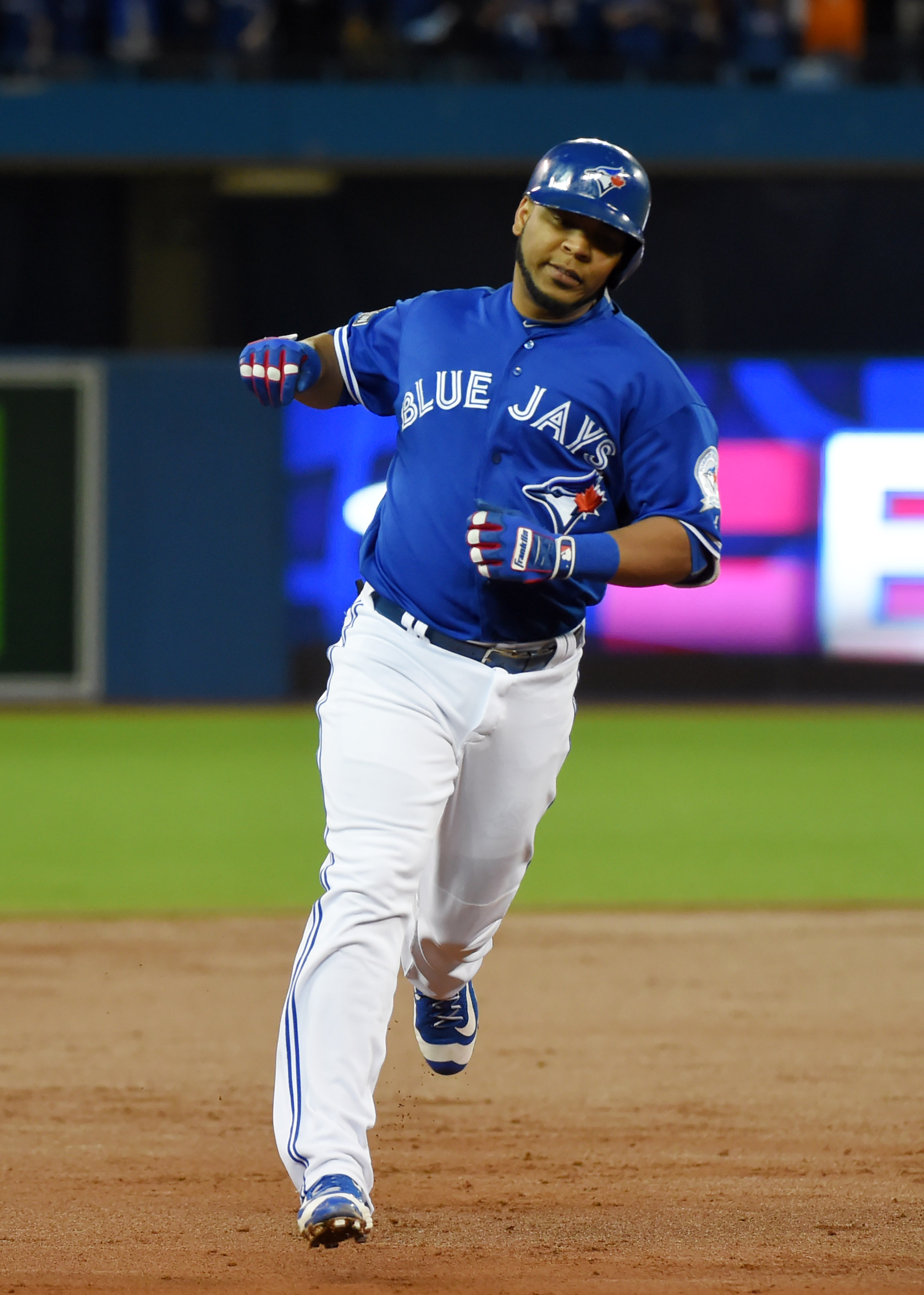
Yoenis Cespedes is three years younger than Encarnacion and has more defensive value as a left fielder, which is why he topped MLBTR’s list of the top 50 free agents of the 2016-17 offseason. Encarnacion, however, finished second on that list, a rarity for a player of his age.
Weaknesses/Cons
As Encarnacion enters his age-34 season, the most obvious question is simple: how long can he keep up his elite production? Traditionally quite good at putting the bat on the ball, Encarnacion’s contact rate has dropped rather sharply over the last two years while his swinging strike rate has risen. He posted the second-highest strikeout rate (19.7%) of his career last season, finishing well above his 16.2% career average. Encarnacion’s 134 wRC+ was also his lowest in five years, though obviously that’s still an excellent number and only a borderline sign of “decline.”
A sneaky-good stolen base threat early in his career, Encarnacion has been a below-average baserunner in each of the last two seasons. Without much speed and fringy defensive worth, Encarnacion’s value is almost entirely tied up in his bat. Teams need to decide if they’re willing to risk giving a $20MM+ average annual value to a player who may not be worth that money even in 2017 if he takes even a small step back at the plate.
His recent UZR/150 performance aside, it’s rather hard to imagine Encarnacion suddenly becoming a reliable defender at this point in his career, especially if he doesn’t have the security of the DH spot for regular rest. Many bat-first players gradually shift from being regular defenders to taking more and more time in the DH slot as they move into their mid-30s, so it would be rather unusual to see Encarnacion take the opposite route by signing with an NL team.
Encarnacion has undergone two wrist surgeries during his career, missed about five weeks with a quad strain in 2014 and has battled some shoulder and finger ailments. He did play in a career-high 160 games last season, though again, that was with the help of the DH spot to give him plenty of recovery time. An NL team would be taking a risk in counting on Encarnacion to stay both healthy and productive playing every day as a first baseman.
Personal
Encarnacion and his partner Jennifer have one child, who bears his father’s name. A native of the Dominican Republic, Encarnacion ended up attending high school in Puerto Rico, making him eligible for the draft. He was taken in the ninth round by the Rangers in 2000, ended up being dealt to the Reds in 2001, and broke into the bigs with Cincinnati in 2005.
Though he showed glimpses of his eventual power potential as a Red, Encarnacion’s lack of prowess at third base made him a liability (a move to first base wasn’t an option in Cincy thanks to Sean Casey and then Joey Votto). The Reds dealt Encarnacion to the Blue Jays as part of a three-player package for Scott Rolen at the 2009 trade deadline, though Encarnacion was included not because Toronto wanted him, but to offset Rolen’s salary. He wasn’t an immediate hit in Toronto, either. In fact, the Jays actually let Encarnacion go to the A’s on a waiver claim after the 2010 season, though Oakland non-tendered him a month later and the Jays re-signed the slugger.
Midway through his breakout 2012 season, Encarnacion signed a $27MM extension covering the 2013-15 seasons, plus a $10MM club option for 2016. That extension ended up being a marvelous bargain for the Jays, though given how unsettled Encarnacion’s career had been to that point, it’s hard to fault him for wanting to lock in a healthy guaranteed deal.
Last August, a lawsuit was brought against Encarnacion, alleging that he knowingly infected a woman with two sexually-transmitted diseases. Kinzer described the lawsuit as “completely inappropriate and meritless,” and Encarnacion’s attorneys sought to have the motion thrown out of court in October. As Blue Jays Nation’s John Lott noted, the incident could technically fall under the purview of MLB’s domestic violence policy, though it isn’t known whether or not the league is investigating the situation. Such lawsuits have been known to take years to be resolved or settled, so it’s hard to gauge whether or not the civil suit will have an impact on Encarnacion’s free agency.
Market
Encarnacion unsurprisingly rejected the Blue Jays’ qualifying offer, so any club that signs him will have to surrender a draft pick as compensation. That’s a small price to pay for a suitor, as players at the top of the market rarely have to worry about the QO’s effect on their asking price. While there are several notable first basemen and designated hitters on the open market this winter (Mark Trumbo, Carlos Beltran, Mike Napoli, Brandon Moss and perhaps even long-time teammate Jose Bautista if right field is no longer in Bautista’s future), Encarnacion is a clear cut above the pack in terms of recent production.
The Blue Jays reportedly made Encarnacion a four-year offer in the neighborhood of $80MM prior to their signing of Kendrys Morales, and even with Morales now in the fold for regular DH/first base duty, the Jays are still reportedly exploring the possibility of bringing Encarnacion back. The two sides discussed an extension during Spring Training, though since the Jays were reportedly only willing to give Encarnacion two guaranteed years (and multiple club options), talks didn’t get very far.
The Red Sox have long been linked to Encarnacion, who fits as either a straight replacement for David Ortiz at DH or rotating between both DH and first base with Hanley Ramirez so both sluggers can stay fresh. Boston, however, has yet to begin its rumored pursuit of Encarnacion, whether due to uncertainty about the luxury tax limit in the new collective bargaining agreement or perhaps simply out of a preference to not lock up the DH spot to an aging player on a long-term deal. MLBTR’s Tim Dierkes predicted that Encarnacion would wind up in a Red Sox uniform, and it’s hard to rule Boston out entirely until either the team makes an alternate move or Encarnacion puts pen to paper elsewhere.
The Yankees, Astros, Rangers (all with holes to fill at first and/or DH) have all reportedly made contact with Encarnacion. Looking at speculative fits, the Orioles or White Sox could also offer first base/DH time-shares, teaming Encarnacion up with Chris Davis and Jose Abreu, respectively. Chicago is probably a long shot, however, since the Sox could be a seller rather than a buyer this winter.
Looking to the National League, the Rockies and Marlins have needs at first but may not be able to meet Encarnacion’s asking price. There actually aren’t that many NL clubs that can both afford Encarnacion and have a need at first base, so the lack of a clear fit may be a bigger issue for Encarnacion in the Senior Circuit than the lack of the DH spot. A mystery NL team could emerge as a suitor due to a trade, injury or position switch, though for now, I’d expect Encarnacion to remain in the American League.
Expected Contract
Mid-30’s sluggers such as Victor Martinez and Nelson Cruz have managed to land pricey four-year deals in free agency, and Encarnacion should be no different, though his track record will score him significantly more guaranteed money than Cruz or V-Mart. A five-year deal isn’t out of the question, though with the majority of Encarnacion’s interest likely to be limited to just American League teams, it’s probably safer to just project a four-year deal that will take Encarnacion through his age-37 season. MLBTR projects Encarnacion to sign a four-year, $92MM deal.
Photo courtesy of Dan Hamilton/USA Today Sports Images