
The Remaining Market For Outfielders
We looked yesterday to see what was left on the open market in terms of starting pitching, and today we’ll turn our attention to the outfield grass. The pool of outfielders just lost a top player in Justin Upton, but it’s still flush with talent. And as the Upton signing shows, where there’s ability, there’s often money to chase it.
Clubs looking for upgrades, complements, or depth can draw from a group of free agents that still includes the following names:
Best Available
- Yoenis Cespedes — There’s not much left to say at this point. With Upton and Chris Davis off the market, Cespedes is the only remaining free agent who warranted a nine-figure prediction entering the winter.
- Dexter Fowler — Something of a forgotten man, it remains to be seen how much the qualifying offer will tell on Fowler’s ultimate earning level. He remains a steady, high-quality option who still has plenty of reasonable landing spots.
Bounceback Candidates
- Austin Jackson — We haven’t heard much chatter on AJax, but he’s an interesting buy-low option — particularly since he can play center field.
- Steve Pearce — Despite a relatively tough 2015, Pearce’s huge 2014 and his relatively flexible glove make him an intriguing player.
Platoon/Bench Options (Age 31 or Below)
- Domonic Brown — The former top prospect will be looking for opportunity, first and foremost; a non-contender could take a shot on his upside. It doesn’t hurt that he has another year of arb control remaining.
- Matt Joyce — Last year was a disaster, but he was a steady offensive producer for years before.
- David Lough — With an excellent glove, a return to his near-average offensive lines of 2013-14 would make Lough a nice reserve outfielder.
- Travis Snider — He’s still quite young, and has had his moments, but will probably be forced to earn his next chance after a down 2015.
- Drew Stubbs — Having a center-field-capable glove goes a long way, but Stubbs has never consistently produced at the plate.
- Delmon Young — Having a league-average-or-better bat goes a long way, but Young doesn’t play the field well and didn’t hit last year for Baltimore.
Platoon/Bench Options (Age 32+)
- Marlon Byrd — He still has pop in the bat at 38 years of age and should draw plenty of interest, whether as a second-division semi-regular or a useful bench bat for a contender.
- David DeJesus — While he ended last year with little playing time and even less production for the Angels, DeJesus still looked like a capable-enough reserve outfielder for most of the year with the Rays.
- Chris Denorfia — He’s now two years removed from above-average offensive production, but teams will still have interest.
- Jeff Francoeur — After a solid late-year run, Francoeur could land his first guaranteed deal in some time.
- Jonny Gomes — The overall line wasn’t great, but Gomes still had above-average numbers against lefties last year.
- David Murphy — The Halos preferred Murphy to DeJesus down the stretch last year, but he hasn’t exactly set the world afire in recent campaigns.
- Ryan Raburn — Just … read this.
- Alex Rios — The Royals gave him pretty significant money last year, but he ended with -1.1 rWAR and will need to bounce back in 2016.
- Skip Schumaker — He’s more a utilityman than a pure outfield option given the light bat.
- Grady Sizemore — There’s no longer hope for a return to stardom, but Sizemore quietly had a solid run late with Tampa Bay.
- Will Venable — As a left-handed bat that can still play center, he’ll have plenty of appeal.
- Shane Victorino — Could a return to health — and switch-hitting — spur a late-career renaissance?
- Rickie Weeks — Things didn’t go well last year after a bounceback 2014, so he’ll be searching for another shot in ’16.
International
- Alexei Bell — The veteran is not yet a free agent, but will surely be hoping for a chance to play at the major league level in the near term.
- Guillermo Heredia — At 24 years of age, he could be near major league readiness, though he isn’t the most highly-regarded prospect from Cuba.
- Randy Arozarena — He’s still just twenty, but is an intriguing name to watch.
The Remaining Free Agent Market For Starters
It seems hard to believe that there’s anything left on the starting pitching market given the number of major signings we’ve already seen, but that’s mostly a reflection of the deep and talented free agent pool this offseason. Over $1B has already been spent on rotation arms, but there’s still plenty of interesting names left.
With pitchers (and catchers) set to report in about a month, here’s an overview of what remains on the open market for teams looking to add to their starting staff:
Best Available
- Yovani Gallardo — He entered the winter with similar expectations to Ian Kennedy, bested him handily in a recent poll here at MLBTR, and then watched as Kennedy landed $70MM with an opt-out. There still seems to be plenty of interest in the veteran righty, though, and teams looking for a steady veteran arm may not have any better options.
Bounceback Candidates
- Doug Fister — Though he seemed like a classic free agent who’d look for one year to re-establish value, the towering hurler is hoping for a two-year deal and could still be a great value.
- Mat Latos — While he still has plenty of upside, especially given his age, Latos had a roller-coaster 2015 and comes with real reputation issues. Last we heard, there are at least a handful of teams with interest.
- Kyle Lohse — He struggled badly in 2015, but his swinging strike rate was on the rise and he posted an atypically-high (for him) .314 BABIP and 15.3% HR/FB rate. And it’s hard to completely ignore the four-year run of success that preceded last year.
- Alfredo Simon — He could be classed more as a swingman candidate, since his sudden success as a starter in 2014 looks like an isolated phenomenon, but Simon said he battled a knee injury last year and might still be viewed as a potential candidate to return to his ’14 form — with the downside of going back to being a solid reliever — though his market has been quiet.
Rehabbers
- Bronson Arroyo — Was as durable as they came until he wasn’t, but still seems a reasonably likely candidate to fill some innings for some time to come.
- Chad Billingsley — Struggled in 2015 and ended with yet more injuries, but is still just 31 years old.
- Josh Johnson — Likely out for all of 2016 with Tommy John surgery, he is still young enough (he’ll soon turn 32) that a club could sign him to some form of deal that would allow him to rehab in hopes of a 2017 return.
- Cliff Lee — All indications are he’ll require a fairly significant contract to give it another go. While that’s tough to do with a 37-year-old who just tried to rest and rehab a flexor strain, most such pitchers don’t have Lee’s lengthy record of dominance, which stretched into the 2014 season.
- Tim Lincecum — Most pitchers also don’t have Lincecum’s track record, either, and he’s much younger (31). But he’s also much further removed from dominance. Still, the promise of a rebound after recent hip surgery will lead to interest.
- Cory Luebke — He hasn’t pitched in the majors since 2012, but will be an interesting rehabilitation project entering his age-31 campaign.
- Justin Masterson — Despite failing to make good on his make-good deal last year, he’s drawing interest and is expected to be ready to go this spring as he tries to bounce back from shoulder surgery.
- Mike Minor — Shoulder issues have been a major problem for Minor, who seemed headed for an arbitration tender from the Braves until he suffered a setback. But he only just turned 28, has another year of arb control, and has shown his share of promise in the majors.
Veteran Innings
- Chris Capuano — Struggled last year while being repeatedly designated, outrighted, and re-added to the 40-man by the Yankees, but still gets double-digit swinging strike rates.
- Aaron Harang — Didn’t follow up on a stellar 2014 as injuries intervened, and may yet retire, but would be an intriguing piece for the right team.
- Shaun Marcum — Had good results last year at Triple-A and built up some innings after a long layoff.
- Wandy Rodriguez — Ate some frames for the Rangers at a time when they really needed it, drew serviceable ratings from advanced metrics, and could be a useful depth piece.
- Eric Stults — Last year was tough, but he’s been useful and posted some sturdy innings tallies in recent years.
- Randy Wolf — Didn’t have much of a big league opportunity in 2015, but posted a 2.58 ERA in 139 2/3 Triple-A frames.
- Jerome Williams — Might be tough to find a rotation job out of camp, but he’s still a steady and respected veteran who’ll have interest.
Wild Cards
- Joe Blanton — Suddenly blossomed into an ace reliever and teams may see more value in plugging him into the pen. He’s reportedly drawing strong interest, though his market has been quiet of late.
- Mark Buehrle — Indications are he’s going to retire, and probably would only consider a limited number of teams if he returns, but would be quite an interesting target if he decides to play.
Arbitration Breakdown: J.D. Martinez
Over the last few weeks, I have been discussing some of the higher profile upcoming arbitration cases. I will rely partly on my arbitration model developed exclusively for MLB Trade Rumors, but will also break out some interesting comparables and determine where the model might be wrong.
After struggling earlier in his career with the Astros, J.D. Martinez has come into his own with the Tigers and had a career year in 2015, making a strong case for a large raise in his second year of arbitration eligibility. Martinez had 38 home runs and 102 runs batted in, while hitting .282. After earning $3MM in 2015, our model projects him to get a healthy $4.8MM raise to $7.8MM.
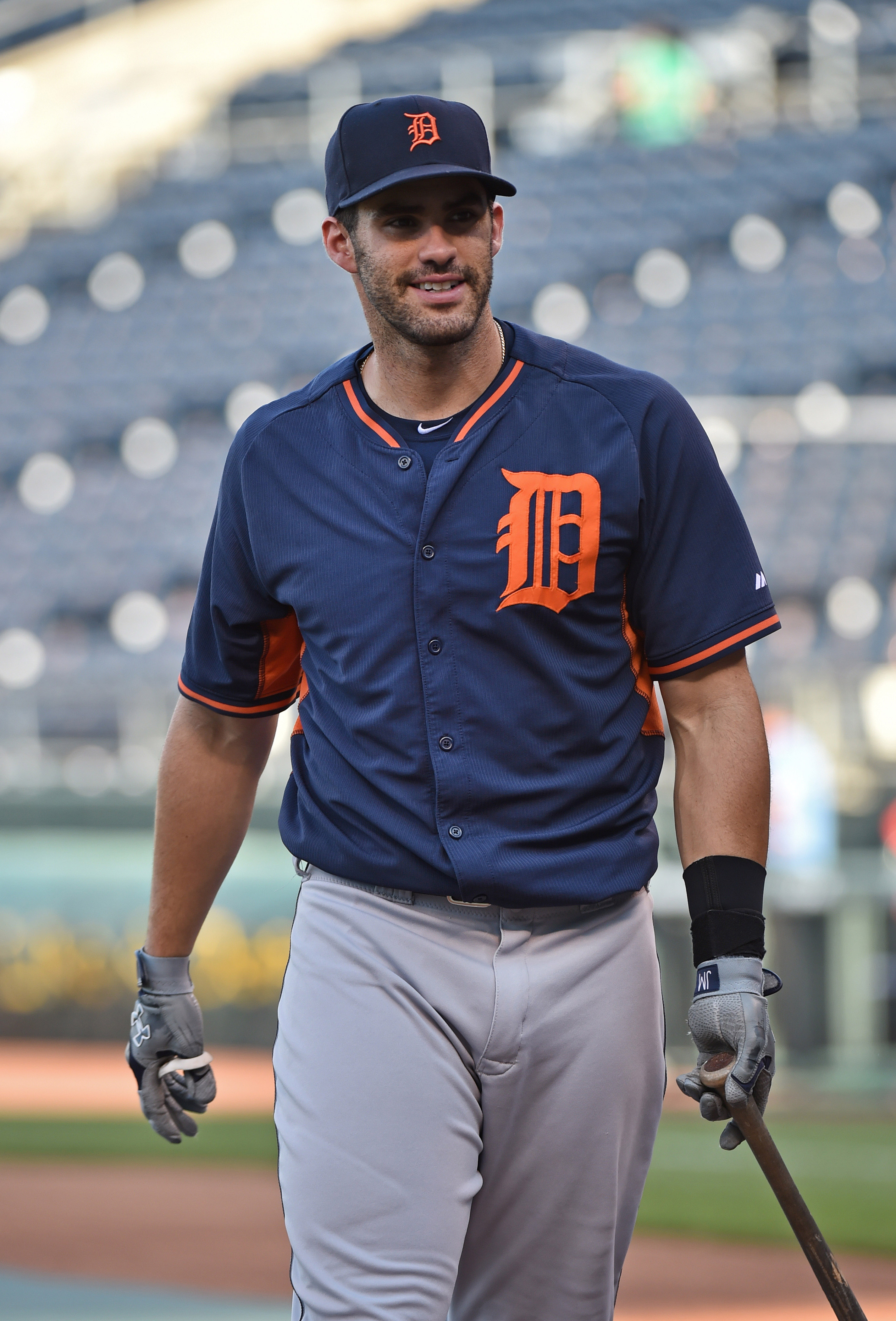
As it turns out, that projection does fall within the filing figures submitted today when the sides were unable to work out a deal before the deadline. But the model is closer to Martinez’s own $8MM submission — which would reflect a $5MM raise — than Detroit’s $6MM figure — which would give him just a $3MM bump.
As player and club work to reach a compromise — or, if not, to prepare for a hearing — they will be looking closely at similarly-situated past cases. But it is difficult to find reasonable comparables for Martinez. After a player’s first year of arbitration eligibility, arbitration salaries in subsequent years are generally based only on the most recent year. For Martinez, this puts him in an esteemed class of hitters who were in the signature 30/100 range for home runs and RBIs, most of whom get healthy raises. In the previous nine years, only two such players received one-year deals in arbitration—mainly because the other seven guys who would have been eligible inked multi-year deals instead.
Notably, both of those players had much better cases than Martinez: Chris Davis hit 53 home runs with 138 RBIs in 2013, leading to a $7.05MM raise, while Jacoby Ellsbury hit .321 with 39 stolen bases in addition to his 32 home runs and 105 RBIs in 2012, en route to a $5.65MM raise. These players certainly look like ceilings for Martinez, so it seemed unlikely he could pin down $5.65MM or above — a doubt that his representatives obviously shared, as reflected in the filing number.
However, nearly everyone else in Martinez’s service class in recent years appears to be a floor. In the last nine years, the third highest raise for a second-year eligible hitter who did not sign a multi-year deal went to Hunter Pence, who received only $3.4MM in 2011. He hit .282 with 25 home runs and 91 RBIs. Although Pence stole 18 bases, far more than Martinez’s three, I have found that power is much more important than speed in arbitration cases and Martinez’s superior power numbers should help him easily out-earn Pence’s $3.4MM raise. The fact that Pence’s cases was five years ago only makes that clearer.
Lucas Duda was another recent player with 30 home runs going into his second year of eligibility, but he only hit .253 and only had 92 RBIs, so his raise was just $1.6375. He seems like an even less relevant comparable.
The fact that no player in Martinez’s service class has gotten a one-year deal with a raise anywhere between Pence’s $3.4MM raise and Ellsbury’s $5.65MM raise made it difficult to tell how accurate our $4.8MM projection might be. It may be that some other player could be discussed as a comparable, but it is hard to see who’d be suitable.
In cases like this, there are often multi-year deals that teams and players are both willing to sign in the face of this type of uncertainty, so that could happen here — as they’ve previously discussed — especially now that there’s a fairly sizable gulf to bridge. But even in that case, it is not clear who could be a model, since most of the multi-year deals for similar power hitters have been inked earlier in player’s careers.
In the end, I view the $4.8MM raise as a reasonable mark, with the entire $3.4MM to $5.65MM range appearing defensible. Given the filed values, Martinez seems to have the more reasonable position, though both parties will have plenty of incentive to work something out rather than trusting the decision to an arbitration panel.
Photo courtesy of USA Today Sports Images.
Arbitration Breakdown: Dallas Keuchel, Shelby Miller, Matt Harvey
Over the next few days, I will be discussing some of the higher profile upcoming arbitration cases. I will rely partly on my arbitration model developed exclusively for MLB Trade Rumors, but will also break out some interesting comparables and determine where the model might be wrong.
Just like last year, our arbitration model expects three pitchers to break the decade-old record for starting pitchers reaching their first-year of eligibility for arbitration. As is generally the case, these pitchers are excellent extension candidates, and extensions are a big part of the reason why Dontrelle Willis’ $4.35MM arbitration salary from 2006 has stood this long as the record.
In reality, the record really should have been broken several times already. Most notably, Tim Lincecum was offered $8MM in 2010 when he requested $13MM upon exchanging figures with the Giants. He ultimately earned $9MM as part of a multi-year deal, but Willis’ record technically still stood, because Lincecum had not signed a one-year deal. Clayton Kershaw in 2012 was offered $6.5MM when requesting $10MM and ultimately signed a multi-year deal, giving him $7.75MM his first year. Just last year, one of the three pitchers projected to break Willis’ record, Lance Lynn, made $7MM as part of a multi-year deal, although it is less clear he would have earned that much had he not signed his three-year deal.
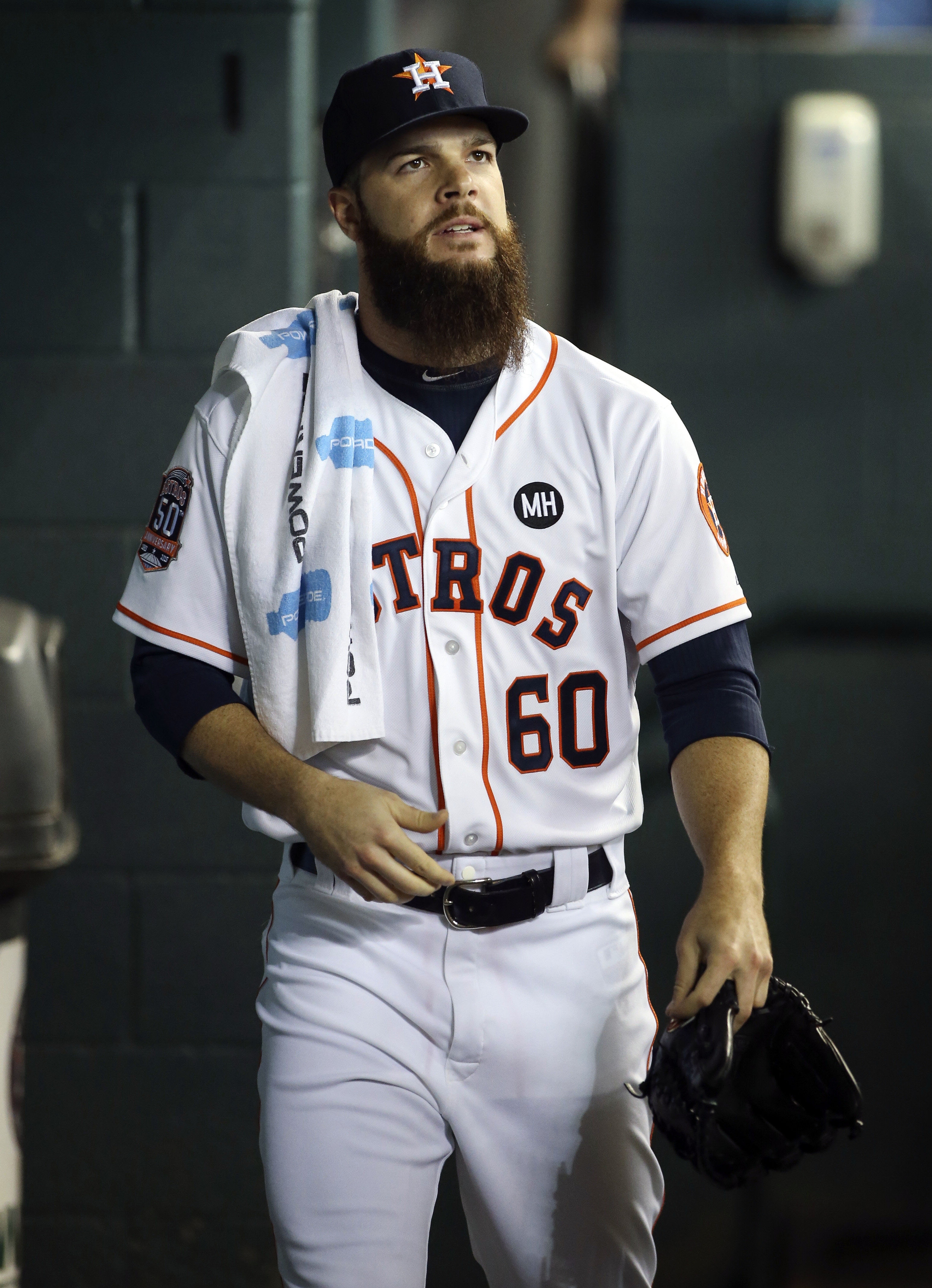
The strongest of the three cases this year is that of the reigning American League Cy Young Award winner, Dallas Keuchel. He went 20-8 in 2015 with a 2.48 in 232 innings. The only other two platform-year Cy Young winners in recent history have been Lincecum and Kershaw, but both of them clearly had stronger careers than Keuchel before winning their Cy Young Awards. Lincecum had a 2.90 career ERA and Kershaw’s career ERA was 2.88, while Keuchel only has a 3.58 career ERA and was at 4.16 before his Cy Young season. Similarly, Lincecum was 40-17 career at the time, and Kershaw was 42-28, while Keuchel is only 41-35.
In addition to Keuchel, two other pitchers are projected to top the $4.35MM record for first-time eligible starting pitchers. Shelby Miller only went 6-17 in 2015, but his 3.02 ERA in 205 1/3 innings in his All-Star platform year, along with his 3.22 career ERA in 575 1/3 innings give him a strong projection anyway. Matt Harvey went 13-8 with a 2.71 ERA in 189 1/3 innings in his platform year, and he has a 25-18 career record with a 2.53 career ERA in 427 innings. While Keuchel is projected to earn $6.4MM, Miller is projected to earn $4.9MM, and Harvey is projected to earn $4.7MM .
Despite no hurler topping Willis’ $4.35MM record, a number of pitchers have gotten very close in recent years. Five players in the last six years have landed between $4MM and $4.35MM on one-year deals, and many more have received multi-year deals. Comparing Keuchel, Miller, and Harvey with these five hurlers, along with a few other players who fell just short of $4MM will help figure out whether our projection for these pitchers is appropriate.
Keuchel seems like a safe bet to break the $4.35MM record if he does have a one-year award or goes to a hearing. David Price, who tied Willis’ $4.35MM record, was 14-10 with a 3.09 ERA in 224 1/3 innings in his platform year, which Keuchel bested in each category. Keuchel also has the same number of wins as Price did for his career at the time (41) and a similar ERA (3.38 for Price, 3.58 for Keuchel). Strengthening Keuchel’s argument is the fact that Price had nearly 100 fewer career innings when he tied Willis’ record.
Chris Tillman, who earned $4.32MM last year, did so after a 13-6 record with 3.34 ERA in his platform year and only a 4.00 career ERA with 45 career wins. Keuchel clearly should out-earn Tillman, Price and Willis handily, although he is likely to fall short of the respective $8MM and $6.5MM figures that were offered to Kershaw and Lincecum prior to their multi-year deals. I suspect Keuchel will miss the $6.4MM projection, but could easily get close to $6MM — comfortably establishing a new record.
Shelby Miller may have a harder time hitting his projection. I suspect that the model is struggling to find pitchers with an ERA as good and with as many innings who did not have many wins. A couple of recent comparables emerge, both of which had single-digit wins in their platform year with low ERAs. Stephen Strasburg in 2014 earned $3.97MM a couple years ago after going 8-9 with a 3.00 ERA in his platform year, but his 183 innings that year are short of Miller’s 205, and Miller’s 575 career innings handily top Strasburg’s 434.
Travis Wood earned $3.9MM two years ago with a 9-12 platform year record, 200 platform year innings and 564 career innings, although his career ERA was 3.83. Miller easily bests that mark with 3.22. Their platform year ERAs were similar, however, with Wood at 3.11 and Miller at 3.02. Miller also struck out a few more hitters than Wood had. Overall, both Strasburg and Wood getting just shy of $4MM two years ago with worse pre-platform performances suggests that Miller should get over $4MM, even if his $4.9MM projection will be harder to land. Most likely, he will end up between $4MM and the $4.35MM record, unless Keuchel or Harvey re-sets the market and pushes his number upward.
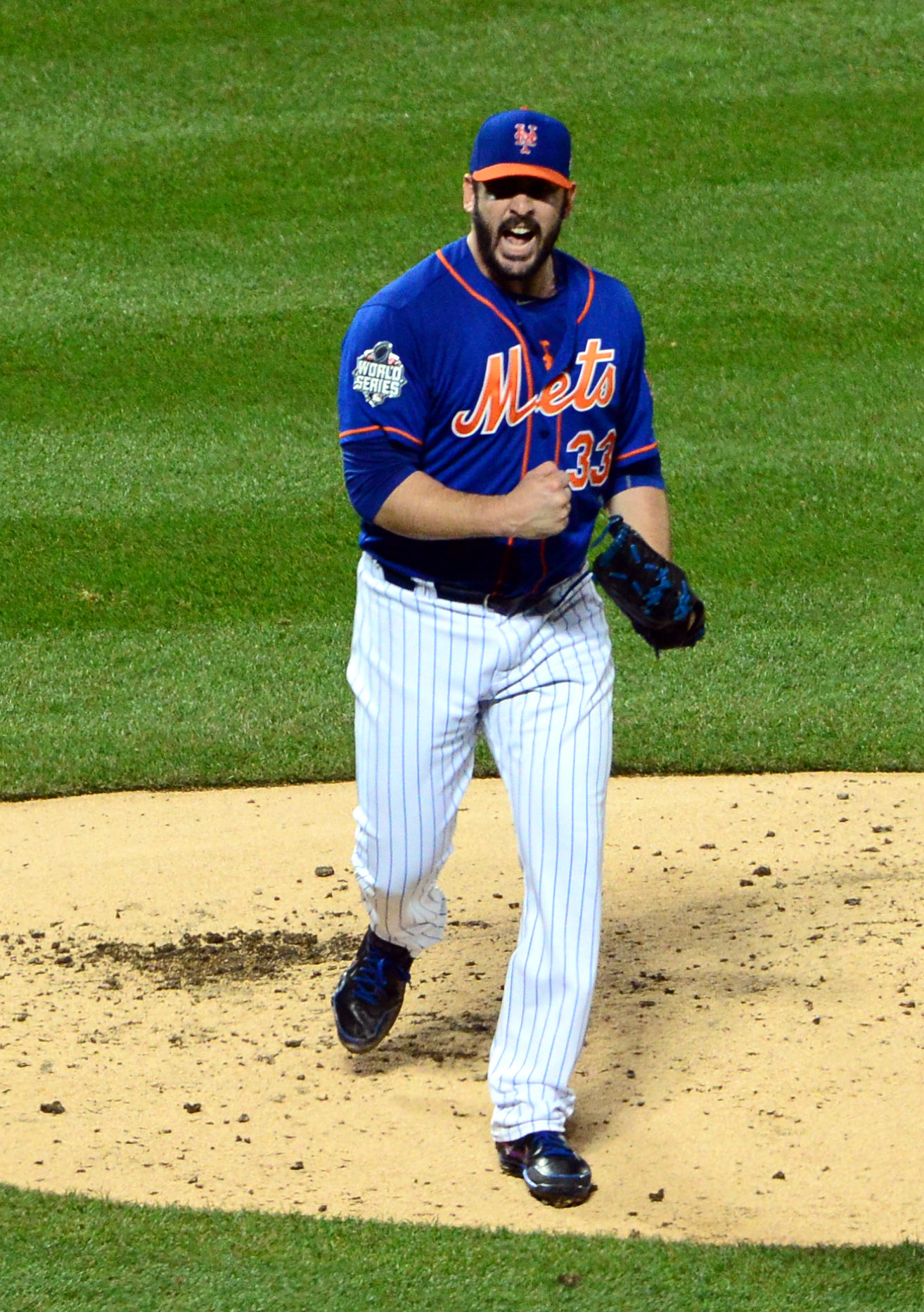
It’s difficult to find comparables for Harvey, partly because of his injuries and partly because his playoff performance in 2015 could help his case. Cole Hamels’ case after his 2008 playoff success (although he was the World Series MVP) would have been a good match, even though it is stale, but he signed a multi-year deal instead. He did earn $4.35MM in a multi-year deal that could be a useful comparison. Hamels similarly did not have many platform year wins despite a strong ERA — he went 14-10 with a 3.09 ERA, which compares somewhat favorably to Harvey’s 13-8 with 2.71. Hamels did have 227 innings though, compared with Harvey’s 189. On the other hand, Harvey’s 2.53 career ERA clearly outdoes the 3.43 ERA held by Hamels at the time.
Mike Minor got a one-year deal for $3.85MM a couple years ago after going 13-9 with a 3.21 ERA in 204 2/3 innings, although his 3.90 career ERA is clearly worse than Harvey’s. However, his 507 1/3 career innings at the time exceed Harvey’s 427.
It is not too challenging to make a case that David Price’s numbers when he got $4.35MM are similar to Miller and Harvey. Both Miller and Harvey possess superior ERA marks, although they each also had fewer innings. Harvey’s record was better (13-8 versus 12-13) but Miller’s was worse (6-17). Price’s 3.38 career ERA was similar to Miller’s 3.22, but Harvey’s 2.53 is better. On the other hand, Price and Miller had matching innings totals, while Harvey was about 150 innings short.
It does not seem obvious that Harvey or Miller can top the Price/Willis record, so I suspect both of them will end up in the $4MM to $4.35MM range. Obviously, if Keuchel shatters Price’s record in advance, Harvey or Miller could have a better opportunity to top that figure themselves, but I would bet the model’s projections for this pair ultimately proves to be too high.
Photos courtesy of USA Today Sports Images.
Arbitration Breakdown: Aroldis Chapman, Mark Melancon, Kenley Jansen
Over the next few days, I will be discussing some of the higher profile upcoming arbitration cases. I will rely partly on my arbitration model developed exclusively for MLB Trade Rumors, but will also break out some interesting comparables and determine where the model might be wrong.
As young fireballers have gotten more opportunity to close, more arbitration cases with few comparables have emerged. Last year, I wrote about such a foursome of closers who had reached second-year arbitration eligibility, and this year I am writing about two of those closers, Aroldis Chapman and Kenley Jansen, along with Mark Melancon (who I wrote about separately last year). My arbitration model projects each of these pitchers to get raises between $4MM and $4.85MM this winter, each of which would break Jim Johnson‘s current record of a $3.88MM raise for a third-year eligible closer.
Depending on how different statistics are weighed, they all have a compelling case to break this record. Johnson’s $3.88MM raise came after he had a 2.49 ERA and 51 saves in 68 2/3 innings, but Johnson struck out just 41 batters that season. He also only had 72 total saves at that point in his career. Although pre-platform performances generally do not matter outside of first-time-eligible arbitration salaries, one large exception I have found is career saves for closers. It is clear that having a history of being a closer matters, which means that Chapman’s 146 career saves, Melancon’s 121 saves, and Jansen’s 142 saves will all help them have better arbitration cases than Johnson did with 72 career saves.
Melancon also had 51 platform-year saves, matching Johnson’s 51 in his platform year in 2012. Along with his 2.23 ERA in 76 2/3 innings, he should have little trouble topping Johnson’s $3.88MM raise after his 2.49 ERA in 68 2/3 innings. Melancon’s $4.6MM projected raise seems about right.
Although Chapman only had 33 platform-year saves, his 1.63 ERA and aforementioned 146 career saves have led him to get an even bigger projected raise than Melancon. His projection actually slightly exceeded the Kimbrel Rule maximum, which is why he is projected for $12.9MM instead of the $13MM figure that was actually forecast by the model. In spite of the lower platform-year save total, Chapman’s vastly superior ERA and greater bulk of career saves give fair reason to assume he will probably get a bigger raise than Melancon, whose case is a straightforward improvement over Jim Johnson’s 2013 case. Both pitchers are likely to get raises between $4MM and $4.85MM.
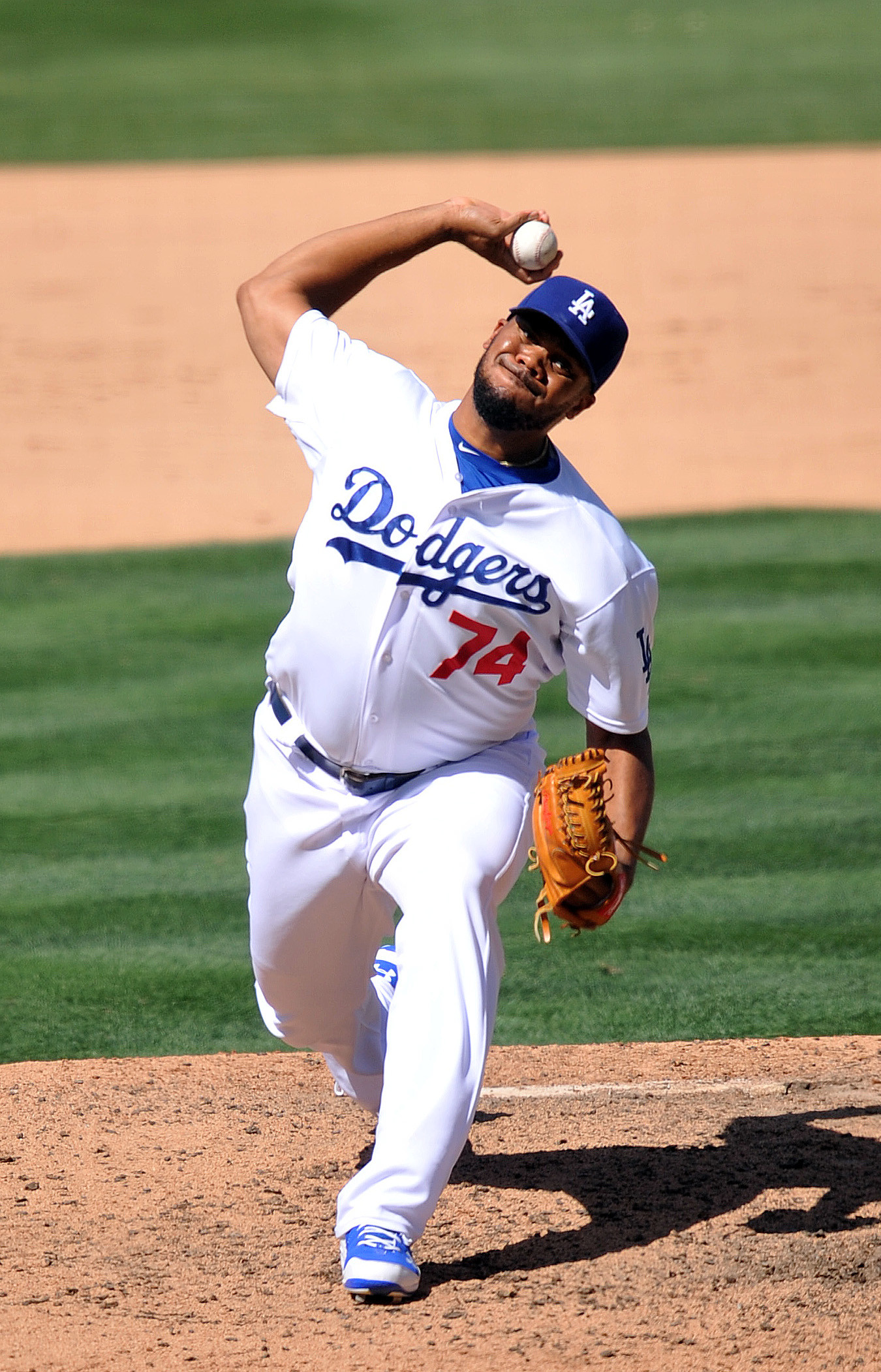
Kenley Jansen is projected to land a $4MM raise, which would just barely top Johnson’s record. Jansen had 36 platform-year saves, but 142 career saves, so he has fewer platform-year saves but almost double Johnson’s career saves. His platform-year ERA (2.41) is a bit better than Johnson’s was, although it came in fewer innings (52 1/3 versus 68 2/3) due to the fact that Jansen opened the season on the disabled list with a foot injury. I could see Jansen failing to make the case that he should get a larger raise than Johnson did, although if Melancon or Chapman set new records, he could easily argue that those are more applicable comparisons.
It is difficult to find pitchers other than Johnson that would apply to this trio of players. Jose Valverde had 44 platform-year saves going into his 2009 case, in which he earned $3.3MM, and he did have 142 career saves. However, his ERA was 3.38. A year prior to that, Francisco Rodriguez had a $2.95MM raise with similar numbers, but that case would be even more stale than Valverde’s. Joel Hanrahan got a $2.94MM raise with 36 saves going into his 2013 case, but he only had 96 career saves at that point. Johnson’s case against appears more applicable for all three of these closers.
Each of these three players could set the market for each other, so their raises are likely to be highly interdependent. They are also likely to set the market for future closers, now that more players will presumably reach their third year of arbitration eligibility with a career of closing behind them. I think that my model probably has appropriately guessed their salaries for 2016, but if it is wrong, it will probably be either too high on all three, or too low on all three.
Photos courtesy of USA Today Sports Images.
Arbitration Breakdown: Nolan Arenado
Over the next few weeks, I will be discussing some of the higher profile upcoming arbitration cases. I will rely partly on my arbitration model developed exclusively for MLB Trade Rumors, but will also break out some interesting comparables and determine where the model might be wrong.
Nolan Arenado broke out offensively in 2015 with 42 home runs, 130 runs batted in and a .287 batting average to go along with his third Gold Glove Award. Arenado was not a prolific power hitter before this year, so he only has 70 career home runs, including this year’s 42. This jump in power in his third year in the league is unique and makes it harder to find appropriate comparables for him when building an arbitration case. Our model has him at $6.6MM, but I could easily see this being either a big miss or a big win for the model.
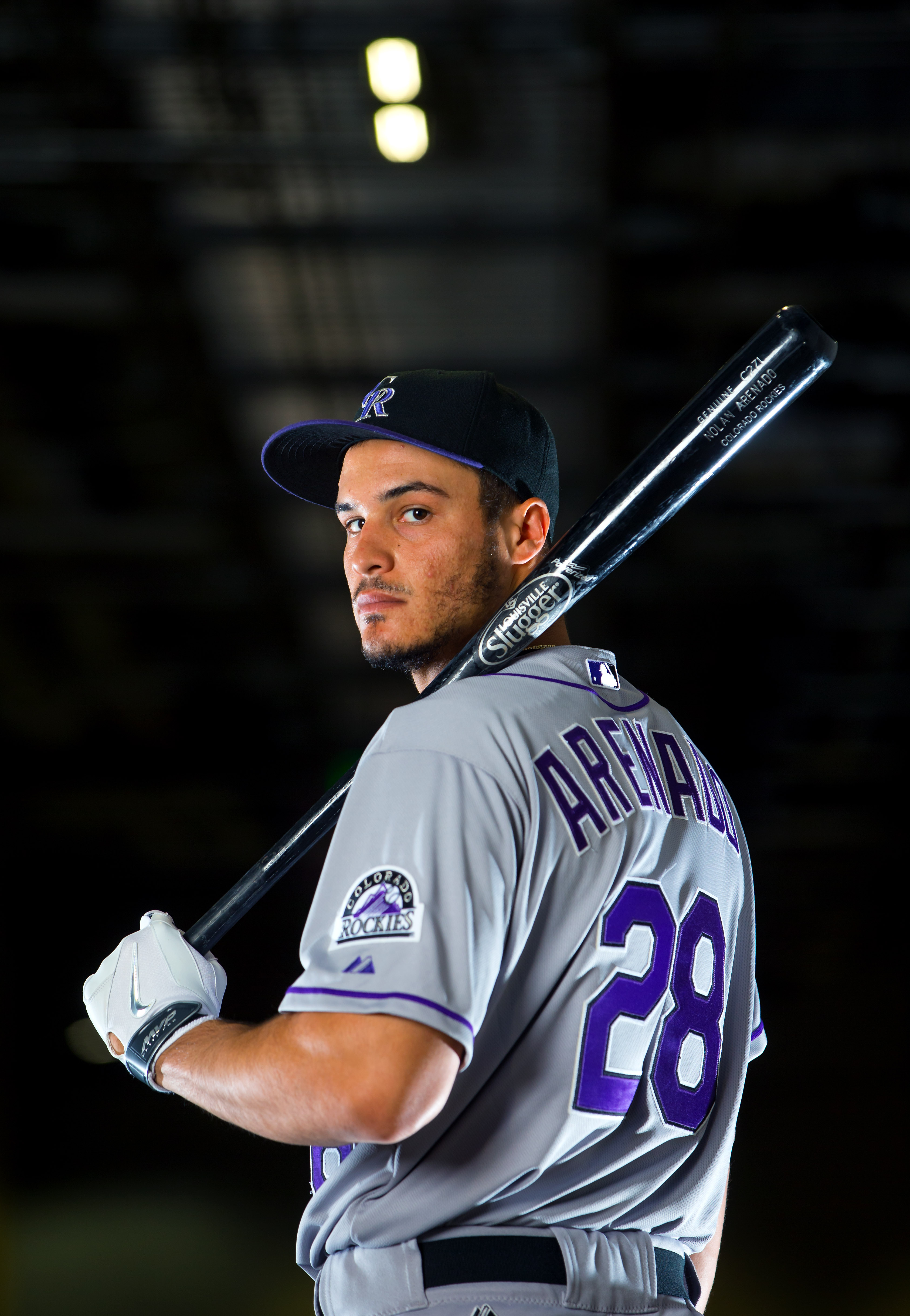
It has been eight years since the last time a hitter entered his first year of arbitration after clubbing at least 40 home runs in his platform year. That was when Ryan Howard beat the Phillies in an arbitration hearing to earn $10MM. However, Howard also had been a power hitter for over two seasons beforehand and had 129 career home runs, nearly twice as many as Arenado brings to the table. It seems very unlikely that Arenado could get $10MM.
Another case that is old enough that it might not be applicable is Ryan Ludwick from 2009, although his numbers are at least closer to Arenado in that he had a huge jump in power in his platform season. Ludwick’s 37 homers in his platform season were five fewer than Arenado his this season, but the two had identical marks of 28 homers combined in their careers prior their platform arbitration year. Ludwick also had a lower career batting average, 34 fewer career RBIs and 17 fewer RBIs in his platform season, although he did post a higher average in his platform (.299). All that said, Arenado should surpass Ludwick’s $3.7MM by a substantial margin.
Another thing that makes Arenado unique is his defense. No player in my dataset, which goes back nine years, has had three Gold Gloves before reaching arbitration eligibility. Only Matt Wieters had two, and he was a catcher. Wieters did earn $5.5MM, and while he’s a totally different position than Arenado at third base, the concept that he had such a high salary with one fewer gold glove and worse power numbers (23 HR, 83 RBI platform year; 65 and 249 career), could help Arenado argue that he deserves more. However, it is rare that a catcher would be a comparable player for a third baseman.
Few other players seem like reasonable comparables. Chris Carter hit .227 with 37 home runs and 88 RBIs in his platform year in 2014, and had a career average of .222 with 85 home runs and 216 RBIs. Carter got $4.175MM. Other than career home runs, Arenado clearly has bested Carter on all of these fronts. Pedro Alvarez had very similar numbers the year before that (.233/36/100 platform, .235/86/268 career) and got $4.25MM, making that $4.175-4.25MM range seem like something of a floor in Arenado’s case.
How much higher than $4.25MM we would expect Arenado to go is tricky. Dan Uggla got $5.35MM in 2009, with a worse platform year (.260/32/92) but decent career numbers (.262/90/270). However, the age of that case makes it a potentially stale comparison. Giancarlo Stanton had only 24 platform year home runs when he got $6.5MM, but he had 117 career home runs at that point. Mark Trumbo had 34 platform year home runs, but 95 career home runs, although his batting average was just .234 in his platform year. None of these players can boast the defense that Arenado can, either.
Another factor that could play into Arenado’s case is where Manny Machado lands. Machado is similar to Arenado in that he had an explosion of power in his platform year, hits for average, and plays third base very well. Both of these players are likely to earn similar amounts, although Arenado led the league in home runs and runs batted in, plus he has three Gold Gloves, which should give him a leg up on Machado. Both players will pay careful attention to where the other guy considers signing. Ultimately, I suspect both will fall short of their projected salaries (Machado’s projected $5.9MM is $700K less than Arenado’s $6.6MM projection). However, if one player does indeed reach his projection (which is certainly possible), the other is likely to have a better chance to do so as well.
Photo courtesy of USA Today Sports Images.
Arbitration Breakdown: Manny Machado
Over the next few weeks, I will be discussing some of the higher profile upcoming arbitration cases. I will rely partly on my arbitration model developed exclusively for MLB Trade Rumors, but will also break out some interesting comparables and determine where the model might be wrong.
Manny Machado has reached arbitration eligibility at the young age of 23, and has already put up solid numbers in his career, including a breakout year in 2015. Machado hit .286 this past year, which is not all that much better than the .278 career mark he had going in, but his 35 home runs more than doubled his career high. After Machado’s 51 doubles in 2013 suggested he would eventually show more power than the 14 home runs that accompanied them, injuries in 2014 limited him to 354 PA. As a result, Machado’s pre-platform performance and overall career numbers are not as strong as his platform year, which makes him somewhat of a tricky case. Few comparables cases present themselves, so although his $5.9 million projected salary seems plausible, it could easily miss by a lot.
Machado’s strong defense also makes his case trickier as well. Although my model has repeatedly shown that defense does not consistently affect arbitration cases, many of the hitters who could be considered comparables for Machado were far worse fielders, and this could certainly help him earn more than them. Just because the model does not prove the importance of any specific defensive statistic, that does not mean that defense never enters into a case—we know from firsthand reports that it does. Machado’s relatively low number of RBIs for a guy who hit 35 home runs also makes his case unique as well.
Perhaps the best comparable could be Chris Davis’ case three years ago, although nearly everything about Davis’ case is slightly worse. Davis hit .270 with 33 home runs and 85 RBIs, which is a near match of Machado’s .286/35/86 in his platform year. Davis also did not have many home runs pre-platform, so his career 77 home runs at the time are not much different than Machado’s 68. However, Davis’ career average of .258 is way below Machado’s .281. Davis also plays an easier defensive position than Machado. However, the Orioles could certainly try to argue that Machado should not out-earn Davis’ $3.3 million award by too much.
Although it was seven years ago, Ryan Ludwick’s case looks very similar to Machado’s when Ludwick earned $3.7 million in 2009. He hit .299/37/113 in his platform year and had .273/65/209 career numbers, and although Ludwick’s platform numbers were slightly better, Machado’s career .281/65/215 is extremely similar. The Orioles could try to argue that a little salary inflation on Ludwick’s $3.7 million would put Machado between $4 and $5 million.
If Machado wants to argue for a salary closer to his $5.9 million projection, one potential comparable that Machado could consider is Dan Uggla, who had 32 home runs and 92 RBIs in his platform year before reaching arbitration eligibility, and who received $5.3 million. However, this was back in 2009 and cases that old are rarely used. Uggla also only hit .260, although he did have 90 career home runs, far exceeding Machado’s 68.
Another possibility Machado could use to try to push his salary closer to his projection, who is more recent than Uggla, is Giancarlo Stanton’s case just two years ago. Although Machado could be a similar match in terms of stardom, Stanton’s injuries kept him to 504 PA in his platform year and only 24 home runs, while he hit .249. He did have 117 career home runs though. While he played a different position, Stanton could be considered a comparable. He earned $6.5 million in 2014. Like with Uggla, the difficulty for Machado if he tries to argue for Stanton as a comparable is that both Uggla and Stanton had many more career home runs than Machado does.
Other potential comparables that Machado could use are Mark Trumbo, Chris Carter, and Pedro Alvarez, who all reached their first year of arbitration eligibility in the last couple years and earned $4.8, $4.175, and $4.25 million. They each hit between 34 and 37 home runs and between 88 to 100 RBIs in their platform year. Although they had more career home runs than Machado, ranging from 85 to 95 between them, their batting averages are much worse than Machado’s. They each hit between .227 and .233 in their platform year and between .222 and .250 in their careers. Machado could make the case that he had similar power to them, but a better average, so he deserves to have somewhere above $5 million.
It is difficult to find obvious cases where Machado exceeds his $5.9 million projection. There are a number of players with higher salaries who had similar platform years, but more home runs, while there are a couple of players who earned less money with career numbers that look similar to Machado, but whose cases are weaker in one way or another. Machado has a better batting average and defense than just about all of these players, including the players with more career home runs. However, I think Machado is probably likely to under-earn his projection.
A potential wild card that could come into play is a similar player who is also reaching his first year of eligibility this year, Nolan Arenado. With a similar breakout performance in 2015 along with strong defense at the same position, Arenado could easily help or hurt Machado’s case for arbitration this year if he reaches an agreement first.
MLBTR Originals
A look back at the original reporting and analysis found on MLBTR the last seven days:
- Over the next few weeks, Matt Swartz will be discussing some of the higher profile upcoming arbitration cases for MLBTR. Swartz kicked off his Arbitration Breakdown series with a look at Jake Arrieta, who enters his second year of arb coming off of a Cy Young award. Needless to say, Arrieta is in line for a big raise from his $3.63MM salary last year.
- The hot trend of the 2015/16 offseason has been player options in large, multi-year deals. David Price, Johnny Cueto, and Jason Heyward were among the players to receive them this winter and Swartz attempted to translate their value into a dollar figure.
- MLBTR’s Jeff Todd ran down the latest from around the league before being joined by Scott Merkin of MLB.com on this week’s MLB Trade Rumors podcast. They discuss his experience covering new Hall of Famer Ken Griffey Jr. in his days with the White Sox as well as the outlook of the ChiSox after a disappointing 2015 season. A new episode of the MLB Trade Rumors Podcast is released every Thursday and can be accessed on iTunes, SoundCloud, and Stitcher.
- Padres hurler Tyson Ross had a strong season but a weak win/loss record. While wins and losses don’t mean a ton to the modern baseball community when evaluating an individual pitcher’s performance, it still holds weight in the arbitration process. Swartz looked at Ross’ case and how his 10-12 record could change things.
- The reigning AL MVP is headed to arbitration and Swartz gave us an in-depth examination of how things might play out for Josh Donaldson.
- Recently, MLB Trade Rumors launched a brand new official Instagram account:@TradeRumorsMLB. Each day, we’re sharing conversation-inspiring images about the hottest topics in baseball. From there, we invite you to give us a like, weigh in with your thoughts in the comments section, and even share the link with a friend. So, what are you waiting for? If you don’t have an Instagram account, this is the perfect excuse to sign up and get one. Follow us on Instagram today!
- MLBTR was the first to report that the Royals agreed to terms with lefty David Huff on a minor league deal with a Spring Training invite. The 31-year-old has a 5.08 ERA, 5.4 K/9 and 3.0 BB/9 in parts of seven big-league seasons, which he’s split between starting and relieving.
- On Tuesday, MLBTR’s Steve Adams chatted about the Diamondbacks, Tigers, Adam Eaton, and corner outfielders (among other topics).
- And on his Thursday chat, Jeff Todd addressed topics ranging from a Padres rebuild to Cliff Lee as an Indians target to expect free agent compensation for some of the remaining players.
- Last but not least, MLBTR featured the best of the baseball blogosphere in our weekly segment, Baseball Blogs Weigh In.
Minor MLB Transactions: 1/9/16
Here are today’s minor moves from around the league.
- The Royals have agreed to terms with lefty David Huff on a minor league deal with a Spring Training invite, MLBTR has learned. Huff will receive $1.1MM plus a possible $300K in performance bonuses if he’s in the Majors, and his deal contains opt-outs on May 15 and June 15. Huff appeared briefly with the Dodgers last season, but spent most of the year at Triple-A Oklahoma City, where he posted a 2.20 ERA, 6.8 K/9 and 1.3 BB/9 over 57 1/3 innings. The 31-year-old has a 5.08 ERA, 5.4 K/9 and 3.0 BB/9 in parts of seven big-league seasons, which he’s split between starting and relieving.
- The Padres have selected the contract of lefty Ryan Buchter, Dennis Lin of the San Diego Union-Tribune tweets. The Friars had previously signed Buchter to a minor league deal, but now, before he had even pitched an inning for them, they’ve placed him on their 40-man roster. Buchter had an excellent (if somewhat control-challenged) season at Triple-A in 2015, posting a 1.78 ERA, 11.0 K/9 and 4.4 BB/9 in 50 2/3 innings of relief for two teams, and he has good velocity and is very tough on lefties. Getting him on a minor league deal looked like a small coup for the Padres, and it’s possible they’re adding him to their 40-man roster in order to avoid losing him, maybe to an opt-out clause or an offer from overseas.
- The Pirates have released righty Casey Sadler, Matt Eddy of Baseball America tweets. Sadler underwent Tommy John surgery after the 2015 season and was subsequently outrighted. The 25-year-old made one strong start with the Bucs in 2015 and spent the rest of the year at Triple-A Indianapolis, where he posted a 4.56 ERA, 5.3 K/9 and 2.8 BB/9 before getting hurt.
- The Brewers have announced that they’ve signed lefty Pat Misch to a minor league deal with a Spring Training invite. The 34-year-old Misch appeared in parts of six big-league seasons with the Giants and Mets, but he hasn’t been in the Majors since 2011. He’s had a strange journey since having Tommy John surgery in August 2013, as BA’s John Manuel writes — beginning last winter, he pitched in the Puerto Rican Winter League, then pitched 72 innings in a swingman role with Triple-A New Orleans in the Marlins system (posting a 3.25 ERA, 5.0 K/9 and 2.9 BB/9), then 64 2/3 with Lamigo in the Chinese Professional Baseball League. That stint finished with a Game 7 no-hitter to end the Taiwan Series.
- The Yankees have signed infielders Donovan Solano and Jonathan Diaz to minor league deals with Spring Training invites, Eddy tweets. Solano, formerly the Marlins’ semi-regular second baseman, did not hit well in 2015 and bounced back and forth between Miami and New Orleans. He has a career .257/.307/.328 batting line in parts of four big-league seasons. The 30-year-old Diaz has played briefly with the Red Sox and Blue Jays; he spent most of 2015 with the Jays’ Triple-A Buffalo affiliate, where he played shortstop, second base and center field and batted .223/.328/.284.
- The Braves have agreed to terms with righty Rob Wooten, SB Nation’s Chris Cotillo tweets. The 30-year-old appeared in the Brewers bullpen in the 2013 through 2015 seasons, posting a combined 5.03 ERA, 7.0 K/9 and 2.9 BB/9 and throwing in the high 80s. He spent most of 2015, in a tough pitching environment at Triple-A Colorado Springs, with a 4.67 ERA, 8.7 K/9 and 2.4 BB/9 over 52 innings.
- The Reds have signed infielder Carlos Triunfel to a minor league deal, tweets Eddy. The former top Mariners prospect, now 25, batted .264/.287/.398 in 329 plate appearances with Triple-A Sacramento in the Giants organization in 2015, splitting his time between shortstop, second and third. He has appeared briefly in the big leagues with the Mariners and Dodgers.
Arbitration Breakdown: Josh Donaldson
Over the next few weeks, I will be discussing some of the higher profile upcoming arbitration cases. I will rely partly on my arbitration model developed exclusively for MLB Trade Rumors, but will also break out some interesting comparables and determine where the model might be wrong.
The reigning Most Valuable Player of the American League enters his second year of arbitration eligibility due for a healthy raise on the $4.3MM he earned in his award-winning season. Josh Donaldson hit .297 with 41 home runs and 123 runs batted in 711 plate appearances, with an All-Star appearance and a Silver Slugger Award to add to his MVP honors.
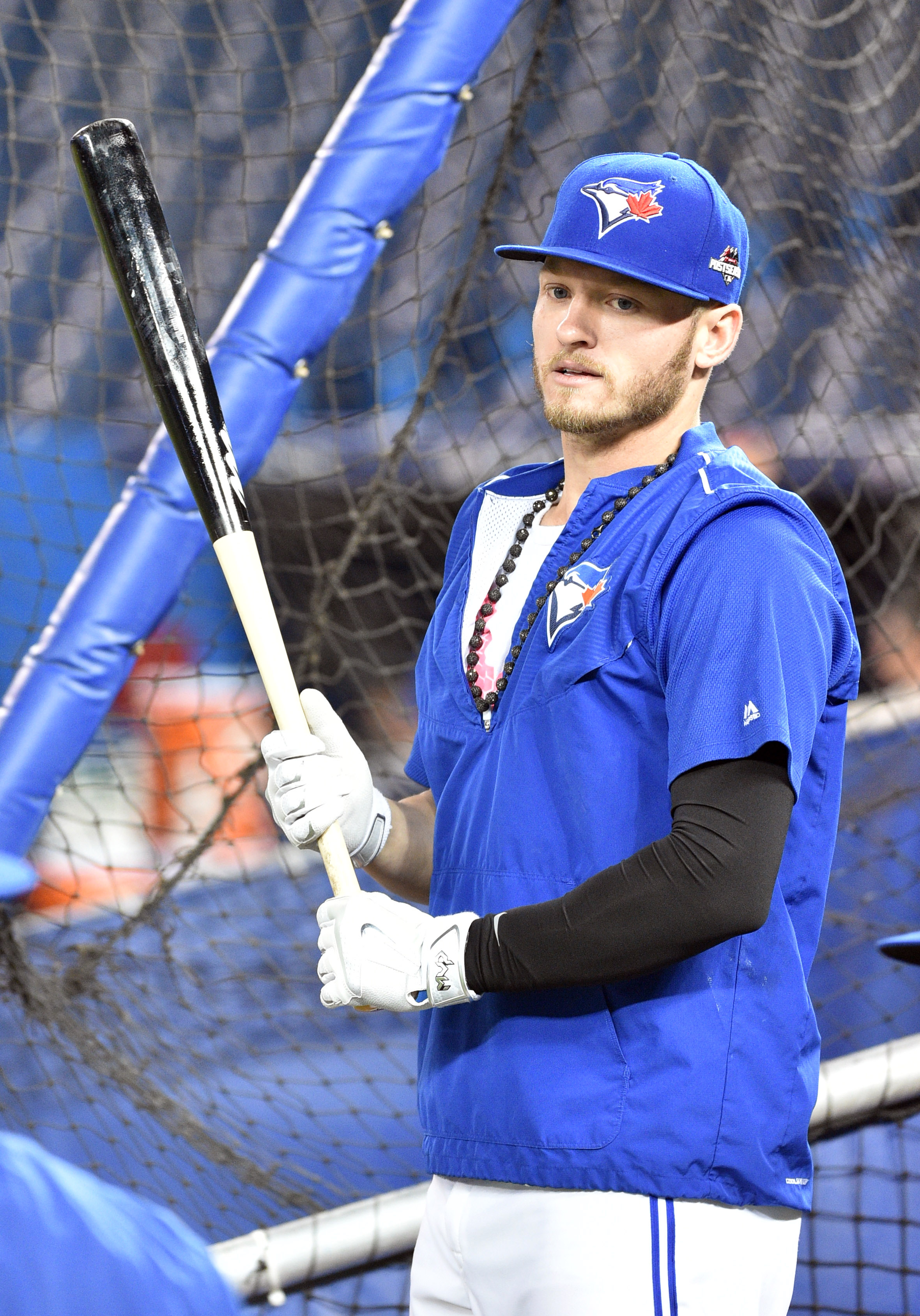
It was the third baseman’s first year with the Blue Jays after a solid career in Oakland, and he certainly made a great impression on his new employers. Now, they will have to pay up in his second year of arbitration. Our model and several knowledgeable sources have confirmed that after the first year of arbitration eligibility, most players’ cases are treated as raises based almost exclusively on the previous year’s statistics. This helps explain why the model projects that Donaldson will receive a $7.7MM raise to a total of $12MM, which would be a record raise for a second-time eligible player.
The model’s projection of a record raise seems appropriate. The current record belongs to Chris Davis in 2014, who did not win an MVP Award when received a $7.05MM raise. Davis did out-homer Donaldson, 53 to 42, and had 138 RBIs — 15 more than Donaldson — as well. But, Donaldson had a higher average, .297 versus .286, and played a harder defensive position (third base versus first base) and is known for his excellent defense. While defensive performance usually does not matter much in arbitration cases (other than position played), I believe that Donaldson should be able to use his defense and his hardware to argue that he should have a bigger raise than Davis did– probably something in line with the $12MM projection, I would guess.
The last hitter to enter his second year of arbitration eligibility after winning an MVP Award was five years ago, when Josh Hamilton earned a $5.5MM raise. Hamilton had hit .359 with 32 home runs and 100 RBIs, but in only 571 plate appearances. Donaldson’s 140 extra trips to the plate with nine more home runs and 23 more runs knocked in should help him argue for a much larger raise than Hamilton received on the heels of his MVP season in 2010. Even if Donaldson cannot effectively argue that his raise should be larger than Davis’ due to the power gap, he should have less trouble arguing that he is deserving of a bigger raise than Hamilton received five years ago.
Few other players seem likely to make better arbitration cases for Donaldson than Hamilton and Davis. As a result, I think the case will likely come down to an argument about whether Donaldson should get something like a $6MM raise to top Hamilton by a decent margin, or whether Donaldson should get a $7.5MM raise to set a new record beyond Davis. It’s unlikely that Donaldson out-earned the $12MM salary I have projected for him, but I think it is more likely than not that he is close to this range. If he cannot argue that his case is stronger than Davis, though, he might end up around $10.3MM — a hefty raise, to be sure, but a fair margin shy of the current record increase that our model currently projects.
Photo courtesy of USA Today Sports Images.