
Finding A Landing Spot For Jhoulys Chacin
The Rockies’ release of Jhoulys Chacin caught many by surprise last week, myself included. The 27-year-old has spent the better parts of the past five seasons in Colorado’s rotation and had already agreed to a one-year, $5.5MM contract for the 2015 season.
In a way, the release has the potential to be a blessing in disguise for Chacin. It should come as no shock that Chacin’s ERA away from Coors Field is nearly a full run lower (4.21 vs. 3.24). He can now potentially latch on with a club that doesn’t play half of its games in one of baseball’s most notorious launching pads, and because he has just one year of team control remaining, he could hit the open market next season as a 28-year-old coming off a season in a more friendly pitching environment. Of course, Chacin will need to demonstrate that he is healthy in order to do so, and that’s anything but a given for the talented but oft-injured righty.
Chacin missed the majority of the 2014 season with shoulder inflammation — his second significant period of time missed with that malady — and has also battled back spasms in the past. He’s topped 190 innings in two different seasons but has also failed to reach 70 innings on two occasions and has averaged just 132 innings per season dating back to 2010.
Nevertheless, Chacin has a lifetime 3.78 ERA with 6.9 K/9, 3.8 BB/9 and a 48.2 percent ground-ball rate. Success at the Major League level has long been expected of the Venezuelan hurler, as he twice ranked among Baseball America’s Top 100 prospects before establishing himself in the Colorado rotation at the age of 22. Chacin should be able to latch on elsewhere — four teams are reportedly showing interest already — so let’s run down a few speculative spots that could give him a look late in Spring Training or early on in the regular season…
- Rangers — Yu Darvish already went down with a torn UCL that required Tommy John surgery, thinning out the team’s starting options. The Rangers have been discussing starting pitching options and were recently in touch with the Marlins regarding lefty Brad Hand, so it stands to reason that they’d have some interest in picking up Chacin as a potential rotation option. As it is, Yovani Gallardo, Derek Holland, Colby Lewis and Ross Detwiler will pitch in their rotation, with the fifth spot still up for grabs.
- Dodgers — Hyun-jin Ryu is slated to open the season on the disabled list, and the Dodgers have a pair of injury prone hurlers behind him in their rotation in the form of Brandon McCarthy and Brett Anderson. Bringing in Chacin, with whom many Dodgers scouts are likely very familiar, would give the team additional depth.
- White Sox — The Sox are set to enjoy a dominant top three of Chris Sale, Jeff Samardzija and Jose Quintana, but John Danks and Hector Noesi aren’t an exciting four-five combination. Of course, top prospect Carlos Rodon looms large and could join the rotation early in the season, but Chacin would present them with an alternative, and his ability to limit homers, even when pitching at Coors Field, would likely be appealing to the Sox.
- Blue Jays — Marcus Stroman is out for the season, and the Blue Jays will rely on a combination of Daniel Norris, Aaron Sanchez and Marco Estrada to round out their rotation. Adding Chacin would allow one of those arms to pitch out of a precariously thin bullpen, though of course, jumping into the AL East/Rogers Centre may not be Chacin’s top choice when trying to re-establish himself as a credible rotation option.
- Phillies — The Phillies are clearly in need of rotation help and likely were even before Cliff Lee went down indefinitely with a still-torn flexor tendon. Cole Hamels, Aaron Harang, Jerome Williams and David Buchanan seem likely to fill the first four slots in the rotation, and Chacin has more upside than any non-Hamels internal option.
- Astros — Houston looked at adding an experienced arm with lesser upside when they engaged Ryan Vogelsong in discussions late in the offseason. Chacin could be a nice lottery ticket, and they lack a defined fifth starter to this point.
- Braves — Mike Minor could begin the season on the disabled list, and the Braves’ fifth starter spot was already an open competition between Eric Stults, Wandy Rodriguez, Michael Foltynewicz and Cody Martin anyhow.
- Rays — Matt Moore won’t be ready until this summer and Drew Smyly has been dealing with shoulder tendinitis this spring. Chacin would serve as additional depth alongside internal options Nate Karns and Alex Colome.
Offseason In Review: Chicago White Sox
The White Sox had an active, successful offseason in which they upgraded their pitching staff and imported multiple bats.
Major League Signings
- David Robertson, RP: Four years, $46MM
- Melky Cabrera, LF: Three years, $42MM
- Adam LaRoche, 1B: Two years, $25MM
- Zach Duke, RP: Three years, $15MM
- Emilio Bonifacio, 2B/CF: One year, $4MM. Includes $4MM club option for 2016 with a $1MM buyout.
- Gordon Beckham, 2B/3B: One year, $2MM
- Total spend: $134MM
Notable Minor League Signings
- Geovany Soto, Matt Albers, Brad Penny, Jesse Crain, Scott Carroll, Logan Kensing, Joe Savery, George Kottaras, Andy LaRoche, Engel Beltre, Zach Phillips
Trades And Claims
- Claimed OF J.B. Shuck off waivers from Indians
- Claimed RP Onelki Garcia off waivers from Dodgers
- Claimed C Rob Brantly off waivers from Marlins
- Acquired SP Jeff Samardzija and RP Michael Ynoa from Athletics for IF Marcus Semien, SP Chris Bassitt, C Josh Phegley, and 1B Rangel Ravelo
- Acquired RP Dan Jennings from Marlins for SP Andre Rienzo
- Acquired 1B/3B Neftali Soto from Reds for cash considerations
Extensions
- Adam Eaton, CF: five years, $23.5MM. Includes $9.5MM club option for 2020 with a $1.5MM buyout and $10.5MM club option for 2021 with a $1.5MM buyout.
Notable Losses
- Dayan Viciedo, Paul Konerko, Jordan Danks, Ronald Belisario, Matt Lindstrom, Felipe Paulino, Marcus Semien, Chris Bassitt, Josh Phegley, Rangel Ravelo, Andre Rienzo, Moises Sierra, Taylor Thompson
Needs Addressed
With core players Jose Abreu, Chris Sale, and Jose Quintana signed to affordable contracts, the White Sox were expected to take an aggressive approach to the offseason to fill their needs. They met with Pablo Sandoval‘s agent at the GM Meetings in November, and had Victor Martinez on their wish list as well. Around this time GM Rick Hahn also quietly explored trading for Jason Heyward, which wasn’t reported until this month. Martinez re-signed quickly with the Tigers, however, so Hahn signed Adam LaRoche at less than 40% of the commitment Martinez required.
The price difference between LaRoche and Martinez reflects the fact that Martinez is a better hitter, of course. Still, the White Sox got their coveted left-handed bat without taking on the risk of Martinez’s age 36-39 seasons. Plus, bringing in a more capable defensive first baseman in LaRoche should help keep Abreu healthy.
The White Sox continued moving quickly by signing lefty reliever Zach Duke to a three-year, $15MM deal in mid-November. Such a contract would have seemed absurd less than a year prior, as Duke had joined the Brewers on a minor league deal in January. Duke was quietly dominant for the Brewers in 2014 after making a series of adjustments to his pitch mix and arm slot. No team likes signing a reliever to a three-year deal, especially one with such a brief track record of success. Only three other relievers received deals of three or more years this offseason, and one of those was also with the White Sox. Still, the third year for Duke was the cost of doing business, and waiting until January for bargains is risky in its own way.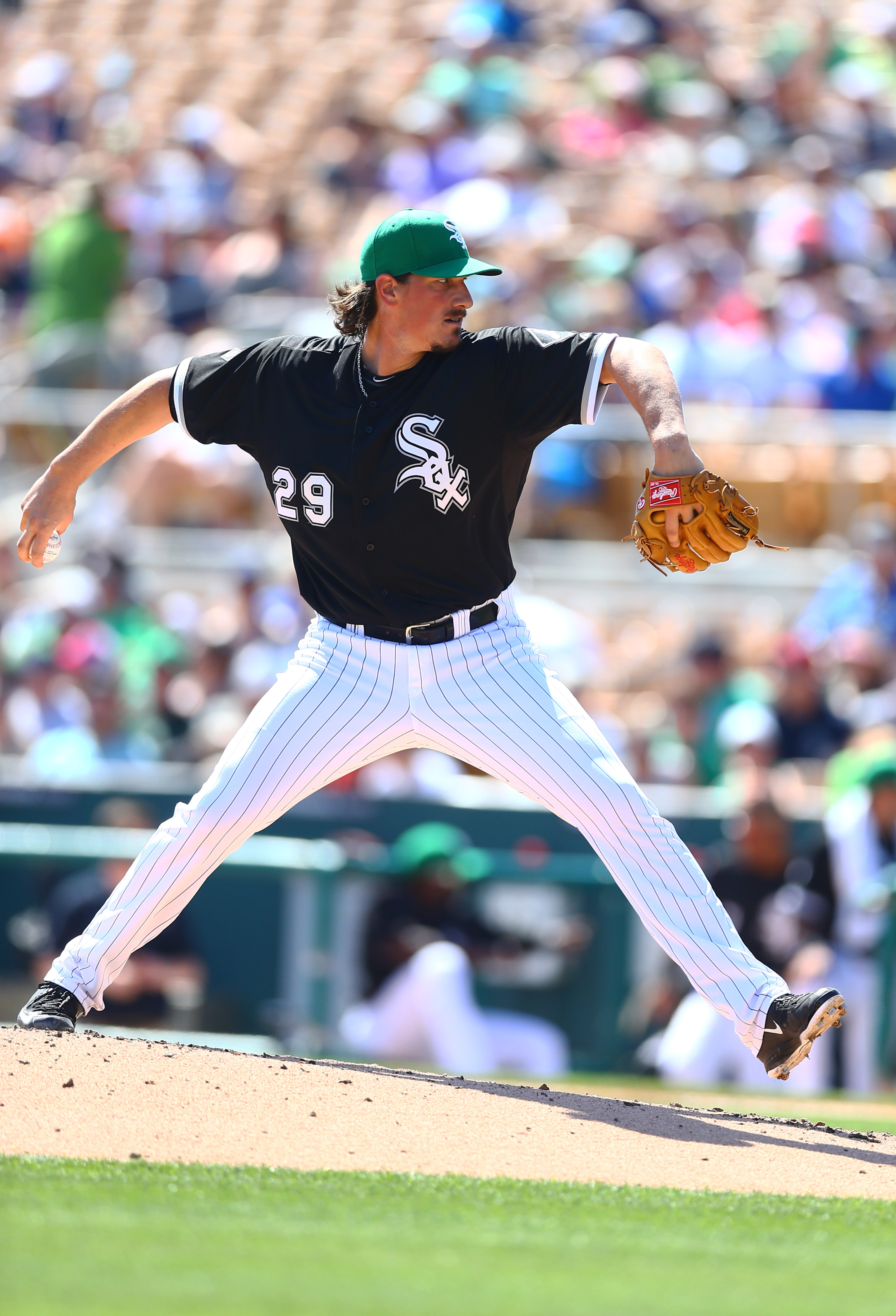
Hahn owned the first night of the Winter Meetings, grabbing headlines by closing in on a trade for Jeff Samardzija and a free agent contract for David Robertson in the course of a few hours. The Samardzija trade was a big win for the White Sox. I do see the sneaky value in the players the A’s acquired — lower ceiling players who are mostly considered to be solid-average regulars by Baseball America. Still, they were all players Chicago could afford to surrender to acquire one year of a potential front-rotation arm (plus perhaps an accompanying draft pick if Samardzija departs via free agency). The White Sox would have had to take on a lot more risk in the free agent market to bring in a pitcher of Samardzija’s caliber. In Sale, Samardzija, and Quintana, Hahn has assembled one of the better rotation trios in the game.
In Robertson, the White Sox acquired the offseason’s best available reliever at market price. It’s interesting to note that Robertson apparently had another team offer even more than $46MM. As with Duke, the term is not ideal, but it was necessary to sign the elite stopper. $61MM is a lot to spend on commitments to relievers in one offseason, but the White Sox had very few dollars invested into their bullpen prior to Robertson and Duke. Spending that much money is kind of a blunt-force way of addressing the team’s biggest problem, but it should work pretty well in the short term. The Sox also complemented their bullpen by acquiring southpaw Dan Jennings from Miami.
Hahn continued going down his long list of offseason upgrades, signing Melky Cabrera to a three-year, $42MM deal to play left field. (We’ll have more on that signing in the Deal of Note section.) After Cabrera, free agents Emilio Bonifacio, Gordon Beckham, and Geovany Soto were added as versatile bench pieces. Getting Soto on a minor league deal was a plus. Matt Albers and Jesse Crain were also added on minor league deals.
A five-year, $23.5MM extension for center fielder Adam Eaton capped Chicago’s busy offseason. The talented 26-year-old missed 124 games due to injuries over the past two seasons, but the White Sox balanced that risk with reasonable salaries and a pair of club options at the end.
Questions Remaining
With top prospect Carlos Rodon a phone call away, maybe rotation depth won’t prove to be a problem for the White Sox. Still, the rotation looks strong when Sale, Samardzija, and Quintana are pitching, and vulnerable the other 40% of the time with Hector Noesi, John Danks, Rodon, and maybe Brad Penny. The Sox are still tied up with $28.5MM owed to Danks through 2016.
I raised the question of catching in my Offseason Outlook, and some alternatives and/or backups to Tyler Flowers were added in Soto, Rob Brantly, and George Kottaras. The Sox did reportedly poke around on the Astros’ Jason Castro and discussed Miguel Montero with the Diamondbacks, so alternatives to Flowers were considered. Catching still seems like a weak point in both the short and long-term.
There’s also the issue of executive vice president and former GM Ken Williams. It was revealed in December that the Blue Jays sought to interview Williams to be their president/CEO, but White Sox owner Jerry Reinsdorf declined to grant them permission, and considered the attempt to be tampering. Ultimately the Blue Jays retained Paul Beeston for one more year, and Williams doesn’t appear to begrudge Reinsdorf about the situation, perhaps because the Jays’ timing was indeed terrible. Williams’ future with the White Sox bears watching though.
Deal Of Note
Melky Cabrera entered the offseason as our fourth-ranked free agent hitter, and many of us at MLBTR thought he would get the five-year deal he sought. While there was reportedly one four-year offer, Cabrera settled for three years from the White Sox. Even accounting for his 2012 PED suspension, qualifying offer, and below-average defense, it was surprising he didn’t sign for more money in a thin market for bats. It works very well for the White Sox, who committed less to Cabrera and LaRoche than the Tigers did just to Martinez, diversifying their risk in the process.
Overview
We know “winning the offseason” doesn’t mean much once games start, but the White Sox entered the winter with a long list of needs and filled most of them, finding a few relative bargains along the way. Hahn has assembled a much more interesting team that should be in contention in 2015.
Photo courtesy of Mark J. Rebilas/USA Today Sports Images
Trade Candidate: Juan Uribe
Much is still unknown about how (or if) the pending addition of Hector Olivera will impact the 2015 Dodgers. The Cuban infielder could struggle in his first taste of American pro ball and require more time in the minors than expected, or Olivera’s slightly-torn UCL in his right elbow could become a major issue and put him on the disabled list. As the Dodgers already have Juan Uribe and Howie Kendrick manning third and second base, they don’t even have any immediate need for Olivera’s services, and could be planning to only give Olivera significant playing time in 2016.
On the other hand, what if Olivera demolishes Triple-A pitching and forces the Dodgers’ hand for a promotion? While Olivera is a versatile player, it’s hard to believe he’d see much time at first base given Adrian Gonzalez‘s presence or in left field given how the Dodgers already have an outfielder surplus. Kendrick over four years younger than Uribe and has a longer track record of consistency and durability, so it would be a big surprise to see Kendrick lose his starting job for any reason other than an injury.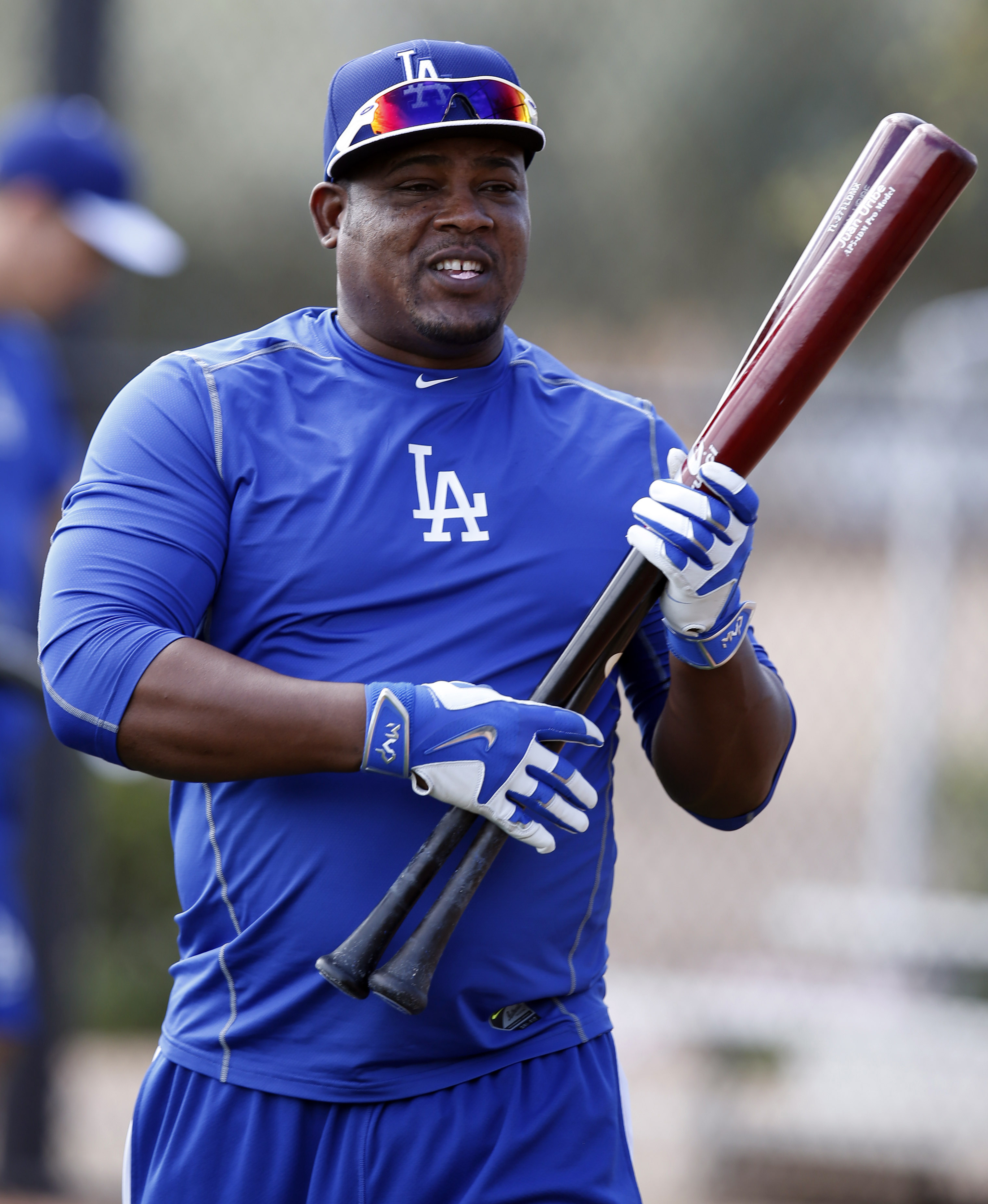
If the Dodgers decide to find a place for Olivera, therefore, it will likely be at the hot corner. Uribe is a free agent after the season, and many have speculated that with Olivera on board, the Dodgers are already planning for a future without the 14-year veteran. As Kendrick and Jimmy Rollins are also both pending free agents, it’s possible the 2016 Dodgers infield could consist of Olivera, Corey Seager and Alex Guerrero, with Enrique Hernandez and Justin Turner in super-sub roles.
With all this in mind, could L.A. consider cutting ties with Uribe early and start shopping the 36-year-old on the trade market this summer? If Uribe starts until Olivera is called up, then Uribe’s first month or two of the season could essentially be an audition for other teams. Turner and Hernandez could become the top fill-in third base options if Olivera were to struggle; both men hit well in 2014, especially Turner and his .897 OPS over 322 plate appearances. (Fangraphs’ Dave Cameron recently opined that the Dodgers didn’t need Olivera since they already had a cheaper comparable in Turner.)
Hamstring injuries limited Uribe to 103 games last season, though he still hit .311/.337/.440 with nine homers in 404 plate appearances. While that slash line was undoubtedly aided by a .368 BABIP, it was Uribe’s second consecutive solid year at the plate (a .769 OPS and 116 OPS+ in 2013), continuing an unlikely career turn-around after his production fell off the table in 2011-12. While his hitting has yo-yoed over the last four years, however, his defense has been uniformly tremendous. Since the start of the 2010 season, Uribe’s 41 Defensive Runs Saved are the fifth-most of any third baseman in baseball and he has the best UZR/150 (25.4) of any player who has played at least 2500 innings at third. Between that stellar glove and his improved bat, Uribe’s 8.6 fWAR over the last two seasons has been topped by only 28 players.
With all this in mind, you could argue that the Dodgers would need to see significant evidence from Olivera before they considered giving up on Uribe. Even keeping Uribe in a bench role would be a fit for L.A. since they certainly have the payroll capacity to afford a $6.5MM backup, and he plays an “integral” leadership role in the clubhouse.
Still, as we’ve already seen from the Andrew Friedman/Farhan Zaidi regime, no move can be ruled out for the Dodgers’ roster. If the team’s starting pitching depth becomes tested (i.e. Brandon McCarthy or Brett Anderson‘s significant injury histories, or Hyun-Jin Ryu’s bad shoulder), Uribe could be an intriguing trade chip for a starter. Or, as the Dodgers are having trouble finding takers for Andre Ethier, they could sweeten the pot by adding Uribe to the mix, though contract size could still be an issue.
Looking at contenders with a possible hole at third base, the Indians, Tigers, Royals and White Sox are all going with young players who have yet to prove themselves as surefire contributors. For these four teams, acquiring Uribe for a pennant race wouldn’t spell the end of, for example, Nick Castellanos or Mike Moustakas as a “third baseman of the future” since Uribe could leave in free agency next winter anyway. Beyond the AL Central, the Giants are relying on Casey McGehee to repeat his solid 2014 season, though it’s near-impossible to see the Dodgers swing a trade with their arch-rivals.
For the moment, Uribe is staying put in Los Angeles. If Olivera (or even Turner) starts swinging a hot bat, however, don’t be surprised if the Dodgers start exploring deals. The Dodgers’ overflow of talent in both the infield and outfield gives them a number of options if they need to patch holes in their rotation or bullpen, and Uribe might be the most realistic trade chip of the bunch.
Photo courtesy of Rick Scuteri/USA Today Sports Images
Aaron Harang On Signing With Phillies
Last season, Aaron Harang was a pleasant surprise for the Braves. Signed to a cheap one-year pact, the veteran hurler pitched to a 3.57 ERA with 7.1 K/9, 3.1 BB/9, and a 39.4 percent ground-ball rate in 204 1/3 innings, a major step up from his 2013 campaign where he went from team to team and finished with a combined 5.40 ERA. Some, including yours truly, felt that his bounce back season would put him in line for a two-year deal. Instead, Harang wound up signing a one-year deal with the Phillies worth $5MM. It’s conceivable that something more lucrative could have materialized with time, but Harang didn’t want to be left without a chair when the music stopped.
“The Phillies were the most aggressive team as far as just getting things moving. I had a few other clubs that were talking to me at the same time but there were some other pieces that needed to fall in line before things could move forward with them,” Harang told MLBTR on Wednesday morning in Clearwater, Florida. “The Phillies moved the fastest. I knew that with some clubs, if I played my part and waited, there would be opportunities there. Obviously, I learned from last year that I didn’t want to sit around and wait so at that point I wanted to go to the team that was most aggressive, and that was the Phillies.”
Harang was also drawn to the Phillies’ rotation and felt that he would be a solid fit in the middle of the starting five. He was admittedly wary of some things about the roster, including the December trade of Marlon Byrd, but he says that he felt good about the organization as a whole and he believes that the lineup will get a boost from an improved Ryan Howard.
Still, the Phillies’ edge above the other potential suitors came from their readiness to make a deal. Like many other starters on the open market, Harang was left hanging by teams as they waited to see how the top of the pitching market would play out.
“There were a couple of East Coast teams and then a couple of West Coast teams that we had tentative conversations with, but a lot of it had to do with when [Jon] Lester was going to sign and when [James] Shields was going to sign and waiting for the dominoes to fall. But, [Phillies GM Ruben Amaro] called up and they were being the most aggressive out of anyone,” Harang explained.
Heading into the winter, Harang heard from a number of people in baseball who felt that he would wind up getting a multi-year deal. Still, he didn’t dwell on that and went in with the attitude that the market would determine the appropriate deal for him. After being traded twice in April of 2013 and spending time with four clubs in total that year, Harang felt that it was more important to find a place that valued him highly as a starter. Harang also indicated that he was disappointed by Braves’ level of effort to re-sign him early in the offseason, but he sounds plenty happy with his new home in the NL East.
Offseason In Review: New York Mets
The Mets picked around the edges this winter after entering the offseason committed to fielding a contender built from in-house pieces; indeed, Matt Harvey‘s return is probably better than any free agent addition that might have been had. While optimism reigns in Queens, the club is already dealing with the early losses of Zack Wheeler and Josh Edgin to elbow surgery.
Major League Signings
- OF Michael Cuddyer: two years, $21MM
- OF John Mayberry Jr.: one year, $1.45MM
- Total Spend: $22.45MM
Notable Minor League Signings
- 1B Brandon Allen, RP Duane Below, RP Buddy Carlyle, OF Alex Castellanos, C Johnny Monell, RP Scott Rice
Trades And Claims
- Claimed Sean Gilmartin from Twins in Rule 5 draft
Extensions
- None
Notable Losses
OF Bobby Abreu, 1B/OF Andrew Brown, C Juan Centeno, RP Gonzalez Germen, SP Daisuke Matsuzaka, SP/RP Logan Verrett (Rule 5 selection of Orioles), OF Eric Young Jr.
Needs Addressed
Despite plenty of viable arms in the rotation mix, the Mets nevertheless added one of the best pitchers in the game to their rotation. Of course, Matt Harvey was already under team control, but nursing him back to health and getting him back on the bump does more for New York’s chances than any actual transactions that the club could have made.
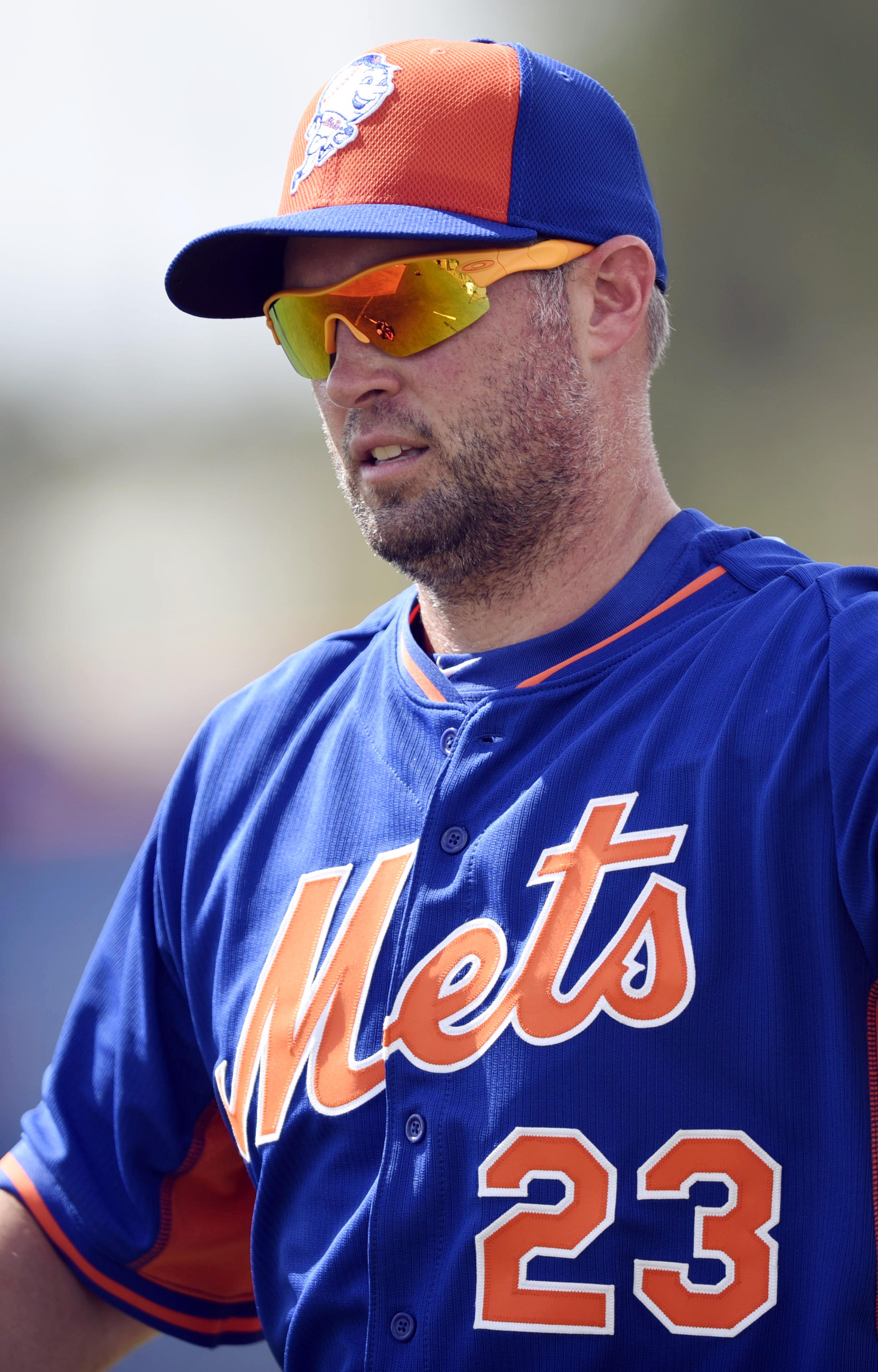 GM Sandy Alderson’s most impactful decision was the signing of Cuddyer. That came as a major surprise, as the veteran outfielder had appeared destined to become the first player ever to accept a qualifying offer. He chose instead to decline that one-year deal and sign with the Mets, inking for a fairly reasonable guarantee but also costing the team a mid-first round pick in this year’s amateur draft. New York had an obvious need in the corner outfield, and chose to bank on Cuddyer’s ability to stay productive despite questions about his health (he had DL stints for shoulder and thigh issues last year) and age (he’ll soon turn 36).
Of course, some might argue that an even more important choice was the team’s lack of action at shortstop. Some reports, and persistent speculation, pegged the Mets as suitors for both Troy Tulowitzki and Ian Desmond, two of the game’s very best overall shortstops. Whether or not either were serious possibilities, the end result is that 23-year-old Wilmer Flores will enter the year as the starter. (More on that below.)
Otherwise, the club largely picked around the edges of the roster. John Mayberry Jr. will serve as a bench bat and could see time in the corner outfield and at first base. But he and Cuddyer represent the entirety of the Mets’ major league commitments.
New York was even fairly quiet in terms of adding veteran minor league free agents, preferring instead to rely primarily on in-house options to round out the bench and staff. Among the players that were signed, only bullpen candidates Buddy Carlyle and Scott Rice appear to have much of a chance of making the roster.
Questions Remaining
Shortstop remains a source of controversy and intrigue for the Mets. Flores had a fairly promising 2014 campaign, slashing .251/.286/.378 and playing surprisingly well-reviewed defense, but he is far from a proven commodity. The same holds all the more true of presumptive backup Ruben Tejada, still just 25, who has failed to lock down the job despite nearly 2,000 MLB plate appearances over the last five seasons. If that combination falters, a mid-season acquisition and/or major free agent pursuit could ensue.
Uncertainty of a different kind looms at second, where Daniel Murphy is entering his final season of team control. There seems to be little chance of an extension, and Murphy could become a trade candidate if the club fails to stay in contention. An extended look for one or more future replacement candidates could come earlier than expected if Murphy’s hamstring pull forces him to miss time. Leading the way as a long-term option is Dilson Herrera, who cracked the bigs at age 20 last year and looks to be a gem mined by Alderson in the 2013 Marlon Byrd trade. But older, lower-upside minor leaguers like Matt Reynolds or Danny Muno appear to be first in line for a short-term run.
Elsewhere in the everyday lineup, it’s all about trusting and hoping for performance. Cuddyer and Curtis Granderson are established big leaguers at the corner outfield positions, but both come with their share of questions. In the infield corners, Lucas Duda will look to build on his strong 2014 while David Wright will aim for a rebound to his top-level form. Up the middle, backstop Travis d’Arnaud and center fielder Juan Lagares will look to cement themselves as fixtures for years to come.
In terms of bench roles, the lack of options will play a significant role. As MLBTR’s Tim Dierkes recently reported, reserve candidates Mayberry, Kirk Nieuwenhuis, and Cesar Puello all lack option years (as do Flores and Tejada). The first two of those names seem destined for bench spots, while the 23-year-old Puello, who has yet to see big league action, could end up looking for a new team.
The rotation is loaded with a variety of candidates, and is the clear strength of this roster. That holds true even with 24-year-old righty Zack Wheeler out for the season after Tommy John surgery, because the team never pulled the trigger on dealing Dillon Gee and has an armada of young arms lining up at Triple-A. All eyes will be on Harvey, of course, especially if there is cause to question the team’s handling of his return from his own TJ procedure. Jacob deGrom will look to prove that his unexpected 2014 was no fluke, while a trio of veterans (Gee, Jon Niese, Bartolo Colon) fill things out. Should the need arise, well-regarded hurlers such as Rafael Montero, Noah Syndergaard, and Steven Matz will be on hand to step in.
The bullpen, too, seemed to be shaping up nicely with its most established piece, Bobby Parnell, set to return early in the season after missing virtually all of 2014. Adding him to a late-inning mix that includes Jenrry Mejia, Jeurys Familia, and Vic Black seemed likely to form the core of a solid unit. There’s probably an argument to be made that another quality, veteran arm could have been added to this group, particularly since Parnell was (and still is) no sure thing.
It remains to be seen whether the club will regret not bolstering its right-handed reserves, but it already seems clear that the failure to add more southpaws will create challenges. Josh Edgin, the team’s lone established lefty, was lost for the year to TJ surgery just days after the last veterans were snapped up off the open market. The club will presumably keep an eye out for players missing out on other rosters later this spring, but otherwise will be forced to lean on the 33-year-old Rice or untested options such as Dario Alvarez and Rule 5 pick Sean Gilmartin.
Deal Of Note
The Cuddyer signing came as a legitimate surprise, in large part because many believed that he would be forced into taking the qualifying offer to avoid too great a dent into his market. But by lining up a deal before his deadline came, his representatives were able to avoid the fate of several draft compensation bound players who came before.
From the perspective of the Mets, the decision to sacrifice a valuable pick to add the aging and injury-prone Cuddyer is at least worth questioning. One charge that has often been leveled at the team of late is that it its ownership group is unwilling (or unable) to maintain a salary befitting the club’s large-market status. Sacrificing a pick rather than paying more for a comparably valuable player fits that narrative to some extent, at least at first glance.
But the reality is that Cuddyer represents a rather particular player that, arguably, makes particular sense for this club. One of the game’s most respected clubhouse members, Cuddyer could play an important role in bringing the team along competitively without requiring a huge commitment. While his numbers in Colorado were obviously aided by playing in Coors Field, and he posted rather wide home/road splits last year, he mashed everywhere during his excellent 2013 campaign.
Cuddyer is a poor defender, in addition to the above-noted risks, but that segment of the market does not contain flawless players. The alternatives in the general price range — players such as Nick Markakis, Colby Rasmus, Michael Morse, and Torii Hunter — all come with their own question marks. And it is not difficult to think of reasons that the Mets preferred Cuddyer among this group. When it turned out that his price tag included the sacrifice of a pick, that was simply one of the factors to be weighed, and there is an argument to be made that the team showed resolve to win by giving up that future value to obtain him.
Of course, as MLBTR’s Tim Dierkes notes, Cuddyer seems to be a great fit as the right-handed-hitting portion of a time share at first. Duda struggles against same-handed pitching while mashing righties, seemingly creating a nice match. While the team has given indication that it intends to allow Duda to try to work out his issues in that regard, potentially limiting Cuddyer’s time at first, he remains a very appealing option in such a role if Duda cannot turn things around.
Overview
Of course, there is a plausible scenario where the Cuddyer deal turns out poorly. But its limited duration cabins the risk. The most stringent questions about this offseason will probably come if Flores and Tejada struggle. While it is easy to defend the decision not to dabble in a free agent market at short that featured names like Jed Lowrie and Asdrubal Cabrera, and it is fairly likely that it would have taken a huge prospect outlay to land Tulowitzki or Desmond, the fact remains that Alderson and co. have much at stake in how those young players (Flores, in particular) come through this year.
The same holds true to a lesser extent in the relief corps, where the team seemingly passed on plenty of opportunities to add veterans. But the end of the spring and the summer trade market should hold plenty of solutions if the need is there and the Mets are in contention.
On the whole, this offseason was less about pushing the organization’s chips onto the table than it was about gathering its young core for a first real effort at winning. There will be plenty of disappointment if that does not occur — and plenty of blame directed at ownership and the front office. From one perspective, at least, the real test of the team’s willingness and ability to spend will probably come next year, with a 2015-16 free agent market that is shaping up to be one of the strongest in years.
Of course, an alternative read of the Mets’ winter is that the club decided not to invest in a winner. The total outlay did not exactly set the pace league-wide, and stands in some contrast within the division to the Nationals’ signing of Max Scherzer, the Marlins’ significant investments (mostly through trades and extensions), and even the Braves’ roster reshaping. All will probably be forgotten if the Mets compete to the wire, but there could be some what-ifs here. New York will field a highly variable team with its share of both upside and downside, and it is eminently arguable that some thoughtful additional moves would have raised the floor and provided some depth for a full year of competition.
Perhaps, then, the true test will come this summer: if New York is in the hunt and has a few areas of need, will it part with prospects and/or commit payroll to bolster its roster down the stretch?
Jerome Williams Feels At Home With The Phillies
Last offseason, Jerome Williams was on the shelf for quite a while as he waited to find out where his next home would be. The veteran had just turned in a career-high 169 1/3 innings for the Angels in 2013 and even though his core stats weren’t stellar, the advanced metrics indicated that he would have had a much better ERA with some luck on his side. Ultimately, Williams was left in limbo until February when he signed a one-year deal with the Astros with $2.1MM guaranteed. All in all, that offseason experience is one that the 33-year-old is glad to have in his rear view mirror.
“It was kind of nerve racking. Going through a season where I was with the Angels and I felt like things would have gotten done earlier, I proved to people that I could [start and pitch out of the bullpen] at that time. I was the only pitcher that had 25 starts and ten relief appearances, I think I was thinking at that time that people would come out and offer me something and it didn’t happen. It was kind of nerve racking but we got it done and that’s all that mattered,” Williams told MLBTR in the Phillies’ Clearwater clubhouse.
Even though he was biting his nails a bit, Williams says he wasn’t phoning agent Larry O’Brien to get constant updates. The Full Circle Sports Management rep has been in the field for more than 30 years and, as Williams put it, “he knows what he’s doing.” Indeed, O’Brien was relentless in his efforts to find a suitable deal for Williams and eventually he found a solid one-year platform for him to showcase his talents.
Unfortunately, things didn’t work out in Houston and the next stop in Texas wasn’t fruitful, but he found success with the Phillies when he landed there in August. In nine starts for Philadelphia, Williams pitched to a 2.83 ERA with 6.0 K/9 and 2.7 BB/9 across 57 1/3 frames. After ending the year on a high note, Williams jumped at the chance to skip the free agent process and stick with the Phillies with a one-year, $2.5MM contract extension.
“This was a no-brainer for me,” Williams explained. “Playing with them for the couple months I was with them, it was a no-brainer. The atmosphere, the guys in the clubhouse, the city, it was a no-brainer to come back.”
Williams credited his Philadelphia battery mates Carlos Ruiz and Wil Nieves for his improved performance to close out the year. His comfort level with the Phillies also helped matters. With seven different major league stops over the course of his career, Williams knows what he likes in a clubhouse and what he would rather avoid.
“I like being here because everybody treats everybody like family. When I came in, I was a new guy but I’ve been a long time and I knew a lot of the veteran guys here, so that made the transition a lot easier. I started talking to Jimmy [Rollins], Chase [Utley], I played with Chase in the [Arizona] Fall League, I played against Marlon [Byrd], I played against A.J. [Burnett], so it’s like, whoa, I know these guys.”
“Just seeing the younger guys mature, it was like a family, so that’s what the clubhouse is all about. This is your domain, this is our family, this is our place. So if we can be one as a family and as a unit, we can do things together,” Williams said.
Family is a concept that’s hugely important to Williams. In honor of his late mother who lost her battle to breast cancer in 2001, he’ll once again be donning a multitude of colorful gloves to raise awareness for different forms of cancer. Williams’ top choice is pink in recognition of his mother, but he’ll also be mixing it up with four different colors to put the spotlight on prostate, pancreatic, liver, and childhood cancers.
After a stress-free winter and a productive spring, Williams is eager to take the mound in April and build on his strong performance at the close of 2014. If all goes according to plan, Williams won’t find himself waiting around for a call next winter either.
Offseason In Review: Chicago Cubs
The Cubs made multiple splashes this winter, spending big to bring in Jon Lester and Joe Maddon while also rounding out their rotation and adding a new starting catcher and center fielder.
Major League Signings
- Jon Lester, SP: six years, $155MM. $25MM mutual option for 2021 with a $10MM buyout. Guaranteed with 200 innings in 2020 or 400 in 2019-20. Full no-trade clause.
- Jason Hammel, SP: two years, $20MM. $12MM club option for 2017 with a $2MM buyout. May void based on 2016 performance.
- David Ross, C: two years, $5MM.
- Jason Motte, RP: one year, $4.5MM.
- Tsuyoshi Wada, SP: one year, $4MM.
- Chris Denorfia, OF: one year, $2.6MM.
- Jacob Turner, SP: one year, $1MM (club option exercised).
- Total spend: $192.1MM.
- Joe Maddon, Manager: five years, $25MM.
Notable Minor League Signings
- Phil Coke, Francisley Bueno, Daniel Bard, Jonathan Herrera, Mike Baxter, Adron Chambers, Taylor Teagarden, Chris Valaika, Pedro Feliciano
Trades And Claims
- Claimed RP Joe Ortiz off waivers from Rangers.
- Claimed RP Donn Roach off waivers from Padres.
- Acquired IF Tommy La Stella from Braves for RP Arodys Vizcaino. Deal included swap of international bonus slots that netted Braves $832K in pool money.
- Acquired C Miguel Montero from Diamondbacks for RP Zack Godley and RP Jeferson Mejia.
- Acquired cash from Angels for Rule 5 pick Taylor Featherston.
- Acquired RP Matt Brazis from Mariners for OF Justin Ruggiano.
- Claimed RP Mike Kickham off waivers from Giants. Later traded to Mariners for SP Lars Huijer.
- Acquired CF Dexter Fowler from Astros for IF Luis Valbuena and SP Dan Straily.
- Claimed RP Gonzalez Germen off waivers from Rangers.
- Claimed RP Drake Britton off waivers from Red Sox.
Notable Losses
Luis Valbuena, Dan Straily, Justin Ruggiano, Carlos Villanueva, Wesley Wright, John Baker, Ryan Kalish, Zack Godley, Jeferson Mejia, James McDonald, Kyuji Fujikawa
Needs Addressed
Manager Joe Maddon surprised the baseball world by opting out of his Rays contract in late October, a clause triggered when top executive Andrew Friedman jumped to the Dodgers. Cubs manager Rick Renteria was fired a week later. In a statement on Halloween, Cubs president Theo Epstein explained he made the difficult decision to be loyal to the organization rather than being loyal to Renteria, who had been expected to manage the Cubs in 2015. Maddon’s deal with the Cubs was announced hours later.
The Rays contend Maddon opted out after talking to the Cubs, and MLB is investigating the Cubs for tampering. In February, new Commissioner Rob Manfred said a decision regarding that charge will be made prior to Opening Day. Aside from perhaps strained relations between the two clubs, it’s difficult to imagine the Cubs suffering any penalty of consequence even if they are found guilty. The series of events feels a little dirty, as Ken Rosenthal of FOX Sports put it, but in the end, the Cubs now have one of the best-regarded managers in baseball.
After declining a $5MM option on Wada, the Cubs inked him to a non-guaranteed deal worth $4MM. The 34-year-old showed promise as a back-rotation option in a small sample of 13 starts in 2014, and the cost was minimal. Travis Wood was also retained, with an arbitration contract worth $5.685MM. He’s consistently shown the skills of a 4.40 ERA pitcher. With Wood a borderline non-tender candidate and Wada potentially ticketed for Triple-A to start the season, it’s fair to ask whether the Cubs could have found a better way to spend nearly $10MM.
Also in November, the Cubs picked up La Stella in a trade with the Braves. Though GM Jed Hoyer insisted the move wasn’t a precursor to anything, La Stella fits nicely as a replacement for Valbuena, who was traded in January. We’ll look at that trade under the Deal Of Note section.
The Cubs had a functional catcher under control in Welington Castillo, but clearly felt that was an area to upgrade. They kicked off their offseason with a pursuit of Russell Martin, by far the best available option. The Cubs ended up finishing in second on Martin, though there’s no evidence they got close to the five-year, $82MM deal he signed with the Blue Jays.
Though it was thought the Cubs were in the Martin market rather than the catching market, they executed on Plan B by acquiring Montero during the Winter Meetings. With a minimal cost in prospects, the acquisition was akin to signing Montero to a three-year, $40MM free agent deal (the amount remaining on his contract). The Montero and Ross acquisitions suggest a conscious effort to improve the team’s pitch-framing, an area in which Castillo rates poorly. Veteran leadership was also a factor.
Still, there’s a reason a willingness to take on Montero’s contract was most of what was needed to acquire him – the 31-year-old hit .237/.324/.358 over the last two seasons and makes more than $13MM annually through 2017. In Montero, Wood, Motte, Denorfia, and Ross, the Cubs took on almost $58MM in commitments to five players who weren’t very good in 2014.
The Cubs also brought Hammel back as the Winter Meetings began, locking in their secondary rotation piece at a lower than expected price. It was thought that Hammel might command a three-year deal, but perhaps he was just motivated to return to Chicago. The Cubs had reportedly looked at Justin Masterson as an alternative; he signed a one-year, $9.5MM deal with Boston.
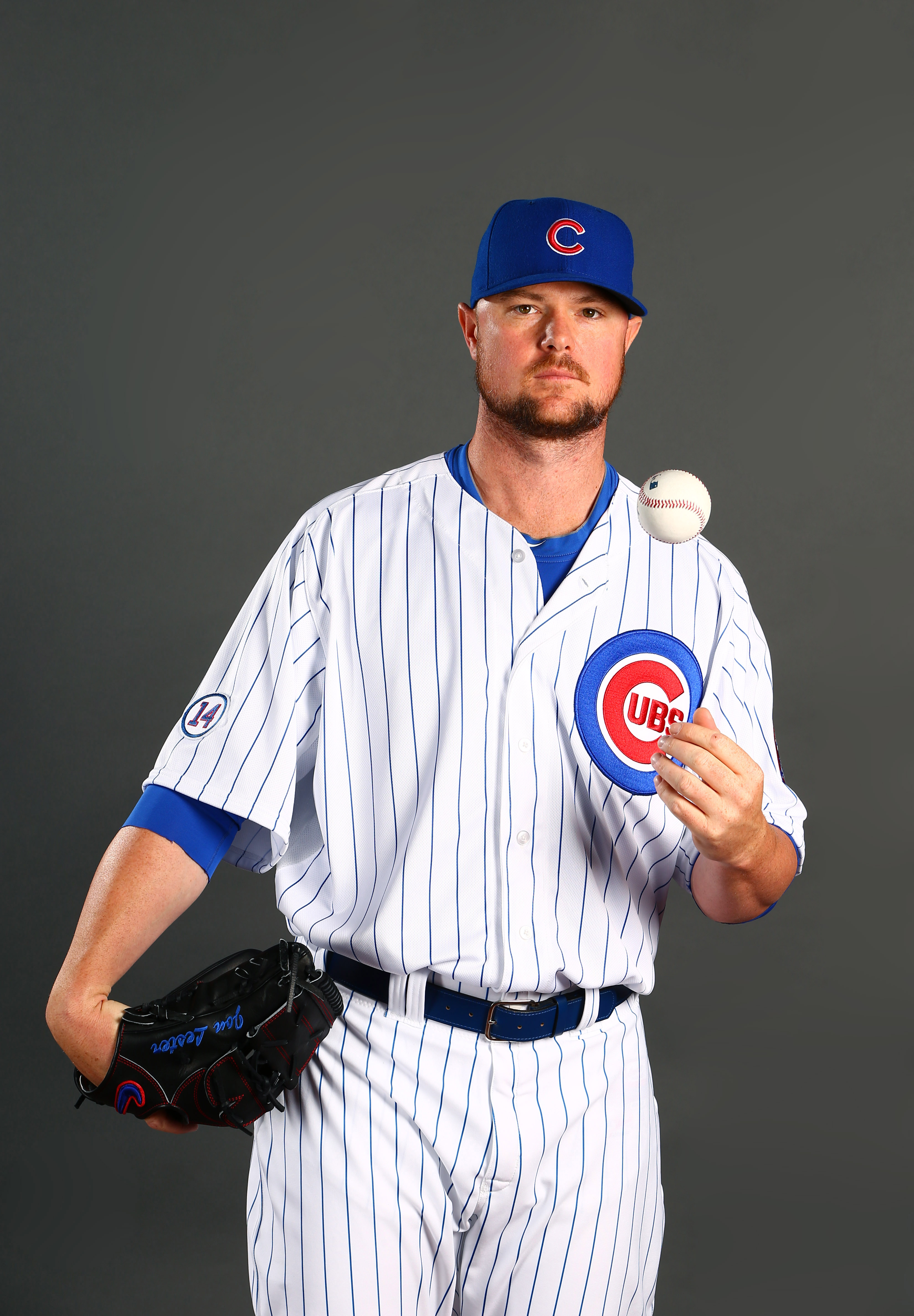
The Winter Meetings was also the site of the Cubs’ biggest winter splash, as they completed their tense pursuit of Lester with the largest contract in franchise history. The lofty $155MM price tag matched expectations, and after years of conserving payroll, the Cubs can certainly afford it. The Cubs need their new ace to be a workhorse, a trait that’s missing from the team’s other projected starters. Any deal of this magnitude and length for a starting pitcher carries a lot of risk, but the Lester signing addressed the team’s biggest need without sacrificing young cornerstone players or a draft pick.
Also in December, the Cubs picked up Motte on a low-risk deal to complement their bullpen. The former Cardinals closer will be two years removed from Tommy John surgery in May. The Cubs’ bullpen could be deep if Motte rediscovers his 2012 form.
Questions Remaining
As James Shields‘ free agency dragged into February, the Cubs got involved in hopes of a bargain. According to Pat Mooney of CSNChicago.com, “The Cubs made Shields a backloaded offer that started at $60 million over four years. That morphed into a three-year, $60 million concept that included a significant amount of deferred money and a vesting option that would still cap the overall value at less than $80 million.”
As with Martin, the Cubs finished in second, but nowhere close to the player’s ultimate contract. Shields would have gone a long way toward answering the Cubs’ remaining rotation question marks. Even if Lester’s spring “dead arm” phase turns out to be nothing, none of the Cubs’ No. 2-4 starters (Jake Arrieta, Hammel, and Kyle Hendricks) have ever pitched 185 innings in a season. The Cubs have also shown continued interest in Cole Hamels. Such a deal could potentially happen this summer if the Cubs are willing to take the hit in giving up a young potential star.
The Cubs made the wise and expected choice to keep starting shortstop Starlin Castro, as the team’s impressive infield depth behind him has yet to fully arrive. The long-term look of the Cubs’ middle infield may start to be determined this year, depending on how Addison Russell, Javier Baez, and Arismendy Alcantara perform. Could Castro be moved this summer? We have seen that move from Theo Epstein’s playbook once before. For now, it will be Baez and Castro at second base and shortstop, with Russell potentially ready by midseason. Alcantara is valuable now in a super-utility role. The surplus has yet to manifest itself.
The Cubs have more immediate roster issues to address before the April 5th opener. With no strong offers for Castillo, the team is currently leaning toward opening the season with three catchers (none of whom can play another position). Epstein says Maddon has been “pounding the table” for three catchers, but it reduces the team’s flexibility if non-catchers need days off. The versatility of Alcantara, La Stella, and Denorfia would be crucial in a three-catcher scenario.
The Cubs also don’t have enough bullpen spots to retain everyone currently on their 40-man roster. Hector Rondon, Pedro Strop, Neil Ramirez, Jason Motte, Justin Grimm, and Phil Coke appear locked in, leaving one spot for Edwin Jackson and out of options relievers Drake Britton and Felix Doubront (assuming Wada goes to the minors or the DL). The disabled list could solve this logjam, or the Cubs can just release the worst two of the three.
Perhaps the biggest question for Cubs fans is, “When will Kris Bryant join the roster?” The third base phenom has clubbed nine home runs in 11 spring training games, but the Cubs would lose the ability to control him for the 2021 season if they put him on the Opening Day roster. Stashing him in Iowa for a few more weeks is the prudent thing to do, even if agent Scott Boras thinks the Cubs are “damaging the ethics and brand of Major League Baseball.”
I do want to play devil’s advocate to the commonly accepted wisdom that Bryant should not open the season with the Cubs. Say the Cubs wait until April 15th, meaning Bryant misses out on the bare minimum of eight potential big league games. Projections suggest the Cubs are sacrificing less than 0.3 wins above replacement in this scenario. However, I don’t think WAR was meant to be employed this way, and a player with Bryant’s talent could easily affect the outcome of one or two games within eight (or more). A single well-timed home run can do that. And the Cubs could easily miss the playoffs by one game this year. The 2010 Braves opened the season with Jason Heyward and won the Wild Card by one game. I’d probably cook up a reason to hold off on selecting Bryant’s contract, perhaps health or defense-related, but I don’t think it’s open-and-shut.
Deal Of Note
The Cubs’ January acquisition of Dexter Fowler may have flown under the radar because of Lester. The trade, which sent Luis Valbuena and Dan Straily to Houston, was a better allocation of resources for both teams. The Cubs didn’t have a true center fielder on the roster, and mostly because of Bryant, they didn’t really need Valbuena (the game’s 15th-best third baseman by WAR in 2014). Fowler projects for the highest on-base percentage on the Cubs, and the team thinks it found a way he can improve defensively. Beyond defensive concerns, Fowler has battled health issues. But if all goes well, he could be a qualifying offer candidate for the Cubs after the season.
Overview
The Cubs flirted with some huge moves in the 2013-14 offseason, and a year later they finally brought in their big-name manager and ace starter. Still, they’re keeping a relatively low payroll to start 2015, and probably could have afforded and justified an all-in plunge for Lester, Martin, and one of Shields, Ervin Santana, or Brandon McCarthy.
Second-guessing aside, the stakes are high for the first time in Theo Epstein’s tenure. The Cubs will be viewed as a disappointment if they don’t make the playoffs. They appear to be primed for sustained success, but it would be nice to get some actual wins on the board.
Offseason In Review: Philadelphia Phillies
The Phillies officially embarked on a rebuilding effort, but several key trade chips remain with the organization as the season approaches.
Major League Signings
- SP Aaron Harang: one year, $5MM
- SP Chad Billingsley: one year, $1.5MM
- RP Elvis Araujo: one year, $507,500 (estimated)
- Total Spend: $7.075MM
Notable Minor League Signings
- INF Andres Blanco, OF Brian Bogusevic, INF/OF Russ Canzler, SP Paul Clemens, OF Chase d’Arnaud, RP Jeanmar Gomez, OF Jeff Francoeur, C John Hester, C Koyie Hill, OF Darin Mastroianni, 1B Chris McGuiness, 3B Chris Nelson, SP Sean O’Sullivan, INF/OF Cord Phelps, SP/RP Kevin Slowey
Trades And Claims
- Acquired SP Zach Eflin, SP Tom Windle from Dodgers in exchange for SS Jimmy Rollins and $1MM
- Acquired SP Ben Lively from Reds in exchange for OF Marlon Byrd and $4MM
- Acquired RP Joely Rodriguez from Pirates in exchange for RP Antonio Bastardo
- Claimed OF Jordan Danks from White Sox
- Claimed OF Odubel Herrera from Rangers in Rule 5 draft
- Claimed RP Andy Oliver from Pirates in Rule 5 draft
Extensions
- OF Grady Sizemore: one year, $2MM
- SP/RP Jerome Williams: one year, $2.5MM
Notable Losses
Mike Adams (declined club option), Antonio Bastardo, A.J. Burnett (declined player option), Marlon Byrd, Kyle Kendrick, Wil Nieves, Jimmy Rollins
Needs Addressed
This winter, for Philadelphia, addressing needs meant opening up holes on the big league roster in exchange for salary relief and youth. Simply put, none of the team’s trades made sense from the perspective of competing in 2015. To the contrary, each obviously made the team worse in the near term — but all fit in the bigger picture.
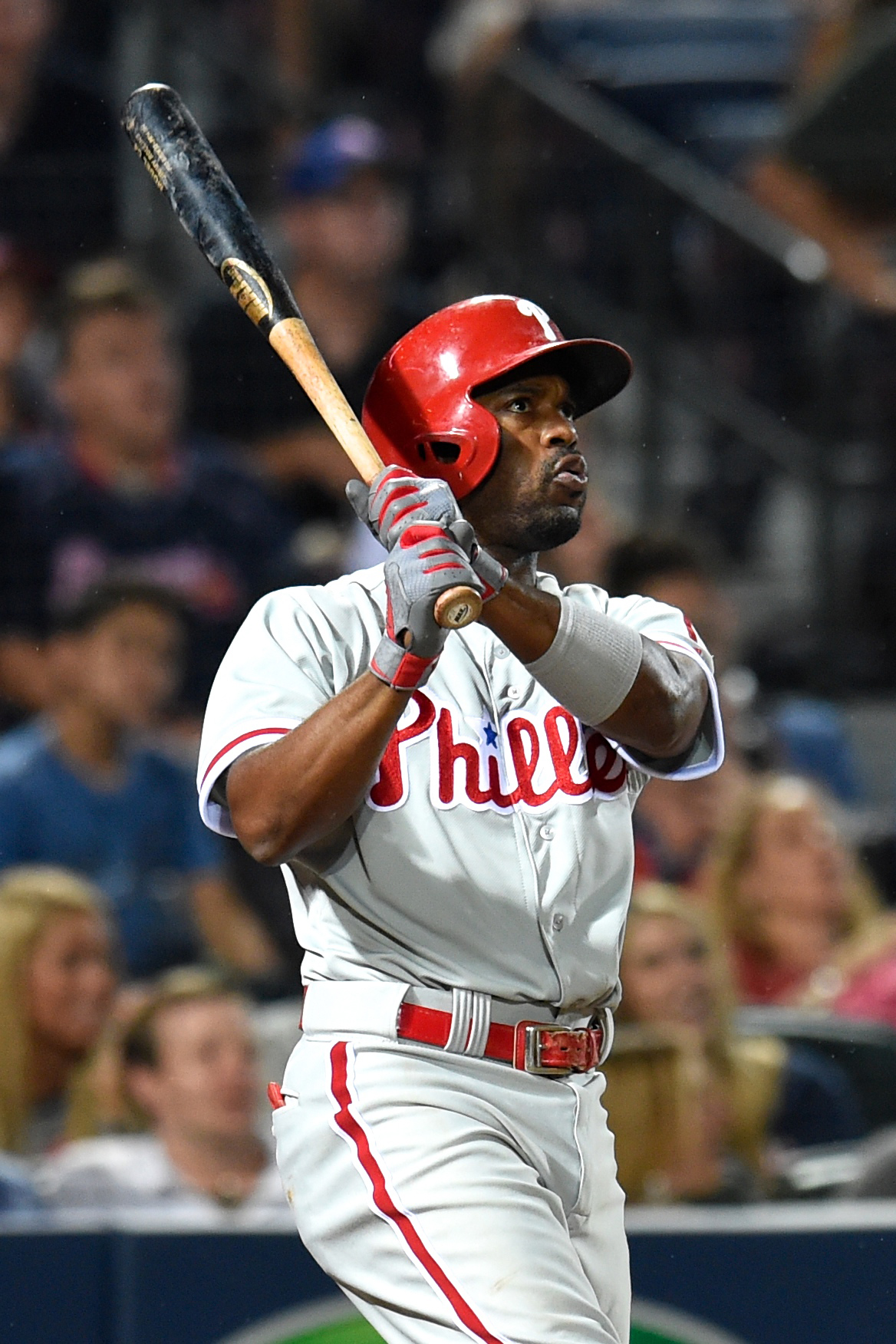 In addition to the public comments of newly-rehired club president Pat Gillick and GM Ruben Amaro Jr., dealing away franchise cornerstone Jimmy Rollins was the surest sign yet that the organization is committed to turning over its roster. Though it had been unclear whether the still-productive veteran would waive his no-trade clause to facilitate a deal, he ultimately chose to accept a move to the powerful Dodgers.
Of course, it was the long-anticipated parting with useful lefty Antonio Bastardo that kicked things off. And by the time he and Rollins were gone, a deal involving the aging Marlon Byrd seemed all but inevitable, and it was not long before he was ticketed for Cincinnati. Of course, that same reasoning seemingly applied to several other key veterans; yet, as discussed further below, that trio is as yet unaccompanied in departing.
Regarding the return on those assets, only time will tell whether Amaro chose wisely. Certainly, none of the players acquired appear to have terribly impactful futures in store. The cumulative haul, however, added a good bit of depth to the organization’s pitching ranks, together constituting the type of move that could pay dividends down the line by enhancing flexibility and limiting the need to pay market rates to fill out the roster.
Rollins, Byrd, and Bastardo were once key components on the active roster, of course, so replacement options had to be found. At short, Freddy Galvis figures to take the majority of the innings, but that just opened a utility role on the bench. The club brought in a variety of infielders on minor league deals to join the mix with the versatile Cesar Hernandez. Another possibility to see time in a utility capacity is Rule 5 pick Obudel Herrera, an infielder in Texas who is learning to apply his speed on the outfield grass.
As for the outfield, Grady Sizemore profiles as a more-or-less direct replacement for many of Byrd’s plate appearances from the corner. Otherwise, the team appears to be staging an open competition among numerous non-roster veterans to take on outfield bench roles. And three of the team’s offseason additions — Joely Rodriguez, Elvis Araujo, and Rule 5 pick-up Andy Oliver — were added to join Mario Hollands in filling the lefthanded relief void in Bastardo’s wake. Rodriguez and Araujo have already been optioned to Triple-A, and Hollands was just shut down with a tendon injury, leaving Oliver looking good to crack the MLB roster as the second lefty.
Likewise, departing starters Kyle Kendrick and A.J. Burnett — the latter of whom declined his $12.75MM club option to sign for nearly $5MM less with the Pirates — left rotation innings to be filled. Philadelphia opted to bring in the durable Aaron Harang and veteran swingman Jerome Williams while rolling the dice on a return to form for the injury-addled Chad Billingsley.
Taken as a whole, it is obviously hard to get excited about the new additions to the Philly roster. It was remarkable that Sizemore was able to return to a big league level of play last year after his long run of injuries, but entering his age-32 season after a more-or-less replacement level 2014, there is little reason to think he can make it all the way back to his former All-Star form. Likewise, Harang seemingly offers good value after a strong effort last year, and could conceivably bring a return at the trade deadline, but he does not offer much in the way of upside.
More might be hoped for from the talented Billingsley, who is still just 30 years old, but he has racked up all of 12 innings since the 2012 season and still needs to answer a lot of questions before he can even get back to the bump in a major league game. It’s a modest risk at $1.5MM, though Billingsley can bump his earnings up an additional $5MM through incentives. Philadelphia would gladly pay that if it can get innings from the veteran righty, who at least offers some possibility of bringing back real value if he can establish himself heading into the summer.
Questions Remaining
Once again, it is worth separating the club’s forward-looking situation from its immediate needs in 2015. With the focus on 2016 — or, perhaps, beyond — we’ll start with the former.
By kicking in a significant amount of cash to accompany Byrd (and, to a lesser extent, Rollins), the large-budget Phils evidenced a willingness to buy down contracts to improve the marketability of their costly veteran player assets. But the divestiture process slowed after early progress, and at present seems all but stalled.
Looking at the books as things stand, a half-dozen players stand out for their experience and cost on an admittedly rebuilding team: Cole Hamels ($96MM over four years + vesting option), Ryan Howard ($60MM over two years + club option), Cliff Lee ($37.5MM over one year + vesting option), Jonathan Papelbon ($13MM over one year + vesting option), Carlos Ruiz ($17.5MM over two years + club option), and Chase Utley ($15MM + three successive vesting options). The star power of that group is undeniable. In both 2008 and 2009, those six players combined to produce better than 25 fWAR (not all with Philadelphia, of course). But those days are long past: in each of the past two seasons, this group has been valued at about 15 fWAR. That’s still plenty useful, of course; then again, Philadelphia owes $105MM to the above-named players for 2015 alone.
Clearly, it was never realistic to expect this organization — fresh off a big new TV deal that should maintain the club’s spending advantages — to part with all of its veterans in one fell swoop. And practicalities such as the size of the deals and a variety of restrictive no-trade clauses also present barriers. Nevertheless, it is fair to question, as many have, whether more could have been accomplished over the offseason. Likewise, one of the two biggest questions currently facing the franchise is whether, when, and how it will cash in those player contracts. (The other? Its ability to acquire and develop a new wave of young talent.)
Hamels, of course, has drawn the most attention; winter rumors involving the Red Sox alone could fill a book. Amaro has repeatedly maintained that he has no intention of simply taking what he can get for the 31-year-old lefty, with reports suggesting that the club is looking for impact prospects and is disinclined to cover much (if any) of the remaining dollars left on the deal.
It is hard to judge this situation without knowing what has been offered, but it seems to me at least that there has been a rush to come down hard on Amaro. Hamels is clearly a valuable asset, in spite of his substantial contract, and the team would be doing little more than bowing to public pressure were it to part with him for young players that it did not believe in. Of course, he is not terribly young, and the risk of injury and/or performance decline cannot be ignored. But Philly can certainly afford Hamels, and it is at least plausible to think that holding him for the trade deadline (or, later this spring) is preferable to taking whatever might currently be on the table.
That has not stopped many from pointing to the recent experience with Lee as a sign that the Phillies are foolish for not auctioning Hamels immediately. The veteran ace seems all but certain to take home his last $37.5MM from the club without bringing any trade value in return — if he comes back to pitch again at all. But every arm is different, and it seems the real lesson from Lee is less about dodging the risk of injury than it is about realizing when the a team’s competition window is closed.
Regardless, losing the possibility of achieving any value from Lee is a big loss for the Phils. Howard and Papelbon could still bring back some cost savings and/or useful pieces. The former could still be a desirable player to roster, especially for an AL team, but is owed so much that the club will need to eat a huge amount of money to deal him even if he does perform. Papelbon, at least, comes with some flexibility at this point, particularly since he has remained quite productive despite a drop-off in his fastball velocity. A big first half could make the 34-year-old an attractive target at the deadline, when relief pitching has by far its greatest value and by which time an acquiring team may be more comfortable with his vesting option. (If he has performed well enough to that point, the idea of a $13MM salary may not be so terrible; if not, the Phillies can drop him from the closer’s role in favor of young fireballer Ken Giles to avoid being on the hook.)
It is at least somewhat interesting that we have heard very little on the possibilities of trades involving the team’s two other highly-paid veterans, Ruiz and Utley. That could be because the front office decided not to trade the pair of holdovers from the organization’s glory days — or, at least, not to market them. On the other hand, both were above-average regulars last year, and could well hold fairly significant appeal to contending clubs this summer.
The relatively younger, relatively less expensive portions of the roster are not without issues, either. Domonic Brown is entering a make-or-break season after following his strong 2013 with a terrible effort last year, though he could start out on the DL with tendinitis in his left Achilles tendon. And fellow outfielder Ben Revere needs to prove that he can hit for a high enough average and play good enough defense to make up for his lackluster on-base and power numbers. Depending upon how things play out, either could conceivably be viewed as a piece of the future, dealt, or non-tendered after the season.
Corner infield also figures to be an area to watch in 2015. Entering his age-25 season, Cody Asche still has a lot to prove at the hot corner but did at least demonstrate that he is not overmatched by MLB pitching. Coming up behind him, of course, is the highly-touted Maikel Franco. Still just 22, Franco seems ticketed for Triple-A to start the year but could push his way onto the roster at some point. He was not dominant in his first run at the highest level of the minors last year, struggled in a brief call-up, and could ultimately be shifted across the diamond to first. Of course, a combination of Howard and Darin Ruf currently occupies that role, so the team’s actions with regard to Howard and the progress of Asche, Ruf, and Franco this year could go a long way toward pointing the future at those positions.
Up the middle, the team is probably in something of a holding pattern. Until we hear otherwise, Utley and Ruiz remained entrenched at second and catcher, respectively. And Galvis will likely keep the seat warm for top prospect J.P. Crawford, who is still just 20 years of age and has not seen action above the High-A level.
On the other side of the equation, the rotation is a huge question mark heading into the season. The focus will remain on Hamels, no doubt, unless and until he is dealt. Behind him, Harang and Williams are at least known quantities, and can be counted on to sop up innings. Billingsley represents a wild card, with Lee a mere lottery ticket at this stage. 25-year-old David Buchanan seems fairly assured of a slot after a sturdy debut campaign last year, though he appears to be a back-of-the-rotation type. The aforementioned Rodriguez, a 23-year-old picked up in exchange for Bastardo, was said to be in the running to take the fifth slot out of camp but was recently sent down. Otherwise, some combination of Kevin Slowey, Miguel Gonzalez, Paul Clemens, and Sean O’Sullivan could be deployed. Top 2014 draft pick Aaron Nola looks like a quick mover, but was not invited to big league camp and probably will not figure into the club’s plans this year unless he advances even faster than expected. All told, there is immense uncertainty in this unit, which has the potential to be downright awful — particularly if Hamels is taken out of the equation.
If there is a clear bright spot at present, it may lie in a bullpen that now features not only the veteran Papelbon, but a rising closer-of-the-future in Ken Giles. It remains to be seen whether the Phils will look to move Giles into the 9th inning this year, but he was rather dominant as a rookie last season and certainly profiles into that role. Jake Diekman, a lefty, also possesses intimidating stuff and could combine with Giles to form a devastating combination for years to come. Justin De Fratus put up impressive numbers last year as well, and will look to establish himself as part of that group. There are several other options, many of them mentioned above, with the two most interesting being Gonzalez and fellow righty Phillippe Aumont. The former has shown little sign of delivering on the three-year, $12MM deal he signed out of Cuba last year, while the latter is the last man standing from the 2009 deal that sent Lee to the Mariners. Now out of options, Aumont will need to produce or will likely end up on the waiver wire.
Deal Of Note
Jimmy Rollins unquestionably belongs on the Phillies’ list of all-time greats after racking up over forty five wins above replacement and an MVP award in 14 seasons with the club. Over his tenure, he compiled a .267/.327/.424 slash with 216 home runs and 453 stolen bases, adding value with his glove all the while.
Indeed, there’s an argument to be made that Rollins will ultimately deserve a place in Cooperstown. He ranks among good company statistically: 20th lifetime in fWAR for a shortstop, nestled amongst several Hall of Famers. A few more quality seasons could put Rollins over the top. Barring a future reunion, however, he’ll make that run wearing another team’s uniform.
Trading a player of that magnitude is never easy, particularly when you have to eat some salary and do not receive a projected impact player in return. While it obviously made sense in theory for the Phillies to cash in a veteran asset, there is some potential for regret here. For one thing, the club still has some ways to go before handing the position over to the heir apparent (Crawford), who must still prove himself in the upper minors and the bigs. For another, any mid-season shortstop needs that arise around the league could look like missed opportunities to have extracted more value.
Ultimately, while Amaro has been panned for his supposed unwillingness to take a fair price for Hamels, his commitment to breaking up the team cannot really be questioned after the Rollins deal.
Overview
The Phillies got started on a future plan this winter, even if it came one year too late. It’s still fairly early in the process, and the near-term looks rather bleak, but it should be recalled that Philadelphia’s rebuilding project will benefit from the team’s substantial spending capacity. That will not only open opportunities to acquire high-level young talent, but should enable the team to ramp up quickly when it sees the light at the end of the tunnel.
Amaro’s decision to exercise patience in moving veteran assets has drawn a good bit of ire, as has become common for most any moves he makes. But the fact is that Philadelphia is not only well-suited to carry large financial obligations while it searches for fair value, but also is likely unwilling to completely gut its big league roster — and risk even greater attendance decline — just to be rid of its most recognizable players. While a spring deal or two remains possible, it could be that the team will wait until the trade deadline, if not beyond, to send out a few more big contracts.
Of course, trades are not the only way to add young talent, and neither is the annual amateur draft. It is at least somewhat notable, then, that the Phillies did not end up landing any of the top international players this offseason, despite the fact that the international market arguably represents the best chance for large-market clubs to gain an edge in the acquisition of young talent. The club was said to be the top pursuer of Yasmany Tomas, but ultimately backed off — perhaps because Gillick was not on board with that signing. Likewise, Philadelphia had at least some interest in Yoan Moncada, but never seemingly entered the bidding picture. Neither was the team one of those that busted its international bonus pool allocations by signing July 2 prospects or other recent Cuban defectors. Amaro has said that he intends to be “very aggressive” in the international arena, and it could still be that the club is set to do just that — while several other big-spending clubs serve out two-year periods of strictly limited international spending.
All in all, it is far too early to judge the organization’s still-fledgling efforts to chart a new course. There is little doubt, particularly in retrospect, that it waited too long to shift its gaze to the horizon — and paid for that by losing the chance of cashing in on Lee. But money talks in baseball, as elsewhere, and Philadelphia still has plenty in its war chest: having opened last year with nearly $180MM in payroll, the club has just $76MM committed for 2016, $34MM on the books for 2017, and only $23.5MM promised beyond that.
Photo courtesy of USA Today Sports Images.
Terry Ryan On Phil Hughes, Eduardo Escobar
Phil Hughes was two years away from free agency but both he and the Twins realized that they wanted to hammer out something for the long term. In December, Hughes agreed to a three-year extension that will pay him $42MM but also allow him to cash in again at the age of 32.
For both sides, the deal appeared to be a win-win. The Twins locked up Hughes following his best season to date and Hughes will get to hit the open market roughly at the same age as James Shields when he inked a four-year, $75MM deal with the Padres in February. In a pre-game scrum with the Twins’ beat writers on Monday, I asked GM Terry Ryan if the club ever pushed for a longer deal with the right-hander.
“I think that’s kind of where our comfort level was, he was signed for two and we tacked on more…In essence, I think that’s where we felt pretty comfortable in terms of his age and what he accomplished in his life and all that stuff,” Ryan said. “We were comfortable with it and so was he. At the end of the deal he’ll be [32] and that’s getting to an age when you start to have a bit of…concern at that point but then again, that’s how old Ervin Santana is and we signed him to a four-year deal. He’s a young guy, he’s been around for a long time. That’s what happens when you sign out of high school and move into the majors quickly.”
Meanwhile, this spring, Eduardo Escobar has presented the Twins with one of those good problems to have. Escobar’s production at the plate has made some wonder if he could force shortstop Danny Santana back to the outfield, unseating Aaron Hicks. I asked Ryan about that possibility and he seemed to downplay the chances of that happening.
“No, we’re still going with that path, there’s still competition but Santana is certainly playing well at short. Paul [Molitor] said he’d like him to be there if he plays well and to this point he has. Escobar has had a fine spring and I’ve stated this many times. It’s going to be tough to get him out of that position because he played well last year and he played well this spring,” Ryan said. “I don’t think I’m prepared right now to tell you who is going to play center and I’m not prepared to tell you who is going to play short, but Hicks is certainly in the mix and Santana is in the mix.”
Later, Escobar saw some time in the outfield in an effort to get him comfortable with playing multiple positions off the bench, as Ryan explained to MLB.com’s Rhett Bollinger and other reporters after the game.
Mike Pelfrey “At Peace” With His Pitching, Mets
In a spring start against the Phillies on Monday, Mike Pelfrey made his final argument for joining the Twins rotation. Unfortunately for the right-hander, a few bad breaks (including Cody Asche‘s two-run smash early in the afternoon) might have punched his ticket for the bullpen. The veteran has been in a strange spot this spring; while Pelfrey was fighting hard to make the starting five, he also knew there was a good chance that he would be asked to pitch out of the bullpen instead. One might see the uncertainty as a potential stumbling block in Pelfrey’s preseason preparation, but he refused to make excuses in a postgame chat with reporters.
“It hasn’t been that big of an issue. It’s all about routine. I’m not saying I can’t do it, I’ve just never done it. I’m a competitor, so I’ll make an adjustment if I need to. At the end of the day, pitching is still pitching,” Pelfrey explained, while adding that he’s “at peace” with what he’s shown over the past few weeks.
Between his seven years with the Mets and his two seasons with the Twins, Pelfrey has made a grand total of four relief appearances. Of course, during his time in New York, the former No. 9 overall pick had fans dreaming that he would blossom into an ace. For all we know, Pelfrey could have been on his way to that status in 2012 before he tore his UCL after three solid outings in April. Later that year, the Mets elected to non-tender Pelfrey rather than wait and see how things would shake out for him after surgery. I asked Pelfrey if he wishes that he had gotten another chance to put it all together in New York.
“I understood the business side of it, when they non-tendered me the GM [Sandy Alderson] actually called me and said that he appreciates everything I did there. I have no problems with that. I get it,” said the 31-year-old. “Then the Twins called and I have some family in Minnesota and I thought, man, this is a good opportunity, and like I said, I came back early [from Tommy John surgery]. Now is probably the best I’ve felt since I’ve been in Minnesota.”
Pelfrey would rather be gearing up every fifth game, but he says he’ll do just fine pitching out of the pen and he’s prepared to do whatever is asked of him to help the Twins win. However, one has to wonder if he could be helping another team in need of a starter instead. A contending club with a hole in its rotation could do a lot worse than adding Pelfrey, and it wouldn’t be surprising if the Twins received calls on him once the season starts.