
Diamondbacks Sign Joc Pederson
Jan. 30: The D-backs have formally announced the signing of Pederson to a one-year deal with a mutual option.
Jan. 25: The Diamondbacks continue adding to the lineup. They’re reportedly in agreement with designated hitter/outfielder Joc Pederson on a one-year, $12.5MM guarantee. The Excel Sports Management client will receive a $9.5MM salary next season and is due a $3MM buyout on a 2025 mutual option valued at $14MM.
Pederson, 32 in April, has been a potent slugger in the big leagues for a decade now. Since his 2014 debut, he has launched 186 home runs while playing for the Dodgers, Cubs, Braves and Giants.

That latter club has employed Pederson for the past two seasons. He signed a one-year, $6MM deal going into 2022 and gave the club plenty of return on that investment. He hit 23 home runs and walked in 9.7% of his plate appearances. His .274/.353/.521 batting line translated to a wRC+ of 146, indicating he was 46% better than league average. His defense continued to be a liability, but that offensive production was excellent.
The Giants were clearly impressed, as they surprisingly extended a $19.65MM qualifying offer to Pederson going into 2023. He accepted that offer and returned to San Francisco for another year, which led to results that were a bit more mixed. His walk rate jumped up to 13.4% but his batting average dipped and he only hit 15 home runs on the year. His .235/.348/.416 batting line led to a wRC+ of 111, still above average but a big drop from the year prior.
Despite the down year in terms of results, there are reasons to be bullish, something recently explored by Leo Morgenstern of MLBTR. Pederson’s Statcast page continues to glow with a crimson red, as his hard hit rate and average exit velocity are both in the top 10% of qualified hitters. Despite continually pummeling the ball, his batting average on balls in play dropped from .310 in 2022 to .268.
That latter figure exactly matches his career BABIP, which arguably points more to 2022 being an outlier than the most recent season. But on the other hand, 2023 was the first year with the ban on defensive shifts. As a slow-running left-handed power bat, Pederson was the exact type of player the shift ban was supposed to help, and yet his BABIP dropped by over 40 points as his quality of contact stayed strong.
Even if the BABIP fortune doesn’t change, Pederson can be a valuable platoon bat. His .242/.344/.490 line against righties in his career translates to a 125 wRC+, compared to a line of .209/.293/.329 and a 73 wRC+ against lefties. His 2023 results were pretty close to those career marks, with a .241/.351/.435 slash and 115 wRC+ with the platoon advantage and .186/.327/.279 and 80 wRC+ otherwise.
Diamondbacks general manager Mike Hazen has been open for some time about the club’s willingness to add a full-time designated hitter, and Pederson would fit the bill. He can play the outfield a bit, and has seen brief stints at first base, but his glovework has never been highly rated and his time spent on the grass has declined over time. He only made 23 starts in the outfield in 2023 and logged just 204 innings there for the year.
Those figures may decline even further in 2024 if a deal gets done with the Snakes. They will likely have Corbin Carroll, Alek Thomas and Lourdes Gurriel Jr. as their regular outfield, with Jake McCarthy and Dominic Fletcher on hand for depth. With those outfielders on the roster, they wouldn’t need Pederson to don a glove very often.
After making a surprise World Series run in 2023, the Diamondbacks have been active in reloading the roster for 2024. They traded for Eugenio Suárez to take over as their third baseman and signed Eduardo Rodríguez to strengthen their rotation. If they are able to get a deal done with Pederson, it would add another threat to the lineup.
Those moves have pushed the club into unprecedented payroll territory, despite the fact that their RSN deal with Diamond Sports Group collapsed in 2023. Per Cot’s Baseball Contracts, the club’s franchise record Opening Day payroll is $132MM. Roster Resource now projects next year’s payroll figure above $142MM.
ESPN’s Buster Olney first reported the Diamondbacks and Pederson were in discussions. Nick Piecoro of the Arizona Republic reported the sides were closing in an agreement. Steve Gilbert of MLB.com was first to report the sides had agreed to a one-year deal with a mutual option for 2025. Piecoro reported the salary breakdown.
Image courtesy of USA Today Sports.
Mariners Acquire Jorge Polanco
The Mariners and Twins have lined up on one of the bigger trades of the offseason. Seattle announced the acquisition of second baseman Jorge Polanco for four players: reliever Justin Topa, starter Anthony DeSclafani and prospects Gabriel Gonzalez and Darren Bowen, as well as cash considerations. The Mariners are reportedly including $8MM to cover two-thirds of DeSclafani’s $12MM salary for the upcoming campaign.
Seattle and Minnesota have long seemed an on-paper fit for this kind of move. The M’s didn’t get much out of their second basemen last season. Opening Day starter Kolten Wong was released midway through the year. Landing Josh Rojas in the deadline deal that sent Paul Sewald to the D-Backs helped to an extent, but the position still seemed a weakness entering the offseason.
The M’s further thinned the infield with a trade sending third baseman Eugenio Suárez to Arizona. Seattle brought in non-tender candidate Luis Urías in a deal with the Red Sox to add a contact-oriented hitter to the mix. While Rojas and Urías could split time between second and third base, it’d have been risky to count on both players as regulars.
As a result, Seattle lands one of the top offensive middle infielders on the trade market. The switch-hitting Polanco has posted above-average numbers at the plate in four of the past five seasons. Since the start of the 2019 campaign, he owns a .267/.337/.458 slash in nearly 2400 plate appearances. Knee and hamstring issues bothered him early last season, but he hit at a typically solid level when healthy. Polanco connected on 14 homers over 80 games, running a .255/.335/.454 line through 343 trips to the dish.
That steady production made it an easy call for the Twins to exercise a $10.5MM option on his contract. That’s a below-market price for a quality regular. Yet even with Minnesota triggering the option, there was a general belief that he could find himself on the move this offseason. The Twins have an enviable collection of infield talent that already threatened to bump the 30-year-old Polanco from his natural position.
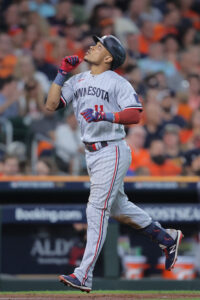
While Polanco was on the injured list, 24-year-old Edouard Julien mashed his way to the second base job. He hit .263/.381/.459 as a rookie to secure a spot atop Rocco Baldelli’s lineup. The Twins gave Polanco 103 innings at third base once he returned, his first action at the hot corner since 2016. With former first overall pick Royce Lewis emerging as a star down the stretch and into the postseason, that wouldn’t have been an avenue to regular playing time moving forward.
Minnesota could have used Polanco at second base while deploying Julien at designated hitter. That would have limited their flexibility to cycle other players through the DH spot while potentially pigeon-holing one of Minnesota’s more talented young hitters to a bat-only role. Polanco had some experience at shortstop early in his career, but he moved off the position because of defensive shortcomings and clearly wasn’t going to start over Carlos Correa. Minnesota also tendered arbitration contracts to utility infielders Kyle Farmer and Nick Gordon. José Miranda remains on hand as an option at the corners, while former #8 overall pick Brooks Lee could make his MLB debut in 2024.
It surely wasn’t an easy call for the front office to move on from one of their longest-tenured players. Polanco had been in the organization since signing as a 16-year-old back in 2009. He reached the big leagues before his 21st birthday and established himself as a regular by 2016. Polanco earned an All-Star nod and down-ballot MVP votes in ’19 and played a key role on four playoff teams.
The amount of infield depth nevertheless made a trade a distinct possibility. Minnesota’s pitching staff took a hit with free agent departures of Sonny Gray, Kenta Maeda and Tyler Mahle. The Twins had done very little to balance the roster, citing payroll constraints related to their expiring local broadcasting contract. Minnesota was willing to field offers on their infield surplus, although president of baseball operations Derek Falvey made clear they’d seek MLB help as part of that return.
Seattle was open to parting with both a pair of big league arms and at least one of their top minor league talents to get the deal done. Ryan Divish of the Seattle Times writes that the M’s plan to use Polanco as their primary second baseman. That could leave the lefty-hitting Rojas and the right-handed swinging Urías to share time at third base. The M’s could keep Polanco at the keystone for two years. They’ll take on this year’s $10.5MM salary and hold a $12MM option for 2025 that comes with a $750K buyout. If Polanco performs at the level the Mariners envision, they’d likely exercise that option.
The Mariners relinquish some of their pitching depth to make that happen. Topa has less name value of the two MLB players headed to Minneapolis, but he’s the more appealing trade asset. The right-hander was a key part of another excellent Seattle bullpen a year ago. Acquired from the Brewers for a minor league pitcher in what seemed an insignificant trade last winter, the righty put together a career year.
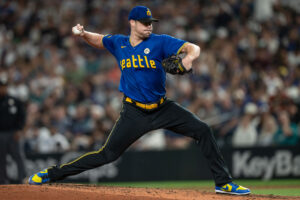
Topa, who had 17 career MLB appearances going into the season, pitched 75 times for the M’s a year ago. He worked to a 2.61 ERA across 69 innings. Topa’s 21.9% strikeout rate was a little below average, but he did an excellent job keeping the ball on the ground. Working with a 95 MPH sinker and a pair of breaking pitches in his cutter and slider, he induced worm-burners at a very strong 56.7% clip. His production increasingly earned the trust of manager Scott Servais. By year’s end, he’d picked up 23 holds and a trio of saves.
If Topa can maintain that kind of production, he’d be an asset for the Minnesota relief corps. There’s a fair bit of risk with the 6’4″ hurler. Topa will turn 33 before Opening Day and has a lengthy injury history. He had undergone two Tommy John procedures and a flexor tendon surgery during his time in Milwaukee, a major reason he hadn’t logged extended MLB action until last year.
He accrued a decent chunk of service time while on the injured list and surpassed the three-year mark a year ago. Seattle and Topa agreed to a $1.25MM salary to avoid arbitration. He’ll go through that process twice more and won’t reach free agency until after the 2026 campaign. Topa still has a pair of minor league options, so the Twins could send him to Triple-A if he struggles unexpectedly.
DeSclafani spent less than a month as a member of the Mariners. Seattle acquired the righty alongside Mitch Haniger in the trade sending Robbie Ray to the Giants just after the New Year. His inclusion in both trades is motivated in large part by finances.
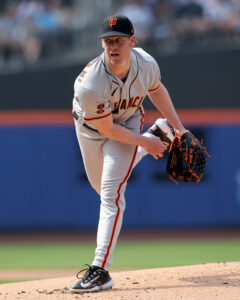
The 33-year-old (34 in April) is set to make $12MM in the final season of a three-year free agent deal he inked with San Francisco. The Giants are paying half of that, sending $6MM to Seattle as part of the Ray trade. Seattle is moving that $6MM to Minnesota and including an additional $2MM. The Twins are responsible for the final $4MM on the deal.
It has been a tough couple years for DeScalfani, who was limited to five starts in 2022 before undergoing season-ending ankle surgery. Injures were again an issue last year. This time, a flexor strain in his throwing elbow ended his season in late July.
Before the arm injury, he had pitched 19 times and logged 99 2/3 innings. The nine-year veteran worked to a 4.88 ERA with a below-average 18.9% strikeout percentage. He walked fewer than 5% of opponents but he’s lost a few points off his strikeout and ground-ball numbers since his excellent 2021 campaign, when he posted a 3.17 ERA over 31 starts.
The Mariners were set to use DeSclafani in a long relief capacity. Minnesota could afford him a chance to battle for the #5 spot in the season-opening rotation. The Twins have Pablo López, Joe Ryan, Bailey Ober and Chris Paddack in the top four spots. DeSclafani and right-hander Louie Varland are the top options for the final rotation job. Whichever of those two starts the season in long relief could move into the rotation as injuries necessitate.
Gonzalez, who turned 20 this month, isn’t going to contribute at the MLB level anytime soon. He’s nevertheless arguably the headliner of the deal from Minnesota’s perspective. The right-handed hitting outfielder signed with Seattle for $1.3MM out of Venezuela during the 2021-22 international period. Baseball America recently ranked him the #5 prospect in the M’s system, while MLB Pipeline has him as the game’s #79 overall minor league talent.
Evaluators praise Gonzalez’s natural bat-to-ball skills. Those were on display in Low-A, where he hit .348/.403/.530 with a modest 13.7% strikeout rate in 335 plate appearances last year. However, Baseball America notes that Gonzalez has an extremely aggressive offensive approach that was exposed when he was promoted to High-A midseason. He struggled to a .215/.290/.387 slash while fanning at a 21.5% clip in 200 plate appearances at that level. Gonzalez walked in fewer than 7% of his plate appearances at both stops. As a below-average athlete who projects as a corner outfielder, he’ll need to improve his plate discipline to reach his potential.
Bowen, 22, was a 13th-round draftee in the 2022 draft. A product of UNC-Pembroke, he worked to a 3.88 ERA through 55 2/3 innings at Low-A in his first pro season. The 6’3″ right-hander ranked as Seattle’s #25 prospect at BA. The outlet credits him with low-mid 90s velocity and a potential above-average breaking pitch. Bowen draws praise for his athleticism but presently has below-average control, evidenced by a 10.9% walk rate in the minors.
Taking on Polanco’s contract will push Seattle’s payroll commitments into the $135MM range, as calculated by Roster Resource, depending on how much of the DeSclafani contract they’re retaining. They opened last season around $137MM. President of baseball operations Jerry Dipoto indicated early in the winter that Seattle expected to top last season’s spending and they’re now right near that mark. Minnesota’s payroll estimate drops to roughly $119MM, leaving them some flexibility to supplement the roster over the next few weeks.
Mark Feinsand of MLB.com first reported the sides were finalizing a trade sending Polanco to Seattle. Jeff Passan of ESPN confirmed an agreement was in place. Ken Rosenthal of the Athletic reported the Twins were acquiring four players, two of whom were big leaguers. Robert Murray of FanSided reported Topa’s inclusion, while Dan Hayes of the Athletic had DeSclafani’s and Gonzalez’s involvement. ESPN’s Kiley McDaniel reported the Twins were receiving Bowen and the presence of cash considerations, which Rosenthal specified were coming from Seattle’s end. Ryan Divish of the Seattle Times reported the Mariners were paying upwards of $6MM in cash considerations. Hayes and Rosenthal specified the M’s were including $8MM in cash considerations.
Images courtesy of USA Today Sports.
Angels Sign Aaron Hicks To One-Year Deal
The Angels announced the signing of veteran outfielder Aaron Hicks on a major league deal. Left-hander Kolton Ingram was designated for assignment in a corresponding 40-man roster move. Hicks, a CAA client, previously signed a contract extension with the Yankees, a deal that runs through 2025. The Yanks released him last year and are still on the hook for what’s left, meaning the Angels will only owe the prorated $740K league minimum for any time spent on the roster, with that amount subtracted from what the Yankees pay.
Hicks, 34, had a strong run with the Yankees earlier in his career, performing as an all-around player in the Bronx. From 2017 to 2020, he drew walks in 15.1% of his plate appearances while only striking out at a 20.5% clip. He hit 60 home runs in 338 games, leading to a .247/.362/.457 batting line and a 123 wRC+. He also stole 26 bases and served as the club’s primary center fielder.
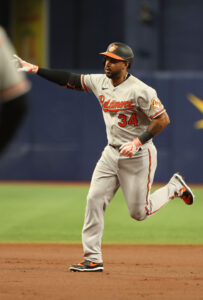
It was midway through that stretch, going into 2019, that the Yanks bought into Hicks and signed him to an extension. He was just one year away from free agency at the time but agreed to a seven-year, $70MM pact that was supposed to keep him in the Bronx through 2025. He had already agreed to a $6MM salary for 2019 so the deal added six years and $64MM of new money. That was a relative rarity for the club, as shown on MLBTR’s Contract Tracker. Since February of 2014, that’s one of just three extensions given out by the Yanks, the other two being for Luis Severino and Aroldis Chapman.
Health became an issue in the early parts of that contract. In 2019, he went on the injured list due to a left lower back strain and then again due to a right flexor strain, only playing 59 games that year. In 2020, the pandemic shortened the season to 60 games, with Hicks playing in 54 of them. Then in 2021, a left wrist injury limited him to just 32 contests and poor performance when on the field. The shortened season obviously wasn’t his fault but he nonetheless found himself having been unable to log a normal amount of playing time in three straight seasons.
He was finally able to stay healthy in 2022, getting into 130 contests for the Yanks that year. But he hit just eight home runs in that time and his .216/.330/.313 slash line led to a wRC+ of just 91. He told Dan Martin of The New York Post in September of 2022 that he tried to come back from wrist surgery lean and athletic to stay healthy but that it backfired by sapping his power. His struggles continued in the early parts of the 2023 season, leading the Yankees to release him in May, despite the contract still having another two full guaranteed years.
The Orioles took a shot on Hicks, a move with no real financial risk since the Yanks were stuck holding the bag. Hicks bounced back in Baltimore, hitting seven home runs in 65 games, leading to a .275/.381/.425 slash line and 129 wRC+. He also stole six bases and helped the O’s by slotting into each of the three outfield positions.
That’s still a fairly small sample size of success after more than two years of struggles, but it’s sensible for the Angels to take the risk that he could perform well in the coming season. Hicks is still set to make a salary of $9.5MM both this year and next, then there’s a $1MM buyout on a 2026 club option, but the Yanks will be paying the majority of that. The Halos will only have to pay the prorated portion of the $740K league minimum for any time that Hicks spends on their roster.
For Hicks, money would not have been a factor in signing this deal since his salary is already set. It’s possible that he was attracted to playing his home games in Southern California, as he was born in Los Angeles and grew up in Long Beach. Beyond that, the Angels are at least going to attempt fielding a competitive team this year and could perhaps offer Hicks some decent playing time.
The club’s outfield mix prior to signing Hicks consisted of Mike Trout, Taylor Ward, Mickey Moniak and Jo Adell. Trout is obviously one of the most talented players in the game but durability has started to become a bit of a concern. Thanks to some nagging injuries and the shortened 2020 season, he hasn’t played 120 games in a campaign since 2019. Adding a player capable of playing some center field like Hicks could perhaps help Trout stay healthy as he goes into a season in which he will turn 33 years old.
Ward has only once played 100 games in a season, which was in 2022. Last year, he was limited to 97 contests, his season ending on a scary incident when he was hit in the face by a pitch from Alek Manoah. Moniak seemed to have something of a breakout last year, hitting 14 home runs in 85 games. But he’s likely due for some regression when considering his 2.8% walk rate, 35% strikeout rate and .397 batting average on balls in play. Adell has similar walk and strikeout rates across the past four seasons without the semi-encouraging power surge to go with. Considering that mix, there should be plenty of playing time available to Hicks. The designated hitter slot is also open now that Shohei Ohtani has signed with the Dodgers.
It’s possible that this move bodes particularly poorly for Adell. He has received part-time action in each of the past four campaigns but has hit just .214/.259/.366 while striking out at a 35.4% clip and walking in only 4.8% of his plate appearances. Though he was a 10th overall selection back in 2017, he is now out of options and doesn’t have a clear path to playing time.
As for Ingram, the 27-year-old lefty just made his major league debut last year. He made five appearances for the Angels, allowing five earned runs in 5 1/3 innings. He split the rest of the year between Double-A and Triple-A, tossing 61 innings with a 2.95 ERA and 30.2% strikeout rate, but a 13.3% walk rate. The major league work didn’t go well and the control issues aren’t new for him, but the minor league strikeouts are intriguing and he still has a couple of options remaining. The Angels will now have a week to trade him or try to pass him through waivers.
Jeff Fletcher of the Orange County Register first reported the Angels were signing Hicks.
Tigers Sign Colt Keith To Six-Year Extension
The Tigers announced a six-year contract extension with infield prospect Colt Keith. The deal guarantees Keith $28.6425MM and could max out at $82MM over nine years if three club options (covering the 2030, 2031, and 2032 seasons) are all escalated and exercised. Keith is represented by Munger English Sports Management.
In addition to a $2MM signing bonus, Keith will earn $2.5MM in salary for the 2024 campaign, $3.5MM in 2025, $4MM per season in 2026 and ’27, and $5MM per season in 2028 and ’29. Each club option includes salary escalators, but the values currently break down as follows — the 2030 club option is valued at $10MM with a $2.6425MM buyout, the 2031 option worth $13MM ($1MM buyout), and the 2032 option worth $15MM ($2MM buyout).
Keith, 22, was a fifth-round pick by the Tigers in the 2020 draft and has since ascended rapidly through the minor leagues with a .300/.382/.512 slash line across all levels, including a .306/.380/.552 slash line in 126 games split between Double- and Triple-A last season. The youngster has emerged as a consensus Top-30 prospect in the game, with MLB.com ranking him 22nd while Baseball America placed him 28th. Both president of baseball operations Scott Harris and Keith himself commented on the extension in a press release following the announcement.
 “This is a very exciting day for the Detroit Tigers, Colt, his family, and our fans,” Harris said in the presser. “This contract demonstrates our faith in Colt and this organization’s commitment to acquire, develop, and retain young talent.”
“I couldn’t be more excited to reach this agreement, securing my place in this organization for years to come,” Keith added. “There’s a reason I felt strongly about making a long-term commitment to be here, and being surrounded by incredibly talented teammates and coaches is a big part of that… I know this is a big accomplishment, but ultimately my mission is to be the best player possible and help win a World Series Championship for Tigers fans everywhere.”
The 22-year-old Keith has now scored a significant windfall after signing for just a $500K bonus out of the draft. Beyond the financial security, Keith also has certainty that he will remain part of the Tigers’ long-term plans as they look to build upon their surprising second place finish in the AL Central last year. For Detroit, the extension affords the club some cost certainty regarding Keith’s arbitration years plus an additional three seasons of team control. If all three options are exercised, Keith will stay in a Tigers uniform through his age-30 season.
It’s the fourth-largest deal in league history for a prospect who has yet to make their MLB debut. Keith’s extension trails only the guarantees for White Sox outfielders Luis Robert Jr. ($50MM) and Eloy Jimenez ($43MM) as well as the record-setting $82MM deal agreed to by outfield prospect Jackson Chourio and the Brewers earlier this winter.
Keith was already expected to join the big league roster as the Tigers’ everyday second baseman at some point in the year, but today’s deal all but guarantees he’ll be in the lineup on Opening Day if healthy. The deal takes away the opportunity for the Tigers to secure an extra year of team control over the infielder, but Detroit is still eligible for an extra Prospect Promotion Incentive draft pick. This pick would be awarded in the event that Keith earns a full year of service time in 2024 and either wins the AL Rookie of the Year award or places in the top three of MVP voting before he would have been eligible for arbitration.
With Keith likely to occupy the keystone for the Tigers entering the season, the likes of Zach McKinstry, Nick Maton, Andy Ibanez, and Matt Vierling will be competing for playing time at third base when camp opens for Spring Training next month. While the third base keys figure to be handed to another top prospect in Jace Jung at some point in the future, the 23-year-old has not yet made an appearance at the Triple-A level and appears unlikely to break camp with the Tigers. Keith and Jung figure to be the latest in a line of top prospects to reach the majors for Detroit in recent years, including starting pitchers jTarik Skubal and Casey Mize, and position players Spencer Torkelson and Riley Greene.
As their prospects begin to reach the majors and establish themselves at the big league level, the Tigers have looked to augment the roster with short-term veteran additions who won’t block the younger players from earning regular playing time. This offseason, Detroit struck early to land outfielder Mark Canha in a deal with the Brewers before bolstering their rotation with by signing free agent right-handers Kenta Maeda and Jack Flaherty. The club has also added reinforcements to their bullpen in the form of Andrew Chafin and Shelby Miller. Those veteran additions figure to strengthen the club’s burgeoning young core as they gear up for a run in what projects to be a relatively weak AL Central division, though the Twins figure to remain the on-paper favorite even after allowing both Maeda and ace righty Sonny Gray to depart via free agency this winter.
Photo courtesy of USA Today Sports Images
Cubs Sign Hector Neris
The Cubs have signed right-hander Hector Neris to a one-year, $9MM contract, ESPN’s Jeff Passan reports (via X). There is a $9MM club option attached for the 2025 season, and that vests into a player option if Neris makes at least 60 appearances this season. Between that option and additional incentive bonuses, the deal could be worth as much as $23.25 over the two seasons. Neris is represented by Octagon.
Best known for his time as the Phillies’ closer, Neris has spent the last two seasons in Houston, and is coming off (technically) the best year of his decade-long Major League career. Neris posted a 1.71 ERA over 68 1/3 innings out of the Astros’ bullpen, with an excellent 28.2% strikeout rate and some of the best soft-contact numbers of any pitcher in baseball.
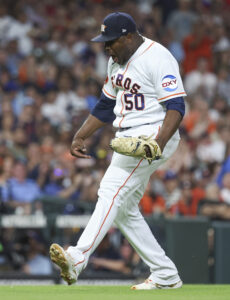 There were a few red flags, however, which is likely why the righty landed what is officially just a one-year guarantee. Neris’ fastball velocity dropped to 93mph in 2023, rather markedly down from the 94.3mph average of his first nine seasons. He also had an 11.4% walk rate, marking the third time in the last four seasons that Neris’ walk rate has sat within the bottom 23rd percentile of all pitches. With a tiny .219 BABIP and a big 90.5% strand rate also aiding his efforts, Neris’ 3.89 SIERA was over two runs higher than his real-world ERA.
It’s fair to assume that some regression is in order, and these troubling secondary metrics aren’t exactly a great sign for a pitcher who turns 35 in June. However, even if Neris’ 2024 ERA is closer to that 3.89 figure, he still figures to bring value to Chicago’s relief corps in terms of both results and durability. Neris has a league-best 307 appearances since the start of the 2019 season, and a stint on the COVID-related injury list in 2020 marks the only time Neris has ever appeared on the IL during his big league career.
This kind of durability holds particular appeal for a Cubs team that was hit hard with bullpen injuries down the stretch, which contributed to Chicago’s 12-16 record in September and subsequent near-miss of a wild card berth. The Cubs were naturally known to be looking for relief help, though president of baseball operations Jed Hoyer has traditionally been wary about committing big money to the pen given the year-to-year volatility of many relievers.
In that sense, Neris’ contract represents more aggression even if it remains a one-year deal, considering that the Cubs haven’t gone beyond $5MM on a relief pitcher since signing Craig Kimbrel in June 2019. Should Neris eat his usual amount of innings, hitting the 60-appearance threshold shouldn’t be too much of an issue, and thus he would top the two-year, $15MM deal that MLBTR projected for the reliever at the start of the offseason. Neris ranked 46th on our list of the winter’s top 50 free agents.
Neris has a similar clause in his previous deal, a two-year/$17MM pact signed with Houston in the 2021-22 offseason. The Astros held an $8.5MM club option ($1MM buyout) on Neris for 2024 that vested into a player option if Neris both passed a physical after the 2023 campaign, and if he made at least 110 appearances over the course of the two seasons. Neris ended pitching in 141 games, and then opted to decline his player option to re-enter the market in search of a richer deal.
Adbert Alzolay blossomed as the Cubs’ closer in 2023, and Neris will now step right in as Wrigleyville’s top setup option. Neris joins Yency Almonte as newcomers in the relief corps, and it can’t be assumed that the Cubs are now done with their bullpen shopping. Adding another veteran on at least a minor league deal seems like a possibility, and if Neris represents a bit of a splashy spend, perhaps Chicago could look for another reliever on a guaranteed deal within that sub-$5MM comfort zone.
The Cubs’ payroll now sits at roughly $196.3MM, and there’s still plenty of room to go before Chicago hits the $237MM luxury tax threshold. A big-ticket signing like Cody Bellinger could naturally absorb a lot of that remaining space, but there’s still plenty of flexibility for Hoyer during what has been a pretty quiet winter overall for the Cubs. The Shohei Ohtani pursuit carried a lot of the team’s attention in the offseason’s first month, though the Cubs have since added Shota Imanaga and Neris in free agency, while also adding Almonte and Michael Busch in a trade with the Dodgers.
The Astros, Cardinals, Mets, Rangers, and Yankees were all linked to Neris at various points this offseason. Earlier this month, it seemed as if the Rangers and Yankees were looking like the favorites to sign the right-hander, but Chicago ended up emerging to win the bidding.
Photo courtesy of USA Today Sports Images
Nationals Sign Joey Gallo
TODAY: The signing has officially been announced. The deal also contains a mutual option for the 2025 season.
JANUARY 23: The Nationals and first baseman/outfielder Joey Gallo have agreed to a one-year deal, reports Andrew Golden of The Washington Post (X links). The deal for the Boras Corporation client, which is pending a physical, is for $5MM with another $1MM available in performance bonuses.
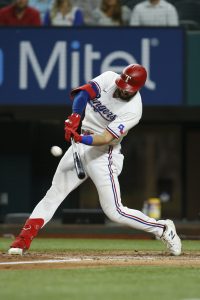
Gallo, 30, has been the poster boy for the “three true outcomes” in a major league career that’s almost a decade old at this point. Having debuted with the Rangers in 2015, he has played in 863 games, with 198 home runs to his name in that time. He has struck out in 37.9% of his plate appearances, which is much higher than par. For reference, the league average in 2023 was 22.7%. But he’s also drawn walks in 14.8% of his career plate appearances, well beyond the 2023 league average of 8.6%.
It’s an unusual combination but one that still allows Gallo to be a productive offensive contributor when taken all together. Though his career batting line .197/.323/.466 has him below the Mendoza line, the walks and the homers still help him translate that into a wRC+ of 109. He signed a one-year, $11MM deal with the Twins for 2023 and batted .197/.323/.466 for a wRC+ of 104, hitting 21 home runs while striking out in 42.8% of his plate appearances.
It’s perhaps worth highlighting that the tenability of this oddly-shaped performance has declined over the years. Gallo had his best run with the Rangers from 2017 to 2019, slashing .217/.336/.533 in that time for a wRC+ of 120. He hit a rough patch in 2020 but then bounced back with a strong showing early in 2021, enough for him to be traded to the Yankees alongside Joely Rodríguez. But Gallo’s production fell off again after the deal and didn’t rebound in 2022, with the Yanks flipping him to the Dodgers midseason. He finished that season with a line of .160/.280/.357 and wRC+ of 86 before putting together a decent campaign with the Twins last year.
Despite the huge pop in his bat, the up-and-down nature of his past few seasons would make him a risky bet for a contending club. But for the Nationals, it’s a sensible fit for a number of reasons. Last month, it was reported that the club was looking to add some left-handed power to its lineup. That was a logical target with their outfield mix consisting of Lane Thomas, Stone Garrett, Joey Meneses, Victor Robles, Jacob Young and Alex Call, all of whom hit from the right side.
Beyond that, the club isn’t likely to be in contention this year, having been aggressively rebuilding in recent seasons. Last offseason, they gave modest one-year deals to bounceback candidates like Corey Dickerson, Dominic Smith and Jeimer Candelario. The first two of those didn’t work out but Candelario played well enough to be flipped to the Cubs for a couple of prospects.
The Nats can insert Gallo into the middle of their lineup and hope that he is producing enough to follow a similar trajectory to Candelario last year. If he is having another rough campaign like he did in 2022, he can simply be released like Dickerson was.
The fit also makes sense with the prospects in the system. Outfielders James Wood and Dylan Crews are two of the most highly-rated prospects in the league, and each could plausibly be nearing a major league debut. Wood spent most of last year in Double-A and will likely begin the upcoming season in Triple-A. Crews was just drafted last summer but managed to join Wood in Double-A by the end of the year. Robert Hassell isn’t as highly rated as those two but is another notable outfield prospect who finished last year at Double-A.
With those prospects potentially pushing for major league at-bats by the summer, Gallo can be seen as a placeholder. If he is mashing, he can be traded for prospects. If not, he can be released. In either case, he would yield second half playing time to someone in that group. If each of the prospects are struggling and aren’t justifying a promotion, perhaps Gallo could stay in Washington through the end of the year, as Smith did in 2023.
Gallo is also considered a solid defender, which is a plus. His outfield glovework has led to career tallies of 42 Defensive Runs Saved, four Outs Above Average and a grade of 15.0 from Ultimate Zone Rating. His work at first base isn’t graded as strongly, but he’s passable there as well, with over 1,000 career innings at that spot. Meneses is currently slated to get the bulk of the playing time at first base but the club doesn’t have a strict designated hitter, giving them some ability to rotate players around based on health and matchups.
Rangers Sign David Robertson
The Rangers announced the signing of reliever David Robertson to a one-year deal with a mutual option for 2025. The right-hander, who is self-represented, is reportedly guaranteed $11.5MM. He’ll make just $5MM in 2024 and is guaranteed the $1.5MM buyout on the option, which is valued at $7MM. The final $5MM is deferred, with $1MM paid annually between 2027-31.
Robertson split the 2023 campaign between a pair of NL East clubs. He signed a one-year, $10MM pact with the Mets. Initially tabbed as a setup man, he was pushed into the ninth inning by the Edwin Díaz injury. Robertson’s time in Queens ended up briefer than he or the team envisioned because the club quickly fell out of contention. That wasn’t any fault of his, as Robertson had an excellent 40-game run as a Met.
He tossed 44 innings with a 2.05 ERA, striking out nearly 28% of opposing hitters. For a second straight summer, Robertson was one of the better rental relievers at the deadline. New York flipped him to the Marlins for a pair of low minors prospects (Marco Vargas and Ronald Hernandez).
While Miami surprisingly stayed in contention and secured a Wild Card berth, Robertson wasn’t immediately effective. He had a tough first month in South Florida, allowing 13 runs (10 earned) with six walks and 10 strikeouts over 10 innings in August. Miami took him out of the closer’s role towards the end of that month. Robertson responded with a much better September, striking out 19 while allowing only two runs over his final 10 1/3 frames.

Despite the blip early in the second half, the former All-Star had another productive year. He finished the season with a 3.03 earned run average through 65 1/3 innings. Robertson fanned an above-average 29% of batters faced against a manageable 9.3% walk rate. He missed bats on a solid 12.6% of his overall offerings.
The Rangers have made no secret of their desire to add to the bullpen. Texas had been among the perceived frontrunners for Héctor Neris, arguably the top unsigned relief pitcher. They were also linked to Ryan Brasier a couple weeks ago. Robertson, who turns 39 in April, is available on a one-year pact. Neris and Brasier each have a shot at two years, with Neris likely to top the overall guarantee that Robertson secured.
Robertson is the second free agent bullpen acquisition of the offseason for GM Chris Young and his front office. The Rangers inked Kirby Yates to a $4.5MM deal during the Winter Meetings. Texas lost a trio of bullpen arms to free agency. Aroldis Chapman, Will Smith and Chris Stratton have all landed elsewhere. That left the relief group as the shakiest part of the defending champions’ roster. Robertson and Yates join Josh Sborz as bridge options to closer José Leclerc. Texas could still stand to add a left-hander after Brock Burke turned in a middling 2023 season.
Roster Resource projected their 2024 payroll around $210MM before the Robertson signing. He’ll push that to roughly $215MM. More importantly, the deal moves them into luxury tax territory. Texas was at roughly $231MM in CBT obligations before this signing. While the deferrals marginally reduce the contract’s net present value, the contract’s tax hit for next season is much closer to the $11.5MM overall guarantee than it is to next year’s $5MM salary.
Their CBT number jumps past the $240MM mark, pushing above the $237MM base threshold. Texas surpassed the CBT threshold last season, so they’ll pay escalating penalties for a second consecutive year of payments. The Rangers are taxed at a 32% rate on spending between $237MM and $257MM.
The tax for the Robertson signing is fairly modest. It’ll land in the $2MM range. The more significant impact could be on future tax obligations incurred on any further acquisitions. They’ve had a fairly quiet offseason amidst uncertainty about their broadcasting deal with Diamond Sports Group, but they’re bracing for another showdown with the Astros at the top of the AL West.
Jon Heyman of the New York Post first reported the Rangers had interest in Robertson. Jeff Passan of ESPN reported the Rangers and Robertson had agreed to a one-year deal in the $11-12MM range. MLB.com’s Mark Feinsand was first to report the $11.5MM guarantee, the mutual option, and the salary breakdown.
Image courtesy of USA Today Sports.
Brewers Sign Rhys Hoskins
January 26: The Associated Press relays the full contract breakdown. Hoskins will make $12MM this year and will be slated for a salary of $18MM in 2025. If he decides to opt out after 2024, he will get a $4MM buyout. The mutual option for 2026 is valued at $18MM and there’s a $4MM buyout on that as well.
January 23: The Brewers announced they have signed free agent first baseman Rhys Hoskins to a two-year deal with an opt-out after 2024 and a mutual option for 2026. It is reportedly a $34MM guarantee for the client of the Boras Corporation.
Hoskins takes a modified pillow contract after missing the entire 2023 season. At the tail end of Spring Training, he tore the ACL in his left knee while retreating to the outfield grass to field a chopper. While he was able to take batting practice by the end of the season, he never quite made it back to the roster. Philadelphia suggested Hoskins may have been activated from the injured list had they advanced to the World Series.
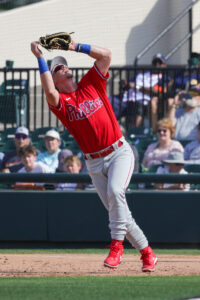
With the Phils coming up a game short of the Fall Classic, the ACL tear marked an unfortunate end to a productive tenure at Citizens Bank Park. Hoskins seemed a potential candidate for the qualifying offer at the beginning of the offseason. The Phils opted against the QO, declaring they were moving Bryce Harper to first base permanently. That made clear Hoskins was headed elsewhere after nearly a decade in the organization.
The Phillies initially selected him in the fifth round of the 2014 draft. Despite the modest draft stock, he hit the ground running in pro ball. He posted huge minor league numbers, mashing his way to the big leagues in the second half of the 2017 campaign.
That excellent production on the farm presaged strong numbers against MLB pitching. Hoskins raked at a .259/.396/.618 clip with 18 home runs over his first 50 games. While he didn’t maintain that pace over any subsequent season, he has been a consistent middle-of-the-lineup presence in Philadelphia.
Hoskins hit between 27 and 34 home runs in his four full seasons between 2018-22. He was on a similar pace in the shortened season, connecting on 10 longballs in 41 games. He has paired that with a walk rate above 10% in every year of his career. That power and patience gives him a solid offensive floor, even if he hasn’t hit above .250 in any season since his rookie year.
Since 2018, Hoskins has posted a .241/.350/.483 batting line. He strikes out in roughly a quarter of his plate appearances. That’s slightly higher than the league average but hardly outlandish, particularly for a player who hits for the kind of power he does. Hoskins has destroyed left-handed pitching at a .250/.399/.522 clip in his career. His .240/.336/.482 slash versus same-handed arms isn’t quite as impressive but remains solidly above average.
The offense carries the overall profile. Hoskins doesn’t offer much as a baserunner. He has graded as a slightly below-average defender throughout his career. It’s unlikely his defense will improve as he’s into his 30s and working back from a significant knee injury.
That’s fine for the Brewers, who needed an offensive upgrade. Milwaukee ranked 17th in runs last season, a subpar figure for a team that plays its home games at hitter-friendly American Family Field. By measure of wRC+, which adjusts for park, Milwaukee ranked 24th in overall hitting production. That was the worst of any playoff team.
First base was particularly problematic. Milwaukee received a dismal .231/.292/.389 showing from the bat-first position. That led the Brew Crew to non-tender Rowdy Tellez. Milwaukee acquired Carlos Santana at the deadline to stabilize first base for the stretch run. The Brewers have remained in contact with Santana this winter, but they’ll instead jump on the opportunity for a more significant lineup upgrade.
The contract aligns with MLBTR’s prediction of two years and $36MM. A few priority rebound targets have landed a two-year guarantee with an opt-out in recent offseasons. That’s appealing for the player, who locks in more security than they’d have received on a straight one-year pact while still allowing them to get back to free agency after one season.
Hoskins’ deal nearly matches the two-year, $36MM pact which Michael Conforto signed with the Giants last winter after missing the ’22 season rehabbing from shoulder surgery. Players like Josh Bell (two years, $33MM) and Lucas Giolito (two years, $38.5MM) have signed similar pacts after terrible finishes to their respective platform seasons. This contract structure isn’t attainable for every bounceback candidate, but it’s one that higher-ceiling free agents of that ilk are increasingly able to secure.
The specific salary structure hasn’t been reported. If the deal guarantees Hoskins $17MM in each season, it’d push Milwaukee’s payroll projection around $122MM, as calculated by Roster Resource. That’s marginally above last year’s $119MM Opening Day mark. Milwaukee’s payroll slate remains manageable even with Hoskins joining Corbin Burnes and Willy Adames (each of whom will make more than $12MM in their final arbitration seasons) on the books.
If Hoskins picks up where he left off before the injury, he’d likely join Burnes and Adames on next year’s free agent market. As with Burnes and Adames, Hoskins would be a candidate for a qualifying offer if he exercises the opt-out. He remains eligible for the QO since Philadelphia opted against the offer this winter. Milwaukee doesn’t have to forfeit any draft picks to add him.
Pete Alonso, Paul Goldschmidt and Christian Walker could all join Hoskins in an interesting first base class next winter. The remaining options for teams this offseason isn’t as robust. Beyond outfielder/first baseman Cody Bellinger, the top first basemen still unsigned are Brandon Belt, Santana, Garrett Cooper and Joey Votto.
Jeff Passan of ESPN first reported that the two parties were closing in on a two-year, $34MM deal with an opt-out next winter (X link). Mark Feinsand of MLB.com reported that they’d finalized the agreement.
Image courtesy of USA Today Sports.
Marlins, Trey Mancini Agree To Minor League Deal
The Marlins have agreed to a minor league contract with free agent first baseman/outfielder Trey Mancini, reports Jon Heyman of the New York Post. Mancini, who’s represented by Frontline, will be in big league camp as a non-roster invitee this spring.
Mancini is still technically playing under the two-year, $14MM deal he signed with the Cubs last offseason, so the Marlins will only owe Mancini the prorated league minimum for any time he spends on the active roster. Chicago released Mancini after the trade deadline. The Reds added him on a minor league deal later that month but didn’t call him to the Majors before cutting him loose themselves.
As one would expect for a player who was twice released the prior season, the 2023 campaign was not a good one for Mancini. The longtime Orioles slugger appeared in 79 games with the Cubs after signing that contract but scuffled at the plate throughout his Wrigley tenure, batting just .234/.299/.336 with four home runs and a career-worst 29.7% strikeout rate.
Mancini’s struggles date all the way back to the 2022 All-Star break, however. He was enjoying yet another productive season in Baltimore, hitting .285/.359/.429 through his first 351 trips to the plate, but Mancini scuffled following the Midsummer Classic and never rebounded following a trade to Houston, where he batted .176/.258/.364 in 51 games while receiving erratic playing time. Since that year’s All-Star break, Mancini has 499 plate appearances with only a .204/.280/.335 batting line to show for it.
Of course, at his best, Mancini rates anywhere from “clearly above average” to “bona fide heart-of-the-order presence.” His peak offensive performance came during 2019’s juiced ball season, when he hit .291/.364/.535 with a career-high 35 long balls. Even if that peak performance can be written off as anomalous in nature, Mancini entered the 2023 campaign as a lifetime .265/.330/.457 hitter who’d typically walk around 9% of the time against a strikeout rate that routinely sat between 21-23%. He’s not considered a strong defender in the outfield corners but can play a solid first base.
Beyond his on-field production over a long stint in Baltimore, Mancini became one of the easiest players to cheer on throughout all of MLB. Heading into the 2020 season, a then-28-year-old Mancini stunningly announced that he’d been diagnosed with Stage 3 colon cancer. He underwent surgery to remove a malignant tumor and then embarked on a six-week regimen of chemotherapy. Mancini eventually received a clean bill of health, returned in 2021 and was named the American League Comeback Player of the Year after swatting 21 homers and 33 doubles while batting .255/.326/.436 in 147 games.
With the Marlins, Mancini will compete for a bench spot and perhaps for time at designated hitter. The Fish currently have Josh Bell at first base, with Bryan De La Cruz and Jesus Sanchez likely ticketed for corner outfield work. Struggling veteran Avisail Garcia remains with the club due primarily to his contract status — two years, $29MM remaining — but Mancini could challenge him for a similar role as a righty-swinging option at DH and in the outfield corners. Garcia has batted just .215/.260/.316 since signing a four-year, $53MM contract prior to the 2022 season.
With catcher Christian Bethancourt and utilityman Vidal Brujan both out of minor league options, the Marlins effectively have two bench spots up for grabs. Mancini will compete with outfielder Peyton Burdick and infielders Xavier Edwards, Jordan Groshans and Jacob Amaya for one of those two spots. A third roster spot could conceivably open if the new-look Marlins front office opts to move on from Garcia this spring.
Angels To Sign Matt Moore
The Angels are in agreement with reliever Matt Moore on a $9MM contract, reports Jon Heyman of the New York Post (X link). Moore, a client of Apex Baseball, will sign with the Halos for a second straight offseason. He inked a one-year, $7.55MM deal with the Angels last winter.
The first run in Anaheim was a good one for the now 34-year-old Moore, who’s enjoying a nice second act of his career since moving to the bullpen. In 44 innings with the Angels during the 2023 season, the veteran southpaw notched an excellent 2.66 earned run average. Moore logged a strong 28% strikeout rate against a lower-than-average 6.9% walk rate.
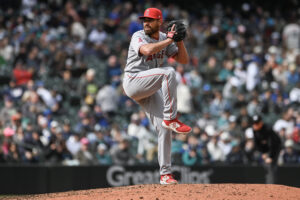
The Halos wound up waiving Moore in August, but not due to his performance. Rather, the Angels made a last-ditch effort to get under the luxury tax threshold with a mass waiver purge just weeks after an aggressive, win-now trade deadline. Moore, Lucas Giolito, Reynaldo Lopez, Hunter Renfroe, Randal Grichuk, Dominic Leone and Tyler Anderson all wound up on waivers in hopes that another club would take their contracts (not all were claimed).
Moore was quickly snapped up by the Guardians as they made their own last-minute push, claiming Giolito in addition to Moore. His stint with Cleveland only lasted 4 2/3 innings, as the Guards waived Moore themselves to save some cash after they, too, fell out of postseason contention. The Marlins scooped Moore up and enjoyed four shutout innings for him down the stretch.
Overall, Moore finished out a bizarre 2023 season with a 2.56 ERA, 27.5% strikeout rate and vastly improved 6.9% walk rate in 52 2/3 innings between the three teams. That marked Moore’s second consecutive year of productive pitching following a move to the bullpen. He turned in a 1.95 ERA for the Rangers in 2022 after signing a minor league deal. When combining the two seasons, Moore touts a 2.20 ERA with five saves, 36 holds, a 27.4% strikeout rate and 10.3% walk rate in 126 2/3 innings.
It’s a strong second act for the southpaw, who’d struggled as a starter for the few seasons preceding his bullpen move. It has clearly impressed Halos GM Perry Minasian and his staff, who have added him on a notable one-year pact in consecutive years. That’s in line with a broad willingness to attack the relief corps on free agency.
Los Angeles has signed five relievers this winter. Their first three acquisitions — Luis Garcia, Adam Kolarek and Adam Cimber — were fairly modest one-year deals. In recent days, they’ve been more aggressive. The Angels finalized a three-year, $33MM pact with Robert Stephenson this afternoon. Moore adds a lefty option to a relief group that otherwise figures to lean heavily on righties Carlos Estevez, Stephenson, Garcia, Ben Joyce and Jose Soriano.
The Angels are now up to roughly $172MM in payroll commitments for the upcoming season, as calculated by Roster Resource. That’s still well shy of last year’s $212MM Opening Day mark. Minasian and his staff very likely aren’t finished. They’ve been tied to various possibilities in both the lineup and the starting rotation. There’s still opportunity for the Angels to continue adding in the next few weeks.
Image courtesy of USA Today Sports.