
Diamondbacks Designate Madison Bumgarner For Assignment
The Diamondbacks have designated left-hander Madison Bumgarner for assignment, reports Nick Piecoro of the Arizona Republic. The D-backs have formally announced the move. Left-hander Anthony Misiewicz has been recalled from Triple-A Reno to take Bumgarner’s spot on the 40-man roster.
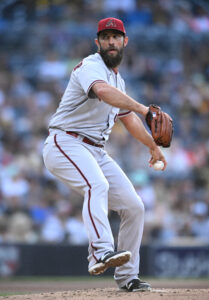
The Bumgarner DFA comes on the heels of three-plus sub-par seasons for Bumgarner in Arizona, where he signed a five-year, $85MM contract prior to the 2020 season. The 33-year-old left-hander has been generally durable but ineffective for the Snakes, pitching to a lowly 5.23 ERA in 363 1/3 innings and 69 starts under that contract.
Things have taken a particularly pronounced downswing in 2023, however, as Bumgarner has been torched for 20 runs (19 earned) on 25 hits and 15 walks with just 10 strikeouts in 16 2/3 innings. The D-backs have lost three of Bumgarner’s four starts this season, including a seven-run three-inning clunker against the Cardinals yesterday, wherein Bumgarner got into a verbal altercation with St. Louis catcher Willson Contreras after apparently taking objection to Contreras’ reaction to a swing and reaction on a pitch he fouled straight back. The team’s lone victory of the season with Bumgarner on the mound came when he was pulled after 4 2/3 innings, three runs and six walks.
Bumgarner’s current 89.6 mph fastball average is down more than three miles per hour from its 92.9 peak. His 11.1% strikeout rate and 16.7% walk rate are both career-worsts by wide margins, and he’s seen his ability to induce swinging strikes (just 6.3%) and chases off the plate (21.1%) evaporate in this season’s four starts.
In seasons past, the Diamondbacks could perhaps sell themselves on occasional glimmers of hope and at least accept that if nothing else, Bumgarner was a durable innings eater who could somewhat narrowly keep his ERA south of 5.00. The Diamondbacks didn’t enter 2021 or 2022 as hopeful contenders anyhow, after all, and Bumgarner gave them a bridge to some of their starting pitching prospects while those promising young arms continued to develop in the upper minors.
That’s no longer the case in 2023, as MLBTR’s Anthony Franco outlined earlier this week in a piece for MLBTR Front Office subscribers, arguing within that the D-backs needed to move on as soon as possible. The D-backs entered the ’23 campaign with an emerging, exciting young core headlined by outfielder Corbin Carroll, and they have one of MLB’s top farm systems to further bolster that group in the near future. Zac Gallen and Merrill Kelly are strong rotation arms, and with a talented collection of youth complementing them (e.g. Ryne Nelson, Drey Jameson and, sooner than later, Brandon Pfaadt), the starting pitching outlook is bright.
Arizona is out to an 11-8 start, and while the season is still quite young, expectations have shifted. Bumgarner simply hasn’t been a competitive pitcher for them in any capacity this season, and his body of work in three seasons prior gives little reason to hope for a turnaround. With the division looking more vulnerable than it has in years and the D-backs potentially on the rise, it’s just not feasible to continue on with what increasingly looks like a sunk cost.
Exactly how the rotation shakes out from this point forward remains to be seen. Piecoro tweets that 25-year-old left-hander Tommy Henry is expected to start in Bumgarner’s place next time around, though one would imagine that Pfaadt — one of the sport’s top pitching prospects — will get a look in the near future after opening the season in Triple-A. Veteran Zach Davies is also a factor, though he’s currently out with a strained oblique and figures to be sidelined into next month.
What’s clear is that Bumgarner’s time with the D-backs is virtually over. Given the left-hander’s woeful performance not only in 2023 but throughout his D-backs tenure as a whole, there’s no chance another team will roll the dice on the remaining $34.3MM on his contract. Bumgarner is being paid $23MM in 2023 and is still owed a $14MM salary for the 2024 campaign.
The Diamondbacks could technically place him on outright waivers, but he has more than enough service time to reject an outright assignment while retaining his salary, and no team would claim the contract anyhow. As such, he’ll likely be placed on release waivers in the coming days and, upon clearing, become a free agent who’s eligible to sign with any other club. Any team that signs Bumgarner would only need to pay him the prorated league minimum for any time spent on the MLB roster. That sum would be subtracted from what the D-backs owe the lefty, but Arizona is effectively committing to eating close to $34MM in dead money by parting ways with Bumgarner at this juncture of his contract.
Padres Reinstate Fernando Tatis Jr.
Fernando Tatis Jr. is back in the majors. The Padres officially reinstated him from the restricted list following the completion of his performance-enhancing drug suspension on Thursday evening. San Diego optioned infielder/outfeilder Brandon Dixon to Triple-A El Paso to open room on the big league roster. The Friars transferred reliever Robert Suarez from the 15-day to the 60-day injured list.
Tatis steps into the leadoff spot tonight against Arizona right-hander Ryne Nelson. He’ll play right field in his first MLB contest since October 3, 2021. Tatis is expected to play right field on a near everyday basis in 2023. He lost his former shortstop position when San Diego inked Xander Bogaerts to a $280MM free agent contract over the winter. With Ha-Seong Kim, Jake Cronenworth and Manny Machado rounding out the infield, Tatis gets kicked onto the grass.
While there’ll certainly be some intrigue about how he acclimates to a position at which he has just 151 1/3 innings of MLB experience, the primary question will be how quickly he finds his stride offensively. Tatis was one of the game’s best hitters over his first three seasons, combining to hit .282/.364/.611 between 2019-21. By measure of wRC+, that was the ninth-best offensive output among batters with at least 500 plate appearances.
Whether the 24-year-old can recapture that kind of production remains to be seen. Since his last MLB game, he’s undergone three surgeries — two on the left wrist he fractured in a motorcycle accident, one on his left shoulder that had ailed him back to 2021. He also tested positive for the performance-enhancing drug Clostebol and was handed an 80-game suspension at the start of last August. That carried into this season, with Tatis sitting out the Friars’ first 20 games. San Diego has opened with a middling 9-11 start, allowing ten more runs than they’ve scored.
Tatis was permitted to play in Spring Training. He got into 16 exhibition games, hitting .273/.340/.432. Shortly after the regular season opened, Tatis went on a rehab stint with El Paso. He was the best hitter in the Pacific Coast League for a week. Tatis blasted seven home runs, walked six times and struck out on just three occasions in eight games. He hit .515/.590/1.212 in 39 trips to the plate for the Chihuahuas before reporting to the Padres a few days ago.
Players on the restricted list don’t count against the 40-man roster. To clear a spot, San Diego transferred Suarez to the 60-day IL. That backdates to his Opening Day placement on the injured list but still officially rules him out until the final week in May.
Suarez opened the season on the IL with inflammation in his throwing elbow. He was shut down from throwing at the start of this month after feeling continued discomfort and is without a clear recovery timetable. It’s an inauspicious start to the five-year, $46MM contract he inked at the start of last offseason. The hard-throwing Suarez provided the Padres 47 2/3 innings of 2.27 ERA ball during his initial MLB campaign last year, emerging as one of their highest-leverage relievers by the playoffs.
Max Scherzer Given 10-Game Suspension; Will Not Appeal
7:53pm: In a surprising twist, Scherzer informed reporters this evening he’s elected not to appeal after all (video provided by SNY). The right-hander said he’d initially believed an appeal would be heard by a neutral arbitrator but later was informed it would go in front of an MLB official. (Ken Rosenthal of the Athletic specifies that special assistant to the commissioner John McHale would have heard the appeal.) As a result, Scherzer conceded he wouldn’t win and has elected not to pursue it.
He’ll begin serving his ban tonight and is ineligible to return until May 1. Because Scherzer was suspended for an on-field rules violation, the Mets are not permitted to replace him on the active roster. They’ll roll with 25 players for the remainder of the month.
6:56pm: Major League Baseball announced Thursday evening that Mets star Max Scherzer has been suspended for ten games for “violating the prohibitions on foreign substances.” He was also fined an undisclosed amount, which Jon Heyman of the New York Post reports at $10K (Twitter link).
Foreign substance ejections come with an automatic ten-game suspension, so this has seemed likely since Scherzer was thrown out of yesterday’s start against the Dodgers. Scherzer stated after yesterday’s game that he’d appeal any suspension. Heyman tweets this evening that he plans to do so. Scherzer has been adamant he was only using legally-permissible rosin, swearing on the life of his children in the process. Umpires Phil Cuzzi and Dan Bellino, however, explained after the game that Scherzer’s hand was stickier than any other they had inspected previously.
Bellino opined that Scherzer had used “something likely more than rosin” based on its stickiness. MLB’s announcement reflected a similar sentiment. “Based on the umpires’ training to detect rosin on a pitcher’s hands, they concluded that the level of stickiness during the fourth inning check was so extreme that it was inconsistent with the use of rosin and/or sweat alone,” the league wrote. MLB’s press release says umpires “appropriately ejected Mr. Scherzer from the game” at that point.
While the league apparently believes Scherzer applied an illicit substance other than rosin, its press release also points to another potential justification for the ejection/suspension. MLB points out that it sent a memo to clubs during Spring Training reminding that “when used excessively or otherwise misapplied (i.e., to gloves or other parts of the uniform), rosin may be determined by the umpires to be a prohibited foreign substance, the use of which may subject a player to ejection and discipline.” Whether because of the umpiring crew’s determination Scherzer had used a non-rosin sticky substance or the possibility the three-time Cy Young winner applied too much of the otherwise permissible rosin, the league imposed discipline.
It was reported back in June 2021 the league was planning to crack down on the use of “sticky stuff” that pitchers use to improve their grip on the baseball but also to increase spin rates. Two players were suspended not too long after that, with Héctor Santiago of the Mariners getting hit later that same month, followed by Caleb Smith of the Diamondbacks in August. No suspensions were handed out last year, but it was reported in February the league was planning to further crack down this year.
Scherzer declined comment when speaking with Mets’ reporters this evening. He said only that his camp is “working on it” in reference to fighting the ban (relayed by Anthony DiComo of MLB.com). There’s sure to be more clarity on the appeals process over the next few days.
If Scherzer indeed has to sit out for a week and a half, it’ll deal another hit to a rotation already down Justin Verlander, José Quintana and Carlos Carrasco to injury. That has pushed David Peterson and Tylor Megill into the starting five alongside Kodai Senga and previously necessitated a spot start from José Butto.
Skipper Buck Showalter told reporters tonight that left-hander Joey Lucchesi will be recalled from Triple-A Syracuse to start tomorrow’s game against the Giants (via Mike Puma of the New York Post). It’ll represent Lucceshi’s first MLB action in nearly two years. He lost all of last season to Tommy John surgery.
Liam Hendriks Announces He Is Cancer Free
White Sox closer Liam Hendriks announced some good news about his health today on Instagram. “How It Started VS How It’s Going….,” the post says. “REMISSION.” After the thankful palms together emoji, it continues. “It’s official. I’m cancer free.”
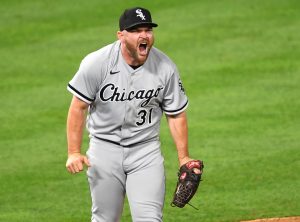 Hendriks, 34, announced back in January that he would be starting treatment for non-Hodgkin’s lymphoma. The club didn’t provide many specifics about his expected absence in the subsequent months, but they deliberately chose not to put him on the 60-day injured list, in case he was able to return less than two months into the season. The righty himself then announced a couple of weeks ago that he had completed his chemotherapy treatment, which were clearly successful based on today’s update.
It’s a tremendous bit of good news for Hendriks, his family, teammates, fans of the Sox and baseball fans in general. Hendriks has made connections all over the league throughout his lengthy career, which has seen him suit up for the Twins, Blue Jays, Royals and Athletics, before he signed with the White Sox prior to the 2021 season. He established himself as one of the game’s premier closers with Oakland in 2019 and has racked up 114 saves since the start of that season, trailing only Kenley Jansen and Josh Hader among all pitchers in the league during that time frame.
It’s still unclear how much time it will take for Hendriks to return to game shape for 2023, but more information about that will surely be forthcoming in the days and weeks ahead. For now, the most important matter is settled and MLBTR joins the rest of the baseball world in congratulating Hendriks on his recovery.
Image courtesy of USA Today Sports.
A’s Turn Attention To Las Vegas, Agree To Land Purchase For Nevada Stadium Site
The Athletics appear on track to relocate to Las Vegas by 2027. According to a report from Mick Akers of the Las Vegas Review-Journal, the A’s have agreed to a land deal to purchase 49 acres (with an option for an additional eight acres) just west of the Las Vegas strip. The land deal is the only official step to this point. There is no formal stadium agreement yet, but it’s clear the franchise is firmly turning its attention away from its current home.
“For a while we were on parallel paths (with Oakland), but we have turned our attention to Las Vegas to get a deal here for the A’s and find a long-term home,” team president Dave Kaval told Akers. “Oakland has been a great home for us for over 50 years, but we really need this 20-year saga completed and we feel there’s a path here in Southern Nevada to do that.”
MLB commissioner Rob Manfred confirmed the news in a statement to the Review-Journal: “We support the A’s turning their focus on Las Vegas and look forward to them bringing finality to this process by the end of the year.”
Oakland mayor Sheng Thao confirmed that negotiations between the A’s and its current city are ending (via Sarah Ravani of the San Francisco Chronicle). There’d been reports of progress between the sides in recent months as they negotiated over a possible Howard Terminal stadium in Oakland’s Jack London Square. With the revelation that won’t come to be, the mayor excoriated franchise leadership, accusing them of using negotiations with Oakland merely “to try to extract a better deal out of Las Vegas.”
“I am deeply disappointed that the A’s have chosen not to negotiate with the City of Oakland as a true partner, in a way that respects the long relationship between the fans, the City and the team,” Thao said. “The City has gone above and beyond in our attempts to arrive at mutually beneficial terms to keep the A’s in Oakland. In the last three months, we’ve made significant strides to close the deal. … In a time of budget deficits, I refuse to compromise the safety and well-being of our residents. Given these realities, we are ceasing negotiations and moving forward on alternatives for the redevelopment of Howard Terminal.”
Howard Stutz and Tabitha Mueller of the Nevada Independent first reported late Wednesday night that the A’s and Las Vegas lawmakers have neared agreement on a stadium deal. Both the Nevada Independent and the Review-Journal report the plan is for a 35,000-seat facility with a partially retractable roof. Kaval confirmed to Akers the site is located roughly a mile north of Allegiant Stadium, home to the Raiders, and around a mile west of the Golden Knights’ T-Mobile Arena.
“It’s really in the sports district,” Kaval said. “So you have all the stadiums kind of clustered in one spot. I think that creates a powerful zone, a kind of energy to it that will benefit the community and also help us be successful running a baseball team.”
The club has not yet gotten official sign-off from state and local legislators. Both reports indicate that Nevada governor Joe Lombardo and top state lawmakers are in general support of the A’s plans, however. The team will make a formal proposal to state and local officials at a later date, though there no longer seems to be much doubt regarding its eventual approval. That the A’s have already entered into the land agreement points to the franchise’s comfort in getting a stadium deal done.
Once an agreement is finalized with the Nevada legislature and governor’s office, the A’s will be able to formally apply to MLB for relocation. Given Manfred’s comments, there’s no reason to believe that won’t receive a stamp of approval. MLB has previously set January 15, 2024, as a deadline for the A’s to have a binding stadium agreement in place if they’re to retain their status as revenue sharing recipients.
Assuming a deal with Las Vegas is indeed finalized by next January, Kaval confirmed plans to begin stadium construction at some time next year. The goal is for the facility to be ready for the opening of the 2027 season.
According to Stutz and Mueller, the plan is for the A’s to cover costs of the stadium. They’d be aided by the creation of a new taxation district covering the area which would allow for the reinvestment of sales tax proceeds and various tax credits. That plan still needs formal legislative approval from both the state and county. The parties will surely work on the specifics over the coming months.
It’s a monumental development for the sport, one that all but ensures the franchise’s forthcoming relocation. It’ll be the first time a club has changed cities in nearly two decades; the most recent relocation occurred in 2005, when the Montreal franchise moved to Washington and rebranded from the Expos to the Nationals. Previously, there’d been no relocations in MLB since 1972.
If the club’s final season in Oakland indeed turns out to be 2026, it’ll end a nearly six-decade run. The A’s first moved to Oakland in 1968, relocating from Kansas City. They’d go on to win four World Series, including a stretch of three consecutive titles within their first six years. They’ve played in the Coliseum for the entirety of that run. Now the fifth-oldest active park in MLB, the Coliseum has been a source of derision from the likes of players, fans and broadcasters in recent years.
Stadium situations for the A’s and Rays have become a significant concern for the league. The Rays have made progress in the past few months on a potential deal to stick in the Tampa area beyond the expiration of their lease in 2027, though nothing is yet official. With the A’s now set on relocation, it seems there’ll be official resolution on both situations within the next three to four years. Manfred has previously suggested the league wouldn’t consider expansion until those stadium issues are sorted out.
The A’s departure comes at a time when the organization has slashed spending and embarked on a full rebuild. No team opened the season with a lower player payroll than their approximate $56.8MM mark, according to Cot’s Baseball Contracts. The on-field results have been dismal. They’ve started the season 3-16 and been outscored by a league-worst 86 runs.
The franchise’s likely move from Oakland to Las Vegas aligns with very different trajectories for the broader sports landscape in those cities. Oakland will have lost each of its NBA, NFL and MLB franchises dating back to 2019. The Warriors stayed in the Bay Area but moved to San Francisco; the Raiders preceded the A’s in departing Oakland for Las Vegas.
Meanwhile, the Nevada metropolis will have picked up franchises in each of the NHL, NFL and MLB since 2016. Vegas was granted the Golden Knights as an expansion franchise seven years ago before the Raiders’ relocation took effect in 2020.
Scherzer, Boras, Umpires Discuss Foreign Substance Ejection
The sticky stuff crackdown returned to the forefront of MLB attention this afternoon. Mets ace Max Scherzer was ejected after three innings in today’s contest against the Dodgers. An agitated Scherzer was thrown out by crew chief Phil Cuzzi after an extended conversation and inspection of his hands (video provided by Fox Sports MLB).
Failed foreign substance checks come with an automatic 10-game suspension. MLB hasn’t officially levied any discipline to this point, though it’s widely expected the eight-time All-Star will be hit with a suspension. Scherzer told reporters after the game he planned to appeal if suspended (via Bob Nightengale of USA Today).
Scherzer proclaimed his innocence, saying umpires had only detected a combination of sweat and permissible rosin (relayed by Steve Gelbs of SNY). “I said I swear on my kids’ life I’m not using anything else. This is sweat and rosin, sweat and rosin. I keep saying it over and over.” Scherzer added that he anticipated a substance check before the fourth inning, saying he’d “have to be an absolute idiot” to apply anything else.
The three-time Cy Young winner said his hand had gotten “clumpy” with rosin during the second inning. That’s apparently not atypical, as Cuzzi told the pitcher to wash his hand. Scherzer was adamant he washed it with alcohol and changed his glove before reapplying rosin headed into the fourth.
Scherzer’s agent Scott Boras predictably came to his defense. In a statement to Joel Sherman of the New York Post (on Twitter), Boras attacked what he perceived as umpire subjectivity. “MLB standards and rules enforcement should mandate and require an objective verifiable standard,” Boras said. “If you want to attack the integrity of the competition, you need clear precise standards (or) else you damage the game and its players. The Cuzzi on field spectrometer is not the answer. MLB needs to employ available scientific methods (not subjective) to create verifiable certainly of its rules.”
Cuzzi and home plate umpire Dan Bellino defended their actions after the game. “This was the stickiest [a hand] has been since I’ve been inspecting hands, which goes back three seasons,” Bellino said (via Mike DiGiovanna of the Los Angeles Times). “It was so sticky that when we touched his hand, our fingers were sticking to his hand.” He went on to call it “far more than we have ever seen before on a pitcher in live action” and noted that umpires are aware of the consequences for pitchers ejected for foreign substances, implying they don’t take lightly the expected suspension in making that decision (transcribed by Mike Puma of the New York Post).
Cuzzi made a similar argument, saying Scherzer’s hand was “far stickier than anything that we felt certainly today and anything this year. And so in that case, we felt as though he had two chances to clean it up and he didn’t” (relayed by Tim Healey of Newsday). Bellino called it “something likely more than rosin” in his judgment (thread via Jesse Rogers of ESPN). “We know what the rosin typically feels like on a pitcher’s hand because everyone is using the same rosin bag,” he added. Rogers notes that while rosin itself is not a banned substance, it can be impermissible if used excessively or misapplied.
Drawing that line presents a judgment call for an umpiring crew. Scherzer’s ejection was the first for a failed substance check since the end of the 2021 campaign. Yankees righty Domingo Germán had a close call during a start against the Twins last week, when umpires twice warned him for using too much rosin (link via Dan Hayes of the Athletic). Germán was allowed to stay in the game after washing the rosin to the umpiring crew’s satisfaction. That displeased Twins manager Rocco Baldelli, who was ejected for arguing against Germán being allowed to continue. Dodgers skipper Dave Roberts said that Los Angeles did not request any of the glove inspections in Scherzer’s case (via Rowan Kavner of Fox Sports).
It’s only the beginning of what figures to be a notable saga if/when MLB levies a suspension. In suspensions for violations of on-field rules, clubs are required to play a man short while the ban is being served. The Mets already have three starters — Justin Verlander, José Quintana and Carlos Carrasco — on the injured list.
Reds Sign Hunter Greene To Six-Year Extension
The Reds have committed to a key member of their rotation. Cincinnati announced Tuesday evening they’ve signed Hunter Greene to a six-year deal covering the 2023-28 seasons and containing a club option for 2029. It’s reportedly a $53MM guarantee, including a $2MM buyout on a $21MM option for the ’29 season. The deal also contains various escalators and awards bonuses that could push the total earnings to $96.2MM. Greene is a CAA client.
The salary structure breaks down as follows:
- $2MM signing bonus
- $1MM salary in 2023
- $3MM in 2024
- $6MM in 2025
- $8MM in 2026
- $15MM in 2027
- $16MM in 2028
- $21MM club option with $2MM buyout in 2029
Greene entered this season with exactly one year of major league service after breaking camp with the team last season. The deal buys out his final two pre-arbitration seasons, all three arbitration years and at least one free agent year with an option for a second.
The 23-year-old righty was selected by the Reds with the second overall pick in the 2017 draft. Though he was drafted as a two-way player, he dropped the offensive portion of his game while in the minors and has been entirely focused on pitching. He required Tommy John surgery as a prospect in 2019 but that did little to diminish his tremendous prospect stock. He still had his trademark triple-digit heater and wipeout slider when he returned. The minor leagues were canceled by the pandemic in 2020 but Greene fared well in his return to competitive ball the year after. He posted a 3.30 ERA in 106 1/3 innings between Double-A and Triple-A, striking out 31.7% of batters faced while walking 8.9%.
He was selected to the club’s 40-man roster after that season to protect him from the Rule 5 draft, but it wasn’t clear if the club would carry him on their Opening Day roster. In the end, Greene did indeed make the club out of camp, sticking with them all year long apart from an August injured list stint and subsequent rehab assignment. He made 24 starts in the big leagues, logging 125 2/3 innings with a 4.44 ERA. He struck out 30.9% of batters faced, walked 9% of opponents, and got grounders at a 29.3% clip. It wasn’t a completely dominant showing, but it was a solid debut for a 22-year-old getting his first taste of the big leagues.
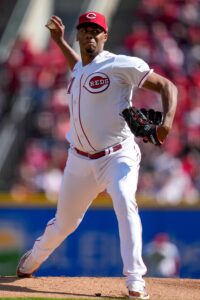
Greene is off to a similar beginning to the season in 2023. Through four starts and 17 innings, he owns a 4.24 ERA. He’s punched out just under 31% of opponents while generating swinging strikes on a strong 13.5% of his offerings. It’s little surprise Greene has missed plenty of bats with a fastball that averages north of 99 MPH. Home runs were his main concern last year, as his modest ground ball numbers translated into a lofty 1.72 homers allowed per nine innings. To his credit, Greene has allowed just one longball thus far in 2023.
If he can consistently keep the ball in the yard, it’s not hard to envision him sticking at the top of a rotation. Few young pitchers can match Greene’s raw arm strength and he’s long shown solid control for a young flamethrower. Greene has handled left and right-handed batters in his brief big league time as well. Between him and fellow top ten pick Nick Lodolo (plus mid-rotation grounder specialist Graham Ashcraft), the Reds have the nucleus of an excellent rotation they hope to lead them out of their ongoing rebuild.
Greene had been on a trajectory to reach arbitration for the first time after 2024 and reach free agency after 2027. The Reds tack on two years of club control while leaving him an opportunity to hit the open market at a relatively young age. Greene would be on track to hit free agency headed into his age-30 season if the Reds exercise their option. He locks in strong earnings to safeguard against injury or performance risk while retaining the possibility of a significant free agent deal down the line.
The $53MM guarantee is the second-largest for a pitcher with between one and two years of big league service. Spencer Strider set the record last October with a six-year, $75MM deal. Greene falls short of that mark but didn’t have the kind of rookie season the Atlanta hurler put together in 2022, when he worked to a 2.67 ERA with an eye-popping 38.3% strikeout percentage in 131 2/3 innings. Greene’s deal easily checks in second in the service group, with Madison Bumgarner’s decade-old $35MM extension representing the record mark until Strider put pen to paper.
Cincinnati didn’t have a single player under guaranteed contract beyond this season. Option buyouts for the likes of Joey Votto, Mike Moustakas, Wil Myers and Curt Casali represented the Reds’ only commitments. There’s plenty of breathing room and obvious motivation for the Reds to start committing to core players. Speculatively speaking, players like Lodolo, Ashcraft, Tyler Stephenson and Jonathan India could be next on the front office’s list of extension targets.
Jeff Passan of ESPN first reported the Reds and Greene had agreed to a six-year, $53MM extension and reported the option value. Jon Heyman of the New York Post reported the contract could max out at $96.2MM. Mark Feinsand of MLB.com reported the salary and escalator specifics.
Image courtesy of USA Today Sports.
Jeffrey Springs Expected To Have Tommy John Surgery
Rays left-hander Jeffrey Springs is expected to have Tommy John surgery, reports Marc Topkin of the Tampa Bay Times. That will put an end to his 2023 campaign and cause him to miss the start of the 2024 season as well. Earlier today, the club had placed him on the 15-day injured list with right-hander Taj Bradley recalled to take his place on the roster.
The news comes as a devastating blow to what had previously been a feel-good story. Springs, 30, was a 30th round draft pick of the Rangers and didn’t draw a lot of fanfare as a prospect. He got to the big leagues with Texas in 2018 and 2019, but posted an uninspiring 4.90 ERA through his first 64 1/3 innings. He was traded to the Red Sox but then put up a 7.08 ERA in the shortened 2020 season.
A trade to the Rays seemed to turn things around for him. He made 43 appearances in 2021 with a 3.43 ERA, 35.2% strikeout rate, 7.8% walk rate and 34.3% ground ball rate. Last year, the club gradually stretched him out to a starter’s workload over the course of the season. He eventually posted a 2.46 ERA in 135 1/3 innings, striking out 26.2% of batters faced while walking just 5.6% and getting grounders on 40.9% of balls in play. The Rays believed in that breakout enough to give the southpaw a four-year extension with a $31MM guarantee and plenty of incentives.
He was looking to build off that breakout campaign and was off to a strong start here in 2023. He had already tossed 16 innings with a tiny 0.56 ERA, though that will now seemingly go down as the entirety of his work this year. Rehab from Tommy John surgery typically takes 14 months or longer, meaning Springs won’t be an option for the club until midway through 2024 at the earliest.
The Rays had started the season with a strong rotation, even though there were a few injuries of note. Shane Baz had his own Tommy John surgery late last year and will likely miss all of the 2023 season. Tyler Glasnow also suffered an oblique strain in the spring and has yet to make his season debut. But Springs, Shane McClanahan, Drew Rasmussen, Zach Eflin and Josh Fleming formed a solid front five, helping the Rays jump out to a 13-0 start and a current 14-3 record.
Now the club will have to navigate the rest of the season without Springs. Eflin is also on the injured list but is expected to be back this weekend after a minimum stay. Bradley made his MLB debut in a spot start for the club last week and will now seemingly get a longer audition to stick around.
Athletics To Promote Mason Miller
The Athletics are planning to promote pitching prospect Mason Miller, reports Matt Kawahara of the San Francisco Chronicle. It seems possible that Miller will join the team today and could make his major league debut tomorrow. He’s not yet on the 40-man roster and will require a corresponding move.
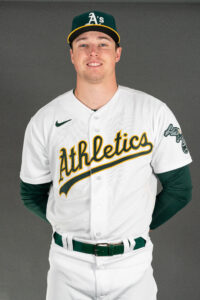
Miller, 24, was selected by the A’s in the third round of the 2021 draft, making his professional debut with a few Complex League outings shortly after that draft. He logged just six innings there, but Baseball America ranked him the #16 prospect in the system going into 2022, largely based on his work in college. He was then limited by a shoulder strain in 2022, not making his season debut until late August. He made one appearance in the Complex League, three in High-A and then two in Triple-A. He finished the year with a combined 3.86 ERA in 14 innings over those games.
It was a very limited sample, but he did rack up 25 strikeouts, exactly half of the 50 batters he faced, while keeping his walks down to a 6% rate. He was then sent to get some extra work in the Arizona Fall League, tossing 16 2/3 innings there with a 3.24 ERA, racking up another 20 punchouts. Based on that strong-but-limited showing, BA bumped him to #4 in the system coming into this year. FanGraphs was perhaps even more bullish, giving Miller the #98 spot on their preseason list of the top 100 prospects in the league. Both outlets highlight Miller’s velocity, with his fastball able to hit triple digits, while also complimenting his slider and changeup. BA adds that he was planning to re-introduce a cutter in 2023, a pitch he had been avoiding as part of his rehab.
This year, Miller started out with a Double-A appearance, allowing two earned runs over 3 2/3 innings, but striking out eight opponents. He then got bumped to Triple-A, where he tossed five shutout innings with 11 punchies. By all accounts, Miller clearly has electric stuff and great results, but in very small samples. His entire professional career consists of 28 2/3 innings in the minors and those 16 2/3 frames in the AFL, adding up to 45 1/3. He did log 239 innings in college, but it’s still unusual for a club to fast-forward a player’s rise through the minors like this. That being said, Miller seems to have excellent stuff and might be ready to get big league hitters out right now.
The A’s have been toying with using a six-man rotation this year, in part to help Shintaro Fujinami adjust from the once-a-week pitching schedule preferred in Japan to the five-day rotation that’s more common in North America. He’s been joined by Kyle Muller, JP Sears, James Kaprielian, Ken Waldichuk and Adam Oller so far, though Oller made two long relief outings before getting his first start of the year last week. He was rocked for seven earned runs in just 2 1/3 innings in that start and was optioned to the minors shortly after. It seems his struggles have perhaps opened an opportunity for Miller to make his MLB debut. The A’s weren’t expected to compete this year and are off to a 3-14 start, giving them little reason not to see what they have in Miller.
Now that Opening Day has moved into the rearview mirror, it won’t be possible for Miller to reach a full year of service time. A baseball season is 187 days long but a player needs just 172 days on the active roster or injured list to accrue a full year. With the season now 20 days in, Miller would come up just shy of that one year mark even if he stays up for good. The new collective bargaining agreement has a path for players to get a full year of service time anyway, though that only applies to those who cracked two of the preseason top 100 lists at Baseball America, MLB Pipeline or ESPN. Miller made the FanGraphs list but none of those other three, meaning he doesn’t have a path to a full service year in 2023.
Image courtesy of USA Today Sports.
Angels Outright David Fletcher
The Angels have sent David Fletcher through outright waivers, tweets Jeff Fletcher of the Orange County Register. The infielder remains in the organization but lost his spot on the 40-man roster.
It’s the result of a sharp downturn in production from Fletcher. The Loyola Marymount product looked like a core organizational piece a few years ago. Los Angeles signed him to a five-year contract extension two Aprils back. It was a $26MM guarantee that bought out one free agent year and contained club options for two more. The hope was they’d secured an excellent defensive middle infielder with roughly league average offense.
Fletcher signed that deal on the heels of a .319/.376/.425 showing during the abbreviated 2020 season. While that was built on an unsustainable .348 average on balls in play, it brought his career line to .292/.346/.386 in just shy of 1200 plate appearances. Fletcher never hit for power but demonstrated elite contact skills and played plus defense at second base.
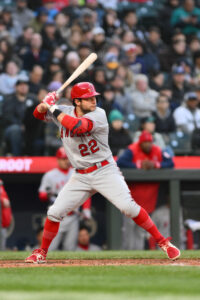
Unfortunately for the Halos, the righty-swinging Fletcher has seen a significant drop in his offensive production for the past couple seasons. He put up only a .262/.297/.324 line across 665 plate appearances in 2021. The following year proved challenging both from a performance and health perspective. Fletcher was nagged early in the season by a hip strain that eventually sent him to the 60-day injured list. He got into 61 games, hitting .255/.288/.333. He’d been off to a 2-16 start through this year’s first couple weeks.
Fletcher’s contact skills have remained elite. His walks have dipped the past couple years, though, and he hasn’t gotten good results on batted balls. Going back to 2021, he carries a .258/.292/.323 line in just over 900 trips to the plate. Even with continued strong grades as a keystone defender, the lackluster offense led the Angels to look elsewhere this winter. The Halos brought in Gio Urshela and Brandon Drury to add some offensive punch to the infield. They called up top shortstop prospect Zach Neto on Saturday, announcing at the time they’d optioned Fletcher back to Triple-A Salt Lake.
In conjunction with that move, they apparently also placed Fletcher on waivers. It’s no surprise he didn’t get claimed. Any team that added him would’ve had to taken on his contract. Fletcher is making $6MM both this season and next. He’ll make $6.5MM in 2025 and is due at least a $1.5MM buyout on the ’27 option. For any club to take on the nearly $20MM in guaranteed money given Fletcher’s recent struggles would have been unlikely.
There’s surely some amount of strategy in the Halos’ timing of the outright. Any player with over three years of major league service time can refuse an outright assignment in favor of minor league free agency. However, players with between three and five years of service would have to forfeit any remaining guaranteed money on their contract to do so.
Fletcher entered the 2023 campaign with four years and 111 days of big league service. A player gets a full service year at 172 days, so Fletcher needed 61 days on the MLB roster this year to crack that threshold. Had he still been in the majors into early June, he’d have had the right to elect free agency while collecting the rest of his salary if the Halos wanted to take him off their 40-man roster.
By timing the outright before then, the Angels ensure Fletcher sticks in the organization. He’s obviously not going to pass on nearly $20MM in guaranteed money. He’ll accept the assignment to Salt Lake and try to hit his way back onto the major league radar.
Image courtesy of USA Today Sports.