
Dodgers, Shane Greene Agree To Minor League Deal
The Dodgers have agreed to a minor league deal with veteran reliever Shane Greene, tweets MLB Network’s Jon Heyman. Greene returns to Chavez Ravine after inking a Major League contract with the Dodgers last August, and appearing in nine games with the Dodgers down the stretch.
That brief stint in L.A. saw Greene post a 4.05 ERA, 23.3% strikeout rate, and an ungainly 16.7% walk rate over 6 2/3 innings of work. While nothing spectacular, it was still a big step up from Greene’s previous work last season — 17 innings out of the Braves bullpen that saw the right-hander struggle to an 8.47 ERA.
It was an unusual season overall for Greene, as his trip through free agency didn’t result in a deal of any kind until Atlanta signed him to a big league deal in May. The lack of a proper Spring Training undoubtedly had some impact on Greene’s performance, and while this season’s abbreviated spring camps are also not exactly normal, Greene will at least get some type of regular prep time as he tries to win a job in the Los Angeles bullpen.
Greene has been a little inconsistent since becoming a full-time reliever in 2017, yet he has posted some very strong numbers when at his best. The right-hander enjoyed very solid seasons in 2017 and 2019 while pitching with the Tigers (serving as Detroit’s closer and reaching the All-Star Game in 2019) and delivered another good year over 27 2/3 frames with Atlanta in the shortened 2020 season. However, Greene has never been a big strikeout pitcher even in his prime, and since the advanced metrics take a dimmer view of his performance than his real-world numbers, it could explain why Greene languished for so long on the open market last offseason.
If Greene can return to his old form, the Dodgers may have found a reliable and durable bullpen arm at a relative bargain price. L.A. has assembled quite a collection of notable relievers in camp on minors deals, as Greene joins a list that includes Reyes Moronta, Carson Fulmer, Yency Almonte, Bobby Wahl, and Sam Gaviglio.
Braves Re-Sign Eddie Rosario
The Braves have re-signed free agent outfielder Eddie Rosario to a two-year, $18MM contract with a club option for the 2024 season, the team announced. Rosario will earn $9MM in each of the next two seasons. The Braves didn’t announce the value of the 2024 option, but The Athletic’s Ken Rosenthal reports that it’s also at $9MM, with no buyout. Rosario is represented by Roc Nation Sports.
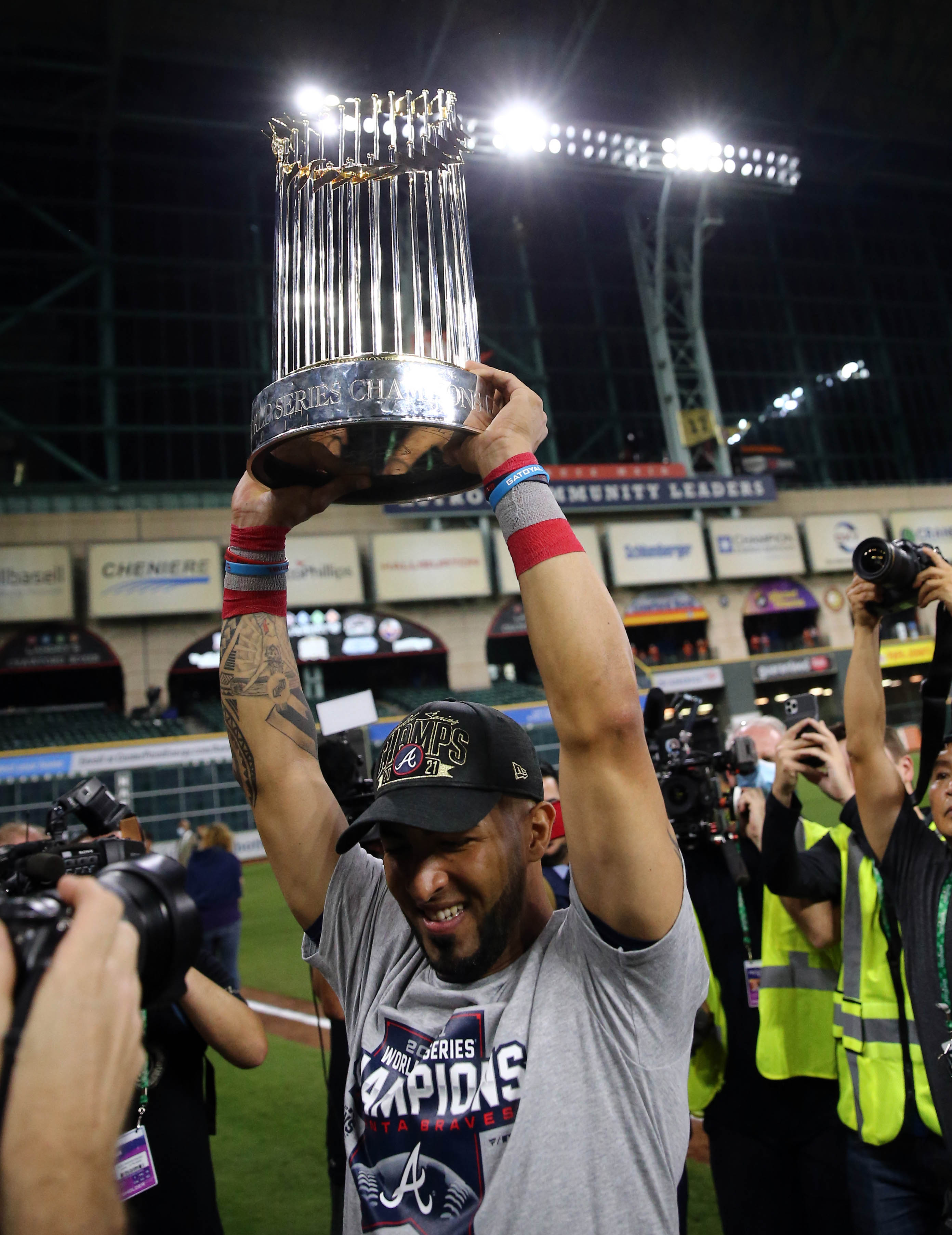
Rosario, 30, landed with the Braves in a midseason salary dump after a generally unproductive start to the season in Cleveland. The longtime Twins left fielder had signed a one-year, $8MM there after being non-tendered by Minnesota but hit just .254/.296/.389 in 306 plate appearances before landing on the injured list due to an abdominal strain. The Braves acquired Rosario knowing he’d need some additional time to mend, but it’s doubtful even their most bullish projections could’ve foreseen what laid ahead.
Activated from the 10-day IL on Aug. 27, Rosario exploded with a .271/.330/.573 showing in 96 plate appearances down the stretch in Atlanta. He seven home runs, four doubles and a pair of triples during that hot streak — and that production alone would’ve made the acquisition well worth it. Rosario, however, carried that production into the postseason — at least for the National League Championship Series.
After a mostly nondescript three games in the NLDS, Rosario again stole the spotlight with a blistering 14-for-25 effort that included three home runs, a double, a triple and nine runs driven in. Following that showing, Rosario’s crowning as NLCS MVP was a foregone conclusion. His production dried up during the World Series (5-for-22), but Rosario’s overall production with the Braves and those postseason heroics resulted in a solid payday and what figures to be an everyday role in Atlanta.
The up-and-down nature of Rosario’s 2021 season wasn’t exactly anomalous in nature. He’s been prone to torrid hot streaks and pronounced cold streaks throughout his big league career, thanks in part to a hyperaggressive approach at the plate. Rosario has strong bat-to-ball skills, evidenced by a strikeout rate of just 14.7% across the past three seasons. However, he’s also walked in fewer than five percent of his big league plate appearances, and over the past three seasons he has the game’s 13th-highest swing percentage (55.8%) and 11th-highest chase percentage (43%). Rosario excels at making contact even on those pitches off the plate, but in chasing so frequently, he gives up some opportunities to capitalize on his above-average power by driving better pitches.
Defensively, Rosario is more of a mixed bag. He’s played all over the outfield but is best suited in the corners, where he has ample arm strength that led to some gaudy assist totals, particularly early in his tenure with the Twins. Defensive metrics have soured on his work in recent seasons, but there’s an immense gulf between the most bullish and most bearish measures of evaluation. Defensive Runs Saved, for instance, credits Rosario with a +2 mark in 2021 — but Statcast’s Outs Above Average grades him at -17, which is the worst mark among all Major League outfielders. Year-to-year looks at defensive metrics can offer great fluctuation, but taken in larger samples, each of DRS, UZR and OAA give him negative grades dating back to 2017.
None of that’s to say Rosario is a poor investment for the Braves, particularly at these terms. His approach at the plate has worked for him, as evidenced by a solid .275/.309/.473 batting line (105 wRC+) and 133 home runs through 3242 career plate appearances. He’s posted single-season home run totals of 27 (2017) and 32 (2019) in the past, so he has the potential to be a prominent source of power in the Braves’ lineup over the next couple seasons. His overall offensive production is curbed a bit by the frequent swings and lack of walks, but Rosario has been a generally above-average hitter who’ll pair with Adam Duvall, Marcell Ozuna and, once healthy, Ronald Acuna Jr. in what should be a productive outfield/designated hitter carousel in Atlanta.
In order to clear space on the 40-man roster, Atlanta placed starter Mike Soroka on the 60-day injured list. Soroka underwent a second Achilles surgery last June that was expected to sideline him into July, so it’s no surprise he won’t be ready for at least the first two months of the season.
Fernando Tatis Jr. Undergoes Wrist Surgery
March 16: Tatis is undergoing surgery this morning, tweets Kevin Acee of the San Diego Union Tribune.
March 14, 2:16pm: It’s not clear precisely when Tatis suffered his injury, but he admitted today when speaking with reporters (including Jesse Rogers of ESPN) that he’d fallen off his motorcycle multiple times throughout the winter. One accident described as minor had been reported in early December; Tatis called its resultant injuries “minor scrapes,” but Jon Heyman of the MLB Network tweets that some people “close to the situation” are hypothesizing he suffered his wrist fracture at that point. As Bob Nightengale of USA Today points out, team officials were barred from speaking with or examining Tatis until last Thursday on account of the lockout.
11:29am: Tatis has a fracture in the scaphoid bone of his left wrist, tweets Cassavell. It’s possible the injury was sustained earlier in the winter (though that remains unclear), but it flared up decisively while swinging a bat recently.
11:05am: Padres superstar Fernando Tatis Jr. suffered a broken wrist that could require surgery, president of baseball operations A.J. Preller announced to reporters this morning (Twitter link via MLB.com’s AJ Cassavell). Surgery is a possibility for Tatis, who is expected to miss up to three months recovering from the injury.
It’s a brutal blow to the Padres, who’ll now go as much as half the season without one of the game’s brightest young stars. Tatis missed time last season with a recurring subluxation of his shoulder but nevertheless hit .282/.364/.611 with 42 home runs in just 130 games. Tatis avoided surgery for that particular ailment but will now miss substantial time with a new malady.
San Diego has plenty of infield depth, though there’s no replacing a player of Tatis’ caliber. His injury could create a more stable opportunity for former KBO star Ha-Seong Kim, who struggled in a part-time role with the Friars last year after signing a four-year, $28MM contract. Alternate options on the roster include third baseman Manny Machado, second baseman Jake Cronenworth and utilityman Jurickson Profar — all of whom have experience at shortstop in the big leagues. Twenty-one-year-old CJ Abrams is among the top prospects in all of baseball, but he’s not yet on the 40-man roster and has yet to play above Double-A. He’s in camp as a non-roster invitee, though, so he’ll get a chance to force the team’s hand.
Of course, it at least bears mention that there are a few prominent shortstops yet unsigned on the market. Both Carlos Correa and Trevor Story have been in search of new homes this winter, and were either amenable to a one-year deal that’d allow them to reenter the market next winter, the Friars could make for a previously unexpected fit. There’d be an eventual logjam, but Tatis did spend some time in the outfield last year.
That said, a Story or Correa match is an extreme long shot for multiple reasons. Both are seeking long-term arrangements, and the Padres have been looking to shed payroll as they explore trade scenarios involving Eric Hosmer and Wil Myers. Signing either free agent would require not only forfeiting a draft pick but also forking over a sizable salary. Preller has taught us time and again to never expressly rule the Padres out on virtually any pie-in-the-sky scenario, but it’s pretty difficult to imagine either Story or Correa popping up in Padres camp to step in for Tatis.
Tatis is entering the second season of a precedent-shattering 14-year, $340MM contract extension. He’s slated to earn $5MM this season and will see his salaries rise to $7MM in 2023, $11MM in 2024, $20MM in 2025-26, $25MM in 2027-28 and $36MM annually from 2029-36.
D-backs, Keone Kela Agree To Minor League Deal
The D-backs have agreed to a minor league deal with veteran righty Keone Kela, reports Fansided’s Robert Murray. Kela had Tommy John surgery mid-May in 2021, so he won’t be ready for the beginning of the season but will give Arizona a potential high-end reliever to join the bullpen at some point midseason.
The 28-year-old (29 next month) has seven seasons of MLB experience under his belt, spending time with the Rangers, Pirates and Padres. From 2015 to 2019, he appeared in 228 games, throwing 214 2/3 innings, recording a 3.23 ERA, along with an excellent 30.1% strikeout rate and slightly-high 9.4% walk rate.
Unfortunately, health issues have slowed him down since then. In 2020, a positive COVID-test and forearm tightness limited him to just two innings on the season. Last year, he logged 10 2/3 frames before requiring Tommy John. As part of his contract with the Padres, the surgery meant that they were allowed to retain Kela for 2022 via a club option valued at $800K. However, they decided not to pick that up, presumably not confident that Kela could make it back to the mound in time for it to be worth their while. Tommy John surgery typically comes with a recovery time of 12 to 18 months for pitchers, meaning that Kela could be ready to go a few months into the season but also could miss the entire year.
For the Diamondbacks, they are coming off a miserable 52-110 campaign that saw them even with the Orioles for worst record in the majors. Despite that, they don’t seem interested in stripping down the roster, instead opting for making some upgrades and hoping for better results this year. In the bullpen, they’ve already added Mark Melancon and Ian Kennedy, who are likely to take the high leverage spots. If Kela can come back from his surgery and perform like he did from 2015 to 2019, he’ll give the club yet another experienced veteran to help out their relief corps. Should the team struggle to contend again, these relievers could all make for intriguing trade chips at the deadline.
Athletics Trade Matt Chapman To Blue Jays
Oakland’s rapid sell-off and the Blue Jays’ aggressive offseason both continued Wednesday, as the A’s announced that third baseman Matt Chapman has been traded to Toronto in exchange for right-hander Gunnar Hoglund, infielder Kevin Smith, left-hander Zach Logue and left-hander Kirby Snead.
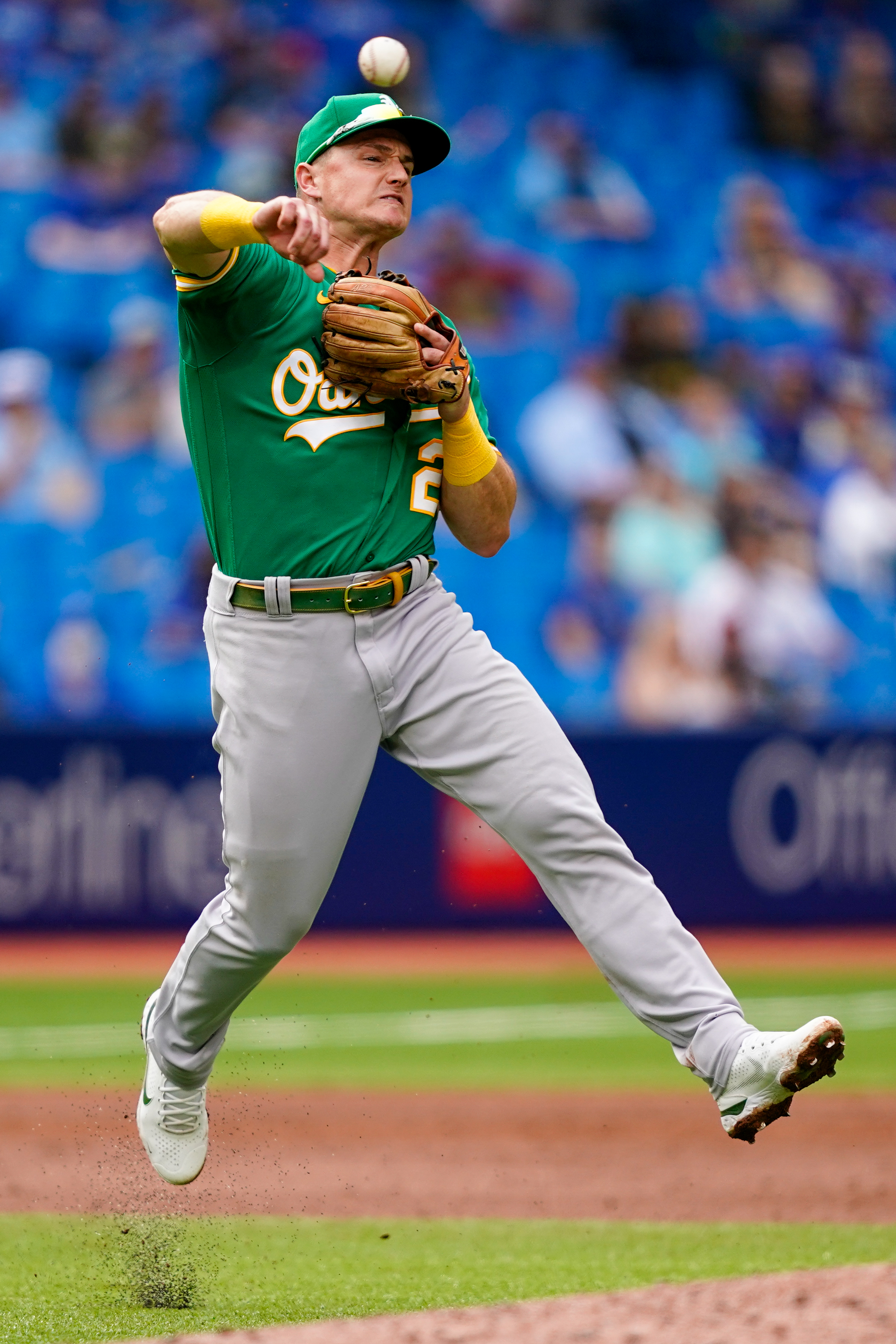
The acquisition of Chapman will give the Blue Jays not only one of the best defensive third basemen in the game but one of the top defensive players in baseball at any position. Since Chapman’s 2017 Major League debut, his 88 Defensive Runs Saved and his 47.3 Ultimate Zone rating both trail only Mookie Betts and Andrelton Simmons among all big leaguers. Statcast’s Outs Above Average metric largely agrees, ranking him tenth among all big league players, regardless of position, since 2017. Indeed, Chapman has twice been recognized as the league’s best all-around defender by being named the league’s Platinum Glove winner.
Of course, Chapman is far from a glove-only player. From 2018-19, he was a legitimate MVP candidate on the strength of his combined offensive and defensive prowess. The former No. 25 overall draft pick posted a .263/.348/.507 slash with 60 home runs while playing his home games at the cavernous Oakland Coliseum during those two seasons, finishing Top 7 in American League MVP voting on both occasions.
Chapman’s offensive production has fallen sharply over the past two seasons, due in no small part to a major hip injury in 2020 that he tried to play through before succumbing to surgery. That procedure both repaired a labrum tear and “cleaned up” the head of his right femur bone. Even as his production has dipped, Chapman has still hit for power (37 home runs, .216 ISO) and drawn plenty of walks (11.4%), but his strikeout rate has spiked from 22.8% in 2018-19 all the way to 33.1% in 2020-21. Over the past two seasons, he’s posted a combined .215/.206/.431 batting line.
The Jays are surely betting that Chapman will bounce back to an extent at the plate now that he’ll be 18 months removed from that September 2020 surgery. However, even if he doesn’t return to his MVP-caliber levels from 2018-19, the new three-true-outcomes version of Chapman was still worth 3.5 wins above replacement per both Baseball-Reference and FanGraphs last season. He’s a pronounced upgrade for a Jays team hoping to make a deep postseason run on the strength of a dominant offense and a rotation that has improved by leaps and bounds in recent seasons.
Chapman’s salary has not yet been settled, as he’s arbitration-eligible and did not settle on a price point with the A’s prior to the lockout. He’s projected by MLBTR contributor Matt Swartz to earn $9.5MM this coming season and will be owed one more raise for the 2023 campaign before reaching free agency in the 2023-24 offseason. While Jays fans may be looking to Matt Olson‘s swift extension following a trade from Oakland to his hometown Braves, it should be pointed out that as a client of the Boras Corporation, Chapman seems less likely to follow that same trajectory. Still, he’ll be locked in as the Toronto third baseman for at least the next two seasons.
Adding Chapman firmly pushes Cavan Biggio to second base, where he’s better suited to play from a defensive standpoint. Chapman’s range will also play nicely alongside Bo Bichette, who has drawn mixed reviews for his glovework at shortstop. Statcast notes that Bichette is much stronger on balls hit to his left side than those hit to his right, so getting some extra range out of their third baseman will be particularly helpful.
It’s worth pointing out that Chapman isn’t an ideal fit for a Toronto lineup that skews almost entirely right-handed. He’d give them eight pure right-handed hitters in the starting lineup, with Biggio the lone lefty. That right-handed lean was part of the reason that a potential Freddie Freeman fit has seemed so tantalizing for the Jays. This acquisition technically doesn’t rule out a Freeman signing, but it does quash any speculation of Vladimir Guerrero Jr. moving back to third base. That’s in the team’s best interest anyhow, as Guerrero was never a strong defensive option at the hot corner. A theoretical Freeman addition would push Guerrero into a primary designated hitter role earlier in his career than the Jays might’ve liked, but the sheer offensive firepower of that lineup would still make it worth considering. Toronto had been linked to Kyle Schwarber, but he’s now Philadelphia-bound after agreeing to a four-year deal with the Phillies.
Turning the Oakland’s return, they’ll acquire one high-end but far-off pitching prospect, Hoglund, and a trio of largely MLB-ready pieces in Smith, Logue and Snead. Hoglund was the No. 19 overall draft pick in 2021 and might well have gone in the Top 10 selections had he not required Tommy John surgery during last year’s NCAA season. The former Ole Miss ace was largely regarded as one of the top college arms in the draft after pitching to a 2.41 ERA with a sky-high 39% strikeout rate against a strong 6.1% walk rate.
Baseball America ranked him fifth among Toronto farmhands, while FanGraphs pegged him No. 3 in the Toronto system. Much of Hoglund’s future depends on how he recovers from Tommy John surgery, but he’d been described as an advanced college arm with mid-rotation upside and a potential quick path to the big leagues.
Smith, 25, ought to step right into the Athletics’ Opening Day lineup. He went just 3-for-32 in a brief big league cup of coffee late in the 2021 season, but that’s overshadowed by a big .285/.370/.561 batting line in Triple-A last year. Smith, ranked seventh among Jays prospects at BA and 16th at FanGraphs, smacked 21 home runs, 27 doubles and four triples while also going 18-for-21 in stolen base attempts in that outstanding Triple-A campaign. BA ranked him as the game’s No. 91 prospect in the 2018-19 offseason, and while a poor first showing in Triple-A dropped his stock, last year’s excellent rebound restored a good bit of faith in his abilities.
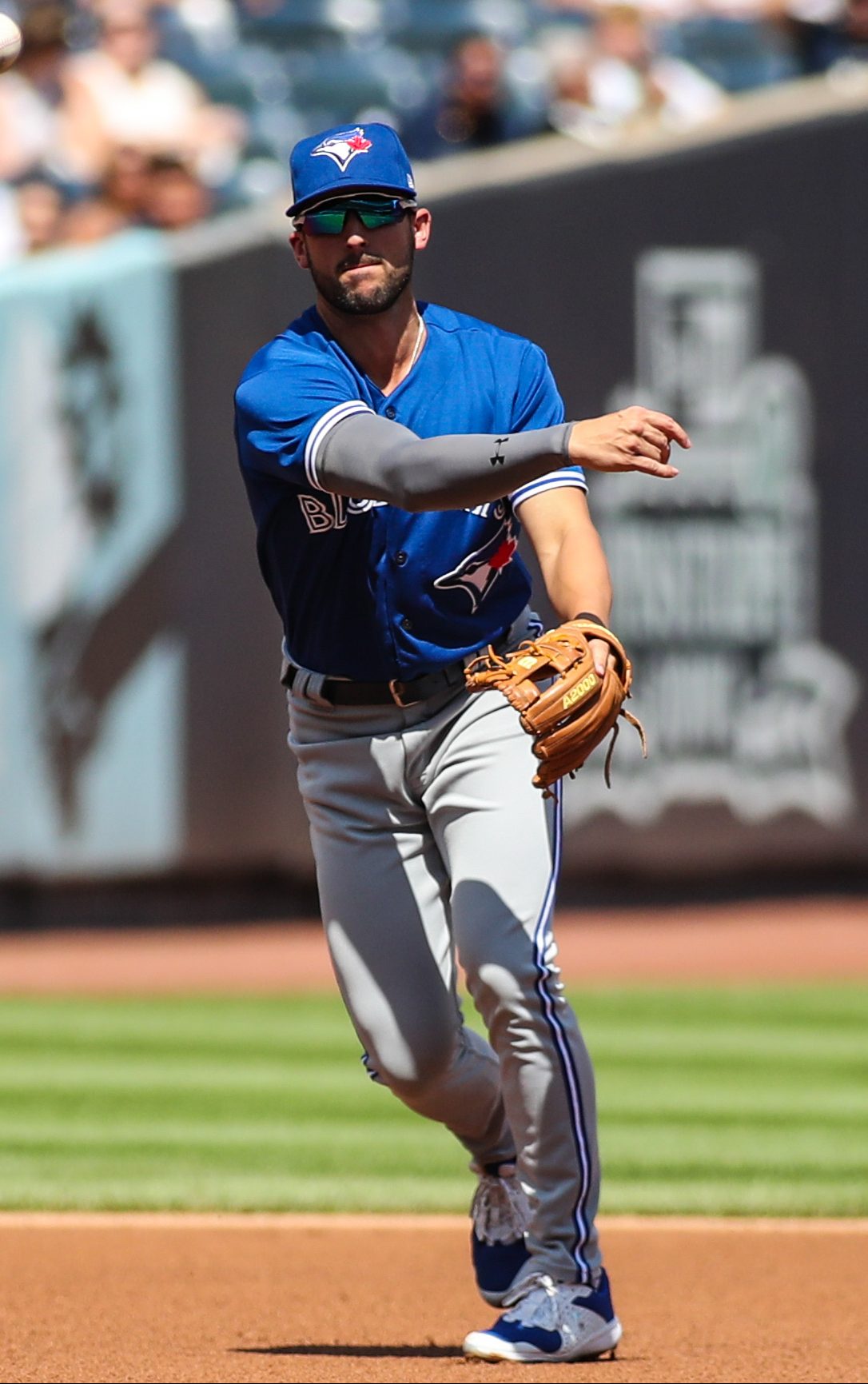
The Jays played Smith primarily at shortstop during his time in Triple-A, but he also has 651 professional innings at third base and 161 innings of work at second base. Scouting reports peg him as a capable but not-elite defender at short. Given the presence of all-world defensive prospect Nick Allen in the upper tiers of the Oakland system, it seems quite possible that Smith’s eventual home with the A’s will be either third base or second base.
As for the two pitchers, Logue has a chance to be in the Oakland rotation before long. The 25-year-old (26 in April) was Toronto’s ninth-round pick in 2017 and has greatly elevated his status, thanks in part to a nice showing between Double-A and Triple-A this past season. In 125 innings between the two levels, Logue notched a 3.67 ERA with a strong 28.2% strikeout rate, an even better 5.3% walk rate and a 38% ground-ball rate. That he’s a fly-ball pitcher moving to Oakland as opposed to Toronto’s more hitter-friendly Rogers Centre can only help his chances of becoming a quality big league contributor.
Logue ranked 24th among Jays prospects at BA, where he was labeled one of the system’s “most improved” players in 2021 and touted as a potential back-end starter. FanGraphs tabbed him 10th in the Toronto system, praising his plus changeup, plus command and above-average cutter. Scouting reports generally don’t peg Logue as more than a fourth starter, but if he’s able to realize that potential, there’s quite a bit of value in six-plus seasons of a No. 4 starter.
Snead, 27, gives the A’s an MLB-ready bullpen piece who made his big league debut late in the ’21 season. Snead allowed three runs (two earned) on seven hits and a pair of walks with seven strikeouts through his first 7 2/3 big league innings last year. That marked the continuation of an excellent season in Triple-A, where he’d notched a 1.58 ERA with a huge 36.1% strikeout rate, a 10.1% walk rate and a massive 63.3% ground-ball rate.
Unlike many lefties, Snead has no issues containing right-handed opponents in 2021. While he was still better against left-handers, who posted an awful .141/.222/.203 against him (Majors and Triple-A combined), right-handers were similarly futile. Even when batters held the platoon advantage, they mustered only a .186/.278/.245 output against Snead. He’s been a pure reliever throughout his professional career, but that dominance against both righties and lefties mitigates any specialist concerns and gives him the chance to be a multi-inning option. Snead has pitched 236 1/3 innings through 186 minor league appearances, so he’s no stranger to working more than an inning at a time.
The trade of an All-Star third baseman to the Blue Jays for a four-player package consisting of three largely MLB-ready pieces and one further-off but high-upside prospect will do little to quell comparisons to the 2014 Josh Donaldson blockbuster. That trade, which brought Franklin Barreto, Brett Lawrie, Kendall Graveman and Sean Nolin to Oakland, didn’t pan out as the front office hoped, but today’s swap is a separate deal, eerie similarities notwithstanding. The A’s have added a notable influx of talent to their system, and the Chapman return in particular features the largest crop of MLB-ready talent they’ve picked up thus far in their offseason dealings.
The Chapman trade marks the latest step in the dismantling of a roster that was largely foreseeable but is nevertheless disheartening for the fanbase. Chapman follows fan favorites Olson and Chris Bassitt out the door, and it’s unlikely Oakland will stop its roster purge with those three. Lefty Sean Manaea, a free agent at season’s end, seems all but certain to be traded. Right-hander Frankie Montas, center fielder Ramon Laureano and reliever Lou Trivino all have multiple seasons of club control remaining but still could change hands. Montas, in particular, has been a target for pitching-hungry clubs. Looking ahead, it’s not really a question of whether any of those players will be traded — but rather one of who’ll be the next to go.
Former All-Star second baseman Carlos Baerga first reported on Instagram that a trade agreement was in place. Sportsnet’s Shi Davidi reported Oakland’s return for Chapman (Twitter link).
Tigers To Sign Andrew Chafin
The Tigers have an agreement with lefty reliever Andrew Chafin, according to Evan Petzold of the Detroit Free Press. Chafin’s contract will be a two-year deal in the $13MM range, according to Ken Rosenthal of The Athletic. That is indeed the contract value, reports Jon Heyman of MLB Network, who notes the inclusion of an opt-out after 2022. Chafin is represented by Meister Sports Management.
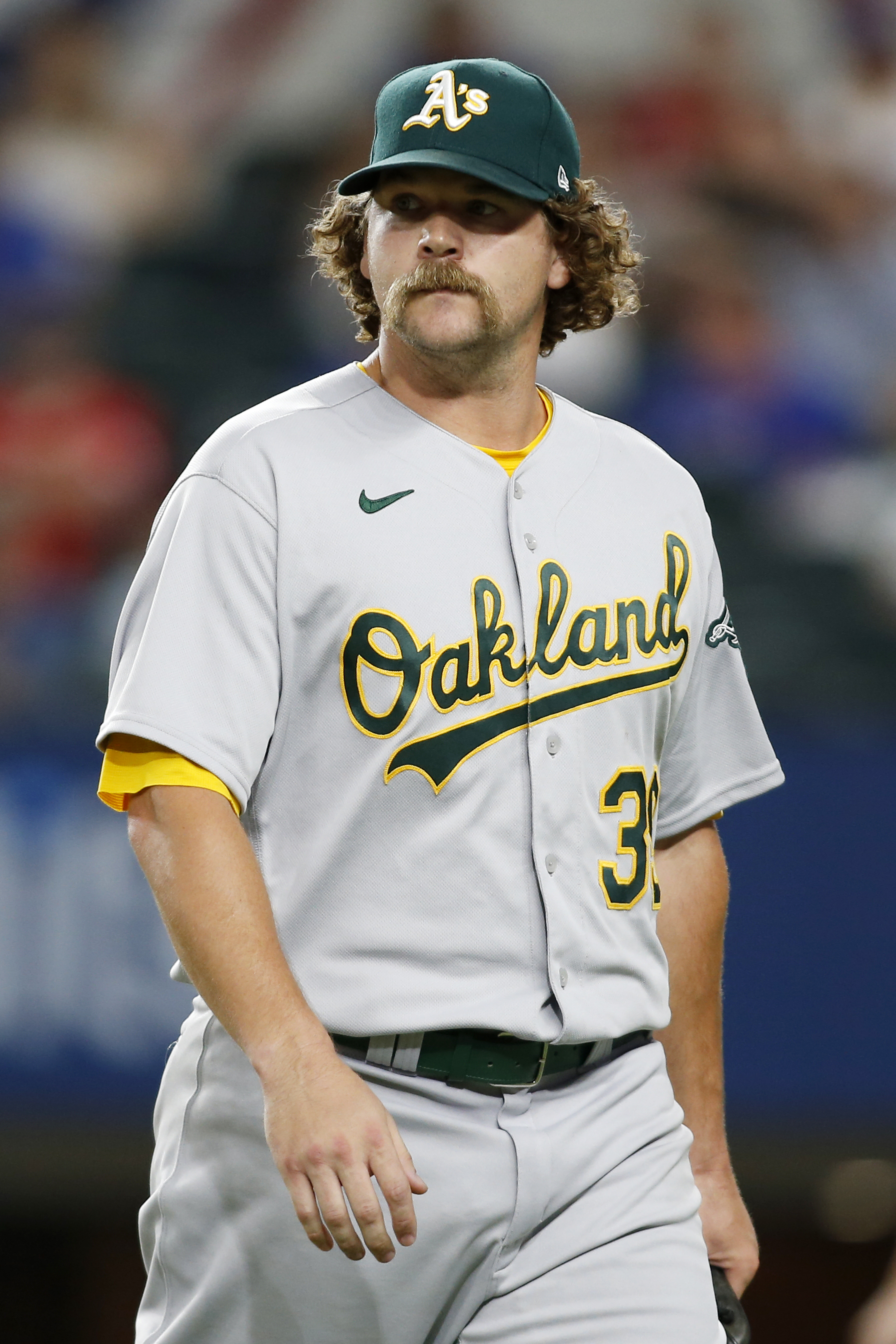
Chafin, 31, posted a career-best 1.83 ERA in 68 2/3 innings for the Cubs and Athletics in 2021. Though his 24.1 K% was down from previous years, he also managed a career-best 7.1 BB%. Chafin was tough on both righties and lefties in ’21, and actually posted a significantly higher strikeout rate against righties. Though Chafin is not known for his velocity or spin rate, his Statcast metrics regarding quality of contact are excellent.
Chafin was drafted 43rd overall by the Diamondbacks out of Kent State back in 2011. He’s made 66+ appearances in a season five different times, leading all MLB relievers with 225 appearances from 2017-19. In facing 263 lefty batters since 2019, Chafin has posted an 18.3 K-BB% against them while allowing a .225/.290/.317 batting line.
According to MLB.com’s Jason Beck, the relative proximity to Chafin’s Ohio home was an advantage for Detroit. The Chafin signing is another move toward respectability for the Tigers in an offseason full of them. The club committed $217MM to Javier Baez and Eduardo Rodriguez prior to the lockout, also trading for catcher Tucker Barnhart. Chafin joins a Tigers bullpen that is slated to include holdovers Gregory Soto, Michael Fulmer, Jose Cisnero, Alex Lange, and Kyle Funkhouser.
In February of last year, the Cubs signed Chafin to a one-year, $2.75MM deal. Near the July trade deadline, he was dealt to Oakland for minor leaguers Greg Deichmann and Daniel Palencia.
Three other lefty relievers have signed two-year deals this winter. Aaron Loup received a $17MM deal from the Angels, while Brooks Raley got $10MM from the Rays and Jake Diekman got $8MM from the Red Sox. Brad Hand, Matt Strahm, T.J. McFarland, and Joely Rodriguez inked one-year pacts. Here’s a look at the lefty relievers still remaining in free agency.
Tigers Re-Sign Wily Peralta
The Tigers have brought right-hander Wily Peralta back to the organization on a minor league contract, Evan Petzold of the Detroit Free Press reports (via Twitter). He’ll compete for a roster spot in big league camp after a solid showing in Detroit last year. Peralta would earn a $2.5MM base salary if he makes the roster, per Petzold, with the opportunity to pick up another $500K worth of incentives.
Peralta, 32, had a strong return to the Majors last season after not pitching in the Majors in 2020 and logging a 5.80 ERA in 40 innings with Kansas City in 2019. The former Brewers hurler went from minor league signee to a regular member in the Detroit rotation, making 18 starts (plus one relief appearance) and pitching to a 3.07 ERA in 93 2/3 innings. The underlying metrics weren’t nearly as rosy, as Peralta posted a just a 14.4% strikeout rate against a 9.5% walk rate. He kept more than half his batted balls on the ground, but metrics like FIP (4.94) and SIERA (5.27) don’t paint an especially optimistic portrait.
That’s likely a large reason that, in spite of a glowing 2021 ERA, Peralta had to settle for a nonguaranteed contract in free agency. That said, while Peralta isn’t promised a roster spot, he ought to have a decent chance at making the roster after making a good impression on the organization last year.
The Tigers’ Opening Day rotation figures to included Eduardo Rodriguez, Casey Mize and Tarik Skubal, but things are less certain thereafter. Righty Matt Manning, a longtime top prospect, was hit hard in his MLB debut last year but will still have a chance to win a spot. Prospects Joey Wentz and Alex Faedo could eventually be options, but both are returning from Tommy John surgery.
It’s quite possible that the Tigers will add another veteran starter to join the ranks, thus pushing Peralta and Manning into a competition for the fifth spot on the staff. For the time being, Peralta seemingly has a better chance at cracking the roster than your average non-roster player in Spring Training.
Chris Sale Has Stress Fracture In Rib Cage, Won’t Be Ready For Opening Day
Red Sox ace Chris Sale has a stress fracture in his right rib cage and will not be ready for Opening Day, chief baseball officer Chaim Bloom announced to reporters today (Twitter links via Alex Speier of the Boston Globe). It will be “weeks, not days” before Sale is even cleared to pick up a ball and begin any form of throwing, Bloom adds. Sale didn’t suggest a timeline other than stating that bones typically take six to eight weeks to heal. Sale suffered the injury during the lockout during a live batting practice he was streaming on Instagram, but was prohibited from communicating it to the Red Sox until the new collective bargaining agreement was reached March 10.
Sale joined the Red Sox in a December 2016 trade and is in the third year of a five-year, $145MM extension. He underwent Tommy John surgery in March 2020, ultimately leading to a gap of almost exactly two years between MLB mound appearances. In his nine starts in late 2021, Sale averaged 82 pitches per outing. Sale’s work fell short of his Cy Young-caliber peak, which is to be expected at age 32 and after a long layoff, but he still managed a healthy 28.4 K% and 6.6 BB% in his 42 1/3 innings. Two of Sale’s three postseason starts were particularly brief, but he was able to make a strong 87-pitch effort in Game 5 of the NLCS against the Astros.
The prospect of Sale missing potentially a couple months of the 2022 season is a blow to the Red Sox. Still, the club did sign free agents Michael Wacha and Rich Hill before the lockout, and has already been stretching out Tanner Houck and Garrett Whitlock this spring. Nathan Eovaldi and Nick Pivetta are also set for the team’s rotation.
Yankees To Re-Sign Anthony Rizzo
The Yankees have settled on a first baseman, reportedly agreeing to terms with Anthony Rizzo on a two-year, $32MM guarantee. The deal pays the Sports One Athlete Management client $16MM salaries annually and gives him the opportunity to opt out after the 2022 campaign. The contract is pending a physical.
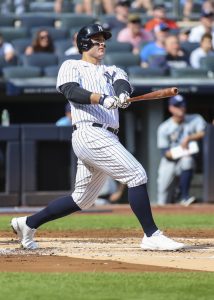
Rizzo will be returning to the Bronx, where he finished the 2021 season. New York acquired him from the Cubs in advance of the trade deadline, and he hit .249/.340/.428 in 200 plate appearances in pinstripes down the stretch. That was more or less in line with the .248/.346/.446 mark he’d put up in 376 trips to the plate with Chicago over the season’s first couple months.
It was the second straight season of reasonable but unexciting production for Rizzo. He’d posted a .222/.342/.414 line during the shortened 2020 campaign. Going back two seasons, he owns a .240/.343/.432 mark over 819 plate appearances. By measure of wRC+, that production checks in nine percentage points above the league average hitter’s. It’s actually a bit below the standard (.254/.335/.455, 113 wRC+) set by first basemen around the league.
It’s been a rather sharp downturn for Rizzo as he’s entered his 30’s. He broke out with the Cubs in 2014, his age-24 campaign. Over the next six seasons, he never posted a wRC+ below 126. Overall, Rizzo hit .284/.388/.513 between 2014-19, with his 141 wRC+ in that stretch tying for twelfth among 375 qualified hitters.
Rizzo was a lineup anchor for the Cubs as they emerged from their rebuild, and he was also highly-regarded for his leadership and presence in the clubhouse. That combination made him perhaps the face of the Cubs’ most successful run in over a century. He appeared in three consecutive All-Star games from 2014-16, finishing in the top ten in NL MVP voting each season. Rizzo played a key role on Chicago’s curse-breaking World Series winner in 2016, and he remained highly productive for three years beyond that even as the team never recaptured that level of postseason success.
The Yankees would be thrilled with their investment if he were to recapture anything near that form next season. Yet there’s clearly some trepidation around the league regarding Rizzo’s back-to-back relative down years. Just 12 months ago, Ken Rosenthal and Patrick Mooney of the Athletic reported that the Cubs had put a five-year, $70MM extension offer on the table. Rizzo declined Chicago’s overture, preferring to bet on himself after his middle-of-the-road 2020 season. After continuing to produce at a similar level over a full schedule in 2021, though, he essentially finds himself accepting a pillow contract and betting on a bounceback once again.
To be sure, Rizzo still does a lot of things well. He continues to boast an enviable combination of contact and raw power. Rizzo’s 81.5% contact rate and 15.1% strikeout percentage last season were both well better than average; so too were his 90.1 MPH average exit velocity and 41.1% hard contact rate. That neither Rizzo’s bat-to-ball skills nor his bat speed have evaporated lend hope he may again find some of his old form.
It’s also possible that forthcoming rules changes could aid Rizzo as he ages (albeit not during the upcoming season). The left-handed hitter has become more pull-oriented over the past two seasons than he’d been throughout his career. Not coincidentally, he has faced a higher rate of defensive shifts that have contributed to lackluster results on balls in play. Rizzo’s .246 batting average on balls in play since the start of 2020 ranks 108th out of 114 qualified hitters. That may continue to be an issue this year, but it’s expected MLB will implement restrictions on defensive shifting beginning with the 2023 campaign.
However one feels about Rizzo’s long-term projection at the plate, there’s not as much question about the value he brings on the other side of the ball. He’s a four-time Gold Glove Award winner who was unanimously well-regarded by public defensive metrics up through 2020. Defensive Runs Saved felt he dropped off in that regard last year, but Statcast’s Outs Above Average remained bullish on his work. Rizzo seems a fairly definitive upgrade with the glove over incumbent first baseman Luke Voit, who has always been a bat-first player — even relative to the lower defensive standards of the position.
With Rizzo back in the fold, it stands to reason Voit’s name will come up in trade talks over the coming weeks. They could coexist as a first base/designated hitter pairing on many rosters, but the Yankees don’t have many DH at-bats to spare. They’ve leaned heavily on the position to keep Giancarlo Stanton from having to shoulder too significant a workload in the outfield. Even if Stanton were capable of assuming more defensive responsibilities than he has in the recent past, New York already has a projected starting outfield of Joey Gallo, Aaron Hicks and Aaron Judge.
More broadly, it has become apparent in recent months the Yankees weren’t fully committed to Voit, the 2020 MLB home run leader. They traded for Rizzo at the deadline, then reportedly came close to pulling the trigger on a subsequent deal that would’ve shipped Voit out over the summer. That never came to fruition, but the Yankees were again tied to bigger names at first base this offseason. New York was in contact with the A’s about Matt Olson before Oakland traded him to the Braves. More recently, they were considered among the top handful of suitors for Olson’s predecessor in Atlanta.
With Rizzo returning to the Bronx, it no longer seems the Yankees will be in that Freddie Freeman mix. The Braves have already moved on to Olson, leaving Freeman’s future home one of the most fascinating remaining storylines of the offseason. Recent reports have generally cast the Dodgers as the leading contender for the 2020 NL MVP, with the Blue Jays, Red Sox and Padres reported to be on the outskirts of his market.
Wherever he ends up, Freeman is sure to command a deal much loftier than the one the Yankees are guaranteeing Rizzo. New York has been wary of making a long-term commitment to free agents this winter, with the desire to work out an extension with Judge seemingly looming over the offseason calculus. Yet the recent trade for Josh Donaldson and today’s agreement with Rizzo solidify that the Yankees will exceed the competitive balance tax threshold in 2022 after dipping below the marker last season.
After today’s agreement, New York has around $244MM in real payroll and $258MM in CBT obligations on the books this year, in the estimation of Jason Martinez of Roster Resource. (Luxury tax calculations are determined by summing contracts’ average annual values and player benefits as opposed to looking strictly at actual year-over-year salaries). They’ll pay a 20% fee on every dollar spent between $230MM and $250MM, as well as a 32% tax on every dollar between $250MM and $270MM. They’d face even higher penalties for exceeding $270MM and $290MM, and it’s not clear how far owner Hal Steinbrenner and the front office are willing to push things this season.
New York will see the salaries of both Aroldis Chapman ($16MM) and Zack Britton ($14MM) come off the books after this year. Judge and Gallo, both of whom have lofty projected arbitration tallies in 2022, will be hitting free agency. There should be decent long-term maneuverability for general manager Brian Cashman and his staff. How much more they’ll do in the short term remains to be seen, but a Voit trade at least looks like a very plausible next step as they try to round out the 2022 roster.
Jordan Brown first reported the Yankees and Rizzo were in agreement on a two-year, $32MM guarantee with an opt-out after 2022. Bob Nightengale of USA Today reported he’ll be paid flat salaries of $16MM in each year.
Image courtesy of USA Today Sports.
Red Sox Notes: Free Agency, Bogaerts, Payroll
The Red Sox have signed five free agent pitchers — Michael Wacha, James Paxton, Rich Hill, Matt Strahm and Jake Diekman — so far this winter. Their only meaningful change on the position player front, though, was arguably a downgrade in 2022. An hour before the lockout, Boston traded Hunter Renfroe to the Brewers in a deal that brought Jackie Bradley Jr. back to Fenway Park.
While the Sox have yet to pull off a meaningful upgrade to their position player mix, they’ve been at least loosely tied to a few of free agency’s top names. Jon Heyman of the MLB Network suggested this morning they could be in the mix for Freddie Freeman. They’re reportedly among the teams in the running for star NPB outfielder Seiya Suzuki. Before the lockout, reports tied them to each of Carlos Correa and Trevor Story.
There are myriad possibilities the Boston front office could pursue, a fact chief baseball officer Chaim Bloom acknowledged when speaking with reporters yesterday (via Jen McCaffrey of the Athletic). “We talked about this before the lockout … that we do still want to add position players to the group,” Bloom said. “The (Renfroe) trade we made on December 1 kind of flipped our lineup balance a little bit to where we have an opening for a right-handed bat. That said, in this period, especially with so much going on and so many conversations, we want to be nimble enough to take advantage of all opportunities.”
Bloom declined to specify an area of positional target, pointing to the flexibility Enrique Hernández affords the club with his ability to capably man both center field and second base. That’s been reinforced by the wide array of players they’ve reportedly inquired about, but their ties to the top two free agent shortstops are made more difficult by the presence of their All-Star in-house option there.
Speaking with reporters (including Christopher Smith of MassLive) this afternoon, Xander Bogaerts didn’t sound enamored with the possibility of changing positions to accommodate an external addition. “I’m a shortstop, man. That’s where I’ve played my whole career and obviously a position I take a lot of pride in,” the 29-year-old said. “I love being there.” Bogaerts said he and the team haven’t broached the possibility of a position change.
If Bogaerts remains steadfastly against moving off shortstop, that’d complicate any efforts by the Red Sox to make a legitimate push for Correa or Story. Correa is one of the game’s preeminent defenders at the position, coming off a Gold Glove winning campaign. Story is reportedly intent on signing with a team that’ll keep him at shortstop. It seems unlikely at this point that either will sign with a team that’s unwilling to make space for them at the infield’s most demanding position.
Unlike Correa or Story, Bogaerts doesn’t have the freedom to choose a team for 2022. Yet he will have the option of testing the open market next offseason, as he can opt out of the final three years and $60MM on his deal at the end of this season. Given how well he’s played in recent seasons, he’s certainly on a path towards triggering the opt-out, leaving Bloom and his staff to determine whether they want earmark some future funds away for a potential extension. (Star third baseman Rafael Devers is down to his final two years of arbitration control as well).
The Red Sox should have plenty of long-term flexibility, however. Jason Martinez of Roster Resource projects their luxury tax payroll for the 2022 season at $213MM, a fair bit shy of the $230MM base tax threshold. Looking ahead to 2023, a wide swath of post-2022 free agents and a potential Bogaerts opt-out could see that number plummet to just $60MM, leaving plenty of spots to be filled on the team’s active roster and a huge amount of funds with which to fill them. Bloom acknowledged as much, teasing that future financial flexibility “opens more options for us, maybe (more) than we’ve been working with the last couple years.”