
Opt-Out Notes: Robinson, Boyer, Morales, Burnett, Murphy
As Spring Training winds to a close, several teams will face roster decisions on veteran minor league signings. Some of these veterans are Article XX(B) free agents whose fates have to be decided five days prior to Opening Day, while others have differing opt-out dates. Here’s the latest on some veterans looking to catch on with Major League rosters…
- Shane Robinson can opt out of his contract with the Indians on March 29 if he isn’t on the Tribe’s 25-man roster, MLBTR has learned. While Cleveland is notably thin on outfield options, Robinson could choose to opt out since the Indians have added veterans Marlon Byrd and Will Venable to their outfield mix within the last month. While Robinson has only a .237/.302/.313 slash line over 649 career plate appearances, he is an above-average baserunner and defender at all three outfield positions.
- Blaine Boyer‘s opt-out with the Brewers is March 27 and Franklin Morales can opt out on March 28, Tom Haudricourt of the Milwaukee Journal Sentinel reports. Chris Capuano, another veteran arm competing for a job in the Brewers bullpen, appears to have the standard Tuesday deadline for Article XX(B) players.
- Sean Burnett‘s opt-out date on his Nationals contract is April 1, James Wagner of the Washington Post reports. The Nats have 24 hours to either add Burnett to the roster or release him if he exercises his clause. The southpaw is looking to make a comeback after pitching only 10 1/3 innings total over the last three seasons due to shoulder surgery and Tommy John surgery.
- David Murphy hasn’t heard anything from the Red Sox about his roster status and doesn’t expect to before the March 27 opt-out date, the outfielder tells WEEI.com’s Rob Bradford. “I think in most cases in a situation where an out date is created in a contract, most teams are going to want to take it down to the wire because you never know what might happen with injuries,” Murphy said. On Monday, the veteran said he might consider retirement rather than go to the minors at this stage of his career.
Minor MLB Transactions: 3/24/16
Here are some minor moves from around baseball over the last week…
- The White Sox signed righty Chris Volstad to a minor league contract, Baseball America’s Matt Eddy reports. The move comes less than two weeks after Volstad was released from his previous minors deal with the Braves. Volstad was an innings-eating rotation arm for the Marlins and Cubs from 2009-12 but he’s pitched just 10 1/3 big league frames since then, bouncing between five different MLB clubs and a stint in the Korea Baseball Organization.
- The Marlins released righty Preston Claiborne, as per the team’s official MLB.com transactions page. Miami took Claiborne off waivers from the Yankees last winter but he missed the entire season with a shoulder injury. Claiborne posted a 3.79 ERA, 7.3 K/9 and 2.42 K/BB rate over 71 1/3 innings out of the Yankees bullpen in 2013-14.
- The Reds released southpaw Jonathan Sanchez, as per the team’s Twitter feed. Sanchez was a staple in the Giants rotation from 2008-10, tossing a no-hitter in 2009 and helping the team win the World Series in 2010. He had control problems even at his peak, however, and he posted an 8.73 ERA, 63 walks and 60 strikeouts over 78 1/3 innings in 2012-13, which was his last taste of MLB action.
Tim Collins To Undergo Second Tommy John Surgery
Royals left-hander Tim Collins will require a second Tommy John procedure after his previous elbow graft failed, the team announced to the media (including Rustin Dodd of the Kansas City Star). Collins underwent his first TJ surgery in March 2015 and subsequently missed the entire season.
Collins was limited to just 21 innings in 2014 due to a strained flexor tendon in his left elbow. Between that injury and two Tommy John surgeries, it’s fair to wonder if Collins’ pitching career is in serious jeopardy. Though he won’t be able to pitch until late in the 2017 season (at the earliest), Collins isn’t giving up, telling Dodd and other reporters that he’s ready to once again go through the arduous rehab process. “I’m still young. I’m 26,” Collins said.
The southpaw posted a 3.54 ERA, 9.4 K/9 and 5.2 BB/9 in 211 relief innings for the Royals from 2011-14. Despite his control issues, Collins had good splits against both right-handed (career .675 OPS) and left-handed (.702 OPS) batters and held all hitters to a modest .226/.334/.353 slash line.
The Royals avoided arbitration with Collins by agreeing to a one-year, $1.475MM salary for the coming season, and MLB.com’s Jeffrey Flanagan reports that K.C. will have to eat that salary since the club doesn’t insure one-year contracts. Collins also earned $1.475MM for his lost 2015 season, so you can count on that same figure for Collins’ third and final trip through the arb process next winter if Kansas City decides to hold onto the lefty. Since Collins could be out until 2018, however, the Royals could look to re-sign him at a lower salary after a non-tender.
Tigers Among Teams Looking At Kyle Lohse
11:11am: In addition to the Tigers, Heyman reports (via Twitter) that the Orioles, Rangers and Reds also attended Lohse’s recent showcase. The O’s and Rangers would presumably also be looking at Lohse as experienced depth, though Baltimore’s rotation is unsettled enough that Lohse could have an opportunity at regular innings. Cincinnati, meanwhile, is going with a very inexperienced group of starting candidates so Lohse could be a fit as a veteran innings eater.
9:33am: The Tigers “are emphasizing depth” in the starting rotation and have some interest in veteran righty Kyle Lohse, MLB Network’s Jon Heyman reports (Twitter link). Lohse is a client of Scott Boras, who has a well-documented connection with Tigers owner Mike Ilitch.
The Marlins were the only other club connected to the 37-year-old this winter, and the quiet rumor mill probably isn’t a surprise given Lohse’s age and his rough 2015 season. He posted a 5.85 ERA and 6.4 K/9 over 152 1/3 innings with the Brewers, a performance that cost him his rotation job. The largest issue seemed to be a 15.3% homer rate that was well above Lohse’s 10% career average, though a .314 BABIP and 68.7% strand rate also added to Lohse’s misfortune. While his ERA indicators (5.12 FIP, 4.48 xFIP, 4.43 SIERA) weren’t particularly impressive, they show that Lohse’s 5.85 ERA was at least a bit misleading.
Lohse is probably available on a minor league deal at this point, and he could provide some veteran depth for a rotation that has had a couple of injury question marks. Anibal Sanchez recently pitched his first outing of camp on Monday after battling triceps inflammation this spring, and Daniel Norris recently left a start due to tightness in his lower back. Justin Verlander, Jordan Zimmermann, Sanchez and Mike Pelfrey are penciled in as Detroit’s top four starters, with Shane Greene, Matt Boyd and Buck Farmer all battling Norris for the fifth starter’s job (and potentially a spot outing for Sanchez if he isn’t able to make his first start of the regular season).
Padres Release Casey Janssen
The Padres have granted right-hander Casey Janssen his release, as per the club’s official Twitter feed. The Nationals bought out their end of Janssen’s $7MM mutual option for 2016 following the season, and the veteran reliever signed a minor league deal with San Diego last month.
Janssen, 34, posted a 4.95 ERA, 6.1 K/9 and 3.38 K/BB rate over 40 innings out of Washington’s bullpen last season. ERA indicators (4.08 FIP, 4.60 xFIP, 4.19 SIERA) were a bit more favorable as Janssen had a very low 62.5% strand rate, though his 29.4% grounder rate was far below his 45.8% career mark. While Janssen has never been a power pitcher, his average fastball velocity dropped for the fourth consecutive year (down to 88.5 mph in 2015). After averaging 8.7 K/9 with Toronto from 2010-13, Janssen has managed just 5.8 K/9 over the last two seasons.
Offseason In Review: Tampa Bay Rays
This is the latest entry in MLBTR’s Offseason In Review series. The full index of Offseason In Review posts can be found here.
The Rays used their bullpen and rotation depth to add some much-needed pop to the lineup. Do they now have enough offense to get back into the AL East race?
Major League Signings
- Steve Pearce, 1B/OF: One year, $4.75MM
- Ryan Webb, RP: One year, $1MM
- Total spend: $5.75MM
Notable Minor League Signings
Trades And Claims
- Acquired OF Corey Dickerson and 3B Kevin Padlo from Rockies for RP Jake McGee and SP German Marquez
- Acquired SS/OF Brad Miller, 1B Logan Morrison and RP Danny Farquhar from Mariners for SP Nathan Karns, RP C.J. Riefenhauser and OF Boog Powell
- Acquired C Hank Conger from Astros for cash considerations
- Acquired cash considerations from Indians for RP Kirby Yates
- Claimed SP Chase Whitley off waivers from Yankees
Extensions
- Logan Forsythe, 2B: Two years, $9.5MM (plus $8.5MM club option for 2018, with $1MM buyout)
Notable Losses
- Asdrubal Cabrera, John Jaso, Joey Butler, Brandon Gomes, Grady Sizemore, Daniel Nava, J.P. Arencibia, McGee, Karns, Riefenhauser, Tyler Goeddel (Rule 5 draft), Joey Rickard (Rule 5 draft)
Needs Addressed
Tampa scored the second-fewest runs of any American League team in 2015, so the natural offseason focus for president of baseball operations Matthew Silverman was finding a few big bats. It didn’t take long for Silverman to act on this need, as he swung a six-player deal with the Mariners just four days after the end of the World Series.
The Rays gave up a significant amount in the trade, most notably a 28-year-old righty in Karns who posted strong numbers for Tampa in 2015 and is controllable through the 2020 season. Minor league outfielder Boog Powell is also well-regarded for his speed and defense and is already ranked as one of Seattle’s top 10 prospects by both MLB.com and Baseball America. (The M’s already flipped Riefenhauser to the Orioles as part of the Mark Trumbo trade.) As valuable as Karns and Powell could’ve been to Tampa Bay, however, both were expendable since the Rays are already deep in rotation and outfield options.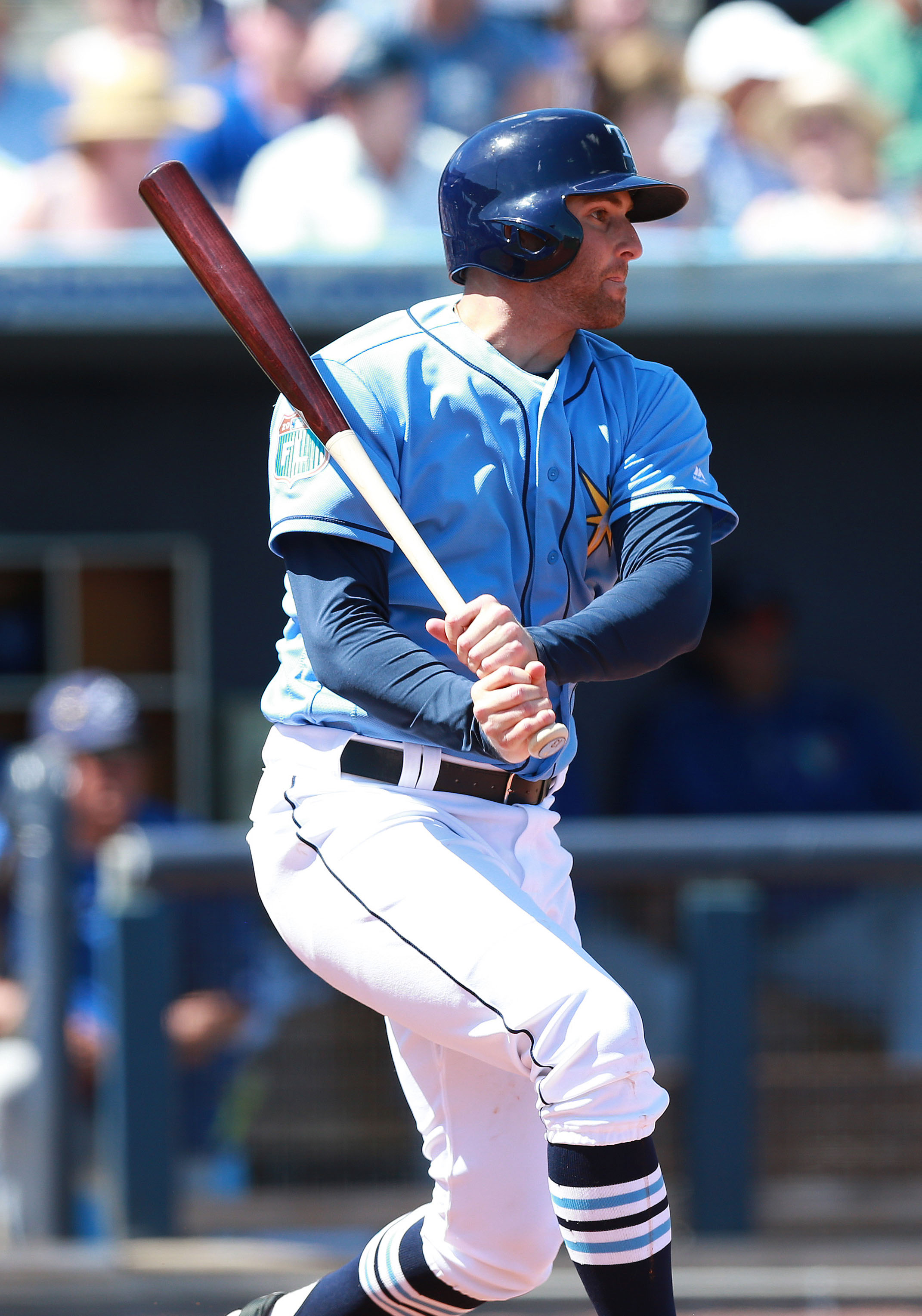
The surplus went to good use as the Rays acquired a player they hope can become a regular shortstop in Brad Miller, though Miller’s defense has been unimpressive in spring play. Though he did start 125 games for Seattle last year, Miller’s troublesome glove kept him from breaking through as a true everyday player — the Mariners ended up using him as a super-utility man, starting him at short, third, second and all three outfield spots. He hasn’t shown much defensive aptitude at any position yet, though in fairness to Miller, he also hasn’t gotten an extended look at any spot besides shortstop.
If Miller can at least be adequate at short, the Rays will have the position settled for a year or two until prospects Willy Adames or Daniel Robertson are ready for the majors. If Miller again settles into being a utilityman, that’s not a bad worst-case scenario for the Rays given how they so value multi-positional versatility. The left-handed hitting Miller has a .256/.327/.429 career line against righty pitching and he’s been roughly a league-average hitter overall in his first three seasons.
Morrison also brings some left-handed thump to the Rays’ first base/DH mix, though the former blue-chip prospect is still trying to find consistency as he enters his seventh big league season. He’ll join James Loney, Steve Pearce and Richie Shaffer in the race for playing time at first and DH, though we’ll address that crowded situation later.
Speaking of Pearce, he’s another multi-position player coming to Tampa in the form of the Rays’ priciest offseason signing. Pearce’s unique career arc made him rather a tough player to evaluate from a free agent price standpoint (as our own Jeff Todd and Steve Adams noted in a Free Agent Stock Watch piece last September), and the one-year, $4.75MM deal Pearce received from the Rays fell well short of the two-year, $14MM projection from Tim Dierkes.
Even if Pearce maxes outs his playing-time incentives to up his contract to $6MM, that’s a price the Rays would happily pay if he produces anything close to the 21-homer/.930 OPS numbers he posted over 383 PA with Baltimore in 2014. Realistically, Pearce is more likely to deliver something closer to his career .756 OPS and he gives the Rays a right-handed hitting option at DH, first, second or either corner outfield spot.
The biggest move the Rays made to address their outfield, of course, was the acquisition of Corey Dickerson from the Rockies. There was a lot of trade speculation surrounding Jake McGee this winter, as the former closer was becoming more expensive in arbitration and the Rays had a younger and cheaper ninth-inning option on hand in Brad Boxberger. Both McGee and Boxberger drew a lot of trade interest, and in the end it was Colorado who obtained McGee at the price of a 26-year-old outfielder with four years of club control and an .879 OPS over his first 925 PA in the Show.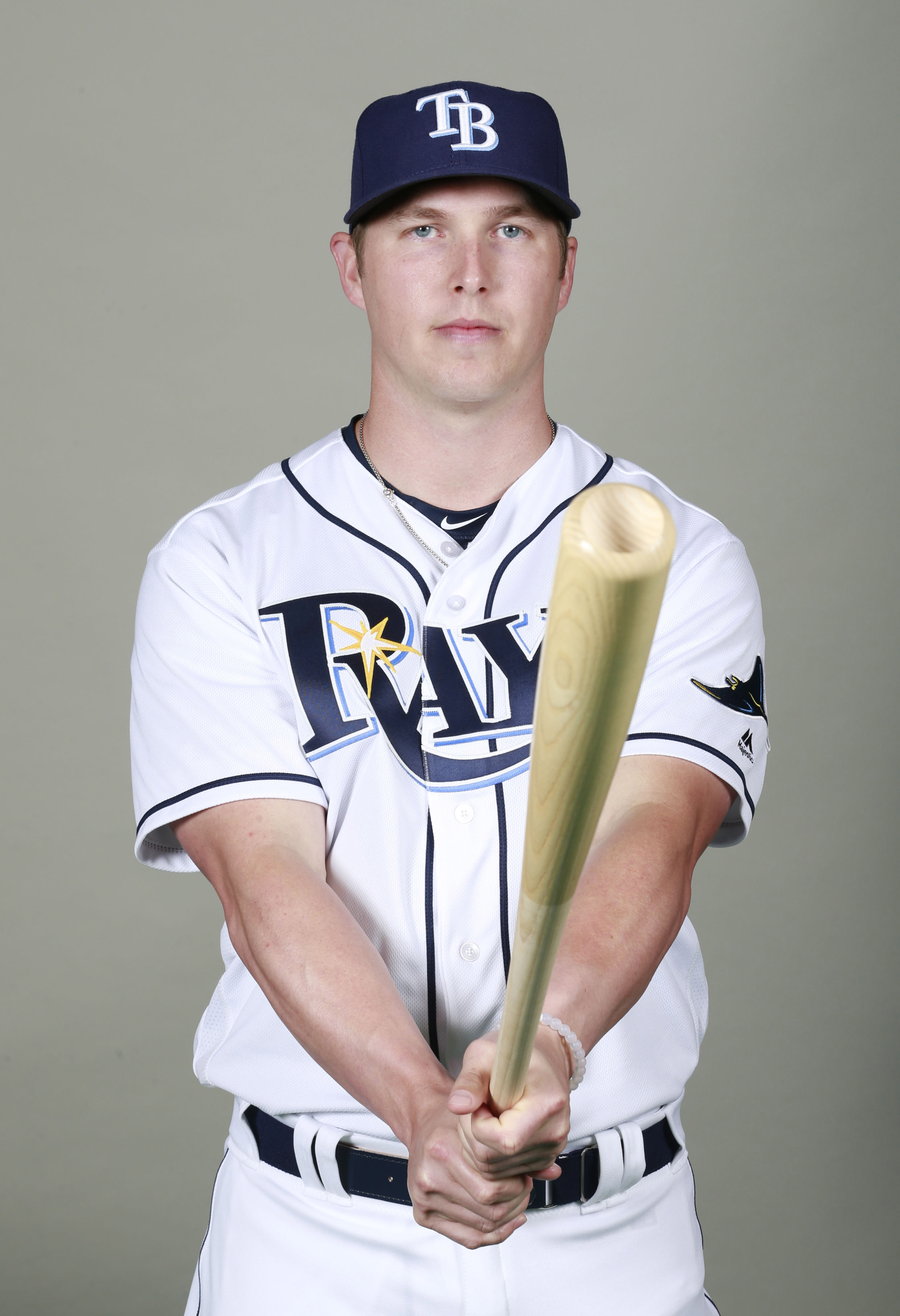
This isn’t necessarily a steal for the Rays given that Dickerson is far from a clear-cut star. He’s struggled against both lefties and away from Coors Field, he played only 65 games last season due to a broken rib and plantar fasciitis in his left foot, and he’s been a below-average left field defender over his brief career. It wouldn’t be a surprise to see Dickerson struggle as he moves from the game’s best hitters park to pitcher-friendly Tropicana Field. Still, obtaining a promising and controllable outfielder and getting $4.8MM in relief pitching salary off the book is a nice score for Silverman, notwithstanding how well McGee has pitched.
Silverman also may have found a decent replacement for McGee in righty Danny Farquhar, who was also part of the Mariners deal. Farquhar posted a 3.34 ERA, 11.4 K/9 and 3.64 K/BB rate over 126 2/3 innings in 2013-14 before his ERA ballooned to 5.12 last season. An increased and perhaps flukish home run rate may have been to blame, as ERA predictors were more forgiving (4.60 FIP, 4.02 xFIP, 3.60 SIERA) over Farquhar’s performance.
Off the field, perhaps the more noteworthy big-picture move for the Rays was a positive development in their search for a new stadium in the greater Tampa area, as the team was granted permission to explore potential sites for a new ballpark in neighboring counties rather than be limited to just St. Petersburg or stuck at Tropicana Field altogether.
NL Central Notes: Lucroy, Bruce, Schwarber, Pirates
Here’s the latest from around the NL Central…
- The Brewers were talking with the Astros and Braves about a three-team trade involving Jonathan Lucroy last month, USA Today’s Bob Nightengale reports. Houston made an attempt at Lucroy earlier in the offseason, as previously reported by FOX Sports’ Ken Rosenthal, and the club has also been linked to Braves center fielder Ender Inciarte. This isn’t to say that Inciarte was also necessarily part of this three-team proposal, of course, as Atlanta’s role in the trade could’ve taken any number of forms.
- Lucroy has been the subject of many trade rumors this winter, to the point that he and his family don’t have living arrangements in Milwaukee settled yet since he presumed he was going to be dealt. “It’s all out of your control. But communication is a big thing. I’d like to be kept up to date what’s going on. It’s not like I’m going to spread it all around, I just want to know when it’s coming, when to expect it,” the longtime Brewers catcher said.
- Also from Nightengale’s piece, he notes that the Reds were willing to pay roughly $8MM of Jay Bruce‘s $12.5MM salary as part of the abandoned three-team trade that would’ve sent Bruce to the Blue Jays, Michael Saunders to the Angels and prospects to Cincinnati. It was expected that the Reds would have to eat some money in any Bruce deal, given that the outfielder is coming off two consecutive subpar seasons. Saunders is making $2.9MM in 2016, so adding Bruce would’ve cost Toronto around $1.6MM in extra salary (not counting the $1MM buyout of Bruce’s $13MM club option for 2017).
- Like Lucroy, Bruce is also rather surprised to still be with his original team given all of the trade speculation. He reiterated that he would prefer to stay with the Reds, and blames his recent “pretty poor” play for threatening his long-term future in Cincinnati. (Though it could be argued that if Bruce had been hitting more, the Reds would’ve been able to move him sooner.) “In order for me to have a chance to stay here, I need to play better. We’ll see what happens. I never changed my sentiment, wanting to be part of this for the long haul….But obviously, I have to do my part to even have a chance,” Bruce said.
- Kyle Schwarber could be a personal catcher for Jason Hammel this season, CSN Chicago’s Patrick Mooney writes, as the Cubs are looking for ways to get Schwarber’s bat into the lineup whenever possible. Schwarber’s defensive future has been the subject of much debate, as he’s scheduled to see most of his playing time in left field this year even though his fielding prowess is still a question mark. It’s also unclear if Schwarber can handle being a regular catcher, though with Miguel Montero and David Ross ahead of him on Chicago’s catching depth chart, he could be eased into the position for just Hammel’s starts. Being removed from too much grind behind the plate could actually benefit Schwarber, Mooney notes, by helping him stay healthy.
- The Pirates hired James Harris as a special assistant to baseball operations in February, and Travis Sawchik of the Pittsburgh Tribune-Review examines how the hiring is an example of how the Bucs are willing to look outside of baseball for ways to build their organization. Harris specializes in fitness and nutrition techniques and he has spent much of his career in football, including the last decade working with Chip Kelly both at the University of Oregon and with the NFL’s Eagles. Harris’ lack of baseball experience wasn’t a big factor for Pirates GM Neal Huntington, as the goal for any athlete is about “maximizing performance. How do we help this player get better every day and perform as consistently as possible?“
Alex Rodriguez May Retire After 2017
THURSDAY: Rodriguez may not be entirely firm about his decision to retire, as he texted Mark Feinsand of the New York Daily News that “I’m thinking in terms of my contract which ends in 2017. After that, we’ll see what happens. I’ve got two years and more than 300 games to play.” One of Rodriguez’s friends tells Feinsand that the slugger could decide to keep playing if he’s reasonably close to Barry Bonds‘ all-time home run record. A-Rod currently has 687 homers, so he’s still a significant distance behind Bonds’ mark of 762.
WEDNESDAY: Long-time MLB star Alex Rodriguez has decided to retire after the 2017 season, he tells Andrew Marchand of ESPNNewYork.com. The veteran will wrap up his career when his contract with the Yankees is up after next season.
Rodriguez, 40, will no doubt go down as one of the most talented and controversial players in baseball history. He went from hyped prospect to star in his first full season, a 1996 campaign with the Mariners in which he led the league in batting average while playing a stellar shortstop. That was his first of five outstanding seasons in Seattle and first of six in which he finished with an OPS of over 1.000.
Entering the open market in advance of his age-25 season, Rodriguez inked a ten-year, $252MM contract with the Rangers — an unheard-of sum at the time and still one of the three largest baseball player contracts ever. A-Rod continued to produce in Texas, finally winning an AL MVP award in 2003, though the club didn’t post a winning season over his three years.
Things took an interesting turn when Rodriguez was shipped to the Yankees for Alfonso Soriano before the following season. Though he was still a quality defender up the middle, he moved to third base to play alongside Derek Jeter. Rodriguez went on to take home two more most valuable player nods in 2005 and 2007, then opted out of his deal in the midst of the World Series — only to strike yet another ten-year pact to stay in New York, this one for $275MM. Rodriguez ultimately helped lead the way to a 2009 World Series win, though his offensive production began to wane as he entered his mid-thirties.
PED allegations and a 2014 suspension significantly marred his legacy, however, and at one point it seemed in question whether he’d ever suit up for the Yankees again. But Rodriguez has, rather miraculously, managed to rebuild some of his public image and turned in a strong .250/.356/.486 campaign last year as the club’s regular DH.
New York owes Rodriguez $20MM in each of his final two campaigns. He’ll likely surpass Babe Ruth on the career home run list at some point before hanging up his spikes. While his performance record will always come with at least an implicit asterisk, Rodriguez already rates among the top 15 position players in history in terms of total fWAR.
Offseason In Review: Philadelphia Phillies
Check out all the published entries in our Offseason in Review series here.
The new Phillies front office continued the tear-down while adding a wide array of low-cost, low-risk assets in an offseason of continued change.
Major League Signings
- RP David Hernandez: One year, $3.9MM
Trades
- Acquired SP Vincent Velasquez, SP Brett Oberholtzer, SP Mark Appel, SP Thomas Eshelman, SP/RP Harold Arauz from Astros for RP Ken Giles, INF Jonathan Arauz
- Acquired SP Charlie Morton from Pirates for SP David Whitehead
- Acquired SP Jeremy Hellickson from Diamondbacks for SP Sam McWilliams
- Acquired RP Yoervis Medina from Pirates for SP Jesse Biddle
- Acquired 2B Taylor Featherston from Angels for cash/PTBNL
Claims
- Claimed OF Peter Bourjos off waivers from Cardinals
- Claimed RP Michael Mariot off waivers from Royals
- Claimed RP A.J. Achter off waivers from Twins; later claimed by Angels
- Claimed RP Dan Otero off waivers from Athletics; later traded to Indians for cash
- Claimed RP Bobby LaFromboise off waivers from Angels
- Claimed OF Tyler Goeddel from Rays in Rule 5 draft
- Claimed RP Daniel Stumpf from Royals in Rule 5 draft
Extensions
- None
Notable Minor League Signings
- J.P. Arencibia, Andrew Bailey, Emmanuel Burriss, Ernesto Frieri, Frank Herrmann, Cedric Hunter, Edgar Ibarra, Ryan Jackson, Chris Leroux, David Lough, Edward Mujica, James Russell, Anthony Vasquez
Notable Losses
- Biddle, Chad Billingsley, Brian Bogusevic, Domonic Brown, Jordan Danks, Chase d’Arnaud, Justin De Fratus, Kelly Dugan, Jeff Francoeur, Giles, Aaron Harang, Erik Kratz, Cliff Lee (declined option), Adam Loewen, Nefi Ogando, Jonathan Pettibone, Jerome Williams
Needs Addressed
If you’ve ever wondered what a modern-day expansion draft would look like, the Phillies’ offseason provides a decent proxy. The organization turned over huge swaths of its 40-man roster, re-stuffing it (and the non-roster invite rolls) with a mix of placeholders, interesting youngsters, and bounceback veterans.
Former GM Ruben Amaro Jr. had already sold off most of the team’s marketable veteran assets, leaving only Ryan Howard and Carlos Ruiz from the 2008 championship club. Truth be told, they’d probably be gone, too, but it’s not entirely clear that either warrants a guaranteed roster spot at this point — let alone anything close to the $35MM and $9MM they’re respectively owed.
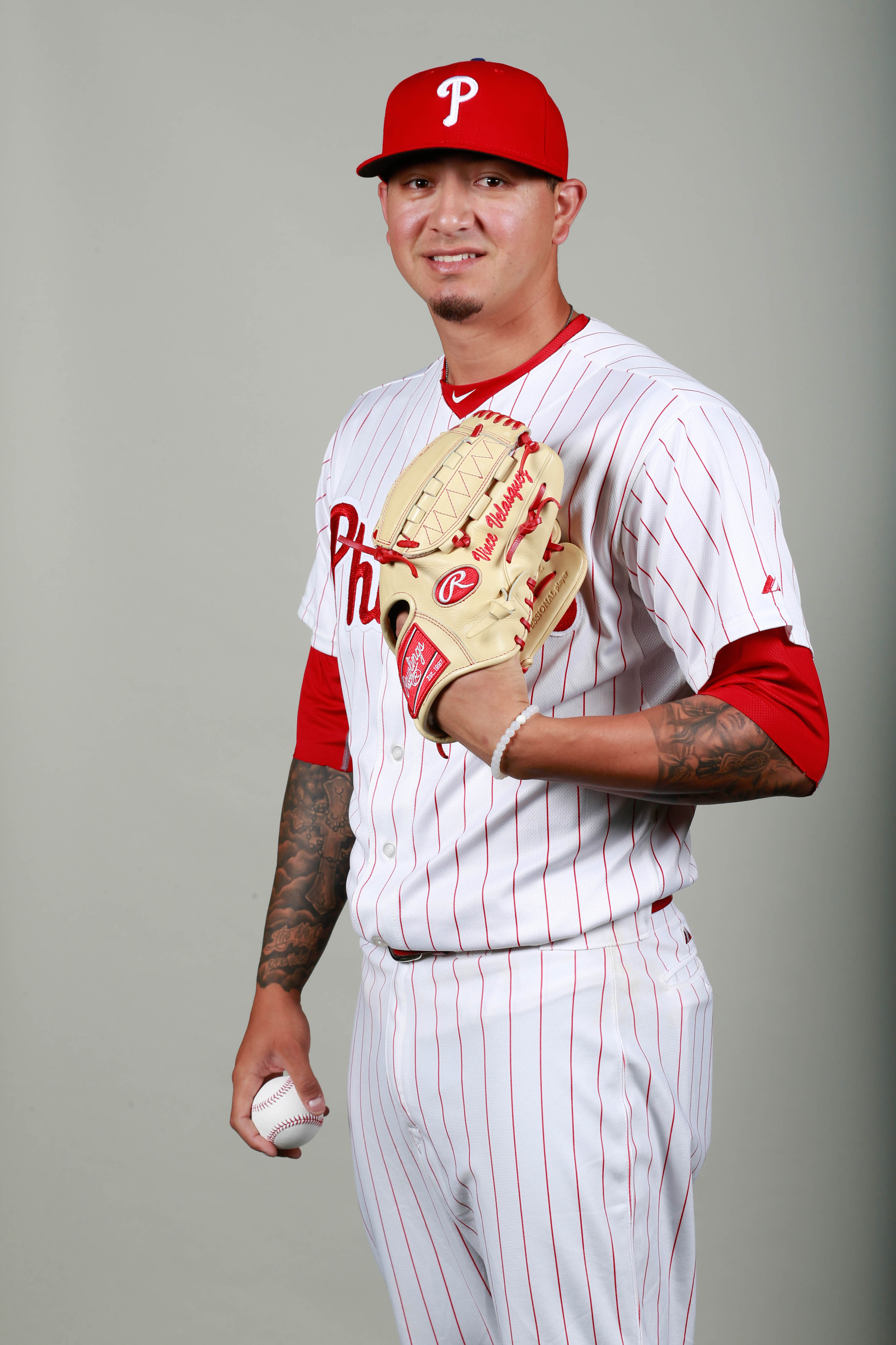
Incoming president Andy MacPhail and hand-picked GM Matt Klentak did have one major trade piece to market, however: young closer Ken Giles and his five remaining years of control. He might well have been retained had he played any other position, but the new Phillies brass was probably wise to cash in the fireballing righty while his value was high. There aren’t any sure things in the return, but Vincent Velasquez and Mark Appel have their share of upside, with late-inning relief potential if they can’t stick in the rotation. Harold Arauz represents a fun lottery ticket to track, while Brett Oberholtzer and, eventually, Thomas Eshelman could provide some cheap and solid innings.
Stocking future assets remains the unmistakable lodestar of the new front office, but there were near-term roster practicalities to be considered. And 25-man opportunities are their own kind of asset for rebuilding clubs, which can offer veterans a chance to receive playing time, rebuild value, pass on some lessons to the youngsters, and hopefully turn themselves into appealing summer trade pieces. The rotation, in particular, was ripe for would-be comeback tales, with several short-term veterans departing and the inimitable Cliff Lee cut loose, his $12.5MM buyout representing an easy decision given his elbow issues and questionable desire to pitch in 2016.
Convincing intriguing veterans to come to Philadelphia may not have been a fruitful task with the roster ripped down to the studs, so the Phils went after unwanted, mid-priced castaways. Charlie Morton and Jeremy Hellickson offer the promise of some stability and will help prevent the need to press younger arms for non-developmental reasons. At $9MM (including option buyout) and $7MM, respectively, they aren’t obvious values. And neither seems particularly likely to be worthy of a qualifying offer after the season. (Morton’s option turned into a mutual one with the deal, so he’ll likely decline it if he’s productive and healthy.) But the TV-rich Phillies have pared their payroll to levels not seen since 2003 even with those additions, neither pitcher required much in the way of player assets to acquire, and sturdy performances over the season’s first few months could turn the pair into trade chips.
Those two starter additions constituted the largest salary commitments of the winter, with the Phillies only making one major league signing. David Hernandez seemed penciled in as the team’s closer, and figures to have a chance at the role with a $3.9MM guarantee in hand, but he’s been taking it slow this camp given his history of arm injuries. He isn’t controllable past this season, so the bet is that his arm will stay healthy and that he’ll come close enough to his double-digit K/9 numbers of yore to anchor the pen and, perhaps, turn into prospects on or before August 1st.
Otherwise, the Phillies turned their spring home of Clearwater, Florida into a veritable island of misfit toys — while mixing a group of young but talented prospects — ultimately inviting 65 players to big league camp. The new front office plucked seven players from DFA limbo, whether by trade or claim, though it later lost two of those through the same process in the course of making yet more additions. It also added a host of minor-league free agents. We’ll walk through the more significant among them in tackling the team’s many areas of uncertainty.
Read on for more analysis …
Quick Hits: KBO, Cuba, Masterson, Royals, Angels, Avila
Jung Ho Kang‘s stellar debut season with the Pirates helped create opportunities for a number of players from the Korea Baseball Organization, including Byung Ho Park (Twins), Hyun Soo Kim (Orioles), Dae-Ho Lee (Mariners) and Seung-Hwan Oh (Cardinals), and if that group performs well this year, it could open the floodgates for more Korean talent, Anthony Castrovince of Sports On Earth writes. “We saw this with Cuba once Alexei [Ramirez] came over,” says Athletics GM David Forst. “Once players come over and have success or don’t, you have a better understanding of the data and the comparisons. So when Kang comes over and does well, all of a sudden you’ve got a huge datapoint there to judge everybody else in that league by. It gives you a lot more confidence in what they’re doing.” It’s still difficult to scout KBO games (due to a relative lack of plays that are relevant from a scouting perspective, as one scout tells Castrovince), and the feeling around MLB is that the KBO isn’t as strong as the NPB in Japan. But KBO talent is attracting increasing interest, to the point that some around the game have discussed the possibility of a cap on posting fees for KBO players, perhaps $8MM. Here’s more from around the game.
- MLB commissioner Rob Manfred is looking for a way to ensure that Cuban players can get to the US safely, and he could look to find a fix in the next CBA, Joel Sherman of the New York Post writes. One problem is that the US still has a trade embargo on Cuba, which means that an MLB team cannot pay a posting fee to a Cuban team. Manfred says MLB chief legal officer Dan Halem has been working with the White House to find a solution to the problem. “We will have a new system on Cuban player movement in place in the relatively near future,” says Manfred.
- Righty Justin Masterson will hold a showcase Monday in Phoenix, Jon Heyman tweets, adding that Masterson is pitching without pain for the first time in years. Masterson had arthroscopic shoulder surgery in September after a terrible 2015 season in which he posted a 5.61 ERA, 7.4 K/9 and 4.1 BB/9 while hitting ten batters in 59 1/3 innings with the Red Sox before being released. Of course, Masterson expressed confidence in his health prior to last season as well. But he still could represent an interesting reclamation project, given the strong performances in Cleveland in his not-too-distant past.
- Despite a gap between the team’s recent won-lost records and computer projections, the Royals might just be able to pull off another AL Central title, CBS Sports’ Jonah Keri writes in his preview of the division. The team has a young core, and projection systems may struggle with valuations of defense and bullpens, both of which are Royals strengths.
- The Angels seem unlikely to make any more significant moves before Opening Day, writes MLB.com’s Alden Gonzalez. Left fielder Daniel Nava and second baseman Johnny Giavotella, both occupying positions that looked like question marks, have performed well in Spring Training. And the team’s ability to make trades has been limited by issues with their rotation, like C.J. Wilson‘s shoulder issues and Jered Weaver‘s velocity.
- New Tigers GM Al Avila wants to focus on creating consistency throughout the organization, the Associated Press writes. Avila garnered the Tigers headlines this offseason with the team’s signings of Justin Upton and Jordan Zimmermann, but he’s also focusing on longer-term issues relating to player development. “When you move a player from, let’s say, A-ball to Double-A, there should be consistency in everything — hitting approach, the way we run the bases, our fundamentals, our defensive strategy,” Avila says. “We’ll just create a Tigers’ manual, everybody will have it, and the players will be taught it.”