
MLBTR Podcast: Sifting Through The Trade Deadline Deals
The latest episode of the MLB Trade Rumors Podcast is now live on Spotify, Apple Podcasts, and wherever you get your podcasts! Make sure you subscribe as well! You can also use the player at this link to listen, if you don’t use Spotify or Apple for podcasts.
This week, host Darragh McDonald is joined by Steve Adams and Anthony Franco of MLB Trade Rumors to go over the various deadline dealings, including…
- The Padres acquiring Mason Miller, JP Sears, Ryan O’Hearn, Ramón Laureano, Nestor Cortes, Freddy Fermin and Will Wagner, while not trading Dylan Cease nor Robert Suarez (1:20)
- The Athletics sending out Miller and Sears, getting a pile of prospects, headlined by Leo De Vries (25:20)
- The Twins trading a bunch of rentals but also Jhoan Durán, Griffin Jax, Louis Varland and Carlos Correa (31:50)
- The Astros taking on Correa despite previously trying to avoid the competitive balance tax (50:05)
- The Phillies’ deadline (58:25)
- The Mariners acquiring Josh Naylor and Eugenio Suárez from the Diamondbacks (1:00:40)
- The Diamondbacks trading Merrill Kelly but not Zac Gallen (1:07:45)
- The Rangers’ deadline (1:16:00)
- The Mets acquiring various relievers, including Tyler Rogers from the Giants (1:19:05)
- The Yankees acquiring Camilo Doval, David Bednar and Jake Bird (1:25:45)
- The Pirates holding several trade candidates but they did trade Ke’Bryan Hayes to the Reds (1:35:15)
- The Blue Jays acquiring Shane Bieber and Varland (1:43:40)
- The Red Sox acquiring Dustin May from the Dodgers (1:54:20)
- The underwhelming deadlines of the Cubs and Tigers (1:59:40)
Check out our past episodes!
- Megapod Trade Deadline Preview – listen here
- David Robertson, Trade Chips For The O’s and A’s, And What The Rangers Could Do – listen here
- Rays’ Ownership, The Phillies Target Bullpen Help, And Bubble Teams – listen here
The podcast intro and outro song “So Long” is provided courtesy of the band Showoff. Check out their Facebook page here!
Photo courtesy of Chadd Cady, Imagn Images
Poll: Who Had The Best Deadline In The NL West?
The trade deadline has come and gone. While trade season was slow to get started this year, when all was said and done, there were several dozen trades made in a flurry of movement over the final few days before the deadline arrived. The full impact of these trades won’t be known for years to come, but that doesn’t mean we can’t analyze the deals and decide whose haul looks the best right now. Over the next week-plus, MLBTR will be running a series of polls asking which club in each division had the best deadline. So far, the Phillies and Reds have each come out on top in their respective divisions. Today, we’ll be rounding out the National League with a review of the NL West. A look at each of the five clubs, listed from best to worst record in 2025:
Los Angeles Dodgers
The Dodgers are, predictably, one of the best teams in the National League this year. They aren’t quite as overwhelming as some expected them to be, however, and that left them with some work to do ahead of the stretch run. Despite the holes in the club’s roster, however, L.A.’s deadline was a surprisingly quiet one where they did as much selling as they did buying. Dustin May was shipped to Boston for a pair of prospects headlined by 2024 first-rounder James Tibbs, and they downgraded from Hunter Feduccia to Ben Rortvedt for the club’s third catcher in order to bring in rookie reliever Paul Gervase and A-ball prospect Adam Serwinowski.
In terms of buy-side moves, they swapped depth outfielder James Outman to the Twins in order to bring Brock Stewart back home to the Dodgers’ pen. They followed that up by replacing Outman on the depth chart with a right-handed complement to Michael Conforto in the form of Alex Call. L.A.’s moves were strong ones on paper. They gave up very little meaningful talent in order to make a couple of legitimate improvements to their bullpen and bench mix, and it’s easy to see them emerging as the clear winners of the two sell-side trades they did make. Still, this summer could wind up feeling like a missed opportunity for the Dodgers given the lack of impact talent acquired—especially if they wind up getting chased down in the NL West by their rival 100 miles to the south.
San Diego Padres
No front office executive in the league operates quite like Padres GM A.J. Preller, and that frenetic aggressiveness was on full display on the day of this year’s trade deadline. San Diego completed five trades in the final seven hours before the deadline. The first one was the biggest, as they swapped a massive package headlined by consensus top-5 prospect Leo De Vries to the Athletics in exchange for superstar closer Mason Miller and lefty starter JP Sears.
They didn’t stop there, however. Outfielder Brandon Lockridge was surrendered to land Nestor Cortes from the Brewers (alongside prospect Jorge Quintana), and Preller immediately replaced Lockridge in the outfield by picking up both Ramon Laureano and Ryan O’Hearn from the Orioles. The acquisitions of Sears and Cortes created enough starting pitching depth that the Friars could move Stephen Kolek and Ryan Bergert to add Freddy Fermin behind the plate, and for good measure San Diego rounded out its deadline by upgrading the infield with a controllable young talent in Will Wagner.
It was a massive flurry of moves that should substantially improve the Padres in the near-term, but the cost was heavy. Prospects of De Vries’ caliber rarely get moved for a reason. Even aside from the risk that they’ve traded the league’s next superstar, they also surrendered some important depth in Kolek and Bergert, not to mention a huge chunk of their 2024 draft class. Preller’s win-now aggression allowed his club to improve its odds of winning the World Series this year more than any other team. But was the cost too great?
San Francisco Giants
Despite a strong start to the season and the aggressive decision to swing a deal with the Red Sox for Rafael Devers back in June, the Giants have mostly fallen out of the postseason race and now have a 58-57 record. That led the club to pivot towards selling at the deadline, and they brought back an impressive haul of talent in doing so. A trade of pending free agent Tyler Rogers to the Mets brought back a trio of well-regarded talents nearing or already in the big leagues: Triple-A outfielder Drew Gilbert, rookie starter Blade Tidwell, and young MLB reliever Jose Butto. They also landed A-ball starter Yunior Marte for rental outfielder Mike Yastrzemski despite his down 2025 campaign.
Impressive as those deals were, the package they received for Camilo Doval was somewhat light. That deal was led by catching/infield prospect Jesus Rodriguez and Double-A starter Trystan Vrieling. The return for Rogers and Yastrzemski was phenomenal, as the Giants acquired their #12, #13, and #25 prospects (per MLB Pipeline) along with Butto for aging veterans on expiring contracts. Parting with Doval for two-plus seasons in exchange for a package headlined by the club’s #16 prospect, according to Pipeline, puts a bit of a damper on the club’s deadline, but it was still a strong infusion of talent to the upper levels of San Francisco’s minor league system and should result in better days for the Giants in the future.
Arizona Diamondbacks
The Diamondbacks teetered on the edge of buying and selling for most of July but kicked off trade season by dealing Josh Naylor to the Mariners and never looked back. The club executed four trades that brought back players in return and a fifth that saw them deal Shelby Miller to the Brewers in exchange for Milwaukee taking on a portion of Jordan Montgomery‘s contract. Big league ready talent and pitching prospects were the focus for Arizona this summer, and they mostly accomplished that goal of bolstering those parts of the organization. Eugenio Suarez brought back a potential first baseman of the future in Tyler Locklear as well as rookie reliever Juan Burgos. Randal Grichuk and Naylor also both brought back rookie relief arms in Andrew Hoffmann and Brandyn Garcia, giving the club a number of big league ready relief arms who can help fill out the bullpen next year.
Between the trades of Suarez, Naylor, and Merrill Kelly, the Diamondbacks also picked up five pitching prospects who have yet to make their big league debut. Kohl Drake (#7 in Arizona’s system at MLB Pipeline) leads that group, which also includes Mitch Bratt (#10), David Hagaman (#14), Ashton Izzi (#15), and Hunter Cranton (#23). Locklear (#6) and Garcia (#20) also rank within the top 30, meaning that nearly a quarter of the club’s top 30 prospects were acquired at this deadline. As solid as those moves were, some view the return for Suarez as too light, and there’s reason to question why the team held onto Zac Gallen rather than bringing back additional prospects and salary relief by letting him go. Even without Gallen moving, however, the Diamondbacks breathed new life into their farm system and saved a considerable amount of money that can be repurposed for the 2026 campaign come the offseason.
Colorado Rockies
Perhaps the most notable thing about Colorado’s deadline this year is that they did anything at all, given their years of relative inaction and refusal to part with veteran talents. The club made just three trades this summer, but the deals they did make were notable ones. Ryan McMahon and Jake Bird were traded to the Yankees for lefty Griffin Herring (#5 in the Rockies’ system at MLB Pipeline), second baseman Roc Riggio (#11), righty Josh Grosz (#19), and lefty Ben Shields (#27).
Their third deal was a smaller one, as the club dealt struggling reliever Tyler Kinley to the Braves in exchange for Double-A reliever Austin Smith. It wasn’t the flashiest deadline for Colorado, but the return in exchange for McMahon was strong and the activity should help prop up one of the weakest farm systems in the majors as the Rockies toil through the worst season in franchise history.
With the exception of the Dodgers, the NL West was busier than usual this summer. San Diego did enough buying for the entire division, while the Giants, Diamondbacks, and Rockies each made some savvy sell-side moves. L.A. stands out from the crowd for their quiet approach to the deadline as they did some light buying to address areas of need and also managed to sneak in some light selling to take advantage of areas of depth. Which team did the best of this quintet? Have your say in the poll below:
Which NL West team had the best deadline?
-
San Diego Padres 67% (2,509)
-
San Francisco Giants 10% (387)
-
Arizona Diamondbacks 9% (321)
-
Colorado Rockies 8% (315)
-
Los Angeles Dodgers 6% (237)
Total votes: 3,769
Giants Release Austin Barnes
The Giants released veteran catcher Austin Barnes from their Triple-A affiliate, per the transaction log at MiLB.com. He’d signed a minor league deal with San Francisco after being designated for assignment and released by the Giants’ archrival Dodgers back in June.
Barnes, 36 in the offseason, played in parts of 11 seasons with the Dodgers but got into only 13 games this season before being cut loose. He tallied 44 plate appearances, during which he batted just .214/.233/.286. He totaled a similar 46 plate appearances with the Giants’ top affiliate after signing there and posted a .205/.326/.205 slash in that short audition. He’ll now head back to the market in search of other opportunities.
Barnes has always been more of a glove-first catcher, whose primary offensive contributions have come via his plate discipline. He’s a career .223/.322/.318 hitter who’s walked in just over 11% of his plate appearances in the majors. Barnes had a passable year at the plate in 2024 but hasn’t been an average or better hitter since 2022. Over his past 400 plate appearances in the big leagues, he’s batted .217/.283/.272 (57 wRC+).
Though he can’t be expected to return to even his modest career rate stats with the bat at this stage of his career, Barnes is a seasoned backstop who has worked with dozens of high-profile pitchers over his career — most notably, of course, Dodgers icon Clayton Kershaw. That experience, paired with his reputation as a teammate and game-caller, figures to get him a look with a team in need of some catching depth down the stretch.
Orioles Claim Vidal Brujan, Carson Ragsdale
The Orioles have claimed infielder Vidal Brujan off waivers from the Cubs and right-hander Carson Ragsdale off waivers from the Giants, according to a team announcement. Brujan is out of options and must be added to the big league roster but has not yet reported. Ragsdale, meanwhile, was optioned to Triple-A Norfolk. The Orioles’ 40-man roster now stands at 37, so no corresponding 40-man moves are necessary.
Brujan, 27, was a top-100 prospect in the Rays’ system for many years. He failed to establish himself at the big league level in Tampa, however, and hit just .157/.218/.221 across 99 games (272 plate appearances) between 2021 and 2023 for the club. Prior to the 2024 season, Brujan was shipped alongside reliever Calvin Faucher to the Marlins in a trade and he was able to take on a larger role with a rebuilding Miami club. With regular playing time available to him, his performance modestly improved. He remained a below-average contributor overall, however, with a 73 wRC+ despite a 19.4% strikeout rate and a 9.0% walk rate.
Those solid discipline numbers were outweighed by a complete lack of power, less impressive speed on the basepaths than his days a prospect would’ve otherwise indicated, and a lackluster BABIP. While Brujan was versatile enough to hold onto a bench role for the Marlins, he was shipped to the Cubs last offseason in the Matt Mervis trade. He held onto a bench role with Chicago throughout the first half and had value on paper as a player who could help hold down third base while Matt Shaw developed in the minor leagues while also spelling Pete Crow-Armstrong in center field. Unfortunately, the fit didn’t work out as well in practice as Brujan posted an atrocious 43 wRC+ in 36 games and was designated for assignment just before the trade deadline.
Ragsdale, meanwhile, is a 27-year-old right-handed starter. He was added to the Giants’ 40-man roster last November to protect him from the Rule 5 draft after he posted a strong 3.49 ERA in 14 starts at the Double-A level that year, but a career ERA north of 5.00 at Triple-A in conjunction with a 19.9% strikeout rate against a 13.0% walk rate at the level this year left Ragsdale as little more than a depth starter for a club with a number of viable young arms. San Francisco designated him for assignment to make room for top pitching prospect Carson Whisenhunt on the roster prior to the trade deadline.
Now, both players are ticketed to join the Orioles organization. Brujan figures to join the club’s active roster within the next couple of days and could serve as a versatility utility option for the infield after Ramon Urias was traded to Houston prior to the deadline this past week. Ragsdale, meanwhile, could make his big league debut at some point down the stretch to help the Orioles eat innings amid injuries to key arms like Zach Eflin and Grayson Rodriguez, particularly after Charlie Morton was shipped off to Detroit.
Giants Select Kai-Wei Teng; Randy Rodriguez Named Closer After Doval Trade
The Giants announced they’ve selected right-hander Kai-Wei Teng onto the MLB roster. Reliever José Buttó, acquired from the Mets in the Tyler Rogers deal, has reported to the team and will be active tonight. San Francisco also recalled outfielder Grant McCray. Those three players replace Rogers, Camilo Doval and Mike Yastrzemski.
Teng is up for the first time this season. The Taiwanese pitcher made four relief appearances last year. San Francisco non-tendered him but brought him back on a minor league contract. He has been at Triple-A Sacramento all season. Teng has logged 54 innings across 25 appearances, mostly out of the bullpen, and turned in a 3.67 earned run average. He has recorded a monster 38% strikeout rate against a serviceable if slightly higher than average 9.3% walk rate.
The 26-year-old Teng has never had any issues missing bats in the minors. He has been held back by well below-average control, however. This year’s walk rate is his best since he was in rookie ball. He issued free passes at a 12% clip (with an uncharacteristically low 17.3% strikeout rate) en route to an 8.60 ERA at the Triple-A level a season ago. His performance this year has been far better.
Teng is expected to start tomorrow’s game against the Mets, according to Justice delos Santos of the Mercury News. He’d started four of his past five minor league appearances and has gotten up to 5 2/3 innings. He could take on a reasonable workload, but it’s nevertheless an indictment of the San Francisco rotation that they need to turn to a pitcher who has spent the bulk of the year in the Triple-A bullpen. They recently lost Landen Roupp to elbow inflammation and demoted struggling fifth starter Hayden Birdsong to Triple-A. The state of the rotation is a big reason the Giants pivoted late to trading away three notable players. They’ve fallen below .500 and are six games back in the Wild Card race.
Doval had operated as San Francisco’s closer for most of the season. As expected, Melvin has tabbed Randy Rodríguez as the team’s closer with Doval and Rogers now out of the picture (relayed by Susan Slusser of The San Francisco Chronicle). The 25-year-old righty has had a breakout season, earning a deserved All-Star nod with a 1.20 ERA while striking out 36% of opponents across 45 innings. He has recorded 13 holds and one save — the only one of his career — while blowing two leads. He’s under team control for another five seasons and will not reach arbitration until the 2026-27 offseason.
Yankees Acquire Camilo Doval
The Yankees are acquiring right-handed reliever Camilo Doval from the Giants, reports Jack Curry of YES Network. In exchange, the Giants will receive four minor leaguers: Jesus Rodriguez, Trystan Vrieling, Parks Harber, and Carlos De La Rosa. Curry was the first to report that Rodriguez, Vrieling, and Harbor were included in the deal, while FanSided’s Robert Murray later reported the complete package. The deal is now official.
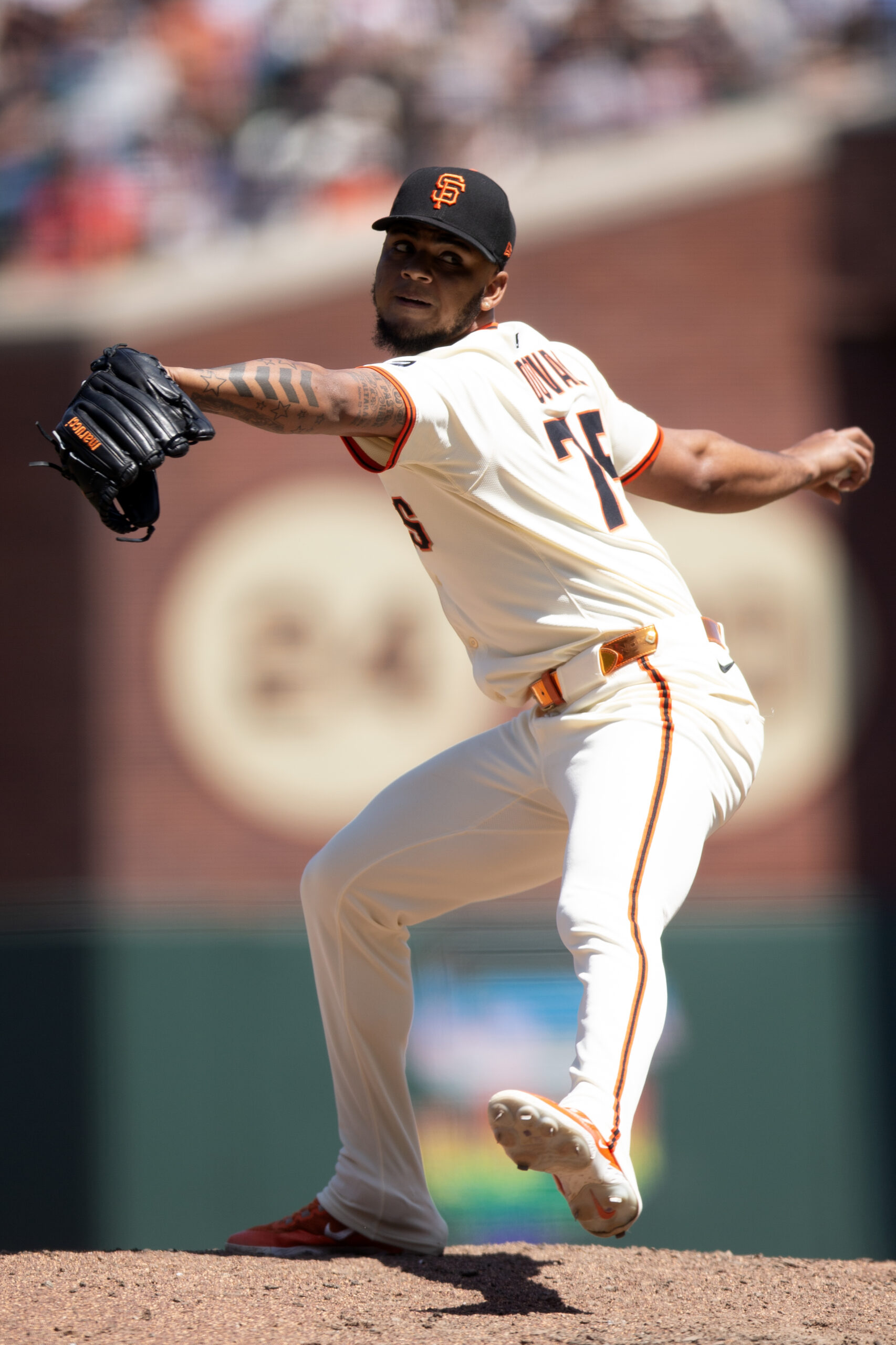
In adding Doval, David Bednar, and Jake Bird today, Yankees GM Brian Cashman was able to acquire three relievers with control beyond this season. That should be useful given the impending free agencies of Devin Williams and Luke Weaver.
Doval, 28, has a 3.09 ERA, 26.2 K%, 12.6 BB%, and 52.6% groundball rate in 46 2/3 innings for the Giants this year. Doval burst onto the scene in 2021 as one of baseball’s hardest-throwing relievers.
Unlike most baseball executives, Giants president of baseball operations Buster Posey had firsthand experience with Doval’s talent, having served as his catcher in Posey’s final season. As a rookie, Doval made three appearances in the NLDS for the Giants.
A few months in the 2022 season, Doval was entrenched as the Giants’ closer. He had a couple of strong years, including 39 saves and an All-Star appearance in 2023. However, with his walk rate spiking to 14.4% in 2024, Doval was sent to Triple-A in August as Ryan Walker took over closing duties. By the end of May this year, Doval had won his closer job back.
Doval has had better results this year with a 3.09 ERA, though his still lives in dangerous territory with a 12.6% walk rate. Some of that is mitigated by his ability to keep the ball on the ground. Doval likely won’t be tasked with the ninth inning for the Yankees, given the presence of Williams, Bednar, and Weaver.
Doval is under team control through 2027. He’s earning $4.525MM in his first arbitration year, about $1.44MM of which remains this season. Given the Yankees’ 110% competitive balance tax bracket, they’ll spend about $3MM to have Doval for the remainder of this season. The club has run its CBT payroll up to about $316MM, according to RosterResource.
Posey’s Giants, meanwhile, save money and further stock the cupboard with minor leaguers, having also traded Mike Yastrzemski and Tyler Rogers in the last few days. According to Baseball America, De La Rosa has the best upside of the four acquired for Doval. The 20-year-old righty was graded 45/extreme risk by BA, who called him a “fine lottery ticket” who is on the upswing. BA graded Rodriguez as 40/high risk, suggesting he “could have a future as a second-division regular who takes reps behind the plate and occasionally at third base.”
Though unranked by BA, Vrieling is more highly regarded by MLB.com, who assigned the righty a 40 grade. They concluded, “he’ll have no more than a back-of-the-rotation ceiling unless he can develop a better-than-average offering.” Harber, now 23, was signed as a non-drafted free agent by the Yankees. He’s reached High-A this year as a corner infielder. He may be a bit old for his level, but Harber has a 156 wRC+ in 152 PA and may soon prove ready for Double-A.
This post was originally published at 5:29pm.
Royals Acquire Mike Yastrzemski
The Royals have acquired outfielder Mike Yastrzemski from the Giants in a last-minute deadline swap. In exchange, the Giants will receive right-handed pitching prospect Yunior Marte. Mark Feinsand of MLB.com was the first to report that Yastrzemski was headed to Kansas City. The deal is now official.
Yastrzemski, 34, has slipped to a 97 wRC+ in 372 plate appearances for the Giants this year in his seventh season with the club. From 2023-24, he’d managed a 109 mark. A left-handed hitter, Yaz has always excelled against right-handed pitching, including a 118 wRC+ this year.
Yastrzemski, who has primarily played right field in the Majors, joins a 54-55 Royals team that nonetheless sits three games back in the Wild Card race. He’s a perfect pairing with the newly-acquired Randal Grichuk, a right-handed hitter. Rookie Jac Caglianone, who had spent time in right field, is on the IL with a hamstring strain. Yastrzemski, famously the grandson of Hall of Famer Carl, will be eligible for free agency after the season.
As Justice delos Santos of the San Jose Mercury News notes, “With Yastrzemski gone, the door is open for Luis Matos to step into a starting role [for the Giants]. It’s very possible Grant McCray and Marco Luciano see some time in right field as well.”
In parting with their longtime right fielder for the next few months, the Giants add Marte. The 21-year-old has spent the season in A ball, posting a 2.74 ERA and 18.4 K-BB% in 19 starts. Baseball America assigned him a 50 high risk grade, noting that he “features two above-average pitches in his arsenal.”
Giants Making Justin Verlander Available In Trade Talks
As recently as last week, it still seemed like the Giants would be buying at the trade deadline. It wasn’t long ago that they were linked to Isiah Kiner-Falefa (link) and thought to be interested in adding a right-handed hitting outfielder and at least one starting pitcher. Yet, they have now lost six straight, dropping them below .500. This morning, Jon Morosi of MLB Network reported that the Giants were listening to offers on their relievers, and the team confirmed as much this afternoon when they shipped off Tyler Rogers to the Mets.
So, it now appears Buster Posey‘s club will be selling over the next 21 hours, with legendary starting pitcher Justin Verlander the latest name on the block. Both Morosi and the New York Post’s Jon Heyman have noted that Verlander is available in trades. The 42-year-old has full no-trade rights, but it stands to reason that he would be willing to waive his no-trade clause to join a contender for the stretch run. The bigger question to ask is if the Giants would be willing to eat any of his approximately $5MM in remaining salary to make his contract more palatable for potential suitors.
Verlander is no longer an ace. He probably wouldn’t even make the postseason rotation for whichever contender might trade for him. Still, with a 4.53 ERA and a 4.58 SIERA in 18 starts this year, he would make a fine no. 5 starter for plenty of teams, with the upside to offer a little bit more. And while the value of so-called “veteran leadership” is difficult to quantify, Verlander’s extensive postseason resume and mentorship capabilities can only increase his appeal. The nine-time All-Star, three-time Cy Young winner, and two-time World Series champion has 3505 regular season innings and another 226 postseason innings under his belt. He has played in 20 MLB seasons, and his teams have made the playoffs in 12 of those years.
While neither Morosi’s nor Heyman’s reports linked Verlander to any specific teams, the Tigers’ recent acquisition of Chris Paddack demonstrates that teams are indeed looking for back-end starters this time of year. Almost every team has innings to fill, and it’s not hard to see why a club might be interested in adding a future Hall of Famer to fill those frames.
Mets Acquire Tyler Rogers
The Mets have acquired right-hander Tyler Rogers from the Giants, according to announcements from both clubs. In return, the Giants receive right-hander José Buttó, pitching prospect Blade Tidwell and outfield prospect Drew Gilbert. The Giants designated right-hander Sean Hjelle for assignment in order to open a 40-man spot. Gilbert wasn’t on the Mets’ 40-man and won’t require a spot today. Both of the Rogers twins have been traded today, as the lefty Taylor was in the Ke’Bryan Hayes trade.

Tyler, the submarining righty, will be joining a new club for the first time in his career. He was drafted by the Giants back in 2013 and has spent his entire career with that franchise up until now. He doesn’t throw especially hard, averaging just 83.1 miles per hour on his fastball during his career. But he has nonetheless found success thanks to his unusual delivery, mixing in a sinker and a slider with his four-seamer.
Perhaps because he isn’t a fireballer, Rogers is remarkably durable. He has never been on the major league injured list. From his debut in August of 2019 to the present, he has appeared in 392 big league games. That’s the most in the majors in that span.
The quantity is great but the quality is also impressive. Rogers has a 2.79 earned run average in his 396 2/3 innings. His 18.2% strikeout rate is subpar but his 4.6% walk rate and 56.5% ground ball rate are both excellent figures. This year, he’s been even better than before. He has a 1.80 ERA this season, along with a 20.2% strikeout rate, 2.1% walk rate and 64.4% grounder rate. He induces heaps of weak contact, as shown by his blood-red Statcast page. His average exit velocity, barrel rate and hard hit rate are all at least in the 94th percentile of qualified pitchers. He is making a $5.25MM salary this year, his final year of arbitration. He’ll be a free agent at season’s end.
The total package is understandably appealing to the Mets. Their bullpen has been ravaged by injuries this year. Since the season started, they have lost A.J. Minter, Danny Young, Dedniel Núñez, and Max Kranick to season-ending injuries. The bullpen has been a clear priority for them at this deadline. They have already added Gregory Soto and now Rogers gives them another fresh arm. Given all those injuries, Rogers’ durability is surely an attractive feature.
The money is also notable, with Rogers owed less than $1.75MM at this point of the calendar. The Mets are a third-time payor of the competitive balance tax and are above the top threshold, meaning they face a 110% tax on any spending they add to the ledger this week. Some veteran relievers such as Raisel Iglesias or Kenley Jansen are making eight-figure salaries, so the price point on Rogers is a softer hit for the Mets.
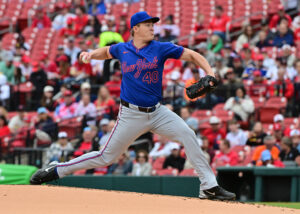
To get the player they wanted, it feels like they have given up a lot. Tidwell, 24, was a second-round pick of the Mets in 2022. Since then, he has generally been ranked as one of the club’s top ten prospects. His results since getting up to Triple-A haven’t been astounding. He has a 5.05 ERA in 164 innings at the top minor league level. He’s been a bit better there this year, with a 4.10 ERA, 25.7% strikeout rate and 9.5% walk rate.
Baseball America currently lists Tidwell as the Mets’ #10 prospect. They give him a 50 grade on the 20-80 scale and classify him as high risk. Their report notes that he’ll need to improve his control get become a back-end starter. A month ago, FanGraphs ranked him #7 in the system but with a 45+ grade, noting that he could develop into a mid-rotation guy but with some reliever risk thanks to his control issues and high-effort delivery.
Gilbert, 24, was a first-round pick of the Astros in 2022 but came to the Mets in the August 2023 trade which sent Justin Verlander back to Houston. Gilbert’s stock has dipped a bit since that trade. He missed a decent chunk of 2024 due to a hamstring injury and slashed .205/.313/.371 when he was on the field. This year, he’s been better, with a .246/.349/.435 line and 105 wRC+ in his Triple-A action.
BA ranks him #14 in the Mets’ system, also with a 50 grade and high risk. FanGraphs puts him at #10 with a 45 grade. The latter outlet notes he mostly does damage against fastballs but struggles against spin. He can play all three outfield spots but evaluators generally think it’s a bit of a stretch to have him in center. FanGraphs describes him as a “low-variance fourth outfielder.” He is going to be eligible for the Rule 5 draft in December, meaning he’ll need a 40-man roster spot before then.
Buttó can plug directly into the San Francisco bullpen to replace Rogers. He has thrown 167 big league innings with a 3.45 ERA, 23.5% strikeout rate, 12.2% walk rate and 43.9% ground ball rate. He is out of options and some of this year’s trend lines aren’t good. His strikeout rate was 26.9% last year but has dipped to just 20.7% this season, while his walk rate has stayed high at 11.1%. Perhaps he was going to get squeezed off the Mets’ roster as part of their deadline moves regardless.
Though it might come across a lot to give up for a soft-tossing rental, the Mets may not have had Gilbert or Buttó in their long-term plans. As mentioned, Gilbert was going to need a 40-man spot in a few months’ time. If the Mets view him as a future Quad-A outfielder and not an everyday regular, perhaps they could find another use for that roster spot. Buttó is out of options and might have been trending towards being designated for assignment.
For the Giants, there’s undoubtedly a lot to like in this haul. They hovered in the playoff race for a lot of the year but have been cold lately and are now five games back of a playoff spot. It was reported earlier that they would be listening to offers on their relievers. Rogers, as mentioned, is a 34-year-old impending free agent.
The Giants have swapped him out for Buttó. That makes their bullpen worse today but Rogers was on his way out the door anyway and perhaps they can find a way to get Buttó back on track. With Tidwell, they add some immediate rotation depth, something which has been an issue this year.
They have Logan Webb and Robbie Ray as a strong one-two but question marks after. They flipped Kyle Harrison and Jordan Hicks to the Red Sox in the Rafael Devers deal. Verlander is an impending free agent. Landen Roupp is currently shelved with elbow inflammation. Hayden Birdsong had some encouraging results earlier in the year but recently struggled enough to get sent down to Triple-A. The club will likely look for more starting pitching in the offseason but Tidwell can jump into that depth mix alongside guys like Roupp, Birdsong, Trevor McDonald, Mason Black and others.
Gilbert gives them some extra outfield depth. They will go into 2026 with Heliot Ramos and Jung Hoo Lee in two spots, but Mike Yastrzemski is an impending free agent. Guys like Luis Matos, Wade Meckler, Grant McCray, Marco Luciano and Daniel Johnson are on the 40-man roster. Assuming Gilbert gets a roster spot this fall, he’ll jump into that mix.
If Tidwell becomes a mid-rotation guy or Gilbert develops into an everyday outfielder, perhaps the Mets will feel they overpaid. But there are some reasons to expect those things might not come to pass, so it seems they felt it was a risk worth taking in order to get Rogers and upgrade their bullpen for the stretch run and postseason. Relievers tend to become more important in the playoffs, when off-days allow the top guys to pitch almost every game.
This could be the first of a handful of sell-side moves the Giants make. Verlander is an impending free agent, though he has a full no-trade clause and 4.53 ERA, which could complicate talks. Yastrzemski and Wilmer Flores are impending free agents as well. Camilo Doval still has a couple of years of club control but could be on the move as well.
Hjelle, 28, is known for his height and ability to induce ground balls. Listed at 6’11”, he has 149 2/3 big league innings under his belt with a 5.11 ERA, 21.8% strikeout rate, 6.6% walk rate and 56% ground ball rate. His numbers have trended in the wrong direction this year, with a 15.1% strikeout rate and 42.3% grounder rate. That’s a small sample of 15 innings, as he’s mostly been in the minors this year. In his 40 1/3 Triple-A innings this season, he has a 2.90 ERA, 26.2% strikeout rate, 6% walk rate and 51.9% ground ball rate.
The Giants could try to find a trade partner for Hjelle in the next 24 hours. If not, he’ll have to go on waivers. He can be optioned for the rest of this year and could perhaps appeal to clubs looking for pitching depth, though he’ll be out of options next year.
Ken Rosenthal of The Athletic first reported that Taylor was headed to the Mets. Robert Murray of FanSided first reported that Tidwell and Gilbert would be part of the three-player return. Joel Sherman of The New York Post was first on Buttó’s inclusion.
Photos courtesy of Matt Kartozian, Kelley L Cox, Tim Vizer, Charles LeClaire and Sam Navarro, Imagn Images.
Giants Open To Offers On Relievers; Camilo Doval Drawing Interest
The Giants have informed other teams that they’ll listen to offers on some of their bullpen, reports Jon Morosi of MLB Network. Francys Romero reports that Camilo Doval, in particular, has drawn interest from several teams. San Francisco has dropped five consecutive games and is now sitting .500 on the season — nine games back in the NL West and five games out of a Wild Card spot.
Doval, 28, popped up in trade rumblings back in the offseason, but the Giants held onto him rather than sell low on the heels of a down season. That’s proven to be the right call, as Doval has bounced back with a 3.15 ERA, a 25.1% strikeout rate, 15 saves and seven holds on the season. His 12.8% walk rate is too high but is down from last year’s even uglier 14.4% mark. Doval sits 98.1 mph with his cutter and can run the pitch up over 100 mph, though his velocity is down a bit from the past three seasons, when he sat over 99 mph. Doval couples the cutter with a slider and what’s now a seldom-used sinker.
The 2025 season is Doval’s first year of arbitration eligibility. He’s earning $4.525MM and is slated to receive raises in each of the next two seasons. He’s a free agent in the 2027-28 offseason. If the Giants are amenable to a deal, he’d join names like David Bednar, Dennis Santana, Jhoan Duran, Griffin Jax and Cade Smith as one of the market’s more appealing relievers with some remaining club control.
Presumably, if the Giants are open to trading any veteran players, righty Tyler Rogers would be available. The submariner has been a steady member of San Francisco’s bullpen since 2019 but is in his final season of club control before free agency. The 34-year-old has pitched to a pristine 1.80 earned run average in 50 innings this year. Rogers has never missed many bats but has a 20.2% strikeout rate this season that — while still lower than average — represents a step up from the 17.3% mark he posted over the past four seasons. His command has long been a strength, but this year’s minuscule 2.1% walk rate is a career low.
Rogers offsets his lack of strikeouts with that plus command and also by inducing some of the weakest contact in the sport. His unique arm angle and 83 mph sinker regularly prove difficult to square up. Opponents are averaging just 84.8 mph off the bat against him this year, and Rogers has allowed just a 32.2% hard-hit rate. He’s also kept a massive 64.4% of batted balls against him on the ground.
Doval and Rogers stand as the two most logical trade candidates in the San Francisco bullpen, but if the Giants wanted to pursue an even more substantial return, they could hear out teams who have interest in Ryan Walker or Randy Rodriguez. Walker is in the midst of a down season but was one of the National League’s top relievers just last year, when he notched a 1.91 ERA, 32.1% strikeout rate and 5.8% walk rate. He’s controllable for four years after the current season but is a late-blooming arm who’ll turn 30 in November.
The 25-year-old Rodriguez would be overwhelmingly difficult to pry away. He’s controlled for another five years after the 2025 season and currently boasts a 1.20 ERA with a massive 36.3% strikeout rate against a 5.3% walk rate. Rodriguez sits 97.4 mph with his four-seamer, pairing it with a plus slider that’s helped him land in the 90th percentile of big league pitchers in both whiff rate and chase rate on pitches off the plate, per Statcast.