
Amateur Draft Signings: 6/20/20
Let’s catch up on the latest draft signings …
- The Astros were able to wrap up all of their draft business, per Chandler Rome of the Houston Chronicle. In addition to picking up some undrafted free agents, the Houston organization inked its four draftees. The key signing was Alex Santos, a high school hurler who’ll turn pro after being offered $1.25MM — a fair bit over the $870,700 slot he was chosen at. Zach Daniels and Tyler Brown each signed for near their slot amounts, while fifth-rounder Shay Witcomb took just $56K and left the team with room to ink Santos.
- Also inking for $1.2MM was Rangers’ choice Dylan MacLean. Evan Grant of the Dallas Morning News reported the news on Twitter. MacLean was a fourth-round pick in the draft, signing for more than double his slot amount. MacLean is a southpaw hurler out of Central Catholic High School in Oregon.
- The Braves went well over slot to sign fifth-rounder Bryce Elder, according to MLB Pipeline’s Jim Callis (Twitter link). Elder will receive $850K, far north of the $336,600 allocation for the 156th overall pick.
- As he said he would, Tigers fourth-rounder Gage Workman has reached agreement on a deal with his new team. The Detroit organization announced the signing, though it isn’t yet known what the Arizona State infielder will receive to forego a return for another run with the Sun Devils. Still just twenty years of age, Workman posted a lifetime .298/.372/.496 mark at ASU. He’s likely to begin his pro career as a shortstop.
- The Cardinals announced that they’ve signed third-rounder Levi Prater. He’ll earn $575K ($627,900 slot value), Callis tweets. Callils notes that Prater is a right-handed hurler with a 90-93 mph fastball.
- The Phillies added fourth-rounder Carson Ragsdale and fifth-rounder Baron Radcliff, per Callis (Twitter links). Ragsdale will earn $225K, well under the $497,500 slot value. Radcliff, a Georgia Tech outfielder, is slated to take home $100K, which will also leave some savings since his draft slot came with a $371,600 pool allocation.
- The White Sox chased some serious mid-round savings. Third-round choice Adisyn Coffee has inked for $50K and fourth-rounder Kade Mechals went for $10K, Callis reports (Twitter links). Both are right-handed hurlers, Coffee from Wabash Valley College and Mechals out of Grand Canyon. It’s not hard to interpret these signings: the White Sox wish to reallocate the rest of the slot money ($733,100 and $517,400, respectively). The club is believed to be lining up a big bonus with second-rounder Jarred Kelley, though he hasn’t yet signed.
- Rays third-rounder Hunter Barnhart is heading to Tampa Bay on a $585K bonus, Marc Topkin of the Tampa Bay Times reports on Twitter. The Rays saved some cash in inning Barnhart, whose third-round slot carried a value of $604,800.
- High school righty Marco Raya has agreed to terms with the Twins. Callis tweets that he’ll receive a $410K bonus, which isn’t far shy of the $442,900 slot value. Raya is foregoing a commitment to Texas Tech. Though he’s hardly a power hurler, he’s said to have an “interesting four-pitch mix.”
Rays Sign Comp A Selection Alika Williams
The Rays have announced a deal with their second-highest draft choice, Arizona State shortstop Alika Williams. He’ll earn a $1.85MM bonus, per Robert Murray (via Twitter).
Williams was taken 37th overall, with the Rays’ competitive balance round A selection. That pick came with a $2.00MM pool allocation, meaning the organization has kept a bit of extra draft capital to apply to other chosen players — in particular, first rounder Nick Bitsko, whom the Rays will try to lure away from a commitment to U.Va.
Most draft observers expected Williams to be taken in this range. Baseball America had the loftiest grade on him, placing him 31st among this year’s draft-eligible prospects.
Williams is viewed as a quality glove man at one of the game’s premium defensive positions. While he’s not necessarily expected to become an explosive offensive performer, Williams looks to have a strong hit tool with at least some remaining potential to build into some power.
Amateur Draft Signings: 6/17/20
We’ll keep track of today’s amateur draft signing news here…
- The Tigers have signed fifth-rounder Colt Keith for $500K, Jim Callis of MLB.com tweets. It’s an above-slot deal for Keith, the 132nd overall selection whose pick came with a recommended value of $426,600. The Mississippi high school third baseman was an Arizona State recruit, notes Callis, who adds that Keith has the ability to hit for average and power at the plate. His arm’s also so strong that he was a legit pitching prospect, per Callis. Notably, Keith was among the top 100 prospects in the pre-draft rankings of Baseball America (No. 57), MLB.com (87) and ESPN’s Kiley McDaniel (99).
- The Rockies have reached an agreement with fourth-rounder Case Williams, Thomas Harding of MLB.com reports. Williams’ pick (110) carried a recommended value of $527,800, but he’ll earn $450K, according to Patrick Saunders of the Denver Post. A high school right-hander from Colorado, Williams ranked as FanGraphs’ 231st-best prospect entering the draft.
- Let’s update a couple previously covered signings that didn’t come with financial information when they were reported: Astros fourth-rounder and 131st overall pick Zach Daniels agreed to a deal worth $400K, down from the slot value of $430,800, according to Callis. Meanwhile, Rays fifth-rounder Jeff Hakanson, the 155th choice, received the full slot value of $340K, Marc Topkin of the Tampa Bay Times relays.
Additional Amateur Draft Signings: 6/16/20
We caught up on draft signings earlier today, but a few more trickled out this evening …
- The Tigers have a deal with third-rounder Trei Cruz, per MLB.com’s Jim Callis (via Twitter). A shortstop out of Rice University, Cruz will secure a $900K bonus that lands just over the slot value of $857,400. None of the major draft pundits ranked Cruz among the hundred best draft-eligible prospects, but the Detroit organization was obviously intrigued. If you’re a believer in bloodlines, you can’t do much better than this. Cruz will aim to follow his father, grandfather, and great uncles in appearing in the majors.
- Mets fourth-rounder Matthew Dyer is on board with a $350K bonus, per MLB.com’s Jonathan Mayo (Twitter link). That’ll save the New York org nearly $230K to apply to other draftees. Dyer, an Arizona product, ranked 333rd on Baseball America’s final draft board. Mayo credits him with a strong throwing arm and good athleticism for a backstop.
- The Blue Jays have added Zach Britton — not to be confused with Yankees reliever Zack (formerly Zach) Britton. This new Zach Britton landed $97,500 from the Toronto organization, freeing the club to allocate the rest of the $410,100 slot value elsewhere. Britton spent time in the outfield and behind the dish at Louisville. BA graded him just inside the top 200 prospects available for selection this year. Britton was slashing .322/.446/.542 when the season was cut short.
- Fifth rounder Jeff Hakanson is in agreement with the Rays on a bonus, per Marc Topkin of the Tampa Bay Times (via Twitter). Dollar values aren’t yet known publicly, but it seems likely to be an under-slot deal. Hakanson, a righty out of Central Florida, wasn’t ranked on any of the major boards. His slot comes with a $340K bonus pool allocation.
- The Cardinals announced an agreement with their own fifth-round selection, Long Beach State outfielder LJ Jones IV. MLB.com’s Jonathan Mayo tweets that Jones has picked up a $100K bonus, meaning the Cards have another $250,300 to work with in signing other players. Jones didn’t merit mention in any rankings either, though the redshirt sophomore never really got a chance to showcase himself in college owing to injuries and the coronavirus situation.
Quick Hits: Bitsko, Tanaka, Moskos, Draft Prospects
Nick Bitsko was originally slated to be part of the 2021 draft class, so when the young righty took some extra courses to graduate high school after his junior year and thus become eligible for the 2020 draft, the Rays didn’t have a ton of fresh information available, Marc Topkin of the Tampa Bay Times writes. The Rays were limited to a three-inning showcase last August, “plus a 50-pitch March bullpen session at a small indoor facility and an hour-long Zoom call last week,” yet were still impressed enough to make Bitsko the 24th overall pick, just days before Bitsko’s 18th birthday.
Working largely off limited video from Bitsko’s high school games, some throwing-session footage posted by Bitsko himself online, and cellphone footage shot by scout Zach Clark during the bullpen session, the Rays became comfortable in the right-hander’s ability. Clark is still the only Rays employee to speak to Bitsko or his parents in person, as Bitsko’s next meeting with team officials came during the online conversation. “I think the Zoom call sent it over the top for our guys,” Clark said. “Listen to Nick talk about pitching, preparation, what he’s done in the past, you’re like, ‘Man, it’s really hard to believe you’re talking to a 17-year-old.’ ”
More from around baseball…
- Of the Yankees‘ three veteran impending free agent starters, Masahiro Tanaka is “the favorite to return” to the Bronx in 2021, George A. King III of the New York Post opines. Tanaka will turn 32 in November, though James Paxton shares almost the exact same birthday and will carry a much more checkered injury history into the open market, while J.A. Happ turns 38 in October and is coming off a rough 2019 season. Of course, there’s nothing stopping the Yankees from re-signing only one of these hurlers, and there’s also nothing to say that New York couldn’t let all three walk. The latter scenario seems less likely, however, as that would leave the team with quite a young and unproven rotation mix behind Gerrit Cole, unless the Yankees acquired another veteran starter.
- Fangraphs’ David Laurila recently caught up with Daniel Moskos, the fourth overall pick of the 2007 draft and currently the pitching coach for the Yankees‘ A-ball affiliate in Charleston. Despite his lofty draft status, Moskos’ MLB career consisted of only 24 1/3 innings for the Pirates in 2011 before elbow problems and a Tommy John surgery took their toll. After bouncing around the minors, the Mexican League, and independent ball, Moskos followed the lead of several pitchers in recent years by visiting the Driveline facility to try and get his career on track. As it turned out, it led to a career change entirely, as Moskos retired in order to take a job as coach and trainer at Driveline. That position led to a lot of interest from other organizations about coaching roles, leading to Moskos being hired by the Yankees last November.
- While teams are now eligible to begin signing undrafted free agents, some notable players who weren’t selected have opted to go back to school rather than take a $20K offer. The Athletic’s Josh Tolentino reports (Twitter link) that right-hander Tommy Mace will return to Florida for his senior year, which isn’t surprising given that Mace was a consensus top-75 prospect as per this year’s draft projections. (The Athletic’s Keith Law ranked Mace as the 46th-best player in the class, with Fangraphs not far behind in placing Mace 47th.) As Tolentino notes, another good year from Mace could make him in the top-15 range for the 2021 draft.
- Infielder Darren Baker will also forego a free agent contract and return to Cal next season, John Shea of the San Francisco Chronicle writes. Baker, the son of Astros manager Dusty Baker, was rated 184th in Baseball America’s draft prospect rankings.
Denard Span Discusses His Decision To Walk Away
Denard Span has played 11 seasons at the big league level, totaling 1359 games and 5956 plate appearances, but the former Twins, Nationals, Giants, Rays and Mariners outfielder confirmed to MLBTR this week that he’s suited up for the final time.
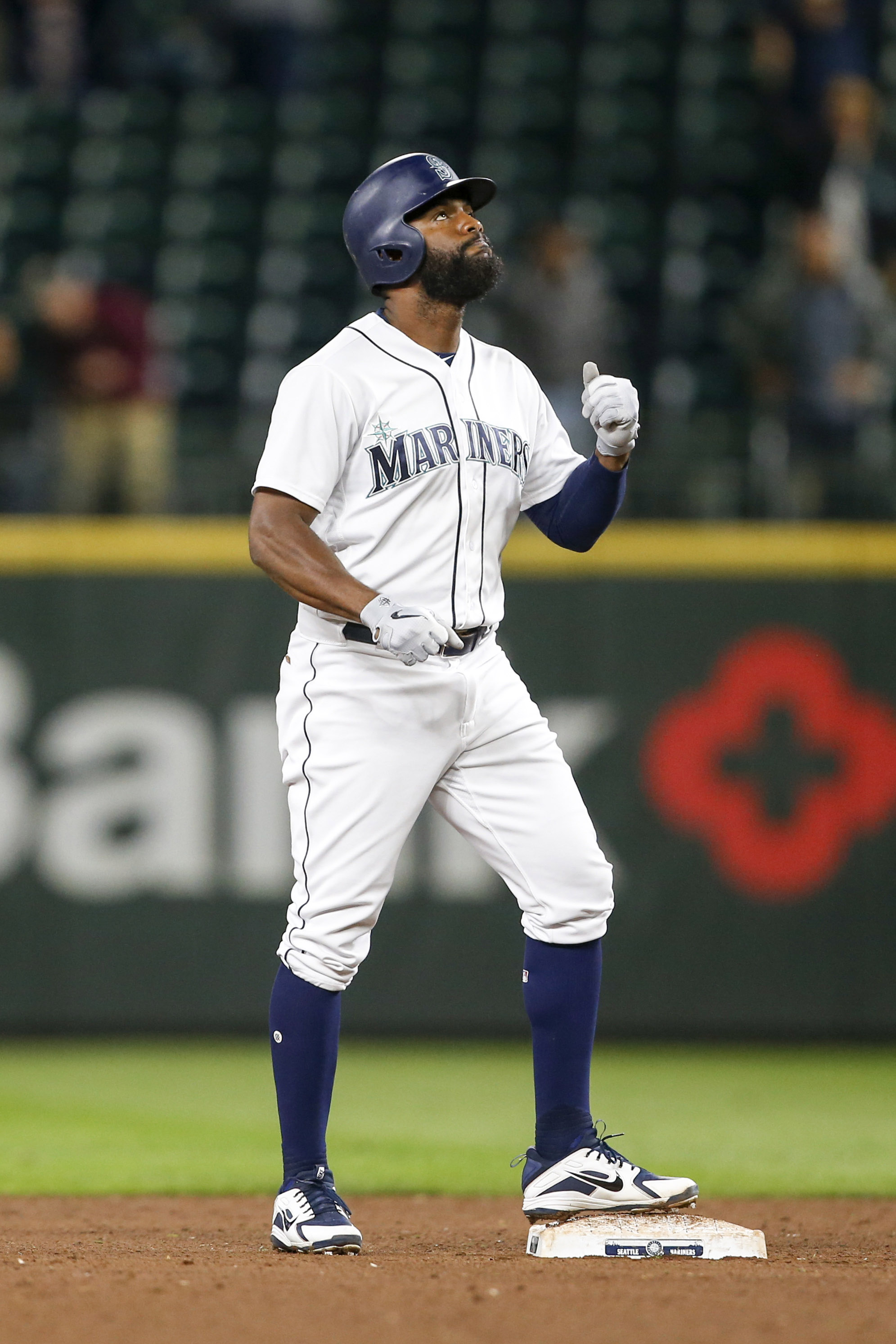
“I would say, in my heart, once I didn’t sign a contract going into the 2020 season, that was it for me,” said Span. Retirement, however, is a bittersweet step for the 36-year-old, who’d have preferred to walk away from the game on his own terms. Instead, changes to the free-agent landscape and the manner in which teams evaluate players left Span feeling conflicted as he sought a new team in the 2018-19 offseason.
“I’m a man of principles, and when those principles aren’t met, I can’t go along with it,” Span explained. “…I honestly recognize that I’m not the player that I was when I was in D.C. or when I was in Minnesota. But, I still know that I have value. I’m not a center fielder or premier player anymore, but that doesn’t mean I can’t help a ballclub win a championship or win games. I’m not the $12MM player anymore, but from what I did [in 2018], that doesn’t tell me I’m worth $1MM or worth $1.5MM or worth league minimum. I got an offer for league minimum. It was just unreal.”
Span indeed put together a solid campaign in 2018, tallying 501 plate appearances between the Rays and Mariners with a combined .261/.341/.419 batting line. He connected on 11 home runs, 22 doubles and seven triples while swiping nine bases in 13 tries. Both OPS+ and wRC+ agreed that his bat was 12 percent better than that of a league-average hitter. Through 137 games, Baseball-Reference pegged him at 2.1 wins above replacement — FanGraphs at 1.5.
“For me, how do you go from 500 at-bats, being a productive player — you look over the course of my career, I’ve never been a problem in the clubhouse, either — how do you equate that to $1.5MM or all the way down to league minimum?” Span asked rhetorically.
The timing of the offers was difficult on Span and his young family as well, ranging from late January through the first week of the regular season. Any offers received were of the “take it or leave it” variety, Span added, as opposed to a few years ago when there was more negotiation. Once Spring Training was underway, he finally received offers from multiple clubs at once — on minor league deals.
“It just was like, ‘How did I get to this point where now I have to prove that I can play when I just had 500 at-bats last year?'” Span continued.
Span’s comments strike a similar tone to those recently expressed by former Reds second baseman Scooter Gennett. The 30-year-old Gennett, who didn’t sign a contract this winter, spoke to Doug Fernandes of the Sarasota Herald-Tribune last month about “not conforming” to what he “[doesn’t] think is right.” Gennett set a value on his skills and on the trade-off of being “220 days away from family,” ultimately opting not to compromise. Span viewed the decision similarly.
“I just couldn’t see myself at this point in my career giving in or compromising myself — especially where I’m at in my life, being a husband and a father,” said Span, who is married and has two children under three years old. “It’s already hard enough to be away from my family, and now they want me to play for less than what I humbly feel I deserve. I’m not saying I’m worth $10MM. I’m saying I’m worth more than what they offered me.”
Span and Gennett are hardly the only big leaguers frustrated by the changes to the free-agent landscape in recent years. We’re not far removed from a 2017-18 offseason that proved to be one of the most frigid in recent memory for free agents. The lack of activity on the middle and lower tiers of the free-agent market that winter helped to set the stage for much of the league/union tension that has negatively impacted the currently ongoing return-to-play talks and will certainly impact the next wave of collective bargaining in 2021.
While it’s true that the game’s top stars — particularly those still shy of 30 — have generally been able to secure considerable free-agent contracts, the 2017-18 and 2018-19 offseasons also featured an erosion of the “middle class” of free agents. (There’s a reason Adam Jones is preparing to play in Japan, after all.) Span himself noted that not long ago, veterans at the same point in their careers as he was following the 2018 season could even reasonably expect to find two-year deals. Rajai Davis, David DeJesus and Chris Young are among the numerous outfielders who signed two-year deals in the $10MM range from 2013-16.
In today’s game, comparable veterans like Kevin Pillar, Brock Holt and Asdrubal Cabrera have begun to settle for one-year pacts, and those who do find multi-year guarantees typically take a smaller salary. Wilmer Flores (two years, $6.25MM this offseason), Austin Jackson (two years, $6MM in 2018) and Howie Kendrick (two years, $7MM in 2018) are a few examples. With teams now suddenly experiencing unprecedented revenue losses, and with a likely aggressive wave of non-tenders on the horizon, it seems unlikely that the trend will change anytime soon. It’s eminently possible that other veterans will feel obligated to follow the same path as Span.
All told, Span will officially walk away from baseball with a lifetime .281/.347/.398 batting line, 71 home runs, 265 doubles, 72 triples, 185 stolen bases, 773 runs scored, 490 runs batted in and 28 wins above replacement. The 2002 first-round pick walked in 8.6 percent of his plate appearances, struck out at just a 12 percent clip and was a positive contributor on the bases and with the glove for the vast majority of his time in the big leagues. Between his draft bonus, his first extension with the Twins and his three-year deal with the Giants, Span earned more than $58MM as a player. His 2018 production suggests that he could likely have added to those totals, but Span will instead turn his full focus to his family, taking solace in the fact that he stuck to his convictions:
“At the end of the day, I want people to get that I didn’t play because of principles. Point blank.”
Each AL Team’s Top Recent Draft Class
With the MLB draft scheduled for next week, let’s take a look at each American League team’s most successful draft class in recent memory. Using Baseball Reference’s draft tracker, we can sum the combined career bWAR of each player selected by each team in a given year. It’s a simple shorthand, not a perfect measure, but it’ll give some insight into which teams have really hit in certain years.
First, a quick note on the methodology. For simplicity, we’re limiting this search to the 2006-2015 classes. A player’s value is only included if he signed with the club, although he needn’t have actually played for his drafting team in the majors. (So, the 2008 Yankees don’t get credit for drafting but failing to sign Gerrit Cole, while the 2007 Red Sox do get credit for drafting and signing Anthony Rizzo, even though he was traded before ever playing an MLB game for Boston). Of course, a player drafted in 2006 has had more time to rack up value than one drafted in 2015, so we’ll note in each team’s capsule if a more recent class is on the verge of taking over from an older class. On to the results…
- Angels: 2009 (109.3 bWAR) – Go figure. Picking one of the greatest players of all time is a heck of a way to kick off a draft class. But this 2009 class wasn’t just about Mike Trout, even if he’s accounted for about two-thirds of its cumulative value. That year, the Angels also selected Patrick Corbin, Randal Grichuk, Garrett Richards and Tyler Skaggs. Former MLBTR contributor Chuck Wassterstrom took a behind-the-scenes look at this class a few years ago.
- Astros: 2009 (53.2 bWAR) – Not a single one of the Astros’ top five rounders in 2009 reached the majors. The late rounds, though, were a smashing success with J.D. Martinez (20th), Dallas Keuchel (7th) and Kiké Hernández (6th) accounting for the class’ value. Of course, Martinez did his damage elsewhere after the Astros released him.
- A’s: 2012 (37.7 bWAR) – The A’s 2012 class produced seven big leaguers, most notably Matt Olson. He leads a group that also included Addison Russell and Max Muncy, who have played most or all of their MLB careers elsewhere.
- Blue Jays: 2009 (39.2 bWAR) – They won’t get credit for selecting James Paxton in supplemental round one here, but Yan Gomes was a nice find in the tenth round, though he would play only briefly in Toronto before being dealt to Cleveland. Outside of Gomes, the Blue Jays found a few nice role players, including Jake Marisnick, Aaron Loup, Ryan Goins, and others.
- Indians: 2011 (38.7 bWAR) – Selecting Francisco Lindor eighth overall in 2011 was a key to Cleveland’s 2016 AL pennant. So too was then-closer Cody Allen, whom they grabbed in the 23rd round. With Lindor mid-prime, the class’ value should just continue to grow.
- Mariners: 2006 (40.2 bWAR) – Doug Fister and Chris Tillman went on to become mid-rotation starters for a time (Fister arguably even a bit more than that), albeit with other clubs. Fifth overall pick Brandon Morrow disappointed as a starter but had a late-career renaissance as a quality reliever before various injuries derailed him.
- Orioles: 2007 (43.2 bWAR) – Although only four players from this class would wind up making the Majors, the combination of Jake Arrieta and Matt Wieters makes the 2007 draft a pretty solid one for the O’s. While Wieters, the fifth overall pick, maybe didn’t turn out to be the franchise cornerstone he was hailed to be, he has nonetheless had a nice career. Arrieta had a slow start in Baltimore, but would of course earn a Cy Young with the Cubs. It’s worth noting that this spot will be taken by the 2010 class before too long, almost entirely on the back of Manny Machado.
- Rangers: 2008 (33.3 bWAR) – Despite garnering only a 25th-round selection, Tanner Roark has turned out to be the most productive player in this class. First-round choice Justin Smoak deserves a mention too, though his career didn’t really take off until he’d been traded out of Texas. The 2011 class, headed by Kyle Hendricks, is not far behind and could claim this title in the near future.
- Rays: 2006 (81.5 bWAR) – Franchise legend Evan Longoria does a lot of the heavy lifting for this class, having amassed 56 total WAR by age 34. Even so, there are some other quality players here: Desmond Jennings and Alex Cobb are the other notables, with Jennings carving out a solid MLB career as a tenth-round pick.
- Red Sox: 2011 (70.2 bWAR) – This is far and away the best Sox draft class in recent memory, and it shouldn’t surprise anyone. Mookie Betts, one of the finest players in baseball, established himself as Boston’s franchise player after he was selected in the fifth round. Even outside of Betts, this class yielded a few key members of the Red Sox 2018 World Series team, with Jackie Bradley Jr. and relief ace Matt Barnes also coming out of that draft.
- Royals: 2007 (47.1 bWAR) – Speaking of drafting World Series contributors, the Royals in 2007 added both Mike Moustakas and Greg Holland, both of whom turned out to be central in the Royals’ playoff runs in 2014 and 2015. And that’s before mentioning third-rounder Danny Duffy, who’s still with Kansas City and inked a nice extension prior to 2017.
- Tigers: 2007 (20.6 bWAR) – With just 20.6 WAR, the Tigers’ best draft in recent memory doesn’t compare favorably to the rest of the AL, and that partly illuminates the franchise’s current standing in baseball. The notable player from the 2007 class is Rick Porcello, who had some nice years to begin his career with the Tigers and would later win a Cy Young. Maybe they get bonus points for discovering high-schooler D.J. LeMahieu, who wouldn’t sign with the team, in round 41?
- Twins: 2009 (32.4 bWAR) – Between Kyle Gibson and Brian Dozier, the Twins drafted a pair of staples on the Minnesota teams of the mid-2010s. But with both playing elsewhere now, keep an eye on the 2012 draft class, which features a trio of young centerpieces for a new era of Twins baseball: Byron Buxton, Jose Berrios, and Taylor Rogers are up-and-comers who could rack up a lot of value as they enter their primes.
- White Sox: 2010 (55.3 bWAR) – Chris Sale carries the 2010 class for the South Siders, by far the best draftee in an otherwise mediocre string of years for Chicago. That said, 2010 yielded a couple of other role players for the White Sox, with Addison Reed, Jake Petricka, and Tyler Saladino all making nice MLB contributions.
- Yankees: 2006 (69.4 bWAR) – Whereas many teams’ success in a given year is determined by one standout player, the Yankees’ installment on this list displays a surprising breadth of quality players, without a single superstar. Evidently, the 2006 Yankees cornered the market on MLB relievers: Ian Kennedy, David Robertson, Dellin Betances, Mark Melancon, and Joba Chamberlain are the five most productive players from the Bombers’ draft that year (granted, Kennedy didn’t transition to the bullpen until last year).
AL Draft Notes: Mariners, Yankees, Rays
With this year’s iteration of the MLB Draft, which will begin on Wednesday, comprising just five rounds instead of the usual 40, there’s some thinking that teams will prioritize college players, about whom more is known and who tend to come with more certainty. And while we won’t know for certain until it all plays out next week, here’s the latest on several AL teams’ thinking as the truncated draft approaches.
- The Mariners are said to be once again targeting collegiate pitchers, writes Greg Johns of MLB.com. Jerry Dipoto’s club holds the sixth overall selection, and has six total picks in the draft. They’ve been linked to the likes of Emerson Hancock, and to a lesser degree Max Meyer and Reid Detmers—all college hurlers. But if infielder Nick Gonzales, widely regarded as one of the premier talents in this year’s draft class, falls out of the top five, Dipoto may deviate from that preference and nab the New Mexico State product. If the M’s do indeed opt for a college pitcher in round one, it would represent a continuation of the strategy the Seattle front office has employed in the previous two drafts: in 2018, the Mariners chose Stetson’s Logan Gilbert at no. 14; last year, they grabbed George Kirby of Elon at no. 20.
- Bryan Hoch of MLB.com is hearing that the Yankees could go after a position player with their first pick and pitchers in the later rounds. Due to the Gerrit Cole signing, the Bronx Bombers forfeited their second- and fifth-round selections, meaning that they’ll only make three selections on draft day. Per Hoch, they’ve been connected to shortstops Nick Loftin, Ed Howard, and Carson Tucker as candidates for the 28th-overall draft choice. Loftin is a Baylor product, while Howard and Tucker both come from the high school ranks. In Anthony Volpe and Anthony Seigler, Brian Cashman and company have targeted high school position players in the first round of consecutive drafts.
- The Rays have been one of the better (or perhaps, luckier) teams when it comes to finding Major League talent in the late rounds of the draft, but of course they won’t have much opportunity to continue that trend this year, given that they’ll only have five rounds (six selections) to add talent to their already-loaded farm system. As Marc Topkin of the Tampa Bay Times writes, the consequences of the shortened format might be magnified for the tight-budget Rays, who are especially dependent on the draft—even the later rounds—for rounding out the organization. One example of that is 31st-round selection Kevin Kiermaier, whom MLBTR’s Mark Polishuk covered earlier today. All that said, Topkin believes the Rays likely won’t alter their philosophy of hunting for the players with the best overall chance of impacting the MLB club, with little regard for position or age.
From The 31st Round To Three Gold Gloves (And $53.5MM)
It isn’t often that a 31st-round draft pick even makes it to the big leagues, let alone enjoys a very successful Major League career. Jake Arrieta, Aaron Judge, Chris Chambliss, Cecil Fielder, Andrew Benintendi, Brad Ziegler, and Hunter Renfroe are some of the most prominent 31st-rounders chosen over the years….except none actually signed after being drafted with these picks, as the selecting teams were taking long-shot fliers to see if they could entice these prospects into starting their pro careers early.
In terms of “proper” 31st-rounders, as in players who actually did sign after being drafted, there are a few notable names in the game today: Brewers reliever Brent Suter, Mariners reliever Matt Magill, and Red Sox catcher Jett Bandy (still in Boston’s organization as a non-roster invitee). Plus, there is the other noteworthy active 31st-rounder, one who is on pace to become the best 31st-round pick in baseball history.
If you will, the Mount Rushmore of 31st-round selections…
- Jay Howell, who posted a 3.34 ERA over 844 2/3 innings from 1980-1994. Howell was a stalwart closer and setup man for many teams, including the 1988 World Series champion Dodgers.
- Pedro Feliciano, who posted a 3.33 ERA over 383 2/3 innings in parts of nine seasons from 2002-13, all with the Mets. At his peak, Feliciano was a workhorse who led the league in appearances each year from 2008-10.
- Travis Hafner, longtime Indians slugger. “Pronk” hit a whopping .273/.376/.498 with 213 homers (132 wRC+, 134 OPS+) over 4782 career plate appearances from 2002-13, with all but 369 of those PA coming in a Cleveland uniform.
And finally, there’s Kevin Kiermaier. Hafner and Kiermaier are easily the most accomplished position players to ever come out of the 31st round, with Hafner holding an edge in career fWAR (22 to 17.5) over the Rays outfielder, though Hafner also has the benefit of 583 more career games. As such, there’s still time for Kiermaier to overtake Hafner as — cue fanfare — The Best 31st-Rounder In Baseball History, which was a wholly unlikely scenario when Tampa Bay selected Kiermaier out of Parkland College in the 2010 draft.
Kiermaier made pretty quick progress through the Rays’ farm system, reaching Triple-A Durham by 2012 (albeit for just a four-game cup of coffee) and then hitting .295/.362/.431 over 571 combined plate appearances at the Double-A and Triple-A levels in 2013. That performance earned Kiermaier his first ticket to the majors, in somewhat unusual circumstances. Kiermaier made his MLB debut as a defensive substitute in the ninth inning of in the 163rd game of the Rays’ 2013 season, a tiebreaker with the Rangers to determine a wild card berth. Tampa Bay won that game and then the actual AL Wild Card game over Cleveland, with Kiermaier again making an appearance as a late-game placement.
For a Rays franchise that has long been creative in trying to find roster advantages, using a postseason roster spot on the untested Kiermaier was perfectly logical. After all, who better to serve as a defensive sub than the best defensive player in the organization? (An honor officially conferred on Kiermaier after the 2013 season.) While Kiermaier’s minor league numbers were good if unspectacular, he quickly gained notice due to his glovework, which has continued to be the case throughout his MLB career. He is a three-time Gold Glove winner, as well as the winner of both a Platinum Glove and Fielding Bible Award in 2015.
Since the start of the 2014 season and over 4966 2/3 innings in center field, Kiermaier has 112 Defensive Runs Saved and a 14.8 UZR/150. Among all other players in baseball with at least 4500 innings at a single position, only Andrelton Simmons is ahead of Kiermaier in both stat categories, with Mookie Betts also leading all players in UZR/150. Betts’ excellence has come in right field rather than the more demanding center field position, and while I’m not going to make a claim that the amazing Simmons isn’t anything less than the best defensive player of his era, Simmons did accumulate his 144 DRS with the benefit of more than 2000 more innings at shortstop than Kiermaier has played in center field.
Though Simmons had a head start by beginning his career during the 2012 season, that big innings gap underscores Kiermaier’s issues in staying on the field. From 2016-18, Kiermaier played in only 291 of 486 games due to a fractured left hand, a hip fracture, and a torn right thumb ligament. He also had a brief injured list stint last season due to a thumb sprain, but overall, 2019 was a pretty healthy season for Kiermaier, as he appeared in 129 games and made 480 plate appearances.
All of these injuries during what would have been prime years surely haven’t helped Kiermaier’s consistency at the plate. Over 847 PA in 2018-19, Kiermaier was a decidedly below-average hitter, batting just .223/.280/.386 with 21 homers. These recent struggles dropped Kiermaier to a 98 OPS+ over his career, after he had managed a 107 OPS+ through his first 1734 PA.
To be clear, if Kiermaier is able to hit at even a 98 OPS+ level while still maintaining his superb defense and strong baserunning, he is still a major asset to Tampa Bay’s team. “Asset” always carries a different meaning to the Rays than to most teams, however, given how Tampa is consistently trying to manage one of the game’s lowest payrolls. It is also particularly applicable to Kiermaier given his status as one of the few higher-paid players on the roster.
Prior to the 2017 season, Kiermaier signed a six-year extension worth $53.5MM in guaranteed money. The deal covered Kiermaier’s four arbitration years (he was Super Two eligible) and his first two free agent seasons, plus the Rays have a club option on his services for 2023 that could add another $10.5MM to the deal. It was a rare instance of the Rays making a sizeable long-term investment in a player; Kiermaier’s deal is still the second-largest contract in franchise history, behind only the Rays’ 2012 extension with Evan Longoria.
At the time of the Kiermaier extension, the Rays were betting that they were gaining cost certainty on a borderline five-tool talent, given the hitting promise Kiermaier showed over his first three seasons. Fangraphs’ value metric calculates that Kiermaier has been worth $51.1MM from 2017-19, already almost matching the cost of his extension, though he wouldn’t have earned close to that amount via the normal arbitration process. In a world where Kiermaier doesn’t sign that extension, it’s possible that the always cost-conscious Rays might have simply non-tendered or traded Kiermaier (especially given his injury history) at some point rather than pay his increasing arbitration salaries.
Kiermaier only just turned 30 years old in April, so he can truly get the injury bug behind him, there’s still plenty of time to build on what has already been a very impressive career. Becoming an elite-level center field defender is an incredible accomplishment for any player — for a 31st-round pick, it is downright astounding. Kiermaier’s success stands out all the more in a year that will see the amateur draft reduced to five rounds, as who knows how much potential talent could fall through the cracks among the hundreds of players that would have normally been drafted over 35 additional rounds. While a Kiermaier-esque success story is quite rare, it’s unfortunate that a possible next Kiermaier (or a next Hafner, or next Feliciano, or next Howell) might not even get a chance to get their career underway.
The Other Chris Archer Trades
Pirates right-hander Chris Archer has been among the most prominent major leaguers in the news this week. Archer just underwent thoracic outlet syndrome surgery, meaning he won’t pitch until at least 2021. It also means his tenure could be done in Pittsburgh, which will have to decide between an $11MM club option and a $250K buyout next winter.
Archer’s surgery came as the latest disastrous development during his time with the Pirates, who made an ill-fated trade with the Rays to acquire him in July 2018. For the sake of Pirates fans, who have witnessed Archer struggle mightily in their favorite team’s uniform and have seen two of the players their club gave up flourish as Rays, we’re not going to recap that trade for the umpteenth time. But we are going to look back at other trades involving Archer. Long before he became a Pirate, Archer was part of a couple other notable deals.
First off, Archer entered the pros as a 17-year-old and a fifth-round pick of the Indians in 2006. Archer struggled to prevent runs as part of the Indians’ system through 2008, and after that season, the club traded him, righty Jeff Stevens and lefty John Gaub to the Cubs for infielder/outfielder Mark DeRosa. Cleveland didn’t get a full season out of DeRosa, whom the team flipped to the Cardinals in June 2009 after he batted a solid .270/.342/.457 in 314 plate appearances and 71 games as an Indian.
What of the Cubs’ return for DeRosa? Stevens combined for 37 1/3 innings of 6.27 ERA ball as a Cub from 2009-11. Gaub made even less of an impact in Chicago, with which he threw the only 2 2/3 innings of his career in 2011. Archer never appeared in the majors with the organization, but he turned around his fortunes as a Cubs minor leaguer and began cracking top 100 prospects lists as a member of the franchise. Still, that wasn’t enough for the Cubs to keep him.
After the 2010 season, when Archer topped out as Baseball America’s 27th-best prospect, the Cubs dealt him to the Rays in a blockbuster. Along with Archer, the Cubs surrendered shortstop prospect Hak-Ju Lee, catcher Robinson Chirinos, and outfielders Sam Fuld and Brandon Guyer for righty Matt Garza, outfielder Fernando Perez and lefty Zac Rosscup.
The Cubs got nothing from Perez, who never appeared in the majors with them, and very little from Rosscup (he posted a 5.32 ERA over 47 1/3 frames and parts of four seasons in their uniform). On the other hand, Garza was effective in Chicago from 2011-13. Though the team failed to push for the playoffs during that stretch, Garza turned in 372 2/3 innings of 3.45 ERA pitching with 8.6 K/9 and 2.8 BB/9. However, as a non-contender in July 2013, Chicago sent Garza – a soon-to-be free agent – to Texas for third baseman Mike Olt and the righty trio of Carl Edwards Jr., Justin Grimm and Neil Ramirez.
As for the Rays’ return, Lee never made it to MLB, even though he was a highly regarded prospect in his younger days. He’s now playing with the Samsung Lions of the Korea Baseball Organization. Chirinos has evolved into a fine offensive catcher, though he only took 60 plate appearances with the Rays in 2011 before they traded him to the Rangers two years later. Fuld played from 2011-13 in Tampa Bay, where he batted .230/.301/.326 in 653 attempts. Guyer appeared with the Rays in parts of four seasons from ’11-15 and slashed .255/.341/.396 over 978 PA.
While none of Lee, Chirinos, Fuld or Guyer offered especially valuable production as Rays, Archer thrived. He piled up 177 starts and amassed 1,063 innings of 3.69 ERA/3.48 FIP ball with 9.7 K/9 and 2.94 BB/9 as part of the team from 2011-18, during which he earned two All-Star nods and signed the six-year, $25.5MM extension he’s still playing under.
Many have been tough on Archer on account of what has been a rough run in Pittsburgh, but he’s the same player who once made the Rays look like geniuses for adding him. That makes his recent fall from grace all the more surprising, and it’s anyone’s guess whether a rebound will be in store in the wake of TOS surgery.
Photo courtesy of USA Today Sports Images.