
Injuries Limiting Khris Davis’ Power
Khris Davis has been a remarkably consistent piece of the Athletics’ offense since the team acquired him from the Brewers just a couple months before the 2016 season began. A .247 hitter in his final season with the Brewers, Davis incredibly posted that same average from 2016-18 in Oakland. At the same time, the man known as Khrush slammed 133 home runs – at least 42 in each season – while recording a 128 wRC+ during that three-year, 1,916-plate appearance span.
Durability played an important role in Davis’ counting stats during his first three years as an Athletic. He appeared in no fewer than 150 games in any of those seasons, though hip, oblique and left hand problems have dogged Davis this year, limiting him to 74 of a possible 91 contests. It hasn’t been an ideal outcome for low-budget Oakland, which signed the fan and organizational favorite to a two-year, $33.5MM contract extension entering 2019. Including Davis’ $16.5MM salary this season, he’s under wraps through 2021 for $50MM. That’s a lot for the A’s, who – despite being in the thick of the playoff race for the second straight year – haven’t gotten the optimal version of Davis.
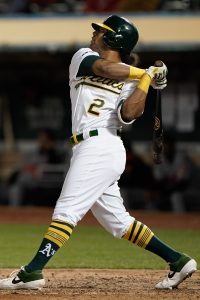
Through 302 plate appearances this season, the 31-year-old Davis has batted a career-worst .236/.305/.433 with a personal-low .196 ISO that sits 91 points below his 2016-18 mark. While Davis does have 16 homers, he’s easily on pace for his fewest in a season as an Athletic, and he hasn’t hit one since June 18. Moreover, his wRC+ (94) comes in 16 points below the league average for a designated hitter.
This past weekend, Davis explained to Susan Slusser of the San Francisco Chronicle that the pain in his hand has hampered his power, saying: “It’s just not as strong as it should be. I’ve been choking up a little bit, and that’s been helping a little, but not a lot of power guys choke up.”
Indeed, although a career-high swing percentage (52.7) has led to Davis’ greatest contact rate as an Athletic (70 percent), he’s not denting the ball to the extent he did in prior years. Davis’ average exit velocity has decreased from 92.5 mph to 89.5 since last season, according to Statcast, while his launch angle has plummeted from 18.1 to 12.4. He has also hit 11.7 percent fewer fly balls since then, which helps explain why he’s so far from the major league-leading 48 homers he amassed a season ago.
Davis’ MLB-best HR total in 2018 played a key part in a .365 weighted on-base average/.378 expected wOBA, but those numbers have sunk to .313/.331 this year. His xwOBA ranks in the league’s 48th percentile, while his expected batting average (35th), hard-hit rate (52nd) and expected slugging percentage (65th and down 106 points from 2018) also aren’t befitting of a top-rate slugger. Here’s an interesting bit of trivia, though: Davis’ expected average is – you guessed it – .247.
The right-handed Davis has typically handled both same-handed and lefty pitchers, though not having the platoon advantage has kneecapped him this year. He’s hitting an unimposing .226/.297/.392 (83 wRC+) against righties thus far. Per FanGraphs, Davis destroyed pitches in the middle of the zone against RHPs just a season ago, but his success in that portion of the plate (and in other areas) versus righties has dwindled significantly in 2019.
With two-plus months left in the season, Davis has time to reverse his fortunes this year and help Oakland to the playoffs. Owing in some part to injuries, though, one of the game’s fiercest sluggers has gone backward in a season where power has run rampant. Considering the hefty investment small-budget Oakland made in Davis coming into the season, it’s in obvious need of a turnaround from the typically elite HR hitter going forward.
Photo courtesy of USA Today Sports Images.
Poll: Shopping Trevor Bauer
MLBTR’s Jeff Todd asked an interesting question Tuesday morning: Should the Mets entertain trade offers for ace Jacob deGrom? To this point, the majority of voters believe they should at least listen to other teams’ proposals for the 31-year-old right-hander. As great as deGrom is, he’s probably not going to help pitch the woebegone Mets into the playoffs this season.
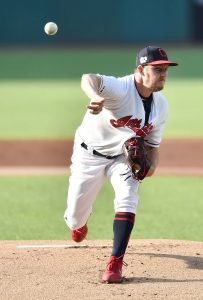
On the other hand, Indians righty Trevor Bauer may aid in a playoff berth for his team yet again in 2019. Nevertheless, Ken Rosenthal of The Athletic reported Monday that the Indians are “aggressive listeners” on Bauer as the July 31 trade deadline approaches. There’s wide-ranging interest in Bauer, according to Joel Sherman of the New York Post.
Cleveland, which happens to be hosting Tuesday’s All-Star Game, went on a tear to end the season’s first half. Winners of six straight, the Indians are 50-38 – good for the majors’ seventh-highest winning percentage (.568) – and have suddenly made the AL Central race intriguing. For a large portion of the first half, it looked as if the Twins would skate to a division title. Now, though, the Indians sit a manageable 5 1/2 games behind them. The Tribe’s also 1 1/2 games up on the AL’s second wild-card spot and a half-game behind the Rays for the league’s No. 5 seed.
An appreciable amount of the Indians’ success can be attributed to the 28-year-old Bauer, which would make trading him in the next three weeks all the more surprising. No, Bauer hasn’t been the ace-caliber performer he was a year ago. Still, though, Bauer has recorded a 3.61 ERA (granted, with a less inspiring 4.10 FIP) and 10.16 K/9 against 3.48 BB/9 over a major league-leading 132 innings.
It’s hard to believe the Indians would be able to trade Bauer and better themselves for this year, especially in light of the other concerns in their rotation. The Tribe’s starting staff looked like one of the league’s best entering the season. Since then, however, Corey Kluber has struggled and missed a vast amount of the campaign because of a fractured forearm. Mike Clevinger has made just five starts, over which he has been a mixed bag, because of a back injury. Worst of all, the team’s still reeling from the awful news that the excellent Carlos Carrasco, who hasn’t pitched since May 30, is battling leukemia.
The absences of Kluber and Carrasco have left Bauer, Clevinger and stellar young righty Shane Bieber as the lone truly dependable members of the Indians’ rotation. Fill-in Jefry Rodriguez has been on the injured list since June 1 with a strained shoulder, and rookie Zach Plesac has fallen off of late. Meantime, Adam Plutko has posted a below-average ERA (4.95) through 36 1/3 innings, and that outdoes even less shiny peripherals.
All of that said, Cleveland’s in an unenviable position with Bauer, whom it will probably lose soon even if it keeps him through the season. Bauer’s making a somewhat expensive $13MM and only controllable through 2020. If we’re to take his word for it, the offbeat Bauer will be trying to max out on one-year contracts every winter in free agency after that. Therefore, if the Indians weren’t in contention, now would clearly be the time for the Indians to flip Bauer. But the back-to-back-to-back AL Central champions are very much in the hunt right now, which could set the stage for an agonizing Bauer decision this month. What do you think they should do?
(Poll link for app users)
What should the Indians do with Trevor Bauer this month?
-
Listen to offers, but only deal him for a huge return 50% (3,913)
-
Trade him for the best offer 35% (2,766)
-
Keep him and try to win it all 15% (1,201)
Total votes: 7,880
Photo courtesy of USA Today Sports Images.
Yasmani Grandal Reflects On Nearly Joining Mets
Catcher Yasmani Grandal signed with the Brewers in free agency last offseason on a far shorter and cheaper contract than he was expected to secure at the beginning of the winter. The Brewers landed the ex-Padre and Dodger for a one-year, $18.25MM guarantee, but only after Grandal rejected a four-year, $60MM offer from the Mets.
Now set to play in his second All-Star Game, Grandal reflected on his Mets talks Tuesday, telling Ken Davidoff of the New York Post: “I did think [signing with the Mets] was going to happen. We had a really good conversation, Brodie [Van Wagenen] and I. We met. I think the meeting went great. Both sides were on the same page. We just couldn’t come to terms.”
Unable to lock up Grandal, the Mets pivoted to the second-ranked catcher on the market, Wilson Ramos, whom they reeled in for two years and $19MM. The Ramos signing, like most of the Mets’ other high-profile offseason moves, has blown up in their faces thus far. The 31-year-old has continued to log above-average offensive production for his position, but his defense has lagged behind. Ramos has ceded playing time to backup Tomas Nido of late because of his behind-the-plate decline, leading to talk (even from Ramos himself) that the Mets could trade their more expensive backstop either before the July 31 deadline or in the offseason.
With the Ramos signing failing to deliver, the Mets may find themselves back in the market for a starting catcher next winter. Grandal should be available again then, as it seems unlikely he’ll exercise his half of a $16MM mutual option in the wake of yet another strong season as an all-around catcher. Grandal came with a qualifying offer attached last winter, but that won’t be the case if he reaches free agency again in a few months. The fact that the soon-to-be 31-year-old Grandal won’t have draft compensation hanging over his head will only make him more appealing to catcher-needy teams, possibly including the Mets.
Regarding an agreement possibly coming together next winter with the Mets, Grandal said: “You never know, you have another offseason in which it could happen. Everything happens for a reason. I believe in that.”
Dodgers To Activate Corey Seager, A.J. Pollock On Friday
Already in possession of the majors’ best record, the 60-32 Dodgers will get a pair of familiar reinforcements back when the second half of the season begins. Shortstop Corey Seager and center fielder A.J. Pollock will return from the injured list Friday, Bill Plunkett of the Orange County Register tweets.
Seager suffered a serious left hamstring strain June 12, guaranteeing him a second straight injury-marred season. The 25-year-old missed most of 2018 after undergoing Tommy John surgery in May, but Seager impressed in his return this season prior to his IL stint. So far, the former NL Rookie of the Year has slashed .278/.359/.468 (119 wRC+) with eight home runs and 2.0 fWAR in 270 plate appearances.
Seager was truly heating up in the days before his injury, making his absence that much more unfortunate for him and the Dodgers. But the depth-laden team more than weathered Seager’s injury, as it’s known to do when key players go down. Seager’s primary replacement, Chris Taylor, helped keep the train rolling over the past few weeks.
Taylor has also seen some action at center fielder in place of Pollock, who hasn’t played since April 28 because of surgery on his troublesome right elbow. It was rookie Alex Verdugo who saw the lion’s share of time in center when Pollock was out, though. Verdugo, like many other Dodgers, has turned in praiseworthy production this season. Pollock has been one of the few exceptions, which isn’t what Los Angeles expected when it signed him to a $60MM guarantee in free agency. The oft-injured 31-year-old – perhaps owing in part to his elbow problems – hit a meek .223/.287/.330 (64 wRC+) with two HRs across 115 PA before going under the knife.
Despite his struggles earlier this year, Pollock’s track record indicates he’ll give the Dodgers no fewer than five starting-caliber outfielders upon his return. They already have Verdugo, NL MVP candidate Cody Bellinger and Joc Pederson in leading roles, while the versatile Taylor can also handle himself in the grass.
J.D. Martinez Discusses Opt-Out Possibility
After a months-long standoff between the Red Sox and then-free agent J.D. Martinez prior to the 2018 season, the team finally landed the slugger on a five-year, $110MM guarantee in February. The contract has worked out brilliantly so far for the Red Sox, whom Martinez helped to a World Series title to cap off an incredibly productive 2018. While Martinez hasn’t been as excellent this season, the designated hitter/outfielder has still managed outstanding production for the sixth straight year.
Once the season concludes, Martinez will have a decision to make on whether to stick with his contract or opt out of it and test free agency again. Martinez will be 32 years old by then, and vacating the deal would mean passing on a guaranteed $62.5MM for a free-agency mystery box. However, Martinez doesn’t seem ready to rule out taking the gamble. Asked Monday if he’d consider opting out, Martinez told Chris Cotillo of MassLive.com it’s in agent Scott Boras’ hands.
“For me, I just listen to him,” Martinez said. “That’s what I pay him for. He gives me his opinion, he gives me his advice and it’s up to me after that to make my decision. We’re really not there yet, where he’s given me his opinion and his advice. So I think we have to see how it plays out.”
Back when Boras and Martinez were negotiating with Boston, medical concerns on the team’s behalf helped hold up an agreement. Martinez appeared in just 119 games in 2017 as a Tiger and Diamondback after a Lisfranc injury in his right foot kept him from debuting until mid-May. The issue led to wariness from the Red Sox, which left Martinez “very confused.” The club eventually got Martinez to accept making the last two years of his pact (2021-22) mutual options should he suffer a Lisfranc injury or other significant right foot complications. But Martinez has been durable as a Red Sox, and he expressed confidence to Cotillo that concerns about his foot rest with their doctor – not other doctors around the league.
If other teams aren’t worried about Martinez’s foot, it could influence whether he revisits the open market in a few months. That said, $60MM-plus would be a lot to leave on the table for a defensively limited 30-something who’d be saddled with a qualifying offer. Players who check one or two of those boxes, let alone three, haven’t fared great in free agency in recent years. It could be all the more concerning to clubs that Martinez’s offensive numbers, while still impressive, have dropped precipitously compared to 2017-18. In fairness to Martinez, though, he posted a 1.000-plus OPS in each of the previous two second halves. A similar tear this season could give the three-time All-Star and Boras something to think about once Boston’s season ends.
Scott Boras On Potential Josh Bell Extension
All-Star first baseman Josh Bell has broken through as the Pirates’ franchise player this season, his last pre-arbitration campaign. Considering the 26-year-old’s days of making league-minimum money are on the verge of ending, Jason Mackey of the Pittsburgh Post-Gazette asked agent Scott Boras on Monday if Bell would have interest in signing a contract extension with the Pirates. Unless the Pirates are willing to make an expensive long-term commitment, it doesn’t seem as if it’s going to happen.
“Pittsburgh really doesn’t have a history of giving star player contracts yet,” Boras told Mackey. “Maybe they will someday. They’ve had a history of signing players before they’ve evolved into stars.”
In Boras’ estimation, the Pirates haven’t shown a willingness “to go out and invest in a great young player for a long time,” though he didn’t rule out an eventual change in policy on the franchise’s end.
Pittsburgh has still never doled out a guaranteed contract greater than the $60MM it handed catcher Jason Kendall on an extension in 2000. The team has since extended several other players it viewed as cornerstones – including Andrew McCutchen, Starling Marte, Gregory Polanco and Felipe Vazquez in recent years – to deals geared toward cancelling out the arbitration process and as many free-agent seasons as possible.
The Pirates haven’t gotten hurt on any of the McCutchen, Marte, Polanco and Vazquez deals, and they especially struck gold in signing McCutchen. The club inked McCutchen, then 25, to a six-year, $51MM guarantee entering the 2012 season, at which point he was coming off his first of five straight All-Star campaigns. McCutchen’s pact bought out his final pre-arbitration season, all three of his arbitration years, two free-agent years and included a $14.5MM club option for 2018. The Pirates ultimately exercised that option, though McCutchen spent the final year of his contract with the Giants and Yankees after a trade out of Pittsburgh. Still, he was among the majors’ top players on his ultra-affordable contract – including during an MVP-winning season in 2013 – and wound up as one of the best, most revered players in the history of the Pirates.
While Bell has taken the torch from McCutchen as the face of the franchise, the Pirates would be hard-pressed to lock up the former to such a team-friendly deal. The Pirates would likely love to do that, but their low-budget ways don’t sit well with Boras, who told Mackey: “The Pirates are making a lot of money. The revenue structure of this game, you can go back and look at 2003 or ‘04, they’re probably making $100 million more than they did back then. Yet their payroll is within $20 million of where it was back then. The ability to do it is not the question. It’s the model, the choice of what they want.”
Boras isn’t wrong, as Mackey points out. The Pirates’ Opening Day payroll has climbed by just $20MM (from $54.8MM to $74.8MM) dating back to 2003. Over the same span, though, their listed revenue has skyrocketed from $109MM to $254MM. That increase didn’t lead to the Pirates keeping one of their prior high-profile Boras clients, right-hander Gerrit Cole, whom they traded to the Astros before the 2018 season. Cole was going into his second-last year of arbitration eligibility at the time.
It’s obviously too soon to write off Bell as a soon-to-be ex-Pirate. However, if the Pirates don’t present the slugger a long-term offer that at least surpasses (perhaps obliterates) the Kendall contract, keeping him in Pittsburgh for the foreseeable future may not be in the cards. For now, Bell’s on track to head to arbitration on the heels of what will go down as a career year. Having slashed .302/.376/.648 (152 wRC+) with 27 home runs in 388 plate appearances this season, Boras believes Bell “has identified himself” as one of the game’s elite players and someone “every franchise would like to have.”
Report: Yankees “Historically Have Liked” Robbie Ray
At 46-45, Arizona is among a slew of clubs with realistic playoff hopes in the wide-open National League. Just 1 1/2 games back of wild-card position, the Diamondbacks don’t look like surefire sellers with the July 31 trade deadline three-plus weeks ago. Should that change, though, the Diamondbacks could have an attractive trade chip in starter Robbie Ray. The Yankees are among teams that “historically have liked” the left-hander, Ken Rosenthal of The Athletic recently reported (subscription required).
Now 27 years old, Ray was already a piece in a trade featuring the Yankees earlier in his career. As part of a three-team deal in December 2014, the Diamondbacks acquired Ray from the Tigers, the Yankees got shortstop Didi Gregorius from the D-backs and the Tigers picked up righty Shane Greene from New York. Ray has since turned into one of the majors’ greatest strikeout artists among starters, having posted the league’s third-highest K/9 (11.14) dating back to his first season in Arizona. Shaky control (4.09 BB/9) has helped prevent Ray from limiting runs at an ace-level rate, though the 3.86 ERA and 3.85 FIP he has put up in 692 1/3 innings as a Diamondback are still respectable.
The 2019 version of Ray has offered production in line with his career totals. Over 104 2/3 frames, the slider-heavy Ray owns a 3.96 ERA/4.05 FIP with 11.78 K/9 (fifth in the game) and a 13.7 percent swinging-strike rate (12th). On the negative side, Ray’s velocity has dipped compared to last year, and though his walk rate has fallen from 5.09 per nine to 4.64 since then, it remains unpalatable. Ray has also yielded home runs on upward of 15 percent of fly balls for the fourth consecutive year, in part because his groundball rate checks in just under 40 percent for the second straight season. Moreover, as Rosenthal notes, Ray has never been known as a workhorse who lasts deep into games. He has only amassed 30 or more starts once, in 2016, and has averaged well under six frames per outing in his career.
Ray does have his flaws, but no team would expect to land an ace in acquiring him. The club would instead be under the impression it’s trading for one-plus year of a solid, affordable starter. Ray is making a reasonable $6.05MM this year and in his penultimate season of arbitration eligibility – facts that only add to his appeal for the D-backs and other teams.
World Series-contending New York has been on the lookout for starters for weeks and could use an ace in light of Luis Severino‘s ongoing injury problems. However, the team might struggle to find a true No. 1 starter from elsewhere this summer. The Indians may part with Trevor Bauer, who has landed on the Yankees’ radar, though he hasn’t consistently resembled his ace-caliber 2018 self. Along with Ray and Bauer, the Yankees have shown reported interest in the Mets’ Zack Wheeler (link), the Giants’ Madison Bumgarner and the Blue Jays’ Marcus Stroman (links here). For the most part, that group pales in comparison to a healthy Severino. Nevertheless, each of those starters would seemingly help a Yankees rotation that – despite the team’s AL-best 57-31 record – hasn’t received front-line production from anyone.
Looking beyond this season, the Yankees will lose the retiring CC Sabathia, which could make Ray or anyone else under control past 2019 an even more logical fit. Severino will at least be back next year (barring something catastrophic), though, and Jordan Montgomery could return from June 2018 Tommy John surgery by then. James Paxton, Masahiro Tanaka, Domingo German and the struggling J.A. Happ comprise the rest of the Yankees’ experienced starters who are currently slated to stick around in 2020.
Poll: Disappointing National League Teams
It wouldn’t have been far-fetched at the beginning of the season to expect any of the Brewers, Cubs, Rockies, Cardinals, Phillies or Mets to end up as part of this year’s National League playoff field. Three of those clubs – Milwaukee, Chicago and Colorado – earned postseason trips a year ago and continued to boast capable rosters coming into 2019. St. Louis won 88 games in 2018 and then made a couple aggressive offseason moves in an effort to get over the hump. Philadelphia and New York were sub-.500 teams last season, though the NL East rivals were among the majors’ busiest franchises over the winter.
With the regular season having reached its brief summer recess, it’s fair to say all of the above clubs have disappointed to varying degrees so far. The Cubs (47-43) and Brewers (47-44) do hold playoff spots at the moment, while the Redbirds (44-44) are just two back of those teams in the NL Central. However, they’ve each contributed to the general mediocrity of their division.
Cubs president Theo Epstein just voiced disgust over his team’s weeks-long slump. Their closest competitors, the Brewers, have gotten another otherworldly season from reigning NL MVP outfielder Christian Yelich. A thumb injury has helped lead to sizable steps back for 2018 outfield complement Lorenzo Cain, though, while first baseman Jesus Aguilar has a mere eight home runs after slugging 35 a season ago. Meanwhile, the Brew Crew’s pitching staff – like the Cubs’ and the Cardinals’ – has underwhelmed throughout the season. The Cards’ offense has also sputtered, in part because headlining offseason pickup and longtime superstar first baseman Paul Goldschmidt hasn’t resembled the player he was as a Diamondback.
The Rockies (44-45) reached the playoffs last year thanks largely to their starting pitching – something which has seldom been true about the team in its history. This season, though, reigning NL Cy Young candidate Kyle Freeland‘s output has been so dreadful that he has spent the past month-plus trying to regain form in the minors. Aside from German Marquez and Jon Gray, nobody else in the Rockies’ starting staff has stepped up to grab a stranglehold of a spot.
Shifting to the NL East, the Phillies are in wild-card position at 47-43, but a .522 winning percentage and a plus-2 run differential may not have been what they had in mind after an action-packed offseason. A record-setting contract for Bryce Harper was the Phillies’ largest strike, but they also grabbed J.T. Realmuto, Andrew McCutchen, Jean Segura and David Robertson in other noteworthy transactions. However, at least offensively, Harper, Realmuto and Segura haven’t matched their 2018 production. McCutchen was enjoying another quality season before suffering a season-ending torn ACL a month ago, meanwhile, and Robertson got off to a terrible start in the year’s first couple weeks. The long-effective reliever has been on the injured list since mid-April with a flexor strain. Even with a healthy McCutchen and Robertson, the Phillies would still be riddled with problems in their pitching staff – including the rapidly declining Jake Arrieta, whose season may be in jeopardy because of a bone spur in his elbow.
The Mets are rife with concerns on and off the field, with recent behind-the-scenes drama involving GM Brodie Van Wagenen and manager Mickey Callaway the source of the franchise’s latest unwanted attention. Van Wagenen’s audacious offseason signings and trades were supposed to help the Mets snap a two-year playoff drought this season. Instead, the team’s an abysmal 40-50 through 90 games and on track to sell at the July 31 trade deadline. Trading for Robinson Cano and Edwin Diaz hasn’t worked out at all, while splashy free-agent additions Jeurys Familia, Jed Lowrie (injured all season and possibly out for the year), Wilson Ramos (a potential trade candidate just a few months into a two-year contract) and Justin Wilson have also failed to meet expectations.
In a league where only the Dodgers and Braves have truly stood out so far, all of these clubs still have at least some chance to earn playoff spots this season. They’re each no worse than seven back of postseason position at the All-Star break. Considering your preseason expectations, though, who’s the biggest disappointment to date?
(Poll link for app users)
Which NL team has been the biggest disappointment so far?
-
Mets 28% (4,894)
-
Phillies 24% (4,260)
-
Cardinals 20% (3,564)
-
Cubs 17% (3,018)
-
Brewers 6% (1,139)
-
Rockies 3% (535)
-
Other 1% (242)
Total votes: 17,652
This Date In Transactions History: Athletics Land An Eventual Superstar
Braves third baseman Josh Donaldson smacked his 200th career home run Sunday, a feat the Cubs were no doubt hoping he’d achieve in their uniform when they selected him 48th in the 2007 draft. The former Auburn Tiger never hit a single dinger for the club, though, and changed organizations a little over 12 months after the Cubs drafted him. It was exactly 11 years ago today, on July 8, 2008, that Chicago dealt Donaldson to Oakland. It’s now safe to say the Donaldson pickup has been among the best of A’s executive Billy Beane’s impressive tenure with the franchise.
Beane sent veteran right-handers Rich Harden and Chad Gaudin to the Cubs, acquiring Donaldson, outfielders Eric Patterson and Matt Murton, and righty Sean Gallagher in return. When the deal was consummated, MLBTR’s Tim Dierkes noted it was the Cubs’ counterattack after the NL Central rival Brewers acquired lefty CC Sabathia from the Indians the day before.
Sabathia just about willed the Brewers to the playoffs in 2008, though the eventual World Series champion Phillies overmatched them in the NLDS. The Cubs did finish well ahead of the Brewers en route to an NL Central crown that season, but they also fell in the NLDS, losing in a sweep against the Dodgers. While Harden struggled during his lone start in that series, the oft-injured hurler was highly effective for the Cubs when he was healthy enough to take the mound. All told, he turned in 38 starts and 212 innings of 3.31 ERA ball with 11.0 K/9 and 4.1 BB/9 as a Cub before leaving for the Rangers in free agency ahead of the 2010 season. Gaudin was nowhere near that productive, logging a 6.26 ERA in 27 1/3 innings with Chicago. He exited via free agency going into the 2009 campaign.
Both Hardin and Gaudin (especially the former) were useful A’s, but the team said goodbye to them despite possessing a 49-41 record at the time. Oakland was six behind the first-place Angels in the AL West and, in an era in which only one team earned a wild card, 3 1/2 back of a playoff spot. Beane insisted at the time it wasn’t a white flag move by Oakland, but the club fell apart thereafter and finished 75-86. However, Beane did say then, “I think we’ve taken a step forward for the next three to five years.”
It took a little longer than Beane wanted for the swap to bear fruit for the Athletics, though. None of Patterson, Murton or Gallagher amounted to much with the team. Donaldson, meanwhile, was a catcher prospect who took a half-decade from the trade to truly make his mark as a major league. While Donaldson did get to the majors in 2010 and then see extensive time with the A’s in 2012, his game took until 2013 to reach star-caliber heights. By then, Donaldson was no longer a catcher. The newly minted third baseman emphatically burst on the scene in ’13 with 7.3 fWAR and a 147 wRC+ in 668 plate appearances. Donaldson finished fourth in the AL MVP voting and helped the A’s to a 96-win, playoff-bound season in the process.
The A’s returned to the postseason in 2014, once again with significant help from Donaldson. He notched another 5.7 fWAR with a 130 wRC+ in 695 trips to the plate to wind up eighth in his league’s MVP balloting. Oakland couldn’t get past eventual AL champion Kansas City in the wild-card round that fall, though. Two months later, the A’s made the stunning decision to send Donaldson to the Blue Jays for Brett Lawrie, righty Kendall Graveman, infielder Franklin Barreto and lefty Sean Nolin.
Just as picking up Donaldson from the Cubs proved to be a steal for the Athletics, the same held true in the Blue Jays’ acquisition of the the player who became known as the Bringer of Rain. Donaldson went on to earn AL MVP honors in 2015, his debut season in Toronto and the first of two straight years in which the club advanced to the ALCS. He remained a force up north through 2017, but injuries marred his 2018, during which the rebuilding Blue Jays waved goodbye to the then-impending free agent in a trade with the Indians in August.
For Oakland, none of Lawrie, Graveman or Nolin delivered as hoped, nor have they produced much at any other major league stops since their stints with the Athletics concluded. The jury remains out on Barreto, just 23 years old, but the former top 100 prospect still hasn’t established himself as a major leaguer. However, perhaps Barreto will eventually realize his potential and make a Donaldson-like impact in the bigs. That seems highly improbable now, but nobody thought Donaldson would evolve into an elite player when Oakland scooped him up on this date 11 years ago.
What’s Wrong With Robinson Cano?
We’re on the eve of Major League Baseball’s All-Star Game, an event second baseman Robinson Cano has received eight invitations to since his career began in 2005. The former Yankee and Mariner is clearly one of the most accomplished second basemen in baseball history. However, in 2019 – his first season as a Met – the 36-year-old Cano has looked nothing like his usual self. His subpar performance played a key part in a miserable first half for the Mets, who’ve endured a chaotic three-plus months and limped to a 40-50 record thus far.
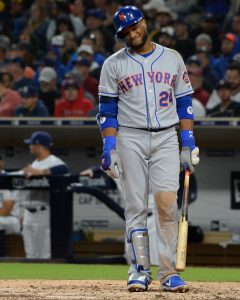
The Cano acquisition was one of many bold offseason moves by first-year Mets general manager Brodie Van Wagenen, the potential Hall of Famer’s former agent. While inexpensive closer Edwin Diaz was likely the real target in the Mets’ return from the Mariners in a blockbuster December trade, it’s obvious there was confidence in Cano on New York’s part. Otherwise, the club wouldn’t have taken on four years and $100MM of Cano to land Diaz. Unfortunately for the Mets, though, neither player has performed to expectations this year.
The sweet-swinging Cano entered the year a lifetime .304/.355/.493 hitter (127 wRC+) with 56.7 fWAR – the sixth-highest total among position players from 2005-18 – as well as 311 home runs in 8,841 plate appearances. He offered similarly excellent production last year, though a fractured right hand and an 80-game performance-enhancing drug suspension cut his season in half.
Cano’s 2018 ban didn’t scare off the Mets, for whom he has batted a weak .240/.287/.360 (74 wRC+) with a mere four HRs in 258 trips to the plate. Cano has also accounted for a ghastly minus-7 Defensive Runs and a minus-3.5 Ultimate Zone Rating at second, a position he has typically handled with aplomb. To make matters worse, the once-durable Cano has endured a pair of stints on the injured list because of quad problems. During the 65 games Cano has taken the field, he has posted minus-0.5 fWAR – a stark fall from grace for someone who logged 2.9 during his shortened 2018 and has exceeded the 3.0 mark in nine seasons.
If you’re looking for causes for Cano’s awful offensive production this season, start with a power outage. His ISO’s at .120, 69 points lower than the mean he recorded coming into this season. It’s also 60 points worse than the league-average figure and 18th from the bottom among 195 hitters who have amassed at least 250 PA. As FanGraphs’ heatmaps indicate (pre-2019, this year), Cano typically showed a solid amount of power on the inner and outer halves of the strike zone before the current campaign. His power this year has been confined to the middle of the plate, though, and it’s not even as strong there anymore.
Cano’s still making plenty of hard contact – he ranks in the majors’ 83rd percentile in that category and its 77th percentile in average exit velocity, according to Statcast. But he’s pulling the ball less than ever, striking out a good amount more than he has in prior seasons and swinging and missing at a career-worst rate. A more aggressive approach – evidenced by a personal-high swing rate – hasn’t panned out, as shown by a career-low contact percentage.
When Cano has put the bat on the ball, he has only registered a .283 batting average on balls in play – down 36 points compared to 2005-18. There may be some poor fortune involved in that. As mentioned, he has hit the ball hard. There’s also a 28-point gap between his weighted on-base average and his expected wOBA. Still, though, Cano’s xwOBA is an underwhelming .307. That ranks in the majors’ 28th percentile, while his sprint speed (15th), expected slugging percentage (36th) and expected batting average (54th) are also mediocre or much worse. None of that’s conducive to a high BABIP or quality overall production, nor is Cano’s sudden uselessness against same-handed pitchers.
Although the lefty-hitting Cano has been much tougher on right-handed pitchers in his career, he has at least posed a threat versus southpaws. A lifetime .282/.333/.429 hitter (106 wRC+) without the platoon advantage, the 2019 version of Cano’s at a putrid .206/.275/.222 (43 wRC+) against lefties. Another look at FanGraphs’ heatmaps (pre-2019, this season) shows lefties have lived much more belt-high middle or on the outer half of the plate against Cano this year compared to prior seasons. He hasn’t found an answer yet.
Answers in general have been hard to come by for this year’s Mets, one of the season’s greatest letdowns to date. There may not be time for a team-wide turnaround in 2019, but if Cano returns to his pre-Mets form in the season’s second half, at least the club would have that to hang its hat on going into the winter. Right now, though, the acquisition of Cano looks like a massive misstep by Van Wagenen, who may have saddled his team with an albatross contract.
Photo courtesy of USA Today Sports Images.