
Click here to read the transcript of today’s live baseball chat
Astros Remove Yuli Gurriel From World Series Roster
4:12PM: Gurriel has a right MCL sprain, Astros general manager James Click told reporters (including Chandler Rome of the Houston Chronicle).
3:33PM: The Astros are one win away from clinching the World Series, but heading into tonight’s critical Game 6, the team has made a roster move. Catcher Korey Lee has been added to the roster in place of first baseman Yuli Gurriel, who suffered a knee injury in Game 5. As per league rules, Gurriel is now also ineligible for the rest of the series, should the Phillies win tonight and force a seven game.
Gurriel’s injury occurred in the seventh inning of Game 5, when Gurriel awkwardly bent his leg while being tagged out in a rundown play. Gurriel remained at first base for the bottom half of the seventh, but Trey Mancini then pinch-hit for Gurriel during his next scheduled plate appearance in the top of the eighth.
There isn’t any indication that Gurriel’s knee is anything more than sore, but since he still isn’t well enough to play after an off-day, the Astros aren’t taking any chances on leaving themselves with an undermanned roster. Despite the logic involved in the decision, there was naturally still some emotion involved in removing the longtime Astro from the roster. Manager Dusty Baker told the Washington Post’s Chelsea Janes and other reporters that Gurriel “tried everything” to be ready for Game 6, and had “tears in his eyes” over not being healthy enough to play.
It now creates quite the opportunity for Lee, who made his Major League debut in 2022 and has played in only 12 games as a big leaguer. Lee hasn’t faced MLB competition since July 31, and hasn’t had game action of any kind since a Triple-A contest on September 26. This is the first time Lee has been included on Houston’s postseason rosters, as Martin Maldonado and Christian Vazquez have locked down the two catching positions.
Both Vazquez and Maldonado are in tonight’s lineup, with Vazquez at DH and Maldonado behind the plate. (Mancini takes over at first base for Gurriel.) Lee’s inclusion on the roster gives the Astros some extra flexibility at catcher, thus allowing Vazquez to move to designated hitter. Naturally, the Astros are hoping to use Lee purely for depth purposes, since it isn’t likely he would see any game action outside of an injury situation.
With Gurriel now gone for the rest of the World Series, it is possible he has already played his last game in an Astros uniform. The 38-year-old Gurriel is slated for free agency, and after he hit only .242/.288/.360 over 584 plate appearances during the regular season, there has been an expectation that Houston might move onto another first base option for 2023. Indeed, the acquisition of Mancini (another free agent) at the trade deadline was an early indicator that Houston felt more production was needed from the first base spot, though Mancini also struggled after coming over from the Orioles.
If this is Gurriel’s last hurrah with the Astros, he at least went out on the strength of a very solid postseason run. Gurriel hit .347/.360/.490 with two home runs over 50 plate appearances during these playoffs, and is the Astros’ postseason leader in batting average. Mancini’s struggles have only worsened during the postseason, as he has yet to record even a single hit in 21 playoff PA.
Outright Assignments: Wallach, Ellis
2:10 pm: The Angels announced that Wallach has elected free agency.
1:05 pm: The latest outright assignments from around baseball…
- The Angels outrighted catcher Chad Wallach to Triple-A, as per the club’s MLB.com transactions page. It isn’t known if he’ll accept the assignment or not, but since this isn’t the first time Wallach has been outrighted, he can opt to reject the Angels’ assignment in favor of free agency. Wallach was claimed off waivers from the Dodgers in August 2021, and he played in 12 games with Anaheim this season when Max Stassi and Kurt Suzuki were on the injured list. Best known for his time with the Marlins, Wallach has appeared in parts of the last six MLB seasons, and has a reputation as a solid defensive catcher and game-caller. At the plate, Wallach has hit .198/.265/.296 over 271 PA and 90 games in the majors.
- The Mariners announced that Drew Ellis was outrighted off their 40-man roster, and the infielder was assigned to Triple-A after clearing waivers. This is first time Ellis has been outrighted, and since he also lacks the prerequisite MLB service time or seven seasons in the minors, he cannot elect free agency. The 26-year-old came to Seattle via waiver claim off the Diamondbacks roster in June, though he only appeared in a single MLB game in a Mariners uniform. Making his Major League debut with the D’Backs in 2021, Ellis has played in 35 games in the Show, with a .482 OPS over an even 100 plate appearances. Arizona selected Ellis in the second round of the 2017 draft, and his minor league numbers improved after a promotion to Triple-A in 2021, but his production declined again this past season. Ellis brings some infield depth with his experience at first, second, and third base during his minor league career.
Which Draft Picks Each Team Would Receive For Losing A Qualified Free Agent
Earlier today, MLBTR’s Tim Dierkes outlined what each team would have to surrender as compensation if it signed a free agent who rejected a qualifying offer. Now, let’s take a look at what each team would receive in return if one of their free agents turned down a QO and signed with another club. (As a reminder, players can’t be issued a qualifying offer more than once during their careers, and this year’s QO is set for $19.65MM.)
Revenue Sharing Recipients: Diamondbacks, Orioles, Reds, Guardians, Rockies, Tigers, Royals, Marlins, Brewers, Twins, Athletics, Pirates, Mariners, Rays
If any of these teams has a QO-rejecting free agent who signs elsewhere for more than $50MM in guaranteed money, the compensatory pick falls after the first round of the draft. That means a pick that could fall within the top 30, since the Mets’ and Dodgers’ first selections dropped out of the first round because they exceeded the luxury tax threshold by more than $40MM. If a team has a QO-rejecting free agent who signs elsewhere for less than $50MM guaranteed, the compensatory pick would come between Competitive Balance Round B and the start of the third round (roughly 75th-80th overall).
This winter’s free agent class doesn’t consist of many players who are plausible QO candidates from any of these team, except for possibly Mariners outfielder Mitch Haniger. If Seattle did issue Haniger a qualifying offer, however, the compensation issue might still be a moot point since there is a chance Haniger might just accept the offer (after an injury-shortened season) and remain with the M’s.
Teams Who Don’t Receive Revenue-Sharing Funds, And Who Didn’t Pay The Competitive Balance Tax: Braves, Cubs, White Sox, Astros, Angels, Giants, Cardinals, Rangers, Blue Jays, Nationals
For these teams, the compensatory pick for losing a qualified free agent would also fall between CBR-B and the start of the third round (regardless of whether the player signed for more or less than $50MM).
Dansby Swanson (Braves), Willson Contreras (Cubs), and Carlos Rodon (Giants) will all surely receive qualifying offers. Cardinals third baseman Nolan Arenado would’ve also been an obvious pick, except he chose to avoid free agency altogether in deciding to not opt out of his contract.
Competitive Balance Tax Payors: Red Sox, Dodgers, Mets, Yankees, Phillies, Padres
If a team exceeds the luxury tax, they still receive a pick if a qualified free agent signed elsewhere, but that compensatory pick falls after the fourth round of the 2023 draft. That roughly works out to around the 140th overall pick in the draft, so it’s a pretty noteworthy drop from the 75-80 range from the previous grouping.
The penalty is more significant in this particular offseason, given how many of these teams have very prominent free agents that will surely receive qualifying offers. The Yankees have Aaron Judge, the Dodgers have Trea Turner and maybe Tyler Anderson, the Red Sox have Xander Bogaerts and probably Nathan Eovaldi, and the Mets have a full quartet — Jacob deGrom, Edwin Diaz, Chris Bassitt, and Brandon Nimmo.
Exceeding the tax line can be seen as the cost of doing business, given how five of the six payors made the playoffs and the Phillies are competing for the World Series. For the Red Sox, however, crossing the CBT threshold is doubly painful, as Boston didn’t even post a winning record in 2022.
Pirates Promote Mendy Lopez To Coaching Staff
The Pirates will be adding Mendy Lopez to their big league coaching staff, according to Antonio Puesan, digital marketing director for the Toros del Este club in the Dominican Winter League (Twitter link). Lopez isn’t replacing anyone on the Pirates’ current staff, but Jason Mackey of the Pittsburgh Post-Gazette tweets that Lopez will be focusing on infield coaching duties. Bench coach Don Kelly frequently works with the Bucs’ infielders, but he’ll now have one less duty on his plate with Lopez joining the coaching ranks.
Lopez joins a Major League staff for the first time, after working as the hitting coach with Pittsburgh’s lower A-ball affiliate. The 49-year-old previously spent four seasons as the Pirates’ field coordinator in Latin America, as well as three seasons as a manager with the Pirates’ Dominican Summer League squad.
Fans may best remember Lopez from his playing days, as he spent seven seasons in the majors from 1998-2004. Most of that time was spent with the Royals, but Lopez also spent parts of two seasons in Pittsburgh, suiting up for 25 games with the Bucs in 2001-02. Lopez’s playing career extended well beyond his time in the majors, as he also played with the KBO League’s Samsung Lions in 2004, and then with multiple Mexican League teams from 2006-13.
Offseason Chat Transcript: Cleveland Guardians
Click here to read the transcript of today’s Guardians-related live chat, in conjunction with our recent Offseason Outlook post about Cleveland’s possible offseason plans.
Offseason Outlook: Cleveland Guardians
Baseball’s youngest team won the AL Central, defeated the Rays in the Wild Card Series, and came within a game of advancing to the ALCS. The future is now for the Guardians, as their new young core has already matured into a contending roster.
Guaranteed Contracts
- Jose Ramirez, 3B: $119MM through 2028
- Myles Straw, OF: $21.75MM through 2026 (includes $1.75MM buyout of $8MM club option for 2027; Guardians also have an $8.5MM club option with a $500K buyout on Straw’s 2028 season)
- Emmanuel Clase, RP: $16.5MM through 2026 (includes $2MM buyout of $10MM club option for 2027; Guardians also have a $10MM club option with $2MM buyout on Clase’s 2028 season)
Total 2023 commitments: $19.3MM
Total future commitments: $157.75MM
Arbitration-Eligible Players (projected 2023 salaries via MLBTR contributor Matt Swartz)
- Luke Maile (5.148): $1.3MM
- Amed Rosario (5.062): $9MM
- Shane Bieber (4.097): $10.7MM
- Anthony Gose (3.139): $800K
- Cal Quantrill (3.132): $6MM
- Josh Naylor (3.1287): $3.5MM
- Zach Plesac (3.086): $2.9MM
- Aaron Civale (3.058): $2.2MM
- James Karinchak (2.169): $1.4MM
- Non-tender candidates: Maile, Gose
Free Agents
2022 might have been the greatest triumph yet for Cleveland’s vaunted player development system. After an 80-82 record in 2021 and a pretty quiet offseason, it seemed as if the Guardians were poised to take a step back, yet it was clear that the front office had plenty of faith in its young players. A whopping 17 different Guardians players made their Major League debuts in 2022, ranging from Rookie-of-the-Year contender Steven Kwan, postseason hero Oscar Gonzalez, and rotation regular Konnor Pilkington, to top-100 prospects like Nolan Jones, Bo Naylor, and Tyler Freeman. These rookies were able to patch roster holes or even fill them outright, while a number of other pre-arb players also stepped up with big seasons.
The Guards were certainly helped by underwhelming performances by the other four AL Central teams, as well as a lot of good fortune in avoiding injuries. However, Cleveland’s recipe of strong pitching, excellent defense, speed, contact hitting, and station-to-station baseball made the club a handful for anyone. The only thing lacking was power, as the Guardians finished 29th of 30 teams in home runs (127) and 28th in Isolated Slugging (.129).
With this in mind, it isn’t quite as simple as president of baseball operations Chris Antonetti just acquiring a couple of sluggers this winter and calling it a day. For one, power costs money, and payroll is always a concern in Cleveland. Roster Resource projects the Guardians for roughly $72.2MM in committed salaries heading into 2023 (including arbitration estimates), and while the club’s spending topped $146MM as recently as 2018, that was understood even at the time to be a temporary splurge. With the pandemic impacting revenues, Cleveland’s Opening Day payroll in 2021 didn’t even top the $50MM threshold. They bounced back a bit and opened this year a bit shy of $70MM but still didn’t approach franchise-record levels.
In short, don’t expect the Guardians to suddenly become big spenders just because they’re back in contention, or just because David Blitzer became a minority owner of the franchise this past summer. But, ownership increasing payroll to even the $85MM-$90MM range would certainly help the Guards add talent — or, the front office might have to get creative with how they re-allocate that $72.2MM.
This is why Amed Rosario might find himself a trade candidate. As MLBTR’s Steve Adams recently explored, Rosario’s projected $9MM arbitration salary could be a little steep for a team that has a wealth of intriguing middle-infield prospects. The Guardians have certainly shown they’re willing to put their trust into younger players, so if they think any of Freeman, Brayan Rocchio, Gabriel Arias, or Jose Tena are ready for prime time, Rosario may become expendable.
Even in an offseason where Carlos Correa, Xander Bogaerts, Trea Turner, and Dansby Swanson will all be hitting free agency, Rosario holds quite a bit of value as a trade chip. Many teams obviously aren’t willing to give out the nine-figure contracts it will take to sign any of those top shortstops, and would thus have more interest in Rosario even just for one year (since he is set for free agency next winter). Since Rosario could also theoretically be moved to second base, that only increases his list of potential landing spots. On paper, the Twins, Red Sox, Dodgers, Braves, Yankees, Mariners, Brewers, Phillies, Blue Jays, Diamondbacks, Marlins, White Sox, Tigers, Giants, and Orioles are all plausible fits for at least short-term middle infield help.
If Rosario was dealt, Andres Gimenez could potentially slide over to shortstop, or just continue his Gold Glove-winning reign at second base. Gimenez’s advanced metrics indicate he is likely due for some offensive regression in 2023, but he was so great last year (.297/.377/.466 with 17 homers and 20 steals over 557 plate appearances) he’d be a dangerous hitter if he even approaches his 2022 numbers.
Gimenez will have one middle-infield position locked up, so where else could the Guardians add a bat? Naturally, there isn’t any issue at third base with superstar Jose Ramirez, and the Guards also seem set with Kwan in left field and Josh Naylor at first base/DH. Naylor hit well in his first season back from major leg surgery, and the Canadian could blossom into even more of a dangerous slugger now that he is further removed from his injury.
Finding another first base/DH type to share the two positions with Naylor seems like the most obvious spot for a new hitter. The Guardians were hoping Franmil Reyes would fill this role after his 30-homer season in 2021, yet Reyes struggled so badly that Cleveland designated him for assignment in August, allowing the Cubs to claim him on waivers. A right-handed hitter would pair best with the left-handed hitting Naylor, and depending on how much the Guardians have to spend, a free agent like Jose Abreu would be a very good fit as both a productive bat and a veteran clubhouse leader. Beyond just the first base position, Trey Mancini and Mitch Haniger can also play the outfield, or the Guards could pivot to more of a DH-only type like J.D. Martinez or Nelson Cruz.
Cleveland could aim to add more pop in the outfield, though the team will have to weigh the cost of adding hitting against possibly decreasing an excellent defensive unit. Gonzalez may be the weakest link in this regard — he isn’t as accomplished a fielder as Kwan or Myles Straw and he had a very low 3.9% walk rate while benefitting from a .345 BABIP in his rookie season.
Then again, Gonzalez has more offensive upside than Straw, a Gold Glover and Fielding Bible Award-winning center fielder who was one of the game’s worst hitters in 2022. Of all qualified batters, only Jonathan Schoop had a lower wRC+ than Straw’s 64, as he hit only .221/.291/.273 over 596 PA. Straw had excellent speed and made plenty of contact, though his .261 BABIP was less a function of bad luck and more about Straw’s near-total lack of hard contact. Getting even close to league-average offense (as Straw did with his 97 wRC+ in 2021) would make him a very valuable addition to any lineup, which was the Guardians’ logic when they signed him to a five-year extension back in April.
Jones or Will Brennan are on hand for more outfield at-bats, plus George Valera is yet another top-50 prospect who’s not far from his first taste of the majors. That gives the Guardians some cover if they did float Straw or Gonzalez in trade talks, provided these players weren’t shopped for another outfielder altogether. Speculatively, Straw could be shopped to a team looking to upgrade its outfield defense, while Gonzalez is the kind of MLB-ready, controllable bat that could appeal to a lot of teams.
Speculatively, Gonzalez could fit as part of a trade package Cleveland might offer to the Athletics in exchange for Sean Murphy. The Guardians’ interest in Murphy dates back at least to the trade deadline, and while Murphy would be a great addition to many rosters, he’d be a particularly ideal match in Cleveland considering the team’s focus on defense and game-calling from the catcher position. Not only is Murphy a strong defensive backstop, he is also an accomplished hitter. He’s also controllable through the 2025 season and projected for just a $3.5MM salary next year.
Between center field and catcher, the Guardians were basically playing with only seven lineup spots, given how little Straw and the Austin Hedges/Luke Maile tandem (with a few games from Sandy Leon, Bo Naylor, and Bryan Lavastida) provided at the plate in 2022. Since Hedges is a free agent and Maile is a non-tender candidate, the catching position represents the cleanest way for the Guards to simply add a better hitter to the mix. Plus, the younger Naylor brother is an interesting prospect in his own right, so Cleveland might feel it already has an in-house offensive upgrade.
If the Guardians do trust Naylor, they could roll with a Naylor/Maile platoon in 2023, or even re-sign Hedges for platoon duty and either let Maile go or try to retain him on a new minor league contract. This might be Cleveland’s strategy if other bats were acquired at, say, DH or right field, as the Guards might then feel more comfortable about sticking with defense behind the plate and hoping Naylor could become the latest breakout rookie.
Murphy isn’t the only external option, of course, even though quality bats are rather scarce at the catcher position. Free agent Willson Contreras will be too expensive, though Christian Vazquez might conceivably fall within their price range. On the trade front, the A’s and Blue Jays are the top options for available catchers, and the Guardians have enough interesting players in both the farm system and on the MLB roster to perhaps outbid many other catcher-needy teams.
The Guardians could also conceivably trade from their rotation depth, with Aaron Civale and Zach Plesac perhaps expendable at the back of the rotation given how Cleveland has a number of young arms ready to start banking Major League innings. With an eye towards arbitration costs, it wouldn’t be a shock if one of Cal Quantrill (projected $6MM) or Shane Bieber ($10.7MM) were dealt, though those two are more trusted members of the starting five.
Bieber, naturally, has been included in a lot of trade speculation as his price tag continues to rise. However, since he is still controlled through the 2024 season, he probably won’t be shopped until the 2023 trade deadline at the absolute earliest, and that would likely only happen if the Guardians fell out of the playoff race. Pilkington, Cody Morris, Peyton Battenfield, Xzavion Curry, and top prospect Daniel Espino are among the many young starters who could be rotation options for 2023, yet using those youngsters to replace Bieber’s ace-level production is a taller order than replacing the more modest contributions of Civale or Plesac.
Cleveland’s ability to find and develop pitching provides the team with some rare flexibility in deciding whether or not to trade from its surplus, and it is possible the Guardians might just stand pat this winter, at least in terms of any major deals. As noted, the Guards enjoyed quite a bit of good health in 2022, so they might want to retain their pitching depth as protection against the injury bug returning with a vengeance.
This depth filters down to the bullpen, as the Guardians could reinforce their already-strong relief corps with some of these pitchers coming up from the minors. Headlined by star closer Emmanuel Clase, the Cleveland bullpen was one of baseball’s best last season, and not a lot of tinkering might need to be done. Though the relievers gained some valuable experience in both the regular season and during the playoffs, it’s still a young bullpen that could do with a veteran arm, similar to the role that Bryan Shaw filled in 2022. Though Shaw had a disappointing year and was outrighted off the 40-man roster at the end of the season, the Guards might still pursue a reunion on a minor league contract, given the respect he’s earned as a clubhouse leader to his younger teammates.
Speaking of leadership, it has already been confirmed Terry Francona will be returning for at least one more season as Cleveland’s manager. Physical problems kept Francona away from the team for big portions of both the 2020 and 2021 seasons, yet the veteran skipper returned to guide his young roster to the ninth winning season of his decade-long run in Cleveland.
With Francona’s health issues potentially heralding the end of his time in the dugout at some point in the not too distant future, he would surely love to capture one more World Series ring (and break another franchise’s title drought) before calling it a career. The fact that a championship is now a plausible goal is a sign of how well the team has reloaded in just a year’s time, though the Guards will also have to caution against growing pains for their many rookies. Some canny offseason additions can help protect against any sophomore slumps, and if enough youngsters continue to develop and Ramirez continues to deliver MVP-level production, the Guardians look like they’ll be dangerous again in 2023.
Offseason Outlook: Los Angeles Dodgers
The Dodgers won the most regular-season games in the franchise’s 133-year history, cruising to a 111-51 record. Unfortunately, that success made it all the more disappointing when the Dodgers didn’t even win a playoff round, falling to the Padres in four games in the NLDS. Los Angeles now faces the possible departure of several key members of the roster, yet also a potential opportunity to reload with more premium talent.
Guaranteed Contracts
- Mookie Betts, OF: $320MM through 2032 ($99MM is deferred)
- Freddie Freeman, 1B: $135MM through 2027 ($50MM is deferred)
- Chris Taylor, IF/OF: $45MM through 2025 (includes $4MM buyout of club option for 2026)
- Max Muncy, IF: $13.5MM through 2023 ($10MM club option for 2024, no buyout)
- Blake Treinen, RP: $8MM through 2023 (conditional club option for 2024 based on Treinen’s health)
- Austin Barnes, C: $7MM through 2024 ($3.5MM club option for 2025)
- Daniel Hudson, RP: $6.5MM through 2023 ($6.5MM club option for 2024)
- Note: Trevor Bauer is suspended without pay for the 2023 season, though Bauer is appealing the league’s ruling
Option Decisions
- Justin Turner, 3B: $16MM club option for 2023 ($2MM buyout)
- Danny Duffy, SP: $7MM club option for 2023
- Hanser Alberto, IF: $2MM club option for 2023 ($250K buyout)
- Jimmy Nelson, RP: $1.1MM club option for 2023
Arbitration-Eligible Players (projected 2023 salaries via MLBTR contributor Matt Swartz)
- Cody Bellinger (5.160): $18.1MM
- Julio Urias (5.117): $13.7MM
- Walker Buehler (4.168): $8.1MM
- Caleb Ferguson (4.088): $1.1MM
- Yency Almonte (3.143): $1MM
- Will Smith (3.090): $5.2MM
- Dustin May (3.059): $1.4MM
- Trayce Thompson (3.010): $1.7MM
- Edwin Rios (3.003): $1.4MM
- Brusdar Graterol (2.167): $1.2MM
- Tony Gonsolin (2.152): $3.5MM
- Evan Phillips (2.136): $1.4MM
- Non-tender candidates: Bellinger
Free Agents
- Trea Turner, Clayton Kershaw, David Price, Tyler Anderson, Craig Kimbrel, Andrew Heaney, Joey Gallo, Tommy Kahnle, Chris Martin, Kevin Pillar, Robbie Erlin, Beau Burrows
The price of being a perennial contender is that anything short of a World Series title feels like a letdown, though the Dodgers’ record has been so overwhelmingly good over the last decade that it’s hard to say that the franchise isn’t moving in the right direction. This is the argument president of baseball operations Andrew Friedman made in his after-season press conference, and yet it is also an argument Friedman has had to make in seven of his eight seasons running the L.A. front office. Still, the 2020 World Series title is very recent evidence that Friedman’s approach can indeed get the Dodgers over the finish line, and the team will certainly go into 2023 as one of the favorites to capture another Commissioner’s Trophy.
Dave Roberts is coming back as manager, which isn’t surprising since the contract extension Roberts last spring hasn’t even officially begun. Friedman also implied that the entire coaching staff will return, unless any coaches are offered promotions with other teams. Adding to the “getting the band back together” feeling is the fact that the Dodgers already addressed some winter business by reaching extensions with Max Muncy, Daniel Hudson, Austin Barnes, and Blake Treinen during the season.
Of these new deals, Barnes is the only one who received a multi-year guarantee. The Muncy, Hudson, and Treinen extensions all essentially amounted to the Dodgers guaranteeing a pre-existing club option for 2023, while adding another club option for 2024. There was still some risk in these decisions, given that L.A. has now committed $14.5MM to two relievers who combined for 29 1/3 innings last season — Hudson was pitching very well before tearing his ACL in June, while Treinen barely pitched at all due to persistent shoulder injuries.
Muncy had an unusual season, and was undoubtedly impacted by a partial UCL tear in his left elbow suffered on the last day of the 2021 regular season. Muncy opted against surgery, and then struggled to a .161/.310/.303 slash line over his first 339 plate appearances before turning it around to hit .247/.358/.500 in his final 226 PA. His extension was announced a few weeks into that late-season hot streak, indicating that the Dodgers are confident that Muncy can get back to his old form when fully healthy.
Even with these four potential free agents locked up, Los Angeles still has a long list of names set to hit the open market, and even more notables that could also become free agents depending on club options or non-tenders. Muncy’s extension may be seen as a hedge against an infield overhaul, considering that Trea Turner will be one of the headliners of the 2022-23 free agent class, backup Hanser Alberto is probably unlikely to be retained, and the Dodgers face a $14MM decision on whether or not to exercise the club option of longtime staple Justin Turner. The third baseman turns 38 in November and is coming off an inconsistent 2022 season,
The first base and catcher positions are locked down by Freddie Freeman and Will Smith. Muncy can play second or third base, and Gavin Lux can continue at second base or slide over to shortstop if Turner departs. Edwin Rios has been plagued with injuries over the last two seasons, but he has shown enough flashes of hitting potential and the Dodgers will likely tender him a contract and hope he can contribute to the corner infield mix (though like Muncy and Freeman, Rios is also a left-handed hitter). Top prospect Miguel Vargas made his MLB debut last season and also figures to be a factor in left field or third base, even if the Dodgers may not be sure about his eventual position in the majors. Super-utilityman Chris Taylor can fill in all over the infield, though Taylor was mostly deployed as an outfielder last season and is looking to bounce back after a disappointing season.
Many teams would be quite satisfied with a starting infield of Smith, Freeman, Muncy, Lux, and a Vargas/Rios platoon at third base, with Taylor as a multi-position backup and touted rookies Michael Busch (a top-100 prospect in his own right) and Jacob Amaya knocking on the door for their own Major League debuts. But…this is the Dodgers we’re talking about. They prize roster flexibility, and they have the financial resources and minor league depth to pursue just about every free agent or trade candidate on the market.
It’s not hard to imagine a scenario where the Dodgers exercise Justin Turner’s option, re-sign Trea Turner, and just run things back with the core infield of an 111-win team. If Trea Turner departed, Los Angeles could certainly turn to one of their other star shortstops in the free agent market, and there have been some rumblings that the Dodgers are looking at Carlos Correa as their top alternative at the shortstop position.
L.A. could also potentially upgrade the infield by adding to the outfield, such as a scenario where Mookie Betts is suddenly a big part of the second base mix when Aaron Judge is signed to play right field. The Dodgers (as is their nature with every top free agent) have at least some interest in Judge, and while both Judge or Betts could be in the same outfield if one of them occasionally plays center field, returning Betts to his old second base position would certainly bolster the infield in the event of Trea Turner’s possible departure.
Because this is the Dodgers, a scenario can’t be ruled out where both Judge and Trea Turner are signed, with Los Angeles flexing its payroll muscles once again. That said, a case could be made that the Dodgers might see this winter as a chance to reset their luxury tax penalties. A lot of money is coming off the books in the form of the in-house free agents, leaving around $165.4MM committed to the 2023 roster in dollars, and a projected Competitive Balance Tax bill of just under $184MM.
Obviously, the Dodgers don’t have any qualms about paying CBT penalties in general, as they’ve soared over the tax line in each of the last two seasons. Three consecutive years of tax overages increases the penalties, however, both in terms of actual money paid on the tax bill, and (most importantly for the Dodgers) continued impact on the compensation both received and handed out regarding qualifying-offer free agents. For instance, Trea Turner will surely be issued a QO and reject it to test the market, and if signs elsewhere, Los Angeles will receive only a pick after the fourth round of the draft as compensation. Likewise, if the Dodgers signed Judge or another player who turned down a QO, the Dodgers would have to give up their second- and fifth-highest picks in the 2023 draft, as well as $1MM in international bonus pool funds.
All of these penalties would disappear next winter if the Dodgers got under the $233MM luxury tax threshold in 2023, and the roughly $49MM of current tax wiggle room would allow for L.A. to still make some necessary roster additions. The Dodgers can also carve out more room by trades or non-tenders, and Cody Bellinger’s projected $18.1MM salary stands out in this regard.
Since winning the NL MVP Award in 2019, Bellinger has hit only .203/.272/.376 with 41 homers over 1143 plate appearances. His offense particularly cratered following shoulder surgery during the 2020-21 offseason, and other injuries have also contributed to Bellinger’s sharp decline at the plate. Though he is still an excellent defensive center fielder and a strong baserunner, that’s a skillset that the Dodgers can replace for a lot less than $18.1MM. (Speculatively, Friedman might look to an old friend from his days in Tampa Bay now that former Gold Glover Kevin Kiermaier is entering free agency.)
There is a chance Bellinger isn’t tendered a contract and then re-signed to a lower salary, but of course he could also pursue a change of scenery with another team looking to buy low on a former MVP. Friedman is likely to explore trade possibilities for Bellinger before the non-tender deadline, but apart from a scenario where Bellinger is swapped for another team’s undesirable contract, interested clubs might see if they can wait out the Dodgers and then pounce on Bellinger if he is indeed non-tendered.
Despite Bellinger’s struggles, his departure would leave a hole in the Los Angeles outfield. Betts remains the cornerstone piece, and journeyman Trayce Thompson unexpectedly broke out in a huge way after being acquired in an under-the-radar pickup from the Tigers in June. Thompson played so well that he certainly has earned a place on the 2023 team, but without much of a track record of consistent MLB success, the Dodgers might still consider him more of a part-timer than as a sure thing for everyday action. If nothing else, Thompson might at least take over Bellinger’s role as a defensive standout, with upside at the plate.
As noted, Taylor is looking to rebound from a disappointing season that was plagued by injuries. Joey Gallo didn’t hit well after joining the Dodgers and probably won’t be re-signed. Kevin Pillar missed almost the entire season due to a fractured shoulder but might be a better bet to return as a depth option, since he’d only require a minor league contract. Lux, Vargas, and rookie James Outman are other in-house names for at least occasional outfield duty, plus Busch and another top prospect in Andy Pages should get involved in the outfield mix.
Even with all these names available, it seems as if there’s enough instability here that it seems likelier that the Dodgers make a notable outside acquisition to address the outfield rather than the infield, as the infield can be more easily addressed just by “only” exercising Justin Turner’s option. Whether that outside acquisition is a blockbuster like a Judge signing or a major trade, or maybe just more lower-tier moves to add another regular to the lineup, expect Los Angeles to check into all possibilities.
The same can be said about the starting rotation, as again, the Dodgers have some well-regarded prospects in Michael Grove and Ryan Pepiot who made their Major League debuts in 2022. Just slotting Grove and Pepiot behind Julio Urias, Dustin May, and Tony Gonsolin doesn’t leave much depth, however, and L.A. will certainly want more veteran experience in the starting five.
Clayton Kershaw rejoined the Dodgers on a one-year, $17MM free agent contract last season, signing the day after the lockout ended. Kershaw said he took the time provided by the lockout to both heal up some injuries and consider his future, and the result was an excellent (if injury-shortened) 2022 campaign. Even as Kershaw is entering his age-35 season and health questions may limit him to around the 124 innings he has averaged over the last two seasons, Kershaw has still looked like one of the league’s best pitchers when he’s on the mound. Barring a change of heart, Kershaw looks like a good bet to return to action in 2023, and will almost certainly do so either with the Dodgers or perhaps his hometown Rangers (who have big need in the rotation and a lot of money to offer).
Re-signing Kershaw would check off one major box for the Dodgers’ offseason, but they also have to address the potential losses of Tyler Anderson and Andrew Heaney. Two lower-cost free agent signings from the 2021-22 offseason, Anderson pitched so well that he made the All-Star team and made himself a borderline qualifying-offer candidate, while Heaney missed time with shoulder problems but still contributed a 3.10 ERA over 72 2/3 innings.
Heaney’s injuries might increase chances of a return to Los Angeles, as he might not require a multi-year contract, and the Dodgers could use Pepiot and Grove as backup plans if Heaney has to miss more time. One would imagine L.A. would also want to retain Anderson given how he broke out in Dodger Blue, but the Dodgers might also prefer to look for “the next” Tyler Anderson, i.e. another relatively inexpensive veteran who might blossom under the watch of pitching coach Mark Prior.
Between finding these hidden gems and their ability to draft and develop homegrown pitching talent, the Dodgers have been able to field a consistently strong rotation despite numerous injuries (such as the Tommy John surgery that will likely keep Walker Buehler sidelined until 2024) and off-the-field issues like Trevor Bauer’s suspension. That said, Los Angeles always seems to be an arm or two short heading into the playoffs, as injuries have often forced the Dodgers to reshuffle both their rotation and bullpen, sometimes with disastrous consequences.
As such, it is certainly possible that the Dodgers could bolster this group with a pitcher who provides more durability than Kershaw or Heaney, and has more of an established track record than the rookies. The free agent market offers several major names, and while there aren’t a ton of clubs with enough quality pitching to offer in trades, the Marlins do fit that description, and L.A. had some interest in right-hander Pablo Lopez at the deadline. The Dodgers have the prospect depth to at least start a conversation about any pitcher in trade talks, though some possibilities are more realistic than others — for instance, even though the Angels’ possible sale has cast a lot of uncertainty over the franchise, it is hard to imagine the Angels dealing Shohei Ohtani to their local rivals.
Turning to the bullpen, the Dodgers figure to have some interest in re-signing Tommy Kahnle or deadline pickup Chris Martin, even though the current relief corps is pretty deep. The biggest question is at the back of the bullpen, as it doesn’t look like saves leader Craig Kimbrel is in the team’s plans. Kimbrel was removed from the closer’s job and wasn’t even included on the Dodgers’ NLDS roster following a season that saw him post a 3.75 ERA over 60 innings, with a lot of walks and hard contact allowed, plus a drop in his usually-elite strikeout rate.
If Los Angeles doesn’t adopt a closer committee or turn to one of its in-house options as a top choice for the ninth inning, Edwin Diaz is the top closer available in free agency if the Dodgers wanted to splurge. Such names as David Robertson or Taylor Rogers might hold some interest for the L.A. front office, and while a reunion with Kenley Jansen is possible, it might be a little unusual to see Jansen return to the Dodgers a year after they were comfortable in letting him depart to join the Braves.
Then again, pretty much anything is on the table for a creative front office that has money to spend and prospects to trade, so another active offseason awaits for the Dodgers. Any number of headline-grabbing moves are possible, as well as less-heralded transactions (like obtaining Thompson or Yency Almonte) that end up paying big dividends during the season.
Offseason Outlook: Seattle Mariners
The Mariners finally ended their postseason drought, and took a step further in October with a dramatic sweep of the Blue Jays in the AL Wild Card Series before falling to the Astros in the ALDS. Now, the Mariners are looking to shed their other ignominious label as the only one of the 30 MLB teams that has never reached the World Series.
Guaranteed Contracts
- Julio Rodriguez, OF: $195MM through 2034 (based on multiple club and player options, deal could be worth up to $455MM through the 2039 season)
- Luis Castillo, SP: $101MM through 2027 (conditional option for 2028, either a $25MM vesting option for Castillo or a $5MM club option for the Mariners)
- Robbie Ray, SP: $94MM through 2026 (Ray can opt out after 2024 season)
- J.P. Crawford, SS: $41MM through 2026
- Eugenio Suarez, 3B: $24MM through 2024 (includes $2MM buyout of $15MM club option for 2025)
- Evan White, 1B: $20MM through 2025 (includes $2MM buyout of $10MM club option for 2026; Mariners also hold $11MM club option for 2027 with $1MM buyout, and $12.5MM club option for 2028 with $1MM buyout)
- Marco Gonzales, SP: $18.5MM through 2024 (no buyout on $15MM club option for 2025)
- Jesse Winker, OF: $8.25MM through 2023
- Chris Flexen, SP/RP: $8MM through 2023
- Andres Munoz, RP: $6MM through 2025 (Mariners hold club options worth $6MM in 2026, $8MM in 2027, $10MM in 2028)
Arbitration-Eligible Players (projected 2023 salaries via MLBTR contributor Matt Swartz)
- Luke Weaver (5.112): $3MM
- Tom Murphy (5.092): $1.9MM
- Diego Castillo (4.118): $2.9MM
- Paul Sewald (4.072): $3.6MM
- Ryan Borucki (4.066): $1.1MM
- Casey Sadler (4.035): $1.025MM
- Dylan Moore (4.000): $2MM
- Erik Swanson (3.096): $1.4MM
- Luis Torrens (3.091): $1.2MM
- Ty France (3.089): $4.7MM
- Abraham Toro (2.149): $1.4MM
- Kyle Lewis (2.146): $1.2MM
- Non-tender candidates: Murphy, Borucki, Sadler, Torrens
Other Financial Commitments
- $3.75MM owed to the Mets as part of the December 2018 Robinson Cano/Edwin Diaz trade
Total 2023 commitments: $96.125MM
Total future commitments: $536.07MM
Free Agents
The Mariners got a jump on some offseason business in August and September when Julio Rodriguez and Luis Castillo were both signed to contract extensions. Since 2022 was only Rodriguez’s rookie season, there was less urgency to lock up the burgeoning superstar immediately, and yet the complex and potentially record-setting deal (that could span most of the next two decades) underlined the Mariners’ commitment to Rodriguez as the new face of Seattle baseball.
Castillo would’ve been a free agent after the 2023 season, and in signing him through at least the 2027 season, Seattle doubled down on its commitment to the right-hander after already paying a big prospect price to acquire him from the Reds at the trade deadline. Extending Castillo also represents the Mariners’ latest investment in their starting rotation, which now consists of two high-paid stars (Castillo and Robbie Ray), two homegrown talents in their pre-arbitration years (George Kirby and Logan Gilbert), and two veterans on reasonable contracts (Marco Gonzales, Chris Flexen).
Of course, Flexen wasn’t a starter for much of the second half, as he was moved to the bullpen once Castillo came aboard. He still amassed enough innings to hit a vesting threshold in his initial two-year, $4.75MM deal with the Mariners, thus assuring Flexen of an $8MM salary in 2023. Flexen and Gonzales have pretty similar profiles as low-strikeout, pitch-to-contact hurlers, though Gonzales has a much more established track record of limiting hard contact, as well as just a longer track record as an established Major League starter.
With six starting candidates for five rotation spots, it can be assumed that Castillo, Ray, Gilbert, and Kirby aren’t going anywhere. That leaves Gonzales and Flexen as possible trade candidates if the M’s did want to deal from this apparent surplus, and Flexen already reportedly received some interest from other teams prior to the deadline. Flexen is the younger and less expensive of the two, and had a 3.73 ERA/5.00 SIERA and 0.7 fWAR over 137 2/3 innings in 2022, while Gonzales had a 4.13 ERA/4.99 SIERA and only 0.1 fWAR in 183 frames. Those numbers slightly favor Flexen, but as his SIERA implies, the advanced metrics weren’t impressed with his work last year.
Emerson Hancock, Taylor Dollard, and Bryce Miller represent Seattle’s next wave of young pitchers, with all three expected to make their Triple-A debuts to start off the 2023 season. If all goes well, at least one of those prospects could be ready to jump to the majors later in 2023, perhaps becoming a new sixth starter/swingman type in their first taste of the big leagues. Or, the Mariners could possibly acquire a veteran for such a role in the offseason, if one of Gonzales or Flexen was traded.
The other option, naturally, is for the M’s to just stand pat with what is already a strong rotation mix. The Mariners got an unusual amount of good fortune with the health of their starting pitchers in 2022, and they might just want to keep both Gonzales and Flexen in the fold as additional depth, considering how rare it is for a team to dodge the injury bug for two straight years.
Then again, it’s also pretty rare for a team to post consecutive years of dominance in one-run games. The Mariners followed up their 33-19 mark in one-run games in 2021 with a 34-22 record last season, defying the conventional wisdom that teams “should” generally finish around .500 in such close contests. Seattle again beat those odds thanks in large part to an outstanding bullpen that should return mostly intact.
The unpredictable nature of relief pitching means that probably not all of Paul Sewald, Andres Munoz, Erik Swanson, Diego Castillo, Penn Murfee, and Matt Brash will continue to pitch as well as they did in 2022, yet that is still quite a core group to have in place as the Mariners look for a few more reinforcements. Trading from that group is also a possibility, as just like with the rotation, the Mariners’ pitching depth gives them some leverage in exploring deals. As noted, any of the top prospect starters could also break into the majors as relievers, adding more depth to the pen.
In terms of big-league additions, the M’s already made a move by claiming Luke Weaver off waivers from Kansas City. Weaver’s first full season as a relief pitcher resulted in a 6.56 ERA over 35 2/3 innings with the Royals and Diamondbacks, but his advanced metrics indicate that Weaver was quite unlucky to post such an ugly ERA. There isn’t much left-handed depth in the relief corps, though the M’s could at least tender Ryan Borucki a contract and keep him around. Seattle is also likely to explore re-signing Matt Boyd after he delivered some solid late-season work, but Boyd might prefer a clearer path to a starting job now that he is further removed from his September 2021 flexor tendon surgery.
While the Mariners have one of the more stable pitching situations of any team in baseball, their lineup has several question marks. Improving the position-player mix will surely be the priority for president of baseball operations Jerry Dipoto this winter, and given Dipoto’s signature aggressiveness, nothing can be ruled out. Signing a major free agent, trading pitching for hitting, trading a younger position player for a more established bat — all of these options and more could be on the table.
There should be a good amount of payroll space to work with, as Roster Resource projects the M’s around $131.5MM in 2023 player payroll (including arbitration estimates), with probably a few million to be shaved off that total via non-tenders. This leaves Dipoto with plenty of spending capacity before he even reaches the Mariners’ team-record $158MM payroll from 2018, and it also seems quite possible ownership might provide some more funds to help keep the playoff revenues rolling. Swapping Gonzales or Flexen would be a way of reallocating some money that is already on the books, and the Mariners could perhaps take a flier on another undesirable contract by trading Evan White, who no longer seems to be in the team’s long-term plans.
For a 90-win team, Seattle doesn’t have a ton of positions settled heading into 2023. Rodriguez will play center field, J.P. Crawford will ostensibly play shortstop (more on that later), Ty France is slated for first base, Eugenio Suarez for third base, and Cal Raleigh slugged his way into establishing himself as the starting catcher once Tom Murphy’s season was cut short by shoulder surgery. Either Murphy or Luis Torrens could be non-tender candidates, as neither can be optioned back to the minor leagues.
Jesse Winker will receive at least a share of everyday duty in left field, though he will be trying to re-establish himself after an underwhelming first season in Seattle. Winker hit only .219/.344/.344 over 547 plate appearances, with a reversal of his career-long splits; he struggled badly against right-handed pitching in 2022, while actually posting decent numbers against southpaws. If Winker can regain his old form next season, that would alone help the Mariners add some more pop to the batting order, though his struggles were somewhat mitigated by Suarez (also acquired from the Reds in basically a salary dump as part of the Winker trade) rediscovering his hitting stroke once joining the M’s.
Between Winker, Kyle Lewis, Taylor Trammell, Jarred Kelenic, Sam Haggerty, and utilityman Dylan Moore, the Mariners may have plenty of options for the corner outfield positions….or none, at least for a team that hopes to contend. Lewis is still working his way back from a torn meniscus in 2021, and while he hit well in Triple-A last year, he struggled over 62 PA in the majors. Trammell is only 25 years old and is a former top-100 prospect, and he did manage roughly league-average offense in a part-time role last season, but it remains to be seen if he still grow into being a lineup regular or if he might be a fourth-outfielder type. Haggerty might have hit his own fourth-outfielder ceiling, though he did play quite well in part-time duty in 2022. Kelenic is a former consensus top-10 prospect, but he has looked totally overmatched at the plate in 558 PA at the big league level.
There is enough potential in this group that the M’s could just roll the dice and hope at least one player breaks out as a reliable everyday option to slot alongside Rodriguez. As such, Dipoto might wait until closer to the trade deadline to see if any upgrades are necessary to the outfield or DH spot. Carlos Santana might not be re-signed after posting middling numbers in 2022, and Seattle could just cycle several players into DH duty unless a more consistent bat is needed.
Trading from this outfield group is another possibility, if the Mariners perhaps tried to package one or two of the controllable outfielders to a rebuilding team with an established veteran available. Such a deal could conceivably happen with or without Mitch Haniger re-signing, though a reunion with Haniger could be the smoothest answer.
Haniger carries plenty of injury baggage. He missed most of 2019 and all of 2020 recovering from a ruptured testicle, core muscle surgery and back surgery. He was then limited to only 57 games in 2022 due to a high ankle sprain (which required a 60-day injured list stint) as well as a two-week absence recovering from COVID-19. With this recent history in mind, Haniger could be a candidate to accept a qualifying offer, except the Mariners may not want to offer $19.65MM on a one-year deal. Not issuing a QO, of course, would mean the Mariners wouldn’t get any compensation if he signed elsewhere, and any number of teams will surely have interest in adding Haniger to their rosters.
Seattle might also explore other free agent outfielders beyond Haniger, in search of a player who could provide somewhat comparable offense on a less-expensive one-year deal than the cost of a qualifying offer. On paper, the M’s have the need and the payroll flexibility to be part of the Aaron Judge conversation, and it’s probably safe to assume the team will check in with Judge’s representatives. But, there’s a reason Dipoto is known as “Trader Jerry” as opposed to “Signer Jerry” — the executive generally turns to the trade market to make his biggest moves, rather than any huge splashes in the free agent pool.
Then again, Ray was signed for $115MM last winter, which already signals a change in Dipoto’s preferred player-acquisition strategy as the Mariners move into win-now mode. Dipoto has already indicated he plans to explore the shortstop market this winter, with such notables as Carlos Correa, Trea Turner, Xander Bogaerts, and Dansby Swanson headlining a deep class.
The catch is the M’s might not necessarily be viewing any of these shortstops as shortstops, since Dipoto’s stated “great preference” is to keep Crawford at shortstop and use any new infielder as a second baseman. This seems to close the door on the chances of Adam Frazier being re-signed, which isn’t surprising since the former All-Star struggled through a rough 2022 season. It also reaffirms the Mariners’ commitment to Crawford, who was already signed a contract extension back in April.
Dipoto was also adamant last winter that Crawford was Seattle’s everyday shortstop, which seemed to somewhat limit the Mariners’ involvement in last offseason’s deep shortstop class, even though the M’s did have interest in such players as Trevor Story and Marcus Semien. It is worth noting that Dipoto’s most recent statements seemed at least a touch less committed to Crawford as a shortstop, saying “we’re not going to close the door to anything in that regard,” and that Crawford “does a very good job in anything that we asked him to do.”
Moving Crawford to second base could be the more logical move. MLBTR’s Darragh McDonald explored this subject in greater detail back in August, as Crawford’s glovework declined sharply in the view of public defensive metrics (-11 Outs Above Average, -3 Defensive Runs Saved, -0.9 UZR/150). Crawford was dealing with some knee problems last year and therefore might perform closer to his 2020 Gold Glove form when healthy, but a shift over to second base would also help him from a defensive perspective.
Internal options like Moore, Abraham Toro, or even Haggerty and France could help out at second base in a pinch, yet the keystone definitely seems like the Mariners’ top need on the diamond. If the M’s don’t move Crawford or can’t convince one of the big free agent shortstops to change positions, another route would be to just sign a proper second baseman. Brandon Drury and former Mariner Jean Segura (if the Phillies decline their club option on Segura) could be targeted, or Seattle could gauge trade possibilities with middle-infield heavy teams like the Guardians, Reds, or Cardinals.
For a team that thrived on its success in tight games, there is some irony in the fact that the Mariners lost all three ALDS games to Houston by a combined total of four runs. The M’s are hoping the narrow nature of that series is an omen of how they’re starting to close the gap with the Astros for AL West supremacy, and the 2022-23 offseason could be one of the most important in franchise history as Seattle might be a few finishing touches away from a championship contender.
Royals Hire Matt Quatraro As Manager
The Royals have settled on their next skipper, announcing Sunday night they’ve tabbed Rays bench coach Matt Quatraro as manager. It’s reportedly a three-year contract that also contains a club option for the 2026 season. This is the first Major League managerial job for Quatraro, who turns 49 years old in November.
A popular managerial candidate in recent years, Quatraro has received interviews with at least six other teams (the Marlins, Mets, A’s, Pirates, Tigers, and Giants) looking for new skippers, and he was reportedly a finalist for at least three of those positions. Quatraro made it to the final stages of the hiring process with the Pirates, Mets, and most recently the Marlins before those teams went in other directions. However, Quatraro will now finally get a chance to run a big league dugout, taking over a Royals team looking to turn the corner after a rebuild.
Kansas City has gone through six straight losing seasons, the last two coming after the front office made some notable (by the Royals’ standards) free agent investments meant to help the club back into contention. After that effort didn’t pan out, longtime president of baseball operations Dayton Moore and manager Mike Matheny were both fired, marking a new era in Royals history. Since new GM J.J. Picollo is also a longtime member of the front office, the Royals aren’t turning the page entirely on their recent history, yet Quatraro brings a new voice to the proceedings.
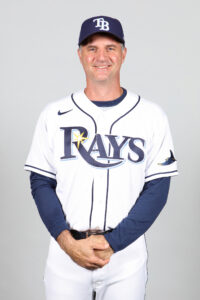
Quatraro does have a past link to Royals owner John Sherman, who become a minority owner in Cleveland during Quatraro’s four-season tenure (2014-17) as the Indians’ assistant hitting coach. That stint in Cleveland was Quatraro’s only professional experience outside of the Rays organization, beginning when he was an eighth-round pick for Tampa Bay in the 1996 draft. After seven years as a player, Quatraro then moved into the coaching ranks, working throughout the Rays’ farm system as a coach, hitting coordinator, catching instructor, and manager. He has spent the last five seasons on Tampa’s MLB coaching staff, first working as a third base coach before moving into the bench coach role prior to the 2019 season.
The Rays will now need a replacement as Kevin Cash’s top lieutenant, though coaching searches have become a pretty common offseason occurrence in Tampa. Beyond just the normal turnover that often comes to coaching staffs on an annual basis, the Rays frequently lose personnel (whether in the coaching or front office ranks) to other teams looking to replicate Tampa Bay’s formula for winning on a low budget. It remains to be seen whether Quatraro can bring some so-called “Rays magic” to Kansas City, though of course, the Royals have the 2015 World Series title as evidence the organization knows a few things about smaller-market success.
According to several reports, Quatraro was one of seven known candidates involved in the Royals’ search. The club considered three internal candidates (bench coach Pedro Grifol, third base coach Vance Wilson, Triple-A manager Scott Thorman) and four candidates from outside the organization — Quatraro, Dodgers first base coach Clayton McCullough, Red Sox bench coach Will Venable, and Phillies third base coach Dusty Wathan.
With the Royals’ opening now filled, it could increase the chances of Grifol heading elsewhere (perhaps even to his own managerial post since he interviewed with the White Sox). It would stand to reason that Quatraro might want to make some of his own picks for his new coaching staff, and the Royals already have a vacancy at pitching coach after announcing that Cal Eldred wouldn’t be returning in 2023.
Jeff Passan of ESPN first reported the Royals were hiring Quatraro as manager. Anne Rogers of MLB.com was first to report he signed a three-year deal with an additional option season.
Image courtesy of USA Today Sports.
