
Offseason Outlook: Baltimore Orioles
MLBTR is publishing Offseason Outlooks for all 30 teams. Click here for the other entries in this series.
With several key figures entering their final year under contract, 2018 could mark the end of this era of Orioles baseball. In order to go out in a blaze of glory, the O’s will need to address their rotation first and foremost, though other holes exist around the roster.
Guaranteed Contracts
- Chris Davis, 1B: $115MM through 2022
- Mark Trumbo, DH/1B/RF: $26MM through 2019
- Darren O’Day, RP: $18MM through 2019
- Adam Jones, CF: $17MM through 2018
Arbitration Eligible Players (service time in parentheses; projections via MLB Trade Rumors)
- Zach Britton (5.158) – $12.2MM
- Brad Brach (5.063) – $5.2MM
- Manny Machado (5.056) – $17.3MM
- Jonathan Schoop (4.027) – $9.1MM
- Kevin Gausman (3.151) – $6.8MM
- Caleb Joseph (3.145) – $1.4MM
- Tim Beckham (3.134) – $3.1MM
- Non-tender candidates: None
Contract Options
- J.J. Hardy, SS: $14MM club option for 2018 ($2MM buyout)
- Wade Miley, SP: $12MM club option for 2018 ($500K buyout)
- Welington Castillo, C: $7MM player option for 2018
Free Agents
- Chris Tillman, Ubaldo Jimenez, Jeremy Hellickson, Seth Smith, Ryan Flaherty, Pedro Alvarez, Craig Gentry
[Baltimore Orioles Depth Chart; Orioles Payroll Overview]
While the rotation has gotten much of the blame for the Orioles’ disappointing 75-87 record, it was far from the team’s only problem. The lineup hit a lot of home runs, but no club walked less or stole fewer bases than the Orioles. They also played below-average defense: Baltimore posted minus-17 Defensive Runs Saved and only the A’s had a lower UZR/150 than the Orioles’ minus-4.7 number. Even the O’s vaunted bullpen, such a strength in recent years, delivered just middle-of-the-pack results in most categories. Zach Britton’s injury problems were the culprit here, as Britton not only missed time but didn’t dominate nearly to the extent he did from 2014-16.
It all added up to a last-place finish in the AL East and a looming sense that it could be now-or-never for the Orioles in 2018. This could be the final season in Baltimore for Manny Machado, Adam Jones, Brad Brach and Britton. It’s worth noting, too, that both executive VP of baseball operations Dan Duquette and manager Buck Showalter are entering the last years of their contracts. By this time next October, the Orioles franchise could be moving in a completely new direction.
Until then, however, the O’s are intent on returning to contention next year. One plus for Duquette is that he’ll have extra money to work with thanks to a number of big contracts coming off the books. Between guaranteed deals ($66.95MM) and projected arbitration figures ($55.1MM), the O’s have roughly $122MM committed to 11 players in 2018, and they still have six more expected contributors (Dylan Bundy, Trey Mancini, Mychal Givens, Miguel Castro, Richard Bleier and Donnie Hart) on pre-arb deals. That works out to 17 players for approximately $125MM, so if the Orioles look to match their $164.3MM payroll from Opening Day 2017, Duquette has around $39MM in spending capacity.
Let’s start with the rotation, as the Orioles are looking to add two new starters to slot alongside Bundy and Kevin Gausman. Youngsters Castro and Gabriel Ynoa have been cited as rotation candidates, so let’s pencil in one of that duo (or maybe Alec Asher, Chris Lee, or Tanner Scott) for one of the three open spots. You could also see a veteran in the mix as a low-cost depth signing, potentially even a familiar face. While it wouldn’t be a surprise to see Baltimore move on entirely from the veteran quartet of Tillman, Ubaldo Jimenez, Wade Miley and Jeremy Hellickson (combined fWAR in 2017: -0.3), I could see the O’s bringing back Tillman as a nod to his long-time status as a reliable innings-eater prior to his disastrous 2017 season.
Jimenez’s four-year, $50MM contract was the largest deal the O’s have ever handed out to a pitcher, and since Jimenez failed to produce in three of those four years in Baltimore, it’s fair to wonder if owner Peter Angelos will ever again be convinced to make such an investment in a free agent arm. Given Duquette’s recent comparison of this winter’s pitching search to the 2011-12 offseason (when the club signed Wei-Yin Chen and Miguel Gonzalez), one would suspect that the O’s will indeed eschew big spending on pitching and rather seek out more modestly-priced options.
Duquette mentioned that left-handed starters were a priority, so names like Jason Vargas, Jaime Garcia, C.C. Sabathia or Miley stand out as potential targets. Other mid-tier pitchers like Tyler Chatwood, Andrew Cashner, Jhoulys Chacin, Trevor Cahill, or old friend Gonzalez are also available. A Jimenez-sized commitment wouldn’t be necessary to sign any of these arms. That said, several have significant injury histories, which will surely be of concern to a franchise that puts particular emphasis on pitcher health. Baltimore could also look to the major foreign professional leagues for a veteran, as it has quite a few times in the recent past (see, e.g., Chen, Tsuyoshi Wada, Suk-min Yoon, Hyun Soo Kim, and Logan Ondrusek). Japanese superstar Shohei Otani is the primary potential target, though he’d fit quite well on just about every team in baseball and we haven’t heard of the O’s being connected to him in particular. More likely, perhaps, the club could look at some of the other players that are under consideration for a move stateside after quality performances abroad, such as former big leaguer Miles Mikolas.
Duquette has frequently waited until later in the offseason to make notable moves during his Orioles tenure, so he could again be patient to see if any of these pitchers’ markets fails to develop, in order to swoop in for a bargain signing in February. It’s still possible, of course, that the organization could be more aggressive than usual — especially if Duquette feels his job is on the line and/or Angelos authorizes a different approach to take advantage of the remaining window of the club’s current core. The new rules regarding free agents who have rejected qualifying offers could also provide a wrinkle, as teams no longer have to surrender first-round draft picks for such signings. Losing international bonus money is hardly a deterrent to a team like Baltimore that doesn’t seem to care about the int’l market, so the Orioles could potentially be more willing than usual to spend on free agents.
Adding some big names and showing a long-term desire to contend could also help entice Machado into a long-term extension. Machado’s future is one of the major subplots of this Orioles offseason, as the star third baseman is on pace to land a $300MM+ contract in the ensuing winter (even in the wake of a somewhat disappointing 2017 season). As we’ve seen with Jones, Chris Davis, Mark Trumbo and Darren O’Day in recent years, the Orioles have been willing to spend big to re-sign their own talent, though a Machado contract would be in another stratosphere of financial commitment.
The $161MM Davis contract is already looking questionable just two seasons into a seven-year deal, so it remains to be seen if the O’s are even willing to take another dive into the spending deep end. Jones is also the only one of the aforementioned re-signed quartet that was extended prior to actually reaching free agency, and the wait-and-see tactic probably won’t work with Machado given the large amount of interest he is expected to generate from some of the game’s biggest spenders. Of course, Machado himself may want to wait and see what happens with the Orioles’ front office and manager situations before locking himself into the team for a decade or more.
One option that isn’t on the table is a trade of either Machado or Britton. An injury-plagued season and a projected $12.2MM price tag would’ve limited Britton’s trade value anyway. Brach will again be a popular figure in trade talks, and it could make some sense for the Orioles to move one of their increasingly-expensive bullpen arms to free up a bit more payroll space. Britton’s health may make Brach too valuable for the O’s to move, though the team has shown a willingness to trade from its bullpen depth in the past (i.e. the Jim Johnson trade in 2013), plus some of the young pitchers that fall out of the rotation mix could be used as relievers.
Baltimore is definitely in need of some left-handed bats to balance out a heavily righty-swinging lineup, though they’re is pretty set at most positions around the diamond. Right field and catcher are the only true question marks since Seth Smith is unlikely to return and Welington Castillo is likely to decline his player option in search of a multi-year deal elsewhere. The O’s could decide that top prospect Chance Sisco is ready for regular big league action and platoon him with Caleb Joseph behind the plate, though a veteran could also be signed on a one-year stopgap deal if Sisco needs more time in the minors.
Right field could also theoretically be addressed internally, if Jones was to be moved over from center. Over the last two seasons, Jones ranks within the bottom six of all qualified players in baseball in terms of UZR/150 (-12.1) and DRS (-22). If Jones is open to a position shift, Baltimore could then sign a left-handed hitting center fielder — Jon Jay or Jarrod Dyson seem like good fits — to a short-term deal until top prospect Austin Hays is ready for regular action. Hays has already made his MLB debut and could be argued as a candidate for the 2018 lineup already, though since he has yet to play at the Triple-A level, it would be an aggressive move for a would-be contender to rely on such an unseasoned player out of the gates.
If Jones stays in center, then free agents Jay Bruce and Curtis Granderson stand out as left-handed bats that could represent options. Granderson would require a shorter deal than Bruce, who is six years younger and will probably be looking for at least a four-year contract.
Beyond free agents, the Orioles could also fill their holes through trades, though dealing prospects seems unlikely given Baltimore’s less-than-overwhelming farm system and upcoming need for new core talent in the majors. A more inventive solution could be found in using some of that extra payroll space to take on a larger starting pitching or outfield contract from a rebuilding team.
While the Orioles might like to deal away some of their own larger contractual commitments, that’s likely easier said than done. Davis’s contract is one of the most problematic in all of baseball. Trumbo, meanwhile, is coming off a sub-replacement year and is owed $25MM through 2019, so the O’s could have to eat some money to deal him, or take on another highly-paid player coming off a poor season. Moving Trumbo would greatly increase roster flexibility, freeing up the DH position and opening a 25-man roster spot for a player with more defensive value, but at this point the Orioles will likely need to hang on to him and hope for the best.
The Orioles are a fascinating team to watch this offseason, as they possess a fair amount of payroll and roster flexibility for a team that is ostensibly in its last ride with this core group of talent. The emergence of Jonathan Schoop and Mancini as big lineup threats certainly provided a needed boost that offset down years from Davis and Trumbo, and provided hope that the O’s may not be as far away from contention as their last-place finish would indicate. Still, without some creativity in fixing the pitching staff, Baltimore’s longstanding rotation problems threaten to spoil another season.
Poll: The Future Of Miami’s Outfield
Those who have visited this website with any regularity over the past few months know that Marlins outfielders Giancarlo Stanton, Christian Yelich and Marcell Ozuna have frequently come up as potential trade chips. With the MLB offseason set to begin in earnest in a few weeks, questions regarding the trio will continue to abound, especially with a fresh ownership group at the helm. While the Marlins’ new face of baseball operations, part-owner Derek Jeter, essentially did nothing but win during his acclaimed career as the Yankees’ shortstop from 1995-2014, he’s likely in for some tough times in Miami.
The Marlins’ most recent playoff trip came in 2003 – a season in which they knocked off Jeter & Co. in the World Series – and given their limited talent in the majors, a weak farm system that Baseball America ranks last in the sport and a dire financial situation, the future Hall of Famer’s newest chapter in the game will begin with at least a few lean years. Jeter realizes that, judging by some of the comments he made during the introductory press conference he and principal owner Bruce Sherman held in Miami last week. Although Jeter was reluctant to say that losing will continue for the Marlins in the near term, he did admit that there’s a need to “rebuild the organization,” adding that “there’s going to be at times unpopular decisions that we make on behalf of the organization.”
To a Marlins fan base that loathed the franchise’s prior owner, Jeffrey Loria, in part because of his penny-pinching ways, there probably wouldn’t be a less popular move than trading Stanton – especially after he enjoyed an MVP-caliber 2017 in which he smashed a league-high 59 home runs. But getting out from under at least some of the $295MM he could rake in through 2028 would improve the franchise’s bottom line, so it seems likely Miami will consider offers for the 27-year-old. In theory, Stanton’s full no-trade rights – not to mention an opt-out clause after 2020 – could scuttle a potential deal, but it doesn’t seem he’d stand in the way of a swap if an acquiring team would give him a chance to play meaningful baseball into the fall.
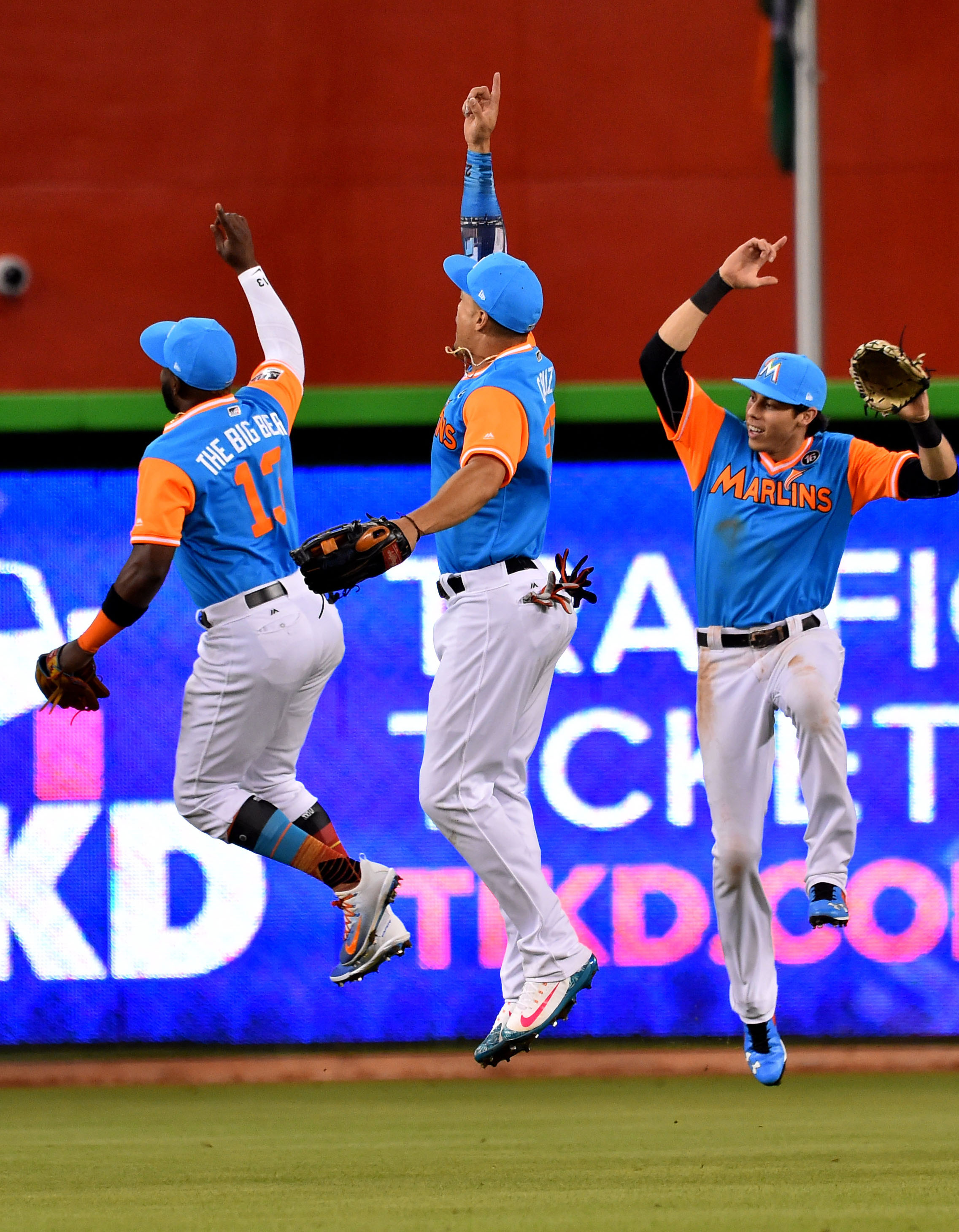
“I don’t want to rebuild. I’ve lost for seven years,” the right fielder said last month.
Despite their best efforts, Yelich and Ozuna have joined Stanton in doing plenty of losing as Marlins. Considering their affordability, moving either would be far less complicated for Miami than trading Stanton, and it would beef up the team’s farm system.
Yelich, the 25-year-old center fielder, has been worth 4.5 fWAR in three of four seasons since becoming a full-time major leaguer (including in 2017) and is signed to a palatable deal. He’s due a guaranteed $43.5MM through 2021 and will collect either a $15MM salary or a $1.25MM buyout in 2022. Yelich is all the more appealing when considering the best outfielders who could hit free agency next month (J.D. Martinez, Justin Upton and Lorenzo Cain) are already over 30 and will rake in far richer contracts than his.
Ozuna doesn’t come with Yelich-esque team control, but the left fielder still has two arbitration-eligible years remaining after making $3.5MM in 2017, a career season. Across 159 games and 679 trips to the plate, the 26-year-old slashed .312/.376/.548 with 37 homers – much better production than he put up over the previous four years, though he was still a fairly respectable contributor from 2013-16. With an appreciable raise on the way this offseason and a trip to free agency only a couple years off, now may be the time for Miami to wave goodbye to the Scott Boras client.
There are other players the Marlins figure to market in the next few months, but their highest-profile chips are their starting outfielders, a trio that hit a combined .288/.368/.519 this year and topped the NL in fWAR (16.1). Marlins fans may not like it, but with the franchise going in a new direction, it stands to reason Stanton, Yelich and Ozuna have lined up in the same outfield together for the last time. Which player(s) do you think the Fish will part with in the offseason?
(Poll link for app users)
Which outfielder(s) will the Marlins trade?
-
More than one 45% (3,977)
-
Stanton 26% (2,332)
-
Ozuna 13% (1,135)
-
Yelich 8% (732)
-
None 8% (706)
Total votes: 8,882
Photo courtesy of USA Today Sports Images.
Checking In On Last Winter’s Biggest Signings
The MLB playoffs are underway, which means we’re only a few weeks from seeing a slew of high-profile players hit the open market in search of big-money contracts. Of the players who reached free agency last winter, 12 signed deals of at least three years in length and worth upward of $10MM per annum. While it’s obviously too soon to fully evaluate those pacts, several don’t look all that great through one year. Those who struggled in 2017 could certainly justify the contracts in future seasons, but it’s not exactly encouraging if a player falls well short of expectations at the very beginning of his deal. As you’ll see below, a few of last year’s biggest signings did just that in 2017…
Yoenis Cespedes, LF, Mets – four years, $110MM: Aside from Jacob deGrom, injuries didn’t spare any Mets star in 2017, Cespedes included. For the second straight season, lower body issues sidelined Cespedes for a significant chunk of games. The 31-year-old appeared just 81 times for the disappointing Mets this season, but the good news is that he didn’t drop off much from 2016 when he took the field. With a .292/.352/.540 line, 17 home runs and a .247 ISO in 321 plate appearances, Cespedes provided the type of offensive production the Mets signed up for – on a rate basis, anyway.
Aroldis Chapman, RP, Yankees – five years, $86MM: A few weeks after winning a championship with the Cubs, Chapman returned to the Yankees on the richest deal ever given to a reliever. While the 29-year-old left-hander continues to throw incredibly hard, his first season as the highest-paid reliever of all-time has been rocky on occasion. Chapman went through a slump in August and lost his job as the Yankees’ closer, but he regained form when the calendar turned to September and returned to the ninth inning early in the month. Dating back to Sept. 1, Chapman has gone 13 straight appearances without allowing a run, including a pair of outings in the playoffs. He concluded the regular season with more-than-respectable run prevention and strikeout/walk numbers across 50 1/3 innings (3.22 ER, 12.34 K/9, 3.58 BB/9), but his production in each category was still among the worst of his career. Chapman also notched a personal-low swinging-strike rate of 13.5 percent (down from 18.6 percent in 2016).
Dexter Fowler, CF, Cardinals – five years, $82.5MM: Also a member of last year’s title-winning Cubs, Fowler bolted Chicago for archrival St. Louis’ massive offer. The switch-hitting 31-year-old opened his Cardinals tenure with another quality offensive season (.264/.363/.488 with 18 homers and a career-high .224 ISO in 491 PAs), but he wasn’t able to maintain the widely publicized gains he made as a defender in 2016. Despite only playing in 118 games, Fowler ranked second last among outfielders in Defensive Runs Saved (minus-18) and sixth from the bottom in Ultimate Zone Rating (minus-5.9).
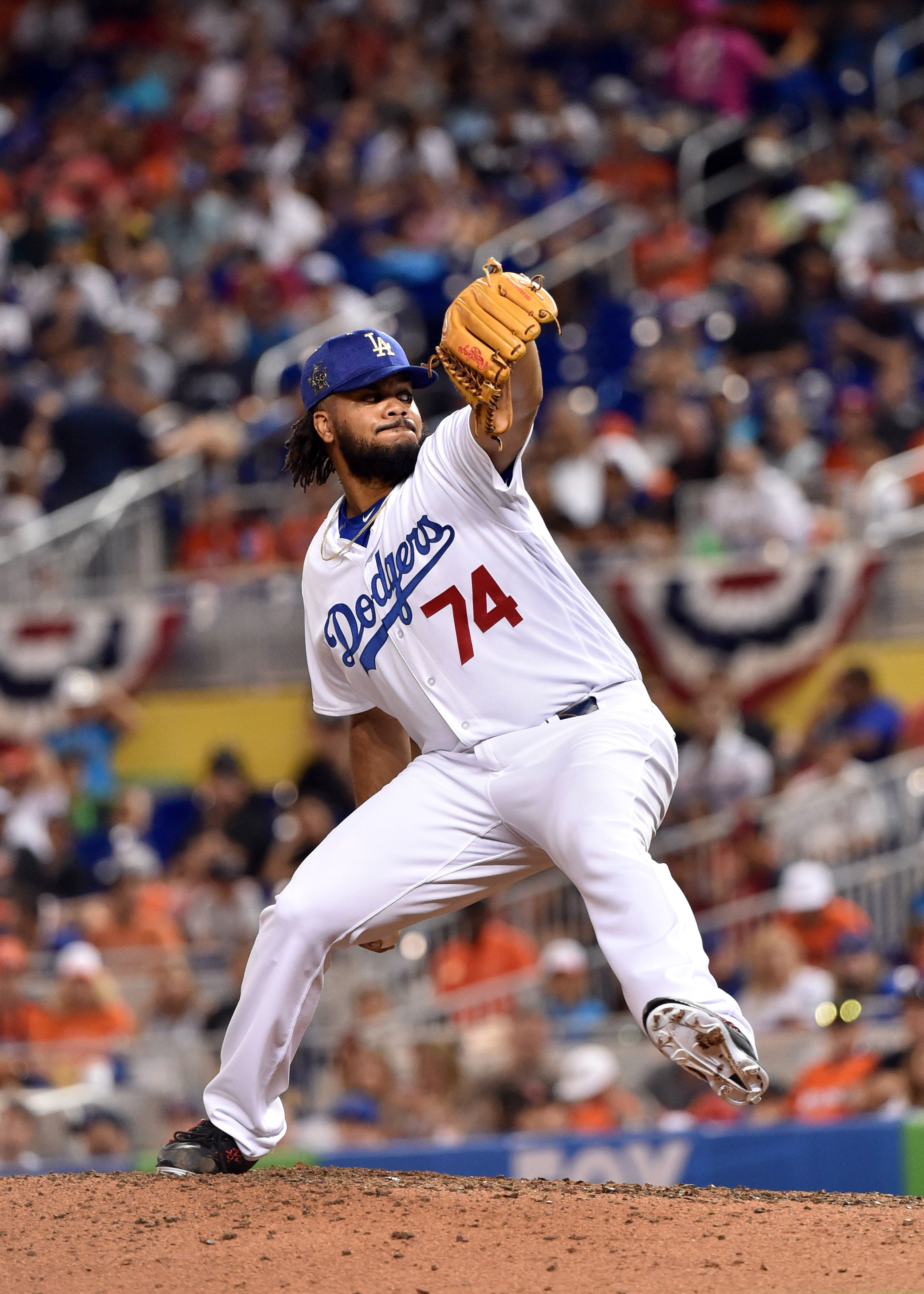
Kenley Jansen, RP, Dodgers – five years, $80MM: Finally, a player who has been virtually flawless in Year 1 of his new contract. The Dodgers undoubtedly feel fortunate right now that Jansen spurned other teams’ advances and chose to stay in LA last winter, given that he turned in an otherworldly regular season and could be integral to a World Series run in the coming weeks. Over 68 1/3 innings during the season, the cutter-throwing Jansen placed first among qualified relievers in ERA (1.32) and fWAR (3.5). And with 14.36 K/9 against .92 BB/9, he finished second in both strikeout and walk percentage. The 30-year-old Jansen has continued his excellence in the Dodgers’ first two playoff games, both wins over the Diamondbacks, adding 2 2/3 scoreless frames.
Ian Desmond, OF/1B, Rockies – five years, $70MM: Considering the Rockies gave Desmond big money to play first base, a position he had never lined up at prior to this season, the union between the two looked odd from the start. Ultimately, most of Desmond’s action in 2017 came in the outfield, but his year was utterly disastrous regardless of position. It began inauspiciously when he suffered a fractured left hand during spring training in mid-March and never really got off the ground thereafter. Desmond, 32, battled other injuries and ended up taking just 373 trips to the plate. All told, he hit a subpar .274/.326/.375 with a career-worst ISO (.100). Along the way, he saw his groundball percentage skyrocket to 62.7 percent (up from the low-50s in prior seasons) and his batted-ball authority trend in a disturbing direction. Among 301 hitters who amassed at least 250 at-bats this year, Desmond ranked 290th in expected weighted on-base average (.256, per Statcast – via Baseball Savant).
Edwin Encarnacion, DH/1B, Indians – three years, $65MM: Even though Encarnacion was one of the game’s preeminent sluggers from 2012-16 with the Blue Jays, his market didn’t develop the way many expected it to last offseason. Finally, after going nearly two months without a deal, he stunningly signed with a Cleveland franchise that doesn’t have a big-spending reputation. The Indians were able to use their windfall from last year’s run to the World Series to justify an Encarnacion signing from a financial standpoint, though, and he continued to thrive offensively in his first regular season with the Tribe. The 34-year-old batted .258/.377/.504 with 38 HRs in 669 PAs, sitting out only five games for a club that tallied an AL-best 102 wins. Encarnacion will miss some time after suffering a sprained ankle during Game 2 of the Indians’ ALDS series against the Yankees, but he seems likely to play again this postseason. Cleveland has a 2-0 stranglehold over New York and looks like a sure bet to advance to the next round, which means we probably haven’t seen the last of Encarnacion in 2017.
Justin Turner, 3B, Dodgers – four years, $64MM: Between Jansen and Turner, no team did better on big-money deals last winter than the Dodgers. Despite playing in 21 fewer games than he appeared in last season (130 to 151), Turner registered 5.5 fWAR for the second straight year. His performance during the regular season was worth upward of $44MM, according to FanGraphs, which suggests that Turner is already close to living up to the value of his contract. The once-anonymous Turner batted .322/.415/.530 with 21 long balls in 543 PAs, and he managed to record more unintentional walks (59) than strikeouts (56). The 32-year-old’s brilliance has extended into the Dodgers-Diamondbacks series, too, as he’s 4 of 8 with a homer and five runs batted in thus far.
Mark Melancon, RP, Giants – four years, $62MM: 2017 was a nightmarish season for both the Giants and Melancon, whom they signed to help repair a bullpen that melted down too often last year and helped earn them an early playoff exit. The season for the Giants and Melancon began ominously, however, as he blew a save and picked up a loss on Opening Day against the D-backs. The Giants went on to win a paltry 63 of their next 161 games, meaning the playoffs were never on the table for the longtime contenders, and Melancon didn’t help matters. While Melancon put up normal strikeout/walk numbers (8.7 K/9 against 1.8 BB/9) and a 52.7 percent grounder rate, the former Pirates and Nationals closer blew five of 16 save chances and pitched to a 4.50 ERA (up from a combined 2.39 from 2012-16). Further, after racking up at least 71 innings in each of the previous four seasons, injuries limited him to 30 frames in his first year in San Francisco. Melancon underwent right forearm surgery last month, capping off a season to forget.
Josh Reddick, OF, Astros – four years, $52MM: Reddick endured a terrible late-season stretch as a Dodger in 2016 after they acquired him in a deadline trade with the Athletics, but that didn’t stop the Astros from handing him a sizable contract over the winter. The gamble has paid off so far for Houston, which saw Reddick serve as one of the top complementary pieces in a loaded offense during the regular season. The lefty-swinging 30-year-old batted a career-best .314/.363/.484 line in 540 PAs and was worth 3.5 fWAR, his highest figure since 2012. FanGraphs valued his contributions during the 162-game campaign at nearly $28MM.
Rich Hill, SP, Dodgers – three years, $48MM: Unlike this year’s market, one which could feature Jake Arrieta, Yu Darvish, Shohei Otani and Masahiro Tanaka, free agency wasn’t rife with appealing starting pitchers last winter. As such, the only starter on this dozen-player list is Hill, whose re-signing was yet another shrewd offseason move by the Dodgers. The 37-year-old Hill’s not exactly a workhorse, but he did manage his highest innings total since 2007 – 135 2/3 – during the regular season, and the left-handed journeyman continued to perform like a front-line starter. Hill ranked seventh in the majors in K/9 (11.01) and 20th in ERA (3.32).
Mark Trumbo, DH/OF, Orioles – three years, $37MM: The market wasn’t all that kind to defensively limited mashers a year ago, so Trumbo was among those who went without a contract for a while (until January, to be exact) before inking a deal that fell short of projections. Now, given that the 2017 version of Trumbo looked nothing like the AL-high 47-HR man they saw the year prior, the Orioles would probably like to undo their decision to bring him back. Trumbo, 31, didn’t even hit half as many long balls this season (23), and his ISO dropped from .277 to .163. Unsurprisingly, then, the overall production (.234/.289/.337 in 603 PAs) left a lot to be desired. Going by fWAR (minus-1.2), Trumbo was the second-least valuable position player in baseball this year.
Kendrys Morales, DH, Blue Jays – three years, $33MM: This looks like another regrettable signing, one the Jays made only a few days into free agency last offseason. Although the switch-hitting Morales chipped in 28 homers in 608 PAs, those didn’t provide enough of a lift to an underwhelming .250/.308/.445 line. On the bright side, Morales likely deserved better – his .358 xwOBA easily outpaced his actual wOBA (.320). However, that’s probably not of much comfort to Toronto right now.
Photo courtesy of USA Today Sports Images.
MLBTR Originals
Recapping MLBTR’s original content from the past week:
- Before the playoffs began, I polled readers on who would win the National League, the American League and the World Series. The plurality of voters expect the Indians to topple the Dodgers in the Fall Classic. Both teams are on the right track so far, as they each lead their respective division series 2-0.
- Sticking with the postseason theme, Jason Martinez, Steve Adams and Jeff Todd detailed how all 10 playoff teams constructed their rosters. Along with the aforementioned Dodgers and Indians, check out entries on the Astros, Nationals, Red Sox, Cubs, Diamondbacks, Yankees, Rockies and Twins.
- The Twins overcame a less-than-stellar rotation to earn a playoff trip, but their return to the postseason only lasted one game. With Minnesota’s season in the rearview, Kyle Downing asked readers which path the team will take over the winter to bolster its starting pitching. The plurality of voters expect the Twins’ biggest improvements in that area to come from within.
- Kyle also wrote a piece focusing on Tigers third baseman/outfielder Nicholas Castellanos as a potential offseason trade candidate. Although the Tigers are in the very early stages of a rebuild, the plurality of voters believe Castellanos will stick with the club at least into next offseason.
Poll: How Will The Twins Address Their Rotation Issues?
After quickly shifting from buyers to sellers at the 2017 trade deadline, the Minnesota Twins’ offense went on an absolute tear during the second half, thanks in part to blazing hot streaks from Byron Buxton, Eddie Rosario, Jorge Polanco and Brian Dozier. The lineup’s offensive storm resulted in a whopping 412 runs after the All-Star break, surpassing even the Indians for most in the American League. They surged up the standings to claim the AL’s second wild card spot, but fell to the New York Yankees in the one-game playoff after starting pitchers Ervin Santana and Jose Berrios gave up a combined seven runs across five innings.
The heartbreaking loss alluded to an overarching theme of the Twins’ 2017 season: the woes of subpar performances from starting pitchers. While Santana and Berrios were actually the team’s most respectable performers during the season, the rotation performed miserably on the whole. Sixteen different pitchers started games for Minnesota. Of those sixteen, only one (Santana) qualified for the ERA title. Only five finished with an ERA below 5.00. Minnesota starters as a group finished in the bottom ten in all of baseball in innings pitched (24th), fWAR (22nd), strikeouts (26th), xFIP (27th), least hard contact allowed (21st), and fewest home runs allowed (23rd).
Without dramatic improvements to the rotation, the Twins have little hope of dethroning the rival Indians as AL Central Champions. However, if they can add pitching reinforcements to an offense that’s intimidating from top to bottom, it’s easy to see a path for them to reach the playoffs again. Adding to their fortunes is a weak division wherein the White Sox and Tigers are in the midst of full teardowns, with the Royals likely to follow suit this offseason.
The problem has the potential to solve itself. Santana and Berrios will both return to their roles in 2018, with Kyle Gibson likely to slot in behind them after performing very well in the second half this past season. LHP Stephen Gonsalves and RHP Fernando Romero both rank as top 100 overall prospects and could potentially see major league action next season. And Adalberto Mejia is at the very least a reasonable back-end starter. If Berrios is able to take another step forward, and one of Gonsalves or Romero emerges as a top-of-the-rotation type, the Twins would certainly be no worse off on paper than most contenders.
But even the highest-rated prospects are never sure bets, and Santana, Berrios and Gibson all have at least a few question marks hovering over them. Meanwhile the free agent market for pitchers is full of high-upside starters who carry tremendous risk. Yu Darvish and Jake Arrieta represent the top options on the market, while Masahiro Tanaka and Johnny Cueto can both opt out of their current contracts. Most of these pitchers would likely cost more than the Twins can afford to pay, and all carry significant injury risk. Japanese phenom Shohei Otani would be an incredibly exciting target, but the competition for his services will certainly be fierce. It’s difficult to imagine what the Twins could offer him that other teams cannot. So while it’s certainly possible the Twins could land a high-end starter, a foray into the free agent pool would likely end with the Twins having to settle for an even riskier tier of starters that includes Andrew Cashner, Tyler Chatwood, Alex Cobb, Lance Lynn, Jason Vargas and a somewhat resurgent Doug Fister.
To say that the trade market for starting pitchers this offseason will be competitive would be an understatement. The top starters in baseball are heavily concentrated on teams with plans to contend next season. Michael Fulmer and Gerrit Cole are examples of solid pitchers who could be made available, but due to heavy demand, the Twins would probably have to fork over at least one of top 30 overall prospects Royce Lewins and Nick Gordon. Both Fulmer and Cole come with injury concerns.
While many teams are in need of rotation help, the Twins’ situation is dire. If the offense can repeat anything close to their late 2017 production, Minnesota will be in the thick of contention all next season. But they absolutely must get significant improvements within the starting five.
How do you think the Twins will address their rotation issues? Vote in the poll and comment below with your ideas.
(Poll link for app users)
Where Will The Twins' Most Significant Rotation Upgrade Come From?
-
Internal Options 38% (1,282)
-
Free Agency 33% (1,126)
-
The Trade Market 29% (986)
Total votes: 3,394
Poll: Can The Tigers Move Nicholas Castellanos?
While the Tigers weren’t considered favorites to win the AL Central coming into 2017, they certainly didn’t appear to be candidates to own the worst record in baseball. But slow starts from Justin Verlander and Ian Kinsler, along with the continued decline of other highly-paid veterans such as Miguel Cabrera, Jordan Zimmerman, Victor Martinez and Francisco Rodriguez, led Detroit to their first losing record at the All-Star break since 2010.
By the July 31st trade deadline, the organization had already shipped catcher Alex Avila and reliever Justin Wilson to the Cubs in exchange for younger players. On the final day of August, they doubled down on their rebuild by moving the large contracts of Verlander and outfielder Justin Upton in exchange for minor leaguers.
One player who survived the fire sale, despite clearing revocable trade waivers, was former top prospect Nicholas Castellanos.
Formerly a third baseman, Castellanos was moved to right field amid concerns about his glove at the hot corner. But while his performance at third was subpar, his work in right field this year was a disaster. In a 173-inning sample, Castellanos racked up -7 defensive runs saved while checking in with a catastrophic -80.5 runs per 150 games by measure of Ultimate Zone Rating. Some of this is the result of lack of experience in the outfield. It’s easy to imagine him improving his glove work to some extent with more training and playing time, but the transition hasn’t exactly been a smooth one to this point.
The real value, of course, lies in his bat. Castellanos smacked 44 homers to go along with a .277/.325/.493 slash line across 1112 plate appearances since the start of 2016, good for a 114 wRC+ during that span. Perhaps his most impressive skill has been his ability to make hard contact; his hard-contact rate sits at an impressive 40.4% over the past two seasons, and his 89.2 MPH average exit velocity during that time ranks 67th among major league hitters who’ve made contact in at least 500 at-bats. Even with subpar defense, his offensive output made him worth close to two full wins above replacement in 2017.
As Jon Heyman of Fan Rag noted when he first broke the news, it’s surprising that Castellanos was never claimed on trade waivers. He only made $3MM this season, and can be controlled for two more years through arbitration. There’s a raise coming, but it shouldn’t be too onerous. Lucas Duda earned a $2.525MM bump after hitting 27 homers and knocking in 73 runs across 554 plate appearances in 2015. Castellanos could probably exceed that increase — he hit 26 homers in 2017, but amassed over 100 more plate appearances and accumulated 28 more RBI than did Duda– though it suggests a reasonable ballpark figure.
Even if Castellanos projects only as a 2-WAR player, he might well cost less than $6MM in 2018 and can be controlled in 2019 as well. It seems as though there is some excess value in his contract, and the Tigers aren’t likely to be contenders over the next two seasons. With all this in mind, it seems probable that the Tigers will try to shop him his offseason.
The tough part about imagining a Castellanos trade, even if you are relatively bullish on his outlook, is that teams don’t often get much in return for league-average position players with this amount of control and at this general price point. When the Nationals traded Yunel Escobar to the Angels before the 2016 season, he had one year and $7MM left on his contract, as well as a $7MM option for 2017. They received Trevor Gott in return, a fireballing reliever who was believed to have some upside but hasn’t yet panned out. The Rockies got a chance to take a shot on bouncebacks from Brandon Barnes and Jordan Lyles when they sent Dexter Fowler to the Astros; both players were thought to have some upside, but neither worked out. Most recently, the Dodgers coughed up a highly valued prospect in Jose De Leon in order to net Logan Forsythe from the Rays prior to the 2017 season, though De Leon has been hurt all year.
The market for Castellanos is somewhat cloudy. It’s unclear whether teams will view him as a third baseman or an outfield project. His 2017 performance also shows him to be far better against left-handed pitching (.939 OPS, 16% K rate) than right-handers (.769 OPS, 23% K rate). That, combined with his poor defense, may lead some teams to view him as more of a platoon hitter than a regular, which would certainly limit what type of prospects they’d be willing to give up. That being said, there are a few potential landing spots for Castellanos.
- The Indians could be in the market for a right-handed hitting outfielder if Brandon Guyer can’t turn things around at the plate, or if they’re unable to retain veteran Austin Jackson.
- The Blue Jays have made it clear that they plan to try and win in 2018, so they could potentially go after Castellanos if they decide to move on from struggling veteran Jose Bautista, though they could opt to give top prospect Anthony Alford a shot.
- With Yasiel Puig falling out of favor once again, the Dodgers could conceivably become a potential suitor. Their outfield is full of question marks, and they’d be one candidate to pay Castellanos’s salary even if they only plan to use him in a platoon role.
- If they can’t re-sign slugging phenom J.D. Martinez, the Diamondbacks could potentially look at acquiring Castellanos as a cheaper right field alternative. The D-backs’ payroll is already set to pay a combined $58.6MM to Zack Greinke, Paul Goldschmidt and Yasmany Tomas in 2018, and they’ll also be paying significant amounts to several arb-eligible players.
- Similarly, the Angels could look to trade for Castellanos as a replacement if they don’t end up retaining Justin Upton, who seems likely to exercise the opt-out clause in his contract at the end of the 2017 season.
- With the Braves nearing the end of their rebuilding process, they have their sights set on contending in 2018 and 2019. If they decide to move on from Rio Ruiz, Castellanos could man third base in Atlanta for the next two years.
Further complicating the market for Castellanos as a third baseman is the glut of similar right-handed hitting free agents at that position. Righties Yunel Escobar, Todd Frazier and Eduardo Nunez all offer similar production from the position, with Mike Moustakas offering a premium option who bats from the left side of the plate. The free agent market for outfielders is just as competitive. J.D. Martinez is a clear superior option as far as righty-hitting corner outfielders, though not all teams will be able to afford the type of contract he’s likely to command. Lorenzo Cain is a far better player, though he’ll obviously be hired as a center fielder and therefore will compete in a different market. Austin Jackson, Melky Cabrera, Colby Rasmus, Carlos Gomez and Carlos Gonzalez all offer production at (or close to) Castellanos’ level, although each has his own set of question marks. Jay Bruce offers similar production for teams interested in a lefty slugger.
So it seems that the biggest roadblock in trying to move Castellanos is that players like him aren’t in short supply. If the free agent dominoes fall too quickly, the Tigers might find themselves unable to get even a modest prospect return, and could opt to simply wait until the trade deadline to see if his market improves. In any case, it’s hard to imagine Detroit getting a top 100 prospect in return for their young slugger unless they opt to package him with another asset.
The Tigers are in a really tough position with Castellanos. They have no great need for his services during their rebuilding years, and could benefit by shedding his $14MM price tag through 2019. Unfortunately, the plethora of alternatives on the free agent market means that the Tigers have little to no leverage in negotiations with other teams. He’s got too much value to simply unload for a garden-variety minor leaguer, but if Detroit can’t trade him this offseason or at the 2018 trade deadline, they could end up in the same situation next year at this time. At that point, his trade value will be even lower than it is now. Whether or not Castellanos will be in a Tigers uniform come April is anybody’s guess.
What do you think will happen? Will the Tigers be able to trade Nicholas Castellanos?
(Poll link for app users)
Will The Tigers Trade Nicholas Castellanos?
-
No, he'll be a Tiger until at least next offseason. 38% (1,077)
-
Yes, they'll move him this winter. 35% (981)
-
Yes, they'll move him at some point during the 2018 season. 27% (759)
Total votes: 2,817
How They Were Acquired: Los Angeles Dodgers NLDS Roster
The Dodgers have now taken the NL West for five consecutive seasons. But the current roster wasn’t exactly built with just that in mind. The big-city organization hasn’t won the World Series since way back in 1988.
President of baseball operations Andrew Friedman and GM Farhan Zaidi were looking to construct a powerhouse. At mid-season, they struck a deal to land ace Yu Darvish to an already-loaded rotation. Despite a late-season lull, the team racked up 104 wins.
Here’s how it all came together:
[Related: Los Angeles Dodgers Depth Chart and Payroll Outlook]
- HOMEGROWN (7)
- Kenley Jansen, RP: International Free Agent (Curacao) November ’04. Re-signed to five-year, $80MM contract in January ’17.
- Pedro Baez, RP: International Free Agent (D.R.) January ’07
- Clayton Kershaw, SP: Drafted 1st Rd (7) ’06
- Corey Seager, SS: Drafted 1st Rd (18) ’12
- Ross Stripling, RP: Drafted 5th Rd ’12
- Cody Bellinger, 1B/OF: Drafted 4th Rd ’13
- Kyle Farmer, C: Drafted 8th Rd ’13
- ACQUIRED VIA FREE AGENCY (4)
- Yasiel Puig, OF: June ’12 (Cuba) — Signed to a seven-year, $42MM contract.
- Justin Turner, 3B: February ’14 (NYM) — Signed to a minor league contract. Re-signed to four-year, $64MM contract in January ’17.
- Kenta Maeda, SP: January ’16 (Japan) — Signed to an eight-year, $25MM contract. Dodgers also paid a $20MM posting fee for his negotiating rights.
- Brandon Morrow, RP: January ’17 (SD) — Signed to a minor league contract.
- ACQUIRED VIA TRADE (14)
- Andre Ethier, OF: December ’05 (OAK) — Acquired in the trade that sent Milton Bradley and Antonio Perez to the Athletics.
- Yasmani Grandal, C: December ’14 (SD) — Acquired in the trade that sent Matt Kemp and Tim Federowicz to the Padres.
- Austin Barnes, C: December ’14 (MIA) — Acquired in the trade that sent Dan Haren, Dee Gordon and Miguel Rojas to the Marlins.
- Enrique Hernandez, INF/OF: December ’14 (MIA) — Acquired in the trade that sent Dan Haren, Dee Gordon and Miguel Rojas to the Marlins.
- Alex Wood, SP: July ’15 (ATL) — Acquired in the three-team trade that sent Hector Olivera, Paco Rodriguez and Zachary Bird to the Braves and Kevin Guzman, Jeff Brigham and Victor Araujo to the Marlins.
- Chase Utley, INF: August ’15 (PHI) — Acquired in the trade that sent Darnell Sweeney and John Richy to the Phillies.
- Chris Taylor, INF/OF: June ’16 (SEA) — Acquired in the trade that sent Zach Lee to the Mariners.
- Rich Hill, SP: August ’16 (OAK) — Acquired in the trade that sent Frankie Montas, Grant Holmes, and Jharel Cotton to the Athletics.
- Josh Fields, RP: August ’16 (HOU) — Acquired in the trade that sent Yordan Alvarez to the Astros.
- Logan Forsythe, INF: January ’17 (TB) — Acquired in the trade that sent Jose De Leon to the Rays.
- Yu Darvish, SP: July ’17 (TEX) — Acquired in the trade that sent Willie Calhoun, Brendon Davis and A.J. Alexy to the Rangers.
- Tony Cingrani, RP: July ’17 (CIN) — Acquired in the trade that sent Scott Van Slyke and Hendrik Clementina to the Reds.
- Tony Watson, RP: July ’17 (PIT) — Acquired in the trade that sent Oneil Cruz and Angel German to the Pirates.
- Curtis Granderson, OF: August ’17 (NYM) — Acquired in the trade that sent Jacob Rhame to the Mets.
Los Angeles will lose some players to the open market at the end of the year, but all were signed to one-year pacts last winter or added over the summer via trade. That means that the core of the club will remain under control — in many cases well into the future. No matter how things turn out this fall, though, there will likely be quite a few interesting opportunities for the always-creative Dodgers front office to pursue over the offseason to come.
How They Were Acquired: Washington Nationals NLDS Roster
The Nationals are back in the postseason after their fourth NL East crown in the past six years. By now, the search for redemption is a familiar tale for this organization, which has failed to advance past the NLDS in each of the past three years. There has been a fair bit of roster turnover through the years, as president of baseball operations/GM Mike Rizzo has successfully transitioned from prior core players to new ones through a variety of methods.
Here’s how the current roster came together…
[Related: Washington Nationals Depth Chart and Payroll Outlook]
- HOMEGROWN (9)
- Ryan Zimmerman, 1B: Drafted 1st Rd (4) ’05
- Stephen Strasburg, SP: Drafted 1st Rd (1) ’09
- Michael Taylor, OF: Drafted 6th Rd ’09
- Wilmer Difo, INF/OF: International Free Agent (D.R.) June ’10
- Bryce Harper, OF: Drafted 1st Rd (1) ’10
- Sammy Solis, RP: Drafted 2nd Rd ’10
- Anthony Rendon, 3B: Drafted 1st Rd (6) ’11
- Brian Goodwin, OF: Drafted 1st Rd (34) ’11
- Victor Robles, OF: International Free Agent (D.R.) July ’13
- ACQUIRED VIA FREE AGENCY (7)
- Jayson Werth, OF: December ’10 (PHI) — Signed to a seven-year, $126MM contract.
- Max Scherzer, SP: January ’15 (DET) — Signed to a seven-year, $210MM contract.
- Daniel Murphy, 2B: December ’15 (NYM) — Signed to a three-year, $37.5MM contract.
- Oliver Perez, RP: December ’15 (HOU) — Signed to a two-year, $7MM contract.
- Matt Albers, RP: January ’17 (CWS) — Signed to a minor league contract.
- Matt Wieters, C: February ’17 (BAL) — Signed to a one-year, $10.5MM contract (plus $10.5MM player option).
- Adam Lind, 1B/OF: February ’17 (SEA) — Signed to a one-year, $1.5MM contract (plus $5MM mutual option)
- ACQUIRED VIA TRADE (9)
- Tanner Roark, SP: July ’10 (TEX) — Acquired in the trade that sent Cristian Guzman to the Rangers.
- Gio Gonzalez, SP: December ’11 (OAK) — Acquired in the trade that sent A.J. Cole, Brad Peacock, Tommy Milone and Derek Norris. to the Athletics.
- Jose Lobaton, C: February ’14 (TB) — Acquired in the trade that sent Nathan Karns to the Rays.
- Trea Turner, SS: June ’15 (SD) — Acquired in the three-team trade that sent Wil Myers, Jose Castillo, Gerardo Reyes and Ryan Hanigan to the Padres and Steven Souza, Rene Rivera, Jake Bauers, Burch Smith and Travis Ott to the Rays.
- Enny Romero, RP: February ’17 (TB) — Acquired in the trade that sent Jeffrey Rosa to the Rays.
- Howie Kendrick, INF/OF: July ’17 (PHI) — Acquired in the trade that sent McKenzie Mills to the Phillies.
- Sean Doolittle, RP: July ’17 (OAK) — Acquired in the trade that sent Blake Treinen, Sheldon Neuse and Jesus Luzardo to the Athletics.
- Ryan Madson, RP: July ’17 (OAK) — Acquired in the trade that sent Blake Treinen, Sheldon Neuse and Jesus Luzardo to the Athletics.
- Brandon Kintzler, RP: July ’17 (MIN) — Acquired in the trade that sent Tyler Watson to the Twins.
While the Nationals’ window has long been a topic of conversation, it figures to stay open a while longer. The club will lose a few contributors this winter — Werth, Perez, and deadline additions Kendrick and Kintzler are probably the most significant — but none are major drivers of the organization’s success. While there’s only one more year of control over Harper past the present season, when he’ll be joined by Murphy and Gonzalez in free agency, several other top-quality performers are still around beyond 2018 … and the team has hopes that Robles will soon become the team’s next star.
How They Were Acquired: Chicago Cubs NLDS Roster
This year, the Cubs returned much the same roster that ended the franchise’s curse by winning the 2016 World Series. Of the tweaks that were made, perhaps the most notable was the move to add Wade Davis to replace outgoing closer Aroldis Chapman (himself a mid-summer rental). By now, the story of how the team’s excellent core was compiled is rather well-known; indeed, books have been written on the general subject.
The title defense efforts got off to a sluggish start, though, prompting some further tinkering from PBOp Theo Epstein and GM Jed Hoyer in advance of the trade deadline. Ultimately, the Cubbies closed strong and now enter the postseason looking to regain that ’16 magic. Here’s how the NLDS roster was compiled:
[Related: Chicago Cubs Depth Chart and Payroll Outlook]
- HOMEGROWN (6)
- Willson Contreras, C: International Free Agent (Venezuela) July ’09
- Javier Baez, 2B/SS: Drafted 1st Rd (9) ’11
- Albert Almora Jr., CF: Drafted 1st Rd (6) ’12
- Kris Bryant, 3B: Drafted 1st Rd (2) ’13
- Kyle Schwarber, OF: Drafted 1st Rd (4) ’14
- Ian Happ, OF/INF: Drafted 1st Rd (9) ’15
- ACQUIRED VIA FREE AGENCY (6)
- Jon Lester, SP: December ’14 (OAK) — Signed to a six-year, $155MM contract (plus $25MM mutual option for 2021).
- Ben Zobrist, INF/OF: December ’15 (KC) — Signed to a four-year, $56MM contract.
- Jason Heyward, OF: December ’15 (STL) — Signed to a eight-year, $184MM contract.
- John Lackey, SP: December ’15 (STL) — Signed to a two-year, $32MM contract.
- Jon Jay, OF: November ’16 (SD) — Signed to a one-year, $8MM contract.
- Brian Duensing, RP: December ’16 (BAL) — Signed to a one-year, $2MM contract.
- ACQUIRED VIA TRADE (13)
- Anthony Rizzo, 1B: January ’12 (SD) — Acquired in the trade that sent Andrew Cashner and Kyung-Ming Na to the Padres.
- Kyle Hendricks, SP: July ’12 (TEX) — Acquired in the trade that sent Ryan Dempster to the Rangers.
- Jake Arrieta, SP: July ’13 (BAL) — Acquired in the trade that sent Scott Feldman and Steve Clevenger to the Orioles.
- Pedro Strop, RP: July ’13 (BAL) — Acquired in the trade that sent Scott Feldman and Steve Clevenger to the Orioles.
- Carl Edwards Jr., RP: July ’13 (TEX) — Acquired in the trade that sent Matt Garza to the Rangers.
- Tommy La Stella, INF: November ’14 (ATL)— Acquired in the trade that sent Arodys Vizcaino to the Braves.
- Addison Russell, SS: July ’14 (OAK) — Acquired in the trade that sent Jeff Samardzija and Jason Hammel to the Athletics.
- Mike Montgomery, RP/SP: July ’16 (SEA)— Acquired in the trade that sent Dan Vogelbach and Paul Blackburn to the Mariners.
- Wade Davis, RP: December ’16 (KC) — Acquired in the trade that sent Jorge Soler to the Royals.
- Alex Avila, C: July ’17 (DET) — Acquired in the trade that sent Jeimer Candelario and Isaac Paredes to the Tigers.
- Jose Quintana, SP: July ’17 (CWS) — Acquired in the trade that sent Eloy Jimenez, Dylan Cease, Matt Rose and Bryant Flete to the White Sox.
- Justin Wilson, RP: July ’17 (DET) — Acquired in the trade that sent Jeimer Candelario and Isaac Paredes to the Tigers.
- Leonys Martin, OF: August ’17 (SEA) — Acquired in the trade that sent a player to be named later or cash to the Mariners.
Even if this isn’t the Cubs’ year, this is a team that’s built to contend for some time to come. The organization will have some roster maneuvering to account for over the winter, though. Arrieta will hit the open market along with a variety of other oft-used veterans, including Lackey, Davis, Uehara, and Duensing from the pitching staff. For now, though, the focus is on an attempt at a repeat crown.
How They Were Acquired: Cleveland Indians ALDS Roster
The Indians came within one game of celebrating their first World Series championship in nearly seven decades last season, and they had the luxury of retaining the vast majority of that team for the 2017 campaign. Unlike others so far in this series, Cleveland has assembled its roster almost entirely via the draft, international free agency and trades. Such moves have accounted for 22 of the Indians’ 25 players, with only three joining the roster via free agency or waivers.
Here’s how president of baseball operations Chris Antonetti, general manager Mike Chernoff and the rest of the Indians’ brain trust have pieced together a 102-win team that led the American League in wins thanks largely to a historic winning streak late in the year…
[Related: Cleveland Indians Depth Chart and Payroll Outlook]
- HOMEGROWN (11)
- Josh Tomlin, SP: Drafted 19th Rd ’06
- Danny Salazar, SP/RP: International Free Agent (D.R.) July ’08
- Lonnie Chisenhall, OF: Drafted 1st Rd (29) ’08
- Roberto Perez, C: Drafted 33rd Rd ’08
- Giovanny Urshela, 3B: International Free Agent (Colombia) July ’08
- Erik Gonzalez, INF: International Free Agent (D.R.) August ’08
- Jason Kipnis, 2B/CF: Drafted 2nd Rd ’09
- Jose Ramirez, 2B/3B: International Free Agent (D.R.) December ’09
- Francisco Lindor, SS: Drafted 1st Rd (8) ’11
- Cody Allen, RP: Drafted 23rd Rd ’11
- Greg Allen, OF: Drafted 6th Rd ’14
- ACQUIRED VIA FREE AGENCY (2)
- Edwin Encarnacion 1B: December ’16 (TOR) — Signed to a three-year, $60MM contract (includes $20MM club option for 2021).
- Austin Jackson, OF: January ’17 (CWS) — Signed to a minor league contract.
- ACQUIRED VIA TRADE (11)
- Carlos Santana, 1B: July ’08 (LAD) — Acquired in the trade that sent Casey Blake to the Dodgers.
- Michael Brantley, OF: October ’08 (MIL) — Acquired in the trade that sent CC Sabathia to the Brewers.
- Carlos Carrasco, SP: July ’09 (PHI) — Acquired in the trade that sent Cliff Lee and Ben Francisco to the Phillies.
- Corey Kluber, SP: July ’10 (SD) — Acquired in the three-team trade that sent Ryan Ludwick to the Padres and Jake Westbrook and Nick Greenwood to the Cardinals.
- Yan Gomes, C: November ’12 (TOR) — Acquired in the trade that sent Esmil Rogers to the Blue Jays.
- Trevor Bauer, SP: December ’12 (ARZ) — Acquired in the trade that sent Shin-Soo Choo and Jason Donald to the Reds and Didi Gregorius, Tony Sipp and Lars Anderson to the Diamondbacks.
- Bryan Shaw, RP: December ’12 (ARZ) — Acquired in the trade that sent Shin-Soo Choo and Jason Donald to the Reds and Didi Gregorius, Tony Sipp and Lars Anderson to the Diamondbacks.
- Mike Clevinger, SP: August ’14 (LAA) — Acquired in the trade that sent Vinnie Pestano to the Angels.
- Andrew Miller, RP: July ’16 (NYY) — Acquired in the trade that sent Clint Frazier, Justus Sheffield, Ben Heller and J.P. Feyereisen to the Yankees.
- Joe Smith, RP: July ’17 (TOR) — Acquired in the trade that sent Thomas Pannone and Samad Taylor to the Blue Jays.
- Jay Bruce, OF: August ’17 (NYM) — Acquired in the trade that sent Ryder Ryan to the Mets.
- ACQUIRED VIA WAIVERS (1)
- Tyler Olson, RP: July ’16 (KC)
The vast majority of the Indians’ core is controlled not only for the 2018 season but into 2019 as well. Cleveland could lose Santana and Shaw as free agents this winter, and rental pickups Bruce and Smith are eligible for free agency as well. But Cleveland’s future is exceptionally bright, with stars like Kluber, Carrasco, Lindor and Ramirez all controlled through at least the 2020 season. With at least two teams in full rebuild mode in the AL Central, the Indians are primed for a prolonged run of success.