
Poll: Improving Boston’s Offense
From an offensive standpoint, the Red Sox didn’t thrive in Year 1 of the post-David Ortiz era. While Boston finished 93-69 and won its second straight American League East title in 2017, the club wasn’t the hitting juggernaut it had been throughout Ortiz’s tenure from 2003-16. The Red Sox led the majors in runs scored six times during that 14-year span, including in 2016, and only landed outside the majors’ top 10 in runs and FanGraphs’ wRC+ metric one time apiece – in 2014, when they placed 18th and 25th in those categories.
This year’s Red Sox, whom Houston dismissed from the playoffs in a four-game ALDS, did cross the plate the 10th-most times in the league, but they fell to 22nd in wRC+ after the Ortiz-led outfit ranked first last season. The majority of the Red Sox’s regulars posted mediocre numbers at the plate, and according to Statcast’s xwOBA metric (via Baseball Savant), the only ones who outperformed their results were Mitch Moreland and Hanley Ramirez.
An Ortiz-esque thumper obviously would have been of use to the Red Sox this year, and it’s possible president of baseball operations Dave Dombrowski will attempt to find one in the offseason. That said, the vast majority of Boston’s position player group already looks settled for next year. Outfielders Mookie Betts and Andrew Benintendi, third baseman Rafael Devers, shortstop Xander Bogaerts, second baseman Dustin Pedroia and Ortiz’s DH successor, Ramirez, are locks. Sure, the Red Sox could stand to improve offensively behind the plate, where catchers Christian Vazquez and Sandy Leon combined to rank a below-average 19th out of the majors’ 30 teams in wRC+, but each offered significant value in the pitch-framing department (per Baseball Prospectus). And with Jonathan Lucroy having fallen off in 2017, there don’t appear to be any surefire upgrades set to hit free agency next month.
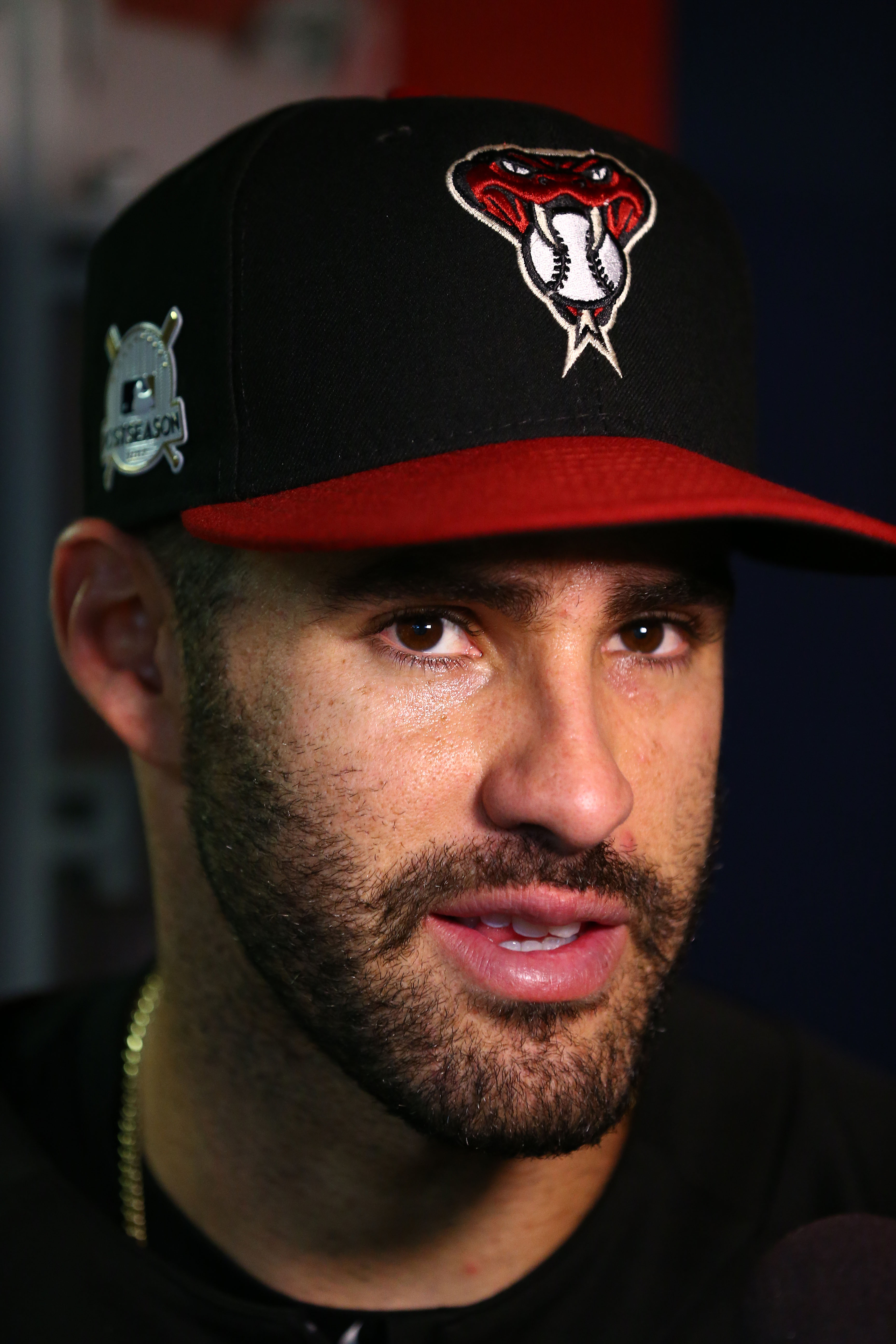
While the aforementioned players are good bets to return to Boston next year, the status of center fielder Jackie Bradley Jr. looks less certain. The Red Sox could trade the 27-year-old Bradley, who’s controllable for three more seasons, move Benintendi from left to center and reel in an offensive force such as J.D. Martinez or Justin Upton via free agency to join Beninendi and Betts in the grass. Martinez and Upton (if he opts out of his contract with the Angels) will come at much higher prices than Bradley, who will earn around $6MM in 2018, but the righty-swingers would likely mash at Fenway Park. And it’s worth noting that Dombrowski has already acquired Martinez in the past. When he was the Tigers’ general manager in 2014, Dombrowski took a flyer on the then-struggling Martinez.
Despite Dombrowski’s familiarity with Martinez, it’s possible the Red Sox will elect to stick with Bradley. Although he had a subpar year offensively, batting just .245/.323/.402 in 541 plate appearances, he was an easily above-average hitter the previous two seasons. Further, even if he doesn’t revisit his 2015-16 levels with the bat, Bradley’s still capable of providing surplus value in other ways. In fact, Bradley ranked third at his position in Defensive Runs Saved (nine) and seventh in Ultimate Zone Rating (4.2) in 2017. He also fared nicely on the bases, placing 11th in FanGraphs’ BsR metric. So, even in a down 2017, Bradley was still part of the overall solution for the Sox.
It’s up in the air whether Boston will have a new outfield alignment next year, whereas change at first base looks highly likely. Moreland is probably going to leave as a free agent, and the Red Sox don’t seem to have a ready-made replacement on hand. Prospect Sam Travis, 24, is fresh off an uninspiring year at Triple-A Pawtucket, where he hit for almost no power across 342 PAs (six home runs, .105 ISO), and didn’t distinguish himself during an 83-PA major league debut in Boston. The Red Sox would be hard pressed to count on him, then, which could point them toward free agency or the trade market for a first baseman.
Free agents-to-be Eric Hosmer, Carlos Santana, Logan Morrison, Jay Bruce and Yonder Alonso all had successful offensive seasons in 2017 and could land on Boston’s radar. On the other hand, Dombrowski has never been shy about making deals and is only a year removed from swinging a blockbuster with the rebuilding White Sox, who have a star first baseman and potential trade candidate in Jose Abreu. The soon-to-be 31-year-old Abreu and his two remaining seasons of team control would warrant a quality haul, but the right-handed slugger and Fenway Park would make for an enticing match.
Whether the Red Sox make a play for Abreu or another high-profile hitter over the winter, it does seem fair to expect an offensive upgrade to come in some form. What do you think Dombrowski will do?
(Poll link for App users)
Will the Red Sox make any major offseason moves to improve their offense?
-
Yes 88% (5,524)
-
No 12% (733)
Total votes: 6,257
Photo courtesy of USA Today Sports Images.
Offseason Outlook: New York Mets
MLBTR is publishing Offseason Outlooks for all 30 teams. Click here for the other entries in this series.
After preventing left fielder Yoenis Cespedes from departing in free agency last offseason, the Mets entered 2017 on the shortlist of potential contenders in the National League. But injuries and down years beset nearly all of the Mets’ top players this season, leading to a 70-win campaign and the end of Terry Collins’ run as their manager. GM Sandy Alderson & Co. are currently searching for Collins’ replacement, but regardless of who’s atop the dugout next season, roster improvements are clearly in order.
Guaranteed Contracts
- Yoenis Cespedes, OF: $87.5MM through 2020
- David Wright, 3B: $47MM through 2020
- Juan Lagares, OF: $15.5MM through 2019 (club option for 2020)
Contract Options
- Asdrubal Cabrera, INF: $8.5MM club option or $2MM buyout
- Jerry Blevins, RP: $7MM club option or $1MM buyout
Arbitration-Eligible Players (service time in parentheses; projections via Matt Swartz)
- Nori Aoki (5.148) – $6.3MM
- Tommy Milone (5.113) – $2.2MM
- Matt Harvey (5.072) – $5.9MM
- AJ Ramos (5.030) – $9.2MM
- Jeurys Familia (5.024) – $7.4MM
- Zack Wheeler (4.098) – $1.9MM
- Travis d’Arnaud (4.044) – $3.4MM
- Wilmer Flores (4.003) – $3.7MM
- Jacob deGrom (3.139) – $9.2MM
- Noah Syndergaard (2.149) – $1.9MM
- Hansel Robles (2.127) – $1.0MM
- Non-tender candidates: Aoki, Milone
Free Agents
[Mets Depth Chart; Mets Payroll Information]
The Mets were never able to get off the mat after a 10-14 April, and as the season wore on, it became obvious Alderson was going to sell the team’s free agents-to-be in the summer. Ultimately, with the exception of Jose Reyes, Alderson dealt every notable Met on an expiring contract either before the July 31 non-waiver trade deadline or prior to the Aug. 31 waiver deadline. During those two months, the Mets said goodbye to outfielders Curtis Granderson and Jay Bruce, first baseman Lucas Duda, second baseman Neil Walker and reliever Addison Reed, among a couple others. All five of those players weighed heavily into the Mets’ franchise-record $155MM Opening Day payroll, a figure that will reportedly decrease by around $20MM in 2018. When factoring in the Mets’ arbitration projections and a couple club options they’re likely to exercise, roughly $100MM of their payroll for next season already looks settled. As such, New York probably won’t be a major player for the premier members of this offseason’s free agent class. That means Alderson is going to have to strike gold on some bargain pickups in order to help the team return to contention.
There’s a litany of question marks on the Mets’ roster heading into the offseason, but the most suspect area may be their infield. Aside from 21-year-old starting shortstop Amed Rosario – who, despite his elite prospect pedigree, struggled in his first 170 big league plate appearances – it’s anyone’s guess how the four-man unit will look in 2018. Third baseman and franchise icon David Wright will continue to loom over the Mets’ payroll through the next three years, but upper body injuries have prevented him from playing in the bigs since May 1, 2016, and he just underwent yet another surgery. The Mets can’t count on Wright to bounce back, something Alderson realizes, so they’re going to have to figure out what to do at the hot corner.
With Wright sidelined for all of 2017, Reyes, Asdrubal Cabrera, Wilmer Flores and T.J. Rivera combined to fare decently, but that doesn’t mean any are locks to start at third next season. Reyes is probably done as a Met, while they’ll have to make a decision on Cabrera’s $8.5MM option. The Mets will have to pay Cabrera a $2MM buyout if they decline to bring him back, which looks unlikely. After all, the 31-year-old has offered solid offensive production during his two-season tenure as a Met, and he’s capable of playing multiple infield positions. Flores and Rivera also bring respectable bats and defensive versatility to the table, making them strong bets to continue factoring in across the infield.
Should Cabrera, Flores and Rivera stays in their plans (and if Rivera’s recovery from Tommy John surgery goes smoothly), the Mets might not feel obligated to make any significant changes at either third or second, but if they do, there will be some reasonably priced options available in the coming weeks. Mike Moustakas figures to be out of the Mets’ price range at third, though fellow impending free agents Todd Frazier (a New Jersey native), Eduardo Nunez and, if he’s willing to move off shortstop, Zack Cozart might be fits. Nunez or Cozart could be solutions at second, too, which also holds true for Walker – who enjoyed his stint with the Mets – Howie Kendrick and trade candidates such as Ian Kinsler (Tigers), Yangervis Solarte (Padres) and Logan Forsythe (Dodgers). The speedy Nunez stands out as an especially intriguing possibility for a team that stole the majors’ fourth-fewest bases in 2017 (58) and finished fifth from the bottom in FanGraphs’ BsR metric. Notably, no Met acquitted himself better in either of those departments this season than Reyes, so losing him and adding Nunez would essentially be a lateral move from a baserunning standpoint.
As right-handed hitters, Flores and Rivera could be platoon mates at first for the lefty-swinging Dominic Smith, but the Mets might want to find an upgrade there. Smith, who debuted with the Mets in August as a top 100 prospect, was woeful during his 183-PA introduction in 2017. While the Mets don’t necessarily have to abandon hope on the 22-year-old, they also shouldn’t hand him the job at first next season if their goal is to contend. With three minor league options remaining, Smith could go back to Triple-A while the Mets turn to a more established player at first. That’s not to suggest they’ll splurge on Eric Hosmer or Carlos Santana, but Bruce, Duda, Yonder Alonso, Logan Morrison and Mitch Moreland may be on their radar as more payroll-friendly types (admittedly, giving Smith another shot might make more sense than turning to the mediocre Moreland).
As Joel Sherman of the New York Post noted last month, Bruce could also act as a right field fill-in if breakout star Michael Conforto‘s late-season shoulder surgery keeps him out of action in early 2018. Conforto’s injury somewhat clouds the outfield picture, but it still seems fair to surmise that the Mets’ alignment in the grass next season will mostly consist of him and Cespedes flanking a Juan Lagares/Brandon Nimmo tandem in center. With those players on hand, the Mets could cut ties with expensive reserve Nori Aoki. Although Aoki performed well after signing with the Mets late in the season, his low-ceiling skillset may not be worth $6MM-plus to a team with many holes and limited spending room.
While the Mets’ group of position players has plenty of issues – including behind the plate, arguably, though it appears they’ll stay the course with Travis d’Arnaud and Kevin Plawecki – their pitching was the weaker area in 2017, surprisingly enough. The Mets’ staff looked elite coming into the year, but their starters and relievers wound up recording the majors’ third-highest ERA (5.01) and 10th-worst fWAR (10.0). Injuries were at fault to a degree, especially considering fireballer and all-world ace Noah Syndergaard was barely available on account of a torn right lat. Syndergaard sat out all of May, June, July and August, limiting him to 30 1/3 innings on the year, but he returned late in campaign and figures to take the ball on Opening Day in 2018.
If healthy, Syndergaard and Jacob deGrom are about as good as it gets atop a rotation, but certainty is difficult to find anywhere else among the Mets’ cadre of starters. Former ace Matt Harvey will be back in his last year of arbitration eligibility, and while it does make sense to tender him a contract, his leash may be short next season. In his first action since undergoing July 2016 thoracic outlet syndrome surgery, Harvey pitched to a 6.70 ERA/6.37 FIP across 92 2/3 innings. More of that next year could send him to the bullpen or out of New York entirely. Harvey certainly wasn’t the only Mets starter who disappointed this season, though, as Steven Matz and Zack Wheeler were also ineffective before seeing their years end early thanks to arm problems. The fact that they opened the season with durability concerns makes their truncated, below-average 2017s all the more troubling. Meanwhile, the other Mets who amassed double-digit starts – Robert Gsellman, Seth Lugo and Rafael Montero – also failed to distinguish themselves as rotation locks this year. The only member of the trio without any options left is Montero, which means he could find himself out of the organization if he doesn’t at least crack the Mets’ bullpen next spring.
The Mets clearly have enough arms to fill in a rotation behind Syndergaard and deGrom, but as evidenced above, there’s substantial risk with each of those hurlers. As such, it would behoove the Mets to search for a competent innings eater – something they had in Bartolo Colon from 2014-16. If they’re not in big-spending mode, expecting to find the type of production Colon offered during that three-year stretch may be unrealistic, but there will still be affordable free agents who could help their cause. Doug Fister was on the Mets’ radar early in 2017 and is due to reach the market again after an encouraging showing in Boston. Other potential targets in free agency may include CC Sabathia (it’s hard to imagine the Yankees not re-signing him, though), Jaime Garcia, Jhoulys Chacin, Jeremy Hellickson, John Lackey, Jason Vargas, Miguel Gonzalez and Chris Tillman, to name several.
Moving to the bullpen, there will be an array of quality relievers available in free agency, which is good news for a Mets club on the lookout for late-game stability. Jeurys Familia, like many other Mets, was both injured and unspectacular in 2017, pitching to a 4.38 ERA and walking nearly 5.5 batters per nine innings over 24 2/3 frames. His struggles played a part in the Mets’ bullpen posting the majors’ second-worst ERA (4.82) and fifth-lowest fWAR (1.2). Only one bullpen – the Brewers’ – recorded a higher walk rate than the Mets’ 4.25 per nine, while just eight induced fewer groundballs. The Mets’ woes in the walk department came despite having Reed for the majority of the season. Reed put up an extremely impressive 1.1 BB/9 in 49 innings with the Mets this year, and he’s one of several control artists headed for the open market. As shown in the previous link, no free agent-to-be combines appealing walk and grounder rates like Brandon Kintzler, who was top seven this year among impending FA relievers in each category. If signed, he’d join Familia, Jerry Blevins and AJ Ramos as the Mets’ go-to arms in high-leverage spots. However, the Mets may opt for a far more strikeout-minded reliever(s) than Kintzler, who barely punched out four batters per nine innings this season.
Evidenced in part by their pitching staff, a lot has changed in the past year for the Mets, who went into last offseason bent on keeping a playoff-caliber roster intact. Twelve months later, they’re an NL also-ran that closed this season with a dreadful record and the league’s third-worst run differential (minus-128). Better health alone will prevent such a poor finish from happening again in 2018, but management will have to make a variety of shrewd moves this winter in order to restore the club to the winning ways it displayed from 2015-16.
MLBTR Originals
Here is the past week’s original content from here at MLB Trade Rumors…
- MLBTR released its annual set of arbitration projections, as per the model developed by contributor Matt Swartz. Every player eligible (or potentially eligible) for arbitration this offseason is covered, providing an idea about what the players are likely to earn in 2018 and the projected costs of each team’s arb class.
- This year’s qualifying offer will be valued at $17.4MM, Tim Dierkes reported. While only a minor bump from last year’s $17.2MM value, it still represents a nice payday on a one-year deal, so we could see at least one free agent accept a QO for the third straight offseason.
- MLBTR’s annual Offseason Outlook series breaks down in detail what each of the 30 teams will look to address before next Opening Day. The Orioles (by Mark Polishuk), Tigers (by Steve Adams) and White Sox (by Tim) were the first three teams to be featured in this year’s series.
- Jonathan Lucroy is featured in the latest edition of Free Agent Stock Watch, as Jeff Todd breaks down what Lucroy may earn in the open market on the heels of an inconsistent season. Jeff projects Lucroy will still land a significant contract this winter after the catcher seemed to regain his old form after a deadline trade from the Rangers to the Rockies.
- As we prepare for another winter of big signings, Connor Byrne checks in on the 12 most expensive free agent deals handed out in the 2016-17 offseason. Let it be a cautionary tale about the risks of big-ticket free agency — less than half of the players signed to those contracts had fully healthy and productive seasons in 2017.
- With the Marlins rumored to be cutting payroll and trade rumors swirling around Giancarlo Stanton, Christian Yelich and Marcell Ozuna, Connor polled MLBTR readers about the future of the three Miami outfielders. Over 45% of voters predicted that at least two of the outfielders will be traded in the offseason, and the option of “none will be dealt” garnered the least amount of support (8.07%).
- In another poll, Jeff asks the readership for their opinion on how much Eric Hosmer stands to earn in free agency.
- With Aaron Nola looking like a cornerstone piece of the Phillies’ rotation, Jeff examined the possibility (and potential costs) of a contract extension between the two parties.
Poll: How Much Will Eric Hosmer Earn In Free Agency?
We’ve heard varying suggestions on just how much money soon-to-be free agent Eric Hosmer may be seeking, or may command, on the open market. That’ll all be sorted out when the negotiations start in earnest, but it’s fun to begin thinking about it now.
We’re now just a few weeks away now from the start of free agency, after all. First, the Royals will issue a qualifying offer — which will be at a $17.4MM rate. Hosmer, inevitably, will reject it, making him a free agent just weeks after his 28th birthday.
By now, Hosmer’s broad profile is well-known. The former third overall draft pick played in all 162 games this year, slashing a robust .318/.385/.498 and banging 25 home runs for the second consecutive season. That’s quite a bit more than he has produced previously, though Hosmer has had other solid seasons at the plate.
The question teams will be asking is whether there’s reason to believe that Hosmer can maintain that level of output. He rode a .351 batting average on balls in play in 2017, steadily outpacing his .316 career rate. And Hosmer has stayed within the same general K/BB range as ever, while continuing to put the ball on the ground over half the time. His hard-hit rate dropped below thirty percent for the first time since his debut season. When he did put the ball in the air, it went out of the park over twenty percent of the time for the second consecutive season, though it’s still fair to wonder whether that’s sustainable.
There are other factors, too, of course. Hosmer is no longer a double-digit annual stolen base threat and hasn’t always drawn strong reviews from baserunning metrics. Likewise, defensive metrics have never matched his generally positive reputation with the glove. In these areas, perhaps, Hosmer’s reputation outpaces what some of the numbers say — as a result, he hasn’t even yet cracked 10 fWAR over his career — although these are among the most controversial areas of sabermetric analysis.
Perhaps the most interesting concept, though, is the idea that Hosmer delivers value that outpaces his direct, on-the-field contributions. Sam Mellinger of the Kansas City Star just published an interesting, though eminently arguable look at the evident position that super-agent Scott Boras intends to take on the matter this fall. Most intriguingly, Boras is said to be readying for an attempt at quantifying the ways in which Hosmer’s halo adds value by producing “a metric on intangibles.”
Mellinger cites an executive that thinks Boras will be looking for something like $20MM annually on a decade-long term. That’s quite an ask for a first baseman with the stat line of Hosmer’s — particularly in a day and age when a far superior hitter such as Edwin Encarnacion can only get $20MM over three years (albeit at a significantly older age) and with a number of other quality bats available in free agency.
Plenty of less-than-amazing batters have taken down big money over long terms, though typically such players were expected to deliver significant value in the field and on the bases. Jason Heyward, for example, got $184MM over eight years (plus two opt out opportunities). But Heyward was only 26 and was one of the game’s most valued defenders. Oh, and he also carried a lifetime 118 wRC+ to that point — clearly superior to Hosmer’s 111 wRC+ career mark, though the latter did have the bigger offensive platform season.
We aren’t going to get a sneak peek at Boras’s binder. But Mellinger lays out the broad case for Hosmer to out-earn his prior productivity:
But consider this. The Royals built their success, in large part, on intangibles. How much did they talk about clubhouse friendships, of bonds formed in the minor leagues, and of the joy they found in playing for each other?
For argument’s sake, let’s assume that was overstated, and that the parade happened because of athleticism and relief pitching more than anything else. But you can’t have watched the Royals’ rise without believing the other stuff had a part in it, too. The resiliency in the comebacks, the consistent performance in the biggest moments.
The Royals had a parade because of these things, the team welcoming in record attendance and interest.
Shouldn’t the players be rewarded, too?
Do you buy that? Even a little? How do you value it? And how do you value the stat line you expect Hosmer to put up? Rolling it all together, just how much will he be worth on the open market? (App users can click here for the poll.)
How Much Will Eric Hosmer Earn In Free Agency?
-
$100MM to $125MM 33% (3,205)
-
$75MM to $100MM 29% (2,803)
-
$125MM to $150MM 19% (1,784)
-
$50MM to $75MM 10% (984)
-
$150MM or more 8% (797)
Total votes: 9,573
MLB Sets 2017-18 Qualifying Offer At $17.4MM
Major League Baseball has set the qualifying offer for the upcoming offseason at $17.4MM, MLBTR’s Tim Dierkes reports (Twitter link).
With the news, teams can now make full assessments of whether to issue qualifying offers to pending free agents. Offers are due five days after the World Series wraps up; players will then have ten days to weigh them.
Prior indications were that the figure would land somewhat higher, with expectations sitting in the range of $18.1MM. Last year, the QO sat at $17.2MM, so this represents only a marginal tick upward. Though the variations here are relatively small relative to the total value, every bit of money adds up for teams that are looking to map out a payroll plan.
When the QO system went into effect in the fall of 2012, the offer price — which is set by averaging the top 125 salaries leaguewide — was set at $13.3MM. For the first five years of its operation, the draft compensation system was relatively simple, but also seemingly operated to create quite a burden for mid-tier free agents. Tim gave an early an excellent account of the impact early in 2013; one year later, I took a lengthy look at the way the offer functioned in practice and explored some concepts for improving it. To that point, no player had accepted a qualifying offer. The market evolved from that point onward, as several players ultimately took the big, one-year salaries. But it remained clear that only a few players each year were disproportionately burdened by the system, which also did not seem to be benefiting smaller-market organizations.
With a new collective bargaining agreement came a new and more complicated rules regime that sought to temper some of those problems. Rather than the one-size-fits-all approach that once governed, several variables are now utilized to determine the draft compensation that results when a player declines a QO and then signs with another organization. You’ll want to review this thorough breakdown of the new system, via MLBTR’s Mark Polishuk, for a full understanding of the procedures that apply for the coming offseason.
Offseason Outlook: Chicago White Sox
MLBTR is publishing Offseason Outlooks for all 30 teams. Click here for the other entries in this series.
The 2016 Winter Meetings marked the beginning of a new White Sox strategy: a total rebuild. Gone are Chris Sale, Adam Eaton, Jose Quintana, Todd Frazier, David Robertson, Tommy Kahnle, Anthony Swarzak, Dan Jennings, Melky Cabrera, and Miguel Gonzalez. The 2017 team played to their low expectations, but the club’s record was an afterthought as the White Sox continued acquiring top-shelf young talent throughout the season. In terms of trades, most of the heavy lifting has been done as we head into the offseason.
Guaranteed Contracts
- James Shields, SP: White Sox responsible for $10MM in 2018 salary as well as $2MM buyout on 2019 option.
- Nate Jones, RP: $5.2MM through 2018. Includes club options for 2019-21.
- Tim Anderson, SS: $24.15MM through 2022. Includes club options for 2023-24.
Arbitration Eligible Players (service time in parentheses; projections via MLBTR contributor Matt Swartz)
- Al Alburquerque (5.030) – $1.1MM projected salary
- Avisail Garcia (4.167) – $6.7MM
- Zach Putnam (4.135) – $1.4MM
- Jake Petricka (4.044) – $1.1MM
- Jose Abreu (4.000) – $17.9MM
- Danny Farquhar (3.136) – $1.5MM
- Leury Garcia (3.025) – $1.2MM
- Carlos Rodon (2.168) – $2.0MM
- Yolmer Sanchez (2.134) – $2.1MM
- Non-tender candidates: Alburquerque, Putnam, Petricka, Farquhar
Free Agents
[Chicago White Sox Depth Chart; Chicago White Sox Payroll Information]
GM Rick Hahn has executed his plan perfectly so far. The White Sox were able to give fans a glimpse of the future as Yoan Moncada, Lucas Giolito, and Reynaldo Lopez made their team debuts this summer. They’ve got six of the game’s top 100 prospects waiting in the wings with Eloy Jimenez, Michael Kopech, Luis Robert, Blake Rutherford, Dylan Cease, and Alec Hansen. Zack Collins, Dane Dunning, and Carson Fulmer follow on their top prospect list. And don’t forget about Tim Anderson and Carlos Rodon, who have already experienced big league success even if they struggled in 2017. As the rebuild enters its second offseason, what’s left to do on the transaction side?
The White Sox still have two marketable veterans: Jose Abreu and Avisail Garcia. Both were bright spots on a 2017 club that lost 95 games. Abreu, 31 in January, experienced a power resurgence on his way to becoming one of the five best-hitting first basemen in the game this year. The White Sox control him through 2019 as an arbitration eligible player, and MLBTR projects a salary close to $18MM just for 2018. His price tag could be in the $40MM range for 2018-19.
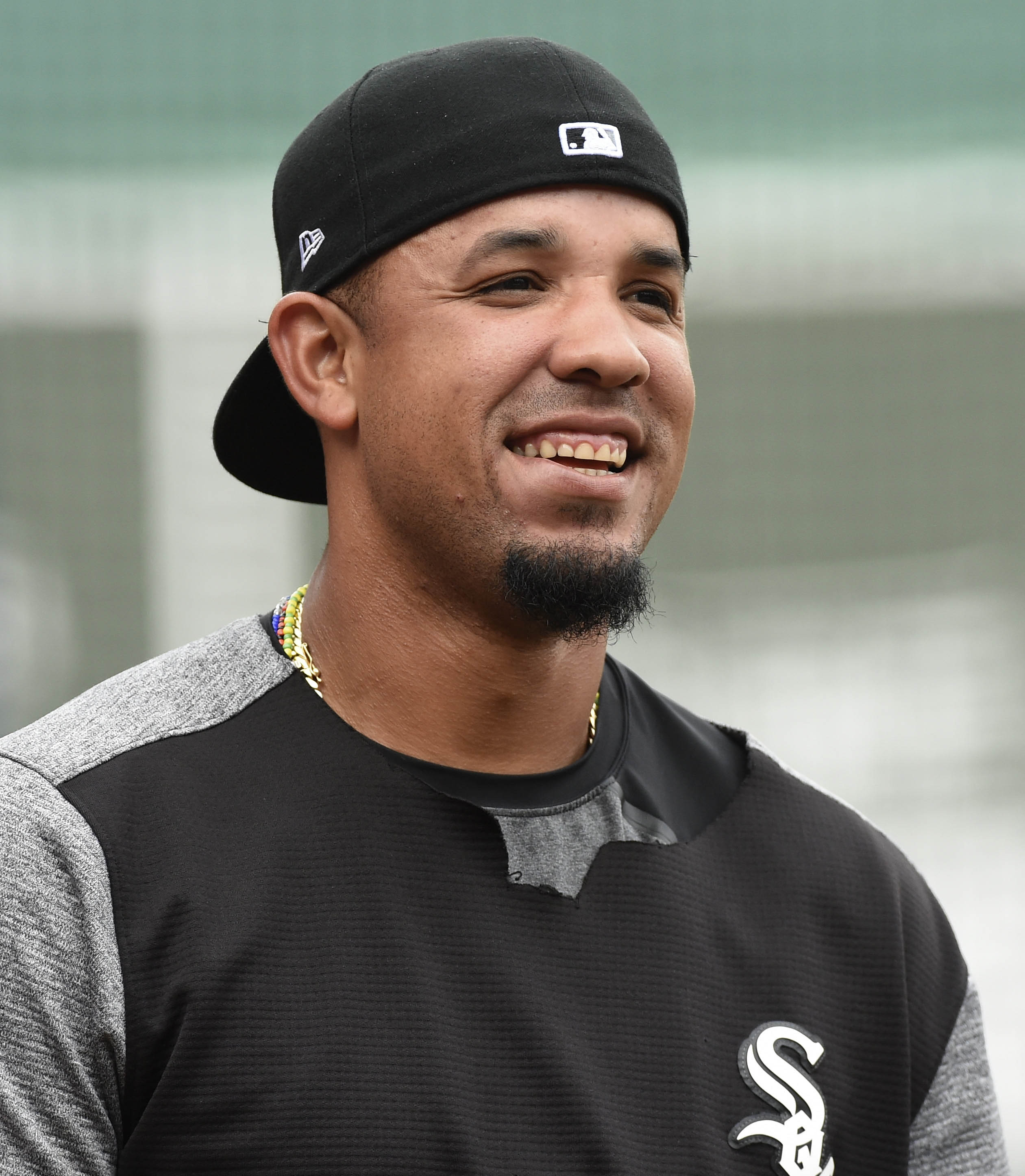
Abreu’s rising salary is not a problem for the Sox, who have next to nothing on the books. If the White Sox entertain trades for Abreu, his salary could take smaller payroll teams out of the mix. Still, he arguably could be the best hitter on the market aside from J.D. Martinez and will require a much smaller financial commitment than Martinez or fellow first baseman Eric Hosmer. Abreu also brings reliability that is unmatched by 2017 breakouts like Logan Morrison or Yonder Alonso.
Hahn will likely treat Abreu as he did Jose Quintana last winter: set a price, listen to offers, and hold him if those offers fall short. Penciling Abreu into the third spot in the order for the 2018 White Sox would likely please fans. An extension would be pushing too far, however, as Abreu is unlikely to provide surplus value in his age-33 season and beyond.
Right fielder Avisail Garcia is also controlled for two more seasons through arbitration. He presents a different calculus following a surprising season in which he hit .330/.380/.506. Garcia, 27 in June, should be in the prime of his career. He’s also less proven than Abreu, having shown a subpar bat until 2017.
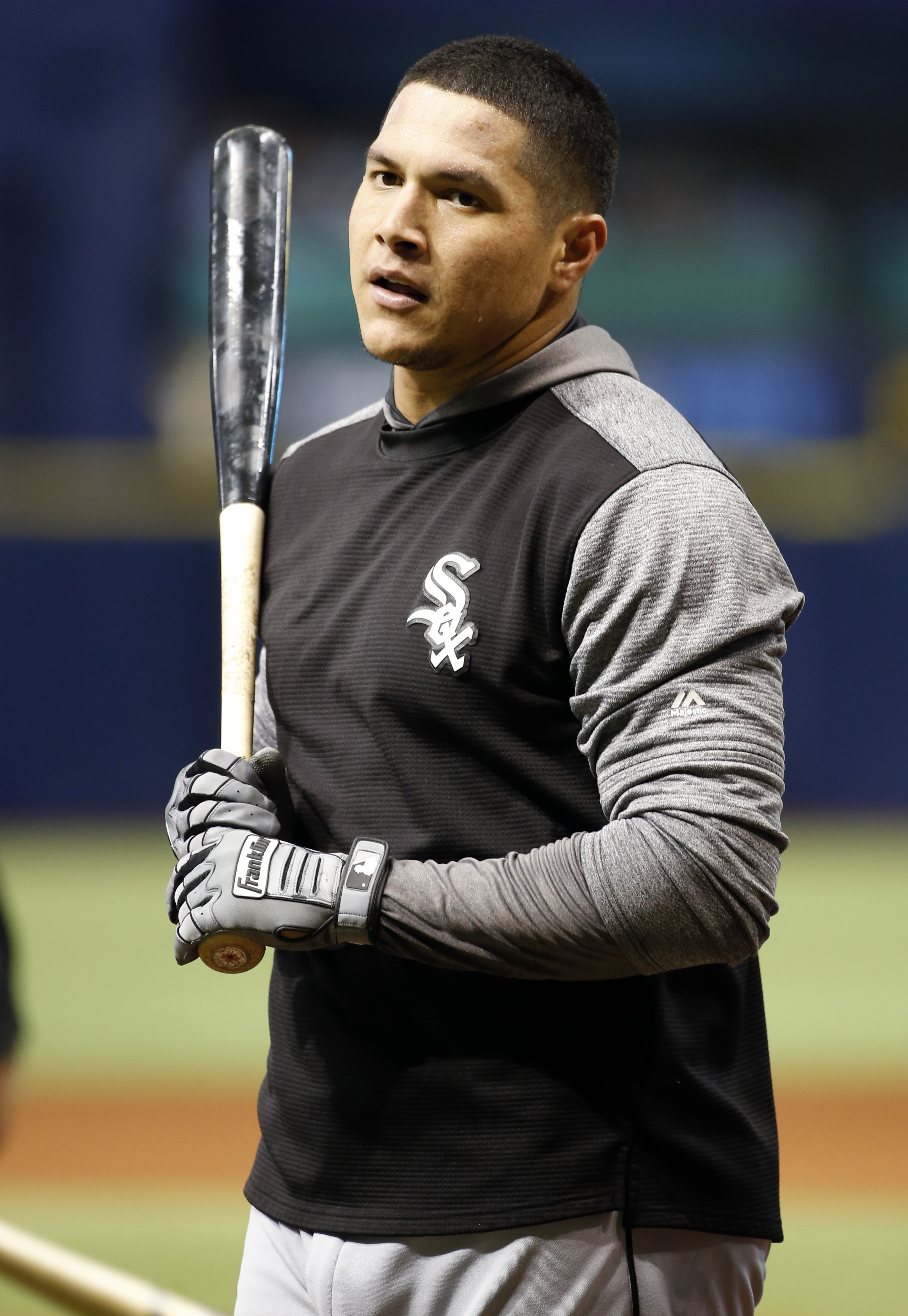
We project Garcia to earn $6.7MM in 2018, so he could be a bargain even though no one expects him to manage a .392 batting average on balls in play again. South Side Sox notes that Garcia’s expected weighted on-base average (found using Statcast data) suggests his new level is that of a well above-average player. Extending Garcia before he proves himself further could result in a discount for the White Sox, if the player is willing. If the numbers don’t add up for Hahn, Garcia becomes a trade candidate.
Trade chips aside, the White Sox must field a Major League team in 2018. While the 2017 season was surprisingly fun in spite of the team’s record, fans will expect progress in the standings with a more respectable product on the field as the rebuild enters its second phase.
The bullpen is an obvious area for Hahn to address this winter. Due to the trades of Robertson, Kahnle, Swarzak, Jennings, and Tyler Clippard, as well as injuries to Nate Jones and Zach Putnam, manager Rick Renteria had to survive with perhaps MLB’s least recognizable bullpen. 27-year-old Juan Minaya, a waiver claim from last year, was an up-and-down guy for the Sox until late June, and by mid-August he became the team’s closer. 30-year-old Gregory Infante signed a minor league deal in January and worked his way into high-leverage innings by season’s end. Most likely, Chicago’s bullpen will continue to present great opportunities to the game’s reclamation projects, especially after helping Swarzak and Kahnle turn around their careers. There’s room for mid-range additions as well, given the team’s sparse payroll commitments. While Hahn won’t be looking at Wade Davis or Greg Holland, the White Sox may add a few veterans in the $3-6MM per year range in addition to a likely significant number of minor league pacts.
The rotation is more settled. Veteran James Shields will retain a spot in the last year of his contract. Reynaldo Lopez and Lucas Giolito are in. Carlos Rodon will claim a spot, but his timetable is wide open currently as he recovers from shoulder surgery. As MLB.com’s Scott Merkin explained in September, Carson Fulmer is a contender for a spot and Michael Kopech will likely make his way up midseason. There seems to be room for at least one veteran addition, perhaps with last year’s $6MM deal with Derek Holland serving as a model. Free agent reclamation projects include Clay Buchholz, Jeremy Hellickson, Francisco Liriano, Wade Miley, Hector Santiago, and Chris Tillman.
The White Sox may also consider minor additions on the position player side. After going with Omar Narvaez and Kevan Smith behind the dish this year, the Sox could make a low-key veteran catcher addition from a list of many options. Leury Garcia showed well as the starting center fielder when he wasn’t battling injuries. Adam Engel and Charlie Tilson will be in the center field mix as well. Nicky Delmonico had a strong 166-plate appearance debut and should see time at left field and designated hitter. Yolmer Sanchez could be penciled in at third base with Moncada getting the nod at second and Anderson at shortstop. While they aren’t expected to contend for big names, the White Sox would benefit from adding both outfield and infield depth for 2018.
As Steve Adams outlined last month, the White Sox should consider taking advantage of their low payroll commitment to further boost their prospect stash. After arbitration raises, the team projects to have around $45MM committed to the 2018 payroll. Steve named bad contract examples such as Matt Kemp, Nick Markakis, Yasmany Tomas, Jacoby Ellsbury, and Wei-Yin Chen. The White Sox could agree to take on a contract like that in order to pry young players away from the club that is currently saddled with said contract. In the process, the Sox would also be supplementing their own 2018 team.
With most of the building blocks of the future already in the organization, the next phase of the White Sox rebuild will hinge on player development. The 2017-18 offseason figures to be much less eventful than the previous one for White Sox fans. Rick Hahn’s work is far from over, but the next White Sox playoff team is starting to come into view.
Photo courtesy of USA Today Sports Images.
Extension Candidate: Aaron Nola
The Phillies have scrupulously maintained their future balance sheets, preferring not to make any commitments that might tie their hands in future seasons. But the organization has already made one exception, inking Odubel Herrera last winter, and could explore yet more extensions with core players this winter.
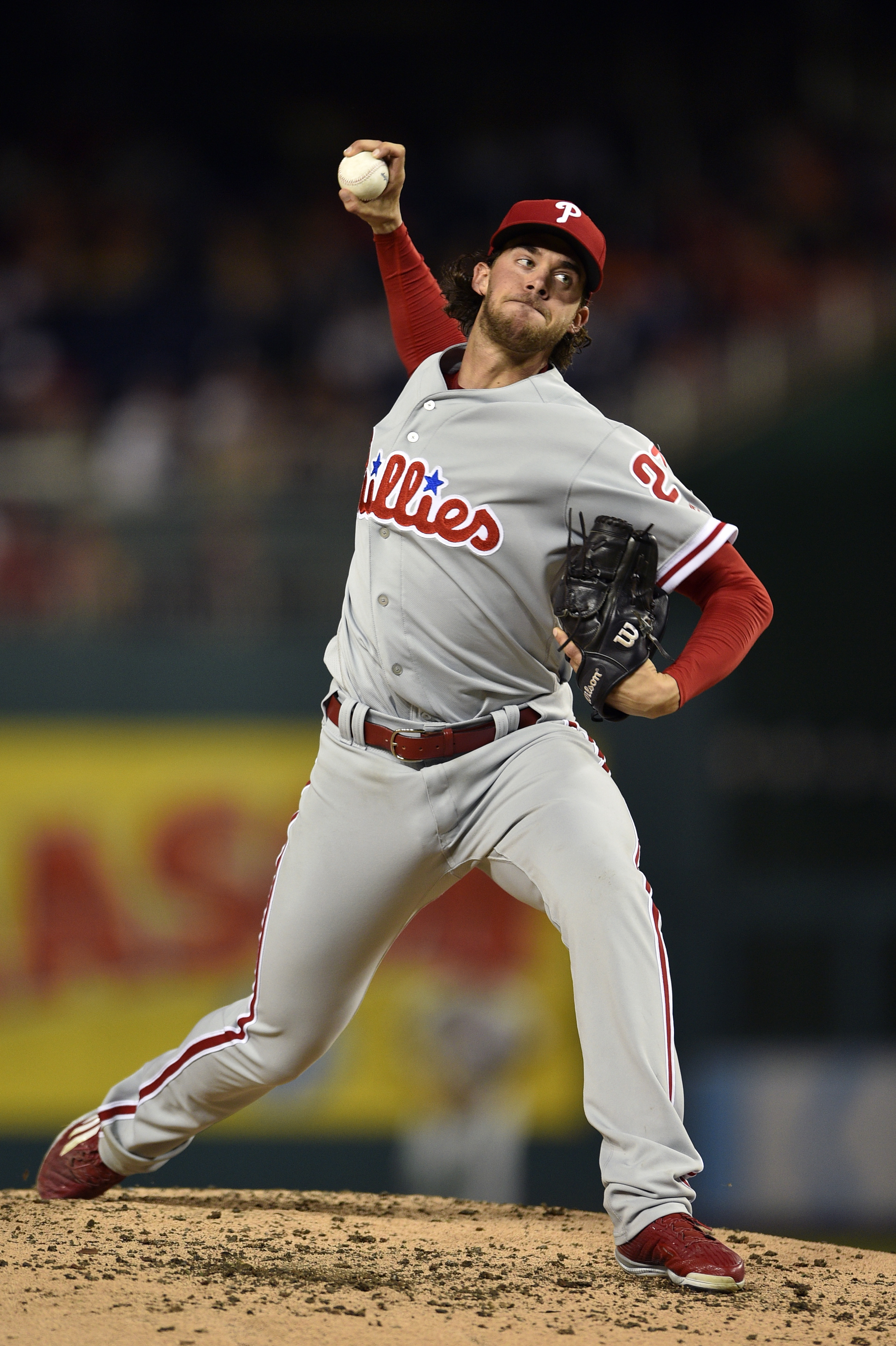
One could probably make a case for a very early strike with one of the team’s less-experienced would-be stars — chief among them, Rhys Hoskins. But by far the likeliest candidate for a long-term deal is righty Aaron Nola, who was selected with the seventh overall pick of the 2014 draft and has since established himself as one of the game’s better young starters.
Nola, 24, reached the majors after just 30 minor-league appearances, showing quite well in his 13-start debut at just 22 years of age. Last year, though, he faded after a strong opening and ended the season facing injury questions. Nola ultimately avoided surgery for some UCL and flexor tendon issues and was able to rehabilitate through the problem over the offseason.
It’s easy to forget now, but entering the current season, nobody was quite sure what to expect from Nola. He responded with 168 innings of 3.54 ERA ball. Nola also racked up 9.9 K/9 against 2.6 BB/9 along with a 49.8% ground-ball rate in his 27 starts, showing career-best numbers in average fastball velocity (92.5 mph) and swinging-strike rate (10.8%).
Looking at Nola’s overall body of work, it’s hard not to be impressed. While he did struggle to keep runs off the board in 2016, advanced metrics have basically loved him from day one. Through 356 2/3 MLB frames, he carries a 3.38 FIP, 3.33 xFIP, and 3.52 SIERA.
The hugely positive outlook on his future makes Nola a bargain, as Fangraphs’ Dave Cameron suggested when ranking him 49th in all of baseball on his top 50 trade value rankings. Because he didn’t reach the Majors quite soon enough back in 2015, Nola will fall shy of Super Two qualification, meaning he’ll play at (or near) the league minimum in 2018 before reaching his three years of arbitration eligibility.
While Nola did take home over $3MM to sign out of LSU, he has another year to wait for significant Major League earnings. That means risk aplenty, which is true of any pitcher but perhaps especially so for Nola, given his prior injury scare. He and the team are aware of the details of the medical situation and thus can adequately account for the risk it entails, but that factor could also push him in the direction of weighing a contract extension.
It’s tempting to speak abstractly about a possible discount for the injury questions. In truth, though, the more interesting question is just what framework might be utilized as a starting point for talks. To this point, no pre-arbitration starter has scored a guarantee of over $40MM. Even Corey Kluber, a 2+ service-class pitcher like Nola, was promised $38.5MM over five years (while giving up two option years) in his 2015 contract. Kluber was more than five years older than Nola is now but also was coming off of a Cy Young Award at the time.
The Kluber deal largely fell in line with prior pre-arb starter contracts, though, and even moved the standard up a bit. Chris Sale ($32.5MM), Derek Holland ($28.5MM), and Trevor Cahill ($30.5MM) are a few of the prior 2+ service hurlers that took five-year deals with similar structures.
Though Nola has staked out a claim as a top-quality young starter, it’s hard to argue that he has shown more to this point than had Sale or Madison Bumgarner (who signed his own five-year, $35MM deal as a 1+ service-class player). Considerations of inflation could be somewhat offset by Nola’s health record, though his representatives would surely argue that his avoidance of surgery and a 2017 season free of arm issues render that a largely moot point.
Provisions could be worked in that would protect the team in the event of an elbow flare-up, such as the addition of cheap option years at the end of the pact. (For example, both Felix Hernandez and John Lackey have previously agreed to clauses that add a league-minimum option to the end of their deal in the event of Tommy John surgery) Or, perhaps the wealthy Phils would be willing mostly to look past Nola’s elbow questions in the hunt for upside, reasoning that the overall risk is minimal and that the open-market price for pitching has steadily risen in recent years and figures to do so between now and the point at which Nola himself would reach the open market.
The previously mentioned five-year structure would run through Nola’s age-29 season and buy out one free-agent year. That’s still a lucrative age at which to reach the open market, though the Phils may seek to add a club option or two that’d further delay his path to the open market. Reaching free agency in advance of his age-31 season would leave Nola with plenty of earning capacity, though tacking on a second club option (and thus delaying his free agency by three full years) could be a tough sell. Generally speaking, Nola and his reps at Paragon Sports would be weighing whether an immediate guarantee is worth forgoing the opportunity to reach free agency before his age-29 season — an age at which he’d almost certainly be one of the youngest starters on the market.
With a number of factors for both sides to weigh, it’ll be an interesting situation to watch if the Phillies and Nola do indeed sit down this winter. Nola could well become the latest Phillies player to secure a long-term commitment as part of the organization’s hopeful contending core, but his proximity to arbitration should reduce his urgency to take a deal to some extent.
Photo courtesy of USA Today Sports Images.
Offseason Outlook: Detroit Tigers
MLBTR is publishing Offseason Outlooks for all 30 teams. Click here for the other entries in this series.
With the No. 1 pick in next year’s draft locked up following an aggressive summer fire sale, the Tigers are set for an offseason unlike any Detroit has seen in the past decade — one of a rebuilding team looking toward the future rather than looking toward next season’s playoff race.
Guaranteed Contracts
- Miguel Cabrera: $192MM through 2023
- Jordan Zimmermann: $74MM through 2020
- Victor Martinez: $18MM through 2018
- Ian Kinsler: $11MM through 2018 (salary rises to $12MM if Kinsler wins a Gold Glove Award)
Arbitration-Eligible Players (projections via MLBTR contributor Matt Swartz)
- Andrew Romine (5.049) – $1.9MM projected salary
- Jose Iglesias (5.036) – $5.6MM
- Alex Presley (4.056) – $1.1MM
- Alex Wilson (4.038) – $2.1MM
- Nicholas Castellanos (4.029) – $7.6MM
- Bruce Rondon (3.097) – $1.2MM
- Shane Greene (3.075) – $1.7MM
- James McCann (3.028) – $2.3MM
- Bryan Holaday (3.025) – $700K
- Blaine Hardy (2.132) – $800K
- Non-tender candidates: Romine, Rondon, Presley, Holaday, Hardy
Option Decisions
- Anibal Sanchez: $16MM club option with a $5MM buyout
Other Financial Obligations
- $8MM to the Astros in 2018 and in 2019 for Justin Verlander
- $6MM to the Rangers in 2018-20 for Prince Fielder
Free Agents
- None
[Detroit Tigers Depth Chart | Detroit Tigers Payroll Outlook]
One calendar year ago, the question facing the Tigers was whether they’d embark on a rebuild or whether they’d take aim at contending with an aging core one more time. The trade of Cameron Maybin on the first day of the 2016-17 offseason pointed toward the former of those two options, but it wasn’t until this past July that the Tigers emphatically made their organizational overhaul a reality. From July 18 through Aug. 31, Detroit traded the likes of J.D. Martinez, Justin Wilson, Alex Avila, Justin Upton and franchise icon Justin Verlander for young players and salary relief.
Ian Kinsler, Miguel Cabrera and Victor Martinez are the remaining core pieces of the Tigers’ most recent AL Central title in 2014, but that’s not likely to be the case for long. While Cabrera’s albatross contract, significant dip in productivity and pair of herniated disks in his back make him an immovable trade asset, Kinsler will enter the offseason as perhaps the likeliest player in all of baseball to be traded. While he had a down year at the plate, the 35-year-old is affordable in 2018, plays premium defense at second base and brings a wealth of postseason experience to hopeful contenders.
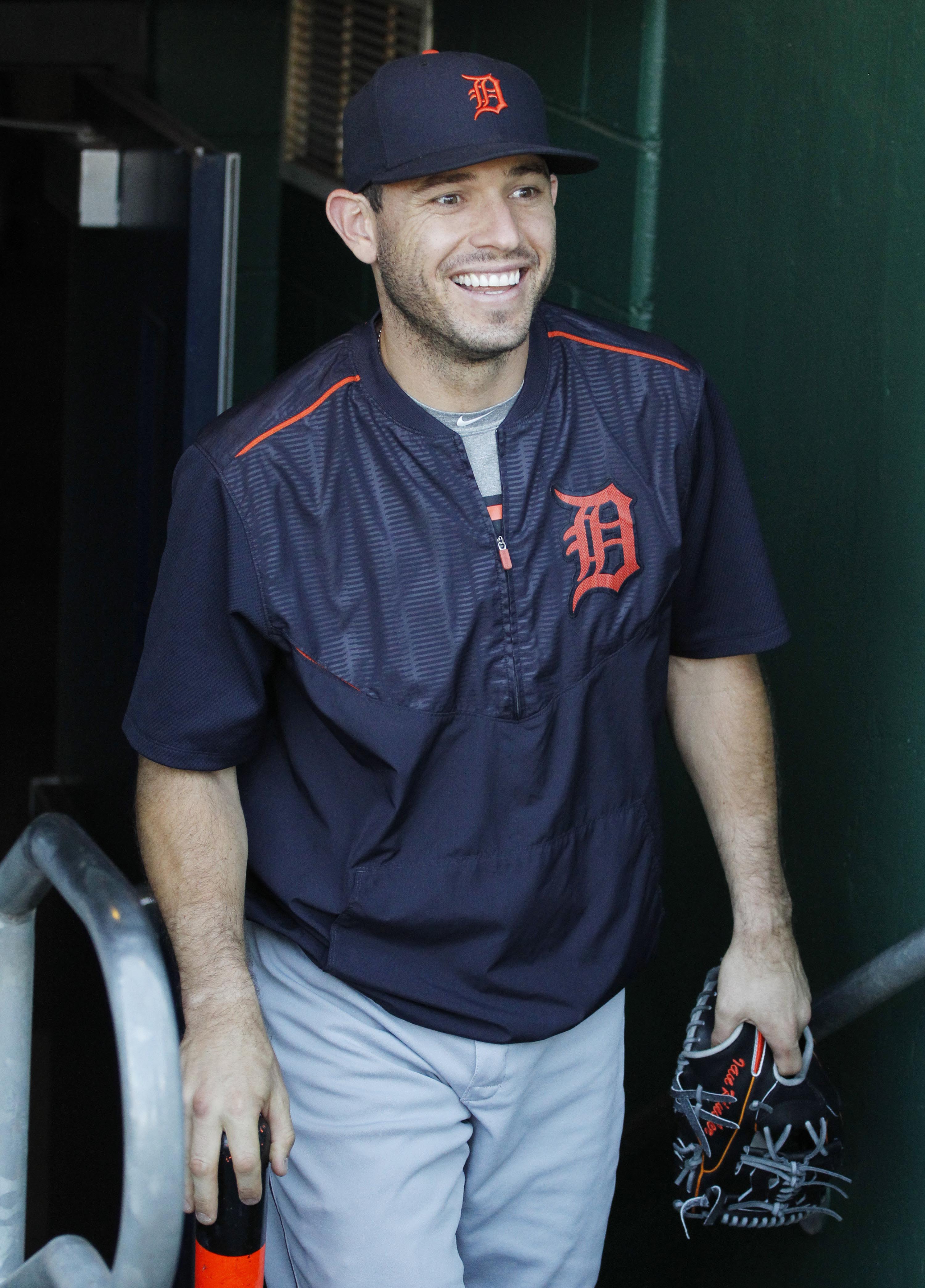
The Angels and Brewers both reportedly had interest in him prior to the non-waiver deadline, and neither is especially settled at second base at present. Other speculative fits include the Blue Jays, Dodgers and Mets. Regardless of the destination, Kinsler seems likely to move for some younger pieces. While the Tigers would love to trade Jordan Zimmermann and Victor Martinez to clear payroll and make room for younger options, both of those contracts seem entirely immovable. Martinez may even simply be a release candidate, per Evan Woodbery of MLive.com.
Aside from Kinsler, the Tigers still possess a few intriguing trade options. Nicholas Castellanos showed interesting power and some upside in his batted-ball profile, but his defense was a disaster both at third base and especially in right field. With a fairly sizable bump in his salary projected, some clubs may not see that much surplus value; certainly a contending team would have reservations about plugging him into third base or right field, though perhaps a team like the Braves that is more on the fringes and still hunting for upside would roll the dice.
Other candidates to be moved include Jose Iglesias and breakout reliever Shane Greene. Iglesias only has a year to go on his deal and hasn’t hit much in the past two seasons, but he’s an affordable superlative defender at a premium position. Contenders in need of infield defense should at least kick the tires. There’s no rush to move Greene, who finished the year as the closer in Detroit, but controllable relief arms are always of interest on the trade market. Greene posted a 2.66 ERA with 9.7 K/9 and a 47.4 percent ground-ball rate in 67 2/3 innings this season, but teams may be wary of his 4.52 BB/9 rate and an 8.6 percent swinging-strike rate that doesn’t gel with his more impressive K/9 mark. He’s a lock to be tendered and could be shopped next summer if he’s not moved in the offseason.
One name that fans of other teams will dream on is 2016 Rookie of the Year Michael Fulmer, whose name was frequently speculated upon prior to the non-waiver trade deadline. However, a trade of Fulmer strikes me as decidedly unlikely for a number of reasons, with last month’s elbow surgery chief among them. Impressive as Fulmer’s first two seasons were, teams are going to be reluctant to give maximum value for a player that hasn’t taken the mound since undergoing surgery to reposition his ulnar nerve.
Beyond that, Fulmer is controllable for five more seasons and won’t even reach arbitration eligibility until next winter. The Tigers shouldn’t feel any urgent rush to take the best offer currently presented, and three months of a healthy Fulmer would significantly up his trade stock for next summer’s trading season. Make no mistake about it, Fulmer’s name will pop up on the rumor circuit this winter, but it seems difficult to envision the Tigers and another club reaching the nexus of “fair value” in Detroit’s eyes and a slightly discounted return from a team that will feel it is taking on at least some degree of injury risk.
Turning to what the Tigers could look to actually acquire this offseason, the team is set at a variety of positions. Jeimer Candelario, who came to the Tigers in the return for Wilson and Avila, will get every opportunity to cement himself as a slugging third baseman and one of the future faces of the franchise in 2018. Cabrera will return at first base or designated hitter (depending on what’s done with Martinez), and the club seems likely to go with James McCann and John Hicks again behind the plate rather than invest dollars or prospects in acquiring a new catcher.
Mikie Mahtook performed well enough in center field to earn another look next year, and the team could play Castellanos in the outfield if he’s retained. Still, the Tigers ran out a rather uninspiring group of corner options this winter, so they could look at their unsettled corner situation as a means of catching lightning in a bottle as they did with they signed J.D. Martinez in the first place. Certainly, that’s easier said than done, but looking to the trade market for blocked outfielders (the Cardinals, for instance, have a surplus there) or adding a once-well-regarded player with some youth seem like a better avenue than a veteran stopgap in the Seth Smith or Melky Cabrera mold. Alternatively, the corner outfield opening represents a reasonable spot for the Tigers to take aim with the top pick in this December’s Rule 5 Draft.
Overall, the group of position players leaves some clear and obvious holes: at least one corner outfielder will need to be brought into the mix, and the Tigers look like a team that will eventually acquire some affordable up-the-middle stopgaps in the infield. Dixon Machado could be called upon to man shortstop in the event of an Iglesias trade, but given his lack of track record, at least one infielder (possibly two) that can play shortstop and second base with a bit more offensive upside than Andrew Romine would prove to be useful pursuits. The free-agent market is admittedly somewhat barren, though myriad trade opportunities will present themselves, with Jurickson Profar and Aledmys Diaz among the controllable infield candidates to change hands this winter.
Turning to the pitching staff, Detroit will have Fulmer, Zimmermann, Daniel Norris and Matt Boyd all returning in 2018 (barring trades), but finding a veteran to step into the fifth slot in hopes of eating some innings and eventually turning into a summer trade piece seems prudent. The Tigers could play it safe and look for a fairly reliable source of innings with limited upside (e.g. Ricky Nolasco, Miguel Gonzalez), but they’d be better served to pursue a more boom-or-bust option that could bring back more in a trade (e.g. Chris Tillman). They’re also one of several non-contending teams that could promise righty Miles Mikolas a rotation spot as he looks to return from a strong run in Japan — a move that won’t come with excessive financial risk but could produce a useful trade chip. We haven’t seen this team in this position before, though, so it’s tough to predict exactly which avenue(s) the front office will pursue in rounding out the rotation.
The Tigers’ bullpen is an even larger question mark. Greene is currently the closer, and it’s safe to expect Alex Wilson and probably Daniel Stumpf to return. But Bruce Rondon and Blaine Hardy are likely non-tenders. Drew VerHagen is out of options and could be an offseason 40-man casualty. Top prospect Joe Jimenez looked wildly overmatched in his first season of MLB experience, but he’ll get another crack at some point in 2018. That said, the Tigers have room to add multiple free-agent relievers, and while they’ll probably cast a wide net in adding several rebound candidates on minor league deals, it’d be a surprise if they didn’t bring in at least one arm on a big league deal.
Detroit won’t, and shouldn’t, pay top dollar for any bullpen upgrades, but their complete lack of certainty among the relief corps should give Avila and his staff the ability to be opportunistic late in the winter. With the Tigers unlikely to spend too heavily elsewhere, they could snatch up a few of the relievers who see their markets fall out from underneath them and take lower-than-expected deals in January and February. As with whoever the Tigers settle on for a fifth starter, those free-agent relief acquisitions could very well become trade commodities down the line. If not, they’re unlikely to be expensive and can be cut loose to give opportunities to younger arms.
A year ago at this time, my outlook on the Tigers’ offseason focused on how they could trim payroll while still keeping enough pieces around to contend in 2017. That approach won’t be necessary this winter, and it shouldn’t be a surprise to hear virtually anyone on the Tigers’ active roster surface in trade talks over the next five-plus months. Moves that we haven’t typically associated with the Tigers in the past, such as selecting one or more players in the Rule 5 Draft, buying low on rebound candidates in free agency and trading for change-of-scenery candidates (as they successfully did with Mahtook last offseason) could all be on the table this time around.
It’s a new era in Detroit as the team gears toward a youth movement with the top picks in both the Rule 5 Draft and next June’s amateur draft. The Tigers have already cut the sum of their guaranteed contracts owed in 2018 from $138.1MM this time last year to $97MM at present (not including projected arbitration salaries). That number figures to dip further if and when Kinsler is traded, but that should be just one of many moves in an active offseason for Avila and his staff.
Photo courtesy of USA Today Sports Images.
Free Agent Stock Watch: Jonathan Lucroy
Generally, of course, Jonathan Lucroy‘s stock is down on the heels of a disappointing season. He entered the year with a chance at earning Russell Martin-type money — $82MM over five years — but now won’t scrape that stratosphere.
That said, there’s still a lot of value in the veteran. Just how much? Let’s take a look.
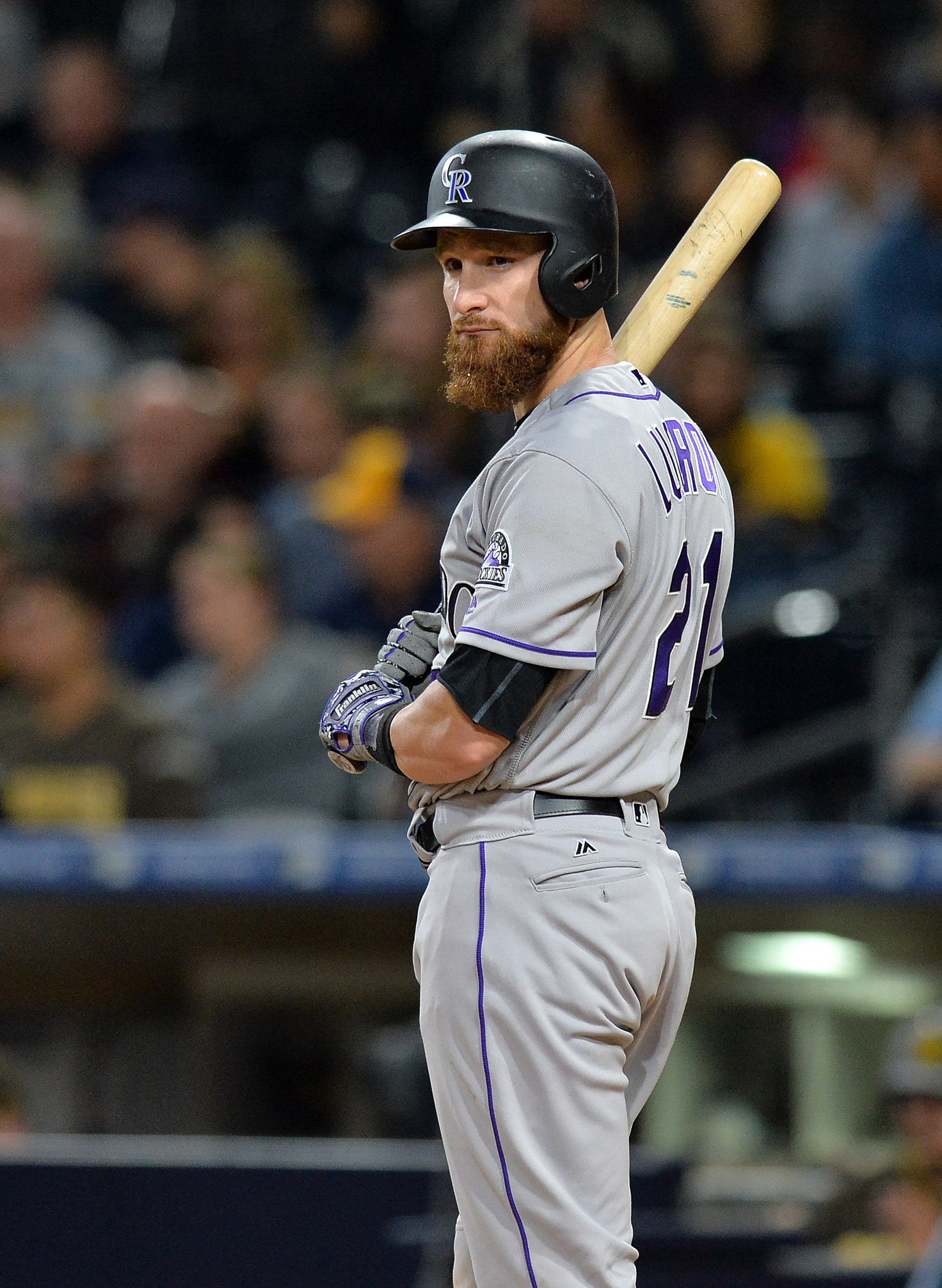
First and foremost, it’s important to note just how good Lucroy was from 2012 through 2016. After all, there’s a reason that folks thought he could meet or exceed that Martin contract. In 641 games over that span, Lucroy posted an excellent .291/.353/.465 batting line that rated about twenty percent above the league-average output. For a catcher that also was regarded among the best at defending his position, those are monster numbers.
That five-year run serves as a notable backdrop for what happened in 2017. Lucroy struggled badly out of the gates, slashing just .242/.297/.338 in his 306 plate appearances with the Rangers. He hit just four home runs in that stretch after drilling 24 in the prior season in 544 trips to the plate. Just as suddenly, though, Lucroy bounced back upon his summer trade to the Rockies. In his 175 turns, the veteran posted a .310/.429/.437 mark while drawing 27 walks against just 19 strikeouts. The power did not fully return — he hit only two more long balls — but clearly Lucroy was again an above-average offensive performer, even after accounting for the altitude boost.
So, how does one frame the recent years? Was the first half of 2017 just a detour? Or should we figure in Lucroy’s tepid 2015 season and isolate his excellent 2016 season as the outlier? What about that waning power?
In all likelihood, clubs will land somewhere in the middle on all of this. It’s certainly quite promising that Lucroy has restored his plate discipline nearly to the levels it stood in 2014, when he walked (10.1%) nearly as often as he struck out (10.8%) over 655 plate appearances. But his isolated slugging mark has now sat below the league average in two of the past three seasons. Plus, Lucroy managed only an anemic 22.3% hard-hit rate in 2017 while his groundball rate soared to over fifty percent for the first time in his career.
Of course, there’s still the matter of Lucroy’s work in the field to be accounted for. There was a time when his mastery of the dark arts behind the dish significantly bolstered the 31-year-old’s value. When he posted 6.2 fWAR in 2014, that was arguably an understatement, as it failed to account for Lucroy’s otherworldly framing skills and management of the pitching staff over a 153-game grind.
Now, the picture seems quite a bit different. Framing metrics panned Lucroy’s work over the first half of 2017. Though he ticked upward in Colorado, it’s still a far sight from the days when Lucroy was the poster child for the newly illuminated art of strike gathering. Still, he drew positive grades as recently as 2016, and it would be rather surprising for such a remarkable degradation in skill to occur so suddenly, so perhaps there’s a bounceback (or another explanation) here. And it’s worth noting that Lucroy has drawn plaudits for his presence on the defensive side from Rockies skipper Bud Black.
All told, the signals leave quite a lot of room for interpretation. No doubt many organizations will feel differently than others about what to expect from Lucroy. All will value the fact that he has been one of only four catchers to top three thousand plate appearances since the start of 2012 (and one of only three to post more than twenty WAR in that span). He seems clearly worthy of being awarded a regular job, but guessing at an earning range is more difficult. And that depends, too, on market factors.
Obviously there’s reason to expect that the Rockies could be interested in a return. The team has indicated satisfaction with Lucroy’s work and could use him just as much next year as this, though there are also internal options to be considered. Lucroy himself has made clear he’d welcome a chance to return. Beyond that, the possibilities are a bit more difficult to suss out. Few contenders have really clear needs behind the plate, though contending organizations such as the Diamondbacks, Angels, and perhaps Nationals could consider a move.
Other possible suitors could yet emerge. But Lucroy will face some competition. It helps that Kurt Suzuki has decided to remain with the Braves. But Welington Castillo is likely to decline his player option and Alex Avila will return to the open market. Chris Iannetta had a strong year, and he’s one of several solid veterans that may represent more cost-conscious options for organizations that prefer a timeshare at the position rather than paying more to land a heavily-used regular.
Recent comps are of limited utility, too. Big dollars have gone to Martin and Brian McCann (five years, $85MM), but as noted at the outset that seems highly unlikely here. Looking at other significant, multi-year deals, though, there’s a big gulf between those larger contracts and the three-year pacts signed by Jason Castro ($24.5MM) and Jarrod Saltalamacchia ($21MM). Lucroy has a strong argument to out-earn that pair, so it seems reasonable to anticipate at least a three-year arrangement with some possibility for a fourth.
Perhaps Francisco Cervelli‘s three-year, $31MM extension represents a more noteworthy marker in this case. It’s telling, too, that Matt Wieters was guaranteed $21MM over two years despite a clearly inferior record to that of Lucroy, perhaps further suggesting that Lucroy ought to command an eight-figure annual commitment. Ultimately, it’s easy to imagine pursuit by two or more determined organizations pushing up the guarantee past the Cervelli level. Demand is less than crystal clear, so there’s some downside risk here as well, though it helps that Lucroy will not be subject to a qualifying offer since he was dealt in the middle of the season. Regardless of how it all shakes out, two things are clear after Lucroy’s 2017 campaign: he won’t be paid like the top-flight player he was for the prior five seasons, but he’ll still earn a hefty commitment when he hits the open market for the first time.
Photo courtesy of USA Today Sports Images.
Projected Arbitration Salaries For 2018
As explained here, Matt Swartz and MLB Trade Rumors have developed an accurate model to project arbitration salaries. This is the seventh year we’ve done these projections, and I’m proud to present the results for 2018. The number in parentheses next to each player is his estimated Major League service time (Years.Days) through 2017 (172 days constitutes a full year of Major League service, per the collective bargaining agreement). The Super Two cutoff is 2.123.
Angels (11)
- Martin Maldonado (5.156) – $2.8MM
- Garrett Richards (5.148) – $7.0MM
- Blake Wood (5.131) – $2.2MM
- Matt Shoemaker (3.166) – $4.4MM
- Tyler Skaggs (3.135) – $1.9MM
- Blake Parker (3.036) – $1.7MM
- Jose Alvarez (3.035) – $1.1MM
- C.J. Cron (3.097) – $2.8MM
- Cam Bedrosian (2.153) – $1.2MM
- Andrew Heaney (2.150) – $800K
- J.C. Ramirez (2.139) – $2.6MM
Astros (9)
- Dallas Keuchel (5.089) – $12.6MM
- Evan Gattis (5.000) – $6.6MM
- Mike Fiers (4.085) – $5.7MM
- Collin McHugh (4.085) – $4.8MM
- George Springer (3.166) – $8.9MM
- Brad Peacock (3.165) – $2.9MM
- Jake Marisnick (3.145) – $2.0MM
- Ken Giles (3.113) – $5.0MM
- Lance McCullers (2.140) – $2.6MM
Athletics (8)
- Chris Hatcher (4.146) – $2.2MM
- Khris Davis (4.104) – $11.1MM
- Liam Hendriks (4.038) – $1.9MM
- Marcus Semien (3.118) – $3.2MM
- Josh Phegley (3.114) – $1.1MM
- Blake Treinen (3.065) – $2.3MM
- Jake Smolinski (3.016) – $700K
- Kendall Graveman (3.014) – $2.6MM
Blue Jays (8)
- Josh Donaldson (5.158) – $20.7MM
- Aaron Loup (5.040) – $1.8MM
- Ezequiel Carrera (4.039) – $1.9MM
- Marcus Stroman (3.148) – $7.2MM
- Kevin Pillar (3.113) – $4.0MM
- Aaron Sanchez (3.069) – $1.9MM
- Devon Travis (3.000) – $1.7MM
- Roberto Osuna (3.000) – $5.6MM
- Dominic Leone (2.123) – $1.2MM
Braves (5)
- Arodys Vizcaino (4.168) – $3.7MM
- Chase Whitley (3.099) – $1.0MM
- Sam Freeman (3.066) – $1.2MM
- Dan Winkler (3.000) – $800K
- Mike Foltynewicz (2.163) – $2.7MM
Brewers (6)
- Jeremy Jeffress (4.104) – $2.6MM
- Stephen Vogt (4.084) – $3.9MM
- Jonathan Villar (3.113) – $3.0MM
- Jimmy Nelson (3.107) – $4.7MM
- Hernan Perez (3.079) – $2.2MM
- Corey Knebel (2.151) – $$4.1MM
Cardinals (4)
- Marcell Ozuna (4.124) – $10.9MM
- Michael Wacha (4.062) – $5.9MM
- Tyler Lyons (3.070) – $1.3MM
- Randal Grichuk (3.033) – $2.8MM
Cubs (6)
- Justin Wilson (5.035) – $4.3MM
- Justin Grimm (4.153) – $2.4MM
- Kyle Hendricks (3.081) – $4.9MM
- Tommy La Stella (3.057) – $1.0MM
- Kris Bryant (2.171) – $8.9MM
- Addison Russell (2.167) – $2.3MM
Diamondbacks (13)
- Patrick Corbin (5.105) – $8.3MM
- Randall Delgado (5.100) – $2.5MM
- A.J. Pollock (5.052) – $8.5MM
- Shelby Miller (4.166) – $4.9MM
- Brad Boxberger (4.109) – $1.9MM
- Chris Owings (4.027) – $3.8MM
- Chris Herrmann (4.001) – $1.4MM
- Taijuan Walker (3.142) – $5.0MM
- David Peralta (3.120) – $3.8MM
- Nick Ahmed (3.054) – $1.1MM
- Jake Lamb (3.053) – $4.7MM
- Andrew Chafin (3.020) – $1.2MM
- Robbie Ray (3.007) – $4.2MM
Dodgers (8)
- Yasmani Grandal (5.115) – $7.7MM
- Alex Wood (4.123) – $6.4MM
- Tony Cingrani (4.088) – $2.2MM
- Josh Fields (4.083) – $2.2MM
- Pedro Baez (3.059) – $1.5MM
- Enrique Hernandez (3.054) – $1.3MM
- Joc Pederson (3.028) – $2.0MM
- Yimi Garcia (3.004) – $700K
Giants (5)
- Will Smith (4.155) – $2.5MM
- Cory Gearrin (4.136) – $1.6MM
- Sam Dyson (3.142) – $4.6MM
- Joe Panik (3.100) – $3.5MM
- Hunter Strickland (2.163) – $1.7MM
Indians (7)
- Lonnie Chisenhall (5.158) – $5.8MM
- Zach McAllister (5.077) – $2.4MM
- Cody Allen (5.076) – $10.8MM
- Dan Otero (4.124) – $1.4MM
- Danny Salazar (3.162) – $5.2MM
- Trevor Bauer (3.158) – $7.7MM
- Abraham Almonte (3.052) – $1.1MM
Mariners (7)
- David Phelps (5.156) – $5.8MM
- Andrew Romine (5.049) – $1.9MM
- Erasmo Ramirez (4.158) – $4.7MM
- Nick Vincent (4.067) – $2.7MM
- Mike Zunino (3.165) – $3.2MM
- James Paxton (3.151) – $5.6MM
- Mike Morin (3.030) – $700K
Marlins (5)
- Derek Dietrich (3.151) – $3.2MM
- Dan Straily (3.126) – $4.6MM
- Justin Bour (3.064) – $3.5MM
- Miguel Rojas (3.043) – $1.1MM
- J.T. Realmuto (3.038) – $4.2MM
Mets (9)
- Matt Harvey (5.072) – $5.9MM
- A.J. Ramos (5.030) – $9.2MM
- Jeurys Familia (5.023) – $7.4MM
- Zack Wheeler (4.098) – $1.9MM
- Travis d’Arnaud (4.044) – $3.4MM
- Wilmer Flores (4.003) – $3.7MM
- Jacob deGrom (3.139) – $9.2MM
- Noah Syndergaard (2.149) – $1.9MM
- Hansel Robles (2.129) – $1.0MM
Nationals (3)
- Anthony Rendon (4.130) – $11.5MM
- Tanner Roark (4.055) – $7.5MM
- Michael Taylor (3.010) – $2.3MM
Orioles (7)
- Zach Britton (5.158) – $12.2MM
- Brad Brach (5.063) – $5.2MM
- Manny Machado (5.056) – $17.3MM
- Jonathan Schoop (4.027) – $9.1MM
- Kevin Gausman (3.151) – $6.8MM
- Caleb Joseph (3.145) – $1.4MM
- Tim Beckham (3.134) – $3.1MM
Padres (7)
- Freddy Galvis (5.021) – $7.4MM
- Brad Hand (4.092) – $3.8MM
- Carter Capps (4.133) – $1.3MM
- Robbie Erlin (3.078) – $700K
- Kirby Yates (3.021) – $1.1MM
- Cory Spangenberg (3.016) – $2.0MM
- Matt Szczur (2.134) – $800K
Phillies (4)
- Cesar Hernandez (3.154) – $4.7MM
- Cameron Rupp (3.089) – $2.1MM
- Luis Garcia (3.006) – $1.4MM
- Maikel Franco (2.170) – $3.6MM
Pirates (4)
- Jordy Mercer (5.095) – $6.5MM
- George Kontos (4.171) – $2.7MM
- Gerrit Cole (4.111) – $7.5MM
- Felipe Rivero (2.162) – $3.1MM
Rangers (4)
- Jake Diekman (5.050) – $2.8MM
- Jurickson Profar (3.165) – $1.1MM
- Keone Kela (3.000) – $1.2MM
- Ryan Rua (2.129) – $900K
Rays (9)
- Adeiny Hechavarria (5.060) – $5.0MM
- Dan Jennings (4.171) – $2.5MM
- Corey Dickerson (4.101) – $6.4MM
- Brad Miller (4.094) – $4.4MM
- Jake Odorizzi (4.042) – $6.5MM
- Jesus Sucre (3.137) – $1.3MM
- Alex Colome (3.118) – $5.5MM
- Steven Souza (3.072) – $3.6MM
- Matt Duffy (3.059) – $900K
Red Sox (13)
- Joe Kelly (5.029) – $3.6MM
- Drew Pomeranz (5.013) – $9.1MM
- Tyler Thornburg (4.057) – $2.1MM
- Brock Holt (4.052) – $2.0MM
- Xander Bogaerts (4.042) – $7.6MM
- Jackie Bradley (3.150) – $5.9MM
- Sandy Leon (3.149) – $2.1MM
- Steven Wright (3.089) – $1.2MM
- Mookie Betts (3.070) – $8.2MM
- Brandon Workman (3.115) – $900K
- Christian Vazquez (3.031) – $1.5MM
- Carson Smith (3.028) – $1.1MM
- Eduardo Rodriguez (2.130) – $2.7MM
Reds (6)
- Scooter Gennett (4.071) – $6.1MM
- Billy Hamilton (4.028) – $5.0MM
- Anthony DeSclafani (3.062) – $1.1MM
- Eugenio Suarez (3.061) – $4.4MM
- Michael Lorenzen (2.159) – $1.4MM
Rockies (5)
- DJ LeMahieu (5.128) – $8.8MM
- Charlie Blackmon (5.102) – $13.4MM
- Chad Bettis (3.096) – $1.5MM
- Chris Rusin (3.092) – $1.4MM
- Zach Rosscup (2.164) – $600K
Royals (3)
- Kelvin Herrera (5.157) – $8.3MM
- Brandon Maurer (4.089) – $3.8MM
- Nate Karns (3.033) – $1.4MM
- Jorge Soler (2.143) – $1.1MM if he chooses to opt into arbitration. Otherwise, contract calls for $4MM each season from 2018-20.
Tigers (6)
- Jose Iglesias (5.036) – $5.6MM
- Alex Wilson (4.038) – $2.1MM
- Nick Castellanos (4.029) – $7.6MM
- Shane Greene (3.075) – $1.7MM
- James McCann (3.028) – $2.3MM
- Blaine Hardy (2.130) – $800K
Twins (7)
- Eduardo Escobar (5.128) – $4.9MM
- Kyle Gibson (4.039) – $5.3MM
- Ryan Pressly (4.039) – $1.6MM
- Ehire Adrianza (3.131) – $1.0MM
- Robbie Grossman (3.060) – $2.4MM
- Trevor May (3.051) – $600K
White Sox (7)
- Avisail Garcia (4.167) – $6.7MM
- Luis Avilan (4.146) – $2.3MM
- Jose Abreu (4.000) – $17.9MM
- Danny Farquhar (3.135) – $1.5MM
- Leury Garcia (3.025) – $1.2MM
- Carlos Rodon (2.168) – $2.0MM
- Yolmer Sanchez (2.134) – $2.1MM
Yankees (8)
- Adam Warren (5.036) – $3.1MM
- Didi Gregorius (4.159) – $9.0MM
- Dellin Betances (4.078) – $4.4MM
- Sonny Gray (4.061) – $6.6MM
- Austin Romine (4.045) – $1.2MM
- Aaron Hicks (4.041) – $2.9MM
- Tommy Kahnle (3.015) – $1.3MM
- Chasen Shreve (2.167) – $900K