
Scott Boras On Span, Wieters, Kennedy, Chen
In what has become an annual tradition at the Winter Meetings, agent Scott Boras held court for all of the reporters in attendance. MLB Trade Rumors was on hand for the scrum and we’ve got a few of the highlights below:
- One reporter asked if Boras would be willing to consider a one-year deal for free agent outfielder Denard Span. Boras flatly rejected that notion and said that he will be gunning for a multi-year contract. Marc Carig of Newsday (via Twitter) hears from some in the industry that feel Span may have to settle for a one-year deal with incentives due to health concerns.
- Boras was asked about the decision for Matt Wieters to accept the qualifying offer from the Orioles and he explained that the catcher’s free agent market would have been bogged down too much by the draft pick forfeiture had he tried it. When asked by MLBTR why he and Ian Kennedy opted to reject the QO, Boras quipped, “Well, someone told me this pitching market was going to be advanced. I think it was pretty obvious to us at the time that the decision was going to be what it is.”
- I asked Boras about the market for starter Wei-Yin Chen, who stands as one of the strongest remaining starters available. Boras characterized his market as “great” and made a fun, agent-slanted case for his client. “The last two years his ERA is lower against AL East teams than David Price, so that tells you how good a pitcher he is,” Boras said.
- I also asked Boras about reliever Greg Holland and his unique situation in free agency. Boras confirmed the widely expected notion that Holland will seek out a two-year deal and he says that “a number” of teams with interest in that type of deal have spoken to him about such a pact. Boras also said that Holland could return to action in time for the 2016 postseason. From the outside, one has to wonder if Holland will be able to rebound that quickly after undergoing Tommy John surgery in late September.
Giants GM Bobby Evans On Fowler, Maeda, Soria
After missing out on their top pitching target this winter, the Giants knew that they had to act fast in order to shore up their rotation. When Diamondbacks acted completely sub rosa and shocked the world by landing Zack Greinke, the Giants quickly pivoted to Jeff Samardzija, giving him a five-year, $90MM deal. Even though the deal carries an average annual value of $18MM, Giants GM Bobby Evans tells MLB Trade Rumors that there’s still potentially enough in the coffers to make another impact signing at a similar level.
“There’s flexibility, yes,” Evans told MLBTR. “I think [last year] we didn’t go as far on multi-year deals and we did shorter term deals. It does give you some flexibility this time around.”
Right now, Evans is looking to allocate some of those funds towards the left field position. The Giants GM indicated that he has talked with reps for Dexter Fowler and Gerardo Parra this week, but, he also went on to say that he has been in touch with “almost everyone on the outfield market.” The idea of flexibility goes beyond payroll for Evans as the Giants refuse to lock in on a limited group of left field candidates.
While left field is a priority for Evans, the bullpen is admittedly “on the back burner.” The Giants were long connected to veteran reliever Joakim Soria, but Evans explained that he was not especially desperate to sign him because of his confidence in the current ‘pen and the minor league depth backing it up. Without taking anything away from Soria, who signed for $25MM over three seasons, Evans explained that it was “too early” in the offseason for the Giants to allocate money towards relievers. In other words, Evans & Co. have bigger fish to fry before they get to fortifying the late innings.
As it turns out, that big fish could be a Carp. Evans confirmed that the club is having internal discussions about Japanese star Kenta Maeda, who was formally posted on Tuesday. Factoring in the expected $20MM posting fee that it will take to have an audience with the right-hander, the total outlay for him could be $80MM or more. Suffice it to say, a flirtation with Maeda while also adequately filling the left field vacancy could really test the limits of the Giants’ budget.
Joe Torre Addresses Aroldis Chapman Situation
4:02pm: Halem says that whether or not an arrest occurs will not be a factor in the investigation, Bob Nightengale of USA Today tweets. He also indicated that the league hopes to complete its look by the opening of Spring Training, as Barry Svrluga of the Washington Post adds on Twitter. That certainly suggests that a resolution may not be forthcoming for some time.
12:23pm: In the wake of the scuttled trade that would have sent Reds closer Aroldis Chapman to the Dodgers, many are wondering how much the Reds knew about Chapman’s alleged domestic violence history and, if they were aware of it, when they were apprised. In a press conference with reporters on Tuesday morning, MLB chief baseball officer Joe Torre told reporters that the league was not aware of Chapman’s arrest record until Monday evening. That timeline would imply that the league learned of Chapman’s arrest roughly around the time everyone else did, as the Yahoo Sports report was filed roughly around 9pm CT on Monday night.
Obviously, the Dodgers and other fervent Chapman suitors will be holding off on trade talks until we gain more clarity on the closer’s messy situation. Torre, who has an instrumental role in league discipline, indicated that the league will be taking its time in weighing a potential punishment for the soon-to-be 28-year-old.
“As awful as his situation is, there are still rights that have to be protected. So, we’re very careful in making sure that we respect that and get all of the information. Then, we will proceed accordingly,” Torre told the press in Nashville.
Pressed on Chapman for roughly ten minutes, Torre referred a good number of the questions to Dan Halem, the league’s Chief Legal Officer. Halem is expected to address reporters at the Winter Meetings at some point on Tuesday afternoon.
Mets, D’Backs Had Interest In Joakim Soria
Joakim Soria is going home. Early Monday morning, the Royals and Soria’s representatives shook hands on a lucrative three-year, $25MM deal that includes a mutual option for a fourth season. Prior to signing with Kansas City, Soria also drew interest from a group of teams that includes the Mets and Diamondbacks, MLBTR has learned. The Tigers, Giants, and Twins – who were previously known to have a fondness for Soria – were also among the clubs to show interest.
The Mets’ interest in Soria is particularly notable because assistant GM John Ricco recently explained that the team wasn’t in on Darren O’Day or Ryan Madson due to their high price tags.
“We didn’t see ourselves playing in that top end where O’Day was,” Ricco said earlier this week. “But I think that next tier, we’re going to be keeping an eye on….We’re going to meet with a lot of the representatives for the relievers here over the next couple of days.”
Meanwhile, there have been conflicting reports about Arizona’s plans for bolstering the bullpen. Back in November, Jon Heyman of CBSSports.com reported that Arizona seemed “intent on acquiring a closer” while Ken Rosenthal of FOX Sports said that the team was probably “content” to add arms in front of Brad Ziegler. The D’Backs went on to make a push for Aroldis Chapman before he was sent to the divisional rival Dodgers, but their interest in Soria would indicate that they are willing to spend on the bullpen.
Free Agent Profile: Yoenis Cespedes
Yoenis Cespedes did more to boost his stock in 2015 than any other free agent (with the arguable exception of Zack Greinke), but will teams buy fully into the superstar’s sky-high ceiling?
Pros/Strengths
There’s no denying that Cespedes just put up a full season of superstar production. His age-29 season started off with an excellent showing for the Tigers and continued with an even better run after a mid-season trade to the Mets.
All told, the 30-year-old Cuban native put up a .291/.328/.542 slash over 676 plate appearances with 35 home runs and 105 runs batted in. It was every bit the season one would hope for from a middle-of-the-order bat, and then some.
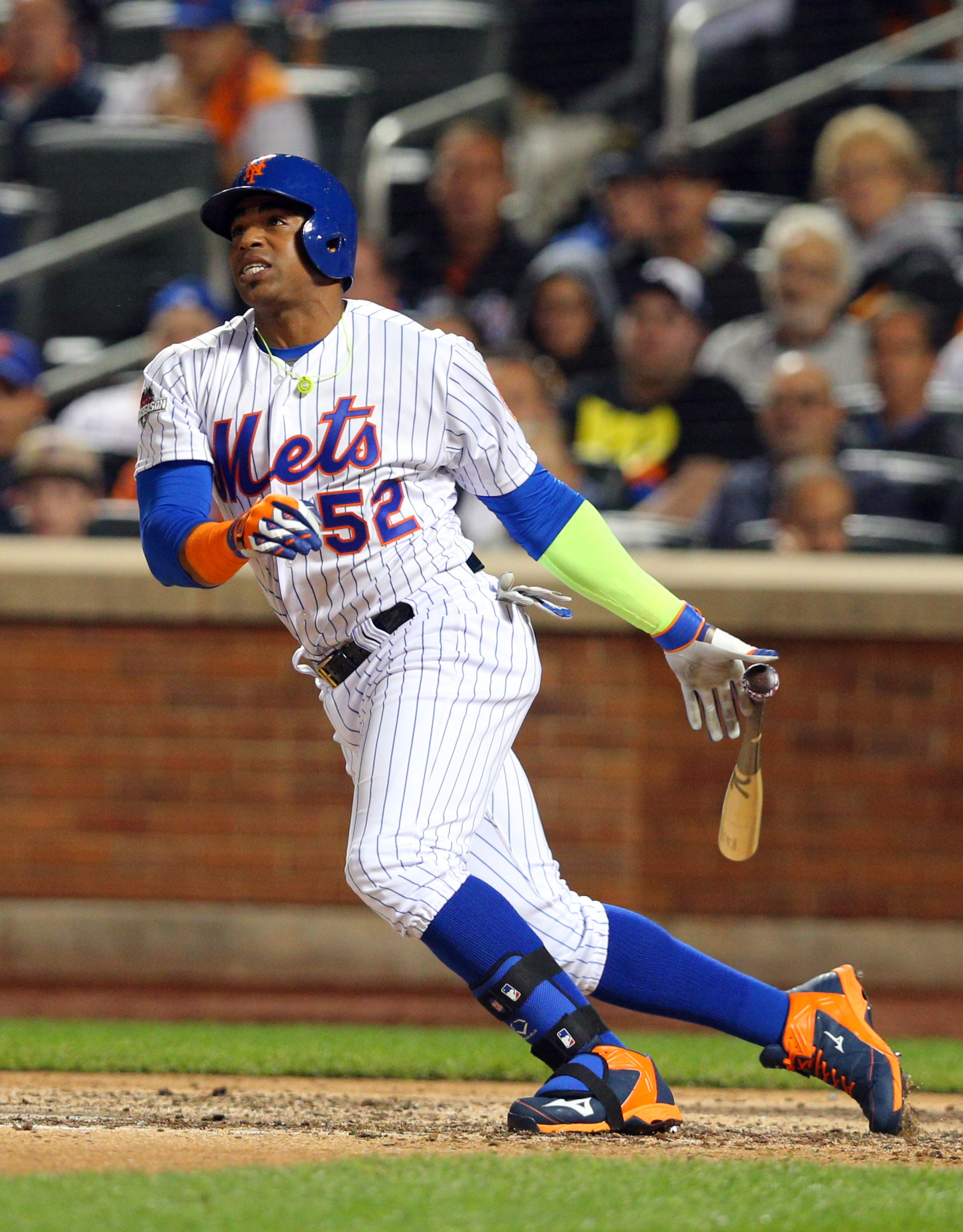
That showing validated the incredible breakout season Cespedes had as a 26-year-old rookie back in 2012. He set career marks last year not only in the traditional power categories noted above, but also in ISO (.251).
Cespedes also put up personal bests in hard contact, line-drive rate, and home runs per flyball (while hitting less flies than ever before). Another indicator of the qualify of contact is the infield fly, and Cespedes dropped to single digits in that mark for the first time ever. And it’s worth noting, too, that Cespedes carries a strikeout rate of around 20%, right at the league average and quite a fair mark for a slugger.
Production at the plate isn’t the only area that Cespedes excelled last year. He also continued to draw outstanding defensive ratings in left field, racking up double-digit DRS and UZR tallies for the second consecutive year while demonstrating a highlight-reel arm. And he showed that he can handle center in a pinch, though certainly prospective shoppers will be well aware that he’s not a natural option up the middle.
It’s worth noting, too, that Cespedes rates out as an excellent baserunner. He has continually measured well in Fangraphs’ BsR metric, never moreso than last year.
The defense and baserunning points serve not only to demonstrate the overall value that Cespedes brings, but also to highlight his outstanding athleticism. He is as loaded with tools as players come and is still putting them to use at a prime level as he hits the market. And he has a good overall track record of durability: despite dealing with some dings and dents at times, he’s only missed minor stretches as a professional.
Add it all up, and you have a player that has shown — very recently — that he’s capable of putting up over six wins above replacement, which is exactly what Cespedes did last year. While it’s true that there were two less-than-exciting seasons sandwiched between 2012 and 2015, he still averaged out at about three WAR in those years, suggesting a palatable floor.
Cons/Weaknesses
The biggest questions with Cespedes relate to those two intervening years noted above. Just as you can’t look past a monster 2015, you can’t ignore his (relatively) sub-par 2013-14 campaigns.
That lesser version of Cespedes was still a good player, as noted above. But it wasn’t one that teams would be lining up to get with a nine-figure guarantee. Over that span, Cespedes slashed .251/.298/.446 — good for a 106 wRC+ — while swatting 48 long balls.
Clearly, the pop has been there all along, even if it hasn’t always been quite as strong as it was last season. But Cespedes’s on-base troubles are not easily glossed over. His 2015 effort was driven in part by a .323 BABIP that lands about twenty points above his career mark. In years where that dips, his OBP falls with it. Indeed, Cespedes has shown a declining walk rate in every season, falling last year to below five percent.
Defensively, Cespedes hasn’t always enjoyed the sterling reputation his numbers would suggest. That’s true, in part, because he’s never before rated as above-average in terms of range. While his arm will surely remain a weapon for some time, it’s fair to wonder if he’ll be able to repeat the overall defensive showing from 2015.
While overall baserunning effectiveness is far more important than stat-padding stolen bases, it’s worth noting also that Cespedes has never returned to the 16 swipe-level he showed in just 129 games as a rookie.
There are some other, less stat-driven questions surrounding Cespedes. He’s been traded three times in the last two years, and while there were readily apparent team-specific reasons on each occasion, it’s telling to some that so many teams were willing to let him go. And there have been off-the-record whispers that Cespedes marches to his own drum, though as explained in that link, there’s little substantial evidence that he’s ever been a problem in the clubhouse or failed to put in the necessary work.
Personal
Cespedes was born and raised in Cuba, and played for his home province’s club, the Alazanes of Granma. He was a Serie Nacionale star from the moment he broke in, putting up a strong .302/.379/.503 batting line in the top Cuban league at just 17 years of age. Susan Slusser and Demian Bulwa of the San Francisco Chronicle have penned an interesting look into the unfortunate travails that Cespedes and his family went through to make it to the United States and Major League Baseball.
Notably, after entertaining an active bidding war for his services prior to the 2012 season, Cespedes chose to take a lesser deal in order to move up his free-agent timeline. While there were reports that he could’ve landed six years, he took four with the A’s and negotiated a clause requiring that he be released at the end of the contract. (That ultimately rendered him ineligible for a qualifying offer, which was a factor in his various trades. The Mets negotiated with him to modify the provision, making it possible for the team to sign him, after the threat of the QO had already been removed by a mid-season swap.)
It seems fair to say, then, that Cespedes put a high value on reaching the open market, and he’s said to have something of a businessman’s appreciation for the transactional side of the game. Marketing is not an insignificant consideration in the entertainment industry, of course, and he and his representatives spared no expense in extolling his value to prospective new employers. Now, presumably, he’ll wait for the pitches to roll in.
Among the pursuits that Cespedes has picked up since coming to the United States is golf. Though a mid-playoff round created some controversy recently, he’s said to be something of a prodigy on the links.
Market
Looking at 2015 alone, Cespedes stands out among free agent outfielders. After all, he had a better overall season than any of the players he’s competing against on the open market.
But that doesn’t mean teams will prefer him unanimously. Jason Heyward and Justin Upton are both significantly younger, with the former representing a strong all-around package and the latter delivering much of the same pop with better on-base abilities. Chris Davis offers stunning power, though he might not be viewed as a true corner outfield option, while Alex Gordon will command less years owing to his age and has been a more consistent performer.
(We’ve already profiled Heyward, Upton, and Davis.)
Interestingly, we haven’t heard much to distinguish the different markets of these players, many of whom figure to appeal to the same teams. It could be that the market is waiting for one motivated team or one motivated player to push for a deal to set the market and get the action going. As against the competition, though, Cespedes does have one distinct advantage: all the others turned down qualifying offers and come with draft compensation attached, whereas Cespedes was ineligible and thus can be acquired for cash alone.
Cespedes could conceivably end up with any of a variety of clubs. That includes the Mets, though that relationship seems destined to end as a summer/fall fling. Clubs with deep enough pockets and the most obvious need are the Angels and Giants. The Tigers, Cardinals, Orioles, and White Sox could probably afford him and arguably have the need — or, at least, the want — though it’s not clear whether any would be willing to devote that much cash. Smaller spenders like the Royals and Padres could be a fit, particularly if the asking price falls, and big-market teams such as the Cubs, Dodgers, Rangers, and Nationals might conceivably line up if they were to shift other assets.
It’s hard to put any single one of those organizations on Cespedes specifically — or any of the other top free agent corner outfielders — but it seems there ought to be enough demand to go around.
Expected Contract
There are a broad range of possible outcomes here. On the one hand, he’s been inconsistent and there are younger options on the market (as well as other alternatives in Gordon and, to an extent, Davis). On the other, we’re seeing some ridiculous new salary heights and Cespedes has the kind of star power and possible impact that could lead to a bidding frenzy.
I find myself leaning slightly toward the lower end, but evidence of continued upward movement in MLB spending has pushed up my expectations. I’ll join in the earlier prediction of MLBTR’s Tim Dierkes: six years and $140MM.
Saltalamacchia Had Interest From “6-7 Clubs”
Earlier tonight, the Tigers announced the signing of catcher Jarrod Saltalamacchia to a one-year deal for the MLB minimum. Before he put pen to paper with Detroit, however, Salty’s camp was in talks with “six or seven clubs,” according to a baseball source who spoke with MLBTR. The backstop drew varying levels of interest from the White Sox, Royals, Rays, Orioles (prior to Matt Wieters accepting his QO), Phillies, Angels, and the incumbent D’Backs.
The Tigers have landed themselves a veteran who can be a reliable presence behind starter James McCann. Saltalamacchia also could get some opportunities as DH and first base as he moves back to the American League. The former first round pick looked strong in his 70 game run for the D’Backs in 2015 and he’ll attempt to build off of that with Detroit in the New Year.
Free Agent Profile: Ian Desmond
Ian Desmond is the best shortstop available on the open market, but he comes with plenty of risk.
Strengths/Pros
Delivering power from an up-the-middle defensive position is probably Desmond’s single standout trait. The 30-year-old has averaged 22 long balls annually since the start of his breakout 2012, and he’s done that consistently (ranging from 19 to 25) rather than relying on a single outlying season.
Desmond’s overall power production is equally strong, which has continued to be true despite a dip in 2015. Even in that down year, his .151 ISO landed right at league average and checked in at fourth among qualifying shortstops. Though Desmond began and ended the year with rough stretches, he managed to put up a .185 ISO over the second half owing to a blistering August that showed there’s still some juice in his bat.
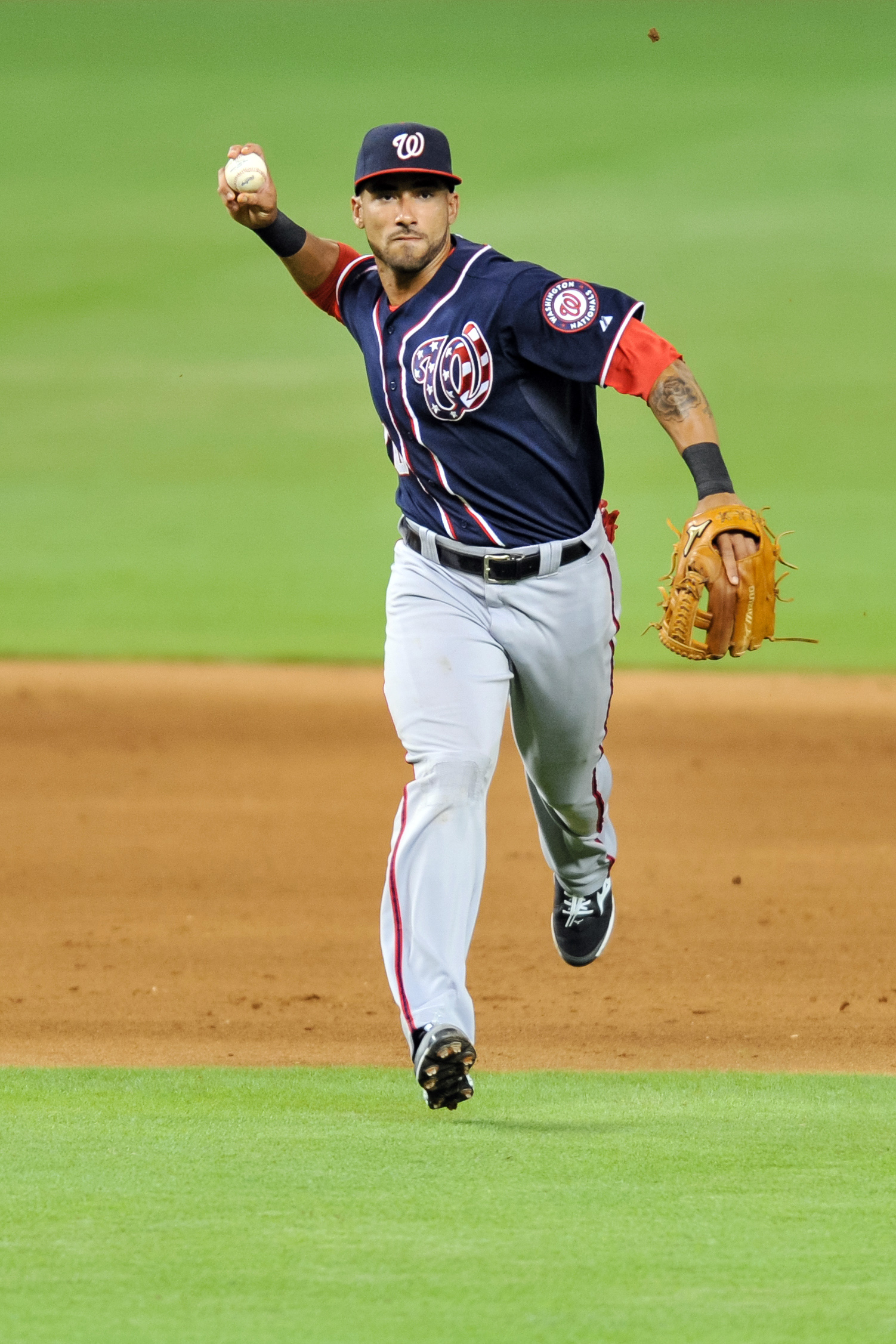
That fairly steady pop has made the 30-year-old a strong overall contributor on offense. In spite of a propensity for the strikeout, he’s also quietly raised his walk rate to near the league average. Desmond picked up three straight Silver Slugger awards from 2012 through 2014, and owns a .264/.317/.443 since he began his breakout in 2012. While that line was down overall in 2015, his .307 BABIP did fall shy of his career .322 mark and he showed more life at the plate at times later in the season.
On the defensive side of the equation, Desmond has rated as an approximately average shortstop — by measure of both Defensive Runs Saved and UZR — in the aggregate over the past three years. While he’s not nearly as smooth (or as valuable) with the glove as some of the league’s true magicians, Desmond’s powerful and aggressive approach to the position remains effective. He has excellent range and a cannon for an arm.
While he’s not a top stolen base threat — he’s probably a candidate for 15-to-20 swipes a year moving forward — Desmond is among the game’s most skilled baserunners. By measure of Fangraphs’ BsR statistic, he rated 11th in the game last year in total contributions on the basepaths and falls within the 25 most productive runners league-wide over the past three seasons combined.
It’s worth noting also that, while Desmond has had his ups and downs, his physical skills remain elite. For instance, MLB recently released an interesting list of true “five-tool” players, based on several StatCast measurables, which puts Desmond alongside some truly outstanding names.
On top of these direct inputs, Desmond contributes in more subtle ways, too. He’s widely credited for his accountability, hard work, and clubhouse presence. For but one example of the many pieces written on the veteran’s leadership, check out this article regarding his influence over young Nationals star Bryce Harper.
Weaknesses/Cons
While there’s a lot to commend Desmond, he undeniably comes with some serious questions. At the plate, the major issue is contact. Desmond’s strikeout rate took a jump before 2014 and has hovered just shy of the 30% mark since.
Plenty of players have thrived with that kind of swing-and-miss in their game, but it’s an increasing concern, especially given that it has coincided with a broader downturn. It’s hard to ignore the fact that Desmond is coming off of an 83 wRC+ campaign, or that he’s declined in overall batting production for three years in a row. Power, as noted above, is a notable strength but Desmond’s ISO has also fallen off, and any further erosion would seriously hamper his value.
I mentioned BABIP above, and that stat can be an indicator of luck. But Desmond has a high career mark because of hard contact and speed, and there are some indications that his 2015 dip wasn’t just the product of circumstance. Desmond lost about four percentage points in hard contact in 2015, even as his soft-contact rate jumped by an even greater amount. He’s hitting more infield flies and grounders than ever.
Desmond also showed a newfound susceptibility to same-handed pitching. In the past, Desmond had neutral platoon splits (2013-14) or was so good against both that it didn’t much matter (2012). But last year, his OPS against righties was over 100 points south of the damage he inflicted against lefties. To be fair, that’s not necessarily a huge problem so much as a possible erosion of an area that had been a strength.
There’s concern, too, on the defensive side. Despite his excellent tools at short, Desmond has always been error prone and probably always will be. That tendency was on full display early in 2015, drawing plenty of attention, and is something that a signing team will need to be prepared to experience. Desmond’s error tally has grown every year since 2012.
Despite the down year, Desmond received and turned down a qualifying offer from the Nationals. That means that his new team will need to part with a draft pick to sign him.
Personal
Desmond and his wife, Chelsea, have three children and live in their native Sarasota, Florida. Desmond is known for being active in the community and has done charity work relating to neurofibromatosis and the Nationals’ Urban Youth Academy initiative.
Though he never suited up in Montreal — the club moved to D.C. just one year after he was drafted — Desmond was the last player left from that earlier epoch. The mutual respect between Desmond and the only professional team he’s known is readily apparent; GM Mike Rizzo called him “the rock of the organization,” while Desmond said he’s “extremely proud” to have been a National.
Market
Once the internal valuations are made, free agency is a complicated game with many moving parts and outside influences. Some best-in-class players can avoid that, to an extent, because the market is willing to wait on their decision. But while Desmond is the premier shortstop available, that doesn’t seem to be the likely course for him.
Given all the complications surrounding his value, teams are likely to weigh a signing of Desmond along with other possibilities — especially since he’ll require draft pick forfeiture. There are some other viable shortstops on the market, including Asdrubal Cabrera and bounce-back veterans such as Alexei Ramirez and Jimmy Rollins. And, of course, the trade market is always a factor.
With several outstanding young shortstops ascending to the majors in recent years, the demand side of the equation isn’t terribly strong. The Padres may be the best fit on paper after clearing salary in the Craig Kimbrel trade, while the White Sox, Twins, and Mets also could be in the market at short. It’s still unclear, though, whether any of those clubs will want to spend top dollar on Desmond, particularly given that several have plausible shortstops of the future moving through their farms.
Otherwise, it’s not obvious where Desmond could land, though there are a few clubs that could make some theoretical sense in the right circumstances. The Braves, for instance, might be an under-the-radar possibility if they were to trade Erick Aybar and could get value in a deal. The Rockies would also be a surprise, but there’s at least some opening (however unlikely) given the uncertainty surrounding Jose Reyes. A return to the Nationals can’t be ruled out entirely, particularly if Desmond’s market collapses and he’s forced into a pillow contract.
Expected Contract
Comparable free agents are hard to come by. Jhonny Peralta got four years and $53MM coming off of a PED suspension. That seems somewhat on the light side for Desmond, but isn’t an implausible figure if demand never comes to fruition. Reyes scored $106MM over six seasons, but Desmond seems unlikely to warrant a sixth year at this stage. Indeed, if anything, the lack of numerous obvious suitors could hold him to a four-year deal. All said, though, there’s a wide range of plausible outcomes.
My best guess is that Desmond will find a fifth guaranteed year, but won’t get both that and a premium annual salary. Despite being a big fan of Desmond’s, personally, I find myself a bit bearish on his free agent outlook and will predict he lands a five-year, $70MM deal.
Phillies GM Matt Klentak On Bourjos, Offseason
On Wednesday, the Phillies claimed center fielder Peter Bourjos off waivers, reuniting him with GM Matt Klentak. Klentak, of course, was a longtime assistant GM with the Angels, the organization that drafted and developed Bourjos. Having that background knowledge of Bourjos factored into Klentak’s decision to claim him from the Cardinals, but in a conference call with reporters, the exec pointed out that it has been a while since they were in the same building.
“[The familiarity] factored in for sure, probably most notably because I think very highly of Peter Bourjos the person and that is something that I’ve been talking about since I first started here six weeks ago, which is the importance of building an environment,” Klentak said when asked by MLBTR. “I happen to have first-hand knowledge of knowing Peter, knowing what a great human being he is, and how he fits into a roster. From my perspective, yes, my history with him was important, but I haven’t been with him for the last few years he was in St. Louis, so we’re relying on the information that we have here at our disposal.”
By adding Bourjos to the fold, the Phillies have bolstered an outfield mix that already includes Odubel Herrera, Cody Asche, and youngster Aaron Altherr. One might wonder then if veteran free agent Jeff Francoeur is the odd man out. Klentak declined to say if he’s actively having dialogue with Francoeur’s agent, but he did make it clear that the team is not ruling out a reunion with the soon-to-be 32-year-old.
“I wouldn’t say the addition of Bourjos takes us us out on any player. We’re still going to be open minded and we still have spots on our roster. I don’t think claiming Bourjos and adding him precludes us necessarily,” said Klentak.
It will be interesting to see exactly what the Phillies can get out of Bourjos, who has yet to replicate his breakout 2011 campaign with the Halos. Klentak mused that his struggles could have been caused by his troublesome hip, the development of Mike Trout ahead of him in Anaheim, his position in St. Louis alongside an already strong outfield, or a combo of the three. Whatever the reason for his stumbles, Klentak is hopeful that the Phillies can get him back to his old form.
Mariners GM Jerry Dipoto On Mark Trumbo Trade
On Wednesday, Jerry Dipoto traded slugger Mark Trumbo for the second time. As the GM of the Angels, Dipoto jettisoned Trumbo in December 2013, soon after signing superstar first baseman Albert Pujols. After dealing Trumbo roughly two months after taking over in Seattle, Dipoto wants it known that it’s nothing personal with Trumbo, just business.
“There’s no particular reason for it. When I called him, I actually told him not to take this the wrong way,” Dipoto said when asked by MLBTR on a conference call. “He’s a great guy, he brings a lot of skill to the table and it’s always difficult to trade right-handed power, but there are reasons for everything. The first time that I moved him, we needed pitching and we tapped into two young upside starters (Tyler Skaggs, Hector Santiago) that we needed at the time. I felt good about that trade and I feel good about this one, too. In this case, we’re bringing in a backup left-handed hitting catcher along with payroll and roster flexibility as we move into the hot stove portion of the offseason. I explained all of this to Mark. He’s going to an ideal place to hit but it just wasn’t an ideal fit for us on our side.”
As many outsiders picked up on, Dipoto indicated that Trumbo was moved in large part because of his projected $9.1MM salary for 2016. Unlike the last Trumbo trade, Dipoto isn’t moving Trumbo in order to eliminate redundancy in the lineup, and Dipoto himself isn’t sure how the first base position will be filled. Still, I asked the GM whether he would be more likely to fill that spot via free agency or trade.
“It’s tough to say. There’s still a lot of time between now and Opening Day. We’ve discussed a lot of trade candidates with various teams around the league and we’ve at least surveyed the free agent pool, but have not engaged [any available first basemen] at this point,” Dipoto said.
Of course, this year’s free agent crop includes Chris Davis, the man that Trumbo might wind up replacing in Baltimore. Dipoto’s comment would indicate that the Mariners have not reached out to Davis, though — as MLBTR’s Steve Adams noted this week — he may not be a logical match for Seattle anyway. Dipoto has made it known that he prefers the trade market to free agency and, as he revealed, that has been the only avenue explored thus far for first basemen. Seattle would also have to sacrifice the No. 11 overall pick to sign Davis, a player who could command a six-year, $144MM deal in the estimation of MLBTR’s Tim Dierkes.
Meanwhile, Dipoto seemed genuinely excited about the addition of catcher Steve Clevenger as a complementary piece that can fit in as a catcher, first baseman, or a designated hitter. Dipoto stopped short of guaranteeing anything for the out-of-options player, but it sounds like he has a role in mind for him. Clevenger’s versatility coupled with the signing of catcher Chris Iannetta also gives Seattle options when it comes to Mike Zunino. Seattle can now afford to let Zunino start the year in Triple-A Tacoma, but they could also carry all three players with Clevenger seeing time at first base. Still, Dipoto’s plan and preference is to have Zunino begin the year in Triple-A for additional seasoning.
Free Agent Profile: Zack Greinke
After exercising an opt-out clause in his previous six-year, $147MM contract and leaving a guaranteed $71MM on the table, Zack Greinke is poised to secure more than double that amount as one of the top free agents of the 2015-16 offseason.
Strengths/Pros
Greinke is coming off a season for the ages. The right-hander’s 1.66 ERA is the lowest single-season mark for a qualified starting pitcher since Greg Maddux‘s 1.63 ERA back in 1995. Greinke doesn’t play in the offensive environment that we saw in the late 90s and early 2000s, but the lowest ERA in two decades is nonetheless incredible, and his ERA+ (which adjusts for both park and league, with 100 being average) rates him a staggering 125 percent better than a league-average pitcher in 2015.
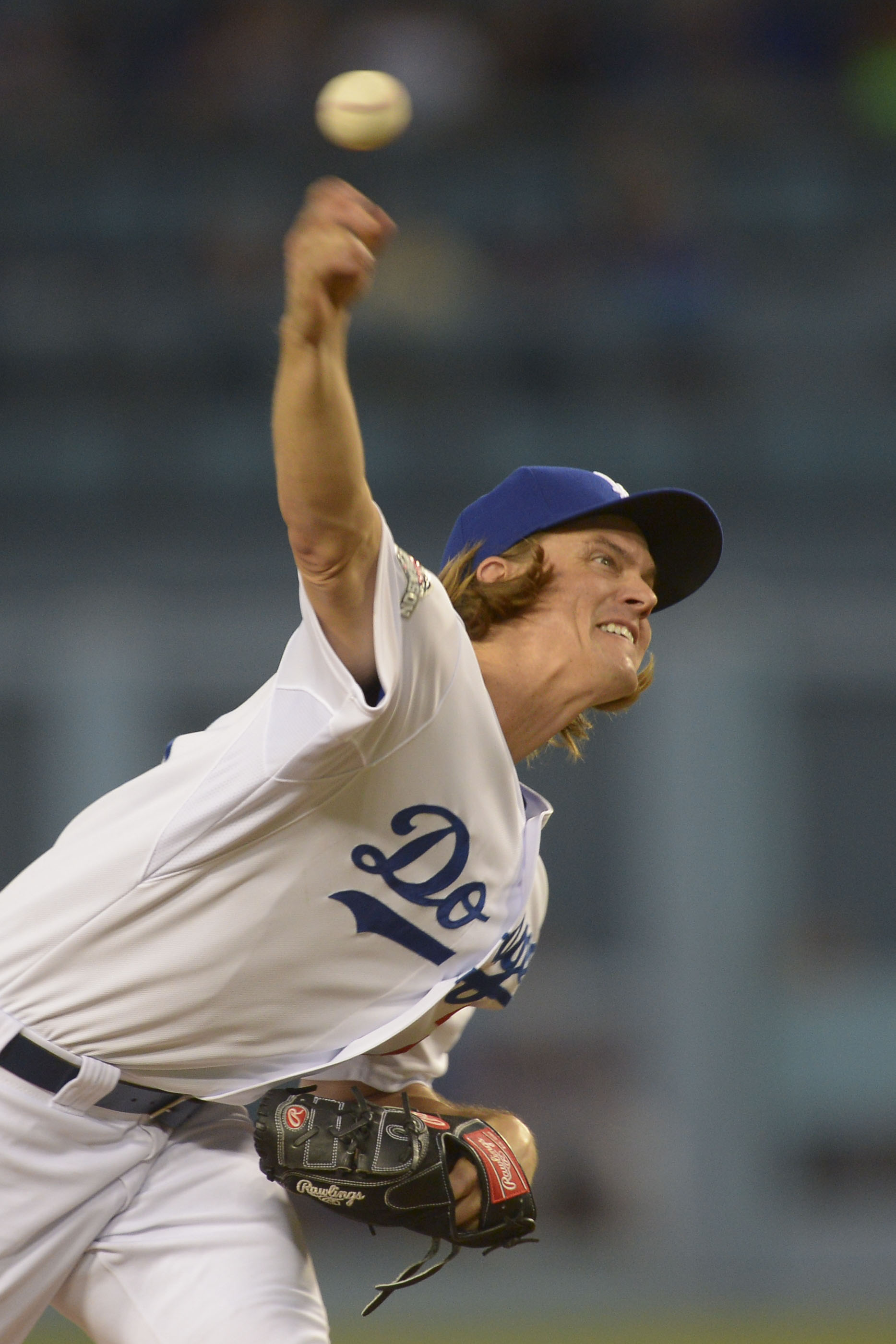
Greinke isn’t some one-year wonder, though. He’s a former Cy Young winner (American League, 2009) with a longstanding history as an ace that is coming off a three-year platform with the Dodgers which featured a 2.30 ERA, 8.3 K/9 and 1.9 BB/9 in 602 2/3 innings. I’m not a big subscriber to the importance of postseason stats over regular season stats, but even if you find it critical, Greinke’s work with the Dodgers checks all the right boxes. He’s been to three straight postseasons with L.A. and worked to a 2.38 ERA with a 41-to-5 K/BB ratio in 41 2/3 innings.
While Greinke isn’t as young as most free-agent starters (more on that later), there’s a belief among scouts that he’ll age better than most pitchers because he’s not overly reliant on velocity and because he’s among the most cerebral pitchers in the game. As ESPN’s Keith Law wrote (Insider subscription required and recommended) when ranking Greinke second among free agents this season, “Greinke’s command, control and understanding of how to set up hitters are all at or near the top of the sport, and as much as long-term deals for any pitcher frighten me, I’d probably give Greinke whatever number of years he wants.” Law’s colleague, Jerry Crasnick, polled a number of execs and scouts in the early stages of the offseason, and 19 of the 34 respondents preferred Greinke to David Price, with one scout calling Greinke the closest thing this generation has to Maddux and another saying he’ll age more gracefully than Price (which wasn’t to say Price will age poorly, but rather that Greinke will age abnormally well).
Greinke’s velocity has dipped from its peak of a 94 mph average in 2007, but he still averages a solid 91.8 mph on his heater, and as the velocity has declined, he’s improved in other areas. When he was throwing his hardest, Greinke averaged nearly 2.5 walks per nine innings, but he’s averaged just 1.9 walks per nine since his fastball dipped below an average of 92 mph. He’s become much more of a ground-ball pitcher later in his career as well; Greinke recorded a 40 percent ground-ball rate when he won the Cy Young in 2009 but was at 48 percent in 2015 and has averaged a 47.9 percent rate over the past four seasons. Per Fangraphs, he induced the seventh-most weak contact of any qualified starter in baseball this season.
National League clubs will love the fact that Greinke is a career .220/.261/.337 hitter and that he batted .224/.232/.343 with a pair of homers in 2015. Relative to the rest of the league, of course, those numbers are abysmal, but one also has to keep in mind that the average pitcher batted .131/.158/.168 in 2015. Greinke is a considerably more difficult out at the plate than most pitchers, and he’ll probably chip in a homer or two over the course of a full season.
Weaknesses/Cons
The list of weaknesses for a pitcher coming off the fourth-best ERA in the past 30 years is going to be relatively short, but Greinke’s most significant roadblock to a record contract is his age. Greinke’s velocity has indeed declined in recent seasons, and while the belief that he has the intelligence to succeed with diminished stuff almost certainly has some merit, one still has to assume some form of decline in performance as his repertoire deteriorates.
The other con for teams in the Greinke sweepstakes is that they’re paying for his services as he comes off an almost assuredly unrepeatable season. Greinke benefited from a .229 batting average on balls in play and an 86.5 percent strand rate — both of which were considerably better than the league norm and enormous outliers when compared to his career body of work. Greinke isn’t a consistent 1.66 ERA pitcher (no starter is), but his camp can use the historic season as leverage all the same. It’s been obvious that Greinke would opt out of his contract, barring injury, for more than a year. But, if he’d had a more characteristic season (say a 2.75 ERA in 210 innings) or even a bit of a down year relative to his first two in Los Angeles (3.30 ERA in 200 innings), we’d probably be talking more in the $120-140MM range.
The other con working against Greinke is that he rejected a qualifying offer and will cost a draft pick.
Market
Greinke will reportedly choose between the Dodgers and the Giants this week, with an average annual value topping David Price’s $31MM said to be attainable on a five- and possibly six-year deal.
While those are the two teams most heavily connected to Greinke, it’s not out of the question that a well-funded dark horse could sweep in at the last minute. The Red Sox and Tigers have already made their big free-agent splashes, but the Cardinals reportedly finished as a runner-up to the Sox in the pursuit of Price. Knowing that they were willing to spend at that level on a similarly regarded free agent, it’s at least conceivable that they could make a late entry into the Greinke market.
Of course, St. Louis hasn’t been tied recently to Greinke. Neither, really, have other clubs with significant spending capacity and theoretically plausible interest — such as the Yankees and Cubs, or even the Angels and Nationals. But the Cards operated quietly on Price, and it’s still possible there’s a lurking mystery team that could make a serious run at the new top free agent starter.
Expected Contract
Were Greinke heading into his age-30 or even age-31 season like most of his peers, he’d be in line to challenge Price’s new record-setting contract of $217MM.
Recent contracts of five-plus years for pitchers like Price, Scherzer, Jon Lester, Cliff Lee and CC Sabathia have seen the guaranteed portion of the contract end with a player’s age-35 or age-36 season. The same was true of Justin Verlander‘s extension, which runs through age 36. Even Roy Halladay‘s three-year, $60MM extension with the Phillies prior to the 2011 season ended in his age-36 campaign.
The challenge for Greinke and agent Casey Close of Excel Sports will be getting a team to commit to him into his age-37. If that happens, Greinke can approach $200MM, even though he’ll probably still fall shy of it. Nonetheless, he’s poised to land a free-agent contract that has, to this point, only ever been exceeded by the likes of Scherzer and Price.
The fact that the two chief suitors for Greinke are division rivals works out incredibly well for Greinke’s camp. Whatever value the Dodgers or Giants place on Greinke (let’s say five to six wins per season), they have to consider that not only are they adding those wins to their total by signing Greinke — they’re preventing their top competitor from doing so in the process. It can be argued that no team is hurt more by the Dodgers signing Greinke than the Giants, and vice versa. That factor may have substantially driven up the bidding already.
MLBTR’s Tim Dierkes projected a six-year, $156MM contract back in early November, but considering what we’ve learned in recent days, a six-year, $189MM contract seems attainable.