
Which Teams Are Slated To Pay The Luxury Tax In 2023?
The highest number of teams to pay the competitive balance tax in a single season is six, which occurred in 2016 and 2022. It’s possible that 2023 could be a record-breaking season in that regard, as Roster Resource currently has six teams already over the $233MM base threshold, while the Dodgers are a rounding error away from the line and another handful of teams not too far off.
These numbers are still unofficial, especially considering the arbitration salaries are mostly still estimates. Teams can also change their status by making trades throughout the year, either adding or subtracting from their ledger, but consider this a rough snapshot of where things currently stand.
Top Tier – CBT Above $293MM
The Mets are not just beyond the top CBT tier, they’re on another planet. Owner Steve Cohen has shown that he doesn’t care too much about what it costs to put a competitive team together, with their payroll currently projected for $376MM and a CBT figure of $390MM. They are currently slated to pay over $116MM in taxes alone, which is more than the total 2023 payroll of 11 teams.
CBT Between $273MM and $293MM
The Yankees are alone in this tier, but are just barely under the top threshold. Roster Resource currently has their CBT figure at $291.8MM, giving them very little room for further additions without going over. If they stay above the $273MM line, both the Yankees and Mets will see their top pick in the 2024 draft moved back by 10 spots. Both the Mets and Dodgers were more than $40MM above the base threshold in 2022, meaning their top draft picks will be moved back in the upcoming draft.
CBT Between $253MM and $273MM
The Padres are the only club in this section, with their CBT number currently pegged at $267MM. Since they paid the tax in 2021 and 2022, they are set to be third-time payors in 2023. That means they are currently slated for a 62% tax on spending over the $253MM line and will continue to do so for any further additions. Jumping over the $273MM line would lead to a huge spike to a 95% rate, as well as their top 2024 draft pick being pushed back 10 slots.
CBT Between $233MM and $253MM
The Phillies, Braves and Blue Jays are currently in this group, with the Phils ahead of the other two at $251MM. The Phillies also paid the tax in 2022, setting them up to be a second-time payor. That means they are currently set to be taxed at a 30% rate, with that rate jumping to 42% for spending that goes over the $253MM line.
Both the Braves and Blue Jays would be paying the tax for the first time in their respective histories, putting them each in line for a 20% tax rate on spending over the line. The Jays are only a hair over right now, with Roster Resource calculating their number at $233.2MM, with Atlanta at $240MM.
Just Under The $233MM Threshold
The Dodgers are currently calculated for a CBT figure of $232.9MM, just barely under the lowest line. It’s been rumored they would like to limbo under the line in order to reset their status, since that would allow them to go into 2024 as a “first-time” payor. Doing so will be a challenge at this point unless they move something off their books.
A few other teams are within range of the Dodgers and could have to start thinking about the tax line if they make another significant signing or trade. The Rangers and Angels are each at $220MM, the Cubs at $214MM, the Red Sox $212MM, Astros at $209MM, Giants at $208MM and White Sox at $205MM.
Braves Acquire Eli White From Rangers
The Braves announced they’ve acquired outfielder Eli White from the Rangers in exchange for cash. Infielder Hoy Park was designated for assignment to clear a 40-man roster spot. Texas had DFA White last week.
White, 28, has appeared at the MLB level in each of the last three seasons. A former Oakland draftee who landed with the Rangers in the Jurickson Profar swap before the 2019 campaign, he debuted with Texas the next year. White played a sporadic role for the next few seasons, suiting up in 130 games. He owns a .185/.260/.295 line over that stretch, hitting nine home runs but striking out at a massive 31.6% clip.
While While hasn’t hit much at the MLB level, he’s shown flashes in other areas. He’s stolen 17 bags in 22 career attempts, including a 12-for-13 success rate this year. The Clemson product has demonstrated that athleticism on defense, with Defensive Runs Saved pegging him 11 runs above average through 890 career innings of outfield work. He’s rated as nine runs better than par by Statcast’s Outs Above Average, with most of his time in left and center field.
White’s 2022 season was cut short in June when he fractured his right wrist in an outfield collision. The injury required surgery, but there’s no indication it’ll have any lingering effects on his 2023 preparation. Assuming he holds his 40-man roster spot all winter, he’ll compete for a bench job in Spring Training. Atlanta has Marcell Ozuna, Eddie Rosario, Jordan Luplow and Sam Hilliard all jockeying for left field playing time alongside Michael Harris II and Ronald Acuña Jr. No one in the left field mix — White included — can be optioned to the minor leagues, so Atlanta may wind up dropping one or two of those players from the 40-man roster before the regular season kicks off.
Park landed in Atlanta less than two weeks ago. The Braves acquired the left-handed hitting infielder from the Red Sox for cash or a player to be named later. He’d just been claimed off waivers by Boston from the Pirates, and he’ll head into DFA limbo for a third time this winter.
The 26-year-old has a .201/.291/.346 line in 210 MLB plate appearances with the Yankees and Bucs in the past two seasons. He’s shown solid plate discipline but hit for below-average power and struck out at a slightly elevated rate. The South Korea native is a .255/.384/.417 hitter in parts of two Triple-A campaigns. He’s played each of second, third base, shortstop and all three outfield spots in his limited MLB time. Park has two minor league option years remaining, so another team willing to devote him a 40-man roster spot could keep him in Triple-A for the next couple seasons. He’ll be traded or waived yet again in the next seven days.
Braves Acquire Lucas Luetge From Yankees
The Braves announced they’ve acquired reliever Lucas Luetge from the Yankees. Minor leaguers Caleb Durbin and Indigo Diaz are headed back in return. To clear a spot on their 40-man roster, Atlanta designated first baseman Lewin Díaz for assignment.
New York surprisingly designated Luetge for assignment last Wednesday. That opened a one-week window for them to trade him or place him on waivers, but the former outcome always seemed likelier. The veteran southpaw has been a productive piece of the New York bullpen over the past two years, so it’s no surprise to see a team part with some minor league talent to keep him off waivers.
Luetge, 35, pitched two seasons in the Bronx after signing a minor league deal during the 2020-21 offseason. Over his time in pinstripes, he put together a 2.71 ERA through 129 2/3 frames. That included a sub-3.00 mark in both years, with Luetge topping 55 innings in each season. His 2022 campaign saw him put together a 2.67 mark across 57 1/3 frames, striking out a solid 23.9% of opponents against a better than average 6.8% walk rate.
The veteran has held left-handed opponents to a .229/.281/.324 line in 185 plate appearances since joining the Yankees. Righties have a .268/.320/.395 slash that’s better but not overwhelming, meaning Luetge doesn’t have to be leveraged solely against same-handed hitters. He doesn’t throw hard but he’s been excellent at staying off barrels. Only 23.5% of batted balls against him this past season were hit hard, per Statcast; that’s the lowest rate of any qualified pitcher in the game.
Luetge has between four and five years of major league service. He’s arbitration-eligible for the next two seasons, with MLBTR contributor Matt Swartz projecting a $1.7MM salary in 2023. He’ll add a third southpaw to what should be a very strong Atlanta relief corps, with A.J. Minter and Dylan Lee on hand for higher-leverage work.
The acquisition bumps Lewin Díaz off the 40-man roster and back into DFA limbo. That’s familiar territory for the 26-year-old first baseman, who has changed organizations four times this winter. He’s gone from the Marlins to the Pirates to the Orioles via waivers, and Atlanta just purchased his contract from Baltimore last week.
The Braves will now have a week to deal Díaz or try to pass him through waivers, so it’s possible he changes teams again in the coming days. A left-handed hitter, he’s a .181/.227/.340 hitter through 112 MLB games. Díaz has a more impressive .250/.325/.504 mark in just under 700 Triple-A plate appearances, though. He’s also regarded as a plus defender at first base, with public defensive metrics very bullish on his early-career work at the position. That’s led to a decent amount of interest around the league, though Díaz hasn’t yet stuck on a 40-man roster very long this winter.
As for the Yankees, they’ll bring in some minor league talent. Indigo Diaz was a 27th-round pick in the 2019 draft. He entered the 2022 campaign as the #21 prospect in the Atlanta system, according to Baseball America. The 24-year-old spent the whole season at Double-A Mississippi, posting a 3.08 ERA through 49 2/3 innings of relief. The 6’5″ righty struck out nearly 30% of opposing hitters but walked batters at a huge 14.6% clip. Diaz went unselected in this offseason’s Rule 5 draft and adds some non-roster bullpen depth to the upper minors in New York.
Durbin went in the 14th round in the 2021 draft. He split this past season between two A-ball levels, hitting .241/.352/.372 across 450 plate appearances with matching 10.9% strikeout and walk rates. A right-handed hitter, Durbin split his time between second, third base and shortstop. He turns 23 in February and won’t be eligible for the Rule 5 draft until after the 2024 campaign.
Braves Sign Sean Murphy To Six-Year Extension
The Braves tonight announced they’ve extended catcher Sean Murphy on a six-year, $73MM contract. The deal comes with a $15MM club option for 2029 which does not include a buyout. As part of the deal, Murphy will take home $4MM in 2023, $9MM in 2024, and $15MM in 2025-28. He’ll also donate 1% of his salary to the Atlanta Braves Foundation. Atlanta had only acquired the Rowley Sports Management client as the headliner of a three-team trade that included the Brewers and Athletics earlier this month. Murphy was first-year arbitration-eligible going into 2023, so this deal buys out his remaining three years of club control as well as potentially four free agent years.
The move continues Atlanta’s recent trend of extending their core of starting players, and Murphy joins Austin Riley, Matt Olson, Ronald Acuna Jr., Ozzie Albies, Spencer Strider and Michael Harris as players on the current roster that have received long-term extensions while still under club control. That group of players can now be controlled by Atlanta through 2027, while only Acuna Jr. and Albies have deals that expire before 2029.
The 28-year-old Murphy has established himself as one of the best catchers in all of baseball in recent seasons with Oakland. At the plate, he’s hit 46 home runs and a combined .236/.326/.429 line across parts of four big league seasons. That’s been good for a wRC+ of 116, indicating he’s been 16 percent better than the league average hitter. He took a step forward at the plate in 2022 as well, knocking around 5% off his career strikeout rate and posting a .250/.332/.426 line over 612 plate appearances.
Defensively, he’s posted 12 Defensive Runs Saved since 2020 which places him in the top ten league wide. Fangraphs framing metric ranks him as the third-best pitch framer in the sport in that same period as well. That combination of strong defense and above-average offense has amounted to a career haul of 10.6 fWAR, with 2022 accounting for 5.1 of that tally.
Murphy’s form, Oakland’s rebuild and a thin free agent market for catchers made him one of those most hotly talked about trade chips in the sport going into the off-season. Sure enough, as many as nine teams were connected with him in the weeks leading up to his December 12 trade. It was a good old-fashioned blockbuster as well, as the Braves sent Royber Salinas, Manny Pina, Kyle Muller and Freddy Tarnok to Oakland, and William Contreras and Justin Yeager to the Brewers to complete the deal.
The match with Atlanta wasn’t always the most obvious fit on paper, given the Braves had a strong catching trio of Travis D’Arnaud, Pina and Contreras on the books moving forward. Clearly though, general manager Alex Anthopolous saw an opportunity to upgrade that group and shipped out Pina and Contreras to make room for Murphy.
It’s now the second-successive winter that Atlanta have traded for one of Oakland’s stars and immediately extended him. Last off-season, they acquired Olson and a day later signed him to an eight-year, $168MM extension. Olson has already established himself as a key part of the Braves’ core, and now it seems Murphy will do the same from 2023 onwards.
As mentioned earlier, a raft of extensions have established a strong core in Atlanta. As well as those, they also have Max Fried under control through 2024, rookie Vaughn Grissom through 2028, and Kyle Wright through 2026. For a team that won 101 games in 2022, it’s certainly heartening for Braves fans to know that much of that core – and now their biggest off-season addition – will be around long term.
Per MLBTR contributor Matt Swartz’ predictions, Murphy was slated to earn $3.5MM in arbitration this season, so he’ll take home only a $500K raise on that figure for next season. That is significant for luxury tax calculations though, which account for a contract’s AAV. In Murphy’s case, that’ll be an AAV of just over $12MM which pushes the Braves into the first tier of luxury tax, despite RosterResource estimating their actual payroll sitting at around $198MM currently (the first luxury tax threshold is $233MM). Of course, the Braves could look to unload salary to get below that mark, but it’d only be a small penalty on any overage at this stage. Further, they’ll have just over $50MM worth of club options (with no buyouts) on Charlie Morton, D’Arnaud, Kirby Yates, Collin McHugh, Orlando Arcia and Eddie Rosario to decide on next winter, which could comfortably get them back under the threshold.
Braves Sign Jackson Stephens To Major League Contract
The Braves announced this evening they’ve signed reliever Jackson Stephens to a one-year contract. It’s a split deal that pays him at varied rates depending on whether he’s in the majors or minors. Stephens secures a 40-man roster spot, bringing Atlanta’s roster to capacity. Justin Toscano of the Atlanta Journal-Constitution reports (Twitter link) the 28-year-old will be paid at a $740K rate for any time spent in the majors.
Stephens is coming off a solid season in the middle innings for Atlanta. He was called upon by skipper Brian Snitker for 39 appearances out of the bullpen. Stephens tallied a career-high 53 2/3 innings while posting a personal-low 3.69 ERA. His 20% strikeout rate was a bit below average, but he generated grounders at a solid 46.3% clip. Stephens averaged 94.1 MPH on his fastball and generated high-end spin but middling velocity on his 76.8 MPH curveball.
That marked the Alabama native’s first MLB action in four years. He’d previously pitched with the 2017-18 Reds. He spent 2019 in Triple-A, didn’t pitch with the cancelation of the minor league season the following year, then spent 2021 in Mexico. Stephens returned to affiliated ball on a minor league deal with Atlanta during the lockout. He cracked the MLB roster a week into the season and spent the rest of the season in the majors.
After acquiring Dennis Santana from the Rangers in mid-November, Atlanta designated Stephens for assignment. That was just days before the deadline for clubs to tender contracts to arbitration-eligible or pre-arbitration players. The Braves kept him in DFA limbo and non-tendered him, sending him directly into free agency without first needing to clear waivers. A month later, the front office circled back to bring Stephens back to the organization.
Stephens is out of minor league option years, meaning the Braves can’t send him to the minors so long as he’s on the 40-man roster. That they nevertheless agreed upon a split deal may indicate Atlanta plans to place him on outright waivers in the coming weeks. That’d be the only way to get him back to Triple-A Gwinnett, where his lower base salary would come into play, although it’d require him going unclaimed on waivers.
While the idea of signing a player to an MLB contract to subsequently run him through outright waivers might seem counterintuitive, it’s not unheard of. The minor league salary involved could come at a higher rate than is typical for a player who signs a straightforward minor league contract. That could serve as an incentive for the player to accept a minor league assignment if he clears waivers. Earlier in the offseason, the Orioles signed a pair of players — Anthony Bemboom and Jake Cave — to split deals shortly before trying to run them through waivers. The gambit was successful in Bemboom’s case, as he agreed to stick around at Triple-A upon going unclaimed, but didn’t pan out with Cave, whom the Phillies claimed.
That’s a speculative scenario at this point, to be clear. Stephens will take a spot on the 40-man roster for now. If he still holds that job come Spring Training, he’ll battle for a middle innings role at Truist Park for a second straight year. Atlanta has Raisel Iglesias, A.J. Minter, Joe Jiménez, Collin McHugh, Kirby Yates, Dylan Lee and Santana locked into Opening Day bullpen roles, though Stephens could battle with the likes of Nick Anderson, Seth Elledge and Michael Tonkin for lower-leverage innings.
Braves Acquire Lewin Diaz From Orioles
The Braves have acquired first baseman Lewin Díaz from the Orioles for cash, according to announcements from both teams. Atlanta’s 40-man roster count jumps to 39.
Díaz has bounced around the league in the past few weeks. Designated for assignment by the Marlins in advance of the deadline to add prospects to the 40-man to keep them out of the Rule 5 draft, Díaz has moved from the Pirates to the Orioles on successive waiver claims. Baltimore took him off their roster yesterday upon signing Mychal Givens, and his stint in the organization proves exceptionally brief.
Atlanta is near the bottom of the waiver order, so they jumped the line by sending some cash to Baltimore. In the process, they’ll add a player who’s clearly of interest to a few teams around the league. Díaz hasn’t managed much of an MLB track record, but he’s shown enough as a minor leaguer to have some appeal to clubs.
A left-handed hitting first baseman, he’s managed just a .181/.227/.340 line in 112 MLB games with Miami. Díaz took a personal-high 174 trips to the plate in 2022, posting a .169/.224/.288 slash with a 31% strikeout rate. He showed better during a more extended stretch at Triple-A Jacksonville, hitting .252/.323/.492 with 19 home runs and a 20.4% strikeout percentage across 368 plate appearances.
An aggressive offensive approach has given Díaz problems to this stage of his MLB career. He was a quality prospect for an extended stretch in the Miami farm system, though, with evaluators praising his power upside and defensive acumen. Public metrics like Defensive Runs Saved and Statcast’s Outs Above Average have loved his glovework during his 753 2/3 MLB innings to date. He’s exclusively a first baseman, so despite the quality of his defense, he’ll need the bat to carry him if he’s to hold a roster spot. Atlanta obviously has Matt Olson entrenched at the position; Díaz will try to carve out a depth role behind him.
The 26-year-old is out of minor league option years. If the Braves carry him on their 40-man roster for the rest of the offseason, they’ll have to keep him in the majors or again expose him to other teams. It’s possible Atlanta tries to sneak him through waivers at some point before Spring Training, though no team has yet been successful in that attempt.
Cubs Sign Dansby Swanson
December 21: The Cubs have officially announced the signing. Robert Murray of FanSided provides a detailed breakdown of Swanson’s salaries. He will get a $7MM signing bonus and a $13MM salary in 2023, followed by $25MM in 2024. He will then get a bump to $27MM for three straight years, followed by $26MM in 2028 and $25MM in 2029.
December 17: The Cubs have landed one of the offseason’s biggest free agents, as the team has agreed to a deal with shortstop Dansby Swanson. NBC Sports Chicago’s David Kaplan (via Twitter) was first to report that the two sides were “very close” to finalizing a deal, and ESPN’s Kiley McDaniel tweeted later that the agreement had been reached. The contract is a seven-year, $177MM deal that includes a full no-trade clause, according to Russell Dorsey of Bally Sports (Twitter link). Swanson is represented by Excel Sports Management.
It is the second-biggest free agent deal in Cubs history, second only to Jason Heyward‘s eight-year, $184MM pact from the 2015-16 offseason. After the Cubs had spent the last couple of seasons cutting payroll and largely moving into rebuild mode, it is safe to say that the franchise is firmly planning to compete again, given the signings of Swanson, Jameson Taillon, and Cody Bellinger this offseason, as well as the Seiya Suzuki and Marcus Stroman deals last winter.
Rumors have swirled since the summer that the Cubs were planning to sign one of the “big four” shortstops of the 2022-23 offseason — Swanson, Carlos Correa, Trea Turner, or Xander Bogaerts. Some reports even suggested that Chicago could sign two of the shortstops, with an eye towards moving one player to another position (a la the Rangers inking both Corey Seager and Marcus Semien last winter). Initial reports indicated that Correa and Bogaerts were the Cubs’ top options of the group, but during the Winter Meetings, Swanson began to emerge as “perhaps their most realistic target at shortstop,” in the words of The Athletic’s Ken Rosenthal.
 As it turned out, all of the big four shortstops ended up switching teams, with Swanson the last one to land his next contract. Turner signed with the Phillies, Bogaerts with the Padres, Correa with the Giants, and now Swanson will head to Wrigleyville to join the third different organization of his pro career. Drafted first overall by the Diamondbacks in 2015, Swanson’s Arizona was limited to 22 A-ball games, as he was dealt to the Braves that offseason as part of a blockbuster five-player swap.
The trade became infamous for Arizona fans, as Shelby Miller (the primary piece headed to the D’Backs) immediately struggled with his new team, while Georgia-born Swanson blossomed with his hometown Braves. Success wasn’t immediate for Swanson, who hit only .243/.314/.369 over his first 1229 Major League plate appearances from 2016-18. However, he gradually became more productive at the plate, culminating in a 2022 season that saw him hit .277/.329/.447 with 25 homers over 696 PA, translating to a 116 wRC+.
Swanson also hit 27 homers in 2021, bringing some solid power from the shortstop position. It could be that Swanson might still be entering his prime years as a hitter as he enters his age-29 season, making him an even more intriguing addition as an all-around player. Swanson is also an excellent baserunner and has a very strong defensive resume that includes a Gold Glove last season. The Outs Above Average metric grades Swanson with a +38 total over the last five seasons, and while his Defensive Runs Saved (+18) and UZR/150 (+0.4) numbers are a little more inconsistent, Swanson is certainly an above-average fielder at a key defensive position.
The Cubs already had a good defensive shortstop in Nico Hoerner, of course, and yet Hoerner’s versatility allowed Chicago to explore multiple options around the diamond. With Swanson now taking over at shortstop and Bellinger also signed as primarily the everyday center fielder, it looks like Hoerner will be spending most of his time at second base. Between Hoerner and Swanson, the Cubs now have one of the very best defensive middle infields in baseball, which will be particularly important in 2023 given the new rules limiting defensive shifts.
Between Swanson, Bellinger, Taillon, and Brad Boxberger, Chicago has spent a little over $265MM on guaranteed free agent deals this offseason. Even with a projected $181.1MM in payroll for 2023 and a luxury tax number (which is based on average annual values) of a little over $203.1MM, it seems possible that the Cubs and president of baseball operations Jed Hoyer might not be done yet.
The Cubs’ Opening Day payroll in 2019 cracked the $203MM mark, so Hoyer might have at least another $22MM to spend if that past record total does represent ownership’s upper limit. Since the Cubs crossed the luxury tax threshold in 2016, 2019, and 2020, it could be that ownership might even green-light more spending at least up to the current $233MM tax line. “Intelligent spending” has been one of Hoyer’s chief descriptions of the Cubs’ spending strategies over the last two winters, and club chairman Tom Ricketts said at the start of the offseason that the front office would have “the necessary resources available to substantially supplement our current roster.”
Swanson’s signing marks the first time in two offseasons that the Cubs signed a free agent who rejected a qualifying offer. This means Chicago will have to give up $500K in international spending money, and lose its second-highest pick in the 2023 draft. While losing a draft pick (currently 49th overall) is no small matter, the Cubs will also get a bonus pick back since Willson Contreras rejected his QO and signed with the Cardinals. This will net Chicago a compensatory pick that will fall between Competitive Balance Round B and the start of the third round, so roughly 70th overall.
Atlanta’s compensatory pick will also fall right alongside Chicago’s pick in the 70th-overall range. That draft selection will represent the last piece of Swanson’s tenure with the Braves, an overall very successful run highlighted by the team’s 2021 World Series championship. Since the Braves captured that title, the club has said goodbye to both Swanson and Freddie Freeman in free agency — a scenario that would’ve been unlikely 13 months ago, given how both seemed like cornerstone pieces.
President of baseball operations Alex Anthopoulos has spent much of that time building a new foundation, however. The Braves have been very aggressive in locking up several young players to contract extensions, and also swung separate trades with the Athletics to bring in two more star players in Matt Olson (essentially Freeman’s replacement at first base) and new catcher Sean Murphy. This left less focus on Swanson, as Atlanta reportedly made him an offer in the neighborhood of six years and $100MM before the offseason began, and ever since, MLB.com’s Mark Bowman wrote that the two sides “haven’t had any legit negotiations.”
The Braves reportedly had reservations about committing the kind of high average-annual value it would’ve taken to land Swanson, as the $25.286 AAV on his Cubs deal would’ve been easily the highest on Atlanta’s payroll (Austin Riley‘s $21.2MM is the current leader). While time will tell if the Braves made the right decision in moving on from Swanson, it’s hard to accuse the club of being tight-fisted, given how they’re already on pace for a team-record $196.5MM payroll and are close to the luxury tax threshold for the first time.
Atlanta might also feel like it has another young star ready to take the reins at shortstop, as Vaughn Grissom (who played his first 41 MLB games in 2022) now looks like the top choice at the position. Orlando Arcia is on hand as a veteran backup and you can never rule Anthopoulos out from another headline-grabbing move for another shortstop, but it appears as though the Braves are hoping Grissom can become the latest homegrown prospect to make an immediate impact at the big league level. Grissom already hit .291/.353/.440 in his first 156 career plate appearances.
Looking at both the shortstop market and the greater free agent market, Swanson is the latest player to cash in during what has been something of a spending free-for-all this winter. MLBTR projected Swanson for a seven-year, $154MM deal, so that prediction at least came closer to expectations than Bogaerts’ 11-year/$280MM deal with San Diego, Correa’s 13-year/$350MM pact with San Francisco, or even the 11 years and $300MM Turner got from the Phillies. While it was generally expected that Swanson would receive the smallest contract (relatively speaking) of the “big four” shortstops, the average annual values of the four players ended up all falling within a $2MM range, as the longer-term deals signed by Bogaerts, Correa, and Turner helped lessen the AAV and subsequent luxury tax hit.
Elvis Andrus and Jose Iglesias won’t command anywhere near those types of numbers, but the two veteran infielders are now the best shortstop options remaining on the open market. For other teams (like the Red Sox, Twins, Dodgers, and perhaps the Diamondbacks and Angels) that were looking for shortstop help and were at least on the periphery of the markets of the “big four,” Andrus or Iglesias might get some looks, or any needy teams might explore the trade market.
Photo courtesy of USA Today Sports Images
Braves Sign Jordan Luplow
The Braves announced that they have signed outfielder Jordan Luplow. It’s a one-year contract worth $1.4MM.
Luplow, 29, has appeared in the past six MLB seasons, spending time with Pittsburgh, Cleveland, Tampa and Arizona. He’s occasionally served as a valuable part-time player but his production has been fairly inconsistent.
He got brief showings at the major league level with the Pirates in 2017 and 2018, but got his most extended stretch of playing time with Cleveland in 2019. His 85 games in that season are still a career high, and he hit a tremendous .276/.372/.551. That production was 41% above league average, as evidenced by his 141 wRC+. However, the vast majority of that damage came against lefties, as the right-handed hitting Luplow slashed .320/.439/.742 with the platoon advantage and just .216/.274/.299 without it. That led to extremely lopsided production: a 205 wRC+ against southpaws but just 52 against righties.
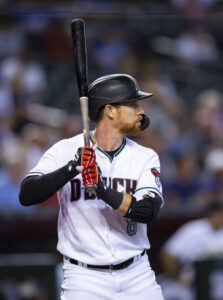
He couldn’t carry that over into 2020, with his batting line sliding down to .192/.304/.359 for a wRC+ of 84. He bounced back in 2021, which included a trade to the Rays. He finished that campaign with a line of .202/.326/.454, 116 wRC+. Oddly, his penchant for mashing lefties was reversed that season, as he produced a 95 wRC+ against them but a 143 against northpaws.
Prior to 2022, the Rays traded him to the Diamondbacks, but he didn’t hit pitchers of any kind this year. He finished the campaign with an overall line of .176/.274/.361. That amounted to a 78 wRC+, with an 85 with the platoon advantage but 69 without.
Over 323 major league games, the total of Luplow’s work amounts to a roughly league average hitting. He’s walked at a healthy 11.8% rate and hit 45 home runs for a career .213/.313/.432 batting line. That amounts to a 102 wRC+, or 2% above league average, with a 125 against southpaws and 76 otherwise.
Defensively, Luplow is considered average or better on the grass. Defensive Runs Saved has given him +4 for his outfield work, with Ultimate Zone Rating coming in at 10.3 and Outs Above Average at an even zero. He’s played more in the corners but is capable of playing adequate center field in a pinch.
Atlanta’s outfield mix will consist of Ronald Acuña Jr. in right field and Michael Harris II in center. Left field is more of an open question, as both Eddie Rosario and Marcell Ozuna have been below average in each of the past two seasons, Rosario’s postseason heroics notwithstanding. It’s possible that Luplow and the left-handed hitting Rosario could form a platoon in left, though it’s also possible that Luplow will serve as a fourth outfielder who gets the occasional start against particular lefties. Rosario’s career platoon splits are notable but not drastic, as he has a wRC+ of 108 against righties and 85 otherwise. Harris also hits from the left side and could get the occasional day off while yielding center to Luplow.
2022 was Luplow’s first arbitration season and he earned a salary of $1.4MM. He was projected by MLBTR contributor Matt Swartz for a raise up to $2MM but the Diamondbacks designated him for assignment in November. Luplow now latches on with Atlanta for 2023, making the exact same salary he did this year. He will finish 2023 shy of the six years of MLB service time necessary to reach free agency, meaning Atlanta could retain him for 2024 via arbitration if they so choose. He also has one option year remaining and could be sent to the minors to serve as depth.
Though the salary is modest, it nudges the club closer to luxury tax territory. Roster Resource currently pegs the club’s payroll at $197MM with a competitive balance tax calculation just shy of $230MM. That leaves them just over $3MM away from the CBT threshold of $233MM.
Image courtesy of USA Today Sports.
Braves Acquire Hoy Park
The Red Sox announced that they have traded infielder/outfielder Hoy Park to the Braves. In exchange, they will receive a player to be named later or cash considerations. Park was designated for assignment earlier this week.
Park, 27 in April, has been bouncing around the league over the past couple of seasons. Originally a Yankee farmhand, he got out to a blistering start in 2021. In 48 Triple-A games, he hit .327/.475/.567 for a wRC+ of 180. On the heels of that torrid stretch, he went to Pittsburgh in the deal that sent Clay Holmes to the Yankees.
Unfortunately, his performance since that deal has made that hot streak look like a mirage. He hit .195/.297/.336 in 45 games for the Pirates after the deal. In 2022, he spent most of his time in Triple-A, getting into 89 games and hitting just .225/.332/.354 for a wRC+ of 86. He also got into 23 big league games but slashed a meager .216/.276/.373, 79 wRC+.
The Pirates designated him for assignment in November and then flipped him to the Red Sox for prospect Inmer Lobo, only for Boston to send him back into DFA limbo again a few weeks later. Despite the tepid offense over the past season and a half, Park continues to get interest due to his defensive versatility and speed. He regularly posts double-digit steal totals and can play all three outfield slots as well as the three positions left of first base. If his bat can even take a little step forward to be average-ish, he could be a valuable contributor.
For the Braves, they have most of their infield set with Matt Olson, Ozzie Albies and Austin Riley in place. Shortstop is still a question mark with Dansby Swanson having hit free agency and still on the open market. If he ends up signing elsewhere, it seems the plan would be to install Vaughn Grissom there. In the outfield, Michael Harris II and Ronald Acuña Jr. have two spots accounted for with Marcell Ozuna, Eddie Rosario and Sam Hilliard candidates for another. Park still has two option years remaining, which will allow the club to keep him in the minors as depth to be brought up as needed. But he could also compete for a bench/utility role with the likes of Orlando Arcia, Braden Shewmake and Ehire Adrianza.
Braves Sign Ehire Adrianza To Minor League Deal
The Braves have agreed to a minor league deal with veteran utilityman Ehire Adrianza, reports Justin Toscano of the Atlanta Journal-Constitution. He’ll be invited to Major League Spring Training. Atlanta also signed infielder Mitchell Tolman to a minor league pact, per Toscano, though he won’t be in big league camp this spring. Adrianza would earn a $1MM salary if selected to the Major League roster, Daniel Alvarez-Montes of El Extra Base reports.
Adrianza, 33, has spent time with the Braves in each of the past two seasons, including a solid 2021 showing that saw him post a .247/.327/.401 batting line (95 wRC+) while logging time at five different positions. That 2021 campaign, however, has been bookended by a pair of dreary seasons at the plate, the most recent of which saw the switch-hitting Adrianza slash just .175/.264/.206 in 110 trips to the plate between the Nationals and Braves.
While Adrianza graded out as an above-average defender at shortstop earlier in his career, he’s drawn negative reviews in recent seasons and, accordingly, spent more time at third base, second base and in the outfield corners. Adrianza has at least fleeting experience at every position on the diamond other than catcher, but he’s posted just a .215/.301/.318 batting line dating back to 2020.
The 28-year-old Tolman is a defensively versatile player himself, having logged substantial time at second base, third base and shortstop in a seven-year minor league career. The bulk of that time (4406 innings) has come at second base, but Tolman also has 950 innings at the hot corner and 508 innings at shortstop under his belt. He’s a career .257/.348/.450 hitter in Triple-A and spent the 2022 season with the Guardians’ Triple-A club, where he slashed .251/.350/.425 slash in 423 trips to the plate.