
Is There Any Way The Dodgers Can Win The Mookie Betts Trade?
In today’s video, Jeff Todd and I discuss how the Mookie Betts trade is affected by the coronavirus, and whether there might be a silver lining for the Dodgers.
MLBTR Poll: Third Base Building Blocks
Major League Baseball boasts a high number of quality third basemen, evidenced in part by the fact that nine regulars at the position totaled at least 4.5 fWAR last season. The Athletics’ Matt Chapman and the Red Sox’s Rafael Devers finished in the top five in that category, and as players who are controllable for the foreseeable future and only in their 20s, they represent a pair of the top building blocks in the game. The question, though, is which player you’d rather have going forward.
The easy answer (or so it seems) is Chapman, whose career production has trounced Devers’ since the two debuted in 2017. Not only is he a defensive wizard, but Chapman can flat-out hit. The soon-to-be 27-year-old’s all-around excellence had led to 15.5 fWAR thus far, including back-to-back seasons of 6.0 fWAR or better. He’s now coming off a career-best campaign as a power hitter in 2019, when he batted .249/.342/.506 (125 wRC+) with 36 home runs in 670 plate appearances.
Chapman still has four years of team control left, including one more pre-arb season (that’s if there is MLB in 2020). The same goes for Devers, so the two are even in that regard. As mentioned, Chapman’s output has crushed Devers’ in the aggregate. However, Devers closed the gap a season ago with a 5.9-fWAR showing, and he’s also several years younger than Chapman. Devers, who won’t even turn 24 until October, was roughly a league-average offensive player from 2017-18, but the proverbial light bulb went on last season during a .311/.361/.555 effort (132 wRC+) in which he slugged 32 homers over 702 PA.
Devers has nothing on Chapman at third – the former put up minus-10 DRS and plus-2.7 UZR last year; the latter recorded an otherworldly plus-34 DRS and plus-14.8 UZR – but they’re close in terms of offensive prowess. And Devers is so much younger than Chapman that it’s hard not to take that into consideration when comparing the two. Going by fWAR, Chapman was the third-most valuable third baseman in baseball in 2019. Devers was fourth. You can’t lose with either player, but all things considered, whom would you rather have heading into the future?
(Poll link for app users)
Matt Chapman or Rafael Devers?
-
Chapman 64% (2,415)
-
Devers 36% (1,365)
Total votes: 3,780
What Happens To The Mookie Betts Trade If The Season Is Canceled?
If the 2020 MLB season is canceled due to the coronavirus pandemic, players will receive service time equal to the amount they accrued in 2019. That’s a win for any player who received a full year in ’19, as they’d remain on track for free agency as expected. That includes Mookie Betts, George Springer, J.T. Realmuto, Trevor Bauer, and everyone else expected to be in the 2020-21 free agent class.
A canceled season would sting for someone like Dodgers second baseman Gavin Lux, who picked up 28 days of Major League service as a rookie last year but was likely to get a full season in 2020. Lux’s free agency would have arrived after the 2025 season, but if this season is canceled, he’ll project to become a free agent after ’26. And then there are others who didn’t get any MLB service in ’19 but were expected to in ’20, such as Wander Franco, Jo Adell, and Nate Pearson.
It’s worth considering how the balance would shift in recent major trades if there’s no 2020 season. The Betts trade, where the Dodgers’ main acquisition was a star rental player, dramatically shifts toward the Red Sox.
Pre-coronavirus expectations of the Mookie Betts trade:
- Dodgers get one year of Mookie Betts, three years of David Price, $48MM from the Red Sox and can make Betts a qualifying offer after the season
- Red Sox get five years of Alex Verdugo, six years of Jeter Downs and six years of Connor Wong
Canceled season results of the Mookie Betts trade:
- Dodgers get zero years of Mookie Betts, two years of David Price, $32MM from Red Sox and can make Betts a qualifying offer
- Red Sox get four years of Alex Verdugo, six years of Jeter Downs and six years of Connor Wong
The Red Sox had been scheduled to pay $48MM to the Dodgers in 18 equal installments, starting tomorrow. However, MLBTR has confirmed that all cash considerations will be adjusted proportionally to the salary reductions that end up occurring in 2020. So if the Dodgers don’t wind up paying Price in 2020, the Red Sox won’t send money to them. My $32MM figure assumes the 2021 season is played in full.
Price remains a useful pitcher, so it’s not as if the Red Sox gave up nothing of value. And while they’d still pay the Dodgers $32MM in 2021-22, that’s only half what they’d have originally owed Price for his age 35-36 seasons. The Sox might have accepted that arrangement with nothing in return from the Dodgers, but they still get to keep Verdugo, Downs, and Wong. Though a canceled season would mean the Red Sox would lose the chance to reset under the luxury tax in 2020, that will be less challenging in ’21 given the Price trade and the fact that Jackie Bradley Jr. ($11MM) will be coming off the books.
The Dodgers, meanwhile, would find themselves without Betts, Verdugo, or Joc Pederson for the 2021 season (unless they re-sign Pederson as a free agent). They’d lose a crucial year of control of Cody Bellinger, who would likely settle back in as the regular right fielder. That would leave A.J. Pollock as the regular center fielder. The Dodgers would have an even bigger question mark in left, where Pederson, Verdugo, and Pollock combined to take more than half of the innings in 2019. Chris Taylor and Matt Beaty would be the main in-house candidates, so the Dodgers would likely have to make an outfield acquisition.
Betts could still wind up playing meaningful games for the Dodgers if the 2020 season is canceled, as they’d be a top contender for him in what could be a strange free agency period. It would hardly be a shock to see the entire free agent market suffer due to teams’ lost revenue in 2020, forcing Betts to settle for less than he expected prior to the pandemic.
Could the Dodgers receive some sort of recourse on the Betts trade if the season is canceled? I polled MLBTR writers Steve Adams, Jeff Todd, and Connor Byrne, and none of them find that likely. As Steve put it, “If there’s an alteration to the Betts deal, that just seems like opening Pandora’s box. Every team in the league would be clamoring for compensation because almost everyone would be getting screwed to some extent.” Whether it’s the Reds acquiring Trevor Bauer last summer with an eye toward 2020, the Diamondbacks losing one of their two years of Starling Marte, or the Rangers losing a year of Corey Kluber, many teams are dealing with a similar situation.
For more on this topic, check out my new video discussion with Jeff Todd:
Red Sox Provide Updates On Injured Players
Red Sox manager Ron Roenicke and pitching coach Dave Bush held a conference call with reporters Tuesday, providing updates on a trio of injured Sox players (all Twitter links via NESN’s Guerin Austin and MassLive.com’s Chris Cotillo).
Perhaps most notably, Roenicke explained that right fielder Alex Verdugo has been swinging a bat, throwing and running as he rehabs a stress fracture in his lower back. Moving his workouts away from the Red Sox’ spring facility following its shutdown has made it more difficult for the club to closely monitor the 23-year-old’s progress, and Verdugo hasn’t yet been able to undergo an MRI to ascertain that his injury has completely healed. However, the Sox remain hopeful that if play is able to resume this year, Verdugo would be ready to participate fully. The centerpiece in Boston’s return for Mookie Betts and David Price, Verdugo slashed .294/.342/.475 with a dozen homers, 22 doubles and a pair of triples in 377 plate appearances with the Dodgers last year.
[Related: What happens to the Mookie Betts trade if the season is canceled?]
As for right-hander Collin McHugh, he’s moving more slowly through the early stages of a strengthening program. McHugh underwent a nonsurgical elbow procedure over the winter after finishing the 2019 season on the injured list and has been brought along slowly. The Sox aren’t rushing him through anything with the season in limbo at the moment, and Roenicke indicated that the 32-year-old righty, who signed a one-year deal with Boston in early March, still has quite a ways to go in his rehab. Boston’s final couple of rotation spots remain fairly unsettled — Ryan Weber is the likely fourth starter, and there’s no set fifth starter — although given where McHugh is in his rehab, perhaps he’s better viewed as a potential bullpen piece.
Regarding former franchise cornerstone Dustin Pedroia, it doesn’t seem that the shutdown has provided any new optimism that he could make a return. While he’s still under contract through the 2021 season, Pedroia’s 2020 status has been up in the air since he suffered a “significant” setback in his recovery from repeated left knee troubles that have necessitated a trio of surgeries. He’s played in just nine games over the past two seasons thanks to his increasingly problematic knee, and Roenicke was rather blunt in casting doubt on a potential return for the 36-year-old: “He’s still not a point where he’s thinking about trying to be ready to come back and join us.”
Steve Pearce Announces Retirement
Veteran infielder Steve Pearce is officially hanging up his spikes, he tells WEEI’s Mike Mutnansky (writeup via Rob Bradford). He was not currently under contract with any MLB organization.
Pearce, who turned 37 yesterday, had already indicated he was unlikely to resume his playing career. Though he kept the door open late last year, he has now put to rest any possibility of a surprise return.
Last year turned out to be an injury-ruined disappointment — hardly the only time that Pearce’s body has betrayed him over the years. He managed to appear in 13 campaigns and achieve a full decade of MLB service in spite of his many health woes, but was limited to 2,555 plate appearances over that span.
Now that he has formally wrapped up his playing career, we can put a final wrap on it. Pearce owns a cumulative .254/.332/.440 batting line with 91 home runs. He appeared with seven organizations at the game’s highest level: the Pirates, Orioles, Red Sox, Blue Jays, Rays, Yankees, and Astros.
Pearce will be remembered most for his surprising breakout years in Baltimore and his brief but notable late run in Boston. He entered his age-30 season with a completely unremarkable record in the majors. He ended up making virtually his entire contribution at the game’s highest level over the ensuing six-year stretch (2013-18), over which he recorded a .266/.347/.479 slash (123 OPS+).
After moving to the Red Sox at the 2018 deadline, Pearce delivered a monster effort down the stretch before a three-homer showing in the 2018 World Series that earned him the MVP award for the series. In his recent comments, Pearce rejected the notion that the 2018 Red Sox benefited from illicit sign-stealing efforts — a matter that still remains unresolved by league investigation, at least publicly.
Austin Maddox Retires
Red Sox right-hander Austin Maddox announced his retirement during the offseason, as reported by SoxProspects.com (Twitter link) in March. The 28-year-old Maddox is hanging up his glove after 13 Major League appearances (all with the Sox during the 2017 season) and seven total professional seasons.
A University of Florida product, Maddox was a third-round pick for the Red Sox in the 2012 draft and he pitched almost exclusively as a reliever during his time in Boston’s farm system — 136 of his 151 career minor league appearances came out of the bullpen. After some issues with the home run ball early in his career, Maddox began to post better results in 2015, and then made a three-level jump during the 2016 season. Another strong performance at the Double-A and Triple-A levels in 2017 led to his call-up to the Red Sox roster.
Maddox’s brief MLB career will go into the books as an impressive one by the numbers, as he allowed just a single earned run over 17 1/3 regular season innings. Beyond that minuscule 0.52 ERA, Maddox also recorded 14 strikeouts against just two walks. This was enough to earn Maddox a spot on the Red Sox postseason roster, and he allowed a run in two innings pitched during Boston’s ALDS loss to the Astros.
What looked like a promising start ended up as the entirety of Maddox’s big league career. A shoulder strain limited him to only eight total outings in the minors in 2018, and he missed all of 2019 recovering from rotator cuff surgery. The Red Sox re-signed Maddox to a new minor league deal over the offseason, though he didn’t appear in any Spring Training games.
MLBTR wishes Maddox the best in the next step in his post-playing career.
Red Sox Notes: Sale, Pillar, Witte
Red Sox lefty Chris Sale spoke with reporters this week, acknowledging and even agreeing with some of the frustration felt by fans who suggested he could’ve had the surgery months ago (link via MassLive.com’s Chris Cotillo). However, like most players, Sale viewed surgery as an absolute last resort. “Some people call it wasting time. And hey, it is,” Sale conceded. “We wasted time because the end result is Tommy John. We could have done this six months ago. Having said that, I appreciate the process and I wouldn’t have been 100% go as I was this past time. We turned over every stone. We did every possible thing we could have to prevent this. And I’m okay with that.”
With Sale shelved, the Red Sox’ rotation is going to be a patchwork unit at best, should the season eventually be played out. He’s in the first season of a five-year, $145MM contract he inked with the Red Sox last spring — a deal for which he opted in lieu of testing free agency this past offseason. The 31-year-old southpaw will miss at least the first season of that deal and some of the second, but he’s hopeful that the surgery could allow him to “get 10 more great years” out of his elbow.
More on the Sox…
- Outfielder Kevin Pillar chatted with Julian McWilliams of the Boston Globe about his revamped approach at the plate heading into the 2020 season. Long a pull-happy hitter, Pillar’s pull tendencies spiked to new heights in 2019, prompting him to refocus on taking the ball up the middle and hitting to all fields. The 31-year-old belted a career-high 21 homers last year — likely in part due to said spike in pull percentage and also due to the juiced ball — but he’s hopeful that more of all-fields approach will bring about a more well-rounded offensive game. Specifically, Pillar noted that going through the offseason and better “understanding how teams value players now” fueled his approach. Pillar, of course, was non-tendered by the Giants after racking up 21 homers, 37 doubles and four triples due in some part to his dismal .287 OBP. He eventually signed a one-year, $4.25MM deal with Boston late in the offseason.
- Infielder Jantzen Witte, in camp as a non-roster invitee with the Sox, is in many ways a microcosm of the challenges that minor league players face as a whole, writes WEEI’s Rob Bradford. A career-long minor leaguer, Witte had never earned more than $12,000 in a single season. However, he reached minor league free agency this winter and was slated to see his earnings increase considerably, even if he simply spent the year in Triple-A. Witte, though, impressed in camp and caught the eye of manager Ron Roenicke, creating the outside possibility of securing a bench spot with the club and at least putting him on the radar for a midseason call-up. Now, he’s collecting a $400 weekly stipend through the end of May — a rate that checks in under his previous $12,000 salary even when prorated for a whole season — with no clue what’ll happen thereafter (financially speaking). Bradford spoke with Witte about his efforts to remain in shape, the financial uncertainty he’s facing and the woodcarving side business he’s started up while awaiting clarity. The 30-year-old Witte hit .277/.339/.394 in Triple-A last year while playing third base, second base, first base and left field.
These Players Can Exit Their Contracts After 2020
No matter if a Major League Baseball season takes place in 2020, there are certain players who will be in position to decide whether to exit their current contracts next winter. Whether it be by way of an opt-out clause or a mutual option, here’s a look at the players who will be able to choose to take their chances in free agency…
Opt-Outs
Back when the Marlins extended outfielder Giancarlo Stanton on a historic pact worth $325MM over 13 years in 2014, they included a one-time opt-out for next winter. Stanton has put up at least one phenomenal season since he signed that deal – he won the NL MVP and hit 59 home runs in 2017 – but injuries have hampered him on a regular basis. He’s now a member of the Yankees, who acquired him in a December 2017 deal, but Stanton played in just 18 games last season. He’ll still be owed $218MM for seven years after this season, and for at least the time being, it’s very tough to think of Stanton leaving that money on the table to test free agency.
Designated hitter J.D. Martinez, a member of the Yankees’ archrival in Boston, will have two years and $38.75MM remaining on his contract after this season. He’ll be 33 then, and will continue to be someone who’s known as a defensive liability, so should be opt out? It’s up for debate. The big-hitting Martinez remains an offensive standout, but his production last season fell (granted, he did still slash .304/.383/.557 with 36 home runs in 657 plate appearances). He subsequently chose not to opt out after last season, as doing so would have cost him his $23.75MM salary for this year.
One of Martinez’s former Tigers teammates, outfielder Nicholas Castellanos, will also have to choose whether to revisit free agency next offseason. Castellanos is another defensively challenged slugger, one whom the Reds guaranteed $64MM over four years this past winter. He’ll be 29 by the time the 2021 season rolls around, and by saying goodbye to his Reds pact, he’d be leaving $48MM on the table (including a $2MM buyout in 2024). It’s not easy to determine whether that will happen; some of it depends on how well Castellanos fares in 2020, if a season occurs. Carrying over the tremendous production he posted late last season after the Cubs acquired him from the Tigers may make Castellanos more inclined to try his luck on the market again, but his output at the plate has been more good than great throughout his career.
Mutual Options
For the most part, mutual options don’t get picked up. Either a player’s so effective that he opts for free agency or he’s not useful enough for his team to exercise the option. Rockies first baseman Daniel Murphy and reliever Wade Davis are among those who have mutual option decisions waiting after the season, but they’ve struggled in the club’s uniform so far. With that in mind, Murphy’s on track for a $6MM buyout (as opposed to a $12MM salary), while Davis figures to receive a $1MM buyout instead of a $15MM payday.
Brewers outfielder Ryan Braun ($15MM mutual option, $4MM buyout), Diamondbacks right-hander Mike Leake ($18MM mutual option, $5MM buyout) and Cubs lefty Jon Lester ($25MM mutual option, $10MM buyout) could also find themselves looking for new contracts next winter. The same goes for Mets reliever Dellin Betances, though it’s tougher to say in his case. The former Yankee barely pitched at all season on account of injuries, and if there isn’t a season in 2020, would he turn down a guaranteed $6MM in 2021? And would the Mets buy him out for $3MM? That’s one of the many interesting questions we could face next offseason.
Wilmer’s Tears: The Butterfly Effects Of A Collapsed Trade
Wilmer Flores cried. It was the eighth inning, and the Mets were trailing the Padres by five runs. The non-waiver trade deadline was 36 hours away, and the only organization he’d ever known had agreed to trade him and teammate Zack Wheeler to the Brewers in exchange for two-time All-Star Carlos Gomez. The 23-year-old Flores learned of the reported agreement between innings … but he was left in the game to hit in the seventh inning … and to return to the field to play second base in the top half of the eighth.
In a whirlwind span of 15 to 30 minutes, Flores went from being traded to staying put among friends and teammates; the Mets had backed out of the reportedly agreed-upon trade once talks progressed to medical reviews. Tom Haudricourt of the Milwaukee Journal-Sentinel reported that an issue with Gomez’s hip and perhaps some hesitance over Wheeler, who was on the mend from Tommy John surgery at the time, had torpedoed the deal.
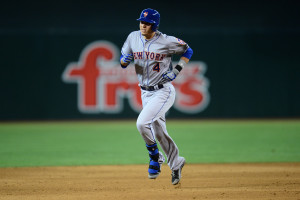
Two nights later, with the deadline behind him, Flores pumped his fist as he rounded first base and thumped the Mets logo across his chest as he approached home plate after hitting one of the most emotional walk-off home runs in recent memory. It was the last standing ovation in a day that saw Mets fans rise to their feet to embrace Flores on multiple other occasions. Flores went on to have a fine Mets career, calling Citi Field home up through the 2018 season. He’ll always hold a special place in the hearts of most Mets fans.
The memory of that unusual and emotional scene, however, is only the surface of a much more layered “what if” scenario. If the Mets had gone through with that trade, the ripple effects would’ve radically altered the future of several teams and — in a more roundabout way — perhaps the very fabric of the game.
How so? Let’s examine:
The Mets
Imagine a world where the Mets weren’t issuing statements to the press about their highest-paid position player being injured in a freak wild boar accident. If the Mets had gone through with the Brewers trade, it’s quite possible that Yoenis Cespedes never would’ve played a game for them. The deal bringing Cespedes to Queens was a buzzer-beater just seconds before the deadline — not 48 hours after Flores’ outpouring forever endeared him to the Mets’ fanbase.
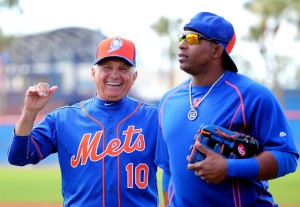
Cespedes was an absolute juggernaut for the Amazins down the stretch, fueling their torrid finish to the season with an outstanding .287/.337/.604 with 17 home runs in just 57 regular-season games. Mets fans clamored for the then-Sandy-Alderson-led front office to re-sign the slugger. While he initially looked to be outside their price range, Cespedes didn’t see his market develop the way he’d hoped and ultimately opted for a compromise deal that promised him $75MM over three years but came with opt-outs after years one and two. Following a terrific 2016 season, Cespedes indeed opted out, and the two sides brokered a more concrete four-year, $110MM pact covering the 2017-20 seasons.
But what if the club had acquired Gomez on July 30? Curtis Granderson was productive in right field. Juan Lagares was a world-beating defensive center fielder even if his bat was characteristically flimsy. Michael Cuddyer was still on the roster, and a top prospect named Michael Conforto had made his MLB debut just days earlier, on July 24. With Gomez added to that bunch, would the Mets have gone through with Cespedes trade? You can argue there was still room — put Gomez in center, Cespedes in left and use Lagares off the bench — but the urgency obviously would’ve been lessened and the Mets surely would’ve been more protective of their prospect assets. And without that magical stretch run erased from history and Gomez signed through 2016, the Mets’ motivation to sign Cespedes would’ve likely been wiped out.
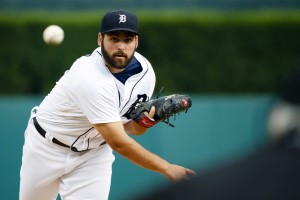
Furthermore, with Cespedes then sure to have been traded elsewhere, might the pitcher they traded to Detroit have instead won a Rookie of the Year Award in New York? It’s impossible to say, but dropping Michael Fulmer into the mix of quality Mets arms in place of Wheeler would’ve maintained their enviable stash of arms for a longer time. Fulmer, Jacob deGrom, Matt Harvey (prior to his regression), Noah Syndergaard and Steven Matz is clearly a talented enough group on which to build a contending staff. And the “what ifs” only continue if you stop to wonder what precise course Fulmer’s career would’ve taken a different setting.
The Tigers
Speaking of Fulmer, well, Tigers fans wouldn’t be left to wonder whether the club should’ve traded him prior to all of his injury troubles. Fulmer had a masterful rookie season but has since undergone an ulnar nerve transposition procedure, Tommy John surgery and knee surgery. They could’ve pulled the trigger on a trade for him early in his big league tenure, but doing so would’ve meant trading four-plus years of control over the right-hander. Tigers fans can voice frustration with the benefit of hindsight, but trades of quality, established starters with that much club control remaining are of the utmost rarity.
It’s likely that Cespedes would’ve been moved elsewhere. The Astros, Orioles, Giants and Pirates were among the teams on the hunt for outfield upgrades that trade deadline, and then-Detroit GM Dave Dombrowski was committed to a rare sell-off, evidenced not only by the Cespedes swap but the David Price blockbuster with the Blue Jays. If you want to get truly hypothetical, though, let’s say no Cespedes trade materializes. …Would late owner Mike Ilitch still have moved on from Dombrowski shortly after the trade deadline? Would Dombrowski ever have ended up in Boston?
The Brewers
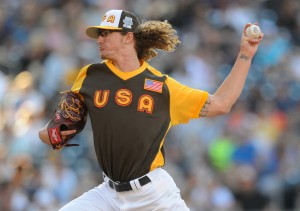
Sayonara, Josh Hader. In this hypothetical world, you were never a Brewer, because Gomez was traded for Wheeler and Flores. Corey Knebel and Jeremy Jeffress surely could’ve formed a potent back-of-the-pen duo while their peaks overlapped, but the three-headed monster that propelled the team to the 2018 NLCS would never have come to be. Hader would’ve been dominating in Houston or elsewhere, depending on whether the Astros traded him. Could a Wheeler-fronted rotation have made up for his absence?
The ripple effect doesn’t stop there. Also coming to Milwaukee in the Astros swap that did happen were Brett Phillips, Domingo Santana and Adrian Houser. Phillips was flipped for Mike Moustakas in 2018, so without his presence in Milwaukee, who knows whether Moose would’ve been acquired via trade or subsequently re-signed in the winter? Santana’s 30-dinger season in 2017 doesn’t happen, nor do the Brewers eventually trade him for Ben Gamel. Houser, meanwhile, doesn’t show promise of a late-blooming breakout with the ’19 Brewers, for whom he turned in 111 1/3 innings of 3.72 ERA/3.88 FIP ball with 9.5 K/9, 3.0 BB/9, 53.4% grounder rate. The Brewers’ 2020 rotation is short another arm in that instance, as Wheeler still would’ve been a free agent, barring an extension.
Of course, the Brew Crew would’ve enjoyed Wheeler’s renaissance since he reemerged from arm troubles. And that brings us to…
The Astros
The craziest part of this entire butterfly effect isn’t that Josh Hader might’ve been closing out games for Houston. In fact, it doesn’t involve Hader or Gomez at all. It’s that the other player traded to the Astros alongside Gomez in exchange for Hader, Phillips, Santana and Houser was none other than right-hander Mike Fiers. Fiers joined the Houston rotation, promptly threw a no-hitter in his fourth outing, made 67 starts for the ‘Stros over the next two and a half seasons … and ultimately proved to be the whistleblower who outed a sign-stealing scandal that led to the firing of manager A.J. Hinch and president of baseball operations Jeff Luhnow.
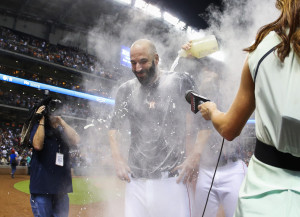
Perhaps the Astros were enamored of Fiers enough that they’d have found a way to acquire him from Milwaukee in a different swap. But it’s eminently plausible that had the Wheeler/Flores/Gomez trade between Milwaukee and New York gone through, we’d still have no firm knowledge of the Astros’ nefarious scheme. True, we might’ve had some inkling of wrongdoing; Jeff Passan, after all, reported for Yahoo back in 2017 that two players told him they believed Houston had banged on a trash can to convey signs. Athletics GM David Forst has acknowledged asking the league to investigate the Astros for improper use of technology. But without the smoking gun that was Fiers’ testimony, the league was either unable or unmotivated to bring the scandal to public light.
Peeling the onion back further — imagine if Hader had become every bit as dominant in Houston as he did in Milwaukee. Would the Astros have ever acquired Roberto Osuna to shut down games? Would since-fired assistant GM Brandon Taubman’s belligerent locker room taunting ever have led to his dismissal? Would the Astros have libeled Sports Illustrated’s Stephanie Apstein, calling her report of Taubman’s actions “misleading and completely irresponsible” before accusing her of attempting to “fabricate a story where one does not exist”?
To be clear: the Astros’ scandals reflect the indefensible choices of many individuals associated with the organization, for which they’re fully responsible collectively and individually. But the counter-factual scenarios do at least suggest that these matters might have occurred and/or been brought to light in quite different ways.
The Red Sox
Depending on the previous Dombrowski question I raised, who knows what state the front office would be in? We do know, definitively, that without the Astros’ sign-stealing scandal coming to light last fall, Alex Cora would not have been fired as the team’s manager. Ron Roenicke would still be his bench coach.
All that brings us back to…
The Mets
Carlos Beltran‘s debut as the Mets’ manager would’ve been delayed by the COVID-19 pandemic, but it wouldn’t have been outright wiped out of existence by virtue of his own involvement in the Astros scandal. Luis Rojas would be a quality control coach and not a big league manager.
Whether the Mets would’ve been better off in the long run with Gomez and Fulmer in the organization as opposed to Wheeler, Flores and Cespedes is debatable. Cespedes was again their best hitter in 2016 when the club secured a Wild Card postseason berth, but they were unable to advance beyond that initial round, falling to the Giants. The subsequent four-year deal has been a disaster. Cespedes has been extremely productive when on the field, but he of course hasn’t been on the field much. He’s played 119 games through the first three seasons of that deal and agreed to have his contract restructured this winter after the surreal wild boar injury.
Wheeler didn’t pitch again until 2017 and wasn’t very good that year. But his 2018-19 seasons were strong, as he posted a combined 3.65 ERA in 377 1/3 innings with a strikeout per frame and a total of roughly eight wins above replacement. The Mets didn’t make the postseason either year, though, and they’re left with a draft pick to show for their decision to hang onto him.
Flores hit .272/.317/.409 after the trade-that-wasn’t, taking another 1275 plate appearances as a Met before signing with the D-backs in free agency in the 2018-19 offseason and then inking a two-year deal with the Giant this past winter.
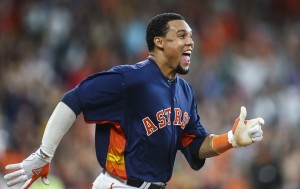
Adding Gomez in 2015 probably wouldn’t have cost the Mets the division — they won the NL East by seven games — but it’d have made things much closer. He’d already seen his 2013-14 All-Star form begin to fade, and his production worsened following his eventual trade to Houston. In 2016, Gomez played so poorly with the Astros that they simply released him in mid-August. A late surge with the Rangers served to remind that Gomez was still talented, so perhaps had he never gone to Houston in the first place, he could’ve remained a solid bat — but he was never going to hit at Cespedes’ level.
Fulmer, meanwhile, would still be controlled by the Mets through at least 2022 — if not 2023 (depending on when they promoted him). Virtually every prominent Mets starter has had Tommy John surgery in recent years (all of deGrom, Harvey, Wheeler, Matz and now Syndergaard), and it’s likely that Fulmer would’ve still eventually required his own surgery. But the other injuries that have dogged him and the timing of the procedure can’t be known. Marcus Stroman, acquired last July as an advance means of “replacing” Wheeler once it was clear an extension wasn’t happening, might not be a Met. Anthony Kay, traded in that deal, could be projected in the 2020 rotation.
The exact manner in which rosters would’ve been impacted can be speculated upon ad nauseam, but will never be known to any real degree of confidence. It doesn’t seem like the Mets cost themselves any playoff opportunities, but the effects of that near-trade were extremely broad reaching — and it seems certain that without Fiers being traded to Houston, we’d still be lauding the 2017 Astros as the most dominant team in recent history (at least until the shocking news emerged in some other manner).
Photos courtesy of USA Today Sports Images.
Revisiting Dave Dombrowski’s Red Sox Trades
Dave Dombrowski’s ousting as general manager of the Tigers back in 2015 was a stunner throughout the baseball world. Just days after orchestrating a rare deadline sell-off for the AL Central powerhouse — David Price and Yoenis Cespedes were both shipped out in deals that netted Matthew Boyd and Michael Fulmer, respectively — Dombrowski was cut loose.
Most expected that Dombrowski, one of MLB’s most respected front-office figures, would another job in short order… but probably not as quickly as he ultimately did. Barely two weeks after being dismissed in Detroit, Dombrowski was named president of baseball operations for the Red Sox — a move that prompted general manager Ben Cherington to step down less than two years after his club had won a World Series.
As it turned out, Dombrowski’s tenure in Boston would closely mirror that of Cherington’s; his time in charge was relatively brief, and he was gone not long after winning a World Series. Less than year after capturing a championship in 2018, Dombrowski got the boot.
Let’s take a look back at Dealin’ Dave’s trade history in Boston…
2015 Season
- Acquired LHP Luis Ysla from the Giants in exchange for OF Alejandro De Aza and cash
2015-16 Offseason
- Acquired RHP Craig Kimbrel from the Padres in exchange for SS Javy Guerra, OF Manuel Margot, LHP Logan Allen and 2B Carlos Asuaje
- Acquired RHP Carson Smith and LHP Roenis Elias from the Mariners in exchange for LHP Wade Miley and RHP Jonathan Aro
2016 Season
- Acquired 2B/3B Aaron Hill and cash from the Brewers in exchange for RHP Aaron Wilkerson and INF Wendell Rijo
- Acquired INF/OF Michael Martinez from the Indians in exchange for cash
- Acquired RHP Brad Ziegler from the D-backs in exchange for RHP Jose Almonte and OF Luis Alejandro Basabe
- Acquired LHP Drew Pomeranz from the Padres in exchange for RHP Anderson Espinoza
- Acquired LHP Fernando Abad from the Twins in exchange for RHP Pat Light
2016-17 Offseason
- Acquired RHP Tyler Thornburg from the Brewers in exchange for 3B Travis Shaw, 2B/SS Mauricio Dubon and RHP Josh Pennington
- Acquired LHP Chris Sale from the White Sox in exchange for 2B/3B Yoan Moncada, RHP Michael Kopech, OF Luis Alexander Basabe and RHP Victor Diaz
- Acquired 2B Josh Tobias from the Phillies in exchange for RHP Clay Buchholz
2017 Season
- Acquired INF Eduardo Nunez from the Giants in exchange for RHPs Shaun Anderson and Gregory Santos
- Acquired RHP Addison Reed from the Mets in exchange for RHPs Gerson Bautista, Jamie Callahan and Stephen Nogosek
- Acquired OF Rajai Davis from the Athletics in exchange for OF Rafael Rincones
2017-18 Offseason
- Acquired C Mike Ohlman from the Rangers in exchange for cash
- Acquired OF Ramon Flores from the D-backs in exchange for cash
2018 Season
- Acquired RHP Josh Taylor from the D-backs as PTBNL for SS Deven Marrero
- Acquired RHP Nathan Eovaldi from the Rays in exchange for LHP Jalen Beeks
- Acquired 2B Ian Kinsler from the Angels in exchange for RHP Ty Buttrey and LHP Williams Jerez
2018-19 Offseason
- Acquired RHP Colten Brewer from the Padres in exchange for 2B Esteban Quiroz
2019 Season
- Acquired OF Marcus Wilson from the D-backs in exchange for C/OF Blake Swihart and $500K international bonus slot
- Acquired RHP Andrew Cashner and cash from the Orioles in exchange for OF Elio Prado and INF Noelberth Romero
—
We’ll revisit Dombrowski’s trade histories with other clubs in separate posts, but the question for now: How do MLBTR readers grade Dombrowski’s work as the Red Sox’ baseball ops boss? (Link to poll for Trade Rumors mobile app users.)
Grade Dave Dombrowski's trade history as Red Sox president:
-
B 37% (2,957)
-
C 32% (2,577)
-
D 13% (1,029)
-
A 13% (1,012)
-
F 5% (409)
Total votes: 7,984
Interested in how other GMs hold up under this exercise? We’ve covered Diamondbacks GM Mike Hazen, recently fired Astros president Jeff Luhnow, Brewers president of baseball ops David Stearns, Angels GM Billy Eppler, Rockies GM Jeff Bridich, Tigers GM Al Avila, Braves GM Alex Anthopoulos, Blue Jays GM Ross Atkins, Mariners’ GM Jerry Dipoto, Phillies’ GM Matt Klentak, Dodgers’ president of baseball operations Andrew Friedman and Rays GM Erik Neander as well.