
Astros Catcher Jason Castro Out For Season Due To Knee Surgery
The Astros announced today that catcher Jason Castro was moved to the 60-day IL due to knee surgery. According to Chandler Rome of the Houston Chronicle, Castro underwent surgery last week, and is out for the season. Back in March, Rome reported that Castro was considering retirement after the season. So it’s quite possible that Castro’s June 29th game against the Mets in New York was his last. If so, it was a strong note to finish on, as Castro’s ninth inning home run accounted for all the runs in an Astros victory.
Castro’s injury explains the Astros’ trade with the Red Sox for catcher Christian Vazquez yesterday. Vazquez will team up with stalwart Martin Maldonado as the Astros look to coast to an AL West title and perhaps much more. Astros GM James Click also picked up DH/first baseman Trey Mancini and reliever Will Smith in recent days.
If 2022 marks the end of the road for Castro, he can take pride in a successful 12-year career bookended by multiyear stints with the Astros. Castro made the All-Star team in 2013 with what would be his finest season. He also played for the Twins, Angels, and Padres, earning more than $50MM in his career. In addition to 952 regular season contests, Castro appeared in 14 postseason games, and notably he played for other organizations during the Astros’ sign-stealing scandal.
Braves, Astros Swap Will Smith For Jake Odorizzi
Aug. 2: The teams have formally announced the trade.
Aug. 1: The Astros are acquiring reliever Will Smith from the Braves for starter Jake Odorizzi, reports Mark Berman of Fox 26 (Twitter link).
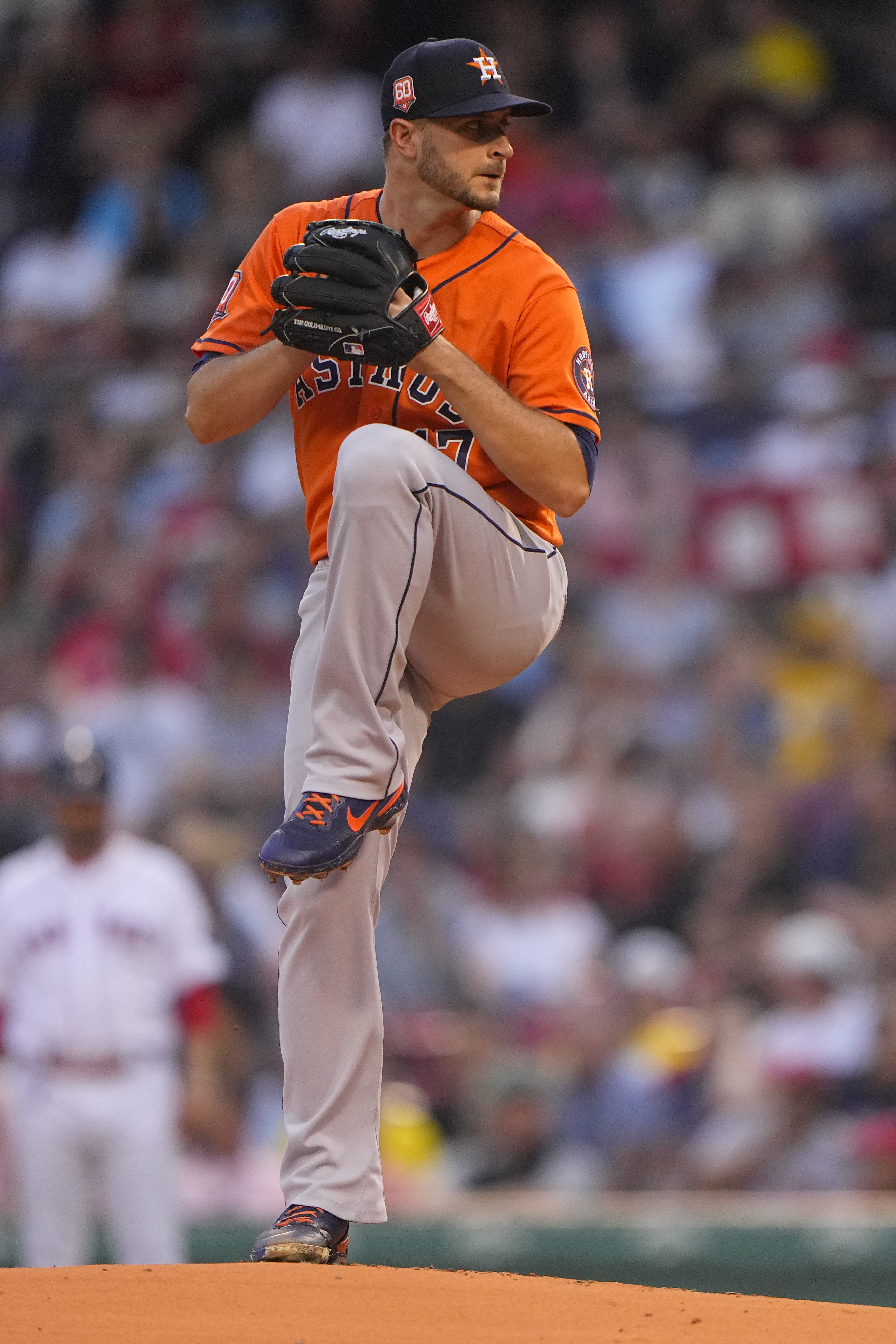 Odorizzi has been seen as an expendable piece for the Astros, perhaps at least since he was left off the club’s ALDS roster last October. He’s worked as part of a six-man rotation this year in Houston, but Lance McCullers Jr. is close to making his season debut as he recovers from a forearm strain. The 32-year-old Odorizzi has pitched to a solid 3.75 ERA in a dozen starts for the Astros this year, averaging exactly five innings per outing. He’s a flyball pitcher who has never been particularly adept at missing bats, but he’s been able to avoid hard hits this year to generate good results.
It would appear that Atlanta’s motivation here is to add veteran depth at the back of their rotation, which has consisted almost entirely of Max Fried, Kyle Wright, Charlie Morton, Ian Anderson, and rookie sensation Spencer Strider. Anderson has struggled to the tune of a 4.99 ERA, while Strider has reached 80 1/3 innings on the season after pitching a career-high 94 last year. Odorizzi’s last outing served as an excellent trade showcase for Houston – seven scoreless innings against the Mariners. Odorizzi had injured his leg in May, knocking him out for seven weeks, and dealt with a blister before the start against Seattle.
Odorizzi’s contract is a factor here. He’s earning $5MM this year (about $1.79MM remains) but would gain $500K upon reaching 100 innings plus $1MM each at 110, 120, 130, 140, and 150 innings. Odorizzi currently sits at 60 innings, so 120 would seem to be the likely ceiling. Odorizzi also has a player option worth $6.5MM with a $3.25MM buyout, but as Chandler Rome of the Houston Chronicle explains, “Odorizzi’s player option can max out at a $12.5 million base salary and a $6.25 million buyout — but only if he pitches in 30 games in which he records 12 or more outs in 2021-22. After Sunday, Odorizzi has 29 such games across 2021-22.” Given that the pitcher appears to have at least $3MM at stake in making one more four-inning start, it was mutually beneficial for the Astros to find a team that was more comfortable letting him reach that threshold and achieving a few performance bonuses.
Smith, 33, was the top reliever in the 2019-20 free agent class. The Braves signed him to a hefty three-year, $40MM contract, also surrendering their second-round draft pick and $500K in international bonus pool money. Smith’s effectiveness waned in Atlanta, as he was often done in by the longball and increasingly worse control. He served as the Braves’ closer in the 2021 regular season to acceptable results, but then became a major factor in their postseason run with 11 scoreless innings and six saves. Smith will forever be immortalized as the pitcher on the mound when the Braves won it all last year.
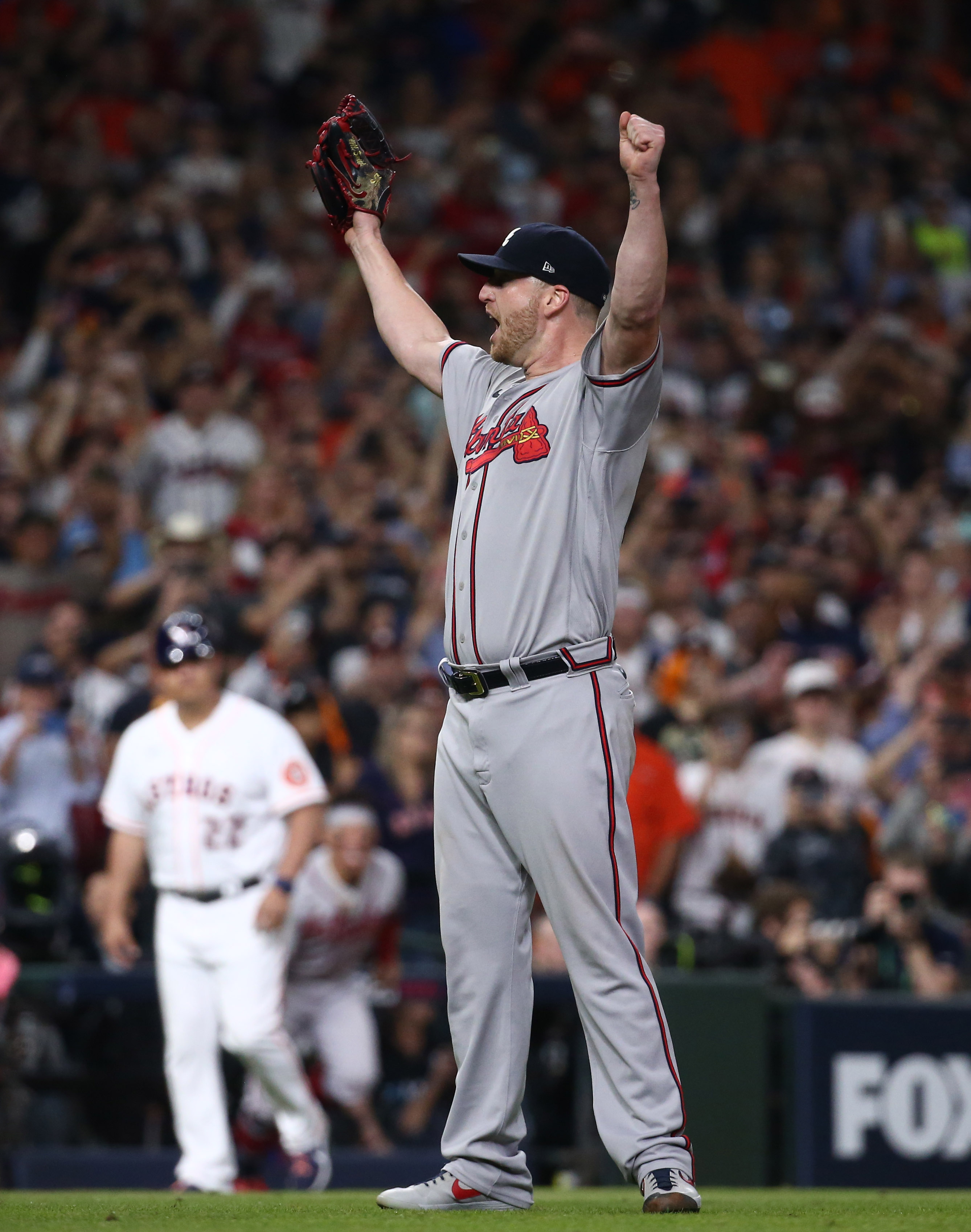
In March, the Braves signed Kenley Jansen, pushing Smith into a setup role. Smith was at times the Braves’ third-highest leverage reliever this season, but in July he ranked seventh in that regard and was used in more of a mop-up role. According to MLB.com’s Mark Bowman, Smith would have likely been the odd man out for Atlanta once veteran reliever Kirby Yates is activated. Smith is earning $13MM this year (about $4.6MM remains), plus he’ll be owed a $1MM buyout for 2023.
Smith joins a Houston bullpen led by Ryan Pressly, Rafael Montero, Hector Neris, Ryne Stanek, and Phil Maton. None of those pitchers throw left-handed, and southpaw Blake Taylor hit the IL in June with elbow inflammation. Smith has never been reliant on velocity, so it’s possible a fresh set of eyes on his mechanics and pitch mix, especially given the Astros’ strong reputation in that department, can right the ship.
If Odorizzi winds up with 110-119 innings, the Braves will end up paying him around $3.3MM in total. In trading Smith, Atlanta shed a financial commitment of about $5.6MM, so they’d “gain” $2.3MM in the swap assuming they’re not including cash in the deal. It’s possible, too, that Odorizzi falls short of 110 innings. Money aside, this trade represents each team dealing from a surplus to better fill its needs.
It’s been a busy evening for Braves GM Alex Anthopoulos, who also traded for Tigers outfielder Robbie Grossman. Similarly, Astros GM James Click has been active today on the eve of the trade deadline, also adding catcher Christian Vazquez from Boston and first baseman Trey Mancini from the Orioles.
Astros Searching For Center Field Help
The Astros had a very active day on Monday, bringing in a pair of veteran position players in Trey Mancini and Christian Vázquez and reportedly agreeing to swap Jake Odorizzi with the Braves’ Will Smith. Houston isn’t finished trying to bolster the roster before the deadline, however, as Ken Rosenthal of the Athletic reports (Twitter link) they’re on the hunt for center field help.
Houston general manager James Click has already checked off what very well may have been the club’s three biggest needs this summer — first base, catcher and left-handed relief. Center field is arguably the final area the front office should target, as the club has gotten just a .200/.262/.342 showing out of the position. Jake Meyers has struggled since returning from the injured list, and José Siri underwhelmed before he was dealt to the Rays as part of the three-team deal that brought back Mancini. Chas McCormick has played well for a second straight season, but he’s seen a bit more time in the corner outfield than in center this year.
The Astros have reportedly inquired about Pirates star Bryan Reynolds in the past, and Rosenthal recently floated the idea of Houston dangling some of their controllable starters to the Orioles in an attempt to pry away Cedric Mullins. Both players seem unlikely to move over the next 16 hours, but the Astros potential interest in both demonstrates the club has explored the possibility of an impact center field pickup for a while.
Assuming both Reynolds and Mullins stay put, the trade market at the position isn’t especially robust. Oakland’s Ramón Laureano would be the top player who’s likely to be available, but it’s hard to envision the Astros making a run at him. Not only could the intra-division rivalry complicate a trade, the Astros dealt away Laureano as a prospect for a minimal return, and there’s been no love lost between the A’s and Astros over the past few years.
Kansas City’s Michael A. Taylor and the Cubs Rafael Ortega are the only other center fielders who placed among MLBTR’s top deadline trade candidates. Other players who could conceivably be available include the Nationals Víctor Robles and, if the Giants decide to retool at the deadline, Mike Yastrzemski.
Bullpen Rumors: Soto, Givens, Moore
While just about any team in need of bullpen help would love to get its hands on Tigers closer Gregory Soto, Detroit is setting a lofty asking price, tweets Jon Morosi of MLB.com. The Tigers are seeking multiple MLB-ready or nearly MLB-ready pieces and will surely be focused on players with several years of club control remaining, given that Soto himself has three years of team control beyond the current campaign. The 27-year-old is averaging a massive 98.6 mph on his heater and has pitched to a 2.36 ERA with a 25.5% strikeout rate, a 10.3% walk rate, a 46.5% ground-ball rate and 19 saves so far in 2022. Brian McTaggart of MLB.com reports that the Astros are among the clubs with interest. Houston hasn’t had a single left-handed reliever eclipse ten innings this season, so it’s no surprise they’d have their eyes on a high-end southpaw like Soto.
More rumblings on the bullpen market…
- The White Sox picked up Jake Diekman in a deal with the Red Sox this evening, but they’re still on the hunt for relief help. Bruce Levine of 670 the Score reports that the Sox are among the clubs with interest in Cubs reliever Mychal Givens (Twitter link). The veteran righty is quite likely to move by tomorrow evening’s deadline, as he’s on track to hit free agency after the season. Givens’ deal contains a 2023 mutual option, but those are rarely exercised by both sides. The righty is due what remains on a $3.5MM salary for this season, plus a $1.5MM buyout on the option. Givens, who signed with the Cubs over the offseason, has a 2.66 ERA across 40 2/3 innings. He’s punched out an excellent 29.7% of opponents, although his 11% walk rate is a bit higher than ideal. Nevertheless, a relatively affordable middle reliever with a strong track record and Givens’ bat-missing abilities should attract interest from contenders.
- As part of an overview on the Rangers deadline outlook, Evan Grant of the Dallas Morning News posits that reliever Matt Moore is the most likely player on the club to be traded. MLBTR’s Steve Adams explored Moore’s trade candidacy a few weeks ago, noting that the veteran southpaw has adapted well to a bullpen conversion after a career as a primary starter. Signed to a minor league deal over the winter, Moore made the big league roster two weeks into the season. He’s followed with 48 2/3 innings over 36 outings, posting a 1.66 ERA with an above-average 26.1% strikeout rate and a huge 52.5% grounder rate. An elevated walk percentage (12.1%) stands as a bit of a black mark on his record, but that combination of strikeouts and grounders will no doubt appeal to contending clubs. Jon Heyman of the New York Post wrote last night that Moore — as well as Tigers reliever Michael Fulmer — was on the Yankees radar, but it’s not clear whether those hurlers are still on the wish list after New York brought in Scott Effross and Lou Trivino in separate deals this afternoon.
Astros Acquire Christian Vazquez From Red Sox
The Astros hunt for catching help is over, as they announced an agreement Monday night to bring in Christian Vazquez from the Red Sox. Prospects Enmanuel Valdez and Wilyer Abreu are headed to Boston in return.
Vazquez, 31, will now join just the second organization of his career, as he’s been with the Red Sox since being drafted by them in 2008. Since that time, he’s reached the majors and established himself as a solid regular. Though he’s never been an All-Star, Vazquez has played in 407 games for the Red Sox from 2019 to the present, slashing .272/.321/.424 for a wRC+ of 97. If not for a dismal season last year, those numbers would look even better, as he’s posted a wRC+ of 102 or higher in 2019, 2020 and here in 2022. This year, he’s hitting .282/.327/.432, 111 wRC+. Combined with his defensive contributions, he’s produced 6.4 wins above replacement in that four-year stretch, according to FanGraphs.
He and the Red Sox agreed to a three-year extension in early 2018, which came with a club option for 2022. That option was eventually exercised by the club, with Vazquez now just a few months away from reaching free agency for the first time. Boston looked like contenders for much of the season but had a dismal showing in July, going 8-19, dropping to the basement of the AL East and 3 1/2 games out of a playoff spot. Given all of those factors, the Sox began entertaining offers and evidently found one to their liking.
For the Astros, they’ve been an obvious fit for a catching addition for quite some time, with both Martin Maldonado and Jason Castro struggling at the plate this year. The Astros have shown themselves to be quite fond of Maldonado in terms of his game calling and clubhouse presence, but he’s hit just .173/.239/.342 on the year for a wRC+ of 66. Castro has been far worse, slashing .115/.205/.179 for a wRC+ of just 15. He also landed on the IL a month ago with a knee injury, only increasing the need for reinforcements behind the plate.
The Astros are clear buyers, sitting on a record of 67-36 that gives them a 12-game lead over the Marines in the AL West. Vazquez is the second pick-up of the day, as they also brought aboard Trey Mancini earlier today, bolstering their lineup for the final months of the season and the postseason.
As for the Red Sox, they are in a much more nebulous position, sitting outside the postseason picture but close enough that the season isn’t exactly pushing up the daisies just yet. With their recent slide, questions have been raised about how they will approach the deadline, with many impending free agents that could conceivably be moved if the Sox are willing. Vazquez was one such name, with J.D. Martinez and Nathan Eovaldi among the others. It seems there won’t be a tidy answer, with the club trying to walk a line between buying and selling. Shortly after the Vazquez deal was announced, the club also reportedly acquired impending free agent Tommy Pham from the Reds, but then also reportedly traded Jake Diekman to the White Sox. With less than 24 hours to go until the deadline, there are likely many more moves to come.
In the immediate term, they add a pair of interesting young players to the farm system. Valdez, 23, is an infielder who is having a breakout season in the minors. Splitting his time between Double-A and Triple-A, he’s hit .327/.410/.606 on the year. Based on that showing, he jumped into the Baseball America list of top Astros’ prospects at their midseason update, coming in at #12. Abreu, 23, is an outfielder with a similar helium-backed trajectory. He’s hit .249/.399/.359 for the year, jumping up to the #21 slot in the Astros system in the BA midseason update.
Mark Berman of Fox 26 was first to report the Astros were acquiring Vazquez in exchange for two prospects. Alex Speier of the Boston Globe was first to report the Red Sox were receiving Valdez and Abreu.
Image courtesy of USA Today Sports.
Astros Acquire Trey Mancini In Three-Team Trade; Jose Siri Dealt From Houston To Rays
The Astros have landed the offensive upgrade they’d been seeking, acquiring first baseman Trey Mancini from the Orioles as part of a three-team trade. Center fielder José Siri goes from Houston to Tampa Bay, while a trio of pitching prospects also find themselves on the move. The Rays send Seth Johnson to the Orioles, while they move Jayden Murray to Houston. Chayce McDermott heads from the Astros to the Orioles to complete the deal. In order to clear a spot for Siri on the 40-man roster, Tampa Bay designated outfielder Brett Phillips for assignment.
Mancini has a .268/.347/.404 line through 401 plate appearances. He’s connected on just ten home runs, a bit shy of the 21-plus homer pace he posted in every healthy season between 2017-21. Despite the decreased power production, Mancini has an above-average 10% barrel rate and 89.6 MPH average exit velocity that are each in line with his career marks. It seems Mancini’s dip in longballs is more tied to changes in the ball and the Orioles’ deepening of the left field wall than an indication his power has truly taken a step back.
The right-handed hitting Mancini also has a typically solid blend of strikeouts and walks. He’s fanning in 21.4% of his plate appearances, a bit less than league average and among the lower rates of his career. Mancini’s a well-rounded bat who’ll presumably cut into the playing time of Yuli Gurriel. The reigning AL batting champion is a longtime member of the Houston organization, but he has an underwhelming .243/.293/.392 line on the year. Houston has reportedly been on the hunt for offensive upgrades who could supplant Gurriel on the depth chart. While the club was previously tied to Josh Bell and Willson Contreras, they’ve pivoted to Mancini.
It’s another addition to a Houston club that already boasts one of the league’s top lineups. The Astros enter play Monday with a .240/.318/.425 line that translates to offense 13 percentage points better than league average, according to wRC+. Houston’s raw run-scoring total is a bit less impressive, though, as the club ranks 12th in the majors with 461 runs scored.
Mancini has a bit of experience in the corner outfield, but he’s primarily an option at first base or designated hitter. The Astros have Kyle Tucker as their primary right fielder, but left fielder Michael Brantley has been on the injured list for over a month and still has an uncertain recovery timeline. Yordan Álvarez has designated hitter accounted for, leaving first base and perhaps some occasional fill-in work in left as the clearest path to playing time.
For the past few months, Mancini has looked like one of the better bats who might be available this summer. The Orioles, though, have gone 16-7 this month to pull themselves back to .500. Baltimore is within three games of the final Wild Card spot in the American League, seemingly at least raising some questions about how motivated they’d be to deal players off the MLB roster. At least in the case of Mancini, they remain committed to their goal of bolstering the roster for 2023 and beyond, but it’s a move that’s likely to disappoint at least some segment of the clubhouse and fanbase.
Mancini had been a career-long member of the organization, one of the few productive big leaguers to remain on the MLB roster throughout the franchise’s recent rebuild. He’s long been well-regarded in the community, and that’s become particularly true in the wake of his overcoming colon cancer in 2020. He was deservedly named the AL’s Comeback Player of the Year last season.
The 30-year-old Mancini is likely to be a free agent at season’s end, making him a rental pickup for the Astros. He’s playing this year on a $7.5MM salary, around $2.72MM of which is still to be paid out. Houston will assume that tab as well as the $250K buyout on a $10MM mutual option for 2023. (Mutual options are almost never exercised by both player and team, and Mancini seems likely to forego his end in search of a multi-year pact this winter).
Despite being at least vaguely in playoff contention, the Orioles will continue to look towards the future. They’ll add a pair of young arms, neither of whom is going to impact the club in 2022. Johnson is the more well-known of the duo. The 40th overall pick in the 2019 draft, he’s a former college shortstop who has flashed impressive stuff and dominated low level hitters in his limited time on the mound. Baseball America recently ranked him as the #9 prospect in a deep Rays system, praising his mid-upper 90s fastball and a slider that sometimes earns plus-plus grades (a 70 on the 20-80 scale) from evaluators. An excellent athlete, the 23-year-old is generally regarded as a possible mid-rotation starter, although he’s yet to reach Double-A.
Johnson pitched to a 2.88 ERA in 93 2/3 innings at Low-A last season, striking out an excellent 29% of opposing hitters. He’d fanned an even better 37.3% of batters faced through his first seven starts at High-A this year, but he’s been out since May 20 with an injury that’ll reportedly require Tommy John surgery. Johnson will have to be added to the 40-man roster at the end of this season or be exposed to the Rule 5 draft. As he faces an extended injury absence and not especially close to big league readiness, devoting him an offseason 40-man spot could be easier for the O’s than it’d have been a Tampa Bay team with plenty of upper level depth.
The Rays also part ways with Murray, whom they selected in the 23rd round of the 2019 draft. A Dixie State product, the right-hander has made a brief cameo at Triple-A but spent the bulk of the season at Double-A Montgomery. He owns a 2.83 ERA over 16 appearances (15 starts), offsetting a modest 20.5% strikeout rate with a tiny 7.3% walk percentage while inducing grounders on almost half the balls in play against him. He adds a volume strike-thrower and possible back-of-the-rotation arm to the upper levels of the Houston farm system; he’ll have to be added to the 40-man roster this winter or made available in the Rule 5 draft.
In exchange, Tampa Bay bolsters its immediate outfield mix. Siri, 27, is a former top Reds prospect who stalled out towards the end of his time in the Cincinnati system. He’s appeared in the majors in each of the past two seasons since signing a minor league deal with Houston over the 2020-21 offseason. Siri raked in a 21-game stint late last year, but he’s struggled over a longer follow-up this season. Through 196 cumulative plate appearances, he’s hitting .210/.265/.381 with a massive 33.2% strikeout rate as a big leaguer.
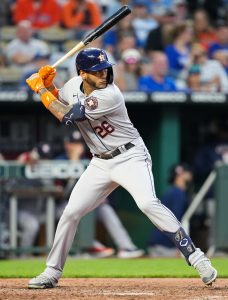
At the same time, it’s easy to see why he’s of interest to a Rays team that — even after picking up David Peralta over the weekend — is fairly short-handed in the outfield after losing Manuel Margot, Kevin Kiermaier and Harold Ramírez to injury. Siri has big power and speed, and he’s obliterated Triple-A pitching over 16 games this year. He hit .318/.369/.552 through 397 plate appearances at the minors top level last year, and he can be optioned to Triple-A Durham for the remainder of this season.
That isn’t the case for Phillips, who is out of minor league options. A gifted defensive outfielder, Phillips appeared in 75 games for Tampa Bay this season across all three spots on the grass. He’s hitting just .147/.225/.250 with a strikeout rate north of 40%, though, and the struggles at the plate became too much for the Tampa Bay front office to ignore. The Rays can deal Phillips over the next day, or he’ll find himself on waivers. He’s making $1.4MM, but his power, defense and affable clubhouse presence could lead another team to take a shot on him as a depth option.
McDermott, meanwhile, is the final piece of the deal from the Orioles perspective. A fourth-round pick out of Ball State last year, the 23-year-old righty has spent the season in High-A. He has a huge 35.4% strikeout rate through 72 innings there, starting 10 of his 19 outings. That has come with an alarming 13.4% walk rate, though. Baseball America recently named him the #6 prospect in a thin Houston farm system, praising his 92-96 MPH fastball and a pair of possible above-average breaking pitches in his slider and curveball.
Dan Connolly of the Athletic first reported Mancini was being traded to Houston. Roch Kutbako of MASNsports.com reported the Orioles were receiving multiple pitching prospects. Ken Rosenthal of the Athletic was first to report it was a three-team trade that would send Siri to Tampa Bay; Rosenthal was also first to report Johnson going to the Orioles. Marc Topkin of the Tampa Bay Times reported the Rays’ designation of Phillips for assignment. Jeff Passan of ESPN was first with Baltimore’s acquisition of McDermott.
Images courtesy of USA Today Sports.
Astros Showing Interest In Christian Vazquez, Ji-Man Choi
The Astros have reportedly been in the mix for upgrades at catcher and at first base, prominently connected to both Willson Contreras and Josh Bell. However, while those two represent the arguable top options at those respective positions, the asking price on both has been high, and Houston is exploring alternative options. Ken Rosenthal of The Athletic writes this morning that the ‘Stros “are focusing more on Vazquez” than Contreras at this point, adding that they’ve also expressed interest in Rays first baseman/designated hitter Ji-Man Choi.
Vazquez, 32 in three weeks, is a more straightforward trade candidate than Choi. The longtime Red Sox backstop is playing out the final season of a contract extension he inked several years ago and will be a free agent at season’s end. Boston is sitting in the AL East cellar at present. Although the Sox are still just 3.5 games back for the final American League Wild Card spot, they’d need to leapfrog four teams to get there. Chief baseball officer Chaim Bloom isn’t expected to be an all-out seller, but he’s likely to listen to offers on veteran rentals such as Vazquez and designated hitter J.D. Martinez.
The veteran Vazquez is enjoying a quality seasons on both sides of the ball. He’s hitting .282/.327/.432 (111 wRC+) with eight homers, 20 doubles and a 16% strikeout rate — the second-lowest rate of his career. He’s also notched a +5 Defensive Runs Saved mark and boasts a 30% caught-stealing rate. He’s been narrowly below average in terms of framing, according to both FanGraphs and Statcast, but it’s been a strong all-around year for Vazquez, whose $7MM salary is plenty affordable for most teams — particularly a deep-pocketed club like the Astros. The Sox are reportedly seeking MLB-ready help even in return for their rental pieces, however, which surely complicates matters for the Astros and other interested parties.
Choi, who just turned 31 a couple months ago, is a bit more of an outside-the-box trade candidate. The Rays are currently in possession of that final AL Wild Card spot which the Red Sox are chasing, and the left-handed-hitting Choi has been an important part of their lineup. In 296 plate appearances, Choi is hitting .255/.355/.415 with eight home runs, 16 doubles and a hefty 13.5% walk rate. He has a lengthy track record of thumping right-handed pitching, evidenced by a .252/.359/.464 batting line when holding the platoon advantage.
Lefties have given Choi a harder time. He’s hitting .325 against them this season, granted, but that’s come in a tiny sample of 43 plate appearances. His success against southpaws in this year’s tiny sample is plenty suspect; he’s punched out in 37.2% of his plate appearances against them and is sporting a wholly unsustainable .520 BABIP against same-handed opponents. In all likelihood, he’d fall into a platoon in Houston, yielding at-bats against lefties to Astros stalwart Yuli Gurriel.
Choi is an atypical trade candidate not only due to his status as a productive hitter on a current playoff team but also because he’s controlled beyond the current season. He’s earning an affordable $3.2MM salary this season and would earn one final raise in arbitration this winter before reaching free agency following the 2023 campaign. The Rays, however, have affordable options to step in for Choi at first base, including Yandy Diaz, Harold Ramirez and Isaac Paredes. Top prospect Curtis Mead looks Major League ready after ripping through Double-A and Triple-A this season, too. Furthermore, Tampa Bay has a knack for finding and maximizing the production of undervalued platoon bats of this nature. Choi himself was acquired from the Brewers in a low-profile trade for utilityman Brad Miller in 2018 and has been a fixture in the Rays’ lineup since.
If the Rays were to trade Choi or any other member of their current roster, it surely wouldn’t be a sign that they’re pivoting to a classic “seller” mindset. Tampa Bay walks this line every year, regularly trading quality big leaguers who are inching closer to free agency while simultaneously adding some help in other swaps. They flipped reliever Diego Castillo to the Mariners at last year’s deadline, for instance, and they’re less than 48 hours removed from acquiring veteran outfielder David Peralta from Arizona.
Cardinals Interested In Jake Odorizzi
Frankie Montas has been the name most attached to the Cardinals in their pitching search, yet St. Louis has also been exploring other rotation options. The Cards and Astros have discussed the possibility of a trade involving veteran righty Jake Odorizzi, Derrick Goold of the St. Louis Post-Dispatch reports. In addition, such names as Noah Syndergaard and Nathan Eovaldi were “at least discussed internally” by the Cardinals’ front office as possible targets.
Odorizzi has been on the Cards’ radar for some time, as the club considered signing the right-hander as a free agent during the 2020-21 offseason. Instead, Odorizzi signed a two-year deal with Houston worth $23.25MM in guaranteed money, with the 2023 season also covered via a $6.25MM player option with a $3.25MM buyout. A variety of injuries have limited Odorizzi to 157 2/3 innings over his two years with the Astros, but he has posted a 4.22 ERA despite only a 19.5% strikeout rate. The righty has relied on above-average walk rates and (in 2022) an outstanding hard-contact rate to retire batters.
Acquiring Odorizzi would have some echoes of the Cards’ deadline moves last year, when they landed veterans Jon Lester, J.A. Happ, and Wade LeBlanc in the wake of several rotation injuries. Odorizzi at least has much better bottom-line results than that trio did when St. Louis swung those trades, and yet the Cardinals’ hope in a turn-around was rewarded, as all three pitched well and helped the Cards reach the wild card game.
St. Louis fans weren’t overly impressed with the club’s strategy at last year’s deadline, and given all the other big names linked to the Cards in trade rumors this summer, landing “only” Odorizzi to address the rotation could be again seen as underwhelming. However, since the A’s are known to be asking for a ton for Montas and surely the Angels and Red Sox would want a good return even for rentals like Syndergaard or Eovaldi, Odorizzi could be a decent Plan C-type of option if the Cards feel the other asking prices are too high…..or, if the Cardinals direct their prospect capital towards acquiring someone like Juan Soto.
It is also possible that the Cardinals could land more than one of these pitchers, as the club has an increasingly acute need for rotation depth. Beyond Adam Wainwright, Miles Mikolas, Andre Pallante, Dakota Hudson (activated off the 15-day injured list today) and Matthew Liberatore comprise the current starting five, as Jack Flaherty is still weeks away from returning from shoulder problems.
Steven Matz was supposed to provide some help when he returned from his own IL stint last week, except the left-hander tore his MCL in his return start. It isn’t known yet if Matz will need surgery, yet President of baseball operations John Mozeliak told Goold and other reporters today that there is only a “sliver” of a chance Matz pitches again in 2022, and it will be “very, very difficult to get him back this year.”
Turning to the Astros’ situation, trading Odorizzi would seem like an unusual move for a World Series contender that theoretically would want as much pitching depth as possible for a deep run through October. However, the Astros could feel they have such depth already, with a six-man rotation on the active roster, Lance McCullers Jr. on his way back from the 60-day IL, and some other young arms in reserve in the minors.
To that end, Houston has reportedly been willing to discuss trades of controllable pitchers with other teams. Odorizzi doesn’t exactly fit that description, of course, but it would seem like the Astros would be a lot more open to moving a veteran rather than a longer-term rotation piece like Cristian Javier or Jose Urquidy.
Astros’ Jose Siri Drawing Trade Interest
The Astros are receiving trade interest in outfielder Jose Siri, reports Ken Rosenthal of The Athletic, who adds that “a number of teams” have explored trading for the 27-year-old. Each of the Phillies, Marlins and Brewers have been seeking center field help, Rosenthal notes, though he doesn’t explicitly indicate that any of the three have had substantive talks with Houston.
Interest in Siri comes from other clubs at a time when the Astros are apparently seeking more proven options in center field, but it’s plenty understandable if other clubs would look at Siri’s strong MLB debut in 2021 and his outstanding Triple-A track record and hope he can emerge as a valuable long-term piece if they can land him in a deal with Houston. While he’s something of a late bloomer, having turned 27 just six days ago, Siri hit .304/.347/.609 with four homers and three steals in a tiny sample of 49 plate appearances during last year’s MLB debut. This season, he struggled to a .178/.238/.304 slash in a larger (but still relatively small) sample of 147 trips to the plate.
Houston has twice optioned Siri to Triple-A Sugar Land this season (most recently one week ago), and in the 13 games he’s played there, he’s ripped eight home runs and batted .293/.354/.828 in 65 plate appearances. That eye-popping production from the right-handed-hitting slugger is further backed up by a huge .318/.369/.553 slash through 394 plate appearances with Houston’s top affiliate last season. Overall, he’s played in 107 games and tallied 462 plate appearances with the Astros’ Triple-A club, crushing 24 homers and swiping 25 bags in that time. Siri also posted through-the-roof defensive numbers in 315 innings of center field work for Houston this season: 8 Defensive Runs Saved, a 6.6 Ultimate Zone Rating and 7 Outs Above Average.
While that combination of minor league production and exceptional defensive grades at the big league level is quite appealing, Siri’s strikeout woes are the proverbial elephant in the room. He’s had issues making contact since reaching the Double-A level with Cincinnati back in 2018. Siri punched out in 32.2% of his plate appearances that season and has continued to whiff in more than 30% of his plate appearances at nearly every stop since. He’s fanned “just” 16 times in Triple-A this year (24.6%), but Siri has fallen victim to a strikeout in one-third of his MLB plate appearances and in 30.9% of his total Triple-A plate appearances.
There’s extra reason for the Astros to consider offers on Siri, given that he’s in his final minor league option season. As a win-now club, Houston understandably seeks an immediate contributor in center, and while it’s tempting to say they should be patient with Siri given the power/speed/defense blend, he’ll have to be carried on the Major League roster next year or else be exposed to waivers. Considering his raw tools and Triple-A production (and the current trade interest), it’s quite likely he’d be claimed by another team if things were to reach that point, so extracting some value for Siri right now makes sense if the Astros can find a deal to their liking.
Siri has not yet accrued even one year of Major League service, though if he spends enough time on a big league roster down the stretch, he could still get there. Even if he does reach that point, he could still be controlled another five years beyond the current campaign (or six more if he spends another 17 days in the minors this year).
Astros Willing To Listen To Offers On Controllable Starting Pitching
July 28: Houston would seek center field and/or catching help that is controlled beyond the current season in any deals for Urquidy or other cost-controlled starting pitching, Ken Rosenthal of The Athletic reports. As Rosenthal points out, many of the obvious cost-controlled options at those positions (e.g. Pirates center fielder Bryan Reynolds, Athletics catcher Sean Murphy) play on teams that would not necessarily be targeting arb-eligible players with only three seasons of control remaining.
Rosenthal posits the Orioles as a potential partner whose current goals could align with those of the Astros, though Urquidy alone seems unlikely to be sufficient to pry Cedric Mullins loose. I’d add that it bears at least some mention that Baltimore GM Mike Elias knows the Houston system better than most rivals, stemming back to his roots as a scouting director and assistant GM with the ‘Stros.
Speculatively speaking, both the Cardinals and Mariners have outfield depth and a need for rotation help. The Blue Jays, meanwhile, are deeper in catchers than most clubs and have been on the lookout for potential rotation additions.
July 27: “Controllable starters” is becoming one of the most commonly repeated phrases of the 2022 trade deadline, as far more young arms than expected are being made available to teams in need of starting pitching. ESPN’s Jeff Passan adds the Astros to the growing list of clubs that will at least entertain offers for young, cost-controlled members of their starting rotation, citing multiple GMs who’ve had trade conversations with the Houston front office. Righty Jose Urquidy would appear the likeliest of the bunch to change hands, per the report.
A trade dealing from the Houston rotation isn’t a given, but the ‘Stros have plenty of depth to withstand such a move if it means helping them address other areas of need. Justin Verlander, Framber Valdez, Luis Garcia, Cristian Javier, Jake Odorizzi and Urquidy give them six viable starters on the big league roster, and that’s not even including Lance McCullers Jr., who’s on a rehab assignment and trending toward a return to the Major League mound.
Houston also has top prospect Hunter Brown tearing through Triple-A lineups, and righty Brandon Bielak (who has a bit of MLB experience already) is pitching well in Triple-A Sugar Land as well. Former top prospect Forrest Whitley, meanwhile, recently returned from a lengthy stay on the injured list and is building up in Sugar Land, too.
It’s unlikely that Houston would move any member of its current rotation for pure prospects — not when the team has a firm grip on the American League West and appears poised for another potentially deep playoff run. Flipping an arm they control for multiple seasons, however, could be a means of bringing in some help at first base, in the outfield and/or behind the plate. The Astros don’t know when or whether backup catcher Jason Castro and left fielder Michael Brantley will return — Castro from a knee injury and Brantley from a shoulder issue (neither of which the team has elaborated upon to the public). Manager Dusty Baker told reporters about a half-hour ago that Brantley, who’s been on the injured list since June 26, has yet to even swing a bat (Twitter link via Chandler Rome of the Houston Chronicle).
Turning to the list of plausible names for the Astros to consider, it’s fairly logical that Urquidy might top the list. Garcia was the American League Rookie of the Year runner-up in 2021 and is controlled four more seasons — the most of any current member of the rotation — making him tougher to move. Each of Urquidy, Javier and Valdez are under team control through the 2025 season, but Valdez has stepped up as Houston’s No. 2 starter behind Verlander. Javier, meanwhile, is striking out nearly twice as many hitters as Urquidy and allowing home runs at a much lower rate (0.97 HR/9 to Urquidy’s 1.52).
None of that is to say that Urquidy, 27, is expendable or ineffective. To the contrary, he’s a former Top-100 prospect who’s appeared in parts of four MLB seasons now and pitched to a sub-4.00 ERA in each. He’s currently sporting a solid 3.93 ERA through 100 2/3 innings (18 starts). Urquidy is not and never has been an overpowering pitcher, evidenced by this year’s 18.2% strikeout rate and a career 19.8% mark in that regard, but he has some of the best command of any starter in the Majors. Urquidy is tied for the 12th-lowest walk rate among qualified big league starters (5.2%), and he’s tenth-best among 114 starters with at least 250 innings, dating back to his 2019 MLB debut.
Urquidy will be arbitration-eligible for the first time this winter, as will Javier. (Valdez is in the same service class but already hit arbitration as a Super Two player.) His salary should only jump into the $2-3MM range for the 2023 campaign, and he ought to remain relatively affordable through 2025, his final year of team control.
It bears emphasizing that a trade shouldn’t necessarily be seen as likely. Houston is surely taking an opportunistic approach to the depth they’ve cultivated in the rotation, but the Astros also will surely have a high asking price on Urquidy or any of their other young starters — and understandably so. For as deep as the group looks right now, pitching depth is often fleeting, and the Astros can’t know for certain what the future holds for either Verlander or Odorizzi, both of whom have player options for the 2023 season (assuming Verlander throws another 13 2/3 innings to reach 130 frames on the year, that is).
For now, Urquidy can be lumped in with a mounting number of quality arms who could potentially be acquired for a decent return and controlled by his new club for several seasons. The Marlins are reportedly open to offers on Pablo Lopez, while the Guardians are willing to listen on Zach Plesac. They join long-obvious trade candidates like the Reds’ Luis Castillo and Tyler Mahle, and the Athletics’ Frankie Montas, as names to watch in advance of next Tuesday’s 6 pm ET trade deadline.