
Twins Acquire Alex De Goti From Marlins
The Twins have acquired infielder Alex De Goti from the Marlins in exchange for cash considerations, per an announcement from the St. Paul Saints, Triple-A affiliate of the Twins. He was with the Marlins on a minor league deal and wasn’t on their 40-man roster, so no corresponding move will be required.
De Goti, 28, has spent most of his career with the Astros thus far, having been selected by them in the 15th round of the 2016 draft. He worked his way up the minor league ladder and was able to get into a couple of big league games in 2021 as a COVID replacement player. He got two hits and a walk in his seven plate appearances, leading to a career batting line of .333/.429/.333.
He spent all of last year with the Triple-A Sugar Land Space Cowboys, hitting nine home runs and drawing walks in 12.7% of his 577 plate appearances. His .253/.352/.377 batting line was actually a bit below average in the hitter-friendly Pacific Coast League, leading to his 87 wRC+. But he also stole eight bases and provided defensive versatility, lining up at all four infield positions.
Since signing De Goti back in December, the Marlins added various infielders to their organization, including Luis Arraez, Jean Segura, Yuli Gurriel, Garrett Hampson, Jacob Amaya and José Iglesias. Those moves cluttered the depth chart and stacked the deck against De Goti making it back to the big leagues in Miami. The Twins, on the other hand, currently have all of Jorge Polanco, Alex Kirilloff, Kyle Farmer, Royce Lewis and Joey Gallo on the injured list. That’s pushed depth options like Donovan Solano and Edouard Julien into regular action and thinned out the safety net a bit. De Goti will change uniforms and provide Minnesota with a bit more infield security, an important factor for a club that was largely undone by injuries last year.
List Of Players On Track For 10-And-5 Rights
In baseball parlance, players are often said to have “10-and-5 rights” or the player might be described as a “10-and-5 guy.” Any player who has 10 or more years of service time and has been with his current club for five or more consecutive years gets veto power over any trade involving them. This essentially functions the same as a no-trade clause, which players can negotiate into their contracts. But with 10-and-5 rights, the right is gained automatically once the conditions are met. There is often overlap, as players that have no-trade clauses will eventually earn 10-and-5 rights as well, which makes it a moot point in those cases.
A player’s status as a 10-and-5 player can impact trade negotiations, as players like Adam Jones and Brandon Phillips have used it blocked trades in the past. Also, a team may sometimes trade a player on the cusp of reaching 10-and-5 status, since it becomes harder to line up a deal once the player has that veto power. The Rays traded Evan Longoria to the Giants in the 2017-2018 offseason, when his service time was at nine years and 170 days, meaning he would have earned 10-and-5 rights just two days into the 2018 campaign.
Listed below are the players who currently have 10-and-5 rights, as well as those who are approaching that mark. For instances where service time is mentioned, keep in mind that an MLB season has 187 days but a player’s service time “year” flips over at 172.
Currently Have 10-and-5 Rights
- Jose Altuve, Astros
Altuve has over 11 years of service time and has spent it all with the Astros. It’s a fairly moot point as his current deal, which runs through 2024, contains a full no-trade clause. The club is also more likely to give him another extension than trade him.
- Charlie Blackmon, Rockies
Blackmon has over 10 years of service time and all of it with the Rockies. He triggered a player option for 2023, after which he will be a free agent.
- Miguel Cabrera, Tigers
Cabrera will reach 20 years of service this year and has been with the Tigers since 2008. He is in the final guaranteed year of his contract, with a couple of vesting options that aren’t a factor since he needs to finish in the top 10 in MVP voting the year prior in order to trigger them. He’s been fairly open about how he’s quite likely to retire at the end of the current season.
- Brandon Crawford, Giants
Crawford has over 11 years of service, all of it with the Giants. He’s slated for free agency at the end of this season.
- Clayton Kershaw, Dodgers
Kershaw has over 14 years of experience at this point, all of it with the Dodgers. A trade wouldn’t seem plausible anyway, as he and the club seem to have a nice relationship with each other. He’s re-signed on one-year deals in each of the past two offseasons, seemingly keeping the door open to retirement whenever he decides it’s time.
- Salvador Perez, Royals
Perez has spent his entire career with the Royals, which has pushed him past the 11-year mark in terms of service time. His current deal runs through 2025 with a club option for 2026.
- Chris Sale, Red Sox
Sale has gone beyond the 12-year service time mark and is now in his sixth season with the Red Sox. The extension he signed with the club in March of 2019 gave him a full no-trade clause in the middle of the 2020 campaign. He’s been floated as a speculative trade candidate if the Sox fall out of contention this year, though Sale would have to approve such a deal. His current contract runs through 2024 with a club option for 2025.
- Giancarlo Stanton, Yankees
Stanton has over 12 years in the big leagues now and is in his sixth campaign as a Yankee. His deal runs through 2027 with a club option for 2028.
- Stephen Strasburg, Nationals
Strasburg has beyond 12 years of service right now, all of it with the Nationals. The club’s deal with the right-hander after their 2019 World Series victory went south immediately, as he’s tossed just over 30 innings since then and doesn’t seem near any kind of return. That contract has a full no-trade clause and runs through 2026.
- Mike Trout, Angels
Trout has more than 11 years of service and all of it with the Angels. He already had full no-trade protection from his current contract, which runs through 2030. Some have speculated that the club could look to move Trout and do a full rebuild if Shohei Ohtani departs in free agency after this year. If the Angels ever did consider such a plan, Trout would have to be okay with the destination.
- Joey Votto, Reds
Votto is over 15 years of service at this point, all of it with the Reds. He’s had full no-trade protection since signing his ten-year extension in April of 2012. That deal is now in its final guaranteed year, with the club having a $20MM option for 2024 that comes with a $7MM buyout.
- Adam Wainwright, Cardinals
Wainwright has over 17 years of major league service time, all of that with the Cardinals. He re-signed with the club for 2023 and has full no-trade protection from that deal. He is planning to retire after this season.
Will Gain 10-and-5 Rights This Year
- Patrick Corbin, Nationals
Corbin already has over 10 years of service time and is currently in his fifth season with the Nationals. His six-year deal, which runs through 2024, contains partial no-trade protection but he will have 10-and-5 rights at the end of the 2023 campaign. The Nats would probably love to move him but he’s been getting worse in each year of the deal, with his ERA climbing from 3.25 in the first season to 4.66, 5.82 and 6.31, with his 2023 mark currently at 7.71. The backloaded deal will pay him $24MM this year and $35MM next year, meaning he would need a spectacular turnaround in order to have any trade appeal at all.
- Paul Goldschmidt, Cardinals
Goldschmidt has over 11 years of service time but only came over to the Cardinals for the 2019 season, making this his fifth year with the club. It’s a moot point since Goldy got a full no-trade in his most recent extension, which runs through 2024.
- Bryce Harper, Phillies
Harper has over 10 years of service already and is in his fifth season with the Phillies. His 13-year deal comes with full no-trade protection anyway, and it’s not like the Phils have any interest in trading him. The deal goes through 2031.
- Aaron Hicks, Yankees
Hicks has been with the Yankees since 2016 and came into this season with his service time at 9.041. That means he’s slated to have 10-and-5 rights in August, just after the trade deadline. The extension he signed with the club in 2019 did not have any no-trade protection, though Hicks would get a $1MM assignment bonus if he were traded. He’s perhaps the most notable player on this list, given that he actually seemed like a viable trade candidate in the most recent offseason, though no deal has come together as of yet. His contract pays him $10.5MM this year and then $9.5MM in the next two years with a $12.5MM club option for 2026 with a $1MM buyout. If the Yanks want to get this deal off the books, they should probably do it in the next few months. Then again, Hicks has been pretty open about his frustrations with his reduced role of late, speaking to Brendan Kuty of The Athletic about it recently. Perhaps he wouldn’t mind a change of scenery that results in more playing time.
- DJ LeMahieu, Yankees
LeMahieu has already surpassed the 10-year service time mark and is in his fifth campaign as a Yankee. His current deal, which runs through 2026, affords him full no-trade protection already.
- Manny Machado, Padres
Machado has over 10 years of service and is in his fifth campaign as a Padre. He already has full no-trade via his contract, which runs through 2033.
- Ryan Pressly, Astros
Pressly has been with the Astros since July of 2018, meaning he’ll reach five years with the club this summer. He also came into the year with his service time at 9.039, meaning he’ll get to 10 years in August. Pressly has emerged as one of the best relievers in baseball during his time in Houston and has twice agreed to an extension with the club, so a trade doesn’t seem especially likely. His current deal goes through 2024 with a vesting option for 2025.
- Christian Yelich, Brewers
Yelich is in his sixth season as a Brewer and will get to 10 years of service this season, but it’s a moot point since he has a full no-trade clause in his extension, which runs through 2028 with a mutual option for 2029.
Could Gain 10-and-5 Under Current Contract
- Ronald Acuña Jr., Braves
Acuna came into this season with just under five years of service time, meaning he won’t get to the 10-year mark until early in the 2028 season. His extension runs through 2026 with two club options. He’s one of the best players in the league and is underpaid on his deal, so Atlanta won’t be looking to deal him unless they fall way out of contention between now and then.
- Ozzie Albies, Braves
Albies has over five years of service and will get to 10 years in 2027. His extension goes through 2025 with a pair of club options. Similar to Acuna, he’s an excellent player who is on a club-friendly deal, meaning he won’t be a trade candidate unless something horrible happens to the team’s long-term fortunes.
- Nolan Arenado, Cardinals
Arenado will cross ten years of service here in 2023 but it’s only his third season as a Cardinal, meaning he’ll have 10-and-5 status after the 2025 season. That’s mostly just a footnote though, since Arenado’s extension with the Rockies came will full no-trade protection, which he waived to become a Cardinal. He seems quite content in St. Louis and chose not to opt-out of his deal at the end of 2022, even though he could have likely got more money on the open market.
- Javier Báez, Tigers
Báez came into this season with his service at 7.089, meaning he’ll get to 10 years about halfway into the 2025 season. This is just his second year as a Tiger, meaning he’ll get to 10-and-5 status after 2026, when he will have one year left on his six-year deal. That contract affords Báez limited no-trade protection, which allows him to block trades to 10 teams each year, per Evan Petzold of the Detroit Free Press. Báez can also opt out after this year, though that doesn’t seem to be a strong possibility based on his performance as a Tiger thus far.
- José Berríos, Blue Jays
Berríos comes into this season with his service time at 6.044, which puts him in line to get to 10 years late in the 2026 season. He’ll also get to five years with the Blue Jays at the end of July in that year, since he was acquired from the Twins at the deadline in 2021. His extension, which runs through 2028, affords him an opt-out after that 2026 season and gives him an eight-team no-trade list, per Gregor Chisholm of The Toronto Star.
- Mookie Betts, Dodgers
Betts has a service count of 8.070, meaning he’ll get to 10 years in the middle parts of next year. He’s been with the Dodgers since 2020, meaning he’ll get to 10-and-5 at the end of the 2024 season. Given his excellent production on a consistent competitor like the Dodgers, he doesn’t stand out as a trade candidate anyway, unless something changes drastically. His extension runs through 2032.
- Xander Bogaerts, Padres
Bogaerts only just joined the Padres, but his 11-year deal means he’ll be a 10-and-5 guy after 2027. That doesn’t really matter since he has a full no-trade clause on his deal anyway, making it likely he’s a Padre through 2033.
- Kris Bryant, Rockies
Bryant is in just his second campaign as a Rockie but will be a 10-and-5 guy after 2026. He already has a full no-trade clause in his contract, which runs through 2028.
- Byron Buxton, Twins
Buxton already has a full no-trade clause on the extension he and the Twins signed in November of 2021. He has between six and seven years of service time and will pass 10 years in 2026, with his deal running through 2028.
- Luis Castillo, Mariners
Castillo came into this season with his service time at 5.101, putting him in line to get to 10 years a couple of months into 2027. He’ll also get to the five-year mark with the Mariners midway through that season, having been acquired in July of 2022. His contract runs through 2027 with a vesting/club option for 2028. He has full no-trade protection on that deal but only for the first three years, which starts this year. That means his ability to block a trade will be gone at the end of the 2025 season but return in late July 2027.
- Gerrit Cole, Yankees
Cole will get to 10 years of service here in 2023 but won’t have five years as a Yankee until the end of 2024. It’s a moot point anyway since his contract, which runs through 2028, gives him full no-trade protection. He can opt out after 2024 but the team can void that by triggering a club option for 2029.
- Willson Contreras, Cardinals
Contreras has over six years of service time and will pass the 10-year mark in 2026. Since he just signed with the Cardinals, he won’t have five years with the club until the end of 2027. That will be the last guaranteed season of the five-year deal, though there’s a club option for 2028.
- Carlos Correa, Twins
Correa will get to 10 years of service in 2025 but won’t have five years as a Twin until after 2026. His 10-and-5 status is a footnote anyway, since he has a full no-trade clause already.
- Jake Cronenworth, Padres
Cronenworth has been with the Padres since the start of 2020, meaning he came into this year with exactly three years of service time. He won’t get to 10 years until the end of the 2029 campaign but he just signed an extension with the club that runs through 2030. He has an eight-team no-trade clause on that deal.
- Yu Darvish, Padres
Darvish has over 11 years of service time now but won’t have five years as a Padre until after 2025. He recently signed an extension that runs through 2028, which affords him full no-trade protection.
- Jacob deGrom, Rangers
deGrom only just joined the Rangers on a five-year deal, though there’s a conditional option for 2028. It’s a moot point anyway since he already has a full no-trade clause in the deal.
- Rafael Devers, Red Sox
Devers came into this season with his service clock at 5.070, meaning he’ll get to the 10-year mark midway through 2027. His extension, which runs through 2033, does not give him any no-trade rights. It seems unlikely that the Sox would try to move Devers, since he seemed to be the one superstar they were intent on keeping while trading Betts and letting Bogaerts get away. But if something changes years down the road and they start considering a Devers deal, it would get harder after his 10-and-5 rights kick in.
- Edwin Díaz, Mets
Despite being on the injured list and likely to miss all of 2023, this will be the fifth season as a Met for Diaz. He’ll get to 10 years of service in 2026 but has full no-trade protection on his deal, which runs through 2027 with an option for 2028. He can opt out after 2025.
- Wilmer Flores, Giants
Flores will get to 10 years of service here in 2023 but won’t have five years as a Giant until after 2024. That’s the last guaranteed year of his extension, but there’s a dual option for 2025. Flores will have a $3.5MM player option and, if he declines, the club will have a $8.5MM option.
- Kyle Freeland, Rockies
Freeland came into this year with a service count of 5.144, meaning he’ll get to 10 years early in 2027. His extension is only guaranteed through 2026, though there’s a $17MM player option for 2027, which is contingent on Freeland tossing 170 innings in 2026. The Rockies rarely trade their core players even when it’s fairly logical to do so, but it’s possible this could become noteworthy as the contract winds down.
- Freddie Freeman, Dodgers
Freeman already has over 12 years of service time but is in just his second season as a Dodger. He’ll have 10-and-5 rights after 2026, when his deal will have one year and $27MM remaining on it.
- Wander Franco, Rays
Franco came into 2023 with his service time at just 1.104, meaning he won’t get to 10 years until midway through 2031. His deal goes through 2032 with a club option for 2023. Most teams wouldn’t give much thought to trading a face-of-the-franchise player like Franco, but the Rays are always frugal and already went down this road once. As mentioned up top, they dealt Longoria just as his 10-and-5 rights were about to kick in. Franco doesn’t have any no-trade protection but would get an extra $3MM if he’s ever dealt.
- Andrés Giménez, Guardians
Gimenez has just 2.106 as a service time count, but he just signed an extension that runs through 2029 with a club option for 2030. He’ll cross the 10-year service mark during that 2030 campaign.
- Michael Harris II, Braves
Harris didn’t even play a full season last year but was awarded a full year of service time anyway by winning Rookie of the Year. He signed an eight-year extension with the club that runs through 2030 with a couple of club options after that. He’ll be a 10-and-5 guy at the end of the 2031 campaign if the first of those options is triggered.
- Ke’Bryan Hayes, Pirates
Hayes comes into 2023 with his service clock at 2.075, putting him on a path to reach 10 years during the 2030 campaign. His deal with the Pirates is only guaranteed through 2029 but there’s a club option for 2030.
- Kyle Hendricks, Cubs
Hendricks had a service time count of 8.081 at the start of this season, meaning he’ll get to 10 years midway through 2024. This is the last guaranteed year of his extension, with a $16MM club option for 2024 with a $1.5MM buyout. Hendricks has struggled in the past two seasons and hasn’t yet pitched this year after suffering a capsular tear in his throwing shoulder last year. It seems unlikely that option gets picked up unless he gets healthy and has a tremendous showing in the second half of this year.
- Aaron Judge, Yankees
Judge has a full no-trade clause in his mega-deal with the Yankees, and it’s hard to fathom the club wanting to deal him anyway. He will get to 10 years of service time in 2026.
- Francisco Lindor, Mets
Lindor started this year with a service count of 7.113, meaning he will get to 10 years of service in 2025. That will also be his fifth year as a Met. He currently has a 15-team no-trade clause as part of his extension, which runs through 2031.
- Ketel Marte, Diamondbacks
Marte has been with the Diamondbacks since 2017 and will surpass the 10-year service mark in 2026, with his service clock at 6.162 coming into this year. His extension runs through 2027 with a club option for 2028.
- Lance McCullers Jr., Astros
McCullers has spent his entire career as an Astro and will cross the 10-year threshold in 2025, coming into this year with a service tally of 7.140. The extension he signed with the club in 2021 runs through 2026 and has limited no-trade protection.
- Ryan McMahon, Rockies
McMahon has been with the Rockies for his entire career with a service tally of 5.006 coming into this year. That puts him on pace to get to 10 years of service in 2027, the final year of the extension he recently signed with the club. He could potentially earn opt-out opportunities after 2025 and 2026 based on MVP voting.
- Sean Murphy, Braves
Murphy came into this year with his service time at 3.029, meaning he won’t get to 10 years until 2029. His recent extension with Atlanta goes through 2028 with a club option for 2029.
- Joe Musgrove, Padres
Musgrove will get to 10 years of service time in 2026, which will be his sixth as a Padre. His extension, which runs through 2027, gives him a full no-trade clause through 2026. He only has limited no-trade protection in 2027 but he’ll be a 10-and-5 guy by then.
- Brandon Nimmo, Mets
Nimmo has been a Met for his entire career and will get to the 10-year service mark in 2026, but he has a full no-trade clause on his contract anyway.
- Matt Olson, Braves
Olson has a service tally of just 5.103 and isn’t slated to cross the 10-year mark until 2027. His extension with Atlanta runs through 2029 with a club option for 2030.
- Marcell Ozuna, Braves
Ozuna came into this season with his service clock at 9.124, meaning he’ll be at 10 years in May. However, this is just his fourth year with Atlanta, meaning he won’t be a 10-and-5 guy until after 2024. That’s the final guaranteed year of his deal, though there is a $16MM club option for 2025. It’s highly unlikely he’s still with the club at that time, since this deal is generally considered to be underwater both due to his poor performance and off-field issues. It’s already been speculated that the club may release him before the deal is finished, making it hard to envision a trade or the option eventually being picked up.
- José Ramírez, Guardians
Ramírez has spent his entire career with Cleveland and will get to 10 years of service in 2024. It’s a moot point as his extension, which runs through 2028, has a full no-trade clause.
- J.T. Realmuto, Phillies
Realmuto is currently in his fifth year with the Phillies and had a service count of 8.038 coming into the year. That puts him on pace for 10-and-5 status towards the end of next year. His deal doesn’t have any no-trade protection, but he does get a $1MM bonus every time he’s dealt. He’s under contract through 2025, which will be his age-34 season.
- Anthony Rendon, Angels
Rendon will get to 10 years of service here in 2023 but it’s just his fourth season as an Angel. He’ll get to 10-and-5 status after 2024 but already has full no-trade protection on his contract, which runs through 2026.
- Austin Riley, Braves
Riley came into 2023 with a service count of 3.138, which puts him on track to pass 10 years early in 2029. His deal runs through 2032 with a club option for 2033.
- Carlos Rodón, Yankees
Rodón will get to 10 years of service in 2025 and then have five years as a Yankee after 2027, when he’ll have one year left on his six-year deal. The 10-and-5 status will be irrelevant, however, as he already has full no-trade protection.
- Julio Rodríguez, Mariners
J-Rod has just the one year of service time so far but recently signed a convoluted mega-extension that could potentially end up lasting 18 years. He has full no-trade protection as part of that, making his eventual 10-and-5 status moot.
- Keibert Ruiz, Nationals
Ruiz had just 1.064 as a service count coming into this year but recently agreed to a lengthy extension with the Nats that runs through 2030 with two club options after that. He’s currently on pace for 10-and-5 rights in 2031.
- Corey Seager, Rangers
Seager will get to 10 years of service in 2025 but won’t have five years as a Ranger until the end of 2026. He has limited no-trade protection on his deal, which runs through 2031.
- Marcus Semien, Rangers
Semien will get to 10 years of service in 2024 but won’t have five years in Texas until after 2026. He doesn’t have any no-trade protection on his deal, which runs through 2028.
- Antonio Senzatela, Rockies
Senzatela came into this year with a service tally of 5.106, putting him on pace to get to 10 years a few months into 2027. His extension with the Rockies is only guaranteed through 2026, but there’s a $14MM club option for 2027.
- George Springer, Blue Jays
Springer will get to 10 years of service early in 2024 but is in just his third season as a Blue Jay right now. His six-year deal runs through 2026 and he’ll get 10-and-5 status after 2025. He currently has an eight-team no-trade clause.
- Trevor Story, Red Sox
Story will get to 10 years of service after 2025 but won’t have five years with Boston until after 2026. His deal, which runs through 2027, does not have any no-trade protection. He can opt out after 2025, but the team can void that by preemptively exercising an option for 2028.
- Dansby Swanson, Cubs
Swanson only just joined the Cubs on a seven-year deal. By the end of 2027, he’ll have five years with the club and be well beyond 10 years of service, though it’s a moot point since he already has full no-trade protection.
- Fernando Tatis Jr., Padres
Tatis has between three and four years of service, putting him on track for 10-and-5 in 2029, but he already has full no-trade protection on his extension which runs through 2034.
- Chris Taylor, Dodgers
Taylor came into this year with a service count of 7.037, putting him on pace to get to 10 years late in the 2025 season. He’s already been with the Dodgers since partway through the 2016 campaign. His contract is guaranteed through 2025 with a club option for 2026. He doesn’t currently have any no-trade protection, but he does get a $2MM assignment bonus each time he’s dealt, and a trade would also increase the value of his option.
- Trea Turner, Phillies
Turner just joined the Phillies but will get to 10-and-5 status after 2027. Like many others on the list, that designation doesn’t really matter for him, since his 11-year deal already affords him full no-trade protection.
Twins Select Kyle Garlick
April 13: The Twins have made this official today, selecting Garlick and moving Celestino to the 60-day IL. A spot on the active roster was opened by placing Farmer on the 10-day IL with a facial laceration. The club’s communications director Dustin Morse relayed last night on Twitter that Farmer had successful surgery on his lower lip and bottom four teeth.
April 12: The Twins are expected to select Kyle Garlick onto the big league roster, tweets Dan Hayes of the Athletic. Doing so would require a 40-man roster spot, which Hayes indicates would likely be achieved by transferring Gilberto Celestino from the 10-day to the 60-day injured list.
Garlick has appeared at the big league level for Minnesota in each of the past two seasons. He’s combined for a .233/.283/.446 line in 269 plate appearances over that stretch. Garlick has popped 14 home runs in less than half a season’s worth of playing time, though his on-base percentage has been deflated by few walks and a strikeout rate pushing 30%.
The right-handed hitter has gotten nearly equal run in his career against left and right-handed pitching alike. He’s been far more productive with the platoon advantage, hitting .251/.301/.538 against southpaws but limping to a .203/.258/.324 line against righties. The 31-year-old is best deployed in the lesser half of a corner outfield platoon, where his power against left-handed pitching has played.
Minnesota and Garlick agreed to $750K contract at the start of the offseason to avoid arbitration. The Twins nevertheless ran him through waivers over the winter, though he accepted a minor league assignment to hold onto that guaranteed salary. He’s picked up eight hits (including two homers and a double) over seven games this year with Triple-A St. Paul.
The Twins could find themselves down a right-handed bat in the next couple weeks. Utilityman Kyle Farmer was hit in the face by a Lucas Giolito offering during this afternoon’s win over the White Sox. He walked off the field with a towel pressed up against his face. Hayes notes that initial indications are that Farmer fortunately avoided a fractured jaw, though he has a laceration around his mouth. It seems likely he’ll require a stint on the 10-day IL.
Celestino, meanwhile, underwent thumb surgery during Spring Training. That initially came with a recovery timetable in the six to eight week range. Celestino lost most of exhibition play and will have to work back into game shape. A transfer to the 60-day IL could be backdated to Opening Day and would keep him out until at least late May.
Twins Promote Edouard Julien
April 12: The Twins formally announced that Julien has been recalled from Triple-A St. Paul. He’ll make his big league debut today at second base, Twins vice president of communications Dustin Morse tweets.
April 11: The Twins are promoting Edouard Julien before tomorrow’s game against the White Sox, reports Aaron Gleeman of the Athletic (Twitter link). That’ll be the corresponding move for the placement of Joey Gallo on the 10-day injured list.
It’s the first major league call for Julien. An 18th round pick out of Auburn in 2019, he signed for a well overslot $493K bonus after a down sophomore season. He’s significantly elevated his stock in pro ball. Julien has been an excellent offensive player throughout his time in the minors. He hit .267/.434/.480 in 2021, his first full minor league season after the cancelation of the previous campaign. The left-handed hitter spent all of last year with Double-A Wichita, raking at a .300/.441/.490 clip with 17 home runs over 508 plate appearances.
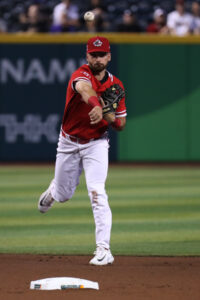
Julien showed top-end patience at the plate. His 19.3% walk rate was more than double the MLB average. That willingness to work deep counts translated to a slightly higher than average 24.6% strikeout percentage, though it’s a tradeoff with which the Twins are surely comfortable given Julien’s huge on-base marks.
The Quebec native played for Canada during this spring’s World Baseball Classic. He was assigned to Triple-A St. Paul to open this season. Julien has picked up right where he left off, collecting eight hits and seven walks through his first 36 plate appearances. He’s homered twice and doubled over his first eight games at the top minor league level.
Over the winter, Julien generated some top prospect attention. ESPN and FanGraphs placed him near the back of their respective Top 100 lists, while he finished just outside the Top 100 at Baseball America. Prospect evaluators unsurprisingly praise his plate discipline and strong left-handed power potential. He’s widely expected to be a productive offensive player at the MLB level.
Julien’s defensive profile is more spotty. He’s split his time between second base, left field and first base in the minors. Evaluators have offered bearish reviews on his glove at the keystone, suggesting he’s better suited for left field or first base long term. With Gallo’s injury vacating first base, it seems likely Julien will break in primarily there.
The Twins added Julien to their 40-man roster last offseason to keep him out of the Rule 5 draft. They won’t need to make any additional moves to call him up. The 23-year-old still has three minor league option years remaining, so the Twins can shuttle him between the majors and St. Paul as needed.
While Julien didn’t break camp with the MLB club, he’s still in position to potentially secure a full service year in 2023. Players need to accrue 172 days on the big league roster to reach one year. Julien would narrowly meet that cutoff if he’s in the majors for good, though any optional assignment back to the minors would keep him shy of a full season. The Twins aren’t in position to recoup any draft compensation for his promotion, as he only appeared on the preseason Top 100 list at one of ESPN, Baseball America and MLB Pipeline.
Image courtesy of USA Today Sports.
Twins Place Joey Gallo On Injured List
The Twins placed Joey Gallo on the 10-day injured list, retroactive to April 8, shortly before tonight’s matchup with the White Sox. The first baseman/outfielder is dealing with a right intercostal strain.
It doesn’t seem all that serious, as Gallo was participating in drills this evening. He told reporters he felt he was “in a good spot” physically tonight, though the club has evidently decided to proceed with caution (via Do-Hyoung Park of MLB.com). That’d seem to suggest there’s a good chance he won’t require much or any more time than the minimal week off.
Gallo signed a one-year free agent deal last offseason. The Twins were hoping he could bounceback from a tough year and a half split between the Dodgers and Rangers. The two-time All-Star opened his Minnesota tenure with a fantastic week. Gallo has five hits (including three home runs) and a pair of walks over his first 20 plate appearances as a Twin.
A Gold Glove caliber outfielder, Gallo has primarily played first base with Minnesota. That’s because Alex Kirilloff opened the year on the injured list as he rehabs from last year’s season-ending wrist procedure. It seems both Kirilloff and second baseman Jorge Polanco are closing in on their season debuts, however. They’re each on rehab assignments with Low-A Fort Myers and should return to the majors within the next week or two.
Minnesota is playing tonight’s game a man down. They didn’t make a corresponding roster move today, although it’s possible they turn to one of their top prospects tomorrow. Aaron Gleeman of the Athletic notes that Edouard Julien was yanked from tonight’s game for Triple-A St. Paul shortly after Gallo’s IL placement was announced. Julien, ranked by Baseball America as the sport’s #97 overall prospect, was added to Minnesota’s 40-man roster last offseason. The Auburn product hit .300/.441/.490 in Double-A last season and is off to a .276/.417/.517 start in eight games in St. Paul.
Twins Place Max Kepler On 10-Day Injured List
The Twins have placed outfielder Max Kepler on the 10-day injured list (retroactive to April 5), with outfielder Matt Wallner called up from Triple-A to take Kepler’s spot on the active roster. Kepler is suffering from right patellar tendinitis, and hasn’t played in any of Minnesota’s last three games after being forced out of Monday’s contest while running the bases.
It’s a disappointing setback for Kepler, especially after a big Spring Training raised some expectations that a nice season could be on the horizon. Kepler hit only .219/.312/.382 over 936 plate appearances (96 wRC+) in 2021-22, but with the new rules limiting defensive shifts, there was a sense that Kepler’s extreme pull-hitting tendencies might result in more batted balls becoming hits rather than outs. Obviously there’s still plenty of time left in the 2023 season for Kepler to produce, but he’ll first have to get his knee back to full health.
There is some added incentive for Kepler since 2023 is the last guaranteed season of the five-year, $35MM extension he signed with Minnesota prior to the 2019 season. Kepler is earning $8.5MM this season and the Twins hold a $1MM buyout of a $10MM club option on the outfielder’s services for 2024. Since the Twins discussed Kepler in trade talks this offseason and the team has a number of young outfielders on the way up, it might take a real offensive breakout for Kepler to keep himself in the Twins’ plans going forward.
Wallner is one of those other outfielders looking for a shot at the MLB level, and the 25-year-old made his big league debut with 18 games for Minnesota last season. The 39th overall pick of the 2019 draft, Wallner is something of a classic three-true-outcomes slugger, with lots of power (51 homers, .511 slugging percentage), strikeouts (30.32 K%), and free passes (12.75% walk rate) over his 1184 career PA in the minors.
Heading into Spring Training with an apparent surplus of outfield talent, the Twins now have Kepler, Alex Kirilloff, and Gilberto Celestino all on the IL, and Byron Buxton has been limited to DH duty while the club has been easing him back into action after knee surgery. Joey Gallo also left yesterday’s game due to soreness in his right side, though manager Rocco Baldelli told reporters (including The Athletic’s Aaron Gleeman) that Gallo is just day-to-day, as “[MRI] results were something we were hoping for.” Michael A. Taylor will remain the starting center fielder with Trevor Larnach in everyday duty in one of the other corner spots, and the Twins will now turn to Wallner, Willie Castro, or Nick Gordon to fill in for Kepler.
MLB Seeking Overdue Rights Payments From Diamond For Twins/Guardians Broadcasts
Major League Baseball has filed a motion in the ongoing Diamond Sports Bankruptcy proceedings, reports Daniel Kaplan of the Athletic. The league is seeking payments on behalf of the Twins and Guardians.
According to MLB’s motion, a pair of the Diamond-operated regional sports networks — Bally Sports North (Minnesota) and Bally Sports Great Lakes (Cleveland) — informed those clubs they would not meet their April 1 installment under their local broadcasting deals. Those networks have continued to broadcast Twins and Guardians games, respectively, in the past few days. MLB is seeking a court order demanding payment to those two organizations by April 13, or alternatively, requesting the court terminate those contracts so the league could assume broadcasting rights for those clubs.
Diamond’s Bally Sports RSNs have broadcasting contracts with 14 MLB teams.* According to Kaplan, they’ve met their payments to 11 clubs. Minnesota, Cleveland and the Diamondbacks are the exceptions. The missed payment to the Arizona organization came before Diamond officially filed for Chapter 11 bankruptcy on March 14. As a result, the D-Backs are among the creditors seeking relief for pre-bankruptcy default. That was automatically paused once Diamond filed for bankruptcy, as the court proceedings will dictate how and to what extent its various creditors (which extend beyond MLB teams) can receive relief. That doesn’t apply to the Twins or Guardians, who are seeking relief for an alleged contractual breach that took place after the Chapter 11 filing.
With speculation about Diamond’s financial viability mounting for months, MLB has maintained it is in position to take over local broadcasts if necessary. Commissioner Rob Manfred has indicated on multiple occasions the league’s preferred outcome is for the Bally RSNs to honor all their existing commitments. That clearly isn’t going to happen with every team, though, which could necessitate MLB finding an alternative way to broadcast in-market games for clubs whose deals feel through.
According to Kaplan, MLB’s motion indicates they’re prepared to do that. Whether they’ll receive approval from the bankruptcy court — or if there’s a seemingly unlikely situation in which Diamond buys itself more time by making up its missed payments to the Twins and Guardians by next week — remains to be seen. Kaplan reports the Guardians’ broadcasting deal calls for $55MM in yearly rights fees, while the Twins’ agreement is supposed to pay them $42MM annually.
*The Angels, Braves, Brewers, Cardinals, Diamondbacks, Guardians, Marlins, Padres, Rangers, Rays, Reds, Royals, Tigers, and Twins are all broadcast by Bally.
Offseason Review Chat Transcript: Minnesota Twins
Earlier this morning I posted the Twins entry in our annual Offseason in Review series. We’re hosting team-specific chats with each entry in the series. Click here to read a transcript of today’s Twins chat.
Offseason In Review: Minnesota Twins
In conjunction with this post, MLBTR will be hosting a Twins-centric chat at 2pm CT this afternoon. Click here to submit a question in advance, and be sure to check back to participate live!
A whirlwind offseason saw the Twins give out the largest contract in franchise history in order to retain their shortstop amid a series of other moves aimed at improving the defense and bolstering the depth up and down the roster.
Major League Signings
- Carlos Correa, SS: Six years, $200MM (deal includes four club/vesting options for the 2029-32 seasons)
- Christian Vazquez, C: Three years, $30MM
- Joey Gallo, OF/1B: One year, $11MM
- Donovan Solano, INF: One year, $2MM
2023 spend: $56.33MM
Total spend: $243MM
Option Decisions
- Exercised $12.5MM option on RHP Sonny Gray
- Declined $14MM option on 1B Miguel Sano (paid $2.75MM buyout)
- Declined $11MM option on RHP Dylan Bundy (paid $1MM buyout)
- Declined $9MM option on RHP Chris Archer (paid $750K buyout)
Trades and Waiver Claims
- Acquired RHP Pablo Lopez, SS Jose Salas and OF Byron Chourio from the Marlins in exchange for 1B/2B Luis Arraez
- Acquired SS Kyle Farmer from the Reds in exchange for RHP Casey Legumina
- Acquired OF Michael A. Taylor from the Royals in exchange for LHP Evan Sisk and RHP Steven Cruz
- Traded 3B Gio Urshela to the Angels in exchange for RHP Alejandro Hidalgo
- Traded LHP Danny Coulombe to the Orioles in exchange for cash
- Claimed RHP Oliver Ortega off waivers from the Angels (later outrighted to Triple-A)
- Claimed RHP Dennis Santana off waivers from the Braves (later lost via waivers to the Mets)
Notable Minor League Signings
- Willi Castro (made Opening Day roster), Tony Wolters, Tyler White, Hernan Perez, Jeff Hoffman (opted out this week), Aaron Sanchez, Ryan LaMarre, Andrew Stevenson, Jose De Leon, Dereck Rodriguez, Sean Nolin, Patrick Murphy, Connor Sadzeck
Notable Losses
- Luis Arraez, Gio Urshela, Miguel Sano, Dylan Bundy, Chris Archer, Gary Sanchez, Michael Fulmer, Sandy Leon, Danny Coulombe, Jake Cave
Following a quartet of straightforward option decisions — Sonny Gray’s $12.5MM option was an easy call to pick up, while options on Miguel Sano, Dylan Bundy and Chris Archer were easy in the other direction — the Twins set out to remake their roster, with stockpiling depth at the forefront of most of their dealings. The desire to re-sign Carlos Correa loomed large and would hang over their offseason until his wild free-agent saga drew to a close, but the Twins had other business to attend to in the meantime.
That started with a pair of trades in the run-up to the tender deadline. As they’ve been willing to do in the past, the Twins moved one year of control over a quality player — Gio Urshela — in exchange for some prospect depth and financial flexibility. With Jose Miranda‘s arrival on the scene in 2022 and several other options at first base, moving Urshela both shed a sizable arbitration salary and cleared a path for Miranda to slide from first base back over to the hot corner.
The trade of Urshela was followed just hours later by a new acquisition — unsurprisingly, one with multiple years of club control. Kyle Farmer came to Minnesota with two seasons of control and recent experience as the everyday shortstop in Cincinnati. That gave the Twins a safety net in the event that Correa signed elsewhere and a versatile utilityman in the event that they succeeded in either retaining Correa or signing one of the market’s other top shortstops.
Farmer’s career .288/.345/.492 slash against left-handed pitching surely appealed to a Twins front office that saw its club post a collective .240/.310/.392 slash against lefties in 2022 — a middle-of-the-pack output in MLB. Farmer cost the Twins a pitching prospect of comparable value to the one acquired in the Urshela swap and came with a salary roughly half that of Urshela, making the effective swap of infielders generally sensible, even if many Twins fans were understandably upset to see a solid player like Urshela shipped out.
The Twins’ focus thereafter shifted to courting Correa and simultaneously looking to upgrade behind the plate. Minnesota showed some interest in Oakland’s Sean Murphy but presumably found the asking price too steep for their liking, as the decision was instead made to sign the free-agent market’s No. 2 catcher, Christian Vazquez. The Twins reportedly showed minimal interest in top free-agent backstop Willson Contreras, likely preferring a blend of Vazquez’s superior defense and more affordable price tag.
Vazquez’s three-year, $30MM deal fell generally in line with expectations, and he’ll give Minnesota an upgrade over outgoing Gary Sanchez, who somewhat surprisingly remains unsigned. The 32-year-old Vazquez has long graded as a quality receiver and shown a strong arm behind the plate. He’ll slot into a timeshare with incumbent Ryan Jeffers, and while both hit right-handed, Jeffers is a prototypical lefty masher with grisly numbers against right-handers, whereas Vazquez handles same-side opponents reasonably well. It won’t be a conventional platoon setup, but the Twins can maximize matchups against particularly tough opponents and feel good about the gloves behind the plate, as Jeffers is a strong defender himself.
Shortly after the deal with Vazquez, the front office received the news it had been dreading since Correa exercised the opt-out provision in his three-year, $105.1MM deal: a big-market club had put forth a historic offer that Minnesota couldn’t bring itself to match. The Twins reportedly had an offer in the neighborhood of 10 years and $285MM on the table to keep Correa when the Giants, fresh off being spurned by Aaron Judge, came in with a 13-year, $350MM offer that trounced what the Twins had been willing to commit.
Correa accepted what was then slated to be the second-largest free-agent deal in history, and the Twins were left reeling. There’d been interest in Xander Bogaerts as a fallback to Correa, but he shattered expectations by agreeing to an 11-year, $280MM deal with the Padres before Correa even agreed to terms with the Giants. Trea Turner had started the shortstop spending spree with a $300MM deal in Philadelphia. Dansby Swanson agreed to a seven-year deal with the Cubs not long after Correa agreed with San Francisco, and it looked for all intents and purposes like the Twins would head into the 2023 season with Farmer starting at shortstop.
As we all know now, Correa’s deal with San Francisco was only the first in a series of bizarre stops on a stunning path back to Minneapolis. The Giants called off Correa’s introductory press conference just hours before it was scheduled to take place. It eventually came to light that the team had medical concerns — specifically regarding a nearly 10-year old injury that Correa suffered as a 19-year-old in A-ball, when he fractured his tibia on a slide into third base. Surgeons placed a plate in his leg to stabilize the injury, which remains to this day. Both the Giants’ medical staff and a third-party expert voiced concern as to how Correa’s leg would hold up over such a lengthy term.
While Correa has never missed time in the Majors with a leg/ankle injury, he did have a scare late in the 2022 season, telling reporters after a play at second base that he’d been hit “in his plate” and experienced brief numbness and tingling. He walked off the field under his own power and enjoyed a strong finish to the ’22 campaign, however.
As the Giants debated how to proceed, Correa remained unsigned and available to negotiate with other clubs. Mets owner Steve Cohen, who’d previously lamented getting into the Correa market too late, swooped in and made a 12-year, $315MM offer that was also accepted — until the Mets raised similar concerns. A near two-week limbo period followed — partly due to the holiday season — where Correa’s fate remained wholly unclear. The Mets tried to restructure the deal, reportedly aiming to guarantee only half the proposed 12-year guarantee and then subject Correa to a series of conditional options based on the health of his leg.
At this point, the Twins had circled back, showing more confidence in Correa’s health over a six-year term than the Mets were willing to bet on. Minnesota handily topped the Mets’ reported annual salary of $26.25MM, offering Correa $33.33MM per year over a six-year term and including four club/vesting options that Correa can automatically trigger simply by hitting a predetermined number of plate appearances. Those four option years can tack on another $70MM, bringing the new contract to a potential $270MM over ten years and giving Correa a possible $305.1MM maximum over 11 years in Minnesota (including last year’s $35.1MM).
Unlike the scenarios that played out with the Giants and Mets, Correa’s physical was already largely concluded by the time word of his new deal with the Twins had begun to leak out. A day after he reportedly came to terms with the Twins, his new pact was announced, and the Twins improbably had the star shortstop they’d twice almost lost locked in on a contract that was more expensive annually than Correa’s shortstop peers but came with less long-term risk.
At the outset of free agency, a six-year term for Correa seemed implausibly light; there’s more risk to that six-year term than might’ve been expected, but the Twins have a generally clean financial outlook and have ramped payroll up into the $150-160MM range in recent seasons. They can afford the year-to-year gamble, and they’re more familiar with Correa’s recent medicals than any other team. For the second straight offseason, a bizarre series of twists effectively dropped Correa into their laps, and the Twins have to be thrilled to control him for as long as a decade but with “only” six of those seasons guaranteed.
The Correa deal undoubtedly changed the trajectory of the Twins’ offseason. Upon missing out on him, they’d signed Joey Gallo to a one-year upside deal and otherwise remained largely quiet as they regrouped. Were it not for the sudden turn of fortune, it might not have been a surprise to see the Twins retool, focus on development and make a few more value adds with an eye toward 2024 and beyond. Instead, the front office turned its sights to the top remaining need: the starting rotation.
Emboldened by the Correa reunion, the Twins bit the bullet and traded fan favorite infielder Luis Arraez to the Marlins in a deal that netted them two years of control over right-hander Pablo Lopez, plus top shortstop prospect Jose Salas and teenage outfield prospect Byron Chourio. It was a headline-grabbing move due in large part to the fact that Arraez had just won a batting title, albeit only by the slimmest of margins over AL MVP Aaron Judge.
Arraez may have the best best-to-ball skills in baseball, having fanned in just 7.1% of his plate appearances last year while batting .316/.375/.420 in a career-high 603 plate appearances. He’s an undeniably talented pure hitter, but the Twins had concerns about a growing history of leg injuries that have hampered Arraez before he even turned 26 years old. He’s also limited in terms of power and defensive value, with Minnesota shifting him to first base in 2022 even as second baseman Jorge Polanco missed time due to back and knee injuries. Arraez played a strong first base, by measure of most defensive metrics, but the Twins likely saw this as an opportunity to improve the defense and pitching staff simultaneously while also netting a touted shortstop prospect in Salas.
There’s certainly risk, as the Twins surrendered three years of Arraez for just two of Lopez, who is no stranger to injuries himself. Lopez made 32 starts and pitched 180 very strong innings in 2022, but he missed time in each of the 2018, 2019 and 2021 seasons due to shoulder troubles. A healthy Lopez is the Twins’ best starter and one of the better right-handers in the league, but the 2022 season was his first with more than 21 starts or 111 innings pitched.
After acquiring Lopez, the Twins remained active on the trade front, shipping a pair of relief prospects to the Royals for the final year of Michael A. Taylor’s contract. In Taylor, the Twins acquired one of the only outfielders in baseball who can rival Byron Buxton‘s defensive wizardry. That’s particularly key early in the season, as the Twins will use Buxton primarily as a designated hitter while he eases back from a knee procedure. Once Buxton is up to full strength, the Twins can boast perhaps the game’s best contingent of outfield defenders; Gallo, who started the opener at first base but will see plenty of time on the grass, has a pair of Gold Gloves in the outfield. Max Kepler, who for much of the offseason looked as though he’d be traded, wound up staying put and has been one of the game’s strongest right fielders for years by measure of metrics like Defensive Runs Saved and Outs Above Average.
The Twins saved one final acquisition for the late stages of the offseason. After showing some interest in Yuli Gurriel, Minnesota instead added a more versatile right-handed bat in Donovan Solano. The 35-year-old Solano, like Farmer and (to a lesser extent) Taylor, has a track record of producing against lefties and can handle multiple positions. He gives the Twins a right-handed complement to first baseman Alex Kirilloff (once he’s back from a wrist injury) and can fill in at second base or third base as well. Solano is a contact-oriented hitter who’ll join a deep bench consisting of Farmer, Taylor (once Buxton is back to regular center field work) and utilityman Nick Gordon. That group gives manager Rocco Baldelli a series of quality defenders who can play multiple positions.
Minnesota left the bullpen largely untouched, retaining Emilio Pagan even after last year’s struggles. It’s a bet on the right-hander’s tantalizing raw stuff, but if he goes through similar bouts of homer susceptibility and blown leads, it’ll be rightly questioned. Then again, with last year’s deadline pickup of Jorge Lopez, the return of hard-throwing youngster Jorge Alcala, breakouts from Jhoan Duran and Griffin Jax, and the late-2022 emergence of southpaw Jovani Moran, Pagan now looks more like a middle reliever than a late-inning, high-leverage arm. If Lopez rebounds closer to his Baltimore form than his shakier second-half self, the Twins have the potential for a strong bullpen overall.
The rotation, too, looks quite deep. Each of Lopez, Gray, Joe Ryan, Tyler Mahle and Kenta Maeda is at least a solid mid-rotation starter when healthy. The Twins may lack a prototypical ace, but they also don’t have a fungible “No. 5” starter in the mix. All of their top five starters fall somewhere between the “No. 2” and “No. 4” range — though numerical designations of pitchers is inherently subjective — and even sixth starter Bailey Ober makes for an unusually strong top depth option. He’d likely be locked into a rotation spot with many teams throughout the league but instead opens the season in Triple-A.
The Twins might not head into the 2023 season as the on-paper favorite in the AL Central, but this is the deepest roster and probably the best defense they’ve had under the current iteration of the front office. That’ll be extra beneficial if the injury bug again rears its ugly head for a Twins club that had more cumulative injured list days than any team in the American League in 2022. They’ll obviously be hoping for better fortune on that front this season, and if it plays out that way, the Twins will be right in the division mix with the reigning champion Guardians and a White Sox club also hoping for fewer injuries in 2023.
How would you grade the Twins’ offseason?
How would you grade the Twins' offseason?
-
B 45% (719)
-
A 37% (586)
-
C 12% (198)
-
F 3% (47)
-
D 2% (38)
Total votes: 1,588
Twins Select Willi Castro
The Twins announced their Opening Day roster this evening. Among the group was infielder Willi Castro, indicating Minnesota has selected his contract. Minnesota had a vacancy on the 40-man roster after losing Dennis Santana on waivers a couple weeks ago, so no additional move was necessary.
Castro, 26 next month, heads into what’ll be his fifth consecutive year logging some MLB time. He’d previously spent his entire career with the Tigers, hitting .245/.292/.381 over 303 games for Minnesota’s division foes. That included a .241/.284/.367 line over 392 plate appearances last season. The switch-hitter kept his strikeouts to a decent 20.9% clip but only connected on eight home runs while walking 3.8% of the time.
While Castro’s overall offensive production has been tepid, he’s been solid against left-handed pitching in his career. He owns a .275/.302/.409 slash in 306 plate appearances as a right-handed batter. By comparison, he carries a .233/.288/.370 line against northpaws, striking out significantly more often from the left side of the dish.
Detroit non-tendered him at the end of last season. Castro caught on with Minnesota on a minor league pact and picked up ten hits (including a trio of homers) in 40 at-bats this spring. A 19:3 strikeout-to-walk ratio isn’t ideal but the overall production was solid.
Castro is a versatile defensive option, albeit a player who has never really excelled at any one position. He’s logged a decent amount of playing time at both middle infield positions and the corner outfield spots, with sporadic work in center field and at third base. Public defensive grades haven’t been fond of his work anywhere, with particularly glaring reviews of his shortstop defense. That he’s able to play virtually anywhere nevertheless earns him a spot on the Minnesota bench as the Twins deal with a few injuries headed into the year.
Jorge Polanco is starting the year on the 10-day injured list as he works back from right knee issues that ended his ’22 campaign early. First baseman Alex Kirilloff is also opening the season on the IL, while top prospect Royce Lewis continues to rehab from last year’s ACL tear. Do-Hyoung Park of MLB.com tweeted this evening that Lewis is taking at-bats and could soon progress to running the bases. It’s a promising development but he’ll obviously still open the year on the injured list.
Nick Gordon is in the lineup as Minnesota’s Opening Day second baseman. He’ll presumably hold that role until Polanco returns, with Castro, Donovan Solano and Kyle Farmer on hand as depth infielders. Castro still has a minor league option year remaining, so the Twins could send him down to Triple-A St. Paul without having to run him through waivers now that he’s back on a 40-man roster.