
Poll: Grading The Brewers’ Blockbuster Moves
For a brief time this week, the Brewers turned this maddeningly slow offseason on its head. Within a one-hour period on Thursday afternoon, Milwaukee agreed to acquire two star-caliber outfielders – free agent Lorenzo Cain and then-Marlin Christian Yelich – in moves that the club hopes will help end its five-year playoff drought in 2018. Those additions came on the heels of a year in which the Brewers were among baseball’s surprise success stories, as they entered as expected non-contenders and exited with a solid 86 wins – one fewer than Colorado, which earned the National League’s last playoff spot.
With Cain and Yelich in the fold, it would be understandable to have high expectations for the Brewers as presently constructed. Although, general manager David Stearns clearly still has work to do, particularly to improve a less-than-stellar pitching staff. Thanks in part to the Brewers’ unspectacular group of hurlers, FanGraphs is only projecting them to win 77 games at the moment. That, of course, factors in notable contributions from Cain and Yelich, who are forecast to combine for just under 7.0 fWAR.
While Stearns figures to make further moves to improve Milwaukee’s chances, including potentially dealing from the team’s outfield surplus to upgrade elsewhere, we can still offer initial judgments on the Cain and Yelich pickups. Those who follow the league know what Cain is by now – a gifted center fielder, hitter and baserunner who was likely Kansas City’s best player during his tenure there from 2012-17. Cain’s track record led the Brewers to hand him easily the offseason’s richest contract, a five-year, $80MM deal with decreasing no-trade rights as the pact progresses. Cain absolutely could live up to that payday, though red flags come in the form of his age (32 in April) and injury history (he went on the disabled list in 2012, ’13, ’14 and ’16). All things considered, did Milwaukee make the right move in signing him?
(Poll link for App users)
Grade the Cain deal
-
B 49% (10,088)
-
A 23% (4,788)
-
C 22% (4,457)
-
D 5% (952)
-
F 2% (405)
Total votes: 20,690
Meanwhile, at 26, Yelich has a few prime years left, and he’s under contract for all of those seasons at eminently affordable rates. Milwaukee could control Yelich through 2022 for a combined $58.25MM, and there’s nothing to suggest he won’t be worth that money. Since he became a regular in 2014, Yelich has racked up 15.9 fWAR, with FanGraphs valuing that four-year performance at a whopping $125.6MM. He could have continued to be part of the solution in Miami, but with the Marlins in the early stages of a major teardown, they figured it would make more sense to cash in their top trade chip.
Of course, given all the pluses Yelich brings to the table, prying him out of Miami wasn’t easy. To secure Yelich, the Brewers waved goodbye to four prospects – outfielders Lewis Brinson and Monte Harrison, infielder Isan Diaz and right-hander Jordan Yamamoto. In Baseball America’s newest top 100 prospect list, which came out this past Monday, Brinson ranks 18th and Harrison 75th. There are also reasons for optimism that Diaz and Yamamoto will develop into productive major leaguers, as FanGraphs’ Eric Longenhagen wrote in the wake of the trade. So, it’s fair to say the Brewers took a sizable bite out of their farm system to make this deal. Was it worth it?
(Link for App users)
Grade the Yelich trade from Milwaukee's perspective
-
A 61% (11,572)
-
B 28% (5,364)
-
C 8% (1,449)
-
D 2% (331)
-
F 1% (221)
Total votes: 18,937
Finding A Catcher For The Nationals
As things stand right now, the Nationals are clear favorites to win the NL East pennant once again in 2018. Fangraphs projects that their current roster would win about 91 games in the coming season, and sees all four of its division rivals as sub-.500 teams. That’s great for the Nats, but likely doesn’t mean much to its fan base at this point, who have seen their home team clinch the division in four of the past six seasons (and the NL’s best record in two of them) only to lose in the NLDS. For a team that’s set to lose Bryce Harper, Daniel Murphy and Gio Gonzalez to free agency next winter, there seems to be some pressure to push for a World Series Title while they still have the pieces to do so.
While the overall look of Washington’s roster is fantastic, they have a gaping hole at the catcher position, as MLBTR’s own Jeff Todd examined back in October. The situation remains the same; Matt Wieters performed below replacement level in 2017, and at this point he can’t be counted on to provide much value. Pedro Severino hasn’t yet done anything to convince the club that he’s ready to produce against big-league pitching. By finding a catching upgrade, the team could improve its lineup considerably and thereby improve its chances to make a deep postseason run. That being said, the market has shifted a bit since Todd’s initial assessment.
First off, it’s somewhat surprising that the Nationals haven’t addressed their need already. It’s been clear since the beginning of the offseason. In addition to our own post on the matter, the baseball community has seen Travis Sawchik of Fangraphs examine the situation in detail back at the beginning of December.
Of course, it’s not exactly a quick-fix situation. The best catching option on the market at the outset of the winter was Jonathan Lucroy, who isn’t without his own set of question marks. Welington Castillo was scooped up by the White Sox by beginning of December, taking away another potential fit. And it’s not as though MLB teams will freely trade talented catchers; a premium position comes at a premium rate. Acquiring a catcher on the trade market without diminishing some other area of the major league roster would be a difficult task to accomplish.
The Nationals have been connected to a few players throughout the offseason already, but they’ve got fairly limited resources to make such an acquisition. They’re already above the luxury tax threshold, so an addition on the free market will technically cost 130% of whatever he signs for; that dramatically reduces the cost-effectiveness of that avenue. And the team seems likely to hang onto top prospects Victor Robles and Juan Soto due to their immense values. With that in mind, let’s take a look at the options available…
Free Agents:
Jonathan Lucroy: As recently as the first half of last season, Lucroy was one of the top catchers in the game. He posted a .292/.355/.500 slash line with 24 home runs during a 2016 campaign split between the Brewers and Rangers. But his power fell off significantly last season, which led him to put up one of the worst fWAR totals of his career (1.2). Lucroy managed to hit only six homers despite a notoriously homer-happy trend throughout the league and a significant number of plate appearances in Coors Field.
Due to his steep offensive drop-off and an equally stark decline in pitch-framing skills, Lucroy will probably only require a one- or two-year contract. But he’s no guarantee to provide value even on the two-year, $24MM deal that MLBTR predicted for him at the outset of the winter, and it’s not even a certainty that he’ll provide enough of an upgrade over Wieters to justify an eight-figure commitment with a 30% surcharge stemming luxury tax considerations.
Alex Avila: The soon-to-be 31-year-old Avila started off hot with the Tigers last year, but cooled down after being traded to the Cubs midseason. Still, he maintained a .369 on-base across 112 plate appearances even after the trade. The Nats have already been connected to Avila this offseason. He could be had at very low price, and would therefore be a low-risk signing for the club.
The biggest issue with entertaining Avila as a serious option is the fact that he probably can’t be counted upon to take a significant workload behind the plate. The veteran hasn’t caught more than 650 innings in any of the past three seasons, meaning he might not provide the type of upgrade the Nationals need.
Trade Options
J.T. Realmuto: As Todd pointed out three months ago, this is a fairly obvious match. The fit only became stronger in theory when the Marlins sold off Giancarlo Stanton, then Dee Gordon, later Marcell Ozuna and most recently Christian Yelich. As things stand at the present moment, the Nationals are said to be the organization that is “most heavily engaged” in talks with Miami concerning their catcher. While their reported unwillingness to include Robles or Soto would seem a significant roadblock on the surface, it’s looking as though the Fish might just be willing to settle for a package comprised of other assets.
Yasmani Grandal: If the 2017 playoffs are to be seen as any indication, Austin Barnes has usurped the starting job from Grandal, leaving the veteran switch-hitter destined to serve in a backup role for 2018. He’s set to earn $7.9MM after avoiding arbitration with the Dodgers, and will become a free agent following the season. The 2010 first-rounder has averaged over 2.5 fWAR across the past three seasons, meaning he could prove an excellent upgrade for the Nats at a far cheaper cost than someone like Realmuto.
Yan Gomes/Roberto Perez: The two Tribe backstops have been steady if unimpressive in recent years, and each can be controlled for at least three more seasons. Both are stellar defensive players with penchants for throwing out a remarkable percentage of opposing base-stealers, and each would be a clear upgrade over Wieters. Trading either player to the Nationals would pave the way for top prospect Francisco Mejia to crack the big league roster, though the Indians may perhaps prefer to hold him at Triple-A for a while due to service time considerations and/or need for further seasoning.
Francisco Mejia: Mejia gets his own paragraph due to the considerably different circumstances surrounding his hypothetical trade candidacy. Being that he’s blocked by Gomes and Perez at the MLB level, the Tribe could perhaps be willing to part with him. The logic of this match declines from there, however, as it’s difficult to imagine what the Nationals could (or would) possibly offer to improve Cleveland’s shot at a World Series title in 2018.
James McCann: The rebuilding Tigers don’t seem likely to be competitive in any of the next three seasons, meaning McCann will probably be on the move sooner or later. Though he’s impressive defensively, McCann’s bat has proved below-average across 1,201 big league plate appearances. That could (in theory) make him more affordable than other trade options while still offering an upgrade over Washington’s in-house options.
Poll: Who Will Sign Lorenzo Cain?
The market for at least a couple of the top remaining free agents looks to be picking up steam, with Yu Darvish reportedly likely to sign in the coming days and Lorenzo Cain said to be eliminating teams from the field as he weighs multiple four-year offers. The Cubs came out on top of MLBTR’s recent poll of which team will sign Darvish, and with Cain’s market seemingly gaining momentum, it’s prediction time once again.
To date, the Rangers, Blue Jays, Giants and Brewers have been most prominently linked to Cain, while the Cubs have been somewhat loosely connected to him. Much earlier this offseason, the Mets were said to have interest as well.
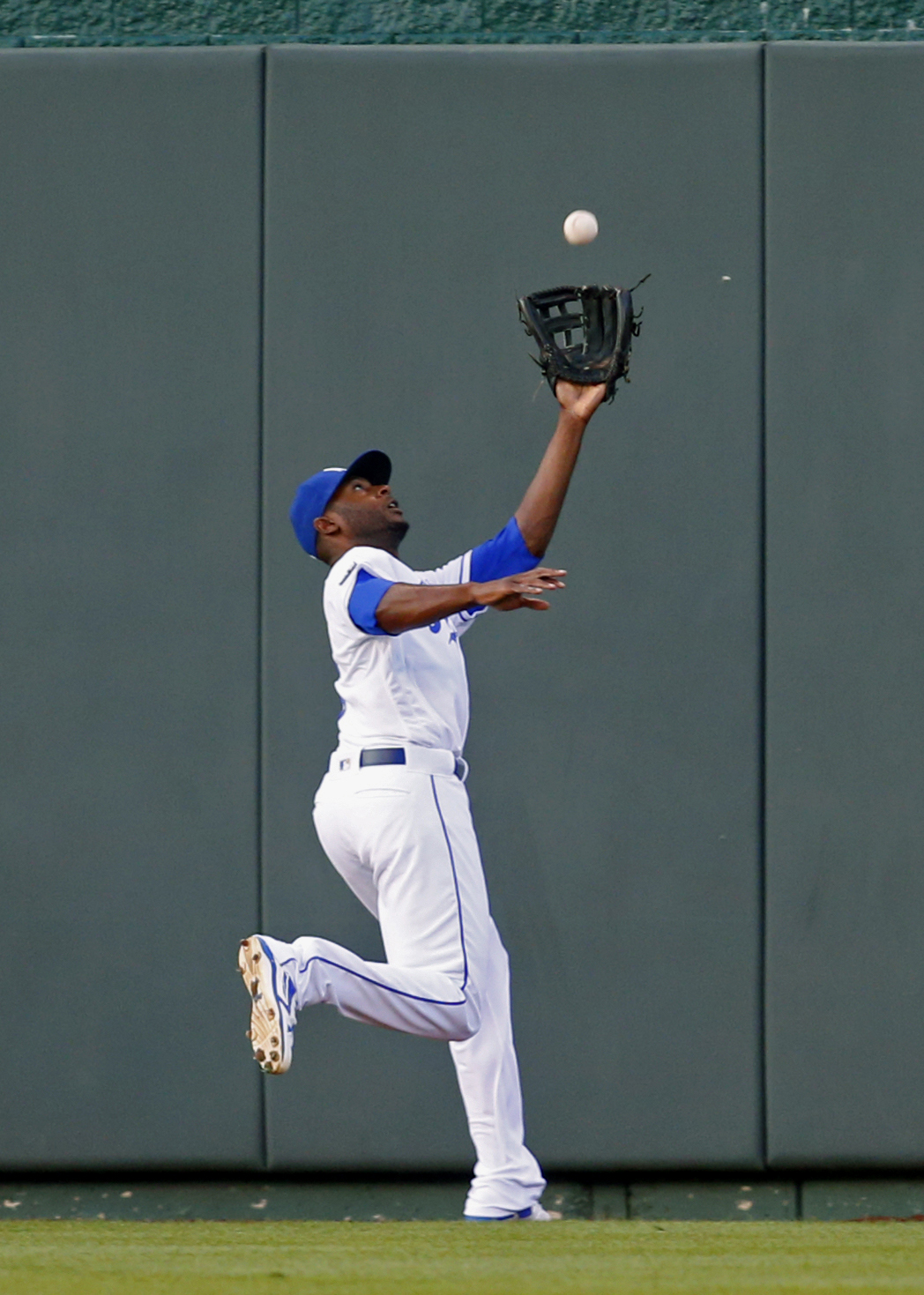
Texas makes good sense for Cain on paper. Nomar Mazara and Delino DeShields will be mainstays (with DeShields manning center on a daily basis), while Shin-Soo Choo and Willie Calhoun figure to split time between a corner spot and designated hitter. Cain, clearly, would be a defensive boost, though his arrival could push Calhoun back to the minor leagues until an injury on the big league roster created some space. Texas has reportedly been aiming to drop its payroll by as much as $10MM from 2017’s Opening Day mark of $165MM. They’re currently projected at $144MM for Opening Day, so there could be room for Cain, especially if he signs a backloaded deal. GM Jon Daniels did recently imply that Cain may not be a fit, stating that the team wants DeShields to play center field every day and adding that any additional “big expenditure” would likely to be on the pitching side of the equation, if there is one at all.
The Blue Jays, meanwhile, recently picked up Randal Grichuk in a three-player trade with the Cardinals. Grichuk revealed after the fact that he’s received indication that he’ll get everyday at-bats with the Jays. Toronto also has defensive standout Kevin Pillar in center as well as Curtis Granderson, Steve Pearce, Ezequiel Carrera, Teoscar Hernandez and Anthony Alford in the mix for MLB at-bats early in the year. Kevin Pillar has been at times been speculated upon as a trade candidate by Jays fans, though moving his affordable $3.25MM salary to pay Cain upwards of four to five times that amount on an annual basis wouldn’t make sense unless Toronto were receiving some immediate help for its pitching staff.
The Giants have long been linked to Cain given the team’s need for a defensive upgrade in center field. San Francisco is roughly $2.1MM shy of the $197MM luxury tax line at present, so signing Cain is wholly impossible unless they can somehow find a taker for an expensive veteran (e.g. Hunter Pence) or they abandon their quest to dip south of that threshold. If the Jays would consider moving Pillar — and there’s no indication of that at present, to be clear — then the Giants could potentially move a lesser salary to squeeze him into the mix. That’s a lot moving parts, though, and the entire scenario seems rather unlikely.
Milwaukee has Ryan Braun (and his full no-trade protection) in left field with Keon Broxton in center and Domingo Santana in right field. Brett Phillips is on hand as a fourth outfield option for now, and the Brewers are hopeful that ballyhooed prospect Lewis Brinson will soon cement himself as a fixture in the outfield at Miller Park as well. But, despite that quality stock of outfielders, they’re reportedly exploring the idea of dealing an outfielder in an effort to bolster the rotation (or, perhaps, condensing that surplus into a high-profile talent like Christian Yelich). If the Brewers were to sign Cain — in whom they’ve been rumored to have interest — there’d be at least one corresponding trade to make way, it seems.
The Cubs, meanwhile, have a host of outfield options, even if several have their warts. Jason Heyward‘s contract makes him essentially untradeable, so he’ll hold down a spot in right field. Kyle Schwarber comes with plenty of questions after his rough 2017 season, but he remains in the mix as well. Albert Almora looks ready for a larger role in center field, and the Cubs also have Ben Zobrist and Ian Happ both in the mix for outfield time. They could perhaps fit Cain into that mix, but they’re reportedly looking closely at the free-agent market for top starters like Darvish, Jake Arrieta and Alex Cobb.
As for the Mets, they’ve signed Jay Bruce since they were linked to Cain and now have him, Yoenis Cespedes, Juan Lagares, Michael Conforto and Brandon Nimmo in the picture. New York apparently has a bit of money left to spend, but they still need a second or third baseman — Asdrubal Cabrera will play the other — as well as some depth on the pitching staff. A Cain signing seems decidedly unlikely.
Cain’s all-around game should appeal to a wide number of teams, so it stands to reason that there could, of course, be dark horse clubs (or, yes, “mystery teams,” if you prefer the term) at play for his services. He’ll cost any team that signs him some value in the 2018 draft (here’s a refresher on which picks each team would lose by signing him), but that won’t be a make-or-break proposition for every club.
With all of that said, let’s open this up to the field (poll link for Trade Rumors mobile app users)…
Who will sign Lorenzo Cain?
-
Brewers 29% (5,788)
-
Rangers 24% (4,884)
-
Giants 14% (2,702)
-
Other (specify in comments) 10% (1,986)
-
Cubs 8% (1,692)
-
Blue Jays 8% (1,623)
-
Mets 7% (1,329)
Total votes: 20,004
Photo courtesy of USA Today Sports Images.
MLBTR Originals
Recapping this week’s original content from MLBTR…
- Even after acquiring Andrew McCutchen, the Giants are in the market for a center fielder. San Francisco’s preference to stay under the $197MM luxury tax threshold may limit its options, though Steve Adams still found 13 reasonably priced candidates whom the club could acquire via free agency or trade.
- With McCutchen, Gerrit Cole, Evan Longoria and Yangervis Solarte having been part of recent deals, Jeff Todd updated his list of the league’s top 60 trade candidates. The piece is loaded with household names, including Christian Yelich and Chris Archer.
- In the newest editions of MLBTR’s Free Agent Profile series (links: 1, 2), Steve examined right-hander Alex Cobb‘s case for a big payday, while Kyle Downing did the same with reliever Greg Holland.
- Brewers right-hander Tim Dillard provided his latest Inner Monologue, this one touching on subjects including “Star Wars” and giveaway nights.
- The contract extension portion of the offseason isn’t far away, leading Jeff to break down the largest deals given to veterans entering their final year of team control.
- After news broke that Marlins second baseman Starlin Castro would prefer to play elsewhere in 2018, I tried to find plausible fits for him via trade. It wasn’t easy.
- The latest poll at MLBTR focused on where free agent right-hander Yu Darvish will sign. The plurality of voters see him ending up with the Cubs. On the other hand, the results suggest there’s little hope for a Darvish-Dodgers reunion.
Finding A Center Fielder For The Giants
The Giants’ acquisitions of Andrew McCutchen and Evan Longoria have added a pair of offensive upgrades to their lineup, but the team is still facing a glaring hole in center field. Improving the outfield, both offensively and defensively, has been a long-stated goal of GM Bobby Evans and executive vice president Brian Sabean. However, the Giants are also said to be aiming to remain underneath the luxury tax threshold, which is calculated based on the average annual value of their players’ contracts and is set at $197MM for the 2018 season.
As presently constructed, the Giants don’t have much flexibility with regard to those self-imposed restrictions. (They’ve exceeded the luxury tax four years running now, so they certainly have the resources to do so if they change course. Various observers have given different indications of the team’s willingness to do so.) The exact amount of wiggle room the Giants have is difficult to pin down, but most projections give them about $4.5MM to spend. Cot’s Contracts, more specifically, gives the Giants $4.462MM before pushing up against that mark. Of course, it’s also important to bear in mind that salary additions and subtractions during the course of the season factor into whether or not a team ultimately enters the luxury tax space.
The Giants could certainly still trade a veteran player in order to clear some payroll and open up their options a bit more. However, the Giants’ highest-paid players are either core pieces (Buster Posey, Madison Bumgarner, Brandon Crawford, Brandon Belt) or expensive veterans coming off poor seasons that San Francisco would be hard-pressed to trade even if the team is inclined to do so (Hunter Pence, Mark Melancon, Johnny Cueto). The Giants could move a reliever such as Sam Dyson, who’s set to earn $4.425MM in 2018, which would roughly double their current level of spending room. Cory Gearrin ($1.675MM) and Hunter Strickland ($1.55MM) are both movable assets that could create some additional wiggle room, albeit at the cost of major league production.
Suffice it to say, a pricey addition along the lines of Lorenzo Cain — free agency’s top center fielder — seems decidedly unlikely unless the Giants decide to zip past the luxury tax line. Another open-market center field option, Carlos Gomez, also seems well beyond their current price range. A trade for Jacoby Ellsbury — an oft-suggested scenario from optimistic Yankees fans — certainly doesn’t fit into their budget, even if the Yankees eat half of the remaining money on Ellsbury’s deal. Christian Yelich? Giants fans would love to have him, but their thin farm isn’t going to produce the top offer the Marlins receive for one of the game’s more alluring trade chips.
The Giants have been connected to second-tier free agents since trading for Andrew McCutchen and announcing that he’ll move to right field, and there are myriad avenues that they could pursue while ever so narrowly sidestepping that $197MM roadblock. A few speculative options to consider, bearing in mind that the goal is to add someone who could conceivably had within a tight budget and can at least play average defense in center…
Free Agents
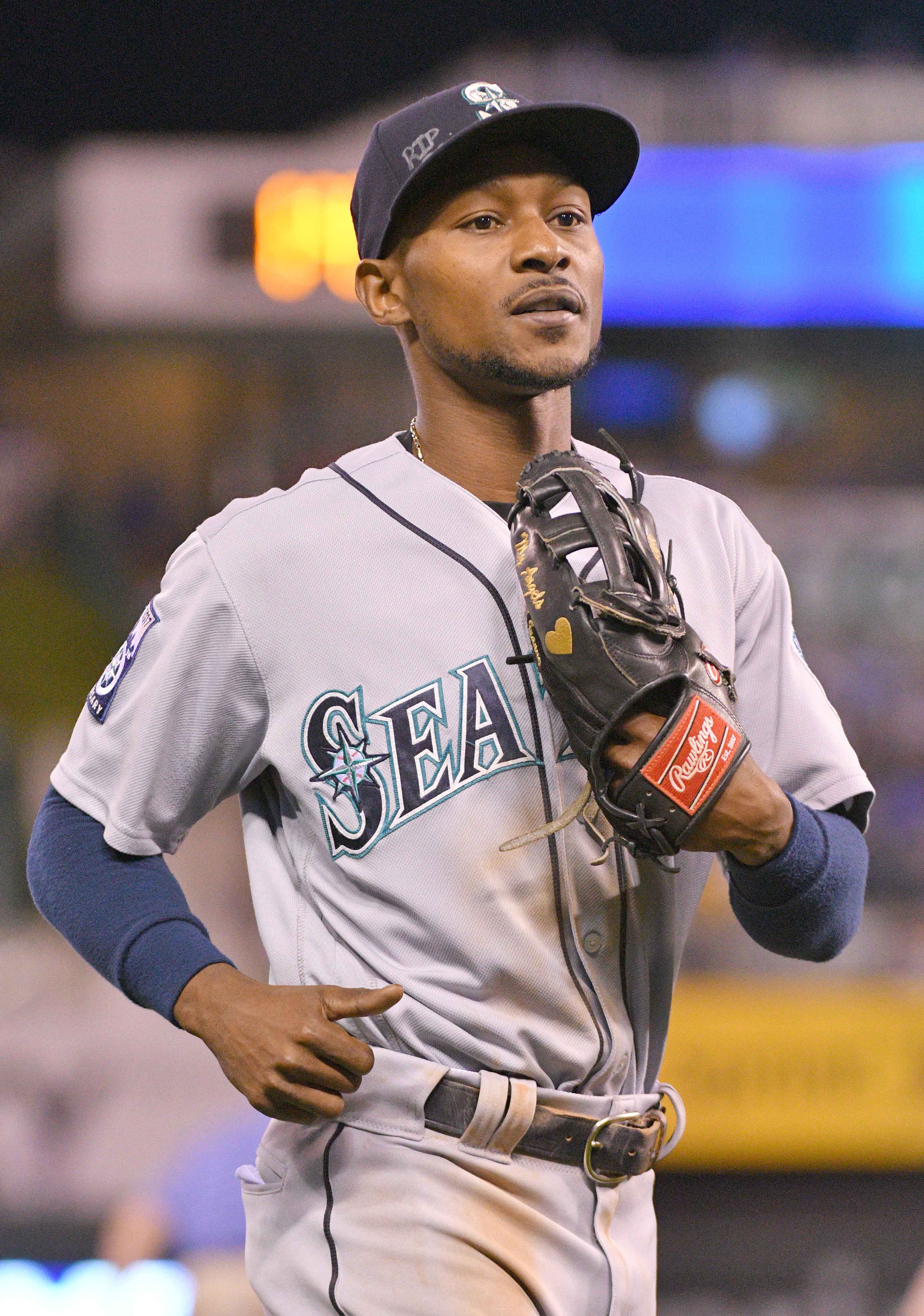
Jarrod Dyson: The 33-year-old veteran is tops on the Giants’ list of targets, per ESPN’s Jerry Crasnick, and it’s not hard to see why. Giants outfielders, in addition to posting a dismal .253/.311/.374 as a collective unit last season, also turned in a ghastly -32 DRS and -5.3 UZR. Their defensive, on the whole, was dreadful. Enter Dyson. At some point, it’s fair to worry that his speed and defense will decline, but his UZR/150 of 13.8 over the past three seasons (min. 1000 innings in the field) ranks 12th among all Major Leaguers at any position. He’d require a platoon partner given his career .215/.293/.259 slash against lefties (Austin Slater, perhaps).
It seems unlikely, though, that Dyson could be had for under $5MM annually. Signing him might require the Giants to move a reliever such as Dyson, as previously speculated.
Jon Jay: Crasnick listed Jay second among the Giants’ center-field targets in free agency, so it’s clear that San Francisco has some degree of interest. Jay would bring more offense to the position than Dyson, having posted roughly league-average (or better) offense in seven of his eight Major League seasons, by measure of OPS+ and wRC+. Jay is a left-handed hitter but has only a minimal platoon split in his career. He’s hit righties at a .289/.354/.392 clip and lefties at a .288/.359/.353 pace.
Jay, however, doesn’t have anywhere close to Dyson’s defensive skill set. He has rated as an above-average center fielder at times in the past, but he spent more time in the corners than in center with the Cubs last season and had below-average defensive ratings in center in consecutive seasons. Granted, even below-average would be an improvement for the Giants, who saw the since-traded Denard Span struggle considerably there in 2017. Jay, like Dyson, figures to cost more than $5MM annually, so signing him might require a corresponding trade if the Giants want to remain under the tax threshold.
Cameron Maybin / Rajai Davis: Maybin and Davis are similar in that each hits from the short side of the platoon, provides superlative baserunning skills and can generally be relied on in center field (despite lackluster ratings there in recent years). As the younger of the two, Maybin would be the pricier option, though Crasnick listed him third on the Giants’ list of center field targets in free agency.
The rest of the market is fairly light on players that could be reasonably expected to hold down a regular role in the outfield. Ben Revere could be a theoretical platoon pairing with Gorkys Hernandez in center, or if the Giants are looking more at reserve types, they could add a defensive-minded veteran like Peter Bourjos to the mix. But, if they’re looking to at a cost-effective center fielder, Dyson is perhaps the best bet. More options would present themselves on the trade market, however. (Although, today’s trade of Randal Grichuk to the Blue Jays eliminated one of the more logical options for San Francisco.)
Trade Options
Billy Hamilton, Reds ($4.6MM salary, controlled through 2019): Hamilton is the most frequently linked center field target to the Giants, and he’d fit their needs both in terms of budget and improving the defense. Zach Buchanan of the Cincinnati Enquirer, though, recently reported that talks between the two teams have gone “dormant,” adding that Hamilton may very well open the year in Cincinnati.
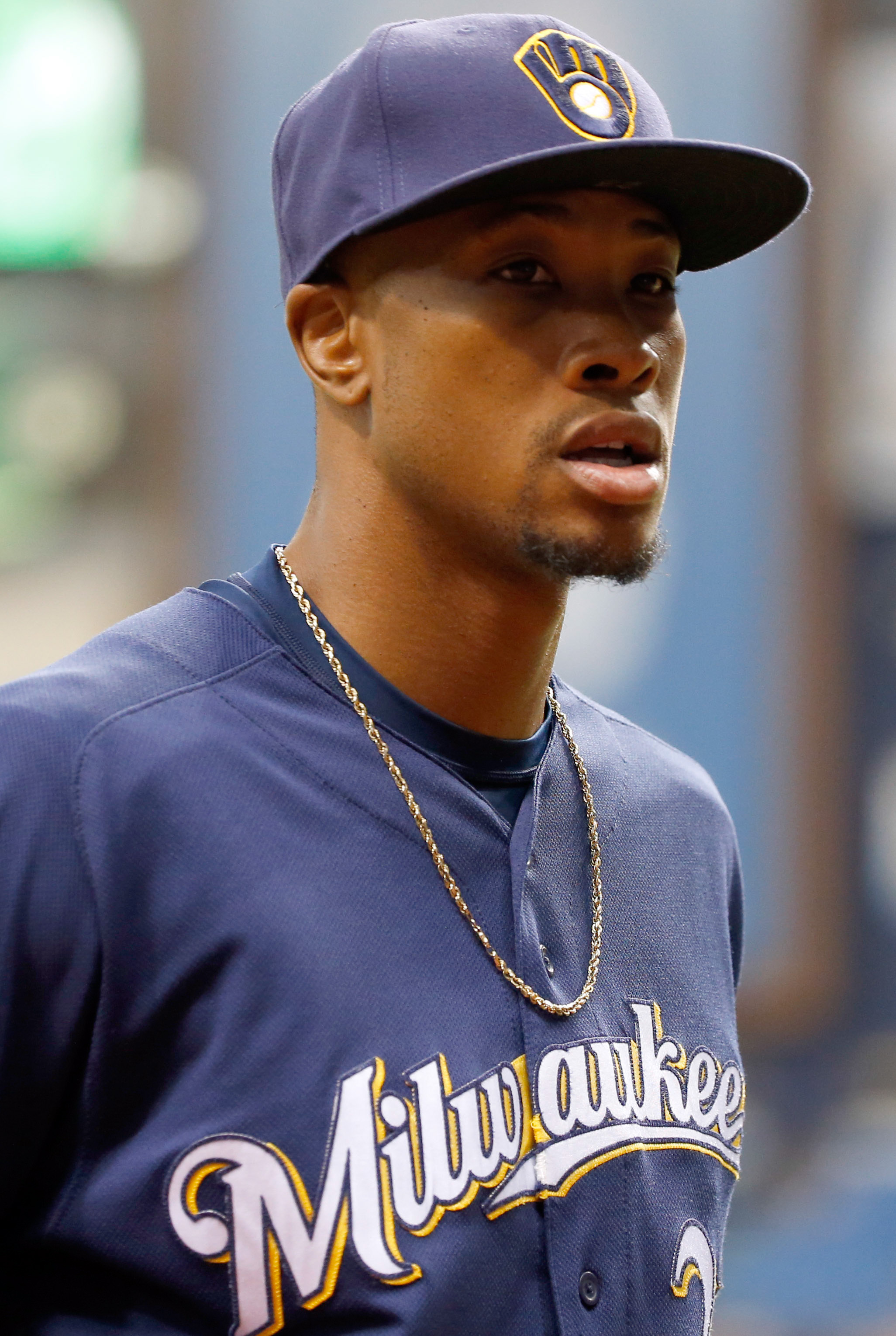
Keon Broxton (pre-arb, controlled through 2022) / Brett Phillips (pre-arb, controlled through 2023), Brewers: The Brewers have reportedly been shopping some outfielders around, and Broxton’s league minimum salary and power/speed blend would figure to intrigue the Giants. Broxton has 29 homers and 45 steals in just 709 MLB plate appearances, but he’s whiffed in a stunning 37.2 percent of his plate appearances. His defense rated excellently in 2016 but poorly in 2017. Phillips has less big league experience and similar strikeout issues, though he’s not far removed from grading out as one of the game’s best overall prospects. Milwaukee has also reportedly taken offers on Domingo Santana, but he’s more of a corner option and would have a higher asking price on the heels of a 30-homer season.
Juan Lagares, Mets ($6.5MM in 2018, $9MM in 2019): Lagares’ remaining salaries are part of a four-year, $23MM deal that the Giants could manage to fit into their payroll by shedding one other player with a relatively modest contract (perhaps sending a big leaguer back to the Mets in return). Lagares hasn’t hit much in the past two seasons as he’s been slowed by hand injuries, but he has a sterling defensive reputation; he notched a +15 DRS mark and +10.4 UZR in just 556 innings in center this past season. Lagares has been connected to the Giants already this winter, though New York doesn’t have a great center field alternative (defensively speaking) on its roster. Brandon Nimmo‘s name has also come up in trade talks, though the Mets don’t seem keen to move him unless they’re getting an MLB piece back. (Fire away with your Joe Panik speculation, though such a move would open another hole in San Francisco.)
Tyler Naquin, Indians (pre-arb, controlled through 2022): With Michael Brantley, Bradley Zimmer and Lonnie Chisenhall set to line up in Cleveland’s outfield, there’s no obvious spot for Naquin, who was an odd man out for much of the 2017 campaign as well (40 MLB plate appearances). Naquin hit well (.298/.359/.475) in Triple-A, though, and had a big, albeit BABIP-inflated, rookie season with the Indians in 2016. Both Brantley and Chisenhall are injury-prone and are free agents next winter, however, so perhaps Cleveland isn’t too keen on depleting its infield depth all that much.
Odubel Herrera ($3.35MM in 2018, owed $28.9MM through 2021, plus two club options) / Aaron Altherr (pre-arb, controlled through 2021) / Nick Williams (pre-arb, controlled through 2023), Phillies: With Rhys Hoskins moving to left field to accommodate Carlos Santana, there are only two spots for these three in Philadelphia. Herrera is the only true center fielder here, though all three have experience there in the minors. The Philadelphia organization may simply share time between those three players while allowing performance to dictate its future decisions. Even if they’re willing to deal from this group, the Phils would likely be on the lookout for MLB-ready rotation help, which makes the Giants a tough match in a deal. (San Fran would also need to shed a bit of cash to fit Herrera’s five-year, $30.5MM deal under the luxury tax bar.) Feel free to dream up three-team trade scenarios accordingly, if you’re so inclined.
Michael Taylor, Nationals ($2.525MM, controlled through 2020): It’s hard to see the Nats parting with Taylor unless they received some definitive MLB help back in exchange — likely behind the plate or in the form of someone that’s a clear upgrade at the fifth spot in their rotation. The Giants don’t really have either of those things to offer, but the fit otherwise works on paper, especially with top prospect Victor Robles looming after briefly reaching the majors late in 2017.
Photos courtesy of USA Today Sports Images.
Free Agent Profile: Greg Holland
After missing all of the 2016 season while recovering from Tommy John surgery, right-hander Greg Holland enjoyed somewhat of a bounceback 2017 while closing for the Rockies. After a 41-save campaign, he turned down both a player option and a qualifying offer in search of a more lucrative, multi-year pact.
Pros/Strengths
During Holland’s heyday with the Royals from 2012-2014, Craig Kimbrel and Aroldis Chapman were the only qualifying relievers with a better FIP than Holland’s 1.83. He also carried the majors’ 5th-highest strikeout rate (13.02 K/9) and ranked 2nd among relievers in Win Probability Added (8.38). I could list a hailstorm of other statistics that prove Holland’s dominance, but the above rankings should paint a clear enough picture: he was long one of the game’s preeminent closers. That experience in high leverage situations may also prove a plus, including the seven late-inning leads he converted to saves during the 2014 postseason.
Even during an up-and-down 2017 season, Holland managed to strike out 10.99 batters per nine innings. While that’s not quite to the elite level he achieved during the window mentioned above, it’s still earned him a spot in MLB’s top-30 relievers in that regard. There’s no reason to expect he won’t continue to rack up the K’s.
Among the Colorado free agent’s pitch arsenal is an absolutely lethal slider. He threw the pitch even more often than his fastball in 2017, and with great results; opposing hitters managed a wRC+ of just 10 in plate appearances ending with that pitch. Fangraphs’ pitch value estimators suggest that Holland’s slider was worth 2.77 runs per 100 uses. The opposition hit just .139/.173/.230 against it while striking out a whopping 58 times.
Cons/Weaknesses
The most prominent risk to signing Holland is that he’s no sure bet to stay healthy. While he proved durable during his peak with the Royals, his 2015 campaign began with an April DL stint due to a pectoral strain, and ended with a UCL tear in September. Holland managed to stay healthy for a vast majority of the 2017 season, but his peripheral stats overall weren’t indicative of the dominance he boasted during his healthy years. While some may point may point to the fact that he played his home games in Coors Field, his ERA in away games was actually higher than it was in Denver.
Even if he can avoid the disabled list, Holland is three years removed from elite reliever status. Yes, he collected 41 saves last season, but his overall performance on the mound was decidedly average. That’s not hyperbole; out of 155 qualified relievers in 2017, Holland ranked middle-of-the-pack in ERA (87th), FIP (76th) and xFIP (86th). Judging by reports that he turned down a strong offer from the Rockies already this winter, it’s fair to infer that the 32-year-old wants to be paid in part for his past reputation, which he’s far from a lock to live up to given that it’s quite distant in the rearview mirror, and that his average fastball last season was nearly 3 MPH lower than it was over the course of the 2014 campaign .
There’s another glaring weakness worth noting… Holland has struggled mightily with control in each of his last two seasons. His BB/9 marks were 5.24 and 4.08 in 2015 and 2017, respectively. It’s not the first time he’s had walk issues, either; the righty’s 2012 campaign was stained by a 4.57 BB/9 as well. It’s fair to be skeptical about whether he’ll be able to hold ninth-inning leads if he can’t control the free passes. One additional fun fact: batters who are able to work a 3-0 count on Holland have reached base over 84% of the time over the course of his career.
Background
The Royals selected Gregory Scott Holland out of West Carolina University in the 10th round of the 2007 draft. He was utilized as a reliever from the get-go, and made his major league debut with a one-inning appearance in 2010.
It didn’t take him long to make an impact. Holland posted fantastic results out of Kansas City’s bullpen from April 2011 through July 2012, prompting the Royals to make him their closer following a midseason trade of Jonathan Broxton to the Reds. As discussed above, he enjoyed a lengthy run as one of the top relievers in the game up through the 2014 playoffs, during which he led a late-inning trio of Royals relievers (which also included Wade Davis and Kelvin Herrera) that proved one of the most formidable of all time.
Market
At the outset of the 2017-2018 offseason, MLBTR ranked Holland as the 10th-best free agent available on our list of the winter’s top 50. He’s now one of just two relievers remaining on that list (#44 Tony Watson is the other), including the honorable mentions. To see him still available in January of an offseason where relievers have flown off the shelves at unexpectedly high prices is somewhat surprising, although his agent Scott Boras has certainly been patient in the past.
There’s no denying that said patience has paid off more than once. One need not look any further than Prince Fielder and Max Scherzer for examples of Boras clients who’ve signed lucrative deals in late January. That being said, Holland seems to be in a very unfavorable position at present. The Cardinals, who were thought to be one of his chief suitors back in November (and our predicted destination for the righty), pivoted to Luke Gregerson; while they are still a potential landing spot for a closer, the team is said to have “at most, tempered” interest in Holland. The Rockies, too, are seemingly no longer a realistic landing spot for him following their signings of Jake McGee, Bryan Shaw and Davis to three-year guarantees. Typically high-spending teams like the Dodgers, Yankees and Giants now sit quite close to the luxury tax threshold and seem determined to remain beneath it for 2018, while the Red Sox are already above that $197MM figure headed into 2018. Given that those organizations already control top-end closers, they aren’t likely to splurge on Holland. The Nationals, too, are already in a position to exceed that ceiling due to complexities in the tax rules; more importantly, in that case, the team likely feels comfortable with its existing late-inning mix.
Of course, that doesn’t mean there aren’t still practical fits for Holland. The Astros, Cubs, Rangers and Brewers stand out as potential contenders with both a clear need for a reliever and the capacity to add some payroll (indeed, the Astros in particular are said to be looking for a high-leverage arm). But judging by the lack of rumors surrounding Holland over the past month or so, it’s fair to wonder whether he’s engaged in a metaphorical staring contest with one or more teams in relation to the type of contract he’s seeking.
Expected Contract
It’s been reported that Holland began the offseason seeking a five-year deal, which seemed unlikely from the start and is even harder to imagine now. Frankly, it would be quite a shock if Boras was able to find Holland a deal of that length at this point; such a contract would last through his age-37 season and has significant downside considering the health and durability concerns stemming from his 2015 elbow surgery and up-and-down second half in 2017, respectively. At the same time, Holland was able to prove that he’s still a talented strikeout artist, even if he hasn’t bounced back quite to his pre-injury capability in that regard. Considering that even Wade Davis, a superior option, ended up settling for three years, I think Holland’s likely to end up doing the same. A three-year contract with a $39MM guarantee seems like a plausible estimate at this point in the offseason, but I wouldn’t be surprised if he ends up with some performance incentives or a Shaw-esque vesting option for a fourth season.
Free Agent Profile: Alex Cobb
Alex Cobb looked every bit the part of a rising star in the Rays’ rotation before Tommy John surgery wiped him out for nearly two full seasons. His first year back was successful enough that he rejected a one-year, $17.4MM qualifying offer from Tampa Bay in order to test the waters of free agency.
Pros / Strengths
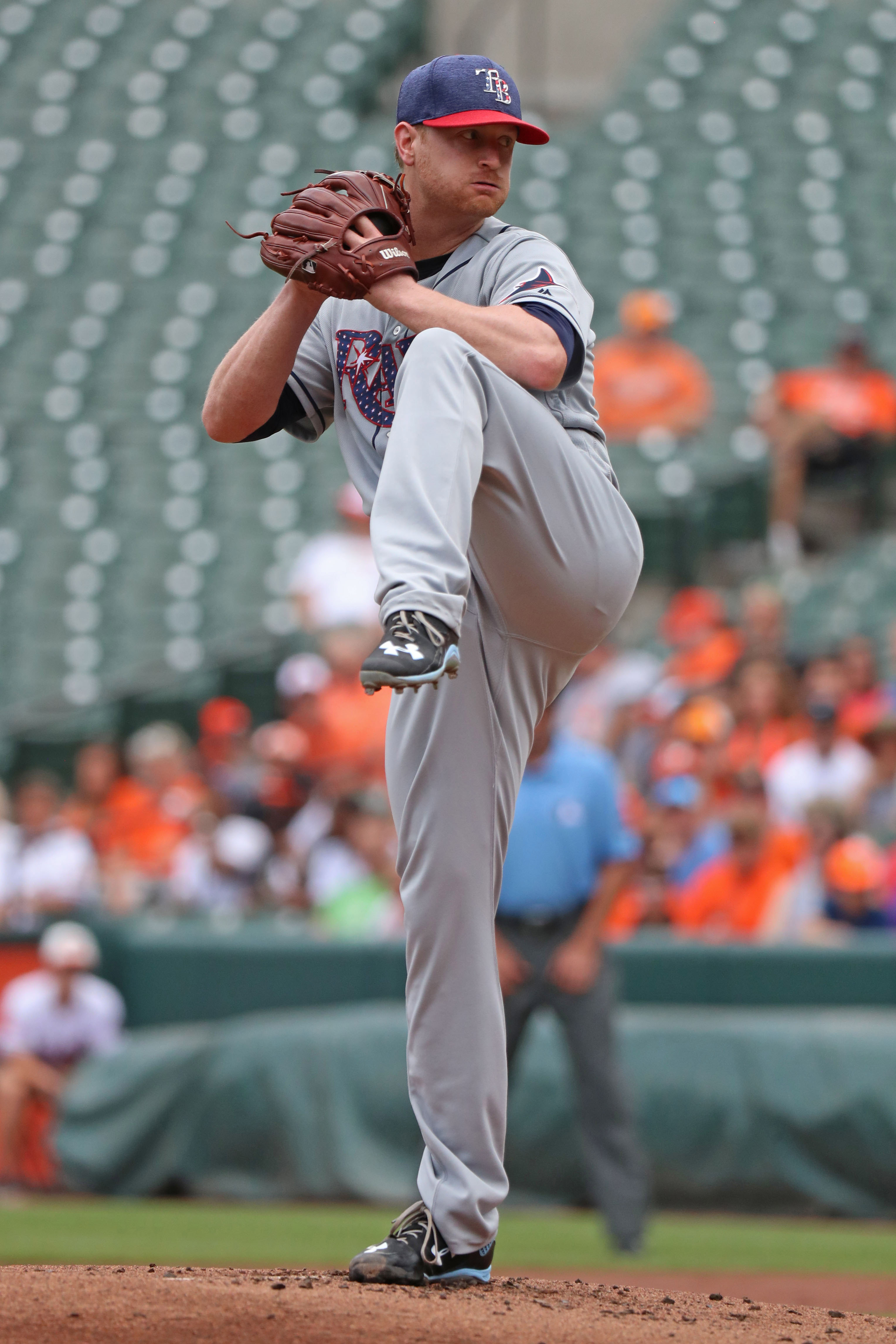
Cobb has a career 3.50 ERA, and fielding-independent metrics like FIP (3.68), xFIP (3.62) and SIERA (3.73) all largely support that bottom-line run prevention mark. He’s long displayed above-average control, never averaging more than three walks per nine innings pitched in a full season, and the 2017 campaign was his best in that regard (2.2 BB/9). Home runs have also never been a big problem for Cobb. That was true in 2017 as well, as he allowed a manageable 1.1 HR/9 in a season that saw MLB hitters put the ball over the fence at increasing levels.
If Cobb’s overall 2017 numbers don’t immediately stand out and generate excitement, it’s perhaps worth looking at the strong fashion in which he finished the campaign. It’s only seven starts, but in his final 38 1/3 innings of the year, Cobb’s K/BB numbers took off. In that time, he averaged a dramatically improved 8.9 K/9 against 1.9 BB/9 with a 54.1 percent ground-ball rate. His 38-to-8 K/BB ratio in that time was nothing short of excellent. For a pitcher that was still trying to distance himself from Tommy John surgery and rediscover the form he showed in 2013-14 (2.82 ERA, 8.2 K/9, 2.7 BB/9, 0.7 HR/9, 56% grounder rate in 309 2/3 innings), that was a heartening finish.
Cobb is also the youngest of the top starting pitchers on the free agent market. He’ll pitch all of the 2018 regular season at the age of 30, not turning 31 until October 7. Jake Arrieta, meanwhile, will turn 32 in March; Yu Darvish will be 32 come August; and Lance Lynn turns 31 in May.
Cons / Weaknesses
Cobb’s finish to the season was nothing short of excellent, but the first 22 starts he made in 2017 were decidedly pedestrian. His 3.89 ERA in that time was solid, to be sure, as was his 2.3 BB/9 mark. However, Cobb was carrying a paltry 5.7 K/9 through his first 22 starts of the year and averaging 91.4 mph on his fastball. (Those marks jumped to 8.2 and 92.4 in his strong finish to the season; Cobb has previously exhibited similar intra-season velo gains.) Cobb’s 4.43 FIP, 4.58 xFIP and 4.79 SIERA all painted a much uglier picture than his more palatable ERA. For most of the season, Cobb looked more like a fifth starter than a mid-rotation arm.
There’s reason to wonder if Cobb can maintain the uptick in strikeouts he displayed late in the year as well, given that he posted a dismal six percent swinging-strike rate in that seven-start span. In fact, Cobb’s overall 6.7 percent swinging-strike rate was the third-lowest of any qualified starting pitcher in 2017. He topped only Ty Blach and Andrew Cashner — who posted MLB’s two lowest K/9 rates — in that regard.
The biggest knock against Cobb, though, is that he simply hasn’t stayed on the field often enough in his big league career. Since debuting in 2011, Cobb has missed time due to a hand injury, a concussion that wiped out a third of his 2013 season, oblique issues and 2015 Tommy John surgery. He’s never made more than 29 starts in a season and has never even reached the 180-inning mark. His agents can try to pitch him as a “low mileage arm” as a result, but the argument doesn’t carry all that much weight when the disabled list is the driving factor behind his low innings total and he has already had Tommy John surgery.
Like Arrieta and Lynn, Cobb rejected a one-year, $17.4MM qualifying offer from his previous team, so he’ll require the forfeiture of draft compensation for any team that wishes to sign him. Teams that paid the luxury tax in 2017 and teams that did not receive revenue sharing will also have to surrender a portion of their 2018-19 international bonus pool space to sign Cobb.
Market
Since the onset of free agency, Cobb has been regarded among the second tier of starting pitchers, ranking alongside Lynn in that regard, while both Darvish and Arrieta are considered to be the top two starters available. Of that quartet, only Darvish did not receive a qualifying offer (by virtue of the fact that he was traded midseason).
To date, Cobb has been tied most prominently to the Cubs. That makes plenty of sense given a potentially open rotation spot (assuming Mike Montgomery moves back to the bullpen) as well as clear connections to Cobb from his Rays days (manager Joe Maddon, new pitching coach Jim Hickey). Chicago reportedly made Cobb a three-year offer at a guaranteed total of $42MM. Cobb is said to have rejected that deal, and I’ll delve more into his earning capacity in the section that follows.
Beyond the Cubs, he’s been tied to the Twins, the Brewers, the Rangers and, much earlier in the offseason, the Orioles and Yankees. New York has since re-signed CC Sabathia, though the Yankees reportedly are maintaining interest in Darvish, so perhaps they’d have interest in Cobb at the right price. Then again, none of the names to which they’ve been prominently connected are associated with draft compensation.
Beyond that group, the Cardinals and Phillies are among the teams that are still reportedly seeking rotation upgrades to varying extents, though neither has been directly linked to Cobb. The Blue Jays, also, are said to be weighing the addition of a starting pitcher, as are the Dodgers (where president of baseball ops Andrew Friedman knows Cobb well from his own time with the Rays). Meanwhile, over in D.C., it’s unclear who will lock down the fifth spot in the rotation. To be clear, none of those teams is reported to be a serious pursuer of Cobb so much as they’re more generally reported to be exploring rotation additions. Presumably, once a combination of Darvish, Arrieta and/or Lynn come off the board, Cobb could see some new teams more seriously linked to his services.
Expected Contract
Reports early in the offseason suggested that Cobb was seeking upwards of $100MM over a five-year term, though FanRag’s Jon Heyman recently wrote that Cobb is now believed “willing” to sign a four-year deal at a total of $70MM or a five-year deal worth $80MM. Despite a fairly robust group of potential landing spots, those numbers range from ambitious ($70-80MM) to outlandish ($100MM), in my view.
Certainly, a pitcher doesn’t need to be an ace to secure $70-80MM in the modern financial climate of MLB. Ian Kennedy ($70MM), Mike Leake ($80MM) and Wei-Yin Chen ($80MM) have received five-year deals in the past two years. Kennedy and Chen even received opt-out provisions in their contracts. On a per-inning basis, I’d take Cobb over anyone from that trio. Cobb’s agents at Beverly Hills Sports Council — the same agency that represents Leake — are no doubt making a similar case in pitching their client to teams.
Unfortunately, one can hardly look at Cobb on a per-inning basis and compare him to other starters. Each of the starters in that group averaged at least 29 starts per season in the years leading up to free agency. Teams banked on them as durable sources of respectable innings. Cobb? The 29 starts he made in 2017 were a career-high, as were the 179 1/3 innings he threw.
Cobb has made 25 starts in a season just twice in his career, and he’s never reached the 180-inning plateau — even when combining Major League, minor league and postseason innings. It’s true that teams are leaning more heavily on the bullpen and asking starters to turn a lineup over for a third time with diminished frequency. But, it’s not reasonable to project Cobb to top 180 innings, and it’d be optimistic to even forecast him to approach last year’s total of 179 1/3 frames. Steamer projects Cobb at 133 innings; Baseball-Reference projects him to tally 152 — which would be only the third time in his career that he’s reached that level.
None of this is to disparage Cobb. In fact, when projecting Cobb’s contract for our annual Top 50 free agent rankings — MLBTR pegged Cobb at a four-year, $48MM deal — I was the most aggressive member of the MLBTR staff when deciding what prediction to place next to his name. It took numerous exchanges in our debate to get Cobb pushed up to the Brandon McCarthy deal.
The parallels with McCarthy, though, are significant. When I was writing McCarthy’s free agent profile three years ago, I noted that no pitcher with fewer than two seasons of 180+ innings had signed a guaranteed four-year deal in free agency. McCarthy set a precedent, in that regard, by inking a four-year, $48MM deal despite only having one season meeting that admittedly arbitrary criteria. No pitcher has matched the feat since.
Entering the offseason, I believed it was possible that the overall market for starting pitching had moved forward to the point that Cobb could secure a four-year guarantee despite the lack of durability on his resume. At the time, I’d have been comfortable predicting Cobb at anywhere between $52-56MM over a four-year term, recognizing that he at one point looked to be a potential emerging upper-echelon starter and showed glimpses of that down the stretch in 2017. (And, as previously noted, the increased emphasis on bullpen usage lessens the need for a starter to be able to rack up 200+ innings on the regular.) If Cobb is still dead set on maxing out his dollars on a four-year deal, then I think that range still applies.
However, the more I think about it, the more Cobb strikes me as a candidate for a “pillow” type of contract. “Pillow” deals in 2018, though, aren’t the same as they were even five years ago. Rather than traditional one-year deals, newfangled pillow contracts are more frequently multi-year pacts with significant guarantees that include early opt-out clauses, as we’ve seen recently from Yoenis Cespedes, Scott Kazmir, Matt Wieters and Greg Holland.
If the Cubs were really willing to offer Cobb $42MM over a three-year term, then perhaps it shouldn’t be that difficult to find a club that would offer a slightly larger guarantee with an opt-out after the first year. That’d effectively be the contract that Kazmir signed with the Dodgers — three years, $48MM with an opt-out after year one — and would leave Cobb with a notable payday and the opportunity to prove that he’s now capable of tossing 180+ innings (or thereabouts) in consecutive seasons. As an added and certainly significant bonus, Cobb would hit the market without the burden of draft-pick compensation next year, were he able to remain healthy and build on his strong finish, as the new CBA stipulates that players can only receive one QO in their career.
Bottom line: if Cobb wants to max out his guarantee, I still think he can land a four-year deal in the range of $52-56MM. But, if his camp is dead set on a $70-80MM payday, I’m not sure it’ll be there. Instead, he should consider seeking something in the Kazmir range — $45-48MM over three years with an opt-out clause — while hoping to re-enter the market next offseason when he won’t be tied to draft compensation and can potentially have another largely healthy season under his belt.
Photo courtesy of USA Today Sports Images.
The Inner Monologue of @DimTillard Giveaway Nights
It’s 8:13am on Tuesday January 16th, 2018. My name is Tim Dillard. Some of my personal achievements include, and are probably limited to… possessing more than twenty-seven free tee-shirts, owning six Star Wars coffee mugs, highjacking Tim Kurkjian’s microphone, beating Super Mario Bros. in under nine minutes, and was once given beard-care advice from Canada’s The Bachelor. I’ve also been a pitcher in professional baseball for the last fifteen seasons. With a HUGE majority of that experience being spent in the Minor Leagues. However, this one time in the Big Leagues, I did make fun of Trevor Hoffman‘s cutoff sleeves… he laughed.
8:15am If this is your first time reading my Inner Monologue, I’d just like to say… shame on you! And… no excuse! But also kindly remind you that I’ve written ten others you should totally check out. MLB Trade Rumors was so desperate, that when I begged for them to post my articles they said NO. But later said YES! So did you hear that kids, persistance percistence pursistance presistence percystence PERSISTENCE pays off!
8:18am Currently I’m trying to come up with something interesting and baseball related to type about… but for now I’ll just enjoy coffee out of my Princess Leia mug. It has two handles that act as her famous hair buns. Definitely as cool and nerdy as it sounds, and is probably my favorite mug in recent memory.
8:19am When I was FIVE years old I had an awesome Budweiser Clydesdales mug. I guess that could sound bad… but it was a promotional giveaway from the South Bend White Sox baseball team in way back in 1988. We were living in South Bend, Indiana and my fasha Steve Dillard was the team’s manager. I loved that mug, but almost every day that summer, a certain outfielder would take that horse mug right out my tiny locker. He’d stuff a paper towel down in it, and then use it to spit tobacco. Usually I found it nasty and abandoned in the training room. So I’d grab the mug and immediately go scrub and rinse the thing until it was once again spotless. But by the end of the season, due to my lack of proper dish care techniques, I had inadvertently scrubbed those majestic beasts right off the side of the mug! (a tear just hit my keyboard)
8:26am You know, forgiveness is a very important lesson to learn in life… and one day, I plan on forgiving that man.
8:27am Spending most of my childhood at Minor League baseball stadiums, is probably the reason I enjoy giveaways so much. For eleven years I ate my cereal out of a 1990 Tucson Toros helmet bowl! (to this day, the logo is still intact, because it’s gently hand washed after every feeding)
8:29am You know those softy balls that are thrown into the stands during baseball games? Well in 1993, at age ten, I thought up, planned, and executed the theft of nine, that’s right, NINE Kane County Cougars promo balls. (not my proudest moment) During the getaway, I also fell and scraped the back of my hand. I still carry the scar. And now, the back of my hand is a reminder, that if you steal… you will fall down and scrape your hand.
8:33am To protect my eyes in years 2010 to 2015, I wore giveaway sunglasses from the Nashville Sounds’ Roy Orbison Night! My first two pairs were broken when accidentally sat on. Hard to believe, but my last pair of the free Orbison specs were actually stolen… by the Pacific Ocean. (I hope the Pacific Ocean fell down and scraped its hand)
8:36am Rally towel giveaways, bobblehead giveaways, tee-shirt giveaways, hat giveaways, football giveaways, and then there’s firework nights, superhero nights, Disney Nights, and don’t even get me started on Star Wars nights!
8:38am In 2016, I was part of a Harry Potter Night at the ballpark. Dozens of people were dressed in very authentic costumes from the movie saga. They would act out scenes on the field in-between innings and also helped with the Culver’s Build-A-Burger Race. I’m usually way away from the action down in the bullpen, but I ran to the dugout when Harry Potter himself was casting spells next to it. Our first baseman leaned over the railing and asked if they were part of some sort of Fan Club. Harry stopped, turned, and said, “What? Most certainly not! We are students at Hogwarts School of Witchcraft and Wizardry!”
8:44am We all kind of laughed, then we asked Harry, “So then you’re like, part of a costumed acting class or something?” Once again not breaking character, and waving his wand he said, “No! These are our house robes you MUGGLE!”
8:46am And that was the game… where I apparently met the REAL Harry Potter.
8:47am But the greatest giveaway theme night in the history of the world was in 1994. My dad was the manager of the Quad City River Bandits in Davenport, Iowa. And I was an eleven year-old thief with a sweet tooth. And then it happened. Like, something out of a dream… TWINKIE NIGHT!! Literally all-you-can-eat Twinkies! I remember pallets and pallets of Twinkies piled high at every entrance to the stadium! I ate a dozen before First Pitch, or as I like to call it, before “Mom Shows Up”. But as my Twinkie count went up, my excitement level went down. And by the 7th Inning Stretch I was sick. Realizing I couldn’t eat any more, I had to concoct a plan to maximize this special night.
8:55am Instead of trying to put a bunch of Twinkies in a bag to carry home, and risk being apprehended and regulated by my parents, I began hiding them! For the last two innings of the game it was like reverse Easter! Not entirely sure where the phrase nook and cranny came from… but it applies! In the clubhouse above lockers and in the inside of cleats! I hid Twinkies on the concourse behind popcorn machines and under condiment stations! Needless to say, I secretly ate a Twinkie every day for the remainder of that season, but I knew some were left behind.
8:59am Ten years later, I was pitching for the Beloit Snappers, and traveled to Davenport to play the Quad City team. Besides baseball, my only goal on my way to the field that day was finding at least ONE of those hidden Twinkies! When we arrived I learned the stadium had been heavily renovated six months earlier, but I was still determined. And immediately went hunting for two hours. The next day I spent a few more hours looking before batting practice. The last day I was underneath the bleachers on top of a storage room, when a stadium worker walked up and asked what I was doing. I couldn’t think up a lie fast enough, so I said, “I’m looking for a Twinkie I may have left up here ten years ago.” …he laughed.
To Be Concluded…
Top 60 Remaining Trade Candidates
It has been a month since we broke out the top 60 remaining offseason trade candidates in baseball. Since that time, several of the players from that list have indeed been dealt, while situations have also changed for some others. With a few weeks left for transactions to proceed before Spring Training opens, we’ll take a quick look at how the trade market appears to have changed.
Starting Pitchers
Market Changes: The Astros nabbed Gerrit Cole from the Pirates, taking one of the most obvious and best trade candidates off the market and filling an opening with a contender. That said, multiple organizations are still in play for one or more starters. The possibility of achieving greater value via trade is, perhaps, one of the many reasons that the top starters have yet to reach deals.
Top Remaining Trade Candidates
- Chris Archer & Jake Odorizzi, Rays: Tampa Bay has moved one significant veteran (see below), suggesting the team is as open as ever to swapping out older/more expensive players for younger ones, though there’s hardly an indication that a full-scale rebuild is underway.
- Michael Fulmer, Tigers: He has come up here and there in rumors, though there’s still no reason to believe Detroit is willing to move its best asset for anything less than a haul.
- Danny Duffy, Ian Kennedy & Jason Hammel, Royals: Similarly, we’ve heard of teams asking about Duffy, but Kansas City has evidently not embarked upon a concerted effort to trade him. The other two players would be salary dumps, though the Royals could just keep them and hope for improvements while also being assured of filling up some innings.
- Zack Greinke & Patrick Corbin, Diamondbacks: Moving Greinke’s contract would be a challenge, but still-simmering chatter on Arizona’s interest in J.D. Martinez suggests it is still plausible. Meanwhile, we’ve heard Corbin come up as another player who could be moved to open payroll space.
- Dan Straily, Marlins: Dealing the righty would hurt for a pitching-needy team, but it has to be on the table.
- Danny Salazar, Indians: We keep seeing Salazar’s name arise and Cleveland is said to be willing to deal him, but the team likely won’t do so unless that facilitates the filling of another need.
- Julio Teheran & Brandon McCarthy, Braves: There’s still no indication that Teheran is being discussed, but he feels like a plausible chip in the right circumstances. It also seems possible that McCarthy could be passed along, though odds are he (and also just-acquired starter Scott Kazmir) will be viewed as necessary veteran depth entering camp.
Relievers
Market Changes: Three top lefties have departed the potential trade market, none via trade: Zach Britton suffered a serious injury, while Brad Hand and Felipe Rivero have signed extensions that almost certainly indicate they won’t be dealt this winter. There just aren’t any comparable hurlers to be had, so those developments seem to favor the remaining southpaw free agents. Veteran relievers Joakim Soria and Luis Avilan were also traded recently.
Top Remaining Trade Candidates
- Alex Colome, Rays: Colome still seems the likeliest of the game’s top young closers to be dealt. Nothing has come together to this point, but he has appeared frequently in the rumor pages.
- Kelvin Herrera, Royals: The asking price is said to be high; perhaps the Royals would be willing to take the risk of carrying Herrera to the trade deadline if offers aren’t sufficient.
- Brad Ziegler, Junichi Tazawa & Kyle Barraclough, Marlins: While the Fish have created some breathing space in the payroll, moving some of the money owed to Ziegler and Tazawa would surely still hold appeal. It’s likely that Barraclough will be held, but nothing’s bolted down in Miami.
- Shane Greene & Alex Wilson, Tigers: We haven’t heard much chatter surrounding this duo, but the Tigers must listen to any offers on any players.
- Arodys Vizcaino, Braves: Likewise, it has been crickets on Viz all winter, but it’s still imaginable a team would take a look if other possibilities don’t work out.
- Dellin Betances, Yankees: Entering the winter, it was at least reasonable to wonder whether New York would decide to move on after a tough 2017 season for Betances. We haven’t heard much indication of that, though it’s still possible that he changes hands, particularly with the Yanks counting pennies.
- Raisel Iglesias, Reds: The odds are starkly against a deal with Cincinnati reportedly asking for the moon, but it’s possible to imagine interested clubs circling back if other things don’t work out.
Outfielders
Market Changes: Yesterday’s Andrew McCutchen deal was significant for this sector of the market, as it filled a void in San Francisco and took a name out of contention for other teams. But there’s still a need up the middle for the Giants, while other teams have not yet addressed their own needs.
Top Remaining Trade Candidates
- Christian Yelich, Marlins: While the asking price is understandably steep, the Marlins are no doubt aware that it may be a good time to cash in on Yelich, who has indicated he’d prefer to be moved.
- Billy Hamilton & Adam Duvall, Reds: At one point, Hamilton seemed all but gone. That’s no longer the case, but it’s still imaginable that either of these players is shipped out.
- Randal Grichuk, Cardinals: Even with Stephen Piscotty traded, the Cards have an overloaded outfield mix.
- Avisail Garcia, White Sox: Signals are that the asking price is too steep for a deal to come together, but Chicago’s front office is surely still picking up the phone on Garcia.
- Domingo Santana & Keon Broxton, Brewers: With the Brew Crew still looking to add a starter, nothing can be ruled out. Of the team’s many intriguing outfielders, Santana and Broxton stand out as possible trade pieces in certain scenarios, and each has been floated in rumors thus far.
- Aaron Altherr, Nick Williams & Odubel Herrera, Phillies: Now that the Phillies have pushed Rhys Hoskins into the outfield, there are two openings left and three arguably deserving candidates to fill them. Any of the trio could conceivably be moved in a deal to acquire a starter. Of course, this mix of players could also coexist on the roster, with the Phils sharing time and playing matchups while seeing how each develops.
- Corey Dickerson, Rays: His name has at least been floated as a possible trade chip, though we’ve heard no rumblings of talks.
- Kyle Schwarber, Cubs: There’s just no indication that a Schwarber deal is likely to occur this winter.
- Jackie Bradley Jr., Red Sox: Despite some early rumblings, all recent signs point to JBJ staying put in Boston.
- Jacoby Ellsbury, Yankees: The Yanks would love to find a taker for some of Ellsbury’s salary; unsurprisingly, that hasn’t been easy to pull off.
- Shin-Soo Choo, Rangers: Ditto.
- Yasmany Tomas, Diamondbacks: And ditto again.
Infielders
Market Changes: Two notable players have changed hands, with Evan Longoria going to the Giants and Yangervis Solarte joining the Blue Jays. Those swaps seemingly take the acquiring teams out of the market for other infielders.
Top Remaining Trade Candidates
- J.T. Realmuto, Marlins: With the valuable Realmuto expressing his displeasure with the situation in Miami, it’s easy to imagine a swap, even if we still haven’t seen public indication that talks have advanced.
- Josh Harrison, Pirates: We’ve seen Harrison’s name in the rumor mill a fair bit, but there’s still no clear word as to whether he’ll be moved. Trading Cole and Cutch certainly could be interpreted as making a Harrison swap more likely, but that isn’t necessarily the case. The club likely values the flexibility of the two option years in the infielder’s contract. Another Bucs veteran who might conceivably be dangled is backstop Francisco Cervelli, as a commenter points out.
- Manny Machado, Orioles: It has been a bit of a roller coaster all offseason on Machado, with some reports still suggesting the O’s would like to get a deal done and others indicating that the team will stand by a lofty asking price.
- Jed Lowrie, Athletics: The market for Lowrie has been quiet, but teams in need of an option at second could still check down to him.
- Nicholas Castellanos & Jose Iglesias, Tigers: Neither player seems particularly likely to be targeted as a contender’s first choice, but both could hold appeal in the right situation. Detroit is prepared to move any veteran if it can achieve interesting young talent.
- Scooter Gennett, Reds: We haven’t heard much discussion of a Gennett deal, perhaps because Cincinnati values him after a strong season but perhaps also because other teams are wary of his track record and inability to hit lefties.
- Cesar Hernandez & Cameron Rupp, Phillies: There just isn’t much reason for the Phillies to rush into a deal involving Hernandez, particularly after freeing some infield playing time for younger players by trading shortstop Freddy Galvis. Though Rupp seems to be lining up for a timeshare behind the dish, he could still be parted with to clear the way for a new backstop duo in Philly.
- Jose Abreu, White Sox: As with Garcia, the ask seems high and not designed to ensure a deal is completed.
- Starlin Castro, Marlins: Though Miami no doubt likes the idea of marketing the four-time All-Star to a skeptical fan base, it surely also sees the appeal of shedding a chunk of his salary, which was absorbed in the Giancarlo Stanton swap. Castro has given indication he’d like to be traded.
- Chase Headley, Padres: With Solarte shipped out, the Pads may line up this old favorite at the hot corner. But he’d surely also be available if another team comes calling.
- Jurickson Profar, Rangers: While his name hasn’t arisen much, it still seems reasonable to think Texas is willing to make a deal on the former top prospect.
- Yasmani Grandal, Dodgers: With little chatter emerging about Grandal, perhaps the Dodgers simply feel they are best served carrying two quality catchers into the 2018 season — which, really, is hard to argue with.
- C.J. Cron & Luis Valbuena, Angels: Both these players can coexist on the roster, at least if you squint. But with Albert Pujols expected to command time at first while sharing the DH slot with Shohei Ohtani, and an infield otherwise loaded with everyday types, Cron and Valbuena aren’t the most comfortable fit.
- Jason Kipnis, Indians: After a near-deal to the Mets fell apart, leaving the Indians unable to free up cash to land Santana, Cleveland seemingly settled on moving Kipnis back to his accustomed second base.
- Brad Miller, Rays: Having moved Longoria, the Tampa Bay infield has more openings. On the other hand, that also indicates all bets are off for trade candidates, and the Rays may prefer to move on from Miller if they find a decent deal and feel they can better reallocate his anticipated salary.
- Martin Prado, Marlins: Miami could just hang on to the veteran and hope he rebuilds his trade value a bit, or it could cut its losses if another team is willing to take on at least some of the obligations remaining.
- Javier Baez, Addison Russell & Ian Happ, Cubs: Increasingly, it feels like this group of players will stay put. On the other hand, all it takes is one phone call and the Cubs are still looking for a starter.
Extension Records: Pending Free Agents & Other Veterans
We have already looked at the record-setting pre-arbitration and mid-arbitration extensions. Today, we’ll turn to those contracts that were struck with players who had already reached their final season of team control, as well as those that were agreed upon with veterans who had already moved past six years of MLB service (even if they had multiple contract years remaining at the time of the deal). You can explore more contracts beyond those we’ve covered with MLBTR’s Extension Tracker.
Biggest Contract, 5+ Service Class
Clayton Kershaw, Dodgers: 7 years, $215MM (plus opt-out)
If you’ve read through the prior two posts in this series, the gulf between position-player and pitching contracts really stands out. But hurlers close the gap with vigor once they drawn near to (or reach) the open market. Kershaw’s deal is the largest, understandably, but hardly the only example of a quality starter getting something in the realm of open-market money when entering or in the midst of their final season of team control. Stephen Strasburg ($175MM), Rick Porcello ($82.5MM), and Danny Duffy ($65MM) have all inked such deals in recent years, with Cole Hamels ($144MM) and Homer Bailey ($105MM) scoring notable prior contracts.
Biggest Contract, 5+ Service Class Position Player
Matt Kemp, Dodgers: 8 years, $160MM
Interestingly, it has been quite some time since we’ve seen a 5+ service-class position player land a monster contract. Brett Gardner‘s $52MM deal in early 2014 was the most notable since Andre Ethier ($85MM) and Miguel Montero ($60MM) in 2012. For really significant slugger contracts, you have to go back another year, when Kemp and Adrian Gonzalez ($154MM) got big bucks to forego the possibility of yet greater riches in free agency. At the time of his deal, Kemp was a 27-year-old who had just turned in an MVP-caliber campaign. This contract provides a notable marker for some high-quality players currently nearing free agency, should they agree to engage in talks.
Biggest Contract, 6+ Veteran
Miguel Cabrera, Tigers: 8 years, $248MM (plus two options)
In some regards, it’s not worthy considering veterans with over six years of service separately from 5+ players that are still in arbitration. Many (but not all) of the former group are, like the latter, just one season away from free agency. That said, there are some general differences — in particular, all highly-paid 6+ players have already sold at least one would-be free agent season — so we’ll break them out. Age is increasingly a factor at this point, though some 6+ players that agreed to earlier-career extensions have still wrangled new deals at young ages. For instance, Joe Mauer‘s $184MM contract was signed before his age-27 season. The number of years on the odometer did not dissuade Detroit from re-upping Cabrera two seasons before his existing contract was set to run out. Questionable at the time, that decision is looking all the more troublesome after Cabrera stumbled in 2017. Other major contracts from this bucket include David Wright (link), Ryan Zimmerman (link), and Dustin Pedroia (link).
Biggest Contract, 6+ Veteran Pitcher
Justin Verlander, Tigers: 5 years, $140MM (plus option)
As noted in our mid-arb post, JV and Felix Hernandez (link) followed parallel paths in market-pacing salaries in each of their two extension situations. Other major 6+ pitching extensions include Johan Santana (link), CC Sabathia (link), and Matt Cain (link). While these contracts show that veteran pitchers nearing free agency can still cash in even as they build up mileage on their arms, age and wear-and-tear factor all the more for hurlers. Contract length, then, has proven somewhat harder to achieve. Cabrera, Mauer, Wright, Zimmerman, and Wright all secured eight-year guarantees, while all the pitchers just named settled for five or six-year terms.