
Offseason In Review: Los Angeles Angels
This is the latest entry in MLBTR’s Offseason In Review series. The full index of Offseason In Review posts can be found here.
Mike Trout continues to lead a team in transition as the Angels attempt to regroup following an injury-marred 2016 campaign.
Major League Signings
- Luis Valbuena, 3B: two years, $15MM plus mutual option for 2019
- Jesse Chavez, RHP: one year, $5.75MM plus incentives
- Ben Revere, OF: one year, $4MM plus incentives
- Andrew Bailey, RHP (re-signed): one year, $1M plus incentives
- Total spend: $25.75MM
Trades And Claims
- Acquired OF Cameron Maybin from Tigers for RHP Victor Alcantara
- Acquired 2B Danny Espinosa from Nationals for RHP Austin Adams and RHP Kyle McGowin
- Acquired C Martin Maldonado and RHP Drew Gagnon for C Jett Bandy
- Acquired RHP Austin Adams from Indians for cash (this player is a different right-handed pitcher named Austin Adams than the one the Angels dealt in the Espinosa trade)
- Acquired RHP Brooks Pounders from Royals for RHP Jared Ruxer
- Claimed RHP Kirby Yates from Yankees (later designated for assignment)
- Claimed RHP Blake Parker from Yankees; the Angels later lost Parker on waivers to the Brewers, but claimed him again later in the offseason and then outrighted him
- Claimed RHP Abel De Los Santos from Reds (later outrighted)
- Claimed RHP Vicente Campos from Diamondbacks
- Claimed SS Nolan Fontana from Astros
- Lost C Juan Graterol on waivers to Reds; the Angels later claimed Graterol from the Diamondbacks, but ultimately lost him on waivers to the Blue Jays
- Lost RHP Ashur Tolliver on waivers to Astros
- Acquired RHP Justin Haley in the Rule 5 Draft and traded him to the Padres for cash
Notable Minor League Signings
Yusmeiro Petit, Bud Norris, John Lamb, Dustin Ackley, Eric Young Jr., Ryan LaMarre, Tony Sanchez
Extensions
- Kole Calhoun, OF: three years, $26MM plus club option for 2020
Contract Options
- Yunel Escobar, IF: $7MM or $1M buyout (exercised)
Notable Losses
Jered Weaver, C.J. Wilson, Bandy, Geovany Soto, Jhoulys Chacin, Johnny Giavotella, Gregorio Petit, Rafael Ortega, Tim Lincecum, Ji-Man Choi, A.J. Achter
Needs Addressed
In his second offseason with the Angels, GM Billy Eppler completed transactions at a furious pace. Many of them were much ado about little, as you might infer from the list above — the series of moves involving Blake Parker and Juan Graterol are telling, as is the fact that Eppler made trades involving two separate pitchers named Austin Adams. Gone were the Albert Pujols-type big splashes that defined previous Angels offseasons, despite the salary-clearing departures this winter of former star pitchers C.J. Wilson and Jered Weaver. That isn’t to say, though, that Eppler didn’t take serious steps to improve his club. It’s more that his team had so many glaring holes that he had to make a number of small moves rather than one or two big ones.
The Angels’ first big offseason transaction helped define how the rest of their winter would go. The team entered the offseason needing to upgrade in their rotation and outfield, and at catcher and second base. Of those positions, the one that boasted the most free-agent talent was outfield, where Yoenis Cespedes, Dexter Fowler, Jose Bautista, Ian Desmond, Josh Reddick, Carlos Gomez, Michael Saunders and many others were available.
 Rather than pursue any of those players, the Angels quickly traded for Cameron Maybin from the Tigers. The cost was minimal — the Angels gave up only Victor Alcantara, a hard-throwing but raw righty who probably profiles as a reliever in the long term.
Maybin looks like a bargain at the price of his $9MM option, which the Angels immediately exercised after trading for him — he batted .315/.383/.418 in 2016, a slash line that would fit well in just about any lineup. Beneath the surface, though, lies a .383 BABIP, a number that seems virtually certain to fall dramatically in 2017. Also, Maybin’s center field defense has declined as he’s aged. Defensively, he should be fine in left, where the Angels plan to use him, but his ground-ball-heavy offensive game seems unlikely to produce the power typically associated with that position.
The Angels also added Ben Revere, who provides Maybin with a left-handed complement and the Angels with some speed off the bench. Revere, alas, batted .217/.260/.300 for the Nationals last year. Revere’s own .234 BABIP looks ripe for positive regression, particularly as he’s recovered from an oblique injury that hindered him in 2016. Revere is also just 28 and would appear to be a useful bench player at the very least, particularly given his baserunning ability.
Revere has even less power than Maybin, though, and it’s hard to shake the impression the Angels missed an opportunity to add a middle-of-the-lineup bat, particularly given the way the offseason unfolded. They might well have been able to land a more potentially impactful player, or perhaps even two — Eric Thames, Steve Pearce, Matt Joyce and Saunders all come to mind — had they not acted so quickly to add Maybin, who ZiPS and Steamer both project will produce less than a win above replacement this year. There’s a bit of 20/20 hindsight involved in that assessment, but perhaps it should have been clear from the beginning there was plenty of talent available.
The Angels also acted decisively to upgrade their infield, seemingly killing one bird with two stones by acquiring both Danny Espinosa and Luis Valbuena. The Angels pounced after the Nationals’ acquisition of Adam Eaton relegated Espinosa to a bench role, and Espinosa subsequently expressed unhappiness with the situation. The Angels sent two fringe pitching prospects to Washington, and settled with Espinosa for $5.425MM for his final season before he becomes eligible for free agency. Espinosa’s offensive profile is unusual for a middle infielder — he hit 24 home runs last season, but struck out 29% of the time, leading to a .209 batting average that doesn’t figure to improve much in 2017. His defensive value still makes him a credible starter, albeit a below-average one; it’s no accident that the Nationals, a contending team, saw him as a bench piece.
 Valbuena has primarily played third in the past several seasons, but with Espinosa at the keystone and Escobar at the hot corner, Valbuena will also likely play plenty of first base. Incumbent first baseman C.J. Cron is a righty and Valbuena is a lefty, but the pair will form somewhat of an odd semi-platoon, since Cron has batted a helpful .273/.317/.473 against righties in his short career (demonstrating reverse platoon splits that admittedly might well regress somewhat). Pujols had foot surgery in December that was set to sideline him for several months; although he now appears ready to go, that might have been a factor in the Angels’ pursuit of extra help for first base, since Cron could theoretically have replaced Pujols at DH with Valbuena playing first. And if Valbuena bats .260/.357/.459, as he did in 2016, his bat will play at any position.
Some negative regression seems likely there too, however, since 2016 was Valbuena’s best career offensive season. And chunk of Valbeuna’s value in past years has come from his ability to play a tougher spot on the diamond. As with the outfield, there were plenty of first basemen available on the free agent market, so there shouldn’t have been much need to pay $15MM to turn a good third baseman into one –although, of course, there’s something to be said for Valbuena’s versatility. Anyway, the Angels’ seeming infield logjam won’t be an issue for awhile, since Valbuena will miss the first month or so of the season after injuring his hamstring.
More analysis after the break …Read more
Offseason In Review: Philadelphia Phillies
This is the latest entry in MLBTR’s Offseason In Review series. The full index of Offseason In Review posts can be found here.
The Phillies’ front office, which continues to chart a steady rebuilding course, added short-term veterans to supplement a group of young talent that is steadily matriculating to the majors.
Major League Signings
- Jeremy Hellickson, SP: one year, $17.2MM (accepted qualifying offer)
- Michael Saunders, OF: one year, $9MM (includes $1MM buyout on $11MM club option)
- Joaquin Benoit, RP: one year, $7.5MM
- Andres Blanco, IF: one year, $3MM
- Total spend: $36.7MM.
Trades And Claims
- Acquired SP Clay Buchholz from Red Sox in exchange for 2B Josh Tobias
- Acquired 2B/OF Howie Kendrick from Dodgers in exchange for 1B/OF Darin Ruf, 2B/OF Darnell Sweeney
- Acquired RP Pat Neshek from Astros in exchange for cash/PTBNL (exercised $6MM club option)
- Acquired RP Pat Venditte from Mariners for OF Joey Curletta
- Acquired RP Mario Sanchez from Nationals as PTBNL in exchange for RP Jimmy Cordero
- Claimed RP David Rollins from Rangers (later lost via waiver claim)
- Claimed 3B Richie Shaffer from Mariners (later lost via waiver claim)
Notable Minor League Signings
- Pedro Beato, Sean Burnett (released), Chris Coghlan (released), Pedro Florimon, Hector Gomez, Ryan Hanigan (released), Bryan Holoday (released), Daniel Nava, Cesar Ramos
Extensions
- Odubel Herrera, OF: five years, $30.5MM (includes 2022 & 2023 club options)
Notable Losses
- Cody Asche (non-tendered), Peter Bourjos, A.J. Ellis, Matt Harrison (still owed $15MM), David Hernandez, Ryan Howard (declined club option), Charlie Morton (declined mutual option), Ruf
Phillies Roster; Phillies Payroll Information
Needs Addressed
With Ryan Howard’s departure, the Phillies have fully shed the stars that made up the organization’s most recent contending roster — with their salaries also now departing the payroll. Philadelphia is now building a new core, and just made the first long-term commitment to one of those pieces.
If you look at the Phillies’ future balance sheet, there’s just one name on it: Odubel Herrera, the former Rule 5 pick who is now controlled through 2023 after striking an extension over the winter. We’ll have more on that move below, in the “deal of note” section.
Interestingly, that was really the only significant forward-looking move the Phils made over the winter. There was some trade chatter, mostly surrounding second baseman Cesar Hernandez, but there was no urgency to deal him with three years of arbitration control remaining. And the Phils were never rumored to be chasing any controllable major leaguers.
Instead, the club seems content to nurture its existing group of young talent while continuing to build through the draft. But that’s not to say that GM Matt Klentak and company sat on their hands all winter. With massive spending capacity and a new TV contract, the plan called for some fairly significant investments in the 2017 roster — none of which, notably, will impact the future payroll.
That $36.7MM total spending figure listed above is a bit misleading. In addition to its free-agent commitments, Philadelphia struck three separate trades that essentially functioned the same way. The team gave up little in the way of players, but took on $30MM in salary. Combined with the open-market moves, two-thirds of Philly’s approximately $100MM Opening Day payroll comes from newly-added veterans.
So, what did they get for their money? There was no singular focus akin to the Braves’ and Padres’ rotation overhauls. Instead, the Phillies splashed veterans across the roster.
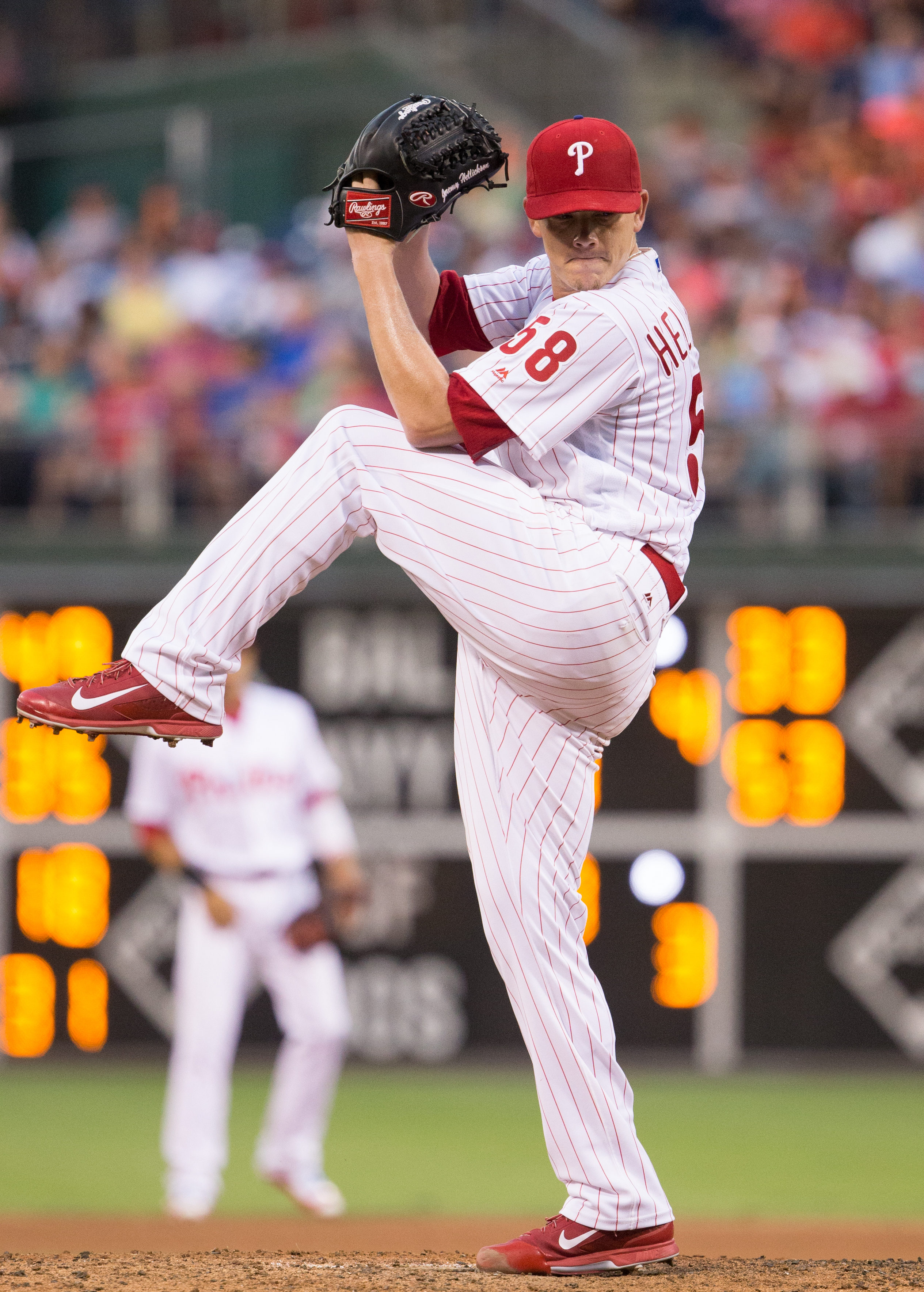
The rotation features some appealing young talent, though the Phillies obviously hoped to relieve the pressure on the arms that will be needed for the long haul. Jeremy Hellickson represented the first major addition when he somewhat surprisingly accepted the qualifying offer issued by the club. While the Phils surely would have been happy to recoup a draft pick, it’s hardly the worst result given the strategy. That said, if the club hopes to cash in on its thus-far worthwhile investment in Hellickson, it’ll need to deal him at the deadline; under the new rules, he’s not eligible for another QO.
Despite the return of Hellickson, the Phillies elected to add Clay Buchholz to a staff that’ll also feature Aaron Nola, Vince Velasquez, and Jerad Eickhoff. There were alternatives to adding another veteran — Jake Thompson reached the majors last year and several 40-man members are throwing at Triple-A — but Philadelphia elected to take on Buchholz in hopes of a resurgence. If he can carry forward his strong work late in 2016 (2.86 ERA over his final 44 innings), then the Phillies can shop him over the summer or perhaps make a qualifying offer at season’s end.
The bullpen saw additions, too, with Pat Neshek coming via trade and Joaquin Benoit arriving from the open market. These elder statesmen both had promising results last year, but also come with questions. Neshek carried a 3.06 ERA while allowing less than one baserunner per inning through his typical blend of few walks and weak contact. But his success was driven by a BABIP-against mark (.216) that was even lower than usual (.236 career), and he was bombed when allowed to face lefties (.240/.321/.646 and ten home runs in just 55 plate appearances). Benoit, meanwhile, allowed just one earned run on 17 hits in his 23 2/3 innings with the Blue Jays, but had struggled with his control and long ball susceptibility over the first half of the season with the Mariners.
With the infield accounted for, Klentak and his charges turned to addressing an outfield that had received meager contributions from the corners in 2016. The first move, acquiring Howie Kendrick, may have been made in part to provide cover in the event that a deal was struck involving Hernandez. But the former second baseman was always penciled in to play left, and that’s where he’ll open the season. A paragon of consistency at the plate for the bulk of his career, Kendrick fell off last season and ended up hitting just .255/.326/.366 — though he did substantially increase his walk rate. While there’s not much upside to him as a left fielder, Kendrick at least represents a sturdy veteran who’ll plug a hole.
Next, the Phils staked a more interesting bet on Michael Saunders, whose deal includes an option for 2018. The 30-year-old was finally healthy and productive last year, though he faded badly after an outstanding start. Still, the overall results — .253/.338/.478 with 24 home runs over 558 plate appearances — were quite good, and Philadelphia would no doubt be pleased with a repeat performance.
That slate of moves was accompanied by the re-signing of veteran infielder Andres Blanco, who has been a handy member of the bench for the past two seasons.
Read more analysis below …
The Inner Monologue of @DimTillard Opening Day
It’s 8:33pm on Monday April 3rd, 2017. (That’s right, it’s 2017 and Mattel still hasn’t delivered on a real Hoverboard) Anyway, the past 3 nights I’ve slept in 3 different hotels in 3 different cities in 3 different states. My schedule has been a little sporadic, so I thought I’d slow things down and type some thoughts for an hour… or at least until the NyQuil does its thing.
8:37pm First off, I’d just like to congratulate all MLB and MiLB players who made an Opening Day roster somewhere! It’s a very special accomplishment, and shouldn’t be taken for granted. And it also means that, after waking up at 5am in spring training for the last 6 weeks … you are now allowed to sleep till noon and go to bed at midnight!
8:41pm Oh yeah, my name is Tim Dillard. And this is the third time logging my Inner Monologue for MLB Trade Rumors. (Part 1 and Part 2) I’m currently watching Opening Day baseball in a hotel in Colorado Springs, Colorado. And I am proud to be on a professional Minor League baseball roster for my 15th season!
8:43pm Making an Opening Day roster anywhere is the equivalent to winning an award! It’s like the end of Star Wars, where Han Solo and Luke Skywalker are awarded medals! The few years I didn’t make an Opening Day roster, I felt a bit more like Chewbacca… who was there and did stuff, but didn’t get a medal. *insert pity party emoji
8:45pm I should really stop using Star Wars analogies though. Cause one time… I had a former friend tell me he didn’t like Star Wars.
8:48pm Just heard a lady swearing out in the hallway! Sounds like she’s upset that her key card doesn’t work. That’s true. That can be frustrating. When you check into a hotel, go up the elevator, drag luggage down the hall, find your room, and the key doesn’t work! #$%^>*&@!
8:50pm Last week I was the odd man out, and played catch with a pitching coach. He looked a little frustrated with me, as I “nonchalantly” tried to make EVERY throw extra hard and extra awesome! I over-do-it throwing with members of the coaching staff for 2 reasons: First, I’m always looking for an opportunity to try and impress the coaches… and I forgot the other reason.
8:55pm The NyQuil may be preparing its magic, so I better type fast.
8:56pm The other day I was fortunate enough to be in Milwaukee to help back up the Brewers for their Exhibition Games before Opening Day! I didn’t get to pitch, but got to soak up several memorable moments!
8:59pm One of the moments was just putting on a Big League Brewers uniform in that clubhouse! Something I haven’t done since July 2012! I began thinking of all the mounds I’ve pitched on, and all the places I’ve been between then and now. Very special.
9:01pm The other moment was something I had never experienced before! After the last Exhibition Game concluded, there was NEARLY zero time to catch my return flight back to the Minor Leagues. So let’s just say, that the person next to me on the 3 and a half hour plane flight could smell a combination of Dubble Bubble and Flexall. Aaaaannd that’s the first time in my career I’ve played a baseball game in one state, and showered in another.
9:07pm Speaking of interesting flights, this past December I was on a plane with PGA golfer Jordan Spieth! Yeah I don’t watch golf, but somebody told me it was him. And that he was famous! So naturally I consulted google after we landed. But it was interesting because, right after I googled him… I looked up, and saw Jordan Spieth looking at me and typing on his phone. Kinda got the feeling he was googling ME.
9:13pm Anyway sorry to name-drop. Not sure why I shared that story. I really don’t like name-dropping that much. In fact, I was talking about that with Ryan Braun last week.
9:15pm Also last week, I made some Latin music videos for Twitter and Instagram. It was fun. But the response I got was incredible! Venezuela, Puerto Rico, Dominican Republic, Panama, even Telemundo in Milwaukee! It’s like no one’s ever seen a gringo perfectly lip-syncing Spanish mega-ballads before! But yes for the record… no habla español.
9:18pm But I did buy Rosetta Stone before I flew to Mexico to play baseball in spring 2013! Only to give up after it constantly taught me how to ask about the current state of the foresting industry in Chile.
9:24pm Hold on, I’m reading NyQuil’s side effects. Interesting. Along with “constipation” and “diarrhea,” one of the side effects is actually, “trouble sleeping.” I guess they have to put those on there to make sure they cover all their bases.
9:27pm Tonight is the Men’s NCAA Basketball Championship! It’s between team such and such, and team yada yada… actually I don’t really know who’s playing. My junior college Alma Mater didn’t make the cut this year, so I don’t really care who wins.
9:30pm Yesterday a teammate asked me how many teams were in the Final Four. Later he asked me how I’ve managed to play baseball as long as I have. My answer to both questions was the same: “Listen man, I really need to take a shower.”
9:34pm This is my 2nd night in Colorado Springs. And after all my recent hard work and exercise in Arizona… today, I was easily defeated by a flight of stairs. Adjusting to 6,000 feet above sea level is no joke. The important thing is to be patient, and wait for the elevator.
To Be Concluded…
Confused? It may or may not help if you read Part I and Part II.
Inside The Draft Room: The 1998 White Sox
Duane Shaffer was involved in many facets of the game during his 36-year stint in the Chicago White Sox organization. He was a pitcher, coach, roving instructor, manager, area scout, supervisor and scouting director after being selected by the club in the 11th round of the 1969 draft.
While he is the answer to the trivia question of “Who was manager Tony La Russa’s first pitching coach?” – Shaffer performed those duties for LaRussa at Double-A Knoxville in 1978 – he is best known in baseball circles for overseeing 17 White Sox amateur drafts from 1991-2007.
“I was fortunate enough to work for Jerry Reinsdorf during most of my time there,” said Shaffer, who is now a pro scout with the San Diego Padres. “He afforded me the opportunity to do pretty much anything I wanted to do. He was a tremendous owner. He was a great guy to work for, and I don’t want that to go unsaid. I appreciate what he did for me when I was there.”
Shaffer’s finest hour as the scouting director – and his greatest opportunity to thank Reinsdorf – took place in 1998, when his draft netted two of the most important pieces on the White Sox’s 2005 World Series championship club.
Heading into that draft, Shaffer had plenty of reasons to be optimistic about the White Sox’s draft position. Although the team wasn’t selecting until the 16th spot, Shaffer was certain that the guy he wanted was going to be sitting there for the taking.
The White Sox also received a supplemental first-round pick (No. 35 overall) and an extra third-round pick due to losing free agent outfielder Dave Martinez – who signed with Tampa Bay.
In 1998, Chicago’s first four selections – Kip Wells, Aaron Rowand, Gary Majewski and Josh Fogg – all went on to see extensive big league action, appearing in a combined 38 major league seasons. That in itself merits attention. But it was a 38th-round draft-and-follow selection named Mark Buehrle that turned this into an outstanding draft for the White Sox.
– – –
On the day of the draft, Shaffer’s plan was to select a college pitcher at No. 16 who could get to the majors quick. The player at the top of his draft board was Kip Wells, a right-hander out of Baylor University.
“Kip Wells was the guy we knew had the best chance of being there when we picked,” Shaffer recalled. “Obviously, you had 15 other guys in front, but doing your homework, you have a good idea who they’re going to take prior to you picking. When it came down to that, he was the guy that we wanted.
“He was a guy that you watched pitch, and he was 91-to-95. Good breaking ball. Had a decent feel for pitching. I saw him pitch a few times that year, and I recollect taking Ron Schueler, the general manager, to go see him. This was at the University of Arizona, down in Tucson. We went over and sat down the third-base line and watched him pitch six or seven innings. He was very impressive. You watched the ball come out of his hand. You watched the breaking ball – and the ease in which he did it. He was a big, loose, lanky kid that just impressed you watching him go about his business. He repeated that on a regular basis. That’s who we targeted.
“As it got closer to our turn, Jeff Weaver – who we had drafted the year before (second round in 1997) – went to the Tigers at No. 14. Then Clint Johnston went right in front of us – he was a Vanderbilt kid, left-handed pitcher, who the Pirates picked. Kip was sitting there for us when we picked. Actually, it ended up being a Kip Wells/Brad Lidge discussion when we got down to it. And we ended up selecting Kip.”
It turned out to be an immediate gratification selection, as Wells was in the majors by the end of the following season. In total, he pitched 12 major league seasons – mostly as a starter – with nine different teams. Lidge, meanwhile, was a big league reliever for 11 years.
Looking back, it’s hard not to notice that four of the 10 players selected immediately before Wells did not see a day in the majors.
Looking back, it’s also hard not to notice that four picks after Wells, the Indians selected a high school left-hander by the name of CC Sabathia.
“I went up and saw Sabathia, and he was a good-looking kid,” Shaffer said. “Hindsight is 20-20, obviously, and you’d love to have him. The problem is we thought he might have trouble throwing a breaking ball. At that particular time, we didn’t want to take a guy who had one pitch in the first round. We thought about him and we talked about him – he was a big strong kid – but we weren’t convinced as a group that he was going to have a really good breaking ball. He ended up doing it, obviously. So if you want to say we missed, yeah, we missed. But I’m happy with Kip Wells and I thought he was a good pick at that time.”
As the draft moved into the supplemental round, the future heart-and-soul of the White Sox’s 2005 championship team was there for the taking. And Shaffer was more than happy to take Cal State-Fullerton outfielder Aaron Rowand at No. 35 overall.

“When he got to us with that pick, I was extremely happy to get a kid like him,” Shaffer said. “I knew the physical tools, but it was the mental side for him. He was going to make himself a big leaguer – no matter what. This kid had tremendous determination to be a good major league player.
“You might ask why I didn’t take him first, and the answer is because I didn’t have to. I knew the market. I knew what was in front of him … I knew what was behind him. When he was there for the taking as the supplemental pick, we were extremely happy – because we knew we were getting a gamer, one of those guys that loved to put the uniform on and do whatever he could do to help a ball club win. Aaron was always like that.
“I just had a really good feeling about him … the way he went about his business … the competition level he played against and excelled in at the Division I level at Fullerton. He was one of those guys … you look at him, and you know this guy is a big leaguer.”
Rowand spent five seasons with the White Sox, two with the Phillies and four with the Giants, earning a pair of World Series rings (2005 with the White Sox and 2010 with the Giants).
Shaffer’s next two selections – right-handed pitchers Gary Majewski (St. Pius X High School in Houston, No. 59 overall) and Josh Fogg (University of Florida, No. 89) – had solid but unspectacular big league careers.
Majewski was a reliever with Expos, Nationals, Reds and Astros from 2004-2010, appearing in 231 games.
“Gary was a good-arm kid. He could let it fly. That’s what we liked about him,” Shaffer said. “Good loose arm, and the ball came out of his hand extremely well. Good, live fastball. This is the separator for me when you talk about the high school kid vs. the college guy at this point. His breaking ball wasn’t great; it was OK. He’d show you flashes. At that particular time of the draft, that’s when you might take a chance on a high school kid. Do you think he’s going to get a good breaking ball? Fortunately for us, he ended up developing a decent breaking ball, and he turned out to be a solid-average major league relief pitcher.”
Fogg had a cup of coffee with the White Sox in 2001 before being traded to the Pirates – along with Wells – as part of a five-player deal in which starter Todd Ritchie was acquired by Chicago. Fogg was mostly a starter with the Pirates, Reds and Rockies from 2002-2009 – with five double-digit victory campaigns to his credit.
“Josh Fogg showed you a good idea of how to pitch,” Shaffer said. “90-to-93. Good off-speed stuff. Repeated well – and that’s the part of it I liked the most. He was a great competitor, and he would be facing the University of Miami or whoever it was – and he’d just handle it as well as he could. He knew when and how to make pitches. I really liked the way he went about his business. And I thought that translated well into a major league pitcher.
“These are the kind of guys that we emphasized as you got down into the draft – and I know the third round is not deep. But at that particular time, when you had multiple picks or supplemental picks, the third round was farther down than it might sound. I liked Josh. I thought he was a good competitor. When he was on the board when we picked right there, I thought that was a good pick. He was a college guy we thought could move fast.”
Offseason In Review: Colorado Rockies
This is the latest entry in MLBTR’s Offseason In Review series. The full index of Offseason In Review posts can be found here.
The Rockies obviously see an opportunity to contend in 2017, and made some hefty commitments over the winter to bolster that possibility. But ongoing pitching questions and a slate of spring injuries have clouded the outlook somewhat.
Major League Signings
- Ian Desmond, IF/OF: five years, $70MM (includes $2MM buyout of $15MM club option)
- Mike Dunn, RP: three years, $19MM (includes $1MM buyout of $6MM club/vesting option)
- Greg Holland, RP: one year, $7MM (includes $1MM buyout of mutual/vesting player option)
- Alexi Amarista, IF: one year, $1.25MM (includes $150K buyout of $2.5MM club option)
- Total spend: $97.25MM.
Trades And Claims
- Acquired RP James Farris from Cubs in exchange for SP Eddie Butler
Extensions
- Nolan Arenado, 3B: two years, $29.5MM (did not extend team control)
Notable Minor League Signings
- Domonic Brown, Matt Carasiti, Stephen Cardullo, Noel Cuevas, Chris Denorfia, Evan Grills, Ryan Hanigan, Mark Reynolds, Josh Rutledge (claimed in Rule 5 draft)
Notable Losses
- Butler, Jorge De La Rosa, Daniel Descalso, Nick Hundley, Ryan Raburn
Rockies Depth Chart; Rockies Payroll Information
Needs Addressed
After addressing the open managerial job with the hiring of Bud Black at the opening of the offseason, the Rockies had a wide-open slate of possibilities. The team could conceivably have pursued a variety of trade scenarios involving such established stars as Carlos Gonzalez and Charlie Blackmon. Instead, the club ended up keeping its core intact and adding the old-fashioned way: through some pretty big spending on the open market.
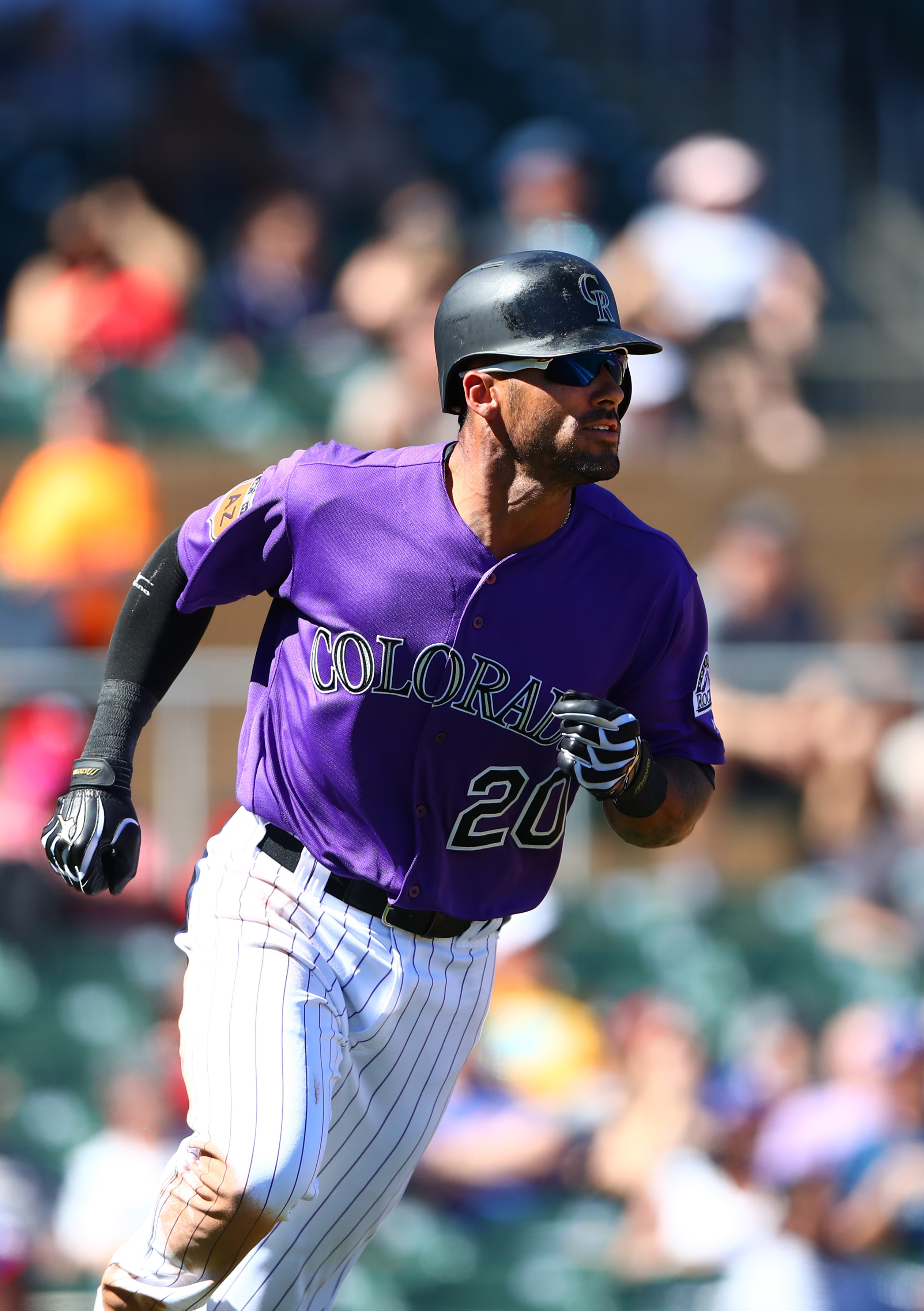
There were two major openings on the position-player side entering the winter: first base and catcher. Colorado elected to plunk down a lot of cash to add a productive veteran, but the player chosen came as quite some surprise. When the news broke that Ian Desmond was headed to the Rockies, it was generally assumed that he’d be playing in the outfield, with one of the team’s left-handed hitters — Gonzalez, Blackmon, Gerardo Parra, or perhaps even David Dahl — likely to be traded to address another need. Instead, the Rox stuck to their initial suggestion that Desmond would play first, though the organization notes that it values his versatility now and into the future. (More on that below.)
Behind the dish, the Rockies bypassed opportunities to pursue veterans via trade or free agency, where names like Matt Wieters, Jason Castro, Welington Castillo and (on the trade front) Brian McCann were available. Instead, the organization decided to rely on Tony Wolters, Tom Murphy, and Dustin Garneau. Murphy, who seems to have the greatest upside of the bunch, will be on the DL to open the year, so the Rockies made a late move to add veteran Ryan Hanigan.
Alexi Amarista was added to replace departing utilityman Daniel Descalso, but otherwise a bunch of friendly faces will be taking the field at Coors. In addition to the outfielders named above, high-power/high-strikeout shortstop Trevor Story is back from injury; Nolan Arenado and 2016 NL batting champion DJ LeMahieu will look to repeat their strong 2016 seasons at third and second base; and Mark Reynolds will return to first base (he re-signed on a minors deal) until Desmond, who suffered a fractured finger in Soring Training, is healthy. Rounding out the bench is Stephen Cardullo, an indy ball find who surprisingly spent time in the bigs last year.
Of course, the lineup was always seen as a strength for Colorado. Entering the winter, most expected the club to focus on pitching. Though the rotation finally had shown signs of life, it wasn’t exactly overloaded with established arms, and the bullpen had some clear holes.
The latter group got the attention that was expected, and then some. In addition to tendering a contract to Jake McGee despite his poor first year with the organization, Colorado gave Mike Dunn a surprising three-year deal and beat the market to roll the dice on Greg Holland, the once-elite reliever who’ll be returning from Tommy John surgery. That makes for one pricey relief corps. When you add the 2017 salaries of those three pitchers to what’s owed Adam Ottavino, Jordan Lyles, Chad Qualls, and the just-designated Jason Motte, the tab for this season alone lands just under $30MM.
But the rotation was another story. Content to keep its lefty-heavy outfield mix intact, and enamored of the relatively untested options on hand, the Rox did not add a single starter over the offseason.
Questions Remaining
The Rockies were arguably justified in staying their hand on adding another piece to the rotation. Entering camp, four spots were firmly accounted for (by Jon Gray, Tyler Anderson, Tyler Chatwood, and Chad Bettis). Beyond that quartet, there were quite a few contenders for the final job. Though adding a veteran to bolster the competition would have been nice, perhaps an appealing target couldn’t be enticed given the arms on hand and the prospect of pitching at Coors Field. And while the trade route surely was at least considered, either a lack of suitable matches or a differing strategy may simply have led the Rockies to a different approach.
Taking that course, though, always meant there’d be a lot of pressure on quite a few young pitchers. Teams know they’ll use more than five starters over the course of a season, so their depth charts must go at least eight or ten arms deep. In the case of the Rockies, outside of the top four arms listed above, the only potential starter in the organization who has more than eight MLB appearances under his belt is Chris Rusin, who thrived last year in a relief role. Prospects Jeff Hoffman and German Marquez are the only others who have seen any major league action at all, with each getting a taste of the bigs last year.
The situation worsened significantly with the terrible news that Bettis would require chemotherapy after his testicular cancer unexpectedly spread. Though he says it’s possible he could return this year, everyone’s first priority will remain Bettis’s well-being. Clearly, the team can’t count on a contribution from the steady performer in 2017.
Thus it was that the Rockies found it necessary to pluck two fresh arms from the farm to open the 2017 season. It seems that Antonio Senzatela (22) and Kyle Freeland (23) will get those jobs, with Marquez functioning as a swingman to open the season. The former was oustanding at Double-A in 2016, but he threw only 34 2/3 innings as the team exercised plenty of caution with a shoulder issue. While he had reached 154 frames in the prior season, asking for 32 starts would be a reach. Freeland, meanwhile, was the eighth overall pick in the 2014 draft. However, he only reached the upper minors last year and didn’t exactly dominate with a 3.89 ERA over 162 innings with 6.0 K/9 against 2.4 BB/9. Also of note: that innings tally represented a big jump after two consecutive partials seasons.
Whenever the next need opens up, the Rockies can turn to Rusin (once he’s healthy), Marquez, Hoffman, and perhaps Lyles. They’ll also be able to dip further into the farm, which includes pitchers such as 40-man members Shane Carle, Yency Almonte, and Zach Jemiola. That may well be sufficient depth, but the Rockies set to tap into an unusually youthful reservoir of starting pitching for an organization that has its sights set on contention.
The ‘pen faces its own questions, but they’re mostly of the typical kind. Overall, the unit has a fair bit of upside despite the recent health issues faced by pitchers such as Holland, McGee, Ottavino, and Qualls; those hurlers will be looking to return while others (Marquez, Carlos Estevez, and Miguel Castro, if he clears waivers) will try to convert impressive raw stuff into effectiveness.
You could say the same of the bulk of the lineup, which has a nice overall blend of stars, solid pieces, and role players. There may be minor quibbles about the lefty-heavy outfield mix — top prospect Raimel Tapia also hits from the left side — and the catching mix is as unestablished as any in baseball. The organization, though, seems to believe in the current catching options. And overall, the the collection of position players seems to be a good one.
Deal Of Note
That includes Desmond, the presumptive first baseman. He ought to be fine there, after all. If he’s a slightly above-average hitter and great baserunner, as he has been, and perhaps adds some value with the glove, he should be a solid-enough performer for the position.
But this is a club that enters the season with a record-setting $120MM payroll — prior to 2015, it had never even reached nine figures — and designs on more than competence. Desmond was the marquee addition, clearly. And teams generally accept that when they sign long-term deals with free agents — at least, those that aren’t abnormally youthful — they’re accepting that they’ll pay a premium later (in the post-prime years of the deal) in order to get a quality, established player on the MLB roster right away.
While we’ve heard plenty of explanations from the Rockies, and from observers, as to why Desmond will work at first base, it still seems an odd decision. Even granting that Desmond is a uniquely high-character player and that he could at least be an average hitter for the slugger’s position (though he’s only a league-average hitter for his career), the move represents a relatively enormous investment that just doesn’t come with much upside up front.
If the Rockies were so enamored of Desmond as a player and a person, perhaps the team ought to have lined up a trade for one of its left-handed-hitting outfielders. It’s reasonable to think that’d have had a reasonable chance of resulting in a pitching upgrade, at least. And it would have allowed the Rockies to take advantage of a free-agent market that was selling quality power bats for next to nothing.
While there’s admittedly some hindsight involved in that assessment, the awkward fit (barring trade) was apparent from the moment the deal was struck. And while Desmond’s future flexibility does carry value, but certainly not enough for that consideration alone to drive the signing. There’s still every chance that the contract will work out for Colorado. But every free-agent signing is a bet, and this one doesn’t seem particularly well-conceived.
Overview
This might all work out; even if not, it’s hard to criticize the Rockies too harshly for pushing some chips in. It’s always good to see a moribund franchise up its investment at an opportune time. And the unique circumstances of Coors Field certainly factor in, too, albeit in hard-to-discern ways. But from here, it doesn’t seem as if the organization got quite as much bang for its hundred-million bucks as perhaps it should have.
What’s your take on the Rockies’ winter? (Link to poll for mobile app users …)
How would you grade the Rockies' winter?
-
C 37% (643)
-
B 36% (624)
-
D 15% (265)
-
F 7% (122)
-
A 6% (103)
Total votes: 1,757
Offseason In Review: Seattle Mariners
Check out all the published entries in our Offseason in Review series here.
The Mariners took steps toward relevance last season, when they finished with the seventh-best record and the fourth-best run differential in the American League. Still, at 86-76, they fell short of the playoffs for a major league-worst 15th year in a row. Team brass is ready to draw that ignominious streak to a close in 2017. Amid an aggressive, trade-packed winter, general manager Jerry Dipoto proclaimed in January that the Mariners are “plainly” in “‘win-now’ mode.” Then, just after the start of spring training in February, club president Kevin Mather declared, “It is time to play October baseball in Seattle.”
Major League Signings
- Marc Rzepczynski, LHP: Two years, $11MM
- Casey Fien, RHP: One year, $1MM
- Total spend: $12MM
Trades And Claims
- Acquired SS Jean Segura, OF Mitch Haniger and LHP Zac Curtis for RHP Taijuan Walker and SS Ketel Marte
- Acquired OF Jarrod Dyson from Royals for RHP Nate Karns
- Acquired OF Mallex Smith and RHP Shae Simmons from Braves for LHPs Luiz Gohara and Thomas Burrows
- Acquired LHP Drew Smyly from Rays for OF Mallex Smith, IF Carlos Vargas and LHP Ryan Yarbrough
- Acquired RHP Yovani Gallardo from Orioles for OF Seth Smith
- Acquired C Carlos Ruiz from Dodgers for LHP Vidal Nuno
- Acquired IF/OF Danny Valencia from Athletics for RHP Paul Blackburn
- Acquired RHP Chris Heston from Giants for a player to be named later
- Acquired LHP James Pazos from Yankees for RHP Zack Littell
- Acquired IF/OF Richie Shaffer and IF/OF Taylor Motter from Rays for 1B Dalton Kelly and RHPs Andrew Kittredge and Dylan Thompson
- Acquired RHPs Rob Whalen and Max Povse from Braves for OF Alex Jackson and Tyler Pike
- Acquired RHP Chase De Jong from Dodgers for IF Drew Jackson and RHP Aneurys Zabala
- Acquired OF Joey Curletta from Phillies for LHP/RHP Pat Venditte
- Acquired LHP Dillon Overton from Athletics for C Jason Goldstein
- Acquired a player to be named later or cash from Rays for C Jesus Sucre
- Claimed C Tuffy Gosewisch off waivers from Braves
- Claimed LHP Dean Kiekhefer off waivers from Cardinals
- Claimed RHP Ryan Weber off waivers from Braves
Notable Minor League Signings
- Mark Lowe, Gordon Beckham, Brad Mills, Micah Owings, Ryan Cook, Steven Baron, Kyle Waldrop, Josh Judy, Jean Machi, Nick Hagadone, Caleb Cotham
Extensions
- None
Notable Losses
Walker, Marte, Karns, Nuno, Seth Smith, Nori Aoki, Franklin Gutierrez, Dae-ho Lee, Adam Lind, Drew Storen, Chris Iannetta, Tom Wilhelmsen, Arquimedes Caminero
Mariners Roster; Mariners Payroll Information
Needs Addressed
In his second offseason at the helm of the Mariners, Dipoto swung a whopping 15 trades, several of which figure to hugely impact the team’s chances this year. None should carry as much weight as the late-November, four-major leaguer swap that saw the Mariners give up high-potential right-hander Taijuan Walker and unproven shortstop Ketel Marte for a fellow shortstop who has shown flashes of brilliance, Jean Segura, and untested outfielder Mitch Haniger.
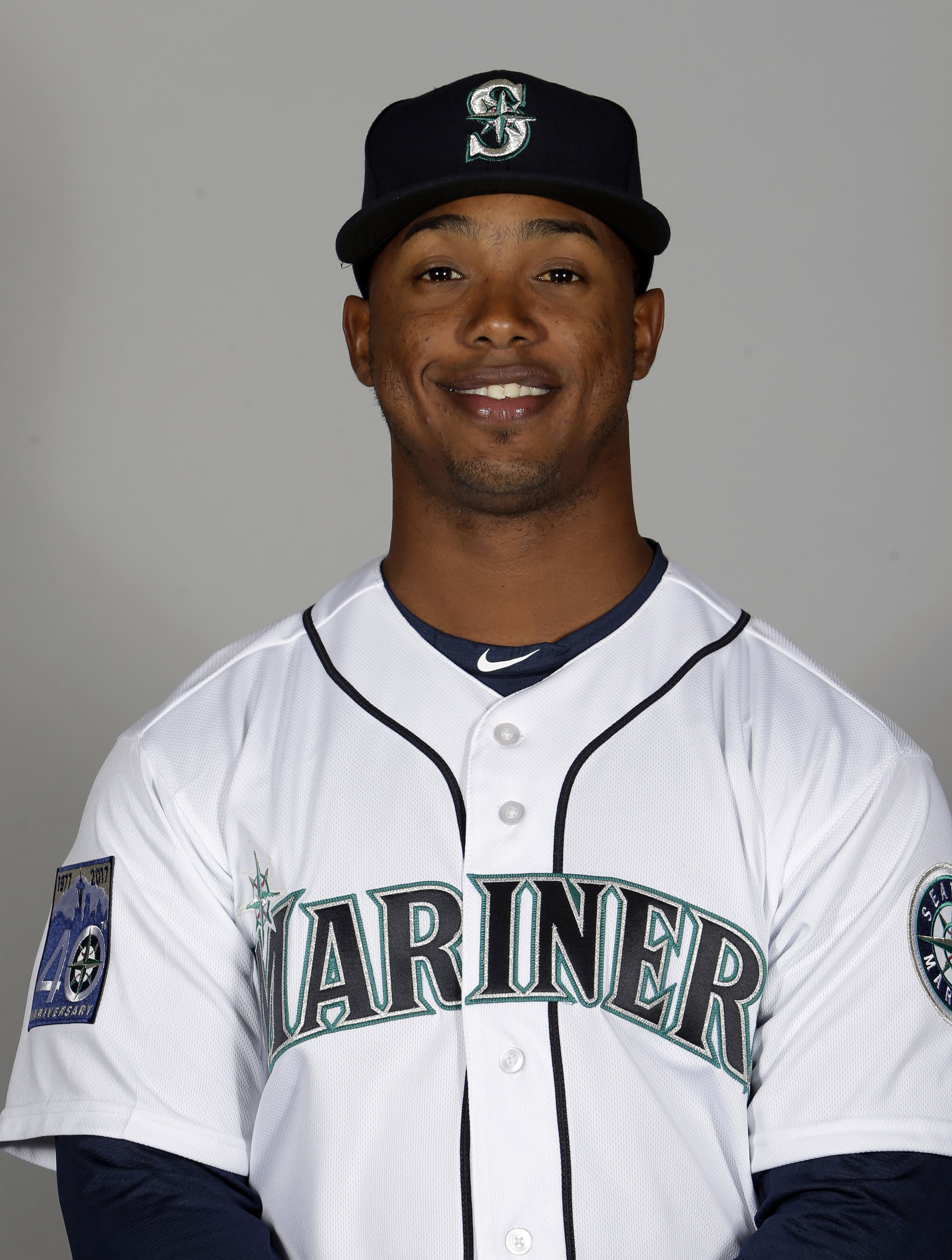
In theory, Segura shouldn’t have difficulty serving as an upgrade over Marte, whose .259/.287/.323 batting line in 466 plate appearances made him one of the majors’ least valuable shortstops last season. However, Segura posted a near-identical line as a Brewer from 2014-15 (.252/.285/.331 in 1,141 PAs) before stunningly breaking out in Arizona last year. His success as a Diamondback came thanks in part to better pitch selection (he swung at fewer pitches than ever, both in and out of the strike zone, yet still made contact at a rate in line with career norms) and an emphasis on elevating the ball. Segura’s ground-ball rate dropped roughly 6 percent from the previous two years, while both his fly ball and line drive marks rose. That led to more hard contact and a sizable uptick in power, evidenced by career bests in home runs (20) and ISO (.181), and a stellar .319/.368/.499 line in 694 trips to the plate.
Both Segura’s production with the bat and his baserunning prowess (he stole 33 of 43 bags and ranked 15th in FanGraphs’ BsR metric) made him of the premier second basemen in baseball in 2016. Now, with superstar Robinson Cano locking down the keystone, Segura will play shortstop in Seattle. The 27-year-old has plenty of experience at short, where he lined up in Milwaukee and graded as a passable defender (two Defensive Runs Saved, minus-10.6 Ultimate Zone Rating in 4,253 innings). Segura’s work at the plate will draw more scrutiny, though, and if the gains he made last year prove sustainable, he and Cano will give the Mariners an elite middle infield.
As the most established players in the deal, Segura and Walker understandably drew the lion’s share of attention when Seattle and Arizona consummated the trade. But don’t sleep on Haniger, who will open 2017 as the Mariners’ right fielder. Haniger, 26, got his first taste of major league action last season and hit a forgettable .229/.309/.404 in 123 PAs, though he wasn’t necessarily overmatched (he did log approximately average strikeout and walk rates to go with a slightly above-average ISO). Plus, Haniger has a history of raking at the minor league level. At Triple-A Reno last year, he slashed a video game-like .341/.428/.670 in 312 attempts. It’s true that Haniger posted those numbers in the notoriously hitter-friendly Pacific Coast League, but wRC+ indicates his line was an incredible 85 percent better than the PCL average. Dipoto took notice.
“By the numbers, (Haniger) was able to show that he was the best offensive player (last year) in the minor leagues at any level,” Dipoto told Bob Dutton of the Tacoma News Tribune in January. “He’s also a right-handed batter, and we acquired him for that reason. Mitch is also the one that brings with him a skill set that includes power, and he’s got on-base ability.”
While it’s up in the air how much Haniger will boost the Mariners’ offense this season, odds are he’ll at least help their defense. Back in November, Kyle Glaser of Baseball America (subscription required and recommended) wrote that Haniger is a “good athlete” with “good range” and an “above-average arm.” The Mariners lacked quality defense in right last year, when their primary options – Seth Smith, Franklin Gutierrez and Nelson Cruz – combined for minus-10 DRS and a minus-9.1 UZR.
Seattle was even worse off in left, where Nori Aoki and Smith racked up minus-12 DRS and a minus-10.3 UZR between them. Those two are now out of the organization, and another trade acquisition, ex-Royal Jarrod Dyson, will take over as the Mariners’ No. 1 left fielder. The pickup of Dyson typifies the Mariners’ win-today philosophy – the 32-year-old is only signed through this season, while the player they gave up for him, 29-year-old righty Nate Karns, is controllable through the 2020 campaign.
In previewing Seattle’s offseason in October, I wrote, “Ideally for the Mariners, they’ll upgrade their position player group during the offseason with better defenders and baserunners who can also contribute offensively.” Dyson certainly checks two of those boxes. He’s not much of a hitter (.260/.325/.353 line in 1,539 lifetime PAs), but his defensive and baserunning excellence should combine to make him a valuable addition for the Mariners. Going back to 2012, the first year in which he saw extensive big league action, Dyson has amassed 53 Defensive Runs Saved and a 55.5 UZR – both of which rank among the league’s top seven outfielders over the past half-decade. On the base paths, the speedster swiped between 26 and 36 bags in each of the previous five seasons. He also finished last year with a 5.4 BsR, which placed 19th in the majors.
The other notable newcomer to the Mariners’ starting lineup is Danny Valencia, whom they acquired from the AL West rival Athletics for nondescript pitching prospect Paul Blackburn. The plan was for the right-handed Valencia to platoon with the lefty-hitting Dan Vogelbach at first base, but the former will instead open the season as the everyday option there in the wake of the latter’s minor league demotion. It’s possible the Mariners’ faith in Vogelbach will come back to haunt them. Their offseason belief that he was ready for the majors stopped them from pursuing affordable left-handed hitters like Mitch Moreland, Brandon Moss and Pedro Alvarez, any of whom could have teamed with Valencia to form a satisfactory platoon. On the other hand, Valencia won’t need a partner if his recent success against same-handed pitchers continues. Once unusable versus righties, the 32-year-old combined for a .795 OPS in 602 PAs against them from 2015-16. With his performance against lefties factored in, Valencia quietly hit a tremendous .288/.346/.477 in 895 PAs during the previous two years. That type of production would certainly play at first, where the Mariners will try to hide the defensively challenged third baseman/outfielder.
Click to continue…
Offseason In Review: San Diego Padres
This is the latest entry in MLBTR’s Offseason In Review series. The full index of Offseason In Review posts can be found here.
While the rebuilding Padres still owe a ton of money to high-priced veterans Matt Kemp and James Shields, who were traded away last season, the players on the current team will make approximately $30MM in 2017. That’s less than the salary of Clayton Kershaw, who they’ll face off against on Opening Day and likely several more times during the season. It’s no surprise that they’re the favorite to land the No. 1 pick in the 2018 Amateur Draft, but that’s all part of the plan.
Major League Signings
- Trevor Cahill, SP: One year, $1.75MM
- Jhoulys Chacin, SP: One year, $1.75MM
- Clayton Richard, SP One year, $1.75MM (re-signed)
- Jered Weaver, SP: One year, $3MM
- Total spend: $8.25MM
Notable Minor League Signings
Trades And Claims
- Traded C Derek Norris to Nationals for P Pedro Avila
- Claimed P Tyrell Jenkins from Reds
- Claimed P Zach Lee from Mariners
- Lost RP Leonel Campos off waivers to Blue Jays
Rule 5 Draft
- Selected INF Allen Cordoba from Cardinals
- Selected P Justin Haley from Red Sox; traded to Brewers
- Acquired C Luis Torrens from Reds via Yankees
- Acquired RHP Miguel Diaz from Twins via Brewers
Extensions
- 1B Wil Myers: Six years, $83MM, plus $20MM club option in 2023 ($1MM buyout)
- 2B/3B Yangervis Solarte: Two years, $7.5MM, plus $5.5MM club option in 2019 ($750K buyout) and $8MM club option in 2020 ($750K buyout)
Notable Losses
- Alexi Amarista, Jon Jay, Derek Norris, Adam Rosales, Tyson Ross, Carlos Villanueva
Needs Addressed
Despite having one of the best farm systems in baseball, the Padres are light on pitching prospects who are ready to contribute at the Major League level in 2017. With a talented (if largely unproven) core of young position players, led by first baseman Wil Myers, and a strong bullpen, the top priority of this offseason was to fill out the starting rotation with inexpensive veterans who can eat innings and possibly pitch well enough to draw trade interest.
At a cost of just over $8MM, they were able to fill four rotation spots for the upcoming season by signing free agents Trevor Cahill, Jhoulys Chacin, Clayton Richard and Jered Weaver to one-year deals. This rotation won’t make them a contender or even a .500 team. But each has experienced a good level of Major League success and should be able to keep games from getting out of hand on a consistent basis. At least that’s what the Padres are hoping for.
Cahill was once on his way to being one of the better young pitchers in baseball—he finished 9th in the AL Cy Young race in 2010—but his career quickly went south. He bounced back in 2016 with a terrific season out of the ‘pen for the World Champion Cubs and now the Padres are giving the 29-year-old a chance to prove he can maintain that success while returning to a starting role. Chacin, also 29 years old and a once-promising pitching star for the Rockies, is trying to resurrect his career with a return to the NL West. He had a strong finish to the 2016 season (0.75 ERA over last four starts) and has a strong track record against the Padres’ division opponents. Richard signed with the Padres late last season after being released by the Cubs and impressed with a 2.52 ERA over 53.2 innings. He has not started more than nine games in a season since 2013, the last year of a four-season stint with the Padres. In Weaver, the Padres brought in a former ace who is trying to succeed with a low-80’s fastball.
Luis Perdomo, a Rule 5 success story in 2016, will be the No. 5 starter, although he’ll likely have an innings limit after logging less than 150 innings as a rookie. Former prospects Jarred Cosart, Tyrell Jenkins and Zach Lee could also work their way into the mix at some point, as will rookies Dinelson Lamet and Walker Lockett. The Padres’ pair of elite pitching prospects, Anderson Espinoza and Cal Quantril, are likely slated for High-A and won’t reach San Diego anytime soon.
The team’s highly suspect rotation will likely be one of, if not the worst, in baseball. But when they do hand a lead over to the bullpen, as rare as that might be, the Padres should be able to hold on for the win on most occasions. If Carter Capps can return to his pre-injury form—he had a 1.16 ERA, 2.0 BB/9 and 16.8 K/9 in 31 innings in 2015 before an elbow injury that required Tommy John surgery—the Padres could have themselves quite an effective group of late-inning arms. Along with Capps, who is expected to start the season on the DL, closer Brandon Maurer and lefty setup men Ryan Buchter and Brad Hand will all be highly-coveted by playoff contenders and could prove to be valuable trade chips in July. Veteran Craig Stammen, signed to a Minor League contract in the offseason, could also end up attracting trade interest if his spring performance (11.2 IP, ER, 12 K) is any indication of a return to form.
While the Padres are mostly sticking with their young position players, they did make one notable offseason addition in veteran Erick Aybar, who came to camp on a Minor League deal and ended up beating out Luis Sardiñas for the starting shortstop job. He’ll be yet another one-year stop-gap—Clint Barmes and Alexei Ramirez were the team’s Opening Day shortstops in 2015 and 2016, respectively—as Preller continues his search for the team’s shortstop of the future.
Aybar’s double-play partner will be Yangervis Solarte, who is shifting over from third base, while Ryan Schimpf (.533 slugging percentage in 330 MLB plate appearances) and former 1st Round draft pick Cory Spangenberg are competing for time at the hot corner. Top prospects and NL Rookie of the Year candidates Manuel Margot and Hunter Renfroe, who each had late-season MLB auditions in 2016, are expected to step into regular roles in the Padres’ outfield with Jabari Blash, Alex Dickerson—once he returns from the disabled list—and Travis Jankowski each getting plenty of opportunities to prove that they should be a part of the team’s future.
Behind the plate, Padres fans will finally get to see Austin Hedges, one of the most highly-touted defensive catching prospects in recent memory, on a regular basis. After spending 2015 as Derek Norris‘ backup and most of last season in the minors, he’ll get the bulk of playing time in 2017 with Norris out of the picture, Christian Bethancourt splitting time between the bench and the bullpen, and 20-year-old Rule 5 draftee Luis Torrens expected to mostly watch and learn, having never played a game above Low-A ball.
More analysis after the break …
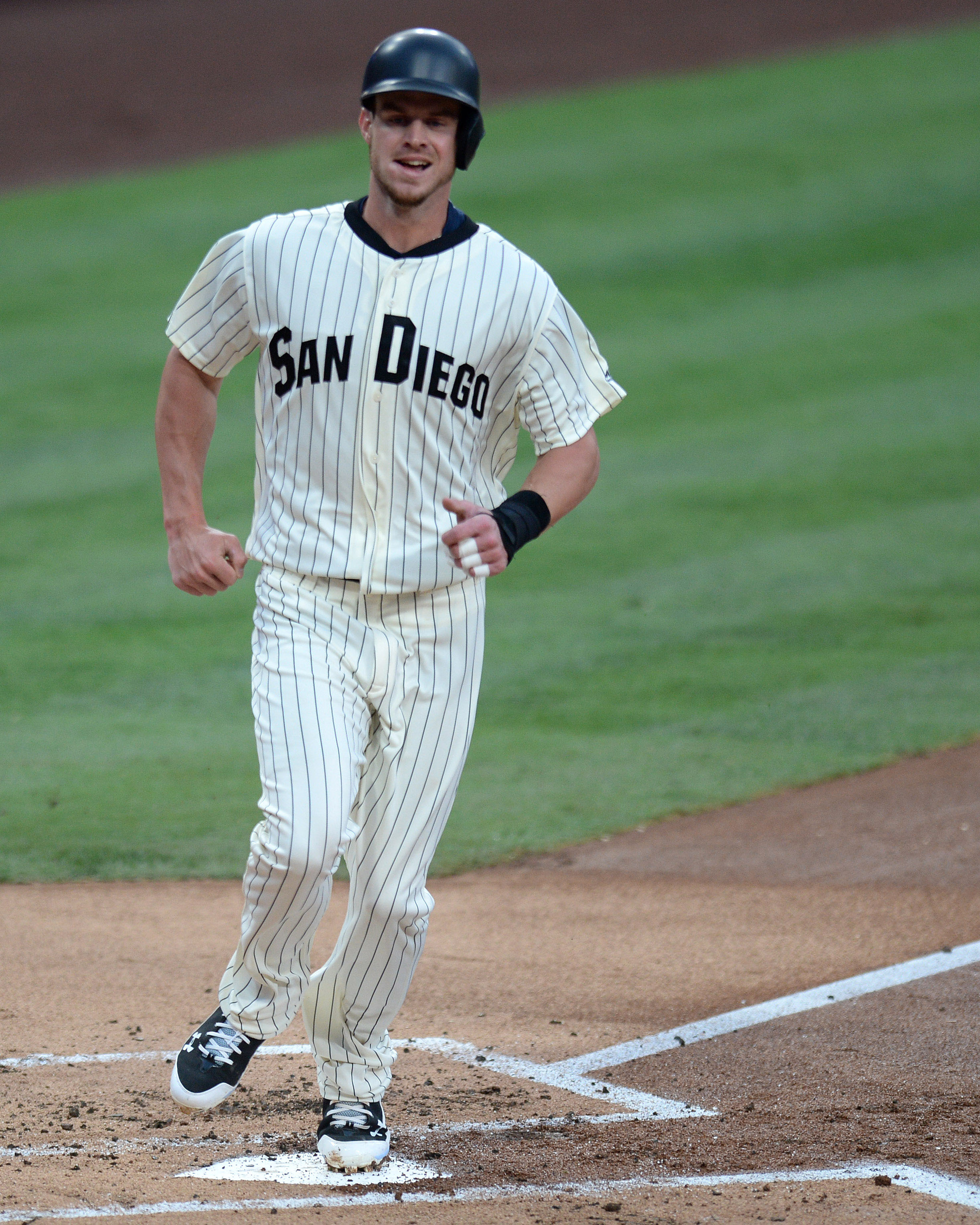
Offseason In Review: Baltimore Orioles
This is the latest entry in MLBTR’s Offseason In Review series. The full index of Offseason In Review posts can be found here.
The Orioles bought back a number of familiar faces for the 2017 team, most notably the league’s top home run hitter.
Major League Signings
- Mark Trumbo, 1B/OF: Three years, $37.5MM
- Welington Castillo, C: Two years, $13MM (second year is a $7MM player option)
- Total spend: $50.5MM
Trades And Claims
- Acquired OF Seth Smith from Mariners for SP Yovani Gallardo and cash
- Acquired LHP Vidal Nuno from Dodgers for RHP Ryan Moseley
- Acquired RHP Alec Asher from Phillies for a player to be named later
- Acquired LHP Richard Bleier from Yankees for cash or a player to be named later
- Acquired RHP Logan Verrett from Mets for cash considerations
- Acquired RHP Gabriel Ynoa from Mets for cash considerations
- Selected OF Aneury Tavarez from Red Sox and OF Anthony Santander from Indians in the Rule 5 Draft (Tavarez has since been placed on waivers)
Notable Minor League Signings
- Pedro Alvarez, Robert Andino, Andrew Bellatti, Michael Bourn, Alex Castellanos, Michael Choice, Chris Dickerson, Juan Francisco, Craig Gentry, Johnny Giavotella, Paul Janish, Chris Johnson, Steve Johnson, Jesus Montero, Tomo Ohka, Logan Schafer, Zach Stewart
Extensions
- None
Notable Losses
- Gallardo, Matt Wieters, Steve Pearce, Tommy Hunter, Brian Duensing, T.J. McFarland, Drew Stubbs, Vance Worley, Christian Walker
Baltimore Orioles Depth Chart; Orioles Payroll Overview
Needs Addressed
After a giant spending splurge in the 2015-16 offseason, the Orioles quieted things down with a more traditional Dan Duquette winter. The Orioles executive VP of baseball operations focused mostly on his usual tactics of lower-level transactions and waiting until later in the offseason to enact major business.
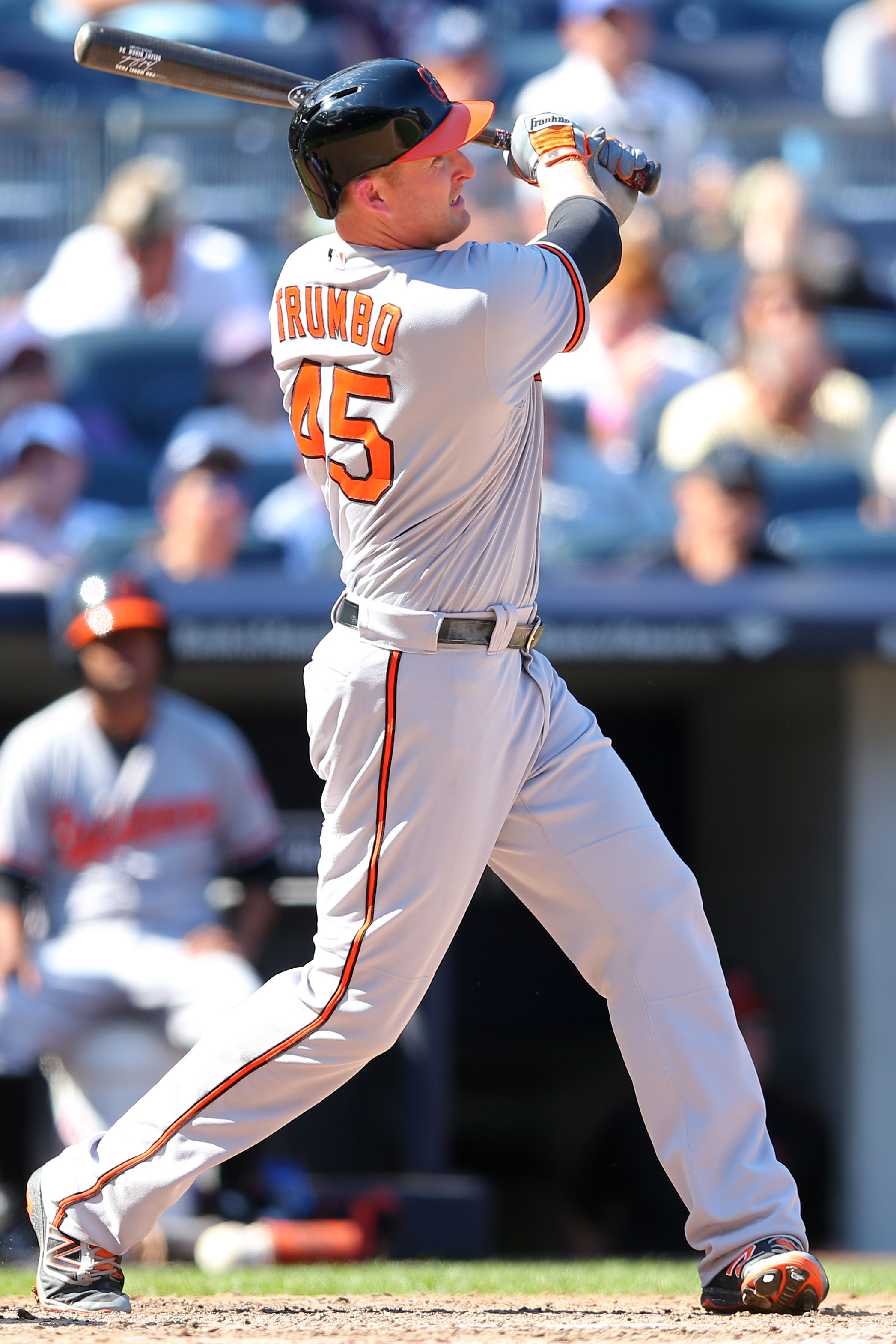
The waiting game may have allowed Baltimore to save a significant chunk of money in negotiations with Mark Trumbo. The two sides were connected in talks for much of the offseason, with the O’s reportedly making Trumbo an offer in the range of $52MM-$55MM over three or four guaranteed years but then pulling that offer a couple of weeks later.
Trumbo was said to be looking for a deal north of $70MM, though the slugger’s market was hampered by a number of factors — draft pick compensation tied to rejecting the qualifying offer, a number of other big 1B/OF/DH types available in free agency, and a general league-wide downturn in offseason spending due, in part, to the new collective bargaining agreement’s stricter luxury tax rules. Trumbo drew some interest from the A’s and the Rockies, though with apparently no other major suitors stepping forward, he returned to the Orioles for three years and $37.5MM.
Trumbo thrived in his first season at Camden Yards, clubbing a league-high 47 homers and hitting .256/.316/.533 over 667 plate appearances. With the Orioles building up a lot of corner outfield depth, it looks as if the majority of Trumbo’s bats will come as a DH this season, so his shaky glovework will no longer be dragging down his value.
Seth Smith is the biggest new face in the Baltimore outfield, joining the team in a trade that sent rotation disappointment Yovani Gallardo to Seattle. Smith is himself a question mark defensively (-16.6 UZR/150 and -7 Defensive Runs Saved last season, after a career of average corner outfield grades) but he’ll only be in the lineup against right-handed pitching. The Orioles are intending to platoon both corner outfield between left-handed bats Smith and Hyun Soo Kim and right-swinging Joey Rickard and Craig Gentry, with the latter duo providing more speed and defense than pop at the plate.
Trumbo and Smith ended up being the answers to the Orioles’ search for outfield and DH help this winter, a search that led the team to check in on such names as Curtis Granderson, Jay Bruce, Mike Napoli, Chris Carter, Brandon Moss, and perhaps even Jose Bautista (Duquette’s unusual public statement describing Bautista as a poor fit in Baltimore notwithstanding). Gentry’s emergence as a viable big league roster piece has also been a boost for the O’s, with Gentry enjoying a good spring as he rebounds from two injury-plagued years.
Gentry is one of many notable MLB veterans signed to minor league deals this winter, a list that includes both newcomers to the organization (such as Jesus Montero, Johnny Giavotella and Gentry himself) and re-signed Orioles like Michael Bourn, Paul Janish and Pedro Alvarez. Assuming the bulk of these veterans remain in the organization rather than opt out, the O’s now have some experienced depth on hand should injuries develop, or if a change if needed within the many moving parts of the outfield platoon.
The Orioles had some light talks with Matt Wieters as their longtime catcher’s free agent wait extended into February, though really, the chances of a reunion between the two sides ended when Welington Castillo was signed in December. Castillo ended up being rather an unexpected solution to Baltimore’s catching search, as the Diamondbacks surprised many by non-tendering the veteran backstop rather than pay him a healthy (an MLBTR-projected $5.9MM) salary in his final year of arbitration.
When Castillo hit the market, the O’s turned away from such rumored targets as Nick Hundley and Chris Iannetta to ink Castillo to a deal that could turn into a two-year, $13MM commitment if Castillo exercises his 2018 player option. Top prospect Chance Sisco could be ready for the majors as soon as this summer, so Castillo provides Baltimore with a short-term veteran behind the plate until Sisco is ready.
Questions Remaining
For all the Orioles’ depth options, they’re still rather light on right-handed hitting outfielders, given Rickard’s inexperience and Gentry’s injury history. Trumbo can play the outfield in a pinch, of course, though that leaves the DH spot open (possibly for Alvarez). Steve Pearce, who left in free agency to join the Blue Jays, would’ve helped in this regard as a lefty-mashing bat who could provide depth in both corner spots, not to mention first or second base.
Angel Pagan was reportedly in agreement with the O’s on a major league contract this winter before he failed the team’s infamously difficult physical. Though the switch-hitting Pagan has more recently hit better from the left side of the plate, he could have been a more stable part-time addition than Gentry or Michael Choice.
Gallardo didn’t deliver much in his lone season in an Orioles uniform, and the fact that the O’s were able to save a bit of money on Gallardo’s contract and obtain a useful asset in Smith already makes that trade an on-paper victory. Still, Gallardo’s departure further thins out an already-questionable rotation. The Orioles’ lack of pitching depth is already being tested since Chris Tillman will start the season on the DL with a shoulder issue, and while the injury isn’t thought to be too serious, Tillman is expected to miss as much as a month of action.
Beyond the solid Kevin Gausman, the Orioles will deploy Ubaldo Jimenez and Wade Miley in search of bounce-back seasons and former top prospect Dylan Bundy is finally tapped for a rotation job after years of arm problems. The O’s have a host of candidates to fill in for Tillman (Tyler Wilson, Mike Wright, Chris Lee, Alec Asher, Gabriel Ynoa, or Logan Verrett) though this list is much longer on potential than on any sort of established track record in the big leagues. The fact that Asher was just acquired so close to the end of Spring Training may indicate that the O’s aren’t satisfied with their internal options. The team can make do until Tillman gets back, though pitching may again be an issue if there are any further injuries or performance struggles in the rest of the rotation.
The lack of any significant pitching upgrades stands out as the only real question of Baltimore’s offseason. The club is obviously counting on Bundy to live up to his promise and on Jimenez/Miley to pitch more effectively, though that’s quite a bit of risk for a team that plans on contending in 2017. The Orioles have been consistent postseason threats in the Duquette era despite a lack of top-shelf pitching, yet while one could say that they haven’t been in need of top arms to consistently win, the counter-argument is that this lack of a truly strong rotation has held the Orioles back from true consideration as World Series contenders.
Looking at the bullpen, Baltimore is going with an interesting collection of young arms to back up its dominant top four of Zach Britton, Brad Brach, Mychal Givens, and Darren O’Day. Vidal Nuno, Donnie Hart and Jayson Aquino are all lefties, and while the Orioles could keep two in their pen (since Britton obviously won’t be used for situation work), that third leftover arm could potentially be a trade chip, in my opinion.
Speaking of bullpen trades, the Orioles at least considered the idea of moving Brach in a deal for an outfielder this winter. Brach drew interest from the Mets as part of the Granderson/Bruce talks and the Braves also asked about Brach’s services, with the O’s wanting Mallex Smith in return. Clearly the Orioles had a pretty big price tag on Brach’s services, though it’s interesting to speculate about the team’s long-term bullpen plans if Brach was a potential trade chip and extension talks with Britton only seemed to go as far as two years with a club option.
The even larger extension question looming over the O’s is Manny Machado, as the two sides reportedly didn’t have much discussion about keeping the superstar beyond his scheduled entry into the free agent market after the 2018 season. Quite a bit of money comes off the Orioles’ books next winter (Jimenez, Tillman, Smith and potentially Castillo and J.J. Hardy) so the club could be waiting to address those potential roster holes before fully exploring the $300MM+ commitment required to lock up Machado.
Deal Of Note
Despite 22 homers and a solid .249/.322/.504 slash line in 376 PA last season, Alvarez ended up settling for a minor league contract in a familiar environment. The cold market for sluggers played a factor, though Alvarez has also not brought much to the table aside from power over his seven-year career, delivering low averages and OBP numbers as well as poor defensive metrics as a first and third baseman.
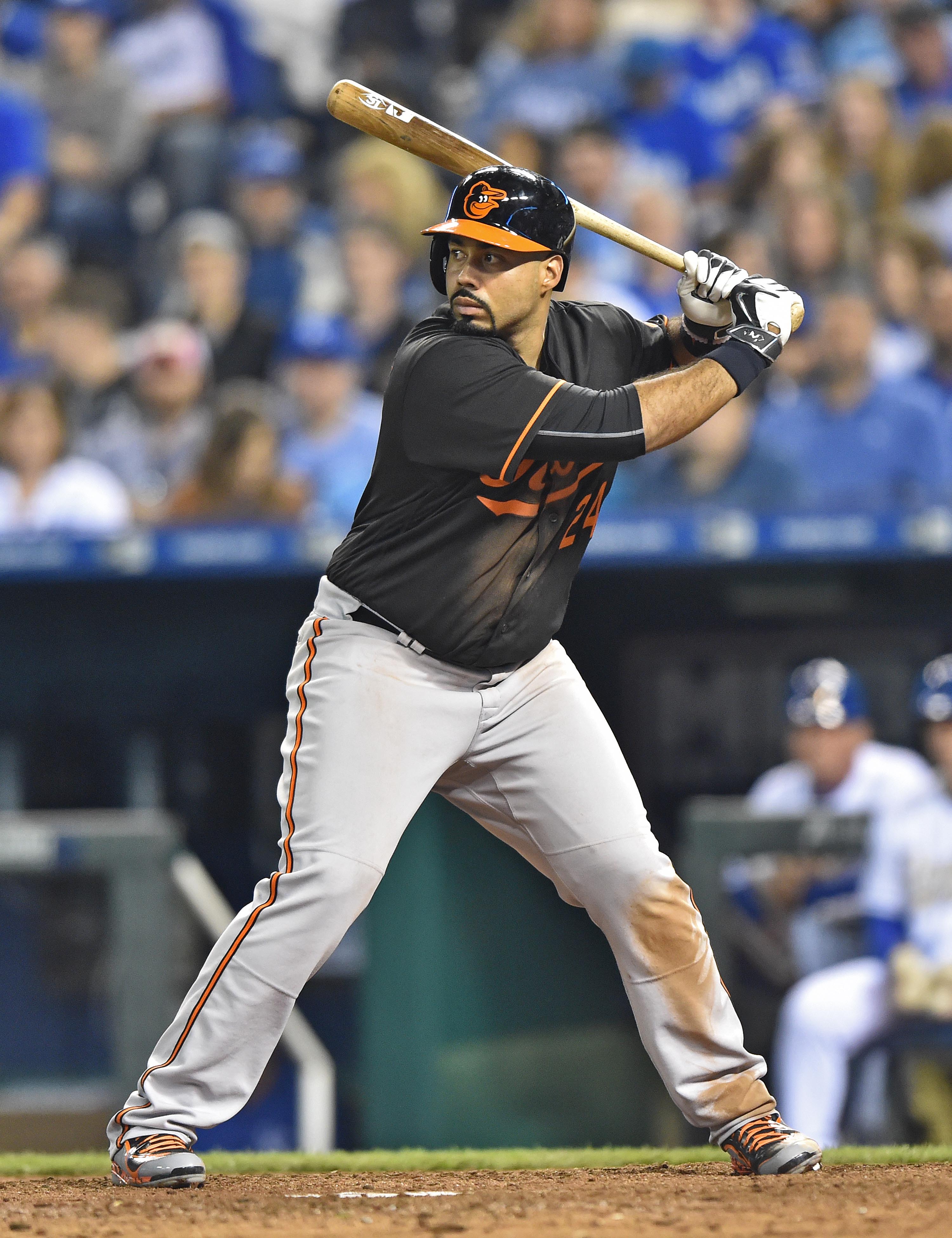
With these limitations in mind, Alvarez looked to improve his versatility by working out as an outfielder this winter. Alvarez isn’t a speedster, though he also isn’t quite a lumbering slugger type; as per Fangraphs’ BsR metric, Alvarez has been an above-average baserunner in each of the last two seasons.
The Orioles made outfield defense a priority this winter, though as shown in the past with Trumbo, Kim and now even Smith, the team is willing to put up with some degree of subpar glovework if a player can hit. It remains to be seen if Alvarez can viably handle corner outfield duty, though if not, he is stuck behind Trumbo, Chris Davis, and rookie Trey Mancini in the first base and DH mix.
Overview
The Orioles didn’t feel the need to overhaul a roster that was good enough to win a wild card berth, and given Duquette’s knack for finding hidden gems, it’s likely that at least one or two of his under-the-radar moves will prove to be quality additions. The real heavy lifting for the team may come next winter when, as mentioned earlier, they’ll face some big free agent departures and Machado and Britton will both be one year away from the open market.
How would you evaluate the Orioles’ winter moves? (Link for app users.)
How would you grade the Orioles offseason?
-
C 40% (853)
-
B 35% (755)
-
D 13% (271)
-
F 6% (131)
-
A 6% (120)
Total votes: 2,130
Photos courtesy of USA Today Sports Images.
Offseason In Review: Miami Marlins
This is the latest entry in MLBTR’s Offseason In Review series. The full index of Offseason In Review posts can be found here.
Faced with the daunting prospect of making up for the tragic loss of Jose Fernandez, the Marlins focused on bolstering their pitching staff in hopes of staging an elusive run at the postseason.
Major League Signings
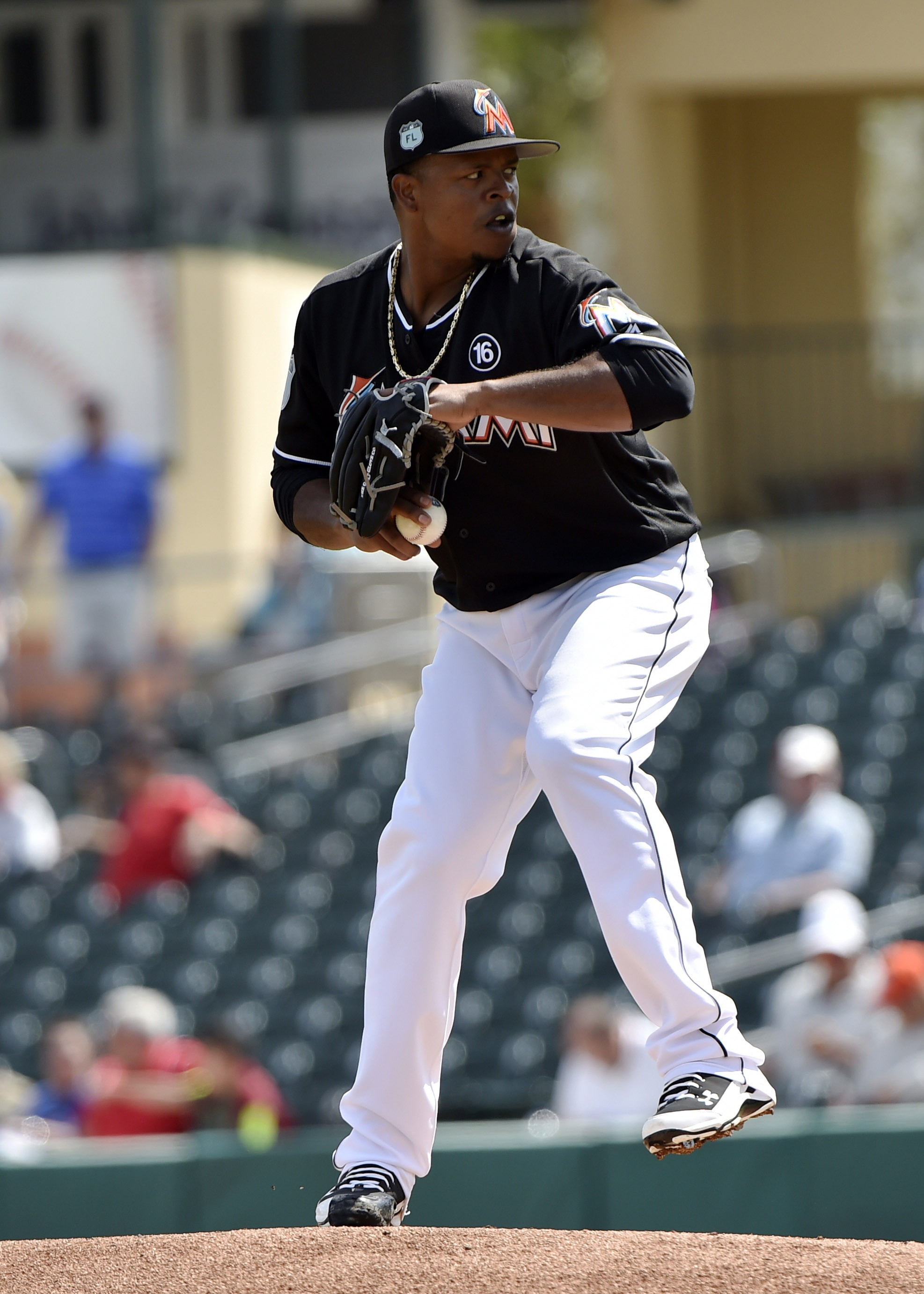
- Edinson Volquez, SP: two years, $22MM
- Brad Ziegler, RP: two years, $16MM
- Junichi Tazawa, RP: two years, $12MM
- Jeff Locke, SP: one year, $3MM
- A.J. Ellis, C: one year, $2.5MM
- Dustin McGowan, RP: one year, $1.75MM
- Total spend: $57.25MM.
Trades And Claims
- Acquired SP Dan Straily from Reds for SP Luis Castillo, SP/RP Austin Brice, OF Isaiah White
- Acquired RP Severino Gonzalez from Phillies for PTBNL/cash
- Claimed RP Elvis Araujo from Phillies (later released to pursue opportunity in Japan)
Options Exercised
- Ichiro Suzuki, OF: $2MM (added $2MM club option for 2018)
Notable Minor League Signings
- Brandon Barnes, Ramon Cabrera, Scott Copeland, Brandon Cunniff, Matt den Dekker, Stephen Fife, Javy Guerra, Ryan Jackson, Kyle Lobstein, Steve Lombardozzi, David Lough, Nick Maronde, Kelvin Marte, Tyler Moore, Caleb Thielbar
Extensions
- Martin Prado, 3B: three years, $40MM (reported late in 2016 season)
Notable Losses
- Andrew Cashner, Chris Johnson, Mike Dunn, Jeff Francoeur, Cole Gillespie, Jeff Mathis, Fernando Rodney
Marlins Roster; Marlins Payroll Information
Needs Addressed
The Marlins pushed to contend in 2016, but as the campaign drew to a close, it seemed destined to be defined by on-field disappointment. Then came the unthinkable, late-season death of Fernandez at just 24 years of age. His loss continues to tell in myriad ways.
A move back toward stability, though, came not long after Fernandez’s passing, when the club reached agreement on a deal to keep third baseman Martin Prado off of the upcoming open market. It was hardly a bargain rate for the sturdy (if unspectacular) performer, but Miami clearly prioritized his steadying presence at third and in the clubhouse. Prado is entering his age-33 season, but is a well-balanced player who has compiled consecutive 3+ WAR campaigns.
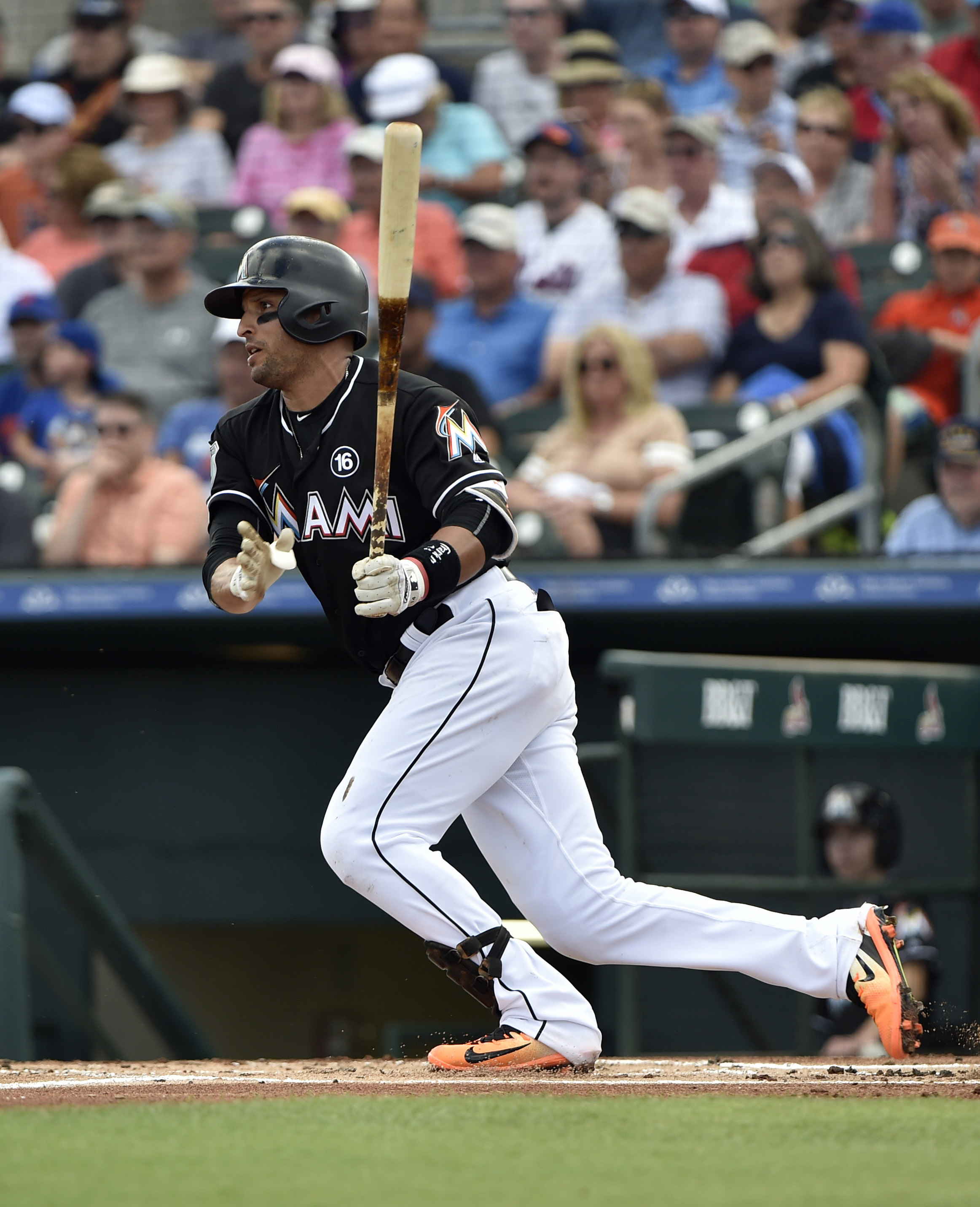
The Prado deal kicked off the winter a little early, and signaled clearly that the Marlins were intent upon continuing to add to their controllable core. But it also represented the organization’s only significant move on the position-player side of the equation. Otherwise, the club brought back Ichiro Suzuki after his surprisingly productive season (or was it, really?) at 42 years of age. And a largely parallel change was made in the catching corps, with veteran A.J. Ellis stepping in for the departing Jeff Mathis.
From that point forward, it was all about arms. Mid-season trade acquisitions Andrew Cashner and Fernando Rodney were allowed to leave after disappointing tenures, and key setup lefty Mike Dunn found big money with the Rockies. In the aggregate, there were multiple openings in both the rotation and the bullpen.
Miami directed fairly significant investments to both sides of the pitching staff. The 2017 rotation will feature at least two new members. Edinson Volquez, 33, landed a two-year deal off of the free-agent market, while Dan Straily brings four years of control — the first at the league minimum — with him from the Reds. (When Colin Rea was shipped back to the Padres after coming down with an injury last summer, the Marlins lost the controllable arm they wanted but also got back the key prospect — Luis Castillo — used to get Straily.) If he can overcome biceps tendinitis, bounceback free-agent signee Jeff Locke could also factor in the rotation mix, though he may be slated for long relief duty once he returns from a biceps problem.
There are numerous new faces in the bullpen, too. Brad Ziegler and Junichi Tazawa both join the late-inning mix on two-year deals, joining holdovers A.J. Ramos (the closer), Kyle Barraclough (who gives up gobs of walks but also generates tons of swinging strikes), and David Phelps (who was suddenly outstanding last year and is capable of throwing multiple innings). The Marlins held onto Dustin McGowan with a fairly low guarantee after he turned in 67 innings of 2.82 ERA ball. Also joining the 40-man as a depth piece was righty Severino Gonzalez.
Keep reading for more analysis …
Offseason In Review: Tampa Bay Rays
This is the latest entry in MLBTR’s Offseason In Review series. The full index of Offseason In Review posts can be found here.
The Rays struck an interesting balance between keeping their payroll in check and adding young talent, while also making some significant additions that point towards postseason hopes in 2017.
Major League Signings
- Wilson Ramos, C: Two years, $12.5MM
- Colby Rasmus, OF: One year, $5MM
- Logan Morrison, 1B: One year, $2.5MM
- Nathan Eovaldi, SP: One year, $2MM (plus $2MM club option for 2018)
- Derek Norris, C: One year, $1.2MM
- Shawn Tolleson, RP: One year, $1MM
- Total spend: $24.2MM
Trades And Claims
- Acquired RHP Jose De Leon from Dodgers for 2B Logan Forsythe
- Acquired CF Mallex Smith, IF Carlos Vargas and LHP Ryan Yarbrough from Mariners for SP Drew Smyly
- Acquired RHP Dylan Thompson, RHP, Andrew Kittredge and 1B Dalton Kelly from Mariners for 1B/OF Richie Shaffer and UTIL Taylor Motter
- Acquired C Jesus Sucre from Mariners for cash or a player to be named later
- Acquired a player to be named later from Tigers for OF Mikie Mahtook
- Acquired cash or a player to be named later from Rangers for RHP Eddie Gamboa
- Acquired RHP Jeffrey Rosa from Nationals for LHP Enny Romero
- Claimed RHP Jumbo Diaz off waivers from Reds
- Selected RHP Kevin Gadea from Mariners in the Rule 5 Draft
Notable Minor League Signings
Extensions
- Kevin Kiermaier, CF: Six years, $53.5MM (plus $13MM club option for 2023, with $2.5MM buyout)
Notable Losses
- Forsythe, Smyly, Shaffer, Mahtook, Romero, Gamboa, Motter, Bobby Wilson, Kevin Jepsen, Steve Geltz
Needs Addressed
The Rays’ offseason began with a pair of notable front office promotions. Erik Neander and Chaim Bloom were both made senior VPs of baseball operations, while Neander was also named general manager. President of baseball ops Matt Silverman remained atop the decision-making pyramid, this time in more of a big-picture role while Neander and Bloom focused on day-to-day operations.
This “three-headed” front office structure is a little uncommon, yet it is perhaps fitting for a team that has to be able to move in several different directions at the same time. The Rays entered the winter, in fact, prepared to be either buyers or sellers depending on how they dealt with all of the trade interest in their rotation. If a rival club made an offer big enough to pry Chris Archer or Jake Odorizzi loose, Tampa Bay would look to rebuild after losing a cornerstone pitcher. If a somewhat lesser arm like Drew Smyly or Alex Cobb was dealt, however, the Rays would instead reload for another run back to contention in 2017.
After several weeks of rumors surrounding the four Rays starters, Smyly ended up being the odd man out, going to the Mariners for a three-player package headlined by Mallex Smith. The 23-year-old Smith is still a work in progress at the plate, though he displayed outstanding speed and defense during his 2016 rookie season with the Braves. Smith is also under team control for at least five years, whereas Smyly is a free agent after 2018 and was getting expensive ($6.85MM in 2017) in his arbitration years.
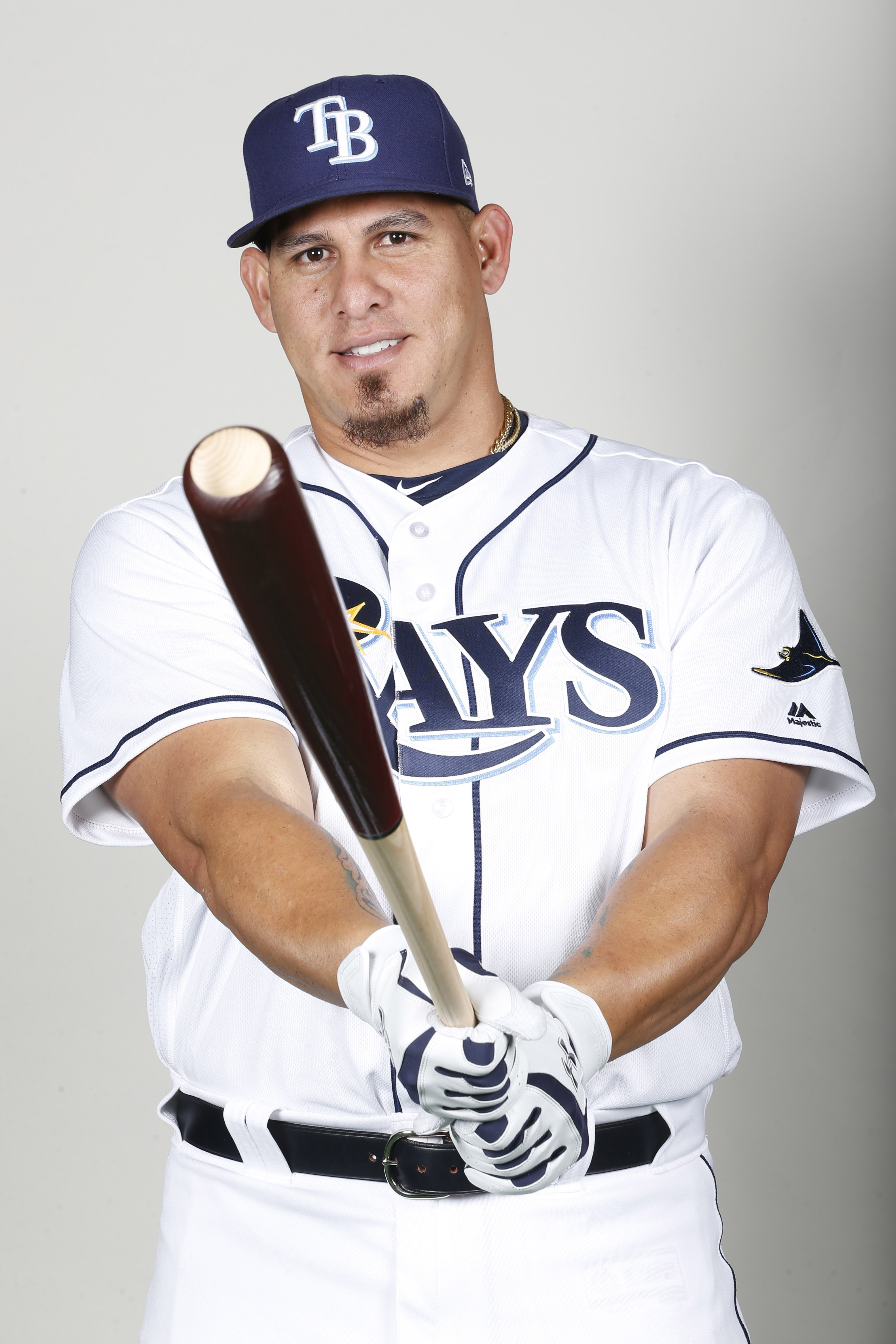 It should be noted that the Rays signed Wilson Ramos well before moving Smyly, though it could be that Ramos’ situation presented such a unique opportunity (and Tampa Bay’s long-standing need at catcher was so dire) that the team would’ve made the move whether it was rebuilding or not. The Rays made catcher a priority this winter, looking into such names as Jason Castro and Welington Castillo before finally landing Ramos on a two-year, $12.5MM deal.
The idea of Ramos signing with the Rays would’ve been far-fetched six months ago, when the catcher was enjoying a big season with the Nationals and well on his way to a big payday in free agent. Disaster struck, however, when Ramos tore his ACL and meniscus in the final week of the regular season. The subsequent surgery will keep Ramos out of action until May or June, and this health uncertainty allowed Tampa Bay to get into the bidding. Assuming Ramos is able to get back on the field and look like his old self, this could end up being a win-win for both sides — Ramos gets some security now and he’ll still be only 31 when he hits the open market again, while the Rays can potentially get an All-Star backstop at a bargain price.
Since Ramos will miss some action and require a good deal of DH time when he does return, Tampa was still active on the catcher front, landing Jesus Sucre in yet another trade with Seattle and also exploring such bigger-name options as Matt Wieters before Wieters signed with the Nationals. That Wieters signing led to the Nats releasing Derek Norris, which in turn allowed the Rays to then land Norris on a one-year, $1.2MM deal. Norris is an excellent pitch framer who brings more hitting upside than any of Sucre, Curt Casali, or Luke Maile, and the Rays could now shop one or more of that trio to other teams in need of help behind the plate.
Ramos’ eventual role as a part-time DH also added an interesting dynamic to the Rays’ search for help at first base, left field and designated hitter. The rather slow market for free agent hitters allowed the Rays to at least explore several notable names (i.e. Jose Bautista, Mike Napoli, Wieters) that seemed far too expensive for Tampa Bay’s payroll limitations at the start of the winter.
As it turned out, the Rays stuck with inexpensive options and signed Colby Rasmus and familiar face Logan Morrison to one-year contracts. Rasmus can provide cover at all three outfield positions, though his best position is in left, where he was quietly one of the game’s best defenders in 2016 with the Astros. Morrison is at best a platoon option at first base, and it wouldn’t be surprising to see Brad Miller shifted back to first from second base as the season goes on. Veteran Rickie Weeks is in camp on hand as potential platoon partner for Morrison, with switch-hitting Nick Franklin in the mix (though Franklin is better against righty pitching) and intriguing rookie Jake Bauers lurking down at Triple-A.
Turning to the bullpen, the Rays signed former Rangers closer Shawn Tolleson to a one-year contract with Tolleson looking to bounce back after a very rough season. Waiver claim Jumbo Diaz and minor league signing Tommy Hunter round out Tampa Bay’s most notable relief additions. The pen will take an early hit since Brad Boxberger will begin the season on the DL with a lat injury, though the Rays look to have a pretty solid relief corps behind breakout closer Alex Colome (who drew quite a bit of trade buzz this winter).
The Rays also locked down center field for years to come by signing Kevin Kiermaier to a six-year, $53.5MM extension. The two-time Gold Glove winner has been an above-average run creator in two of his three seasons and he made great strides with his plate patience in 2016. If Kiermaier can augment his excellent baserunning and otherworldly defense with more consistent hitting, it isn’t a stretch to say that he’ll become one of the game’s most valuable assets — even without much batting production, Kiermaier still generated 13.1 fWAR over the last three seasons.
