
Offseason In Review: Los Angeles Dodgers
This is the latest entry in MLBTR’s Offseason In Review series. The full index of Offseason In Review posts can be found here.
The Dodgers spent heavily to retain their top free agents while also adding several new faces to what they hope will be a World Series-contending roster.
Major League Signings
- Kenley Jansen, RP: Five years, $80MM (Jansen can opt out after the 2019 season)
- Justin Turner, 3B: Four years, $64MM
- Rich Hill, SP: Three years, $48MM
- Sergio Romo, RP: One year, $3MM
- Franklin Gutierrez, OF: One year, $2.6MM
- Chase Utley, 2B: One year, $2MM
- Total spend: $199.6MM
Trades And Claims
- Acquired 2B Logan Forsythe from Rays for RHP Jose De Leon
- Acquired 1B Darin Ruf and 2B/OF Darnell Sweeney from Phillies for IF/OF Howie Kendrick (Ruf has since been released)
- Acquired OF Brett Eibner from Athletics for IF Jordan Tarsovich
- Acquired LHP Vidal Nuno from Mariners for C Carlos Ruiz
- Acquired RHP Ryan Moseley from Orioles for LHP Vidal Nuno
- Acquired cash from Indians for RHP Carlos Frias
- Acquired cash or a player to be named later from Braves for 2B Micah Johnson
- Acquired IF Drew Jackson and RHP Aneurys Zabala from Mariners for RHP Chase De Jong
Notable Minor League Signings
- Ike Davis, Steve Geltz, Jair Jurrjens, Justin Masterson, Brandon Morrow, Patrick Schuster, Bobby Wilson
International Signings
- Jose Miguel Fernandez, IF: $200K bonus
Notable Losses
- Kendrick, De Leon, Ruiz, Frias, Johnson, Josh Reddick, J.P. Howell, Joe Blanton, Brett Anderson, Louis Coleman, Jesse Chavez
Los Angeles Dodgers Depth Chart; Los Angeles Dodgers Payroll Information
Needs Addressed
Despite a plethora of injuries last season, the Dodgers still won their fourth straight NL West title and advanced to the NLCS. It’s quite possible that even a moderately-healthy Dodgers club could’ve been good enough to win it all last year, and since president of baseball operations Andrew Friedman was very impressed by his team’s chemistry and work ethic, the Dodgers’ main offseason focus was to get the band back together.
Even though the Dodgers had three of their biggest contributors hitting the open market, the club was remarkably able to re-sign all three of Kenley Jansen, Rich Hill and Justin Turner. Obviously the Dodgers’ financial muscle played a part (not just any team can afford to spend $192MM on three players), though there were no shortage of other suitors in play.
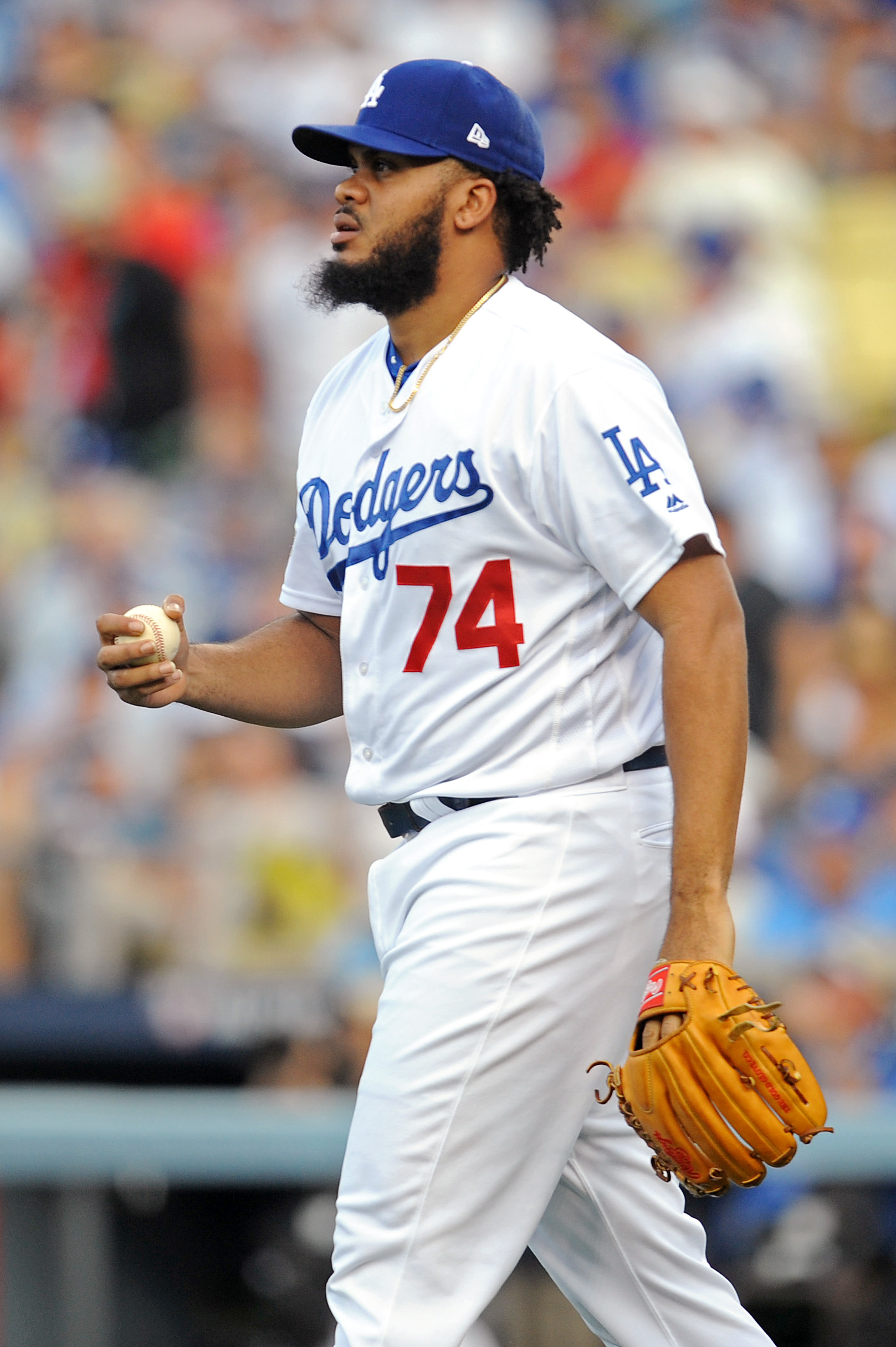
Jansen, in particular, was one of the headline names in this winter’s loaded closer market. He drew interest from the Yankees, Giants, Marlins and Nationals, with the former two teams dropping out of the hunt after respectively signing Aroldis Chapman and Mark Melancon. Miami and Washington both reportedly offered Jansen more than the Dodgers’ $80MM offer, though in the end, Jansen decided to stay in a comfortable situation rather than chase a few extra million dollars. Of course, “only” $80MM still represents the second-largest contract ever given to a relief pitcher, topped only by Chapman’s five-year, $86MM deal with the Yankees.
The Dodgers also vied with the Marlins and Yankees in the Hill sweepstakes, with the Astros, Rangers, Red Sox and Orioles additionally showing some level of interest in the veteran southpaw. We’ll focus more on Hill in the “Deal Of Note” section.
Turner, on the other hand, seemed like he always had his eye on remaining in Dodger blue, and the star third baseman indeed re-signed on a four-year, $64MM deal. Turner has blossomed into one of the game’s best all-around third basemen over his three seasons in L.A., posting 5.6 fWAR in 2016 on the strength of 27 homers and a .275/.339/.493 slash line over 622 plate appearances, plus an outstanding +17.2 UZR/150 and seven Defensive Runs Saved at the hot corner. There is some risk involved in the signing (Turner is entering his age-32 season and 2016 was his first season with more than 126 games played), though on the whole, the deal looks solid, particularly since the Dodgers had a need for right-handed bats.
That search for right-handed hitting extended to the Dodgers’ efforts in the second base trade market, as the team was linked to such notable names as the Tigers’ Ian Kinsler and the Twins’ Brian Dozier. It seemed like a deal was close with the Twins since the Dodgers were willing to move Jose De Leon to Minnesota, though talks stalled over what other prospect(s) would be involved in the trade.
The Twins wanted at least one of Yadier Alvarez, Walker Buehler or Brock Stewart (all top-eight prospects in the Los Angeles farm system), so facing that heavy price tag, the Dodgers pivoted to another target, acquiring Logan Forsythe from the Rays for De Leon. Forsythe emerged as a capable everyday second baseman over his last two seasons in Tampa Bay, providing solid defense and hitting .273/.347/.444 with 37 homers over 1182 PA. He is also signed to an affordable contract, set to earn $5.75MM in 2017 and available on an $8.5MM club option in 2018.
Even with second now spoken for, the Dodgers still brought Chase Utley back on a one-year, $2MM deal. Utley is regarded as an important clubhouse leader and he provides infield depth as a backup at second, third and first base. Franklin Gutierrez was another veteran depth signing who can play all three outfield positions, though his primary role will be as part of a left field platoon with Andrew Toles. Between Utley in the infield and Gutierrez in the outfield, the two will essentially replace the contributions of utilityman Howie Kendrick, who was dealt to the Phillies.
Though L.A. has several good bullpen options already on hand, the team added Sergio Romo as a veteran arm to serve as Jansen’s setup man. Romo was limited to just 40 games and 30 2/3 innings last season due to a flexor strain in his left elbow, though he still posted a 2.64 ERA, 4.71 K/BB rate and 9.7 K/9 for the Giants. Romo will help fill the void left by departed free agents Joe Blanton and J.P. Howell.
Questions Remaining
While it seemed like the Dodgers had their three internal free agents atop their offseason wish list, their resources allowed them to explore a number of other potential options. There’s an alternate reality out there where Los Angeles upgrades its rotation by trading for Jose Quintana or Jake Odorizzi instead of re-signing Hill, trades for White Sox third baseman Todd Frazier instead of re-signing Turner and addresses closer by signing Chapman over Jansen.
The argument can definitely be made that the Dodgers chose wisely by simply re-signing quality players they were comfortable and familiar with on and off the field. Still, big-ticket free agent signings have been a relatively small part of Friedman and GM Farhan Zaidi’s transactional arsenal since taking over the team’s baseball operations department. Brandon McCarthy, Scott Kazmir and Kendrick were the only free agents signed to multi-year deals in Friedman/Zaidi’s two previous offseasons running the Dodgers, and none of those contracts have provided much return to date.
Now, the Dodgers have handed two expensive deals to two players (Hill and Turner) in their 30’s and also committed $86MM to a relief pitcher, albeit an elite one in Jansen. Pursuing a trade-heavy offseason strategy would’ve cost the Dodgers more in prospects, though that could’ve been considered an acceptable loss since the team is clearly in win-now mode. On the flip side, a team with the Dodgers’ resources is less “win now” than “win always,” so making a one-year push isn’t a necessity — a team with a shorter contention window might have added a second or even a third top prospect to land Dozier, for instance.
The added salary commitments will further complicate the Dodgers’ attempts to eventually get under the luxury tax limit. While the tax threshold will gradually rise over the five years of the new collective bargaining agreement, harsher penalties are also in place for teams that exceed that limit. For instance, the luxury tax threshold will go up to $197MM in 2018, but L.A. already has over $171.3MM committed to just 10 players for that season. Real salary relief might not come until after 2018 when several big salaries (i.e. Adrian Gonzalez, McCarthy, Kazmir) come off the books, though the Dodgers also face the possibility of Clayton Kershaw opting out of his contract that offseason.
The crowded L.A. outfield saw Kendrick and Josh Reddick depart and Gutierrez and depth option Brett Eibner (in a trade with the A’s) added to the mix. The Dodgers’ MLB roster consists of Yasiel Puig, Joc Pederson, Toles, Scott Van Slyke, Trayce Thompson and utilityman Enrique Hernandez available for outfield duty, not to mention Gutierrez and longtime Dodger Andre Ethier on the DL. That’s a lengthy list of names that will need to be accounted for when everyone is healthy, and while several of those players could be simply optioned to Triple-A, players like Thompson or Van Slyke could also be possible trade chips.
There was much speculation last fall that the Brewers and Dodgers could revisit talks about a Ryan Braun trade, with Puig and McCarthy mentioned as possible candidates to go to Milwaukee in the deal. Not much seemed to happen on the Braun trade front, however, and while Braun would have carried a big price tag for the Dodgers, he also would’ve brought some stability to the fluid outfield situation. Puig is off to an excellent start in the young 2017 season, though given how inconsistently he performed in 2015-16, the Dodgers can’t yet know if they’ll get another struggling season, a return to Puig’s burgeoning superstar form of 2013-14 or anything in between. It would aid the Dodgers immensely if Puig is able to play at least well enough to hold down a regular everyday job and Pederson can be at least somewhat productive against left-handed pitching.
Like the outfield, the L.A. rotation also has a lot of options and the potential for greatness, though little in the way of consistency either performance-wise or health-wise. Even the phenomenal Kershaw can’t be considered a 100 percent lock given that he missed two months last season with a herniated disk. Kershaw, Kenta Maeda and Hill (when healthy) will be the rotation’s top three, with Kazmir, McCarthy, Hyun-Jin Ryu, Alex Wood and Julio Urias in the mix for the final two spots. If injuries continue to be an issue, it couldn’t be surprise if the Dodgers make another deadline move for pitching, be it a mid-rotation piece or a big name like Quintana or the Rays’ Chris Archer or Jake Odorizzi.
Deal Of Note
Over his last 144 1/3 MLB innings, Hill has an even 2.00 ERA to go along with a 10.6 K/9, 4.15 K/BB rate and 46.1% ground ball rate. These are exceptional numbers for any pitcher, especially for one that just turned 37 last month and who looked all the world like a fringe major leaguer when he began this epic run in September 2015.
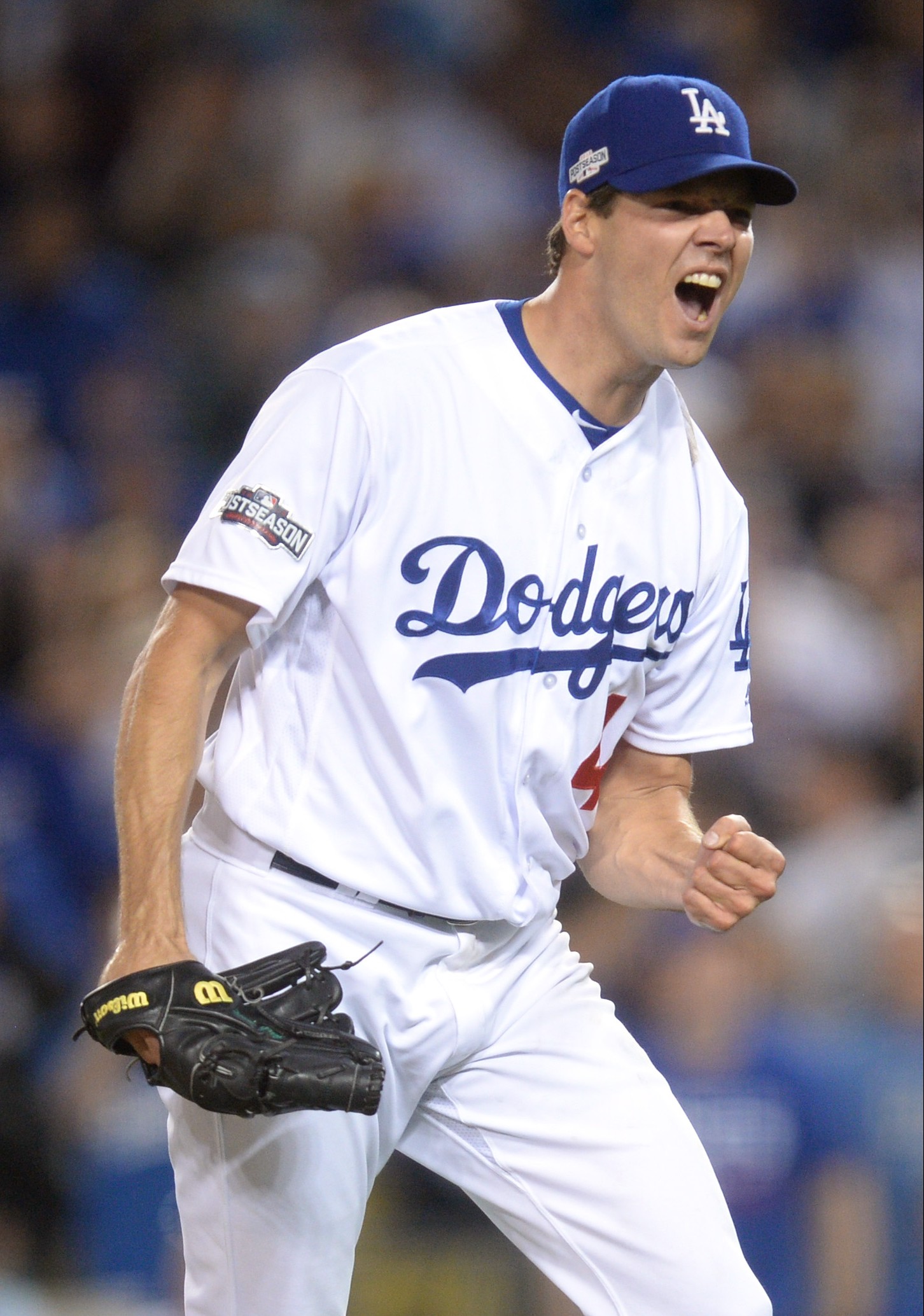
Committing $48MM to a pitcher with those numbers is justifiable, and arguably even a bargain. The risk for the Dodgers, of course, is Hill’s age, the consideration that his career revival will eventually come back to earth, and his health. Hill has a checkered injury history that includes Tommy John surgery, and his 2016 was shortened by a month-long DL stint with a groin strain as well as nagging blister problems. That latter issue has again emerged early in 2017, as Hill is currently on the 10-day DL with a blister on the middle finger of his throwing hand.
As noted earlier, the Dodgers don’t have much stability in their starting rotation, and yet the team made a big investment in a pitcher who can’t help but be considered a question mark, regardless of how well Hill has performed when he has been able to take the mound. Los Angeles was reportedly shopping McCarthy and Kazmir this winter, an ominous reminder of how Friedman/Zaidi’s other big free agent pitching signings have quickly gone south. The Dodgers would probably be more than satisfied if Hill was suddenly only two-thirds as good as his recent effectiveness but was able to take the mound every fifth day.
Overview
For all of the questions that the Dodgers face about injuries or declining veterans, it should be noted that quite a bit went right for the club last year. Corey Seager emerged as a superstar on the rise, Maeda looked very impressive in his first season in North American baseball, Toles came out of nowhere to become a regular contributor, and the team did fall just two games short of the National League pennant. You can’t blame Friedman and company for essentially wanting to replicate the 2016 roster and see if they can run it back, with some new upgrades like Forsythe, Romo and Gutierrez.
How would you evaluate the Dodgers’ winter moves? (Link for app users.)
How would you grade the Dodgers' offseason?
-
B 42% (1,136)
-
A 27% (721)
-
C 19% (502)
-
F 7% (192)
-
D 5% (125)
Total votes: 2,676
Photos courtesy of USA Today Sports Images
Offseason In Review: Cincinnati Reds
This is the latest entry in MLBTR’s Offseason In Review series. The full index of Offseason In Review posts can be found here.
Brandon Phillips became the latest longtime Reds veteran to be traded as the franchise continued its rebuilding process.
Major League Signings
- Drew Storen, RP: One year, $3MM
- Scott Feldman, SP/RP: One year, $2.3MM
- Total spend: $5.3MM
Trades And Claims
- Acquired LHP Andrew McKirahan and RHP Carlos Portuondo from Braves for 2B Brandon Phillips and $13MM in cash
- Acquired RHP Luis Castillo, RHP Austin Brice and OF Isaiah White from Marlins for RHP Dan Straily
- Acquired IF Josh Van Meter from Padres for C Luis Torrens
- Claimed 2B Scooter Gennett off waivers from Brewers
- Claimed OF Tyler Goeddel off waivers from Phillies
- Claimed RHP Nefi Ogando off waivers from Pirates
- Claimed RHP Lisalverto Bonilla off waivers from Pirates
- Selected C Stuart Turner from Twins in the Rule 5 Draft
Notable Minor League Signings
- Bronson Arroyo, Rob Brantly, Louis Coleman, Hernan Iribarren, Lucas Luetge, Zach Walters, Shawn Zarraga
Notable Losses
- Phillips, Straily, John Lamb, Jumbo Diaz, Josh Smith, Steve Selsky, Abel De Los Santos
Cincinnati Reds Depth Chart; Cincinnati Reds Payroll Information
Needs Addressed
With Jose Peraza and Dilson Herrera knocking on the door as Cincinnati’s second baseman and shortstop of the future, the Reds needed to clear some room up the middle. Phillips had already used his no-trade protection to reject two proposed deals to the Nationals and D-backs last offseason, and given the lack of a robust market for the 35-year-old, it seemed like the Reds were willing to simply move Phillips as soon as any sort of trade could be arranged. It may or may not have taken multiple attempts to deal Phillips to his home state of Georgia, though in the end, the Reds eventually traded Phillips to the Braves for two unheralded young arms (Andrew McKirahan and Carlos Portuondo) and only $1MM in salary relief from the $14MM owed to Phillips in 2017.
Former Brewer Scooter Gennett was claimed on waivers at the end of Spring Training, giving the Reds some veteran depth in the middle infield behind new starting second baseman Peraza. Between Gennett, Arismendy Alcantara, and Patrick Kivlehan (the latter two originally acquired in late-season waiver claims), the Reds have a versatile trio of bench players who can all fill in at multiple positions. Veterans Desmond Jennings and Ryan Raburn were also signed to minor league deals this winter, but were released at the end of Spring Training.
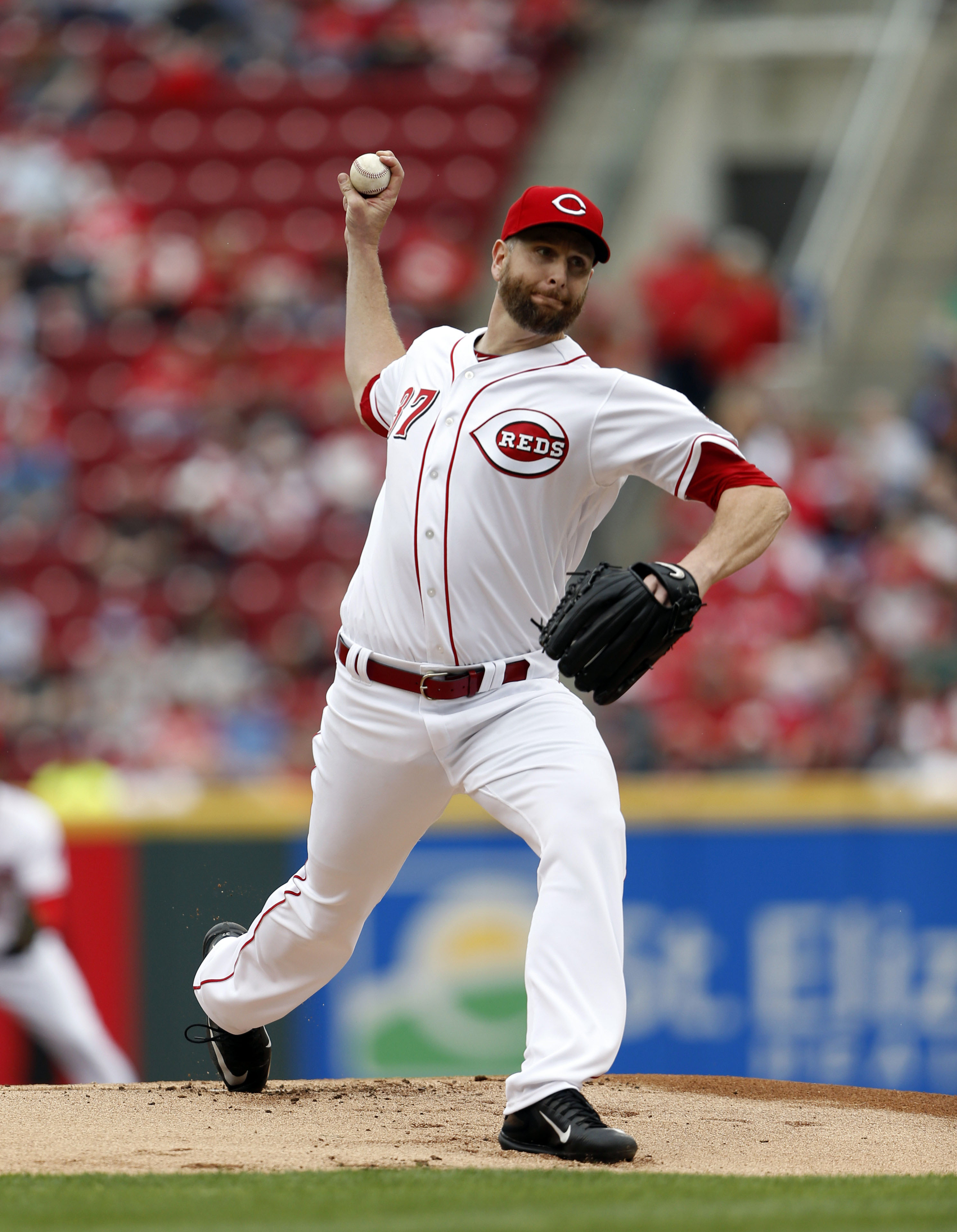
The backups’ positional flexibility has allowed the Reds to begin the season with just a four-man bench, giving the team more room to add extra bullpen arms in a very fluid pitching situation. With Anthony DeSclafani and Homer Bailey sidelined, Cincinnati gave rotation spots to rookies Amir Garrett and Rookie Davis, with former Red Bronson Arroyo currently occupying the fifth spot in the rotation. Arroyo rejoined the team on a minor league deal over the winter and is attempting a comeback after missing over two and a half seasons due to Tommy John surgery and rotator cuff injuries. It’s unknown what Arroyo can bring to the table after such a long absence, though the 40-year-old promises to be a good clubhouse influence for the young Reds. If he can recapture any of his old soft contact-inducing, innings-eating form, he’ll be a boost to an inexperienced rotation.
The Reds’ higher-priced rotation addition was Opening Day starter Scott Feldman, who signed for $2.3MM in guaranteed money with almost as much available in potential bonuses as both a starter and a reliever. Given the aforementioned injury problems in the rotation, Feldman served as the team’s Opening Day starter, and his rotation role could potentially make him a trade chip at the deadline. Feldman can give Cincinnati some rotation stability as somewhat of a younger version of Arroyo — a pitch-to-contact veteran who doesn’t miss many bats. The 34-year-old has shown some solid durability as a starting pitcher in the past, when teams haven’t moved him into a bullpen role. He steps into Dan Straily’s spot in the rotation, as the Reds dealt Straily to the Marlins for a package of three prospects. (More on that later.).
Drew Storen was the Reds’ other MLB signing this winter, as the former Nationals closer looks to rebound after a rough 2016 season (though he already showed some signs of a turn-around after a midseason trade to the Mariners). He’ll join Michael Lorenzen as the setup men behind stopper Raisel Iglesias, giving the Reds an intriguing back-of-the-bullpen combination, though “back” may not exactly be accurate, as the Reds have already shown some creativity in their deployment of relievers.
Finally, the Reds completed a long-discussed front office move this winter, promoting GM Dick Williams to president of baseball operations. Former president Walt Jocketty will remain in the organization as an advisor to team CEO Bob Castellini.
Questions Remaining
As you can tell, it was a pretty quiet winter for the Reds on the transactions front, perhaps indicative of this stage in their rebuilding process. While there’s no doubt Cincinnati is committed to building for the future, there’s some uncertainty over whether several of the interesting young position players around the diamond (such as Billy Hamilton or Eugenio Suarez) are true building blocks or maybe just potential trade chips to further add young talent to the system. It hasn’t helped that between the Phillips deal and last winter’s critically-panned trades of Aroldis Chapman (under difficult circumstances) and Todd Frazier, Cincinnati hasn’t gotten much in return for three of its key veterans. Three players from the Chapman and Frazier trades (Peraza, Davis, and Scott Schebler) look to be regulars for the 2017 Reds, though of that group, it’s arguable that only Peraza projects as a true long-term piece. We’ll have to wait and see how those players pan out, though, and they’ll get their first full tests in 2017.
More trades seem likely, as it wouldn’t be a surprise to see Feldman or Storen flipped prior to the non-waiver deadline. Hamilton was only available at a very high price tag this winter for teams (such as the Rangers) who inquired about a trade, though the Reds did seem willing to move him and could still do so if a club meets that price. DeSclafani also drew some trade speculation during the offseason, but since a sprained UCL will sideline until until at least June, the Reds will have to wait to see what they really have in the promising righty. It’s also fair to note that injuries have hampered the Reds’ efforts both on the field and in their rebuild — besides DeSclafani, either Bailey or Devin Mesoraco could’ve been shopped or dealt by now had either player been healthy over the last few seasons.
It was perhaps a little surprising that Zack Cozart was still in a Reds uniform on Opening Day, given that the veteran shortstop was almost traded to Seattle last summer and the Reds were keen to create room for younger infield pieces. The Mariners’ acquisition of Jean Segura, however, took Cozart’s top trade suitor off the board, and the Padres were the only other team linked to Cozart on the rumor mill. You’d think that some team would eventually have interest in a superb defender like Cozart, though with so many contenders already set at the shortstop position, the Reds may have to wait for an injury or another unforeseen situation to develop before the trade deadline to finally move Cozart, who is a free agent at season’s end.
No discussion of Reds trade candidates is complete with mentioning Joey Votto, even if both the team and the star first baseman insist that they are happy to continue their relationship. Of the two, Votto’s statement carries a bit more weight given his no-trade rights. Despite Votto’s continued superb play, his age (33) and salary (owed just under $179MM through the 2023 season) already limit his potential market. Even if he did eventually consent to a trade, any decline will greatly hamper the Reds’ ability to get either a good prospect return or a good chunk of Votto’s salary off their books.
Nobody expected a rebuilding team to break the bank on pitching upgrades, especially with so many young hurlers in the system. Still, given how dreadful the Reds’ bullpen was in 2016, the club certainly could’ve justified adding more newcomers than just Storen. Cincinnati is putting a lot of faith in the Iglesias/Lorenzen combo, not to mention in improvement from Tony Cingrani and Blake Wood and rookies Wandy Peralta and Barrett Astin. The Reds did discuss Jeremy Jeffress with the Rangers as part of trade talks for Hamilton, DeSclafani, and Straily, so once the deadline rolls around, Cincinnati could well target more controllable relief pitching.
Deal Of Note
Since I noted the Reds’ somewhat questionable returns on some of their trades of veteran players, it’s only fair to mention how much value they received from Straily’s one-year tenure with the team. Cincinnati claimed Straily off waivers from the Padres just prior to Opening Day 2016, and the right-hander ended up being the Reds’ most reliable starter, posting a 3.76 ERA, 7.62 K/9 and 2.22 K/BB rate over 191 1/3 innings.
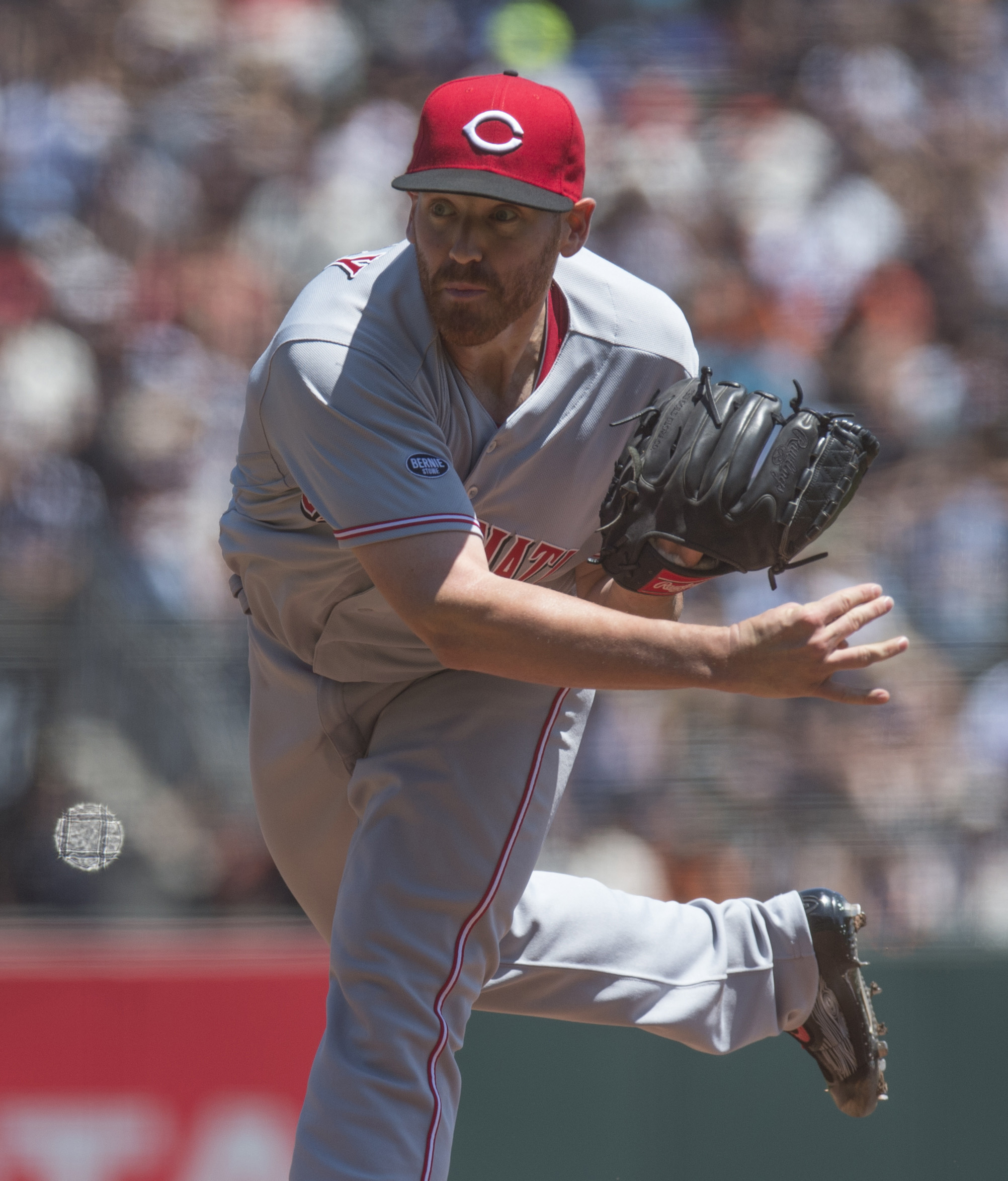
On paper, a pitcher coming off that sort of a season who is also under club control through 2020 would project as a long-term piece for a rebuilding team. Instead, however, the Reds dealt Straily to Miami for right-handers Luis Castillo and Austin Brice, plus 20-year-old outfield prospect Isaiah White. Brice will begin the year on the DL with an elbow injury but could factor into the Major League bullpen mix later on, White is an interesting speedster and Castillo is a very promising rotation option. Ranked as the second-best prospect in Miami’s system by Baseball America last December, Castillo owns a high-90s fastball and a potentially above-average slider (as per BA’s scouting reports). ESPN’s Keith Law thinks enough of Castillo to rank him as the 94th-best prospect in all of baseball.
Will the Reds miss Straily, especially with their rotation again thinned by injuries? It’s possible, though there is evidence that Cincinnati may have sold Straily at the peak of his value. The righty’s ERA indicators (4.88 FIP, 5.02 xFIP, 4.67 SIERA) weren’t impressive last season, as Straily benefited from a .239 BABIP and 81.2% strand rate. A fly-ball pitcher throughout his career, Straily allowed a league-high 31 homers in 2016, and that was despite posting some very good numbers at the hitter-friendly Great American Ballpark.
Straily was only a borderline MLB pitcher in 2014-15, managing only a 6.42 ERA over 68 2/3 IP for the Astros, Cubs and Athletics. Even if Straily has turned a corner and 2016 represents his new normal rate of production, the Reds still did a good job of selling high on a pitcher that cost them nothing to obtain from San Diego.
Overview
The Reds almost certainly won’t be contenders in 2017, though they have started the season on an impressive 7-and-2 run. The highlight of their first half may end up being picking second overall in the June amateur draft. It will be another season of development in Cincinnati as the team continues to plot its course through the rebuilding wilderness, though strong showings from Garrett, Davis and/or Cody Reed would go a long way towards solidifying the future rotation. The Reds will be a team to watch in the weeks leading up to the July trade deadline. Cozart, Feldman, Storen, Suarez, and Hamilton stand out as potential names on the move, there could be a Straily-esque under-the-radar player that also emerges as a trade chip, and business would pick up considerably if Votto consented to a deal.
What’s your take on the Reds’ winter? (Link for app users.)
How would you grade the Reds' offseason?
-
C 34% (730)
-
B 31% (658)
-
D 17% (354)
-
A 10% (204)
-
F 8% (177)
Total votes: 2,123
Photos courtesy of USA Today Sports Images
The Inner Monologue of @DimTillard Road Trippin’
It’s 11:32am on Wednesday April 12th 2017. “ALLOW ME TO REINTRODUCE MYSELF! MY NAME IS” not Jay-Z… it’s Tim Dillard. And this is my fifth entry for MLB Trade Rumors. The check cleared! So I’m back, chronologically writing down all my baseball thoughts.
11:34am I’m a sidearm relief pitcher for the minor league Colorado Springs Sky Sox baseball team. A few nights ago we bused from The Springs to Denver, then flew on a United Airlines commercial plane to Memphis, Tennessee. This is where we will start a four game stint against the Memphis Redbirds, the St. Louis Cardinals class Triple-A affiliate.
11:37am During the flight out here, our plane experienced some above average turbulence. Like on a scale from one to ten, this turbulencity was probably a six and a half or maybe seven. I mean, personally I really don’t mind flying. But for some reason, a few of my teammates just seem to be uncomfortable in a… 450-ton pressurized man-made metal machine screaming through the sky at 500 knots while 7 miles up in the atmosphere!
11:40am But it was fine. AND it reminded me of another eventful road trip I once had!
11:41am Back in 2007, I was on a really turbulent team flight with current Braves knuckleballer and former Cy Young Award winning pitcher R.A. Dickey. (name drop: successful) We sat together a lot that year… I think it goes alphabetically. Anyway, on this particular flight, if your seatbelt wasn’t buckled, you were hitting the ceiling! Or the seat in front of you! Or the person sitting beside you. Or body-slapping the window! (it was at least an EIGHT on the bumpy scale)
11:45am Well… after several minutes of gripping the armrests as hard as I could, trying to stay calm, and hearing the shrieks from the other scared passengers, my friend R.A. Dickey looked up at me. And I looked up at him, and I was staring straight into his eyes when he opened his beardy mouth and yelled, “Dilly! It’s like we’re riding on a Dickey Knuckleball right now!”
11:50am Pretty sure I laughed AFTER we landed.
11:50am The hotel maid may have just knocked on my door.
11:53am Yeah it was the maid. I thought I put the “Do Not Disturb” sign out, but it was one of those two-sided signs. The other side says “Please Service My Room, Thank You!” Crap. Just told her I’d be out in thirty minutes.
11:54am Okay, so where was I… oh yes “Dilly!”
11:55am You know, every road trip has a story or something meaningful happen if you look hard enough. Like in 2006, when our team bus slammed into a giant wood utility poll that had fallen off the back of a semi at 2:30am. Or in 2013, when I had to jump onto the back of a moving pickup truck to catch a ferry back to the mainland after playing a baseball game on some island in Mexico.
11:59am Actually, before we left on this current road trip, a teammate brought two boxes of delicious donuts into the clubhouse. That was pretty special. BUT… there are only two reasons why a player would think to bring community donuts into the clubhouse: Either they just want to be a good and thoughtful teammate, OR… they can read MINDS! Either way, I’m keeping my eye on you Eric Sogard, but maybe… you already knew that. (name drop: numero dos)
12:04pm Dang. Another knock. This hotel maid really wants to clean this room.
12:06pm Something weird about myself: I’ve kept every key card from every hotel I’ve stayed at my entire career dating back to 2003. The only key I didn’t keep was a real key, like a real metal key, from a motel in Montana. Because the fee for taking or losing that real key was $25.
12:09pm Not to mention all the “free” hotel pens I’ve acquired over the years. I remember in 2008 I was at my house looking for a pen. I looked in every drawer, basket, bag, purse, and glove compartment. Didn’t even see a stupid pencil. And after searching for a long time, I realized that my wife and I did not have a single writing utensil in the entire house. So this frustration gave birth. And shouted, “NEVER AGAIN!” So now I’m proud to be the “owner” of over 4oo hotel pens!
12:09pm I also keep movie ticket stubs. I have over 350 ticket stubs from movies I’ve seen dating back to 1999! <-(and yes, I put an exclamation point here because I’m proud of this, but also realize how nerdy and lame this makes me appear)
12:11pm What else? Oh yeah, my sticker bench! I have a bench in my office at home that has stickers all over it. I started letting my kids slap stickers on it for fun, but over the years it has gotten a little more serious. Now every city I travel through, or restaurant I eat, or basically any business establishment I encounter, I find myself asking if they have stickers. Maybe one day I will consider it finished, and then lacquer the crap out of that thing. And BOOM! …family heirloom!
12:14pm I have no idea what I’m writing at this point. Honestly I can’t believe people read my blog things. But I guess a year in the Big Leagues and over thirteen in the minor leagues can qualify a person to write opinions and experiences about baseball stuff.
12:16pm Yesterday a kid messaged me over Twitter. My alias on Twitter is @DimTillard. I chose @DimTillard because when I went to sign up, there were 25 other “Tim Dillards”. So after finding out how UNspecial I was… I went with @DimTillard. Anyway, this kid messaged me contemplating quitting college baseball at the end of the season. I told him everyone’s baseball path is different. I said it doesn’t mean your path is more or less special, it just means that it’s your path to walk down.
12:19pm Being late at night and tired… that actually made total sense to me. But in the light of day, I think what I meant to say was something like: Over my many baseball seasons, I’ve learned it doesn’t matter whether you only played t-ball or have a 10-year MLB career. What matters is baseball and the relationships. Baseball was here before I got here, and baseball will be here long after I’m gone. It’s how we treat the game and the people… that really matters.
12:23pm Ok yeah it’s time to leave the room. This hotel maid has camped outside the door and is ready for me to vacate. Too bad I made my bed, and refolded the towel I used. Ha! Good luck Jacquelyn!
To Be Concluded…
Transaction Retrospection: The Elvis Andrus Extension
In early April of 2013, the Rangers struck what was then described by GM Jon Daniels as “an unusual deal” with shortstop Elvis Andrus. Daniels was likely referring to the complicated structure, which included two opt-out opportunities (following the 2018 and 2019 campaigns), but it has proven unusual in other ways.
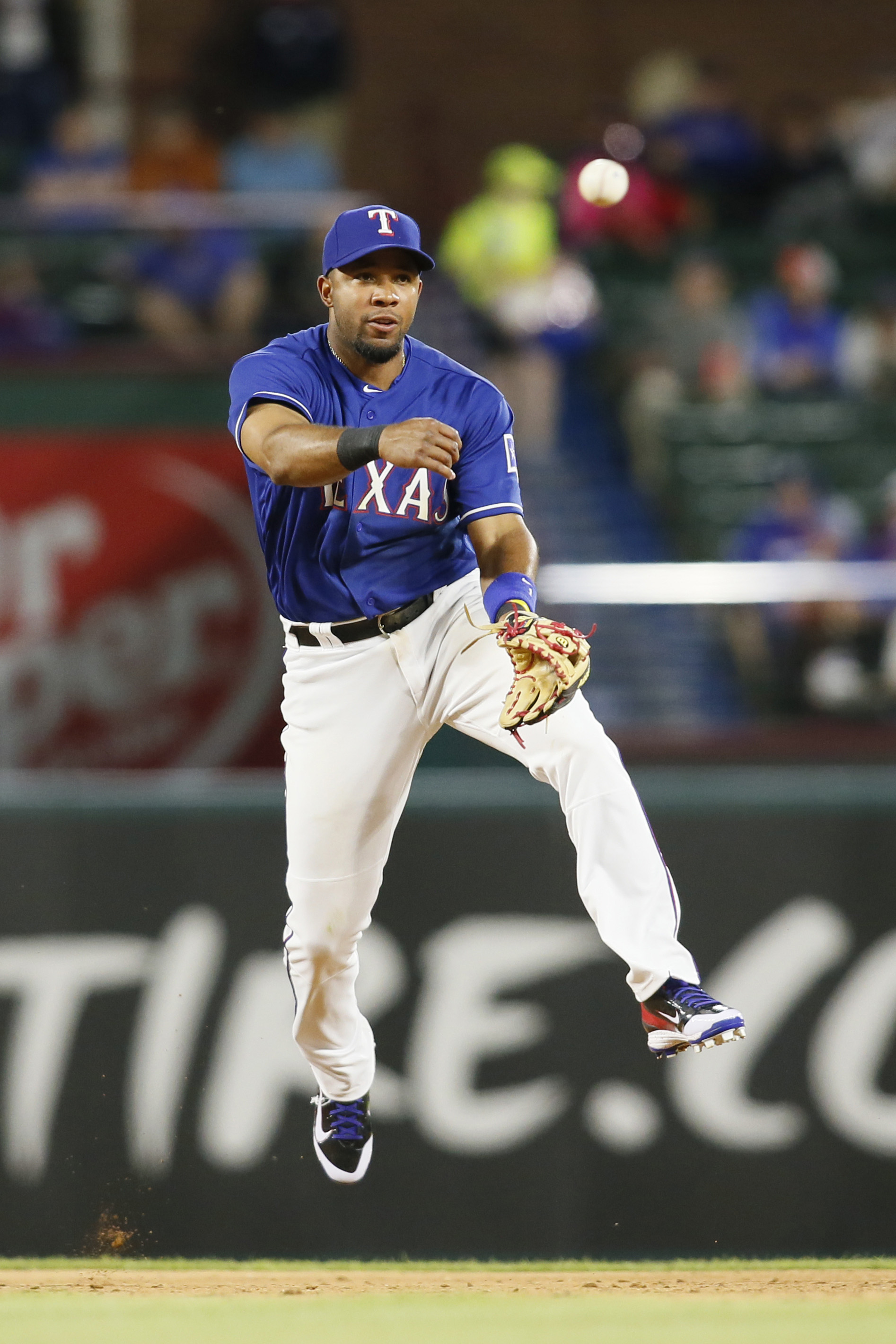
Opt-out provisions are now fairly common, particularly in large free-agent deals and extensions reached with players who already have significant service time. But contracts of the size of the Andrus deal — which guaranteed him $120MM over eight years (beginning in 2015) — are a rarity for players of that general service time. Andrus, who had already agreed to one prior extension, had just begun his 4+ service-class year. Since his deal was made, just two players with at least three but less than five years of service — i.e., experienced players who aren’t entering a contract year — have cleared $100MM in guaranteed money. Those other deals went to franchise faces Giancarlo Stanton and Freddie Freeman.
Indeed, Andrus looks like something of an outlier when you expand the terms further to include 2+ players and look a bit further back. In addition to the three players noted above, here’s the list of players who scored nine-figure guarantees when they had more than two but less than five years of service (within the time period covered by MLBTR’s Extension Tracker):
- Kyle Seager (2+): seven years, $100MM
- Evan Longoria (4+): six years, $100MM
- Ryan Braun (3+): five years, $105MM
- Ryan Howard (4+): five years, $125MM
- Mike Trout (2+): six years, $144.5MM
- Miguel Cabrera (4+): eight years, $152.3MM
- Troy Tulowitzki (4+): ten years, $157.75MM
- Buster Posey (2+): eight years, $159MM
- Joey Votto (4+): ten years, $225MM
Needless to say, these were all players who were (or, at least, were viewed by their organizations as) franchise-level talents. Andrus was certainly on the young side for this group; he was then entering his age-24 campaign. Only Trout and Freeman were younger, the latter only marginally so. And its fair to note that Andrus landed clearly on the low side of the total guarantees included in this somewhat arbitrary list.
Still, it was then and remains surprising to see Andrus in such company. Also, the opt-out opportunities weren’t present in those other contracts, which reduced the team’s upside. He had yet to post even a league-average batting line (and wouldn’t crack that barrier until 2016). And though he did rate as a high-quality fielder and outstanding baserunner, he graded out more as a quality first-division regular than a superstar. Fangraphs and Baseball-Reference each valued his 2011 season as his best, with the former crediting him with 4.0 WAR and the latter pegging the overall value at 4.2 WAR.
The first two years after the agreement weren’t kind to the team. Between 2014 and 2015, Andrus slashed just .261/.312/.345. While he swiped 52 bags, he was gunned down on 24 attempts. And his fielding grades took a precipitous tumble. Entering the 2016 season, Texas was still on the hook for $103MM over the following seven years. And it seemed rather unlikely that Andrus would bail on the contract’s back end.
Things did change for the better last year, however. Though Andrus didn’t recover his standing as a baserunner and gloveman, he did finally break through somewhat at the plate. Over 568 plate appearances, he slashed .302/.362/.439 — representing career-best marks in all three categories and working out to a 112 wRC+. There were some underlying changes at work, many of which represented carryovers from a shift that began the season prior. It was in 2015 that Andrus began to take a more aggressive approach, increasing his swing rate, producing a big drop in his groundball-to-flyball ratio and increasing the number of balls he pulled while largely maintaining his typically excellent contact skills.
Of course, Andrus wasn’t all that good with the bat in 2015. The biggest difference between that season and his strong 2016? Yep, a fifty point jump in BABIP (from .283 to .333). It’s an open question whether 2015 was weighed down by bad luck or whether 2016 was boosted by good fortune — perhaps the answer lies somewhere in the middle — but the Rangers will surely hope it’s the former. Andrus has hit well in the early going in 2017, despite carrying a .278 BABIP, though it’s far too soon to know whether that will continue.
As things stand, Andrus will open the current season with a six-year, $88MM deal that still includes the two opt-out chances. (Andrus can opt out of four years and $58MM or three years and $43MM.) It’s questionable whether he’d have received anything like that on the open market this past winter, though perhaps that depends in part upon how organizations view his current tools and how they value his 2016 season — which B-Ref values at a robust 3.7 WAR, but Fangraphs pegs at only 2.1 WAR.
It seems rather unlikely that the Rangers will get the kind of value they hoped for when they paid Andrus like a premier player. Indeed, they arguably didn’t even receive a fair ROI for the $15MM salaries Andrus took down in each of the past two seasons. But it’s still possible the deal could work out reasonably well over the long run, or even that he’ll find cause to opt out; after all, with two productive years, Andrus could conceivably expect to find yet more money on the open market in advance of his age-30 season.
Photo courtesy of USA Today Sports Images.
Offseason In Review: Texas Rangers
This is the latest entry in MLBTR’s Offseason In Review series. The full index of Offseason In Review posts can be found here.
Facing a number of high-profile defections and about as many big holes, the Rangers faced a tough task this winter. Their acquisitions are just talented enough to work out well for them, but they’ll need some luck to approach their 95-win total from 2016.
Major League Signings
- Carlos Gomez, OF: one year, $11.5MM
- Andrew Cashner, RHP: one year, $10MM
- Mike Napoli, 1B: one year, $8.5MM, including $2.5MM buyout on $11MM 2018 team option
- Tyson Ross, RHP: one year, $6MM
- Dillon Gee, RHP: Major League contract
- Total spend: $36MM
Trades And Claims
- Acquired RHP Tyrell Jenkins and LHP Brady Feigl for RHP Luke Jackson (the Rangers later lost Jenkins on waivers)
- Acquired RHP Eddie Gamboa from Rays for a player to be named
- Claimed RHP Tyler Wagner from Diamondbacks
- Claimed RHP Mike Hauschild from Astros
- Claimed RHP Brady Dragmire from Pirates (later outrighted)
Notable Minor League Signings
Josh Hamilton, James Loney (since released), Travis Snider, Will Middlebrooks, Allen Webster, Anthony Bass, Bobby LaFromboise
Extensions
- Rougned Odor, 2B: six years, $49.5MM, including $3MM buyout on $13.5MM option for 2023
- Robinson Chirinos, C: one year (2018), $2.35MM, including $100K buyout on $2.375MM option for 2019
Contract Options
- Jonathan Lucroy, C: $5.25MM or a $250K buyout (exercised)
- Derek Holland, SP: $11MM or a $1.5MM buyout (declined)
Notable Losses
Ian Desmond, Carlos Beltran, Mitch Moreland, Colby Lewis, Holland
Needs Addressed
Heading into the winter, the Rangers faced a number of potential high-profile defections, including those of Ian Desmond, Carlos Gomez and Carlos Beltran, and a limited amount of cash with which to address them — the Rangers’ budget was somewhat restricted by high-dollar, low-value contracts such as those of Prince Fielder and Shin-Soo Choo, as well as expensive deals for Cole Hamels, Adrian Beltre, Elvis Andrus and Yu Darvish.
In particular, the Rangers needed to replace key players in their outfield, upgrade their rotation and find a solution at first base and/or DH. In their rotation, the Rangers sensibly declined longtime starter Derek Holland‘s $11MM option, paying him a $1.5MM buyout after a season in which he posted a 4.95 ERA, 5.6 K/9 and 2.9 BB/9 while struggling with shoulder trouble. They also parted ways with another longtime starter, 37-year-old Colby Lewis, whose 3.71 ERA in 2016 masked lousy peripherals. Lewis remains a free agent.
The free-agent market for starting pitchers was poor, giving the Rangers limited opportunities to find another solid starter to complement Hamels, Darvish and Martin Perez. Instead, they gambled on two interesting former Padres arms, Andrew Cashner and Tyson Ross. Both are relatively young pitchers with tantalizing stuff, but they also both come with major question marks.
 Cashner received $10MM and will enter the Rangers’ rotation as soon as he’s ready, likely sometime late this month. The 30-year-old brings mid-90s heat and a hard slider, but he’s never gotten the sorts of strikeout rates you’d associate with that repertoire, and he’s coming off a season in which he posted a 5.25 ERA, 7.6 K/9 and 4.1 BB/9 while fading down the stretch. It will be up to the Rangers to figure out why. Cashner has used his changeup less and less frequently over the years, and the pitch has been less effective when he’s thrown it; reestablishing that pitch might be a key to reviving his career. As Fangraphs’ Eno Sarris points out, Rangers catcher Jonathan Lucroy might be able to help Cashner with his quality pitch framing. In any case, Cashner’s an interesting gamble, although $10MM seems like a lot to pay given his recent performances. He’ll also begin the season on the DL due to biceps tendinitis.
The Rangers also added Tyson Ross, whose main problem is health. The 29-year-old had back-to-back excellent seasons in San Diego in 2014 and 2015, but pitched only one outing in 2016 due to shoulder trouble, and finally had offseason surgery to relieve thoracic outlet syndrome. The Padres non-tendered him in December, and the Rangers lured him away from the Cubs with a $6MM deal. He isn’t ready yet, but he’s progressed to throwing bullpens and simulated games, and could be ready to join the Rangers early in May. It remains to be seen whether the Rangers will be getting the pitcher who struck out a batter an inning and posted ground-ball rates in the 60% range in 2014 and 2015. Ross can help them if he’s even half that good, but it’s difficult at this point to project with any certainty that he will be.
The Rangers thus began the season with a rotation that features neither of the key starting pitchers they acquired. Darvish, Hamels, Perez and A.J. Griffin (who struggled to a 5.07 ERA, 8.1 K/9 and 3.5 BB/9 in 2016 after missing two full seasons to injury) will comprise the initial rotation, with Cashner perhaps joining in mid-April when the team needs a fifth starter. The Rangers initially signed Dillon Gee to a minor-league deal, and then, after he opted out, re-signed him to a big-league contract and optioned him to Triple-A; he represents an alternative if Cashner isn’t ready to go. Given the considerable question marks surrounding Cashner, Ross, Griffin and Gee (and, if we want to get really pessimistic, Perez, who posted a very shaky 4.7 K/9 last season), the Rangers’ rotation still looks iffy, although it’s also easy to see the upside if Cashner and Ross pan out.
In the outfield, the Rangers lost Desmond to the Rockies, who agreed to pay him $70MM over five years. The Rangers, meanwhile, received the No. 29 pick in this year’s draft as compensation. The Rangers had interest in Desmond, but were wise not to match the Rockies’ offer — Desmond’s resurgence in 2016 was fueled by a career-best .350 BABIP, and he’s already 31.
Instead, the Rangers retained another outfielder, re-signing Carlos Gomez to a short-term deal to man center field. Gomez’s career seemed to be falling apart when the Astros released him last August, but he caught on with the Rangers down the stretch and batted .284/.362/.543, numbers worthy of his brilliant 2013-2014 run with Milwaukee. That sort of production probably won’t continue, but for a mere $11.5MM, the Rangers can get a good deal even if Gomez’s offense tails off. His hitting is hard to predict, and his 30.0% strikeout rate for the 2016 season is a bad sign, but he has defensive and baserunning value going for him, plus a bit of home-run power. All things considered, he seems good for about two wins above replacement, which would rather easily make him worth the value of his contract.
For first base and DH, the Rangers turned to another familiar face, that of Mike Napoli. The Rangers faced the loss not only of Beltran, but also longtime first baseman Mitch Moreland, whose production faded in 2016. Minor-league über-slugger Joey Gallo looked like an obvious candidate to take over at first, but the Rangers made clear at the beginning of the offseason that they felt the 23-year-old Gallo, who whiffed in a ghastly 34.6% of his plate appearances at Triple-A last year, ought to start 2017 in the minors. (Gallo began the season in the Majors anyway, taking over at third for Beltre, who is nursing a calf injury.)
Napoli is coming off a 34-homer season in Cleveland. The 35-year-old has always fared well in Texas — he had two of the best years of his career there in 2011 and 2012, and also was productive after the Red Sox dealt him to the Rangers in August 2015. It’s not a given his third stint with the team will go as well, given his age and his seemingly limited ability to hit for average. He batted just .248 in 2014, .227 in 2015 and .239 in 2016, and if his ability to make contact declines at all, he might have trouble hitting enough homers to compensate. As with the Gomez deal, though, it’s hard to argue with the limited commitment the Rangers made, coughing up only $11MM guaranteed and getting a 2018 team option in the deal as well.
The Rangers also exercised Lucroy’s $5.25MM 2017 option (probably the easiest move they made this winter), and extended backup Robinson Chirinos. Chirinos’ extension bought out his 2018 season, which would have been his last season of arbitration eligibility, for just $2.35MM, likely less than he would have gotten had he been even modestly productive in 2017. The Rangers also received a cheap option for 2019, giving them a couple years of flexibility as they prepare for Lucroy’s possible departure to free agency next winter. Chirinos had never been paid more than $1.55MM in a season prior to the extension, and, at age 32, might never have gotten another shot at a multiyear, multimillion-dollar contract. His new deal thus provides him with a bit of financial security.
Questions Remaining
The Rangers never did acquire another player to help at DH, and it appears they’ll have Choo soak a number of plate appearances there. In a vaccum, that makes sense — Choo has rated as a below-average outfield defender in the past several seasons, and he’s had health problems to boot. With Nomar Mazara slated for the bulk of the time in right, that leaves left field open to one of the most wide-open time shares in baseball.
Delino DeShields arguably sits atop the depth chart at left field, which seems like a questionable proposition. DeShields is coming off an outstanding spring in which he posted a .442 OBP, but he’s coming off a miserable 2016 season in which he batted just .209/.275/.313. At just 24, DeShields is young enough to improve, and he’ll certainly make the Rangers’ defense better. But his bat is a question mark. Neither Ryan Rua nor Drew Robinson have established a track record of offensive production at the major league level, but they’ll also factor in the mix.
Then, there’s Jurickson Profar, once an elite prospect and now something of a super-utility option. Though there was reported trade interest over the winter, Texas elected to hang onto Profar to see if he can restore some of his lost luster. He will participate in the game of musical chairs in left and might also step into the infield wherever a need arises. Gallo, too, could theoretically shift to the corner outfield in addition to seeing time in the corner infield or at DH, depending upon how the season progresses. For both of these top prospects, it’s something of a make-or-break year for their futures with the Rangers.
Then there’s the Rangers’ pitching staff. It’s always hard to know how a bullpen will perform, but the Rangers’ looks fine — their 2016 ‘pen didn’t rate well overall, but they’re returning most of the relievers (including Sam Dyson, Matt Bush, Tony Barnette and Alex Claudio) who were key to their second half, when their bullpen did an outstanding job keeping the ball on the ground and were very effective overall. Another key reliever, Jake Diekman, will be out until at least the All-Star Break after having colon surgery. Jeremy Jeffress will need to keep his off-field issues in check to play his expected role; if he can do that and remain effective, then either he or Bush would represent alternatives at the closer role if Dyson’s early struggles continue.
They’ll have to get the ball to those pitchers, though, and their rotation looks like it could quickly boil down to Hamels, Darvish and then a bunch of uncertainties, particularly if Cashner and Ross don’t reemerge.
Deal Of Note
 Late in Spring Training, the Rangers announced that they’d signed second baseman Rougned Odor to a six-year, $49.5MM deal with a club option for 2023. The deal buys out what would have been Odor’s first two free agent seasons, with an option for a third.
The deal is roughly comparable to recent six-year, one-option extensions for fellow second basemen Jason Kipnis and Matt Carpenter, who received $52.5MM and $52MM, respectively, when they had between two and three years of service time. It’s also interesting to compare Odor’s deal to that of another infielder’s recent extension: that of Jose Ramirez, who received just $26MM over five years and gave up two option years. Even if the Indians exercise Ramirez’s first option, he’ll only receive a total of $35MM, far less than Odor, Kipnis or Carpenter received.
It’s debatable whether Odor will be as valuable as Kipnis or Carpenter have proven to be — Odor produced a mere .296 OBP and questionable defensive numbers in 2016. But the outlier here is Ramirez’s contract, not Odor’s, and that ultimately isn’t surprising. Kipnis, Carpenter, Ramirez and Odor were all early enough in their careers at the time of their extensions that many of the yearly salaries their extensions covered would have been governed by the arbitration process, which values counting stats. While Odor doesn’t have the overall track record Kipnis or Carpenter did, his 33-homer total in 2016, if sustained, probably would have gotten him paid at a similar rate. That’s particularly likely since the Kipnis and Carpenter contracts are both now three years old.
Ramirez, meanwhile, had two uneven years before his breakout 2016 and hasn’t posted outstanding counting stats in any category. As a player, I’d probably prefer Ramirez to Odor, due to Ramirez’s defense and versatility, as well as the greater likelihood that he’ll continue to reach base at a palatable rate. But it makes sense that Odor was the one who got the big contract.
These are, of course, different questions than whether the Rangers should have extended Odor. Odor whiffed seven times as often as he walked in 2016, a worrying sign. He only recently turned 23, though, so there’s plenty of room for growth. And even if his career stagnates, his deal is still fairly cheap in the grand scheme of things despite being considerably more expensive than Ramirez’s, and his positional value, power and age insulate the Rangers somewhat against the possibility that the deal will go south.
Overview
The Rangers’ 95-win 2016 season was built on shaky ground — they only scored eight more runs than they allowed. This year, their weaknesses look fairly obvious, particularly in their rotation. They have enough marquee talent (including Hamels, Darvish, Beltre, and Lucroy, potentially along with players like Odor or young outfielder Nomar Mazara) to contend if things go well, however. Within that context, their signings of Cashner and Ross this offseason look like Hail Mary passes — those gambles don’t appear incredibly likely to produce huge dividends, but could be decisive for the team if they do. The Rangers might have a hard time topping the Astros this season. But it’s easy to see how they could.
If things don’t go as hoped, though, the front office will increasingly face questions about how to handle the next offseason. While the Rangers could revisit extension talks with Darvish and Lucroy, or pursue them on the open market, efforts at new deals fizzled this spring. That could leave two very notable holes on the roster at the end of the 2017 season.
How would you rate the Rangers’ offseason moves? (Link for app users.)
How would you grade the Rangers' offseason?
-
C 41% (701)
-
B 32% (547)
-
D 12% (209)
-
F 9% (155)
-
A 6% (109)
Total votes: 1,721
Offseason In Review: Washington Nationals
This is the latest entry in MLBTR’s Offseason In Review series. The full index of Offseason In Review posts can be found here.
For the third time in five years, the 2016 Nats followed up on their NL East crown with a first-round departure from the postseason. And yet again, the club endeavored this winter to build around one of the game’s best core groups of talent.
Major League Signings
- Matt Wieters, C: two years, $21MM (can opt out after 2017)
- Joe Blanton, RP: one year, $4MM
- Stephen Drew, IF: one year, $3.5MM
- Adam Lind, 1B: one year, $1.5MM (includes $500K buyout on $5MM mutual option)
- Chris Heisey, OF: one year, $1.4MM
- Total spend: $31.4MM.
Trades And Claims
- Acquired OF Adam Eaton from White Sox in exchange for SP Lucas Giolito, SP Reynaldo Lopez, SP Dane Dunning
- Acquired C Derek Norris (later released) from Padres in exchange for SP Pedro Avila
- Acquired RP Enny Romero from Rays in exchange for SP Jeffrey Rosa
- Acquired SP Kyle McGowin and RP Austin Adams from Angels in exchange for IF Danny Espinosa
- Acquired RP Jimmy Cordero from Phillies in exchange for PTBNL (RP Mario Sanchez)
Options Exercised
- Gio Gonzalez, SP: one year, $12MM
Notable Minor League Signings
- Matt Albers (released & re-signed), Aaron Barrett, Joey Butler, Tim Collins, Neal Cotts, Grant Green, Jeremy Guthrie, John Lannan, Josh Outman, Joe Nathan (released & re-signed), Jhonatan Solano, Jacob Turner, Vance Worley (released)
Notable Losses
- Matt Belisle, Espinosa, Giolito, Lopez, Mark Melancon, Wilson Ramos, Ben Revere (non-tendered), Marc Rzepczynski
Nationals Roster; Nationals Payroll Information
Needs Addressed
Getting over the hump in the postseason is not a straightforward matter. The Nationals lost a tight NLDS series last year, much as they did in their two prior efforts. For top baseball exec Mike Rizzo and his staff, there was little reason to do more this winter than to keep adding around a talented core at the major league level.
While there was no glaring area that the team failed in last year, there were needs that opened as the offseason got underway. But the organization wasn’t just interested in filling holes; it came into the winter looking to add impact talent.
Thus it was that Washington pushed hard for a deal to land ace lefty Chris Sale from the White Sox, losing out in a classic Winter Meetings bidding war to the Red Sox. While starting pitching was hardly an area of need, plugging Sale into the already formidable staff would’ve added another high-end player. Missing on him, then, did not mean checking down to another rotation option.
Instead, when the Sale pursuit fell through, the club pivoted quickly to outfielder Adam Eaton. With the groundwork already laid with Chicago, a deal came together in short order. Three talented young hurlers — Lucas Giolito, Reynaldo Lopez, and Dane Dunning — were shipped out to pick up five years of bargain-rate control over the 28-year-old Eaton. We’ll take a closer look at that swap in the “deal of note” section below.
Eaton will return to center in D.C. He’s best-suited to right, but ought to be at least an average defender in center. Plugging him there meant moving exciting youngster Trea Turner to his native shortstop, which in turn would’ve meant a return to the bench for Danny Espinosa. Instead, the Nats shipped him out to the Angels and went on to re-sign Stephen Drew to function as the primary reserve infielder. Prospect Wilmer Difo is also available should a need arise in the infield.
While pursuing Eaton, the Nationals reportedly also sought to grab veteran closer David Robertson from the Sox. The Nats had already failed to re-sign Mark Melancon — the 2016 deadline acquisition whose departure created an opening in the 9th — and would soon fall short in a bid to draw Kenley Jansen from the Dodgers.
The closer’s role thus became an ongoing saga over the course of the winter, perhaps drawing added attention owing to the team’s recent ups and downs at the position. It seemed at times that a match on Robertson was nearly inevitable, and some reports suggest that ownership nixed a deal. In the end, though, the Nationals held off on a big move, instead holding a competition in camp.
The club ultimately chose Blake Treinen and his power sinker over a roll of the dice on youngster Koda Glover. That seemed underwhelming to some, and constitutes a risk of sorts, particularly given Treinen’s sometimes-spotty command. But he certainly possesses a closer’s arsenal — a mid-to-upper nineties fastball with tons of movement, a wipeout slider, and a change that he can go to when needed — and could round into a quality closer. If not, Glover could earn a shot or yet another mid-season move could follow.
Washington didn’t end up holding pat entirely in the pen. The club made a late move to add Joe Blanton, who was a quality set-up man last year for the Dodgers and cost just $4MM. And Enny Romero, acquired in a minor trade earlier in the winter, represents another huge arm from the left side. He’ll step into the void created when Felipe Rivero was sent out to acquire Melancon, though whether he can harness his power stuff remains to be seen. The Nats also brought in a variety of veteran minor-league free agents to bolster the depth and provide some camp competition.
The other major question entering the winter was what the Nationals would do at the catching position. Wilson Ramos left without compensation — he wasn’t made a qualifying offer — after his breakout season was ended with a second ACL tear. The Nats moved quickly to add Derek Norris, but never seemed fully committed to pairing him with Jose Lobaton and weren’t quite ready to turn things over to light-hitting defensive star Pedro Severino.
At the same time, veteran receiver Matt Wieters languished on the market. Given the longstanding relationship between agent Scott Boras and the Nationals’ ownership group, it came as little surprise when the sides finally lined up. While the price seems fair enough despite Wieters’s underwhelming results of late, there was an argument to be made that the club would have been just as well off sticking with Norris. Instead, he was released, meaning the team paid him about one-sixth of his $4.2MM arb salary and parted with prospect Pedro Avila in order to carry Norris as an insurance policy over the spring.
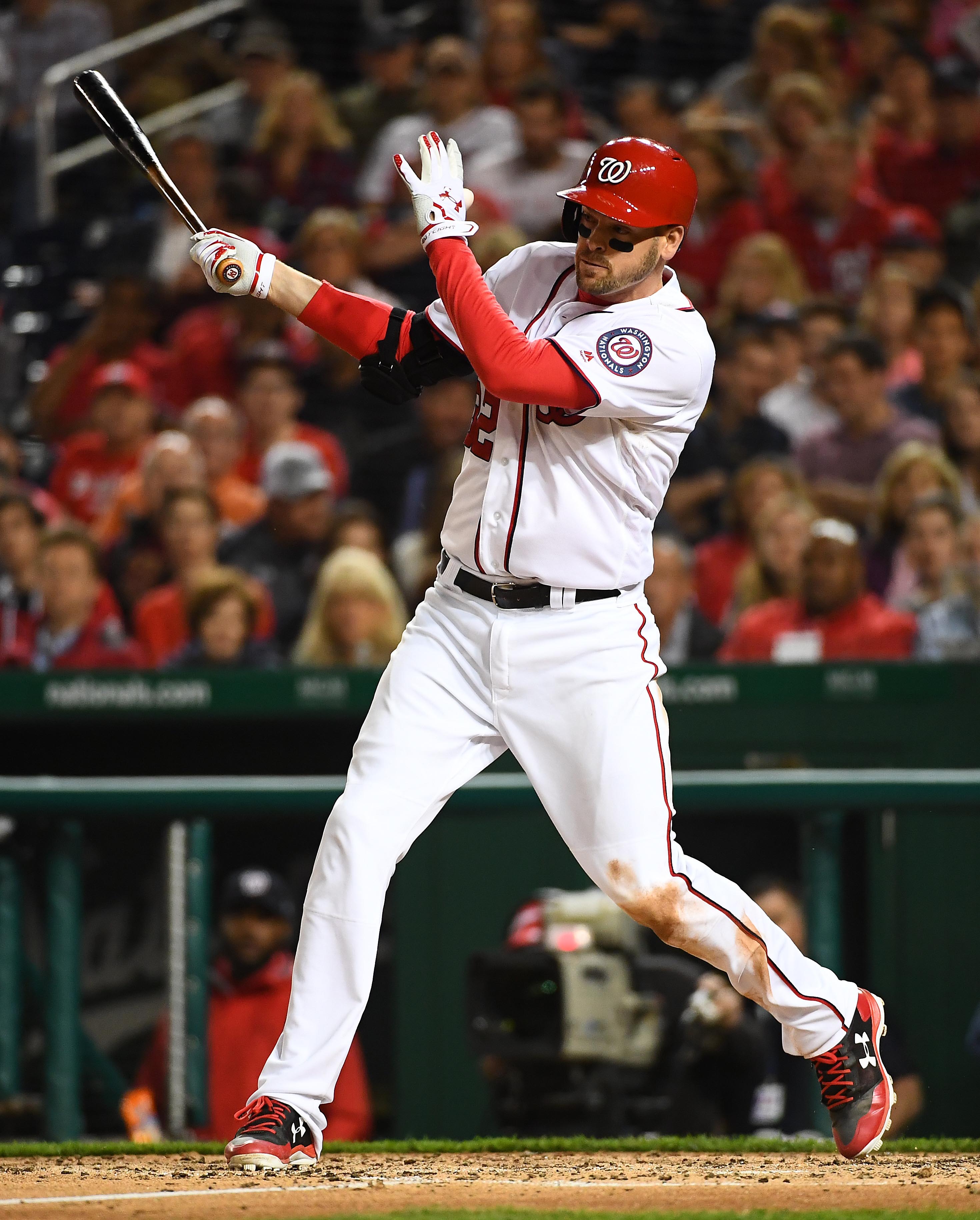 Brad Mills-USA TODAY Sports” width=”241″ height=”300″ />
There’s not a ton of upside in the Wieters deal, since he can opt out if he has a strong 2017 season and will not be eligible to receive a qualifying offer. But the Nationals obviously felt it was worth the premium to add the respected veteran; time will tell whether that was a wise choice.
The short-term veteran additions carried over to other areas as well. Adam Lind will take over for Clint Robinson as the lefty bench bat and reserve first baseman; he’d be a bargain with his $1.5MM guarantee if he can return to anything approaching his 2013-15 form. And Chris Heisey will return to reprise his role as an extra outfielder and righty pinch-hitting option.
Questions Remaining
As befits their status as a reigning division champ and favorite to return to the postseason in 2017, the Nationals don’t have any glaring holes on the roster. But that doesn’t mean there aren’t some areas of potential concern.
Let’s start with the bullpen, which has fans wringing their hands already just a few games in. Treinen has had a few hiccups, as have Glover and others. It’s too soon to reach any judgments, of course, but the ninth inning will be watched closely and the trade deadline could seem far away if at least one member of that duo can’t consistently lock up games late.
Truth be told, the rest of the pen look solid on paper. But Shawn Kelley is being handled with care, especially after departing his last postseason outing with what seemed at the time to be a scary arm issue. Blanton is 36 years old and may have worn down late last year. From the left side, Sammy Solis has had his share of health issues, Romero has yet to show he has the command to pitch in the majors, and one wonders how long Oliver Perez can continue to beguile opposing hitters.
Jeremy Guthrie seemed likely to take a slot in the pen as a long man after making one start, but a disastrous outing led to a quick DFA. He has been replaced by Matt Albers for the time being. In terms of depth, there aren’t many proven commodities waiting at Triple-A, though there are some options. Trevor Gott still hasn’t produced results in D.C. despite his big fastball; other 40-man members include Rafael Martin, Austin Adams, Jimmy Cordero, and Matt Grace, while a few veterans such as Neal Cotts and Joe Nathan are also on hand if there’s a need.
The depth is perhaps of greater concern in the rotation, which looks to be a solid unit 1 through 5. Max Scherzer answered most of the questions about his health — he’s recovering from a finger fracture — with a strong first outing. But Stephen Strasburg remains a long-term health risk after missing time again with a forearm injury late in 2016. Gio Gonzalez is coming off of a down year and remains inconsistent, while Tanner Roark seems a solid starter who’s also a good bet to regress somewhat after a stellar campaign. And Joe Ross — who is in Triple-A to open the year but ought to be called upon soon — has experienced shoulder issues at times.
If any of those pitchers goes down, it’s an open question how the Nats will proceed. Guthrie had seemingly been slated to serve as a swingman, but it’s unclear whether he’ll remain in the organization. The next man up could be A.J. Cole, who was once seen as a top prospect but who has yet to show he can take the final step. Austin Voth has generated quality results in the upper minors, but it’s unclear whether he can do the same in the bigs. The Nats parted with minor-league signee Vance Worley late in camp, so reclamation project Jacob Turner is likely the top non-roster starter remaining.
There’s little doubt of the talent level in the lineup, which features established hitters at just about every position. But Bryce Harper needs to show that 2016 was a blip — he’s off to a promising start, and seems healthy after some strange questions about his shoulder — and Turner will try to show he can sustain his incredible performance from his rookie year. (The latter is now shelved with a hamstring strain, though the hope is it’s not a major issue.) Eaton’s ability to handle center is somewhat in question, though that’s not a huge concern and the team could utilize Michael Taylor or Brian Goodwin at times if there’s a need for more glove. Anthony Rendon and Daniel Murphy were outstanding last year, but the former has shown some fragility at times and the latter will be looking to sustain levels of production that greatly exceeded his career mean.
For the most part, it’s picking at nits at those positions. The Nats have greater concerns at the three remaining spots on the diamond. Left fielder Jayson Werth is closing in on his 38th birthday and hasn’t hit much in the past two seasons. The same is true of Zimmerman, whose production fell off a cliff (.218/.272/.370) in 2016. Both he and Werth have had their share of injury troubles over the years, and they’ll both need to stay healthy while increasing their output as they age for the team to reach its potential. While Lind is a nice piece as a reserve/platoon first baseman, he’ll be stretched if he’s asked to play the outfield or hit against left-handed pitching. And then there’s the catching position, where Wieters and Jose Lobaton look like a good-enough, but hardly overwhelming unit. Both are potential free agents at season’s end, so there’s plenty of incentive, and Severino is about as good a backup plan as any team has behind the dish.
Deal Of Note
The Nats’ acquisition of Eaton drew its share of negative attention, with many focusing on the fact that Eaton isn’t exactly a tools-laden superstar. But he’s a highly valuable player, particularly given his contract rights, and the deal lines up as a reasonably fair one on paper.
That’s not to say that it doesn’t hurt to lose the arms, of course, though it’s far from clear whether any member of the trio will be an impact major league starter. Giolito had solid numbers in the upper minors last year, but showed less velocity than expected and was hit hard in a brief big league stint. The Nats achieved tremendous value in nabbing him with the 16th pick of the 2012 draft, but seemingly soured on him. Clearly, he was no longer seen as the type of surefire ace that he had been characterized as this time last year.
Lopez came to the Nats with decidedly less fanfare as a low-key international signee, but turned himself into a top-flight prospect who arguably bypassed Giolito. He, too, showed well in his first stints at Double-A and Triple-A, but didn’t quite dominate upon ascending to the bigs. But he averaged 95.8 mph with his fastball in the majors and was trusted with a postseason roster spot. The question with Lopez has always been whether he’d stick in the rotation or turn into a late-inning power arm; that’ll be answered in Chicago at some point in the coming years.
It’d be a mistake to overlook Dunning, who was seen by many as a nice value after being overshadowed as a collegiate pitcher in a talented staff at the University of Florida. The 22-year-old showed well in his first foray into the professional ranks, though he’s a few years away from the big leagues.
Sacrificing those pitchers not only meant losing a lot of future control rights, but also changed the depth calculus for the 2017 season. Giolito and Lopez probably wouldn’t have cracked the Opening Day roster, but both would have been in contention for call-ups at any stage during the year after dipping their toes in the waters in 2016. As noted above, there are at least some questions regarding the Nats’ pitching depth; to be fair, though, the club also enjoys rather lengthy control rights over its existing starters.
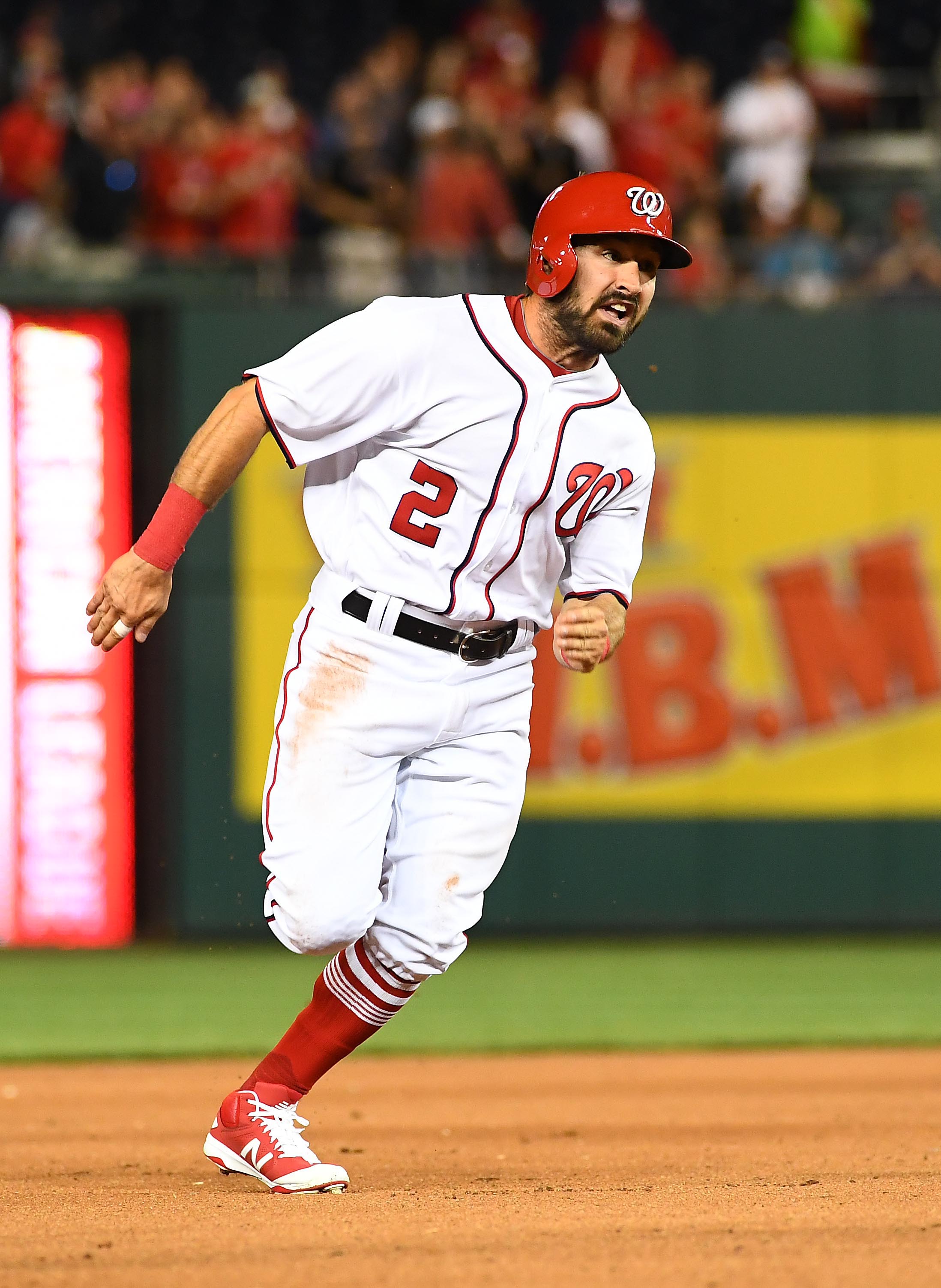
So, was it worth it? As ever, that’ll be evaluated over a long period of time, particularly given the fact that Eaton’s value is so wrapped up in his contract. In essence, he’s an established star who’s being paid more like an arb-eligible player. He’s guaranteed just $18.4MM over the next three campaigns and can be controlled for a total of $20MM (with $3MM in total buyouts) for two more years. That brings the possible tab to less than forty million bucks to control Eaton’s age-28 through age-32 campaigns.
Eaton doesn’t hit a lot of long balls and doesn’t swipe a lot of bags; he has landed in the teens in both counting stats in recent years. He walks only at an average rate. But he has been remarkably steady since establishing himself as a full-time player. Eaton has posted .362, .361, and .362 OBPs in his last three years while landing at identical .144 isolated slugging marks and popping 14 long balls apiece in the past two — establishing a new power benchmark after showing little pop previously. And he has been worth between four and five runs a year on the bases in his prior two campaigns, as well.
In a way, the major open question on Eaton is the glove — both in terms of general quality and his function to the Nats. Metrics split on his work in center in 2014 — DRS loved him (+11) while UZR was not a fan (-3.3) — but agreed he struggled there in the ensuing season. Then came a move to right, where Eaton rated as an elite defender — in terms of both his throwing arm and range — by measure of both major defensive ratings in 2016. The difference? In 2015, he rated as a three-to-four win player. Last year, he check in with about six WAR.
Clearly, the Nationals believe he’ll handle center capably enough, since that’s where he’s headed to open his tenure with his new club. But the fact that he has shown such capability in a corner spot also allows some flexibility moving forward. Werth’s contract is up this year, while Harper is slated for free agency after 2018. Importantly, the club managed to hang onto top prospect Victor Robles this winter; he could one day be a superstar in center, with Eaton lining up beside him.
They say you have to give value to get it, and that’s typically the case. Clearly, the Nationals did so here. But given the organization’s slate of quality veterans, it made sense to prioritize the near-term. And adding Eaton not only filled a need, but did so in a way that left the team with plenty of future value and won’t fill up much future payroll space — a heightened concern given the big guarantees made to Scherzer and Strasburg, the still-open question of Harper’s future, and the ongoing MASN television rights fees dispute that has forced the Nats to backload many of their major contracts.
Overview
There’s still a lot to like about the Nats as they try once again to break through with their long window of contention. But the questions never stop coming, and there’s a big one on the horizon with Harper. The team’s decision to make him a stunning arbitration raise hints that the pocketbooks could open up for a player who has been — and may be again — among the game’s best. As things stand, though, time’s a-wastin’ on winning while the phenom is in D.C., and the club will likely be aggressive in filling any needs that arise during the season.
So, how do you think the Nats handled the winter? (Link to poll for mobile app users.)
How would you grade the Nationals' offseason?
-
B 42% (777)
-
C 32% (597)
-
D 10% (184)
-
A 9% (162)
-
F 8% (146)
Total votes: 1,866
Photos courtesy of USA Today Sports Images.
Inside The Draft Room: The 2005 Red Sox
Put on a scouting director hat and ask yourself this question: Do you want your team to do poorly so you can have the maximum number of opportunities to select a premium draft pick, or do you want your team to win – knowing all the supposed “top of the line” talent will already have been taken?
The question is purely rhetorical. For the person directing the draft and all the scouts out scouring for talent in the smallest of towns, the ring is the thing.
But that doesn’t mean you can’t win and have fun on the scouting side, too.
In 2004, the Boston Red Sox – down 3 games to 0 in the American League Championship Series against the New York Yankees – rallied to win their final eight postseason games in eliminating the Yankees and sweeping the St. Louis Cardinals. In the process, they won their first World Series since 1918.
On paper, if no free agents switched clubs, the Red Sox would have picked 28th overall in the ensuing 2005 amateur draft – with a second pick coming in at No. 58. But baseball isn’t played on paper. After the annual free agent signing frenzy, the world champs lost Orlando Cabrera, Derek Lowe and Pedro Martinez, and now – thanks to compensation selections and supplemental picks – found themselves with six draft choices from No. 23 to No. 57.
So … to the victors did go the spoils.
Oh, there’s just one thing. They were about to restock with a first-time scouting director.
– – –
In November 2002, Theo Epstein – just 28 years of age at the time – was named general manager of the Red Sox. Earlier that year, he had joined the organization as the assistant GM after coming over from the San Diego Padres.
During his time in San Diego, Epstein struck up a friendship with Jason McLeod, a former minor league pitcher who began his Padres career as a Community Relations intern in 1994 – before moving over to Stadium Operations that winter and to the Baseball Operations Department in the fall of 1995 (Epstein had joined the team earlier that year). McLeod’s time with the Padres later included three years as a minor league coach, a return to the front office as the assistant director of scouting and player development, and two years as an area scout in Southern California.
Epstein brought McLeod to Boston as an associate scouting director in the fall of 2003, assisting David Chadd. After the Red Sox won the 2004 Fall Classic, Chadd moved on to Detroit to become the Tigers’ vice president of amateur scouting – and McLeod was promoted into the scouting leadership position. Epstein wasn’t concerned about inserting his former Padres cohort into that role despite McLeod’s relative lack of experience in the draft room.
“Jason and I grew up together in the Padres organization,” Epstein said in an email, “so I knew he could really evaluate and was a great leader.
“It was a seamless transition because Jason had worked with us in 2004. The entire organization was focused on the draft with all the picks we had, and Jason did a great job as always leading the department. We had a lot of fun all scouting season and in the draft meetings.”
McLeod acknowledges that he didn’t have a boatload of experience from a draft-day perspective when he took over.
“In ’04, I was instilling and re-doing the processes of it,” McLeod says. “David was absolutely the scouting director; he was pounding it out on the road. But from the front office side of things, we were kind of co-directing that department that year.
“During my time in San Diego, I had sat in on many draft meetings, but I hadn’t been in the director’s seat or calling the shots or instituting processes or things like that until I got to Boston.”
The Red Sox had broken the curse. Now, just a few months later at their January scouting meetings, McLeod was presiding over the group and putting a game plan into place.
“There was a lot of excitement, obviously, coming off the World Series year,” he says. “For those of us in amateur scouting, we were just as excited knowing that we had two first-round picks and three sandwich picks. We felt that we were going to get a couple impact players with the volume of picks that we had. And coming out of the prior summer – after scouting the Cape, scouting the Team USA juniors – we knew that it was going to be a really good draft.
“We told our guys, ‘Let’s get after it and go crush it and find as much impact and upside as we can.’”
– – –
The top tier of the 2005 draft was considered to be very deep, and the results continue to speak for themselves.
Eight of the first 12 selections have appeared in the All-Star Game. Five of the first seven – Justin Upton, Alex Gordon, Ryan Zimmerman, Ryan Braun and Troy Tulowitzki – have career WAR above 25.0.
The Red Sox knew they had no chance of landing any of those five – or high school outfielders/future all-stars Andrew McCutchen and Jay Bruce, who went 11-12. But there was still a lot of talent out there to be had. Boston had the No. 23 and No. 26 selections in the first round – along with the Nos. 42, 45 and 47 slots in the supplemental round. The team’s second-round pick was No. 57 overall.
The key was to be prepared for anything and everything. Back in 2005, the draft was conducted via a conference call – and there was very little time between picks.
“At that time, we did a lot of mock drafts,” explains McLeod, who is now the Cubs’ senior vice president of scouting/player development. “We would run a mock draft where different scenarios were happening. I think at that time we maybe had 30 seconds before the next pick. So we ran a lot of simulations in the room. Theo liked to try to set up scenarios where … there were 12 of us in the room, and he’d set up scenarios and go worst case. I’m sitting there watching the board, and he’d set it up and say, ‘Now this guy and that guy are gone. Where are you going here?’ And he put you on a timeclock. We probably did that about five or six different times where we ran those simulations.
“We felt good about the information that we had. We felt good about the performance metrics we were looking at, and about how we had the board stacked. So at that point, let’s run the simulations. ‘Now, he’s gone. Now these two guys are gone.’ We also ran some where we knew there would be no way the board would fall that way, but if it all blew up, ‘Now where are you going? Why are you doing that?’ So you do those things prior to draft day. You trust the process and you trust the preparation.
“At the same time, just like every draft year … as the pick is getting close, there is some anxiety and anticipation that you feel. But again, you just trust your process. You do all the work to be prepared for every situation.”
– – –
By draft day, the Red Sox had narrowed their focus to three collegians for the No. 23 selection – Oregon State outfielder Jacoby Ellsbury, Arizona outfielder Trevor Crowe and Texas A&M shortstop Cliff Pennington.
“We spent so much time talking about those three players in particular, because we were really hopeful that one of them got to us,” McLeod said. “We spent an inordinate amount of time in the weeks leading up to the draft meetings on them. We kept stacking them and stacking them and talking about their strengths and weaknesses.
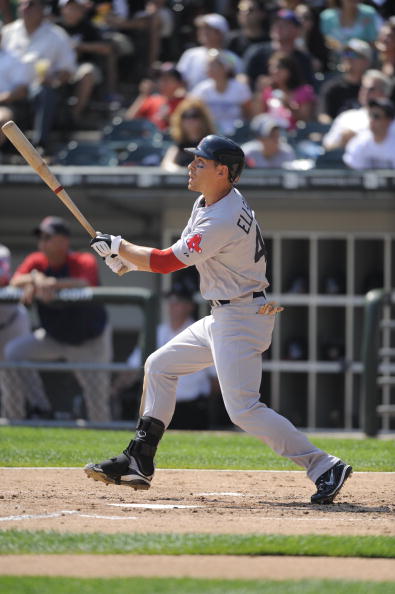
“The funny thing about Jacoby … that year, he had such a great year, and I saw four or five of his games – and he probably had his worst games when I was there. I actually took Theo to a game at the University of Washington when the Red Sox were in Seattle. Of course, Jacoby’s first two at-bats, he was 0-for-2 – and Theo was like, ‘Jason, you’re not allowed to watch his next at-bat. You’re bad luck. Please, turn around or something.’ So I literally turned around and heard the crack of the bat; I turned back and the ball was in the gap. Theo and I are standing down the third-base line, and I remember watching this kid round second turning on the afterburners as he’s coming into third. It was just something. You watch a lot of games and see a lot of fast guys, but then you see stuff that makes you say ‘Wow.’ That was one of those moments, just watching this guy fly around the bases. So I knew I wasn’t totally bad luck. I was in the ballpark. I didn’t see the contact, but at least I heard it.
“I literally saw him go 2-for-15 in a year that he hit over .400 and had an on-base of almost .500. But our scouts were so convicted on him – from the area guy (John Booher) to the regional guy (West Coast cross-checker Fred Peterson) to our national cross-checker (Dave Finley). They were all like, ‘This is our guy. This is it.’
“He was already doing the things that we were looking for … the ability to get on base … the fact that he was an outstanding athlete who was going to play in center field … he had a low K (strikeout) rate. My question was just going to be the strength. I remember seeing him in the Cape, and I was worried a little bit about how the ball was going to come off the bat.
“But there’s a really good story from that year. Oregon State was down at the University of San Diego, and it was one of the only days in the history of the University of San Diego that they actually had a rainout. San Diego’s coach, Rich Hill – who we had a really good relationship with – was gracious enough to let us work out Jacoby. So a couple of our scouts got to see him hit in the cage. Then they took him up to the Jenny Craig Pavilion, and there’s Jacoby Ellsbury throwing down gorilla dunks for our scouts – showing them his explosiveness and his athleticism. I wasn’t at that workout, but our cross-checker just called me and was blown away with the explosiveness in Jacoby’s body. He was like, ‘You will not believe what Jacoby just did.’
“If you looked at his performance, all the makeup we got on him, the fact that we felt that he was going to be ultra-disruptive on the bases … we thought he was going to be a shutdown center fielder. All of that aligned with someone that we absolutely wanted to bring into the organization. That’s why we liked Pennington. That’s why we liked Crowe. They were all these dynamic athletes that played in the middle of the field.”
Crowe went No. 14 to Cleveland. Pennington was chosen at No. 21 by Oakland. The Marlins, drafting after the Athletics and before the Red Sox, selected high school second baseman Aaron Thompson – and Ellsbury was Boston-bound.
McLeod literally had about 30 seconds to breathe. Houston was on the clock (selecting Brian Bogusevic), then came Minnesota (Matt Garza). It was now time to make another decision.
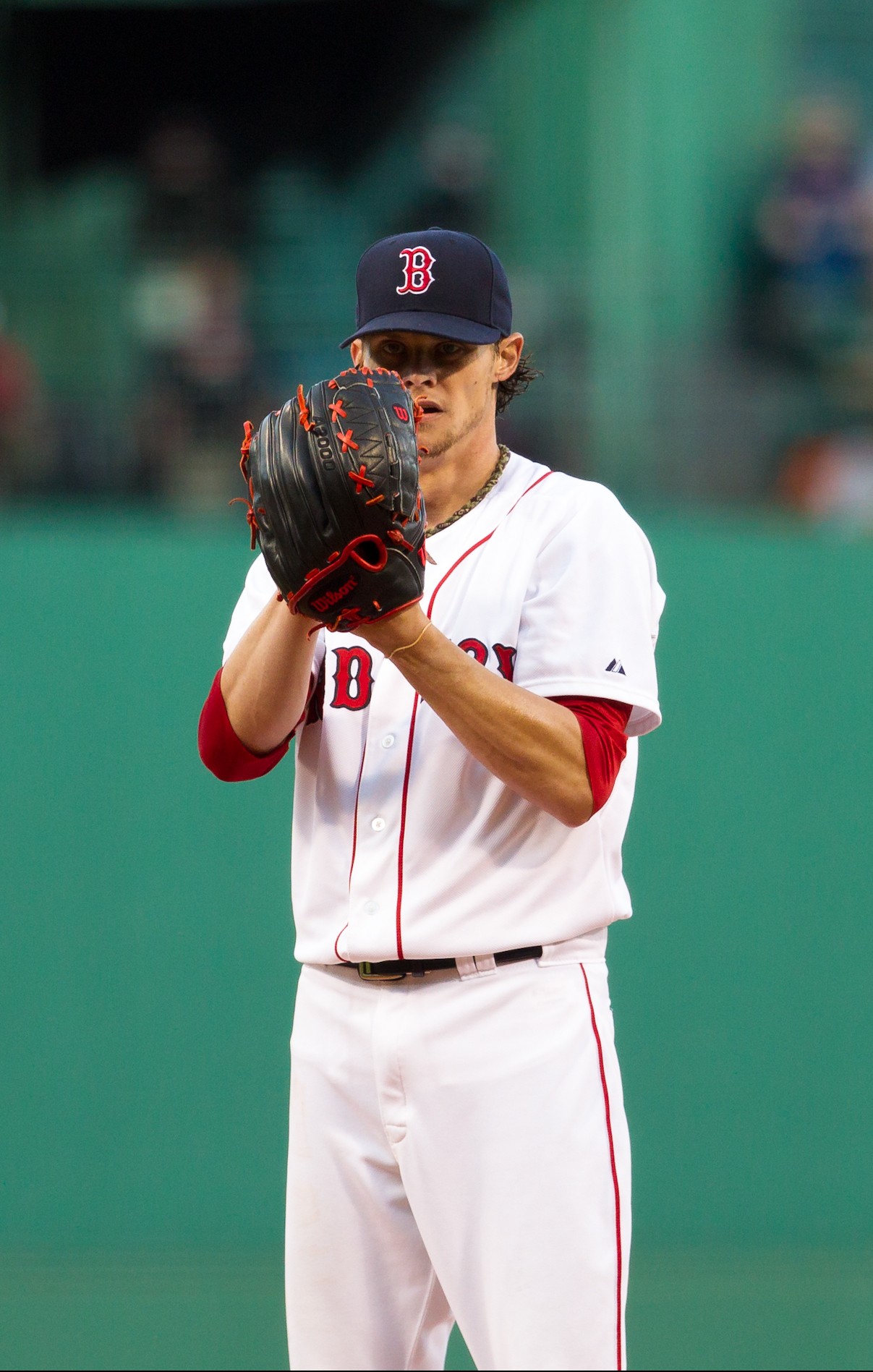
MLBTR Originals
Here is this week’s original content from MLB Trade Rumors’ writing staff and contributors…
- MLBTR contributor Chuck Wasserstrom looks back at the White Sox 1998 draft with former Sox scouting director Duane Shaffer. While Chicago’s first four picks from that draft (Kip Wells, Aaron Rowand, Gary Majewski, Josh Fogg) went on to enjoy lengthy big league careers, the Sox 1998 draft class was a rare example of a team striking gold with a 38th-round pick — longtime White Sox rotation staple Mark Buehrle. “The level of satisfaction with this draft is tremendous. When you’re right on the top end of your draft, that’s basically what you get paid for. You have to be right on those guys,” Shaffer said. “When you get a guy like Mark Buehrle down in the draft – he makes that draft that much better.”
- Tim Dillard (a.k.a. @DimTillard) takes us inside the clubhouse of the Brewers’ Triple-A affiliate in his latest Inner Monologue , covering everything from Tim Tebow and vanity plate etiquette to 50 Cent and on-field wedding proposals.
- MLBTR’s Offseason In Review series continued with Steve Adams examining the Royals, Connor Byrne looking at the Mariners, Charlie Wilmoth covering the Angels, and Jeff Todd breaking down the Rockies’ and Phillies’ winter moves.
The Inner Monologue of @DimTillard Clubhouse Edition
It’s 11:30am on Saturday, April 8th, 2017. My name is Tim Dillard. Two days ago, I started my 15th season in professional baseball. And even though I’m SUPER underqualified, I’ve journaled my Inner Monologue in three other posts for MLB Trade Rumors (Part 1) (Part 2) (Opening Day).
11:34am I’m currently at the ballpark in Triple-A Colorado Springs, and have relief pitcher stretch at 1:00pm. But until then, I’ve decided to jot down some thoughts.
11:36am The multiple clubhouse TVs are showing baseball games while the clubhouse speakers are pumping out rapper 50 Cent’s music playlist. In fact, he just told Shawty that it’s his birthday. Congrats Shawty!
11:37am One of the TVs has Tim Tebow coverage … looks like congratulations are in order again! It appears Tebow hit a two-run home run the other day in his first-ever professional minor league at bat! WOW! Watching the replay of his post-game SportsCenter interview, reminds me of the two-run home run I hit last year in my first minor league at bat of the season. Though … his post-game SportsCenter interview ran a bit longer than mine did.
11:43am Okay, I was wrong — one TV has golf on it. The Masters is on, I’m being told. I’m also being told that I look like the homeless caddy from Happy Gilmore. Must be this mesmerizing BEARD I’m parading around.
11:45am Every year I’m impressed how versatile and knowledgable baseball players really are! Right now golf advice is running rampant. But next week, hockey sticks and body checking will start creeping into the locker room. And after that usually comes overly-giant hats and jockey evaluating in honor of the Kentucky Derby.
11:52am And whenever something is being thrown away in the clubhouse, you’ll always hear a “Jordan!” or “Kobe!” … or maybe it’s “Curry!” now. Players talk basketball the entire baseball season … probably ’cause the NBA Playoffs last five months.
11:53am But every four years, I daresay the FIFA World Cup takes over everything! Complete with jerseys, reenactments, and multiple soccer balls! And I bet there’s a spike in the sale of soccer cleats as well!
11:55am FIFA is a big deal because a baseball clubhouse is home to so many backgrounds and nationalities. It’s just a beautiful melting pot of pride and awesome!
11:57am 50 Cent is still at it … “I love you like a fat kid love cake.” Probably my favorite 50 Cent lyric!
12:01pm Remember a few years ago when 50 Cent threw out the ceremonial first-pitch at a Mets game? And it was just the worst first pitch ever? And everybody was making fun of him? I didn’t … I’ve thrown pitches that bad before, and I’ve done it without being shot nine times.
12:04pm The ceremonial first pitch in baseball dates back over a hundred years! (At least I think — Google if you care enough.) What a special tradition, though! I’ve witnessed hundreds over my career. In fact, I was actually going to propose to my wife during a ceremonial first pitch!
12:10pm I was pitching for the Class A+ Brevard County Manatees in 2005, and decided to propose at one of our games! My plan was to get stadium management to trick my now-wife into throwing the first pitch, and I was going to disguise myself as the catcher. So after catching her throw, I was going to run out to the mound to give the ball back. But then drop to a knee, remove my catcher’s mask, and whip out the ring!
12:16pm Now, I know what you’re thinking… “WHAT AN AWESOME IDEA!” right? Well, about a week before the plan was to be executed, my now-wife and I see a sports proposal on TV. Then she turns to me and nonchalantly says, “If you ever tried something like that, I’d say no.”
12:19pm Okay so I’m not the brightest tool in the drawer, but kinda got the feeling an on-field proposal could be a bad idea. “Now I know, and knowing is half the battle.” -G.I. Joe
12:23pm But I have learned a lot over my many years in baseball. Simple things. For instance: don’t put a “BRU CRU” vanity plate on your car just because you’re in the Milwaukee Brewers organization. And don’t get a tattoo of a flaming baseball on your arm, just in case you stop throwing hard one day. (I’ll admit I’ve done one of these.)
12:28pm Being around baseball for a long time also has its perks. Like: no matter what clubhouse I’m in … my phone already has the password, and automatically connects to the wi-fi. And of course, infinite access to peanut butter and jelly sandwiches.
12:33pm Thanks to a generous teammate sitting next to me, I can safely say that the local gas station’s Rice Krispy treats are on point!
12:34pm Clubhouse manager is walking around delivering the daily packages. I don’t get a lot of mail these days. But all the young prospects get boxes everyday! Stuff like spikes, batting gloves, shower shoes, portable chargers, Bruce Lee shirts, candy, disco ball, camo tights, Quench Gum, cribbage board, Aerobies.
12:36pm Hey I actually did get mail! Crap. It’s from my bank. Says my credit card was compromised again and sent me a new card. Looks like they got suspicious from purchases made last week in Arizona, Wisconsin, and Colorado… and one online order for exotic beard oil.
12:38pm CRAP! I need to hurry up. Don’t want to be late for stretch!
12:38pm Come to think of it, when I was a kid, my brothers and I weren’t allowed to use the word crap. It was on the bad word list. My mom would wash our mouths out with soap if we let the crap word fly. I still have a hard time using Dial soap.
12:41pm Ah yes, the clubhouse… so full of life and sound. Like a cross between Chuck E. Cheese and a Play It Again Sports.
To Be Concluded…
Offseason In Review: Kansas City Royals
This is the latest entry in MLBTR’s Offseason In Review series. The full index of Offseason In Review posts can be found here.
The Royals’ 2016-17 offseason will, sadly, always be remembered for the stunning, untimely death of one of their most recognizable young talents: 25-year-old right-hander Yordano Ventura. In the wake of that tragedy, the Kansas City front office made several late additions to a now-retooled roster that will dedicate the 2017 season to the memory of a friend and teammate who was taken from the world far too soon.
Major League Signings
- Jason Hammel, RHP: Two years, $16MM (including buyout of 2019 mutual option)
- Brandon Moss, 1B/OF: Two years, $12MM (including buyout of 2019 mutual option)
- Travis Wood, LHP: Two years, $12MM (including buyout of 2019 mutual option)
- Total spend: $40MM
Notable Minor League Signings
- Seth Maness, Peter Moylan (re-signed), Bobby Parnell, Brandon League, Chris Withrow, Al Alburquerque, Brooks Conrad, Jonathan Sanchez, Garin Cecchini, Brayan Pena
Trades and Claims
- Acquired OF/DH Jorge Soler from the Cubs in exchange for RP Wade Davis
- Acquired RHP Nate Karns from the Mariners in exchange for OF Jarrod Dyson
- Acquired OF Peter O’Brien from the D-backs in exchange for minor league RHP Sam Lewis
- Acquired minor league OF Donnie Dewees from the Cubs in exchange for minor league RHP Alec Mills
- Acquired minor league RHP Jared Ruxer from the Angels in exchange for RHP Brooks Pounders
Extensions
- Danny Duffy, SP: Five years, $65MM
Notable Losses
- Wade Davis, Jarrod Dyson, Kendrys Morales, Edinson Volquez, Luke Hochevar, Kris Medlen, Dillon Gee, Chien-Ming Wang
Royals Depth Chart; Royals Payroll Info
Needs Addressed
Entering the offseason, all eyes were on a host of veteran Royals slated to hit free agency following the 2017 season. Eric Hosmer, Mike Moustakas, Lorenzo Cain, Wade Davis, Danny Duffy, Alcides Escobar and Jarrod Dyson all finished up the 2016 campaign knowing that it was possibly the last time they’d all be together as teammates. General manager Dayton Moore spoke candidly early in the offseason and suggested that some payroll regression was likely in store, and Royals fans braced for the potential departures among the ranks of the team’s longstanding core.
And indeed, Moore subtracted some pieces, but perhaps not as many as Royals fans might’ve feared. Davis and Dyson found new homes following trades that sent them to the Cubs and Mariners, respectively. While Moore likely took no pleasure in parting with players who cemented themselves as Major Leaguers during their time with the Royals, the GM and his lieutenants were able to acquire a pair of controllable pieces in each one-for-one swap.
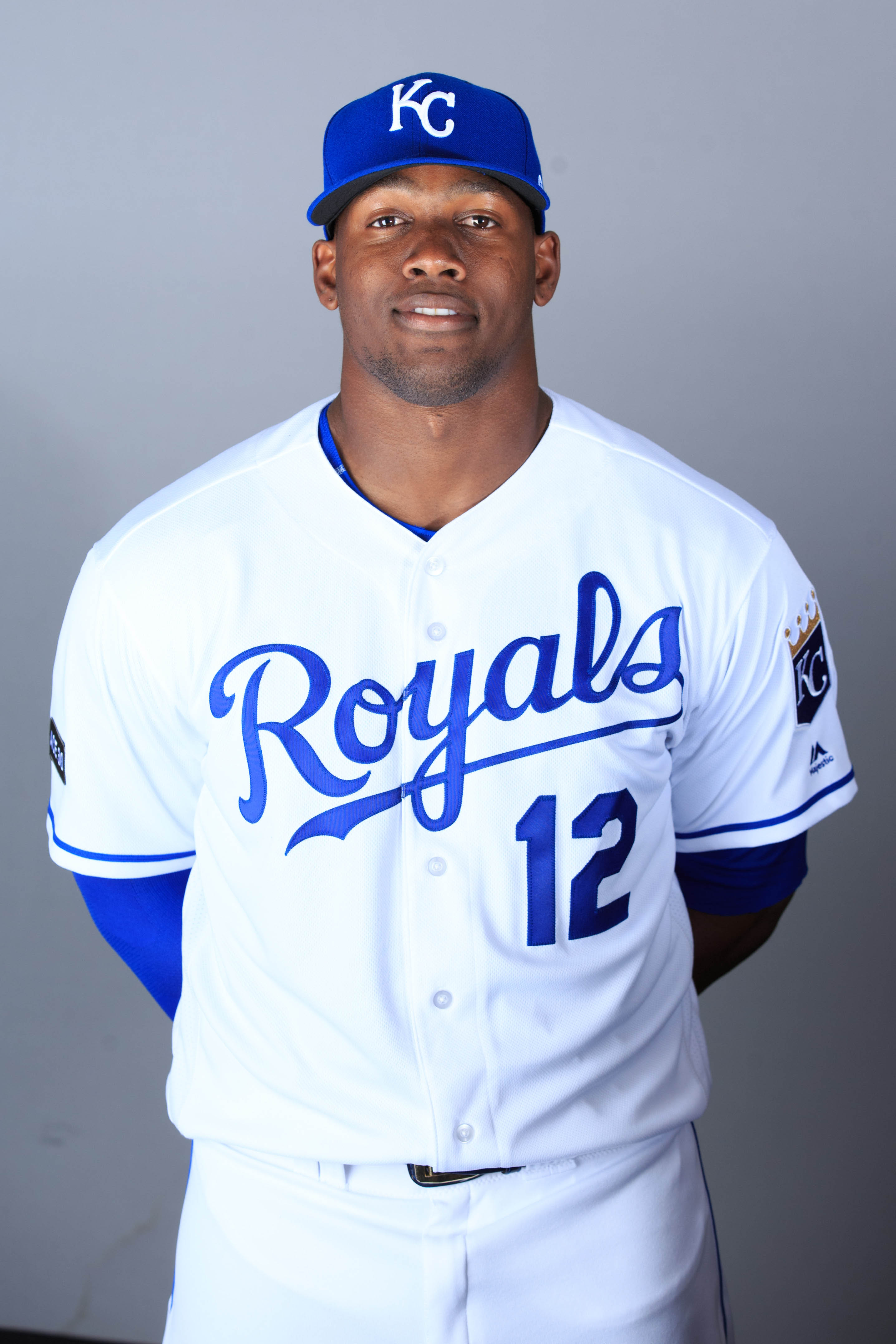
Davis netted former uber-prospect Jorge Soler, who has yet to break out but is still just 25 years of age. And Dyson’s blend of baserunning/defensive wizardry was right up Seattle GM Jerry Dipoto’s alley, prompting the Mariners to trade right-hander Nate Karns to Kansas City in exchange for one highly affordable year of Dyson. Though neither of the acquired assets has solidified himself as a big league contributor, each comes with four years of club control remaining. Acquiring eight years of MLB-ready talent, albeit unproven talent, in exchange for two players entering their contract years was a nice bit of work for the Kansas City front office (especially considering the trades also lowered the Royals’ 2017 payroll).
Another of those core Royals also resolved some of the uncertainty surrounding his status beyond the 2017 campaign, but Duffy did so in a drastically different manner when he signed a five-year extension that’ll guarantee him $65MM (more on that later). Now locked in as the clear top starter in the K.C. rotation, Duffy will be tasked with leading a new-look pitching staff this season.
In Karns, Jason Hammel and Travis Wood, Moore and his staff acquired a trio of arms to help round out the rotation. In the cases of Hammel and Wood, they did so by waiting out a surprisingly weak market to acquire both players at relatively bargain rates. Hammel’s $16MM price tag is especially surprising. Many pundits (we at MLBTR included) pegged him for a three-year deal in a thin market for starters after the Cubs made the then-curious decision to buy out his seemingly reasonable $12MM option for the 2017 season.
Wood spent the winter seeking an opportunity to reestablish himself as a starter, and but he’ll initially work out of the ‘pen after Hammel and Karns claimed rotation spots behind Duffy, Ian Kennedy and Jason Vargas. That group doesn’t exactly strike fear into the hearts of opposing lineups, but each can be at least a serviceable arm, and the Royals’ large park and quality defense should compensate for some of the quintet’s shortcomings.
On the position-player side of the equation, the Royals didn’t have an overwhelming amount of work to do. Trading Dyson and watching Kendrys Morales depart created a need for a few additions, but the acquisition of Soler and Peter O’Brien in trades and the late signing of veteran Brandon Moss could well cover those departures. The trio of new additions won’t match the defensive excellence of Dyson in the outfield, but that group brings more to the table offensively.
Read more for further analysis …
