
Extension Candidate: J.D. Martinez
The Tigers discussed a long-term contract with J.D. Martinez last offseason before settling on a shorter multi-year pact. Martinez’s two-year, $18.5MM deal allowed the two sides to avoid arbitration, settling the outfielder’s salaries for both his second and third years of arbitration eligibility. With Martinez now just over a year removed from free agency in the 2017-18 offseason, Tigers GM Al Avila will surely re-engage Martinez’s agents at RMG Baseball about an extension that will keep the slugger in the Motor City for years to come.
Martinez missed just under seven weeks due to a fracture in his right elbow, a somewhat fluky injury that interrupted an otherwise outstanding season. He entered Wednesday’s action hitting .317/.384/.556 (all of which would be career highs) with 21 homers over 469 plate appearances, plus his 151 wRC+ ranks among the top ten hitters in the sport in that metric of total batting productivity. He is also on pace for a career-best walk rate, as well as his lowest strikeout rate in four years. Since joining the Tigers as an unheralded minor league signing during Spring Training 2014, Martinez has done nothing but rake, delivering a .907 OPS over 1606 PA in a Detroit uniform.
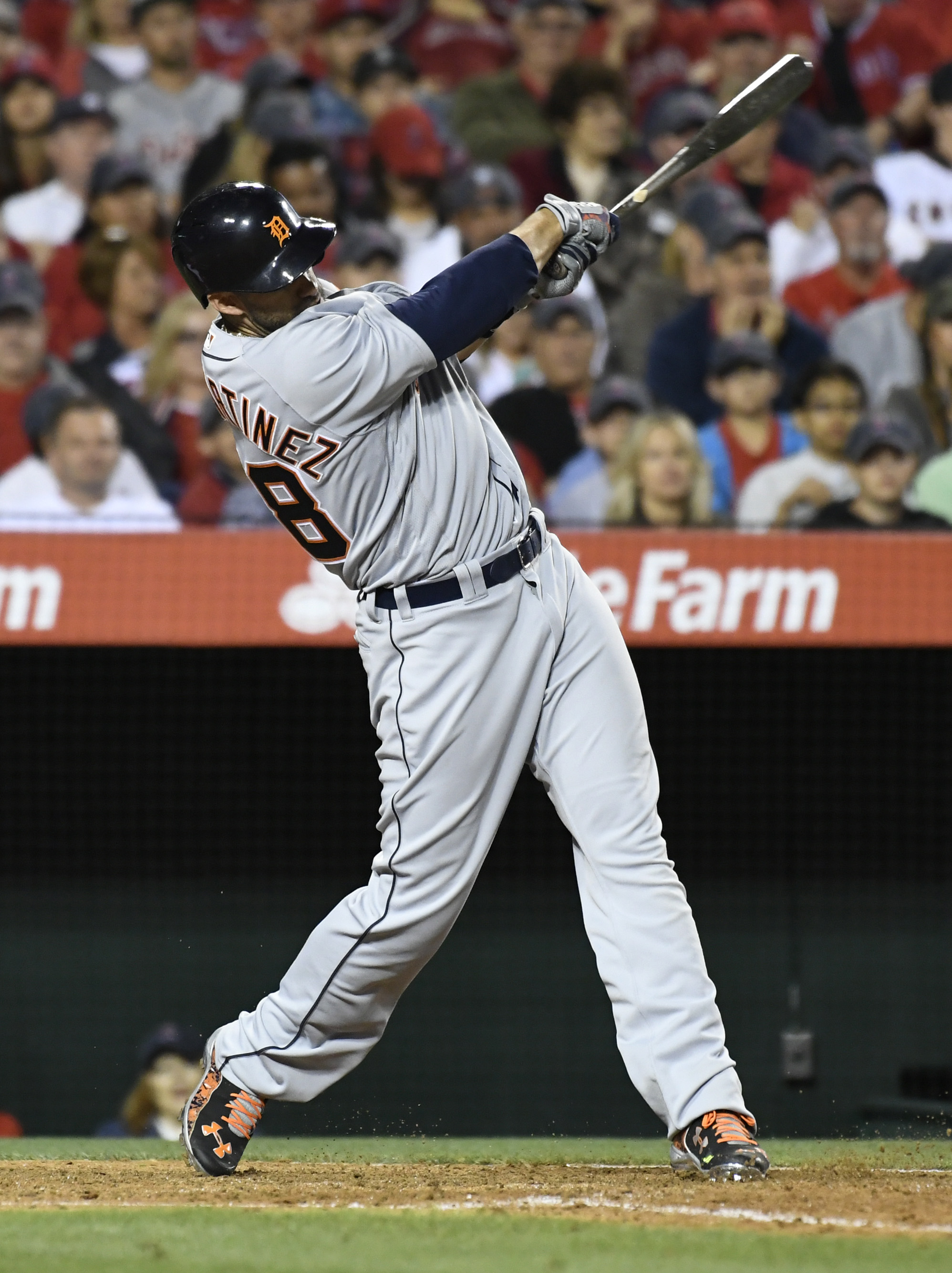 Martinez expressed an interest in being “a Tiger for life” last winter, though his asking price has surely gone up in the wake of his third straight huge season. He has extra leverage in the form of financial security (over $21.5MM in career earnings by the end of next season) and the fact that he’d be in line for a monster contract in the 2017-18 free agent market. If he duplicates his 2014-16 numbers, JDM will have the most earning potential of any hitter in that year’s free agent class. Carlos Gonzalez has a longer track record but he is two years older than Martinez and hasn’t been as impressive of late; the Royals trio of Lorenzo Cain, Eric Hosmer and Mike Moustakas can’t be considered locks for huge money based on their problems in 2016; Justin Upton has also struggled this season and may not choose to opt out of his own contract with the Tigers next winter.
Upton’s situation looms as a major factor in the talks between Martinez and the Tigers. Upton has only recently started to hit after a dreadful first half, so he’d need a big rebound year in 2017 to consider opting out. If he chooses to remain in his contract, the Tigers will owe Upton $88.5MM through the 2021 season. That is a sizeable chunk of payroll that, based on this year’s numbers, Detroit would surely prefer to allocate towards keeping Martinez in the fold.
San Diego Padres: Top 5 Bright Spots Of 2016
Rebuilding season or not, falling short of the playoffs and finishing with a losing record probably means that more things went wrong than went right for a team. This series, however, will focus on those silver linings that each team can take away from an otherwise disappointing season.
[Related: “Top Bright Spots” archive]
Here are the biggest bright spots for the San Diego Padres.
1. Ryan Schimpf, 2B
In seven years with the Blue Jays, Schimpf was never even added to the team’s 40-man roster. It’s safe to assume that they didn’t think he was capable of having anywhere near the success he’s had with the Padres (.890 OPS, 19 homers, 15 doubles, five triples in 79 games). To be fair, neither did the 29 teams who passed on Schimpf whenever he was available in the Rule 5 draft. His unimpressive stints in Triple-A (.648 OPS in 2014; .607 OPS in 2015), despite success at every other level, probably helped to keep him off the radar.
For the 28-year-old, who signed a Minor League deal with the Padres this past offseason, it took a 1.160 OPS with 15 homers in 51 games for Triple-A El Paso to finally earn a big league call-up in mid-June. Schimpf got off to 3-for-29 start, but he’s been one of the most productive hitters in baseball since July 1, posting a .946 OPS and 37 extra-base hits in that time.
Schimp’s arrival has seemingly created a logjam at second base with Cory Spangenberg coming back from injury and Carlos Asuaje coming off of a terrific Triple-A season. In reality, though, there’s no way that a guy who just hit 19 homers in a two-and-a-half month span while playing solid defense won’t be penciled into the projected lineup for 2017.
Three Needs: Minnesota Twins
The Twins are up next in MLBTR’s Three Needs series, and while isolating three individual needs for a team with the worst record in Major League Baseball is a tall order, here are three aspects that the organization needs to shore up in order to facilitate a return to relevance in the AL Central…
1. Improve the player development process. There’s been plenty written about the Twins’ lack of embracing analytics, and while hiring a president of baseball operations that will embrace data and statistical analysis more than the preceding regime is indeed important, owner Jim Pohlad and president Dave St. Peter should also be looking to bring in an executive with a strong background in player development. The Twins have long had one of the game’s top-rated farm systems, yet time and time again the fruits of their vaunted minor league ranks struggle tremendously upon reaching the Major Leagues. Aaron Hicks and Byron Buxton were rushed, thereby explaining some of their struggles. Buxton is finally showing some promise, but Hicks has already been traded and has yet to develop into a regular player.
No one would make the case that Jose Berrios was rushed, but has been shelled in virtually every start he has made in the Majors this season. The list of Twins prospects that ranked comfortably within the top 100 from outlets such as Baseball America, MLB.com, ESPN and Baseball Prospectus but failed to deliver on that hype at the big league level is long. Kyle Gibson has shown little consistency in the Majors, Oswaldo Arcia has been designated for assignment by three organizations this year and Eddie Rosario hasn’t given any indication that his OBP is ever going to top .300. Alex Meyer has only made four big league starts — three of which have come with the Angels (though shoulder injuries have played a large role in his lack of contribution). Organizational top prospects like Danny Santana, Trevor May and Kennys Vargas have shown glimpses of usefulness but to this point have lacked consistency (Santana, in particular, seems to be at a crossroads).
The best pitcher the Twins have drafted in the past 15 years was Matt Garza, who was traded before ever pitching a full season in Minnesota. Following that, Scott Baker, Kevin Slowey and Gibson are the only starters drafted and developed by the Twins in that stretch that have made any real degree of impact at the MLB level. The Twins took Kohl Stewart with the fourth overall pick in 2013, but his raw stuff has yet to generate strikeouts and his stock has already dipped to the point where he’s fallen off of most prospect lists. For an organization that can rarely spend at high levels on the open market, the complete dearth of homegrown pitching talent is glaring — and it’s probably the chief reason that the Twins have been in the division cellar in five of the past six seasons.
That ties in nicely with the next need on this list…
Free Agent Stock Watch: Kendrys Morales
The second season of Kendrys Morales‘ two-year, $17MM deal with the Royals looked to be a flop as late into the season as mid-June. An 0-for-4 showing on June 10 dropped his OPS below the .600 mark (.592), and his overall batting line sat at .200/.265/.327 at that point. Fast-forward three-plus months, though, and Morales just belted his 29th homer of the season and has hit well enough that Rustin Dodd of the Kansas City Star saw fit to raise the question of whether the Royals should tender their designated hitter a qualifying offer this winter. I’ll delve into that in a bit, but first and foremost, the last three months of Morales’ season can’t simply be glossed over.
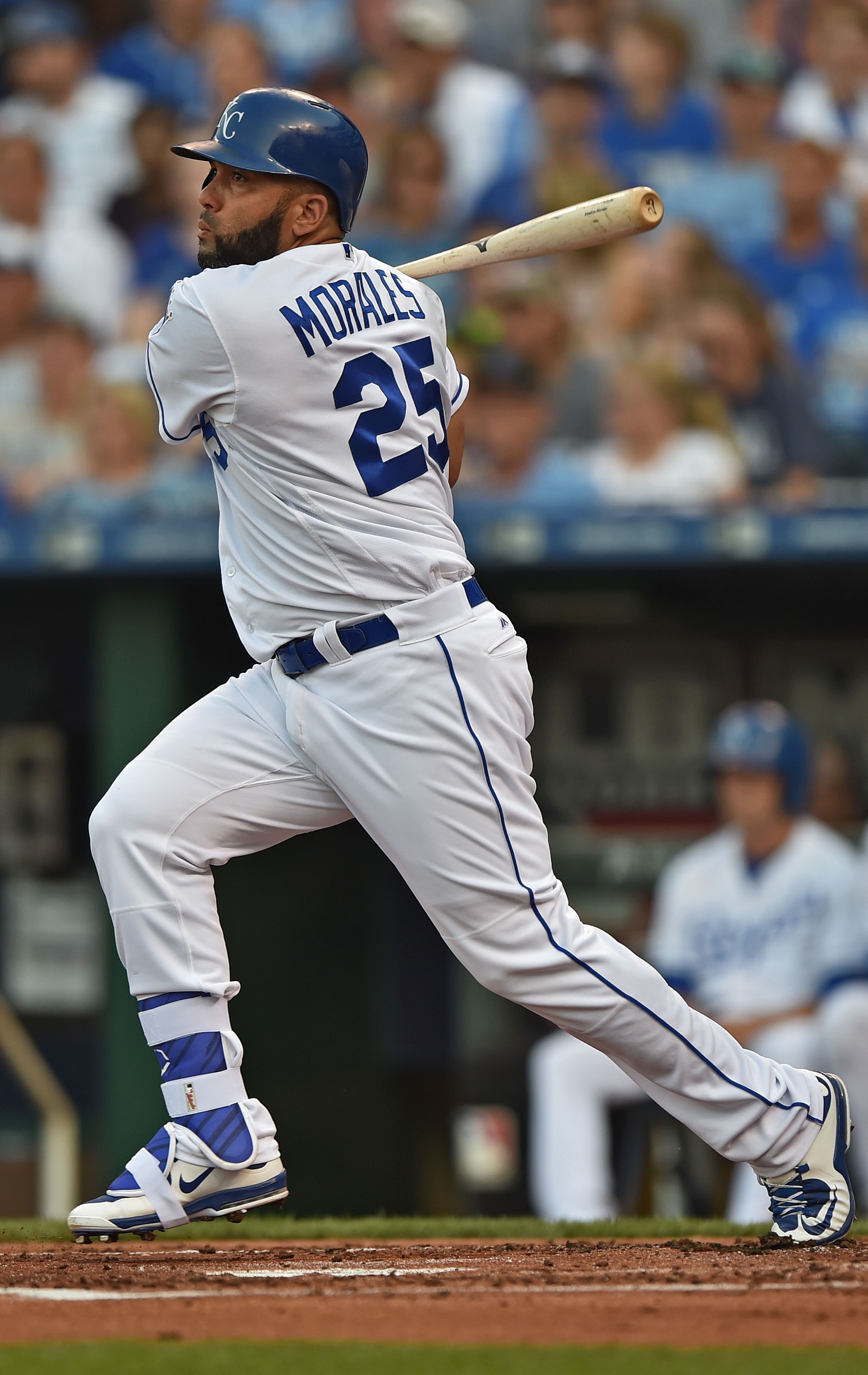
Morales went 1-for-3 with a homer on June 11, which represented a rare bright spot in a bleak season for him to that point. However, that fairly innocuous performance kicked off an eight-game hitting streak during which the switch-hitter was on fire, and Morales never really looked back. In 85 games (81 starts) between the onset of that minor hitting streak (and before tonight’s action), Morales batted an exceptional .303/.370/.563 with 22 homers and 13 doubles. He’s walked at a 9.1 percent clip and struck out at a 19 percent clip.
That Herculean stretch of games has boosted Morales’ season batting line to a plenty respectable .262/.329/.473. Those numbers grade out at about 10% above league average, with the lower OBP offsetting the pop, but they’re a far cry from his terrific debut in Kansas City when he slashed .290/.362/.485 in 639 plate appearances with the Royals last year. A strict designated hitter — which Morales is, despite the fairly stunning decision to play him in the corner outfield a bit during interleague play — with an above-average but not quite outstanding bat, however, isn’t necessarily a commodity for which teams will pay a premium price.
Morales’ value this winter, then, will in many ways hinge on whether teams are willing to simply write off the first two months of the 2016 season as an anomaly, instead choosing to focus in on the tremendous production that Morales provided throughout the 2015 season and for the bulk of the 2016 campaign. And if the 2016 season were the only time in recent history Morales looked lost at the dish, perhaps they’d be willing to do just that. However, it’s hard to imagine that clubs won’t be wary of a bat-only player that has now gone through prolonged stretches of not just below-average production but disastrously poor offensive output.
Morales, as many recall, received a qualifying offer from the Mariners on the heels of a solid 2013 season. That Seattle even tendered a QO to Morales was a surprise, but the fact that Morales and agent Scott Boras elected to decline the offer was even more shocking. Morales languished in free agency all offseason, unable to find a team willing to part with a top draft pick in exchange for his services. Ultimately, he waited until after the June draft to sign a one-year deal with the Twins that afforded him the pro-rated portion of a $12MM salary (about $7.5MM through the end of that season). Morales did virtually nothing to bolster his stock that year, batting just .218/.274/.338 with eight homers in what was unequivocally the worst season of his Major League career.
While Morales’ camp can argue that the lack of a Spring Training to get up to speed derailed any chances of having a productive year, those three and a half months, paired with the two-plus months for which he provided virtually no value to the Royals in 2016, total about a full season’s worth of considerably below-replacement-level production for Morales in the past few calendar years. He’s balanced them out with some excellent production as well, but the lack of consistency for a player whose lone job is to consistently provide offensive value serves as a red flag — especially in an age where many teams utilize the DH spot as a revolving door to play matchups and to keep various hitters fresh.
What’s clear is that Morales’ mutual option is all but certain to be torn up. Such options are virtually never exercised by both parties — either the player performs well enough to leave no doubt that he can top the option’s value in free agency, or he performs poor enough that the team doesn’t want him back at said price — and Morales’ shouldn’t be an exception. He’s performed well enough to reasonably expect that he can surpass $11MM in free agency, but has he performed at a high enough level for the Royals to risk tendering a one-year offer in the vicinity of $16.8MM? I lean toward no.
Last winter alone, we saw teams show extreme reluctance to part with draft picks to sign Ian Desmond, Dexter Fowler, Howie Kendrick and Yovani Gallardo. Meanwhile, bat-only players like Pedro Alvarez and Mike Napoli landed one-year deals worth $5.75MM and $7MM, respectively. Certainly, Morales has had a better season than Desmond, Alvarez and Napoli did in 2015, but reluctance to surrender a draft pick for players that can provide definitive defensive value and come with the offensive upside of Desmond, Kendrick and Fowler was surprising to see. Furthermore, Morales has been through this process once before and undoubtedly considers free agency when burdened by draft pick compensation to be a negative experience. Extending a QO to a player with his past experiences when it roughly amounts to the same financial guarantee he just received on a two-year deal seems like a recipe for a quick acceptance.
It seems reasonable to believe that the Royals will forgo a qualifying offer for Morales, who is all too familiar with what the QO does to a DH with an above-average but not elite bat. Assuming, then, that he’s unencumbered by draft-pick compensation, another two-year contract for Morales is a reasonable expectation — and probably one at a higher annual rate than his current agreement. Morales’ new representatives at Wasserman (he switched agencies last October) could very well see fit to push for a third year. Billy Butler, after all, got three years coming off a worse season than the one Morales is wrapping up.
Morales, though, is much older than Butler was when he signed his deal. He also hasn’t demonstrated the consistency nor the elite levels of offense that Victor Martinez did leading up to his four-year deal. Beyond that, Morales will face a slew of competition in terms of first base/DH/corner outfield types. In addition to Edwin Encarnacion (the top name in this group), the free agent market includes Alvarez, Napoli, Brandon Moss, Adam Lind, Logan Morrison, Carlos Beltran and potentially even Jay Bruce (depending on the status of his own 2017 option).
Ultimately, the third year for Morales, who will turn 34 next June, doesn’t seem likely but shouldn’t be considered impossible. However, even a solid raise on a new two-year pact would be a remarkable feat for a designated hitter that had a sub-.600 OPS through his first 56 games of the season. Morales probably won’t break the bank, but he’s salvaged his 2016 season and his offseason earning power.
Photo courtesy of USA Today Sports Images.
Atlanta Braves: Top 5 Bright Spots of 2016
Rebuilding season or not, falling short of the playoffs and finishing with a losing record probably means that more things went wrong than went right for a team. This series, however, will focus on those silver linings that each team can take away from an otherwise disappointing season.
[Related: “Top Bright Spots” archive]
Here are the biggest bright spots for the Atlanta Braves.
Note: Freddie Freeman‘s terrific season does qualify as a bright spot, as does Julio Teheran‘s to a lesser extent, but not major ones in regards to what was expected and how it affects the team moving forward. Since neither is expected to be a trade candidate, their performances don’t change the outlook for the offseason or for the 2017 season.
1. Ender Inciarte/ Matt Kemp/ Nick Markakis, OF
All indications are that the Braves expect to contend in 2017 and will be aggressive in their pursuit of two or three starting pitchers that could help send them in the right direction. Trading from a position of strength didn’t appear to been an option a few months ago. But thanks to the late-season success from their starting outfield trio, this is now a viable strategy. Here’s a look at the three potential trade candidates:
Inciarte: .863 OPS, 14 2B, 3 3B, 2 HR, 7 SB in 60 games; under club control thru ’20; entering first year of arbitration eligibility (Super Two).
Kemp: .914 OPS, 16 2B, 15 HR in 57 games; owed $47.25MM thru 2019
Markakis: .839 OPS, 16 2B, 7 HR in 60 games; owed $22MM thru 2018
The 25-year-old Inciarte is easily the most valuable trade chip of the three, although I wouldn’t rule out the Braves receiving a decent return for Markakis or Kemp. One of the strong motivators for the Braves in the Kemp deal was to rid themselves of Hector Olivera and his contract. Getting Kemp was an added bonus. They’d likely be more than happy to pay his close to $16MM per season salary and would likely be willing to eat a portion of that in an offseason trade if it brought back a starting pitcher who could help in 2017.
2. Jace Peterson, IF/OF
While Peterson’s season won’t likely have much effect on Ozzie Albies‘ arrival in the majors—you can probably pencil Albies into the starting lineup no later than June 1st whether Peterson is in the picture or not—his value to the Braves has increased greatly.
Since returning from a stint in the minors on June 10th, the 26-year-old has a .789 OPS with seven homers, 15 doubles, 44 walks and 46 strikeouts. In addition to functioning as a stop-gap for Albies, he could also push Adonis Garcia for playing time at third base, as well as give the Braves another option in the outfield if they were to trade Inciarte, Kemp or Markakis. That is, if he’s still in the organization on Opening Day.
Peterson’s trade value should be on the rise. Young, controllable players—he’ll be eligible for free agency after that 2020 season—who can play multiple positions (including short and center) and get on base at a high clip are at a premium. The combination of youth, talent and versatility makes him an asset for a contender or rebuilding team.
3. Mike Foltynewicz, SP
The open audition the Braves have been holding for starting pitchers in 2016 hasn’t yielded many answers in regards to who can help them out in the near future. Out of all the young, unproven pitchers who have been given the opportunity to make a start, Foltynewicz is the most likely to be penciled into the 2017 rotation.
In what might have been his last chance to prove that he could be a big league starter—many scouts believe the hard-throwing right-hander is best suited for the bullpen—Foltynewicz had more ups (seven starts with one earned run or less) than downs (five starts with five or more earned runs allowed). At just 24 years of age, there is still plenty of room for growth. Another step forward in 2017 and the Braves could have themselves a solid No. 2 or 3 starter.
4. Mauricio Cabrera, RP
It’s not out of the ordinary for a rookie to look much better than expected in the big leagues based on their Minor League track record. Small-sample success can be a matter of opposing teams not having enough information to formulate the proper plan of attack. Once the book is out, word spreads quickly and that players’ weaknesses are exposed.
In the case of Cabrera, his weakness was that he could not throw strikes consistently enough with a fastball that regularly exceeds 100 MPH. Since 2015, his first year as a full-time relief pitcher in the Minor Leagues, he combined to walk 57 batters in 82 innings (5.7 BB/9) between High-A and Double-A. In the majors, where he’s been since the Braves called him up on June 27th, he’s walked only 14 hitters in 34.2 innings (3.6 BB/9) en route to a solid 3.12 ERA with four saves and eight holds in his 35 appearances. If he can throw a 102 fastball for strikes and employ a secondary pitch or two that somewhat resembles the fastball coming out of his hand, extensive scouting reports probably won’t help much.
While their have been a few expected bumps along the way, the 22-year-old has earned a shot to challenge Arodys Vizcaino (any any other competitors who are brought into the picture) for the closer’s job in 2017 and should at least be penciled into a setup role.
5. Ozzie Albies, 2B/SS (MiLB)
The 19-year-old Albies, who spent the entire 2015 season in Low-A ball, was on the doorstep to the Major Leagues before fracturing his elbow earlier this month. We’ll never know whether the Braves were willing to add him to the 40-man roster and start his service time clock as they did with Dansby Swanson. GM John Coppolella suggested the team didn’t think he was quite ready, but it wouldn’t have been a major surprise. He would’ve been the 2nd player in team history from Wilemstad, Curacao to debut at age 19. The other was center fielder Andruw Jones, a five-time All-Star who won 10 Gold Glove awards as a Brave.
A jump over High-A and to the upper minors wasn’t much of a challenge for the switch-hitting Albies, who finished the season with a .778 OPS, 49 extra-base hits (33 2B, 10 3B, 6 HR) and 30 stolen bases between Double-A and Triple-A. The fast-rising prospect should make his MLB debut early in the 2017 season, teaming with Swanson to form one of the more intriguing young double-play duos in baseball.
MLBTR Originals
MLBTR’s original features from this week:
- With Dodgers southpaw Rich Hill in the midst of an incredible run that began a year ago, Tim Dierkes explained why he believes the 36-year-old free agent-to-be will secure a contract worth upward of $45MM after the season. Tim also polled readers on how much money they expect Hill to receive.
- In the final edition of this season’s “Knocking Down the Door” series, Jason Martinez presented an All-Snub team consisting of prospects who, despite strong performances, haven’t received major league promotions in 2016.
- The Angels and Brewers are well out of playoff contention, leading Jeff Todd to highlight the three biggest needs the teams will have to address during the upcoming offseason (links: LAA, MIL).
- In this week’s mailbag, Steve Adams answered offseason-themed questions centering on Padres left-hander Clayton Richard, Pirates right-hander Ivan Nova, the Mets, and the Giants.
- With the Braves facing a potential outfield logjam in 2017, Steve surveyed readers on whether the team should trade anyone from the group during the offseason.
- Jason listed four major leaguers and a minor leaguer who have been the Twins’ biggest brights spots during a last-place season.
Minnesota Twins: Top 5 Bright Spots of 2016
Rebuilding season or not, falling short of the playoffs and finishing with a losing record probably means that more things went wrong than went right for a team. This series, however, will focus on those silver linings that each team can take away from an otherwise disappointing season. Here are the biggest bright spots for each non-playoff team, starting with the Minnesota Twins (worst record in baseball) and working our way up the ladder over the next couple of weeks.
1. Brian Dozier, 2B
Even if the Twins had decided to tear down the big league roster and go through a complete rebuilding phase in recent years, they lacked the trade chip(s) to do it most effectively. The best thing about Dozier’s jump from very good player to superstar in 2016 is that whoever becomes the team’s next general manager will finally have that trade chip that he can flip for a strong package of young players, including an elite prospect or two.
The 29-year-old Dozier is only due $15MM over the next two seasons and is coming off a career season (.937 OPS, 41 HR). While there is hope that Byron Buxton, Miguel Sano and a few others can take a step forward in 2017, there probably isn’t enough pitching help on the way for the Twins to turn things around before Dozier becomes a free agent. Therefore, you can expect Dozier to be a popular name around these parts during the upcoming offseason.
2. Max Kepler, RF
Much was expected from this season’s projected outfield of Buxton, Sano and Eddie Rosario. All three, especially Buxton despite his late-season surge, have fallen short of expectations in 2016. In fairness to Rosario and Sano, they haven’t been bad. Just not nearly as good as they were as rookies in 2015. The 23-year-old Kepler, who would’ve spent most of the season in Triple-A had that aforementioned trio played better, has taken full advantage.
In between a slow start and late-season slump, Kepler was one of the Twins’ best players with an .826 OPS, 16 homers and 15 doubles in 321 plate appearances from June 10th through September 3rd while hitting primarily in the No. 3 spot of the order. He’ll enter the 2017 season as the starting right fielder.
3. Jorge Polanco, SS
When it comes to offensive potential, Polanco has more than enough for a shortstop. The question was whether he was good enough defensively to stick there.
When he was called up to the majors in late July following the trade of Eduardo Nuñez, the 23-year-old hadn’t played a single game at shortstop in Triple-A, instead spending most of his time at second base with a handful of games at third. That would suggest that Polanco as the team’s shortstop of the future was no longer an option. But with Dozier entrenched at second base and Sano and Trevor Plouffe drawing most of the starts at the hot corner, the best way to give Polanco regular playing time was to make him the everyday shortstop.
Not surprisingly, the switch-hitting Polanco has held his own at the plate—he has a .289/.338/.426 slash line with 18 extra-base hits in 209 plate appearances. The surprise has been his defense at shortstop, which has been adequate, at the very least. If they trade Dozier this offseason, Polanco could slide over to second base. At this point, though, the Twins likely feel comfortable penciling him as the starting shortstop in 2017.
4. Eduardo Nuñez, INF/OF
Nuñez was in the midst of the best 91-game stint of his career (.764 OPS, 12 HR, 15 2B) when the Twins decided to sell high, trading him to the San Francisco Giants for Adalberto Mejia, a very good, close-to-MLB-ready pitching prospect.
Not only did Nunez’s departure open up the necessary playing time for Polanco, the acquisition of Mejia gives the Twins a strong candidate for the 2017 rotation. Between Double-A and Triple-A, the 23-year-old lefty posted a 3.14 ERA. 2.0 BB/9 and 8.6 K/9 in 22 starts.
5. Stephen Gonsalves, SP (MiLB)
A 4th Round draft pick back in 2013, Gonsalves has now made stops at five different Minor League levels without much of a struggle and without much fanfare. That includes a dominant 13-start stint with Double-A Chattanooga (1.82 ERA, 5.2 H/9, 0.1 HR/9, 4.5 BB/9, 10.8 K/9) to close out the 2016 season.
The attention should increase this offseason as the 22-year-old lefty will likely make a huge leap in the prospect rankings. It’s safe to say that his stock has risen a great deal — so much so that it’s reasonable to expect to see Gonsalves in Minnesota at some point during the 2017 season.
Three Needs: Milwaukee Brewers
MLBTR will provide a broader view of each club’s winter plans when our annual Offseason Outlook series kicks off at the end of the regular season. Until then, the Brewers are the latest team to be featured in our quick look at this season’s non-contenders. We’ve already covered the Angels.
Milwaukee GM David Stearns has continued to engineer a rebuild that was kicked off by his predecessor, Doug Melvin. The payroll is way down and the high-priced veterans have mostly been cleared out, but it has taken place in a fairly methodical manner thus far with largely positive results (despite the anticipated, subpar record). Here are three needs for the organization as the offseason approaches:
1. Trade Ryan Braun.
I know, very edgy choice. Braun is the last remaining Brewers player who is promised money past the 2017 season, making him an obvious trade candidate. (Only one other — Matt Garza — has a guaranteed contract next year.) On the one hand, that means, that the club doesn’t need to move Braun just to pare down the costs; even with him this year, the payroll sat at just over $60MM on Opening Day and has receded since.
The key here, though, is timing. Milwaukee has prospered immensely from selling at the right moment on players such as Carlos Gomez (traded before a fall-off) and Jonathan Lucroy (traded after he rebuilt value). You could argue the same, in varying ways, of hurlers Mike Fiers, Jeremy Jeffress, and Will Smith.
With Braun, the question has never been talent or productivity. But he has a sketchy injury history, carries the stain of a PED melodrama, and turns 33 in two months. The $76MM left on his contract over four years remains a bit of a limiting factor, but is a pretty fair price for a player who owns a .306/.371/.537 slash with 27 home runs and 15 steals.
It’s unlikely at this point that Braun’s value will ever be higher, and there’s a chance it could tumble. Whether he goes to the Dodgers or elsewhere, the coming offseason is probably the time to finish clearing the books. (Moving Garza, too, could make sense — either in a winter bereft of open-market pitching talent or after giving him a chance to boost his value in the first half of 2017.)
2. Find the next Junior Guerra …
Or the next Jonathan Villar. Or, really, just the next Chris Carter or even Aaron Hill. Stearns’s first move as a GM — plucking Guerra off the waiver wire — remains his most impressive. But he has proven adept at finding hidden gems from free and cheap talent pools. All the guys he’s tried out haven’t worked, but plenty have. Better still, the most notable success stories thus far have not only been cheap, but have had service time remaining, greatly increasing the upside/expense ratio.
So, who’s the next candidate? If I knew that, I’d probably be peddling the information to a major league team. But while organizations desperate for near-term production will feel compelled to plunk down several million dollars for the best-bet bounceback veterans, odds are that Stearns will be mining the ranks of underappreciated journeymen who have shown a spark and intriguing young players who aren’t going to keep roster spots with their organizations.
These players have plenty of function just by showing up, because they help prop up the quality of the on-field production at virtually no cost. What will be most interesting to see, though, is whether Milwaukee can begin to parlay these bargain finds into real value — either by flipping some of the players in trades or deploying them during a winning season.
3. Chart out an ascension plan.
Call me crazy, but I think things could move fairly quickly for the Brewers. Unlike other recent tear-down situations, Milwaukee has not really had to offload huge and burdensome contracts; the veterans they have dealt have been appealing players who brought good, high-level young talent.
To be sure, I’m not advocating for the club to ramp up spending in anticipation of contending in 2017. But there are some benefits to planning for an optimistic scenario, which might include something in the vicinity of a .500 record next year with some more upward mobility to follow. Doing so in a measured way would allow the club to build toward contention without weighing down the future balance sheet.
With that in mind, perhaps the Brewers don’t need to keep a perfectly pristine balance sheet for the entirety of the near-future. Adding some well-conceived, reasonably youthful talent through free agency or trade isn’t only a strategy for larger-budget rebuilders — at least when a team’s payroll is already low. In Milwaukee’s case, there are a few arb raises to account for in 2017, but none that figure to make much of a dent. Perhaps being willing to pay a bit for one or more mid-level, health-concern/bounceback free agents — Luis Valbuena, Neil Walker, Charlie Morton, Andrew Cashner, or (dare I say it) Carlos Gomez are a few who come to mind — could be a viable strategy.
5 Reasons Rich Hill Will Get $45MM+ In Free Agency
I believe Rich Hill will land a three-year contract worth $45MM or more in free agency this winter. A year ago, that would’ve seemed insane. Today marks the one-year anniversary of Hill’s return to a Major League starting rotation after a five-year hiatus. That September spot start for the Red Sox turned into four, which led to a one-year, $6MM free agent deal from the Athletics in November. Hill’s success continued this season, albeit with significant time missed due to injuries. The lefty’s season culminated with seven perfect innings for the Dodgers against the Marlins Saturday night, though it’s not over yet. Here’s why I believe Hill will get $45MM or more this winter.
- His performance has been otherworldly. Over the last year, Hill has authored 124 innings of 1.74 ball – the best in baseball over that period. Hill has ridden his knee-buckling curveball to strike out more than 30% of batters faced (10.6 K/9) during that time. Even if you just look at pure, total value, Hill ranks 14th with 4.6 wins above replacement. Hill’s last 124 innings were worth roughly the same as Johnny Cueto‘s last 229 2/3 frames. Hill has pitched 95 innings this year, and FanGraphs values his performance at $28MM.
- His age won’t stop him from getting three years. Hill will turn 37 in March. Three-year free agent deals are rare at that age, because teams are wary of injuries and decline. However, I expect Hill to get three years for the same reason Carlos Beltran did in his last contract: it’s the cost of doing business. If demand is strong enough for Hill’s services, teams will simply have to make three-year offers to have a chance to sign him, even if they don’t expect the contract to end well. Hill can also make the argument that he will age well, since he’s not reliant on fastball velocity and has less mileage on his arm than a typical pitcher his age.
- His injury history won’t stop him from getting three years. Rich Hill has an extensive injury history dating back to 2008. He endured shoulder and elbow surgery in his career, and he’s missed 79 days this season due to a groin injury and blisters on his throwing hand. I still think he can get a three-year deal, for the same “cost of doing business” reason stated above. It’s why Scott Kazmir got three years and Brandon McCarthy got four (albeit both from the Dodgers). It’s true that Hill brings issues of both age and injury history, but his performance has been far stronger than that of a Kazmir or McCarthy. Plus, many teams throw rationality out the window in free agency.
- Rich Hill can be a game-changer for under $50MM. Why did Dodgers manager Dave Roberts pull Hill in the midst of a perfect game, with 89 pitches thrown? It’s partially because they know what a huge weapon he can be for them in the postseason if they can keep him healthy. Simply by virtue of having Clayton Kershaw and Rich Hill in a short series, the Dodgers will be a fearsome playoff opponent. So maybe you sign Hill to a three-year deal and can only count on 100 innings a year from him. Those 100 innings could be ace-caliber, and have a large impact on a team’s chance at winning the World Series. It’s akin to the way a reliever like Aroldis Chapman can have a high overall impact despite throwing only 60 regular season innings. A lot of teams don’t mind “overpaying” for relievers in free agency, because a Chapman or an Andrew Miller can make such a huge difference at crunch time. However, Chapman and Kenley Jansen will require contracts well beyond $45MM this winter. $45MM just isn’t a lot of money in MLB these days, and the upside makes Hill worth the risk.
- The free agent market for starting pitching is terrible. The 2016-17 free agent market for starting pitching is historically bad. Have a look. Would you rather throw $30-35MM at Jeremy Hellickson or Ivan Nova, or $45-50MM at Rich Hill? I don’t know whether the current draft pick compensation system will remain similar under a new Collective Bargaining Agreement, but if it does, Hill could come with the added bonus of not requiring compensation by virtue of his midseason trade.
The X factor in Hill’s future earnings is his own personal preference. Certainly, he could take less money to pitch in a certain part of the country, as players sometimes do. Let’s hear your thoughts in the poll below (direct link for mobile app users).
How much money will Rich Hill get in free agency?
-
$45 million or more 52% (2,726)
-
Less than $45 million 48% (2,547)
Total votes: 5,273
Knocking Down The Door: All-Snub Team
The best way to close out the debut season of “Knocking Down The Door” here at MLBTradeRumors is to recognize those players who did everything possible to earn a big league call-up without actually getting called up. Here is the 2016 Knocking Down The Door: All-Snub Team …
Note: A few players on this list, who are currently playing in the Triple-A playoffs, could still be promoted in the near future. However, I’ll still consider them as snubs since there will be little time left in the regular season.
Hunter Renfroe, OF, San Diego Padres
If I told you before the season started that Renfroe would be one of the most productive hitters in Triple-A, the Padres would be able to trade both Matt Kemp and Melvin Upton Jr. by the end of July and Jon Jay would miss significant time with an injury, is there any way you’d believe that Renfroe would still be in the minors on September 13th?
To be fair to the Padres’ decision-makers, Travis Jankowski and Alex Dickerson have done more than enough to continue occupying two of the starting spots. But giving at-bats to Jabari Blash, Patrick Kivlehan and Oswaldo Arcia while Renfroe continued his assault on Triple-A pitching—he finished the regular season with an .893 OPS and 34 homers—is a lot more difficult to explain.
While it doesn’t affect Renfroe’s chances to make the Opening Day roster in 2017—he’ll likely enter Spring Training as the favorite to land the starting right field job—an early jump on facing big league pitching in a low-pressure environment could’ve been valuable.