
Sergio Romo On Re-Signing With Giants
Sergio Romo was one of several big name relievers on the open market this winter and had plenty of chances to pitch elsewhere. However, at the end of the day, he opted to stay with “the only organization” he has ever known on a two-year, $15MM deal with incentives. I asked Romo if clubs other than the Giants came to the table with the opportunity to close or three-year offers.
“To be honest with you, yes,” Romo said. “Being a closer, that title doesn’t really matter to me…that third year would have meant a lot to me, but you’ve got to go to a place where you’re happy and excited to go to work every day. The Giants gave me an opportunity to be somebody. I enjoy going to work and I’m really glad that I was wanted back.”
Though it took a move to the closer role for Romo to achieve widespread recognition for his abilities, he says that he approaches his job the exact same way, regardless of whether he’s called upon in the sixth, seventh, eighth, or ninth inning. That’s good news for the Giants, who are happy to have the personable reliever back in the mix as a bridge to presumptive closer Santiago Casilla.
Romo may not have changed uniforms in his first trip through free agency, but he feels that it was an “eye-opening” experience that he will remember when he’s eligible again in two years. The 2016/2017 offseason is a long way away and there are a number of factors at play, but right now Romo does not sound like a man who is interested in relocating anytime soon.
“We can literally count ten seasons now in the minor leagues and big leagues. I’m very thankful for every opportunity I’ve gotten. This is the place where I was able to make a name for myself and I’m really thankful that I’ll be able to continue here,” Romo said. “My heart really has been in San Francisco since I got drafted – so let’s do it.”
Phil Hughes Talks Contract Extension
Phil Hughes was two years away from free agency, but both he and the Twins realized that they wanted to work something out for the long-term. Earlier today, the Twins announced a three-year extension that will pay him an additional $42MM, giving the right-hander a pact that will take him through the 2019 season. The deal gives Hughes job security, a healthy payday in the here and now, and also allows him the opportunity to cash in again at the age of 32. As our own Steve Adams pointed out this afternoon, Hughes is on track to hit the open market again at roughly the same age as James Shields is this winter. On a conference call earlier today, I asked Hughes about the importance of getting a deal that could allow him to land another hefty multi-year contract down the line.
“That’s the benefit of coming into the league at the age of 20, I put some service time behind me so even after this contract, I’ll be 32, 33, but that’s something for another day,” Hughes said. “I haven’t even begun to think about my next deal, this is five years away and I have a lot of things I want to accomplish. After that, we’ll see where we’re at.”
Hughes knows that he could have boosted his value even further by continuing on his previous deal, but he would have had “a little bit more of a struggle” in talking agent Nez Balelo into greenlighting an extension one year away from free agency. The 28-year-old is clearly comfortable in Minnesota and spoke glowingly of the team’s potential in the years to come. He was effusive in his praise of the roster, from promising youngsters like Danny Santana and Kennys Vargas to veterans like Ervin Santana and Torii Hunter.
“I didn’t want it to be where I came in for three years, kind of saw this team get back on the right track and then said, ‘Thanks for everything. Thanks for having faith in me, but see you later.’ I wanted to be part of this for years to come, and I believe in the process and the direction that this team is going,” said the hurler.
As GM Terry Ryan put it, the extension called for “some risk on both parties.” While Hughes passed up a chance to bet on himself and possibly earn more after the 2016 season, the Twins are making a sizable commitment to the right-hander and banking on the kind of pitching that he delivered in 2014. For his part, Hughes is confident that he will continue to excel while warming up to the idea of a veteran leadership role at such a young age.
Arbitration Breakdown: David Price
Over the next few weeks, I will be discussing some of the higher profile upcoming arbitration cases. I will rely partly on my arbitration model developed exclusively for MLB Trade Rumors, but will also break out some interesting comparables and determine where the model might be wrong.
David Price enters his fourth and final year of arbitration with a phenomenal case. He already earned $14MM in 2014, but my model projects that he will earn $19.3MM in 2015. After a player’s first year of eligibility, in which their entire career is considered, subsequent arbitration cases generally look at the previous year and determine a raise based on that one year of performance. In that sense, if Price earned $5MM less, he would be likely to get a similar raise in magnitude, but his previous salary would lead to a 2015 salary that was $5MM lower due to a lower baseline. Price has put together several great seasons already, which is why he has reached $14MM in the first place, and now with a 15-12 record, a 3.26 ERA, and gigantic totals of 248 1/3 innings and 271 strikeouts, Price is poised to get another large raise.
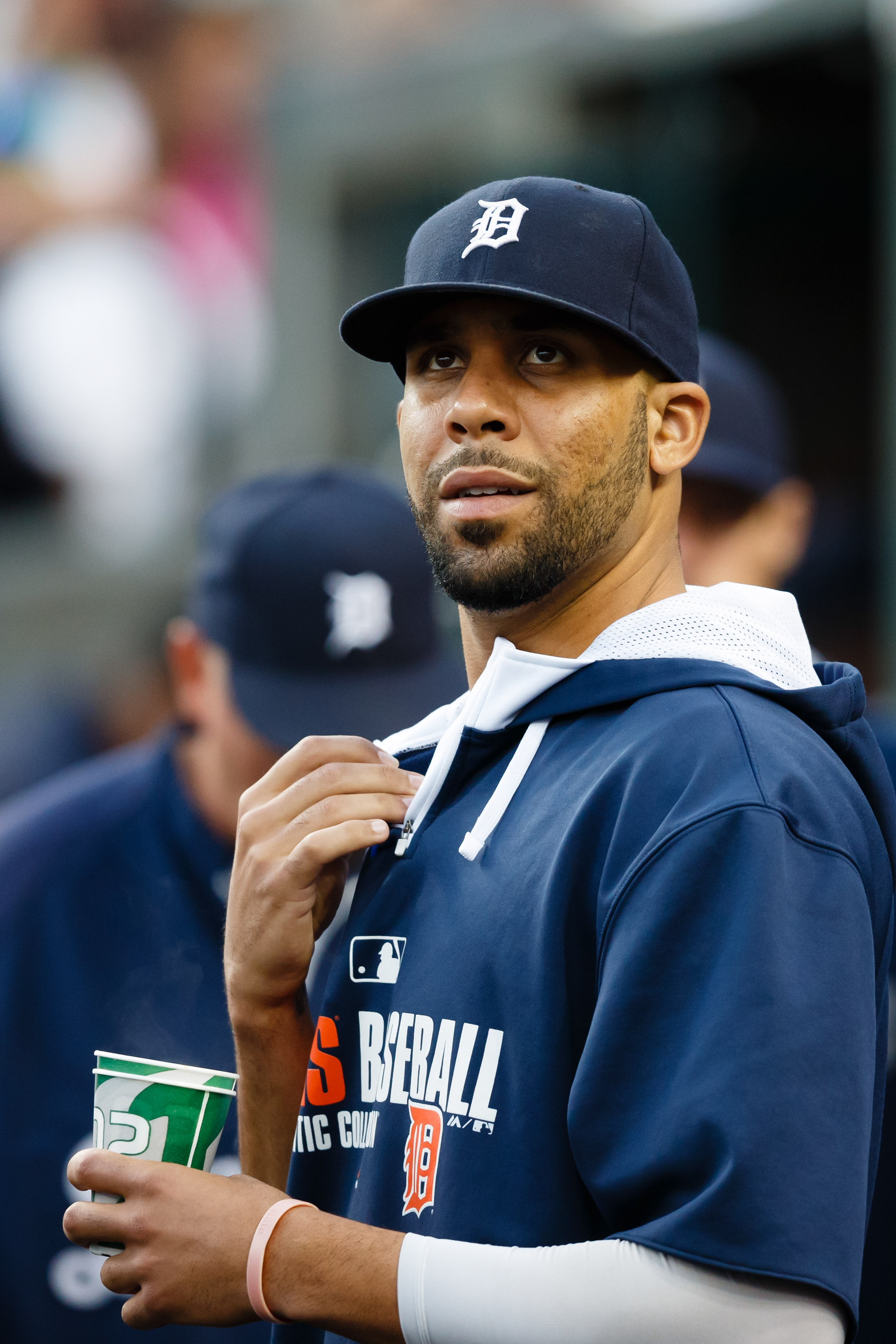
That said, my model has always had an interesting relationship with Price’s abnormal performances. In his first year of eligibility, my model projected that he would earn $7.8MM but he only settled on $4.35MM. Since then, his case has been interesting enough to write about every year. In his second year of eligibility, I wrote about how I projected he would earn $9.5MM and he actually topped that and got $10.1125MM. Then the next year I explained how I projected he would earn $13.1MM, but he got $14MM. The last two misses were not as bad as the first, but clearly the southpaw has caused my model some trouble. With an eye-popping 248 1/3 inning season, and a model that rewards performance time to mirror the actual process, it is hard to know if his $19.3MM projection as high, low, or just right.
Perhaps the best comparable for Price is Cole Hamels’ 2012 arbitration case. He got $5.5MM, which is just below the $5.3MM raise that I have projected for Price. Hamels had 216 innings, so that is definitely short of Price’s 248 1/3, as were his 194 strikeouts relative to Price’s 271. Hamels also went 14-9, winning one fewer game than Price at 15-12. However, Hamels 2.79 ERA is decidedly better than Price’s 3.26, and could be enough to offset the innings, strikeouts, and extra win in favor of Price. However, they are not necessarily great comparables because of these differences. Unfortunately, few players are great comparables for Price.
Max Scherzer clearly had a better case last year when he went 21-3 with a 2.90 ERA in 214 1/3 innings. Scherzer also won the Cy Young, further cementing his superb season and arbitration case. He got an $8.8MM raise though, and that is obviously the (very high) ceiling for Price here.
On the other side, a few pitchers emerge as clear floors for Price. Anibal Sanchez got a $4.3MM raise in 2012 with an 8-9 record, a 3.67 ERA, and 196 1/3 innings. None of those make him look as good as Price, so $4.3MM is clearly a floor. Justin Masteron’s $4.07MM raise after a 14-10, 3.45 ERA season with 193 innings last year, could also have served as a floor.
There are few other pitchers who fit in that wide range of $4.3MM to $8.8MM. Way back in 2007, Carlos Zambrano set the record for starters with at least five years of service time with a $5.9MM raise. That type of time lag would generally mean Zambrano is not likely to be used as a comparable in Price’s case, though it is worth noting that he went 16-7 with a 3.41 ERA in 214 innings. Zambrano’s definitely led to a higher salary than people were expecting, and he was a tough comparable to use because other salaries did not seem to fall on the same scale. Still, it could be that Price tries to argue that he should top Zambrano’s $5.9MM raise.
With such a wide range of potential salaries and so few pitchers with similar credentials, it is difficult to say if this will be one of my better or worse projections for Price’s salary. I could see more upside than downside, if only because Price’s innings total is so incredible, but I think that the best comparable is definitely likely to be Hamels, and his $5.5MM raise might be the best bet for Price.
Photo courtesy of USA Today Sports Images.
Free Agent Spending By Division
With the Winter Meetings behind us, it’s likely most of this offseason has already happened, and it’s been a barn burner, with a number of surprising signings and huge trades, and big bursts of activity from the Red Sox, White Sox, Dodgers and Padres in particular.
With that in mind, here’s one view of how the divisional picture has changed, with a look at where each of MLBTR’s Top 50 free agents have signed (or agreed to terms) by division. Although 33 of our top 50 free agents are off the market, this is just a snapshot at this point in time. In particular, the No. 1 and No. 3 free agents (Max Scherzer and James Shields) remain unsigned and will have a dramatic effect on divisional spending once they do come to terms.
AL East
4. Hanley Ramirez, Red Sox ($88MM)
5. Pablo Sandoval, Red Sox ($95MM)
8. Russell Martin, Blue Jays ($82MM)
16. Chase Headley, Yankees ($52MM)
17. Andrew Miller, Yankees ($36MM)
18. Justin Masterson, Red Sox ($9.5MM)
TOTAL = $362.5MM
The historically deep-pocketed AL East has so far lived up to its reputation, thanks largely to the Red Sox. Boston continued a team makeover that began at last season’s trade deadline by spending more on top-50 free agents this winter than three entire divisions, while also adding Rick Porcello, Wade Miley, Anthony Varvaro and Ryan Hanigan in trades. The Blue Jays, too, have been very active, adding not only Martin, but also Josh Donaldson and Michael Saunders via the trade market. The Yankees haven’t had a splashy offseason by their standards, although they retained Headley and signed Miller to help compensate for the loss of David Robertson. The Orioles have been quiet so far but are ultimately likely to add an outfielder, while the cost-cutting Rays’ biggest signing has been Ernesto Frieri, who will make a base salary of just $800K.
AL Central
6. Victor Martinez, Tigers ($68MM)
7. Melky Cabrera, White Sox ($42MM)
11. Ervin Santana, Twins ($55MM)
13. David Robertson, White Sox ($46MM)
25. Adam LaRoche, White Sox ($25MM)
30. Alex Rios, Royals ($11MM)
31. Edinson Volquez, Royals ($20MM)
33. Torii Hunter, Twins ($10.5MM)
TOTAL = $277.5MM
The Tigers are in win-now mode, the Royals are trying to take advantage of their World Series run, and the White Sox hope to quickly build a foundation around Jose Abreu and Chris Sale, so it’s been a busy offseason in the AL Central. Chicago not only added Cabrera, Robertson and LaRoche, but also signed non-top-50 pitcher Zach Duke to a significant contract and traded for Jeff Samardzija. The Royals (who have also added Kendrys Morales and Kris Medlen, along with Rios and Volquez) and Twins have also been active, and the Tigers could still make a splash by re-signing Scherzer. Even the Indians, who have otherwise had a relatively quiet winter, added Brandon Moss. In any case, the top two spending divisions this offseason have been in the American League, which is nothing new.
NL Central
2. Jon Lester, Cubs ($155MM)
15. Francisco Liriano, Pirates ($39MM)
19. Aramis Ramirez, Brewers ($14MM mutual option)
22. Jason Hammel, Cubs ($20MM)
34. A.J. Burnett, Pirates ($8.5MM)
TOTAL = $236.5MM
The Cubs also traded for Miguel Montero, while the Cardinals added Jason Heyward. The Reds and Brewers haven’t spent much (although the Brewers’ trade for Adam Lind isn’t reflected here), and the Reds have dealt Mat Latos in preparation for the potential departures of a number of key pitchers following the 2015 season. But the Pirates (despite losing Martin) have spent heavily for a small-payroll team, with their deal to re-sign Liriano more than doubling their previous largest-ever free-agent contract. (It was Martin’s two-year, $17MM deal, in case you were wondering.) And, of course, the Cubs, after five straight seasons of 87 or more losses, finally appear set to contend with the addition of an ace to complement their young hitting.
NL West
10. Yasmany Tomas, Diamondbacks ($68.5MM)
14. Brandon McCarthy, Dodgers ($48MM)
26. Jake Peavy, Giants ($24MM)
35. Sergio Romo, Giants ($15MM)
46. Brandon Morrow, Padres ($2.5MM)
48. Brett Anderson, Dodgers ($10MM)
TOTAL = $168MM
The total above doesn’t reflect the level of activity in the NL West this offseason — the Padres and Dodgers have dominated this month’s headlines with trades (including one with one another), and the Giants could still add Shields. The Padres (who were also serious bidders for top free agents before heading to the trade market) have already acquired Matt Kemp, Justin Upton and Wil Myers, and a potential trade of Cole Hamels to San Diego could be their most earth-shaking move yet. They also appear likely to add No. 49 free agent Josh Johnson. On the other side of the scale, the Diamondbacks have traded away Montero, Miley and Didi Gregorius.
The number of big trades in the NL West this offseason surely reflects the fact that all its teams except the World Series-winning Giants have new front offices (although the Rockies have been quiet even with a new GM in place). Despite the hype surrounding the Padres and Dodgers, though, and the addition of Yasmany Tomas, the division that lost more games (421) than any other in 2014 might have lost talent overall, given the departures of Hanley Ramirez and Pablo Sandoval.
AL West
9. Nelson Cruz, Mariners ($58MM)
21. Jed Lowrie, Astros ($23MM)
32. Luke Gregerson, Astros ($18.5MM)
41. Billy Butler, Athletics ($30MM)
45. Pat Neshek, Astros ($12.5MM)
TOTAL = $142MM
The Athletics, who have dealt Donaldson, Samardzija, Moss and Derek Norris while losing Lester, Lowrie and Gregerson to free agency, are clearly retooling, and the Rangers haven’t done much after their disastrous 2014 season, perhaps hoping they’ll improve next season merely by having someone stay healthy. The Angels traded Howie Kendrick and are in luxury-tax purgatory, while the Mariners lost out on Melky Cabrera and have had a quiet offseason aside from the Cruz signing and a couple relatively small trades. That leaves the Astros, who have signed three top-50 free agents to bolster their middle infield and bullpen as they slowly rebuild after six straight losing seasons.
NL East
24. Nick Markakis, Braves ($44MM)
28. Mike Morse, Marlins ($16MM)
29. Michael Cuddyer, Mets ($21MM)
TOTAL = $81MM
Here’s baseball’s quietest division, at least on the free agent market. The Marlins, who have acquired Latos, Dee Gordon and perhaps Dan Haren in addition to Morse, appear to be the only team in the division adding talent at the big-league level. The Nationals have few obvious needs and won the NL East by 17 games in 2014 — for perspective, the difference between first and last place in the NL Central was also 17 games. So perhaps it’s not surprising that the Nats haven’t been overly active, aside from their widely praised haul in the three-way Myers trade. With a major headache on the horizon as Jordan Zimmermann, Doug Fister, Ian Desmond, Tyler Clippard and Denard Span all become eligible for free agency after the season, they won’t have the luxury of inactivity next winter. The Braves (who have traded Heyward and Upton while also losing Santana) and Phillies (who dealt Jimmy Rollins to the Dodgers) appear headed for periods of hibernation, while the Mets agreed to terms with Cuddyer early in the offseason but otherwise haven’t yet done much to add to a 79-win 2014 team.
MLBTR Originals
A look back at the original reporting and analysis found on MLBTR the last seven days:
- MLB Trade Rumors Podcast featured host Jeff Todd discussing the Korean Baseball Organization and its premier players with former MLB and KBO pitcher Ryan Sadowski of Global Sporting Integration, a company helping baseball players transition to and from Asia. A new edition of MLB Trade Rumors Podcast will be released every Thursday and can be accessed on iTunes, SoundCloud, and Stitcher.
- Tim Dierkes attended the Cubs’ press conference announcing their signing of Jon Lester and reported on the importance President of Baseball Operations Theo Epstein placed on the move. “It’s not every day the best free agent goes to a team that finished in last place. We knew early on that if we signed Jon Lester, it would be about belief. It was because he would believe in us, believe in our future, and believe that winning a World Series with the Cubs was a unique opportunity.“
- Dodgers GM Farhan Zaidi told reporters, including Zach Links, why he was willing to sign injury-prone starters Brandon McCarthy and Brett Anderson to lucrative deals. “Going forward with any pitcher now, it’s part of the cost-benefit analysis. You could have a guy who pitched 200-plus innings in the last four years that has a really bad elbow and that could go at any moment. Conversely, you could have a guy who has an injury history that you feel may be over the hump.“
- MLBTR was the first to report the details of the incentives in Chase Headley‘s four-year, $52MM contract with the Yankees: $1MM per season for reaching 550 plate appearances, which could raise the total value of the pact to $56MM.
- MLBTR has released its 2015 Arbitration Tracker displaying all arbitration eligible players, with fields for team, service time, player and team submissions, the midpoint, and the settlement amount. The 2015 Arbitration Tracker can also be filtered by team, signing status, service time, Super Two status, and whether a hearing occurred. The 2015 Arbitration Tracker is located in the Tools menu at the top of the site and the right sidebar under MLBTR Features.
- Steve Adams was the first to learn the Cubs signed right-hander Anthony Carter to a minor league deal with an invitation to Spring Training.
- Jeff asked MLBTR readers to name the team with the best “all-in” offseason to date (posted prior to the Padres finalizing trades for Matt Kemp and Justin Upton). Almost 46% of you believe the White Sox have been the most aggressive in posititioning themselves for near-term contention.
- Brad Johnson asked MLBTR readers whether the Padres have done enough to make the playoffs in 2015. Nearly 43% of you believe GM A.J. Preller still hasn’t acquired enough offense to reach the postseason.
- Steve hosted the MLBTR live chat this week.
- Zach put together the best of the baseball blogosphere in Baseball Blogs Weigh In.
Minor Moves: Carter, Lowe, Rivero
Here are today’s minor transactions, with the newest moves at the top of the post…
- The Cubs have agreed to a minor league contract with right-hander Anthony Carter, MLBTR’s Steve Adams reports (Twitter link). The deal contains an invitation to the team’s Spring Training camp. Carter, 28, has a 4.59 ERA, 7.6 K/9 and 2.61 K/BB rate over 680 1/3 career IP in the Padres, Red Sox and White Sox farm systems. He spent most of the 2014 season in Japan, posting a 3.97 ERA over 45 1/3 relief innings for the Nippon Ham Fighters.
- The Mariners announced the signings of right-hander Mark Lowe and infielder Carlos Rivero to minor league contracts. Lowe originally pitched for Seattle from 2006-10 and the veteran spent 2014 in the Indians’ organization, a season that included an outright assignment to Triple-A and a 3.86 ERA over seven Major League innings. Rivero was originally claimed by Seattle off waivers from the Red Sox in November, and he’s rejoining the M’s after being non-tendered by the club earlier this month. Rivero made his Major League debut last season, appearing in eight games with Boston.
Dodgers GM Talks Brandon McCarthy, Brian Wilson
The Dodgers’ major overhaul continued today when they officially signed right-hander Brandon McCarthy to a four-year deal worth a reported $48MM. Few doubt McCarthy’s ability and those who put a great deal of faith in his sabermetric numbers are excited about what he can do in 2015 and beyond. However, the length of the 31-year-old’s pact gave pause to some people due to his injury history. Not only did the Dodgers take a risk with McCarthy – they doubled down by agreeing to sign Brett Anderson to a one-year, $10MM contract. Earlier today I asked Dodgers GM Farhan Zaidi about the club’s willingness to roll the dice on those pitchers.
“There’s a risk-reward calculation that all teams make. Teams always have to consider these things with pitchers and [Dodgers head trainer] Stan Conte has been very involved in our process as far as histories and health risks go,” said Zaidi, who did not mention Anderson by name as his deal is not yet official. “Going forward with any pitcher now, it’s part of the cost-benefit analysis. You could have a guy who pitched 200-plus innings in the last four years that has a really bad elbow and that could go at any moment. Conversely, you could have a guy who has an injury history that you feel may be over the hump,”
“With Brandon and the other pitcher we’re evaluating, we’re trying to figure out how they’ll perform in 2015 and beyond.”
Zaidi, of course, is familiar with McCarthy and Anderson thanks to their time together with the A’s. He had nothing but praise for McCarthy, saying that there was no other pitcher in Oakland that he felt more comfortable with on the mound. Zaidi had a tremendous amount of confidence in the right-hander, he said, due to his “intelligence and attention to detail and game planning” as well as his command.
The Dodgers GM sounds equally confident in the status of McCarthy’s shoulder. Zaidi believes that those issues will be in the past thanks to a new offseason routine that calls for additional upper body work. The “proof is in the pudding” when it comes to McCarthy, who managed to add an extra 2 miles per hour to his fastball late in his career.
Midway through the conference call, reporters were informed that Brian Wilson was designated for assignment to make room for McCarthy on the roster. I asked Zaidi if Wilson was struggling this winter in his effort to get back to his old form.
“We’ve been keeping tabs on him in the offseason and this was not a move we made out of any medical concern. It was more related to performance and it’s a position where we had to make a move because we had a surplus,” Zaidi explained.
It appears that recent bullpen additions like Joel Peralta, Juan Nicasio, and Chris Hatcher have leapfrogged Wilson, leaving him without much of a role to play in Los Angeles in 2015. Their newest addition, meanwhile, will be counted on to serve as the fourth starter behind Clayton Kershaw, Zack Greinke, and Hyun-jin Ryu.
MLBTR Originals
A look back at the original reporting and analysis found on MLBTR, as we went 24 hours during the Winter Meetings last week with Tim Dierkes and Steve Adams reporting live from San Diego:
- Agent Scott Boras told Tim the off-the-field issues surrounding Everth Cabrera will not affect the shortstop’s market. “I think we all know that players get involved in situations where they might have made a mistake and done things. You talk to teams about the player’s history, his character, where he’s going in the future. So it’s really a due diligence dynamic with Everth. The people that are coming after him know him well, so they have to have the comfort level. They know this is an isolated issue, and they know his talent too.“
- White Sox GM Rich Hahn explained to reporters, including Steve, his rationale in trading for Jeff Samardzija, despite having control over the right-hander for only 2015. “This is the guy we wanted. I think the calculus of the trade is that we’re acquiring one year of Jeff Samardzija…and the exclusive ability to talk to him for 10 months. “
- Tim was the first to report the Royals’ interest in free agent infielder Asdrubal Cabrera and opines Rafael Furcal could be a fit for Kansas City, as well, on a minor league deal.
- MLB Trade Rumors Podcast recapped all the hard news and rumors emanating from the Winter Meetings with host Jeff Todd and Tim examining how the week’s moves will affect the rest of the offseason.
- Zach Links covered the Rule 5 Draft.
- Charlie Wilmoth updated the status of the top ten remaining free agents on MLBTR’s 2014-15 Top 50 Free Agents list (posted prior to Melky Cabrera‘s agreement with the White Sox).
- MLBTR’s Free Agent Profile series continued with Charlie predicting Stephen Drew (#42) will have to settle for a one-year, $7MM pact.
- MLBTR contributor Matt Swartz broke down the arbitration case of right-hander Rick Porcello, who was acquired by the Red Sox during the Winter Meetings, and Pirates third baseman Josh Harrison.
- Tim was the first to learn right-hander Chaz Roe agreed to a minor league contract with the Orioles.
- Charlie asked MLBTR readers whether the moves made by the White Sox so far this offseason have transformed them into playoff contenders. More than 55% of you agree with that assessment.
- Zach compiled the latest edition of Baseball Blogs Weigh In.
Poll: Best “All-In” Offseason So Far?
This is an admittedly un-scientific undertaking, but then that’s not really the point. Several teams have made a series of moves that, in the aggregate, have led at least some observers to label them as being “all-in” on near-term contention. In many cases, this offseason truly started at last year’s trade deadline.
We could quabble endlessly on the list — plenty of teams have made several impactful deals and/or significant free agent commitments, and some will surely undertake more such actions before camp opens — but here’s mine, based on each team’s cumulative moves to take on future salary obligations and/or give up talented youngsters to obtain anticipated near-term production:
Blue Jays: Some of the offseason’s first big salvos were fired from Toronto. The team was a somewhat surprising victor in the Russell Martin sweepstakes, dealt for one of the game’s best players in Josh Donaldson, traded for a talented outfielder in Michael Saunders, and made a series of other moves — all while holding onto its best young arms.
Cubs: They signed Jon Lester. You could probably end there, but the team also took on the contract of Miguel Montero and inked Jason Hammel. “All-in” may be a bit presumptive at this point — the team has not given up any young talent, for example, and still has plenty of untapped future payroll capacity — but over $200MM in new future commitments for a team coming off of a 73-89 season says quite a bit.
Marlins: It all started with the massive Giancarlo Stanton extension — if not last summer’s Jarred Cosart deal — and continued with trades for Dee Gordon (along with, potentially Dan Haren) and Mat Latos. Miami parted with some well-regarded pitching prospects to add established players to its talented and youthful big league core.
Red Sox: The word “asset” probably best characterizes the focus of GM Ben Cherington’s recent work, as he has traded away veterans like Lester, John Lackey, and Yoenis Cespedes as well as younger players such as Rubby De La Rosa and Allen Webster. The team has, in turn, added the since-dealt Cespedes, as well as Rusney Castillo, Allen Craig, Pablo Sandoval, Hanley Ramirez, Rick Porcello, Justin Masterson, and Wade Miley, while agreeing to bring back Koji Uehara.
Tigers: Detroit paid big bucks to re-sign Victor Martinez after trading for David Price and Joakim Soria at last year’s trade deadline. The club has gone on to add Cespedes as well as Shane Greene and Alfredo Simon. Referring to the Tigers as “all-in” is now cliche, but the term still fits; if the Miguel Cabrera extension was not enough to convince you, then the latest round of transactions should.
White Sox: While much of the attention heading into the winter was on the North Side of Chicago, their neighbors to the south have been even more active. When GM Rick Hahn added Zach Duke and Adam LaRoche via free agency, it was clear that the organization was at least interested in putting some pieces in place to bolster its younger roster. But he followed that up by dealing for one year of Jeff Samardzija and drawing David Robertson and Melky Cabrera off of the open market.
So, all said, which of these aggressive teams has been most successful to date in positioning itself for the near term while steering clear of an ugly future — or, better yet, setting up for a good one?
Best "All-In" Offseason So Far
-
White Sox 46% (16,165)
-
Red Sox 17% (5,985)
-
Blue Jays 14% (4,865)
-
Cubs 14% (4,858)
-
Marlins 5% (1,817)
-
Tigers 4% (1,555)
Total votes: 35,245
Arbitration Breakdown: Josh Harrison
Over the next few weeks, I will be discussing some of the higher profile upcoming arbitration cases. I will rely partly on my arbitration model developed exclusively for MLB Trade Rumors, but will also break out some interesting comparables and determine where the model might be wrong.
Josh Harrison will enter his first year of arbitration this winter after having a great year. From 2011 to 2013, Harrison had irregular playing time and bounced between the minors or majors, but in 2014 he firmly cemented his starter status with a .315 average and 58 extra-base hits. Harrison had a .347 OBP after failing to crack .290 in his previous three seasons, and slugged .490. Although his high OBP, 38 doubles and 7 triples made him a tremendously valuable 4.9 WAR player in 2014, they unfortunately (for him, at least) are not the kind of contributions awarded generously through the arbitration process.
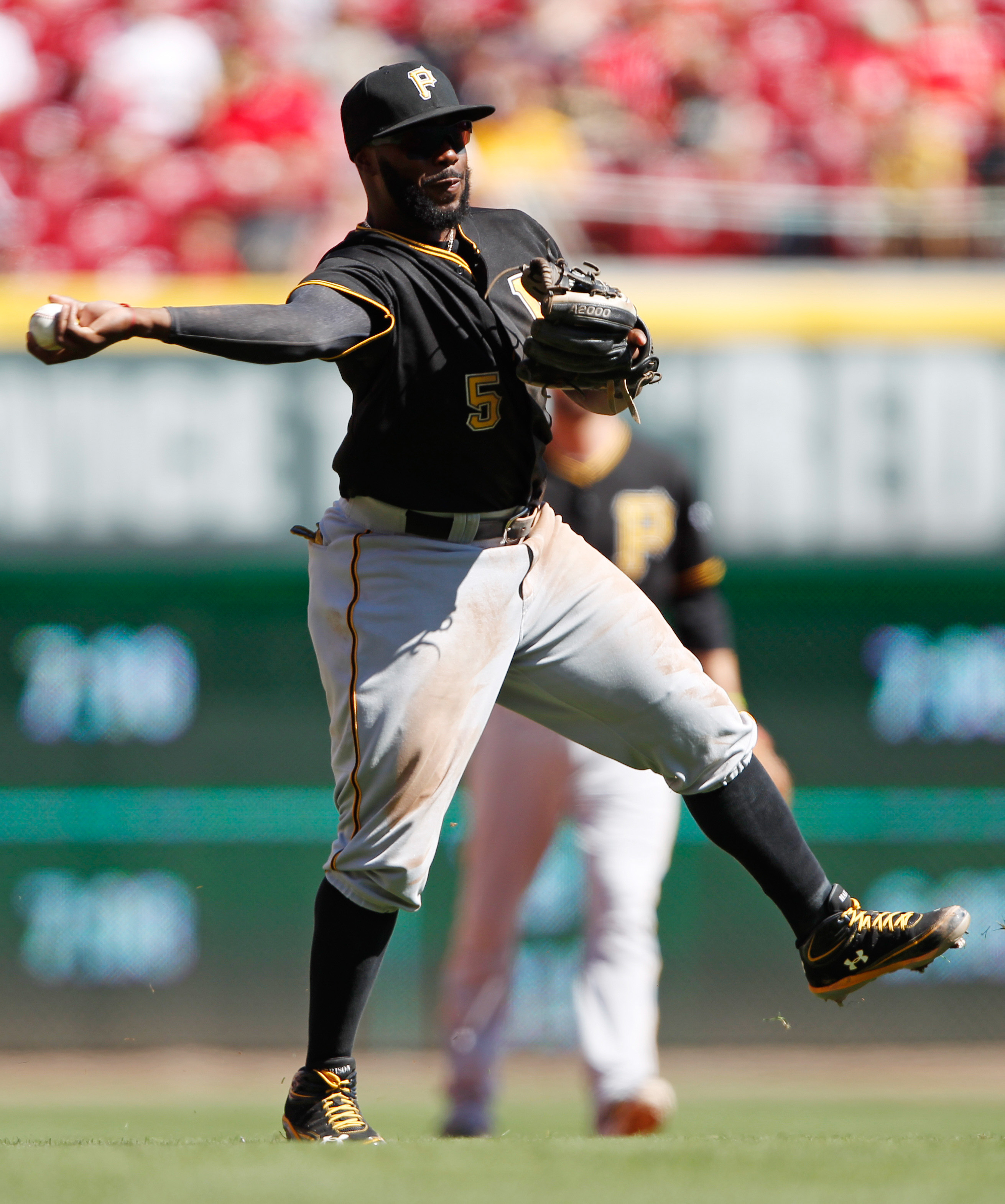
Harrison had just 13 home runs, along with only 52 RBIs. The limited runs batted in are not surprising given that he hit out of the leadoff spot the majority of the time, but leadoff hitters usually offset some of their lack of power numbers with stolen bases when they go to arbitration. Harrison had 18 stolen bases, which is solid but not elite. In Harrison’s case, the value he added in 2014 does not typically get rewarded in arbitration. Harrison also loses out relative to other players because he only had 550 PA in his platform season. Playing time is perhaps the most crucial characteristic of a good arbitration case, and Harrison loses out to players who have more PA.
On the other hand, Harrison does benefit from the fact that arbitration rewards a strong platform season far more than performance in recent seasons. In his previous three seasons, he had only 575 PA combined, with just 7 home runs, 46 RBIs, and 13 stolen bases. And with only a .250 average in his pre-platform seasons, Harrison hurts his case, but far less than if he had struggled to hit safely in his platform year.
As a result of this, the model projects him to earn $2.2 million for 2015 and I do not think the model is far off in this one. Combining the peculiarity of the pairing of his strong platform season and his weak pre-platform years, the high average with lack of major power or stolen bases out of the leadoff spot, and his low playing time totals, it is difficult to find comparables for Harrison, but as we discuss some options below, the $2.2 million estimate starts to look pretty appropriate.
Looking for comparables, there were three key features that I searched for first. One was having between 400 and 600 PA in his platform season, so that the player was a starter but did not get too much playing time. I also initially looked for players who hit .300 since that is such a strong part of Harrison’s case, but who had less than 20 home runs, since power would have really helped his case. That left two players in the last five years.
Nyjer Morgan’s 2012 case is a pretty strong one, and he earned $2.35MM. He hit .304 with 4 home runs and 37 RBIs, and stole 13 bases over 498 PA. So he had less power and plate appearances than Harrison in his platform year, but was otherwise similar. Morgan did have 1403 PA in his pre-platform years, more than double Harrison’s 575 PA. Morgan also hit .283 in his pre-platform years, also beating Harrison’s .250 average handily.
Rajai Davis’ 2010 case is a little old to be used a typical arbitration case but also looks similar despite only getting $1.35MM. He hit .305 with 3 home runs and 48 home runs, and actually stole 41 bases, all with 432 PA. His .256 average and 462 PA pre-platform do look a lot more like Harrison, though. Even still, that case looks pretty out of touch with more recent numbers.
Expanding the group of potential comparables by looking for guys who hit between .290 and .300 in their platform year adds a couple names. David Murphy in 2011 got $2.4MM for a .291 average, 12 home runs, 65 RBI, and 14 steals in 467 PA in his platform year, and 1085 pre-platform PA in which hit .278, with 35 home runs and 147 RBI, along with 16 stolen bases. Tyler Colvin’s 2013 case is especially similar, and he got $2.275MM. Colvin hit .290 with 18 home runs and 72 RBI, along with 7 steals, although he only got 446 PA. In his pre-platform years, he had 636 PA and hit .215 with 26 home runs and 78 RBI, adding in six stolen bases.
The main issue with this group of four guys is that none of them had 500 PA, let alone 550 like Harrison. Eric Hosmer in 2014 could perhaps be a solid comparable for his platform year, with a .302 average, 17 home runs, 79 RBI, and 11 stolen bases. But Hosmer’s pre-platform years sum to a much loftier line than Harrison’s. He had 1161 PA, again about twice Harrison’s total, and he also hit 33 home runs and 138 RBI, far more than Harrison’s seven home runs and 46 RBI. Hosmer’s $3.6MM salary seems pretty unattainable for Harrison. Austin Jackson and Billy Butler both earned $3.5MM with similar lines to Hosmer, and both seem unlikely matches for Harrison because of their far greater pre-platform playing time.
Sometimes in arbitration cases, it is useful not just to look for comparable players, but to sandwich a player between a ceiling and a floor player. The ceiling player would clearly have superior numbers and should have a salary above the player in question, while the floor player would have inferior numbers and a low salary.
Alejandro de Aza’s 2013 arbitration case netted him $2.075MM, which seems like a reasonable floor for Harrison. He had a similar number of PA, 585, but hit just .281 and only had 9 home runs and 50 RBI, although he did steal 26 bags. His pre-platform years are worse, with only 388 PA to Harrison’s 575, and only four home runs and 36 RBI, both less than Harrison’s seven and 46, and with a similar number of stolen bases. De Aza did hit .280 in his pre-platform years, but that difference is not as large as the platform year batting average advantage that Harrison enjoys. As a result, it is difficult to see Harrison getting less than $2.075MM.
Jay Bruce looks like a ceiling. He had 573 PA going into his 2011 case, and he hit 25 home runs with 70 RBI. Bruce did have a .281 average, which is less than Harrison’s .315, but it seems unlikely that Harrison’s batting average could be more important than his lack of relative power. Bruce also had 839 PA pre-platform, and although he hit just .240, he had 43 home runs and 110 RBI. The fact that Bruce went into arbitration with 68 career home runs, more than triple Harrison’s 20, makes him a ceiling. Harrison is unlikely to match Bruce’s $2.792MM salary.
So it seems likely that Harrison will fall somewhere between $2.075MM and $2.792MM, and probably closer to $2.075MM. Tyler Colvin’s 2013 earnings of $2.275MM seem like the best comparison, which further cements Harrison around that range. I could see Harrison getting somewhere in between my $2.2MM estimate and maybe $2.5MM, but it will be hard for Harrison to go much past that point.